Ep 96 - Jesse Jackson | The Truth About Selling Your Shop to Private Equity
With Jesse Jackson
Now playing — Confessions of a Shop Owner
About this episode
Tekmetric transformed my shop. Plain and simple. Want that for yours? Touch HEREASTA is coming up September 24-26 in Raleigh. Be there or be square,…
Key takeaways
- —There is a significant disparity between the multiples received by private equity and those received by shop owners during sales.
- —Many shop owners lack a succession plan, which can jeopardize their retirement.
- —The automotive repair industry is seeing a trend of consolidation, with many shops closing in the coming years.
- —Shop owners should consider partnerships or co-ops to increase their business's value and exit options.
- —Understanding the valuation of their business can empower shop owners to negotiate better sale terms.
Frequently asked
- What should shop owners consider when planning for retirement?
- Shop owners need to have a clear succession plan and understand the value of their business to ensure they can retire comfortably.
- How can shop owners increase the value of their business?
- By improving operational efficiency and considering partnerships or co-ops, shop owners can enhance their business's valuation.
- What are the implications of private equity in the automotive repair industry?
- Private equity can lead to higher multiples for larger businesses, but it often results in a loss of quality and customer satisfaction in smaller shops.
▸Full transcript
But that gap on the table, that 9 or 10x between what private equity is getting and between what the shop owner is getting, is literally like the difference between a shop owner being able to retire, live their life how they want to live it, versus eking out a retirement and worrying about whether they take Social Security at 62 or 65 and how long they can make it.
The following program features a bunch of doofuses talking about the automotive aftermarket, the stuff we or our guests might sell. Say, do not necessarily reflect the beliefs of our peers, our sponsors, or any other associations we may have. There may be some spicy language in this show, so if you get your feelings hurt easily, you should probably just move along. So without further ado, here's your host, Mike Allen, with Confessions of a Shop Owner, presented by TechMetric, the best software in the history of ever.
So the throne story is, uh, I was at a Continental Ride and Drive event in Uvalde, Texas. I got there a day early and it's right on a little downtown river area. And across the street from the hotel was this commercial building that had a rooftop bar. It's a beautiful day. So I was gonna go to the rooftop bar and have a drink or two.
And I got there and it was dead. It was me and one other dude who was also there for the same event. And just chatting it up and people started to filter in and took about an hour for us to realize that we were in a drag bar. And they were about to have their event for the week on that night. And so that throne that's in the logo was the master of ceremonies throne during the drag show.
Yes. And so I was like, well, I got to get a picture on the throne before the show starts, right? So he took a picture of me in the throne. And that was 3 years ago before this was ever born. So I didn't know that I was creating the logo for a podcast until much later. That's awesome. You heard it here first.
I love a good drag bar. Yeah. Yeah. Whatever. We haven't really met. I've seen you around, so I'd love to hear a bit about you. Oh gosh. So third generation in the industry. My grandfather opened his business in 1937 and the house was attached to the back of the business. It was a general store with like the potbelly stove and the grocery store and all the old men in the neighborhood.
They were old men for me because by the time I came along, you know, they had been there for 50+ years. It was the feedlot, it was the auto repair facility for the community. It was in a little community called White Cross, North Carolina. Oh my gosh. Yes. And so my dad grew up there and he had no interest in the family business and he went away to college.
College didn't work out for him because he got married and had kids and needed to support family. And he ended up getting pulled back into the industry. But he didn't work for his dad for long. He ended up going to work for another gentleman who had a few stores in a town nearby Chapel Hill. And he ended up buying one of the stores from that gentleman.
And I grew up in dad's store. You know, as a little kid, I was in my grandfather's store because we lived in a single-wide trailer next to my grandfather's store, right? And so I would get off the bus and and go into my grandfather's store and hang out. But when I was old enough to start busting tires and changing oil and taking out the trash, I went to dad's store.
And I hated it and didn't wanna be in the business. So I went away to college and— Repeating the sins of your forefathers. I know. And college was not for me. And the party was totally for me. And mom and dad paid for the first year of college. And then I worked multiple jobs to go to college for 4 more years. So that I could keep the party going.
And I'm still a first semester junior to this day. So higher education and my priorities did not exactly meet up super well. So eventually in 2001, I came back to death. What did you study for 5 years? Motorcycles, whiskey, marijuana, women, skiing. Okay. I think when I finally dropped out, I was— so Appalachian State has a good teaching school. So I was flirting with teaching by the time I finally dropped out.
Teaching what? I had prerequisites. In my mind, I was going to be a US history teacher, because I love US history. But I have zero concept of what it actually means to be a teacher. Other than that, I'm not sure I could do it now. Seeing kids these days. Kids these days, the amount of patience involved has got to be astronomical. And the adverse— Do you have kids?
Yeah, I've got 3. Oh, yeah. 15, 13, and 11. But the adversarial relationship that I've seen between teachers and parents is frightening to me, because I feel like we should be alongside the teachers to help build functional members of society from our children. And so often, they're like, "Oh, my little Johnny's perfect. He never does anything wrong. You're just not a good teacher."
And I feel a little bit like that's an— it's a thankless job, it seems like. In North Carolina, they're also very poorly paid. Well, it's a setup for failure, because I have 7 kids. You pull up and you sit in this little seat that you're too small for. So here's the thing. Outdated SMS just— they don't just slow you down, they cost you money.
And I learned it the hard way. Before TechMetric, I was wasting time on inefficient processes, manual updates, back and forth calls with customers. Now I handle everything in one place. DVI, customer communications, payments, real-time reporting. It's all in one page. Since making the switch, my average repair order has jumped from $293 to $916. And it's not just me. Techmetric powers almost 10,000 shops nationwide.
By the time you're hearing this, it probably will be 10,000 shops, helping them grow and operate smarter. If you're tired of losing time and money to outdated systems, tap the link in the show notes and see what Techmetric can do for you. Hey guys, Kari Lynn with Turnkey Marketing. If you are looking to increase cars and you're looking for the right demographic to go after, you want to get the right people who need auto repair right now.
Then give us a call. We have a service called Direct Track and it utilizes AI to find people in your area who are the great demographic that you want to go after, have raised their hand and opted in saying, I need auto repair help right now. We send them an email. As soon as they open the email, we then get their physical address, follow it up with commercial ads on all their streaming services like Hulu and YouTube and ESPN, Fox News, all those different things.
And then we also get their physical address and we start sending banner ads and display ads to every single device in that house. It has been incredibly effective. It has made shops seem like they're everywhere to those people who need repairs right then. And I mean, I'm telling you guys, the return on investment has been huge. So if you want to increase car count, you want to get great people in the door, give us a call or reach out to us and ask us about DirectTrack Marketing.
And then the teacher tells you everything that's bad about you that they see in your kid. So, yeah, it's a setup for failure. I don't know. I mean, I think so. My frame of reference for the educational experience is unjustly skewed because when we were about to have our first child, Amanda, my wife, said, hey, I want the kids to go to private school.
And I said, kids don't need to go to private school. I went to public school and it went fine. She said, Mike, you went to public school and then you dropped out of college. Touché. And I was like, but I mean, think about how much a good private school costs. And she said, there's a— I mean, we have the means to do it.
And my wife is not sarcastic. She is not snobby at all. But she knows how to get a jab in when it's going to make a point. She said, Mike, when you go to work, people say, hey, Mike. When I go to work, people say, excuse me, Dr. Allen. I went to private school. Our kids are going to private school. So I laughed and we did that.
But they've been in the same private school since kindergarten. And actually, my oldest, my 15-year-old, is going to be a rising 11th grader. And he's leaving the private school to go to a public early college trade school. And he's going into their welding program. So it'll be half the day is core curriculum at an advanced level 'cause it's a magnet school. And half the day is welding taught by the community college instructors.
And so, you know, he came to us and intelligently articulated that, 4-year college would be wasted on him because he hates sitting still in a classroom. And he doesn't want to sit in an office. He doesn't want to own a business. He wants to work with his hands and fix things. Well, okay, but I still want you to maintain options. I want you to have the option to change your mind.
So you still have to maintain academic excellence. And he's done that. So we're We're pursuing that for him. All right, yeah, the trades are hot. They're coming back. Yeah, the pendulum has swung in the other direction because now all the folks that went and got their $100,000 student loan to get a 4-year degree in French literature are being replaced by the AI wave.
My daughter spent her last 2 years in high school working part-time in a mango shop. Nice. And she loved it too much. Then she went to a semester of college and then she said, "Mom, I know you're not gonna like this, but I'm gonna take a semester off and I'm just gonna work. So she's back in an automotive shop. I don't know, I don't quite get it.
Like you were having fun hanging out with your friends in college. I don't know how you think this is better, but. I think the personal responsibility that is thrust upon you when you go to college, a lot of kids thrive and they become adults and a lot of kids crash and then the boomerang kids, you know, they're just not ready for it yet.
And that's okay, they don't have to be ready yet. But the emotional intelligence to realize that it's not for them and to pull the plug before they've got $100,000 of student loan debt, or they've used $100,000 of your money for an education they're not taking seriously. I think it makes sense. Well, she has a great first semester and she says she's going back next semester.
So I don't, knock on wood, hold my, it's not that I, like, I really respect what your son did. It's not that I don't think that there's another path for her. And if she was super passionate about going in a direction, 1,000% support that, whatever that direction is. And I love how you're thinking about your kid having optionality, right? But she doesn't have that same, well, at least she hasn't expressed to me that same drive toward another path.
We're almost 10 minutes in. I think now it would be appropriate to introduce yourself. Since we talked about me, are you my therapist? What's going on here? Well, I thought we hadn't started yet. No, we're just talking. So this is seriously, this is how I start almost every episode is I just hit record and we just keep chatting. And eventually we do introductions sometime after like the second ad break.
Perfect. I'm Jessi Jackson. I'm a mother of 7 and I used to be able to say I also had 7 automotive repair shops, but we've We have 8 automotive repair shops now. So you have 15 kids. And we're not going to have an 8th child. So that will never happen again. That ship has sailed. Yes. Well, I mean, you have 15 children then.
Something like that. Yeah, someone's always crying. Isn't that the truth? How did you find yourself in the automotive world? I, like you, my, one of my grandfathers had a hitch shop and the other one had an aviation repair shop that I hung around in. I think there's something like that molds you even though you don't realize it is. Like, I never saw myself in brick-and-mortar automotive, but I certainly felt comfortable in the back of a shop.
And I used to be an environmental engineer. The bottom sort of fell out of that market with the 2007-2008 crash, and I moved into software product, like B2B softwares, and I happened to fall into a project which was in the automotive space. So I knew a ton about the space. So when we got bought by private equity, I saw a huge opportunity in the brick-and-mortar automotive space.
This was 2021. So the stats at the time were 6 out of 10 owners are retiring in the next 10 years and they don't know how they're going to do it. And most of them don't have a succession plan. So really just leaped into brick-and-mortar automotive repair. And so we've grown from $0 to $17 million in the last 4 years. That's awesome.
It's been a fun ride. So is your growth model, because your company are the guys that are walking around all the trade shows with t-shirts that say, "We buy shops," right? It's so funny to hear you say that, like, "Oh, your company." I'm like, "Yeah, there's just me and Brian and Kevin, like, just the 3 of us, but yes." Well, I mean, it works.
And at this event, we're at Tectonic 2026, we're wrapping up, we're in the final afternoon. You've got a dude in a blow-up mango suit walking around. Oh yeah, yesterday he was here. For fun, just for whimsy. Well, and no sign or anything on him about what he is, but I felt like you guys were just kind of hanging out and people who would come up and it's a conversation starter and you're reading the badge.
Is that an owner? Where's the shop? So is that a recruiting, low-key recruiting methodology to find your next, find your acquisition? You know, it's more like just an attention-getter for people who are looking for us. So we did— TechMetric invited us to speak, which we'll see if they regret now. But when did you talk? We spoke yesterday. Apparently our session was the most registered session, or at least that's what they told us.
Maybe they told everyone that. What was the title? Oh, good question. What was the subject? It was— I mean, the title was something about growing your automotive repair empire from zero to 8 figures, just what we've done. And I think the subject matter was both 2 topics, one growing through acquisition, which has to happen. There's 50,000, 40,000 to 50,000 shops that are going to close their door in the next 3 years.
So that's on us to sort of step up and do those acquisitions and let the people who have been holding up our industry for the last 30 years retire and move on to their next phase of life. And then sort of the second piece of that is, okay, once you own an automotive repair shop, like what makes it grow? So oftentimes we'll take over a shop and see 100% growth in 12 to 18 months.
And then we sort of steady out at a 30% compound annual growth rate, like inside of the shop. So we had less than an hour, but we tried to hit all of those points. A lot of people are looking to grow. Yeah. So, I think about where I've— like, I've run into Brian a few times at different events. I think the first time I saw him was at the Tool and Equipment Association meeting in Arizona somewhere.
I don't remember. And I think at the time— were you guys working together already? This was like 3 years ago. I don't know, what year was it? I feel like it was '21, '22. Probably. He had like really big dreams of of massive growth. So maybe that was right after you opened up. Oh, that was probably right after I sold him into partnering with me, which he may or may not regret.
But I mean, seriously, you know, $0 to $17 million in just a few years is pretty dang impressive. Where, okay, so that's 5 years, '21 to now. What does it look like in '31? I'm sorry, in 31 years? What does Mango look like in 2031? Oh, in 2031, another 5 years from now? Yeah, that's a good question. Are you allowed to say?
Do you not want to share that publicly? It's just that 5 years is, it's a difficult timeline to predict. Like I think by our very nature, like we're moving so rapidly, it's sort of hard to see that far down the pipeline. I'll tell you what we're working on, which we, you know, sort of that we talked about yesterday as well. It's like we have this first passion, which has been helping shop owners retire.
And the second shop that we ever acquired, we acquired from a guy named Mike. And Mike's shop was downtown Albuquerque. You ever been to Albuquerque? Yeah. You came over? Very artsy town, yeah. No, no, that's Santa Fe. Don't get it mixed up. Okay, I see. Albuquerque's a very Breaking Bad town. Okay. Everybody needs a little crack in their life, so. Do we?
So at that shop, it's just, it's a little rough, right? So there's a big homeless population, but Mike was the kind of guy who a homeless person would come by the shops and he would not shoo them away. He would invite them in and make them a cup of coffee. Like that's the kind of guy he was. And we bought his shop for a 3x.
And after we had done the acquisition, Mike called us up. Jesse, Jesse, like, I want to take you to dinner. Okay, Mike, let's go to dinner. We'll sit down at dinner. I'm like, Mike, have you missed it? Like, you own this business for 30 years. Your dad owned it for 30 years before you. And Mike said, you know, I thought I was going to, but I just really haven't had time.
Okay, Mike, what are we at dinner about? Why'd you call this dinner? He said, what's the pitch? This is the 1-year anniversary of the day you first called me. And I had been praying that someone would call me to buy my shop so that I could spend more time with my family. And that really stuck with me and became, I think it sort of changed how I was thinking about what we were doing into like, I'm not here to convince anyone to sell their business to me, but I'm just here for the Mikes of the world who want to go spend time with their family.
Elite clients don't just learn more, they do more. We help shop owners build stronger teams, improve profitability, and create systems that don't fall apart when you step away. The goal isn't just growth. The goal is sustainable success and a life you actually enjoy living. Elite Worldwide. Okay, here's the deal. Uh, at Vision, I recorded an episode with Keith Perkins and Seth Thorson, and I figured that we were going to talk about NASDIF stuff the whole time, but we ended up talking about a AI the whole time, and they had just taught a class on building your own AI agents within your business, and it was an incredible conversation.
And then after we recorded that, I went out into the show floor at VISION, and I talked to a ton of people who have been in the class, and they were talking about how 3 hours in that class had changed their entire perspective on AI, and they were building their own tools in just 3 hours of training. You know, it blew my mind.
I've got to have that in my business. And so here's the deal on Saturday, June 13th, I'm flying Seth to Raleigh, North Carolina, and we are going to have a full day— not 3 hours, but a full day class, breakfast, lunch, and dinner included. If you want to come down the night before on Friday the 12th, we're going to do Friday night shenanigans at my business at the, the Car Fix Bar and Lounge.
It's going to be a great time. I think it's going to change the nature of how we do business. This class is for owners and GMs only. There are limited seats available for this class because it's very hands-on. You're going to need your laptop, you're going to need an active subscription to the AI of your choice. I recommend ChatGPT and Claude AI.
Early sign-up discount, it's $8.99. If you sign up after May 17th, it's $12.99. Tap the link in the show notes or scan the QR code on your screen to learn more. It's going to be awesome. But as we did acquisitions, we encountered like another kind of shop owner and it was, you know, the Mike who unlike, we should give him another name, the Chuck who unlike Mike who retired on that 3x, who we give a valuation to, like, this is what your business is worth.
And they look at that number and think, I am dying at this desk. I'm going to die with a wrench in my hand because I can never afford to retire for that number. There's a lot of those. Plus add Social Security. So we started thinking about like, how can we help that person? Because for the last 3 or 4 years, when Brian and I meet with them, We just say, you know, I hope this was helpful to you to learn how businesses are valued.
Now you have the tools to make your business more valuable. I'm happy to help. Call us up at any time. You know, we're friends. Like, thanks for taking the time, but I can't offer you, you know, what you need to have. And so I think this next round of Mango is about helping, you know, that Chuck or that shop owner who wants to exit their business but needs a bigger multiple to do it.
How many individuals do you tend to speak with before you find another realistic acquisition? And like, for me, when I was trying to find another shop, and I have a very defined geographic area that I'm looking at, I'm not, I'm not looking in other markets. I would talk to 10 or 15 before I've— and they all had, you know, little to no documentable net profit, and they all thought it was worth $1 million, right?
Everyone's number. Every shop's worth a million. They're forgetting to adjust for inflation. Because it was worth a million 5 years ago and they still want a million. They need more. Yeah. Um, so how many are you talking to before you find one that it's like, we should put an offer on this one? Those are pretty good numbers that you have, 15 or 20 only.
I think that we, you know, it's 1 to 3 out of 100. Wow. Okay, well, so that means that you guys, uh, 90% of what you do is is vetting those, those situations in those businesses? Or what does your day-to-day life look like within Mango? Good question. So Brian and I used to do everything, but now we have a whole corporate team who does finance.
We have a district manager, we have HR. HR was our first corporate hire and was a huge relief, especially for Brian. So I I oversee our marketing and I run acquisitions. Basically those two things. Geographically, are you spread out far? Or are you all pretty well densely? Yeah, with the exception of one shop, we can drive to all of our shops in about 4.5 hours from our home base.
And home base is where? Albuquerque. Okay. But I feel like on my social feeds, I'm seeing some of your branding and marketing, because you're very much leaning into the female-owned and operated auto repair business. That is Mango that I've been seeing those ads on socials, right? No? I don't know. You don't know? Maybe. I didn't run this. I feel like it was— man, I should have found one of them to have pulled up.
I'd love to see it. I don't do any show prep. I'm terrible. What are we advertising? I think you're just selling partnership. What I recall, and I might be misremembering, I do a fair amount of that, is that you were selling the dream of partnership and being part of something bigger and having your shop being part of a group of shops that are led.
I think perhaps you're seeing into the future because we have not run those ads, but I think it is on the docket for this summer. Right. Are you thinking about any ground-up builds or is it all acquisition at this point? We have thought about some ground-up builds, especially you're familiar if you're in one market, you know the locations that would be hot if you did a build there, but we always perform them out and then we're like, hmm, makes more sense to acquire something that's already profitable than to build something from the ground up.
Yeah. Do you typically look at shops that are already operating at a high level and are profitable or do you want fixer-ups? Or shoppers? Both. So about half the shops we've acquired have been turnarounds. So like the first shop we bought for $5,000 and we opened that December 27th, 2021 after I made Brian work over Christmas weekend to get it ready to open because doggone it, we were not going to close for a minute.
And now that shop is, you know, $3 million operation they were doing. $750,000. So we've done that about half the time, and about half the time we're acquiring something that's already doing much better. So I think, you know, this year our focus is on cash flow positive acquisitions more so than turnarounds. Do you have a fixed footprint that you're looking for? I want 10-bay shops, I want 8 bays, or with road frontage, or what, what's the ideal model for you?
We look for stuff that's 7 or more bays. Although that said, We just acquired a 5-bay. They had their, this week was Mango's best week ever, which we've been hitting that a lot. So it's super exciting. But this brand new 5-bay that we acquired in January did $61K this week, which is— Love it. Our 12-bay in the same city did $63K. So we're like, wow.
Is there inter-store communication? Are they like, we're coming for you boys? Yes. They're a little competitive and we're building like a leaderboard. I think in a friendly way. Like the manager of one of our shops used to work under the manager of the other shop. And so, you know, he's proud he's trained this manager who's kicking his butt, but he's also like, dang.
Yeah, I'm coming for you. Very cool. Sure. So real quick, I want to back up earlier. You said that you have 7 children? Yeah, that's true. Age gap, how far are they apart? The baby's 2, and you know I have college-age kids. So there you have it. I'm exhausted just thinking about that. You need more shops just to afford the food budget.
Exactly. I'm driven just to be able to feed my children, especially the teenagers. And come October, we'll have 5 teenagers. I've got 2, and I swear that our grocery budget has doubled. In the last couple of years. It's insane the amount of food they're able to put away. Because they eat like probably 3 times you each. It's madness. But great source of joy, great source of frustration.
Yeah. How many of them do you think are going to want to be a part of Mango? You know, that's interesting because my oldest daughter definitely interested, surprised me. And when I say she was working in the shop, she's not like answering phones. She's back there changing oil, changing tires, doing inspections, putting the car on the lift. So that's, it's really cool to see her hard work ethic.
I didn't think anyone else was very interested, but they, you know, have expressed an interest. Like we're big enough now, we get lots of offers that we turn down. And they heard me talking about an offer and my 14-year-old daughter said, you're not gonna sell Mango, are you? And I said, well, no, not now. The answer right now is no, but why do you care?
One day. But she's like, "But Mango is like ours. Like we go there and we get a drink and dried mangoes." And I'm like, "Okay." Apparently they have some kind of attachment to it, but we'll see how things develop. When the numbers are right and the number is right, you can supply them with all the mangoes they need. So a lot of folks that have come in and experienced this kind of rapid growth, like what you've had, And they're very intentional and they're very target-driven.
And I feel that from you to a degree. It's a weakness for me because I'm all over the place. But they have a fixed target. Like, I've got an acquaintance whose target is 30 stores by 2030, right? And that's been his target since 2015. And he's going to get there, right? And his goal is to get to that roughly 30 stores and to get rolled up with partial equity to be part of a bigger group to get rolled up a second time, right?
And I mean, the financial realities of that plan are staggering. Is that in the future for Mango or do you think in terms of that or? So right now there's two paths. We're continuing to grow by acquisition and we are also putting a co-op co-op together, where the co-op is just a group of shops, a group of shop owners who want to exit their business in a couple of years, do not want to exit at a 3x, but something like a 9x is much more exciting to them.
And why wouldn't it be? Do you cuss on your podcast? All the fucking time. This is like— I said this yesterday, and private equity was standing in the back of the room, and they had to talk with me. But I said, like, fuck private equity, because The company that I mentioned to you before that we sold to private equity, like, this was a real moment for me because I thought, we have put our blood, sweat, and tears into this company, and what did you do?
Nothing. You showed up with a checkbook, and you wrote a check, and I'm going to leave it there. You wrote a check. That's all you brought to the table. And you eviscerated the soul of the business. Yeah, so you see this spread. Like, we had that rumored Left Lane Auto selling for 16x earlier this year, and then you have a shop owner selling for a 3x, or, you know— bigger shops of 5, 6 maybe.
But that gap on the table, that 9 or 10x between what private equity is getting and between what the shop owner is getting is literally like the difference between a shop owner being able to retire and live their life how they want to live it versus eking out of retirement and worrying about whether they take Social Security at 62 or 65. And how long they can make it.
Like that is a huge gap of wealth that right now we're letting someone outside the industry take. So the premise here is how do we as shop owners take back a bigger chunk of that multiple? And so when Brian and I originally started talking about this, like the answer was acquisitions. Like you get to a certain, you get to $20 million EBITDA, you're gonna get, you know, a much higher multiple.
Maybe not a 16, you're gonna get a 14, a 15, a 13, somewhere up there. Look, when I first opened my shop, I thought, my old systems would keep up, the software that I had would continue to evolve. But as we grew, the slow estimates, scattered workflow, increasing downtime, it really just, it was becoming a real problem. That's why I switched to TechMetric.
It's not just software, it's a complete shop management system that makes my life easier. Smart jobs, instant estimates, integrated payments, integrated financing options. I mean, it allows me to focus on the work that actually makes me money and not get bogged down in the other details. My shop's repair orders have jumped over 300% since switching to TechMetric, and when I need help, their support team responds in real time.
I actually was online with them asking questions just this week, and I got answers in minutes rather than having to wait for callbacks and emails days later. If your system is holding you back, it's time for a change. Tap the link in the show notes and see how TechMetric can help you move your shop forward. But it left this gap with the Chucks who needed a bigger multiple and aren't going to go out there and, you know, acquire 8 shops.
So how can we help them in a And it's through this partnership that we're calling the co-op. So there are a bunch of organiza— not a bunch, there's a handful of organizations that I'm aware of that are out there trying to create bundles of small operators, ones and twos and threes, because they call me, right? Yeah. To package for sale at a higher multiple.
I've never really looked seriously into any of them because, yeah, the biggest limiting factor to my business's growth is me because I'm a control freak and I won't let go and delegate effectively. Yeah. Um, and but what I'm seeing is these groups are being bundled together for presentation and package and sale at a much higher multiple. And it was great for the people that are exiting their business.
And I don't know if you sat in on the panel this morning, the coaches panel, but one of the questions I asked was about PE. Is packaging and selling to PE a smart smart exit strategy, while at the same time we know that a lot of the time, I'm not gonna say all the time, but a lot of the time when, when you pick the equity group of your, of your choice name comes into town and buys up the little 5, the 5-shop chain, the quality backslides, the customer satisfaction backslides, the team satisfaction backslides significantly.
And so we can look at that as an opportunity to hire key players and bring them into our organization, but is that a betrayal of the team that you have built and the community that you support for the last 20 years, or is it a smart way to exit your business? So that was kind of a loaded question, but I wanted to throw a spicy meatball out there for them to chew on a little bit.
You seem to feel like it's a little bit on the betrayal side, or I'm saying I like fuck private equity. I think we all have to answer that question for ourselves. And it's like, yeah, is there a dichotomy, like maybe F, like low market private equity who's taking a huge multiple, but then maybe like mid market private equity, like maybe let them have it.
Like who do you end up selling to? Like what's the platform? Does your branding and the culture that you've built like remain inside of the business? I don't know the answers to all of those questions. All I know is, and I'm gonna get emotional, this has been a rough conference I think for all of us in the automotive repair industry. All I know is life is too short and you don't know how long yours is.
So at the end of the day, we all have to think about what we want our lives to look like. And if someone wants to own their shop the rest of their life, that's wonderful. Like I want them to do that. But if they want to exit and drive their RV around the country and visit all their children across the country, like I want to help them do that.
So I think the larger question, I don't know, like consolidation happens, it's gonna happen whether we're a part of it or not. You can be the holdout, you can be the house that's surrounded by, you know, a huge apartment building. And that might be the right choice for you or someone who's listening. And I will back that person 100%. And if they want me to stand in front of the bulldozer, I'll do it.
But everyone has a different, like, you know, path for their life. There are those owners who desperately want to go spend time with their families. So how do we get there? This is a means to an end for Chuck to retire and spend time with his wife and his kids. I would say his wife and his kids think it's worth it that maybe customer service isn't as good at their shop.
But on the other hand, you probably think the same way I think what Mango Automotive is doing and what a lot of people in the industry are doing is raising the bar for customer experience. So when you bring that to the table and you bring that to the industry, maybe you make a dent in your corner of the universe. And that's one of internally, that's our goal at Mango Automotive to make a dent and to bring equality both to our customers and our employees.
So we're working on that. And will it in the end make a difference to save one starfish if a fisherman goes and catches it? I don't have the answer. But I just want to help Chuck spend more time with his kids. So tell me how the co-op works. Is it you find somebody who is a good candidate for the co-op and Mango buys 51% and bundles, and then they get the second bite of the apple when Mango packages for sale?
Or how does that work? Yeah, it's quite different from that. So I would consider that more just like private equity is doing that right now. Like we've gotten a bunch of offers recently to buy 51%. Like you want to buy control. But this is different because it's sort of remaining with the co-op owners. So right now we're bringing together about 40 shops, give or take, that have $500K-ish in EBITDA.
That gets us to our $20 million threshold. Once all of those shops have signed LOIs and we have the $20 million in EBITDA amassed, we will hit trigger point one. At trigger 1, we will do a stock swap. So all of us owners, Mango included, that now own our little company, instead of owning 100% of our company, will own X percentage of this larger company.
And then we will season the larger company, right? And there will be many challenges during this time to work out how management is happening, how finances are flowing. Then we'll sell 12 to 18 months after trigger 1. Is the stock valuation or distribution equivalent to EBITDA contribution? Exactly. Okay. Yeah. What's the process like in that 12 to 18 month window? What's, when you say we're going to season that new entity, what does that mean?
What do you do in that timeframe? Or do you just package it and for sale? You know private equity now as well as I do. So when we first started 4 or 5 years ago, we could be like, hey, we're friends. We're selling together. And we're different brands and we're different, we're run differently, and you could sort of see that increase multiple.
But right now, that's not really the game, right? I think the question that I ask capital that calls us is, what are you looking for? What's important to you? And that's what we have our eyes set on. So it is not only shared financial reporting as number one, and then the second is, is shared decision-making, right? They want to know that all these companies have the same HR policies, that we're all sort of running the same playbook.
And then finally, like, cohesiveness around processes and procedures. So it will be the task of that, you know, within that 12 to 18 months to shore up all of those things. We are truly becoming one company. So owners owners at that trigger point, uh, will have the option. Do you want to grow? Do you want to manage multiple shops in your area?
Do you want to fade away? Do you already have a manager in place so we can begin to make those changes? We've interestingly found a lot of shop owners signing up that don't want to leave their businesses yet, but they see it as access to growth. Okay. Interesting. How do you stay the boss in that situation? Is that what we want? Is that what you want?
No, I think there's— and I'm not sure I am the boss anymore, right? We're— Maybe the boss is the wrong word. We are the bosses. Maybe that's the wrong word. We're going together. If you want to go fast, go alone. If you want to go far, go to go together. Okay, I like that. Um, well, you're putting— you're trying to get to that cumulative EBITDA number.
How far along that path are you now? Good question. I think if I'm asking questions that you're like, I don't want to share this shit publicly, just be like, I don't want to share that shit publicly. It's fine. Yeah, well, I just can't because we have NDAs. Okay, so I have not been asked that question, so I haven't checked like what things I can exactly share and what is too much.
I gotcha. So we'll just pass on it. Fair enough. Fair enough. Super. So you said 5 years is a long way. So early on you said 5 years is a long way out to think. And reading between the lines, that means 5 years you're going to be at or beyond that trigger point and maybe even after the 12 to 18 months after that, hopefully.
That'd be great, right? What does the end of '26 look like for Mango? Not the co-op so much, but are you trying to get another 2, 3, 4 locations this year? No, we're building the co-op and we have a focus on acquired. Cash flow positive shops this year. There's a couple new areas that we're looking in. In fact, we're, as soon as I leave here, we're going to go tour some shops in Houston.
So that'll be fun. Nice. Anybody we know? I couldn't even tell you their names. I have an NDA, but Kevin set that all up for me. So I couldn't even tell you. There's some smart dudes and ladies operating in Houston operating really good businesses. What an incredible market this is. Oh, such a good market. I lived in Texas for a dozen years.
I love me some Texas. What's your favorite market? My favorite market? Yeah, to operate automotive repair in the country right now. Well, it has to be Albuquerque right now. We have 4 shops there. It's like our— Just 'cause that's where you are doesn't mean it has to be your favorite. You know you have an affection for your firstborn. That's fair enough. That's fair enough.
That's fair enough. Regionally, are you looking all over the country or is it— So for the co-op, yes, but not for acquisitions. We are very much focused where we currently are. So we're already in West Texas, New Mexico, Arizona. So number one priority is always more shops to fill out the cities that we're currently in. Number two priority is to move eastbound in Texas and move in other parts of the state in Arizona.
Arizona. I would say that's probably about as far as we'll get in 2026. And then 2027, we may start moving into Colorado, Utah, and Nevada for some acquisitions. Very cool. What's the most fun thing that you do in this? Is it the acquisition aspect? Is it the marketing aspect? Is it just— I mean, I love a thrill. I'm— that's why I have so many children and so many businesses, because you get another little thrill thrill, but you can only get that.
That doesn't sound like thrill, that sounds like masochism. You can only get that dopamine hit so much. Like, after you've acquired 8 shops, you don't quite get it as heavy anymore. So you gotta find another way to do it. That's why we're doing a bundle of 5 shops. What? You gotta go buy a bundle of 5 or 6 shops from someone. I think the co-op's my next hit, right?
I'm just an addict over here. Okay, well, thank you so much for coming on. Time goes fast. I know, you know, when we sit down, next thing you 45 minutes have gone by. Can I tell your audience how to reach out to me? Absolutely. Okay, if you're interested in the co-op or selling your shop, I'd love to chat with you, but the best way is to text Kevin, who really owns my schedule.
Wait, was Kevin the one walking around in the inflatable mango costume? No, but he did hire the inflatable mango costume man. Kevin was next to the inflatable mango man. If I wanted to be the dude in the inflatable mango suit— I mean, you would have just had to let us know. Or you would have had to apply to that ad on Gigworker.
Yeah, well. We bought him drinks too, so I think it wasn't that bad of a gig. He looked like he was having a good time. Okay. Maybe. Kevin is 505-441-4779. 4779. Yeah. Awesome. Or you can email me, jessiejesse@mangoautomotive.com. I'm curious what our listeners think about this whole concept about the co-op, about this rapid growth model, about acquisitions and exit strategies. Call and leave a voicemail or text 704-266-3377, 704-CONFESS.
And oh my gosh, I want to know too. Come tell us what you think and then we can have a debate. I love a good debate. I support this all day long. Thank you. Thanks, Mike. Thanks for listening to Confessions of a Shop Owner, where we lay it all out, the good, the bad, and sometimes the super messed up. I'm your host, Mike Allen, here to remind you that even the pros screw it up sometimes, so why not laugh a little bit, learn a little bit, and maybe have another drink.
You got a confession of your own or a topic you'd like me to cover, or do you just want to let me know what an idiot I am? Email mike@confessionsofashopowner.com or call and leave a message. The number is 704-CONFESSIONS. Fest. That's 704-266-3377. If you enjoyed this episode, be sure to like, subscribe, or follow. Join us on this crazy journey that is shop ownership.
I'll see you on the next episode. All right guys, AI class. Learn how to use AI so that you can make it your bitch and you don't become its bitch. Saturday, June 13th, Seth Thorson's teaching a full-day class in Raleigh, North Carolina. Tap the link in the show notes or scan the QR code on your screen to learn more. It's going to be awesome.
More from Confessions of a Shop Owner
Ep 114 - Turnkey Marketing Call #1 | The $84,000 Mistake Hiding in Your Shop
Keep shop management, payments, marketing (all the things) all in one place with Tekmetric. It will CHANGE YOUR LIFE. Click HEREASTA is coming up September 24-26 in Raleigh. Be there or be square, dog! Register now and use code confess25 for $25.00 off your registration. Sign up HERETurnkey Marketing has made my life SOOO much simpler, AND they've helped keep the phone ringing. Do you need these two things too? Learn more HERETired of your shop’s social media looking like every other repair shop on the internet? Stand out with 47 Consulting. Learn more HEREWhen I used the maintenance tool for the fist time with Detect Auto, my mind was blown. My advisors had the same reaction - and then SO MUCH MORE TIME. Learn more about Detect Auto and book a free demo now!Elite Worldwide's Ignite 2027 is coming up in February and NOW is the time to sign up. It's happening in Vegas February 4-6 and it will be the best 3 days of your shops year when you attend. Learn now HEREMike Allen sits down with Carrie-Lynn Rodenberg of Turnkey Marketing to kick off a new monthly series that lets listeners sit in on the marketing side of running Mike's shops. They break down marketing budgets, customer acquisition, direct mail, attribution, branding, customer retention, phone performance, and why simply making the phone ring means nothing if the shop can’t convert the opportunity. Carrie-Lynn also uncovers a painful number at Mike’s flagship store: hundreds of first-time callers but only a fraction turning into customers, potentially representing tens of thousands of dollars in missed revenue. Along the way, Mike admits he may be Turnkey’s worst client, explains why shutting marketing off when you’re busy can come back to haunt you months later, and learns that sometimes the marketing isn’t broken — the operation is.Timestamps: 00:00 Seven Years Since Turnkey First Visited Carfix00:41 Mike Used to Sleep at the Shop03:15 Meet Carrie-Lynn Rodenberg and Turnkey Marketing05:24 Mike Buys Marketing Tools… Then Forgets to Use Them07:05 How Mike Started Working With Turnkey08:57 Mike Tried Doing His Own Marketing — Then Came Back09:07 Why We’re Recording Mike’s Marketing Calls11:21 The Hidden Cost of Bad Marketing13:25 Sniper Marketing vs. Spray and Pray13:41 Carrie-Lynn Went From Doing Everything to Building a Team14:44 Mike’s 115-Episode Long Con 😂15:51 Stop Making Your Marketing About Yourself17:28 Why Most Small-Business Marketing Becomes White Noise20:14 Your Competition Is Better Than You Think21:36 How a Business Responds When Things Go Wrong23:07 Every Shop Says They Have Great Service23:53 How Do You Actually Stand Out?26:24 Why Direct Mail Takes Time to Work28:50 Every Shop Has Blind Spots29:33 Want to Ruin Mike’s Day? Listen to His Phone Calls30:12 Did Your Marketing Actually Make the Phone Ring?30:59 Why Marketing Attribution Is So Difficult32:27 The Creepy Side of Modern Targeted Marketing34:29 Can You Target Technicians at a Competitor’s Shop?36:12 What Turnkey’s Marketing Onboarding Looks Like37:26 SEO, AI Search and Building the Right Marketing Mix40:04 Bad Marketing Can Cost You Technicians Too40:24 Mike Confesses He Might Be Turnkey’s Worst Client42:34 Carrie-Lynn Finds a Painful Number43:41 What Should Your Call Conversion Rate Be?44:25 229 New Callers… Only 56 New Cars44:55 Mike Explains Where Carfix Dropped the Ball46:16 How Service Advisors Say “No” Without Saying No47:06 More Staffing Means More Opportunity to Say Yes49:54 Did Carfix Leave $84K on the Table?50:24 The Marketing Worked — Carfix Didn’t Convert It50:49 Why You Shouldn’t Turn Marketing Off When You’re Busy51:23 Today’s Marketing Decisions Affect Your Slow Season52:47 The Cheapest Customer Is the One You Already Have53:16 Why Customer Retention Matters So Much54:18 Why Shops Should Prebook the Next Appointment54:54 Convenience May Be Your Biggest Competitive Advantage55:21 You Might Be Paying to Market Your Competition56:20 A $100 Lead Could Become a $32,000 Lost Customer57:33 What This New Monthly Marketing Series Will Look Like58:51 Mike Finally Promises New Pictures
Ep 113 - Saurav Kumar & Kamran Rahman | Why Generic Social Media Is Killing Your Shop
Tekmetric opened my eyes to just how much a good SMS will do for a shop. Their software is top of the line, and with them, so is my shop. Try them for yourself HEREASTA is coming up September 24-26 in Raleigh. Be there or be square, dog! Register now and use code Confess25 for $25.00 off your registration. Sign up HEREMy marketing before and after signing up with Turnkey Marketing is pretty scary. In a good way. Get your marketing right today HERETired of your shop’s social media looking like every other repair shop on the internet? Stand out with 47 Consulting. Learn more HERE Make your techs happier with Detect Auto. They'll stop getting "check noise" or "check vibration" from advisors with the customer concern tool. It will CHANGE YOUR LIFE. Book a demo HERESend your service advisor to hands down the BEST service advisor training in the industry (even other coaching companies agree). It's Elite Worldwide's Masters Program. The next one is happening in Dallas Texas, September 10-12. Learn more HEREMike Allen sits down with Saurav Kumar and Kamran Rahman from 47C to talk about what actually makes social media work for an auto repair shop—and why going viral might be the wrong goal entirely. They break down the difference between generic content and real brand-building, why local relevance matters more than raw views, how shops can create trust before a customer ever needs a repair, and why the right audience is more valuable than a huge one. Mike also admits one of his shops is now charging for diag, gets on a soapbox about technician pay and training, and somehow turns a discussion about marketing into another story about his pants coming off.Timestamps:00:00 Generic Social Media Is Everywhere00:59 Was This the Worst Recording Day Ever?01:27 What It’s Really Like Filming Inside a Repair Shop03:00 Can Shop Owners Mix Their Own Content With Professional Content?04:00 Mike’s First Impression of 47C05:53 Why Saurav Never Carries His ID08:08 Mike Admits He Didn’t Understand 47C at First09:47 The Confessions Lounge and Studio12:00 The Story Behind Mike’s Throne13:51 Meet 47C17:10 Why They Chose the Automotive Industry18:33 Are Repair Shops Actually Bad at Business?20:05 Why Automotive Attracts Private Equity21:56 What 47C Actually Does for Repair Shops25:19 Why Customers Want to Feel Like They Belong26:45 Mike Finally Buys Into Social Media Brand Building28:52 Are Repair Shops Still Early to Short-Form Video?30:11 Why Mike Doesn’t Want to Be the First Early Adopter31:05 Landscape vs. Portrait Video34:24 Mike Is Now Charging for Diag at One Shop35:58 Learning Dynamic Pricing From an Ice Cream Truck37:36 Technician Pay, Training and Labor Rates41:18 The Reality of Entrepreneurship43:22 No Booze, No Cocaine While We’re Working44:46 You Can Run a Good Business and Still Have Fun45:52 Why 47C Limits How Many Clients It Takes49:55 The Biggest Problems Facing Repair Shops52:55 Focus on What You’re Good At and Hire Out the Rest54:00 Why Generic Social Media Isn’t a Strategy55:00 Are Viral Shop Videos Actually Useful?56:00 Mike’s Million-View Video Reached the Wrong Audience58:40 Mike Learns What Kind of Content His Audience Really Wants59:09 Closing Thoughts
Ep 112 - Coaching Call #20 | Mike is Going to Charge for Diag??
Tekmetric transformed my shop. Plain and simple. Want that for yours? Touch HEREASTA is coming up September 24-26 in Raleigh. Be there or be square, dog! Register now and use code confess25 for $25.00 off your registration. Sign up HERETurnkey Marketing takes the stress of doing something I'm not good at off my plate. And gives it to someone who is. Click HERE for more.Tired of your shop’s social media looking like every other repair shop on the internet? Stand out with 47 Consulting. Learn more HERESend your service advisor to hands down the BEST service advisor training in the industry (even other coaching companies agree). It's Elite Worldwide's Masters Program. The next one is happening in Dallas Texas, September 10-12. Learn more HEREWhen I used the maintenance tool for the fist time with Detect Auto, my mind was blown. My advisors had the same reaction - and then SO MUCH MORE TIME. Learn more about Detect Auto and book a free demo now!Mike Allen sits down with Matt Lofton for another open-book coaching session, digging into the real numbers behind one of Mike’s shops and figuring out what has to change to push it past 20% net profit. They break down car count, closing ratio, effective labor rate, gross profit per billed hour, staffing capacity, revenue per employee, and why a shop can look busy while still leaving a lot of money on the table. The conversation eventually forces Mike to reconsider one of his favorite controversial strategies—free diagnostics—and whether qualifying customers and charging for testing could actually improve the shop. As usual, there’s plenty of math, sarcasm, questionable financial decisions, and Mike reluctantly admitting that Matt may have a point.Timestamps00:00 Mike Forgot the Most Important Podcast Preparation: A Drink01:21 A $734 Power Bill vs. Matt’s Accidental Backyard Rainforest04:25 Growing the Business Just Creates New Problems07:35 Are Shop Owners Bad at Celebrating Wins?11:33 Opening the Books: $115K Revenue, $530 ARO & 24% Closing14:40 The Shop’s Best Month of the Year15:18 Building a 20%+ Net Profit Goal18:18 How to Calculate the Revenue Your Shop Actually Needs20:41 Can the Current Team Produce Enough Hours?25:45 “I Have No Excuse Not to Put $25K–$30K in the Bank”27:04 Could This Be a 30% Net Profit Shop?27:45 The Gross Profit Per Billed Hour Every Shop Needs to Know30:21 The Problem With a 24% Closing Ratio31:47 Your Loss Leader Doesn’t Have to Be for Everybody34:29 23 Cars Out of 110 Generated $034:57 “We’re Not Hospice for Cars”35:19 Should Repair Shops Have an Age Limit on Vehicles?36:32 Mike Admits He’s About to Make a Bad G-Wagon Decision39:58 Matt Sees Mike’s Effective Labor Rate and Gets Sad41:12 Mike Calls Capacity Calculators “Mental Masturbation”42:02 Should Mike Finally Start Charging for Diagnostic Testing?43:15 What McDonald’s Can Teach Repair Shops About Pricing44:04 Qualifying Customers Before Giving Them Something Free46:25 Mike Promises to Rage-Bait Matt Again46:54 Raising Effective Labor Rate Could Add $500K in Capacity49:11 What Should the Entry-Level Diagnostic Fee Be?51:41 The Revenue-per-Employee Hiring Benchmark55:05 Is It Already Time to Hire Another Technician?55:49 Why Your Shop Can’t Operate at Redline Forever57:17 “Good Dude Is Not a Qualifier for Employment”59:42 Mike Prepares to Admit He Was Wrong About Free Diag
Ep 111 - Mike and Bryan | Technicians Want More Money… But Won’t Do the Work
Tekmetric transformed my shop. Plain and simple. Want that for yours? Touch HEREASTA is coming up September 24-26 in Raleigh. Be there or be square, dog! Register now and use code confess25 for $25.00 off your registration. Sign up HEREIf you're like me and aren't good at marketing, don't do it on your own. Let the experts handle it. Touch HERE for more on Turnkey Marketing.Tired of your shop’s social media looking like every other repair shop on the internet? Stand out with 47 Consulting. Learn more HERESend your service advisor to hands down the BEST service advisor training in the industry (even other coaching companies agree). It's Elite Worldwide's Masters Program. The next one is happening in Dallas Texas, September 10-12. Learn more HERE When I used the maintenance tool for the fist time with Detect Auto, my mind was blown. My advisors had the same reaction - and then SO MUCH MORE TIME. Learn more about Detect Auto and book a free demo now!In this episode of Confessions of a Shop Owner, Mike Allen and Bryan Pollock get into technician pay, work ethic, training, shop culture, and whether today’s owners are expecting too much from the modern workforce. Bryan questions whether the self-motivated technician is disappearing, while Mike pushes back on the idea that someone should receive six-figure pay before developing a six-figure skill set. They also get into government regulation and price-gouging enforcement, bad repair shops, Mike’s anonymous Facebook trolling, and why sometimes the industry’s problems feel impossible to fix. And because this is Confessions, Mike also explains how he managed to injure himself playing kickball on the beach.Timestamps:00:00 Mike’s Casino Decisions & Bryan’s Corvette Disaster04:54 Mike Gets a Letter From the Attorney General07:34 Fraud Alert…Live During the Podcast08:05 Mike’s Fake Career as a Professional Blimp Folder12:23 Confession: Mike Has Been Trolling Shop Owners Anonymously17:17 Why There’s More Than One Right Way to Run a Shop19:37 Three Shop Owners With Completely Different Business Models21:44 David Roman Wants Absolutely Nothing to Do With Mike24:19 Cheap Labor Rates & Buying Failed Shops’ Equipment25:07 Is Bryan Becoming a Cranky Old Shop Owner?27:05 Are Technicians Becoming Too Dependent on Shop Owners?29:22 Bryan’s Crash Course Into Becoming a Technician32:26 Is the Self-Motivated Technician Disappearing?33:23 Should You Make $100K Before You Have $100K Skills?35:31 What Happens When Newer Cars Get Even More Complicated?35:58 “I Want to Learn”…But Won’t Use Free Training37:10 Technicians Who Say Training Is “Too Basic”39:18 Bryan’s Government Intervention Rant Begins41:00 Price Gouging vs. Shops That Can’t Fix Cars43:43 Who Gets to Decide What an Auto Repair Shop Should Charge?47:01 Why Government Regulation Won’t Fix the Real Problem48:10 Should Shops Call Out Bad Repairs From Other Shops?52:44 Mike Adds Four Employees to His Shops55:10 Mike’s Most Embarrassing Kickball Story57:02 Mike Defends His Sumo Wrestling Record58:25 Why You Need to Be at ASTA Expo
Related across the catalog
Ep 152: She Grew from Zero to Eight Shops in Four Years?? | Jesse Jackson
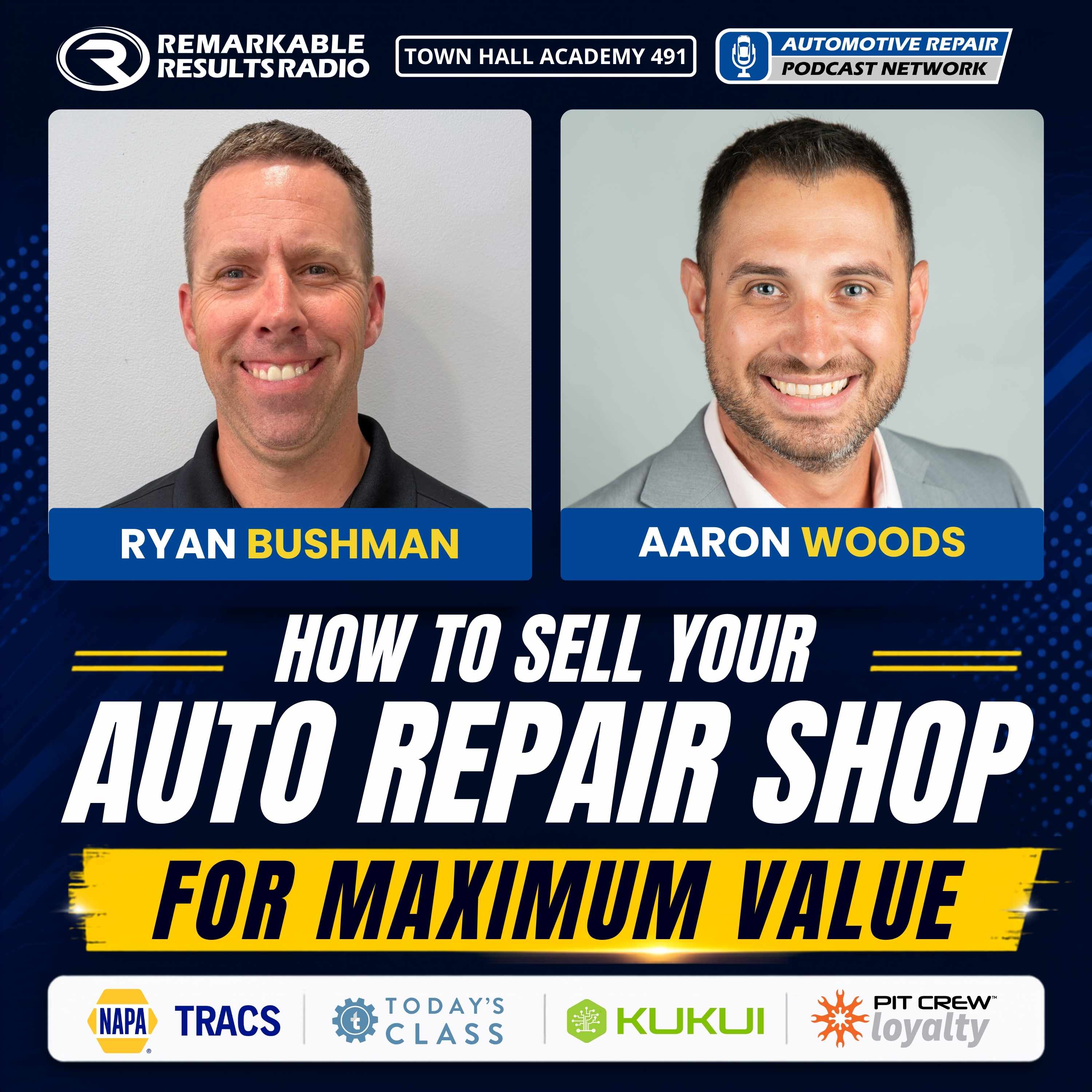
How to Sell Your Auto Repair Shop for Maximum Value [THA 491]
Thanks to our Partners, NAPA TRACS, Today's Class, KUKUI, and Pit Crew Loyalty Watch Full Video Episode *]:pointer-events-auto scroll-mt-[calc(var(--header-height)+min(200px,max(70px,20svh)))]" dir="auto" data-turn-id="request-WEB:8e59eec7-a235-4fa3-a072-956fea3fe478-7" data-testid="conversation-turn-4" data-scroll-anchor="false" data-turn="assistant"> *]:pointer-events-auto scroll-mt-[calc(var(--header-height)+min(200px,max(70px,20svh)))]" dir="auto" data-turn-id="request-WEB:49a777bf-d263-4496-bf0b-2eb3a46ac96a-11" data-testid="conversation-turn-24" data-scroll-anchor="false" data-turn="assistant"> The auto repair industry is facing a "Silver Tsunami" as thousands of shop owners approach retirement age. The challenge isn't simply selling a business; it's maximizing its value and creating a successful transition that benefits employees, customers, and future owners. In this episode, host Carm Capriotto welcomes shop owner and business coach Aaron Woods and Ryan Bushman, a recent shop owner seller, for a candid discussion on exit planning, business valuation, financial preparation, and the leadership mindset required to build a shop that can thrive without its founder. What You'll Learn Why every shop owner needs an exit strategy, even if retirement feels years away.How to transition from being the daily "hero" of the business to becoming a strategic guide.The key factors that influence shop valuation and why buyer risk impacts sale price.How creating a turnkey operation can significantly increase a business's market value.The importance of clean financial statements and separating personal expenses from business expenses.What "add-backs" are and how they can reveal the true profitability of your shop.Why investments in team development and training may strengthen valuation discussions.How defining your retirement goals helps determine the financial target your business must achieve.The value of coaches, peer groups, and industry-specific advisors during exit planning.Why finding an automotive-savvy accountant should be a priority for owners considering a future sale. The best business exits don't happen by accident. Owners who begin preparing years in advance can reduce buyer risk, increase profitability, strengthen leadership teams, and ultimately maximize their company's value. Whether retirement is five years away or fifteen, the time to start building a business that operates independently of you is now. A successful exit begins with intentional planning, disciplined financial management, and a clear vision for life after ownership. Ryan Bushman, Business Coach, Institute for Automotive Business Excellence Aaron Woods, CEO X-tra Mile Auto Care, Stillwater, OK, Business Coach, Institute for Automotive Business Excellence. Listen to Aaron’s previous episodes HERE Thanks to our Partner, NAPA TRACS NAPA TRACS will move your shop into the SMS fast lane with onsite training and six days a week of support and local representation. Find NAPA TRACS on the Web at http://napatracs.com/ Thanks to our Partner, Today's Class Optimize training with Today's Class: In just 5 minutes daily, boost knowledge retention and improve team performance. Find Today's Class on the web at https://www.todaysclass.com/ Thanks to our Partner, KUKUI Stop juggling multiple marketing tools. KUKUI’s integrated platform delivers 4x better website conversions, automated follow-up, and real-time ROI tracking. Get industry-leading customer support with KUKUI at https://www.kukui.com/ Thanks to our Partner, Pit Crew Loyalty You’re probably tired of chasing new customers who never return. We understand. Pit Crew Loyalty ends the one-and-done cycle, turning first visits into lasting, reliable revenue at https://www.pitcrewloyalty.com/ Connect with the Podcast: Visit the Website:https://remarkableresults.biz/Subscribe on YouTube:https://www.youtube.com/carmcapriottoFollow on Facebook:https://www.facebook.com/RemarkableResultsRadioPodcast/Follow on LinkedIn:https://www.linkedin.com/in/carmcapriotto/Follow on Instagram:https://www.instagram.com/remarkableresultsradiopodcast/Join Our Virtual Toastmasters Club:https://remarkableresults.biz/toastmastersJoin Our Private Facebook Community:https://www.facebook.com/groups/1734687266778976Join our Insider List:<a...
Episode 267 - Building and Scaling Auto Shops: Culture, Challenges, and the Drive to Grow With Arun Coumar
Don't get to the end of this year wishing you had taken action to change your business and your life.Click here to schedule a free discovery call for your business: https://geni.us/IFORABEDon't miss an upcoming event with The Institute: https://geni.us/InstituteEvents2026Shop-Ware gives you the tools to provide your shop with everything needed to become optimally profitable.Click here to schedule a free demo: https://info.shop-ware.com/profitabilityTransform your shop's marketing with the best in the automotive industry, Shop Marketing Pros!Get a free audit of your shop's current marketing by clicking here: https://geni.us/ShopMarketingProsShop owners, are you ready to simplify your business operations? Meet 360 Payments, your one-stop solution for effortless payment processing.Imagine this—no more juggling receipts, staplers, or endless paperwork. With 360 Payments, you get everything integrated into a single, sleek digital platform.Simplify payments. Streamline operations. Check out 360payments.com today!In this episode, Arun Coumar joins Lucas Underwood and David Roman to discuss the challenges and rewards of multi-shop ownership. Arun highlights the critical role of shop culture and management in shop performance, emphasizing how the right team can make or break operations. The conversation also dives into the evolving automotive industry landscape, touching on consolidation trends and the necessity for adaptability in both business structure and mindset.00:00 Implementing an alternative work week schedule10:26 Considering leaving a job13:46 Realizing success isn't easy19:57 Logging mileage for efficiency26:01 Focus on local expansion first29:37 Considering sole ownership vs. growth33:54 Finding purpose after life challenges42:44 Creating and defining meaning45:40 Talking about single life challenges53:06 Choosing your life's challenges58:51 Challenges in the parts distribution industry01:00:58 Discussing future market changes

The Kids In The Hall: The Outcasts Who Keep America Running
What if the kids who never fit the system were exactly the ones built to fix it? This week on Repair Shop Reckoning, Kevin Brown gets more personal than usual. After using AI to explore patterns and tendencies he has noticed in himself his entire...