Episode 267 - Building and Scaling Auto Shops: Culture, Challenges, and the Drive to Grow With Arun Coumar
Now playing — Changing the Industry Podcast
About this episode
Don't get to the end of this year wishing you had taken action to change your business and your life.Click here to schedule a free…
Key takeaways
- —Effective shop management requires a focus on hiring the right people and maintaining a positive culture.
- —Marketing strategies must be tailored to each shop's unique challenges and reputation.
- —Implementing a four-day work week can attract more applicants and improve employee satisfaction.
- —Regular performance evaluations and accountability are crucial for maintaining shop efficiency.
- —Understanding industry trends and adapting to them is essential for long-term success.
Frequently asked
- What should I consider when hiring a shop manager?
- Look for candidates with prior experience in running a shop and achieving measurable success, rather than just customer service skills.
- How can I improve my shop's marketing efforts?
- Tailor your marketing strategies to address the specific challenges and reputation of your shop, and consider changing the shop's name if necessary.
- What are the benefits of a four-day work week?
- A four-day work week can lead to increased employee satisfaction, attract more applicants, and improve overall shop performance.
▸Full transcript
Hey folks, David here, and I'd like to thank you for joining us for the Changing the Industry podcast. Lucas and I started this podcast with the goal of capturing the frank and open conversations you typically have at industry events. Those conversations cover the challenges we face in our business and lives, as well as difficult repairs, new products and services, and everything in between.
We hoped that these recordings would spur our listeners to enact the change they'd like to see in their own lives and businesses. That's also why we've partnered with the Institute for Automotive Business Excellence. My first management class was with Cecil Bullard, and his genuine passion for helping others in an honest and ethical manner permeates his entire organization. And if you need some of the Institute's help, they have a special offer for our listeners.
Click the link in the show notes and get signed up for a free business analysis. They'll go over your current situation and give you advice on your next steps. And they have everything from free resources and online classes to peer groups, one-on-one coaching, and specific help for MSOs. So don't miss out on this great offer. Click the link in the show notes.
And now on to the podcast. I feel weirdly far from the table. You are weirdly far from the table. You got backtalked at a lot? No, not really. No, no. It's just more of a deposition. It feels like it. Yeah, we wanted two tables. We didn't get two tables. Just put this Pelican box on my lap. Yeah, it'll work. Hi. Hi. How are you?
Good. It's been a long week. Has it? We've been good. Not really. Uh, I've had a lot of client and potential client meetings, and then otherwise just like hanging out with people I already knew that I don't get to see very often, just seeing how they're doing and catching up. Is that why you're here? No. That works. How's the shop? Well, that's why I can hang out down here and shoot the shit for like 3 hours and not get bored.
Um, valid. I feel that. They're good. I've got two shops that are going well and one that's not. And, uh, that was the difference— people, uh, people. And I think the, the, the one that's not doing well is the one that has been the hardest to get working right because I bought the least car count at that shop and marketing has been extremely difficult.
No matter what we seem to do, marketing is not picking up anything in that shop. Was it previous reputation, you think? No, I mean, online at least it had a good reputation, but the thing that wasn't probably very good is it was a close-to-retirement, you know, tech turned shop owner who was very grumpy, and he had a very low number of customers, but those customers absolutely loved him and paid him a lot of money, right?
And so his numbers looked okay except for car count. And I said, well, okay, he's got trained customers, it's the good area, I'll just get more of those. Yeah. And that has been— yeah, for sure. Yeah. Did you change the name? Yeah, yeah, yeah, changed the name. Kept the old— you know, I do the— it's Driven Auto Care parentheses old name. Do that for like a year and then take it off, just, um, if people search it —then that they can still find the old name.
That helps. That was the one that you were buying when we spoke to you at— No, that was the— that was the one I already had. So the one I bought in, in March, I closed on March 1st. That one's been great. That one has been fantastic. So it's actually been doing the thing it's supposed to do? Yeah, that one, uh, we took it over.
I bought it for $100,000. Okay. And I have made $200,000 this year with that. That's awesome. That's awesome. So pretty good return, I would say. Yeah. And, you know, they— it's really just the, the techs stayed. We replaced the manager. We said yes to people. We did DVIs. People had never seen a DVI before, those customers. And we changed the pricing pretty dramatically, and they didn't really notice.
Yeah, see, nobody really said anything. And so between higher approval rates on recommendations and the higher price, it's been pretty easy to make money with, uh, otherwise, you know, pretty flat cost structure. So yeah, that's kind of cool. Yeah, I wish I could have that story for all of them. I don't know if it's going to be that easy, but that's what I'm now looking for, for the fourth one.
So now is the, is the other— so your other shop, your original shop, it's doing okay? Right? Yeah, that one I did have to replace the manager again. So that— I feel bad for those customers. They keep, they keep me. That's the one that I'll always come back to. That's where my office is. It's the one closest to my house. But it, it has gone through 5 faces at the front desk in 2 and a half years.
I hate that. I hate that so much. It drives me nuts. Why'd you have to replace him? What happened? Just bad performance over time. It was different things, you know, ethics, no-call, no-shows. This last guy was just the manager, no-call, no-show. Oh yeah, really? That's bad. That's pretty bad. Yeah, yeah, he, he was a bad fit overall. He— it was his first time in the industry and it was just not, not a good— he didn't, he was not, he didn't have the aptitude to do the job well.
Yeah. So do you look for something specific? When you're looking for a manager? It's changed, I would say. It used to be pretty much exclusively aptitude and customer service experience, and it has become, you should have run a shop and achieved the numbers that I've achieved before. But now you get a very unique independent shop culture that's trying to aggressively grow and take on a lot of challenges in the industry.
And you have a 4-day work week. So that's another change I made since we last talked is 4/10s. So that, that in all your shops? Yep. Wow. So I had to do a whole California song and dance to get that through, but we did it and it, it meant that— hold on, hold on, what's the California song? You have to, you have to have a preliminary educational session with the team in the department that you are converting or trying to convert.
The informational session has to be available and posted ahead of time. You have the session. After the session, you organize a vote. The vote has to be two-thirds or greater approval rate. And if you achieve that, you have to get signatures from everybody and then mail it in to the state to— basically what it does is it raises your overtime threshold from 8 hours to 10 hours.
Okay. And it's called an alternative workweek schedule. Yeah. And it basically says you're working 40 hours a week, so we're not going to blow that threshold, but we are going to change our policy from overtime at 8 to 10, and we're going to cut a day. And so here's your schedule. We can accommodate other schedules if you need— California— and you voted on it, it's your decision.
And now I'm going to tell the state, but once it's in, every other new hire doesn't to do anything. They're just— that's what it is. Yeah. Unless they ask for an accommodation, which, you know, I'm not— I don't really think I would offer, or, you know, I can't say that. That's straight discrimination. But yeah, right. You know, I don't, I don't think, um, there's all— I'm sure there will always be reasons why you couldn't hire that person.
Yeah, right. I think that's the, that's the, the, um, you know, barrier to entry for those people. Braxton doesn't know how doors work. That seemed to be a bit of a challenge. Yeah, no, I told him, I texted, it's right there. Just take my whole backpack. Of your shed? Yeah. Okay. Now, autopilot, huh? Yes, I would actually prefer you autopilot. You're— hey, listen, your content's a lot better when it's on autopilot, you know.
Yeah, this is a professional podcast, by the way. Yeah, right. Well, so I wanted— I really did want to ask about your bus stop billboard. Yeah. Did you know you had bus stop billboards? Of course. All right, we requested it be like right in between all the strippers. So like, stripper Lucas, stripper David, male stripper. Okay, David. Yes, female stripper Lucas. I blend in though, that's what I'm going for.
They're like, Chippendales David, Chippendales Psycho. Okay. But you, on the other hand, just big goofy fat kid. That's a new kind of strip club, right? Tittle Bitties Lucas. It's like, oh, okay. Well, that makes sense. Yeah, absolutely. All right. So have you seen any results from it yet? We'll see. Yeah, I don't know. Yeah. You get your subscriber count up. Yeah. See, here's the thing is that the real issue is, is we're not like Jeff Compton.
We don't just go say really mean, terrible things that really piss people off just to get them. He's gotten really upset with the rage bait. And he's like, he's gotten upset with the rage bait. Yeah. So Jeff's gotten good at it. I've gotten frustrated because I saw somebody get hurt by it. Oh, well, he, he doesn't, he doesn't recognize that it's all rage bait.
Like, he does. He just, he just talking, right? He's just, he's saying things. Angering person. Yeah. Yeah. Well, it's not that it's like he's got gripes about the industry. Sure. So like, He doesn't realize that all he's doing is just rage baiting everybody, and then everybody's reacting to the rage bait. Sure. And then he's like, hey, we're trying to actually help the industry, not just rage bait everybody into commenting, and then it's the algorithm, and then you end up with a million view reel.
Sure. Because it's just the wrong direction. Yeah, I didn't do anything to help the industry. It was just got a bunch of people riled up. And so I don't know, it's just bothered him this week for some reason. Well, it's bothered me because I was talking to that technician and he was, he was talking about like, dude, I'm hearing Jeff talk about we should earn $100,000 a year.
I'm hearing Mike talk about this and I'm hearing this person talk about that. But it's like, dude, this kid's judging himself based on what they're saying and it's all lacking context. And he lives in the sticks of Tennessee, right? Like, and that bothers me. Have a really nice life. Making $45,000 a year, right? Like, you can buy a house, right? And, you know, have a family and stuff like that.
Sounds nice. Yeah. And so, like, you're not going to make $100,000 a year, and nobody makes $100,000 a year in that town, right? Like, that's nuts. We need to have some sort of cost of living adjustment disclaimer on those kinds of— for sure. And, and I think that's it, is like, I don't think Jeff understands that. I don't think Jeff has the business owner perspective and doesn't see it in that way.
And I think it can cause harm that he doesn't mean to cause, right? Yeah. He doesn't realize he's doing that. Yeah. And it's about like, hey, if you're not happy, leave the shop. Hey, if you're not making enough money, leave the shop. The answer is leave the shop. The answer is leave the shop. Right now, I think in the long run that probably is going to help things.
I'm not saying it's not, but I do think that in the short term it could take someone who has the limited perspective that they've heard in that show. And then they say, oh, well, I must be this person. I must be the one that needs to leave. But they don't have a full picture. Right. And so what happens? They leave and they go try and get another job and it's the same thing.
So they leave and they go try and get another job. They build a reputation for being the person that's unreliable. I wouldn't hire them. Yep. Right. You know what I'm saying? And so like, that's the thing for me is, is like, are we causing more harm than good? And it depends on that individual's context, but there's no way to apply the detailed analysis needed to be able to give advice that can shift the industry in the right direction while also tailoring it to individuals like that.
That's very difficult. It's impossible. Yeah. It's not even remotely possible. And, you know, one of the things that aggravates me is the way that we're doing it. And again, Jeff doesn't realize he's doing it. Jeff doesn't know that he's doing it. But there's so many of these content creators that are intentionally doing it right, and they're just doing it to get views.
They don't care about anything else. They don't care about the impact on the industry. And Tex will say, well, but, you know, you're just trying to keep us from quitting and you're trying to keep us oppressed so we're not making what we should make. No, I'm trying to help make sure you understand that there is a financial component to this. That has to be taken into account.
Money doesn't grow on trees. I also, maybe I'm naive, but I've, I've been able to successfully live my life so far, generally taking what people say at face value. Yes. And understanding that, you know, they're saying what they're saying, and that is genuinely what they mean when they say it, but that they are their own individual person. And that's their own experience when they're saying it.
Yep. And I do the exact same thing in real life. Yep. Yeah. But when you see content creators creating content, like, I don't— I discount 90% of it. Yeah. Of these content creators because they're just— they're talking, right? Then you meet them in real life and you're like, yeah, it's, it's easy to tell the difference between somebody who does put on a character versus people who don't.
Yeah. And it's as soon as you interact with them when the cameras are off. Yeah. You can really tell the difference. It's easier for you. Yeah. You'd be surprised how many people are fooled. Yeah. Way too many people that are like, well, or, or the way he is, like, it's not— it's also people who don't get to meet them off camera. Yeah.
And, and that is a challenge because they're not coming to this kind of trade show or something like that. Well, you know, we were just talking about Mike, right? We were talking about the You know, his shop's in bad shape, my shop's not doing what I needed to do, and they're for two completely opposite reasons. And he's exactly right of what happened.
Uh, and you look at that, you say, all of these people— and I, you know, I looked at Mike for a long time and thought, man, that's what I want, that's where I want to be. Like, I'll never forget, we were in, uh, Orlando, maybe. I can't remember where we were, but we were sitting next to a pool, and we were hanging out, and we were drinking drinks, doing our thing, you know.
And I was thinking, man, this guy's got it made, this guy's got it figured out. And then, like, the closer we became as friends, I realized, holy cow, like, he's got the same problems I've got. But from the outside looking in, people— I mean, I tell people all the time, like, hey dude, this is a lot harder than it looks. This is not Like, I'm not doing that great, but they won't even believe me when I say this isn't working like you think it's working right now.
Yeah, right. Like, my bank account's almost empty, right? And I'm trying to figure out where the money's going to come from to pay the bills. Yep. They don't care. They're like, nah, man, you got it going on. Look at that nice shop, bro. I'm paying for that nice shop is the problem. Runs are great. Yeah, exactly, exactly. And I think that that's something that gets missed.
And I think some people are so dense they can't even hear it or see it, right? They just believe what they believe. Yeah, absolutely. How are you paying your guys in California? It's a hybrid hourly plus performance flat rate. So it's $35 hourly and then it's— well, approximately, it depends on the guy, but yeah, right. $35 for the hour and then it goes up, you know, based on if they turn 25 hours, it goes up $10 an hour.
And if it, you know, that kind of thing. And so it goes up to like, what, $175 to have a living wage? Is that right? $175 an hour? I have the most I think I've ever paid somebody in a year is $150,000. Okay. So if that tells you anything, I, I don't think, I don't think I'm the most generous that, and I could be if performance, yeah, improve the PDA school.
C's. I do think, uh, you know, that's, that's where I know what my, my labor margin is and what it would continue to be if we just produce more. You know, that number doesn't really change, the margin won't change, people will get paid more, everybody wins. Yeah, that's, that's what I love about those kind of pay plans that I did. I mean, I, I did hourly for a year, no, 2 years.
Yeah, I was, I was just straight hourly and I listened to David. I basically said, I don't want any excuse for corruption. Yeah. Yeah. And I don't want to have people selling stuff they shouldn't be. I don't want people cutting corners when they're fixing cars. And I realized that it is just not enough incentive. You get apathetic for a business that— especially for a business with an absentee owner.
Yeah, for sure. You know what? If I have multiple patients Yeah, if you have multiple locations, you can't maintain a tight, tight grip on culture in the same way. Yeah. And that's where so many of these coaching companies and everything they talk about for really, really hands-on management— I can't do that. Yeah, my shops are 25 miles apart in traffic, and I can't be driving.
If for me to go to all 3 shops in a day, it's 110 miles of driving, and it takes all night, more than that to do it. Yeah, it's a full day commitment, and I have other things to do. I can't just be in a car all day long to have these quick meetings during the day with people who are busy, and I don't know when the phone's not gonna ring and I can talk to the manager.
And that's where, you know, I have very lean shops, you know, 3 guys in each shop, and to be able to go in person and sit with them is the right way to do it, but it does mean you're really having to stretch to touch all those people and maintain that culture. You like, you avoid individual conversations with your technicians, just rely on meetings with management then?
I will, I will have individual meetings with technicians, but they're not a regularly scheduled thing. So yeah, you just stop in and say hello. Yep. And so I have a great relationship with all of them. I think that's actually one of my strong suits is being able to help managers have a really good relationship with their techs. And I have great relationships with all my techs, I think.
And it does just come down to, you know, if you follow the model that we have, which nearly everybody I've hired agrees with. Yeah. And the few that haven't don't work for me anymore. Sure. You know, then it clicks. And they get— describe the model. You say I have a model. Sure. So like, what does it look like? So I'll talk about what I've gotten pushback on and, and that people who buy into it.
DVIs is the first one, and DVIs with sufficient notes and photos, even for things that are good. Okay. You know, that's an example. I have a guy who says, you want me to do this full inspection in 0.5 and you want me to take pictures and notes saying suspension components in good condition for 14 different lines. Yeah, I can't do that. I said, yeah, you can.
Yeah, I've done it. I've seen, you know, 7 other techs do it. I've been through the exact same thing. And you know what's screwed up about it is if you give them an hour, they complain about the hour too. Yeah. Give them 2 hours, they complain about the 2 hours. It doesn't matter how much. So that's one. That's the biggest pushback I get.
And then the second one is we have a I think I got this from you, a quality control checklist. Yeah. In Shopware that goes in every single repair order. And it is clean glass, clean off handprints, top off fluids, tire pressure, wheels torqued. And you have to write in there what you set, what, how much did you torque the wheels to and check off all these things.
And I have people that just don't do it and they say, oh, the advisor should do that. Yeah. And I said, no, no, like, they're not torquing wheels, right? I get that some of the checklists may look like it should be done by an advisor, but you're doing it in this shop. We— what the biggest one actually is, we have— it includes mileage out so that we're not walking out to cars all the time to close out a repair order, right?
And so that's a big one also, is you need to write down mileage out. If you don't, you're going to go back out to the car and do that. —and get it. And that kind of thing has been good for the people that say, okay, that makes a lot of sense. You know, I am the one parking the car in the parking lot.
It's going to take me 1 second to read the odometer and type it in and hit publish, and then everybody saves time in the long run, right? And so somehow my shop where I have the most buy-in on those 2 processes is the shop that is the most efficient, right? They have the same productivity numbers and they have higher efficiency despite doing more.
Right. And it just works. And it just works. Yeah. Because they're bought into it, right? They're committed to the process. What, what do you think is the issue with the other shop where we're lacking here? Right. Like, what's your thought process there? The senior tech doesn't like it. Ah, so he's killing the culture in the shop. Yeah. And this is where it's very hard to establish the right culture and then also especially turn it around.
So in— when was it? In February or in March, I let go of all 3 people that worked for one of my shops and replaced them in one month. And I'm doing that again next week with the least— the worst performing shop now. And, and so have you found the people to go back into it? Yep. How'd you find the people? Just online websites for recruiting.
Okay. Yeah, Indeed. And Having a 4-day work week helps so much with that, right? I had, uh, when I, when I let go of the manager for my first shop and then I ran it for a month, I put up the ad, I had 55 applicants in 3 days. Holy cow. And a 4-day work week for the 4-day work week. Now, not all 55 were qualified.
I put in a really aggressive job description. I wanted to make sure I wasn't having to filter through too many people. That doesn't stop everybody, obviously. Yeah, but still, 55 people. I had 12 phone interviews, 5 people in person, and I hired 3 new people. Nice. And no, does anybody at the shop know it's coming? No. Well, maybe, I don't know. This was one I, I had to set a deadline for performance must improve by here or you're losing your job.
Yeah, that deadline was November 30th, but I'm just gonna stop the bleeding, you know, it's not actually getting any better. So it's time. So tell me about how that's going to work. Are you going to go in on Monday morning and I'm going to tell the tech first that his position has been eliminated because I hired him to be a senior diagnostic technician who could potentially help out the other two shops and help me establish better QC warranty and inspection processes.
But he's also the one that refuses to put in photos and notes for good, good condition items. And so I said, well, okay, I can't work with that. And so I, I also realized it's a lot cheaper to— if I run into that difficult of a diagnostic problem, I have online, yeah, hotlines, hotlines that, that would cost significantly less. And hopefully— I've never used one, but hopefully get me to the same result.
The, the times where that technician has gone to another shop and successfully diagnosed car. He's worked for me for about 9 months. I think it's 4 times where he's really saved the day. And those are, you know, those are the cars that you lose sleep over, right? Oh, if nobody can figure it out, it's sitting in your shop for 2 months, you're burning all these hours on it, the customer's pissed off.
I get it, but I think there's— I want to try some other alternatives before I keep flushing money down the toilet, right? And so he goes first, you know, we're talking full tactical. Yeah, you know what, what it's going to look like that day. So that's first, and then the, the manager, I'll call him in the office after that, say, you know, it's not— you're not going to be the guy.
Yeah. And I'm going to be the guy for a month, and then the new guy I hired is going to come in. Okay, so he's not going to start for a month, or are you going to be the one who trains him and gets him the— so you'll work in that shop, you'll bring the new people in, you're going to work with the new people and get them up to speed, teach them how you want it done Right?
Yep. And so how long are you going to stay in that shop? So I have— I hired two— I hired and started two managers two days apart. Yeah. And they— I mean, it's been a month, but they're, they're succeeding with what was essentially a full-day crash course on here's how we do things. I have a lot of written training materials. I have video training materials.
So that is— go ahead and send that to me, please. Like, just go ahead. I don't think it works in in every shop. Because my thing is, you know, I, I, uh, have gone very much opposite direction in terms of a single shop operating model to you. Yeah, yeah. I have 3 people working at each of my shops. I have 2 techs, 4 bays, 1 manager/advisor at every shop.
And they can do, you know, $120,000 a month and make $40 grand, right? So they get paid great, the shop makes a ton of money, and it works. So, and I can, I can buy a shop like that, right? It's a cheap model. Yeah. So, and I'm, I am looking for that, as many locations as possible with that model, right? And there, Rick White hates it.
He thinks I need to be a little bigger with each shop because I have so much dependency on an individual person to show up to work every day. But that's where regional managers and district managers will come in to be able backfill. Yeah, once you get to a certain point, which is one more location. Yeah, so four locations. I've already hired the guy who will be the regional.
He's currently running one of the locations. He's, he's learning the ropes. Once he's got that one good, he's gonna find his own replacement. He's gonna go find the fourth shop. He's gonna set up the fourth shop, find his own replacement there, and then we'll have the four. And then it's a matter of saying, do we go to a different part of the country just to make sure we could do that, or do we keep creating more density in the San Francisco area?
I, I can tell you that from what I've learned about mergers and acquisitions and venture capital and that kind of thing, they would want to see you in one area. Yeah, right. Yeah, they would want to see you in one area. They wouldn't want you moving into different areas. They wouldn't want you expanding into this multi-state operation until you had a certain number of locations.
So they would want to probably see 5 to 10 shops in the area that you're in. And then if you want to expand beyond that and go beyond county lines, go beyond state lines, that kind of thing, then they would be interested in that. But what they're really looking for is they're looking for the safety and the security that's going to be present in a system where I've got 10 shops in one area or within 100 miles or whatever it is.
And those 10 shops are doing what they do. And so I can come in and buy a market, right? They're interested in that market. They're not even interested in the business necessarily. They want that market. And so that's where you get the big X multipliers. But my ego says I don't want to be bought as a market. I want to be bought as Driven Auto Care.
You know, somebody is going to come in and take ownership of the business as this business. But I mean, like, they might— they'll want to buy you, but they're going to want to buy your region. So they're going to like, hey, we're going to buy San Francisco, we don't want New Mexico. Does that make sense? Yeah. I don't think— I don't think that's the case necessarily, because if it's big enough, that's the thing.
I guess I should say this— we're not talking cash out at 20. Yeah, this is hundreds, right? At which point it is a standalone, you know, 9, 10-figure business. I know where there's one in Kansas. I know where there's one in North Carolina. Well, there might be a— yeah, yeah, look, I'll just give you— or you don't even have to buy them, I'll just give them to you, uh, payments away.
This sounds like the same line I've heard many times. Let's take over the debt. Yeah, there you go. It's all right. Yeah, I'm okay with this. All right, uh, but, but I don't want to shop yourself. But here's the other thing to think about with that though, is, is the strategy. Right? Like if venture capital says, I'm not going to use that strategy, I want them all in one area and I'm looking for this.
It makes you say, okay, they spend a lot of money in research and development. They spend a lot of money on pinpointing what works. And so, yeah, this ego doesn't work, bro. It does. Because no, because my other job is advising those companies. Right. So my consulting business, I get hired by private equity firms to advise on buying automotive investments. That's literally the other business.
So I'm on both sides, right? So you're gonna like convince them that this is a good idea is what you're telling me? Yeah, yeah, because I, because I know the characteristics they're looking for. Yeah. And it is one of the biggest things about geography is, yes, you want to buy a market and bolt it into your existing model. You already have 120 locations, you need another 2020 in a market, I'm in this super densely populated area with a ton of money and I have this great operation that spits off 15-20% EBITDA.
Great, that works. But what if I want to be a platform for a new private equity? Yeah, then I would also be hired as a consultant. Yeah. And say this, if I did that in only one geography, they would have geographical concentration risk. Yes. And if California secedes from the United States, for example, then— oh God, there we go, it started already.
You said you wanted me to get David talking. We've done it. If that were to happen, then I, you know, then it changes the business model drastically. That's very true. Now we're— so that kind of thing is also in the calculus. But I would like to keep this, you know, I am— I'd like to keep this as sole ownership as long as possible.
Yeah, I don't know how possible that's going to be as I rapidly grow, and I want— I'm like more hungry to grow than I am to retain it all as a single owner. But, and I've also told a lot of the guys that work for me, you know, there is opportunity to have ownership in this company in the long term. And, you know, I don't know when that is, but I think my experience with public markets and taking companies public and all that, I think would be valuable as well.
I don't know how realistic that is. There's only a handful of those type of companies. Monroe is the only one that's focused exclusively on automotive service that is a publicly traded company. Yeah, no other one. I think we're going to see that shift pretty quick. You think? I think so. Towards publicly traded or what? I don't know. I think we will see that shift.
I think that look, look at what happened in collision. Right. And look how fast it happened in collision. We've got a friend that Laura Gay, who does just consolidation work in collision, and it turned into 50 companies headhunting collision shops nonstop. Yeah, right. Whatever it took to get them. Uh, and so I, and I see what you're saying, right? Like, because there is that geographical risk and we have to develop outside of that.
If the building or if the business is going to be, I mean, you look at the Palisades fire, right? If all those shops were within 50 miles of that, how does that impact it? It makes a big deal, right? Like that's a, that's a big financial impact. And when you were sitting there trying to hit those numbers on the P&L, one big impact like that, the hurricane and yeah.
The hurricane in North Carolina, right? Like, it shut down some big operations because of that. So I, I can see that. Are you thinking you're gonna put like a, a COO? Are you gonna put somebody else in with you? And at what level are you gonna put that person in with you? I haven't thought that far ahead. Okay. I think that's my answer to that, because right now my question, my biggest question to myself is when we move to a second geography, which is necessary to prove that it's possible where this can work out, we can do it decentralized like that.
Yeah, I need to— the, the decision is, do I go to the second geography or do I stay in the first geography, right? That's my biggest question, which is more selfish, I guess, more self-centered question than business exclusive. I could see how it could be a self-centered decision, But I think you almost have to go, right? Because like you're dealing with new challenges, you're dealing with new demographics, you're dealing with people who have never seen your— he's got the model down.
The model either is going to work or it's not. Yeah. So he's going to move into another market and the model doesn't work the same way. It should work the same without you having to micromanage every little aspect of it, assuming you can get the right people. Yeah. But that's a big— that's a huge thing. You Yeah, I think recruit, maybe move there for 3 months and recruit, train people.
Sure. Yeah, that makes sense. Yeah, because I, you know, I have young family, wife doesn't want to move, so that kind of stuff plays into it at the end of the day as well. Yeah, sure. So, you know, I'm kind of weighing how, how much do I want it with those kind of questions, and, and would I— what would I sacrifice to go open the second region and spend all that time there away family in there.
Where's the desire to grow coming from? Like, what— at what point do you go, I'm making enough money, or I'm making good money, yeah, things are stable, I just want to enjoy my family, I just want to enjoy my time? Like, is it just because you're young and don't— don't— yeah, you haven't quite hit that yet? Or I— maybe. I think I exceed the ambitions of a lot of people my age as well.
So maybe it's beyond just that. Yeah, but I, I mean, this is the, the, the initial answer that comes to mind is like, I've, I've gone through like near-death in my life multiple times, and to, to still be here, I think I'm supposed to do something with it, and I try to make the most of it. Just put it that way. Like, like, I've, uh, I didn't, I didn't want to be alive anymore at a certain point in my life, and so to, to to be still alive today, I think I'm actually supposed to do something with that.
And I don't think it is just enjoy my family, although that has become a huge part of my life in the last year with my son being born. Yeah. So, so that I'm, I'm resting right now. Yeah, yeah, yeah. Maybe it'll change with the second and the third, maybe. But, but I, I think, you know, I actually, it was, I heard you say, you know, with your daughter, first kid was born, it changed your whole perspective on the world.
Absolutely. And I was wondering if that was going to happen to me. Yeah. And it— I don't think it did, especially— definitely not. You had a boy. Yeah, right. For sure. For sure. I'm not, I'm not, I'm not being facetious either. Like, it, it's really weird. I, I tell this people all the time, I don't know what it is. It's the first time you see your daughter, you like— you still love your son, But at the end of the day, it's like, there's like, sack up, boy.
Like, yeah, you're going to have to grow up and be a man and this is going to be a tough world for you. And so you kind of interact with them that way to just to make sure that he's resilient and just like, this isn't going to be easy, right? Yeah. You're going to grow up where the first time you see your daughter, it's like this.
I got to protect her from this entire world. Like, this is My only thing in life. This is all that matters. Yeah. And it's, it's weird. I don't know. It's really weird. It's different. That's all I'm saying is different. Yeah. I mean, it is. It's a very different world. And it is a— because I'm exact same thing, right? I've got a boy and a girl.
And so I see my need to protect her very differently than him. Right. And I see that. I see that his spirit, his drive. Is like, hey, I'm gonna take care of myself, right? I'm not, I'm not needing you to take care of me. I don't need you to guide my path the whole way, right? Right. And, and he's already expressing that in some ways, but, but she's very different, right?
And, and as a father, like, you feel endeared to her. That's your responsibility for the rest of your life is to take care of her. Um, and so I, I'm curious about that myself, right? Because like, I see, I see this drive and I see this like this, I'm gonna do this. I just don't have that motivation, right? I just— no, no, I don't think I ever did.
I look— looking back now, I think that, like, I wanted to build the shop, I wanted to grow the shop to a certain point. I, I was considering, before everything hit the fan, going into multiple shops and decided, no, I don't want to do that. That, right? I think that the one big shop is a lot to manage. It's very heavy, right?
A lot of moving pieces, a lot of massive debt associated with it. And so there's so much cash flow going out that it kind of spooked me a little bit, right? But I also figured out I don't have the motivation to grow a— you don't want to think of your own store, right? Yeah, like, so I don't understand where that Like, is it generational wealth?
Is it just to say I did it? Is it just, you know what I'm saying? I think it is. A part of it is just to say I did something, and, uh, it— I, I have a large capacity to do things. Yeah. You know, I think I've, I learned things quickly. I've got a lot of energy, you know. I might as well— I, I would go crazy if I didn't use it.
And that's where right now Right now I have— I, I get bored if I don't have work to do, right? And I don't have 10 locations where there's always a fire to put out, where I'm dealing with different types of problems and different types of financial magnitude and things like that. But I, I can sit in my office and everything is working.
Yeah. And I, I just am like, all right, well, I gotta wait for more bank deposits to go buy the fourth shop. That's literally what it feels like. And, and then whatever problems I identify, I identify them and I solve them. What are you going to do when it's not that easy? I will be more satisfactorily engaged in fewer things. I think fewer things as in one business.
That's the main thing, because right now I have multiple and that's annoying. It's really annoying. Do you think that's what's going to happen? Do you think, or do you think he's going to hit these higher tiers and it's going to be like, whoa, this is a lot? No, not him. Yeah, he's weird. I don't think so. Yeah, he's weird. Yeah, yeah. A little weird.
It's a good weird. Yeah. Yeah. I mean, I don't know. Like, we're the ones deciding if you're weird. I think we all say— No, no, no, no. I decide. Okay. Yeah. Well, I mean, we're not being disparaging. You have to be weird. To want to be that, because most people are not driven like that. You know what I'm saying? Like, they don't, they don't see, like, they're not singularly focused like you are.
Like, I've got the same goal, I've got this idea, and I'm gonna, I'm gonna get it done. I'm just driven towards that. And so you got to be a little bit weird to do that. You got also got to be a little weird to start a business in general. Yeah. And, uh, try to make it work. Yeah. Just I'm weird. He's weird.
We're all weird in our own way. Yeah. The only thing is that, like, I've gotten to a point where the work itself has to be engaging for me. Like, I've got to be entertained by the— because I get bored too. Like, I don't— I'm always doing something, working on something, right? Always 100% of the day. Yeah, there, there is no, like, there really is no downtime.
And so I've got to be, I, I've got to be engaged in a business or learning something to get me better at whatever it is that I'm trying to focus in on, right? And if I'm not doing that 100% of the time, like, yeah, I get, I get bored, right? And so you're like, okay, what's next? What's next? Yep. The, but, but at some point, like, the end goal stops being the, the I want to make more money, I want to get bigger.
The goal is like, I just want to stay engaged. I want to keep my mind fresh. I want to learn new things. Like, that's what ends up being the goal. It just shifts a little bit. Yeah, at least it did for me. Where I— yeah, I've met a lot of people, you know, twice your age that are still like singularly focused. And but you do get to the point where, like, a little depressing.
I don't— I heard Dave Ramsey tell the story about this business owner. The guy was a $100 million— like, he was extremely wealthy. He's like in his 80s. He would still show up to the shop and sweep the floor. Yeah, just because he's like, I gotta get this work done. It never stopped for him. You see what I'm saying? Like And so at what point— or that what I would question for that guy in particular is like, what did you, what did you give up to get to this point?
And what are you giving up now to still show up and sweep the floor? Like, you don't need to be there. Like, you've made enough money. Like, what are you doing? Like, go home, enjoy your grandkids or great-grandkids, right? And for that guy, he could never turn it off. And I heard that story and I was fearful of it. I'm like, I don't want to end up like that.
I want to have grandkids. I want to enjoy my grandkids. I told both my kids I want to have 20 grandkids, one every year just popping out one after another. My kids look at me like I'm crazy. Like, you want me to what? Yeah, I want you to start early, 20 years old, and I want one a year for the next 20 years.
Like one from each one of you. And I want to have 20 grandkids because I want to have a— that's his new workforce. You're weird. Is what that is. I want to have fresh babies like all the time, like new baby smell. And then I like the 1-year-old. And because they're always like, those ages are all awesome. Like the 1-year-old is awesome.
And then the 2-year-old, like you want to have that every year. Like I have another 2-year-old now and then a 3-year-old. And I don't know, it's a little weird. Yeah, that is a little weird, aye? But I want to be able to get to the point where like, okay, we're secure enough that like I can enjoy that and just spend time with them.
I think for— I heard something this morning that was essentially a conversation between two people where one asked the other, how do you create and define meaning in your life? Yeah. And the other guy said, why do you have to do that? And so the, the realization or reality that comes from that is essentially you should just be okay with right now instead of feeling like you need to go create and then chase meaning.
And yes, for me, I heard that and I kind of thought, well, you know, is that, is that how I approach my life or not? And, and I think I get so much fulfillment out of problem solving and seeing results improve and things like that, that— and I'm not really— I have an end goal, it's very obvious, it's very clear in my head, and, and that's— that exists in the present.
Yeah. And I'm not questioning it that much, I guess. I don't know, I think it would— for me it comes down to just like, I, I would like to have Lived a useful life. And that's a day-to-day, what does that look like question? So if I don't end up hitting it and I, all of the, you know, times I've gone on public forums and stated the goal and all that, it's like, oh, you know, I changed my mind.
Is what it is right now. Right now it's been singularly focused for a long time. I think that one of the themes we've had this weekend or this week here is like, at least acknowledging, like, I'm content in the situation I'm in now. Yeah. Although I'm still driven towards achieving a specific goal. But even if I don't reach the goal, just striving for it is enough for me.
Does that make sense? Like, yeah. So the, the dictionary definition of the word driven— yeah, is that what it is?— is relentlessly compelled by the need to accomplish a goal. So it's not the goal itself drives you. It's the need to accomplish something that, that you are compelled by. Sure. Relentlessly. And so that to me says, okay, it's the, it's the fact that I want to keep doing things that makes me want to keep doing things.
It's not any sort of specific end goal, material wealth or whatever. But I can still be content in what I've achieved. Yeah. And what I'm right Like, I'm still— I'm like, the issue is, and, and you weren't part of this conversation, but we, we've had, we've had conversations this week where people can never seem to achieve any form of happiness, specifically because they cannot be content with what they have.
Like, I'm like you saying, I'm alive. I'm not like— at least I'm breathing, right? Yeah. And like you, you've got a young family. That's something. Yeah. Like a lot of single guys we were talking to— what's his nuts— the other night just broke up with his girlfriend. Seemed a little sad about it. He's a young guy, but like you, you get to a certain age, you want to start a family, you want to be married, you want to, you know, you want to have at least some kind of legacy to leave, something that transcends you in your life.
He hasn't quite got there, and, and what he was developing sort of fell apart for him, and he's sort of having to start all over again. Like, so we're talking to these people and they're just like, whatever it is that they have, the little— even if it's a little bit, they're just— it's not enough. And so they're— they never achieve any type of happiness, and they're like, oh, I— you can't— happiness is not a thing.
It's like, right. It's like, well, why do you say that? Yeah, well, we've talked to other people that are like, I'm happy fixing a car. Yeah, the fact that the car left fixed, yeah, that brings me joy, right? It's like, okay, that's, that's awesome. Like, just for me being— and this is the other side of it— is when I let go of one of the managers and I had to step in and run the shop, that was awesome.
I love doing that. Really? I love running a single shop. It's like, I go be one. But I mean, like, you're also in a fairly small shop, right? Yeah. And that very much changes, right? That very much— That's why he's got a model. Yeah. He recognized the model. You get old and you were already ugly. And so then things really like, there's not a lot of runway here.
Okay. I'm just saying. Right. So how— I think I may have asked you this before, but you have how many techs and lifts? I've got 10 bays, um, 2 flats and 2— and the rest are all like conventional. So 4 on one side, 4 on the other. Uh, and I've got 4 techs right now. I plan to bring more in. I, I believe that I have identified the issue with the shop and why it's not performing like it should.
And so if I look at the data and I I analyze the data. I have a pretty good feeling for where things are going awry with the shop. I can look at all the numbers and I can pinpoint and I can come back to the issue has to lie right here, right? And so that's the area that I need to work on.
He's gotta go do what you are doing. Yeah, yeah. Where you were like, hey, these numbers aren't hitting. Yeah. We've gotta make a change. Yep, yeah. We're emotionally attached to everybody. Yeah, yeah, yeah. I gave up on that. Yeah, yeah, I did. I just, I had to. Yeah, yeah, that was, that was a huge thing. I remember, I remember being stressed out about firing people.
I don't, I'm not that way anymore. I'm not even stressed out. I'm not even stressed about firing people or anything like that. It's that, you know, so much of, of who I've become is like listening to Jeff you know, we've been friends for almost 20 years and hearing his horror stories of how he was treated and the way things went. A lot of other technicians that are close friends of mine and how they were treated and the way things went for them.
And I don't want to be that right. And but I also hear them say over and over again, well, I don't want to talk about efficiency. Of course you don't, because it means you have to do something right. It means this is the proof of how much effort you put into your job. Or how good you are at your job. I know you don't want to talk about it, but if you're not good at your job or you're not putting the effort in, the reality is, is that money does not grow on trees.
I can't just do this forever, bro, and I can't pay you the big bucks and you not be right. And I can't pay you the big bucks and you not fix the car. Yep. What a miserable disconnect we have. The quality of the repair doesn't drive revenue. It's the efficiency of the repair. Did it get done on time and on budget? Yes or no?
If yes, then we'll, we'll make money. If no, yeah, then we're screwed. I don't care how good the quality is. Customer at the end of the day doesn't give two flips whether every— like, uh, dude that was just in here, he's got to clean everything. That's what he told us. He's got it. He's like I can't get the car done on time because I gotta feel like I cleaned, like I gotta clean everything, right?
It's like, okay, well, customer doesn't know or care that you clean those bolts, right? You know and care, but also the car didn't get done on time and we ran over, we ran over on time and budget. Well, we're not going to make any money now, right? And so like, it doesn't matter. The quality ends up being secondary to efficiency. That's depressing.
Yeah. What other industries like that? I mean, most, the large majority of the trades are like that. Large. Really? Yeah. Carpentry, HVAC. And, you know, we compare ourselves to them, but nobody that is comparing us to them has ever worked in that field. And so I have seen those other sides of that. And I'm going to tell you right now, it doesn't always work nearly as well as they would love for folks to believe it does.
I'll see some really crappy contractor work. Yeah, exactly. Really shitty contractor work. Yeah. There's the customer-facing side of it and then the non-customer-facing side of it. Exactly. If you're fixing an oil leak that wasn't dripping on the ground, the customer's paying for something, not realizing a single ounce of value from it. In the same way that if the ducting of your new central AC is a little janky, right?
It works, right? Who cares? 100%. Yes, 100%. And it was done a week faster. Right. And that's the thing is like when you talk to those guys and there's people who are interested in leaving that industry to come to this one. Right. And we're talking about this one's shit and they're talking about that one's shit. The reality is, is like, A, the workforce is not so great these days.
Right. Let's be honest about it. There's some really great technicians and some really great, you know, HVAC guys out there, but the majority is not the really great, right? They, they are the, the really greats are the exceptions, not the rule. I don't— this is, this is one of the things I really do not understand is people that can show up and knowingly do a bad job.
I think that drives me so crazy and And it, I see it all the time. It's called lazy. It's called lazy, but it's, it's also just a complete lack of self-esteem. Yeah. And where does that come from? What, what happened? What happened to you? Who hurt you that made it so easy for you to justify just darkening? Majority of the population's okay.
We're just getting by. Yeah. Right. And I'm, you know, what was it that Tim Kite said? He was talking about the mountain of average. And he's like, at the edge, there's this like boundary that is the edge. And, and when you cross that, it is both productive and very uncomfortable. So we call it productive discomfort. And he said the problem is, is that when you go from good to great, like you cross that boundary.
Like, there's nothing wrong with average. There's nothing wrong with just being okay. It's just not excellent, right? And so a lot of people go back and say, I'll just be average. I don't want to And you've probably heard the— your life's going to be hard no matter what, you have to pick how you make it hard. And there's the lazy way to make it hard, which means you are, you are influenced heavily by the difficulties of life going on around you and the fact that taxes are always going to happen.
So if you don't make a lot of money to supersede the taxes, then you're, you're going to live paycheck to paycheck. And if you're buying the cheapest and most readily available food, then you're gonna get fat. And if you're, you know, sleeping until you wake up and not when your alarm goes off, then you're not going to have as many hours in the day to then go do productive things as other people.
So it's all those kind of decisions you make. We're on the other side of it. It's— you got to go out of your way to buy the right food and eat healthy. Yeah, you got to go out of your way to actually deliver a good work product in an efficient time manner. You got to go out of your way to set an alarm and then wake up when it's uncomfortable.
Yeah, so pick. Exactly. And a lot of people, it kind of— a lot of people choose to not pick, and they like try one little thing that they think they need to get better at, and then go over here, and they change their focus all the time, and they never actually get anywhere. Let it happen to them. Yeah, let it happen to them.
Yeah, this is such a serious podcast. Can compared to our last couple. I know, this is kind of weird. Yeah, this was a good one. Break it out. He's got, he's got me thinking about a lot of things. Yeah. And now I'm super depressed. Thanks. I started getting super depressed after our talk last night, and so now like I'm really— I'm actually like, you're very inspired by you.
Like, you're, you're— yeah, I'm not kidding, 100%. Like, I enjoy having you on the podcast specifically because like I find you unbelievably inspiring. Like, and, uh, like, I want to be him when I grow up. That's what I'm like. What? So since we last talked, what's changed in your shop? Absolutely nothing. Really? I'm there less. Okay. You were already there barely. Oh no, it's so bad now.
Yeah. I'm sorry. I'm the disengaged owner that doesn't give two craps and I just run everybody off. That's me. Yeah. Okay. Well, I yell at my customers. I'm like, what? It's bad. Yeah, I'm not— I don't want to be that way. I've gotten that way. And that, you know, just coming out here and kind of talking to people, like, I should probably stop doing that.
Um, what, the talking to people thing? Talking to people, running a customer— you just, you get so frustrated with these people. Just like, like, you guess I get so frustrated with Like, listen, lady, like, I know you understand how this works. I don't understand what we're doing. Like, let me try to explain it to you without me being overly condescending. And it comes off condescending sometimes.
But, um, no, like, uh, you know, you got to make some hard decisions. You're absolutely right. Like, at the end of the day, like, I'm choosing to make things at my shop more difficult because I'm making certain choices where If I just made different choices, it would still be difficult, but things would be better in different ways. Yeah. And ultimately, that's what you have to sit down and do and go, okay, like, yeah, I can't be married to everybody.
Like, at the end of the day, I got to let some people go. I, you know, I've got to, I've got to set the boundaries where people and make sure that they don't cross them. And I'm just going to empower Juan to to kind of do things, uh, differently, um, rather than him just rely on me, go, yeah, whatever. So we'll see what happens.
Okay. Do you have any new radical business ideas? No. No. Or simple business ideas, I should say. Not radical. We're probably going to have to go to a hybrid system. Yeah, I— we— I've tried, I've tried every which way. Like, I We really have tried. At the end of the day, as well-intentioned as everybody is, I think apathy does set in. I wouldn't say— I wouldn't call it apathy, it's complacency.
So they, they just get comfortable. I'm making X amount of dollars no matter how much work comes out, right? And they just— they never— they don't push themselves. And the other thing too is just the the level of acceptable quality is, is going to have to kind of shift and we're going to have to move towards at the end of the day, like 85% is fine as long as the car gets done on time.
Yeah, yeah. Where we're pushing too much towards 100 and the car doesn't get done on time. So it's like, or the car just doesn't get done at all or doesn't get done. Yeah. Or we're fixing shit for free because it's like, can't leave it like that. It's like, no, we're going to leave it like that or we're going to— or they're going to buy it like one or the other.
Like, that's how it is. And so, yeah, like, you just got to make hard decisions. I've had interesting conversations this week and heard from a lot of the speakers and things like that, that the industry as a whole including parts distribution, suppliers, things like that. Everybody is hurting for having overreached in expenses and cost and investment. And now they're kind of scrambling to make it all work again.
Yeah. Because, and I think, you know, you walk around at Apex and it's a little stale, I would say. You walk around at SEMA and it's quite dynamic and and fresh, and there's a lot more people over there. Yeah. And that being said, it is still the enthusiast, you know, discretionary spend industry. And so it's not, you know, you can't depend on that as a long-term sustainable business model for everybody.
And that's not really what we talk about here anyways. And here, you know, there's a giant multi-billion dollar bankruptcy that's made all the headlines and, and it's because of tariffs and cash flow. But then you find out they hid $2 billion of factored accounts receivable, and it's like, okay, well, that's not good. And, um, we, we in my consulting business talk with a lot of parts distributors who aren't the big three, and they're all getting killed by the big three who are just buying every single, uh, good location that they can, doing a great job of winning business from shops and retail customers.
They're, they're serving everybody, they're everything to everybody, monopolizing the market. They're monopolizing the market, but there's enough competition that there's no regulation involved in it. Yeah. And, um, and then you get to us at the bottom of the supply chain, and we have technician shortage, and we have management issues, and we have all this competition and so much debate about how we should do things, and I'm sure every day a shop owner is getting arrested for doing something illegal.
Because it's just, even today, you know, and we thought that's kind of a thing of the past. No, not really. No, it still happens. And it's not just for giving somebody severance in pennies. Yeah, yeah. You know, the Georgia guy who did that. But I think, you know, I'm interested to see what happens next. And I think, you know, this changing the industry as a example of, of what we're trying to accomplish here.
And you're one of, you know, several different kind of influencers in that space. It's, it's— we, we are at the beginning of what needs to happen, I think, and it will hurt for a lot of people. Yeah. And who's, who's gonna be left over at the end has to have a really solid— for sure— sort of Well, it's like, uh, Michael Smith and I, and you know, you and I have talked a lot about Michael Smith here lately, but it's one of the things I think about is, you know, when I first had that conversation with him, I took it as he was trying to say I need to sell my shop.
And then he stopped and he said, no, no, I don't think you understand what I'm saying. I'm saying you're going to be competing in a different market in 10 years than what you're competing in now, and you're looking at this like this is the market that you're going to be in, this is the market you're going to operate in. This is not going to be the same market in 10 years.
You're not thinking ahead. Yeah, you're thinking about right now. You need to be prepared for what this looks like. And even if consolidation doesn't come in, it's going to change a lot. But if consolidation does take hold in the mechanical space, it is going to be a different world. You're going to be competing with people you've never competed with before. Yeah, like me.
So, you know, it's only 2 and a half years. And, and so that's— and, and so Michael Smith does talk a lot about What is the demographic of current shop owners and what is just going to happen? It has to happen. It has happened. Rick White's flicking us off. That's good timing. But yeah, I think, you know, that I fully agree with him in that prediction that everything that he has said is going to happen as far as technology.
What kind of cars are we working on? What do those repairs look like? Who is working on them? What tools are they using to work on them? Who owns the businesses? How does the market as a whole and the businesses ownership within it shift and change? And, you know, I am part of that and have the opportunity to make the kind of decisions that help those predictions happen.
Well, tell you what, I'm going to split my shop up into a couple quadrants. Yep. And then you can come buy my shop. I'll buy 3 shops and you'll get more money out of it. Yes. Yeah. All right. It's going to work great. I love this. I love this. Also, I need to point out, I don't know if y'all know this, but Mike Allen, he stopped taking the, uh, the, uh, Summer Olympics over there, and, uh, because it was bothering him and he had fart breath is what he said.
But ever since then, he said his boobies got super puffy. And so now every time I see him, because they stick out like a titty twister, he's like really upset. He's like, dude, he's like, I'm purple, it's like I'm hurting, stop. I think you're just— is that bullying? Do we need to have a— no, it's not bullying. I'm worried. We need to get Braxton the principal involved.
Braxton is— is very— Braxton will cry if you look at him the wrong way, okay? He's very sensitive. You got to be very careful with Braxton. I just met him today. Did you? Yeah, I said you've probably heard my voice for it, that as the way I've heard his name before. And he said, yep, I know who you are. I was like, great, good.
Thank you for being here. It's good to be here. Yeah, that was an awesome episode. Yeah. Thank you for listening to the Changing the Industry podcast. If you enjoyed the show, do us a favor and leave us a review on your favorite podcast player, and don't forget to set it to automatically download the latest episode. Our efforts with this podcast, the YouTube channel, and the Facebook group wouldn't be possible without the support of our awesome sponsors, so please Please take a moment, check them out by clicking on the links in the show notes.
More from Changing the Industry Podcast
Episode 285 - Bad Reviews Can Lead To Better Practices With Brett Hunziker
Don't get to the end of this year wishing you had taken action to change your business and your life.Click here to schedule a free discovery call for your business: https://geni.us/IFORABEDon't miss an upcoming event with The Institute: https://geni.us/InstituteEvents2026Shop-Ware gives you the tools to provide your shop with everything needed to become optimally profitable.Click here to schedule a free demo: https://info.shop-ware.com/profitabilityTransform your shop's marketing with the best in the automotive industry, Shop Marketing Pros!Get a free audit of your shop's current marketing by clicking here: https://geni.us/ShopMarketingProsShop owners, are you ready to simplify your business operations? Meet 360 Payments, your one-stop solution for effortless payment processing.Imagine this—no more juggling receipts, staplers, or endless paperwork. With 360 Payments, you get everything integrated into a single, sleek digital platform.Simplify payments. Streamline operations. Check out 360payments.com today!In this episode, the conversation focused on real-world challenges faced by shop owners and technicians, including the complexities of managing customer expectations and navigating negative reviews. One concept discussed was the need for transparent diagnostic processes and detailed communication, especially when customers question pricing or feel they already know the issue with their vehicles. A key theme that emerged was the importance of accurate shop management—covering everything from parts inventory to internal controls in software like Shop-Ware—to ensure profitability and reduce clerical errors.00:00 Out-of-province vehicle inspections06:53 Florida driver's license language law15:54 Construction mistake with leaning structure16:42 Visiting the 9/11 Memorial Museum23:08 Challenges of Replacing Headlights27:58 Car repair frustration and miscommunication32:35 Discussing diagnostic trouble codes37:32 Introducing Whisperflow for Note-Taking47:24 Customer dissatisfaction with tire pricing50:29 Dealer pricing and customer experiences56:11 Adjusting labor rates and pay structure01:01:02 Evaluating Business Efficiency and Labor01:09:15 Old machinist's inventory strategy01:09:52 Buying and selling steel
Episode 284 - Managing Stress and Leading a Young Team in the Automotive Industry With Trey Holley
Don't get to the end of this year wishing you had taken action to change your business and your life.Click here to schedule a free discovery call for your business: https://geni.us/IFORABEDon't miss an upcoming event with The Institute: https://geni.us/InstituteEvents2026Shop-Ware gives you the tools to provide your shop with everything needed to become optimally profitable.Click here to schedule a free demo: https://info.shop-ware.com/profitabilityTransform your shop's marketing with the best in the automotive industry, Shop Marketing Pros!Get a free audit of your shop's current marketing by clicking here: https://geni.us/ShopMarketingProsShop owners, are you ready to simplify your business operations? Meet 360 Payments, your one-stop solution for effortless payment processing.Imagine this—no more juggling receipts, staplers, or endless paperwork. With 360 Payments, you get everything integrated into a single, sleek digital platform.Simplify payments. Streamline operations. Check out 360payments.com today!In this episode, Lucas and David are joined by Trey Holley, a shop owner from Thomaston, Georgia. Trey shares his journey from being a lifelong mechanic to learning the ropes of business ownership, highlighting the unique challenges faced in small Southern towns. The conversation touches on the importance of supporting fellow shop owners rather than viewing them purely as competitors, and Trey offers insight into the work-life balance struggles that led him to prioritize both his health and the building of a strong, supportive team.00:00 Atlanta airport's massive scale03:41 Long walks at airports06:27 Thunder Valley racetrack experience10:30 Southern business challenges with generosity13:29 Overwhelmed by business demands19:09 New guy in town setting up20:59 University town business challenges22:34 Building Industry Relationships26:46 Discussing business challenges with spouse31:14 Discussing labor cost strategy35:32 Quality control and final checks38:55 Balancing work and family time40:33 Dealing with family anxiety44:57 Balancing multiple responsibilities47:21 Discovering the Enneagram for Communication49:12 On choosing the right people
Episode 283 - Revamping Trade Shows While Building Industry Community with Tonnika Haynes
Don't get to the end of this year wishing you had taken action to change your business and your life.Click here to schedule a free discovery call for your business: https://geni.us/IFORABEDon't miss an upcoming event with The Institute: https://geni.us/InstituteEvents2026Shop-Ware gives you the tools to provide your shop with everything needed to become optimally profitable.Click here to schedule a free demo: https://info.shop-ware.com/profitabilityTransform your shop's marketing with the best in the automotive industry, Shop Marketing Pros!Get a free audit of your shop's current marketing by clicking here: https://geni.us/ShopMarketingProsShop owners, are you ready to simplify your business operations? Meet 360 Payments, your one-stop solution for effortless payment processing.Imagine this—no more juggling receipts, staplers, or endless paperwork. With 360 Payments, you get everything integrated into a single, sleek digital platform.Simplify payments. Streamline operations. Check out 360payments.com today!In this episode, Lucas and David are joined by Tonnika Haynes. Tonnika shares her experiences navigating trade shows like Vision and ASTA, highlighting the challenges of scaling events while maintaining their community feel. The conversation touches on the struggle to balance profitable training with meaningful content for shop owners. They also discuss the importance of grassroots networking and accountability within industry associations, emphasizing the need to evolve while remembering what made previous events special.00:00 Trade show insights and takeaways04:45 Struggling to secure instructors09:25 Improving trade show quality11:08 Evaluating training investment costs15:18 Investing in employee training18:21 Challenges in Automotive Training22:41 Getting great deals at the show23:30 Boosting vendor sales at trade shows27:40 Considering a move to a convention center30:58 Regional networking events in Asheville35:07 Adjusting content for wider appeal37:22 Demand for hands-on Tesla class41:53 Early board experiences discussed42:36 Addressing organizational dysfunction46:57 Launching the new podcast52:03 Discussing video production deadlines53:03 Braxton starting a media company56:04 Introducing the next topic
Bonus Episode - Emily Oliver On Keeping It in the Family While Facing Challenges and Growth at a Small Auto Shop
Don't get to the end of this year wishing you had taken action to change your business and your life.Click here to schedule a free discovery call for your business: https://geni.us/IFORABEDon't miss an upcoming event with The Institute: https://geni.us/InstituteEvents2026Shop-Ware gives you the tools to provide your shop with everything needed to become optimally profitable.Click here to schedule a free demo: https://info.shop-ware.com/profitabilityTransform your shop's marketing with the best in the automotive industry, Shop Marketing Pros!Get a free audit of your shop's current marketing by clicking here: https://geni.us/ShopMarketingProsShop owners, are you ready to simplify your business operations? Meet 360 Payments, your one-stop solution for effortless payment processing.Imagine this—no more juggling receipts, staplers, or endless paperwork. With 360 Payments, you get everything integrated into a single, sleek digital platform.Simplify payments. Streamline operations. Check out 360payments.com today!In this episode, Emily Oliver joins the podcast to share her journey of taking over a small family auto repair shop in Gloucester, Massachusetts. Emily talks about the challenges of modernizing operations, from adopting new software like Shop-Ware to implementing more thorough documentation and communication processes with customers. The conversation also highlights the complexities of hourly billing in auto repair, the challenges of managing family roles in business, and the importance of continuous learning and adaptation as the shop grows.00:00 Family auto shop's history08:56 Simple billing system explained10:55 Tracking time in auto repair bays19:04 Standardizing Inspection Processes23:10 Issues with technician pricing30:07 Convincing family about car maintenance36:33 Communicating with customers39:47 Dealing with other mechanics' issues46:27 Early challenges and learning curve54:21 Managing finances and staying focused56:10 Discussing parts pricing strategy01:01:21 Gaining insights from peer feedback
Related across the catalog
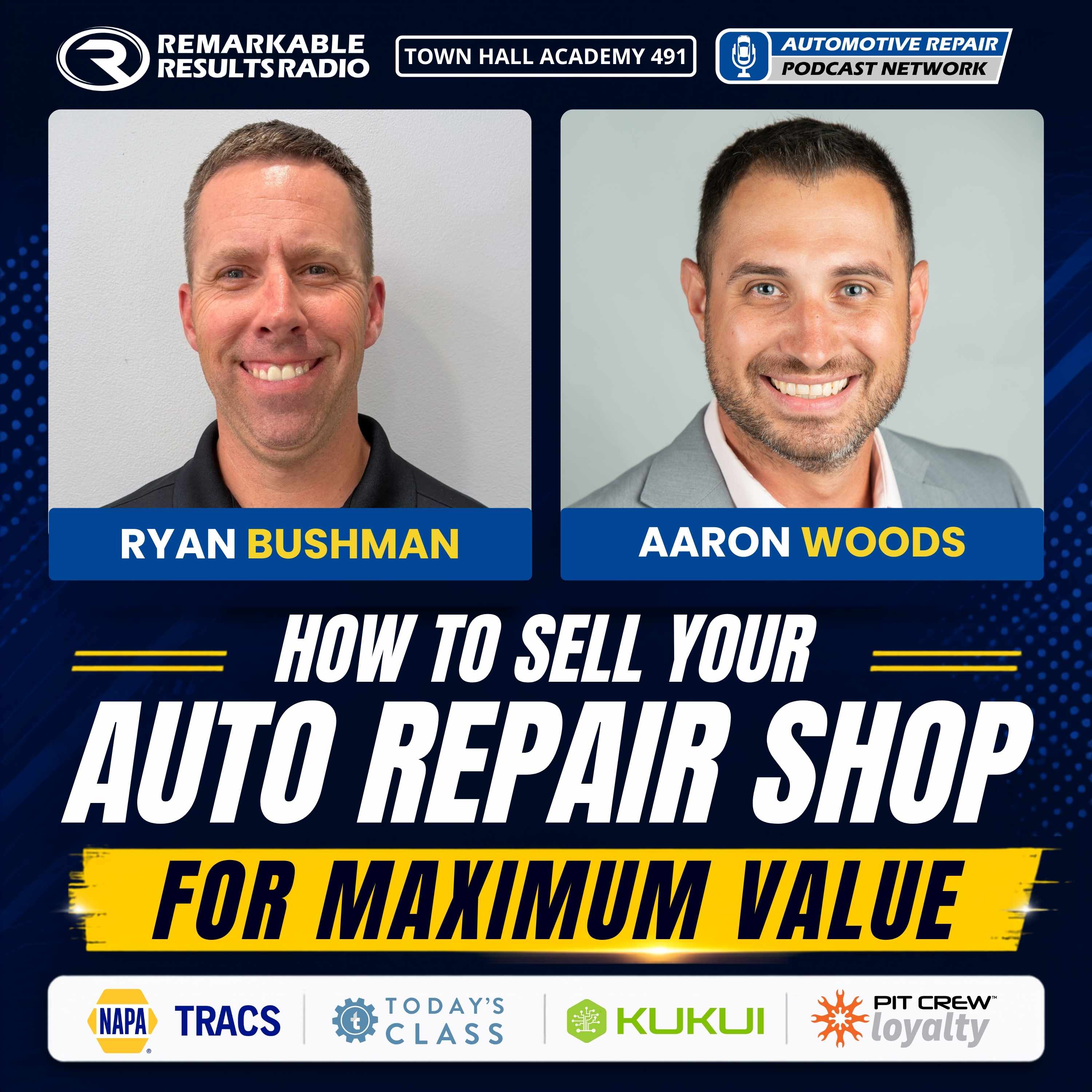
How to Sell Your Auto Repair Shop for Maximum Value [THA 491]
Thanks to our Partners, NAPA TRACS, Today's Class, KUKUI, and Pit Crew Loyalty Watch Full Video Episode *]:pointer-events-auto scroll-mt-[calc(var(--header-height)+min(200px,max(70px,20svh)))]" dir="auto" data-turn-id="request-WEB:8e59eec7-a235-4fa3-a072-956fea3fe478-7" data-testid="conversation-turn-4" data-scroll-anchor="false" data-turn="assistant"> *]:pointer-events-auto scroll-mt-[calc(var(--header-height)+min(200px,max(70px,20svh)))]" dir="auto" data-turn-id="request-WEB:49a777bf-d263-4496-bf0b-2eb3a46ac96a-11" data-testid="conversation-turn-24" data-scroll-anchor="false" data-turn="assistant"> The auto repair industry is facing a "Silver Tsunami" as thousands of shop owners approach retirement age. The challenge isn't simply selling a business; it's maximizing its value and creating a successful transition that benefits employees, customers, and future owners. In this episode, host Carm Capriotto welcomes shop owner and business coach Aaron Woods and Ryan Bushman, a recent shop owner seller, for a candid discussion on exit planning, business valuation, financial preparation, and the leadership mindset required to build a shop that can thrive without its founder. What You'll Learn Why every shop owner needs an exit strategy, even if retirement feels years away.How to transition from being the daily "hero" of the business to becoming a strategic guide.The key factors that influence shop valuation and why buyer risk impacts sale price.How creating a turnkey operation can significantly increase a business's market value.The importance of clean financial statements and separating personal expenses from business expenses.What "add-backs" are and how they can reveal the true profitability of your shop.Why investments in team development and training may strengthen valuation discussions.How defining your retirement goals helps determine the financial target your business must achieve.The value of coaches, peer groups, and industry-specific advisors during exit planning.Why finding an automotive-savvy accountant should be a priority for owners considering a future sale. The best business exits don't happen by accident. Owners who begin preparing years in advance can reduce buyer risk, increase profitability, strengthen leadership teams, and ultimately maximize their company's value. Whether retirement is five years away or fifteen, the time to start building a business that operates independently of you is now. A successful exit begins with intentional planning, disciplined financial management, and a clear vision for life after ownership. Ryan Bushman, Business Coach, Institute for Automotive Business Excellence Aaron Woods, CEO X-tra Mile Auto Care, Stillwater, OK, Business Coach, Institute for Automotive Business Excellence. Listen to Aaron’s previous episodes HERE Thanks to our Partner, NAPA TRACS NAPA TRACS will move your shop into the SMS fast lane with onsite training and six days a week of support and local representation. Find NAPA TRACS on the Web at http://napatracs.com/ Thanks to our Partner, Today's Class Optimize training with Today's Class: In just 5 minutes daily, boost knowledge retention and improve team performance. Find Today's Class on the web at https://www.todaysclass.com/ Thanks to our Partner, KUKUI Stop juggling multiple marketing tools. KUKUI’s integrated platform delivers 4x better website conversions, automated follow-up, and real-time ROI tracking. Get industry-leading customer support with KUKUI at https://www.kukui.com/ Thanks to our Partner, Pit Crew Loyalty You’re probably tired of chasing new customers who never return. We understand. Pit Crew Loyalty ends the one-and-done cycle, turning first visits into lasting, reliable revenue at https://www.pitcrewloyalty.com/ Connect with the Podcast: Visit the Website:https://remarkableresults.biz/Subscribe on YouTube:https://www.youtube.com/carmcapriottoFollow on Facebook:https://www.facebook.com/RemarkableResultsRadioPodcast/Follow on LinkedIn:https://www.linkedin.com/in/carmcapriotto/Follow on Instagram:https://www.instagram.com/remarkableresultsradiopodcast/Join Our Virtual Toastmasters Club:https://remarkableresults.biz/toastmastersJoin Our Private Facebook Community:https://www.facebook.com/groups/1734687266778976Join our Insider List:<a...
Ep 96 - Jesse Jackson | The Truth About Selling Your Shop to Private Equity
Tekmetric transformed my shop. Plain and simple. Want that for yours? Touch HEREASTA is coming up September 24-26 in Raleigh. Be there or be square, dog! Register now and use code confess25 for $25.00 off your registration. Sign up HERETurnkey Marketing takes the stress of doing something I'm not good at off my plate. And gives it to someone who is. Click HERE for more.Tired of your shop’s social media looking like every other repair shop on the internet? Stand out with 47 Consulting. Learn more HERESend your service advisor to hands down the BEST service advisor training in the industry (even other coaching companies agree). It's Elite Worldwide's Masters Program. The next one is happening in Dallas Texas, September 10-12. Learn more HEREWhen I used the maintenance tool for the fist time with Detect Auto, my mind was blown. My advisors had the same reaction - and then SO MUCH MORE TIME. Learn more about Detect Auto and book a free demo now!Jesse Jackson is the CEO of Mango Automotive and knows a thing or two about scaling an auto repair business. Mainly because she scaled to 8 Figures in 3 Years. Yeah. Pretty good. She tells Mike why it's important to her to help shop owners retire comfortably, the realities of private equity buyouts, and innovative solutions like the new co-op model aimed at giving small shop owners a fairer shot at big multiples.Email Jesse - jesse@mangoautomotive.comTimestamps:00:00 Why the gap between private equity & shop owner deals matters01:01 The surprising drag bar origin of the podcast logo02:14 Jessee’s family business journey: three generations, tough choices03:29 Why Jessee hated the shop as a kid…and college “studies”04:21 Why teaching wasn’t in the cards—parenting, patience, and expectations05:57 Public vs. private school and family debates about education07:06 Trades, college alternatives & raising hands-on kids08:33 Kids figuring out life—boomerangs and avoiding $100k mistakes10:06 Official intros: Mike Allen, mother of seven, owner of eight shops10:35 Mike’s unconventional leap from environmental engineer to automotive mogul11:46 Growth secrets: from 0 to $17M in four years13:10 The ultimate session: “Growing from zero to eight figures”14:41 Acquiring shops: The stories, motivations, and the human side16:35 Shop owners and retirement dreams—how Mango is changing the game19:11 The “1 to 3 out of 100” rule—finding shops worth acquiring20:05 The evolution of Mango’s team and Jesse’s focus on marketing & acquisitions22:45 Which shops do they buy? Turnarounds vs. high performers23:10 Shattering revenue records—and a little friendly competition24:32 Can the next gen kids take over? Mike’s family talks legacy26:08 The 30-by-2030 vision: getting rolled up with equity27:01 Why the current system feels broken—and how the Mango co-op could fix it29:35 Jessee’s TechMetric ad break – Shop life made simple31:09 The real question: Is selling to PE a betrayal or a smart exit?32:06 Getting honest: Life, legacy & why helping owners matters34:43 How the Mango co-op actually works—details & process36:44 What’s next? Growth, challenges & why five years feels like a lifetime39:00 Favorite markets, new territory, and expansion goals40:29 The thrill of the shop game—and the hunt for the next big thing41:44 Want to sell your shop or join the co-op?

The Kids In The Hall: The Outcasts Who Keep America Running
What if the kids who never fit the system were exactly the ones built to fix it? This week on Repair Shop Reckoning, Kevin Brown gets more personal than usual. After using AI to explore patterns and tendencies he has noticed in himself his entire...
