Stop Playing Small: Adam Coffey on How to Multiply Your Business Value Like A Private Equity Pro
With Adam Coffey
Now playing — Master Tech to Millionaire
About this episode
On this episode of Master Tech to Millionaire, Adam Coffey breaks down how private equity isn’t some mysterious Wall Street game—it’s a repeatable system for…
Key takeaways
- —Understanding private equity is crucial for maximizing the value of your business.
- —Shop owners should consider diversifying their assets to mitigate risks associated with relying solely on their business.
- —The concept of EBITDA is essential for evaluating business performance and preparing for sale.
- —Engaging in a quality of earnings assessment can significantly impact the perceived value of your business.
- —Networking and competition among brokers can lead to better representation and pricing when selling your business.
Frequently asked
- What is EBITDA and why is it important?
- EBITDA stands for earnings before interest, taxes, depreciation, and amortization. It provides a clearer picture of a company's operational performance and is commonly used in valuations.
- How can I prepare my business for sale?
- Preparing your business involves cleaning up financial statements, conducting a quality of earnings assessment, and understanding your company's market value to present it in the best light.
- What should I consider when selling my business?
- Consider hiring multiple brokers or investment banks to create competition, ensuring you get the best representation and pricing for your business.
▸Full transcript
Adam Coffey, you rock star! Good to see you. What are you doing? It's good to see you, brother. I'm looking forward to seeing you live here pretty soon and, and, uh, being in the same room together. Well, I tell you, you know, Adam, you've been a strategic advisor for Houston Boston Partnership. We love you. Um, you know, obviously, um, you know, why don't you tell Um, people are listening to this about your books and they're sitting on the back there, which is awesome.
It— and you know, when you, when you talk about— I'll tell you a fun story before we get into, um, really breaking down some questions I have for you to answer for the audience. And that was, um, Charlie Zalacos, which, you know, Charlie, you've been on calls with him and He's certainly a rock star in the industry. One day I was over at his house and I think you and I had just reached out and we were going to start working together.
And Charlie goes, hey, man, I really want to learn about private equity. And he goes, look at these books I got. And I go, well, here's his phone number. He goes, how are you always a step ahead? Well, yeah, that's great. You know, it's been happening more and more where I'm just out in public. I got to be mindful of that. People just walk up to me.
You're Adam Coffey. I read your book. I was on a cruise ship, new Disney cruise ship, sitting in their new thing called, you know, it's like the Haunted Mansion bar and, you know, very cool place. You know, people were walking up to me like, you're Adam Coffey. And I'm like, no, I'm not. Oh, I'm not. Yeah. What did I do? Like David Letterman.
You're Adam Coffey and I'm not. No. Yeah. So, yeah, well, great success with your books. You're a bestselling author. You know, if you guys have not read his books, why don't you give us a rundown of your books and I'll get into some Q&A with you, if you don't mind, Adam. Yeah, so, so sure. So people who don't know who I am, you know, 4 quick things about me.
Number 1, veteran US Army military. Thank you for your service. Thank you. Military taught young version 1.0 Adam about discipline, teamwork, leadership. Number 2, engineering background. You know, I parlayed my, my military schooling, wound up becoming an engineer. Engineering made me a very meticulous planner. You know, engineers always have a plan. There's 1,000 steps to it, you know, and we follow that plan.
Very useful skill later on when I was building companies and engineering an exit. Number 3, Jack Welch. I was— I cut my teeth, started in engineering, then crossed over into business at General Electric, which at the time Tech Doesn't Exist. GE's number 1 on the Fortune 500 list. Jack Welch is the world's most admired CEO. What a great place. What a book.
You know what? What a great place to learn as a young up-and-coming executive how to run a business from the world's most admired CEO and the Fortune number 1 company. So 10 years there, and then I spent 21 years. I left in 2001. Jack retired 2001. You know, a bunch of GE leaders left in 2001., and I didn't know what the heck private equity was.
And, and I was recruited to be a CEO for the first time and, you know, and said yes, I was chasing money in title, but I dumped into private equity. It was in the earlier stages kind of still of its growth, even though it'd been around since the '80s. And I, um, you know, I spent 21 years as a CEO building multiple companies, multiple industries for 9 different private equity firms.
I had $2.5 billion in exits. I bought 58 companies and put, put them together. And, and, you know, and I got bored, you know, Todd, I really did. I had been, been a guest lecturer, guest speaker in at the UCLA Anderson School of Business in the executive MBA program, loved mentoring the next generation of business leaders and changing lives. Man, that's so fun.
Go ahead. You know, it is. And that's where I, you know, that's when I wrote my first book. And so The Private Equity Playbook came out in early 2019. And it's been a number one bestseller in like a dozen different countries. It, it never leaves the top 10. You know, it's now handed out by large PE firms to incoming associates. It's required reading in a lot of, uh, um, executive MBA programs around the country at, at top business schools.
And, you know, one book leads to another and another and another. And so first it was The Private Equity Playbook, then it was The Exit Strategy The Private Equity Playbook. Then I wrote Empire Builder, and it's kind of like the Star Wars trilogy, you know? So it started with 4, 5, and 6, you know, I, I think Episode 4 was A New Hope.
That was the original Star Wars movie. And so for me, when people ask, in what order should I read your books? I always tell 'em, you know, read Empire Builder first because that's the roadmap to building a successful company. Then read about private equity play, you know, and, and, and read The Private Equity Playbook and, and learn about what this thing is called private equity.
And then read The Exit Strategy Playbook so that we can maximize the potential of your entrepreneurial exit. And then just a few years ago, I wrote a second edition on The Private Equity Playbook, and it's expanded. It's got like an extra 10,000 words or something like that in there. It was so different that it couldn't be issued under the same ISBN number.
So it actually has its own identity. And, and because The Private Equity Playbook has, has, has such a cult following, you know, it's actually now seen as kind of like two books. But I'll tell you, You know, it's two variants of the same thing, just that the second edition is updated and has more content. And so that, that's kind of my book children.
I donate 100% of my royalties to charity. That's how I fuel my philanthropic work that I, that I do and that I'm involved in. So I make several hundred thousand dollars a year with book royalties and I give it all away. That's— and so the books fuel my, you know, personal philanthropic work. But I really wrote them to just educate people. And even to this day, Todd, if I go in a room full of people and, you know, if I go into this room in Houston, you know, in a week and we were to put a quiz, 10-question multiple choice quiz, and I did that, even if I did that with 1,000 business owners who've
all heard about private equity, think they understand it, I'm telling you, 90% of the room fails. They just don't understand it. And so that book was written to help entrepreneurs understand this thing called private equity, which has ballooned, you know, in the time I've been working with it, from, you know, assets under management measured in hundreds of billions to now, depending on what source you use, $7 to $19 trillion in assets under management.
And they buy 50% of all companies sold on the planet. So whether we like it or not. So what you're telling me, Adam, is there's a lot of money on the sidelines right now looking for— There's trillions, over a trillion, right? Looking for great companies. There are. Yeah. Yeah. So, well, that is so exciting. Real quick, Adam, what separates, you know, you hear PE talking about platform companies.
What's a platform company? Let them know. Yeah. So if you own a business out there and you're thinking about selling, there's really two options. One is you could be an add-on acquisition. So take your business, you know, you are out there, you're acquiring small shops, putting them together, and you're building this massively big empire, which is going to trade for a boatload of money someday.
And that business is the platform. The companies that you're buying are add-ons to the platform. And then a platform is kind of the anchor investment that a PE firm makes. And so let's understand just real quick, so a few basics about PE. A typical fund lasts 10 years. Maybe they raise a billion dollars, they have 10 years to invest that capital, but they only have 6 years to buy their platforms.
Now the rules that they, they abide by are they invest about 6 to 8% of their fund size in any one company. Never more than 12%, which means a typical PE fund probably owns somewhere between 8 and 15 companies per fund. And the 8 to 15 companies they buy are the, the nuclei of the fund's investments. They call them platforms. And so these are companies that are probably a little bit bigger than, than others, and it has people, process, you know, some depth to it.
And then we're going to take that platform and then go out and buy a bunch of smaller companies and put them together with our platform. And so the platform is probably bigger than any of the add-ons that we do. Not always, but most of the time. I'll give you a good example. My last company that I built was a nationwide HVAC company, so commercial HVAC.
So the platform we bought for $125 million, it was like $60-some-odd million of equity, $60-some-odd million of debt. About 50% equity in the deal, and we paid 8 times. You know, it was a decent-sized company, it was a fixer-upper, and I'm a turnaround guy, so I started with a fixer-upper. Then we bought 8 more companies in 3 years, actually 27 months, and those were smaller companies.
And for those, because small companies are plentiful and there's so many of them, they trade for lower multiples, and we were paying about 5 times earnings for each of the companies that we were buying. And then we put it all together. We get it running and humming like one giant company, you know, sharing process procedures, best practices, things like that. And then we sell it for $550 million.
And so what we bought for $125 turns into $550 million in, in only 3 years. And all of the, the former owners of these businesses who rolled over some money and joined, they got liquidity. And then when they— then when I sold the bigger company, they got a second payday. And on average, we got a 4x multiple of invested capital, which means for every dollar someone invested, they got $4 back.
And so my typical profile for people is sell me your company, join my Band of Merry Brothers, let's build something big, special, and rare that's going to sell for a bunch of money. And maybe roll over somewhere between 10 and 30%, you know, of what you're paid at this time. Get some assets. Um, for the industry, that's keeping skin in the game.
Yes. Keeping skin in the game. And then we, we, we get some chips off the table. You know, we're, we're sitting there playing blackjack in Vegas all night. We, we're up a bunch of money and we take it off the table. We've still got, you know, kind of house money now that we're playing with. And so we roll that forward. Well, in my case, people who rolled forward $0.30 on a dollar that they received for selling their company got back $1.20.
And so the second bite of the apple 3 years later was actually bigger than the first bite of the apple that people got. Now, in 3 years, they've gotten 2 paydays. Rotate forward now again, that company I built got over $1 billion in revenue. You know, it'll sell within the next 12 to 18 months. It'll sell in the billions. And when it does, people will get another bite of the apple.
And so why sell a great company once when you can sell twice? You know, my personal record— 3 times or 4 times. Yeah, my personal record selling the same company, getting 5 paydays. You know, is that great? Yeah. While running one company. Yeah, I think that's something I would like you to expand on is I call it de-risking the portfolio. You know, if you have— you have an age calculator.
Why don't we go over the age calculator Um, of why it is so important at a certain age to de-risk that portfolio. Yeah. So great question. I've bought 58 companies from 58 entrepreneurs, you know, written all these books and, you know, I teach seminars globally and I interact with millions of people. And probably one of the most common questions that I get is, well, when's the right time to sell?
You know, if I sell my company, what am I going to do? I'm not ready to die. I'm not ready to necessarily roll off in the sunset. You know, I'm going to have a non-compete. I can't go back in the business. And I'm like, stop thinking about an exit as being a one-and-done event, right? Amen. It's not the end of the road.
It's just what I call the first rest stop on the wealth creation highway. So, so why go run something else or create something else? Let's just stay with the business we already know and double down, keep going. So I developed— but after doing some research, I developed what I call is the Rule of 130. So here's how it works. Take your age as a 2-digit number.
I'm 61. Write down that number. 6-1. Good thing I didn't say 6-7 or a bunch of teenagers out there would be crazy right now. Okay, 6-1. Then I think about all of my assets that I've got. That's cash in the bank. I've got a house, maybe I've got a second house, or I've got a boat, you know, RV. Be, you know, what's the value of all of my assets, including my company?
What's the value of my company? And, and then figure out the percentage of your total net worth. What is the percentage that is represented by your company? So let's give you a quick example. Let's say somebody's got $1 million in earnings. They're one of those HVAC companies that I was going to buy. So my average company I bought was $2 million in earnings.
You know, $2 million in EBITDA. I paid 5 times. That's $10 million. So the company's worth $10 million. Outside of that, they got their house, some investments, you know, a vacation house. You know, maybe they're worth $13 million, $14 million, but $10 million of it is their company. So what percentage of your total net worth is your company? That's a 2-digit number.
Write it down. And for most entrepreneurs I work with who are between the ages of 40 and 60, they probably have 80, 90% of their net worth tied up in this illiquid thing known as your company. So take, take your age, 61 for me. What's the percentage of your net worth that's tied up in your company? Let's use 85. Add those two numbers together, you know, 80 and 60 is 140, 5 and 1 is 6, you know, and, and if that number is over 130, then you have too much risk.
And I worry about you. You know, I'm going to be your den mother in business out there, you know, people. And so if your number is over 130 and something bad happened to your company, you might not have time to recover and find yourself in a world of hurt because you didn't diversify against an unknown future. And one of the mistakes a lot of entrepreneurs make is that Hey, nothing bad can happen to me.
Yeah, I'm invincible. My company will always have its value. And boy, I could tell you horror stories all day long. Let me give you one example. Well, I can give you one. It's called COVID. Yeah, well, and so I've got some great COVID stories too, but I'm going to use one, which is war. So I have a client in the United Kingdom and he's doing a roll-up in CNC milling machine companies, so like 5-axis CNC computer-controlled mills.
And his largest ex— you know, his largest customer was a company in Russia. He wasn't making bomb parts or anything. He was— it was— I think it was a farming industry. But like 40% of his revenue was a company in Russia. Well, when the war started between Russia and the Ukraine, by edict of the British government, he could no longer export to Russia.
You know, no exports to Russia. Shut that off. Now, that war was supposed to last about 15 minutes, but we found out that the big bad bear wasn't so big and bad anymore. And they can't even beat up their neighbor. And we're 4 years into this now. Right. And that war is still kind of ground down to a stalemate. And, and so he, he couldn't, he couldn't export to his largest customer.
Overnight, through no fault of his own, he's now about ready to default on his bank loans, default on his tax payments, default on his equipment loans. And then he's calling me, Adam, help, help me fix this. And we did. We did. We absolutely did. But, but the point is, bad things happen to good people. How many businesses were shut down during COVID And we learned what an essential business was.
Oh, yeah. And what, what wasn't an essential business. And if you weren't an essential business, the government said shut your damn doors. Crazy. And you're not earning a living. So bad things happen to good people. Recessions happen, pandemics happen, wars happen. And as a result of that, you know, as people are building wealth, I like to see them get asset diversification, get some chips off the table, get some wealth out of that business.
I'm working with a client right now. Who failed the test of 130. He wasn't ready to necessarily sell, but what we did do, he had no debt. So we went out and levered up his company and borrowed a bunch of money and took it out so that he could de-risk his own personal portfolio. Perfect. And now we're building to sell like over the next 3 or 4 years.
So, you know, I care about people and I don't want them to get hurt. So, so as you're getting older, you own your auto shop out there. And here's the other reason why you might consider doing this, Todd. When you're a small company and there's hundreds of thousands of small automotive shop companies, I don't have my slides in front of me. So many.
Yeah, there's so many. It might be something crazy like 2.8 million of them. You know what? Whatever that number is, and I have it in one of my slides that I'm going to use, you know, when there's so many companies in an industry, it's called highly fragmented. And in the United States, just in our country, there are 34 million small businesses, but there's only 5,000 companies that have a billion in revenue.
So 34 million at the bottom. There's not enough buyers out there to buy all these companies. 80% of people who would like to sell a business wind up turning the lights off and walking out the door because they can't even find a buyer. So small companies are plentiful. They trade for very small multiples. I was buying HVAC companies at 5 times earnings., and I sold my bigger company at 14 times earnings.
Why? Because bigger companies are rare and they let bigger PE firms put their money to work. They can't buy the really small shops because they're too small for the size fund that they are. And as a result of that, you know, it's called multiple expansion. And when we're buying companies and putting 'em together, it's called arbitrage. So small companies trade for small multiples.
So if I'm a small shop owner out there, and I join you and I join, you know, a big platform, you know, I might be selling it what my fair market value is, which is a lower multiple number. But what I roll forward, I'm now buying your stock. And when that company sells, it's trading for a giant multiple because it's so much bigger because you've put together, you know, 100 or more small, smaller auto shops and Now they get the additional value of that multiple expansion of, of the higher, you know, that the higher valuation on the bigger company, they own a little piece of that.
They're not the majority shareholder anymore. They're minority shareholder, but now they're getting a piece of that action on that bigger company. And oftentimes that payday, if engineered properly and the company does its job, can be bigger than the previous payday. And so I would tell you that. You know, some people say, well, Adam, I don't ever want to be a minority shareholder in a company.
You know, I'm the king, I'm the shot caller. And I usually say two names, Jeff Bezos and Elon Musk. That's an easy one. Yeah. Well, because the two richest guys on the planet own less than 13% of their respective companies. Right. And so, and you know, now let's think about Elon is about to take SpaceX public. And they're talking like it might be— he may become the first trillionaire, you know, in the world.
There's no doubt he will. No doubt. Yeah, there's no doubt. Yeah, yeah. He— oh, I tell people, anyone who owns space, they deserve it. I mean, who is this guy? Yeah, yeah, amazing. You know, let's talk about, um, the, um, one thing I love is the PE pyramid that you talk about. You know, when we were scaling our company You know, we, you know, obviously started about, about $3.5 million.
And then, you know, we started scaling that company and we moved it up to, you know, about $12 million in revenue. And then we started launching units and then we're at $15 million. And then we decided, you know, what you were involved with doing a PE roadshow and we had some add-ons called bolt-ons. And hey, Todd, hang on one second. I got to answer that.
I got to answer the door real quick. I'll be right back. Oh, yeah. Go, go, go. I'll have to do a cut. Hi there. How are you? Good. Good. Okay. Thank you, Adam. Thanks. Sorry about that. Hey, hey, hey. Publisher with a magic book. Oh, that's good. So, so then, you know, and what really affected me reading your book and understanding the PE pyramid is, you know, there are different valuations for different-sized companies.
And so can you walk me through, and our listeners through, kind of the PE pyramid? I'm going to do better than that as soon as I find the slide. So we'll have some Jeopardy music playing and then we'll cut. Here it is. I'm going to share my screen if that's all right. You bet. And I'm going to pull up that slide and I'm going to show everybody the famous PE pyramid.
So this is called the PE pyramid. So for everybody listening out there, inside this pyramid, again, depending on what source you believe, you're going to know that there's somewhere between $7 trillion and $19 trillion in assets under management that the PE world is currently controlling. On the right side of this pyramid, what you've got is funds. So I've got thousands of firms, PE firms, and PE firms invest out of funds.
So it's almost like a mutual fund, a little bit different. These funds last for 10 years and they have no liquidity. Typical minimum investment size is about $5 million. So at the top of this PE pyramid, I've got the names you've heard of: KKR, Blackstone, Apollo, Carlyle, you know, some, some good examples. And the big, big boys have $10 to $30 billion per fund, and they might have 5 or 6 or 10 or 15 funds going at any one time.
One might be investing in, you know, one type of company. One might be buying real estate. There's different kinds of funds, and, and they have multiple funds going at a time, but they're huge, somewhere between $10 and $30 billion for the big boys, all the way down to the world's smallest PE firms, and these could be two guys who worked up the pyramid up top here.
And, uh, and they made a bunch of money and peeled off and started their own smaller firm. And so, you know, you could have PE firms kind of as small as $50 million in size. They may not have limited partners, but it's still private capital, a small group of investors, and they're investing out of a small fund. Now, all of these people mimic the same behavior regardless of size.
So they all invest 6 to 8% of their fund in one company, never more than 12. So as I said, between 8 and 15 companies, typically what one fund owns. But if I'm a giant PE firm with a $10 billion fund and I'm looking to invest 6% to 8% in one company, I can't buy a small auto shop, right? Can't be done.
It would take me 1,000 years to put my $10 billion to work. So I have to stay disciplined and I sell in what I call is my swim lane. So there's really kind of 5 different levels to the private equity pyramid. I've got funds of certain sizes who their minimum investment size means they have to buy a company that typically has EBITDA in the ranges that we're showing.
So if I'm a PE firm and I'm investing, you know, and I'm buying companies with about $15 million of EBITDA, I'm going to hold them on average, regardless of my fund size. I'm going to hold a company for on average about 5 years. I got 6 years to invest money. I hold it for about 5. And by the end of the 10th year, I have to sell everything and return all the capital to my investors, to my limited partners.
So typically each PE step in the pyramid is about 5 years in length. How far? If I buy at 15 in 5 years, I can generally get to about 50. And then if I'm buying at 50, 'cause I've got a bigger fund size, I can probably get to about $100 million in EBITDA, you know, in a 5-year period. So I'm buying a bigger company, I'm buying bigger acquisitions, you know, I'm adding more stuff together, but you know, it's about how far can I get in 5 years?
And so that's created 5 very disciplined swim lanes of capital. And the sharks are circling at the start of each of these pyramid steps. So kind of at $15 million, there's a bunch of funds that are sized to make investments in this swim lane starting at about $15 million, and they typically sell at $50 million. Then there's a bunch of funds that are in this size that are sitting around hovering here waiting for stuff to get to $50 million, and then they take it to $100 million.
Now there's so much money on the sidelines looking for stuff to buy and not enough good companies to buy that something's happened. And that is every level of this pyramid is shifted down just a little bit. There's a downward pressure. So people that used to buy at 50 are frustrated because there's not enough good companies to buy. And so they're pushed down looking at about 40, hoping to find something coming up to 50.
People who used to buy at 15, they're looking as low as 10. And the real world of PE starts at about $4 million in EBITDA. And so below that level, you're probably dealing with a mom-and-pop fund a couple of guys who made a lot of money, you know, and I say guys, I mean that in a unisex way, you know, it could be, it could be ladies and guys.
Um, and so it's like, it's a small firm, small people. They were very successful, made a ton of money and they're just, they just happened to be small. So, so next up you've got volume. So in this box in the United States, 34 million companies just right there, globally, hundreds of millions of companies. You know, if not, if not more than that, at the top of the pyramid, you'll only find about 5,000 companies.
And you know, that's companies with over a billion dollars kind of in revenue. So you go from 34 million down here, only, only 5,000 up here. And what does that mean? I call this a Velcro patch. We can take this off the wall and throw it in a shoebox. And I can sift through that shoebox and find automotive and slap it back up here, or HVAC, you know, or landscape, you know, any industry's got a patch.
And the numbers might change a little bit, you know, between what's the small and what's the high, but the concept is the same. Small companies are plentiful. They trade for small multiples. As we get bigger, we become rare. There's not as many of them. There's a lot of PE firms with money on the sidelines looking for something to buy at their minimum size.
And so when something comes up, it's like, boom, we got to act and we pay up because, because we got to put our money to work. And it's rare to find big, big companies to buy. So my example was I bought a company, served as a platform. It was a fixer-upper, paid 8 times. I then did 8 acquisitions in 3 years., and I bought each one for an average of 5 times.
By putting those companies on top of my platform, I climbed this pyramid. I got up here and I sold it for 14 times, and I did it in 3 years. So I went from buying a company for $125 to selling a company for $550, and I did it in 3 years. Home run. Home run in the world of PE. Gets me a permanent parking spot at my PE partner firm's, you know, parking lot.
It's like, God, 27 months. This dude went from fixer-upper to $550 million in shareholder value. Holy sack crown, baby. Yes. I love it. Yeah. Yep. So, so this is how it works, you know, and you don't have to be a PE firm to do this. I could be, I could take 20, 30, 40, 50 small auto shops, add them together, climb the pyramid.
And then I've got that same value built in. You know, Adam, you use the term EBITDA, which is something— why don't you explain that to our audience? Yeah. So you'll see a lot on social media about— add backs if you don't mind, EBITDA. Yeah. So give them just a thumb sketch of that, please. Yeah. So it's earnings before interest payments, taxes, depreciation, and amortization.
So EBITDA, what is it? What does it matter? Why, why does it exist? Well, what it is, is it's a place where it's a level playing field where, uh, PE firms typically are valuing companies. And I could be using a multiple of free cash flow. There's, there's a bunch of different ways that, that we could do this, but they tend to focus there.
The reason they focus there is because 2 companies that are identical in size, that have the same amount of customers and revenue, could be wired differently. Maybe one company is investing for growth. It's investing for the future. It's buying and opening new shops. It's, it's buying other companies. It's got debt. It's got debt because it's expanding. It's buying lifts, it's buying air compressors and tools.
And, you know, it's doing all those things that are very positive that drive growth. But if I was looking at the companies on a cash earnings basis, maybe I've got another company who's just milking it. Ain't bought a new piece of equipment in 20 years, and everything in his shop is about ready to fall apart and die. But they both have the same revenue.
And so if I looked at the company that's a growth company and I just looked at its cash profit, it would have no profit because it's reinvesting everything in its, in its growth and in its business. The other person's been milking it, you know, like an ATM machine. He has higher cash earnings because he's not reinvesting anything. He's not expanding for growth.
Which company's more valuable? Well, in that context, most people would say, well, I would value the company that's actually growing and expanding higher than I'd grow, you know, value the one that's old, falling apart, and has been milked for every penny it's worth, you know, and. And so how do I value those two companies? I've gotta get above the investments. I gotta get above the debt, above the interest payments, the depreciation amortization.
And so I have to get up higher than that. And so I go to the EBITDA level, and at the EBITDA level, those two companies, you know, would have very similar numbers. You know, it doesn't mean that that's the end-all be-all. I've heard like, you know, people constantly are quoting saying, well, Once upon a time, you know, Warren Buffett said EBITDA is bullshit numbers.
Well, okay, so we could use multiple of cash flow, multiple of revenue, multiple of SDE, seller's discretionary earnings. There's like 5, 6 different ways I can, I can value anything. EBITDA is just a number. But like, you know, like a public company, it's typically we talk about the price-to-earnings ratio and what the stock price is as compared to the price-to-earnings ratio. In a private company that could be wired differently, we tend to focus on EBITDA.
And so in the world of business, if I'm going to be measured on EBITDA when I sell, because my buyer is probably a private equity firm, I better be conscious of what it is. And guess what? If I'm running on QuickBooks or pick any number of software platforms, it doesn't even have EBITDA on it. You know, so it's like, it's a foreign term to most, but I have to learn kind of what it is and how to play the game and how to be thoughtful about how I pay for expenditures, you know, and how I build up my balance sheet, you know, in my income statement, you know, do I lease, do I buy?
And, you know, do I hire a consultant to help me? Do I add a bunch of employees? Well, employees are going to be expenses that lower EBITDA. A consultant who comes in and helps me grow my company and then disappears. That's an add-back. So what's an add-back? Well, when we're a small business owner, we're— our goal and objective is don't pay taxes.
And so we run as much expense through our business as we can. You know, our, our, our spouse who's never set foot in the building for 20 years is making 60, 70 grand a year. And they're called the, you know, the foreman or the, you know, the administrative executive assistant or whatever. And, you know, and maybe I got a lake house and or a boat and I take clients out on my boat.
So I'm running it through my company and I got a company car and, you know, it's a Bentley. And so I got a $350,000 lease, you know, running through my P&L. My goal is don't pay taxes. Nothing wrong with that goal. But if we're going to be sold as a multiple of earnings and I've got a bunch of lifestyle expenses in my business, I want to identify those expenses and I want to add them back.
And, and so how expense hits our income statement, how we think about investment, you know, and it can vary and it can have a big impact on what our EBITDA is, our earnings before interest, taxes, depreciation, amortization.. And so when we know we're going to be selling as a multiple of that, you know, I have people I work with and it's very common for me to, uh, to get into a company for the first time and bring in some of my resources to say, okay, you know what I need, go take care of it.
And they're going to go through the chart of accounts and make sure all of the expenses are hitting the income statement in the proper place. Then they're going to, if you're not on accrual, you're cash basis, they're going to convert you to accrual. Cause that's the first thing any buyer's going to do is convert you to accrual. And then they're also going to look at what are the add-backs, you know, what expenses does this business have?
Because if we're going to sell, I need to present my as-reported financials and my adjusted financials. And those adjusted financials add back all of that lifestyle expense that I've run through my business for 20 years so that I never paid taxes, so that when a buyer is looking at my business, they're seeing what the true earnings potential of the business actually are.
And then I'm looking for them to pay multiple of that adjusted earnings to buy my business. So there's a, there's a lot to learn if I've never heard of the term EBITDA, let alone my business isn't wired to manufacture EBITDA. You know, I might need to change some of my behaviors and, you know, a little bit differently. I'll give you one example and then I'll shut up.
I once walked into— I once walked into a company that had a giant fleet, and this is before capital leases existed on vehicles because they created that to fix this problem. Problem. So I walk in and, uh, you know, we've got 1,000 vehicles or more and they're all leased. And so that's expense that's hitting my income statement, reducing my earnings. I borrowed money, you know, and I, I don't remember the exact number, but I, I needed several million, you know.
So I think I was— it was costing me $8 million a year, you know, to make these lease payments. And I think the payoff on the fleet was like around the $8 million. So I just simply borrowed $8 million, paid off all the leases, Now I owned them and those lease payments were no longer there. And that raised my earnings by about $8 million.
And if the company was trading for 12 times, I just added $96 million of shareholder value by just simply redeploying capital a little bit differently. Um, and, and so again, to take care of that, they created these capital leases, which act very much like a, like a, a vehicle that I, I buy. And so, So if I'm running a company with a bunch of trucks, I'm buying those trucks and I'm making sure then that I'm getting the depreciation amortization, but those payments, depreciation are depreciated, amortized, and that's below EBITDA.
So all that activity on the fleet expense is now below the line where I'm being measured for value versus when they were leased, the expense was above, you know, the EBITDA line and it was detracting from what my earnings were. So there's a whole game out there. And, you know, a lot of people are out there, hey, I'm really good at fixing cars.
You know, I'm decent at running my books, you know, but I'm not an expert at EBITDA and private equity. And so learning about this in advance of an exit, you know, joining a mastermind, learning from somebody like you that, that's an expert in this space, you help them prepare. And help them make operating adjustments and, you know, help them with putting their books in the proper order so that when it's time to sell, they're presenting themselves in the best light.
And, you know, Adam, I really want to expand on that, if you don't mind, on quality of earnings, audited financial statements, clean books. My industry, the automotive repair space, um, traditionally, you know, runs from their accounting department. They really, you know, it's normally my wife does my books. Yeah, you know, um, that's a very expensive, um, trade-off, you know. Yeah. How important is it for not only the owner— because we do train on this through, um, our Accounting First class for the owner to really understand the world of accounting, how to count that money, how, what quality of earnings really is.
Well, let me, let me start by scaring them. So let's hope it's their wife that is doing their books. So much fraud. I can hear it. If it's not, it's better than 50% fraud found in small companies. Where it's not, you know, the wife who's doing the books. It's like, I've got a controller, I've got somebody. It's— I think the last statistic I heard was 57%.
Is that crazy? Yeah. And my industry's head is buried in the sand on that. They just don't believe it, Adam. Yeah, it is the truth. But please keep going. Yeah. So I'll give one example of that. I had a client that I, you know, that my CFO, the lady that I work with and I bring into all my companies to, to help them with this, she was evaluating a company that's getting ready to sell.
She detected $400,000 a year in fraud. And what the person was doing was they were paying, you know, through payroll. You know, when's the last time an auto shop owner actually sat down and went through their own payroll, you know, to see if, if if it was accurate. And, you know, what she found was— what she's trying to do is present the company in its best light, finding the add-backs, you know, finding all the things that we can do to make these adjustments.
And then she's in there looking, it's like, payroll's wrong, payroll's off. You know, she finds that the CFO actually has been stealing from, from the company, a trusted resource, decades-long relationship, was stealing $400,000 a year. Well, in that case, if the company's selling for 8 times, 10 times, that $400,000 found is $4 million in shareholder value, you know, once it was discovered.
So fraud happens quite, quite a bit. A lot of, a lot of founders are disconnected from their books and they don't quite understand them. They're good mechanic. They're good at running a shop. They're not good at understanding what the numbers are telling them. And so we need some level of accountability in order to do this. But let's touch on Q of E.
You know, I'm sure if you're an auto shop owner out there, your phone's ringing. It's a PE firm. They're interested in buying me. They love me, you know, and, and they're, they're, they're wanting me, you know, they're willing to sign an NDA and then they're going to ask me questions for 6 months and they're going to suck my life dry while they're getting all the information out of me.
And then maybe they'll come back and give me a number and I'll have to decide whether I like that number or not. I always tell people that I work with, we never ever want to sell a company without knowing what it's worth. So I want to do not just a Q of E, which is known as a quality of earnings. I want to do a sell-side Q of E.
I want to, you know, I don't, I don't list my house for sale without a number. I got to know what my house is worth in order to put a listing price, you know, on the MLS. Everybody gets that. But when we put our companies for sale, we don't know what they're worth because we don't know what our earnings are, because we don't know what our adjustments are, because we've never heard of EBITDA before, you know.
And so we need to prepare the house for sale. You know, my house looks the best the day a for sale sign goes up in front of it because I've taken care of fixing everything that I should have fixed, but I was too damn lazy while I lived there. I get everything perfect when it's time to sell. You know, and so same thing with a company.
We have to bring in people to go through our books with a fine-tooth comb to make sure that our numbers are accurate. A buyer is going to want to see 3 years' worth of detailed financials. And I need to have those and I need to present my numbers in the best light. Oftentimes, if I buy something, it's probably just hitting my P&L as an expense.
But maybe there were some things I should have capitalized or I should have treated. You know, I opened up a new shop. Well, for the first year, everything I spent to open that new shop hit my P&L. Well, did you know that, that, that under GAAP, I could add back the expense? All that expense is a one-time investment in growth, and I can, I can add that back.
It doesn't have to burden my P&L. So I bring in experts who know this stuff. We go through all the numbers, get the income statements cleaned up, and then we start doing research to determine what is the fair market value for this company. And when a buyer scrutinizes our books, what is their quality of earnings? Now, now known as a buy-side Q of E, that's what every buyer does first thing, whether they do it in-house or bring in an accounting firm to do it.
They need to verify your numbers. I give them a bunch of income statements, but they take it at face value. But when— before they close and give me a bunch of money, they're going to do a Q of E. They're going to— they're going to scrutinize my books. And I don't ever want to be waiting for a buyer to tell me what my earnings are.
And what I'm worth. And could be that they're going to offer me a haircut. So they told me $5 million and then they come back and say, well, you know what, your earnings were actually lower than you said. And so we're going to adjust that. We're only paying $3.5 million now for this business. And you don't know if that's right or wrong, accurate or inaccurate.
And so we need to get people involved in companies. I like to do a sell-side Q&A because when my client who's selling a business is entertaining offers. How do we know if it's a good offer? How do we know if it's below market value or, hey, that's above market value, I need to jump on that one, or boy, they're taking, you know, they're paying a premium price.
I have no basis to determine if the value being offered is accurate unless I've, I've, I've got my books in order, made the proper adjustments, potentially done a sell-side quality of earnings, to verify what the buyer's going to see. And now I do some, some research, you know, that I subscribe to databases that we use to value companies, you know, and I, you know, a number of different ways to do it, but I have to find out what are houses on this street selling for, you know, I have to find the comps and then I can, based on what my adjusted EBITDA is times the typical comp, for my industry, companies of my size doing
what I do, here is what they actually are selling for and transacting for. Because we hear a lot of hero stories. Oh, my friend's company sold for 20 times. Well, 20 times what? Yeah. And, you know, and here's 500 companies in this industry been sold, and the average price paid at this size is 5 times. Do you think there's an idiot buyer out there that actually paid 20 times for a company that should be valued at 5?
I'll tell you that the world of PE are very disciplined buyers. If you want a premium multiple, you need to have a premium asset. Companies usually trade in a range, so a bad company trades for a lower multiple than the same size company in the same industry that's a good performing company. So there's always a range. Our goal is to not just be at the top, but potentially get and set the market by getting a highest valuation because we've got our stuff so well put together that that, that the buyer is excited about the opportunity to purchase us.
You know, they're not— you know, they may look at a fixer-upper, but trust me, they want a high-performing company. They're not coming here to run your company. They're coming here with their checkbook to back you. Right. And I think, I think that's another fear out there that they want you out. They, man, they're not here to run your company, which is great.
And you can sell it multiple times. When we talk about quality of earnings, let's talk about— you, you, you, you've certainly talked to us a lot about doing our bake-off. And so can you maybe just spend the next couple of minutes on that? Sure. If I'm a bigger company— so not everybody's small. There's some companies out there that are sizable. So when I sell a house, I hire a realtor, vast majority, high percentage of the time I hire a realtor.
A lot of companies, when they sell, they hire a broker or they hire an investment bank. Well, what's the difference? Small companies typically are going to be sold by brokers. Larger companies are typically going to be sold by an investment bank. But regardless of whether it's a broker or an investment bank, I need to understand what the fees are that they're charging me and whether or not I feel they're the right realtor to list my house.
So I may talk to one broker. Broker's never sold an automotive shop before, and they might tell me, well, my fee structure is you're going to pay me 9%. You know, it's a small business. You're going to pay 9%. Well, maybe I talk to another broker, and that broker has sold 30 automotive shops. That's their specialty and they're only going to charge me 5%.
How do I know what market is? How do I know what I'm worth? Well, I can't just talk to one. I need to talk to many. So a bigger company like you, I'm going to be selling with an investment bank. And so I'm going to invite all the banks to the table. And don't think of it as a bank in a traditional sense with tellers and I'm going to an ATM machine.
These are different. An investment bank is a realtor who's selling your house. In this case, an investment bank is the realtor that sells your company, and they create the marketing material. They do the outreach to all the potential buyers. They handle the incoming inquiries. You know, they are, you know, they organize meetings and they make sure that you get the maximum value for your company and that you get a good partner based upon what your goals and objectives are for your future.
So If I, if I'm going to, you know, go through this process rather than just call a bank, I need to create competition amongst the bankers or the brokers. And so I usually invite multiple parties to talk to us. We prepare some basic information. We might do an introductory call with each of the potential parties, show them who we are, show them what we're about.
Here's our numbers, you know, and then I ask them all to go away for a week and come back. And give me 3 pieces of data. Number 1, what is the value of my company? What do you think you could sell it for? Number 2, who's the buyer? You know, who's the, who's the top 30 people you're going to market my company to that you think would be the best potential fits for my firm?
And then number 3, what's your fee structure for listing my house for sale? What are the realtor fees going to be when this transaction consummates? All of those parties go away. They all come back. I let them know that I'm talking to multiple brokers. I let them know I'm talking to multiple banks. It's a competitive situation. They all come back now and I get multiple ideas about what my company's worth and I get multiple lists of 30 buyers.
And I don't do this so that I can then not hire a banker and call the 30 buyers direct. What I do is I'm trying to understand the universe of the potential buyers. And so if I talk to 5 banks, those 5 banks on the 30 list, they might have an overlap where all the lists have like 10 or 15 of the same firms on there.
And if I see that name popping up time and time again, you know, that's a very strong potential. That is a buyer. I might start doing research, taking these buyer names. If they're PE firms, going to their websites, looking at the companies they currently own and to see if they have any experience owning a big automotive shop or something similar. Maybe it was a big collision repair shop, you know, and I start trying to understand the buyer.
What kind of companies do they buy? What's their mindset? You know, and you can learn a lot from the websites doing these. So I'm doing my research on the buyers. I'm getting multiple reads of value, and then I'm getting multiple cost structures. And in a competitive environment, I should be able to take the lowest cost structure for selling the house and get any one of those banks or brokers to meet my best deal.
I don't lie about it because these guys all talk, you know, they all know each other and they know what each other charges. But it's like I make sure that I get their best fees and then, you know, I got to think about who's going to do the best job. And so they're all telling me about their experience, either in my industry or in companies like mine, hey, we haven't done automotive services before, but we have, you know, repair services, but we have done, you know, muffler shops before or tire shops before.
You know, it's like they're going to tell me and highlight all the deals that would be similar to mine to make me comfortable, you know. And so it's like it's always important to talk to multiple potential brokers or investment banks to make sure that we get the best representation at the best fee structure. Because not all, you know, if there's only— if the firm knows they're it, do you think they're going to give you their best market fee structure?
They may not even be the right firm to take me out. You know, they have no experience. So we have to be careful. We have to be careful. We don't just call a random realtor and say, list my house for sale. We ask our friends, who do you know and who does a good job? And whose sign do I see in my neighborhood, you know, on 4 or 5 houses?
And I know they're active in this area. I mean, we do research. But when it comes to selling companies, because we've never done it before, we tend to make basic rookie mistakes. Yeah, that's just great. Well, I want to wrap it up there, Adam. We're going to see you live April 12th, Marriott, Houston, Texas. Now there's a big event called Tektronik, which is going to be put on by Tekmetric, which Auto Shop Answers, which is a company Adam is part of our platform, is the primary sponsor of that.
And, um, and that's going to end on Saturday. Adam's going to be live. I think we got some book signing going on, a meet and greet, um, and he will sit— he, he's going to give us some of his time and actually be live talking to you about, you know, how the whole world of private equity works. And again, guys, when I say I put my stamp of approval on Adam, he is our strategic advisor.
We leverage him all the time, talk to him constantly about navigating, um, the, the, the, the, the really shark-infested waters of private equity. One thing that I will tell you is that most small business owners will sell— will do a deal one time. These guys do deals all day long. That's all they do. And so, um, um, Adam is a master at it.
Um, if you have not read his books, you know, go buy them today. You know, order them off Amazon right now. Start, start reading them, um, and get those under your belt. Get prepared. Go to autoshopanswers.com. You can sign up there. If you know Todd Westerlund, give Todd Westerlund a call. Get signed up. If you're gonna be at TechMetrix, Tektronix, again, um, it's, it's in a couple weeks.
It's a week after Easter. Stay over a day, um, hang out with Adam, hang out with, um, Auto Shop Answers, myself., and, um, we will talk to you guys about the real opportunity of creating generational wealth for you and your family. And again, you don't say— I love that. I love Adam when he talks about you never sell your business one time, let's sell it 2, 3, or 4 times.
It's like, that's how it works, man. You can make it. I do believe you're gonna— if you have a clean company and you— and, and, and, you know, we, we like to call ourselves grinders. You can make so much money in these businesses that it is ridiculous. And we're here to help you navigate these amazing waters. Adam, thank you so much. We appreciate it.
Good to see you. Put yourself in that room, listeners. I will see you in a couple of weeks in Houston, Texas. Thank you so much, Adam Coffey. We love you. Continue success. See you next week, a couple of weeks from now. Okay. Thank you. Thanks.
More from Master Tech to Millionaire

Hire Hammers, Build Champions: Inside Auto Hospitality’s Recruiting Playbook
Joe Adams and Todd Hayes dive into recruiting as the single biggest bottleneck for automotive businesses, sharing raw stories and practical tactics. They cover hands-on recruiting, building a better workplace (benefits, training, pay), identifying A-players, managing gray-area talent, and how strong onboarding + culture turn hires into high performers and generational opportunities. AutoShopAnswers.com Auto-Shop-Media.com
From Garage Beginnings to Master Tech: Ly Khoa’s Hustle and Humility
Glenn Piccolo interviews Ly Khoa (Master Lee), a top-performing technician, about his journey from lowering Hondas in high school to trade school, corporate shops, running his own business, and returning to tech work. They discuss efficiency, organization, parts management, shop culture, benefits of 7-day operations, and the realities of owning a shop versus being a master technician. Ly shares practical advice for technicians who want to increase hours and earnings—focus on skill mastery, maintain a great attitude, stay organized, seek out work proactively, and understand when entrepreneurship is (or isn’t) the right path. AutoShopAnswers.com Auto-Shop-Media.com
Autoshop Ministries Episode 9- Ask With Vision: What Do You Really Want from God?
Joe Adams and Pastor Devonte Tidwell unpack the story from Mark 10 to show why being specific about what you ask for matters in prayer, leadership, and business. They contrast clear, faith-filled requests with vague desires and explain how vision shapes outcomes. The episode offers practical takeaways: sharpen your language, examine motives behind requests, trust God’s timing, and seek the deeper need (sight) rather than temporary status (a seat).
EVERYTHING You Need to Know about Master Tech to Millionaire + Autoshop Answers
In this crucial & very special episode of Master Tech to Millionaire, Joe Adams & Glenn Piccolo break down the essential terminology, history, and operational secrets of the Auto Hospitality Group to get you totally dialed in. Whether you’re gearing up for the legendary Key to Key to Callbacks weekend, VIP, Courtside, or just want the blueprint on how a master technician scales into a millionaire, we’re decoding it all. Get ready to learn the 8-figure difference between auto repair and auto hospitality, what a "VIP Rack Attack" actually looks like, and why hands-on jobs in "Bay 1" are your biggest opportunities. Stop guessing and start scaling. Hit play to learn the language of million-dollar auto shops, and visit AutoShopAnswers.com to get your business on the fast track. https://autoshopanswers.com
Related across the catalog
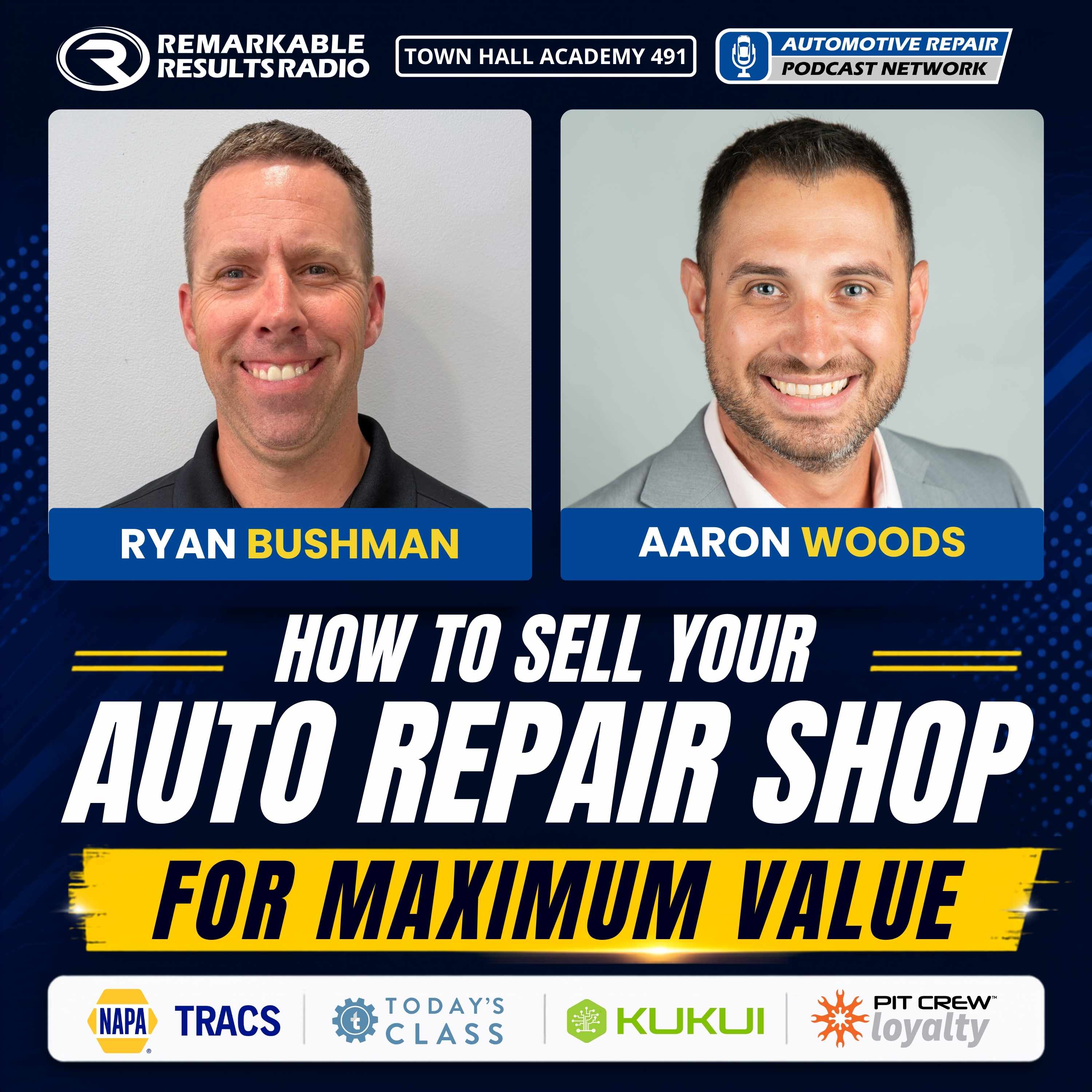
How to Sell Your Auto Repair Shop for Maximum Value [THA 491]
Thanks to our Partners, NAPA TRACS, Today's Class, KUKUI, and Pit Crew Loyalty Watch Full Video Episode *]:pointer-events-auto scroll-mt-[calc(var(--header-height)+min(200px,max(70px,20svh)))]" dir="auto" data-turn-id="request-WEB:8e59eec7-a235-4fa3-a072-956fea3fe478-7" data-testid="conversation-turn-4" data-scroll-anchor="false" data-turn="assistant"> *]:pointer-events-auto scroll-mt-[calc(var(--header-height)+min(200px,max(70px,20svh)))]" dir="auto" data-turn-id="request-WEB:49a777bf-d263-4496-bf0b-2eb3a46ac96a-11" data-testid="conversation-turn-24" data-scroll-anchor="false" data-turn="assistant"> The auto repair industry is facing a "Silver Tsunami" as thousands of shop owners approach retirement age. The challenge isn't simply selling a business; it's maximizing its value and creating a successful transition that benefits employees, customers, and future owners. In this episode, host Carm Capriotto welcomes shop owner and business coach Aaron Woods and Ryan Bushman, a recent shop owner seller, for a candid discussion on exit planning, business valuation, financial preparation, and the leadership mindset required to build a shop that can thrive without its founder. What You'll Learn Why every shop owner needs an exit strategy, even if retirement feels years away.How to transition from being the daily "hero" of the business to becoming a strategic guide.The key factors that influence shop valuation and why buyer risk impacts sale price.How creating a turnkey operation can significantly increase a business's market value.The importance of clean financial statements and separating personal expenses from business expenses.What "add-backs" are and how they can reveal the true profitability of your shop.Why investments in team development and training may strengthen valuation discussions.How defining your retirement goals helps determine the financial target your business must achieve.The value of coaches, peer groups, and industry-specific advisors during exit planning.Why finding an automotive-savvy accountant should be a priority for owners considering a future sale. The best business exits don't happen by accident. Owners who begin preparing years in advance can reduce buyer risk, increase profitability, strengthen leadership teams, and ultimately maximize their company's value. Whether retirement is five years away or fifteen, the time to start building a business that operates independently of you is now. A successful exit begins with intentional planning, disciplined financial management, and a clear vision for life after ownership. Ryan Bushman, Business Coach, Institute for Automotive Business Excellence Aaron Woods, CEO X-tra Mile Auto Care, Stillwater, OK, Business Coach, Institute for Automotive Business Excellence. Listen to Aaron’s previous episodes HERE Thanks to our Partner, NAPA TRACS NAPA TRACS will move your shop into the SMS fast lane with onsite training and six days a week of support and local representation. Find NAPA TRACS on the Web at http://napatracs.com/ Thanks to our Partner, Today's Class Optimize training with Today's Class: In just 5 minutes daily, boost knowledge retention and improve team performance. Find Today's Class on the web at https://www.todaysclass.com/ Thanks to our Partner, KUKUI Stop juggling multiple marketing tools. KUKUI’s integrated platform delivers 4x better website conversions, automated follow-up, and real-time ROI tracking. Get industry-leading customer support with KUKUI at https://www.kukui.com/ Thanks to our Partner, Pit Crew Loyalty You’re probably tired of chasing new customers who never return. We understand. Pit Crew Loyalty ends the one-and-done cycle, turning first visits into lasting, reliable revenue at https://www.pitcrewloyalty.com/ Connect with the Podcast: Visit the Website:https://remarkableresults.biz/Subscribe on YouTube:https://www.youtube.com/carmcapriottoFollow on Facebook:https://www.facebook.com/RemarkableResultsRadioPodcast/Follow on LinkedIn:https://www.linkedin.com/in/carmcapriotto/Follow on Instagram:https://www.instagram.com/remarkableresultsradiopodcast/Join Our Virtual Toastmasters Club:https://remarkableresults.biz/toastmastersJoin Our Private Facebook Community:https://www.facebook.com/groups/1734687266778976Join our Insider List:<a...
Ep 98 - Jeff Compton & Tonnika Haynes | Are Viral Reels Ruining the Auto Repair Industry?
Tekmetric transformed my shop. Plain and simple. Want that for yours? Touch HEREASTA is coming up September 24-26 in Raleigh. Be there or be square, dog! Register now and use code confess25 for $25.00 off your registration. Sign up HERETurnkey Marketing takes the stress of doing something I'm not good at off my plate. And gives it to someone who is. Click HERE for more.Tired of your shop’s social media looking like every other repair shop on the internet? Stand out with 47 Consulting. Learn more HERESend your service advisor to hands down the BEST service advisor training in the industry (even other coaching companies agree). It's Elite Worldwide's Masters Program. The next one is happening in Dallas Texas, September 10-12. Learn more HEREWhen I used the maintenance tool for the fist time with Detect Auto, my mind was blown. My advisors had the same reaction - and then SO MUCH MORE TIME. Learn more about Detect Auto and book a free demo now!In this episode, the podcasts collide for a behind the scenes conversation about what goes on on social media. Are the viral reels a good thing or a bad thing? Tonnika Haynes from Downshift with Tonnika, Jeff Compton from the Jaded Mechanic and Bryan Pollock from Confessions of a Shop Owner circle up to have this conversation with Braxton Critcher, the producer of each show. They also get real about the importance of doing the actual work behind the scenes, emphasizing that growth in your business (and in life) comes from putting in consistent effort, not just watching highlight reels.Timestamps: 00:00 - The uncomfortable truth about podcast discovery and audience habits01:16 - What happens when podcasts collide—introductions and chaos02:23 - Behind the scenes: Group chat antics, tools, and industry jokes03:57 - Social media, reels, and who’s to blame for viral content05:01 - The power (and pain) of online comments and negative feedback06:46 - Why social media works for some shops but isn’t for everyone07:14 - Going viral: 2.4 million views, angry commenters, and riding the algorithm09:03 - Building a brand: Negativity, growth strategies, and five-year plans12:33 - Are most people really “spoon fed”? Podcast challenges explained14:26 - Shop rates, community service, and fixing Chevy trucks for peanuts17:04 - The “must be nice” attitude and its effect on success and envy19:01 - Growing beyond your bubble: Why spicy reels are necessary22:27 - Can podcasts actually change the industry? Or just a few minds?35:01 - Choosing your hard: Highlight reels, business reality, and keeping perspective44:21 - Real talk: Same struggles, different zip codes, focus on YOUR growth49:34 - Excuses vs. results—moving, changing, and finding a way to win54:37 - Visualization, success stories, and putting in the extra work59:38 - “Choosing average”: 9-to-5 mentality and salary realities1:01:09 - Relationships, distractions, and shop staff drama1:03:21 - The only goal: One shop at a time, one listener at a time.
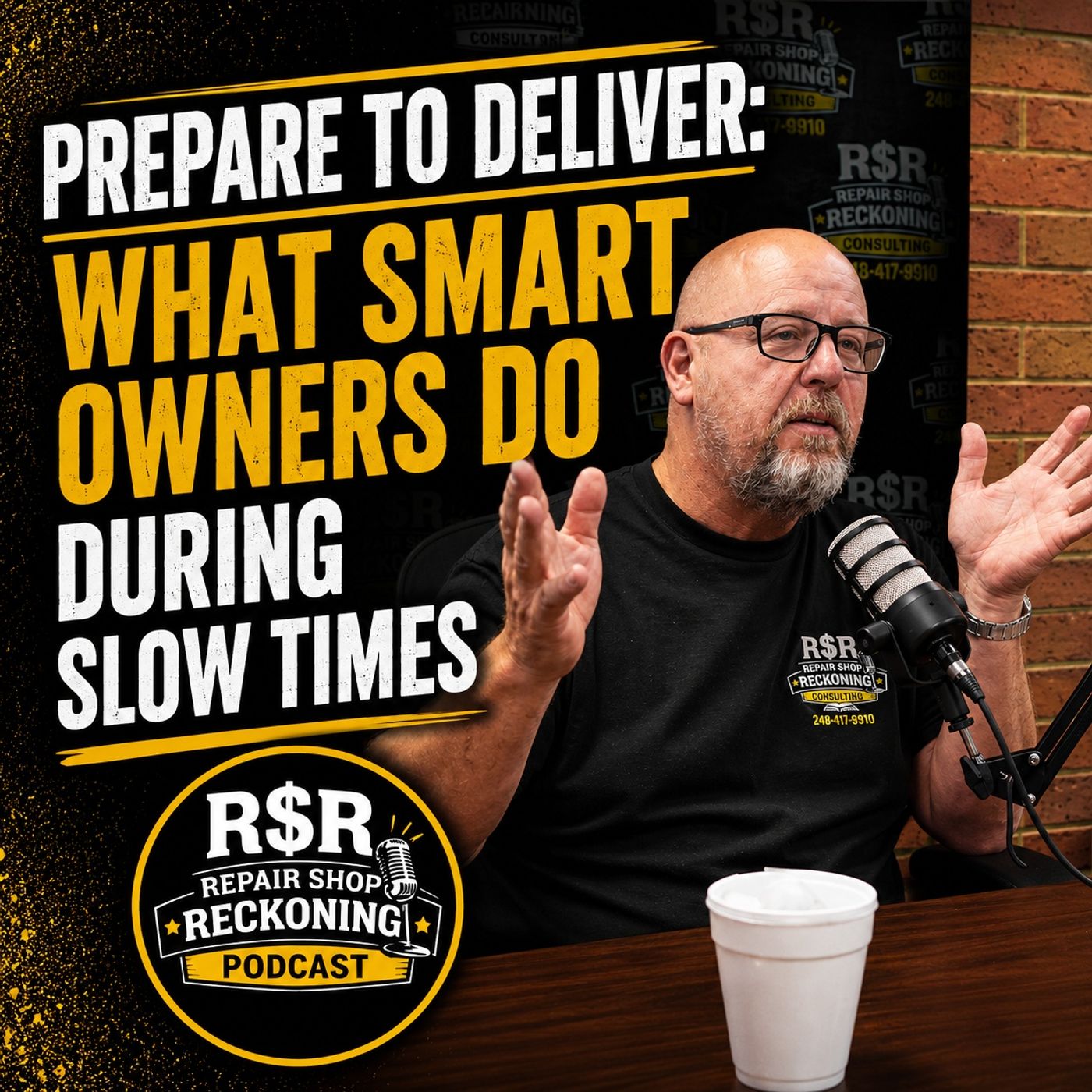
Prepare to Deliver: What Smart Owners Do During Slow Times
In this episode of Repair Shop Reckoning, Kevin tackles a reality every shop owner will face sooner or later: What do you do when the phones slow down, the bays aren't as full, and the panic starts creeping in? Too many owners react by cutting...
Ep 96 - Jesse Jackson | The Truth About Selling Your Shop to Private Equity
Tekmetric transformed my shop. Plain and simple. Want that for yours? Touch HEREASTA is coming up September 24-26 in Raleigh. Be there or be square, dog! Register now and use code confess25 for $25.00 off your registration. Sign up HERETurnkey Marketing takes the stress of doing something I'm not good at off my plate. And gives it to someone who is. Click HERE for more.Tired of your shop’s social media looking like every other repair shop on the internet? Stand out with 47 Consulting. Learn more HERESend your service advisor to hands down the BEST service advisor training in the industry (even other coaching companies agree). It's Elite Worldwide's Masters Program. The next one is happening in Dallas Texas, September 10-12. Learn more HEREWhen I used the maintenance tool for the fist time with Detect Auto, my mind was blown. My advisors had the same reaction - and then SO MUCH MORE TIME. Learn more about Detect Auto and book a free demo now!Jesse Jackson is the CEO of Mango Automotive and knows a thing or two about scaling an auto repair business. Mainly because she scaled to 8 Figures in 3 Years. Yeah. Pretty good. She tells Mike why it's important to her to help shop owners retire comfortably, the realities of private equity buyouts, and innovative solutions like the new co-op model aimed at giving small shop owners a fairer shot at big multiples.Email Jesse - jesse@mangoautomotive.comTimestamps:00:00 Why the gap between private equity & shop owner deals matters01:01 The surprising drag bar origin of the podcast logo02:14 Jessee’s family business journey: three generations, tough choices03:29 Why Jessee hated the shop as a kid…and college “studies”04:21 Why teaching wasn’t in the cards—parenting, patience, and expectations05:57 Public vs. private school and family debates about education07:06 Trades, college alternatives & raising hands-on kids08:33 Kids figuring out life—boomerangs and avoiding $100k mistakes10:06 Official intros: Mike Allen, mother of seven, owner of eight shops10:35 Mike’s unconventional leap from environmental engineer to automotive mogul11:46 Growth secrets: from 0 to $17M in four years13:10 The ultimate session: “Growing from zero to eight figures”14:41 Acquiring shops: The stories, motivations, and the human side16:35 Shop owners and retirement dreams—how Mango is changing the game19:11 The “1 to 3 out of 100” rule—finding shops worth acquiring20:05 The evolution of Mango’s team and Jesse’s focus on marketing & acquisitions22:45 Which shops do they buy? Turnarounds vs. high performers23:10 Shattering revenue records—and a little friendly competition24:32 Can the next gen kids take over? Mike’s family talks legacy26:08 The 30-by-2030 vision: getting rolled up with equity27:01 Why the current system feels broken—and how the Mango co-op could fix it29:35 Jessee’s TechMetric ad break – Shop life made simple31:09 The real question: Is selling to PE a betrayal or a smart exit?32:06 Getting honest: Life, legacy & why helping owners matters34:43 How the Mango co-op actually works—details & process36:44 What’s next? Growth, challenges & why five years feels like a lifetime39:00 Favorite markets, new territory, and expansion goals40:29 The thrill of the shop game—and the hunt for the next big thing41:44 Want to sell your shop or join the co-op?