Brakes for Breasts: How Auto Repair Shops Are Fighting Breast Cancer [THA 500]
Now playing — Remarkable Results Radio
About this episode
Thanks to our Partners: NAPA TRACS, Today's Class, KUKUI, and Pit Crew Loyalty Watch Full Video Episode *]:pointer-events-auto scroll-mt-[calc(var(--header-height)+min(200px,max(70px,20svh)))]" dir="auto" data-turn-id="request-WEB:8e59eec7-a235-4fa3-a072-956fea3fe478-7" data-testid="conversation-turn-4" data-scroll-anchor="false" data-turn="assistant"> *]:pointer-events-auto…
Key takeaways
- —Brakes for Breasts has raised over $2.4 million for breast cancer research since its inception in 2011.
- —Participating shops donate 10% of their labor costs during October, with suppliers providing free brake pads.
- —The program fosters community engagement and enhances the reputation of participating shops.
- —Transparency in funding ensures that 100% of donations go directly to research efforts at the Cleveland Clinic.
- —The initiative is a call to action for shop owners to join and make a difference in the fight against breast cancer.
Frequently asked
- What is Brakes for Breasts?
- Brakes for Breasts is a fundraising initiative where automotive shops donate 10% of their labor costs from brake jobs in October to support breast cancer vaccine research at the Cleveland Clinic.
- How can my shop participate in Brakes for Breasts?
- Shop owners can participate by signing up on the Brakes for Breasts website, engaging with suppliers for free brake pads, and promoting the initiative to their customers.
- What happens to the money raised through Brakes for Breasts?
- 100% of the funds raised go directly to the Cleveland Clinic's breast cancer vaccine research, supporting salaries and research costs without any administrative overhead.
▸Full transcript
This is the Automotive Repair Podcast Network. Hey everybody, Carm Capriato, Remarkable Results Radio, and another Town Hall Academy, one of the most important Town Hall Academies of the year. We're talking about Brakes for Breasts. Please hang in there, listen, learn, understand what we're talking about. This most incredible fundraising event put on by 2 former, or one former shop owner and one current shop owner out of Cleveland supporting the Cleveland Clinic and all the research that they're doing for triple negative breast cancer vaccine.
And I'll tell you, we're gonna try to share with you a little bit today. You know, Tracy and I and my wife Anne went to the Cleveland Clinic for the check presentation this year. We're gonna try to recreate a little bit of the drama. And I don't mean drama, I just mean the emotion that connects and hooks and makes you say, wow, we got to do more.
So our objective, and my objective, is if you're listening to this and you're not involved in Brakes for Breasts— and that's brakesforbreasts.com— you need to be. And we're here to convince you to do it. Thank you so much to Napa Trax, today's class, Kukui, and Pit Crew Loyalty. Hey, let's face it, your shop management system is the most critical tool in your shop, and Napa Trax will move your shop into the SMS fast lane with on-site training, 6 days a week support, and local representation.
Find Napatrax on the web at napatrax.com. Ready to optimize with today's class? Boy, listen to an episode we did with David Boyes. Great program. Roll out a training plan for your automotive shop in just 5 minutes daily. Boost knowledge retention and improve team performance. Start seeing results today. Join your peers at todaysclass.com. Shop owners, stop juggling multiple marketing tools. Kukui's integrated platform, they deliver 4 times better website conversions, automated follow-up, and real-time ROI tracking.
Get industry-leading customer support with Kukui. That's K-U-K-U-I.com. You're probably tired of chasing new customers who never return. We understand. Pit Crew Loyalty ends the one-and-done cycle, turning first visits into lasting, reliable revenue. On the web at pitcrewloyalty.com. Hey, welcome back. Yes, the arpn.app. We have a great app. It's actually getting so much better. You're going to love some of the new features that are coming out real soon, and we'd love you to get it.
arpn.app. Wow. Emissaries. Here we go. Leanne Best. Hi, Carl. Obviously founder with Leanne Frank, your partner to your left or right, depending on how you're looking at your screen. These are industry pros and they founded Breaks for Breast. Maybe we shouldn't get into the story of how it all happened because we've done, I don't know, a dozen episodes and explained all this, but it was a grassroots effort.
What, 2011, guys? I'm trying to remember. 2011. Yeah, 2011. And sit down for this. And wait a minute, no, get goosebumps. 2.4 million that went to the lab at the Cleveland Clinic, of which Dr. Justin Johnson's here. Hello there, sir. Hello, Carl. Thanks for having me. Good to have you. It was great to see you in April. Um, things are happening out at the Cleveland Clinic, I'm telling you.
It's got its own zip code down there. It's such— people from all around the country and/or the world don't quite realize Cleveland Clinic is it. Capital I-T. It's great. Thank you for saying that. Yeah, it's it. And if there's anything going on in the world of medicine, it's going on at— in Cleveland at the Cleveland Clinic. And I've been to the lab.
He's getting a brand new— did you move into your new lab yet? We did, Carm. So We'll be excited to show you our new facilities for the Czech presentation in April next year. Can't wait to go, but we just got settled in there and get to it, rolling up our sleeves and enjoying the new facility. All right. So look, part of this whole reason for doing this episode, and I'll do a Breaks for Breaths episode anytime anybody wants.
One more thing. There are so many in our industry that have been affected by breast cancer in so many different ways. Personal friends, employees that have had to deal with, suffer with, hopefully get cured from. And all of the work that Leanne and Laura have done through the years in accepting zero money and 100% of all the monies raised through this really simple 10% of the Break program.
You can explain it here in a minute. Goes to the Breaks for Breast program. The marketing materials, you download them, you print them, you engage your people. Now, the reason that we're doing this episode, and hopefully this will release in late August, is it starts in October and it gives you plenty of time to say, I'm doing it this year, I'm getting on board, I've done it in the past, I didn't do it last year, but I'm going to do it again this year.
And if I sound like a preacher in front of my parishioners here, it's because I am. Because I so much believe, because I've been there and I've seen, and we've shared emotions. We've cried together. There's so many things that make this one of the most worthiest causes and programs in our independent professional automotive service business. So Leanne, Laura. What's Breaks for Breasts?
What's it all about? Wow. Thanks for that amazing summation, Carm. You're an amazing supporter of ours and we can't tell you how much we appreciate that. I'll kind of jump in here. So Breaks for Breasts, Laura and I came up with this idea in 2011 because Laura always says with visibility comes responsibility. And as a business owner, you have responsibility to make the world a better place.
So Breaks for Breasts is pretty straightforward. And it's a win-win for everybody, and I truly believe that's why it's been such a success. Easy. We, as a shop owner, go to our vendors and ask them to supply free brake pads to us for the entire month of October. The supplier says, why would I do that? And we say, because we are going to order everything else for that particular brake job and most other jobs.
You're our number one call for the month of October. We are going to increase our production to you exponentially to make up for the fact that you may give us, on the average, 32 sets of free brake pads in the month of October. So cool. We then pass that along to the consumer. So the consumer comes in and they get free brake pads.
They simply pay for the parts, any other ancillary parts, and the labor. And then Breaks for Breasts, or the shop, then donates 10% of that total. So if their labor and their calipers or whatever are $400, we're going to donate as a shop $40 to the Cleveland Clinic Breast Cancer Vaccine Research Project. That's a mouthful, but we want to make sure that every single penny gets exactly where it needs to go, because that was a commitment Laura and I made when we first started this.
Grassroots all the way. 100%, every single penny goes directly to Justin and his staff and crew that are, I mean, putting the brakes on breast cancer. Laura, if anybody has a question like, well, why Cleveland? We live here, but it was purely by accident that we found the incredible research that was going on at the Cleveland Clinic. We looked everywhere and tried as hard as we could to find the best place, and that's where we ended up in Cleveland.
A lot of the places wanted us to pay them to raise money for them. And when we met Dr. Tui, it was like, yes, I will. I will work with you. Please, please come on board. So even though we live in Cleveland, it was purely an accident that we ended up finding Cleveland to donate all the money. And as a side story, I do believe, Justin, it was your mom that happened to bump into, I think it was Laura.
And she said, wait, don't do anything. I saw your mom at the presentation. Yeah. Yeah. I was glad we finally got my mom involved in the celebration since she was so instrumental in making these connections early on into this program that just has blossomed over the past decade plus into something I don't think any of us could possibly have imagined in those early days.
But I remember Leanne and Laura presenting that first check for $10,000 and we were blown away. And they said, you ain't seen nothing yet. And wow, you know, look at how far we've come and how much research we've gotten done. And it's just really incredible. And my gratitude goes to Leanne and Laura and my mom and Carm and all the people that have been part of it.
You know, just talking about your mom. Like here's, here's Dr. Johnson, this brilliant researcher, and we're talking about how his mom is involved. That's how grassroots this is. It's incredible. I feel like we've all just become this big family. The researchers we meet, you know, your whole team, Justin, and like, where do you get that? And anybody who participates in Breaks for Breasts, you're invited down.
We do the presentation to meet all these incredible minds and to see what's happening. And even though you're part of our family remotely, to physically come and meet everybody. Let's get in and jump into the whole why of this thing and where we are. Phase 1, and if you've followed the podcast, you've done any kind of research in the blogs that we've written, Phase 1 is done.
And so much of the work that was done over the last 8, 9 years was to get to phase 1, to find the volunteers. And now it's phase 2. Why does it take so long? COVID happened instantly, Dr. Johnson, instantly. We got sick, we got a vaccine. And why is this taking years and why will it continue to take time? Yeah, that's a great question.
And so many people ask that question, why so long? And COVID, as you pointed out, the vaccines seemed to come out of nowhere, even to me as a researcher in the vaccine field. And there's a lot of reasons for that. The biggest reason I think is that COVID was declared a public health emergency. You know, you remember those early days when, you know, they would put the death toll up on TV every day and people knew people who were losing loved ones and it affected everyone.
And I think that gave the drive to get it done. And I think COVID is a great example of what people are capable of when they really face a problem head-on and really want to see it solved. And so with all that public support and the government behind the effort, and most importantly, funding that effort, we were able to collectively create and test a vaccine in record time and get it out into the field and conquer that disease.
But it didn't come out of nowhere, even though many people had not heard of mRNA vaccines. They had been in development for a very long time before that, and it just was their moment. And I feel like that's what we could do with breast cancer as well. If we start thinking of it as a public health emergency, you know, maybe our vaccine is going to have its moment.
Maybe it's going to be a vaccine from another institution or a combination of those vaccines. But together, I think if we all work on this problem and treat it as a public health emergency, which breast cancer really is, everyone knows somebody who's affected by it. We can conquer this problem, but it takes the willpower, the effort, the willingness to donate or participate in the Brakes for Breasts program to go get your brake job done at the participating shop.
You are being part of that massive effort of all these people coming together, pooling their financial resources, saying that this is important and that this is something we need to do and we can get it done. I just wanted to ask you, talk about the vaccine with the mRNA. This is different though, right? It works differently than the— It is different. And as I mentioned, there's a few other institutions that are working on this problem.
There are other vaccines that are in clinical trials, and we're champions of all breast cancer vaccines and treatments and preventions. But we feel that ours is unique and really has the best chance of being the one that can prevent breast cancer because we're doing it differently. Most other researchers in the field are focused on, you know, targeting targets in the tumor that may be shared with other normal healthy tissues in the body.
And that creates 2 problems. One is you can get a reaction to those tissues. That are elsewhere in the body, and that can be harmful. And secondly, it might be very difficult just to even get an immune response, to get the immune system revved up to seeing those targets. So we think that our alpha-lactalbumin breast cancer vaccine has the best chance of being the one that can prevent breast cancer, and in particular, triple-negative breast cancer, which is one of the most aggressive types that we know of.
So you are listening to this and you are learning the why and the how, and you're meeting the who so that you can explain to your team, your people. You know, we talk so much on the shows about marketing, Laura and Leanne. We talk about being involved in the community. This to me is one of the biggest and the best things that you could get behind.
I don't say that you stop doing things with schools and the local scouts and all that stuff. I You don't. But as you pick your strategic plan for your year, in October, Breaks for Breasts should be there for all the right reasons. You, the people that got behind this and helped that $2.4 mil over the last 11 years, helped get phase 1 out and done.
Congratulations, Dr. Johnson. Out and done. And what we found out in April was you guys are gearing up for phase 2. And we heard it's a big thing. It needs a lot of money and a lot of time and a lot of people to go to phase 2 for the vaccine. It's, it's amazing. We gotta kick it up a notch in our industry to get phase 2 going.
It is a big challenge, but as I mentioned earlier, if there's enough willpower and there's enough people participating, we can do it. You know, if we rewind a decade, we were uncertain if we'd be able to do phase 1, but here we are, you know, with the critical help from Breaks for Breast. I absolutely could not have done that without their support.
That was instrumental in getting it done and we got it done. And we're at a very exciting crossroads right now, because as you mentioned, Carm, we just finished phase 1 late last year. The results are very encouraging, and we're gearing up for phase 2. Phase 1, for, for those who aren't familiar with the landscape of clinical trials, is intended just to evaluate safety and find a dose that we think is going to work.
And we are looking at how effective that vaccine may be, but not in a controlled way where we have people getting a placebo versus not. In phase 2, we want to do that. But in phase 1, we showed that about 3 quarters of the women that were vaccinated had an immune response that was induced by the vaccine to create immunity against a possible tumor.
So time will tell if these women are protected against breast cancer. But right now those results are very encouraging and are really fueling our excitement and motivation to launch phase 2. Easy or hard to find candidates? Well, there's a lot of people that are excited to get in the trial, and that's great news. When we opened our trial for phase 1, hundreds of women were calling our hotline.
They had trouble just fielding all these calls. They had never seen anything like it at Cleveland Clinic. But everyone who called, their information was taken down and we followed up with every single one of them. So there's plenty of people that want to get in the trial. Whether or not they qualified for the trial was a different story, and we had to evaluate them case by case.
And that takes time, that takes financial resources, but we had no shortage of women to enter the trial. And we recruited a total of 35. That was better than we had hoped for. We were hoping to get at least 24 and we got 35. Phase 2 is going to be more challenging because we're going to need about 200 or 300 patients, which means we're probably going to have to screen 5 or 10 times that many women and open to men as well.
But yeah, it's going to take a lot of effort. To screen these potential candidates, get them enrolled in the trial. But as far as the number of people that want to get in the trial, that doesn't seem like that's going to be that much of a problem, especially with all the coverage we're getting, including through Breaks for Breasts. Let's face it, your shop management system is the single most important tool in your shop, period.
NapaTrax was built from the ground up to make your business more profitable and efficient. We provide an extensive set of tools to increase and track profitability in real time. NapaTrax offers the industry's best post-sale support, hands down, and we train your people on-site. Yep, on-site. And we offer remote refresher training 10 times a week, and customer support is open 6 days a week.
Give us a call, visit the website, or join our Facebook community today to learn more. We'll prove to you that Traxx is the single best shop management system in the business. NAPA Tracs is always customized and tailored for you, whether you're a one-man shop or a large multi-bay or multi-location company. After all, it's your shop, so it's your choice. Visit us on the web at napatracs— that's napatracs.com.
Hi, this is Tom Palermo from Preferred Automotive Specialists for today's class. One of the powerful features of today's class is the confidence monitoring. And what we've found is there's a lot of technicians that answer a lot of questions right, but have very low confidence. And there's a lot of technicians that answer a lot of questions incorrectly, but have high confidence. So what we're able to do by looking at that is we're able to see where everybody is and kind of level set them and really get their training dialed in and let them understand where their strengths and where their weaknesses are.
Shop owners, we know you are overwhelmed with a flood of missed calls, empty bays, and disconnected marketing tools. Kukui has spent over a decade building one integrated platform for auto repair shops. One login, one dashboard, and mobile-first websites that convert 4 times industry average. Smart, innovative CRM with automated follow-up, 24/7 online booking, and real-time ROI tracking. With 900+ years of combined team experience, we fuel the growth of 2,200+ shops and have influenced $3 billion in revenue.
Stop working harder, start working smarter. Get industry-leading customer support and book a demo with Kukui. That's kukui.com. You know, most shop owners feel trapped spending on ads while half their first-time customers never come back. It's frustrating, it's exhausting, And it's not your fault. The industry average is 54% one-and-dones. We understand how discouraging that can be. Well, Pit Crew Loyalty changes the story.
Our clients cut that rate by up to 38%, raising lifetime value by more than 50%. Loyalty members visit nearly 3 times more often, creating predictable revenue without extra ad spend. Pit Crew Loyalty, where customers stay and shops thrive. On the web at pitcrewloyalty.com. Now, if you're a shop owner and you've been sitting on the sidelines for the last 10, 11 years and saying, yeah, yeah, yeah, I think I got to do this, but I'm really not sure, I think Dr.
Johnson just explained why you need to get involved. Because it's a real thing. The money that the core group of shop owners that have done Brakes for Breasts and continue to, we continue to add, are making a difference. And when you find out, wow, when you sit down with a client and tell them this is Breaks for Breasts month and the Cleveland Clinic vaccine research is going into phase 2, that means it was successful in phase 1 and we're behind this thing.
And so this episode is not only a little preacher in the pulpit thing for our industry, but it's also helping us to understand This is a real thing. It's working. We're so excited. We so believe. Just get to the Cleveland Clinic next April, 2027. Fly in, drive in, and just be part of that thing. You'll get hooked forever. And Karm, this right here, what we're doing right here was one of the things that absolutely ingratiated Laura and I to Dr.
Tui, his vision in the clinic. When we looked at the other venues that we could support, it just didn't seem great. But how often do you get to go right to the source of what you're supporting, Dr. Justin and his staff and the Cleveland Clinic, and say, hey, what's going on? Where's our money being spent? What's happening with this vaccine? I mean, normally you just donate money and you're completely in the dark.
This is one of the things we love about this. The grassroots, the communication, we know what's going on. We see it. We feel it. It's amazing. Yeah. So well said. Wow. Laura, where do you see Breaks for Breasts going the next 2 or 3 years? I mean, can we go from last year, 293, 2.4 million? When are we going to hit 5?
Oh, wow. 5. That would be awesome. Leanne and I were talking, and if we could at least get 300 this year, That would be a little bit more than we got last year. And then next year we'll be hitting the $3 million mark. If we can do $300,000 this year, $300,000 next year. So $3 million is like very, very reasonable. $5 million.
Let's do it. Heck yeah. I don't even wanna get my calculator out right now, but when I add on the number of shops in our industry and/or all the locations, and I don't know what the average is Some shops, all kinds of money and some, you know, not so much, but whatever the number is times the number of shops, you could raise $3 million a year or $2 million a year if we had, you know, so many more participants.
And I'm just sitting here saying to you who's listening, so why aren't you participating? There's literally no downsides. And I love what you just said. What you give money, what organization comes back and tells you where it went, how it's working, who works there? I don't know where the money's going. You drop $20 in a fundraiser at a, at a flea market or wherever it is, and you hope it finds the light of day.
Yeah. And 100% of every penny goes directly to the lab. So it's not going to support like the infrastructure of the Cleveland Clinic. And Justin, you can back me up on this if I'm mistaken. All that money goes right to the lab. It supports the salaries, the research, anything that they need to, to get this vaccine to market, to fruition. Is that correct, Justin?
Or— Yeah, that's exactly right, Laura. I think the theme here is really like not only transparency, but family, because you're absolutely right. You drop money into a jar or you donate online to some you know, I won't name names, but the big pink ribbon organizations, you don't know where that's going. You know that a lot of that is going to their advertising and CEO salaries.
We don't have any of that. 100%, as Laura mentioned, is going to the lab. And that means to the lab, not in some, you know, invisible fund where nobody knows where it is, but to the lab. And we're very interactive and transparent about what we're doing and why we're doing it and how we're doing it. And it's a small lab. This isn't, you know, you're not, you know, supporting 100 people's salaries.
It's a small group, but it's a very efficient group, a very powerful group. We have a brand new facility with a lot of cutting-edge tools available to us. We have a bioinformatics team now that's helping us improve the vaccine and helping us take what we've learned from this vaccine and developing new vaccines to other types of breast cancer or ovarian cancer or prostate cancer.
But the money that's raised by this fundraiser goes to the alpha-lactalbumin breast cancer vaccine, which is now going into phase 2. And again, couldn't have done it without the support of Breaks for Breast. And when I learned that The lab in your case, and so many of the other labs in that wing at Cleveland Clinic are treated and looked upon as businesses.
And so businesses have to have money to run. That's exactly right. And, you know, people ask me all the time, well, the Cleveland Clinic is a massive organization. Why do they need money from this fundraiser? And the reason is that even though I'm an employee of Cleveland Clinic, And, you know, gone are the days of paper checks, but when we got paper checks, it would say Cleveland Clinic, but the Cleveland Clinic isn't paying us from the revenue that they raise from seeing patients.
We are in an academic research organization and within the Cleveland Clinic, and we need to provide our own funding, which means that the head of each individual lab within this massive research complex is responsible for running that lab and raising the funds. Traditionally, that would come from government grants or philanthropic donations or corporate investment. But our particular lab is mainly running on philanthropic donations, mainly from Breaks for Breasts, and it goes a long way.
But yeah, when you come into the building, you'll see, you know, hundreds of different laboratories, each fairly small and nimble, you know, 3, 5, maybe 8 people. But the head of each one of those labs is responsible for generating the money that runs that lab and paying their employees, even though ultimately that money comes through Cleveland Clinic. It's not coming from Cleveland Clinic.
So it sounds scary, you know, this precarious structure of these individual labs that are fighting to survive. And it kind of is, but it also means that only the best research is going to survive. And we've come this far. So I think we're doing a pretty good job. And of course, again, support from Brakes for Breasts. That makes me think, does money equate to speed, Dr.
Johnson, or not? I think as in any business it does, you know, the faster you want to get something done, the more money it's going to cost. You know, just use this analogy with like shipping something. You know, if you want it a week from now, it's not going to cost that much. If you want it overnight, first thing in the morning, it costs a lot more.
And research is the same way. Everything is going to cost more money if you want it faster. And again, going back to the COVID vaccine, why did it only take a year? To roll that vaccine out. And the reason was there was a ton of money behind it. We're not going to try to go that fast, but we want to get the job done as quickly as we can with as little cash burn as possible.
We want to be as efficient as possible and make the dollars that are raised really make the most of those dollars. It could always go faster and there's always things that are going to you know, take time and slow you down because the nature of science and research, but we hope that funding is never one of those obstacles. And, you know, thanks to Breaks for Breasts, it really hasn't been for the past 12 or so years.
You know, Justin, I think about, you know, you're talking about like being a little nervous. It can kind of probably creep into your head that, oh, are we going to have money for next year? Especially back in the beginning. Right. And I can't help but think how parallel that is to us shop owners, entrepreneurs, right? We go out on a limb and every day we're looking for customers and, you know, we need to, you know, have this average ticket or have so many customers a week or a month or, and it's very similar.
You shops out there, you got to be Justin's customers. Yeah. That strikes me a lot too, that the people that are, you know, really the grassroots that are out there in the field running the shops. Participating in this promotion know exactly what I'm talking about. And I know exactly what they must be feeling as well, because we're all independent mom-and-pop shops at the end of the day, and we're fighting for our existence.
And we do that by just doing the best that we can. You do the best work that you can. You satisfy your customers. You, you have a good reputation and you, you know, do friendly service and you're honest and transparent. And that's how our lab functions. And, you know, we've managed to keep it going this long and there's, you know, there's no end in sight.
You know, to your point, it is scary, you know, 'cause nothing ever is a guarantee. You can say, well, we're good for next year, maybe the next year after that, and then we'll see. But thanks to Breaks for Bruss, a lot of that anxiety is taken away and we can just focus on getting the job done and doing our research and you know, coming up with the ideas, how to make this vaccine better and not have to worry about sitting here, you know, writing 10 grants, hoping that one of them gets funded.
So that has taken a huge load off and that does make the research go faster. You know, I remember you talk about writing grants and I remember the first time we actually came into the lab and came into Dr. Tuohy's office and just all of the stacks of paper everywhere. And just how much time he had to devote to, you know, writing grants and all that.
So we can take some of that off of your plate and that's awesome. I'm sitting here listening to all this great dialogue and I go back to one of the original things we said maybe 30 minutes ago that, and this is one of our key talking points that we really want to get through is confused people don't give, clear people do. Okay.
And so when we think about the kind of training that's going on in our industry, there's all kinds of service advisor training. Laura, your husband, you guys sold the shop and, and I know you guys are training service advisors. Unbelievable. Leanne, when you think about Skyler on your counter and the success that you have with Brakes for Breasts at Mighty Auto Pro in Medina, it's like, okay, what do we tell our service advisors?
What do we tell our owners that ultimately have to filter it down to our service advisors? What's the great story to tell to, you know, you got Brakes for Breasts and it's running and you tell people, listen, oh, it's September. You need brakes. Could you come back in October? Ah, don't worry about it. We'll do it right now because you've worked something out with your supplier.
Every time we do this donation to Brakes for Breasts between X and Y dates and times, we need the free brake pads or hell, just order 'em. Just order the brake pads and then just summarize it at the end of the month. Get your credit. There's so many ways to do it. What do we tell our service advisors? Well, I think that's pretty easy.
You know, it's a communication, just like one of the things we always tell our service advisors, and you said it earlier, Carm, was a confused mind says no. So, you know, we've got to have that clear message. And Barry, who was at our check presentation, Barry starts setting up his Octobers with breaks for breaths months in advance. His schedule is literally full.
By the time Breaks for Breast Month rolls around and they're giving their customers free breaks. What was really interesting was I was just doing a presentation talking about service advisor for our service advisor training. And the interesting thing was we all know back to school, it's fall, slow times. Industry-wide, it's about an 8% dip in the month of September because we're going back to school.
However, I looked at the last 5 years, our car count spikes 76 cars above average in the month of October. And I showed that to Bill and he goes, wow. And I go, that's Brakes for Breasts. And I think it's, you know, it's so critical. We do it for all the right reasons. You know, this has got to be from the heart.
This has got to be because you want to help us put the brakes on breast cancer. But, you know, the fact of the matter is it's incredible for your business. I think our industry as a whole needs that boost up, that rise, because people don't always look at auto repair in the best light. And this is something to get out there and tell your neighborhood about and tell your customers about.
You know, the high tide raises all ships. So this is fantastic for our industry's reputation as well. There's just so many good reasons to do it. Can someone download from the website the picture of the check presentation last year so that they could put it up on their counter to show the, you know, the reasons and the legitimacy? Is there anything that says, you know, 11 years in, $2.4 mil, last year's check?
Do we have something like that? Well, we have the photos from the beginning on the website, but As a downloadable printable, we don't, but we'll get on that. That would be so cool. It's a backup. We do have a handout that we should put on our website that you can hand to another shop because as we always say, bring somebody along. You know, if you're a shop and you have a neighboring shop, this isn't about competition.
This is about bringing everybody together to put the brakes on breast cancer. So we do have a great handout that explains exactly how the program works. And Laura and I haven't worked, you know, I still work within a shop. You know, Laura ran a shop for a long, long time. So we understand what a shop owner goes through, which is why we have developed that Participating Shop Resource Center.
It's got everything you need. It's got a question and answer, a Q&A that'll give you all the ins and outs, all the answers, how to do it, how to do it successfully. And then you've got the marketing materials that are done for you, or you like to do things yourself. Grab the logos from the website. We have graphics for social media. We have press releases done for you, how to do a press release.
I mean, we have tried to cover everything because we know shop owners, you guys are phenomenal. You wear a lot of hats. You're the HR department, you're the marketing department, you're the janitor. You're— so we want you to be able to go to that website and go boom, boom, boom. I'm done. This is easy. Get on board. It's a just-add-water website. It's, that's it.
Everything is done for you. All you have to do is say, I'm in it this year. And listen, it's coming up in October. So this episode goes out, I believe, within a week of what we're recording this. Okay. It'll be the end of August. At least that's what our plans are. You've got time to do this, but there are other shops that say, no, I'm going to just donate money on my own all year round.
And you get checks that way. There's so many different ways to participate in Breaks for Breast. I really love this event that the clinic does for us every year when we do the check presentation. We have a little breakfast. We have the Breaks for Breast team. We have some of our Cleveland Clinic people. We have the researchers, the philanthropy department. And like I said before, and everybody has expressed this sentiment that it feels like family.
We've been doing this for a while and we all know each other and it's a really good time. But this past year, first of all, I think we shattered the previous record as far as fundraising. So that was incredible. And that was emotionally a lot. But I think what I really liked about this past year is that there was a lot of personal story sharing about the why, why we do it.
We had quite a few guest shop owners. And as we've mentioned before, everyone is welcome. Anyone who's participating in this program is invited to come celebrate with us. And some of the shop owners shared their stories and it was very moving. It reminds everybody why we're doing this, what the goal is, how far we've come. And it feels good to accomplish some milestones, but also realize we've got a couple more ahead of us.
We want to get through Phase 2 and Phase 3. But getting through phase 1, we celebrated that this year. And that is huge because, you know, as you probably know, many or most drugs that are being tested or vaccines don't make it to phase 1, let alone through phase 1. So this is huge. So far so good. Congratulations to you, Leanne, Laura.
Thank you so much for the passion and love you put behind this effort, this unique program inside the professional automotive repair, the aftermarket. I'm happy to be, you know, involved like I am. Let's just tell the shop owner who's listening, it's time. Stop saying no to something that has proven itself to be one of the most incredible things you could get behind for all the right reasons.
I'll give each of you a last word. We'll go around, uh, Dr. Johnson, then Laura, and then Leanne. Dr. Johnson. Yeah, again, I can't express enough gratitude for Breaks for Breasts and the shop owners and Karm for giving us this platform. And just going back to what I said earlier about each research lab being its own little shop. And, you know, if somebody decides to retire, you know, maybe that's the end of the shop in your business world.
And that's what happens in the science world as well. And if somebody, unfortunately, like my former head of lab, Dr. Tuohy, who pioneered the vaccine, passes away as he did in January 2023, that usually means the end of the lab. And that was the expectation. And I, you know, talked to the head of our department and he said, you know, we'll find you guys other jobs and we'll wind down this program.
And I said, no, absolutely not. Dr. Tui's vision is too important. We need to keep this going. And I showed him the research and he said, this is great, but it needs funding. I said, we've got funding. Breaks for breaths. And if it weren't for that moment and me being able to say, we still have backing for this program, that would have been the end of it.
And that would have meant phase 1 would not have been completed. And we certainly wouldn't be talking about phase 2. So with the full support of Cleveland Clinic and the new head of lab, Dr. Stappenbeck, and the gratitude and appreciation that we have for Breaks for Brass, all the shop owners, all the people that are coming to these shops and supporting this effort.
We are now stronger than ever. We're expanding the program. We're actually getting ready to hire another person. And we couldn't have done this without Breaks for Brass because we'd be telling a very different story right now. We'd be telling the story of how the TUI Lab almost made it. And unfortunately, had to pack up and shut it down. And like I said, not only are we not shutting it down, but we're in a brand new facility and we're expanding and we're stronger than ever with no end in sight.
So thank you. That was the best why summary I've heard. Thank you for that. Yes. Thank you, Laura. You're making me cry. Oh, I want to say to Dr. Johnson, Thank you for fighting to keep this lab going. That is like all of the work we've done. If that would've shut down, where would that have gone? I don't know where that research would've gone.
So thanks for keeping us alive too. Yeah, absolutely. It kept Breaks for Breasts alive. Thank you for that. I do want to say that Breaks for Breasts is every shop that has ever participated. And without every shop in our industry and the support of Carm and all the other people that support within the industry, Brakes for Breasts would not exist. So I wanna thank everybody for that.
I want to reach out to all the shops that are like, well, I don't know, I'm not big enough. I won't earn enough money. I may not do enough brake jobs. Every single penny counts. So whether you have 10 shops, 2 bays, 1 shop, you know, 5 shops, it doesn't matter. Every single penny counts and it all makes a difference and it all moves the needle.
So don't let that be a reason that you don't join us this year. Well said, Laura. Thank you. Leanne? I mean, I just have to say Breaks for Breasts, I don't know how to quite describe it other than it's just good. It's right. It's true. From the very moment we met Dr. Tui, And he said, ladies, prevention is the cure. We don't want to operate, but we don't want to give them horrible drugs, but prevention, that's where we're at.
And that just resonated perfectly. Boy, if Laura and I could have envisioned, we didn't know who we were looking for, but the moment we met him, we knew that was him. We loved his vision. And then how does that happen? We have a grassroots effort. That this incredible industry has supported. Every single penny, every single penny has gone directly to the research.
And then Dr. Tuohy passes, passing of a great man, and Dr. Justin is there to just pick up the torch and run with it. I mean, this just has great all over it from day one. Leanne and Laura, your vision was incredible then, and it continues to be. Hey, thank you all for being here. Appreciate it. Thank you, Carm. Thank you, Carm.
And by the way, breaksforbreasts.com. We've scrolled that on the bottom of the screen, but we may not have said it enough. We'll make sure that the link is in the show notes. breaksforbreasts.com. Thanks, guys. If anybody has questions, call us. Our numbers are there. We're happy to help. Yeah, their phone numbers are there. Yeah. If we ever make it through an episode where we don't cry, we know we've done it too long.
Thanks. Bye-bye. Thanks for being on board to listen and learn from the premier automotive repair business podcast, Remarkable Results Radio. Get your episodic education on the ARPN listening app at automotiverepairpodcastnetwork.com. Also enjoy the podcast on our Carm Capriato YouTube channel. Carm is all for advancing the professional automotive service industry. Until next time.
More from Remarkable Results Radio
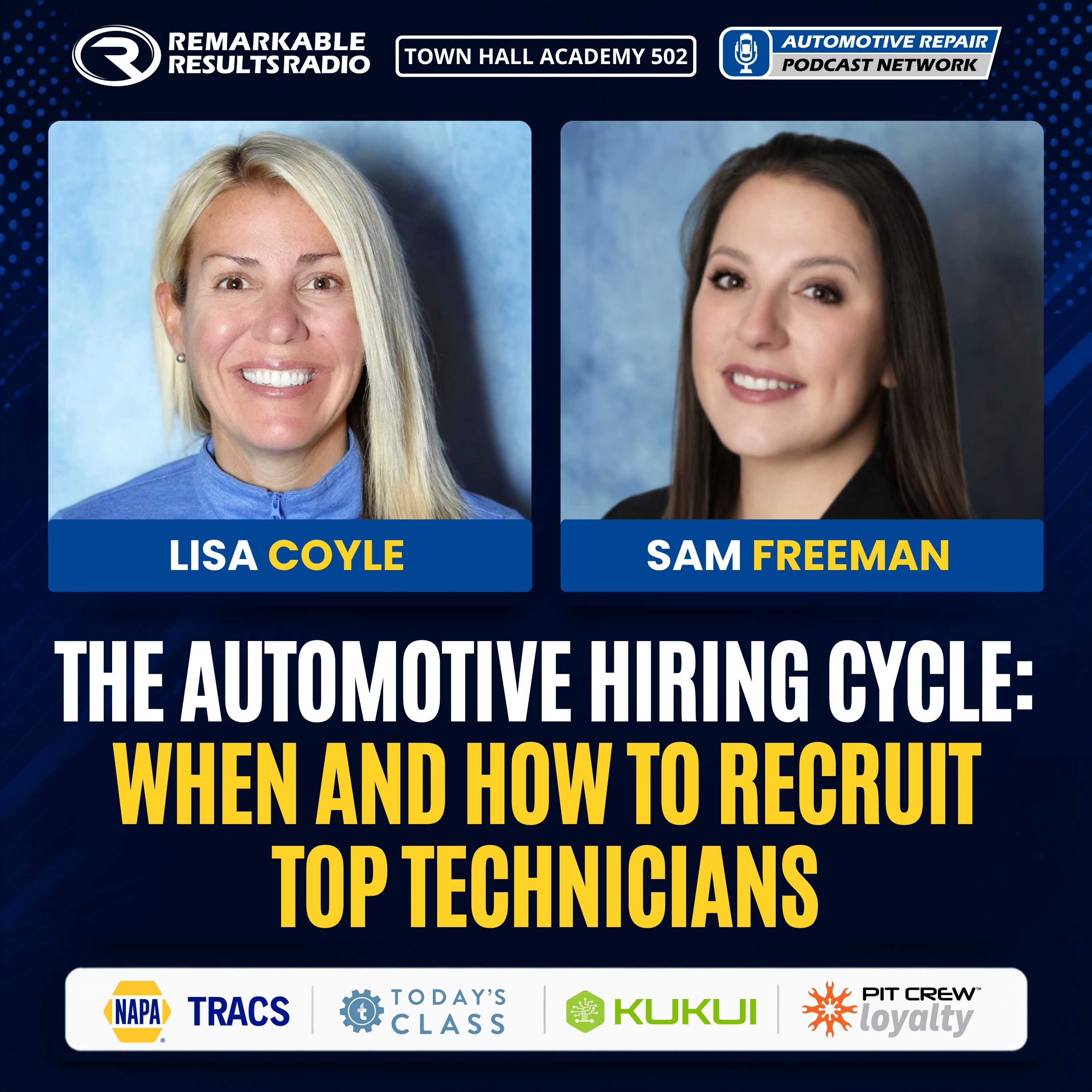
The Automotive Hiring Cycle: When and How to Recruit Top Technicians [THA 502]
Thanks to our Partners: NAPA TRACS, Today's Class, KUKUI, and Pit Crew Loyalty Watch Full Video Episode *]:pointer-events-auto scroll-mt-[calc(var(--header-height)+min(200px,max(70px,20svh)))]" dir="auto" data-turn-id="request-WEB:8e59eec7-a235-4fa3-a072-956fea3fe478-7" data-testid="conversation-turn-4" data-scroll-anchor="false" data-turn="assistant"> *]:pointer-events-auto scroll-mt-[calc(var(--header-height)+min(200px,max(70px,20svh)))]" dir="auto" data-turn-id="request-WEB:49a777bf-d263-4496-bf0b-2eb3a46ac96a-11" data-testid="conversation-turn-24" data-scroll-anchor="false" data-turn="assistant"> What if the best time to recruit your next technician is when your shop isn't looking to hire? Lisa Coyle, CEO of Promotive, and Sam Freeman, Partner Manager at Promotive, reveal why automotive recruiting has a cycle, and why understanding when technicians are looking can give shop owners a significant advantage. Lisa and Sam explain how recruiting data, market timing, candidate behavior, and consistent relationship-building can create a much more proactive hiring strategy. Download the 6 Month Promotive Hiring Insights Report for FREE: https://info.gopromotive.com/RRR What You'll Learn Why technician recruiting has a cycle and why timing matters.Why “post and pray” recruiting puts your shop at a disadvantage.Why finding a top technician can take 60 to 70 days.How local market data can improve your job postings.Why you should recruit even when you don't have an opening.What may really be behind candidate ghosting.Why a counter-offer doesn't have to end the relationship.How consistent communication can prevent first-day no-shows.Why complicated hiring processes can cost you great candidates.How the F.O.R.D. method can make interviews more personal and effective. Great recruiting is about timing, data, and relationships. Don't wait for an empty bay to discover you need a recruiting strategy. Understand when technicians are most likely to consider a move, know what candidates in your market are searching for, simplify your hiring process, and stay connected with good people even when the timing isn't right. Your next great technician may not be looking when you're ready to hire. The opportunity is to build the relationship when they're ready to listen. Promotive has over 40 years of recruiting and automotive experience. If you need qualified technicians and service advisors and want to offload the heavy lifting, visit https://gopromotive.com/ Meet Paige: The Auto Repair Industry’s First 24/7 AI Recruiter [THA 481]: https://remarkableresults.biz/remarkable-results-radio-podcast/a481/ Lisa Coyle, CEO of Promotive Sam Freeman, Partner Manager at Promotive NAPA TRACS will move your shop into the SMS fast lane with onsite training, six days a week of support, and local representation. http://napatracs.com/ Optimize training with Today's Class: In just 5 minutes daily, boost knowledge retention and improve team performance. https://www.todaysclass.com/ Stop juggling multiple marketing tools. KUKUI’s integrated platform delivers 4x better website conversions, automated follow-up, and real-time ROI tracking. https://www.kukui.com/ You’re probably tired of chasing new customers who never return. Pit Crew Loyalty ends the one-and-done cycle, turning first visits into lasting, reliable revenue at https://www.pitcrewloyalty.com/ Connect with the Podcast: Download and Listen on Our Mobile App: https://automotiverepairpodcastnetwork.com/app/Visit the Website:https://remarkableresults.biz/Subscribe on YouTube:https://www.youtube.com/carmcapriottoFollow on Facebook:https://www.facebook.com/RemarkableResultsRadioPodcast/Follow on LinkedIn:https://www.linkedin.com/in/carmcapriotto/Follow on Instagram:https://www.instagram.com/remarkableresultsradiopodcast/Join Our Virtual Toastmasters Club:https://remarkableresults.biz/toastmastersJoin Our Private Facebook Community:https://www.facebook.com/groups/1734687266778976Join our Insider List:https://remarkableresults.biz/insiderAll books mentioned on our podcasts:https://remarkableresults.biz/booksOur Classroom page for personal or team learning:https://remarkableresults.biz/classroomBuy Me a Coffee:https://www.buymeacoffee.com/carmSpecial episode collections:https://remarkableresults.biz/collections The Automotive Repair Podcast Network: https://automotiverepairpodcastnetwork.com/ Remarkable Results Radio Podcastwith Carm Capriotto:https://remarkableresults.biz/<a href="https://mattfanslow.captivate.fm/" target="_blank"...
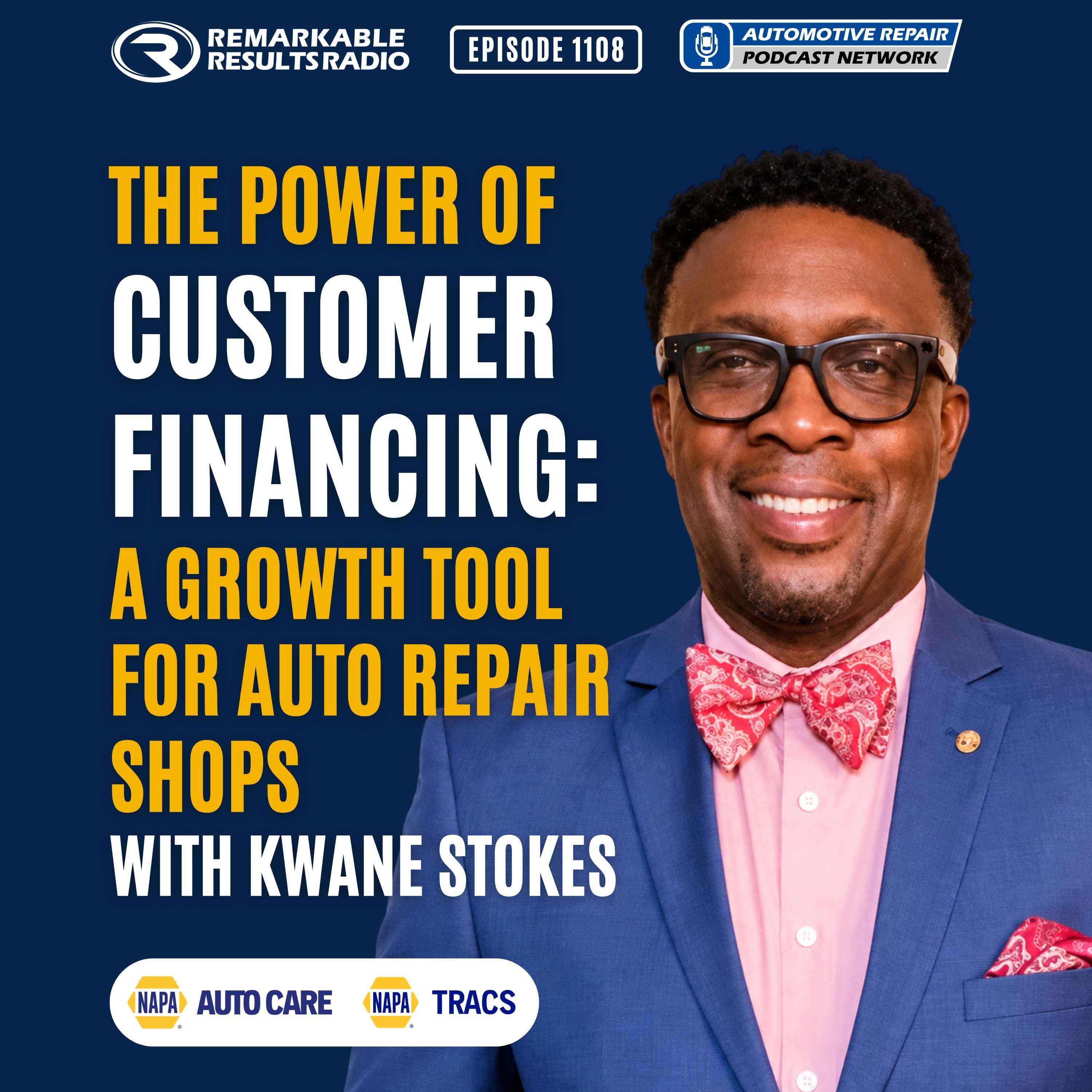
The Power of Financing: A Growth Tool for Auto Repair Shops [RR 1108]
Thanks to our Partners, NAPA Auto Care and NAPA TRACS Watch Full Video Episode What happens when a customer needs a $2,000 repair but doesn’t have the cash available today? That moment can determine whether the vehicle gets repaired, the customer delays a critical service, or they take their business somewhere else. For automotive shops, offering flexible payment options can be more than a convenience. It can be a powerful tool for helping customers say yes to the work their vehicles need. Kwane Stokes, Assistant Vice President and Relationship Manager in the automotive division at Synchrony, explains how the program can help shops remove financial barriers, increase repair opportunities, and create another reason for customers to return. Kwane also addresses why many shops still aren't offering financing and how the biggest obstacle may simply be the assumptions advisors make about a customer's ability or willingness to pay. What You'll Learn Why financing should be presented as a payment option, not something an advisor decides a customer needs.How the program's average first and repeat purchase amounts demonstrate the potential impact on average repair order (ARO).Why assuming a customer can't qualify for credit can cause shops to lose needed repair work.How monthly promotional offers can give shops another reason to communicate with their customers.How advisor incentives and simple training can encourage more consistent presentation of financing.What the upcoming "waterfall" financing model could mean for customers who aren't approved through the primary credit program. The biggest opportunity may not be finding more customers. It may be giving the customers already sitting at your counter more ways to say yes. The key is removing the assumption that you know what a customer can or cannot afford. Present the options, explain them clearly, and let the customer decide what works for their financial situation. For a shop, financing isn't simply about collecting payment. It's another tool for helping customers get the repairs they need while protecting the relationship and keeping the work in your shop. Kwane Stokes, AVP, Relationship Manager, Auto Network, Synchrony Learn more about the benefits of being part of the NAPA family by visiting https://www.napaonline.com/en/auto-care NAPA TRACS will move your shop into the SMS fast lane with on-site training and six days a week of support: http://napatracs.com/ Connect with the Podcast: Download Our Mobile App:https://automotiverepairpodcastnetwork.com/app/Website:https://remarkableresults.biz/YouTube:https://www.youtube.com/carmcapriottoFacebook:https://www.facebook.com/RemarkableResultsRadioPodcast/LinkedIn:https://www.linkedin.com/in/carmcapriotto/Instagram:https://www.instagram.com/remarkableresultsradiopodcast/Join Our Virtual Toastmasters Club:https://remarkableresults.biz/toastmastersJoin Our Private Facebook Community:https://www.facebook.com/groups/1734687266778976Join our Insider List:https://remarkableresults.biz/insiderBooks Page:https://remarkableresults.biz/booksOur Classroom Page:https://remarkableresults.biz/classroomEpisode Collections:https://remarkableresults.biz/collectionsBuy Me a Coffee:https://www.buymeacoffee.com/carm The Automotive Repair Podcast Network: https://automotiverepairpodcastnetwork.com/ Remarkable Results Radio Podcastwith Carm Capriotto:https://remarkableresults.biz/Automotive Field TheorywithMatt Fanslow:https://mattfanslow.captivate.fm/Business by the NumberswithHunt Demarest: https://huntdemarest.captivate.fm/The Auto Repair Marketing Podcastwith Brian and Kim Walker: https://autorepairmarketing.captivate.fm/The Weekly Blitzwith Chris Cotton: https://chriscotton.captivate.fm/Speak Up! Effective Communicationwith Craig O'Neill: https://craigoneill.captivate.fm

Daily Habits That Build a Stronger Auto Repair Shop Culture [THA 501]
Thanks to our Partners: NAPA TRACS, Today's Class, KUKUI, and Pit Crew Loyalty Watch Full Video Episode *]:pointer-events-auto scroll-mt-[calc(var(--header-height)+min(200px,max(70px,20svh)))]" dir="auto" data-turn-id="request-WEB:8e59eec7-a235-4fa3-a072-956fea3fe478-7" data-testid="conversation-turn-4" data-scroll-anchor="false" data-turn="assistant"> *]:pointer-events-auto scroll-mt-[calc(var(--header-height)+min(200px,max(70px,20svh)))]" dir="auto" data-turn-id="request-WEB:49a777bf-d263-4496-bf0b-2eb3a46ac96a-11" data-testid="conversation-turn-24" data-scroll-anchor="false" data-turn="assistant"> What does a strong shop culture look like when you’re the people living it every day? Bree Wismer, Service Advisor and Frontline Culture Leader, and Trevor Hinds, Operations Manager and Dispatcher at Empower Automotive in Traverse City, Michigan, take us inside the daily habits and communication practices that keep their team aligned, productive, and focused on the customer. Rather than approaching culture from the owner's perspective, Bri and Trevor share what happens on the front lines. They explain how Empower Automotive breaks down the traditional divide between the front counter and the bays, keeps everyone on the "same bus," and creates a workplace where every person understands their role, respects the team around them, and contributes to the same goal. What You'll Learn Why the front counter and specialists must operate as one team.How daily huddles and short training sessions keep the team aligned.Why the 1:00 PM check-in can prevent late-day customer surprises.Why a "no-update" update can be one of the most valuable customer communications.How to respond when customers arrive with AI-generated or parts-store diagnoses.How respect, communication, and accountability create confident professionalism. Building a world-class shop culture doesn’t require a massive budget or a complicated organizational overhaul. By committing to these small, consistent actions, you can transform your shop from a high-stress environment into a thriving, unified business that both your team and your customers enjoy. Bree Wismer, Service Advisor, Frontline Culture Leader, Empower Automotive, Traverse City, MI Trevor Hinds, Operations Manager, Dispatcher, Workflow and Culture, Empower Automotive, Traverse City, MI NAPA TRACS will move your shop into the SMS fast lane with onsite training, six days a week of support, and local representation. http://napatracs.com/ Optimize training with Today's Class: In just 5 minutes daily, boost knowledge retention and improve team performance. https://www.todaysclass.com/ Stop juggling multiple marketing tools. KUKUI’s integrated platform delivers 4x better website conversions, automated follow-up, and real-time ROI tracking. https://www.kukui.com/ You’re probably tired of chasing new customers who never return. Pit Crew Loyalty ends the one-and-done cycle, turning first visits into lasting, reliable revenue at https://www.pitcrewloyalty.com/ Connect with the Podcast: Download and Listen on Our Mobile App: https://automotiverepairpodcastnetwork.com/app/Visit the Website:https://remarkableresults.biz/Subscribe on YouTube:https://www.youtube.com/carmcapriottoFollow on Facebook:https://www.facebook.com/RemarkableResultsRadioPodcast/Follow on LinkedIn:https://www.linkedin.com/in/carmcapriotto/Follow on Instagram:https://www.instagram.com/remarkableresultsradiopodcast/Join Our Virtual Toastmasters Club:https://remarkableresults.biz/toastmastersJoin Our Private Facebook Community:https://www.facebook.com/groups/1734687266778976Join our Insider List:https://remarkableresults.biz/insiderAll books mentioned on our podcasts:https://remarkableresults.biz/booksOur Classroom page for personal or team learning:https://remarkableresults.biz/classroomBuy Me a Coffee:https://www.buymeacoffee.com/carmSpecial episode collections:https://remarkableresults.biz/collections The Automotive Repair Podcast Network: https://automotiverepairpodcastnetwork.com/ Remarkable Results Radio Podcastwith Carm Capriotto:https://remarkableresults.biz/Automotive Field Theorywith Matt Fanslow https://mattfanslow.captivate.fm/Business by the Numberswith CPA Hunt Demarest: https://huntdemarest.captivate.fm/The Auto Repair Marketing Podcastwith Brian and Kim Walker:<a...

Rapid-Fire Automotive News: AI, EVs, Autonomous Vehicles, and the $19B Trade School Boom [RR 1107]
Thanks to our Partners, NAPA Auto Care and NAPA TRACS Watch Full Video Episode How quickly is the automotive repair industry changing, and are you ready for what's next? Tom Ham, shop owner and founder of the Automotive Management Network, joins Carm Capriotto for a fast-paced conversation covering 12 major trends shaping the future of auto repair. From autonomous vehicles and solid-state batteries to the changing value of trade careers, AI, government regulation, 3D printing, and vehicle reliability, Tom and Carm explore the technologies and economic shifts shop owners need to understand. What You'll Learn How autonomous vehicles could reshape vehicle safety and the repair industry.What advances in solid-state batteries could mean for EVs and vehicle range.Why trade careers are gaining momentum as technology changes traditional employment.How the technician shortage is creating new opportunities for shops to develop talent.How government regulation and emissions enforcement could affect vehicle owners and repair shops.What current vehicle reliability trends reveal about today's automotive brands.How 3D printing could help shops solve parts availability challenges.Why AI is becoming a powerful tool for reducing friction and improving efficiency.Why shop owners need to stay curious and adapt as automotive technology continues to accelerate. The automotive repair industry is changing faster than ever. The shops that thrive will be the ones willing to understand emerging technology, embrace new tools, develop their people, and continually rethink how they operate. The future isn't coming someday. It's already showing up in the service bay. Tom Ham, Automotive Management Network. Tom’s previous episodes HERE. Learn more about the benefits of being part of the NAPA family by visiting https://www.napaonline.com/en/auto-care NAPA TRACS will move your shop into the SMS fast lane with on-site training and six days a week of support: http://napatracs.com/ Connect with the Podcast: Download Our Mobile App:https://automotiverepairpodcastnetwork.com/app/Website:https://remarkableresults.biz/YouTube:https://www.youtube.com/carmcapriottoFacebook:https://www.facebook.com/RemarkableResultsRadioPodcast/LinkedIn:https://www.linkedin.com/in/carmcapriotto/Instagram:https://www.instagram.com/remarkableresultsradiopodcast/Join Our Virtual Toastmasters Club:https://remarkableresults.biz/toastmastersJoin Our Private Facebook Community:https://www.facebook.com/groups/1734687266778976Join our Insider List:https://remarkableresults.biz/insiderBooks Page:https://remarkableresults.biz/booksOur Classroom Page:https://remarkableresults.biz/classroomEpisode Collections:https://remarkableresults.biz/collectionsBuy Me a Coffee:https://www.buymeacoffee.com/carm The Automotive Repair Podcast Network: https://automotiverepairpodcastnetwork.com/ Remarkable Results Radio Podcastwith Carm Capriotto:https://remarkableresults.biz/Automotive Field TheorywithMatt Fanslow:https://mattfanslow.captivate.fm/Business by the NumberswithHunt Demarest: https://huntdemarest.captivate.fm/The Auto Repair Marketing Podcastwith Brian and Kim Walker: https://autorepairmarketing.captivate.fm/The Weekly Blitzwith Chris Cotton: https://chriscotton.captivate.fm/Speak Up! Effective Communicationwith Craig O'Neill: https://craigoneill.captivate.fm
Related across the catalog
The Fine Line Between Viral Content and Rage Bait | Bryan Pollock, Tonnika Haynes and Braxton Critcher
Like the show? Show your support by using our sponsors.Need to update your shop systems and software? Try Tekmetric HERELaunch your tool game to the next level with Launch Tech USA! HERERecorded at Tools Pennsylvania 2026, this discussion brings together Jeff with Bryan Pollock, Tonnika Haynes and Braxton Critcher to talk about the realities of growing a podcast and business through social media. They explore why short-form content and reels are essential for reaching new audiences, the downside of viral clips attracting negative comments, and the challenge of balancing attention-grabbing content with long-term brand integrity. The conversation also covers dealing with online criticism, protecting your mental health, and staying focused on helping people make meaningful changes instead of chasing internet arguments.Timestamps: 00:00 Do You Focus? 01:34 Disc Golf Banter 01:52 Emotional Support Wiener 02:10 Tools PA Roundtable Introduction 02:30 Group Chat Chaos 03:32 Reels Are the Devil 05:05 Why Social Media Matters 06:51 Viral Reels and Online Hate 09:29 Deleting Ignorant Comments 11:01 Rage Bait vs. Clickbait 15:00 Shop Rates and Industry Reality 16:24 Producer Clip Strategy 20:58 Can You Change the Industry? 23:53 Choosing Positivity 29:34 Why Good Content Still Gets Hate 32:42 The "Must Be Nice" Mindset 34:40 Handling Large Audiences 35:53 Protecting Your Peace 36:16 Keyboard Warrior Stories 38:34 Why Viewers Get Angry 41:01 You Can't Save Everyone 42:30 The Highlight Reel Trap 48:24 Stop Complaining—Start Changing Follow/Subscribe to the show on social media! TikTok - https://www.tiktok.com/@jeffcompton7YouTube - https://www.youtube.com/@TheJadedMechanicFacebook - https://www.facebook.com/profile.php?id=100091347564232
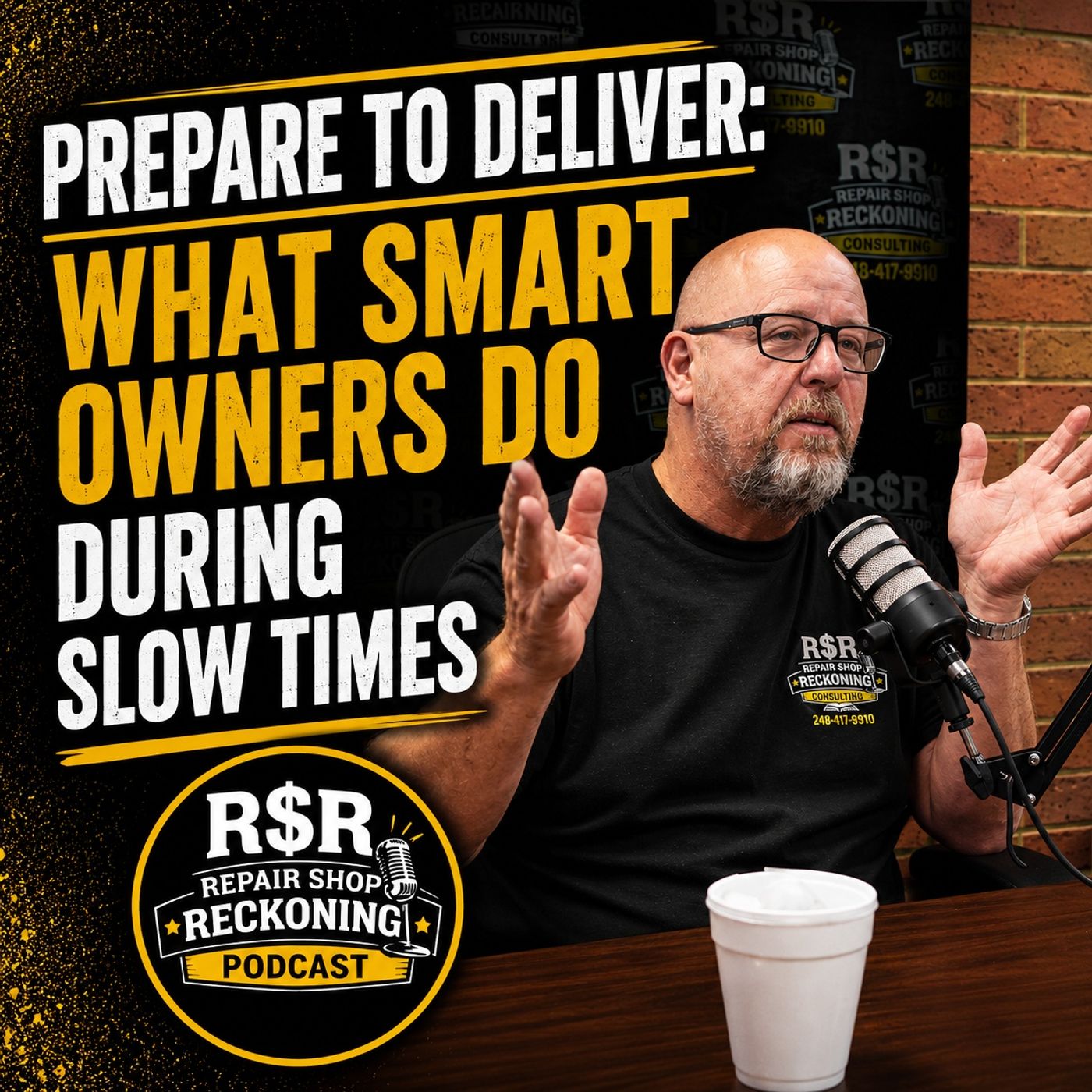
Prepare to Deliver: What Smart Owners Do During Slow Times
In this episode of Repair Shop Reckoning, Kevin tackles a reality every shop owner will face sooner or later: What do you do when the phones slow down, the bays aren't as full, and the panic starts creeping in? Too many owners react by cutting...

Profit Panel: How 3 Shops Put $750K+ to the Bottom Line in One Month - Bonus Zoom Episode 7
Glenn Piccolo hosts the Profit Panel: Charlie Zlatkos, J.J. Mont and Lynn Massengill to reveal how auto hospitality, mindset shifts, pricing strategy, parts purchasing and execution drove dramatic profit gains across varied markets—from rural Tennessee to rust-heavy Boston. The episode shares real results, practical tactics (rack attack, key-to-key, follow-ups, part-shopping) and leadership lessons you can apply to increase net profit and transform your shop. autoshopanswers.com auto-shop-media.com
Ep 95 - Benjie Burris & Callie Johnson | Boobs, Business & Building Culture That Lasts
Tekmetric transformed my shop. Plain and simple. Want that for yours? Touch HEREASTA is coming up September 24-26 in Raleigh. Be there or be square, dog! Register now and use code confess25 for $25.00 off your registration. Sign up HEREIf you're like me and aren't good at marketing, don't do it on your own. Let the experts handle it. Touch HERE for more on Turnkey Marketing.Tired of your shop’s social media looking like every other repair shop on the internet? Stand out with 47 Consulting. Learn more HERESend your service advisor to hands down the BEST service advisor training in the industry (even other coaching companies agree). It's Elite Worldwide's Masters Program. The next one is happening in Dallas Texas, September 10-12. Learn more HERE When I used the maintenance tool for the fist time with Detect Auto, my mind was blown. My advisors had the same reaction - and then SO MUCH MORE TIME. Learn more about Detect Auto and book a free demo now!In this crossover episode, Mike Allen teams up with Tonnika Haynes from Downshift with Tonnika to give you a preview of the upcoming ASTA Expo in Raleigh, NC this September. ASTA Board Member and shop owner Benjie Burris joins alongside his daughter, Callie Johnson, ASTA’s new Membership & Events Manager, to talk about what makes the Expo special and how building a strong shop culture can create lasting success both inside and outside the business.The conversation dives into the power of showing up for your local community, building authentic relationships, and why giving back has played a major role in long-term growth. They also share first-hand ASTA Expo experiences, what makes the event different, and why the connections made there can impact both your business and your life.Oh, and you'll also hear the story of how Benjie met his wife. Let’s just say it’s one of those stories you definitely won’t see coming.Learn more about the ASTA Expo and how you can be there HERE Timestamps:00:00 The funniest icebreaker ever (yes, fake boobs are involved)00:53 Live from Fueling Connections 2026 – ASTA at UTI Mooresville02:22 Audio chaos: Why your own tools matter (and how NOT to record a podcast)04:10 The rise of Downshift and the weirdness of being told “I listen to your podcast!”05:03 Social media hacks: Engagement, trolls, and managing the comment chaos09:19 A blueprint for a family-run business culture that actually works10:29 Turning community support into real shop growth (and why service matters)13:42 Small steps, big progress: Building a shop “patch by patch”14:42 The real reason community work succeeds (hint: It can’t be faked)18:25 Real talk on supporting schools, teachers, and being boots-on-the-ground22:22 Dealing with “big city” demands and setting shop boundaries23:46 ASTA’s new Membership & Events Manager shares social media tips26:53 The ASTA Expo: Networking, parties, and the least clicky vibe in the industry28:29 Conversations that change careers—and lives30:46 Competitors or community? Why ASTA shops help each other32:07 Going from local to international—how ASTA keeps its family feel36:04 Must-attend classes, what’s next for ASTA, and seriously, don’t miss the hospitality suite39:29 Why Downshift is different: Focusing on legacy, mindset, and leveling up