01

Master Tech to MillionaireAugust 30 · 32 min
Autoshop Ministries - DeVante Tidwell K2K 8/23/26 Sermon on Freedom Through Forgiveness
This live recording of Autoshop Ministries explores forgiveness as Gods plan for connection, freedom, and abundant life, unpacking Colossians 2, Matthew 6:14, John 10:10 and practical illustrations about letting go of grudges. DeVante invites listeners to both receive and give forgiveness, explaining how forgiveness frees us from the past, restores relationship with God, and opens the door to living fully in Christ.
Listen →
02

Remarkable Results RadioAugust 28 · 47 min
Brakes for Breasts: How Auto Repair Shops Are Fighting Breast Cancer [THA 500]
Thanks to our Partners: NAPA TRACS, Today's Class, KUKUI, and Pit Crew Loyalty Watch Full Video Episode *]:pointer-events-auto scroll-mt-[calc(var(--header-height)+min(200px,max(70px,20svh)))]" dir="auto" data-turn-id="request-WEB:8e59eec7-a235-4fa3-a072-956fea3fe478-7" data-testid="conversation-turn-4" data-scroll-anchor="false" data-turn="assistant"> *]:pointer-events-auto scroll-mt-[calc(var(--header-height)+min(200px,max(70px,20svh)))]" dir="auto" data-turn-id="request-WEB:49a777bf-d263-4496-bf0b-2eb3a46ac96a-11" data-testid="conversation-turn-24" data-scroll-anchor="false" data-turn="assistant"> What if your auto repair shop could help advance breast cancer research while growing your business? Co-founders Leigh Anne Best and Laura Frank, alongside Dr. Justin Johnson from the Cleveland Clinic, share the story behind one of the automotive industry's most impactful grassroots fundraisers. Since 2011, participating shops have partnered with parts vendors to provide free brake pads during October, helping customers save on repairs while shops donate 10% of the total service cost to breast cancer vaccine research at Cleveland Clinic. With $2.4 million raised and a $3 million milestone in sight, the campaign is helping fund continued research into the alpha-lactalbumin breast cancer vaccine for triple-negative breast cancer while giving independent repair shops an opportunity to strengthen their communities and grow their business. What You'll Learn How the Brakes for Breasts win-win fundraising model works.How participating shops can partner with parts vendors and customers.Why 100% of donations go directly to the research laboratory.How grassroots funding helped keep the Cleveland Clinic research lab open after Dr. Vincent Tuohy's passing.What Phase 1 vaccine research revealed and what Phase 2 will require.How participating shops can generate community awareness and increased car count.How your shop can participate and access promotional resources. Brakes for Breasts demonstrates what can happen when the automotive industry comes together around a cause. Shops can serve their customers, strengthen their communities, grow their businesses, and help fund research that could change lives. Every shop, every customer, and every dollar can make a difference. https://www.brakesforbreasts.com/ The First Breast Cancer Vaccine Trial Recipient Jennifer Davis: https://remarkableresults.biz/remarkable-results-radio-podcast/cc111/ NAPA TRACS will move your shop into the SMS fast lane with onsite training, six days a week of support, and local representation. http://napatracs.com/ Optimize training with Today's Class: In just 5 minutes daily, boost knowledge retention and improve team performance. https://www.todaysclass.com/ Stop juggling multiple marketing tools. KUKUI’s integrated platform delivers 4x better website conversions, automated follow-up, and real-time ROI tracking. https://www.kukui.com/ You’re probably tired of chasing new customers who never return. Pit Crew Loyalty ends the one-and-done cycle, turning first visits into lasting, reliable revenue at https://www.pitcrewloyalty.com/ Connect with the Podcast: Download and Listen on Our Mobile App: https://automotiverepairpodcastnetwork.com/app/Visit the Website:https://remarkableresults.biz/Subscribe on YouTube:https://www.youtube.com/carmcapriottoFollow on Facebook:https://www.facebook.com/RemarkableResultsRadioPodcast/Follow on LinkedIn:https://www.linkedin.com/in/carmcapriotto/Follow on Instagram:https://www.instagram.com/remarkableresultsradiopodcast/Join Our Virtual Toastmasters Club:https://remarkableresults.biz/toastmastersJoin Our Private Facebook Community:https://www.facebook.com/groups/1734687266778976Join our Insider List:https://remarkableresults.biz/insiderAll books mentioned on our podcasts:https://remarkableresults.biz/booksOur Classroom page for personal or team learning:https://remarkableresults.biz/classroomBuy Me a Coffee:https://www.buymeacoffee.com/carmSpecial episode collections:https://remarkableresults.biz/collections The Automotive Repair Podcast Network: <a href="https://automotiverepairpodcastnetwork.com/" target="_blank" rel="noopener...
Listen →
03
Master Tech to MillionaireAugust 27 · 1h 24m
99.08% Diagnostic Accuracy: Inside a Master Tech’s Playbook
Joe Adams interviews Adams Automotive Master Technician Josh Gerbrecht about his journey from technician to top diagnostician, sharing the systems that drove his 99.08% diagnostic accuracy and the big takeaways from a Key-to-Key-to-Callbacks weekend. They discuss the front-office/back-office symbiosis, the Rack Attack inspection process, recruiting and paying technicians their worth, shop tours and hospitality, and how AI could streamline diagnostics and incentivize accuracy over just speed. AutoshopAnswers.com Auto-Shop-Media.com
Listen →
04
Downshift with TonnikaAugust 27 · 1h 23m
Shop Owners: Maybe YOU'RE the Problem | Tristin Sweeney - 38
Running a shop is hard enough—you don't need your software making it harder. 😂 If you're ready for more clarity, better organization, and a smoother experience for both your team and your customers, check out Tekmetric HEREConsistency is key - heard that! But, consistency is HARD. That's why I gave up on trying and let the experts handle it. Detect Auto. Let them clean up your estimating process and raise your ARO - like they did for me! CLICK HERE TO BOOK A DEMOAt 29 years old, Tristin Sweeney is running an auto repair shop, building automotive technology, and questioning some of the industry's favorite excuses. In this episode, Tonnika Haynes talks with Tristin about his unconventional path from the startup world into automotive, acquiring Honest Automotive, building Shift, and why owning a shop became the ultimate testing ground for solving real industry problems. But things get spicy when they tackle the supposed technician shortage, outdated hiring practices, shop owners blaming younger generations, and why good employees may be leaving shops that refuse to change. They also dig into AI, technician training, communication, leadership, burnout, and why new technology should solve problems instead of creating more work. If you're a shop owner who keeps saying, “Nobody wants to work anymore,” this conversation might make you look in the mirror.Timestamps:00:00 Why automotive has become unattractive to work in00:23 Downshift intro00:42 Meet Tristin Sweeney: 29, busy, and obsessed with automotive01:23 Audi, Volkswagens, and where the car obsession started03:15 Can you be a great service advisor without knowing cars?04:40 There are more automotive careers than turning wrenches06:26 From tech startups to the automotive industry07:17 Getting laid off, joining ShopGenie, and finding his industry09:17 Running TWO automotive businesses at 2910:11 How Tristin bought Honest Automotive after finding it on Facebook14:01 Has shop ownership given him gray hair yet?14:32 Building a shop around passion and customer experience16:21 Honest Automotive is also Tristin’s “laboratory”16:48 How Shift Automotive was born18:19 Building software from the problems that drive shop owners crazy19:10 Technology problem or people problem?20:17 How does someone working 60–70 hours a week avoid burnout?22:55 Success isn’t worth burning yourself out by 3023:19 Tonnika gets VERY personal about Tristin having kids 😂25:32 Why Tristin is committed to automotive for the long haul28:53 Shift grows to more than 150 shops30:02 Why simply SHOWING UP can change your career31:21 The “Gen Z stare” and learning how to communicate33:34 Get in rooms where you’re uncomfortable37:04 What will automotive look like 10 years from now?41:11 Shop owners who ignore AI WILL get left behind42:43 How should shops prepare technicians for new technology?43:27 Does every tech need to understand the newest cars right now?45:48 Why the next generation matters more than ever47:58 What does a technician actually need to “look like”?48:48 Is the technician shortage actually a hiring problem?49:48 How many great technicians are shops overlooking?50:48 “I hire people. I don’t hire jobs.”52:00 Why automotive can be an unattractive place to work54:18 Great shops generally aren’t struggling to find applicants54:51 The talent is out there—and some of them want to leave their current shop55:55 If recruiters can steal your technicians, that’s a YOU problem56:04 Most shop problems start with the owner57:30 Accepting criticism from your employees—even your own son58:03 Old-school leadership vs. the way Tonnika leads today59:33 The macaroni-and-cheese recipe for evolving a family business1:01:47 Is treating every employee differently “coddling”?1:03:50 Why one universal pay plan doesn’t work for everyone1:04:39 Flexible schedules, flat rate, salary, and what actually motivates people1:07:08 Shop owners who refuse to compromise may lose great technicians1:07:56 Bad bosses create the next generation of bad bosses1:08:21 Why leadership and communication have to be learned1:13:00 Stop micromanaging every detail of your shop1:14:22 “Granddad did it that way” isn’t a good enough reason anymore1:15:28 The Carfax data debate gets spicy 😂1:16:24 What Carfax actually gets from your shop1:17:47 Tonnika’s grandfather discovers OnStar and thinks “they’re coming for him”1:19:03 Technology fear usually comes from misunderstanding1:19:45 Tristin’s legacy: Leave automotive better than he found it1:20:00 Where to find Honest Automotive and Shift Automotive1:21:22 Closing, AI hot takes, and what’s next
Listen →
05

The Institute's Leading Edge PodcastAugust 26 · 55 min
216 - Coach the Call: Using AI Insights to Develop Stronger Service Advisors
216 - Coach the Call: Using AI Insights to Develop Stronger Service Advisors August 26th, 2026 - 00:54:51 Show Summary: Strong phone skills can turn more incoming calls into appointments while building trust from the first interaction. Consistent call reviews give service advisors a clear path to improve without making coaching feel like punishment. AI call analysis reduces the time required to find useful coaching opportunities and helps owners identify patterns across their team. Positive reinforcement also matters because great calls give advisors examples they can repeat. Simple habits like smiling asking for the appointment and using the customer’s name can dramatically improve the experience. Better phone performance ultimately supports stronger customer relationships higher appointment conversion and long term shop growth. Host(s): Jimmy Lea, VP of Business Development Guest(s): David Boyd, Founder & CEO of Callinbound Tonnika Haynes, Owner of Browns Automotive, Downshift with Tonnika Haynes Show Highlights: [00:04:00] – Listening to real calls reveals missed opportunities that owners rarely see. [00:10:00] – AI identifies coachable calls without hours of manual review. [00:14:00] – Consistent coaching creates awareness before advisors answer each call. [00:17:00] – Replace a hard no with a plan focused on customer needs. [00:24:00] – Help advisors self coach instead of simply pointing out mistakes. [00:28:00] – Every missed appointment can represent significant lost customer value. [00:34:00] – Asking for the customer’s name immediately creates a stronger connection. [00:39:00] – Scheduled call reviews make coaching normal instead of threatening. [00:43:00] – Asking for appointments helped turn successful marketing into a fuller calendar. [00:49:00] – Call tracking connects marketing performance with actual appointment conversion. In every business journey, there are defining moments or challenges that build resilience and milestones that fuel growth. We’d love to hear about yours! What lessons, breakthroughs, or pivotal experiences have shaped your path in the automotive industry? Share your story with us at info@wearetheinstitute.com, and you might be featured in an upcoming episode. 👉 Unlock the full experience - watch the full webinar on YouTube: https://youtu.be/fv9ewVBoSks Don’t miss exclusive insights, expert takeaways, and real talk you won’t hear anywhere else. Hit Subscribe, drop a comment, and share it with someone who needs to hear this! Links & Resources: Want to learn more? Click Here Want a complimentary business health report? Click Here See The Institute's events list: Click Here Want access to our online classes? Click Here ________________________________________ Episode Transcript Disclaimer This transcript was generated using artificial intelligence and may contain errors. If you notice any inaccuracies, please contact us at marketing@wearetheinstitute.com. Episode Transcript: Jimmy Lea: Good morning, good afternoon, good evening, or good night. Thank you for joining. So excited for us to have this conversation today with some really good friends. Everyone, this is to be an interactive webinar. So you're sitting there, you've got questions, you've got concerns, type them into the chat. We wanna be able to ask those questions of our panel today as we are talking about a very interesting topic. And with us today, first, is our good friend, Mr. David Boyd of Inbound Communication. David, how the heck are you, brother? David Boyes: I'm great. I, I, uh, I fully intended to have my jacket on, Jimmy. Jimmy Lea: Man. David Boyes: So excited to be here. We Jimmy Lea: coordinated on this and everything. David Boyes: I know. I, uh- Next time ... I, I was, I was lucky as, as busy as we've been at Call Inbound to, uh, uh, get up and, and organize and dress today. So I really, uh, it's always great to see you and of course, um, uh, we got to visit a little bit out at, uh, Worldpac STX and, uh, man, I tell you what, your wardrobe is always top notch. Jimmy Lea: Hey, thank you. Thank you. We're glad you are dressed today, just don't stand up. Thank you very much. David Boyes: Great. Jimmy Lea: And joining for us in our conversation today, David, is Tanika, Tanika Hayes with, uh, Haynes with Browns Automotive. Tanika, how the heck are you, sister? Tonnika Haynes: I'm doing good, guys. What's going on? Jimmy Lea: Staying alive. Good to see you. Great to see you. Also at STX, what did you think of the, the conference there with Worldpac? Tonnika Haynes: It, it was really, really good. I was not prepared for the size of it. There was a lot of people. People were peopling. So, um, once I got adjusted to all of the crowds and everything, I enjoyed it. I hadn't sat in a class in a really long time, like at an expo. Ooh. I'm usually just walking around and being nosy, but I picked up some good nuggets, so it was great. Jimmy Lea: Beautiful. That's awesome. Well, if, if the STX was a large conference to you, I would suggest that you really prepare yourself months in advance if ever you come out to SEMA and Apex in Las Vegas. Tonnika Haynes: I will be there this year. Oh, good. I keep hear- hearing that, so I don't know what meds I need to be on to take, To take it all in. But Jimmy Lea: we'll- You- Tonnika Haynes: I'm excited about it ... Jimmy Lea: we, we will talk about that because there is more than you can see within a week, and you really only have three days at Apex, four days at SEMA. You want to map out where you're gonna go, who you're gonna talk to, who you're gonna see- And for you, Taneka, schedule some time to sit down and chill Tonnika Haynes: Yeah. I'm gonna have to definitely do that. You're talking about, um, scheduling times. I'm gonna schedule time to go sit in the corner and recoup. Uh-huh. So where's Taneka? She's in the corner. Jimmy Lea: Yep, and, and I- It's David Boyes: scheduled time ... Jimmy Lea: I, I'm gonna work with you on that because I know the corners, I know the places where you can go and, and find some solitude. Tonnika Haynes: All right. Jimmy Lea: I am. Well, our conversation today is in preparation for making your shop better David, I'm gonna kick it over to you, brother. Let's start this conversation with Taneka. David Boyes: Yeah. Let's, uh, let- let's kinda move into this. You know, we're, uh, talking about communication, and there are so many facets that impact the customer experience. I think that it's important to know that, you know, there are tools and there are, uh, from an owner or, and manager's perspective and from a service provider's perspective, there are ways that we rally around making communication better. Um, you know, one of the things that is common at all shops is, uh, the customer phone call. Tonnika Haynes: Oh, yeah. David Boyes: So you winced a little bit. Tonnika Haynes: Yeah. David Boyes: Uh, how many times do we, you know, talk about our phone skills, uh, getting better on the phone, understanding the customer, understanding their needs, addressing their needs? And there's so much, you know, revolves around, uh, the phone calls and, and the way that our advisors and our front office team handles these. Maybe you have a CSR, maybe you have, you know, a service manager. Um, but people are, are answering calls all day long, and this becomes important that we understand who's answering the phone- Mm-hmm ... how they're communicating, what, what's the message that's being shared. Every time that phone rings, uh, that, you know, we like to say that's money calling. So Taneka, let me just ask you, you know, what, what are some of the challenges that you see or the, uh, the successes that you have with your team when it comes to managing and, and, uh, getting better on our phones? Tonnika Haynes: I wanna start by saying, um, I think I listened to my first phone call at my meeting with Jen- Jennifer, with the Institute. I'm currently coaching with the Institute, and that is life-changing- Yeah ... to listen to your team answer the phone. So if anybody's out there and they have not done that, they have not listened in on a phone call, figure out a way to do it. I don't know if it's gonna be a little paper cup and a string, but figure out how to do it. Um, and then I, listening to my own phone calls, and I- I'm the boss, right? I still cringe. And so you never know what's missing from those phone calls, what, what, what is standing out. You know, my team, we would not even ask for the appointment. Like, "Would you like to bring this in today?" You know- Oh ... you ask all the questions, they go through the scripts, but then we found that they were not saying, "Hey, would you like to get that done? Would you like to bring that in today or tomorrow? What works for you?" They were leaving it all to the client to say- Jimmy Lea: Mm-hmm ... " Tonnika Haynes: What's next? What's next?" Hmm. So they were answering the phone, and they were s- being very polite, but they were not closing. They didn't have a lot of words with closing. And so with inbound, I've been able to coach- You know, when you listen to yourself and you're like, "Ooh, ooh." And you can say, "Do you see what you did there?" Or even, 'cause you know, the team can listen to their own phone calls. "Oh, I see what I did there. I see where I dropped the ball." So that was, opened up a whole bunch of eyeballs around here. Well- It's like, "Oh, it's Monday, it's time to listen to phone calls." Like, "Ah." But you just increasingly get better over time. Jimmy Lea: Oh, it's so true. And, and the ability, Taneka, the ability to have calls from today- Tonnika Haynes: Mm-hmm ... Jimmy Lea: or from yesterday or, or even the day before. Uh, there was a time a decade ago when we would have to listen, as coaches, we would listen to calls. Listen, listen, listen, listen, listen, listen, listen. We're trying to find a coaching call, a call that is coachable, and this might be a call from two weeks ago, three weeks ago. Mm. The advisors are going, "Dude, oh man, that's forever ago. No, man, I, I don't do that anymore. I'm not like that." But David, I, I think you kind of solved a bit of that problem with your phone services. David Boyes: Yeah, thanks. It, you know, it's, it's important to, to recognize. I think every owner I've ever talked with has a similar issue. It's... And a lot of it rev- revolves around time, right? Are, are we aware of what's actually happening- Jimmy Lea: Yeah ... David Boyes: on the front line? Mm-hmm. And, uh, some of it is, uh, I wanna keep this a little bit at arm's length because I, I can tell you as an owner, I will have an emotional response when I listen to that phone call. And Taniki, you brought up a great point. For owners and managers here that are on the phone, please listen to your own calls. Yeah. Do it at least one time. Tonnika Haynes: Yeah. David Boyes: Well, twice. Have to Tonnika Haynes: bite the bullet. Just do it. David Boyes: Yeah. Just do it. And, Tonnika Haynes: and, and be ready. Just like- ... just like, "Oh, that is me." Yeah, that is you. David Boyes: Do it- Yeah do it twice because the first time that you listen to a call, uh, it's gonna just be weird, right? So listening to myself on recordings is always weird, but there's this heavy lift of time, right? Am, am I aware of what's actually happening on the front line, and how are we interacting with customers? And then do I have, do I have a mechanism to understand what's my expectation? As an owner, um, you know, it, it's important to establish that expectation. Maybe you're working with a call coach, maybe you've been in trainings yourself. It's, it's ideal to have a method by which you're going to measure your call handlers. And, um, you know, we wanna be professional. We want to build confidence and, and build rapport with these customers. It doesn't have to be fast, but typically- Mm-hmm ... you know, an incoming call from a customer is likely an appointment setting call or a status call. We're gonna set that status call, uh, bucket aside for a second 'cause we wanna be in front of, uh, status calls instead of having customers call us. But if you're listening to these and you have that rhythm around it, uh, we understand how these small habits can build on one another. Am I, am I smiling when I answer the phone? There's something physically that hap- When I, when I physically smile, there's something that is noticeable in the way that I'm communicating. And, uh, am I, am I clear? So what are the expectations? You know, uh, if you watch your advisors, I have, uh, my little cordless handset here. If they tuck their phone in like this, and, and you know, they're, they're trying to multitask Listen to those calls because likely it's very, very difficult to hear on the other side of this. So listening to calls, uh, helps us understand how, you know, how we conduct ourselves, how we conduct business, how am I representing the business that I, you know, that I'm working at as a professional. But also, what is the customer hearing and what is the customer's experience? So, um, these are, uh, important points, and it starts by listening. Jimmy, you brought up a, um, an important aspect here. Historically, we would listen to call after call after call after call to try to find something I can use to coach. So Taneka, you might do this. You've got a call recording system. It doesn't do much but just record those calls, and now I have to go through this, this process to identify a coachable opportunity. And this is now I think where we can move effectively into technology, right? We all hear so much about AI today, and what's really nice about, uh, having, you know, a, a phone system that records is now you have an asset, and you can use that asset to do something more with it. And we can use AI to help that heavy lift of time and, you know, take 90% of the time requirement off. So instead of having to spend 30 minutes, I might have to spend two or three minutes to take that call, sit down with my service advisor, go through this, and have a meaningful, constructive conversation about the things that work well. Jimmy Lea: Yeah. I, I love, David, that your software makes it so easy to find these coachable calls so much faster. A- and Taneka, that's just gotta be a lifesaver for you as well, coaching your service advisors. Tonnika Haynes: It is. I remember, um, speaking with a friend, fellow shop owner, and he's like, "I need you to set aside a time." And so what I did is on my calendar, on Wednesday, that's the day that I sit down and we go over phone calls. And so, you know, you got the dashboard, and that dashboard will say, "This is a coachable call. This is a coachable call." And it is a habit for me as the owner/manager, um, to make sure that I'm staying on top of it all the time because we'll slip into old habits, right? So me listening to the calls and bringing the service advisor or, um, or bring Jay in and say, "Hey, let's listen to this. Let's see how we can get better." You know, you continuously improve on it, and you don't slide back into old habits. Because I'm not on the phone as much anymore. If I have to answer the phone, I know personally, and everything's at stake for me, I slide back into old habits. So we all are capable of it, and so having that dashboard in front of us and said, "Hey, this is a call you need to look at," the service advisor or the person answering the phone does not feel like they're being picked on, but they're being improved upon. So, "Look, I'm just lifting you up. This is what we can do. Do you see how we can make this better?" And it's a we, it's a us, it's coachable, it's there, it's real, and, um, I really enjoy th- that part of the dashboard. Jimmy Lea: Oh, I love that. How often, Taneka, do you send, "This is a really good call"? This is a really good call. I Tonnika Haynes: like a really good call How often do you send that to the team? You know what? Yeah. I probably should do that more. But when I see a good call, I, I, I like to share it. And when I get a good review, like I l- literally just got a good review based off of a bad situation that we were able to turn around with proper communication, and the customer l- literally said, he's like, "The communication... The problem was still there," he said, "but the way they handled it and the communication was key." So he was not satisfied when he left, but the way that we dealt with it afterwards, and that recording of how we guided him through the process, and how we, you know, we apologized, we came up with a plan, apologized again, and kept it moving, and that was a great coachable call. It's like, this is how you handle a bad situation. Look how we won here. So yeah, those are just as important as the, as the losses, as the bad calls. "Hey, this is a good call. G- this is a good call." That balance is super important. Yeah, it balances it. Yeah. And then, you know, it's like, okay, I did that right. Even when that client is a client that does not belong to you, and you can hear them tell the customer, it's like, "Hey, you know what? Appreciate your call, but this isn't the place for you." And that's not the word for word, but, "Hey, you handled that good. Thank you for saving us from a nightmare." Jimmy Lea: Yeah. Tonnika Haynes: Amen. Share it with your team. So you gotta share the wins and the, the misses. Jimmy Lea: Yeah. And, and, uh, for a lot of people, I think they struggle in the creative. So if they can hear it, that it's already been done, they can duplicate. Sure. They can mimic. They can do the same thing over and over and over again. So the more we send these beautiful calls, "Oh my gosh, you guys did so well on this phone call. I, I love this part, this part, and this part," they're able to duplicate that, and they'll do it over and over and over again. And then, then you're- The mistakes that are being made become much less because you're showing, you're, uh, mirroring to them these are the really good calls that we wanna hear. Tonnika Haynes: And, and sharing that when you're going over a call, you got the good call here, we can work on this call, but this is another good call. You know, we talk about giving that sandwich. Yeah. And so that's another opportunity you can give that good sandwich. So when it's time to come in on Wednesdays and listen to your phone calls, you're like, "Ooh, I know I got one coming and I think I know which one it is." And then you're like, "Yeah, but you got this one too, so you won here, and, uh, we missed on this one, but next time it's not happening." Right? Right. So it's, you know, it's all in coaching. Jimmy Lea: Oh, David Boyes: it's so true. You just said something that's super important, and, uh, ooh, I think I know which one this is. Tonnika Haynes: Yeah. David Boyes: Um, there, there's a lot to unpack there. I, I, I love the, the good with the bad. We'll talk about that more too, but, um, creating the awareness. So consistency wins, and, um, I'll say it again, be consistent with the process because consistency wins. And when you have that rhythm where it's familiar and it's expected, we're gonna sit down and we're gonna listen to calls, we're gonna go through this, identify the opportunities, um, it's not good and bad calls, it's, you know, it, it, uh, we call them top calls or champion calls and coachable calls. So a coachable call isn't inherently bad. Maybe we even got an appointment. Tonnika Haynes: Mm. David Boyes: Right? But there's, there's opportunities. So, uh, when we have that rhythm and it's expected, what's really important about what you just said is the awareness. So when I go to pick up that phone, is this the call that Tanika's gonna be talking with me about tomorrow or, you know, Wednesday, whatever our rhythm is? It, it will begin to create that moment of pause that as an a- an advisor when I'm picking up that phone, I can take that breath. Yeah. I can, I can, uh, let that, uh, you know, that technician that just blew me up Tonnika Haynes: Let 'em David Boyes: go. I can let that slide off. I can shake that off. Yeah. And I can focus for a moment to make sure that that customer knows right at this moment they are absolutely the most important person to me right now. Tonnika Haynes: Mm-hmm. David Boyes: So that's an important message to convey over the phone, our, uh, the, you know, the way that we speak, the words that we use, my en- excitement and enthusiasm about being on that call all comes through. So as we get through this rhythm and we develop the consistency and it becomes normal, now I've got that awareness on my team that, hey, this next call I'm taking, I'm gonna have the moment of pause to focus because this might be the next one that, that we're reviewing. I want this to be a positive call that, that Tanika's coming to me and saying, "You did really well on this one. Let's continue to develop this," and, you know, replicate the things that are working well. Instead of, "Hey, there's some opportunity here. You know, you didn't ask for the appointment. You were, you know, pricing over the phone. You said 'no'." No comes out in a lot of ways, doesn't it, Tanika? Where- Tonnika Haynes: Oh, yeah ... we, David Boyes: we might be telling somebody, uh, "You know, I'm really busy right", or, or, or "W- we, we're really busy right now, I can't get you in until Friday." Tonnika Haynes: Yeah. David Boyes: That's, that's, we might as well just say, "No, I can't help you." Yeah. Tonnika Haynes: Yeah. You, that's, that's all they heard was the no. Um, even if you give... And, uh, everybody knows that I'm, I'm big on nos. Like, I can give you a no where there's some healthy nos, but then there's some nos and you have the customer saying, "Hey, um, m- my brakes are making the noise and it just started." And he's like, "Oh, no, I can't see you till Friday." He's like, "Yeah, but I'm gonna die before Friday. I wanna see somebody now." Um, so you don't, you have to learn how to coach them and say, "Yes, so bring that in. Let's take a look at what you've got, and then we'll come up with a plan." You didn't promise that it was gonna be today or tomorrow, but you said, "Bring it in. I'm worried about your safety. Let's see what you've got." Yeah. "Let's see if you should really be concerned about that check engine light. It might be a EVAP code." They don't know that, "But go ahead and bring them in." So and then you, like you said, the cadence in it. This, I'm not gonna make you any promises over the phone, and I would literally say that. "Hey, I don't wanna disappoint you by making a promise that I can't keep. So don't- Yeah ... don't make me, don't put me in that hole. But I need you to go ahead and bring that in to me as soon as you can. Um, and let's scan it. Let's see what you've got, and let's see if you should really be worried, if you can make that trip or we need to bring you in right away. We will help you come up with a plan." So just that solid no. "No, I'll see you Friday." Jimmy Lea: He, " Tonnika Haynes: Meh. No you won't." Yeah. Like, so that's support. That's Jimmy Lea: my- David Boyes: It, it becomes very collaborative in what you just said. Hey, let, let's make this about you, let's make this about your safety and your confidence to drive that vehicle. Maybe you gotta get across town and your commute is 30 minutes. Let's make sure that your vehicle is safe, and then once you're here and we make sure you're safe, let's talk about, uh, when we're gonna have that on the schedule. We'll get that vehicle in Tonnika Haynes: and prepared. Yeah. What are the next steps? Yeah. So let's go ahead and get- let's get your nerves calm- Mm-hmm ... and then let's come up with the next step. Let's come up with a plan. Us, us, us, we, we, we. So Jimmy Lea: yeah. Yeah. Oh, I love it. I love it. And, uh, you talk about s- building a solid foundation for this, the solid foundation for their skills so that the, the ongoing training you're doing really builds on that foundation. Uh, we've got a three-day service advisor with the institute. We're gonna give a shout-out to the institute here right now. So everybody grab out your smartphones, scan the QR code if your service advisor needs a solid foundation. Thank you, David. If you need a solid foundation- Registered now ... and you need to start with... Yeah, get registered. I know you've been to a couple of these, David, 'cause- I have you've talked about all the skills here just really, really well. If your service advisor needs that and you need to go from zero to hero very quickly, this is an intensive that you wanna send your service advisor to, and it will be at headquarters in Ogden, Utah. Fly right into Salt Lake, and, uh, and we got you set up there in Ogden. So, yes, David Boyes: scan that. It's a beautiful drive up from the airport. This class is, uh, it, it, it will help establish the, the fundamentals to build on. Yeah. So you come here, it's, you know, it's boot camp, right? We're, we're going to make sure that we're establishing the expectation and give you something to build on as the owner. Send your service advisors in here. Uh, they'll get those fundamentals, and then you'll have, you know, these, these mechanisms, uh, to improve them over time. I promise you it'll be a, a real game changer for your frontline. Tonnika Haynes: Well, you know what? Beautiful. I wanna piggyback on that. Um, and I wasn't coached to saying this. If they've already been, send them again. Jimmy Lea: There you go. Mm. Tonnika Haynes: Send them again, because here's the thing that I know, and I'm just gonna make it simple. I want you to think about your favorite movie. Like when, when I was in the 20s, for me it was Friday, the movie Friday. And then we watched that movie every Friday after work with the crew that I worked with, and it was just the most ignorant movie and the best movie for my generation. Each time I watched that movie, I would see a different thing. So I want you to think about your favorite movie and, or v- your favorite comedy. Each time you'd watch it, you would pick up something else. So it was like, "Oh, I didn't see that that last time." So even when it comes to training, "Hey, I did this three-day class and I did it a year ago. I grew." Jimmy Lea: Do it again. Yeah. Tonnika Haynes: Do it again. Do it again. You, you're never too mu- uh, there's never too much coaching. So just do it again and you'll see it from a different angle. I just wanted to say that. Yeah, 'cause, um, there's been some classes that I, I take, and not just this one, but other classes, like, let me take that class again. Yeah. And you're like, "Aha. I didn't remember that from last time." Yeah. I didn't implement that from last time, 'cause we, you guys tell us, and coaches will tell you, "Just go and implement one thing. One thing." I mean, watch those changes, and then the next time you take the class, let's do one more thing, maybe two, and get, get a little bit better. Right. Jimmy Lea: Yeah. So speaking of training, ASTA, A-S-T-A, is coming up here real soon, Taneka. Real Tonnika Haynes: soon. We're less than 30 Jimmy Lea: days out. Let's give them a shout-out. Tonnika Haynes: Shout out to ASTA. Those are the people, not the people that made me, but it's my just one, my just one thing that I took away from there each time has helped build me to where I am. And I am, I cannot say I would not be where I was without them. But I would not be where I was, where I am without them. From those, those people that I met, the village that I met, meeting you, meeting my first coach, just meeting my, my industry brothers and sisters that I can call on at any time when I'm about to flip out, or when I have a win. 'Cause you know as owners and when, when you're a little higher, you can't share your wins with everybody without some jealousy. True. Yeah. So when you have a win and you have that community to call on. Mm-hmm. So yeah, ASTA is the place to be, September 24th to 26th, right here in Raleigh, North Carolina. So I hope somebody shows up. And, uh, I wanna meet some... Well, I know Jim. I'll be there. Jimmy will be there. You will not miss him. David Boyes: He'll have the jacket. Tonnika Haynes: He will have plenty of jackets on. It is a fun atmosphere, lots of community, lots of learning and growing. Jimmy Lea: Yeah. Yeah. We're gonna have a jacket war, so anybody who wants to play. David, you're bringing your jacket, so David Boyes: who wore Jimmy Lea: it best? Yes. Yeah. David Boyes: Yeah. I, I wanted to make sure that we were gonna f- uh, be able to carve out some time to do the who wore it best. Tonnika Haynes: Oh, David Boyes: always. I think, so B- Benji will be involved. Brett will probably be involved, right? Mm-hmm. And, uh, you, you two- Mike Allen ... Mike, okay, Mike, yep. Tonnika Haynes: I, I, I feel like we should have a girls version of this, 'cause you know, if the women got involved- Jimmy Lea: We always lose Tonnika Haynes: I mean, we would just throw you guys under the bus. Jimmy Lea: It's true. We tried that, Tanika, and you swept it. Yeah. You swept it. There, there was no- Tonnika Haynes: I don't wanna do that to you guys ... competing with Jimmy Lea: Tanika. Tonnika Haynes: I don't wanna do... Yeah, I don't wanna do that to you, so we'll, we'll figure it out. Maybe I'll make a f- couple phone calls and text messages and see what's up. David Boyes: Yeah. Speaking of phone calls. Speaking of phone calls. Tonnika Haynes: Throw that back in. David Boyes: I have a question for you. Yeah. Yeah. That's, hey, I couldn't have asked for a better softball there, but that's great. Um- ... thinking, thinking about the coaching process, you know, I, I, I had mentioned before it can seem a little uncomfortable, even as an owner. You know, listen to two calls, because that first one, you're gonna be so- Mm-hmm ... consumed by how weird I sound on the phone, right? So, but when you, when you started this with your team, what, how was it received? What were some of the, the challenges, uh, do, you know, h- what feedback did you get about listening to calls and going through the analysis? Tonnika Haynes: So I wanna say that when I first did it in, in coaching, so in a group setting, and you're listening to your team, so they call in, they have to do a call and they'll record a call. And so it's like, "Oh, well this time she did this, and this is the excuse." You wanna come up with excuses. You wanna defend- Right yourself. I wanna defend my shop. And so that service advisor's gonna wanna defend him or herself. Like, "Oh, well, you know, that customer and this was that." I was like, "No." So you get past that, and it's like, okay, like I said, you give the sandwich. Okay, so this is a great call. You tell me what you could have done, could have done better in this call. Right. 'Cause I don't wanna be in... 'Cause if you go into attack mode and say, "Oh, you should do this better, and you didn't follow the script, and you, you, you, you, you," you're gonna get somebody that's gonna put up a guard and be like, "Whoa, whoa, whoa. I did my best." So I'll say, "I know you did your best on this, this one call, and you did a great job on this call. What happened, brother?" Balls in your court. Tell me how you can improve on this. Mm. What do you need from me to help you improve here? Was there a distraction? What was, what was the problem? So I kinda feel like I can teach them to self-coach. Jimmy Lea: Yep. Tonnika Haynes: I'm, I'ma give you a whole toolbox. You've got this toolbox. You know what a good call to- sounds like. Like, you also have a mirror. There's a mirror right there. Look at yourself. You've got reminders. I've got sticky note reminders on each, each person saying, "Don't forget to ask for the sale." What happened? "Oh, man, I was distracted, I sh- I should've..." Yep, you should've put the mouse down. You should've put the mouse down. So usually people will first get defensive, same. Mm-hmm. Um, then the defense mechanism starts to come down. Say, "All right, okay, so how do we fix this so next time I cannot find a bad phone call?" Jimmy Lea: Bingo. David Boyes: Yeah. Jimmy Lea: I love it. It, yeah. I love that you have a mirror there and you have sticky notes there helping as well, Taneka. Tonnika Haynes: Yeah. Jimmy Lea: Yeah. That's, that's so good. ' Tonnika Haynes: Cause we forget. And- And it's okay- Oh, we do ... 'cause we get busy. But the Jimmy Lea: more Tonnika Haynes: we work on it- And I, Jimmy Lea: I, you... I'm certain that you guys have heard this before, that a fake smile is better than a real frown. Tonnika Haynes: Yes. David Boyes: Yep. Tonnika Haynes: Yes. And I'm really good at that. And so I've learned that because I've been doing it a very long time, so people know that I can really make you... I could, like, really fuss you out, and I would sound so sweet 'cause I'm smiling at you the whole time. "Well, you know what, Jamie? I think that was the stupidest thing you've ever said." Jimmy Lea: And if you do it with a smile, you can Tonnika Haynes: get away with it. And you're doing it with a smile and, and when you're shaking your head. So that smile makes a difference. And when I'm- It does ... picking up the phone out of an emergency, if they are busy up front and I'll see that phone ringing, and I pick it up and I'm not ready personally, I'm not ready to answer that phone, and it's a client that knows me, and I'm not smiling, I will get a, "Hey, Taneka, what's wrong?" You Jimmy Lea: okay? 'Cause Tonnika Haynes: they, "You okay?" And I'll say, "Oh, I'm sorry. I was distracted." 'Cause that's usually what happens, you're distracted, or that service, that, um, technician just rubbed you the wrong way or something's happened at home. So but once you put that smile on- You just fake it till you make it. And now you, I usually don't like to say that, but sometimes you do have to fake it till you make it. Like, yeah, absolutely. And use those words of, those positive words. Absolutely. Let's look into that for you. Yeah. Yeah. Jimmy Lea: Sure. I love it. Love it. We talk about the phone call and how much it's worth. Uh, Bimmer PhD Motorsports is saying, "Can we dig into that a little bit?" How much does it cost to get that phone to ring? How much does it cost to acquire a new customer? You talk about the mindset and you talk about the service advisor- Mm-hmm ... and the smile that's needed to be there, fake or real. How much is that phone call worth, Tanika? Have you analyzed any of that in your shop? Tonnika Haynes: So that was actually a, um, something we did in the 20 group with my coach Jen. We went through that and we calculated how much it costs to sh- get that phone to ring. And I really wish I was prepared and I had that number for you. But once you realize that number, share it with your team. Jimmy Lea: Yeah. Tonnika Haynes: And then, uh, the institute probably has, um, a blueprint on how to figure that out. So you're looking at how much your website is, your Go- Google ads, any form of marketing that you have out there, down to the phone bill. Jimmy Lea: Yeah. Tonnika Haynes: How much does it cost to make that phone ring? And once you see it as the owner, you're gonna be like, "Whoa." And you share that with the team. Like, every time that phone rings, it costs me this. And then also think about your ARO. Jimmy Lea: Mm-hmm. Bingo. Tonnika Haynes: And every time- Yep, yep ... we do not get a y- yes, and we don't get that client through the door, we lost $850. Potential $850, potential $1,100. Jimmy Lea: Yep. Tonnika Haynes: So once we start thinking about, you know, everything, everything's not about money. It is That Jimmy Lea: we keep score. Tonnika Haynes: It is how we keep score. Yeah. Like, you know, we, we talk about we've got the metrics on the dashboard. Numbers don't lie. People do. Your emotions will. David Boyes: Yeah. Tonnika Haynes: It costs me $75 every time that phone rings. Mm-hmm. And when you ring it, and when you land that deal, that's a potential 850, or whatever your ARO is, or whatever- Yeah ... that's what it is. And that's, and how long does it take to get that one client to get through the door? Yeah. And also think about how long you can hold onto them as a client. How many years Jimmy Lea: are you gonna- Tonnika Haynes: What's the lifetime value of the client? What's the lifetime of that client? Jimmy Lea: Yeah. Tonnika Haynes: So that smile when you answer the phone, yeah, that's worth a lot of money. Jimmy Lea: Tens of thousands of dollars. Tonnika Haynes: Tens of thousands. So go ahead and put your Vaseline on your teeth- Jimmy Lea: Mm-hmm ... Tonnika Haynes: and, and start a- smiling. Jimmy Lea: Yeah. That's an old theater trick. Yes. Are you a, are you a musical theater person? Tonnika Haynes: No, but I just know about- Where are you pulling that from? ... Vaseline on your teeth and, 'cause you get tired of smiling. You, you know, at the conference, you have this whole muscle thing. You're like... Jimmy Lea: Uh, yeah. Tonnika Haynes: Keep s- keep, just keep smiling, smiling, smiling. Jimmy Lea: That's right, David Boyes: Dorothy. Those are important numbers, uh, to know how much does it cost to get that phone to ring. Tonnika Haynes: Mm-hmm. David Boyes: Uh, in some cases it can be, uh, you know, several hundred dollars depending on really all of those factors around generating those phone calls, and then what that ties into when the phone does ring, um, and we don't ask for the appointment. Has that $850 or $1,100 just walked over to my competitor across town? Yeah. But it also sets the stage when we're talking about coaching and development to bring it back to what's in it for me. As a service advisor, you know, most high performing shops are incentivizing their advisors on these, you know, these GP numbers and, you know, there might be other metrics on Google reviews, maybe have spiffs for these different things. It all requires us to generate the appointments and get those vehicles in so that we can have an inspection and we can, you know, generate the, the estimate and ultimately have a sale, and then make this an amazing experience for the customer so they're gonna come back next time. Tonnika Haynes: Mm-hmm. David Boyes: Uh, at the very front end of the phone call, you know, it, it takes X number of dollars to make the phone ring. When that phone rings, the customer, if they're a first time caller- Uh, they're likely y- we as, as a business are likely setting the stage within that first 15 to 20 seconds for the length of our relationship. So based on those initial interactions, we're going to begin setting the stage of how well this customer visit is going to go, uh, how much that we're developing trust with this customer. Do they trust me as an advisor? Do they trust this business, that we're experts and we're gonna help them, and we're gonna do so in a, in a fair and meaningful way? And then also, uh, we're going to set that basis for a repeat customer. Jimmy Lea: Mm-hmm. David Boyes: So that, that's where we get into the, the longevity of our relationship. Interestingly enough, so much of this happens at the very first moments of that very first phone call. And when we acknowledge that as a service advisor, I'm like, "Oh, that does tie back to the paycheck I get." As a business owner, "Wow, that ties back into the stickiness of my customers." I love, you know, repeat customers. I love repeat business. So we wanna drive these skills up front. Uh, Taneka, you talked about, you know, sitting down and going through, um, some of these calls and the, the service advisor reaction. Have you really developed and, you know, share your expectations on how you'd like the, the phone answered? I'm not asking about a script. Tonnika Haynes: Mm-hmm. David Boyes: But like that flow, right? We don't wanna create robots. Right. What have you done at, when you, you know, train and develop your team on here's what I would like to hear from you? Tonnika Haynes: So I haven't honed that in 100%, but I, I do know that we wanna thank them for calling. David Boyes: Mm-hmm. Tonnika Haynes: We wanna know how did you find out about us? Great. Is this your first time calling? How'd you hear about us? So, so we can track that, right? Yeah. Was it a repeat? Was it a neighbor? Was it a Google? How did you... Was it a postcard? How did you hear about me? Um, what can I help you with, and how soon can I get to it? Can you bring that in today or tomorrow? And, um, and smile. So I have these little things that I want them to say that's on the side- Yeah ... of their computer, and I don't want you to sit there and read and just say, "Oh, well, yes, sir, how can I help you today?" I want it to flow naturally because that's who we are as a shop. We- we're not a scripted shop. We're, we're a bunch of goofy people, actually. People. We just happen to fix cars. Um, and that's who we are. Yeah. And I want that to come through. I want you to be friendly. I want you to re- when they come in with the cat or the dog or whatever, please not a cat, but the dog. I want you to put in the notes, this is, this is that customer's name and this is what their dog's name. If they refer to their, their car, "My car's name is Pearline." If you called my car by his name, I'm not taking it nowhere else So I want you to build that relationship. And so I don't have a script and I don't have a formula yet, and maybe I should work on that. And, um, we do have like a SOP. Yeah. Probably should do a better job at that. But then what you just said made me raise my eyebrow, like, I should do better with that. But we do have some things that I'm, that are non-negotiables. David Boyes: You've got your flow there, which is great. Mm-hmm. And I think you're, you're doing better in that than, than- Yeah ... uh, some owners that, that we talk with. I encourage, I encourage everybody to have a flow, right? Yeah. We, we wanna kind of go through the conversation. I'll tell you the number one, um, deficit that I hear within the first probably 10 seconds of a phone call is asking for the customer name, right? So- Right ... "Thank you for calling ABC Automotive. How may I help you? Um, yeah, I can help you with that. My name's David. What's your name?" Jimmy Lea: Mm. David Boyes: It's so simple. Yeah. And, uh, I listen to call after call after call. I mean, these, they, they pop out because of our AI call analysis, but where we go through this whole process and we've had a 90-second call or a two-minute-long phone call, and at no point ask the customer name. Tonnika Haynes: Right. And then you assume that the name on a caller ID is their name. David Boyes: Mm-hmm. Right. Tonnika Haynes: That, that's a problem, too. I know that we were doing... I was doing it as well. Yeah. I would do it as well. David Boyes: Yeah. Tonnika Haynes: But, um, and, and with that, I had a little challenge saying, "Hey, I want to see you guys' name on the, the review." Yeah. And it really bothers me when a client calls to check on their car, and I have to, have to answer the phone, "Hey, who was your service advisor?" "Uh, I don't know." What? David Boyes: Mm. Tonnika Haynes: They need to know your name. David Boyes: Mm. Tonnika Haynes: So I had to make sure that everybody had their own business cards when the car was dropped off. "Hey, my name is Stuart. This is who you should call to check on your car. Everybody here can help you, but I'm the main person." So I think a lot of people just don't do that, and say, "Hey, well, my name's Tanika. Who am I speaking with?" Great. "Have you been here with us before?" David Boyes: Mm-hmm. Tonnika Haynes: You know, if it doesn't pop up on the caller ID, "Have you been here with us before?" Yeah. But the caller ID pop up, that's a game changer. Am I skipping ahead? Should we not go that far yet? David Boyes: No, you're fine. Yeah. Tonnika Haynes: Thank you, David. Yeah, just be ready. Yeah, be ready when, when David Voigts calls Brown's Automotive, and you call and say, "Brown's Automotive. This is Tanika. Hey, David, how can I help you today?" What is that? What are you doing? You knew I was calling. You know, like- Yeah ... yeah, caller ID exists. People forget about that. David Boyes: Yeah. Tonnika Haynes: But- They do. They do. But it, it's just extra special. Yeah. And that's what the caller ID... I know one thing I do when the customer's walking in, and if I know I have a blue Toyota Coro- Corolla coming in at 9:00. "Who is this coming in?" Yeah. "Hey, Mrs. Such-and-such. Good morning. Oh, hey." Instead of saying, "Can I help you?" Yes, you can help me. That's why I walked through the door. David Boyes: Mm-hmm. " Tonnika Haynes: Hey, M- hey, Mary David Boyes: Jane." Or, "Hang on a second. I'll be with you in a second." Tonnika Haynes: Yeah. No. David Boyes: Don't do that. Tonnika Haynes: Don't do that. David Boyes: Yeah. Tonnika Haynes: So, um, there's a lot to be said about customer service, and there's a lot to be said about s- calling people by their name. Jimmy Lea: Amen. Tonnika Haynes: Yeah. David Boyes: It creates familiarity. Yes. And, uh, when, when we have familiarity, we have a relationship. Mm-hmm. It's in- it's potentially implied. But people love to do business with, with the, the folks that they have a relationship with. Mm-hmm. And they're inclined... You know, this is the fun thing about consumer behavior and human behavior, is when I have a great experience, I wanna rally my friends around that too. I want to include them in the joy that I get to experience when I come see Tanika and her team. Yeah. So I'm gonna- I, I'm gonna be much more likely to tell folks about it. If I have a meh- Meh ... average experience, it's probably not gonna come up in conversation. I'm not gonna stick my neck out there. But, um, how do we do that? Well, we address people by their name. We know when they're calling, right? I might even be pulling that up in my shop management system or my CRM. Just the s- the second the phone rings, it's gonna pop and present that information. "Yeah, I saw you were in three, three months ago, and we had looked at, you know, X, Y, Z on your vehicle. Should we add, add some additional time to take care of that this time?" Right? It, we have an awareness. They have confidence in us. We know them as a person. We know their vehicles. And now we're, we're joining together with our customers. Mm-hmm. Yeah. Uh, at, at a common goal, right? And it comes back to their safety. Well, Tonnika Haynes: so what'll happen is you'll get a client, and, um... Sorry about the background noise. That's all right. You'll get a client, and they're not thinking about their car. They, they, they've grown to love you. They've grown to know you. They know you by your name. And then you made the recommendations last time. They trust you enough that they are just gonna be like, "Okay, whatever. I'll talk to you about it next time. Tanika's gonna remember that for me." Say, "Hey, Miss Mary Jane, you remember we talked about..." "I don't remember we talking about." "Well, here's a copy. I'm gonna send that over to you. We're gonna look at it, these things again." Yeah. It's just like having a whole system, and then you become that person. It's like I don't have to remember what my car needs 'cause Tanika and her team have the history, and they know me by my name. David Boyes: Mm-hmm. Tonnika Haynes: Right. And they're gonna take care of me. David Boyes: The paradigm shift there is I, you know, as a service advisor, I'm the expert. Tonnika Haynes: Mm-hmm. David Boyes: As the service manager, I'm the expert, right? You've come to me because of our and my expertise, and I'm sharing the belief that you wanna be safe and you wanna care for your vehicle. So allow me to make these recommendations. Allow me to, to keep that, those notes about our previous interactions so that when we meet to, when we meet again, we can make sure that w- you know, we're, we're not starting from zero- Tonnika Haynes: Mm-hmm David Boyes: that we already have this information available, and we're going to improve that experience. Tonnika Haynes: Yeah. David Boyes: Um, on the, on the call coaching side of it, um, you know, I, I think at some level you've kinda normalized it in your shop, and I'd love to learn more about how, you know, how did you do that? It's, it's not typical, I would say, that people are just, like, rallying around, "Let's listen to calls," right? 'Cause part of it is, you know, the exposure or this kind of fear of judgment. But once you normalize that and make it consistent, um, I'd love to know how you've done that and, and keep the, uh, the Big Brother mentality out the door. Tonnika Haynes: Well, I don't, well, we've got cameras, and we've got these things recording the calls. And, and first of all, these calls are not being recorded to get you. These calls are recor- Yeah ... recorded to cover your butts from that crazy person that swear they didn't say it. Mm-hmm. These calls are recorded to make you better. Um, I remember Chad say, "Hey, just put it on the calendar. Just put it on the calendar." It's like ha- having that one-on-one for the first time. Nobody knows what to say or to do. I'm not trying to attack you. I'm just trying to make you better. So let's just... I listened to my call. Be vulnerable. Me. Hey, Jimmy Lea: Yeah ... Tonnika Haynes: you don't wanna listen to your call. I didn't wanna listen to my own call. But let's, let's do this. It's just on the calendar. And like I said, the defense will just break down a little bit at a time, and I found that with my one-on-ones again. Like, we do a first Monday one-on-one. If I was late or if I skipped the one-on-one, they're like, "Well, why did, I didn't get my one-on-one. Am I in trouble?" They look forward to it. Everybody wants positive reinforcement. Amen. So if you keep it positive, and then some- like, "Hey, I looked at 10 of your calls, and out of the 10, only 3 of them were coachable." Or, "Hey, you remember when we started out, how you would have, like, a 11 bad calls out of 20? Dude, you only got two this time." So make sure we measure it, okay? Schedule it, measure it, keep it going. Know you're uncomfortable, they're uncomfortable, and just say- I don't wanna do this. Nobody wants to do it. Nobody wants to lift that... Well, a lot of people don't wanna lift the heaviest weight for the muscle gain. Mm-hmm. It's gonna be painful, but it's gonna get easier. It's gonna be easier for me and you as the coach and the coachee, or is it a coachee? Whatever. So, I mean, it, it's... I don't know if there's an easy way to put it, but I just know that you just keep doing it, you be consistent, and you let them know if you're uncomfortable. Like I hear shop owners say, "How do you start this one-on-one stuff? How do you start this coaching stuff?" You just start it. And you're just like, "Ooh, hey, I don't know what I'm doing either. Let's do this together." Yeah. "Let's, let's get better together." Like, I'm listening to my calls too. We're all getting better together. So I would just say start it, put it on a schedule, make it, make it pop up, show up. Yeah. Wednesday, coaching calls. Jimmy, one of the- Schedule it. It's ready to go. David Boyes: Yeah. That, that's perfect. I, I, I love the perspective too. And Jimmy, one of the, you know, the things that I share with owners consistently is be consistent. Mm-hmm. So I think the, the technology drives that, right? We're delivering an email with, you know, here, here's a, a top call, here's a coachable call. Here's some additional information. So delivering that is important, and the technology really helps us drive that consistency in this case. So, um, when that, that email comes out, here's a call example, you don't have to do anything with that today, or you can. If you don't, there's another one tomorrow, right? Mm-hmm. And we wanna create that normalcy. And th- this is the part that drives change, is one, you know, we're, we're making this normal. Yep. And Tanika, you were just talking about that, right? We're gonna put this on the calendar. People begin to expect it, right? It becomes normal for them, and that's a super important milestone in the coaching, training, and development process, is that sense of normalcy in the shop. And then, um, u- understanding the expectations and, you know, where do we have the opportunities. Um, Tanika, you know, one, one thought that comes to mind here is, you know, you'd mentioned at the beginning, like ask for the appointment. As you began doing this, you know, what, what did you begin to understand and, and see happening across, you know, the phone calls and across your organization? What patterns began to emerge? And really, what's that aha moment you had where you're like, "This is bringing value to me while I'm bringing value to my team"? Tonnika Haynes: Ooh, that's a good question. So when we start asking for the appointment, you know what? The calendar filled up. David Boyes: Yeah. Tonnika Haynes: Yeah. So the marketing was working. And, um, but the big aha moment... Ooh, that's a good question, Dave. You got me on that one. Should have text me that before you asked me that one. I'd been ready. David Boyes: My Tonnika Haynes: apologies. Phone with you. Aha moments with phone calls. I don't know. I, I really, I can't answer that one for you, but what I do wanna say before I forget the chance, don't get the chance to say it, when they're sitting beside each other up front and they're lis- 'cause they're, everybody can hear everybody's phone calls. Mm-hmm. I can hear them say, "That was a good one. What was that one about?" Or like Stuart would tell Hailey, he's like, "She's, she's had a lot of good phone calls here lately. I can hear the change in the way she's handling the phone calls." So again, um, may have got a little bit off subject, but them helping each other and encouraging each other. Maybe they can only hear one end of the phone call, but there's some key words like, "Oh, you killed that one." Jimmy Lea: Yeah. " Tonnika Haynes: You killed that one." Or making that sale on the phone call. Yeah. "I heard how you delivered that BVI. I heard that delivery. You gave them the good sandwich," and they said yes. Like this morning, she was like, "She said yes to everything." It's like, "God, it's working." Imagine that. Love it. Imagine doing a training, following the instructions, and it actually working. Jimmy Lea: Yeah. Gotta David Boyes: love that. It really is the aha moment too, right? Tonnika Haynes: Yeah. David Boyes: You're, you're going through, you're driving consistency. You have, you know, some form of flow and expectations, and you're learning from one another. I love the fact that- Mm-hmm ... they're listening at least to one side of each other's conversations- Right ... in real time. Tonnika Haynes: I David Boyes: think I'm lucky Tonnika Haynes: with that- And then getting to populate from that ... with my team. David Boyes: Yeah. Tonnika Haynes: I think I'm lucky with my, 'cause they're, they're not in competition, and, um, it's like how do you keep them... I don't know. God blessed me with that, but I'm just lucky that way. But encouraging each other- So. Jimmy Lea: It's good. That's good, Tanika. You, you've set up a solid culture there, solid people. They've got great results. You're listening to the phone calls. Consistency, like David's talking about. You know, um, hearing one side of the conversation helps a little bit, but if you, if you, as an owner, if you're only listening to half the conversation and you are not booked up three, four, five, six, seven, eight days in advance, chances are you're missing the other half of the conversation, and you need to listen to it. So you do need a device, a program, a, a hardware. You need a, a phone system that allows you to listen to all sides- Mm-hmm ... of the conversation. You've g- just gotta be able to do that. You gotta be able to do that. Now I'm gonna give another shout-out here as we work in our marketing. So a lot of times I hear shops talking about their marketing. "Well, my marketing's not working. I'm not... It's not working. It's not working." A lot of times it comes back to the phone call. Mm-hmm. How well is the phone call being handled or treated from an advisor? But speaking to the marketing part, we've got a shout-out here for the institute is holding a marketing intensive this October 26, 27, 28. Tanika, I just got off the phone with Brett Faidley. He is signed up. He is coming out for Mars Conference, so if you wanna get signed up as well, sister, we'd love to have you out here. Tonnika Haynes: I gotta get a real flashy jacket for that one. Jimmy Lea: Uh-huh. Tonnika Haynes: Pull out my Jimmy Lea: rhinestones. Right behind that Mars Conference. So if you got your smartphone there in front of you, grab out your smartphone, turn on your camera. There's the QR code right there. Oh, man. Flash the QR code and get registered. The, the, uh, the Mars Conference is going to be awesome. It is a conference where when you are done with the workshops, it's a three-day conference. When you're done with that three-day conference, you have 2027 mapped out, ready to go, and you know what you're gonna be doing month to month throughout that whole next year. It's super awesome. I, I love the Mars Conference. David Boyes: I do too. So Jimmy Lea: come- David Boyes: I was at the last one. Excited to be there. I'm, let me just say I was there as a participant at the last Mars Conference. Tonnika Haynes: Mm-hmm. David Boyes: And, uh, one, getting to, you know, to interact with so many, uh, friends across the industry was great, but also, uh, you know, I, I, I don't own a shop. I own a, uh, communication business. I took so much away from that that I immediately applied. I can speak from my own experience. Uh, and I know, uh, you know, many of the participants there that took those components right back to their shop and made immediate changes. So it is, uh, it's not just a, um, it's not just a workshop where you're gonna come away with a flashy workbook and put that in a dusty cabinet somewhere and never do anything with it. I promise you, you attend the Mars Conference, and, uh, you will come away energized and ready to make a real difference in your shop Jimmy Lea: Yep, for sure. For sure. Tonnika Haynes: All right. Like I s- I'm never gonna be at work if I keep coming, following you around, Jimmy. David Boyes: Just imagine your wardrobe, though. Tonnika Haynes: Oh, I know. It'd be so good. Jimmy Lea: It'd be so good. Tonnika Haynes: But no, we'll see. I, I'm thinking about that. I thought about what we talked about the other day, but we're not gonna get off subject 'cause I do that a lot. David Boyes: It can happen. Jimmy Lea: Yeah. David, what else? What else can we talk about with phones, phone systems, programs? Um, can we track our marketing using your phone system? David Boyes: Yeah. Uh, just on that very note, you know, the, uh, uh, we'll talk about this a little bit this year at Mars as well, but, you know, market tracking is important, right? We, we spend a lot of money, and understanding the performance, uh, is important. So with our phone system, you know, we can provide, uh, market tracking numbers if you have different campaigns, mailers, text messaging, website, uh, related, uh, leads that you're generating. Um, we can certainly provide unique numbers. The customer experience is the same, and the, um, you know, the shop experience is the same, except you have all of this additional data about, you know, how many calls were generated. So that's important to know, and, uh, it's also important to, uh, use that as a, you know, a good baseline of information about your capacity to manage phone calls in your shop. So when we look at some of the, uh, the other performance metrics, how long does it take us to answer the phone? Are we answering the phone, right? Jimmy Lea: Mm. David Boyes: In order to ask somebody for the appointment, we have to first answer the phone. Uh, and if you're spending this money on marketing campaigns, there are a variety of reasons, and I'll just tell you one example that I hear often from owners is, you know, they put out a marketing number and they, you know, advisors, uh, might believe that it's, you know, it's generating bad leads, something like that, so they won't answer that phone. Um, but we wanna, we wanna understand, uh, the behavior of what's going on. Is it something that we can control? Um, are, are we effective in the marketing campaign? What information do I have around that? And then additionally, uh, running that into the call analysis, uh, so that we understand are we, are we converting these, right? If we're generating the leads, are we actually generating appointments? And then, uh, from that point, if you know you have the appointment, you can measure your performance, uh, go forward. So there's a lot of data that we can capture, um, other than just sending in all of these phone calls to the main number. Jimmy Lea: I love it. David Boyes: Mm-hmm. Jimmy Lea: I love it. I love the, the phone is such a powerful tool. I love when we can multitask that tool and do multiple things with the, the same tool. Very cool. Very cool. But i- if there a- any questions, comments, concerns from our audience, we would love for you to type those in. If there's questions for David or questions for Tamika, go ahead and type those into the comments section. While they're doing that, I will say if you are trying to keep up with me, good luck. But you can find it on our website. The website page is, uh, wearetheinstitute.com/events. That's all of the events that are coming up here in the very near future where you will see the institute participating and locking arms with the industry to help elevate the industry. Our motto, our mantra is, better business, better life, better industry. We're gonna lock arms with you as a shop owner so that you have a better business. The net result of you having a better business is that you have a better life. Tonnika Haynes: Mm-hmm. Jimmy Lea: And not just you have a better life, your advisors have a better life, your technicians have a better life. Your, uh, your partners have a better life. Your spouse Your advisors' significant others, their spouses, uh, their, their technicians and their spouses, the, and their children. Everyone elevates, everyone breathes better, everyone sees a bluer sky and greener grass when we have a better business, a better life, and our commitment is that we will help this become a better industry. Looks like there's a couple of comments that did come through. Oh, no, that's Raleigh posting out the webpage for the events. Yeah. Uh, super awesome. Super awesome. Uh, last final thoughts, final ideas. David, we'll start with you. Tanika, then to you. Yeah. That we can help this industry grow. David Boyes: Tanika, thank you for joining today and, and sharing your experience. It's super valuable for, for me as a provider to our industry that, uh, we understand how we're driving impact. So thank you again for that. Thank you for your trust and support. For the, uh, the audience, uh, Call Inbound is our company, callinbound.com. Uh, we provide communication services, uh, call tracking information, uh, advisor call handling performance metrics, and AI call analysis. But above all, we're part of the industry, right? So, uh, I got my start with, uh, with the institute in a 20 group. Got, you know, very ingrained in the industry, uh, while I was building my company. And, um, you know, I'm proud to say that I'm part of the, uh, not just the automotive aftermarket, but the, the service repair industry. Thank you, Tonnika Haynes: gentlemen. I wanna make, make sure you know that I appreciate your company. Um, I don't know how many employees you have, but it seems like they're all just sitting in the same room waiting to help. I can send an email and I get a response so quickly, and it's always been consistent great service, so I do appreciate that. And, uh, anybody that's on the fence, whether you, you know, I'm like, "I don't wanna listen to phone calls, that's just another thing for me to need to..." Do it. Listen to the phone calls. Start with yourself. Start with yourself as the owner. I always say start, start with yourself. I always assume that I'm the problem, then I can work from there. Listen to your phone calls, and if you think you're good and then you listen to them, you realize how bad you are, think about how bad your team is if you're not coaching them. So get them in coaching call services or what- whatever. Listen to the phone calls. Get everything in order. And not only will you make better sales and better connections, more appointments, but I really truly believe that it could save you a lot of heartache. Yeah, they record bad calls, too. Bad calls from the other end that you're, you know, that you need, I hate to say for court, but anything. It's like, "Hey, sir, we've got that call recorded and that didn't go quite the way you're saying it's gonna go." So that's another part to it that could, that could be very important in your shop. We call that David Boyes: the replay booth. Tonnika Haynes: Yeah. Jimmy Lea: Yeah. Yeah. David Boyes: We'll take that to the replay booth. Tonnika Haynes: Yeah. Jimmy Lea: It, it, it's an important to CYA. Exactly. You gotta cover your own behind. Tonnika Haynes: There's a great... That's a great tool for that. Jimmy Lea: Yep. Yep. Yep, for sure. Well, with that, thank you very much. David, thank you for being here. Taneka, thank you very much for being here. Tonnika Haynes: Any Jimmy Lea: time. Look forward to seeing both of you very soon at our next conference, and to give you a big hug and say hello. Uh, bring your best jackets, David. Say Tonnika Haynes: less. Gotcha. Say less. Back in the David Boyes: studio. Jimmy Lea: Yes, yes. Very much looking forward to working with all of you in the very near future. And for everyone that is listening, thank you so much for joining us today as we talk about building a better business, a better life, and a better industry. My name is Jimmie Lee. I'm with the Institute for Automotive Business Excellence, and we're here to lock arms with you and make a difference. Click on it. Come find us. We're here to help. How can we help you? Let's make a difference. Talk to you soon.
Listen →
06
Confessions of a Shop OwnerAugust 25 · 1h 4m
Ep 112 - Coaching Call #20 | Mike is Going to Charge for Diag??
Tekmetric transformed my shop. Plain and simple. Want that for yours? Touch HEREASTA is coming up September 24-26 in Raleigh. Be there or be square, dog! Register now and use code confess25 for $25.00 off your registration. Sign up HERETurnkey Marketing takes the stress of doing something I'm not good at off my plate. And gives it to someone who is. Click HERE for more.Tired of your shop’s social media looking like every other repair shop on the internet? Stand out with 47 Consulting. Learn more HERESend your service advisor to hands down the BEST service advisor training in the industry (even other coaching companies agree). It's Elite Worldwide's Masters Program. The next one is happening in Dallas Texas, September 10-12. Learn more HEREWhen I used the maintenance tool for the fist time with Detect Auto, my mind was blown. My advisors had the same reaction - and then SO MUCH MORE TIME. Learn more about Detect Auto and book a free demo now!Mike Allen sits down with Matt Lofton for another open-book coaching session, digging into the real numbers behind one of Mike’s shops and figuring out what has to change to push it past 20% net profit. They break down car count, closing ratio, effective labor rate, gross profit per billed hour, staffing capacity, revenue per employee, and why a shop can look busy while still leaving a lot of money on the table. The conversation eventually forces Mike to reconsider one of his favorite controversial strategies—free diagnostics—and whether qualifying customers and charging for testing could actually improve the shop. As usual, there’s plenty of math, sarcasm, questionable financial decisions, and Mike reluctantly admitting that Matt may have a point.Timestamps00:00 Mike Forgot the Most Important Podcast Preparation: A Drink01:21 A $734 Power Bill vs. Matt’s Accidental Backyard Rainforest04:25 Growing the Business Just Creates New Problems07:35 Are Shop Owners Bad at Celebrating Wins?11:33 Opening the Books: $115K Revenue, $530 ARO & 24% Closing14:40 The Shop’s Best Month of the Year15:18 Building a 20%+ Net Profit Goal18:18 How to Calculate the Revenue Your Shop Actually Needs20:41 Can the Current Team Produce Enough Hours?25:45 “I Have No Excuse Not to Put $25K–$30K in the Bank”27:04 Could This Be a 30% Net Profit Shop?27:45 The Gross Profit Per Billed Hour Every Shop Needs to Know30:21 The Problem With a 24% Closing Ratio31:47 Your Loss Leader Doesn’t Have to Be for Everybody34:29 23 Cars Out of 110 Generated $034:57 “We’re Not Hospice for Cars”35:19 Should Repair Shops Have an Age Limit on Vehicles?36:32 Mike Admits He’s About to Make a Bad G-Wagon Decision39:58 Matt Sees Mike’s Effective Labor Rate and Gets Sad41:12 Mike Calls Capacity Calculators “Mental Masturbation”42:02 Should Mike Finally Start Charging for Diagnostic Testing?43:15 What McDonald’s Can Teach Repair Shops About Pricing44:04 Qualifying Customers Before Giving Them Something Free46:25 Mike Promises to Rage-Bait Matt Again46:54 Raising Effective Labor Rate Could Add $500K in Capacity49:11 What Should the Entry-Level Diagnostic Fee Be?51:41 The Revenue-per-Employee Hiring Benchmark55:05 Is It Already Time to Hire Another Technician?55:49 Why Your Shop Can’t Operate at Redline Forever57:17 “Good Dude Is Not a Qualifier for Employment”59:42 Mike Prepares to Admit He Was Wrong About Free Diag
Listen →
07
Downshift with TonnikaAugust 25 · 59 min
Are You Running Your Shop… Or Is It Running You? | Darin Johnson - Ep 37
You shouldn't have to play detective just to figure out what's happening in your own shop. 😂 If you're ready for all your shop's information in one place, check out Tekmetric HEREConsistency is key - heard that! But, consistency is HARD. That's why I gave up on trying and let the experts handle it. Detect Auto. Let them clean up your estimating process and raise your ARO - like they did for me! CLICK HERE TO BOOK A DEMORunning an auto repair shop is one thing—but what happens when the shop starts running you? In this episode, Tonnika Haynes sits down with Darin Johnson, a one-man shop owner from Great Bend, Kansas, who admits he's working seven days a week, struggles to tell customers no, and hasn't taken a real vacation since 2018. They get into the difficult transition from technician to business owner, why coaching and industry connections have changed Darin's approach, and how raising his labor rate didn't create the customer revolt he feared. Tonnika also gets fired up about boundaries, last-minute customers, “free” tire pressure checks, and why serving your community doesn't mean allowing customers to control your schedule. Darin is heading to ASTA with a mission: build his network, learn how to step away from the shop, find help, and finally create a business that gives him a life outside the bays.Timestamps:00:00 Cold open: “It’s gonna be on one more day”00:19 Downshift intro00:38 Darin still has a FLIP PHONE?!02:10 Meet Darin: Running a one-man repair shop in Kansas02:44 How he accidentally became a shop owner04:27 From hot rods to 25 years in automotive05:39 Does Darin really want to stay a one-man operation?07:06 Heading to ASTA for the first time07:40 Why Darin LEFT his first training event early08:39 Coaching struggles: Knowing what to do vs. actually doing it09:55 The real reason Darin is coming to ASTA10:16 Shop ownership can feel like you’re on an island13:08 Working seven days a week & being married to the shop14:20 The people-pleasing problem15:03 Customers asking about cars at dinner and the grocery store16:27 What happens when the shop becomes your only hobby?20:26 Feeling guilty for taking time away20:57 “Schedule your hats”—including downtime22:59 Darin’s five-year plan: Train someone to replace him23:38 His last REAL vacation was in 201824:34 Open-heart surgery changed how Darin viewed the business25:21 Becoming an owner instead of just a technician28:06 Why 15–20 cars are constantly sitting at the shop28:34 The work Darin has finally started saying NO to30:49 Bringing an accountability partner to training32:42 Why a few unhappy customers can ruin your mindset33:58 Should you just FIRE the worst 5% of your customers?38:02 Tonnika gives Darin his official ASTA assignment40:40 Finding your automotive family42:39 Why Tonnika recommends coaching43:57 Coaching’s impact on Darin’s mindset and mental health45:01 “I wish I would’ve done this 10 years ago”46:04 Why shops that don’t train get left behind46:58 Darin now has the highest labor rate in town47:34 Tonnika’s $12 lawnmower tire era 😂49:00 Learning how to say NO without losing customers49:12 Scheduling your different “hats” as an owner51:10 Customers don’t control your schedule51:44 “It’s been on for two weeks? It can wait another day.”53:05 Your six-month-old check engine light isn’t suddenly my emergency53:50 How “real quick” jobs steal HOURS from your day54:52 Why Tonnika refuses to just throw air in a tire55:32 “My air isn’t free!”56:23 The right way to say no: Give customers another option57:45 Darin’s ASTA challenge & what’s coming in Part 2
Listen →
08

Remarkable Results RadioAugust 25 · 31 min
Top 5 Qualities of a Genuine Service Advisor [RR 1106]
Thanks to our Partners, NAPA Auto Care and NAPA TRACS Watch Full Video Episode What makes a good service advisor great? Levi Linseman, performance coach at Autoflow, shares the five human qualities that separate a good service advisor from a truly trusted professional. With 25 years of automotive experience, including 15 years at the service desk, Levi explains why eye contact, a smile, warmth, caring, and humility can turn everyday transactions into long-term customer relationships. The conversation also explores sophisticated professionalism, the role of AI in the customer experience, proactive communication, hiring for coachability, and why the best advisors know when to simply say, "I don't know." What You'll Learn The 5 qualities that define a genuine service advisor.How admitting mistakes can actually increase customer trust.Why AI should support the service advisor, not replace the human connection.How digital vehicle inspections can improve transparency and communication.Why coachability and continuous learning are essential for advisors.How proactive communication reduces customer anxiety.Why setting clear expectations can dramatically improve the customer experience.What shop owners should look for when hiring their next service advisor. Great service advisors do more than sell repairs. They build trust, reduce anxiety, communicate with honesty, and make customers feel cared for. Technology can make the process more efficient, but genuine human connection remains one of the most powerful advantages a shop can offer. Levi Linseman, Performance Coach, Autoflow Learn more about the benefits of being part of the NAPA family by visiting https://www.napaonline.com/en/auto-care NAPA TRACS will move your shop into the SMS fast lane with on-site training and six days a week of support: http://napatracs.com/ Connect with the Podcast: Download Our Mobile App:https://automotiverepairpodcastnetwork.com/app/Website:https://remarkableresults.biz/YouTube:https://www.youtube.com/carmcapriottoFacebook:https://www.facebook.com/RemarkableResultsRadioPodcast/LinkedIn:https://www.linkedin.com/in/carmcapriotto/Instagram:https://www.instagram.com/remarkableresultsradiopodcast/Join Our Virtual Toastmasters Club:https://remarkableresults.biz/toastmastersJoin Our Private Facebook Community:https://www.facebook.com/groups/1734687266778976Join our Insider List:https://remarkableresults.biz/insiderBooks Page:https://remarkableresults.biz/booksOur Classroom Page:https://remarkableresults.biz/classroomEpisode Collections:https://remarkableresults.biz/collectionsBuy Me a Coffee:https://www.buymeacoffee.com/carm The Automotive Repair Podcast Network: https://automotiverepairpodcastnetwork.com/ Remarkable Results Radio Podcastwith Carm Capriotto:https://remarkableresults.biz/Automotive Field TheorywithMatt Fanslow:https://mattfanslow.captivate.fm/Business by the NumberswithHunt Demarest: https://huntdemarest.captivate.fm/The Auto Repair Marketing Podcastwith Brian and Kim Walker: https://autorepairmarketing.captivate.fm/The Weekly Blitzwith Chris Cotton: https://chriscotton.captivate.fm/Speak Up! Effective Communicationwith Craig O'Neill: https://craigoneill.captivate.fm
Listen →
09
Master Tech to MillionaireAugust 23 · 31 min
Autoshop Ministries Episode 8: Do Your Part - When Faith Demands Action
Joe and Pastor Devante explore how faith and obedience work together, using examples from Exodus, Nehemiah, and Jesus’ first miracle. They challenge listeners to move from asking God for blessings to doing the practical next step—identify one thing you’ve been praying about and act on it before the end of the day.
Listen →
10
Remarkable Results RadioAugust 21 · 48 min
Your Shop’s Toughest Competitor Is in the Mirror [THA 499]
Thanks to our Partners, NAPA TRACS, Today's Class, KUKUI, and Pit Crew Loyalty Watch Full Video Episode *]:pointer-events-auto scroll-mt-[calc(var(--header-height)+min(200px,max(70px,20svh)))]" dir="auto" data-turn-id="request-WEB:8e59eec7-a235-4fa3-a072-956fea3fe478-7" data-testid="conversation-turn-4" data-scroll-anchor="false" data-turn="assistant"> *]:pointer-events-auto scroll-mt-[calc(var(--header-height)+min(200px,max(70px,20svh)))]" dir="auto" data-turn-id="request-WEB:49a777bf-d263-4496-bf0b-2eb3a46ac96a-11" data-testid="conversation-turn-24" data-scroll-anchor="false" data-turn="assistant"> Who is your shop's toughest competitor: the business down the street, or the people inside your own four walls? Carm Capriotto sits down with shop owners Dwayne Myers and Al Oramas to explore internal competition and why the biggest threats to a shop's success often come from within. The conversation challenges owners to stop obsessing over competitors and start examining their own leadership, consistency, processes, and customer experience. What You'll Learn Why operational consistency matters and how small deviations can create chaos.Why owners can't effectively lead from the "engine room."How true delegation requires owners to let go of control and trust their teams.Why "everything speaks" when it comes to the customer experience.How standing at the curb can reveal things owners no longer notice inside their own shops.How simple physical and operational improvements can create meaningful change.Why asking employees what they love and what they would change can reveal the true health of a business. Your greatest competitor may be staring back at you in the mirror. The shops that grow stronger are willing to look inward, challenge their own habits, listen to their teams, and consistently raise the standard. Leadership isn't about controlling every detail; it's about creating the environment, expectations, and trust that allow the entire team to perform at its best. Dwayne Myers, Dynamic Automotive, 8 locations, Maryland. Dwayne’s previous episodes HERE. Al Oramas, Pro Auto Care, 2 locations, Denver and Littleton, CO Optimize training with Today's Class: In just 5 minutes daily, boost knowledge retention and improve team performance. Find Today's Class on the web at https://www.todaysclass.com/ David Boyes, President of ‘Today’s Class” David’s previous episodes HERE Brad Updegraff, Dave’s Ultimate Automotive, 7 locations, Austin, TX. Brad’s previous episodes HERE. Thanks to our Partner, NAPA TRACS NAPA TRACS will move your shop into the SMS fast lane with onsite training and six days a week of support and local representation. Find NAPA TRACS on the Web at http://napatracs.com/ Thanks to our Partner, Today's Class Optimize training with Today's Class: In just 5 minutes daily, boost knowledge retention and improve team performance. Find Today's Class on the web at https://www.todaysclass.com/ Thanks to our Partner, KUKUI Stop juggling multiple marketing tools. KUKUI’s integrated platform delivers 4x better website conversions, automated follow-up, and real-time ROI tracking. Get industry-leading customer support with KUKUI at https://www.kukui.com/ Thanks to our Partner, Pit Crew Loyalty You’re probably tired of chasing new customers who never return. We understand. Pit Crew Loyalty ends the one-and-done cycle, turning first visits into lasting, reliable revenue at https://www.pitcrewloyalty.com/ Connect with the Podcast: Download and Listen on Our Mobile App: https://automotiverepairpodcastnetwork.com/app/Visit the Website:https://remarkableresults.biz/Subscribe on YouTube:https://www.youtube.com/carmcapriottoFollow on Facebook:https://www.facebook.com/RemarkableResultsRadioPodcast/Follow on LinkedIn:https://www.linkedin.com/in/carmcapriotto/Follow on Instagram:https://www.instagram.com/remarkableresultsradiopodcast/Join Our Virtual Toastmasters Club:https://remarkableresults.biz/toastmastersJoin Our Private Facebook Community:https://www.facebook.com/groups/1734687266778976Join our Insider List:https://remarkableresults.biz/insiderAll books mentioned on our podcasts:https://remarkableresults.biz/booksOur Classroom page for personal or team learning:https://remarkableresults.biz/classroomBuy Me a Coffee:https://www.buymeacoffee.com/carmSpecial episode collections:https://remarkableresults.biz/collections...
Listen →
11
Downshift with TonnikaAugust 20 · 1h 31m
Why Young Technicians Keep Failing | Riley Spence - Ep 36
Consistency is key - heard that! But, consistency is HARD. That's why I gave up on trying and let the experts handle it. Detect Auto. Let them clean up your estimating process and raise your ARO - like they did for me! CLICK HERE TO BOOK A DEMOAnybody can run a shop. Building one that lasts? That's a whole different story. If you're ready to build smarter systems and a better experience for your team and customers, check out Tekmetric HERE00:00 Meet Riley Spence and the dangers of reading internet comments03:12 Starting in the automotive industry at 14 years old04:54 Learning from mistakes, trouble, and a different career path06:06 Moving from turning wrenches into service and parts management07:36 Being promoted without training, procedures, or support08:21 Are service advisors really doing the easier job?09:52 How technician roles differ between dealerships, independents, and fleets12:31 Front and back must work together—not against each other14:35 Ego, arguments, and the shop cultures nobody wants17:23 Why Riley loves his current shop and the people around him18:34 Not every mentor is right for every apprentice19:02 Riley admits how ego hurt him as a young technician20:11 What Tonnika tells young employees who ask for help but won’t listen22:20 Making mistakes, slowing down, and learning without giving up24:20 What happens when a technician oversells their abilities25:51 Tonnika’s “green banana” scale for inexperienced technicians26:54 Do experienced technicians actually want to teach the next generation?28:30 The most important lesson for apprentices: shut up and listen30:00 Could an experienced technician learn from a 20-year-old apprentice?33:00 How younger employees can make an entire shop better35:18 Accountability, respect, and preparing young people for the workforce37:42 Mental health is real—but it cannot erase accountability41:04 Work-life balance and creating a safe place for technicians to talk44:10 Riley shares a costly mistake involving a car with no brake pedal47:52 The high-school dropout who became a talented technician50:35 Finding potential in unexpected employees51:24 How shops can make automotive careers more attractive53:01 Tool allowances and helping young technicians build a toolbox54:45 Why shops need to invest in training55:20 Technicians don’t have to wait for their employer to educate them58:40 Don’t let a bad shop stop your career growth01:03:00 Why support at home matters in a demanding automotive career01:05:11 Parenting your own children is not “babysitting”01:07:33 From “Brown’s daughter” to “Tonnika’s dad”01:08:09 Making a difference in employees’ lives01:10:36 What legacy really means inside and outside the shop01:12:52 Why shop owners need honest feedback from their employees01:21:11 Jordan’s roadside repair and a helpful stranger01:22:11 Banana pudding, Southern culture, and automotive friendships01:23:47 The automotive leaders Riley admires01:26:32 Why conversations and community are changing the industry01:27:00 Why Tonnika finally started a podcast01:27:29 Showing young people that automotive can be a great career01:29:24 Riley’s responsibility to the next generation01:29:42 Dirty hands, clean money
Listen →
12
Changing the Industry PodcastAugust 19 · 1h 3m
Bonus Episode - Emily Oliver On Keeping It in the Family While Facing Challenges and Growth at a Small Auto Shop
Don't get to the end of this year wishing you had taken action to change your business and your life.Click here to schedule a free discovery call for your business: https://geni.us/IFORABEDon't miss an upcoming event with The Institute: https://geni.us/InstituteEvents2026Shop-Ware gives you the tools to provide your shop with everything needed to become optimally profitable.Click here to schedule a free demo: https://info.shop-ware.com/profitabilityTransform your shop's marketing with the best in the automotive industry, Shop Marketing Pros!Get a free audit of your shop's current marketing by clicking here: https://geni.us/ShopMarketingProsShop owners, are you ready to simplify your business operations? Meet 360 Payments, your one-stop solution for effortless payment processing.Imagine this—no more juggling receipts, staplers, or endless paperwork. With 360 Payments, you get everything integrated into a single, sleek digital platform.Simplify payments. Streamline operations. Check out 360payments.com today!In this episode, Emily Oliver joins the podcast to share her journey of taking over a small family auto repair shop in Gloucester, Massachusetts. Emily talks about the challenges of modernizing operations, from adopting new software like Shop-Ware to implementing more thorough documentation and communication processes with customers. The conversation also highlights the complexities of hourly billing in auto repair, the challenges of managing family roles in business, and the importance of continuous learning and adaptation as the shop grows.00:00 Family auto shop's history08:56 Simple billing system explained10:55 Tracking time in auto repair bays19:04 Standardizing Inspection Processes23:10 Issues with technician pricing30:07 Convincing family about car maintenance36:33 Communicating with customers39:47 Dealing with other mechanics' issues46:27 Early challenges and learning curve54:21 Managing finances and staying focused56:10 Discussing parts pricing strategy01:01:21 Gaining insights from peer feedback
Listen →
13
The Limitless Leadership PodcastAugust 18 · 46 min
Ep 171: How Emotional Intelligence Makes Better Leaders with Dan Taylor
Listen →
14
Confessions of a Shop OwnerAugust 18 · 1h 3m
Ep 111 - Mike and Bryan | Technicians Want More Money… But Won’t Do the Work
Tekmetric transformed my shop. Plain and simple. Want that for yours? Touch HEREASTA is coming up September 24-26 in Raleigh. Be there or be square, dog! Register now and use code confess25 for $25.00 off your registration. Sign up HEREIf you're like me and aren't good at marketing, don't do it on your own. Let the experts handle it. Touch HERE for more on Turnkey Marketing.Tired of your shop’s social media looking like every other repair shop on the internet? Stand out with 47 Consulting. Learn more HERESend your service advisor to hands down the BEST service advisor training in the industry (even other coaching companies agree). It's Elite Worldwide's Masters Program. The next one is happening in Dallas Texas, September 10-12. Learn more HERE When I used the maintenance tool for the fist time with Detect Auto, my mind was blown. My advisors had the same reaction - and then SO MUCH MORE TIME. Learn more about Detect Auto and book a free demo now!In this episode of Confessions of a Shop Owner, Mike Allen and Bryan Pollock get into technician pay, work ethic, training, shop culture, and whether today’s owners are expecting too much from the modern workforce. Bryan questions whether the self-motivated technician is disappearing, while Mike pushes back on the idea that someone should receive six-figure pay before developing a six-figure skill set. They also get into government regulation and price-gouging enforcement, bad repair shops, Mike’s anonymous Facebook trolling, and why sometimes the industry’s problems feel impossible to fix. And because this is Confessions, Mike also explains how he managed to injure himself playing kickball on the beach.Timestamps:00:00 Mike’s Casino Decisions & Bryan’s Corvette Disaster04:54 Mike Gets a Letter From the Attorney General07:34 Fraud Alert…Live During the Podcast08:05 Mike’s Fake Career as a Professional Blimp Folder12:23 Confession: Mike Has Been Trolling Shop Owners Anonymously17:17 Why There’s More Than One Right Way to Run a Shop19:37 Three Shop Owners With Completely Different Business Models21:44 David Roman Wants Absolutely Nothing to Do With Mike24:19 Cheap Labor Rates & Buying Failed Shops’ Equipment25:07 Is Bryan Becoming a Cranky Old Shop Owner?27:05 Are Technicians Becoming Too Dependent on Shop Owners?29:22 Bryan’s Crash Course Into Becoming a Technician32:26 Is the Self-Motivated Technician Disappearing?33:23 Should You Make $100K Before You Have $100K Skills?35:31 What Happens When Newer Cars Get Even More Complicated?35:58 “I Want to Learn”…But Won’t Use Free Training37:10 Technicians Who Say Training Is “Too Basic”39:18 Bryan’s Government Intervention Rant Begins41:00 Price Gouging vs. Shops That Can’t Fix Cars43:43 Who Gets to Decide What an Auto Repair Shop Should Charge?47:01 Why Government Regulation Won’t Fix the Real Problem48:10 Should Shops Call Out Bad Repairs From Other Shops?52:44 Mike Adds Four Employees to His Shops55:10 Mike’s Most Embarrassing Kickball Story57:02 Mike Defends His Sumo Wrestling Record58:25 Why You Need to Be at ASTA Expo
Listen →
15

Remarkable Results RadioAugust 18 · 39 min
Bring the Classroom to the Shop: Raising the Bar For On-Site Training [RR 1105]
Thanks to our Partners, NAPA Auto Care and NAPA TRACS Watch Full Video EpisodeWhat if the best place to train your technicians isn't a classroom, but your own shop?In this episode of Remarkable Results Radio, Carm Capriotto sits down with Brandon Steckler, former Motor Age editor and industry educator, to discuss S.W.A.T. (Steckler Worldwide Automotive Technical Training and Diagnostics) and his mission to elevate automotive repair through hands-on education, diagnostic support, and a culture of continuous learning.Brandon explains why effective training should close knowledge gaps rather than simply provide quick answers, and why shop owners should view education as an investment in their people, their business, and the entire local repair community.What You'll LearnHow S.W.A.T. combines just-in-time diagnostic support with technician training.Why on-site training can create stronger technical foundations and better diagnostic habits.Why shop owners shouldn't fear inviting neighboring businesses to participate in training.How collaboration between local shops can strengthen the entire automotive repair community.Why technicians need to become "perpetual students" as vehicle technology continues to evolve.How investing in training can improve technician confidence, productivity, and profitability.Why bringing education directly into the shop can shorten the distance between learning and earning.Great technical training doesn't simply help a technician fix today's vehicle. It builds the knowledge, habits, confidence, and diagnostic thinking needed for tomorrow's challenges. Brandon's message is clear: shops that consistently invest in education create stronger professionals, stronger teams, and a stronger industry.Brandon Steckler, S.W.A.T Training and Diagnostics. Brandon’s previous episodes HERE.Brandon's Cell Phone: 1 (484) 824-4621Learn more about NAPA Auto Care and the benefits of being part of the NAPA family by visiting https://remarkableresultsradiopodcast.captivate.fm/napaautocare NAPA TRACS will move your shop into the SMS fast lane with onsite training and six days a week of support and local representation. Find NAPA TRACS on the Web at http://napatracs.com/Connect with the Podcast:Download and Listen on Our Mobile App: https://automotiverepairpodcastnetwork.com/app/Visit the Website: https://remarkableresults.biz/Subscribe on YouTube: https://www.youtube.com/carmcapriottoFollow on Facebook: https://www.facebook.com/RemarkableResultsRadioPodcast/Follow on LinkedIn: https://www.linkedin.com/in/carmcapriotto/Follow on Instagram: https://www.instagram.com/remarkableresultsradiopodcast/Join Our Virtual Toastmasters Club: https://remarkableresults.biz/toastmastersJoin Our Private Facebook Community: https://www.facebook.com/groups/1734687266778976Join our Insider List: https://remarkableresults.biz/insiderAll books mentioned on our podcasts: https://remarkableresults.biz/booksOur Classroom page for personal or team learning: https://remarkableresults.biz/classroomSpecial episode collections: https://remarkableresults.biz/collectionsBuy Me a Coffee: https://www.buymeacoffee.com/carmThe Automotive Repair Podcast Network: https://automotiverepairpodcastnetwork.com/Remarkable Results Radio Podcast with Carm Capriotto: Facilitating Wisdom Through Storytelling and Open Discussion. https://remarkableresults.biz/Automotive Field Theory: From Diagnostics to Quantum Physics and Mental Health, Matt Fanslow is Lifting the Hood on Life. https://mattfanslow.captivate.fm/Business by the Numbers: Understand the Numbers of Your Business with CPA Hunt Demarest. https://huntdemarest.captivate.fm/The Auto Repair Marketing Podcast: Marketing Experts Brian & Kim Walker Work with Shop Owners to Take it to the Next Level. https://autorepairmarketing.captivate.fm/The Weekly Blitz: Weekly Inspiration with Business Coach Chris Cotton from AutoFix - Auto Shop Coaching. https://chriscotton.captivate.fm/Speak Up! Effective Communication: Develop Interpersonal and Professional Communication Skills with Craig O'Neill. https://craigoneill.captivate.fm
Listen →
16
Changing the Industry PodcastAugust 17 · 1h 9m
Episode 282 - AI, Recruiting, Shop Culture, and the Drive for Better Hires with Promotive
Don't get to the end of this year wishing you had taken action to change your business and your life.Click here to schedule a free discovery call for your business: https://geni.us/IFORABEDon't miss an upcoming event with The Institute: https://geni.us/InstituteEvents2026Shop-Ware gives you the tools to provide your shop with everything needed to become optimally profitable.Click here to schedule a free demo: https://info.shop-ware.com/profitabilityTransform your shop's marketing with the best in the automotive industry, Shop Marketing Pros!Get a free audit of your shop's current marketing by clicking here: https://geni.us/ShopMarketingProsShop owners, are you ready to simplify your business operations? Meet 360 Payments, your one-stop solution for effortless payment processing.Imagine this—no more juggling receipts, staplers, or endless paperwork. With 360 Payments, you get everything integrated into a single, sleek digital platform.Simplify payments. Streamline operations. Check out 360payments.com today!In this episode, Lucas Underwood and David Roman are joined by Sam Freeman, Alexandra Pare, and Daniel Ekstrand from Promotive. The group demos “Paige,” Promotive’s AI-powered virtual recruiter, showcasing how AI is transforming the hiring and prescreening process in the automotive industry. The conversation dives into current industry trends, including why technicians are leaving dealerships for independent shops and the top reasons candidates are looking for new positions. They also get candid about the frustrations of online reviews, sharing stories and strategies shop owners use to respond to feedback—both good and bad.00:00 Overview of Promotive's Services11:55 Managing morning priority calls15:43 Handling Language and Mumbling Issues18:44 Automated messaging for applicants27:21 Icy disaster during bachelor party32:58 Early adoption of Facebook and DVI37:41 Missed email confusion42:59 Hotel room negotiation challenge44:38 A quick conference trip52:30 Challenges of running a car shop59:36 Trying the Worst BBQ in KC01:03:25 Handling negative feedback01:07:19 Feedback on Uber improvements
Listen →
17
Repair Shop ReckoningJuly 24 · 37 min
Don't Send Your Service Advisor Into A Battle Unarmed
Your service advisor may be the gatekeeper of your entire business, but have you actually trained them to protect it? In Part One of this two-part Repair Shop Reckoning conversation, Kevin Brown and Jason Tracey break down one of the most expensive...
Listen →
18

Remarkable Results RadioJuly 24 · 48 min
The “Kohl’s Cash” of Auto Repair: Turning Customer Rewards Into Repeat Business [THA 495]
Thanks to our Partners, NAPA TRACS, Today's Class, KUKUI, and Pit Crew Loyalty Watch Full Video Episode *]:pointer-events-auto scroll-mt-[calc(var(--header-height)+min(200px,max(70px,20svh)))]" dir="auto" data-turn-id="request-WEB:8e59eec7-a235-4fa3-a072-956fea3fe478-7" data-testid="conversation-turn-4" data-scroll-anchor="false" data-turn="assistant"> *]:pointer-events-auto scroll-mt-[calc(var(--header-height)+min(200px,max(70px,20svh)))]" dir="auto" data-turn-id="request-WEB:49a777bf-d263-4496-bf0b-2eb3a46ac96a-11" data-testid="conversation-turn-24" data-scroll-anchor="false" data-turn="assistant"> What keeps customers coming back when the shop down the street is advertising lower prices? Tom Sciortino of Total Automotive and Jeff Rudnick of Pit Crew Loyalty reveal how a well-designed loyalty program can become your shop's competitive advantage. Drawing from Tom celebrating 40 years in business, they share how rewarding customers, celebrating milestones, and investing in the community create stronger relationships, more referrals, and sustainable growth. What You'll Learn How customer loyalty programs increase repeat visits and average repair orders.Why rewards help differentiate your shop from price-driven competitors.Creative referral strategies that attract high-quality new customers.How time-sensitive rewards can recover deferred work and win back inactive customers.Ways to celebrate business milestones that engage employees and customers.Why community involvement builds trust, loyalty, and lasting relationships. Loyalty is more than a rewards program. When combined with meaningful community engagement and exceptional customer experiences, it becomes a powerful strategy for increasing retention, referrals, and sustainable business growth. Tom Sciortino, Total Automotive, Buffalo, NY. Tom’s previous episodes HERE. Jeff Rudnick, CEO, Pit Crew Loyalty You’re probably tired of chasing new customers who never return. We understand. Pit Crew Loyalty ends the one-and-done cycle, turning first visits into lasting, reliable revenue at https://www.pitcrewloyalty.com/ Beyond the Repair Order: The Strategy of Customer Loyalty [RR 1077]: https://remarkableresults.biz/remarkable-results-radio-podcast/e1077/ Thanks to our Partner, NAPA TRACS NAPA TRACS will move your shop into the SMS fast lane with onsite training and six days a week of support and local representation. Find NAPA TRACS on the Web at http://napatracs.com/ Thanks to our Partner, Today's Class Optimize training with Today's Class: In just 5 minutes daily, boost knowledge retention and improve team performance. Find Today's Class on the web at https://www.todaysclass.com/ Thanks to our Partner, KUKUI Stop juggling multiple marketing tools. KUKUI’s integrated platform delivers 4x better website conversions, automated follow-up, and real-time ROI tracking. Get industry-leading customer support with KUKUI at https://www.kukui.com/ Thanks to our Partner, Pit Crew Loyalty You’re probably tired of chasing new customers who never return. We understand. Pit Crew Loyalty ends the one-and-done cycle, turning first visits into lasting, reliable revenue at https://www.pitcrewloyalty.com/ Connect with the Podcast: Download and Listen on Our Mobile App: https://automotiverepairpodcastnetwork.com/app/Visit the Website:https://remarkableresults.biz/Subscribe on YouTube:https://www.youtube.com/carmcapriottoFollow on Facebook:https://www.facebook.com/RemarkableResultsRadioPodcast/Follow on LinkedIn:https://www.linkedin.com/in/carmcapriotto/Follow on Instagram:https://www.instagram.com/remarkableresultsradiopodcast/Join Our Virtual Toastmasters Club:https://remarkableresults.biz/toastmastersJoin Our Private Facebook Community:https://www.facebook.com/groups/1734687266778976Join our Insider List:https://remarkableresults.biz/insiderAll books mentioned on our podcasts:https://remarkableresults.biz/booksOur Classroom page for personal or team learning:https://remarkableresults.biz/classroomBuy Me a Coffee:https://www.buymeacoffee.com/carmSpecial episode collections:https://remarkableresults.biz/collections The Automotive Repair Podcast...
Listen →
19
Master Tech to MillionaireJuly 23 · 49 min
July Courtside & Key2Key Debrief: The No‑Risk, Perfected Business Model - Bonus Zoom Episode 12
Glenn Piccolo hosts the Profit Panel with special guest Todd Hayes to debrief Key2Key to Callbacks and the Courtside program in Houston. They highlight our high-energy training, VIP Rack Attack day, and real stories from team members like Mike Quinn who transformed from knowing nothing about cars to running the entire Houston market in three years. Guests emphasize implementation over theory: surrendering to the concept, doing the work (start with the take‑five), teamwork between front and back of house, and the idea that this perfected business model removes risk when executed. To come and be a part, contact Todd Westerlund at 925-980-8012 or visit AutoshopAnswers.com. Auto-Shop-Media.com
Listen →
20
The Limitless Leadership PodcastJuly 23 · 37 min
Ep 166: Why Great Leaders Give People Permission to Fail with Ron Helmer
Listen →
21
Master Tech to MillionaireJuly 21 · 1h 20m
Using the Shop Tour to Identify Pain & Close the Deal
Joe Adams hosts a legendary wealth management advisor, exploring and breaking down the Sandler sales approach—professionals solve by identifying pain, quantifying it, and personalizing solutions—so shops can build trust and close more business. The episode also covers wealth-building basics: start early, buy assets not liabilities, use compounding, diversify outside the business, and plan estate and insurance strategies to protect family wealth and prepare for an exit. AutoshopAnswers.com Auto-Shop-Media.com
Listen →
22
The Limitless Leadership PodcastJuly 21 · 35 min
Ep 165: Leadership Isn't Talent, It's Daily Practice with Lynne Ghelfi
Listen →
23
Downshift with TonnikaJuly 21 · 2h 0m
The Mistake That's Costing Your Shop Money | Nick Yannessa & Chi Wong - Ep 30
Consistency is key - heard that! But, consistency is HARD. That's why I gave up on trying and let the experts handle it. Detect Auto. Let them clean up your estimating process and raise your ARO - like they did for me! CLICK HERE TO BOOK A DEMOAnybody can run a shop. Building one that lasts? That's a whole different story. If you're ready to build smarter systems and a better experience for your team and customers, check out Tekmetric HEREIn this episode, Tonnika welcomes Nick Yannessa & Chi Wong to talk about how they started a auto repair shop. Nick brought up how he thinks it's dangerous to judge customers based on their car or background—presenting recommendations equally is key for success. They all discuss the importance of efficiency and processes, especially for one-person operations, with strategies ranging from shop layout to streamlined part sourcing. The discussion explored how relationships—whether through peer support, coaching, or personal connection with customers—can make or break both morale and business success.Timestamps:00:00 Growing up in the business, judging customers & learning not to assume03:00 The wild origin story of a Philly-area repair friendship07:00 Shop ownership journeys: from dealer frustration to Craigslist finds13:15 Shop expansions, partnerships, and the big pains of growing fast16:30 Management mistakes: Getting hurt by the wrong coaching advice22:30 Why shop friendships (and roasting each other) drive real growth26:00 Breaking out of the tech mindset — why process & sales skills matter35:00 Single bay or big staff? How to thrive as a one-man show41:30 Efficiency hacks: leg surgery for your shop layout47:00 The power of batching tasks, double-dipping on equipment, and finding your warehouse51:00 Bootstrapping a new shop, from free desks to Techmetric (or not)59:00 Real-life sales training: How to pitch brakes and win trust1:12:00 Dealership vs. Indie: Why premium service isn’t just about the brand1:20:00 Body shop margins, insurance games, and why service rocks1:33:00 The secret sauce: Making your shop unforgettable1:39:00 Building trust over time (without a single DVI)1:44:00 Health, happiness, and generational wealth—success beyond KPIs1:46:00 Why driving a free CR-V might beat flexing a Cadillac1:52:00 Building benefits for your people, and leveling up your future1:58:00 Final rants and why you need to be the “dive bar” your customers love
Listen →
24
The Jaded MechanicJuly 21 · 1h 18m
The Biggest Mistake Shop Owners Make with Josh Coomes and Brian Ramsburg
Like the show? Show your support by using our sponsors.Need to update your shop systems and software? Try Tekmetric HERELaunch your tool game to the next level with Launch Tech USA! HERERecorded at Tools in Hershey, Pennsylvania, Jeff sits down with Josh Coomes of Auto Shop Therapy and technician Brian Ramsburg to discuss the realities of running a modern repair shop. Brian reflects on more than 18 years in the trade, the challenges of being a solo technician, and why he enjoys variety in his work, while Josh shares his customer-first approach, leadership lessons, and the importance of protecting a shop's reputation. Together, they explore diagnostics, pay plans, hiring, training, and building a culture that values quality over speed.Timestamps:00:00 Listen or Become a Liability 00:35 Tools in Hershey Introduction 02:37 Brian's Career Journey 04:18 Owning a Job vs. Owning a Shop 07:42 Customer Empathy and Service Standards 09:21 Turning Away Older Vehicles 14:48 Favorite Types of Repairs 18:02 Why They Avoid European Vehicles 19:40 Shop Scheduling and Profitability 21:56 Technician vs. Owner Priorities 25:38 Working Relationship Challenges 28:28 Hiring and Leadership Lessons 36:20 Mentoring and a Proof-Based Culture 40:41 Pay Plans and Team Morale 42:03 The Starter Diagnosis Debate 45:41 The Stress of Being the Only Technician 48:50 Quality Control vs. Book Time 52:40 Shop Standards and Fair Productivity 55:27 Workflow and Imperfect Data 58:51 Flat Rate Pressure Stories 01:05:10 Hiring Through Working Interviews 01:10:23 Charging Properly to Grow 01:12:44 Final Advice and Closing Follow/Subscribe to the show on social media! TikTok - https://www.tiktok.com/@jeffcompton7YouTube - https://www.youtube.com/@TheJadedMechanicFacebook - https://www.facebook.com/profile.php?id=100091347564232
Listen →
25

Remarkable Results RadioJuly 21 · 49 min
Deferred Work: The Most Overlooked Growth Opportunity in Auto Repair [RR 1101]
Thanks to our Partners, NAPA Auto Care and NAPA TRACS Watch Full Video Episode Most auto repair shops are sitting on a goldmine of untapped revenue without realizing it. In this episode, Carm Capriotto welcomes Jimmy Alauria of 3A Automotive & Diesel Repair to discuss how deferred work can become one of your shop's most effective growth strategies. By pulling just two years of data from his shop's database, he discovered $3.3 million in potential revenue from deferred services. From better customer communication to smarter follow-up systems, Jimmy explains how to turn yesterday's declined repairs into tomorrow's repair orders. What You'll Learn Why your customer database is one of your shop's most valuable assets.How deferred work can create significant new revenue without increasing car count.Why shops should schedule the next appointment before the customer leaves.While DVIs provide excellent transparency, their primary goal should be to educate the customer and help them plan, rather than to force an immediate $5,000 repair order. Jimmy notes that customers decline work not necessarily because they lack trust, but because they need time to budgeHow categorizing repairs by safety, reliability, maintenance, and appearance improves customer understanding.Understanding the customer's personal "car goals," whether they love the car and want to avoid a new car payment, or they hate the car and want to trade it in, is also critical to framing recommendations effectively.The shortcomings of traditional CRM follow-up systems and how AI can improve communication.How AI helps prioritize repairs and translates technical repair language into customer-friendly messaging that drives response. Deferred work isn't lost business; it's future opportunity. By building better follow-up processes, educating customers, and using technology to communicate more effectively, shops can strengthen relationships, improve customer retention, and unlock substantial revenue already waiting in their database. Jimmy Alauria, 3A Automotive and Diesel Repair, Phoenix, AZ. Jimmy’s previous episodes HERE Learn more about NAPA Auto Care and the benefits of being part of the NAPA family by visiting https://remarkableresultsradiopodcast.captivate.fm/napaautocare NAPA TRACS will move your shop into the SMS fast lane with onsite training and six days a week of support and local representation. Find NAPA TRACS on the Web at http://napatracs.com/ Connect with the Podcast: Download and Listen on Our Mobile App:https://automotiverepairpodcastnetwork.com/app/Visit the Website:https://remarkableresults.biz/Subscribe on YouTube:https://www.youtube.com/carmcapriottoFollow on Facebook:https://www.facebook.com/RemarkableResultsRadioPodcast/Follow on LinkedIn:https://www.linkedin.com/in/carmcapriotto/Follow on Instagram:https://www.instagram.com/remarkableresultsradiopodcast/Join Our Virtual Toastmasters Club:https://remarkableresults.biz/toastmastersJoin Our Private Facebook Community:https://www.facebook.com/groups/1734687266778976Join our Insider List:https://remarkableresults.biz/insiderAll books mentioned on our podcasts:https://remarkableresults.biz/booksOur Classroom page for personal or team learning:https://remarkableresults.biz/classroomSpecial episode collections:https://remarkableresults.biz/collectionsBuy Me a Coffee:https://www.buymeacoffee.com/carm The Automotive Repair Podcast Network: https://automotiverepairpodcastnetwork.com/ Remarkable Results Radio Podcastwith Carm Capriotto:Facilitating Wisdom Through Story Telling and Open Discussion.https://remarkableresults.biz/Diagnosing the Aftermarket A to Z:From Diagnostics to Metallica and Mental Health, Matt Fanslow is Lifting the Hood on Life.https://mattfanslow.captivate.fm/Business by the Numbers: Understand the Numbers of Your Business with CPA Hunt Demarest.https://huntdemarest.captivate.fm/The Auto Repair Marketing Podcast: Marketing Experts Brian & Kim Walker Work with Shop Owners to Take it to the Next Level.https://autorepairmarketing.captivate.fm/The Weekly Blitz: Weekly Inspiration with Business Coach Chris Cotton from AutoFix - Auto Shop Coaching.https://chriscotton.captivate.fm/Speak Up! Effective Communication: Develop Interpersonal and Professional Communication Skills with Craig O'Neill.https://craigoneill.captivate.fm
Listen →
26
Shop Fix Academy PodcastJuly 20 · 25 min
I FIRED My Top Performers and Reached $5.6M | EP6 | The Shop Fix Academy Podcast
With a growing shop, a great local reputation and a team that ran the business without him, Allen Baughman thought he'd finally built the dream operation every shop owner chases, but instead his top performers were quietly telling his techs the shop was a sinking ship and plotting to start their own. In this episode, Allen breaks down the mistakes that led to 10 empty bays and him being forced to turn wrenches again, the pay plan switch that erased his profit for six straight months and the vital leadership and culture lessons that he learned to turn everything around and build a $5.6M repair shop. Join The Fastest Growing Network Of Auto Repair Professionals! Get the structure and clarity your shop has been missing with Shop Fix LITE. https://shopfixacademy.com/shop-fix-lite?utm_source=sfapodcast&utm_medium=podcast&utm_campaign=join-lite&utm_content=cta-textlinkGet Tickets Now!Learn the systems top shop owners use to consistently increase profit and build stronger teams at Shop Hackers Conference. https://shophackersconference.com/?utm_source=sfapodcast&utm_medium=podcast&utm_campaign=shophackers2026&utm_content=cta-textlinkJoin Us at Our Events! Explore Shop Fix Academy Events led by operators who have solved the same profit, leadership, and operational challenges you’re facing now. https://shopfixacademy.com/upcoming-events?utm_source=sfapodcast&utm_medium=podcast&utm_campaign=sfa-events-2026&utm_content=cta-textlink
Listen →
27
Changing the Industry PodcastJuly 20 · 59 min
Episode 278 - Can You Create A Disney World Experiences in Auto Repair With Bret Beitler
Don't get to the end of this year wishing you had taken action to change your business and your life.Click here to schedule a free discovery call for your business: https://geni.us/IFORABEDon't miss an upcoming event with The Institute: https://geni.us/InstituteEvents2026Shop-Ware gives you the tools to provide your shop with everything needed to become optimally profitable.Click here to schedule a free demo: https://info.shop-ware.com/profitabilityTransform your shop's marketing with the best in the automotive industry, Shop Marketing Pros!Get a free audit of your shop's current marketing by clicking here: https://geni.us/ShopMarketingProsShop owners, are you ready to simplify your business operations? Meet 360 Payments, your one-stop solution for effortless payment processing.Imagine this—no more juggling receipts, staplers, or endless paperwork. With 360 Payments, you get everything integrated into a single, sleek digital platform.Simplify payments. Streamline operations. Check out 360payments.com today!In this episode, David & Lucas are joined by Brett Beitler to discuss the challenges and rewards of leadership in both family entertainment centers and the auto repair industry. Brett shares his experience in turning around struggling businesses, highlighting the importance of strong leadership, employee empowerment, and cultivating a culture of unreasonable hospitality. The conversation also explores the differences in leadership needs between industries, emphasizing the value of coaching, communication, and continuous personal growth for business success.00:00 Setting up automatic audio switching09:40 Inspiration to join preschool industry10:28 Expanding business in Houston16:37 Forming a Leadership Partnership23:16 Improving airport bathroom satisfaction27:04 Issues with Accountant and Bookkeeping35:00 Dealing with customer feedback40:18 Finding the Right Coaching Clients43:05 Practicing effective leadership skills53:33 Teaching Leadership to the Next Generation58:29 Empowerment in the Workplace01:01:37 Keeping up with rapid tech changes
Listen →
28
Master Tech to MillionaireJuly 19 · 30 min
AutoShop Ministries Episode 4 - Iron Sharpens Iron: The Power of Friction in Business
Joe Adams and Chaplain Devontae Tidwell discuss the importance of partnerships, community, and mentorship in business, using Proverbs and Ecclesiastes to show how the right people sharpen you and produce ROI. The episode emphasizes finding mentors, creating healthy friction to grow, paying it forward by mentoring others, and practical steps to get into the right rooms and relationships.
Listen →
29
Remarkable Results RadioJuly 17 · 52 min
The Truth About ADAS Calibrations Every Shop Needs to Hear [THA 494]
Thanks to our Partners, NAPA TRACS, Today's Class, KUKUI, and Pit Crew Loyalty Watch Full Video Episode *]:pointer-events-auto scroll-mt-[calc(var(--header-height)+min(200px,max(70px,20svh)))]" dir="auto" data-turn-id="request-WEB:8e59eec7-a235-4fa3-a072-956fea3fe478-7" data-testid="conversation-turn-4" data-scroll-anchor="false" data-turn="assistant"> *]:pointer-events-auto scroll-mt-[calc(var(--header-height)+min(200px,max(70px,20svh)))]" dir="auto" data-turn-id="request-WEB:49a777bf-d263-4496-bf0b-2eb3a46ac96a-11" data-testid="conversation-turn-24" data-scroll-anchor="false" data-turn="assistant"> A viral social media clip about ADAS calibrations sparked thousands of comments and exposed a troubling reality: many automotive professionals still misunderstand when and why calibrations are required. In this episode, Carm Capriotto welcomes technical specialists and industry leaders Keith Perkins and Matt Fanslow to examine the industry's response, separate fact from fiction, and explain why following OEM repair procedures is essential for both vehicle safety and professional credibility. What You'll Learn The difference between static and dynamic ADAS calibrations, and why confusing the two leads to costly mistakes.Why programming, configuration, initialization, and calibration are separate procedures with different purposes.How fear of losing a sale often outweighs concerns about vehicle safety and liability.The real-world consequences of skipping OEM-required calibration procedures.How a properly calibrated vehicle helped protect Keith's wife and children during a serious highway rollover crash.How elevating the role of theCalibration Specialistreinforces professionalism and builds customer confidence. ADAS calibrations are not optional add-ons or revenue generators; they are critical safety procedures designed by vehicle manufacturers to ensure advanced safety systems perform as intended. Professional repair shops protect their customers by following OEM repair information, completing every required calibration, and returning every vehicle to the road safe and ready to perform. Why ADAS Calibrations Are Being Ignored in Auto Repair Shops [THA 484]: https://remarkableresults.biz/remarkable-results-radio-podcast/a484/ Keith Perkins, Previous episode HERE. L1 Automotive, https://www.l1diagnostics.com/, L1 Automotive Training: https://l1training.com/ Matt Fanslow, Riverside Automotive, Red Wing, MN, Diagnosing the Aftermarket A to Z Podcast: https://mattfanslow.captivate.fm/ Thanks to our Partner, NAPA TRACS NAPA TRACS will move your shop into the SMS fast lane with onsite training and six days a week of support and local representation. Find NAPA TRACS on the Web at http://napatracs.com/ Thanks to our Partner, Today's Class Optimize training with Today's Class: In just 5 minutes daily, boost knowledge retention and improve team performance. Find Today's Class on the web at https://www.todaysclass.com/ Thanks to our Partner, KUKUI Stop juggling multiple marketing tools. KUKUI’s integrated platform delivers 4x better website conversions, automated follow-up, and real-time ROI tracking. Get industry-leading customer support with KUKUI at https://www.kukui.com/ Thanks to our Partner, Pit Crew Loyalty You’re probably tired of chasing new customers who never return. We understand. Pit Crew Loyalty ends the one-and-done cycle, turning first visits into lasting, reliable revenue at https://www.pitcrewloyalty.com/ Connect with the Podcast: Download and Listen on Our Mobile App: https://automotiverepairpodcastnetwork.com/app/Visit the Website:https://remarkableresults.biz/Subscribe on YouTube:https://www.youtube.com/carmcapriottoFollow on Facebook:https://www.facebook.com/RemarkableResultsRadioPodcast/Follow on LinkedIn:https://www.linkedin.com/in/carmcapriotto/Follow on Instagram:https://www.instagram.com/remarkableresultsradiopodcast/Join Our Virtual Toastmasters Club:https://remarkableresults.biz/toastmastersJoin Our Private Facebook Community:https://www.facebook.com/groups/1734687266778976Join our Insider List:https://remarkableresults.biz/insiderAll books mentioned on our podcasts:https://remarkableresults.biz/booksOur Classroom page for personal or team learning:https://remarkableresults.biz/classroomBuy Me a Coffee:https://www.buymeacoffee.com/carmSpecial episode collections:<a...
Listen →
30
Downshift with TonnikaJuly 16 · 57 min
The Shop Owner Comparison Trap | Anders Gustafson - Ep 29
Running a shop is hard enough—you don't need your software making it harder. 😂 If you're ready for more clarity, better organization, and a smoother experience for both your team and your customers, check out Tekmetric HEREConsistency is key - heard that! But, consistency is HARD. That's why I gave up on trying and let the experts handle it. Detect Auto. Let them clean up your estimating process and raise your ARO - like they did for me! CLICK HERE TO BOOK A DEMOIn this episode, Tonnika Haynes welcomes Anders Gustafson to discuss the real journey of shop ownership, from humble beginnings to scaling up. Anders shares the challenges of starting a shop with little experience, reflecting on the lessons learned from opening a second location and the importance of picking the right spot. Together, they get real about the mental toll of comparing yourself to others on social media, the need for community and coaching in the automotive industry, and why self-growth matters more than flashy online wins.Timstamps:00:00 The Comparison Trap: Social Media and Shop Owner Wins01:26 East Coast Roots: Moving for a Dream02:15 Breaking into Automotive: From Office Job to Shop Life03:38 U-Hauls & Humble Beginnings—Opening Shop in Virginia07:27 Location Matters! Lessons from Two Stores11:01 Second Location Struggles & Mistakes14:36 Going It Alone: The Cost of Not Getting Industry Support17:32 Social Media: More Harm Than Good?19:02 Measuring Growth: Why the Only Race is With Yourself25:02 Teaching & Tectonic: How Humor Changes the Game28:23 Tech-Enabled Services: ShopLevers Explained32:46 Business Partners: Horror Stories & Happy Endings37:04 Boondoggling Across the Globe: Adventures Post-Shop Life41:40 Real Shop Drama: Roller Coasters, Jabronis & Jalopies44:00 The Power of Coaching, Training, and Community46:53 From Fear to Freedom: Finding Your Shop Owner Tribe49:01 Shop Ownership = Roller Coaster (and Why You Should Love It)52:44 Google Reviews, Value, and Standing Your Ground
Listen →
31
Downshift with TonnikaJuly 14 · 1h 50m
What Nobody Warns You About Shop Ownership | Andrew Klement & Caleb McElmurry - Ep 28
You shouldn't have to play detective just to figure out what's happening in your own shop. 😂 If you're ready for all your shop's information in one place, check out Tekmetric HEREConsistency is key - heard that! But, consistency is HARD. That's why I gave up on trying and let the experts handle it. Detect Auto. Let them clean up your estimating process and raise your ARO - like they did for me! CLICK HERE TO BOOK A DEMOIn this episode, Tonnika Haynes sits down with Andrew Klement and Caleb McElmurry to dive into the realities of young shop ownership in the automotive industry. Andrew and Caleb talk candidly about their rough starts, the importance of being profitable (and actually charging the right prices), and how building a supportive community has made all the difference.Timestamps:00:00 Young shop owners introduce themselves, plant mom stories, and moving from mobile to brick-and-mortar04:36 Caleb describes his dealership beginnings, lessons from a used car lot, and why integrity matters06:35 Andrew shares his “started from the lawnmower” story, learning on the job, and meeting the right mentors12:27 Why both left bad bosses and how they leveled up their skills13:55 Building a customer base: overcoming $20 repair mindsets and finding the right clients17:15 The hardest part of moving from technician to owner—payroll, pricing, and pressure21:21 Learning to price (and value!) your work: Big mistakes shop owners make25:28 What it actually means to take care of your community—and yourself34:12 Balancing family and business: honest talk about shop life with kids39:16 The shop mistake neither will EVER repeat again43:03 Coaching, community, and why there’s no single right way to win in this business57:00 Are you building a legacy? Talking new generations and what it means for your shop1:01:50 What to know before you open your own shop (spoiler: it’s harder than you think!)1:16:10 Why undercharging and sacrificing profit is hurting everyone in the industry1:21:55 Being proud of what you’ve built—yes, you deserve that truck!1:29:12 Marketing in small towns & finding the customers who value your shop1:33:09 There’s more than one way to run a shop—and that’s okay1:39:09 Real talk: mental health, community, and lifting each other up in the industry1:44:01 Wrapping up: finding your people, making it your own, and why the journey is worth it
Listen →
32
Confessions of a Shop OwnerJuly 14 · 55 min
Ep 106 - Mike Allen, Bryan Pollock, & Braxton Critcher | The Repair Industry is Like a Bucket of Crabs
Tekmetric opened my eyes to just how much a good SMS will do for a shop. Their software is top of the line, and with them, so is my shop. Try them for yourself HEREASTA is coming up September 24-26 in Raleigh. Be there or be square, dog! Register now and use code Confess25 for $25.00 off your registration. Sign up HEREMy marketing before and after signing up with Turnkey Marketing is pretty scary. In a good way. Get your marketing right today HERETired of your shop’s social media looking like every other repair shop on the internet? Stand out with 47 Consulting. Learn more HERE Make your techs happier with Detect Auto. They'll stop getting "check noise" or "check vibration" from advisors with the customer concern tool. It will CHANGE YOUR LIFE. Book a demo HERESend your service advisor to hands down the BEST service advisor training in the industry (even other coaching companies agree). It's Elite Worldwide's Masters Program. The next one is happening in Dallas Texas, September 10-12. Learn more HEREThis one was a long time coming. Today, Mike, Bryan and Braxton dig into some of the wildest and most misguided comments from the Confessions of a Shop Owner Facebook page recently. They tackle the notorious “$358k technician” story, breaking down why so many techs can’t do the math—or just don’t want to believe the numbers. You'll have a lot of fun hearing what some people in the industry have to say about some of the hot button issues...or really their lack of understanding. Timstamps:00:00 Techs in the comment section: “Nobody makes that much!” The $350K technician saga02:31 Are you watching the podcast, or just the reels? Context, context, context!05:07 Reggie’s story: Would you leave for a $1/hr raise? Why context gets lost online07:12 Diagnostic skills, cognitive leaps, and why some techs will never make big money10:09 Fairfax, VA: High rent, high output, high pay – breaking down the math11:19 “Crabs in a bucket” and raging over others’ success13:11 Who are the real 1%ers in the shop world? Defining success in auto repair15:03 The service advisor breakdown: Where does all the time go?16:09 Rage-baiting with advisor accountability, tracking every minute in the shop18:29 Punch cards, bathroom codes, and memories of dealership micromanagement20:01 How hard is it, really, to do a 10-minute write-up?21:23 Mediocre service advisor confessions (& Braxton’s epic shade)22:25 Do your employees secretly listen to your podcast?23:45 The all-star “A Tech” myth: Can anyone really “do everything”?25:11 Ego, memory, and those wild open forum stories26:26 Are you really a unicorn tech, or did you just burn a car down?28:00 Training vs. tech evolution: Has the industry outpaced technician effort?29:21 After hours learning: What the top techs are really doing30:26 Commenters vs. reality: Reading comprehension fails (and laughs)33:02 “Never lost to a car” – the world’s biggest shop lie35:01 Toolbox wars and the rolling rig debate: Weight, wheels & wild finance42:02 Remote diagnostics, shop culture, and the power of process49:00 Why context is everything: Dealerships, warranty companies & internet assumptions52:28 If you’re mad at a reel, maybe just listen to the episode (and visit our sponsors)
Listen →
33
Changing the Industry PodcastJuly 13 · 1h 4m
Episode 277 - Building Better Workflows and Navigating AI With Ash Kaplan of Golden Hour Garage
Don't get to the end of this year wishing you had taken action to change your business and your life.Click here to schedule a free discovery call for your business: https://geni.us/IFORABEDon't miss an upcoming event with The Institute: https://geni.us/InstituteEvents2026Shop-Ware gives you the tools to provide your shop with everything needed to become optimally profitable.Click here to schedule a free demo: https://info.shop-ware.com/profitabilityTransform your shop's marketing with the best in the automotive industry, Shop Marketing Pros!Get a free audit of your shop's current marketing by clicking here: https://geni.us/ShopMarketingProsShop owners, are you ready to simplify your business operations? Meet 360 Payments, your one-stop solution for effortless payment processing.Imagine this—no more juggling receipts, staplers, or endless paperwork. With 360 Payments, you get everything integrated into a single, sleek digital platform.Simplify payments. Streamline operations. Check out 360payments.com today!In this episode, Lucas and David are joined by Ash Kaplan, owner of Golden Hour Garage. Ash shares her journey growing up in the automotive industry, how she built her niche helping struggling shops streamline workflow, and why process consistency is essential for shop success. The conversation also explores the impact of AI and automation in automotive repair, emphasizing the ongoing need for human expertise and genuine customer relationships.00:00 Visual calendar time zone issue10:32 Building workflows for struggling shops12:27 Finding a solution for consistency17:50 Explaining the company name25:15 Documenting a car recall dispute30:36 Employee motivation and compensation issues32:59 Overcoming belief in others39:15 Lessons on gullibility from father47:26 Weekly and Quarterly Accountability Meetings52:34 Building internal talent for growth56:56 Discussing AI sustainability issues59:31 AI's Impact on Job Markets01:07:20 AI in automotive service shops
Listen →
34
Repair Shop ReckoningJuly 10 · 1h 9m
Chaos Starts At The Front Counter...Take Control Before It Costs You
Every shop owner has invested time and money to make the phone ring. But what happens when it finally does? In this episode, Kevin Brown and Jason Tracey tackle one of the biggest profit leaks in the automotive industry: what happens at the front...
Listen →
35
The Limitless Leadership PodcastJuly 9 · 42 min
Ep 163: The Culture Every Business Owner Wants to Build with Edward Caswell
Listen →
36
Downshift with TonnikaJuly 9 · 49 min
Stop Running Your Shop Like a Technician | Rick White and Buckaroobob Bucknbob (John Firm) - Ep 27
Consistency is key - heard that! But, consistency is HARD. That's why I gave up on trying and let the experts handle it. Detect Auto. Let them clean up your estimating process and raise your ARO - like they did for me! CLICK HERE TO BOOK A DEMOAnybody can run a shop. Building one that lasts? That's a whole different story. If you're ready to build smarter systems and a better experience for your team and customers, check out Tekmetric HEREWhat does it really take to run a thriving auto shop without living in the bays? Today Rick White and Buckaroo Bob join Tonnika to break down the journey from wrench-turner to true business builder. Hear firsthand stories about learning to trust your team, why “hiring smarter” is the real secret, and how the right coaching can seriously change your shop’s future.Plus: Why you need to delegate, why “set it and forget it” marketing frees you up to lead, and why building your network is as important as building your car count.Timestamps:00:00 Are you running your shop—or is your shop running you? 02:07 Letting go: When Bob's son joined the family business03:43 The long road from working IN the business to working ON it06:03 Bob’s transformation: Training yourself out of a job07:25 How group coaching built an unstoppable shop owner family10:03 ARO breakthrough: From $252 to $820 by trusting the process12:00 Control freaks, “Mama syndrome,” and learning to let your team lead14:50 Why you must hire people smarter than you—and how to spot them15:43 Book club for bosses: “One Minute Manager” and more game-changers18:01 Coaching: Are you looking for a coach—or just a cheerleader?21:20 Rick’s journey: From micromanagement to true leadership25:51 Letting go: Real growth means they don’t need you every day30:26 Training is NOT optional—why you’re never too good to learn31:39 The three reasons shop owners skip coaching (and how to fix it)33:02 Your only entitlement: Opportunity, not comfort35:59 Facing big challenges—without carrying all that baggage39:02 If you’re still taking technical classes… you’re not leading your shop40:34 Simple details that set your shop apart—yes, the smell matters!41:21 Saying yes to more—adventure, networking, and stepping outside your comfort zone43:22 Big invitations: Family reunions, cookouts & open mic wisdom44:07 Upcoming advisor training and summer events—don’t miss out!
Listen →
37
Master Tech to MillionaireJuly 8 · 51 min
Wayne Stewart and his Precision Tune Shop Transformation - Bonus Zoom Episode 11
Glenn interviews Wayne Stewart, owner-operator of a top Precision Tune in Noonan, GA, about his journey from past struggles to running a high-performing shop. Wayne explains how Auto Shop Answers and Key2Key helped transform his business—boosting sales, improving shop presentation, and fostering a disciplined, winning culture. He shares practical lessons on hiring and developing A-players, managing conflict versus toxicity, and the day-to-day execution that drives results. The episode is a candid look at leadership, faith, and the real work behind creating a standout auto hospitality business. AutoShopAnswers.com Auto-Shop-Media.com
Listen →
38
The Jaded MechanicJuly 7 · 1h 10m
Simple Changes That Make an Auto Repair Shop More Professional | Frank and Margarita Wiebe
Like the show? Show your support by using our sponsorsNeed to update your shop systems and software? Try Tekmetric HERELaunch your tool game to the next level with Launch Tech USA! HERERecorded at the TOOLS in Hershey, Pennsylvania, Jeff sits down with Canadian shop owners Frank and Margarita Wiebe of 3D Auto to share their first destination training event and the lessons they're bringing back to their shop. They share how the welcoming community helped them build new relationships, the value of technical and service advisor training, and why effective customer communication starts with selling value—not price. The conversation also covers diagnostics, shop processes, professionalism, preventive maintenance, and building a culture focused on continuous learning and integrity.Timestamps: 00:00 Honesty With Customers 00:46 Meet Frank and Margarita Wiebe 01:42 Road Trip to Hershey 03:39 First Destination Training Event 04:26 Finding Community at TOOLS 06:30 Women's Dinner Experience 08:34 Their Podcast Journey 09:38 Tire Lifting Tips 11:12 Women in the Shop 13:18 Safety and Leadership Lessons 15:09 Favorite Training Sessions 21:11 Hershey Lodge Experience 23:32 Improving Customer Estimates 27:50 Building a Professional Shop Brand 29:48 Training Technicians and Using Lab Scopes 33:41 Battery Testing Best Practices 34:55 Preventive Maintenance Mindset 36:12 Doing Maintenance the Right Way 37:26 Advocating for Customers 39:04 Fleet Maintenance Success Stories 41:41 Why Phone Estimates Don't Work 43:51 Diagnose Before Replacing Parts 46:14 Handling Difficult Customers 51:39 Pricing and Setting Priorities 54:05 Free Services and Due Diligence 01:00:22 Tekmetric Experiences 01:04:13 A/C Season and Fleet Planning 01:06:31 Final Takeaways and Wrap Up Follow/Subscribe to the show on social media! TikTok - https://www.tiktok.com/@jeffcompton7YouTube - https://www.youtube.com/@TheJadedMechanicFacebook - https://www.facebook.com/profile.php?id=100091347564232
Listen →
39
Confessions of a Shop OwnerJuly 7 · 1h 3m
Ep 105 - Zeb Beard | Your Shop Doesn't Need More Techs
Tekmetric transformed my shop. Plain and simple. Want that for yours? Touch HEREASTA is coming up September 24-26 in Raleigh. Be there or be square, dog! Register now and use code confess25 for $25.00 off your registration. Sign up HERETurnkey Marketing takes the stress of doing something I'm not good at off my plate. And gives it to someone who is. Click HERE for more.Tired of your shop’s social media looking like every other repair shop on the internet? Stand out with 47 Consulting. Learn more HERESend your service advisor to hands down the BEST service advisor training in the industry (even other coaching companies agree). It's Elite Worldwide's Masters Program. The next one is happening in Dallas Texas, September 10-12. Learn more HEREWhen I used the maintenance tool for the fist time with Detect Auto, my mind was blown. My advisors had the same reaction - and then SO MUCH MORE TIME. Learn more about Detect Auto and book a free demo now!In this episode, Bryan Pollock sits down for a no-holds-barred conversation on shop ownership, team culture, and social media with Zeb Beard. Zeb shares why he's big on visualizing goals—and how that mindset helped him score a brand-new facility. They dive into why having dedicated roles, like a full-time DVI specialist, can massively boost shop efficiency (and profit). Plus, Bryan and Zeb talk about why they're not afraid to stir the pot with the trolls on social media, and how “playing grab ass” at the shop stalls progress.Timestamps:00:00 Why “100% production” is for amateurs01:18 Why techs need to get off Google and show initiative03:40 The hiring hack: leave info out and see who can problem-solve06:00 Raising independent kids—now considered “dangerous”?!08:26 Can’t = Motivation: Zeb's reverse psychology for success10:02 Visualizing ridiculous goals (and how it landed a new shop)12:13 Social media, comedy, and the birth of the viral “road report”14:11 From slow shop to slammed: the power of relatable content16:11 Why automotive posts attract trolls—and why Brian loves ‘em19:03 Haters gonna hate, but the right customers love the realness20:53 Stop showing brake jobs, start showing personality25:35 Growth mode vs “growing into your skin” after scaling up27:47 The struggle to find talent in rural America30:17 Choosing city vs small town for shop location32:41 Surviving a soft market and approval rate dips35:05 Organic marketing: how the “road report” really moved the needle37:00 Tracking the 10-year cycles in auto repair shop business41:58 Boundary setting: solving the “grumpy shop owner” syndrome43:53 Introducing William, the DVI wizard: why every shop needs one48:04 How a DVI specialist and cleanup guy can outpace 3 extra techs54:15 Unlocking ultimate tech efficiency with multiple bays per tech59:18 Real math: How more bays explode your bottom line01:00:47 Firing low producers—why your shop might actually run better
Listen →
40
Downshift with TonnikaJuly 7 · 42 min
The Conversation Women in Automotive Need to Hear | Maryann Croce , Melissa Birdie Patterson and Tiffany Scherado-Birou - Ep 26
Running a shop is hard enough—you don't need your software making it harder. 😂 If you're ready for more clarity, better organization, and a smoother experience for both your team and your customers, check out Tekmetric HEREConsistency is key - heard that! But, consistency is HARD. That's why I gave up on trying and let the experts handle it. Detect Auto. Let them clean up your estimating process and raise your ARO - like they did for me! CLICK HERE TO BOOK A DEMOIn this episode, the conversation focused on the Amazing Women in Automotive group and its mission to recruit, retain, and engage more women in the industry. One concept discussed was the importance of mentorship and how even new members can offer fresh perspectives to the group. A key theme that emerged was the challenge—and the necessity—of giving yourself permission to evolve as a leader and embrace new roles as your business and life change.Timestamps:00:00 Belonging in Automotive: Propping Each Other Up00:40 What’s Amazing Women in Automotive REALLY About?01:15 The Origin Story: Creating Space and the Mission02:12 Men, Listen Up: Why This Matters for Everyone03:24 Safe Spaces & Real Talk—NOT a Kumbaya Circle05:07 Welcoming Newcomers and Building Confidence06:22 Mentoring & the Power of Fresh Eyes07:09 Automotive Auntie: Why Mentorship Matters08:20 There’s a Community Out Here—Don’t Miss Out09:09 Transferable Skills: You DON’T Need to Be a Tech10:10 Bringing Marketing, Accounting, and More to the Shop11:16 Events, Retreats & Partnering with Schools12:13 It’s OK to Focus on You—Permission to Refuel13:38 Balancing Motherhood & Shop Life: Permission Granted14:41 Leading at Work, Leading at Home: Raising Leaders16:00 Why Don’t We Give Ourselves Enough Credit?17:15 Permission to Say Thank You (& Mean It!)18:14 Auntie Advice: Sometimes You Just Need a Dance Party19:25 AI, SOPs & Finding Time—Give Yourself Grace21:05 Getting Women Out of Their Shell & Into Community22:33 Technician Engagement: Cultural Differences and Challenges24:21 Why You Need to Show Up—Even if You Think You Don’t25:20 Weekly Encouragement & Why Laughter Matters26:07 Tears, Tough Days & Doing Leadership the Right Way27:31 Letting Go: Empowering Your Team and Yourself30:13 Redefining Your Role—No More Mom Guilt32:12 Coaching, Leadership & Sharing the Wins34:05 Raising Leaders at Every Level of the Shop36:00 When Your Why Changes—Identity, Shifts & Legacy40:43 How to Join Amazing Women in Automotive!41:18 The Power of Community & What’s Next
Listen →
41
Master Tech to MillionaireJuly 5 · 33 min
AutoShop Ministries Episode 2 - Make Your Best Your Standard: From Technician to CEO
Joe Adams and chaplain Devante Tidwell discuss making "your best" the daily standard—drawing on Colossians 3:23 and Proverbs—to defeat laziness and build consistent excellence in work, faith, and family. The episode mixes Scripture, practical shop and life examples (micro wins, habits, leadership) and a challenge to choose one small change today that compounds into long-term success.
Listen →
42
Downshift with TonnikaJuly 4 · 18 min
Why Busy Shops Stay Broke | Josh Oberlander | Ep 25
You shouldn't have to play detective just to figure out what's happening in your own shop. 😂 If you're ready for all your shop's information in one place, check out Tekmetric HEREConsistency is key - heard that! But, consistency is HARD. That's why I gave up on trying and let the experts handle it. Detect Auto. Let them clean up your estimating process and raise your ARO - like they did for me! CLICK HERE TO BOOK A DEMOIn this episode, Tonnika Haynes and Josh Oberlander break down why slowing down and focusing on process can actually turbocharge your shop’s growth. Tonnika shares hard-won lessons about moving from high car count and burnout to prioritizing quality over quantity, showing how DVIs (with more photos!) increase both trust and repair order value. Josh jumps in with actionable advice on building team buy-in, gamifying new processes, and leading from the top. Timestamps:00:00 Leading from the top: Why technicians and advisors must buy in00:35 The untapped power of free training for shop owners01:17 Doing less for more: Getting profitable work from fewer cars02:16 Maximizing ARO by slowing down and focusing on DVIs03:07 The quick lube trap: Saying yes to everything vs. building real value03:23 Photos = trust: How transparent DVIs win more jobs03:34 Josh shares shop success with upping DVI photo counts04:04 Protecting your shop with good photos (and covering your … liability)05:01 Why busy shops are still "broke"—the cost of missing training & coaching06:10 Saying 'no for now': The hardest lesson for shop owners06:41 Why oil changes almost never build loyalty (and what to focus on instead)06:53 Coaching your team: Breaking through resistance to DVI and new processes08:04 Gamifying buy-in: Whiteboards, numbers, and making it a challenge09:20 The 60- or 90-day challenge: Real tracking for real results10:00 Why photo & video DVIs build trust—and prevent burnout11:19 Video in the shop: When and why you want to use it12:08 Technicians, not actors: Keeping DVI videos authentic12:25 The magic of just one extra hour per ticket12:36 Team buy-in starts at the top—stop relying on "because I said so"13:18 Creating a culture of “disagree and commit”14:20 How team input drives goals, ownership, and commitment15:08 Buy-in that sticks: When your team runs the shop without you15:53 Setting the next big goal (and getting your team hyped!)16:06 The never-ending work of real leadership17:01 The payoff of openness: Why your team should know the numbers
Listen →
43

Remarkable Results RadioJuly 3 · 42 min
AI Search Visibility: How Customers Find Your Auto Repair Shop [THA 492]
Thanks to our Partners, NAPA TRACS, Today's Class, KUKUI, and Pit Crew Loyalty Watch Full Video Episode *]:pointer-events-auto scroll-mt-[calc(var(--header-height)+min(200px,max(70px,20svh)))]" dir="auto" data-turn-id="request-WEB:8e59eec7-a235-4fa3-a072-956fea3fe478-7" data-testid="conversation-turn-4" data-scroll-anchor="false" data-turn="assistant"> *]:pointer-events-auto scroll-mt-[calc(var(--header-height)+min(200px,max(70px,20svh)))]" dir="auto" data-turn-id="request-WEB:49a777bf-d263-4496-bf0b-2eb3a46ac96a-11" data-testid="conversation-turn-24" data-scroll-anchor="false" data-turn="assistant"> Artificial intelligence is rapidly changing how consumers search for auto repair services, and shop owners who don't adapt risk becoming invisible online. Carm Capriotto welcomes Heather Myers, Chief Technology Officer at KUKUI, and Connor Tracy, Director of Partner Development at KUKUI, to explain how AI-powered search is transforming local marketing. They separate fact from fiction, share practical strategies for improving AI visibility, and explain why strong marketing fundamentals remain the key to long-term success. What You'll Learn Why optimizing your Google Business Profile remains the most important step for local AI search visibility.How AI platforms like ChatGPT and Google's Gemini use consistent business listings to recommend local repair shops.Why maintaining accurate Name, Address, and Phone (NAP) information across online directories is more critical than ever.How AI now crawls social media platforms for business information and why authentic, human-created content improves discoverability.What "Google jail" is, how AI is filtering reviews, and why violating Google's review policies can seriously damage your online presence.Why review gating and incentivized reviews can put your business at risk.How to use AI effectively by following the principle of "trust but verify."Why better prompting leads to better AI-generated results and how to avoid incomplete or misleading responses. AI is changing the way customers find and evaluate repair shops, but success still depends on the fundamentals. Accurate business listings, a well-maintained Google Business Profile, authentic content, ethical review practices, and thoughtful use of AI tools will position your shop to earn trust, improve visibility, and convert online searches into paying customers. Heather Myers, Chief Technology Officer at KUKUI Connor Tracy, Director of Partner Development at KUKUI, Listen to Connor's other episodes HERE Thanks to our Partner, NAPA TRACS NAPA TRACS will move your shop into the SMS fast lane with onsite training and six days a week of support and local representation. Find NAPA TRACS on the Web at http://napatracs.com/ Thanks to our Partner, Today's Class Optimize training with Today's Class: In just 5 minutes daily, boost knowledge retention and improve team performance. Find Today's Class on the web at https://www.todaysclass.com/ Thanks to our Partner, KUKUI Stop juggling multiple marketing tools. KUKUI’s integrated platform delivers 4x better website conversions, automated follow-up, and real-time ROI tracking. Get industry-leading customer support with KUKUI at https://www.kukui.com/ Thanks to our Partner, Pit Crew Loyalty You’re probably tired of chasing new customers who never return. We understand. Pit Crew Loyalty ends the one-and-done cycle, turning first visits into lasting, reliable revenue at https://www.pitcrewloyalty.com/ Connect with the Podcast: Visit the Website:https://remarkableresults.biz/Subscribe on YouTube:https://www.youtube.com/carmcapriottoFollow on Facebook:https://www.facebook.com/RemarkableResultsRadioPodcast/Follow on LinkedIn:https://www.linkedin.com/in/carmcapriotto/Follow on Instagram:https://www.instagram.com/remarkableresultsradiopodcast/Join Our Virtual Toastmasters Club:https://remarkableresults.biz/toastmastersJoin Our Private Facebook Community:https://www.facebook.com/groups/1734687266778976Join our Insider List:https://remarkableresults.biz/insiderAll books mentioned on our podcasts:https://remarkableresults.biz/booksOur Classroom page for personal or team learning:https://remarkableresults.biz/classroomBuy Me a Coffee:https://www.buymeacoffee.com/carmSpecial episode collections:https://remarkableresults.biz/collections The Automotive Repair Podcast Network: https://automotiverepairpodcastnetwork.com/ Remarkable Results Radio Podcast with Carm Capriotto: Facilitating Wisdom Through Story Telling and Open Discussion. https://remarkableresults.biz/Diagnosing the Aftermarket A to
Listen →
44
Repair Shop ReckoningJuly 3 · 1h 4m
From Chaos To Control: One Shop Owner's Journey To Freedom
In this episode of Repair Shop Reckoning, Kevin sits down with Isaac, owner of Diesel Dynamics in Texas, to talk about what really changed after six months of focusing on the fundamentals of running a better business. Like so many shop owners, Isaac...
Listen →
45
Downshift with TonnikaJuly 2 · 49 min
ATTENTION: Shop Owners - Buy Back Your Time | Dan Thieken - Ep 24
Consistency is key - heard that! But, consistency is HARD. That's why I gave up on trying and let the experts handle it. Detect Auto. Let them clean up your estimating process and raise your ARO - like they did for me! CLICK HERE TO BOOK A DEMOAnybody can run a shop. Building one that lasts? That's a whole different story. If you're ready to build smarter systems and a better experience for your team and customers, check out Tekmetric HEREIn this episode, Tonnika Haynes and Ash Kaplan chat with Dan Thieken, owner of Kreager Tire and Service LLC in Millersport, Ohio. Dan opens up about the journey from sweeping floors as a high school student to owning his own shop, emphasizing the importance of building the right team so that owners can eventually step away from day-to-day operations. He also shares his philosophy on why shops should offer tires—not only as a profit center, but as a window into the car's soul that keeps customers from ever needing another shop. Timestamps:00:00 Why you should ALWAYS offer tires at your shop02:11 Dan Thieken's origin story: From sweeping floors to owner04:32 The leap to management—and whistleblowing on bad leadership05:25 Not a tech? Why owning a shop is still for you07:07 People skills: Bartenders, restaurant work, and automotive service10:41 Building a team so you (finally) can step away13:31 Small town challenges: Hiring, no running water, and real culture16:14 The trust fall: Letting go of your “baby” shop18:17 Shop success = buying back your own time20:04 The slippery slope of coaching and paying it forward22:11 What’s your business mix? Service vs. tires, and how it changed24:22 Two reasons EVERY shop should offer tires25:10 How selling tires unlocks full-vehicle inspections26:20 Stop “selling”—just advise and build relationships28:00 Would Dan ever hire a coach? The answer might surprise you32:26 Advice for new shop owners: Train your replacement34:21 The personal side: Boundaries, empathy, and being “too nice”39:00 Mistakes owners make: Wanting to be absentee too soon43:12 The real trick: Let your staff learn from their mistakes46:00 Why Dan feels more at home away from the counter47:51 Upcoming events, classes, and golf trips
Listen →
46

The Institute's Leading Edge PodcastJuly 1 · 1h 0m
210 - Ask Cecil & Lucas The 5 C's of Effective Vehicle Diagnosis & Repair Documentation
210 - Ask Cecil & Lucas The 5 C's of Effective Vehicle Diagnosis & Repair Documentation July 1, 2026 - 00:59:46 Show Summary: Strong repair order documentation protects the customer the technician and the shop while improving efficiency and profitability. Cecil Bullard and Lucas Underwood explain the Five Cs of repair documentation and why every repair order should tell a complete story from the customer's concern to the final verification. They share real court cases shop experiences and practical examples that show how better documentation reduces liability improves communication and builds customer trust. They also discuss accountability shop culture and why consistent processes create better teams and better results. Host(s): Lucas Underwood, Shop Owner of L&N Performance Auto Repair and Changing the Industry Podcast Cecil Bullard, Founder of The Institute Show Highlights: [00:00:00] – Repair orders protect the customer the shop and the technician. [00:03:00] – Ask better questions to fully understand every customer concern. [00:07:12] – Confirm every complaint before diagnosis begins to prevent wasted time. [00:12:05] – Complete documentation can protect your shop during legal disputes. [00:18:28] – Use a two arrow diagnostic process to prove the true cause. [00:22:10] – Technicians should document the repair plan and final verification. [00:31:02] – Accountability and quality control keep repair order standards consistent. [00:36:08] – Leaders must follow shop processes before expecting employees to. [00:42:18] – Strong culture grows from systems training and customer focused communication. [00:53:05] – The Five Cs create better documentation stronger shops and happier customers. In every business journey, there are defining moments or challenges that build resilience and milestones that fuel growth. We’d love to hear about yours! What lessons, breakthroughs, or pivotal experiences have shaped your path in the automotive industry? Share your story with us at info@wearetheinstitute.com, and you might be featured in an upcoming episode. 👉 Unlock the full experience - watch the full webinar on YouTube: https://youtu.be/cIbTInGm09Q Don’t miss exclusive insights, expert takeaways, and real talk you won’t hear anywhere else. Hit Subscribe, drop a comment, and share it with someone who needs to hear this! Links & Resources: Want to learn more? Click Here Want a complimentary business health report? Click Here See The Institute's events list: Click Here Want access to our online classes? Click Here ________________________________________ Episode Transcript Disclaimer This transcript was generated using artificial intelligence and may contain errors. If you notice any inaccuracies, please contact us at marketing@wearetheinstitute.com. Episode Transcript: Lucas Underwood: Good afternoon, everybody. My name is Lucas Underwood with the Changing the Industry podcast. I own an auto repair shop here in Blowing Rock, North Carolina, called L&M Performance Auto Repair. And today I am joined with one of the elite of the industry, Mr. Cecil Bullard. Cecil is the founder and chairman of the Institute in GEAR Group. And one of my very first classes on writing repair orders was with Cecil. And I'm just gonna tell you right here and right now, I know that we just think that fixing the car is about fixing the car, but when I took that class with Cecil, I really understood the importance of writing a repair order. Because not only is it a repair order that tells you what to fix and tells the consumer what's wrong with the car, but it's a repair order that it's a legally binding document, and it helps us explain and convey information to the client, but it also protects us. So Cecil, how you doing today, buddy? Cecil Bullard: I'm great, Lucas, as always. I'm doing fantastic. Lucas Underwood: Very good. Very good. So we're talking repair orders today. The s- the idea of it is the five Cs, but I think that we need to talk through the process of writing a repair order. So many of us show up at work every single day, and we jump in and we start working on cars, and we focus on fixing the car. But who writes the repair order, who does what part of the repair order, and what information is on the repair order is mission critical to the success of the shop. Because it impacts the close ratio, it impacts liability, right? So if you've ever had to go to court you know how important it is to have some information on there. But it impacts the effectiveness of the shop. So I have seen a difference in productivity and efficiency all the way around by getting the correct information on the repair order at the right time. And so Cecil, I'd like you to kick it off and tell us, guys ask me all the time, "What are the five Cs?" You wanna jump in and tell us what they are? Cecil Bullard: So the five Cs so let me get there in a sec. I wanna- Yeah ... step maybe two steps backward. The repair order starts with the conversation with the service advisor and the consumer- Lucas Underwood: Yeah ... Cecil Bullard: the client. And if I have good canned jobs good descriptions of what I'm doing. For instance, if I'm gonna do a mill light, a diagnostic, or a a electrical diagnostic, I wanna have a really good description of all of that builds value for the client and gets information for the technician. So let, let's think about this- it really starts there. Yeah. I've seen techs spend hours and hours go- because they didn't get the good information in the front. Lucas Underwood: For Cecil Bullard: sure. Going after, going after- Lucas Underwood: It's one of the primary complaints, Cecil. One of the primary complaints- Yeah ... is I just spent four hours looking for this- Cecil Bullard: Yeah ... Lucas Underwood: and you didn't give me the information. And then Cecil Bullard: y- yeah, and then they go up to the service advisor after th- all that frustration, and the service advisor says, "Oh, no. That's n- that's not really what I meant," right? Yeah. And so creating really good CAN jobs to start, which gives us a good heads-up on creating value for our client and give- giving the technician the information that the technician needs to move forward is kinda where this starts. And that really is in a way, that's the first C. What is the complaint from the consumer, right? Yeah. The client. So the first C is the complaint, and we need to document that complaint fully and completely. A- so I can't have a car runs rough. That's not enough for my technician, because my rough, and the consumer's rough, and the technician's rough could be three different things. So I really wanna ask the questions as a service advisor, how often, when, is the car cold? Is the car hot? Is it going uphill? Is it going downhill? Is this only on Tuesdays on a certain road at a certain time- Yeah ... of day? I need to be asking questions of the consumer so that I can get my technician the information that will help them create a problem. So I'll give you an example. Consumer comes in. I'm- I happen to be the service advisor, and I used to be the tech, and says, "I've got a rattle." I happen to jump in the car, and, I write it up, and I'm gonna end up giving it to a tech. But I jump in the car to pull it in the back, and there is just the most ungodly rattle in the trunk. And I- I open the trunk as a service advisor, and there's a bowling ball rolling around. Lucas Underwood: That'll Cecil Bullard: do the trick- And seriously ... Lucas Underwood: won't it? Yeah. Cecil Bullard: Yeah, seriously. And so I take the bowling ball. There's a towel in the trunk. I wrap it in this towel, and I put it in the backseat, where it's gonna be secure, and I test drive the car, and there's no rattle. There's no noise, right? And so I basically finish the work order, and the tech never sees the car. And I figure I got her whooped. And so I write the customer up. It was, I don't know, it was probably at the time it was an hour diag. I think I charged him half of the time and said, "Oh, yeah, we got her found, and, isn't this kind of funny? You have a bowling ball." There's actually dents on the inside of the trunk from this bowling ball rolling around. And the consumer pays the bill, drives out, the client, and not three minutes later, he's back in my- ... in the bay in my face. And, you Lucas Underwood: know- This sounds so Cecil Bullard: familiar. And he goes you didn't get the r- you didn't get the rattle." Yeah. And I'm like, "Oh, really?" Could you- Lucas Underwood: How could that not be the rattle? Cecil Bullard: Yeah, how could that... You- you ignored that completely, and now there's some minuscule... So I go for a ride with the guy, and it's actually a squeak coming out of one of the struts. Going over a bump, right? I didn't ask enough questions. I didn't, as the service advisor. And so now, the customer's already paid. They didn't pay enough 'cause I discounted it because it was so easy to, you know- Yeah ... fix, and I felt bad. And now I've gotta give it to a tech and track, put ears on it and track the noise down, and we end up replacing struts. But that's an example of not really understanding the customer's complaint, and that's- For sure ... that's the first, that's the first C. For sure. Lucas Underwood: And look, I'm gonna tell you, this is something that, that I have been through with my team over and over again. We're not just talking about understanding the complaint alone. We're trying to understand their desired outcome. Yeah. We're trying to understand what it is they're trying to accomplish. Yeah. Because if you knew the number of times that I have been working with a client, and they're like, "Hey, I have this noise." And we're talking, and we go all the way through it, and I fix the noise, right? I call them and say this. And I found out later that here I am, I'm on the telephone with them, and I'm talking through, "Oh, the noise. Yep, absolutely. Got this taken care of." Oh, you got this. But I wasn't active listening. Cecil Bullard: Yeah. Lucas Underwood: They were saying, "Hey, I'm not worried about the noise, but there's this thing." Yeah. And so i- if we're not active listening and paying attention to what they actually want to accomplish... and Susan just came back from the advisor intensive. Yeah. And she said one of the things that she brought up is that, hey, I've been on to her. "Hey, convey to the technicians what it is the consumer's trying to achieve." Cecil Bullard: Yeah. Lucas Underwood: Like- Yeah ... let's talk about what this is. So Cecil Bullard: maybe we need to, we n- maybe we need to create a sixth C, or maybe it's five Cs and an, a- an A- Yeah ... or something because- ... what is it the customer wants? When they walk away at the end of the, at the end of the interaction, what are they really what are they really searching for? Yeah. And I hope that through the five Cs we actually- Find it, we get it, we confirm it, et cetera. So first C is the customer's complaint. The second is the confirmation of the complaint. Yeah. I need somebody in my business to have felt, experienced heard whatever it is the customer is complaining about. Because, I had a guy who worked for me love... One of my best employees ever, do anything for you. Deaf as a post, yeah. And so if you sent him out on any kind of a noise complaint i- with a car, he'd come back and say, "Not a thing. All this... I can't... There's nothing." And I go drive that thing, and sure enough the, there's a noise. And so somehow I want a confirmation. Whether it's the service advisor that, that drives with the customer and hears the noise. One of my questions as a service advisor was, "Can you duplicate the noise?" Yes. "Can you make it happen-" Yes ... at will? And if the customer said, "Yeah," I'm like, "Let's go for a ride," right? Yeah. I wanna hear the noise, right? Because when it's all done, the, I'm the guy who's responsible as the service advisor for making sure that the customer gets what they expected, and that's no noise, right? The, a solution- ... to their problem. How do we create a list of the right questions to ask? Yeah, that's Lucas Underwood: a... Cecil Bullard: Yeah, that's a great question. And ensure we capture it properly. I think that number one, there's an experience. I think at one point there's somewhere I have a list of questions that would be asked. Yeah. Some of my- A Lucas Underwood: diagnostic questionnaire or something ... Cecil Bullard: some of my shops have a diagnostic questionnaire that they use with the client to help make sure some of that doesn't get missed, right? And I think that as a... I need to be, I don't know, I need to be an investigator as a service advisor and I need to ask probably five more questions than I probably would ask anyway, right? Yeah. I would really like the consumer to say, "Wow, that's a lot of questions." Because I tell my service advisors, I, or I used to "I don't wanna know that it's got a noise. That's simple. What I wanna know is how often can it be recreated? When does it happen? Under what circumstances? At what temperature? Driving on what roads?" Yeah. I'd like to pinpoint it so much so that you could say it only happens on Tuesdays and Thursdays between 1:00 and 2:00, going uphill- Come- On X road. I want Lucas Underwood: every bit of Cecil Bullard: detail Lucas Underwood: you can get me. Yeah. I, you know how many complaints that I get from technicians who say, "These advisors are lazy. These advisors aren't getting me what I need. These advisors are frustrating me. These advisors are causing me extra work. These advisors are running me around like crazy"? Well- And, and- There's a Cecil Bullard: natural tension, right? I mean- Lucas Underwood: There is. Yeah. But just good questions can make all the difference in the world. It can. Getting this information, asking better questions. Because look, it only makes the technician more efficient, and when the technician's more efficient, guess what? You're gonna sell more work, Mr. Advisor. Cecil Bullard: More productivity equals- Yeah ... more money in the bank. And also less frustration, and that's- Exactly ... for me, that's kinda the point. I don't want anyone in my business to be frustrated. Yeah. Frustration you don't work at your best when you're frustrated. Yeah. I don't care what, which job you're doing you just don't work at your best. Yeah. And I want a confirmation. I want in the write-up Someone to say, "I took the car, I drove the car, I heard the noise, I experienced the problem and I need that in the write-up." Yeah. Not just the car has a noise. We replaced the upper control arms, and now it doesn't have a noise. Yeah. I need to... that customer could have another problem six months from now, two years from now. Yeah. Most shops now are y- are probably at least three year, 36,000-mile warranty on most of what they do. And so if that customer comes in two years from now and there's a different service advisor or even myself, I'm not necessarily gonna remember everything that happened. Yeah ... I wanna be able to read that work order and understand not the process, what we went through, what we experienced, why we did what we did. Yes. And I wanna be able to really clarify that for the for my client. I, hey- and it has little to do with court, but I gotta tell you, even yesterday I'm talking to a client and they're like- ... "Oh, I'm in trouble. This customer wants $1,700 back for X, Y, and Z." And I'm like, "Okay. Did you take pictures of the service and the repair that the car was fixed when you did what you did?" "No the tech always forgets to take pictures. They won't take pictures." Yeah. Whatever. And looking at the write-up, there's no clear why we did what we did and what the outcome was. For sure. Lucas Underwood: Absolutely. Cecil Bullard: It's just we replaced the upper control arm bushings. Okay. And if you go to court with that, you're dead. You- Lucas Underwood: Exactly ... Cecil Bullard: don't go. Lucas Underwood: I'm gonna tell you a little story, okay? Years ago, and it was when I first started kinda learning how to run the business, I'd hired my first coach at the time, and a guy came in, and he came from a local rental place, and he was tearing a building down. He was loading the building up, and he was taking it back, and he's kinda like one of these hotshot truck drivers, except he was doing work while he was on site. And if I remember, I'll go post pictures of this at some point. I gotta be careful about it 'cause I don't wanna alert anybody, but so long story short, this gentleman has a brake problem, and I get done with the c- with the truck, and I did the things he wanted done, and I said, "I'm gonna tell you something. I don't trust this thing. It's not stopping right. I couldn't tell you why." And I need to do more testing to determine what that is. You're telling me you need to leave right now, but something does not feel right. Something is not right here. And so I'd driven it, and this was right when I first started learning to write repair orders, and so I put all over that ticket, the brakes are not right, the client declined additional testing, we offered to do the testing for free, et cetera, et cetera, et cetera. We don't know what the results might be of this. And so few days later, the guy who referred him out here and he said, "Hey man," he said, "Is this that truck that you were telling me about that I sent over?" And it's this picture, and this thing, Cecil, there's nothing left of it. Yeah. It's in pieces. The cab's ripped off of it. The axles are out from underneath it. The bed's ripped off of it. Now, the highway patrol shows up out here at the shop. Yeah. And he walks in and he's asking all these questions about the truck, and I said, "Here..." "Here's what I have, and here's the signed repair order where they signed off picking the truck up, and here's all the information that I had about the truck." He said, "I've never seen anything like this." He said, "I've never seen this written up." He said, "You were in the clear anyway." And I said, "Why?" He said, "Because he went off the top of that mountain with 42,000 pounds on a truck that was rated for 12." Cecil Bullard: Yeah. He said, "There was-" you know why it wouldn't stop, right? He said- I don't know why. Maybe it's 42,000 pounds in the back- ... when it's only supposed to have 12. Lucas Underwood: Exactly. And so he was- Wow ... he was super cool about it, but he said, "Man," he said, "I'm telling you," he said, "That just..." He said, "That's all I need. What you put on there is enough for me-" Yeah ... "to know that the driver was at fault for this accident." He said, "Because you told him as a professional something was wrong." Which, yeah, and- The number of tickets we see that have nothing on it- Yeah ... fixed brakes. I probably see 10 to 15 of those that come into my shop, dealers, independent shops, the whole nine yards, and they bring me their service history and I'm like Fixed brakes Cecil Bullard: So think about this, 'cause I don't think any shop owner understands the liability that they have. Lucas Underwood: Yeah. Cecil Bullard: So I put a fixed brakes on the work order- Yeah ... and I don't write anything else. I don't write what I found, I don't write why I fixed them, I don't write what happened when they were fixed and how it rode. Yeah. I do nothing but fixed brakes, right? Lucas Underwood: Yep. Cecil Bullard: And that guy goes out and drives it off a mountain and all of a sudden I'm in the middle of a lawsuit that could cost me everything I have. And you think, you would think that wait a minute. I'm a corporation, I'm an LLC or a, an S corp or whatever, so I'm protected as the owner." If there's- Yeah ... anything illegal that goes on, your protection is wiped away. Gone. And so- Yeah, Lucas Underwood: buddy. If you've ever- And- ... pierced the corporate veil- Cecil Bullard: Yeah. Lucas Underwood: And then- ... they can find out anything. Cecil Bullard: And then I have the excuses of it takes too long to write the work order." Okay. Charge the customer for it. Yeah. I mean- Yeah ... if I have to document and I have to do a good job of documenting what happened and it takes an extra 20 minutes, then raise your labor rate. Or I don't know- Yeah ... add another 20 minutes to the work order to, so that you can document properly, because it's too important, right? Lucas Underwood: It is. Cecil Bullard: So I- It's too Lucas Underwood: important ... I've got a question though because it- Okay ... this is something that comes up. I've got a lot of shop owners that I talk to about this and they say no, you're better off putting less information on there, because then if you put more information, they could say you touched something. You did something. You took something apart.'" From my experiences, that's not the case. I- Cecil Bullard: I have never gone to court. I've gone to court personally for myself like four times. Yeah. I've gone to court 13 times for clients. I've been asked to go to court probably 50. All right? The 47 times I did not go to court- Were because the paperwork wasn't done right. Yeah. There wasn't enough information. Okay? The 13 times I went to court, I won. Lucas Underwood: Yeah. Cecil Bullard: Because the paperwork was done properly, because everything- Yeah ... was spelled out correctly. Because the signatures were in the right places. Because the mileage when it came in was on, and the mileage when it left was on. I had a lady with a Chrysler. It's one of my favorite stories. Really nice older lady. Came in, we did, I don't know, $3,500 worth of work to it. Struts, suspension work, tires, brakes, blah, blah, blah. And as part of what we did, we documented the fluids. We documented that the transmission fluid was good. We documented that the transmission was shifting properly. We documented that the engine was running well, that there were no oil leaks at the time that we were driving the car. We drove the car, I don't know, 22 miles as part of what we did. And 800 miles later, about three and a half weeks later, the transmission crapped itself. Okay? 123,000 mile, 140,000 mile Chrysler. Old Chrysler, yeah. Yeah. And so she came in hot. And I brought out the work order. I looked at what we did. I looked at why we did it. I told her, I said, "Look, see here? We checked the fluid. Here's a picture of the fluid. It looked good. There was no metal in it. See here? We drove the vehicle. We drove the vehicle, 22 miles. It was shifting perfectly. There were no problems with the way it shifted. So let me ask you a question. I just wanna ask you one question." She said, "Okay, fine." "Should we have sold you a transmission At, 800 miles ago when it was, when the fluid was good and the transmission was shifting perfectly as a precaution just because you had 123,000 miles on your car. And she looked at me and she went, "No, probably not." Okay, great. And but if you don't have the story, you can't back up what you did and why you did it. Yeah. Yeah. You have to have the story. And it, I don't know. For me if you're a service advisor in my shop, which okay, I don't have one today but I certainly ran a lot of shops for many years. And you're a service advisor in my shop, and you're not gonna write the story out, and you're not gonna create the right documentation, you're not gonna work for me. Yeah. And if I have to take over for you at 3:00 'cause you got a dentist appointment or you gotta go to your daughter's dance recital or whatever, and there's no information for me, the next day's gonna be a hard day for you, Lucas Underwood: right? Yeah. Absolutely, man. We- Absolutely ... Cecil Bullard: we should get in the pattern. So let's talk C number three, right? Okay. We talked about two. Number three is what's the cause? What is causing the vehicle? And I can tell you in my shops we use what we call a two arrow approach. Lucas Underwood: Yeah. Cecil Bullard: Okay? So you can't tell me that the code was whatever and it means that the number five spark plug wasn't firing properly. That's ... Okay, that's, that is not necessarily the cause. That's the out- an outcome, right? And you can't say we need to replace the number five spark plug because the code was here." I want testing done that tracks it to say, "This is what we're replacing, and this is why we're replacing it." Yeah. I want a second arrow. And so- For sure ... all of my guys knew if they didn't have a two arrow approach we, w- I wasn't selling it. Okay? Yeah. Or I might call the customer and say, "Look, we need to do some additional testing." I didn't have a problem with a guy coming to me and saying, "Hey, Cecil- ... I gotta run three more tests and then I need two more hours to, to really figure out what this is." Lucas Underwood: Exactly. Does not bother me a bit. Cecil Bullard: Not even- I'll do it Lucas Underwood: all day long. Cecil Bullard: Yeah. But I do have a problem with the computer basically told me number five cylinder." Lucas Underwood: Yeah. Cecil Bullard: And- Absolutely. Lucas Underwood: 100% Cecil Bullard: Because I know having done this for a million years, right? Look at me, I look like I'm a million and a half. But that's a problem waiting to happen- It is ... if we don't have a clear what the cause is. Lucas Underwood: And I'm gonna tell you something. So there's this new and it relates to this question that's coming up right now, so leave the question up. There's apps now, like WhisperFlow, right? And so I can open this app on my phone, and I can dictate directly to it. Does an- ... excellent job of dictating what I'm saying, and even if I wanted to drop it into AI and have AI clean it up and make it more presentable, and I copy and paste it in, you're talking about 15, 20, 30 seconds of me describing- Yes through voice transcription what's going on with this car. So we're not talking about adding a lot of time. We're talking about converting the expertise of the technician To text on the repair order that the consumer could understand and that if, God forbid, you ever had to go to court the judge could read it and understand it. There are a ton of videos of court cases where- Yeah ... a technician is in court explaining what happened, right? And listen, I'm gonna tell you something, because this says, "Isn't it the technician's job to document all these things on the repair order?" A lot of it is, right? The initial stuff, in other words, where we're talking to the client, trying to understand what's happening, that is the service Cecil Bullard: advisor. Service advisor. St- begins the Lucas Underwood: story. But everything else... Exactly. The beginning of the story- Everything else does come to the tech ... Cecil Bullard: the beginning of the story and the end of the story are the service advisor. Lucas Underwood: Yes. Cecil Bullard: Okay? Lucas Underwood: 100%. Cecil Bullard: The middle is the tech. Today. Now, 20 years ago, that wasn't true. All right? Yeah. We didn't have systems where the techs could go in and put the story, and we still have a lot of shops where there's communication issues with the technician that they don't speak, English as a second language or a third language and they just- Yeah ... don't communicate very well. Yes, I want my technician documenting the tests they ran, what the outcomes were. And by, by the way, if, i- again, if you're working for me, let's say that we got an air conditioning system. I want documentation a problem with the air conditioning. Air conditioning doesn't cool. Blows hot air, right? Okay. When? All the time. All right, great. Now I wanna put the gauges on it. I wanna document the pressures. I wanna document- Vent temps ... the vent temps, et cetera, and I want someone to test drive it to verify that it's got hot air, right? Yeah. And under what conditions. All right? 100%, yeah. And a- and that's the tech is, that, that's going to do that for me. Now, we're gonna recommend we're gonna point to a cause. The compressor's bad, right? And we're gonna point to a cure, the fourth C. What's the cure? We're gonna replace the compressor. We're going to replace the condenser. We're gonna replace the I don't know what they have in POA valves- Orphus tubes ... or Orphus tubes or whatever we got today. And then we're gonna evac and recharge the system, right? That's the repair plan. Lucas Underwood: Yeah. Cecil Bullard: And in my opinion, the technician's the one that has to create the repair plan, okay? Yeah. And once we've done that- I want a retest of the system. Lucas Underwood: Yes. Cecil Bullard: I wanna know what's different. What were the pressures today- Yep ... when we drove it? And I wanna show by mileage that we actually drove the car. I don't- Yeah ... I want an in and out mileage on everything. Yeah. I don't care if you drove it just a mile test drive, so it came in at, I don't know, 143,000 miles and it left at 143,001. Yeah. But I want the finish of the story. Here's what happened after we fixed it. Yeah. Here's what it looks like. Here's what it feels like- You're exactly right ... today, right? Lucas Underwood: Yes. Cecil Bullard: And because I'm, what I'm doing is I'm also creating a story for the customer so they understand that I didn't just fix the air conditioning, right? Yeah. And I do that in quotes on purpose, right? Because if all I did was fix the air conditioning, what is that, right? Yeah. Oh, you put a little Freon in it. What does that take? Five minutes? Yeah. They make those little cans that you can go down to Pep Boys and buy, and you just put 'em on and turn 'em upside down- The bane of my existence ... and in five minutes the Freon's in the thing and you're done, right? No. We did all of this testing. We did this. We pulled these parts off. We put these parts on. The cleaner and the clearer the story- Yeah ... the less liability I have. If I have to go to court- The more value in the ticket ... or if I have to defend my... Yeah. If I have to defend myself- Yeah ... the more able I am to. And I, don't get me wrong, I don't wanna create a four-page story if there should be a half a page story. Yeah. I used to tell my techs, if you can tell me the service advisor. So when you're writing the work order, a- as a service advisor I always felt like I needed four pieces of information from my tech. One, tell me what's wrong. Okay? Tell me why it's wrong, right? Brakes are worn and need to be replaced. Okay? They're at two 30 seconds, one 30 second, metal to metal. Te- tell me that. Tell me the parts you need to do the job correctly. So is it pads? Yeah. Is it pads and rotors? Is it pads and rotors and a hardware kit? Is it pads, rotors, and a hardware kit, and calipers and hoses? What is it? And then tell me how much time you think it's gonna take. Yeah, for sure. I get that we have a book, and I understand- ... that the book is write X-tra Mile. But you're the one looking Lucas Underwood: at the car, not me. Yeah. I can't tell you how long it's gonna Cecil Bullard: take. You s- you see the fact that somebody has, you know- Yeah ... narfed up the bolts and et cetera, or there's rust or whatever. Tell me what you think and- Yeah ... and then I can create an estimate. And if I get those four pieces of information, they're clear enough, then I can create an estimate and sell that work to a customer. Lucas Underwood: Yeah. Cecil Bullard: I have an... Here, so you gotta bring me back, man, 'cause I'll go, you know me, I'll go- Down the rabbit hole ... Lucas Underwood: way with Cecil Bullard: it. But I ha- I have customers that just they don't get that from the techs, and then the service advisor can't do their job properly. And what they want is for the service advisor to go out and look at the car. Yeah. I don't wanna go out and look at the car. In fact, there's a whole coaching company that's service advisors should be the ones looking at the car because then they can see..." Service advisor, if you're not a good- They're not the professional ... it's not their job and they're not the person. That's the job of the inspection of the car and the repair- Yeah ... plan for the car is the technician's job, Lucas Underwood: right? Exactly. And look, if you know how many times that I have worked with shops and somehow that advisor ends up walking out to the car, making a recommendation, saying, "We should do this, we should do that," used to be a technician. And it's this desire, it's like a curse of knowledge. I wanna fix this thing. I wanna help. I wanna show them I know what I'm talking about. And they get so overzealous that they end up making a mess. And so I think, somebody just dropped in the comments and said, "Hey, that's the responsibility of the shop to train the tech." Stop the Cecil Bullard: technician. Absolutely. I thought it was a- I got a comment I have to make. Matt Allen, go screw yourself, buddy. Lucas Underwood: I Cecil Bullard: thought that you were saying- I was in business for 27 years, and that whole time I ended up in court four times. All right? I went 13 times for different clients, and I've had thousands of clients. Lucas Underwood: Yeah. Cecil Bullard: So buddy, you know- ... stop trying to yank my crank. Lucas Underwood: Diesel's, diesel does not Cecil Bullard: put up with any of that. And go screw yourself. Have a nice day. Oh, Lucas Underwood: that's awesome. Now, Cecil Bullard: where were we? Lucas Underwood: That's awesome. Okay. Cecil Bullard: Look- you wanted some fire, there's some fire, Matt. Lucas Underwood: You got the fire. Cecil Bullard: You can add that to your- This is gonna Lucas Underwood: be a real, Cecil Bullard: we're gonna chop this up to your internet and get some hits Cecil's a mean guy. Lucas Underwood: He's Cecil Bullard: an Lucas Underwood: idiot That's it. That's it Thank you very much. I, look I'm just gonna say that I think that overall when we look at this process, 'cause I just had a good talk with a friend of mine just I guess two nights ago, and he said, "Man," he said, "My technicians came to me and they said, 'Hey, we don't feel it's our responsibility to put all this information down. That's the front's responsibility.'" And I'm gonna tell you something, I, one of the biggest things that I've learned, and we... You remember Jeremy Hoyum? He's from Phoenix. And Jeremy is just such a phenomenal human being. And he was talking about this a while back, and he was talking about accountability, and he said... A- and let me explain. So he coaches 15, 16, 17, 18-year-olds into leaders, right? Because he was in the military, he came out of the military, and he went into the family entertainment space. And here he is, he's saying all this stuff, and he's trying to teach these kids how to work in a business and how to talk to people. And in today's world, I'm gonna tell you, that's a whole different ball game, right? It's a whole different ball game. Yeah. And he said, the failure..." And listen, he's worked for some massive organizations, right? Like- Yeah ... thousands and thousands of employees. Yeah. And this guy's in charge of training them. And he said, "The problem is that we don't have the conversation when it happens." And he said, "So listen-" Wait, well- Go ahead. Cecil Bullard: We are so great at- At picking up the pieces at the end. We're not really great at fixing the process- Definitely ... in the middle. Lucas Underwood: Exactly. Okay. So he tells this story. It's about taking the trash out, right? And he says so Tim is a new employee." And he said, "So Tim comes in and I trained Tim on how to do all the things." And he said, "At the end of the training, I talked to Tim about taking the trash out. 'Tim, you take all the other cans and you put them in this bag. You tie this bag up, you take it out, and you put it in the dumpster.'" And he said, "So Tim comes to work for me," and he said, "Here we are, it's four days in, Tim's taking out the trash every day, and I come in, and Tim didn't take the trash out." And I said but Tim's a nice guy. I really like Tim, and I don't wanna pick on him. I'll just take the trash out." And he said, so it goes on a little bit, and he said, "Three weeks later, Tim doesn't take out the trash again." He said, "Man, what is up with this kid? I've told him about this, and I need to go talk to him. I open the door and the place is full of people." He said, "I can't talk to Tim right now." He said, "So I forget about it. A few more weeks pass, and Tim forgets the trash again." He said, "Now I'm really upset. I'm frustrated. Why is this kid not taking the trash out? I've, Because I've had this experience, I'm thinking about it like Tim should be able to read my mind and know I'm frustrated, right?" And he said, "So what happens is here's Tim, and we're not taking the trash out, and I'm raging, and I sling my door open. Tim's not at work today. And so now the next time Tim doesn't take out the trash, I go and pull him aside and I rip him apart." And- "What were you thinking? You didn't take the trash out." Cecil Bullard: Yeah. And what I should have done is the first time the trash wasn't taken, I said, "Hey, Tim, what's the process? How do you do this?" Lucas Underwood: Exactly. "How often do you do this?" Exactly. He said there's only three answers. Cecil Bullard: Yeah. Lucas Underwood: There's the right answer, a partial right answer, and there's the wrong answer. Yeah. And he said the partial right and the wrong answer are my fault, not Tim's, right? And Cecil Bullard: If you're if you're paying attention- Lucas Underwood: Yeah Cecil Bullard: and you're doing the right things, then your employees are gonna understand you're paying attention. They're much more likely to go ahead and do what needs to be done. Lucas Underwood: Exactly. Cecil Bullard: If you'd handled it in the beginning, you didn't have to get mad, right? Yeah. Lucas Underwood: And we, we- I talk a lot about- Cecil Bullard: Yeah Tim Kite. We struggle. Lucas Underwood: You remember Tim Kite? And I talk a lot about him. I've sent you a couple of his videos, and one of the things that Tim Kite said is, "You promote what you permit." Yeah. And so Tanner is in the comments. Tanner is the shop owner that I'm talking about. Yeah. And it's like Tanner gets distracted, and he goes and he wants to do all these new great big things. Now I'm over here doing this, now I'm over here doing this, now I'm over here doing this. But you weren't holding your team accountable. Yeah. And so if I'm not holding my team accountable, and if I'm not policing the work orders, and I'm not reviewing the work orders, and I'm not doing an audit, and I'm not checking in with my team and saying, "Hey, this didn't meet my expectation"- and if I continue to let it slide- Cecil Bullard: Yeah, and do you have it documented how the work order's sp- supposed to be written up? Lucas Underwood: Yeah. Cecil Bullard: I don't know. I think mine is like seven pages with pictures of the order, why it's in that order how it's written up, whose responsibility is each piece of it, right? Yeah. And so that, and, is it the technician's job to do all of that? Eh, maybe s- maybe not. You might have a different process in your shop. Yeah. It's management's job to make sure everybody that's involved in the process understands clearly their part of the process- For sure ... and how to communicate clearly. Lucas Underwood: And that the process is efficient, right? Yeah. Like I, that's what I hear from so many technicians and so many advisors is, "Hey, our process does not flow. Our process does not work in our shop." And so nobody's looking at it. It's just we've always done it this way." Yeah. Okay. Let's work together to figure out how the process needs to work. And one of the greatest piece of visi- pieces of advice I've ever gotten was that repair order comes up and it's not right, it goes back, right? Cecil Bullard: Yes. Lucas Underwood: Yes. I'm not moving forward until it's fixed. Cecil Bullard: Yeah. Lucas Underwood: I'm stopping right here right now. You're not going on to another car- Well- ... until you correct this repair order ... Cecil Bullard: you put quality control in place as part of your process. Yeah. So in our shop we had a parts guy. We felt like that was a value to us, and so we had a parts guy, so he was the first one to see the work order from the tech. If the inspection sheet, w- again, we're talking a few years ago, we didn't have DBIs, but if the sheet wasn't filled out properly and the estimate wasn't filled out properly, the tech got called in to redo it. Yeah. The work order didn't move. Yeah. And if that means the customer didn't get their car today- Oh right? Yeah. I know I've disappointed a lot of people about getting their car today. Sometimes because of parts, sometimes for other issues. Sometimes it's because my tech wasn't playing the game right, and we had to, send it back two or three times. Yeah. But the other thing is i- if you're willing to put that effort in and make sure that the job is done as efficiently and correctly as possible, and then you have quality control. When I first got to the last shop that I ran, I, for probably three months, I QC'd every work order- ... because it was so messed up. Yeah. At the end of three months, 95% of the work orders were going through fine. Yeah. The stories were good. The stuff was in the right order. The estimates were done. The inspection sheets matched the estimates. The service advisor had written everything up and presented everything, and the work order had the customer did not buy these things, here's why we recommended them- Yeah. Declined repairs ... at this time, right? Yeah. Declined repairs- Yeah ... et cetera. We had a very specific way all that was done. It was documented in a process. It was taught to everybody. It was retaught to everybody. It was quality controlled throughout. So the parts guy's the first guy to look, the second guy's the service advisor, the third guy's the manager, right? Yeah. And as a manager, after three months, I started pulling one day a week. Yeah. I didn't need to look at every work order because I had the other things in play. I only had to pull one day a week and look at them to make sure that we were still on target, right? Yeah. I'm l- I'm looking for pattern failure. I'm not looking for, oops, somebody made a mistake and missed one piece, right? Lucas Underwood: Exactly. Cecil Bullard: And- Exactly ... and so I'm trying, I'm always trying to identify pattern failure because pattern fails then get you in trouble, right? Lucas Underwood: I've got a question for you and see if this resonates with you, because this is something that when I first started really working on my shop and learning about how a shop should run and what a shop was supposed to do, that this was the biggest issue that I had, and I just wanna see if this resonates. When I put these processes, policies, and procedures in place, and I made a video about this just the other day, I oftentimes said, "Yeah Mrs. Smith's in a hurry, so I'm not gonna do that today," or, "This happened, so I'm not gonna do that today," or, "Oh, they can bring their own parts this time because I don't want to upset them And so I put processes, policies, and procedures in place, and as the business owner, I gave myself permission to override them because I- it was my name on the door, right? And I'll never forget, I had an employee come to me one time and "This is asinine. Why are we even, why do we even have rules if we're not gonna follow them?" I'm like I'm, but I'm the owner." And they were like but you put the rules in place, and that they're the, they're making the mess. Like, why are we doing this?" I Cecil Bullard: think, I think- And that made Lucas Underwood: so much sense ... Cecil Bullard: I think we need to be smart about exceptions, and I think there are exceptions. Yeah ... I have a rule that no owner supplied parts. None. Lucas Underwood: Yeah. Cecil Bullard: But I have Mrs. Jones that's been a customer for 35 years. Her husband died five years ago. They brought their oil because, 25 years ago we let people bring their own oil. Yeah. And so she's just used to bringing her oil. I'm not gonna beat Mrs. Smith up about bringing her oil. I'm, you know- ... d- I'm paying back 35 years of a great customer- Of Lucas Underwood: loyalty, yeah ... Cecil Bullard: yeah, et cetera. And I think my staff would understand, yeah, we do have a rule. It is, the only exception is Mrs. Smith. So number one, few exceptions. Yeah. Number two, if you are the owner You have to abide by the rules better and more- Yes ... than anyone else in the business. If you're a manager, if you're a leader in that company, you abide by the rules better than anyone else. Yes. Because they're looking at you and they're saying that's a stupid rule. I don't know if I wanna do that. And wait, Lucas didn't do it." Yep. "If he doesn't have to do it, I don't have to do it." Yep. And pretty soon- Or every Lucas Underwood: staff ... Cecil Bullard: pretty soon there's no process. Lucas Underwood: Yep. Cecil Bullard: And pretty soon- It's not a rule anymore your average repair order's dropped- A suggestion ... your productivity's dropped. Yeah, and you're just not making money the way that you should. You're not profitable the way that you should. Lucas Underwood: And it's chaos, right? Yeah. It's pure chaos because now the standard that we're supposed to be operating by is no longer functioning. And if we continue to break that and we continue to say, "Yeah, but. Yeah, but. Yeah, but." And look I have exceptions too. Yeah. But we've gotten really good about "Hey, let's have a discussion about this exception and make sure we all agree that this exception is reasonable and rational," right? Cecil Bullard: Yeah. Lucas Underwood: I love the- Let's not just jump at it ... Cecil Bullard: yeah, I love the, I'll tell someone, "No waiters." Waiters are not... It's not in your favor to have a waiter in your shop. They're not thinking right, they're not in the right place. But again, I have Mrs. Jones, who's always waited for her car. Yeah. She's got nowhere else to be. Being at the shop is an exciting thing for her. Yeah. Because otherwise she's sitting at home, staring at the walls. And- Yeah ... and so yeah, I'm gonna let Mrs. Jones come in and wait. And that's... And I've also got somebody who, their car broke down on the road and they're with the car, and they don't have an option. They've got a car, they've gotta be somewhere, we're fixing the car, they're gonna sit around and wait. They're... Yeah, I'm gonna let them wait. They... We need to have common sense. Lucas Underwood: Yes. Cecil Bullard: But we also need to have policies and processes that are followed 99% of the time, right? By everybody. Lucas Underwood: Yeah. Cecil Bullard: And that's what, that's what creates efficiencies in your business. If it, if done right- It's a ballet, right? Yes. Yeah. The call is answered right, the customer feels good about coming to, they feel like you care about 'em, they feel like you've listened to them et cetera. They show up, you're there to greet 'em, shake their hand, say hi, pump up the shop and why, talk about your unique selling proposition. Ask them questions so that you are sure that you understood what the situation is, what their out- desired outcome is, what their problem is. Document that properly so the technician can pick it up. If necessary, and I can't... If I have to write a five-page story for the tech I'm probably not writing that five-page story. That's the one that I'm gonna write a one-page story, and then I'm gonna go out and talk to the tech about. Lucas Underwood: Yeah. Yeah. " Cecil Bullard: Hey, I just wanted you to know, here's some strange things or different things," or whatever. And then the tech gets the work order and knows what to do and documents the stuff properly, beginning, middle, and end. And then it goes to the, in our shop, the parts guy, who then verified that we made our profit and that we stayed within the estimates that we talked to our customer about, and et cetera. And then the service advisor gets it and verifies again that the parts are done right, the margins are there, the stories are correct, the spelling is 99% good, the grammar is 99% good. Yeah. That two years from now, somebody picks this up, they know what happened. If a w- a, a a wife takes that home to her husband and hands it to her husband, he could read it and understand- Yes. Yeah ... not just what was done, but why it was done, and create value there, or vice versa. If a husband takes it home to his wife, right? I'm not being misogynist here. I'm literally saying there are often- Yeah ... other people involved. That work order could go- Yeah ... in any one of a number of people's hands, and Lucas Underwood: my- And they need to be able to understand it. Cecil Bullard: Yeah. Yeah, my story. Lucas Underwood: And same for me, right? That's a major thing for me, because there's nothing more embarrassing than that car coming back a year later. Yeah. And me standing here saying, "I wish I could tell you why we did what we did or why I thought we needed to do that," or whatever it may be, but I can't. Cecil Bullard: You know what I r- ... what I really hate? I've got a customer standing in front of me, and the customer says "Hey how are my tire pressures?" And I look down And there's no tire pressure recorded Lucas Underwood: So embarrassing. Cecil Bullard: Or, how are my bra- I thought my front brakes might be bad. Oh, no, it says here your front brakes are good. Well- They're green ... how much is l- how much is left, right? The I don't have the information I need, even right at my counter. I took my truck in the local Goodyear, and I said, "Align it. ... You're putting tires on it, align it. The tires are worn." We put I put brakes with what it drilled and slotted rotors. Yeah. I spent big money and put tires on it at the same time, said, "Align it and check it out w- when you do the service," right? When I come back and the guy says I said, "There, there's nothing here on the inspection. Nothing." And he goes you only have 43,000 miles. It's probably fine." Lucas Underwood: It's probably fine. Cecil Bullard: Yeah. And I said, "And you didn't align it." It was close enough." I'm not a close enough guy. Lucas Underwood: Yeah. Cecil Bullard: And- Lucas Underwood: Close enough counts in horseshoes and hand grenades. Cecil Bullard: Yeah. And I ended up taking my truck somewhere else, and they did the alignment, and they bought, for the rear part of it, they had to buy whatever to make the alignment work and, the- Yeah ... I don't know, I spent another $1,200 on this thing that... And at the same time, I'm at the Goodyear, they're complaining about how bad business is, right? You could've got another 1,200 bucks out of me- Yeah ... if you'd have done it right. Lucas Underwood: How much of that, though, okay, so let's go back to Michael Smith for a minute. How much of that is culture? How mu- Well- ... like if in your shop, because in my shop I walk out here and I talk to these guys. Their focus is taking care of the client. Their focus is being an advocate for the client, because that's what we talk about. That's what we do. Yeah, and- That's what we believe Cecil Bullard: in ... and do they understand what that really means in the day-to-day operation- Yeah ... have I- ... it's one thing for me to say we're here to take care of the client." It's another thing for me to have the systems and processes in play that get taught and that my people really understand what that means. Lucas Underwood: Yeah. E- exactly, and my thing is, "Hey, if you don't understand this and you don't know why we're doing what we're doing, let's talk about it as a team," right? But you look at some of these other shops, and I've talked to a lot of guys from those other shops, and what do they say? It's the only thing they talk to us about is money and production. Yeah. That's all they talk about. And the advisor's over here saying, "I'm not gonna get my bonus if you don't get this done," and the technician's saying I'm not gonna get a bonus anyway. I get paid flat rate, and you're not giving me enough work," and it becomes this dog-eat-dog thing. There's a whole- As opposed to the focus being taking care of the client ... Cecil Bullard: there's a whole methodology for running an automotive business and making it as efficient and creating the best culture that you can in the business. And then there's, it, there's a lot involved, but there really isn't, right? Yeah. You could say geez, I have to think about hiring and my hiring message, and I need to have, a employee requisition form because I need to know what the skillsets and the traits are that I need from the new employee so they fit into my culture. And I need to have a good interview process and then I need to have a good training process, and I need to have the processes to train on," right? "And then I need this and I need this and I need this." And I think for a lot of guys, they're just trying to get the job done so they can get the money so they can pay the bills. And a- as you said in the beginning of this or in, in early parts of this, we're- We miss the, like we don't fix the problem when the problem should be fixed. Lucas Underwood: Yeah. Cecil Bullard: Yeah. We- we're really good at saying, "I can't do that I can't have that conversation right now because there's people." Okay. Lucas Underwood: Yeah. Cecil Bullard: Then let's go for a walk, right? Yeah ... I'll go for a walk 100 yards away from everybody else. I'll have the conversation about the trash cans and taking the trash out. Yeah. I don't... Or I'll put it on my calendar for tomorrow and say, "Can you meet me in my office at 10:00 so that we can have a-" Yeah. "I need to speak to you for 10 minutes," right? Yeah. We, w- we are so often, overwhelmed with making the money and just trying to make sure that the bills are paid that we miss some of the really important pieces. And it is, once you have the team on track and you have the culture, it makes it a lot easier. Yeah. When you have the processes, it makes it a lot easier. If you create consistent communication, company meetings at the right times well-defined it makes it easier, right? Yeah. And with every little thing that you are able to put in place, everything that you're able to fix, every time you do that, it makes it easier, and you're also more likely to get the outcome that you want. Yeah. Which frankly it isn't all about money. It has to be somewhat about money because if I can't- Yeah ... pay my bills, then I'm working all the time- ... and I'm not home, and my head's not in the game a- at home, and I need that too. Lucas Underwood: I'm gonna tell you something. Cecil Bullard: Yeah. Lucas Underwood: I talk to a lot of shop owners. I talk to a lot of- ... technicians, and I talk to a lot of service advisors And they all believe that one of those others is looking at what they can get from them, right? Yeah. The shop owner's looking at how much money you can make me. The advisor's looking at how many hours you can turn and what I can get out of the deal, and the technician's looking at how many hours he's gonna get on his ticket. And you know the interesting thing about it, Cecil, is when I talk to them individually, none of them actually want that. None of them actually believe that. They just want to come to work. They wanna earn a good living. Sure. They don't want it to be stressful. They don't want it to be aggravating. They don't want it to be a mess. They don't wanna get yelled at by a client. They don't wanna get yelled at by a coworker. They just want to live a good life, right? Cecil Bullard: The point i- in a way is first of all, I always say this: automotive service and repair is a team sport. Lucas Underwood: Yes. Yes. Cecil Bullard: The service advisor is not more important than the tech, and the owner is not more important than the service advisor or the tech. Yeah. And the kid that cleans the floors and takes the trash out, whoever that is- ... or the old per- old guy that does. Who knows- Yeah ... I, my next career. That, that person is just as important. I- if we all- Yeah ... play our roles and do our thing, we're all gonna be fine. Lucas Underwood: You're exactly right. Remember what Zig Ziglar said? He said years ago, and he said the CEO could leave for a month and nobody would notice." Cecil Bullard: Yeah. " Lucas Underwood: But if the lady who answers the phone were to leave for a month, the place would fall apart." Cecil Bullard: Fall apart. Lucas Underwood: Because the director of first impressions was no longer present, right? And you need- And we just miss it. We Cecil Bullard: just- Yeah ... Lucas Underwood: don't see Cecil Bullard: it. And you also need to cross-train because you are gonna have people that are gonna be out, and so- Yeah ... it, the- Like I said, to me, running a shop and a successful shop is really fairly easy. Yeah. There's, th- there's always gonna be some issue. "Hey, our car count's down. Hey, our average repair order's dropped." Okay. If you have the methodologies in place to measure and the methodologies in place to manage, then you're gonna be okay, right? Lucas Underwood: That's it. You'll make it through the- As long as you'll learn, right? Yeah. As long as you're willing to open your mind, do a little bit of research, learn from people who have been there before because, there's way smarter people out there than me, and I don't need to- See- reinvent the wheel. Cecil Bullard: You see this flat spot on my head? Lucas Underwood: Yeah. Cecil Bullard: So that's from banging it against the wall way too many times. Lucas Underwood: Yeah. Cecil Bullard: So we haven't covered all five Cs. Lucas Underwood: Yeah, we got one more. One Cecil Bullard: more. So we have the cause and the correction. I need a confirmation of the correction in my write-up. Lucas Underwood: Yeah. Cecil Bullard: Test drove the car 23 miles, verified that it's running properly, the temperatures are at X degrees. The, the gauges are fine. The light's not on. Yeah. Yada, yada, yada. Because when that customer leaves, if they have another problem, they come back, I want it well-defined what we did, and I wanna know, is that my problem, or is that not my problem? Yeah. Because cars break, thank God, right? They break- Yeah ... and otherwise I wouldn't have a job. I wouldn't have a place to be. Yeah. So I think you're reading- Sure ... the comments. There's a pretty long one that came in. Lucas Underwood: I like that because that is my belief as well, and I know it's yours as well, is I feel like- Yeah Personally feel like flat rate for technicians and commission for advisors are the worst things that can be implemented. And I understand there's gives and takes of that, right? I- Yeah ... I know. But a lot of these guys, and so I posted this in some groups that have a lot of dealer technicians in it- I'm gonna tell you something, Cecil. The only answer I have at this point is leave the dealer, right? Yeah. That's the only answer I have for you. Because a- as I'm talking to these dealer guys, it's not fair. Okay? Cecil Bullard: No. Lucas Underwood: The way they're treated is not fair, there's no doubt about it. Cecil Bullard: I'm sure there's a dealership or two out there- Yeah that do a really good job and treat their people very fairly. There's not enough. And there just aren't enough. Lucas Underwood: Yeah ... Cecil Bullard: every time I teach a service advisor class or a management class, I'll have somebody come up to me and they'll say, "Yeah, Cecil, I know that all sounds good, but my owner won't let me do X, Y, and Z." Yeah. "My owner won't. My owner won't won't follow the rules," et cetera. And I have a comment. Your owner sent you to me. I can't badmouth your owner. On the other hand, you have to decide what you're willing to work with and what you're not willing to work with. Lucas Underwood: Yeah. Cecil Bullard: And so if you're... what's the minimum level of, Acceptable ... of incompetence I'm willing- Yeah ... acceptable level of incompetence I'm willing to put up with? And if you are good at what you do, if you're a good service advisor, if you're a good tech, oh, my God- Get a job ... the sky's the limit right now, right? You can go to... I could send you to th- three different recruiting companies that would get you a fantastic job with great pay tomorrow, right? Yeah. And, Pay how Lucas Underwood: you wanna get paid. Cecil Bullard: Yeah. Lucas Underwood: In the environment- Cecil Bullard: Et cetera ... you Lucas Underwood: wanna be in. Cecil Bullard: And I would say, you know- The problem with flat rate and the problem with hourly there's problems on both sides of that. There is no pay plan that is perfect except a blended pay plan that allows for as they produce, as they do what they, you want them to, they can make more money. But the base- Yeah ... has got to be a substantial base. We know that from Maslow. If we're not able to- Yeah ... take care of our people and have them feel comfortable working for us, like they're gonna be able to pay the bills and once, maybe once a week get a steak or something then we're not taking care of our people properly. Lucas Underwood: Yeah. Cecil Bullard: And we're not charging what we need to charge to do that. Whatever that is, it has to be fixed, right? Lucas Underwood: Exactly. Cecil Bullard: You're- or we're gonna, or we're gonna not attract and keep good people in our industry. Lucas Underwood: Yeah. And, here's what I keep hearing is that, "Oh we've got these warranty times," and, "Hey, I don't get paid for going out. 'Hey, can you go out and check the tire pressure in this? Can you go out and read the codes in this? Can you go do this and go do that?' And it's not on the ticket anywhere, and I'm not... and like I'm compensated by flat rate, so you're basically stealing my time." And Cecil Bullard: that's not right. I would agree 100%. That's why you need- Yeah ... a good base, because if I ask you to, if you need to go help one of your fellow workers, I want you to be able to do that and not feel like you're getting punished, right? Yeah. Lucas Underwood: Yes. Cecil Bullard: And, a- and so pay plans is a whole nother it's another meeting, right? Lucas Underwood: Yeah. Cecil Bullard: It's another podcast. Lucas Underwood: It's a... I think that we all believe that we have to change this industry. Cecil Bullard: Yeah. Lucas Underwood: We have to make this industry different than what it's been. Your whole belief system is I have to make a change because I want this to be different when I leave it because of the efforts that I made, right? And I think we all feel that way. We want this industry to be better. And here's the thing that frustrates me the most, is that we've got to pull these people along with us. Yeah. So many of them are jaded. So many of them are aggravated. So many of them are frustrated. And so I'm saying, "Hey, we've got to work together and share a message that resonates with everybody, and we've got to move the industry." Because when David and I started the podcast, one of the discussions was is like, we weren't... "How are you guys gonna make a difference? You're not gonna reach that many people." And we said but if we reach one person and we made their life better and they got a little bit better, and maybe they could impact somebody else." If somebody doesn't take action, nothing ever changes. And I think that's where our industry has been stuck for so many years. And so I commend you for what you're doing with everything you're doing right now to genuinely make the change, not just talk about making the change, but genuinely make the change. Cecil Bullard: I got a limited time. I don't know what it is, the older I get, the shorter that window seems to be, and we're not there yet. We got a lot to do. Lucas Underwood: Yeah. And like- Cecil Bullard: And Andrew Andrews, you- if you wanna reach out to me I'd be more than happy to spend an hour and go through pay plans and systems because we have 'em, I have thousands of shops using them. They're fantastic. They're great. Yeah. Technicians make good money. Get the desired result. Yeah. Techs make great money, service advisors, the shop, et cetera. It's not the end of the world. So I... We got the five Cs, right? Yep. The the customer's concern, the confirmation of the concern, the cause, the cure, and the confirmation of the cure. So we- Yeah ... we did what we promised here. And if you guys need to You know, like I said the institute, we're here to help, and sometimes that's... We've got stuff online, we've got stuff on YouTube- Yep ... that you don't have to pay big money. We have we have gear4shops.com. We have, Yep Auto Academy. It's not always, "I gotta pay." Yeah. 100%. A lot of the stuff we do is let's help you, and maybe at some point you say, "Wow, they did a good job helping us, and so now we wanna- Yeah ... sign up for coaching," or whatever. Lucas Underwood: Yeah. And look, I'm gonna tell you, this data is good data for technicians too, okay? Yep. I see a lot of these guys going out and starting their own shops and they don't have any knowledge or any experience. Their dream's to start their own shop, and do this thing on their own, and show the world how to fix the industry by doing it themselves. And so I just wanna say hey, if you're a technician, go consume this data now, right? Even if you don't wanna- Yeah ... start a shop. Go- Cecil Bullard: yeah. Lucas Underwood: Well- Go learn about this right now ... Cecil Bullard: but understand how you're paid, and why you're paid, and how that works, and how what the shop charges, and how what you do makes a difference on that. Yeah. Because i- if you can't understand, then it's gonna be difficult for you, and you're never gonna make the kinda money that you wanna make. You're j- it's not gonna happen for Lucas Underwood: you. Amen. Cecil Bullard: So the more you know, the better prepared you'll be. Lucas Underwood: Amen. Amen. Cecil Bullard: I made a decision 1,000 years ago, when I started to be as, to get as much information and to just know much about this business as I could. Lucas Underwood: Yeah. Cecil Bullard: And it has paid off in spades for me. Lucas Underwood: Amen. Cecil Bullard: Just as a tech, as a service advisor, as an owner, as a consultant. That effort, that choice that I made, 35, 45 years ago- Lucas Underwood: Paid big dividends, didn't it? ... Cecil Bullard: changed everything, so- Lucas Underwood: Yep ... Cecil Bullard: do the same. Lucas Underwood: See- Thank you for being here. Yes, sir. Cecil Bullard: Love you, brother. You know that, right? Lucas Underwood: Love you, brother. Y'all be good- Yes, sir ... and we can't wait to see you at the next AMA. Cecil Bullard: Yes, sir.
Listen →
47
The Limitless Leadership PodcastJuly 1 · 40 min
Ep 161: The Leadership Lessons Behind Building a Trades Business with Evan Richard
Listen →
48
Downshift with TonnikaJune 30 · 1h 2m
Your Shop Might Be Driving Customers Away | Jessica Watkins - Ep 23
Consistency is key - heard that! But, consistency is HARD. That's why I gave up on trying and let the experts handle it. Detect Auto. Let them clean up your estimating process and raise your ARO - like they did for me! CLICK HERE TO BOOK A DEMOAnybody can run a shop. Building one that lasts? That's a whole different story. If you're ready to build smarter systems and a better experience for your team and customers, check out Tekmetric HEREIn this episode, Jessica Watkins tells Tonnika and Ash about her time in marketing and how she got into the automotive industry. They bring up the challenges women face, from working in shops without AC or clean bathrooms to building customer-centered businesses. Learn from the ladies on how shop owners can make their spaces more inviting for women and why curb appeal, safety, and clean facilities truly matter.Timestamps:00:00 When shops refuse to upgrade: The pain of paper tickets01:04 Is it hot in here? Real talk about shop air conditioning (or the lack of it!)02:04 Jessica’s origin story: Tripling sales & demanding more05:18 Why clean bathrooms and AC matter for customer (and staff!) happiness07:16 The surprising power of shop curb appeal10:22 Making the automotive industry friendlier for women12:10 How Ash built Golden Hour Garage to make shop life easier14:35 The little things that build trust and boost your brand17:50 Want higher prices? Start by raising your standards20:12 Why your marketing matters (and how not to suck at it)22:46 Nosy people are your next customers. Get visible!25:41 Safety first: Creating a shop environment everyone feels safe in28:40 What women notice that shop owners miss31:14 True service stories: When a shop loses a customer for good36:29 Why front counter greetings and clean lobbies can’t be ignored40:13 The secret to staff training and customer loyalty43:06 Confessions & how to encourage more women to join the shop life47:25 Lessons (and laughs) from real shop experiences54:00 How to connect with Jessica and get solutions for YOUR shop!
Listen →
49
The Jaded MechanicJune 30 · 1h 4m
The Fine Line Between Viral Content and Rage Bait | Bryan Pollock, Tonnika Haynes and Braxton Critcher
Like the show? Show your support by using our sponsors.Need to update your shop systems and software? Try Tekmetric HERELaunch your tool game to the next level with Launch Tech USA! HERERecorded at Tools Pennsylvania 2026, this discussion brings together Jeff with Bryan Pollock, Tonnika Haynes and Braxton Critcher to talk about the realities of growing a podcast and business through social media. They explore why short-form content and reels are essential for reaching new audiences, the downside of viral clips attracting negative comments, and the challenge of balancing attention-grabbing content with long-term brand integrity. The conversation also covers dealing with online criticism, protecting your mental health, and staying focused on helping people make meaningful changes instead of chasing internet arguments.Timestamps: 00:00 Do You Focus? 01:34 Disc Golf Banter 01:52 Emotional Support Wiener 02:10 Tools PA Roundtable Introduction 02:30 Group Chat Chaos 03:32 Reels Are the Devil 05:05 Why Social Media Matters 06:51 Viral Reels and Online Hate 09:29 Deleting Ignorant Comments 11:01 Rage Bait vs. Clickbait 15:00 Shop Rates and Industry Reality 16:24 Producer Clip Strategy 20:58 Can You Change the Industry? 23:53 Choosing Positivity 29:34 Why Good Content Still Gets Hate 32:42 The "Must Be Nice" Mindset 34:40 Handling Large Audiences 35:53 Protecting Your Peace 36:16 Keyboard Warrior Stories 38:34 Why Viewers Get Angry 41:01 You Can't Save Everyone 42:30 The Highlight Reel Trap 48:24 Stop Complaining—Start Changing Follow/Subscribe to the show on social media! TikTok - https://www.tiktok.com/@jeffcompton7YouTube - https://www.youtube.com/@TheJadedMechanicFacebook - https://www.facebook.com/profile.php?id=100091347564232
Listen →
50

Remarkable Results RadioJune 30 · 34 min
Building a Winning Scoreboard For Your Auto Repair Shop [RR 1098]
Thanks to our Partners, NAPA Auto Care and NAPA TRACS Watch Full Video EpisodeWhat if your shop operated like a championship team, where everyone knew the score and was motivated to win together?Gerry Frank, business coach and former shop owner of 35 years, joins Carm Capriotto to explain how gamification can transform an auto repair business by increasing profitability, accountability, and employee engagement. Rather than relying on pressure or incentives alone, Gerry shares a practical system that turns daily performance into a shared game built around visibility, ownership, and teamwork.What You'll LearnWhy diagnosing the real business problem is more important than applying quick fixes.How visible scoreboards create accountability and keep the entire team focused on shared goals.Why technicians and service advisors should update their own scores instead of management.Which key performance indicators matter most, including car count, billable hours, margins, and hours presented.Why aligning the front and back of the shop creates stronger teamwork and better customer outcomes.How storytelling helps employees understand the importance behind the numbers.A leadership approach that improves performance by focusing on results instead of criticizing people.Gamification isn't about making work feel like a game, it's about giving every employee clear goals, measurable results, and ownership of their performance. When leaders diagnose problems correctly, track meaningful metrics, and connect the numbers to a larger purpose, they create a culture where accountability, engagement, and profitability naturally grow. Gerry Frank, former shop owner, trainer and coach for Maverick Shop Owners Want a more profitable shop? Start with your service advisor. They are the face of your business, the voice on the phone, and the key to every approved repair. Download 'Words That Work - The Service Advisor's Complete Phone Scripts Playbook at https://serviceadvisortraining.com/ Learn more about NAPA Auto Care and the benefits of being part of the NAPA family by visiting https://www.napaonline.com/en/auto-careNAPA TRACS will move your shop into the SMS fast lane with onsite training and six days a week of support and local representation. Find NAPA TRACS on the Web at http://napatracs.com/SPONSOR: NAPA Auto CareConnect with the Podcast:Visit the Website:https://remarkableresults.biz/Subscribe on YouTube:https://www.youtube.com/carmcapriottoFollow on Facebook:https://www.facebook.com/RemarkableResultsRadioPodcast/Follow on LinkedIn:https://www.linkedin.com/in/carmcapriotto/Follow on Instagram:https://www.instagram.com/remarkableresultsradiopodcast/Join Our Virtual Toastmasters Club:https://remarkableresults.biz/toastmastersJoin Our Private Facebook Community:https://www.facebook.com/groups/1734687266778976Join our Insider List:https://remarkableresults.biz/insiderAll books mentioned on our podcasts:https://remarkableresults.biz/booksOur Classroom page for personal or team learning:https://remarkableresults.biz/classroomSpecial episode collections:https://remarkableresults.biz/collectionsBuy Me a Coffee:https://www.buymeacoffee.com/carmThe Automotive Repair Podcast Network: https://automotiverepairpodcastnetwork.com/Remarkable Results Radio Podcastwith Carm Capriotto:Facilitating Wisdom Through Story Telling and Open Discussion.https://remarkableresults.biz/Diagnosing the Aftermarket A to Z:From Diagnostics to Metallica and Mental Health, Matt Fanslow is Lifting the Hood on Life.https://mattfanslow.captivate.fm/Business by the Numbers: Understand the Numbers of Your Business with CPA Hunt Demarest.https://huntdemarest.captivate.fm/The Auto Repair Marketing Podcast: Marketing Experts Brian & Kim Walker Work with Shop Owners to Take it to the Next Level.https://autorepairmarketing.captivate.fm/The Weekly Blitz: Weekly Inspiration with Business Coach Chris Cotton from AutoFix - Auto Shop Coaching.https://chriscotton.captivate.fm/Speak Up! Effective Communication: Develop Interpersonal and Professional Communication Skills with Craig O'Neill.https://craigoneill.captivate.fm
Listen →
51

The Institute's Leading Edge PodcastJune 29 · 1h 1m
209 - The Real Story of Growing an Independent Auto Repair Shop with Andy Severein
209 - The Real Story of Growing an Independent Auto Repair Shop with Andy Severein June 24th, 2026 - 01:00:41 Show Summary: Andy Severein shares how Andrew's Auto grew from a single shop into a thriving multi shop operation through coaching leadership and a commitment to continuous improvement. Jennifer Hulbert explains how understanding financials improving repair order value and developing managers helped transform the business. They discuss building a strong culture creating opportunities for employees and preparing the next generation of leadership. Their story shows that long term success comes from intentional growth consistent training and serving both customers and employees well. Host(s): Jimmy Lea, VP of Business Development Guest(s): Director of Programs & Owner of Service Plus Automotive Owner, Andrew’s Auto Show Highlights: [00:02:29] – Jennifer shares her journey from shop owner to Institute program director. [00:06:11] – Andy explains why he purchased a struggling repair shop. [00:09:00] – Coaching revealed the business metrics Andy never knew existed. [00:11:54] – Average repair order nearly doubled through better processes and training. [00:16:00] – Profit sharing and community support became the business mission. [00:20:10] – Learning financial statements changed every business decision. [00:27:00] – Teamwide coaching fueled one million dollars in sales growth. [00:34:00] – Intentional leadership strengthened culture and employee development. [00:38:02] – A newly acquired second shop quickly doubled its repair order. [00:48:00] – Andy encourages owners to embrace coaching before opportunities disappear. In every business journey, there are defining moments or challenges that build resilience and milestones that fuel growth. We’d love to hear about yours! What lessons, breakthroughs, or pivotal experiences have shaped your path in the automotive industry? Share your story with us at info@wearetheinstitute.com, and you might be featured in an upcoming episode. 👉 Unlock the full experience - watch the full webinar on YouTube: https://youtu.be/_3LVDHjy2G4 Don’t miss exclusive insights, expert takeaways, and real talk you won’t hear anywhere else. Hit Subscribe, drop a comment, and share it with someone who needs to hear this! Links & Resources: Want to learn more? Click Here Want a complimentary business health report? Click Here See The Institute's events list: Click Here Want access to our online classes? Click Here ________________________________________ Episode Transcript Disclaimer This transcript was generated using artificial intelligence and may contain errors. If you notice any inaccuracies, please contact us at marketing@wearetheinstitute.com. Episode Transcript: The Real Story of Growing an Independent Auto Repair Shop with Andy Severin 06242026 Jimmy Lea: Good morning, good afternoon, good evening, or good night, depending on when and where you're joining us from today. It is a gorgeous day outside. I hope you are able to go outside and breathe in some beautiful fresh air. Hey, today is awesome. Today is going to be amazing. We've got a great conversation gonna happen with a phenomenal shop owner, with a phenomenal coach and trainer from the Institute for Automotive Business Excellence. But before we get into that, let's talk about you and where you're at, and what's going on in your life. This is going to be an interactive webinar. Interactive how? In the comments section, in the questions, in the comments, put in there where you're joining us from today. Love to give you a shout-out here as we are on the live webinar. We're streaming through many different, multiple streams. Multiple live streams are going out on Facebook, and on YouTube, and on StreamYard. So we've got all these avenues that we're reaching out to the industry to, to, for us to connect, for us to come together. So drop in the comments where you're joining us from, city, state, and your shop name. Love to give you a shout-out so we can recognize everybody who is here for this live event. And it seems that everybody is shy today. Which is awesome. That's great. You know where the comment button is. When you find it, put in there your information, and we'd love to give you a shout-out here as we're on our live event. Streaming on Facebook, and on LinkedIn, and on YouTube, and on StreamYard. Oh my gosh, this is so awesome. This is so awesome. All right, for our conversation today Jennifer Holbert is here from the Institute for Automotive Business Excellence. She is a shop owner. She is a a coach, an industry coach, an industry facilitator with the GEAR Performance Group, and most recently moved into the position of director of programs with the Institute for Automotive Business Excellence. Thank you so much, Jennifer, for being here. Good morning, good afternoon. Jennifer Hulbert: Thank you. Thank you for having me. Excited to be here. Jimmy Lea: Yes. We're gonna have an awesome conversation. I'm in the good morning part, and you're in the good afternoon part. Jennifer Hulbert: I am. Jimmy Lea: 'Cause you're in New York, right? Jennifer Hulbert: I am. Northern New York. Jimmy Lea: Northern New York, awesome. How long have you been in the industry, Jennifer? Jennifer Hulbert: Ooh 25 years? Yeah, 25 years. Jimmy Lea: So you started sweeping floors when you were, like, five, six years old then? Jennifer Hulbert: Yeah, you could say that. I started filing probably when I was in my teens, but officially joined the business in 2001 when we moved to our new building and started as service advising, accounting, marketing, and then now do it all. Jimmy Lea: Yeah. No, a- and you've had a long journey with the institute as well, joining as part of the GEAR Performance groups, and then moved into being an industry coach. Jennifer Hulbert: I did. Jimmy Lea: What did that... What's that short story look like for you? Jennifer Hulbert: Yeah. I was a group member in group two for about 19 years prior to the opportunity to become a facilitator with the institute. That was four years ago, and just was recently asked and accepted the director of programs position, so I'll be overseeing all of our coaching programs with our owners coaches, our service advisors, and our managers. So just in the infancy of that position right now, and we've got lots of good work to do and lots of exciting things to bring to the industry that I'm super excited to be part of. So yeah, it's been a journey. I, and I know all the things, all the positions, so as, first time coming to a meeting to being an integral part of a group process and looking at elevating our own internal groups and the members that we were talking to, including myself. So yeah, it's been quite the journey. Jimmy Lea: Oh, I love it. I love it. And here comes a shout-out from Downshift with Tanika. "That's my coach, Jennifer." She is. Thank you, T- Jennifer Hulbert: But love Tanika ... Jimmy Lea: Tanika's with Brown's Automotive out of- Yeah ... North Carolina. Yeah. Chapel Hill. David Boy's also saying, "Hey. Yay, Jennifer." And David, are you joining from Minnesota today? Minneapolis? Are you joining from Florida today? Where is home? Where are your feet planted today? Jennifer Hulbert: He's all over the place. Jimmy Lea: Yeah. No, that's awesome. That's awesome. Th- thank you for being a coach. Thank you for being in the industry. You are an inspiration f- to many. You have influenced many, and one of those people you have influenced is Andy Severin with Andrew's Auto. Andy, how the heck are you, brother? Andy Severein: Doing wonderful, Jimmy. Good to be here. Jimmy Lea: Good. Bro, you gotta sit up or something. You look... I got out... We Andy Severein: all these people back. Jimmy Lea: There we Jennifer Hulbert: go Jimmy Lea: I'm so excited to talk to you about this conversation a- as we talk about you and your shop and your business. How long have you been in the business, Andy? What does that look like for you? Andy Severein: I started in this business when I was in high school. I swept floors in a shop when I was 14, 15 years old, and got a job working there right out of... I went to Vo-Tech when I was a senior in high school and and their work work experience program puts you out in a shop halfway through senior year. So I started working there yeah, when I was 17, 18 years old, and was in that shop for, probably till I was about 25, I believe. Wow. Left the industry for a little bit, did some different things with trucks, and was learned a lot about life skills and running a business by owning big trucks. That teaches you a lot quickly. And when I got out of that, I got into the used car side of the business in inventory management, which I had my fingers in the repair side of our inventory. I was... I'd say I was a part of this industry at that part p- that point, that time, that 10 years of my life, but in a little different aspect. Yeah, most of my life I've had my hands getting dirty somewhere. Jimmy Lea: Oh, I love it. I love it. Isn't it funny we all start by sweeping floors? Yep. We got a shout-out coming in from David Boyd. Y- you need... You're sitting low for a tall guy. Reach up there, grab your camera, p- point it down just a little bit 'cause it looks like you're sitting on the floor. Andy Severein: It's down as far as it can go. I'm sorry. Jimmy Lea: Oh, really? That's funny. All right, Da- David, you just gotta get over it, man. Don't worry about it. Hey, so you got out, you went into trucking, you came back into into a shop. Did you go directly into owning another shop, or did you get back into turning a wrench first? Andy Severein: I went into the dealership world and- Yeah ... and purchasing and inventory management. The shop that we 10 years ago we started Andrew's Auto. There was a shop that had been in business for 50 years. It's I could see it from my house. We were that close, and it was a mess. Oh, I bet. I knew the owner. I had a relationship with the owner for years, and I planted that seed at one point. If you're, when you're interested in, in, in getting out that I'd be interested in talking. And I at that point, I don't know if my interest more was in cleaning the property up because I could see it from my house and it's that bad- ... or actually being in the auto repair business. But really my experience, the relationships I had had people coming to me constantly with advice, and had people- Yeah coming to me with looking at... They were looking for advice on their cars, and they were sharing experiences with me, experiences that they had at shops. A lot of them bad experiences. So it really it really it really Made me realize that there was a need in our area for a good, honest repair shop. Yeah. So that was my drive behind it, not having any idea what I was getting into at that point. I just knew how to work on cars. That w- that was really it. But thankfully through my life I've worked for some really good people, and looking back through, all the way back to when I was sweeping floors, what I learned from each one of those employers and even my years in, in being in trucking, what I've learned from each thing really prepared me for where I am today. Jimmy Lea: Oh, Jennifer Hulbert: yeah. For Jimmy Lea: sure. Jennifer Hulbert: In a previous conversation, Andy, you said you- you've always put yourself in front of the right people. Andy Severein: Yeah. Jennifer Hulbert: And I think right from an early age, that was just inherent in your personality to put you- ... in the right place at the right time, in front of the right person, to give you some of these opportunities. Andy Severein: Yep. Yep. Jimmy Lea: Oh, I love that you're learning along the way. At what point as the business grew, at what point did you realize that your role had to change from being involved in everything to truly being leading the business? Andy Severein: Definitely the institute had a, big part in that. I- Yeah. Jimmy Lea: Jennifer, why are you laughing? Jennifer Hulbert: Because we've had this conversation multiple times. Andy Severein: Yes, we have. Yes, we have. So we, I worked from, it was right in December of 2016 is when we started and things went well. We were busy from day one. We grew, we added people constantly. We did our first major addition renovation to our building in the end of 2019. The the, things were going very well, but there was just so many things I didn't know. And when I I was at the Napa Expo in 2022 in Vegas and and was in one of Cecil's classes, and it just it made me realize there was just a lot that I didn't know, and things I needed to know. And w- what he said really resonated with where we were at that point in time. I had no idea. Like I said, I knew how to fix cars. I didn't know what an average repair order was. We were using Mitchell at that point, and I really paid no attention to the reports. I didn't even know what that stuff was, right? We were just using Mitchell so we had a platform to give people invoices. So it taught me right away some of the, key indicators to, to look at, and I thought, "Whoa. We have a long way to go here." Jimmy Lea: Wow, and by that time you had already been six years in the business. Andy Severein: Yeah. Yeah. Jimmy Lea: And- Yep wow, there comes an eye-opening experience. Interesting. That's awesome. What, what- So from that point, you decided, "Oh my gosh, we've gotta change, we've gotta grow, we've gotta develop." What, at what point did you decide, "Hey, you know what? I need to really look at this coaching and training business. I really need to hire me a coach." What did that look like for you? Andy Severein: What drove that and what's still driving me today, I know I'm getting into the future there, but this business, I started it with my son on day one, and the intention of him taking this business over, I hadn't really put a timeframe on when that would happen, but it I think I realized that I need to make this a well-functioning successful business before I hand it over to him. So that, that was really what, resonated to me at that point. "Hey, we have a long way to go." So that that was, why we made some significant changes there right away and adapting to those changes is hard. I tell people that all the time. Being told, "Hey, your ARO should be this," and you think, "Oh my goodness, how are we ever gonna get from $350 to..." I believe our first goal was $550- ... if I'm not mistaken. And, we were inching- And I- ... inching to 500 and all of a sudden it was like maybe we ought to look at things a little different." Now at 600, I'm thinking, "Oh, my goodness." Jennifer Hulbert: I can remember one of those early conversations of, Jen, everyone's talking about this 850, $900 average repair order but you don't understand, my, my customers are different." Andy Severein: "My Jennifer Hulbert: customers aren't going to accept that because I live in an area of the country where we're completely different." And it wasn't until we started to break it down and Andy, you took a really a hard look at understanding the KPIs. We had a lot of discussions on what they meant, what the formulas were, how they're impacted, and that I think opened your eyes to say, "Okay we can do this with a better and a more thorough DVI, and some sales training for our advisors, and a different marketing strategy and conversations with our customers." So I, I was joking with Jimmy before we started this that's typically the first conversation that we as coaches get is, "Oh, wait a minute, you don't understand, my customers are different." And what we've found is what most people realize is no, they're not. They're, they're- ... Jennifer Hulbert: They will respond to the presentations and the information that you're going to give them. And I have some statistics in front of me. In 2022, your average repair order was $367. End of last year it's 732, and I think this year we're knocking the $800 range. So again- ... with some systems, process changes, ideology changes, training, this is exactly what's possible. Andy Severein: Yep. Jimmy Lea: Absolutely. So I have a coaching question for you, Jennifer. How often- are shops coming to you as a coach or you as a facilitator and singing the exact same song that Andy was singing? Jennifer Hulbert: Often. I would say probably 90% of the time. Jimmy Lea: Yeah. Jennifer Hulbert: And it's because we're fed, there, there's a lot of noise out there. There, there's a ton of noise of what the industry should be. There, there's news articles there's all kinds of news report of what our industry's reputation is, and it's not positive. So we look at this differently. We wanna educate our customers on what's best for you and your vehicle. Nowhere in our sales process that we teach at the institute or that we coach is a hard sales process. We're gonna look at your situation, your vehicle. We're gonna be open and honest about everything that we see, and then work a plan that's gonna work for you. Andy Severein: I Jennifer Hulbert: love that. So when you address it with honesty and true humility, it, it becomes a different conversation than one of a hard press sales, and I'm gonna sell you services that you don't need. It... That, that's not what we do. That's not the integrity of the institute, that's not the integrity of the coaches, and that's not the integrity of the shops that we work with. So a lot of times it's you don't know what you don't know. True. So you don't understand the power of a DVI process. You don't understand the power of an actual structured sales process. And that's exactly what Andy started to realize, and then really took a deep dive in, is, "Okay, I see things differently now, and I can see where we're benefiting our customers from doing this." "So I'm gonna put all the effort into training staff and making sure that we're starting to work towards those different key performance indicators." Jimmy Lea: Yeah. Andy, did you feel called out, just Tanika? She's wondering if this is a setup. She feels like she's being called out right now. Did you feel like you were being called out, Andy? Andy Severein: No. I would say not. No? No Jimmy Lea: When you were first starting, you didn't feel like you were being called out, you didn't feel like you were being spotlighted. And you know what? Now let me tell c- build up a little bit more, clarify a little bit more. I enjoy the process that we have at the institute where we're here to meet you where you are as a business and as a shop owner- Yeah and we're going to start from there. What does it take to run your business? What kind of business do you want to have? 100%. Now- Okay. If that's- Yeah, I do ... the kind of business you wanna have, these are the steps we need to take to get to that business that you wanna run. As opposed to a rubber stamp that says, "Follow this process, procedure, and you'll be successful." Okay you don't understand my clients or my customers Jennifer's laughing 'cause yeah we're gonna meet you where you are. What, how do you wanna run your business? What do you, what does success look like for you? 'Cause Andy, your definition of success might be different than Jennifer's, might be different than mine Andy Severein: Sorry, I dropped out with just a moment there. It was just about a five-second window where I had s- Jimmy Lea: For just the most important Andy Severein: point ... in the meat of that, I lost you. Jennifer Hulbert: He- he was saying what success is to you is not the success to someone else. And I'll use something that's very important to you, and that is compensating your staff very well with your profit sharing plan- and your community involvement and sponsorships. So Andy and I have had the conversation of the effects of that on his, to overall net profit- ... but that's his why. He wants to give the best financial outcome to all of his staff based on their efforts towards their success with a profit sharing plan. And then be a very good leader financially in the community to, to support those organizations that are supporting him. And that's much different than my why, and that's gonna be much different than Tanika's why as well. So we've looked at what's important to you in creating that profitability level so you can carry out that why. Andy Severein: Yeah. Absolutely. That why is something that we've figured out over time. We didn't realize going into it what our true why was. I just wanted to build a race car. I thought, "Hey, I have a shop. I can deduct all these parts and, it'll be great." And it took a few years of doing this until we figured out what our true why is, why we're here, and it's awesome. I love that. I'll back up just a minute, though, Jimmy, to your question, if I felt called out, and maybe I misunderstood what you were saying, but I'd probably share with the people that are listening that are thinking about coaching no. I went in there new to everything that was happening, and I never felt called out, put on the spot "Look at this guy." The group has been awesome from the first time I was there with helping me to feel comfortable and share their, their struggles and successes. I never felt called out in a way that I was uncomfortable. And I'm not sure if that's what you meant, but hindsight, that's what I was thinking. Jimmy Lea: Yeah. No. That's exactly it. You weren't called out in an embarrassment point of view, but you were- No ... enlightened into, "Oh, wow, these are some things that I can do. These are the steps I can take and need to take so I can run the business the way I want to." I love that. That's awesome. Now, question for you here about pricing and parts and parts GP and labor rates. This can be very emotional for shop owners. This is an emotional subject. What helped you move from being emotional about these topics and these subjects to becoming more logical in those areas? Jennifer Hulbert: Besides peer pressure. Jimmy Lea: Peer pressure is positive. It can be. Andy Severein: Definitely that emotional attachment that, that, as shop owners you have that. When you're working in the shop, you're, you're turning the wrenches you're hands-on with the vehicles, you're talking to the people at the customer. You're talking to the customers at the counter, and there's people you've known forever, and you know their, their families and their financial situations. There's a huge emotional attachment to that, and it's not bad. Yeah. But it definitely it, it definitely is a hindrance to the growth and success of a business, and I... It took me a while to, to learn and understand that. And it's still why I stay away from the the counter, and the, the service advisor role is so important, and I realize that. I'm so blessed to have the people we have now that are really good at what they do, and they get it. They understand. They're coaching with the APT programs, and I keep putting plugs in for you, but it's been very powerful for us. But overall the growth of the business is dependent on that, so we... I've learned to just stay away Jimmy Lea: Oh, I love it. Andy Severein: I, of course. Jimmy Lea: You know your strengths and your weaknesses. Go ahead, Jennifer. Andy Severein: Yeah. Jennifer Hulbert: I think you also had an understanding of the overall effect o- of what a labor rate increase will do. So that impacts labor gross profit, which impacts your total GP, which impacts your overall net profit. So- ... when we first started to talk about what is your why, and that you wanted it to input this profit sharing and your community involvement we need- those net profit dollars to be able to do that. And we get those through parts and labor GP. So no, it's not just a 10 or a 15% or 10 or $15 labor rate increase, it's going to overall impact that labor GP, which will help the net profit, which is gonna allow you to do what you want to do. Andy Severein: Absolutely. Yeah, that's so true. Absolutely. Yeah, being in the upstairs your knowledge teaching me initially how to read my P&L. I'd never looked at a P&L. When I started to enroll, I didn't even know how much money we had in the bank. I didn't care. Yeah. Bills were being paid, it was great. But now the composite reporting, which was really hard for me, and you remember that, it was super hard for me in the beginning. And now I'm I'm not gonna say I enjoy doing it, but I see the I see the... I do enjoy doing it. I enjoy the results of it. But the the understanding of how we're getting to net profit and why that net profit is so expensive is so important, Yeah that- It's critical ... that's not being downstairs, but w- my offices are upstairs staying up there and keeping an eye on that is is, it's been my the key to, to, to the growth here. Absolutely. Yeah. Jimmy Lea: And let's break this down for those that are watching that don't understand what a P&L is. They hear the word all the time. They hear P&L. This is your profit and loss, pro- P&L, profit and loss. Most shop owners will look at their P&L, they really don't understand it. They're looking for that last number. Is it red or is it black? If it's black we know we're good, we know we're making money. If it's red We're losing money, and that's what the understanding of most shop owners are. At the institute, we also have a financial intensive that helps you as a shop owner to understand how to read the entire P&L, how to get it set up properly with your accountant so that you are getting the right and correct information when you need it most. And a P&L should not take months and months for your accountant to put together and g- and- No ... deliver to you. W- what's the average? How long should it take, Jennifer? Jennifer Hulbert: To, for, to start to make changes? Jimmy Lea: Oh, no. J- In order- Hey, Mr. Accountant or Mrs. Accountant, I would like my P&L. Jennifer Hulbert: You should get that once a month. M- minimally, I would say, our require- our reporting requirement is by the 20th of the month. So you should be getting that by the 15th or the 18th from, for the previous month from your- ... accountant or your bookkeeper. Jimmy Lea: So if you're only getting a P&L once a year, you may wanna either ask for more and get a better understanding, or m- perhaps you need a different- accountant. So if you need a different accountant, we know a guy. Come talk to us. We know a guy. Jennifer Hulbert: We do. Yeah. We do. A- Yeah ... and it, knowing where you're at from a profitability standpoint tells a tenth of the story. So where do we need to put our focus? Yeah. Is it in gross profits for parts? Is it in gross profit for labor? Is it in expense control? Because, so many times- ... we have a lot of members who have really good gross profit percentages, but they're not controlling their expenses and they eat away, their profitability that way. Yeah. We break down our expenses into, what, 30 categories probably, 35 categories individually, and have benchmarks for individual expenses. So th- that's what our owner coaching and our group process does, is we- ... we focus on not only systems and processes within your shop, but the understanding of your financials, so you know- ... which specific areas to target and to make some improvements on. Andy Severein: Yeah. Jennifer Hulbert: And Andy, that's where I credit you because th- we had some, many meetings where he's "Jen, make me understand this. I really need to understand how all this works together," and we probably worked for six months- ... u- until you had that understanding and now you do, and, your profitability is, has increased ex- ... quite a Andy Severein: bit. Jimmy Lea: That's awesome. Yeah, and I think there's a lot of shop owners that are out there that are just like you, Andy, that are in that same position that says, "I don't know what I don't know, and this is definitely one area that I need to know more. Help me understand it." And you dig into it, and you dig into it, and you dig into it and the more you learn, the better you are. Our last financial intensive, I think we had 40 plus people here at, in Ogden at the financial intensive. So next April, if you're wanting to understand your income statement and your profit and loss and your balance sheet, come here to the institute. We've got a phenomenal program for you. You definitely want it. Whoa, that was cool. Now, oh, Raleigh. Props, dude. That was your dr- that was mic drop. Scan the QR code. Get in on our next financial intensive. Yes, that is going to be awesome. We'd love to have you here, y- and you will learn tremendous amount. I want to go back to another acronym you dropped out on, on everybody here. You mentioned the APG. N- our industry is full of acronyms. APG stands for the Advisor Performance Group, and that's with the institute. So Andy, you have your advisors in the program right now? Andy Severein: We do. Jimmy Lea: What have you seen with your advisors? What's the change that they've gone through? Andy Severein: Probably the biggest thing I've ... The biggest thing I appreciate that I that I'm getting directly is, their understanding of the numbers that they're achieving and ... But also, the way the program's put together, allowing them to see the big picture of what the business looks like, what it should look like, what it could look like, whatever your circumstance is. But doing that from a different perspective than myself talking to them, I think allows them to grow. And it's one thing for me, for an owner, for somebody to say something to somebody, but when they're hearing from an actual coach, it's like, "Hey, that guy's not just full of hot air. He knows what he's talking about." Now that's been powerful, but aligning all of our people, Yeah ... through those different programs has been really powerful for us. And that growth that we've really seen in the last, what, year or so I can directly attribute to, and I'll drop another acronym, the MPG program, as well as the APG program. Jimmy Lea: So what's the MPG? Andy Severein: The Manager Performance Group. Yep. We have two managers here now, Nate and Brian. My son, Nate, one of them. They just got back from Utah. We've been so busy, we haven't ... We've done some quick debriefs, but we haven't had time to really sit down and put everything together that that I brought back from the group five meeting last week, or the week before last, and then they came back from Utah with their normal plane delays. ... Oh, no. Jennifer Hulbert: Dang. Andy Severein: But they made it. Jennifer Hulbert: And let's talk about what that growth looks like. So in 2023, you ended the year at 2.1 million. 2025, you ended a million dollars up at 3.1. And you- you've entered the managers and the advisors into the program along with working in the owners of- Yep your performance group program. But like you said, you've aligned your entire staff in the direction that you want to take it- ... with training and opportunities and information of to align to that direction. So just you talking to your staff and coming back from one of the GPG meetings, Gear Performance Group meetings- A- and it's like them trying to absorb what your understanding of the training is- Versus now I'm getting it from a coach who is aligned with that ideology, and now we're gonna move everyone in the same direction. So I think for you, Andy, that's been the biggest change. Now, has it cost you some money? Yes. Coaching is not free. Sometimes, people say, "I want cheap coaching." You get what you pay for. That's what you get. And you're gonna get the results that you pay for. A 30%, 32% increase in two years in sales is the... you could attribute that directly to the coaching. And again I know this sounds like a sales presentation for the institute. It, it's not meant to be that way. I just know that Andy and I have had these discussions over the past three years of how, what can I do to improve? And because- ... you have dedicated the time and the energy to some coaching programs, you've got some very good results. Now, you've set some of that standard. I expect X out of you, service advisor, from a gross profit and an average repair order- ... and an effective labor rate standpoint 'cause you've held those standards high- ... and communicated those expectations, which is also very important for results. But y- you've done a very good job at communicating what the expectation is, and then your team has followed up with those results. Andy Severein: Yeah. Yeah. Jimmy Lea: I love it. Y- there's, the saying is you were talking about the expense of training. Training is so expensive. What what if I train my guys and they leave? What if you don't train them and they stay? Andy Severein: Yeah. Yeah. Jimmy Lea: Andy, have you ever had a situation where you've trained someone and they left? Andy Severein: I have not. We have very little turnover So that's Jimmy Lea: the benefit of training today, is your people will stay. Andy Severein: Yeah. Oh, yeah. Absolutely. No, we have very little turnover of people. In fact, I think there was only one advisor I had that was, he was here for a short period of time and he had come from managing an entire operation and had another opportunity to go back to what he had been doing. So I don't fault him at all. So he's the only person that I had in training and I hope that the things that he learned, he can take into his future. So- Jimmy Lea: Yeah ... Andy Severein: great guy. Yeah. He's a great guy. Oh, Jimmy Lea: I Jennifer Hulbert: totally agree. And let's talk about why your staff stays. What makes you different from some other shops that have some high turnover? And, and- Yeah ... we've talked about this. Andy Severein: Yeah. Jimmy Lea: Well- What are you Andy Severein: doing, Andy? Jimmy Lea: Is it pizza on Friday? Andy Severein: Wednesdays. Wednesdays. And we try not to do pizza too much. That really gets old, right? We have a big old grill here. I like to make food and do different things. But we really try to take care of our people in many different ways, not just, in their, problems that are going on in their life. We try to speak into their lives as, as much as we can and just be there for them. And, they're our family. We s- we spend more time with the people that work for us than anybody else. I'm careful who I allow into that family. And I feel we've done very well. In fact, we had somebody start here just recently, and his comments are just like every person I've heard in the past. Everybody here just gets along. Everybody helps each other. It's it's, it makes me... i'm really happy of that, and I'm really happy about that, because that's what I want. I wanna treat our guys really well. I want them to be excited about what they do, try to keep them motivated and and try to... My goal has always been to try to have a place that the word on the street is, "Hey, you wanna work for this guy, because they'll really take care of you in every way, not just pay." So it's extending a lot of grace regularly, that's that's part of it. Managing that grace can be tough. But but we... it's a blessing overall. It really is. We have a great staff of people here. Jimmy Lea: Oh, I love it. I love it. And what those people are talking about is the company culture, the culture that you have created in your company. They're j- it's, they're just so impressed by it, that this is a great company culture. So I... That doesn't happen by accident What are you doing today as a leader that is different than what you were doing three years ago, four years ago, five years ago? What are you doing different Andy Severein: I can't- honestly don't know if I'm really doing anything different. I hope I'm not, actually. I've always tried to connect with everybody regularly and just, listen to their needs and keep an open atmosphere that they can come to us with whatever's going on, if it's a problem at home or just, bumped into another car in the parking lot, don't be afraid to come to us with anything. And I... so to answer that, yeah, I don't feel like I'm doing anything really differently. I have the help of my wife now. She's a huge part of it. She was here in the beginning for the first five years, and she was working the front desk and it wasn't quite five years. It might've been three or four years and she just couldn't do it anymore. It was way over her head. She's a people person. And she had an opportunity to go work in a restaurant for some friends, which she took, and that opened the door for my, my, my front desk guy, Jimmy, to come in here. Jimmy's just an awesome person. He's just a light. He's always smiling. He's a lot like you, Jimmy. He- Jimmy Lea: It goes with the name. That's, Andy Severein: that's- You're both Jimmy. But yeah, Lori came back here in the beginning of '24, I believe. Nice. And she's been here a little over two years now. I convinced her that her skills, while she was much appreciated at the restaurant, the effort that she was putting in there would be would be very beneficial to us and our staff as we grow here. So she is a huge part of it. Plays Jimmy Lea: defense. Yeah. Jennifer, what are you seeing that Andy does different today? And by the way, Andy, you're constantly improving, so to say you're not doing anything different, it's not exactly true, because that constant improvement- ... is changing and you are becoming better. Andy Severein: True. Jimmy Lea: That's true. So as Coach, what are you seeing different that Andy does today that he didn't do when you first met? Jennifer Hulbert: I would agree with him. I think, hi- his heart i- is in the right place in wanting to do- Totally agree ... what's best for his staff. So that's just who, Andy, you are. I think today you're a little more intentional with that I- in some of the conversations and, interactions with the staff from discussions that we've had. I'll give you a recent example that they've just acquired their second shop months ago. Andy Severein: A couple weeks, three, four weeks ago. Yeah, beginning of May we started. Yep. Jennifer Hulbert: And the advisor there, they're looking to, w- we're gonna look to bring her to the service advisor intensive that's happening right now. She's never- Yeah ... flown before, so Lori says I'll go with you." I will join you on the plane. I will go to Utah with you. I will, get you all set up, make sure that you're completely just at peace with this. But that's who Andy and Lori are. So to say- Love it ... that they've done a lot different I would agree with you, Andy. I don't think you have. I just think you're a little more intentional- Yeah ... w- with it today than you may were three or four years ago. Jimmy Lea: Yeah. Andy Severein: Yeah. More clarity. Jimmy Lea: See, Andy Severein: and Jimmy Lea: That's to the core of who you are. That's to your heart. Your heart has always been in that right place. And that constant improvement are things that you're doing, the things that happen, you don't, probably don't see that you're doing it. But a coach, someone on the outside looking in would say, "You know what, Andy? You are becoming much more intentional. You are having these great conversations. Your heart has always been there," and it's something that you don't see because it's second nature to you, Andy. But a coach is gonna go, "Hey, you know what? This is unique. This is s- this is special. This is awesome that you do this." That's pretty cool. Andy Severein: Yeah. Jimmy Lea: That's pretty good. So what is the future? You just added a second shop. Does that mean that there's a third one, or is it too soon to ask? Andy Severein: I've planted the seeds for the third one. I did that a while ago. That might have been the second one, but this one just kinda flew in there quickly. But it's in a neighboring shop. I can see it. It's just one, two- Two buildings over? ... two buildings away. So they were our closest- Wow ... competition. Jimmy Lea: Wow. Andy Severein: Interesting. So we had the opportunity to buy that. The owner was was wanting to retire, and hap- wanted to make it happen quickly, so he we were able to work a deal out there. I acquired all of his employees and and, it's been a, it's been really good so far. We- I'm really excited about where that is and I've said this to Jennifer to take a business that has not been run well for years and apply, what we've learned we- we've learned and applied it here slowly to try to apply it to a business like that is, it's a pretty exciting challenge. And, seeing that ARO, it was 200-some dollars when we started it and I think we're substantially over that. We haven't advertised it yet. The building needs a lot of work, and we- we're looking forward to doing that work over the coming weeks and months. So we're really excited of what the possibilities are there. We really just needed some overflow, honestly. We're almost at capacity here where we are, and having a little bit of of option for more base space to send some work over there, customers we can't help in our time, in their timeframe with our busy schedule to be able to capture them is high on my priority list of what to do, love it. Always kinda looking for ways to, looking ahead to, what is our next, next, way to grow. To have... If there's more shops I don't know if that's- If that happens, fine. I'm, I've no problem with that. I'm not focused on that. I wanna... I still see a tremendous amount of improvement we could do where we are, and we'll try to, we'll try to continue to focus on that. But our pattern's been about every three years we do, what's the next step? 2023 we did a pretty large addition to be able to handle heavier pickup trucks and the dually trucks, construction pickup trucks. We were doing a lot of that stuff, so we put an addition on there. So here we are three years later, buying another shop. That's our that's- this is the next step and, what's the next in three more years? That's been our pattern. We've got some ideas, Jimmy Lea: Oh, I love it. It- What's gonna come in 2029? That's, you Andy Severein: got to be sweating. Jimmy Lea: Exactly. Andy Severein: Exactly. Oh, that's awesome. Got some pre- got some pretty cool ideas. We'll keep focused keep focused on what could happen there and work towards that goal. Jimmy Lea: Yeah, for sure. I- is it too soon, or can I ask this? You only bought this other shop at the beginning of May, so we're looking at six, seven weeks, eight weeks now that you've- owned the s- the second shop. $200 average repair order. Where are you now? In a very short time period, has it increased significantly, or are you still hovering in that 2 to $300 range? Andy Severein: No it's climbed. I think we're in the $400 range right now. I'm sorry, I haven't looked at that lately. I just realized- Yeah ... as you're asking me that question. So we've about- Yeah ... doubled that. Jimmy Lea: Doubled it in less than six weeks. Andy Severein: Yeah. Jimmy Lea: Implementing proper process, procedures. You intro- did you introduce a DVI program to them? Andy Severein: We did. Yep, introduced that. So that's been good. That's a... W- we're trying to... We have-- There's so many customers there that were the customers that that you don't want, that, we're trying to get rid of 'em. They, you tell 'em what their car needs, they take it home and fix it, and then bring it back and get an inspection sticker. We have state inspection here in Pennsylvania, an annual inspection, so that's a huge part of what we do and so yeah, that's been... working those customers out of our system is the goal here. Make way for good customers. And we've really seen a, an upturn just in the last few weeks of busyness. So it's it's exciting. Jimmy Lea: Oh, that is exciting. That's awesome. Congratulations. So a- as we, we look in towards the future here what leadership skills are you working on today To help you strengthen yourself, strengthen the business as you continue to grow, what are you working on yourself or the business in your leadership realm? Andy Severein: Oh, goodness. I'd love to say that I read a book a week or even a book a month, but that doesn't happen. I, and I could I, probably said it to Jennifer and I'll say it again. What we're doing in the GPG groups right now is so good. What we just did in the group five meeting in Indiana the other week our two main presentations are things that are so relevant to me right now, and that's, defining where in the business, where we need to be and what those roles are, and focusing on those things. That's, it, we're... i, it's funny I still struggle with basic things sometimes it feels even what my roles need to be, but that clarity is huge to me, and we're really, as a, we as our mana- myself and the managers really, working on that stuff. But, I'm, I personally, a- and I'll radiate where I started in, in this business, my goal almost from the start was to work my way out of this and create an opportunity for my son to move into which will probably at this point looks like it'll be my son and Brian together, the two managers. And presenting opportunities for them is exciting to me. They're both going to the to Michael Smith to the leadership- Leadership intensive ... in Washington, DC. Oh, yeah. There's another plug. You'll see the thing come across the bottom of the screen right now. Yeah. But Jimmy Lea: it's not- Leadership intensive in July in Washington, DC. Is that the one? That, oh! There it is. Look at that. There Andy Severein: it is. Oh, Mike Johnson. Jimmy Lea: There it is. Yeah, Raleigh, way to go, brother. He gave me a thumbs up. Andy Severein: But I did that course two years ago, I think it was in Ogden, and I really feel like I could do it again 'cause I'm at a I'm... I've learned so much in two years, but I'm really happy to be able to give those guys the opportunity to do that, to let them grow. Because I look at this now as "Hey this is gonna be for you to run." Yeah. And I want them to outperform anything I've ever done. I just wanna set the stage for them to be able to hit the ground running. Jimmy Lea: Yeah. And attending another leadership intensive, you're gonna learn even more because you've had two- Andy Severein: Yeah Jimmy Lea: years of runway under your belt that you have learned and developed and grown. Now when you attend it again, you have such a solid foundation. Now you're ready to build that building. You're ready to build upon what you've already learnt, implemented, discovered, rewrote as your truth tapes. You know what those next steps are gonna be, and y- you'll go to leadership intensive. You, your brain will still melt, we'll still have to pour it back in your head because of the learning that will happen And now the development and growth you'll have for the next year as well will be just tremendous. So Andy- ... Jimmy Lea: Get to the DC, get to the leadership intensive. You need to be there Andy Severein: I'll consider that. Jimmy Lea: That's a good idea. Yeah, take that into consideration. Anybody that's watching this as well, and you see it go back to that QR code, get into that Leadership Intensive. It really will change... thank you. It really will change the way you think about yourself, about your business, about your life- Yeah about why you think the way you think, and then you can help to discover why other people think the way that they think. Andy Severein: Absolutely. Jimmy Lea: Oh, so powerful. So powerful. Jennifer Hulbert: And one, one of the things that I really wanna point out to the listeners is, typically when we have a new client coming into our individual coaching program is they see people like Andy, and they're intimidated. But hearing Andy's story, that he started off, fixing cars in a very small shop himself, building it to now a multi-shop owner, not having to be an integral part of the day-to-day of the business because he has put people in the right seats, grown the business to a level that you can have a mid-tier manager- it's totally doable. Now, does it require blood, sweat, and tears? Absolutely. I own a shop. I was a service advisor for two years full time. You don't get to this point without going through some of those steps, but it is doable. A- and- Yeah ... sitting saying I only have 500 or $600,000 in sales this year," that, that was Andy at one Andy Severein: point. Jennifer Hulbert: And, now we're in a completely different scenario because of the changes and the improvements and the attention you've put to these improvements and your leadership style. So I, I get a lot of new members and I was actually at a group two member, or group two meeting a couple weeks ago, and then had a meeting with a member, and, she said, "Jen, you don't understand what we come back to because you have two managers in your shop." And I said, "Hold on a minute. I was you 15 years ago." So i- it does take time, and it does take attention but it is totally doable, and we can take you from opening your own shop, I have two members who had, have started to work with us prior to even purchasing their shop, to now owning their shop, to becoming a multi-shop owner. So the, all of those steps and processes we have the ability and the knowledge and the training and coaching to fill all of those steps, but it is a process. Yeah. You're not gonna go, from Andy opening your shop to $3.1 million being pretty much a hands-off owner in two years. It- ... had taken 10 or 14 to do Jimmy Lea: that. Yeah. Oh, yeah. You... If you keep doing what you've always done, you're gonna keep getting what you've always got. You- Yep ... you've gotta do something to change. And so Jennifer, to this specific scenario, a shop owner that you would have worked with that they went from a bucket and a wrench and a computer to multi shop owner what did their timeline look like? So maybe others who are listening can go, "Oh you know what? In six years, I'm gonna be six years older. I'm either gonna be still with a bucket and a wrench, or I can invest in myself and improve." What's that look like? So Jennifer Hulbert: the timeframe differs be- because of this. So it's your ideology, it's your mentality, it's where do you want to go and how are you going to take the steps to get there? We can give you the information. Again, one of the reasons I've suggested Andy being on this podcast is because he's done a lot with the information to get to where he is today. So if you enact it if you take it home and you actually implement some of the things that we talk about, you're gonna move much faster than someone who is, "You don't understand, my customers are different." Jimmy Lea: Yeah. Jennifer Hulbert: Two, two totally different types of shop owners. That's true. So I would say the timeframe is different for everyone, but five, six years to go from small to large, Maybe Yeah ... if I had to put a timeframe on it. Jimmy Lea: And I think you hit on the two elements that must be implemented in every situation. You talked about the attention. You've gotta give it attention. You've gotta give it the attention it needs because it doesn't happen by accident. It needs to be it needs your attention. And the second one is that you have to be intentional- Yes ... about what you're doing. Yes. If you don't know what you're doing, you could wander in the forest and be walking in circles because you don't have that compass. Compasses were created before time, before clocks. Why? Because we needed to know where we were going. So compasses are more important. You need a coach, you need a direction, you need some help to make sure you make- Jennifer Hulbert: And some accountability. That, that's what the premise of our whole GPG program is. Is it's not only the facilitator and the coach holding you accountable, you're being held accountable by a group of your peers. Jimmy Lea: Yes. Jennifer Hulbert: Yeah. Jimmy Lea: Yes. So if you're listening to this and you are the shop that's at that 500,000 or 600,000, let's start that journey together. We can do this. We can do it together and make it happen for you that in four, three, four, five, six years you're having the same conversation with somebody else who's doing a podcast to talk about your success story, and it's gonna be similar to what Andy has. Andy, final question from me and then Jennifer, a question from you for Andy if you want to pipe in here. And in fact, I might have two. My first question is gonna say what advice would you give another shop owner who is thinking that there's gotta be a next level? Andy Severein: There absolutely is, and I can say from experience to figure out what that level or what your goal is, what do you want to achieve and how can you achieve that? It, it-- That's true to anything in life, but it's having the understanding or the understanding of what tools you can use to, to get yourself to that point. Once again, in my case, it was I wanna work my way out of a job, what does that look like? And but certainly doable, with some input, some coach. People, most shop owners that I've found are pretty close-minded, don't wanna be told what to do. You know- ... they're doing it great, don't tell me. And that's why I was at an auction earlier today for a shop that closed down because, they just choose to just do the same thing they always did, and at the end of the day, they got nothing left. No business and just a bunch of tools to sell Jimmy Lea: Wow ... Andy Severein: doesn't have to be that way. Doesn't have Jennifer Hulbert: to be Andy Severein: that way at all. No way. Nope. Jimmy Lea: No. No. Yeah. They're getting pennies on the dollars for those tools and assets. Jennifer. Jennifer Hulbert: I don't think I have a question for you, Andy. I, and you're a pretty humble guy, and I want you to really hear this, so thank you for being an industry leader, and thank you for setting the tone and the example of what success can really look like. And, I hope you're an inspiration to those who are watching and listening to this because you've done exactly my why. My why is to help elevate individual shop owners, and because of your attention and intention to the information that we've been discussing you've climbed to that level. So I want you to really hear that you are an industry leader, and I thank you for being here, and thank you for being a part of the institute. Andy Severein: Yeah. Thank you. That means a lot to me. I certainly don't see myself that way. I I still hear Parker Branch telling me maybe two years ago, "With a few changes, you'll pass me." I'm like, "Yeah, whatever" Jennifer Hulbert: You're getting close Andy Severein: You are Jimmy Lea: getting close, yeah. Andy Severein: Yep. By the end of 2027 when shop number two kicks in, watch out, Parker. Jimmy Lea: You'll join him in that million dollar net club. Yeah. Andy Severein: That's the plan. Jimmy Lea: Yeah. That's the plan. Yep. Yep. All right. One final question coming from Tanika and then a final question from me. Did you get any pushback from your technicians, the technicians you acquired implementing a DVI program, changing their process, procedure, moving their cheese? Andy Severein: Honestly, if you're asking about the shop we just bought- No? ... not a whole lot because they knew that their leadership was terrible. They knew that there was better way to do things. They're a neighboring shop. They saw our parking lot full of cars all the time and their parking lot empty, right? So- Jimmy Lea: Ouch. Yeah ... Andy Severein: that was, for them to be shown How we do it. They understood right away that it worked. They knew that. So it's, it is it's been... Certainly has its challenges, but it hasn't been hard at all. Teaching them the processes has really been the hardest thing, but the understanding, the knowledge of it the knowledge of, the why we're doing it I don't wanna say it's one of the easier parts of taking over that business, but I think it has been. Jimmy Lea: It kinda sounds like it. It sounds like they were definitely primed and ready for you to step in there and take over. Andy Severein: They were all really hungry, yeah. They knew that our leadership was bad. I don't know why they didn't all quit and walk Jimmy Lea: out. Yeah. No, congrats, man. That's awesome. All right, last and final question. Years from now, years down the road, don't know what that number is w- what do you want people to say about your shop, about your team, and about the owner who built it all? Andy Severein: Boy, I, I hope it's, I hope it's what our goal's always been, and that's that we are just awesome people, trustworthy give back to the community, the same things we've always been. I I hope that can be our legacy here. Jimmy Lea: Yeah. For sure. I hope so as well 'cause you are awesome people. Andy Severein: Yeah. Thank you. Yes, Jimmy Lea: they are. Andy Severein: You guys are too, so that means a lot. Jimmy Lea: Thank you. Thank you very much. Thank you. Thank you for everybody who's listening. If any of this has sounded interesting or information that you wanna pursue even further, get out your cellphone 'cause as soon as we go to credits, there is a QR code. Let's meet. Let's talk. Let's sit down and review your business. What can we do to help you? Our goal, our core, is to help build a better business for you to... which results in a better life for you, which our intention is to build a better industry. So we are all about building a better business, a better life, and a better industry. With that, my name is Jimmy Lea. I'm with the Institute for Automotive Business Excellence, and thank you. Thank you, Jennifer. Thank you, Andy. Really appreciate you guys being here. Andy Severein: Yep. Thank you. Jennifer Hulbert: Thank you.
Listen →
52
Shop Fix Academy PodcastJune 29 · 37 min
The Secrets To A Quarter Million Dollars With Your Phone Calls | EP3 | Shop Fix Academy Podcast
$240,000 should be the baseline for a service advisor, but instead it seems like a dream to many shop owners. In this episode Berg and Guy investigate the phone calls that drive your business and how to change your front counter to actually bring in profit. They dive into the systems that will protect your liability, basic objection handling that will save your $8,000 tickets and how properly training one advisor can generate over a quarter million dollars for your shop!Get the structure and clarity your shop has been missing with Shop Fix LITE. https://shopfixacademy.com/shop-fix-lite?utm_source=sfapodcast&utm_medium=podcast&utm_campaign=join-lite&utm_content=cta-textlinkLearn the systems top shop owners use to consistently increase profit and build stronger teams at Shop Hackers Conference. https://shophackersconference.com/?utm_source=sfapodcast&utm_medium=podcast&utm_campaign=shophackers2026&utm_content=cta-textlinkExplore Shop Fix Academy Events led by operators who have solved the same profit, leadership, and operational challenges you’re facing now. https://shopfixacademy.com/upcoming-events?utm_source=sfapodcast&utm_medium=podcast&utm_campaign=sfa-events-2026&utm_content=cta-textlink
Listen →
53
Master Tech to MillionaireJune 28 · 28 min
Autoshop Ministries - Devante Tidwell K2K 6/21/26 Sermon on Gifts, Grace & Service
In this live chapel episode, Devante Tidwell with Autoshop Ministries delivers a practical sermon titled "Saved to Serve," urging listeners to recognize their God-given gifts and use their time, talent, and treasure to serve others. He ties faith to real-world leadership, business, and relationships, and invites listeners to follow Jesus.
Listen →
54
Master Tech to MillionaireJune 27 · 33 min
Bonus Crossover Episode 2: Bill Brusard on the Howie Carr Show
In another bonus Crossover Episode, our very own Chief Growth Officer Bill Brusard guest stars on the Howie Carr show, and shares his story + how to streamline operations, increase profits, and deliver world-class customer service through practical, proven systems. AutoShopAnswers.com Auto-Shop-Media.com
Listen →
55
Confessions of a Shop OwnerJune 26 · 58 min
Ep 103 - Coaching Call #18 | The BIGGEST Mistake Shop Owners Make
Keep shop management, payments, marketing (all the things) all in one place with Tekmetric. It will CHANGE YOUR LIFE. Click HEREASTA is coming up September 24-26 in Raleigh. Be there or be square, dog! Register now and use code confess25 for $25.00 off your registration. Sign up HERETurnkey Marketing has made my life SOOO much simpler, AND they've helped keep the phone ringing. Do you need these two things too? Learn more HERETired of your shop’s social media looking like every other repair shop on the internet? Stand out with 47 Consulting. Learn more HEREWhen I used the maintenance tool for the fist time with Detect Auto, my mind was blown. My advisors had the same reaction - and then SO MUCH MORE TIME. Learn more about Detect Auto and book a free demo now!Elite Worldwide's Ignite 2027 is coming up in February and NOW is the time to sign up. It's happening in Vegas February 4-6 and it will be the best 3 days of your shops year when you attend. Learn now HEREIn this episode, Mike and Matt talk about how to find and commit to a core operational identity—rather than constantly chasing new ideas or industry trends. True success comes from consistent execution of a strategy you believe in. You will NEVER underestimate the value of training, coaching, and leveraging proven systems like EOS or similar frameworks to help owners and employees gain clarity, stay accountable, and ultimately grow a sustainable, profitable business.Timestamps:00:00 Shop Owner Myths: $200 an Hour and the Truth about Starting Out02:19 Celebrating Good Months04:11 Best Month Yet—Sales Up, Staff Changes & a New Advisor06:40 Fixing What Was Broken: Process, Accountability & a Data-Driven Turnaround07:54 ARO Jumps by 20%—Here’s How They Did It08:27 DVI Process Overhaul: Getting Real Numbers and Customer Buy-In10:12 Tech Average Quotes—Setting and Hitting Profitable Targets11:08 Maintenance Sales Struggles & Industry-Wide Challenges12:23 Next Steps: Boosting Closing Ratios and Ongoing Advisor Training13:09 Sales Presentation, Confidence & Learning to Overcome Objections14:34 Regional Training Events: Why Travel Matters & Team Building15:07 Bridging the Owner-Employee Gap: Training Techs & Advisors for Buy-In17:20 Why Private Equity Buys Shops—Math, Mindset & Community Impact20:19 Winning as an Independent: Local Presence, Team Culture, and Staff Retention21:48 Training Takeaways: Eye-Opening Insights for Non-Owners23:14 P&L and Labor Rate Workshops—Should Your Team Bring Their Books?24:32 Shop Pay Plans & Real Labor Cost Realities26:22 $350,000 Techs: The Truth Behind the Numbers & What’s Possible in Your Market28:19 Pay, Value, and Raising Rates: What Customers Need to See30:30 McDonald’s Drive-Thru vs. Customer Perception: Value & Expectations31:33 Bringing Training In-House: Hosting Courses for Your Shop and Community34:30 EOS, Traction, Rocket Fuel: Finding a System that Clicks36:10 Visionary vs. Integrator: Why Every Shop Owner Should Read These Books38:45 Team Structure, Core Genius, and the Power of Discipline41:08 Identity Crisis? Finding (and Loving) Your Shop’s Unique Advantage43:53 Don’t Change the Recipe—Simplicity and Full Commitment Win46:43 Basketball Offense & Building the Right Team for YOUR System48:46 Discipline, Focus & How Elite Shop Owners Set Themselves Apart51:21 Quality Management Systems: Lessons from Manufacturing52:15 Finding the Right Coach & System—Any Structure Beats None53:46 Elon Musk Clarity: Vision, Discipline, and Blocking Out the Noise
Listen →
56
Downshift with TonnikaJune 25 · 1h 0m
The Secret to Thriving in the Automotive Industry | Justin Allen - Ep 22
Consistency is key - heard that! But, consistency is HARD. That's why I gave up on trying and let the experts handle it. Detect Auto. Let them clean up your estimating process and raise your ARO - like they did for me! CLICK HERE TO BOOK A DEMOAnybody can run a shop. Building one that lasts? That's a whole different story. If you're ready to build smarter systems and a better experience for your team and customers, check out Tekmetric HEREIn this episode, Tonnika Haynes and Ash Kaplan are joined by Justin Allen, Regional Training Representative for Hunter Engineering Company. Justin shares how creating safe and welcoming spaces—like women’s only alignment classes and future Spanish-speaking courses—empowers underrepresented groups in the automotive industry. The conversation dives into the importance of authentic networking, both online and at in-person events, as the true driver for confidence and belonging.Timestamps:00:00 – Finding comfort and sharing the lonely seasons02:34 – Creating inclusive, confidence-building training spaces03:36 – Why “women’s only” (or any specialty) classes matter05:47 – How community happens & why it’s sometimes needed06:39 – Expanding representation: plans for Spanish-speaking classes08:20 – The impact of generosity, authenticity, and industry encouragement09:02 – When to dial back or shine bright with your personality10:19 – Meeting people where they are—connection over performance12:56 – Owning your style & standing strong, even in a sea of jeans14:13 – Loneliness, the internet, and plugging into shop community15:52 – Does teaching/training fill you up or wear you out?17:01 – Local industry events: why independent owners need wider connections18:42 – How past and present approaches to networking differ20:10 – Personality as marketing and the art of standing out22:17 – The magic of turning a group of strangers into a true learning team24:06 – Surprises in the journey from sales to teaching25:08 – Why you never really “finish training”25:41 – Getting better on camera: simple tips for real engagement28:19 – The importance of eye contact in video and making viewers feel seen31:11 – Editing, authenticity, and growing your digital voice32:00 – Tech gadgets: meta glasses & bringing innovation to the bay33:52 – Taking pictures that help your shop shine on social36:44 – The power of networking events, large and small39:17 – Trade shows, podcasts, and the “chosen family” in auto42:04 – Passing on the value of community to the next generation46:14 – Why connection beats Kumbaya: realness at shop gatherings48:17 – Embracing the power of welcoming the “new kid”52:00 – Downshift moment: Loneliness, divorce, and finding yourself again54:36 – Advice for those struggling: “You are not alone” & get plugged in57:14 – Online groups, resources, and making your first connection58:17 – Ready to plug in? Where to connect with Justin Allen
Listen →
57
Master Tech to MillionaireJune 23 · 47 min
From $2,600 to $260,000: Key-to-Key Transformations - Bonus Zoom Episode 10
Glenn Piccolo and guests debrief an action-packed weekend in Houston covering Key-to-Key, Courtside and the Back Office Blueprint, sharing emotional success stories of shops that dramatically increased revenue and profit using Todd Hayes’ proven concept. They highlight hands-on VIP Rack Attack days, back-office systems, Todd Math, AI and leadership classes, and practical takeaways—saying “yes” on the phone, daily Take Fives, strong visuals, and consistent implementation—to help shops scale profit and build lasting value. AutoshopAnswers.com Auto-Shop-Media.com
Listen →
58
Downshift with TonnikaJune 23 · 49 min
Burnout Is Killing Great Leaders | Josh Parnell - Ep 21
Consistency is key - heard that! But, consistency is HARD. That's why I gave up on trying and let the experts handle it. Detect Auto. Let them clean up your estimating process and raise your ARO - like they did for me! CLICK HERE TO BOOK A DEMOAnybody can run a shop. Building one that lasts? That's a whole different story. If you're ready to build smarter systems and a better experience for your team and customers, check out Tekmetric HEREIn this episode, Tonnika Haynes and Josh Parnell talk about probably the biggest buzz word used on this podcast: leadership. They dig into the importance of setting boundaries to avoid burnout and ensure you're not just giving your family or team your "leftovers." The conversation dives deep on the value of building authentic connections with your team—way beyond just numbers and KPIs. They also tackle the crucial yet rarely discussed topic of mental health challenges in the automotive industry, urging owners and leaders to find support and pour back into themselvesTimestamps:00:00 Building vision and letting your team take ownership01:20 Making the leap: What brought you to limitless leadership?03:07 The three C’s: Capability, competence, confidence04:11 Living as an introvert in an extrovert’s industry05:05 Refilling your cup—avoiding burnout in leadership06:28 Bringing your best self home: Boundaries and family08:16 Why “pouring from an empty cup” hits harder than you think09:20 The reality behind the social media success story11:10 Blended families, entrepreneurship, and real-life challenges12:18 Hiring people smarter than you—trusting your team13:03 Casting clear vision: When your team expands your mission16:11 Giving people their flowers—impacting lives beyond the business18:46 Finding your “why” as kids grow up and business evolves21:00 Leadership means more than paychecks: Investing in your people22:13 Connecting with employees on a personal level23:07 Toolbox talks and one-on-ones: Navigating tough conversations25:30 How leadership coaching turns intangibles into real results26:39 The discovery phase: Connection before KPIs28:01 Engagement is the missing link in most shops29:29 High emotions, low logic: Regulation and vulnerability32:04 Shop owners are leading by example (and it shows)32:35 Why every owner needs a coach34:03 Comparing playbooks: Continuous growth through coaching36:41 Mindset drives results: Why counseling and coaching matter38:09 The blue-to-black budget—allocating for personal growth39:14 Shop owner mental health: Let’s talk about suicide rates41:08 Emotional regulation: The pause-process-pivot strategy42:40 Creating a softer space for yourself and your team43:42 How to connect with Josh and limitless leadership45:34 How the community can step up—helping each other46:26 “It’s okay to not be okay”—Tanika’s open invitation
Listen →
59
Confessions of a Shop OwnerJune 23 · 52 min
Ep 102 - Chris Gayne | If There's a Problem in Your Shop, It's Probably You
Tekmetric opened my eyes to just how much a good SMS will do for a shop. Their software is top of the line, and with them, so is my shop. Try them for yourself HEREASTA is coming up September 24-26 in Raleigh. Be there or be square, dog! Register now and use code Confess25 for $25.00 off your registration. Sign up HEREMy marketing before and after signing up with Turnkey Marketing is pretty scary. In a good way. Get your marketing right today HERETired of your shop’s social media looking like every other repair shop on the internet? Stand out with 47 Consulting. Learn more HERE Make your techs happier with Detect Auto. They'll stop getting "check noise" or "check vibration" from advisors with the customer concern tool. It will CHANGE YOUR LIFE. Book a demo HERESend your service advisor to hands down the BEST service advisor training in the industry (even other coaching companies agree). It's Elite Worldwide's Masters Program. The next one is happening in Dallas Texas, September 10-12. Learn more HEREIn this episode, Chris Gayne shares stories from his transition out of a military career and into shop ownership, including the accidental founding of Dale County Diesel. The conversation dives deep into the difference between running a transactional versus a relational business, emphasizing the value of building real connections with customers and staff. Timestamps:00:00 – Transactional vs Relational: What Kind of Shop Are You Running?02:31 – From Military Flight Instructor to Shop Owner: Chris’s Journey06:43 – Surviving a Helicopter Crash (& What It Teaches You about Mistakes)14:02 – Leadership in the Shop: Lessons from Army to Auto Bay19:26 – Why Good Techs Deserve the Right Work—and Right Culture25:09 – How to Handle the “Unfixable”—Being Honest With Your Customers32:04 – Flat Rate vs Teamwork: What Actually Works?37:01 – Confession Time: If There’s a Problem in My Shop, It’s Me44:44 – Hard Policies, Real People: Why Relational Beats Rigidity49:55 – When to Tell Customers: “It’s Time to Move On from This Truck”51:06 – Wrap Up: Honesty, Growth, and Call for Your Confessions
Listen →
60
Master Tech to MillionaireJune 21 · 32 min
Serve First, Lead Better — Lessons from Autoshop Ministries
Joe Adams and Autoshop Ministries' Devante Tidwell discuss how true purpose is rooted in service, not job titles. Using 1 Peter 4:10 and real shop examples, they explore leading by serving employees and customers, stewarding gifts, and creating lasting impact. Listeners receive practical challenges to serve others, improve morale, and use small acts of care to make a big difference in their teams and communities. AutoshopAnswers.com Auto-Shop-Media.com
Listen →
61

Remarkable Results RadioJune 19 · 51 min
Why Auto Repair Specialists Leave Our Industry (And How Shop Owners Can Keep Them) [THA 490]
Thanks to our Partners, NAPA TRACS, Today's Class, KUKUI, and Pit Crew Loyalty Watch Full Video Episode *]:pointer-events-auto scroll-mt-[calc(var(--header-height)+min(200px,max(70px,20svh)))]" dir="auto" data-turn-id="request-WEB:8e59eec7-a235-4fa3-a072-956fea3fe478-7" data-testid="conversation-turn-4" data-scroll-anchor="false" data-turn="assistant"> *]:pointer-events-auto scroll-mt-[calc(var(--header-height)+min(200px,max(70px,20svh)))]" dir="auto" data-turn-id="request-WEB:49a777bf-d263-4496-bf0b-2eb3a46ac96a-11" data-testid="conversation-turn-24" data-scroll-anchor="false" data-turn="assistant"> Why do talented automotive technicians leave the automotive industry, and what can shop owners do to keep them? Host Carm Capriotto is joined by Technical Specialist Matt Fanslow and Technician Find CEO Chris Lawson to explore what it takes to attract, hire, and retain top talent in today's automotive repair industry. The conversation examines industry professionalism, workplace culture, compensation, employee engagement, and proactive recruiting strategies that help shops become destinations for exceptional technicians. What You'll Learn Why elevating the image of automotive professionals is critical to attracting the next generation of talentThe three primary reasons technicians leave shops: lack of respect, limited growth opportunities, and compensation concernsHow financial transparency can build trust, ownership, and a stronger team cultureThe difference between a shop's "official game" and its "shadow game," and why understanding both mattersPractical ways to gather meaningful employee feedback and turn ideas into actionHow leaders can remove obstacles that prevent technicians from finding joy and fulfillment in their workWhy relationships with tool truck drivers can become a valuable recruiting resourceHow a shop's appearance and reputation can influence whether top candidates choose to work there Finding and keeping great technicians requires more than competitive pay. Shops that create a culture of respect, provide clear growth opportunities, communicate openly, and actively remove workplace frustrations are far more likely to attract and retain top performers. The most successful shop owners don't wait for talent to find them, they intentionally build workplaces where skilled professionals want to stay and grow. Matt Fanslow, Riverside Automotive, Red Wing, MN, Diagnosing the Aftermarket A to Z Podcast: https://mattfanslow.captivate.fm/ Chris Lawson, TechnicianFind.Com. Listen to Chris' other episodes HERE Love your shop? Stay, but stay ready. Auto techs join to level up, find good shops, and keep tabs on top indie jobs nationwide. Techs only. No BS. Independent Wrench Jobs: https://www.skool.com/independentwrenchjobs Thanks to our Partner, NAPA TRACS NAPA TRACS will move your shop into the SMS fast lane with onsite training and six days a week of support and local representation. Find NAPA TRACS on the Web at http://napatracs.com/ Thanks to our Partner, Today's Class Optimize training with Today's Class: In just 5 minutes daily, boost knowledge retention and improve team performance. Find Today's Class on the web at https://www.todaysclass.com/ Thanks to our Partner, KUKUI Stop juggling multiple marketing tools. KUKUI’s integrated platform delivers 4x better website conversions, automated follow-up, and real-time ROI tracking. Get industry-leading customer support with KUKUI at https://www.kukui.com/ Thanks to our Partner, Pit Crew Loyalty You’re probably tired of chasing new customers who never return. We understand. Pit Crew Loyalty ends the one-and-done cycle, turning first visits into lasting, reliable revenue at https://www.pitcrewloyalty.com/ Connect with the Podcast: Visit the Website:https://remarkableresults.biz/Subscribe on YouTube:https://www.youtube.com/carmcapriottoFollow on Facebook:https://www.facebook.com/RemarkableResultsRadioPodcast/Follow on LinkedIn:https://www.linkedin.com/in/carmcapriotto/Follow on Instagram:https://www.instagram.com/remarkableresultsradiopodcast/Join Our Virtual Toastmasters Club:https://remarkableresults.biz/toastmastersJoin Our Private Facebook Community:https://www.facebook.com/groups/1734687266778976Join our Insider List:https://remarkableresults.biz/insiderAll books mentioned on our podcasts:https://remarkableresults.biz/booksOur Classroom page for personal or team learning:https://remarkableresults.biz/classroomBuy Me a Coffee:https://www.buymeacoffee.com/carmSpecial episode collections:https://remarkableresults.biz/collections The Automotive Repair Podcast Network:
Listen →
62
Confessions of a Shop OwnerJune 19 · 54 min
Ep 101 - Matt Curry & Richard Tonetti | The Secret Behind an $40 Million Auto Repair Business
Tekmetric transformed my shop. Plain and simple. Want that for yours? Touch HEREASTA is coming up September 24-26 in Raleigh. Be there or be square, dog! Register now and use code confess25 for $25.00 off your registration. Sign up HERETurnkey Marketing takes the stress of doing something I'm not good at off my plate. And gives it to someone who is. Click HERE for more.Tired of your shop’s social media looking like every other repair shop on the internet? Stand out with 47 Consulting. Learn more HERESend your service advisor to hands down the BEST service advisor training in the industry (even other coaching companies agree). It's Elite Worldwide's Masters Program. The next one is happening in Dallas Texas, September 10-12. Learn more HEREWhen I used the maintenance tool for the fist time with Detect Auto, my mind was blown. My advisors had the same reaction - and then SO MUCH MORE TIME. Learn more about Detect Auto and book a free demo now!What does it take to build a high-performing automotive business that continues to grow while maintaining a strong culture?In this episode, Mike Allen sits down with Matt Curry and Richard Tonetti from Craftsman Auto Care to discuss the systems, leadership philosophies, and growth strategies that helped build one of the industry's most respected shop groups. Matt shares lessons learned from growing to 10 locations and $18 million in revenue, including the importance of culture, leadership, sales training, digital inspections, and customer reviews. Timestamps:00:00 The $1 Raise That Changed Everything01:14 Are 4-Day Workweeks Actually Hurting Your Business?03:41 Why “Money Motivated” Isn’t a Dirty Word06:46 From Tire Changer to VP: Growth Stories from the Shop Floor07:16 Matt’s Path: 10 Stores, $18 Million, and a Comeback09:13 The Secret Sauce: Buying Distressed Shops & Turning Them Around10:36 How to Hit $1,000 Average ROs (and Why Volume Per Bay Matters)11:02 The Turning Point: Digital Inspections & Sales Training13:29 Being the Best Shop Cheerleader—Even on Bad Days14:11 Making the Hard Work Fun (Yes, It’s Possible!)19:00 Sales Scripts, Objection Handling, and The “One More Thing” Rule20:05 How to Hire the Perfect Counter Person (It’s Not About Automotive Experience!)22:49 Culture vs. Corporate: Why Good Techs Never Leave25:15 Google Review Domination: Building Trust and Cutting Marketing Costs28:20 Spiffs, Friendly Competition, and Making Reviews a Shop Habit32:10 Small Gestures, Big Impact: The Stuffed Animal Touch35:13 Why Internal Competition Works—But Only with the Right Culture37:46 When Growth Kills Culture (And How to Avoid It)40:36 Can Independents Still Win? Opportunity in a Corporate, Tech-Heavy Landscape43:27 The Blueprint: Build Slow, Build Right, Stay Nimble45:17 Level Up: Giving Back and Training the Next Generation47:04 Growing Your Own Techs & Locking Down Quarter-Million Dollar Talent
Listen →
63
Downshift with TonnikaJune 18 · 51 min
The Hiring Mistake Shop Owners Keep Making | Sara Fraser & Chrisi Falco - Ep 20
Consistency is key - heard that! But, consistency is HARD. That's why I gave up on trying and let the experts handle it. Detect Auto. Let them clean up your estimating process and raise your ARO - like they did for me! CLICK HERE TO BOOK A DEMOAnybody can run a shop. Building one that lasts? That's a whole different story. If you're ready to build smarter systems and a better experience for your team and customers, check out Tekmetric HEREIn this episode, Tonnika Haynes sits down with Sara Fraser and Chrisi Falco from Auto Ignite Management (AIM) to talk all things hiring. Chrissy shares why finding the right fit is about making genuine connections—not just filling a seat. The conversation dives into the challenges of matching candidates and shops, the importance of clear communication (ditch the tech jargon!), and why letting go as a shop owner is crucial for real growth.Timestamps:00:00 Why working 50 cars a day is a no 01:00 Meet the AIM team: Industry roots, passion for matchmaking, and growing connections03:10 Are there really no techs? Why it’s about relationships, not shortages05:50 Should you keep a “bench” of techs? The ethics of recruiting & shop loyalty07:00 Why Chrisi refuses to work with just any shop—setting a high bar for culture08:30 What are you even offering? Shop owner introspection and culture checklists10:00 Women connecting in auto care: From awkward networking to authentic friendships12:15 Real talk on imposter syndrome and why even “superstars” get nervous14:35 Learning to follow up, build real connections & support the women in your network17:30 Teaching shop teams: Building trust (not confusion) with your customers19:00 Communicating repairs like a human—forget the tech jargon21:00 When the dealership totally misses your actual problem (and how to do better)24:00 Interview horror stories: “Honey, darling, babe”—and why culture fit matters27:00 Price matching, value selling, and the scary jump from dealership to independent31:00 Why coaching & confidence count more than the perfect resume34:00 Real interview answers that make (and break) a candidate38:00 Letting go: Why shop owners struggle to step back (and why you should!)41:30 Building a team that actually lets you leave—while your shop THRIVES45:00 You’ve earned your break, boss—embracing leadership, legacy, and life outside the bay49:00 AIM’s not just recruiters—they’re your matchmakers for growth
Listen →
64
Shop Soup PodcastJune 18 · 55 min
EP28: Tenets For A Successful Small Business: With Brent Garrett CEO Of Sirius Plumbing And Heating
Welcome to ShopSoup Podcast @SoupRadio247 In this episode, Brent Garrett shares insights from his book '30 Days of a Better Business,' discussing leadership, business growth, and creating a positive company culture. Greg and Brent explore strategies for small business success, team building, and personal development.Keywordssmall business, leadership, business growth, company culture, entrepreneurship, coaching, team building, business strategyKey topicsBusiness growth strategiesLeadership and team developmentCreating a positive company cultureThe importance of vision and mission statementsManaging the messy middle of business growthBuilding trust and employee engagementUsing Maslow's hierarchy for understanding customer and employee needsThe role of coaching and mentorship in businessSound bites"Slow and steady wins the race.""Trust is the foundation of client relationships.""Make lives better for your team, customers, and vendors."Chapters00:00 Introduction to Brent Garrett and His Journey02:31 The Essence of Small Business Ownership05:10 The Narrative of 'Thirty Days of a Better Business'08:00 Mentorship and Learning from Mistakes10:59 The Importance of Client Experience13:45 Building Relationships in Business16:21 The Value of Younger Generations in Business19:15 Navigating the 'Messy Middle' of Business22:24 Vision and Mission Statements in Business24:46 Strategies for Achieving Business Goals29:00 Navigating the Journey: Vision and Mission30:56 Understanding Needs: Maslow's Hierarchy in Leadership35:17 Burnout vs. Fatigue: Supporting Team Members41:01 Building a Positive Culture: The Power of Gratitude48:23 Coaching for Growth: Empowering Small Business Owners51:19 The Road Ahead: Applying Lessons from the BookGet Your Free Copy of Brent's Book30 Days of a Better Business by Brent Garrett - https://www.amazon.com/s?k=30+Days+of+a+Better+Business+Brent+GarrettThe Skilled Trades Coach - https://www.skilledtradescoach.comLinkedIn - https://www.linkedin.com/in/brentgarrettWebsite - https://www.skilledtradescoach.com
Listen →
65
The Limitless Leadership PodcastJune 17 · 39 min
Ep 158: Stop Managing. Start Multiplying Leaders. | Shawn Gilfillan
Listen →
66
Confessions of a Shop OwnerJune 16 · 54 min
Ep 100 - Andrew Fischer | Why Most Technicians Shouldn't Own a Shop
Tekmetric transformed my shop. Plain and simple. Want that for yours? Touch HEREASTA is coming up September 24-26 in Raleigh. Be there or be square, dog! Register now and use code confess25 for $25.00 off your registration. Sign up HEREIf you're like me and aren't good at marketing, don't do it on your own. Let the experts handle it. Touch HERE for more on Turnkey Marketing.Tired of your shop’s social media looking like every other repair shop on the internet? Stand out with 47 Consulting. Learn more HERESend your service advisor to hands down the BEST service advisor training in the industry (even other coaching companies agree). It's Elite Worldwide's Masters Program. The next one is happening in Dallas Texas, September 10-12. Learn more HERE When I used the maintenance tool for the fist time with Detect Auto, my mind was blown. My advisors had the same reaction - and then SO MUCH MORE TIME. Learn more about Detect Auto and book a free demo now!This episode is Mikeless - just how we like it. HA! Today Bryan rides solo at TOOLS 2026 and talks dynamics between technicians and service advisors Andrew Fischer. They bring up the importance of fundamentals and communication—technicians often overlook basic testing but expect to dive into advanced diagnostics, leading to costly mistakes and frustration. They also talk about ego and misunderstanding: both between team members in the shop and toward customers, highlighting how crucial it is to clearly explain repairs and processes, not just rely on expertise. Timestamps:00:00 The real hardest job in the shop: service advisor confessions03:08 Training struggles, being away from family, and the reality of evening classes05:02 Why owners MUST vet what you’re paying for in auto training07:11 Technicians skipping fundamentals—and how it comes back to bite your shop10:20 Ego, ignorance, and the "alphabet soup" of tech skill levels13:13 Fast techs vs fixed cars: the hidden cost of comebacks and efficiency16:19 Communicating diagnostics: where most techs screw up (and how AI helps)19:06 Why the front counter is pure chaos—and techs can’t handle customers21:13 Explaining diagnoses in a way anyone can understand (with help from AI)25:26 The service advisor’s secret: what customers REALLY want to know28:12 The "zip code" analogy for why testing matters30:28 Shops that charge for time vs selling fixed vehicles—who really wins?32:40 Real-life story: four shops, still not fixed (and how a dead battery fooled them all)34:35 What to do when you just can’t fix the car (real talk and lessons learned)41:33 The problem with technician forums & why the smartest avoid them44:28 Why most technicians will never be ready for business ownership47:46 Full circle: gratitude, getting humbled, and growing as a leader50:02 What every technician NEEDS to understand before running a shop
Listen →
67
Downshift with TonnikaJune 16 · 1h 7m
Why Young People Aren't Choosing the Trades | Zeb Beard and Benjie Burris - Ep 19
Consistency is key - heard that! But, consistency is HARD. That's why I gave up on trying and let the experts handle it. Detect Auto. Let them clean up your estimating process and raise your ARO - like they did for me! CLICK HERE TO BOOK A DEMOAnybody can run a shop. Building one that lasts? That's a whole different story. If you're ready to build smarter systems and a better experience for your team and customers, check out Tekmetric HEREYou can almost taste the cornbread listening to this episode!!! Boy oh boy, Benjie Burris and Zeb Beard on the same podcast for the first time ever??? Yes way. Today, Tonnika and the guys talk leadership, training, and the future of the trades. Benjie and Zeb reflect on their similar upbringings, sharing how old-school mentorship and tough love shaped their approach to running successful shops. The crew digs deep into why young people aren't entering the industry like they used to, pointing to a breakdown of family structure, lack of respect, and a missing "village" mentality.Timestamps:00:00 Why feelings and political correctness are overrated01:02 How Benjie & Zeb’s shop life and upbringings shaped their leadership05:32 Did they ever dream they’d get this far? Facing doubts and never dialing it back08:45 Biggest lessons learned—they’ve made every mistake so you don’t have to12:00 How screwing up (and getting up again) builds better techs15:04 Tough love truth: The best AND worst thing about this business is people18:05 Coaching up a new generation—pushing young techs out of their comfort zones25:00 Why there aren’t enough young people in the trades (and what’s REALLY to blame)31:40 “It Takes a Village”—what happened to respect and community?35:00 Petting vs. pounding: Can you train techs if you’re too soft?40:03 Whose responsibility is it when things go wrong in the shop?44:00 Why shop owners bear ALL the risk and how that shapes leadership47:00 Investing in real training—who’s actually willing to learn?52:00 Not all shop owners are created equal (and why some are holding you back)55:00 Independents vs. dealerships: what the next-gen needs to know58:15 Level up or get out—finding and keeping the hungry ones1:03:00 Final tough love: Stay real and keep growing—this industry needs YOU
Listen →
68
Master Tech to MillionaireJune 15 · 46 min
Key-to-Key-to-Callbacks: How Gary Walker Turned Callbacks into $1.7M - Bonus Zoom Episode 9
Glenn Piccolo sits down with Gary Walker, the "BDC man," to reveal how a perfected callback system and invoice reviews drive consistent appointments, higher tickets, and customer retention for service shops. They discuss building a dedicated call center, using AI to improve accuracy and pre-booking, and real results—over 325,000 calls and $1.7M influenced revenue—showing how shops can control their business and scale profitably. AutoshopAnswers.com Auto-Shop-Media.com
Listen →
69
Changing the Industry PodcastJune 15 · 1h 2m
Episode 273 - Learning from Mistakes and Building Stronger Businesses With Tara Topel
Don't get to the end of this year wishing you had taken action to change your business and your life.Click here to schedule a free discovery call for your business: https://geni.us/IFORABEDon't miss an upcoming event with The Institute: https://geni.us/InstituteEvents2026Shop-Ware gives you the tools to provide your shop with everything needed to become optimally profitable.Click here to schedule a free demo: https://info.shop-ware.com/profitabilityTransform your shop's marketing with the best in the automotive industry, Shop Marketing Pros!Get a free audit of your shop's current marketing by clicking here: https://geni.us/ShopMarketingProsShop owners, are you ready to simplify your business operations? Meet 360 Payments, your one-stop solution for effortless payment processing.Imagine this—no more juggling receipts, staplers, or endless paperwork. With 360 Payments, you get everything integrated into a single, sleek digital platform.Simplify payments. Streamline operations. Check out 360payments.com today!In this episode, Lucas and David are joined by Tara Topel to dig into the challenges facing shop owners and the broader automotive industry. They examine the importance of building businesses that can run independently of their owners, emphasizing the need for processes, standards, and effective delegation. The conversation also highlights a lack of engagement with valuable industry resources, such as the Auto Care Association, underscoring the need for greater awareness and participation among shop owners. Finally, they discuss the shifting landscape of automotive technology—from EVs to ADAS calibrations—and the risks and responsibilities that come with staying current.00:00 Handling online criticism07:36 Balancing business and family time11:22 Trading our souls for convenience18:10 Preparing for business contingencies26:12 Joining a National Auto Association30:40 Helping People Who Want Change32:37 Importance of labor in auto shops40:45 ADAS calibration cost concerns46:05 ADAS system calibration advice48:59 Pilot and maintenance disagreement56:20 Traffic control and roundabouts59:47 Distracted driving habits
Listen →
70
Master Tech to MillionaireJune 14 · 36 min
Auto Shop Ministries Episode 1: Launching Faith-Driven Leadership in the Shop
Episode one of Auto Shop Ministries introduces Devante Tidwell as chaplain and outlines a weekly, faith-based series for shop leaders. This episode focuses on how trust scales: being faithful in small tasks signals readiness for bigger responsibilities, the importance of strong processes alongside competence, and practical tools like journaling and consistent evaluation to make better hiring and promotion decisions. AutoshopAnswers.com Auto-Shop-Media.com
Listen →
71

Remarkable Results RadioJune 12 · 36 min
Motor Oil supply Crisis: Fact, Friction, and What Happens Next [THA 489]
Thanks to our Partners, NAPA TRACS, Today's Class, KUKUI, and Pit Crew Loyalty Watch Full Video Episode Is there really a motor oil shortage, or is the industry caught up in another wave of panic buying? In this episode of Remarkable Results Radio, host Carm Capriotto welcomes automotive expert Lauren Fix and Deckman Oil Territory Sales Manager Lee Rhodus to separate fact from fiction surrounding today's motor oil supply concerns. *]:pointer-events-auto scroll-mt-[calc(var(--header-height)+min(200px,max(70px,20svh)))]" dir="auto" data-turn-id="request-WEB:8e59eec7-a235-4fa3-a072-956fea3fe478-7" data-testid="conversation-turn-4" data-scroll-anchor="false" data-turn="assistant"> *]:pointer-events-auto scroll-mt-[calc(var(--header-height)+min(200px,max(70px,20svh)))]" dir="auto" data-turn-id="request-WEB:49a777bf-d263-4496-bf0b-2eb3a46ac96a-11" data-testid="conversation-turn-24" data-scroll-anchor="false" data-turn="assistant"> Together, they examine what's driving skyrocketing oil prices, why certain synthetic oils are becoming harder to source, and how fear-driven purchasing is creating additional strain throughout the supply chain. Most importantly, they discuss what repair shops and vehicle owners can do to navigate the uncertainty without making costly mistakes. What You'll Learn Why the world is not actually running out of motor oilHow global shortages of base oils and additives are impacting the availability of ultra-low viscosity synthetic oils such as 0W-8, 0W-12, and 0W-16.The role panic buying plays in creating artificial shortages and driving prices even higher.Why motor oil prices are increasing at unprecedented rates and what that means for repair shops and consumers.The risks of delaying routine maintenance as oil changes become more expensive.Practical advice for shop owners on managing inventory and communicating with customers during periods of market uncertainty. The current motor oil situation is real, but panic is making it worse. While supply constraints and rising prices are creating challenges across the automotive industry, experts agree that hoarding inventory and delaying maintenance are not the answers. Patience, informed decision-making, and a focus on preventative maintenance remain the best strategies for both repair shops and vehicle owners. As supply chains stabilize, those who avoid fear-based decisions today will likely be in the strongest position tomorrow. Lee Rhodus, Territory Sales Manager, Deckman Oil. Lauren Fix, Car Coach Reports, The Drive Podcast, is an automotive expert and analyst based in Buffalo, NY. She is an established television and radio personality with over 30 years experience in the auto industry as a journalist, consumer advocate, and race car driver. She was Oprah’s Auto Expert and is currently a regular contributor and reporter to Fox News, CNN, Inside Edition, and the Weather Channel. Thanks to our Partner, NAPA TRACS NAPA TRACS will move your shop into the SMS fast lane with onsite training and six days a week of support and local representation. Find NAPA TRACS on the Web at http://napatracs.com/ Thanks to our Partner, Today's Class Optimize training with Today's Class: In just 5 minutes daily, boost knowledge retention and improve team performance. Find Today's Class on the web at https://www.todaysclass.com/ Thanks to our Partner, KUKUI Stop juggling multiple marketing tools. KUKUI’s integrated platform delivers 4x better website conversions, automated follow-up, and real-time ROI tracking. Get industry-leading customer support with KUKUI at https://www.kukui.com/ Thanks to our Partner, Pit Crew Loyalty You’re probably tired of chasing new customers who never return. We understand. Pit Crew Loyalty ends the one-and-done cycle, turning first visits into lasting, reliable revenue at https://www.pitcrewloyalty.com/ Connect with the Podcast: Visit the Website:https://remarkableresults.biz/Subscribe on YouTube:https://www.youtube.com/carmcapriottoFollow on Facebook:https://www.facebook.com/RemarkableResultsRadioPodcast/Follow on LinkedIn:https://www.linkedin.com/in/carmcapriotto/Follow on Instagram:https://www.instagram.com/remarkableresultsradiopodcast/Join Our Virtual Toastmasters Club:https://remarkableresults.biz/toastmastersJoin Our Private Facebook Community:https://www.facebook.com/groups/1734687266778976Join our Insider List:https://remarkableresults.biz/insiderAll books mentioned on our podcasts:https://remarkableresults.biz/booksOur Classroom page for personal or team learning:https://remarkableresults.biz/classroomBuy Me a Coffee:https://www.buymeacoffee.com/carmSpecial episode collections:https://remarkableresults.biz/collections The Automotive Repair Podcast Network: https://automotiverepairpodcastnetwork.com/ Remarkable Results...
Listen →
72
Repair Shop ReckoningJune 12 · 1h 23m
The Customer Is NOT Always Right
In this episode of Repair Shop Reckoning, Kevin tackles one of the most damaging beliefs in business: "The customer is always right." For years, shop owners have been taught to bend over backward for every customer, absorb every complaint, hand out...
Listen →
73
Confessions of a Shop OwnerJune 12 · 1h 9m
Ep 99 - Adam Rath | What Works in One Shop Could Kill Another
Keep shop management, payments, marketing (all the things) all in one place with Tekmetric. It will CHANGE YOUR LIFE. Click HEREASTA is coming up September 24-26 in Raleigh. Be there or be square, dog! Register now and use code confess25 for $25.00 off your registration. Sign up HERETurnkey Marketing has made my life SOOO much simpler, AND they've helped keep the phone ringing. Do you need these two things too? Learn more HERETired of your shop’s social media looking like every other repair shop on the internet? Stand out with 47 Consulting. Learn more HEREWhen I used the maintenance tool for the fist time with Detect Auto, my mind was blown. My advisors had the same reaction - and then SO MUCH MORE TIME. Learn more about Detect Auto and book a free demo now!Elite Worldwide's Ignite 2027 is coming up in February and NOW is the time to sign up. It's happening in Vegas February 4-6 and it will be the best 3 days of your shops year when you attend. Learn now HEREIn this episode, Mike Allen sits down with Adam Rath, owner of a repair shop in Allentown, Pennsylvania. Adam tackles the challenge of adapting business models to different communities, emphasizing that what works in one area may not work in another. They also explore the importance of process efficiency, particularly in estimate building and digital vehicle inspections. Adam also talks about his role with the ASOG mastermind group, highlighting how peer support and structured programs can help struggling shop owners build a solid foundation.Timestamps:00:00 Efficient Estimates vs. Wasting Time01:31 Podcast Tech Upgrades and Recording on the Road03:03 Behind-the-Scenes: Touring Craftsman Auto Care04:01 Coaching Models: Origins and Overlaps06:00 Meet Adam Rath & the Reality of Shop Locations08:08 Coaching Myths: "That Won’t Work in My Town"09:00 Different Markets, Different Rules11:16 The 300% Rule: Double-Edged Sword12:33 Are You Sticker-Shocking Your Clients?13:33 Presenting Estimates the Smart Way14:09 DVI Tools and Estimating Efficiency15:24 What Do You Show the Customer?17:10 Single-Issue Selling: Helpful or "Slimy"?20:01 Show & Sell: The Theater of Auto Sales22:52 Roleplaying, Sales Practice, and the J Curve24:55 Tech Tools: Detect Auto, DVI Speed, and Pain Points28:40 Remote Estimators: Overseas Teams & Lessons Learned30:41 The Rise and Fall of Remote Estimate Companies33:05 EOS Explained: Visionaries vs. Integrators36:36 Taking the Crystallizer Assessment38:19 Monthly State of the Company at Adam's Shop41:20 When the Team Wins—Even Without the Manager43:13 Building Leadership Skills with the Right Tools44:57 Adam’s Role in the ASOG Mastermind46:33 The Mastermind Format & Growth48:36 Curriculum Overhaul: Tightening the Learning Path50:36 Live Invoice & Call Audits: Growing through Discomfort53:43 Why We Break Process (and How to Fix It)55:15 The Future of the Mastermind: Structure & Guest Coaches57:10 Shop Fix vs. ASOG: The Coaching Disconnect59:48 Buffet Approach to Coaching: Take What Works1:01:47 Guest Coaches, Good Info, and Avoiding Sound Bites1:04:00 Confession Time: When Employees Just Aren’t a Fit1:06:23 Shop Culture: The Right People Stay, Others Go1:07:13 EOS Implementers & Next Steps
Listen →
74
Master Tech to MillionaireJune 11 · 38 min
Bonus Crossover Episode: Todd Hayes on the Howie Carr Show
In a special crossover episode, our very own Todd Hayes guest stars on the Howie Carr show, and explains how Auto Shop Answers teaches auto shops and service businesses "auto hospitality"—turning technicians into profitable business owners through customer service, operations, recruiting, and technology. The episode covers real results from attendees, how private equity partnerships can de-risk owners’ portfolios, and Houston Boston Partnership strategies to acquiring and scaling shops. To join, visit AutoShopAnswers.com. https://auto-shop-media.com/
Listen →
75
Downshift with TonnikaJune 11 · 1h 2m
How Failure Can Lead to Huge Success | Josh Oberlander - Ep 18
Consistency is key - heard that! But, consistency is HARD. That's why I gave up on trying and let the experts handle it. Detect Auto. Let them clean up your estimating process and raise your ARO - like they did for me! CLICK HERE TO BOOK A DEMOAnybody can run a shop. Building one that lasts? That's a whole different story. If you're ready to build smarter systems and a better experience for your team and customers, check out Tekmetric HEREIn this episode, Josh Oberlander, co-founder of Detect Auto, sits down with Tonnika Haynes and Ash Kaplan to share his unconventional path into the automotive industry, including how failed ventures and persistent learning led him to build software that makes shops more efficient. Josh talks about the importance of mentorship and coaching—how having the right guidance can help you focus on what really matters in growing your business. The episode rounds out with an honest discussion about balancing entrepreneurship with life’s pressures, and Josh introduces some exciting new tools from Detect Auto designed to help shop owners build consistency and deeper customer relationships. Timestamps:00:00 – Kicking Off: Why Your Business Is Your Lifeline01:44 – Meet Josh Oberlander: From Trees to AI Tools02:38 – The Hard Road: Failure, Pivoting, and Finding the Right Problem04:44 – Building the Team: Partnering with "Brainiacs"06:26 – Lessons from Selling to Real Shops (and Failing Fast)09:14 – First Success Stories: Finding Shops Willing to Take a Chance10:07 – What Entrepreneurs Really Underestimate11:16 – Industry Respect: How Josh’s Perspective Changed12:09 – The Trust Issue: Why Car Repairs Need More Love14:19 – Starting a Business Scared? Real Talk from the Trenches17:05 – Wearing All the Hats: The Truth About Going Solo18:03 – Shifting from Fear to Excitement as You Grow19:36 – The Power (and Price) of Coaching & Mentorship21:51 – You Don’t Need a Fancy Coach to Level Up—Best Practices & Books23:48 – Why Focus Wins: Consistency, Habits, and Not Burning Out25:59 – Small Habits, Big Impact: The Magic of “Making Your Bed”28:26 – Motivation, Mindset, and Getting Real About Priorities32:01 – Don’t Let Social Media Rush Your Timeline35:49 – Building a Business That Lets You Be Present for Life39:01 – What’s Next for Detect Auto? AI, Tools, and 1-Year Plans41:22 – Will AI Replace Service Advisors? The Real Answer43:05 – How Relationship Building Wins Over Tech44:38 – Josh’s Live Pitch: What Detect Auto Actually Does49:34 – Maintenance Sales: Why Most Shops Get Stuck (and How to Fix It)54:53 – Training, Coaching, and Raising the Industry Standard56:09 – Tech Teaser: Tackling Language Barriers & Inspection Apps60:34 – Try Detect Auto Free + Final Words from Tonnika & Josh
Listen →
76
The Limitless Leadership PodcastJune 9 · 43 min
Ep 156: Patrick Egan’s Secrets to Leading and Marketing in Auto Repair
Listen →
77
The Jaded MechanicJune 9 · 1h 8m
From Tech to Service Advisor: Training, & Shop Leadership with Cody Kirkessner
Like the show? Show your support by using our sponsors.Need to update your shop systems and software? Try Tekmetric HERELaunch your tool game to the next level with Launch Tech USA! HERERecorded at Tools in Hershey, PA, Jeff Compton features Cody Kirkenester of Fadely’s Auto Masters. After 15 years as a technician and shop foreman, Cody transitioned into the service advisor and shop manager role. He shares his journey into the automotive industry, the training culture that helped shape his career, and a memorable diagnostic breakthrough using a lab scope. Cody also discusses mentoring technicians, managing customer relationships, parts quality challenges, AI in the shop, and one of his fears.Timestamps 00:00 Meet Cody Kirkenester 00:56 From Tech to Advisor 02:27 Early Car Obsession 04:25 School and First Shops 07:40 Joining Faidley’s Auto 08:33 Training Culture 12:31 Diagnostic Breakthrough 15:08 Corvettes and Specialty Cars 20:16 Team Development and Mentoring 28:09 Moving Into Management 38:45 Challenges of Being a Service Advisor 47:51 Parts Quality Issues 51:43 Recruiting Young Talent 55:55 Scopes and AI Tools 58:44 Succession Planning 01:01:20 Legacy and Leadership 01:07:41 Wrap Up and Next Steps Follow/Subscribe to the show on social media! TikTok - https://www.tiktok.com/@jeffcompton7YouTube - https://www.youtube.com/@TheJadedMechanicFacebook - https://www.facebook.com/profile.php?id=100091347564232
Listen →
78

Remarkable Results RadioJune 9 · 35 min
Anyone Can Teach, But Not Everyone Can Educate: Lessons from 30 Years in Automotive Training [RR 1095]
Thanks to our Partners, NAPA Auto Care and NAPA TRACS Watch Full Video Episode Carm Capriotto sits down with Todd Fortier, retiring automotive professor and program coordinator from Illinois Central College, to discuss a lesson learned over three decades in education: anyone can teach, but becoming a true educator requires purpose, empathy, and continuous growth. Todd shares how his passion for education was sparked by helping students experience those breakthrough "lightbulb moments" and why the ultimate goal of teaching is not simply delivering information, but ensuring meaningful knowledge transfer. As he prepares for retirement, Todd reflects on the challenges facing automotive education and his mission to help develop the next generation of industry instructors. What You'll Learn Why technical expertise alone doesn't make someone an effective instructorHow educators can improve knowledge transfer and student engagementTodd's "Three C's" framework: Concern, Cause, and CorrectionWhy connection, empathy, and vulnerability are critical teaching toolsHow to identify the root causes behind student disengagementThe importance of recognizing the personal challenges students bring into the classroomWhy many students leave training programs early and how educators can help retain themHow trainers and mentors can evolve into true educatorsThe soft skills needed to successfully connect with today's students and technicians The best educators do more than share information, they build relationships. Todd Fortier's career demonstrates that teaching is most effective when instructors combine technical knowledge with empathy, curiosity, and genuine human connection. As the automotive industry works to address technician shortages and workforce development challenges, creating better educators may be one of the most important investments the industry can make. Todd Fortier, Professor/Program Coordinator, Illinois Central College, ToddFortier@techtoteacher.com Learn more about NAPA Auto Care and the benefits of being part of the NAPA family by visiting https://www.napaonline.com/en/auto-care NAPA TRACS will move your shop into the SMS fast lane with onsite training and six days a week of support and local representation. Find NAPA TRACS on the Web at http://napatracs.com/ Connect with the Podcast: Visit the Website:https://remarkableresults.biz/Subscribe on YouTube:https://www.youtube.com/carmcapriottoFollow on Facebook:https://www.facebook.com/RemarkableResultsRadioPodcast/Follow on LinkedIn:https://www.linkedin.com/in/carmcapriotto/Follow on Instagram:https://www.instagram.com/remarkableresultsradiopodcast/Join Our Virtual Toastmasters Club:https://remarkableresults.biz/toastmastersJoin Our Private Facebook Community:https://www.facebook.com/groups/1734687266778976Join our Insider List:https://remarkableresults.biz/insiderAll books mentioned on our podcasts:https://remarkableresults.biz/booksOur Classroom page for personal or team learning:https://remarkableresults.biz/classroomSpecial episode collections:https://remarkableresults.biz/collectionsBuy Me a Coffee:https://www.buymeacoffee.com/carm The Automotive Repair Podcast Network: https://automotiverepairpodcastnetwork.com/ Remarkable Results Radio Podcastwith Carm Capriotto:Facilitating Wisdom Through Story Telling and Open Discussion.https://remarkableresults.biz/Diagnosing the Aftermarket A to Z:From Diagnostics to Metallica and Mental Health, Matt Fanslow is Lifting the Hood on Life.https://mattfanslow.captivate.fm/Business by the Numbers: Understand the Numbers of Your Business with CPA Hunt Demarest.https://huntdemarest.captivate.fm/The Auto Repair Marketing Podcast: Marketing Experts Brian & Kim Walker Work with Shop Owners to Take it to the Next Level.https://autorepairmarketing.captivate.fm/The Weekly Blitz: Weekly Inspiration with Business Coach Chris Cotton from AutoFix - Auto Shop Coaching.https://chriscotton.captivate.fm/Speak Up! Effective Communication: Develop Interpersonal and Professional Communication Skills with Craig O'Neill.https://craigoneill.captivate.fm
Listen →
79
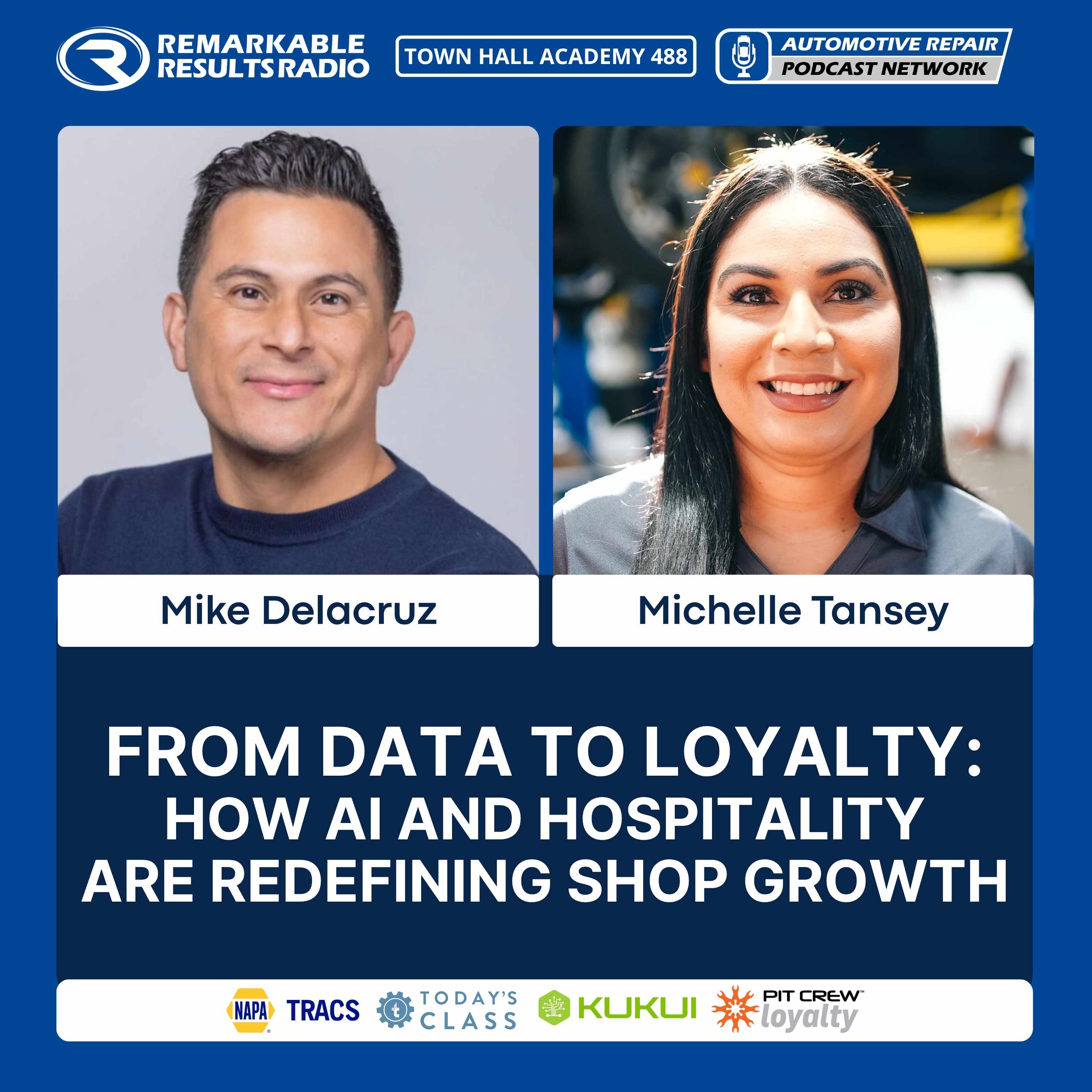
Remarkable Results RadioJune 5 · 57 min
From Data to Loyalty: How AI and Hospitality Are Redefining Shop Growth [THA 488]
Thanks to our Partners, NAPA TRACS, Today's Class, KUKUI, and Pit Crew Loyalty Watch Full Video Episode What happens when artificial intelligence meets world-class customer hospitality? In this episode of Remarkable Results Radio, host Carm Capriotto welcomes Mike DelaCruz, CEO of Overdryve Marketing, and Michelle Tansey, co-founder of Euro Clinic, for a forward-thinking discussion on how auto repair shops can use AI, data, and intentional customer experiences to build stronger businesses. From using AI as a strategic business assistant to creating a luxury-level customer journey that rivals brands like Ritz-Carlton and Nordstrom, Mike and Michelle share practical insights on what separates average shops from elite operations. They explain how predictive marketing, operational excellence, and deeply embedded core values can transform customer retention and long-term profitability. What You'll Learn How AI can serve as your shop's "big brain" to improve decision-making and uncover blind spots.How predictive marketing can forecast car count, identify customer churn, and improve campaign performance.The concept of the "NASA Shop" and what elite automotive operations do differently.How Euro Clinic creates unforgettable customer experiences through personalized hospitality.The importance of building systems and processes around your shop's core values.Why strong operations must come before marketing success.How small communication changes can dramatically improve customer trust and confidence.The role data plays in making better business decisions and reducing emotional guesswork. The future belongs to shops that combine technology with humanity. AI can provide unprecedented insight into customer behavior and business performance, but lasting success still comes from exceptional service, consistent operations, and a culture built around caring for people. The shops that embrace both innovation and hospitality will be the ones that stand out, retain customers, and thrive in the years ahead. Mike DelaCruz, CEO Overdryve Marketing *]:pointer-events-auto scroll-mt-[calc(var(--header-height)+min(200px,max(70px,20svh)))]" dir="auto" data-turn-id="request-WEB:8e59eec7-a235-4fa3-a072-956fea3fe478-7" data-testid="conversation-turn-4" data-scroll-anchor="false" data-turn="assistant"> *]:pointer-events-auto scroll-mt-[calc(var(--header-height)+min(200px,max(70px,20svh)))]" dir="auto" data-turn-id="request-WEB:49a777bf-d263-4496-bf0b-2eb3a46ac96a-11" data-testid="conversation-turn-24" data-scroll-anchor="false" data-turn="assistant"> Michelle Tansey, Euro Clinic, Santa Clara, CA. Thanks to our Partner, NAPA TRACS NAPA TRACS will move your shop into the SMS fast lane with onsite training and six days a week of support and local representation. Find NAPA TRACS on the Web at http://napatracs.com/ Thanks to our Partner, Today's Class Optimize training with Today's Class: In just 5 minutes daily, boost knowledge retention and improve team performance. Find Today's Class on the web at https://www.todaysclass.com/ Thanks to our Partner, KUKUI Stop juggling multiple marketing tools. KUKUI’s integrated platform delivers 4x better website conversions, automated follow-up, and real-time ROI tracking. Get industry-leading customer support with KUKUI at https://www.kukui.com/ Thanks to our Partner, Pit Crew Loyalty You’re probably tired of chasing new customers who never return. We understand. Pit Crew Loyalty ends the one-and-done cycle, turning first visits into lasting, reliable revenue at https://www.pitcrewloyalty.com/ Connect with the Podcast: Visit the Website:https://remarkableresults.biz/Subscribe on YouTube:https://www.youtube.com/carmcapriottoFollow on Facebook:https://www.facebook.com/RemarkableResultsRadioPodcast/Follow on LinkedIn:https://www.linkedin.com/in/carmcapriotto/Follow on Instagram:https://www.instagram.com/remarkableresultsradiopodcast/Join Our Virtual Toastmasters Club:https://remarkableresults.biz/toastmastersJoin Our Private Facebook Community:https://www.facebook.com/groups/1734687266778976Join our Insider List:https://remarkableresults.biz/insiderAll books mentioned on our podcasts:https://remarkableresults.biz/booksOur Classroom page for personal or team learning:https://remarkableresults.biz/classroomBuy Me a Coffee:https://www.buymeacoffee.com/carmSpecial episode collections:https://remarkableresults.biz/collections The Automotive Repair Podcast Network: https://automotiverepairpodcastnetwork.com/ Remarkable Results Radio Podcastwith Carm Capriotto: Advancing the Aftermarket by Facilitating Wisdom Through Story...
Listen →
80
Repair Shop ReckoningJune 5 · 1h 11m
Prepare to Deliver: What Smart Owners Do During Slow Times
In this episode of Repair Shop Reckoning, Kevin tackles a reality every shop owner will face sooner or later: What do you do when the phones slow down, the bays aren't as full, and the panic starts creeping in? Too many owners react by cutting...
Listen →
81

The Institute's Leading Edge PodcastJune 4 · 49 min
207 - You Can't Wrench and Run the Business Forever: A Shop Owners Turning Point
207 - You Can't Wrench and Run the Business Forever: A Shop Owners Turning Point June 3rd, 2026 - 00:49:01 Show Summary: Nathan Geransky shares his journey from running an automotive shop on his acreage to moving into a commercial location. Years of long hours and limited financial insight pushed him to seek coaching and change how he operated the business. By improving labor rates margins and systems he built financial stability and stepped away from turning wrenches full time. He discusses leadership team development and preparing the business for future growth. His story shows what happens when a technician learns to become a true business owner. Host(s): Jimmy Lea, VP of Business Development Guest(s): Nathan Geransky, Owner, Nathan’s Garage Ltd. Show Highlights: [00:01:00] – Nathan launched his shop from a building on his property. [00:02:00] – Customers arrived at all hours because he worked from home. [00:04:00] – Hiring help revealed lost revenue hidden in daily operations. [00:05:00] – Running a business required skills beyond repairing vehicles. [00:08:00] – A labor rate increase improved profits without customer pushback. [00:11:00] – Coaching helped build a $100,000 operating reserve in months. [00:16:00] – Better margins and scheduling changed his approach to ownership. [00:20:00] – The new location increased visibility and attracted new customers. [00:26:00] – Personal thank you cards strengthened customer relationships. [00:38:00] – Nathan is preparing the next generation to lead the business. In every business journey, there are defining moments or challenges that build resilience and milestones that fuel growth. We’d love to hear about yours! What lessons, breakthroughs, or pivotal experiences have shaped your path in the automotive industry? Share your story with us at info@wearetheinstitute.com, and you might be featured in an upcoming episode. 👉 Unlock the full experience - watch the full webinar on YouTube: https://youtu.be/5G4i75jw-no Don’t miss exclusive insights, expert takeaways, and real talk you won’t hear anywhere else. Hit Subscribe, drop a comment, and share it with someone who needs to hear this! Links & Resources: Want to learn more? Click Here Want a complimentary business health report? Click Here See The Institute's events list: Click Here Want access to our online classes? Click Here ________________________________________ Episode Transcript Disclaimer This transcript was generated using artificial intelligence and may contain errors. If you notice any inaccuracies, please contact us at marketing@wearetheinstitute.com. Episode Transcript: Jimmy Lea: Welcome, Nathan. It is good to have you here with me. Good morning. Nathan Geransky: Thank you. Big introduction. For a little Jimmy Lea: guy. Yeah, man. You've done a lot over the last little bit. You've really spread your wings and gone the distance. It's amazing to hear the growth. Nathan Geransky: Yeah, it's been a journey for sure. Jimmy Lea: Yeah. How long have you been with the institute? How long you been with coaching and training? Nathan Geransky: Just about a year now. Jimmy Lea: Oh, congrats, bro. Nathan Geransky: About a year. Yeah. Jimmy Lea: That is awesome. All right. Let's go back in time, Nathan. Let's talk about the past. How did you get into the automotive industry, the automotive aftermarket? Nathan Geransky: So I was I was working in another shop and they kinda... It got slow there, so I went to- I've always been an automotive guy, so I've worked at Ford for many years and been doing it all my life. Jimmy Lea: Yeah ... Nathan Geransky: so this other shop I was working at, they kinda got slow, kinda lost my job, and I had an acreage and a shop there, so figured start, I'll work at home until I find a job. So I looked around a few times. Jimmy Lea: Nice. Nathan Geransky: No jobs, and started on my own. Jimmy Lea: Oh my gosh. So this is the residential cul-de-sac you were in. You had an acre. You had a- That's right ... shop on the- Nathan Geransky: Yeah ... Jimmy Lea: w- like a two bay or a three bay? What did you have there at- It was a- ... Nathan Geransky: the Jimmy Lea: back of the house? ... Nathan Geransky: a 30 by 60 shop. It's on three acres. Oh. So it was on acreage. Yeah. Jimmy Lea: Yeah. Nathan Geransky: So fairly big shop. Yeah. Jimmy Lea: Yeah, that is a big shop. And so you're working from home. Nathan Geransky: Yeah. Jimmy Lea: Tell me about that challenge. Nathan Geransky: So right at first it was figuring out what parts and everything. So I'd work in the morning, figure the cars out, go get the parts all afternoon, work till 10:00 o'clock at night, puttin' the cars back together. Oh Jimmy Lea: my gosh. And a lot of us work remote, so we're able to work from home. Yeah. Me being one of them. Yeah. Now you're working from home. Were there any challenges you faced by having your garage in the backyard? Nathan Geransky: Customers, they're like, "Oh, you're here," so they come any time of day, like drop off a car at 10:00 o'clock at night, or they'll expect payments. Like they'll come out at 7:00 o'clock and run your payment through, right? Or whatever, but- 24-hour garage. Jimmy Lea: It's true, because you were there. You were available. They're coming directly to you. Yeah. They thought, "Oh, no, he lives here. Yeah, no, I can come any time." Yeah. Oh my gosh. So how long did you operate out of the backyard? Nathan Geransky: Just until a month ago now, when we moved to the new shop. Jimmy Lea: Oh, wow. How many years were you operating from the house? Nathan Geransky: Seven years. Jimmy Lea: Seven years, wow. Nathan Geransky: Yeah. Jimmy Lea: Your neighbors must have loved you. Nathan Geransky: They did, except for one guy. Jimmy Lea: Oh my gosh. So how many bays did you have in your garage, 30 by 60? Nathan Geransky: Two bays. I had a wheel alignment hoist, which I'm still using, and another two post hoist. Jimmy Lea: Nice. Okay. Nathan Geransky: S- other side, Jimmy Lea: nice. Side by side. Oh, wow. Nathan Geransky: Yeah. Jimmy Lea: Wow. And w- you went from... So were you parking car... you say you had three acres. Three acres is huge. Yeah. It's a lot to- That's a lot of- Nathan Geransky: Yeah ... l- Jimmy Lea: lot of property. And- Were you parking cars all over your backyard? Nathan Geransky: Yeah. And then, so I had at one point in time probably 30 cars waiting there. Oh my gosh. And then the county came- ... "Hey, you got too many cars." So I learned how to schedule slowly. 'Cause people drop it off, says, "Get to it when you can," so I did, and then ended up being a pile of cars. Yeah. Before you know it, it goes from one car that's waiting to seven to 19 to- Yeah ... 30. Oh my gosh. Yeah. Nice. Packed double rows. Oh, wow. Wow. Wow. So what were some of those biggest challenges you were facing as a shop owner working out of your house, working out of your backyard? Jimmy Lea: So I- What were some of the biggest challenges? Nathan Geransky: Parts and I guess mechanics. So I hired Noah, my son, for do administration because he was, Actually, I hired my other son first, Justin. He's a journeyman, so I needed more help there, so me and him worked together about a year or so, and then hired Noah because when parts, when customers come back for repairs and they're like, "Oh, we put this part on for warranty, but we didn't ever charge for it." So we're like, "Okay we are charging you this time." So hired Noah to... His wages paid for all his parts we missed putting on vehicles or building out vehicles. Jimmy Lea: Oh, yeah, he caught everything. It's- But just even catching that paid for his wages. That's amazing. Oh, for Nathan Geransky: sure. Yeah. So we're l- in a losing battle, right? Jimmy Lea: Oh, yeah. No, yeah. Yeah. And what about all the core returns? If you're not getting credit for the returns. Nathan Geransky: Yeah, that too. Yeah. We probably lost a lot there too, yeah. But- Jimmy Lea: Yeah, no. But now you're, you've captured it. Nathan Geransky: Swapped around. Yeah, you bet. Jimmy Lea: Oh, man. So what's one of the biggest, And not, maybe not the biggest, but what's one of the hardest parts about going from being a technician in the business to being the owner and working on the business? Nathan Geransky: Ha- I guess challenging because I can fix vehicles Jimmy Lea: Yeah ... Nathan Geransky: but to run it, like I've never ran a a business, I guess business-minded, but not, never went to school for anything, so you always struggle and worry what, Yeah, it's a challenge for sure. Jimmy Lea: Oh, yeah. It's easy working on cars. It's harder- Yeah ... it's a different skill set to work on your business, right? Nathan Geransky: Yeah, definitely. Jimmy Lea: Yeah. Oh, man. So what was w- what was one of those challenges that you faced in making the transition? What was one of those skills you had to learn from being a technician and turning a wrench to being an owner and sit in front of a keyboard? Nathan Geransky: I'm still learning. So biggest thing is working for my business or working on my business, not in my business. Jimmy Lea: Yeah. Nathan Geransky: Mentally challenging, still work in progress, but we've come quite a ways. Jimmy Lea: Oh, wow. Yeah. That is true. That is true. Nathan Geransky: Maybe not Jimmy Lea: answering the question fully, but- And there are different seasons. No, you totally did. Okay. Yeah. There's different seasons that we operate in. So y- there was a season where you had to be the technician, there was a season where you had to be the technician and the owner, and as you- Yeah built up your business, you were able to take those steps to become the true full-time business owner. How often are you turning a wrench these days? Nathan Geransky: So now s- since we moved to the new shop I haven't done anything in the wrench. Oh. So I left my toolbox at the other shop. Did you leave your toolbox at Jimmy Lea: home? Nathan Geransky: Yeah. So Jess was like, "You're not bringing your toolbox to the new shop." So it's there. Out of the Jimmy Lea: way. Nathan Geransky: So it's mentally, The other day I was trying to find, get something and I told the o- all the guys to lock their boxes up. So on a Saturday I came in here, I had no tools. Yeah. What- Jimmy Lea: So I was like, "I can't do anything." No. Yeah. Of course you couldn't. No, you, you c- if you wanna work on your own cars, go back to your, Yeah, go back to my old job. Yeah ... go back to the house. Nathan Geransky: That's what happened. Yeah. Jimmy Lea: Oh, that's funny. That's funny. All right. Y- switching f- from technician to an owner, a different skill set. Y- you've a very technically trained, cars spoke to you. You're making that transition to business owner. What was one of the hardest things for you to adjust at first? Was it you raising prices, managing people, or trusting your financials? Nathan Geransky: Probably a combination of all of those. You're you're managing people, not too much that. I guess you're Yeah, just a little bit of everything Just a bit Jimmy Lea: of Nathan Geransky: financials? Jimmy Lea: Yeah. No, it's a bit of everything. Nathan Geransky: Yeah, for sure. Jimmy Lea: Yeah. And all right- How you're figuring it all out ... so digging into each one of these I have a question for you about raising your prices, because you were at a certain rate and you raised it by $30 an hour. Talk, talk to me about that. Yeah. Riff on that for a minute. Nathan Geransky: Through my coaching through Chad we're, He was saying, "You need to raise your labor rate or you need to give Justin a lot lower wage, otherwise..." And he's "I don't think he'll stick around for that because even though he's your son." So yeah, I raised my rate like 30 bucks. I was worried about customers because you think maybe they can't afford it." And, but then you realize they're coming back from holidays, and I'm not going on holidays. So you raise it up, and surprisingly nobody batted an eye. They didn't even question the labor rate, nothing. Over a couple more times they came over "Oh, your rate went up." I said, "Yeah, it went up to the amount." And yeah, it was crazy. I was... That was the biggest surprise, Jimmy Lea: yeah. Isn't that amazing? Nathan Geransky: People didn't care. Jimmy Lea: Yeah. They didn't care. So all the fear was where? It was inside your own head. Nathan Geransky: It was in me, yeah. Jimmy Lea: Yeah. But and the beauty of that is you analyzed the business. You looked at your business, you looked at your expenses, you looked at your overhead, you looked at all of what it cost you to run your business, raised it by $30 an hour to cover the business so that you- Yeah could have the life that you needed, and Noah and Justin, and is there anybody else on the team? Don't you have a few more people? There's Nathan Geransky: two others. Yeah, Dawson and Arthur. Jimmy Lea: Dawson and Arthur. Yeah. So you raised your labor rate so that as a business you could survive, as a business you could provide- for not just yourself, but for the- No ... entire team. And that's essential. Nathan Geransky: Yeah. Jimmy Lea: That's so important. So what made you decide to reach out to the institute? Nathan Geransky: So we're, They had phoned before, Michael had phoned before, and I was like I think we're doing pretty good in the business, and we're all... We've been doing it for seven years, and how hard can it be, right?" Jimmy Lea: Yeah. Nathan Geransky: Yeah. And then last year we're, About about this time last year we're like, "This is getting... We're making money, but we don't have any money." So we're like, "Okay, we need to figure this out." So that's when I reached out to the institute and got a plan and went from there, and it's been amazing. Jimmy Lea: Oh, that's good. That's good. And we'll give a shout-out to Michael Wiltrout. In the past, he has been a partner and owner of four different shops in the Arizona- Okay ... area. And so w- y- you connected with the right guy at the right time, and I'm sure that you guys had some phenomenal conversations talking about your shop, your business, what you were doing. A- and he's got the chops. He's been there. He's done that. Yeah. He can talk to what you're going through and what you're doing. So I'm sure a lot of that- Great guy ... resonated real strong with you. So when you connected with Chad, what were you hoping that coaching with Chad would help fix? Nathan Geransky: Just how to run my business correctly and be more financially s- secure, and- That's Jimmy Lea: important. Nathan Geransky: Yeah. That's, yeah, that's very important. Jimmy Lea: Yeah. So h- how long did it take you? What was that realization of, "Oh my gosh, I, I think this is actually working. I think I can see that we're, we have money. We have money- Nathan Geransky: yeah ... Jimmy Lea: not just on the books, but we have money." What was that point for you? What did that look like? Nathan Geransky: So when we started with it, it was I think I've said this before even, but so our books were, they were okay, whatever, but we had we had no money in the bank and like we were struggling along. And then within about four or five months we had, with adjusting our margins and everything and increasing the labor rate, we put $100,000 in the bank for operating. Jimmy Lea: Holy cow. Nathan Geransky: Yeah. So it went up quickly and it was, yeah, amazing Jimmy Lea: That is Nathan Geransky: awesome Before I was happy, I'd... Before I'd had 20,000 in the bank, I was like, "Oh, we're doing good." Jimmy Lea: Yeah. Oh, yeah. That first month when you have 20,000, it's like an eye-opening, "Oh my gosh this is working." Yeah. And then you look up- Yeah ... two months later and you're like, "Oh my gosh, we have 100,000." Nathan Geransky: Yeah. That was crazy. Jimmy Lea: That is cool. Congratulations- Yeah ... bro. That is very cool. Talking about the moving of your business, John Beasley is totally commiserating with you or loving on you in that residential area. He started in residential as well many moons ago. Had people showing up eh, on days when he was closed and walking around his house. Nathan Geransky: Oh, yeah. Jimmy Lea: And John, y- clearly they had to be on the outside of the house, right? There's nobody coming inside your house. No, nobody. Even though they think that's your office. Nathan Geransky: Yeah. No, my office was always in the shop, so nobody ever came in the house, but. Jimmy Lea: Yeah. Oh, that's wild. Wife Nathan Geransky: was like, "Who's here now?" I was like, "Oh, just another customer dropping off in the evenings or Sunday afternoons." And we have company over "Oh, that's a customer coming again." Jimmy Lea: Yeah. We should be happy Nathan Geransky: now. Which Jimmy Lea: we love. Yeah, no, Nathan Geransky: it's good. Jimmy Lea: I love being able to drop off late at night. Yeah, Nathan Geransky: for sure ... Jimmy Lea: John says, "Yeah, it was just a duplex, much smaller scale." John, I feel you on that. I- Yeah ... I love dropping mine off late at night. And the key box, oh my gosh, I love the key box. I love filling out that- little envelope putting it in the box because I... There was a period of about four or five years, Nathan, that I don't even think I saw my, the shop owner or even any of the staff, 'cause I would drop it off late at night. Yeah. And they would do the work and, Yeah ... I would pay over the phone and- Yeah pick it up two, three days later, late at night- Yeah ... or something like that. And, Yeah ... in a residential- I've had that Nathan Geransky: before too, yeah ... oh my gosh. Couple customers didn't even know who they dropped off, Jimmy Lea: like- But in residential, that could be a nightmare. Nathan Geransky: Yeah. Yeah. Jimmy Lea: That could be a nightmare. Here you are, 10 o'clock at night you're laying down in bed. You- it's bedtime and you got people dropping off their car. Nathan Geransky: They just put the keys on the floor mat and go. Like- ... we were on acreage, so it was pretty safe. That's what they did Jimmy Lea: yeah. So what was one of those first things that, Working with Chad, what was one of those first things that he challenged you to change in your business? Nathan Geransky: I think the first thing was labor rate. Really? Yeah. Okay. And he did that because he could see that the business just needed a bump in the labor rate- Yeah, for sure. Yeah ... and he knew that Justin needed to make some more money. Yeah, for sure, yeah. Jimmy Lea: Oh, wow. When you raised your labor rate, what were you expecting to happen? Nathan Geransky: I thought we'd be slower. Maybe our customers would complain about it or they'd ask questions on the bill, right? "How come there's so much more money?" or whatever. But when Chad explained it to me, you raise your labor rate up, and you have... say you have a two-hour job You're only going up a few dollars or an hour job, right? Yeah. Top 50 bucks. So people sorry, people probably don't even hardly notice a little bit, like $30 is quite a bit, but they're not gonna question too much. And when you get the big jobs, like eight, 10 hour jobs, they're like, "Okay." And then they kinda realize it's a bit higher. But the just day-to-day jobs, people didn't seem to care too much. Jimmy Lea: No. And add to the bo- it added to the bottom line in a hurry, right? Oh, yeah. Which is- Big time ... Nathan Geransky: great. Yeah. S- Jimmy Lea: so le- let's use some fake numbers, but, Sure ... somewhat real. If we're talking about a two-hour repair order, let's say that's around $600. Does that sound about right? Nathan Geransky: Yeah. Jimmy Lea: So at a $600, your increase made it $660. Nathan Geransky: Yeah. So $60, right? Yeah Jimmy Lea: That's a nuisance increase in my book. Yeah ... it's just a, "Oh, okay. Yeah, everything's going up." Nathan Geransky: Yeah. Jimmy Lea: Shoot. Have you seen hotel rooms now? Nathan Geransky: No, I know. Jimmy Lea: I agree with you. Even Motel 6 is 150 bucks a night. Nathan Geransky: Yeah. Jimmy Lea: All your Hiltons and Marriotts are over 300 a night. It's... Ah, man. I know it's ridiculous. So how has the institute and how has Chad helped you move from reacting to problems to managing the business more intentionally? Nathan Geransky: Through, your parts and margins, we've learned about, more about that, and scheduling. It's helped a lot with sched- scheduling. And just revamped everything from being a mechanic point of view to a owner point of view. Jimmy Lea: Yeah. Isn't that wild? Y- and all those days you worked at the other shop, and you're working on Fords, and you're thinking, "Oh, this owner, he's putting all this money in his pocket. Oh, he needs to get more cars in here." "I could work on more cars." Now you're on- Yeah ... this side. Nathan Geransky: Yeah. Jimmy Lea: Now you're the owner. Now you're the one that has to put more cars in the bays and- Nathan Geransky: yeah. Jimmy Lea: Yeah. So how important is that for your team to understand the financials of the business as well? Do you have a different perspective on that now that you've been Nathan Geransky: on- ... the Jimmy Lea: other side, and now Nathan Geransky: you're the owner now? So I think the team has some- somewhat... i've shared my financials with them, and they're like, "Oh, we're doing good." I said this is why we're doing good, because we're... We have our labor rate's better, our mar- margins are better, and this is why as you go through your jobs, you need to make sure you're writing everything down and your stories are correct so we can bill correctly. And it all results to you getting more money at the end of the day." So a teamwork, and that's how I've always addressed it. So everybody works together, and everybody makes money. Jimmy Lea: Nice. Nathan Geransky: It's not all about me making money. It's about everybody making money, Jimmy Lea: yes. It's important we all Nathan Geransky: make money. No, and everybody to be successful. Yeah. Jimmy Lea: Oh, 100%. 100%. Yeah. So do you feel like you look at your team differently now than you did a year ago? Nathan Geransky: Yeah, probably. Yeah. And do you feel like your team is looking at you differently than they did a year ago? Definitely. Yeah, definitely. Yeah. But... and d- what do you, what would you attribute that shift and change to i- in yourself? Just learning more about business and through coaching and- yeah, it's- Jimmy Lea: and Nathan Geransky: leadership all, all together. Leadership, Jimmy Lea: yes. Nathan Geransky: Yeah. Yeah. Jimmy Lea: It just sounds like you have grown so much tremendously in your role as a leader here at the shop. I would say that your team is looking at you more as a leader than they ever have before. Nathan Geransky: Yeah, they have. Yeah, they are. Jimmy Lea: Oh, that's awesome. Yeah. Congratulations on that. And that's a big transformation for you to make and to grow. How have you changed? How ha- how do you view yourself today versus what you, who you were a year ago? Nathan Geransky: It's a hard challenge or hard vision, I see myself more as a manager now or owner-operator, right? And like I'm in charge of a big, like a big business now, right? So it feels like a big business. Yeah, so it's been mentally challenging, and you're figuring out where I st- I- where my role is, right? Or how I manage people and everything else. Jimmy Lea: Yeah. Yeah. It is. It's a big change that you go through, and Chad's giving you a shout-out here. That Nathan is humble. He's becoming involved with BNI and NAPA AutoPro, becoming a spokesperson for the industry. Thank you for doing that, Nathan. That's from Chad, your coach, so he- Yeah ... he knows who you are as well. Oh, thank you. Yeah, Nathan Geransky: for sure. Jimmy Lea: So you've now- And- ... moved into a n- oh, sorry, go ahead. Nathan Geransky: I said he's been an amazing coach. Yeah, I've always, every time I talk about business or whatever, I said, "Yeah, I got this great coach, Chad." He's I bring him up all the time. Jimmy Lea: Nice. Nice. Spread the word. We need more shops- Oh, yeah, Nathan Geransky: I do. Yeah. For sure. Jimmy Lea: Chad needs more shops to coach. Nathan Geransky: Yeah. Jimmy Lea: He'd love it. Bring it on. Nathan Geransky: Yeah. Jimmy Lea: Bring it on. Nathan Geransky: Tell everybody, you, everybody needs a coach. Jimmy Lea: Everybody needs a... that's so true. Yeah. That is so true. Everybody needs a coach. Everybody needs someone to hold them accountable and inspire them towards r- achieving their goals. Nathan Geransky: Yeah. Jimmy Lea: Yeah. That's good. So you've just recently moved into the new location. Did you say a month and a half now? Nathan Geransky: It'd be a month. This week is a month. Jimmy Lea: This week is a month. Oh, congratulations. Nathan Geransky: Yeah. Oh, thank you. Jimmy Lea: What has surprised you most about moving into this new location? Nathan Geransky: The amount of, So my customers that have been with me for years they're happier now because I'm on the main road. They don't have to drive three kilometers off the highway to go to my acreage. Oh, that's right. They said- ... "You're actually closer," so I didn't realize that. I'm probably five minutes closer to Sherwood Park, which is the next big town or city here. So- Nice ... overall it's been really surprisingly, everyone's happier Jimmy Lea: Nice. Nathan Geransky: A- and so- A lot more drop-ins off the highway too, 'cause it's more visible. Jimmy Lea: That's what I was just gonna ask. Yeah. What about your walk-ins? What, how, what are you seeing there? Walk-ins, probably about Nathan Geransky: 10 new customers from last month. People walk in- Jimmy Lea: 10 in one month? Nathan Geransky: Yeah. Jimmy Lea: How does that change the energy or the culture of the company? How does that change the energy inside your business? Nathan Geransky: It didn't change too much, just that we're now, we're... I guess we're more surprised that, or happily surprised, that people are coming in and noticing us. "Oh, where do you guys come from?" "We've been looking for a mechanic for a long time," some of them said, right? Or whatever. I was just... I've been in business eight, over eight years, and now I moved here, and they're like, "Okay, good." So couple of new guys have come in and got their stuff checked out, and yeah, so it's been good. Jimmy Lea: That is good. That's awesome. Nathan Geransky: Yeah. Jimmy Lea: And they would've never found you back in that residential cul-de-sac, so thank Nathan Geransky: heavens you- No, unless you... Yeah. So a lot of it was word of mouth before, so I've never really advertised or never cared to advertise 'cause I was so busy. Just word of mouth, and everybody's coming that way, right? Tell their friends. Jimmy Lea: Oh, yeah. And word of mouth is powerful. That is very good. Yeah. That's great. And that's how it's been Nathan Geransky: great till now, Jimmy Lea: and now it's gonna become exponentially even more great. And speaking of marketing you... We have a marketing for automotive repair shops, we call it MARS, here at headquarters in October. Nathan Geransky: Okay. Jimmy Lea: You should really look at coming down to our marketing intensive. It's three-day intensive, talking all about marketing. So it's gonna be amazing. What is this? What was the finance like switching to the shop? Was it a fairly clean transition or was it bad requiring loans and such? Oh, this is from Nathan Garcia. Oh my gosh, Nathan Garcia. I thought Nathan, you, I thought you typed that in there. I was Nathan Geransky: like, " Jimmy Lea: What the heck is he saying?" What's going on here? So Nathan Garcia's, he's asking what was the financial... What was the finance like switching to the shop? Oh, from switching from the home business to the- Yeah ... the shop business, the brick and mortar. Nathan Geransky: Yeah. It was relatively painless because I had money in the bank. Jimmy Lea: So all my- Wait, so you... This is when you had 100,000 in the bank or what? Yeah. I mean- Nathan Geransky: Yeah. That's Jimmy Lea: right ... so you had to fund the whole mer- move? Nathan Geransky: Yeah. So I renovated this place. I probably put probably 40,000 or 30,000 into renovations, rewiring everything, and because it was just a lawnmower repair shop before. So I moved walls, built mezzanines, put voids in rewired everything. Yeah, so now we're down to minimal funds again, but I didn't have to borrow anything. We're all- Oh, yeah ... all our books are paid up. Everything's good just because I had money in the bank. Otherwise- Jimmy Lea: Dude ... Nathan Geransky: I couldn't have done this move. Jimmy Lea: That's Nathan Geransky: awesome. I'd have been out of- Congratulations I'd have been, I'd have been looking for a job. Jimmy Lea: And so would've Justin, and Devon, and- Nathan Geransky: Yeah ... Jimmy Lea: noah and- The Nathan Geransky: other Jimmy Lea: five Nathan Geransky: other guys. Yeah. Yeah. For sure. Jimmy Lea: Oh, yeah. Oh, you guys all would've been looking. Yeah, 'cause the county shut you down in being in that residential area, right? They're like- Yeah. They- We're not gonna renew your license anymore." That's right. So they said, "Look for a new shop, and when you do, then we'll worry about your license then." So they kinda held it in limbo. Wow. I'm glad you got in there. I'm glad that you've- Yeah ... seen success there. And you've made 100,000 before, so you'll do it again. Nathan Geransky: Do it again. Yeah. Yeah. Jimmy Lea: Yeah. And congrats- Nathan Geransky: easier now because we have systems in place. Well- We can- Jimmy Lea: Yeah. And what does the shop look like today? How many bays are you at? How many lifts? What does that look like for you today? Nathan Geransky: So we have three bays, three lifts in our new shop here, and we could use the old shop for, like I have a wheel align machine. I do ADAS calibrations and everything. So do all that over at the old shop, so we're kinda running both shops. So I guess moving from a two-bay shop to a five-bay shop now combined. So it's been pretty amazing. Jimmy Lea: That is very Nathan Geransky: cool And yesterday we're like, "We could use four more bays 'cause we have so many customers." Jimmy Lea: Oh my gosh, yeah. Now, so now you need to be a seven-bay shop. Nathan Geransky: Now we need to be a seven-bay shop, yeah. Jimmy Lea: Under brick and mortar, and then still have the- Yeah ... two at the house if you need them. That's the overflow. Nathan Geransky: Yeah. Jimmy Lea: Oh, that's cool. Congrats. So w- are you expanding? Are you gonna grow? Are you gonna take the businesses next door? What what does that Nathan Geransky: look like? So the next door, there's a body shop next door which owns this whole building. So my building's a 50 by 50 shop. So 30 by 50 is the shop side, then we have a mezzanine and office space on the other side of it, Jimmy Lea: okay. So you can't take any more space. You're pretty well Nathan Geransky: landlocked. No, I cannot here, yeah, landlocked, unless I buy land beside me, which, another guy has it, I could buy from him, but it's got lots of environmental problems, Jimmy Lea: oh. Nathan Geransky: Maybe in the future, see how it goes. Jimmy Lea: Okay. Keep your eyes open. You m- might find another shop- Nathan Geransky: Yeah ... Jimmy Lea: somewhere in the area. Nathan Geransky: Yeah. Jimmy Lea: That would be good. Nathan Geransky: Yeah, my next shop would be at least five, 10-bay shop if I'm going again, Jimmy Lea: oh yeah, for sure. For sure. Nathan Geransky: Yeah. See how this works Jimmy Lea: out- so I- ... and go from there ... I read in your notes something interesting that you're doing in sending out handwritten thank you cards. Yes ... what inspired that? Nathan Geransky: So we're trying to be different in our shop, like community-based, right? And we're like... So we have, So all of our work orders are in a folder. They have Nathan's Garage folder all done up in our deckling and everything. And so every work order, people are surpri- like when your work order is done, we're not just giving you paper, we're giving you a folder and being professional. Jimmy Lea: Oh, wow. Nathan Geransky: And so these, Like a postcard, we got a... There was a sale on postcards. We were like, "Hey, we should put this in there." And Napa, we had Napa brand it at all, so for our... If you like, for our warranty or "Did you know that your vehicle has three years, 60,000 kilometer warranty since it got repaired here?" And on the back of the cards, we write a note of thank you for whatever they came in for, your oil change or your diagnostics or tire changeover. So my wife writes them all out for me, and I sign them and we mail them out. Oh, wow. A few customers that come in, it's like, "We got mail." Where like they're all excited to get mail, and they're like, "Oh, it's from Nathan's Garage." They're like, "You guys are pretty awesome." Jimmy Lea: But That Nathan Geransky: is Jimmy Lea: awesome. That's good ... Nathan Geransky: I knew it'd be a good result, but I wasn't expecting maybe that good. But our people- Nice ... were excited about that, Jimmy Lea: oh, that's very cool. Nathan Geransky: Yeah. Jimmy Lea: That's very cool. I'm glad that they're responding well and Nathan Geransky: enjoying it. They put it on their fridge and everybody sees it when they come in the house. Jimmy Lea: Hey, there you go. Nathan Geransky: Yeah. Jimmy Lea: Oh, I love it. I love it. I... You talk about it, it was better than you expected. What's something that you have implemented, besides the postcards that you didn't think would make a big difference and it turns out that it did? Nathan Geransky: The postcards and I guess the envelopes or they are folders. Jimmy Lea: Yeah. Nathan Geransky: People like, they're always happy to get... one guy was so ecstatic about g- getting a folder. That's what started this, 'cause we gave him a black folder at first and put his stuff in there, and he's "Oh, a folder." He's "We don't get these." So ha. So I'm, I made a whole bunch, like 500 folders and with our branded on there handed to all the customers, and people are always surprised and happy. You f- hand them a folder and your keys, and they're like, "Oh, this is professional." And they're always good results in that. And they're like, "Okay, this is not just a backyard garage or an ordinary garage," right? 'Cause we started at the other place already. Yeah. So now the new place, everybody's "Okay, this is..." I think that's a- It's Jimmy Lea: legit. Nathan Geransky: Yeah, it's legit. Yeah, for sure. Jimmy Lea: Oh, good for you. In Canada they have a little bit different program with NAPA. I- in the United States you're NAPA AutoCare, and in Canada you can be an AutoCare, but then there's the next level, which is AutoPro. NAPA Nathan Geransky: AutoPro, yeah. Are Jimmy Lea: you guys an AutoPro? Nathan Geransky: We are AutoPro now, yeah. So as of January we're at AutoPro. Jimmy Lea: Congrats. Nathan Geransky: So that's been great. Yeah, so they... All their war- labor w- and parts and everything parts and labor, three years, 60,000 nationwide And they'll... If you're waiting for your part, they'll put you in a hotel, they'll pay for your towing- Jimmy Lea: Oh my Nathan Geransky: gosh ... everything else, wow. Yeah. Yeah, Jimmy Lea: that's that worry-free guarantee. Nathan Geransky: Worry-free guarantee, yeah. And for the new vehicles, there's 10 year, 100,000... 10 year, 400,000 catastrophic failure, up to $5,000. Wow. Which is a pretty phenomenal new car warranty. Jimmy Lea: Oh, yeah. Nathan Geransky: Yeah. Jimmy Lea: A- and when you say new car warranty, like new to your shop or brand new 2026? What are you talking about? Nathan Geransky: New under 40,000 kilometers. Like brand new. Jimmy Lea: Yeah. Nathan Geransky: Under 40,000. They have to register through you. We're supposed to do most of their oil changes, all their maintenance. Jimmy Lea: Yeah. Nathan Geransky: And then if they do that, then they they get the warranty. Jimmy Lea: And did you say up to 400,000 kilometers? Nathan Geransky: Yeah, 10 year, 400,000, which is phenomenal. Holy Jimmy Lea: mackerel. Nathan Geransky: Yeah. If your transmission blows up or your motor blows up at 300,000 they'll reimburse you up to 500... Five, $5,000. $5,000? Yeah. Jimmy Lea: Oh my Nathan Geransky: gosh. Which is better than nothing. Jimmy Lea: Bro that's amazing. Yeah. That's awesome. Congratulations. I'm glad you're- Yeah ... with NAPA and NAPA Auto Pro program. They- Yeah ... they have a great program. They're gonna do you very well. Very cool. Yeah, Nathan Geransky: no, I'm pretty excited about it. Yeah. Jimmy Lea: Nice. Let's talk about, It feels like I've been Nathan Geransky: starting my business all over again. Jimmy Lea: Yeah, right? Yeah. All the excitement and the energy- yeah ... that, that instills. Yeah. Nathan Geransky: Yeah. Jimmy Lea: Nice. Talking about you and Noah Noah's your son. He's working the front counter. Nathan Geransky: Yeah. Jimmy Lea: D- how closely do you and Noah work together on your financials? Nathan Geransky: Very close, like daily So we're working it out Did you guys work with Dani on Jimmy Lea: your- Nathan Geransky: Yeah. Yeah. Jimmy Lea: Wow. Nathan Geransky: So we went from QuickBooks Desktop to QuickBooks Online with our bookkeeper, and then so Noah kinda took over that, and we're kinda working back and forth trying to figure it all out 'cause I used to like for financials was like, "I don't wanna deal with this. Give it to the bookkeeper. Deal with it. She can deal with the accountant. I'm gonna fix cars." But realizing it's, how important it actually is, and that's what it's all about. So we need to dig into it and figure it out. I need to figure it out, which I have. Yeah. It's come a long ways, for sure. Jimmy Lea: Yeah. No, I, and I'll bet there's a lot of technicians out there right now that are like, "Oh my gosh, I don't wanna do the books. This is something they hate to do." That's exactly what Nathan Geransky: I didn't wanna do. Yeah. Sure. Jimmy Lea: Yeah. They, maybe they come in on a Saturday morning for a couple of hours trying to get it done. They're trying to do- Yeah ... the full week's worth of stuff. Nathan Geransky: Yeah. Jimmy Lea: Yeah. It sounds like what you're saying is it's better to have a person who's able to do it for you if you're not the one to do it. Absolutely. Yeah. But even then, you need to have your fingers in that cookie jar. You still have to Nathan Geransky: get involved. Yeah. Jimmy Lea: You still gotta Nathan Geransky: be involved. Which that's my where I'm going now is where we always need to be involved with that. That's what I'm learning. So that's part of the- Yeah ... manager role that I'm learning to do. Jimmy Lea: Yeah. It's the big nemesis that you're facing. It's the big- Yeah elephant in the room. Yeah. And how do you eat an elephant? It's one bite at a time. So now you're doing it. You're in there. Yeah. You're doing- Yeah ... the steps you need to take to get to that point where you can be the manager you need to be and the owner you need to be, the owner that your business demands. And that's so important. Yeah. And you recently joined BNI. I was a member of BNI for oh, two and a half, three years when I had a landscaping, house cleaning- Okay ... handyman business. Nathan Geransky: Yeah. Jimmy Lea: What have you discovered so far with BNI? Nathan Geransky: I think it's the next step. I just recently joined got inaugurated or whatever the other day, like joined their group, right? Yeah. Passed all their, You bas- have to apply for it and make sure the right fit for your chapter. So I passed all that. So yeah, I just started. I think it's a good next step for my business to become more manager mentality, and looking working for my business or on my business, I should say. So yeah, I think it's a... That's why I joined it 'cause I feel it's the next best step, and referrals, and they give you more business, at the end of it. And more- Yeah ... helping make a community out of it, so which is great. Jimmy Lea: Yeah. Yeah, you will. You'll discover quite a bit of community out of it. Yeah. What I discovered is the more I was able to come in and give, to give knowledge- Definitely, yeah ... to give information, to give understanding, to give tips and tricks and reasons why, and this is for automotive you would say, "Th- this is what a timing belt is. This is what it does, and this is why it's important for you to go to a certified, a trained, certified automotive repair shop. And by the way, that's who we are. We, this is what we do." Yeah. So for those of you who don't understand BNI, they only allow one company, one business from one vertical into the chapter. Yeah. So Nathan will be the only automotive repair guy, person in the, in that chapter. They could have a collision person. They could have a quick lube person maybe. That might be a little bit Nathan Geransky: too close. No, I think it's all automotive is different. Collision would be, yeah, they would have a collision person. They have all your lawyers and financial people and bankers and- Jimmy Lea: Yep. Yeah ... Nathan Geransky: everything is... There's 34 people in that group, so it's a pretty big- Oh, it's a big group Chapter. Yeah, a very big chapter. They've already done over a million in referred business already this year. Jimmy Lea: Oh, wow. Nathan Geransky: So it's a- That's phenomenal ... quite a a healthy group to be into. Jimmy Lea: Yeah. Nathan Geransky: And yeah, their motto is "Givers gain," so you wanna give as much as your information, like you were saying, help them understand what their car needs, right? Jimmy Lea: Yep. Nathan Geransky: Or what's their tips of- And maintenance, big maintenance stuff, Jimmy Lea: oh, yeah. Nathan Geransky: Yeah. So I think it's gonna be good. Jimmy Lea: It's gonna be really good. Nicole's giving a shout-out here as well for BNI. It's a wonderful for their shop. And Nicole, glad you're in BNI. Congratulations, that's awesome. Yeah. One of the things that I would love to see auto repair help educate the industry is a lot of people think, "Oh, my manual says I can go 17,000 miles before I change the oil. My manual tells me I can go 10,000 miles. My manual tells me I can go 9,500 miles before I need to service the oil." That's not true. Nathan Geransky: Because so if you look in your manual too, it'll say extreme circumstances or extreme duty, which is most of our cars, especially in Canada, you have such extreme hot, cold, and everything else. You... So basically our cars are running extreme duty all the time. Jimmy Lea: All the time. Nathan Geransky: So your maintenance is a quar- like probably half of what it should be per- Jimmy Lea: Yes ... Nathan Geransky: less time- Yes ... to say, less kilometers. Jimmy Lea: Yes. Oh, for sure. My- Yeah ... my father taught me to treat my F-150, my truck, and this is the way he treated his Ford F-150. He says, "I treat it like a Honda. Every 5,000 miles I go and get it an oil change, and it's always synthetic." Nathan Geransky: Yeah. Jimmy Lea: Never conventional. He was always synthetic. I did that, and I drove that truck 225,000 miles. I sold it, and to this day I really wish I still had that truck. Nathan Geransky: Yeah. Jimmy Lea: It was a great truck. And man, it just kept running and running. Yeah. So yeah, the more you can help educate the industry- ... not even just the industry, but the public. The more you can help- Yeah ... educate the public as to what they need to do with their vehicles, the better it's gonna be for- Oh, absolutely. Yeah ... Nathan Geransky: for you and for repairs Jimmy Lea: too. Nathan Geransky: And that's what joining BNI, that's my goal is to help people. People are like, "I just turn the key and drive." It's you need to do more than that. Yes. Go to Quick Lube, but that doesn't do you good. What about your transmission oil or brake fluid or all this other stuff people don't think about? Jimmy Lea: Yeah. No, it's- They Nathan Geransky: forgot about all those, right? Jimmy Lea: It's not the... Yes, absolutely. Yeah. So you talk about the extremes where you are in the hot and cold. Yeah. I grew up in Las Vegas. I... That was extreme hot. Nathan Geransky: Yeah. Jimmy Lea: We had extreme hots. A- in fact, I would change my radiator fluid at the beginning of summer and at the end of summer because there were- Okay ... many days that we would be up there in the 110, 115 degrees, which is in the 40, 42 Celsius. Nathan Geransky: Oh. Jimmy Lea: Maybe 46 degrees Celsius. It's very hot, and I knew that radiator fluid, it probably didn't need to be done twice a year, but I did it twice a year. Nathan Geransky: Yeah. Jimmy Lea: Are you calculating Fahrenheit or Celsius? Sorry. Nathan Geransky: No, I'm my battery's running out. Jimmy Lea: Oh, no. Get it plugged in quick. Nathan Geransky: I'm trying. Jimmy Lea: So- ... let's talk about the future of where you're going here, Nathan, as we come in to land this plane. What does the future look like for you? Here you are a month and a half in your new location. You already need another four bays. What does the future look like for Nathan and Nathan's Garage? Nathan Geransky: Future would be, like I guess my sons would take over, Justin and Noah. And I would be more off-site, is my next plan, to be train them, which is Noah's. I'm training Noah already, or we're working together. And then Justin would be more of a leadership role. So yeah, just more, just progress along, see how it goes Jimmy Lea: I love it. I love it Yeah The future is bright. It is definitely- Yeah ... bright. A lot of things happening there. So what would you say to a shop owner a- as we talk about things and go into landing this plane? What would you say to other shop owners that are on the fence about them getting coaching and training? Nathan Geransky: Coaching and training, it would be, It's changed my life, changed my business life for sure. More realizing that you need coaching is, unless you went to business school and you learned all that stuff already and then you became a mechanic. But I think from mechanic to being owner, I think now that I've done it, it's it's a no-brainer. You need to do it. And the correct coaching- Yeah ... like the guy that fits with you, right? Your, like with Chad with, he owns a shop too where you can relate. Not like some people are very schooled knowledge, right? Or like educated, which is good, but you need to be also down to earth terms, I guess you call it. Jimmy Lea: Yeah. Yeah. You gotta have boots on the ground But yeah, so it's a- you've gotta be- That's right experienced it. Nathan Geransky: Yeah. Jimmy Lea: Yeah. So l- everyone needs coaching, and you've gotta find- I would say- ... the right coach. Nathan Geransky: That's correct. Jimmy Lea: So how do you judge that right coach, Nathan? What would you give advice to let's say Nicole or Nathan or John? What would, w- advice would you give them as they're looking for a coach? Nathan Geransky: I don't know. I guess I don't know any other coaching, but sorry. This is, It's been a good fit with Chad, and yeah, it's worked out well. So I'm not sure. I've never experienced any other coaching companies or anything, but from what I've gathered and all the reviews or suggestions from the institute has been great. I think- That's awesome ... that'd be the way to go for sure. Yeah. Thank you. I'm glad you hit a grand slam here at your first go. You didn't know any other coaching companies. Yeah. I'm glad that you teamed up with us. I'm glad we were able to lock arms with you and help you navigate this industry as a business owner. Jimmy Lea: Yeah. 'Cause there are a lot of other coaching and training companies, and you gotta evaluate. Would that be a match? Would that be a fit? If everything is a party we don't need to pay for our friends. No. Yeah. If everything is a joke then no, that's not what we're here for. Yeah. If everything I'm doing is not increasing my business, then you need to look at a different coaching and training company. Nathan Geransky: Yeah. Jimmy Lea: And yeah I'm so glad that you found the institute when you did so that we could do the things that we've done together. Yeah ... and Chad has been a major force in driving that forward. But he's clearly and still a backup singer to you, Nathan. You are the star here. You are the star, and you have done a tremendous job. Congratulations. In fact, Yeah ... chad gave you a shout-out here a minute ago. Nathan is humble. He's becoming involved with BNI and NAPA and becoming a spokesperson for the industry, so congratulations to you, Nathan. Nathan Geransky: Oh, thank you. Jimmy Lea: A lot of people are seeing what you're doing, and- ... and it shows. It's awesome. All right, last and final question here, Nathan. What are you most excited about right now? Nathan Geransky: Just moving forward and getting fit into our new location. Just progressing, it's keep on going. Keep growing- Jimmy Lea: Progressing, building, growing Nathan Geransky: yeah, building. You learn every day, and I'm, I keep learning. It's if I'm not learning, you're not living. Jimmy Lea: Yeah. Amen. Amen, brother. Yeah. Oh, for sure. For sure. Congratulations to you, Nathan. Thank you so much. Pleasure. Thank you for spending the time with me to talk about your journey and that you're experiencing. And for those of you who are listening, if your story sounds familiar to Nathan's and this is something you wanna look at, the institute, when we sign off here, there's gonna be a QR code. So get your smartphone out, get the, get ready to scan this code. We can sit down and have a conversation and see if the institute is a fit for you. There are many who- Yeah ... come to the institute and wanna make the changes, but at the end of the day, if you don't make the changes, if you don't do the work, there is no magic bullet. There is no silver bullet that's gonna make things happen. You've gotta do what Nathan did. You've gotta sit down and stick to it and go forward and make stuff happen. So Nathan- Even at first too- ... thank you Nathan Geransky: so much for joining. So- Jimmy Lea: Go ahead. Nathan Geransky: Even at first too it was like I couldn't afford the coaching. It was like, or I thought, right? But now it's like I can't afford not to, so that's where we've come to. Jimmy Lea: Yeah. Yeah. And you know what? And Nathan, to your point, I'll bet there's many out there that feel the exact same way. "Oh my gosh- Yeah ... I just really can't afford to do it. I can't afford to do it." And then when they do it, they're like, "Oh my gosh, why didn't I do this sooner?" Nathan Geransky: Should've done it years Jimmy Lea: ago. "I should've done this- Yeah ... years ago." Yeah. "A year ago, two years ago-" Yeah. "... three years ago." Nathan Geransky: Yeah. Jimmy Lea: Yeah. Congratulations. And I hear that your future is bright. In fact, it's so bright I brought my shades for you. There you Nathan Geransky: go. Jimmy Lea: Nathan, your future is bright. This is gonna be awesome. I'm so excited for you. And for everybody who's listening I love this industry. I love what we're doing. As we lock arms together, we're gonna make a big difference in the world and in the industry. So Nathan, to you, thank you very much. You're welcome. And to you listening, my friend, thank you very much. Any final words, Nathan? Nathan Geransky: Just keep on going. Jimmy Lea: Keep on going. Hey, there's a little fish that kept saying that as well. "Just keep swimming. Just keep swimming." You're awesome. Thank you very much, brother. Nathan Geransky: Yeah. Jimmy Lea: Take care. Look forward to talking to you soon. Everybody listening, grab out your smartphones, scan this QR code. Let's get together. Let's take those next steps in your business journey to become the shop and the business and the owner that your business demands. And with that, my name is Jimmy Lea. I'm with the Institute for Automotive Business Excellence, and I'll talk to you soon. Thank you.
Listen →
82
Master Tech to MillionaireJune 1 · 47 min
Profit Panel: How 3 Shops Put $750K+ to the Bottom Line in One Month - Bonus Zoom Episode 7
Glenn Piccolo hosts the Profit Panel: Charlie Zlatkos, J.J. Mont and Lynn Massengill to reveal how auto hospitality, mindset shifts, pricing strategy, parts purchasing and execution drove dramatic profit gains across varied markets—from rural Tennessee to rust-heavy Boston. The episode shares real results, practical tactics (rack attack, key-to-key, follow-ups, part-shopping) and leadership lessons you can apply to increase net profit and transform your shop. autoshopanswers.com auto-shop-media.com
Listen →
83
Changing the Industry PodcastJune 1 · 1h 2m
Episode 271 - Training New Technicians and Building a Lasting Automotive Business With Charles Mitchell
Don't get to the end of this year wishing you had taken action to change your business and your life.Click here to schedule a free discovery call for your business: https://geni.us/IFORABEDon't miss an upcoming event with The Institute: https://geni.us/InstituteEvents2026Shop-Ware gives you the tools to provide your shop with everything needed to become optimally profitable.Click here to schedule a free demo: https://info.shop-ware.com/profitabilityTransform your shop's marketing with the best in the automotive industry, Shop Marketing Pros!Get a free audit of your shop's current marketing by clicking here: https://geni.us/ShopMarketingProsShop owners, are you ready to simplify your business operations? Meet 360 Payments, your one-stop solution for effortless payment processing.Imagine this—no more juggling receipts, staplers, or endless paperwork. With 360 Payments, you get everything integrated into a single, sleek digital platform.Simplify payments. Streamline operations. Check out 360payments.com today!In this episode, listeners hear the story of a small-shop owner’s journey to purchase and grow TenPin Motors in Fort Atkinson, Wisconsin. The conversation focused on the challenges of transitioning from technician to owner, including finding and training quality staff. A key theme that emerged was the importance of building lasting customer relationships and delivering a superior client experience to stand out in a competitive market. The discussion also explored the realities and concerns of scaling to multiple locations, highlighting industry trends toward consolidation and the difficulty of maintaining quality and culture as shops grow.00:00 Buying the dealership08:21 Discussing small town expansion plans14:49 Transitioning from technician to business management16:35 Realizing the need to plan22:32 Creating a welcoming atmosphere27:13 Adjusting Services After Technician Left35:03 Focusing on customer care in auto shops40:14 Upgrading marketing and customer service45:41 Increasing Profit While Managing Costs49:17 Planning Future Business Growth53:24 Concerns about expanding quality01:00:47 Fostering positive industry growth
Listen →
84
Remarkable Results RadioMay 29 · 43 min
When Personal Stress Walks Into the Shop: How Leaders Protect Performance [THA 487]
Thanks to our Partners, NAPA TRACS, Today's Class, KUKUI, and Pit Crew Loyalty Watch Full Video Episode Are you tired of telling your staff to “leave their problems at the door”? The reality is, what happens outside the shop often follows employees into the bays, the service counter, and every customer interaction throughout the day. Financial pressure, family struggles, burnout, stress, and emotional fatigue all impact confidence, communication, productivity, and sales performance, whether leaders recognize it or not. In this insightful episode, Rena Rennebohm, CEO of Empowered Advisor, and service advisor coach and shop owner Rachel Spencer, challenge the old-school mindset of “leave your problems at the door” and explore what modern leadership really looks like in high-performing repair shops. The strongest shops aren’t built only on process and productivity; they’re built on leaders who understand people. *]:pointer-events-auto scroll-mt-[calc(var(--header-height)+min(200px,max(70px,20svh)))]" dir="auto" data-turn-id="request-WEB:8e59eec7-a235-4fa3-a072-956fea3fe478-7" data-testid="conversation-turn-4" data-scroll-anchor="false" data-turn="assistant"> *]:pointer-events-auto scroll-mt-[calc(var(--header-height)+min(200px,max(70px,20svh)))]" dir="auto" data-turn-id="request-WEB:49a777bf-d263-4496-bf0b-2eb3a46ac96a-11" data-testid="conversation-turn-24" data-scroll-anchor="false" data-turn="assistant"> *]:pointer-events-auto R6Vx5W_threadScrollVars scroll-mb-[calc(var(--scroll-root-safe-area-inset-bottom,0px)+var(--thread-response-height))] scroll-mt-[calc(var(--header-height)+min(200px,max(70px,20svh)))]" dir="auto" data-turn-id="request-WEB:8a36a74e-94b9-45d2-82f2-3a0e09cdfefe-1" data-turn-id-container="request-WEB:8a36a74e-94b9-45d2-82f2-3a0e09cdfefe-1" data-testid="conversation-turn-4" data-scroll-anchor="false" data-turn="assistant"> What You’ll Learn How personal stress impacts sales performance and customer communicationWhy technician morale directly affects advisor confidence and trustThe connection between emotional stability and shop productivityHow great leaders identify performance struggles before KPIs declineWhy empathy and accountability must work togetherThe importance of daily check-ins and emotional awarenessHow negativity spreads through shop culture and how leaders can stop itWhy “soft skills” have become essential leadership skills in auto repair When employees feel supported, understood, and valued, communication improves, confidence grows, and performance follows. This episode offers practical insights for shop owners and managers who want to protect team performance, strengthen culture, and lead more effectively in today’s high-pressure auto repair environment. Rena Rennebohm, CEO and Creator of Empowered Advisor. Rena’s previous episodes HERE. Rachel Spencer, Spencer’s Auto Repair, Krum, TX. Rachel's previous episodes HERE Thanks to our Partner, NAPA TRACS NAPA TRACS will move your shop into the SMS fast lane with onsite training and six days a week of support and local representation. Find NAPA TRACS on the Web at http://napatracs.com/ Thanks to our Partner, Today's Class Optimize training with Today's Class: In just 5 minutes daily, boost knowledge retention and improve team performance. Find Today's Class on the web at https://www.todaysclass.com/ Thanks to our Partner, KUKUI Stop juggling multiple marketing tools. KUKUI’s integrated platform delivers 4x better website conversions, automated follow-up, and real-time ROI tracking. Get industry-leading customer support with KUKUI at https://www.kukui.com/ Thanks to our Partner, Pit Crew...
Listen →
85

Master Tech to MillionaireMay 29 · 1h 3m
Why Most Shop Owners Never Become Millionaires
Todd Hayes and Glenn Piccolo debrief a powerful weekend of training—covering Courtside, Key2Key's first Vegas event—sharing how auto hospitality, take-fives, and relentless phone skills drove record weekends and consistent growth. They discuss practical strategies for opening weekends, improving close rates, recruiting top techs, using AI and video tools, and preparing for private equity to scale service businesses. https://youtu.be/3Ob32qawL5Y autoshopanswers.com auto-shop-media.com
Listen →
86
The Limitless Leadership PodcastMay 28 · 50 min
Ep 154: Turn Your Tragedy Into Limitless Leadership with JeanAnn SaintGrace
Listen →
87
Confessions of a Shop OwnerMay 28 · 42 min
Ep 95 - Benjie Burris & Callie Johnson | Boobs, Business & Building Culture That Lasts
Tekmetric transformed my shop. Plain and simple. Want that for yours? Touch HEREASTA is coming up September 24-26 in Raleigh. Be there or be square, dog! Register now and use code confess25 for $25.00 off your registration. Sign up HEREIf you're like me and aren't good at marketing, don't do it on your own. Let the experts handle it. Touch HERE for more on Turnkey Marketing.Tired of your shop’s social media looking like every other repair shop on the internet? Stand out with 47 Consulting. Learn more HERESend your service advisor to hands down the BEST service advisor training in the industry (even other coaching companies agree). It's Elite Worldwide's Masters Program. The next one is happening in Dallas Texas, September 10-12. Learn more HERE When I used the maintenance tool for the fist time with Detect Auto, my mind was blown. My advisors had the same reaction - and then SO MUCH MORE TIME. Learn more about Detect Auto and book a free demo now!In this crossover episode, Mike Allen teams up with Tonnika Haynes from Downshift with Tonnika to give you a preview of the upcoming ASTA Expo in Raleigh, NC this September. ASTA Board Member and shop owner Benjie Burris joins alongside his daughter, Callie Johnson, ASTA’s new Membership & Events Manager, to talk about what makes the Expo special and how building a strong shop culture can create lasting success both inside and outside the business.The conversation dives into the power of showing up for your local community, building authentic relationships, and why giving back has played a major role in long-term growth. They also share first-hand ASTA Expo experiences, what makes the event different, and why the connections made there can impact both your business and your life.Oh, and you'll also hear the story of how Benjie met his wife. Let’s just say it’s one of those stories you definitely won’t see coming.Learn more about the ASTA Expo and how you can be there HERE Timestamps:00:00 The funniest icebreaker ever (yes, fake boobs are involved)00:53 Live from Fueling Connections 2026 – ASTA at UTI Mooresville02:22 Audio chaos: Why your own tools matter (and how NOT to record a podcast)04:10 The rise of Downshift and the weirdness of being told “I listen to your podcast!”05:03 Social media hacks: Engagement, trolls, and managing the comment chaos09:19 A blueprint for a family-run business culture that actually works10:29 Turning community support into real shop growth (and why service matters)13:42 Small steps, big progress: Building a shop “patch by patch”14:42 The real reason community work succeeds (hint: It can’t be faked)18:25 Real talk on supporting schools, teachers, and being boots-on-the-ground22:22 Dealing with “big city” demands and setting shop boundaries23:46 ASTA’s new Membership & Events Manager shares social media tips26:53 The ASTA Expo: Networking, parties, and the least clicky vibe in the industry28:29 Conversations that change careers—and lives30:46 Competitors or community? Why ASTA shops help each other32:07 Going from local to international—how ASTA keeps its family feel36:04 Must-attend classes, what’s next for ASTA, and seriously, don’t miss the hospitality suite39:29 Why Downshift is different: Focusing on legacy, mindset, and leveling up
Listen →
88
Downshift with TonnikaMay 28 · 40 min
Boobs, Business & Building Culture That Lasts | Benjie Burris & Callie Johnson - Ep 15
Consistency is key - heard that! But, consistency is HARD. That's why I gave up on trying and let the experts handle it. Detect Auto. Let them clean up your estimating process and raise your ARO - like they did for me! CLICK HERE TO BOOK A DEMOAnybody can run a shop. Building one that lasts? That's a whole different story. If you're ready to build smarter systems and a better experience for your team and customers, check out Tekmetric HEREIn this crossover episode, Tonnika Haynes partners with Mike Allen and Confessions of a Shop Owner for a special preview of the upcoming ASTA Expo in Raleigh, NC this September. Together, they’re joined by ASTA Board Member and shop owner Benjie Burris, along with his daughter Callie Johnson, ASTA’s new Membership & Events Manager, to break down what makes the Expo such a standout event and how strong shop culture creates lasting success—both in business and beyond.The conversation explores the importance of showing up for your local community, building real and authentic relationships, and how consistent involvement and giving back have fueled long-term growth and meaningful connections. They also share firsthand experiences from past ASTA Expos, highlighting the unique, inclusive atmosphere and the way real conversations at the event can shape both careers and lives.And yes—you’ll also hear the story of how Benjie met his wife. Let’s just say it’s one of those stories you won’t see coming.Learn more about the ASTA Expo and how you can be there HERETimestamps:00:00 The funniest icebreaker ever (yes, fake boobs are involved)00:53 Live from Fueling Connections 2026 – ASTA at UTI Mooresville02:22 Audio chaos: Why your own tools matter (and how NOT to record a podcast)04:10 The rise of Downshift and the weirdness of being told “I listen to your podcast!”05:03 Social media hacks: Engagement, trolls, and managing the comment chaos09:19 A blueprint for a family-run business culture that actually works10:29 Turning community support into real shop growth (and why service matters)13:42 Small steps, big progress: Building a shop “patch by patch”14:42 The real reason community work succeeds (hint: It can’t be faked)18:25 Real talk on supporting schools, teachers, and being boots-on-the-ground22:22 Dealing with “big city” demands and setting shop boundaries23:46 ASTA’s new Membership & Events Manager shares social media tips26:53 The ASTA Expo: Networking, parties, and the least clicky vibe in the industry28:29 Conversations that change careers—and lives30:46 Competitors or community? Why ASTA shops help each other32:07 Going from local to international—how ASTA keeps its family feel36:04 Must-attend classes, what’s next for ASTA, and seriously, don’t miss the hospitality suite
Listen →
89
The Limitless Leadership PodcastMay 26 · 34 min
Ep 153: Redefining Men’s Leadership in the 21st Century with Andrew O'Brien
Listen →
90
Confessions of a Shop OwnerMay 26 · 51 min
Ep 94 - Coaching Call #17 | The Secret to a "Perfect" Day at the Shop
Keep shop management, payments, marketing (all the things) all in one place with Tekmetric. It will CHANGE YOUR LIFE. Click HEREASTA is coming up September 24-26 in Raleigh. Be there or be square, dog! Register now and use code confess25 for $25.00 off your registration. Sign up HERETurnkey Marketing has made my life SOOO much simpler, AND they've helped keep the phone ringing. Do you need these two things too? Learn more HERETired of your shop’s social media looking like every other repair shop on the internet? Stand out with 47 Consulting. Learn more HEREWhen I used the maintenance tool for the fist time with Detect Auto, my mind was blown. My advisors had the same reaction - and then SO MUCH MORE TIME. Learn more about Detect Auto and book a free demo now!Elite Worldwide's Ignite 2027 is coming up in February and NOW is the time to sign up. It's happening in Vegas February 4-6 and it will be the best 3 days of your shops year when you attend. Learn now HEREIn this episode, Mike and Matt talk about daily shop performance and the importance of defining what a "perfect day" looks like for the team. One concept Matt brought up was the need to move away from subjective evaluations and instead implement objective, binary metrics—like technician hours worked, appointments attended, and gross profit targets—for more effective management. One trick for shop owners is to use actionable mid-day check-ins to quickly identify and respond to potential issues, raising the floor on performance rather than merely chasing bigger highs. Timestamps:00:00 Setting the Standard: Defining a "Perfect Day" in Shop Management01:46 Upcoming AI Training Class: Why Early Adoption Means Opportunity04:13 Building the Event Calendar: Fall Shows, Course Selection & Hospitality Suite05:47 April Recap: Revenue, Profit, and Running a Leaner Team07:27 Unlocking the Numbers: ARO, Close Ratio & Tech Metric Deep Dive08:10 The DVI Dilemma: Why Process Slippage Hurts Your Bottom Line10:06 Only One-Third of Customers See Your DVI?! Here's Why That Matters12:06 Triggers for Action: When to Audit and How to Respond13:01 The "Perfect Day Plan" and Real-World Contingencies15:47 Scorecarding the Day: Checks at 10AM, 2PM, and Raising the Floor18:00 Subjective vs. Objective Reporting: What REALLY Tells the Story21:25 The Problem with Overreporting & What Data Actually Matters23:21 Real-World Action Plans: Handling Cancellations, No-Shows & Dead Days25:21 VIP Customers, Deferred Work, and Making Today Count27:01 Maximizing Opportunity: Not All Cars (or Customers) Are Equal28:35 Do You Exclude State Inspections From Your Numbers? The Truth Behind the Data30:03 Stepping Beyond Express Lube: Changing What Business You’re In32:01 Retention Rates & Why That Second Visit is GOLD35:10 Turning State Inspections into Repeat Business: The REAL Strategy40:14 Role Playing, AI in Training, and How Owners Stay Sharp42:22 Overcoming Price Objections: Getting Down to What Matters Most44:10 Fly With the Eagles & Masters Training: What’s Coming Next47:47 Hosting at ASTA Expo: Deep Dive, Hot Topics & Real Owner Conversation
Listen →
91
The Jaded MechanicMay 26 · 1h 12m
Why Repair Shops are Toxic and Why Technicians Deserve More with Greg Hilliard
Like the show? Show your support by using our sponsorsNeed to update your shop systems and software? Try Tekmetric HERELaunch your tool game to the next level with Launch Tech USA! HEREIn this episode, Jeff Compton and Greg Hilliard talk about Greg's career spent in dealerships, independent shops, and finally as a one-man owner-operator. Greg pulls no punches about toxic shop dynamics, the true value of a technician’s labor, and the personal costs of striking out on your own. He and Jeff discuss compensation, mental health struggles in the industry, how digital tools like chat GPT are already impacting repair businesses, and why demanding respect is not negotiable for survival.Timestamps: 00:00 Feeling valued in engineering role05:56 Becoming the technical expert11:52 Buying a used truck at Ford19:49 Fixing stubborn cab issues24:57 Avoiding the boss at work27:52 Discussing fair compensation concerns35:41 Struggles with retaining mechanics41:08 Streamlining dental office visits43:47 Using technology for car repairs52:54 Struggling to hire a technician57:37 Choosing entrepreneurship over traditional jobs59:35 Getting advice from Larry Grogan01:07:17 Addressing workplace culture issues01:09:20 Electrician shortage and industry pride Follow/Subscribe to the show on social media! TikTok - https://www.tiktok.com/@jeffcompton7YouTube - https://www.youtube.com/@TheJadedMechanicFacebook - https://www.facebook.com/profile.php?id=100091347564232
Listen →
92
Remarkable Results RadioMay 22 · 52 min
Failing at Retirement: Building Eight Shops in Eight Years [THA 486]
Thanks to our Partners, NAPA TRACS, Today's Class, KUKUI, and Pit Crew Loyalty Watch Full Video Episode *]:pointer-events-auto scroll-mt-[calc(var(--header-height)+min(200px,max(70px,20svh)))]" dir="auto" data-turn-id="request-WEB:8e59eec7-a235-4fa3-a072-956fea3fe478-7" data-testid="conversation-turn-4" data-scroll-anchor="false" data-turn="assistant"> *]:pointer-events-auto scroll-mt-[calc(var(--header-height)+min(200px,max(70px,20svh)))]" dir="auto" data-turn-id="request-WEB:49a777bf-d263-4496-bf0b-2eb3a46ac96a-11" data-testid="conversation-turn-24" data-scroll-anchor="false" data-turn="assistant"> *]:pointer-events-auto R6Vx5W_threadScrollVars scroll-mb-[calc(var(--scroll-root-safe-area-inset-bottom,0px)+var(--thread-response-height))] scroll-mt-[calc(var(--header-height)+min(200px,max(70px,20svh)))]" dir="auto" data-turn-id="request-WEB:8a36a74e-94b9-45d2-82f2-3a0e09cdfefe-1" data-turn-id-container="request-WEB:8a36a74e-94b9-45d2-82f2-3a0e09cdfefe-1" data-testid="conversation-turn-4" data-scroll-anchor="false" data-turn="assistant"> Carm Capriotto talks with Matt Curry and Judy Curry of Craftsman's Auto Care about building one of the automotive industry’s most respected multi-shop operations twice. After growing Curry’s Auto Service to 10 locations and retiring in 2013, the Currys returned to the industry with a new vision, launching eight Craftsman’s Auto Care locations in eight years. Matt shares his role as the visionary leader driving momentum and ideas, while Judy explains how operational discipline, marketing, and customer experience keep the business grounded and scalable. The conversation explores their “5 Ps” philosophy: People, Policies, Processes, Procedures, and Profits, along with their commitment to employee development, strong culture, customer transparency, and community involvement. The Currys also discuss how Digital Vehicle Inspections and an intentional customer experience helped them earn nearly 10,000 five-star Google reviews. What You’ll Learn How Matt and Judy Curry scaled multiple successful shop operationsWhy leadership balance and “staying in your lane” mattersThe “5 Ps” framework for building a strong shop cultureHow employee investment drives long-term successWhy transparency and DVIs build customer trustHow culture and customer experience fuel growth and retention Sustainable growth in automotive repair comes from more than technical expertise. It requires intentional leadership, strong systems, a healthy culture, and a commitment to both employees and customers. Matt and Judy Curry, Craftsman Auto Care, 8 locations, Virginia Thanks to our Partner, NAPA TRACS NAPA TRACS will move your shop into the SMS fast lane with onsite training and six days a week of support and local representation. Find NAPA TRACS on the Web at http://napatracs.com/ Thanks to our Partner, Today's Class Optimize training with Today's Class: In just 5 minutes daily, boost knowledge retention and improve team performance. Find Today's Class on the web at https://www.todaysclass.com/ Thanks to our Partner, KUKUI Stop juggling multiple marketing tools. KUKUI’s integrated platform delivers 4x better website conversions, automated follow-up, and real-time ROI tracking. Get industry-leading customer support with KUKUI at https://www.kukui.com/ Thanks to our Partner, Pit Crew Loyalty You’re probably tired of chasing new customers who never return. We understand. Pit Crew Loyalty ends the one-and-done cycle, turning first visits into lasting, reliable revenue at https://www.pitcrewloyalty.com/ Connect with the Podcast: ...
Listen →
93
Repair Shop ReckoningMay 22 · 1h 28m
From Mechanic to Shop Owner: The First Thing You Have to Fix Is You
In this episode of Repair Shop Reckoning, Kevin gets personal. Before the shop ownership. Before the buildings. Before the consulting. Before the success. There was a broke mechanic blaming everybody else for problems he created himself. Kevin opens...
Listen →
94
Confessions of a Shop OwnerMay 22 · 51 min
Ep 93 - Brad McAllister & Jay Power | $24K/Month More at the Shop with Analytics?
Tekmetric opened my eyes to just how much a good SMS will do for a shop. Their software is top of the line, and with them, so is my shop. Try them for yourself HEREASTA is coming up September 24-26 in Raleigh. Be there or be square, dog! Register now and use code Confess25 for $25.00 off your registration. Sign up HEREMy marketing before and after signing up with Turnkey Marketing is pretty scary. In a good way. Get your marketing right today HERETired of your shop’s social media looking like every other repair shop on the internet? Stand out with 47 Consulting. Learn more HERE Make your techs happier with Detect Auto. They'll stop getting "check noise" or "check vibration" from advisors with the customer concern tool. It will CHANGE YOUR LIFE. Book a demo HERESend your service advisor to hands down the BEST service advisor training in the industry (even other coaching companies agree). It's Elite Worldwide's Masters Program. The next one is happening in Dallas Texas, September 10-12. Learn more HEREBrad McAllister & Jay Power from OktoRocket join Mike to dig into the power of analytics for shop owners. They break down how tracking call conversions can translate into serious revenue, revealing that just a 6% bump in close ratio could mean an extra $24,475 per month. The guys also share their take on leaderboard motivation—why it can drive some team members and demotivate others—and discuss the relentless advance of AI-powered features like agent assist and Rocket Shield to keep shops ahead of the curve.Get the OktoRocket 2025 Industry Report HERE Timestamps:00:00 Game-changing stats to motivate your business growth01:17 Tektonic 2026: Rooftop parties, Texas-shaped pools, and industry networking03:00 Turtle races and finding your pace in a crowded event05:05 Meet the OktoRocket team and their journey from shop floor to SaaS leaders05:37 How OktoRocket connects, analyzes, and grows shops of every size08:25 Tools for shops, marketing companies, and analyzing your campaigns10:17 Decoding call conversion, inbound sales, and the analytics that matter most12:11 Should you use leaderboards? Shop culture, competition, and motivation dilemmas16:41 What makes great management & using data to coach your people17:14 Drill down into conversions: marketing calls, repair orders, and tracking ROI22:44 Tagging high-value customers—Are your ads bringing the right cars to your bay?24:29 The real numbers: Industry report highlight reel and surprises28:28 Close rates are dropping—what does it mean for your shop in 2025?31:38 Just a 6-point close rate boost could net $24k/month—here’s how32:49 Real talk on gross profit, compensation, and fixing margins34:46 OktoRocket’s founders share their shop careers and why they built it40:45 Staying ahead with rapid dev, AI, and never getting outcompeted44:27 New tech rolling out: AI phone agents, Rocket Shield, and beyond47:37 Your wish list: Real-time scripts and objection handling coming soon?
Listen →
95
Downshift with TonnikaMay 21 · 1h 4m
Build Your Shop, but Don’t Forget to Build a Life | Greg Buckley - Ep 14
Consistency is key - heard that! But, consistency is HARD. That's why I gave up on trying and let the experts handle it. Detect Auto. Let them clean up your estimating process and raise your ARO - like they did for me! CLICK HERE TO BOOK A DEMOAnybody can run a shop. Building one that lasts? That's a whole different story. If you're ready to build smarter systems and a better experience for your team and customers, check out Tekmetric HEREIn this episode, Tonnika and Greg Buckley talk about about the challenges and rewards of running a family business in the automotive industry. Greg shares how health struggles led to a period of self-reflection and stepping back from day-to-day shop operations, only to discover the importance of finding new purpose through nonprofit work. Tonnika also reflects on the influence of her entrepreneurial family and emphasizes the value of building strong, empowered teams—both in the shop and beyond.Timestamps:00:00 Why wait to live? Enjoying life before retirement03:05 Getting hands-off with the shop – and how that backfired04:16 Health scares, stepping back, and losing your sense of mattering06:33 Rediscovering purpose through nonprofit work08:00 The powerful impact of giving back: Charity, YMCA, Autism Delaware11:07 Letting go as a parent and a shop leader – joy and heartbreak13:10 How real leadership boosts your shop’s KPIs14:11 Building a winning team by putting people in the right positions15:04 Why Grandma was the ultimate motivational coach17:16 Family hustle: Lessons from generations of business legacy20:05 Getting fired by your own family (and other shop stories!)24:31 When growth brings new problems (and how to solve them)26:02 The fine line between great service and setting boundaries with customers29:32 The heartbreak and lessons of closing the family shop31:42 Wild shop promos: Parties, hot dog carts, and building community33:56 The secret: Leading with empathy, not the iron fist35:28 Making work really work for your team (4-day weeks & real life outside the shop)36:33 Empowering your team to thrive and need you less38:08 Rebuilding your social circle and connections in the digital age42:15 The importance of “entering the room” even when you doubt yourself46:07 Why representation matters in the industry and mentoring the next generation48:58 Playing the long game: Using your voice for good55:52 Finding your passion outside the shop – and how to get started59:05 How to finish strong – and live out loud, guns blazing
Listen →
96

The Institute's Leading Edge PodcastMay 20 · 56 min
206 - Part 2: Using AI in Your Shop to Increase Performance
206 - Part 2: Using AI in Your Shop to Increase Performance May 20th, 2026 - 00:56:24 Show Summary: John Seitzer returns to break down how automotive shops can use agentic AI to improve efficiency and save time. He explains the difference between basic AI tools and systems that can actively perform work inside your computer. The conversation covers organizing files, creating customer drop off envelopes, building social media campaigns, and automating repetitive tasks using skills and projects. John also explains the importance of oversight and why AI still needs human direction. Shop owners will walk away with practical examples they can start applying immediately. Host(s): Jimmy Lea, VP of Business Development Guest(s): Jonathan Seitzer, Owner, Dempsey’s Service Center Show Highlights: [00:00:36] – AI tools are spreading fast across automotive repair shops [00:03:28] – John explains the three ways he uses AI daily [00:05:07] – Agentic AI gives AI systems arms and legs to work [00:06:20] – AI projects require time money and constant supervision [00:10:42] – Claude organizes an entire messy downloads folder automatically [00:16:11] – Shops can redesign drop off envelopes using AI tools [00:21:12] – QR code envelopes reduce overnight key drop confusion [00:24:05] – AI creates social media campaigns with branded shop content [00:28:27] – Skills automate repeatable daily tasks inside Claude [00:43:48] – AI works like an eager intern and still needs oversight In every business journey, there are defining moments or challenges that build resilience and milestones that fuel growth. We’d love to hear about yours! What lessons, breakthroughs, or pivotal experiences have shaped your path in the automotive industry? Share your story with us at info@wearetheinstitute.com, and you might be featured in an upcoming episode. 👉 Unlock the full experience - watch the full webinar on YouTube: https://youtu.be/bAchtVE0Klo Don’t miss exclusive insights, expert takeaways, and real talk you won’t hear anywhere else. Hit Subscribe, drop a comment, and share it with someone who needs to hear this! Links & Resources: Want to learn more? Click Here Want a complimentary business health report? Click Here See The Institute's events list: Click Here Want access to our online classes? Click Here ________________________________________ Episode Transcript Disclaimer This transcript was generated using artificial intelligence and may contain errors. If you notice any inaccuracies, please contact us at marketing@wearetheinstitute.com. Episode Transcript: Jimmy Lea: Good morning, good afternoon, good evening, my friends. It is good to see you again this day. Glad that we're able to join together and have this conversation. AI is taking over. No, not really taking over, but good night, it is spreading like wildfire. We gonna have a great conversation here today. This is part two of our conversation with John. This is gonna be awesome. But before we get into that conversation, I want you to understand, this is an interactive conversation between you and me and John. So to make sure everybody knows how to put in the comments into the comment section, we're live streaming on YouTube and Facebook and StreamYard, so I wanna make sure you know how to put in those comments. Go into the comment section, type in your shop name, your city and state. We'll give you a shout-out here for everybody that's on the live event. Get in there and get it done quickly 'cause it goes fast. It goes fast. So let us know where you are joining us from today. A La Part Deluxe. A La Part Deluxe. Tom, what is A La Part Deluxe? Is that the name of your shar- shop? That's awesome. And John's joining us from the surface of the sun. Oh, you're so funny, John. John is our guest that's joining us today. So those of you who are with us live, thank you so much for being here. Thank you for your support. I, I hope we provide for you some awesome information. Sid joining from German Tech Motorworks in Louisville, Kentucky. Glad you are here, Sid. So glad you're here. In fact, we're gonna be in an event in Kentucky, hopefully in September, October, something like that. More details to come later. Go to our website, wearetheinstitute.com/events. You can see all of the events that are there and ready for you to come and join us as we travel all across North America, bringing valuable information to you as shop owners. Oh, and Peggy Belt, High Street Auto Repair, Jefferson City, Missouri. Peggy, so glad you are here. Thank you very much. Glad you are here. All right, let's jump into this. We're talking to John from the surface of the sun about artificial intelligence, and specifically today, we're gonna jump into that closed loop learning AI system of Claude. Is that your favorite to work on, John? Or- Jon Seitzer: Yeah, it's mine of choice for right now. When it comes to agentic AI, Claude is my agent of choice. In-browser it tends to be Gemini, but that's 'cause I'm a Chrome user. Jimmy Lea: Yes. Now I've been an, a recent adapter of Gemini in all things that I'm doing in Chrome and in email 'cause I have a Gmail account. And then Claude is my nemesis. I've been on it now for two months, and I tell you, I wanna just throttle it because I'm running out of credits way too fast. Jon Seitzer: That's, so that's interesting. I- I'd be interested to see what you're doing. We'll- ... I'll get into that in just a few slides here about what goes into agentic AI and how- Yeah ... it's different from some of the stuff we talked about in the last one. Jimmy Lea: Oh, this is gonna be awesome. I'm super excited. John, the floor is yours, brother. I'm so excited to sit at your feet and learn. Let's get into this. Jon Seitzer: Awesome. Welcome back to those of you who made the first one, and welcome to those of you just tuning in. My name's John Seitzler, owner of Dempsey Service Center here in Newark, Delaware. Prior to this, though, I spent 15 years on Wall Street working in technology and specifically delivering AI products as far back as 2019 back when it was just called machine learning. So I'm gonna put up my presentation, and we'll talk about today's topic which is agentic AI, which is just one of the last things I did before I became a shop owner, was introducing an agentic AI product into the market back where I used to work. All right. So quick recap. There are three ways I use AI, and it is rent it, I feed it, and I put it to work. Rent it is when I use AI in the tools I already pay for, like the AI in QuickBooks, in Microsoft Excel, in my shop management tool. That's AI you basically get with your subscription. And it is the easiest way to use AI, and it delivers some of the best quality of life wins. Number two is feed it. Take your tools that generate data, put that data into your large language model of choice, be it Gemini, ChatGPT, Claude or an open source model if you're really into this kind of stuff. And then look for insights. What can AI tell you? What can what can you learn from something that can get through the data quickly that might have taken you a long time and a lot of elbow grease analysis to figure out? And we did a few example of those around revenue insights. Today we're gonna talk about the third one. This is putting your AI to work. So put it to work. This is agentic AI. So we, you hear a lot of different terminologies and terms thrown out, and I'll do what I can to explain to some of these. If you think of AI or an LLM, think of that like the brain. An agent or an agentic harness is giving that brain arms and legs. It's instead of you bringing stuff and loading it into your eye, your AI, it is sending your AI out to data with a job to do and giving it the space to do that job. So it is... it's AI that works for you. It works on your computer, in your files, in your applications, which brings a certain level of risk. So there's a, there's a few steps you're gonna wanna take when you're starting to run these things just to... You don't wanna let an AI go running buck wild on your computer. Today is going to be mostly a live demo. I'm gonna run through a few different scenarios, some things I've done to use AI to improve things at my shop. And as I said last time, AI is not deterministic. Deterministic is if I do A, B happens, like flipping a switch for your light. The switch- the light goes on, the light goes off. It happens every time. AI is probabilistic. And what do I mean by probabilistic? Probabilistic is if Jimmy was to say, "Hey, John," I could say, "Hi" or, "Hey, Jimmy," or, "Hey, what's up?" That's probabilistic. There is no set response to a greeting. And you can actually do this with your AI to prove this. Go into ChatGPT and just type hi and see what it says, and then open a new one and do it again and see what it says. My guess is you're not gonna get two of the same responses. Let's do a few reality checks before we really get into this because these are very important things to understand. This tier of putting your agent to work, it is going to cost you. It is going to cost you in money and it is going to cost you in time. Why? Because in many cases you are accessing tools that are third-party tools that are not built inside of your agent, so probably these extra tools come with some level of a subscription and it is also going to cost you in time. N- you don't know it when you're doing this, but what we're doing when we're interacting with things like Claude Code and Claude Cowork is you're following many of the same processes a software engineer follows. You're building a folder on your computer and you're pointing your tool at it and you're working inside of your folder. That's how every computer application you use gets started. It starts as a project on a software engineer's laptop somewhere and this is no different. This is just a little more user-friendly version of it than my old software engineers used to have to do. So understand This isn't something where you just set, forget, and off it goes and life is easier. Especially at the start, you're going to have to put in the time, you're going to have to put in the work, you're going to have to babysit it a lot, and you're gonna have to be ready to spend a little bit of money to, to get moving. But once things are moving you'd be shocked at how how fast the efficiency gains start to stand up to s- stack up for you. Other thing to understand, this is what I use. And this might be important as well. First off, my computer is a MacBook, so I am... When you see all this, I am working on a Mac. A lot of developers work on Macs and when it comes to some of these programs like ChatGPT and Claude their desktop applications, Cowork and ChatGPT has its own desktop tool, they came out on the Mac first. I'm guessing that is because most of their developers are Macintosh. I know Claude Cowork has a Windows app now. I haven't used it but be aware that probably when new features are released, they're going to release for the Mac first and then flow to Windows. My LLM of choice is Claude, and my agent harness is Claude Cowork or Claude Code. I say agent harness 'cause this is literally a thing you're going to download onto your computer. It's a computer program. Claude Code, Claude Cowork. I believe OpenAI's is called Codex. Or there is a thing I think called the ChatGPT app. So this is a, these are apps that work on your machine. And then as always, if you have any questions or are looking for any type of support feel free, you can find me on Facebook or LinkedIn, you can send me an email. I'm always happy to chat AI with folks as we or as you start to learn these tools. But that said, that's my little spiel. We now have a little bit of time to work off on our demo. Let's start here. Like I said, the... This is my desktop. It's my MacBook Pro, one of my monitors. I- the first thing you should do when you're doing one of these tools, and real quick... Not that. This is the tool. This is Claude Cowork or Claude Code. This is the desktop app that I download to interact with Claude, and you'll see it's got three different modes. Chat, so if I do this, right? This is just what, like what it looks like on the on the website. You can chat with it. CoWork is where you start to use this to work in a place on your machine. And then Claude Code is the more advanced version of this. So today, we're primarily gonna be working in CoWork. Now, when you set up CoWork and you download this onto your machine and it is the same with any type of agent harness that you would get from OpenAI or anywhere else, you want to sequester it. This thing can, if you gave it full access to your machine, right? It's gonna tell you to... If you wanna work in a folder. If I was to do this and just give it access to my entire computer it... I could do that. I could let it go wherever. But understand, this thing is going to work in your computer the same way you do. That means it can delete files. That means it can change things. So what you want to do, and what I do anytime I set one of these up, is I set up a folder and I limit Claude to that folder. This is where you can work, and if I'm gonna, if I'm gonna have it do anything, I'm gonna make sure all of the things it needs to do its job are here, and it can go nowhere else, so it can't delete anything else on my computer. In this case I've set up a special one just for this this demo today. But let's work outside of it for just a moment, and let me show you what I mean by when I say your compu- this thing works on your computer and does stuff on your computer. I bet you this is a problem every single person on this call has. This is my downloads folder. This is every single thing, like when I'm browsing online and I have to download something, it all comes here, and there's a zillion things in it, and it's disorganized, and it's hard to find stuff, and I'm usually searching something. So let's make the first thing we ask Claude to do, and this is something any of you can do, pop in here and go "My downloads folder is really disorganized. Can you organize it for me?" And here we go. And it's gonna start to think, and now you can see it's gonna start running through here and, yep, it's gonna look at it, and then it's gonna start asking me questions about how I think it should be organized. 130 items. Shockingly, documents for my my shop. And it's gonna start asking quest- So how do I want th- it? So Claude is really good at doing this, asking you what you want. Let's go by category. If there are duplicates, put duplicates in their own. Put them in the categories, and off it goes. And it's gonna think for a little bit. And you may actually be able to see If we do this, downloads. Not yet, so it's gonna start thinking, but pretty quick here you're gonna start to see this folder change. Now again, all of you have a downloads folder on your computer. Any one of you can do something like this, and this is just to show exactly what it's doing. I'm letting it work in my computer. Here back in Claude World you can see it's running a bunch of commands and continuing to think. Thinking, thinking, thinking. And again as Jimmy said earlier if you have questions, if you're if you're running into any issues or if there's anything I can explain a little bit bre- better. Yes, Jimmy? Jimmy Lea: Okay, so question. First of all, rookie, only 130 in your downloads folder? Oh my gosh. Jon Seitzer: I, I- I have- ... organized it. It's- Oh ... my downloads folder's been organized for months. I disorganized it for this webinar. Jimmy Lea: Thank you for doing that. I feel much better now. All right to my next question. You're organizing your downloads. It's going by categories. I got that. Is it... Are you also giving it the ability to rename? It's not gonna rename it, is it? Or can it? Jon Seitzer: It could if I told it to. Oh, gosh. Okay. I've done that with, So every day I have a stack of parts invoices, and the parts guy leaves me a piece of paper. Every day I take all of those parts invoices, I scan them they go into a folder in my Google Drive, and then once a month I will send Claude in there and say, "Look at every single one of these, and title, and give them this naming convention." So it's like parts invoice, date, month, day, year. Huh. Jimmy Lea: And it'll grab the month, day, year off of the invoice number in that way? It'll, yeah, Jon Seitzer: It'll read the invoices. 'Cause, because I do it every day, the invoices are typically the date on them is all the same anyway. Yep. And yeah, it'll, It just, it does it for me. But it'll, it does what you ask. The only thing I asked it to do was organize the folder. Yeah. So all that's going to organize the folder, and it's gonna follow the, these three rules we set as it was asking me the questions. Jimmy Lea: Okay. So I really need your help on this download thing, because I have way o- way more than 130. Jon Seitzer: That's the beauty of AI. Yeah. It doesn't care how many you've got. Yeah. Jimmy Lea: All right. All right, brother. Jon Seitzer: All right. So as this is as this is working, we can potentially jump into another- One of our demos here, and I think this was a mistake I made. I'm using way more model than is necessary, so this thing's thinking really hard about how to do a really easy task. All so let's do a fun one. Who here has... Tell- in the chat, tell me if you recognize this, if you have one of these but with your shop on it. This is a nine by six drop-off envelope that I that we keep in front of the shop. A customer has to fill out all of this stuff, write what they want, sign it, throw the keys in, throw it through the throw it into the drop-off slot. And then in the morning we come in, open the envelopes, get cars checked in. Now, I hope this isn't unique to me, because I have lots of customers that see all of this stuff that we're asking them to fill out and read and go, "No." And then they just throw their keys in the box, and we get to go on a bit of a hunt every morning to match keys to cars for overnight drop-offs. So I thought to myself, I bet you there's a better way to present this information to customers, especially because I use Auto Ops, like I'm sure many folks out there do, and Auto Ops gives you QR codes that allow customers to do this do the booking and check-in from their phone. So let's see if we can't come up with a better envelope than this one. So what we're gonna do is I'm gonna go into Cowork. I am going to pick a different folder, right? So I'm gonna go Desktop, Demo, Drop Off Envelope. So now I'm telling it, "This is where I want you to work. This is where all the things I want you, Claude, to start to think about are," and I'm gonna tell it that folder. I'm gonna tell it's allowed to make changes to the things in that folder, and then I'm gonna give it I'm gonna tell it what I'm trying to do. And I've got a... if you weren't on the last one, I have a tool that allows me to just talk into my computer, and it types for me. That way you guys don't have to watch me hunt and peck and misspell things. In this folder, you'll find a picture of my customer's drop-off envelope. I want to come up with a better way to have customers give this information to me, and I want to utilize the QR code that I've also put in the folder- so they can, instead of having to fill anything out, they can simply put their keys in the folder scan the QR code with their phone, and then book their service through their phone so they're not standing outside in a cold parking lot trying to fill out an envelope in the dark. Can you read the envelope and then suggest an alternative that incorporates the important data elements of the envelope, but also has the QR code featured prominently and gives customers the choice of either using the QR code or filling out the envelope before they put their keys in it and put it into our car drop-off? So this is what I've done. I've given it exactly the tools that I want it to use. I've told it where all of the information is, and now we put it to work. So it's gonna start thinking. Meanwhile, our downloads folder has been organized. Oh, it found 195 items organized into 10 topics folders. Let's see. There we go. Downloads organized, right? Personal stuff duplicates, miscellaneous. We got stuff from vendors and, in X number of minutes everything is set and ready to go. Meanwhile... All right, so it's looking at the folder. It's looking at the QR code. It's recognized what it is. And also if we look back into the folder, so this is where I talk about some work you have to do, at the start, right? When it comes to this AI demo, I needed to make sure there was a folder for it, and everything I wanted to use was in the folder. So in this case, I had the QR code, I had the logo and then I also have my the picture of the envelope from before. We're gonna have a couple of questions. This is a nine by six envelope. I'm gonna say tighten the wording on the legal thing. Let's just go one color because I only have a black and white printer, and now it's going to think. And then at the end of this, what it should output to is a Word document that I could that would end with me being able to buy, at a much cheaper price by the way, a 9x6 envelope that I can then just stick on my printer and as needed, print out car drop-off forms. And while it thinks I'll say I know this is going to work because these are what our envelope forms look like now, right? We've got this, we've got our QR code, we've got all the important details if the customer wants to fill everything out, and a place for them to sign. And this is something we've been using for a while, and I have had all sorts of success and a lot less wild goose chases of me walking around the parking lot beeping a key trying to play match the car. Which is good, especially because, you think, "Okay, how bad is the problem or how bad is that as a problem really?" If you have a lot of fleet customers that have a lot of Ford Express transit vans, you know- They all look the same ... I have two, I have one customer that has two of the exact same kind of vans having two of the exact same kind of surface with two of the exact same key chains on the van 'cause they're corporate vans. Jimmy Lea: That's wild. Okay, so I have a question for you. And I know you're using Claude. Why do you prefer Claude over, say a ChatGPT? Jon Seitzer: So Claude came out with their the CoWork- ... program first. So what Claude first came to market with was something called Code, which is this, which- Super advanced su- it is, yeah. Really the irony here is CoWork is just Claude Code with a fancy UI to make it a little more user friendly. They do- Okay ... they both do exactly the same things, and I, honestly, once you start to get more familiar with Claude Code or CoWork and are more comfortable with it- Yeah switching over to Code is not, it's not a hard thing. Huh. Now it's totally different than Claude... There's two different types of Claude Code. There's Claude Code in the app, right? So they just put this in. It us- this used to just be chat and CoWork. Code used to live here in the terminal. Oh, God. And that was where it was very, you had to this was, you had to learn special commands to find your folder path names, do all this stuff. Yeah. Now we can use Claude Code inside of here, we can get all the benefits of it. But CoWork is just, it's a little more user friendly. You get things like this. Your pro- your, your progress tells you all the things it's doing- ... any additional context. All of the things as it's as it's kinda like working through it. Jimmy Lea: Nice. Very cool. Jon Seitzer: T-, so while we're doing that, how about we jump to get another demo started? So we're gonna go back to the desktop, back to the demo. Okay, let's do a fun one. All right. Social media post. Now I wrote that I was coming from the surface of the sun. Those of you ear- here on the East Coast agree with me, it's been very hot over the last several days. Let's say I've decided I want to run a special to try and juice some AC job sales and I'm going to promote it on social media and I'm gonna use a, an adorable picture of my dog. So what are we gonna do? We're gonna go to Death AI demo. So I'm telling Claude again, we're selecting our folder, right? Social media post. All right. Always allow. So this, so you know, so this is the image I'm going to use. Inside here I've got a folder called agent output. I'm gonna tell Claude to put anything it creates here. And then I've got this, which is my brand assets folder. Because we're working in social media, I'm, want to make sure Claude is writing in the voice I tell it to, so I'm also giving it a number of our brand assets and letting it have access to those in the event it decides it, it wants to use that. The next step this is where we talked about earlier, talking about extra spend when it comes to this stuff. So we're not just gonna have Claude generate an image, 'cause Claude can't. Claude doesn't actually generate images. ChatGPT and Gemini both have that feature. Claude is pretty much text only right now. So we're going to, we're gonna connect a couple of different tools to this. We're going to probably use Canva for it to take the picture of my dog and modify it, and then we'll use a tool called Blotato to schedule it to do the social media post. But let's start by telling Claude what we're trying to do. I want to increase some AC check sales at my auto shop, and I want to run a special promoting AC services on my Instagram. I want this to be a lighthearted and fun Instagram post, so what I'd like you to do is take the picture that I have in this folder of my dogs- And I would like you to take that picture and add a cartoon thought bubble with an ice cream cone in it. Once the picture is created, I want to post that to Instagram, scheduling it to run on Friday of this week, and the text copy in the Instagram post should read something like, "We know it's hot, and we want to encourage everyone to get their AC checked by offering a cool treat. Schedule an AC check between now and Friday, and you'll get a $20 gift card to our favorite ice cream shop, Dempsey's Ice Cream, in Newark, Delaware." Ask any questions that you need before starting, and put all of your outputs in the agent output folder in the social media post folder. All right. So this one's gonna probably take a few, but it's a pretty complex thing. I'm telling it I want it to create a picture, to post that picture to Instagram, and to use all the relevant the relevant copy, hashtags, all that stuff. So we sh- I still have to run through that. All Jimmy Lea: right. So while this is processing, did you hit the button? Are we going? Not yet. Not yet, okay. I was Jon Seitzer: gonna add something to the thing real quick. Jimmy Lea: Okay. Jon Seitzer: You add. Oops. Make sure you follow the brand voice guidelines in the Instagram post. All right, and away we go. Jimmy Lea: Okay, and the wheels are turning. Okay, so here's a question coming in from from Sheila Costa with Marin Auto out in Fairfax, California. I know Claude Work is super powerful, and I've been experimenting with it a little. Time may not be enough, but I wanna talk about how skills work in a practical way in our shops. Or do we need a part three to do that, John? We don't Jon Seitzer: need a part three to do that. I can quickly go through skills. So Claude has two different things, projects, here, and skills. And skills you can see customized here in the customize bank. So skills are they are... If you have a task you do a lot and it always follows the same step, creating a skill in Claude Cowork is a great way to give Claude the ability to go and run that skill without having to tell it every single time, "Do this." Now for those of you who were in the last chat, I talked about how I have a number of newsletters that get turned into a podcast for me every single day. Well- To do that, I created a skill called Daily Brief. The skill will load here, but basically what you wind up doing is you create a set of product project instructions for the skill and then it loads in here. And then if I was to go back into Cowork and do a new task, Please create my afternoon brief. And it'll start doing that for me too. So that is a skill. Skill is a repeatable task that you can teach to Claude, and it will give you the ability to run that task in a simple set of words. In this case, anytime I say, "Please create a daily brief, brief me," it, it picks up the context, and it starts to spit out the skills. And now what it's going to start doing is it's gonna go into my email, it's gonna look for my newsletters folder, it's gonna read all the newsletters, and then it's gonna spit out basically a script that I'll load into a different tool. Jimmy Lea: How does it know to go into your emails to get all the email? Jon Seitzer: It's in the sc- it's in the skill. So the- So you Jimmy Lea: taught it to do that from the beginning? Jon Seitzer: Yes. When you're setting up Claude, we start talking about the connectors right here in the customized menu. Yeah. So you can see these are all the things I have Claude connected to. So in this case, it's connected to my Gmail. So I've got another skill that I run in the mornings called Check In, and it will check... it'll go through my emails, it'll tell it'll try and, it'll try and rag state them for me. "Okay, here's important with action items. Here's something you might not have to worry about. Here's spam or something you don't have to worry about." I've also got a task list it reads the emails, and I can move things onto and off of my task list and things like that, just to try and, again, buy back minutes, right? I've got X number of minutes of the day. If something can summarize my email and tell me what's important and I don't have to sift through 30 of them, that's how we go. Jimmy Lea: Okay. Jon Seitzer: So when we talked about, earlier when I said that, there are a number of it costs money, right? I use because we're also a Fisher snowplow distributor- Yeah ... I use a tool called Apollo to help me keep on top of people in the area, businesses, that might be good snowplow sales customers, right? Landscapers that offer snow removal service school districts, government entities. So I'm, so Apollo lets me look for people with certain job titles in my specific area. I use Canva here. We should actually go back and see- How some of our projects are doing. So the newsletter, so here you go. All right, how- let's see what it came up with for our drop off envelope. So not exact- so it's not exactly what I would like, right? So it basically did a nine by six, but it would have me printing on both sides of the envelope. In this case, probably I didn't do a good enough job in, in prompting it. I can ask it. So here's what I'll do. I like the style, but can you modify it so that it is only on one side of the envelope, since I can't print on both sides of an envelope, and so it's in portrait instead of landscape? If you need to lose some of the legal disclaimer or data elements, then I'm okay with getting rid of some of them if it... to make everything fit. So we're gonna go back to there. All right, here we go. Oh this wants a list of things to do. Dog picture, agent output. So it this, when we talked about last thing about memory, right? It remembers that a chocolate lab is our mascot. So it's thinking. So I'm just, I'm gonna... Typically I can just say yes. Yes, use this photo. I didn't mean to say dogs. It should have only been a singular dog. I'm gonna say 5:00 PM, because I'm not actually gonna post this, because I'm not actually going to. Call the shop. Polish it to the brand voice. All right, and it's gonna get back to work. Meanwhile it's mad 'cause the newsletters are large. Still thinking. One face portrait. Yep, so we're gonna try again, and then we're going caption. And it's thinking again. Now, now, You can see we're running three pretty process-heavy things at the same time, and I could run as many of these, a- as I can do. But worth mentioning, again, I'm on a specific plan. This is the max plan. And this is costing me in usage. So let's see where we are. So this current session, I'm at about 10% of my usage. So I think- Jimmy Lea: How are you not running out of tokens? ' Jon Seitzer: Cause I spend a lot of money on tokens. Okay. So there are a few different there are a few different plans when it comes to Claude. There is the 20 d- there's a free plan, obviously. There's a $20 a month plan that has a certain amount of usage. There's, I believe, then $100 a month plan, and then there's a $200 a month plan. Because I do coding and stuff in my spare time, and I'm building other stuff, it just makes the most sense for me to spend the $200 a month. But to everybody on the call, I spend $200 a month on Claude because I get $200 worth of value, from Claude. N- there, in no circumstances should you be doing that if the, you're gonna use it once or twice a week or a few different times a month to try and do some extra stuff. I always say start at the lowest tier you can and see where you hit your limits. Yeah. And if you're hitting the limits, jump up one tier and go until you hit that limit. Jimmy Lea: Oh my gosh. I really want you to look at what I'm doing, 'cause I'm running out of tokens every time I run a cycle. It runs out within two, two and a half hours, and I have to wait- Oh, yeah ... for another two- Yeah ... two and a half hours for it to kick back in and keep going again. So- All right. So here's what we're doing. We'll have to talk. I'm gonna take you up. I'm gonna take you up on that half-hour conversation. Jon Seitzer: It is here, and I am here for you. But, hey, look at this. Ooh, I actually like this one more than I like the one that I came up with the first time. So here we are, a 9x6 envelope. Nice. People can scan. They can give that. And then yeah. So again, what did I... What do I get out of this? One, I can buy envelopes and print them. Yeah. The envelopes that I print are, they're my envelopes with my logo and my QR code, and I'm not beholden to a printing company that is gonna charge me, several hundred dollars to custom print- Custom print me an envelope when the only thing they're doing is putting my shop's name on it, and everything else is ex- the exact same every other shop gets. So this is something that now has made my shop unique. Jimmy Lea: John, that's awesome. And I do agree. I like this envelope. This looks very good. It's easily usable, something that everybody can jump in and start using. Still thinking on that. Is that the skills running, or which one did you jump into? Jon Seitzer: Oh, so this is... So this, now what it's doing so now it's going into, So this is multiple tasks, right? So now I'm guessing it's going into Canva. It's looking at my brand. Save to my a- so here we go, it just finished my picture. Okay, so this is the o- AI will also check your work, so when you're doing a f- if you're doing something fun like a cool webinar for all of your new shop friends, if you, and you say something contradictory like you're gonna run a special from today to Friday, but you're not gonna post about it till Friday- AI's gonna call you out about it. Are you Jimmy Lea: sure Jon Seitzer: you wanna run it till Friday? Yeah, you know what? We'll run it till next Friday. AI doesn't need to know. But- Yeah ... we can jump into the thing. So here's our envelope. AI demo. We're doing the social media post, agent output. What do we got? Oh, that's really good. I like that. Oh, that's really good. I don't know if it's gonna fit on Instagram, but, we'll see. And now off it will run through Friday. Caption now. Saving it to the agent output folder. So now y- again we're chaining a number. You can see here, right? We're running through a number of different a number of different tasks. So it's now done that. It's written the Instagram. Here's the c- promo caption. "It's heating up in Newark, and somebody at the shop already has summer on the brain. We know nobody loves thinking about car care when the weather is this nice, so we figured we'd make it worth your while with a cool treat. Bring your vehicle in for an AC check now between Friday, May 29th. We'll send you home with a $20 gift card to one of our favorite shops in town, Dempsey's Ice Cream," which does not exist. A quick check. So there we go, and now we've got... now I've got this, and now it's going to go into my other tool, Blotato, which manages my social media for me and does all of my, it does all of my scheduling, right? So for me it's important obviously having a social presence is important. I don't have a lot of time so what I do every month is I build a calendar of, what I want posted to Facebook, posted to Instagram. I then have the AI go out and generate based on the calendar, and then it schedules the posts for me via this tool called Blotato. Oh, still doing this. Ooh, boy. Yeah, the afternoon brief is still running It's a big Jimmy Lea: day. Big news day. Jon Seitzer: It is. This is another... So this is also, this is a danger of AI and especially working in Claude, which tends to push a lot of updates. So this never used to take this long. When it came to my daily brief, it would just run, summarize, create the script, and Claude pushed an update a couple of days ago, and suddenly suddenly every AC run is a fight. But yep, so here's my here's my folder, right? So it's my daily brief. It's written to all of the things, starting with politics, economy markets, and basketball stuff 'cause I'm a big NBA guy. But yeah, now it's in here. Now it's in there in a folder. And what I would do is I would drag and drop it into a different tool that I use, and it would spit out a podcast wr- that for me to listen to on the drive home. But that's- Oh, I love it ... but that's the skill thing, right? The steps are always the same. Go to my email, go to a specific folder in my email, read every newsletter in the folder, summarize it following this script or f- this script architecture, spit out the, create a text file because the tool only takes text files, and it's the same thing every time. So that's the perfect type of thing f- that running a s- or doing a skill would help you with 'cause it's the same thing every time. Create a skill, and now you don't have to give it all those steps every single time. You can just say, "Create my brief," and off it goes. So there's- Oh, that's awesome. Yeah. That's awesome. Yeah. Let's see. Blotato's upload. I can't push the image. Oh, no. Okay, so here's where... So every now and then we're gonna run into an issue. In this case, Blotato would probably prefer I use their tool to generate a picture of a dog thinking about an ice cream cone. It doesn't want me to push my own image. We'll see if we'll see if it can figure out a way around it. Yep, it's gonna use a different one than I use, potentially, Cloudinary. But yeah, we'll continue to let that think, and what's our next demo? W- while we do this, Jimmy, are there any other questions that anyone has I can answer for them? No, Jimmy Lea: man, a- and I agr- I appreciate you saying that. If there are questions, type them into the comments box. Let's ask John. Sheila, you had some great questions there about skills and projects and what's the difference between the two and how can we utilize them in the shop. I, this is a s- fabulous way of using AI technology. And the, what so I just recently went to an AI- conference, an AI trade show, and it was huge. It was amazing. And in this they were saying, "Oh just let AI do it. Just let AI do it." No. Nay. Oh. There's a caution here. There has to be human interaction. There has to be human oversight. 'Cause if you just let AI do it, there are errors. It's gonna make mistakes. And like any good employee, you've gotta monitor and make sure that they're giving you and doing the right things for your business, for your outcomes, for whatever it is that you're trying to develop or do. Th- those prompts that you're giving it, it's g- that's where the magic happens. Jon Seitzer: It is, and let me build on that by saying, so when at my last job, I worked with a gentleman named Han Lee. He's absolutely brilliant. And he was a manager of our software engineering team, and this is a couple years ago as these AI agents are really starting to move into the mainstream. And they started with coding agents, so agents designed to help software engineers write code. I sat in with Han as he was giving a presentation to his software engineering team about how to use some of these agents. And this agent, which was, I believe, GitHub's agent, the whole point of it is to help your software engineers write code, 'cause they have to write a lot of code. But and he was using it to... When you're a software engineer, you write code, and then you have to test your code. So you, not only do you write your code, you write tests for how to test your code. They're called unit tests. So he was showing the the software engineers how to use the AI to write your unit tests, 'cause that's one of the most kind of mind-numbing parts of being a software engineer. You're not writing cool code. You're writing unit tests for the code you already wrote. And so he was showing them how to do that, and, y- just like this, right? It's chewing through all these unit tests and spitting them out. And one of the software engineers on the team went, "Wow, it's like having a, my own intern." And with immediately Jimmy shoots back, "Yes, and it's about as dumb as an intern." Meaning and that's like- You gotta check the work ... check the work. Yes. The AI it's eager like an intern too. It's eager and helpful, and it wants to do the best job it can. But oh boy, does sometimes it... i- in the last webinar we did, right? Yeah. It wanted to know what my Mustang's mileage was, and it just didn't have it, so it decided 224,000 miles seemed like a good number. Yeah. And that's what it told us. "Oh, this M- Mustang has 224,000 miles on it." So yeah just give it to AI? N- no. But give it to AI and double-check it and babysit it and give it the right instructions and stuff like that? Man, it's great. It's the envelope itself, right? The envelope- That's a really cool envelope and, it's a dumb thing to be excited about, but, hey, I have a unique envelope. And I didn't have to think about everything it would take you to do to build that envelope. Oh, it- Who wants to learn how to use Photoshop? Jimmy Lea: It would've taken me hours, John. I'm gonna be quite honest. Three to four hours for me to create that envelope. The layout, make sure it's lined up, make sure it works, make sure it has all the information in all the spots. I... Two to three hours. Probably four because I really don't know Photoshop at all. Yeah. And yeah, you were able to create that really quickly. Jon Seitzer: Let's do another one here. Okay, so- Jimmy Lea: It looks like this might be our last one that we're gonna be able to do today. Oh, Jon Seitzer: whoa, you're right. It's actually... So yeah, let's... 'Cause this one would take a bunch of time as well. So yeah, this is still gonna run. I have no idea what's, what it's going to do. But I guess the next piece I would let everybody know is when you're using something like this, when you're using connectors, hitting this will allow you to browse, and you can look for the various tools you use to see if they have connectors into Claude Code that would allow you to connect your t- your tool the same way I've connected Gmail, my calendar Asana, and some of my other services. Here you can see, right? I can pull a P&L out of QuickBooks. I can... The the, What was it? The presentation you saw at the start of this that I've done for two things now, that was created in Canva talking to Claude. Nice. Nice ... feel free to, to explore this. I would also recommend, A lot of my learning in Cowork has been off of a YouTube channel by a gentleman named Elliot Prince. It's not one-to-one 'cause he's a software consultant and he's not a shop owner, but for a good explainer of things like skills and projects and the difference between chat and code in Cowork and how to get everything set up that's really good. It's free. He's not trying to sell you anything. If you want extra stuff on YouTube, there's a lot there. Yeah. Just try to avoid the hype masters on YouTube and find people that are grounded, and you can get a lot of value out of this. Jimmy Lea: Nice. Nice. Yeah I totally agree. I've been on and watched a few of Elliot Prince's things, and he's pretty dang good. Sheila agrees as well. So here's Sheila's final question here we got coming in. "We use Claude, Gemini, and ChatGPT-" Inter-calculated? Depending on the task we're doing. We audit our invoices and calls weekly and determine alignment with our SOPs. Gemini works for us 'cause it is the browser and it can read what's happening in the background of Shopware, like the logs and when the tech received the RO, when he sent it back to the service advisors, et cetera. Is Claude Chrome extension able to do the same thing? Do you know? Jon Seitzer: I don't know. I use... So I use Claude Chrome to help me navigate all data. So when I'm in all data, I'll log into the vehicle, like I'll type in the VIN, and then I'll say something like, "What is the labor time for plugs and coils for this thing?" And Claude code will click around. I haven't used it in that way, so I don't know. I would say the best way to do it is to experiment. The difference between Claude and Gemini that I've found is that Claude tends to create a plan, ask for your approval of the plan, and then it... Claude tries to click around the site for you, versus Gemini, which tends to just read, summarize, and send information back to you. Jimmy Lea: Nice. So you appreciate the plan. "Yes, let's execute the plan," where Gemini just says, "Okay, here's your answer." And you're like yeah, close, but not exactly what I was looking for." Yeah. Jon Seitzer: So like when it... the all data example, right? Yeah. All data, to get to, to get from just having entered a VIN to plugs and coils, all, like the mouse has to move and things have to be clicked. I haven't seen Gemini move your mouse for you yet. I think it's coming, but Claude and Chrome will actually click to different sites to try and get you to the spot. Jimmy Lea: Nice. Nice. Very cool. Very cool. John, wonderful information. So valuable. Thank you so much. I'll be reaching out. We're gonna have a conversation. I'll be here. Bye. But I, I hope Jon Seitzer: that was valuable for everybody. I really do. Jimmy Lea: Yeah. Yeah, John, this is awesome. And you've got a gorgeous pet, fur baby there. Oh, she's- Is she in the office? Yes. Oh, nice. Oh, no, I don't have enough cord. No. Yeah, can't see her today. Maybe next time. John, thank you so much, man. That's just so valuable. AI is definitely not a fad. It's definitely not going away. It's something that we need to adopt and adapt to and learn how to use it. It's a powerful tool if it's used right. Yes. Just as a hammer is a powerful tool, a 10 millimeter socket is a powerful tool if it's used right. Definitely. So dude, that's, this is awesome. Thank you very much, John. Really appreciate it Jon Seitzer: Thank you. Really appreciate it. And again, all of you, if you need me LinkedIn or Facebook, I'm happy to help anybody that's run into any issues or wants to bounce an idea around. Jimmy Lea: I love it. I love it. Hey, and my name is Jimmy Lea. I'm with the Institute for Automotive Business Excellence. This is valuable information you're getting today. This is the tip of the iceberg. There's so much more that we're able to do. Please go check out our website at wearetheinstitute.com. Click into the Auto Academy. This is an online learning m- system, helps you to discover more, become better. There's tons of different videos that we have available on there. Our YouTube channel has a lot of information on there as well. Check it out. Check it out, our events page as well, all the next up-and-coming webinars we're doing, as well as all of the trade shows and conferences that we're gonna be attending. It's all there on our events page. Look forward to seeing you at the next trade show. Look forward to seeing you at the next webinar. And together we're gonna lock arms so nobody gets left behind. Thank you very much, everybody. Talk to you soon.
Listen →
97
Remarkable Results RadioMay 19 · 52 min
The AI-Driven Auto Repair Leader: Using Technology as Your Strategic Thought Partner [RR 1092]
Thanks to our Partners, NAPA Auto Care and NAPA TRACS Watch Full Video Episode In this forward-looking conversation, Carm Capriotto and Chris Cloutier, CEO of AutoFlow and owner of three Golden Rule Auto Care locations, explore how artificial intelligence is rapidly transforming the automotive repair industry; not as a replacement for people, but as a powerful tool that helps shop owners lead smarter, communicate better, and operate more professionally. Chris shares firsthand experiences using AI inside both his software company and his repair shops, revealing how the technology can dramatically reduce time spent on leadership and administrative tasks while improving workflow efficiency and customer communication. From refining technician notes to helping build business plans and expansion strategies, AI is becoming what Chris describes as a 'thought partner' for today’s shop owner. What You’ll Learn: Why AI should be viewed as a strategic business partner, not a threat to the automotive repair professionHow effective prompting and providing context can dramatically improve AI-generated resultsWays AI can streamline major business tasks such as SBA loan preparation, SWOT analyses, and growth planningHow AI-powered technician note rewrites improve customer communication and strengthen professionalismWhy clear, polished communication acts as a “curtain of professionalism” that builds customer trustHow AI can help bridge language barriers by translating repair orders and inspection resultsThe risks and humor of “AI versus AI” hiring practices, where both employers and applicants rely heavily on artificial intelligenceWhy Chris believes today is the least expensive AI will ever be, and why shop owners should begin learning it now The biggest takeaway from this episode is simple: AI will not replace highly skilled automotive professionals, but it will absolutely enhance the shops that learn how to use it effectively. From improving efficiency and communication to elevating the image of professionalism, AI offers tremendous advantages for modern repair businesses. However, Carm and Chris emphasize one critical principle throughout the conversation: trust, but verify. Just like quality control in the service bays, AI-generated information should always be reviewed carefully before being shared with customers or used to make important business decisions. Chris Cloutier, Golden Rule Auto Care, and CEO of Autoflow. Listen to Chris' other episodes HERE Thanks to our Partners, NAPA Auto Care and NAPA TRACS Learn more about NAPA Auto Care and the benefits of being part of the NAPA family by visiting https://www.napaonline.com/en/auto-care NAPA TRACS will move your shop into the SMS fast lane with onsite training and six days a week of support and local representation. Find NAPA TRACS on the Web at http://napatracs.com/ Connect with the Podcast: Visit the Website: https://remarkableresults.biz/ Subscribe on YouTube: https://www.youtube.com/carmcapriotto Follow on Facebook: https://www.facebook.com/RemarkableResultsRadioPodcast/ Follow on LinkedIn: https://www.linkedin.com/in/carmcapriotto/ Follow on Instagram: https://www.instagram.com/remarkableresultsradiopodcast/ Join Our Virtual Toastmasters Club: https://remarkableresults.biz/toastmasters Join Our Private Facebook Community: https://www.facebook.com/groups/1734687266778976 Join our Insider List: https://remarkableresults.biz/insider All books mentioned on our podcasts: https://remarkableresults.biz/books Our Classroom page for personal or team learning: https://remarkableresults.biz/classroom Special episode collections: https://remarkableresults.biz/collections Buy Me a Coffee: https://www.buymeacoffee.com/carm The Automotive Repair Podcast Network: https://automotiverepairpodcastnetwork.com/ Remarkable Results Radio Podcast with Carm Capriotto: Advancing the Aftermarket by Facilitating Wisdom Through Story Telling and Open Discussion. https://remarkableresults.biz/ Diagnosing the Aftermarket A to Z with Matt Fanslow: From Diagnostics to Metallica and Mental Health, Matt Fanslow is Lifting the Hood on Life. https://mattfanslow.captivate.fm/ Business by the Numbers with Hunt Demarest: Understand the Numbers of Your Business with CPA Hunt Demarest. https://huntdemarest.captivate.fm/ The Auto Repair Marketing Podcast with Kim and Brian Walker: Marketing Experts Brian & Kim Walker Work with Shop Owners to Take it to the Next Level. https://autorepairmarketing.captivate.fm/ The Weekly Blitz with Chris Cotton: Weekly Inspiration with Business Coach Chris Cotton from AutoFix - Auto Shop Coaching. https://chriscotton.captivate.fm/ Speak Up! Effective Communication with Craig O'Neill: Develop Interpersonal and Professional Communication Skills when Speaking to Audiences of Any Size.<a...
Listen →
98

Remarkable Results RadioMay 15 · 54 min
The Rise of the Specialist: Redefining Automotive Professionalism [THA 485]
Thanks to our Partners, NAPA TRACS, Today's Class, KUKUI, and Pit Crew Loyalty Watch Full Video Episode *]:pointer-events-auto scroll-mt-[calc(var(--header-height)+min(200px,max(70px,20svh)))]" dir="auto" data-turn-id="request-WEB:8e59eec7-a235-4fa3-a072-956fea3fe478-7" data-testid="conversation-turn-4" data-scroll-anchor="false" data-turn="assistant"> *]:pointer-events-auto scroll-mt-[calc(var(--header-height)+min(200px,max(70px,20svh)))]" dir="auto" data-turn-id="request-WEB:49a777bf-d263-4496-bf0b-2eb3a46ac96a-11" data-testid="conversation-turn-24" data-scroll-anchor="false" data-turn="assistant"> *]:pointer-events-auto R6Vx5W_threadScrollVars scroll-mb-[calc(var(--scroll-root-safe-area-inset-bottom,0px)+var(--thread-response-height))] scroll-mt-[calc(var(--header-height)+min(200px,max(70px,20svh)))]" dir="auto" data-turn-id="request-WEB:8a36a74e-94b9-45d2-82f2-3a0e09cdfefe-1" data-turn-id-container="request-WEB:8a36a74e-94b9-45d2-82f2-3a0e09cdfefe-1" data-testid="conversation-turn-4" data-scroll-anchor="false" data-turn="assistant"> Host Carm Capriotto is joined by shop owners Craig Noel, Brett Beachler, and Tom Palermo for an important discussion on how “The Rise of the Specialist” is moving from idea to implementation inside automotive repair shops across the industry. Written by Carm Capriotto, “The Rise of the Specialist” is a growing movement and declaration designed to elevate the language, image, professionalism, and culture of the automotive service industry. In this episode, the panel shares how they are actively implementing “The Rise” within their own businesses, from changing terminology and redefining job titles to elevating customer communication, shop presentation, and team culture. The conversation highlights the real-world challenges and successes of shifting away from outdated labels like “mechanic,” “wrench,” and “technician” and embracing the more professional and accurate title of “specialist.” Carm explains that this movement is more than a branding exercise; it is a professional evolution aimed at helping the industry better reflect the expertise required to service today’s highly advanced vehicles. Modern automotive professionals are diagnosticians, calibration experts, technology specialists, and problem-solvers operating in one of the most sophisticated skilled professions today. Throughout the discussion, the shop owners explain how adopting the language and principles of “The Rise” has strengthened team pride, improved customer trust, and helped create a more professional identity within their organizations. The panel also explores how service advisors play a key role in communicating the value of diagnostics, testing, and specialist-level expertise to clients in a way that builds understanding and confidence. The episode draws powerful comparisons to professions like medicine and culinary arts, emphasizing that automotive specialists deserve the same respect given to highly trained experts in other industries. Just as chefs and medical specialists earn recognition through mastery and continuous education, today’s automotive professionals must also be seen as specialists whose expertise protects the safety and reliability of every vehicle entrusted to them. “The Rise of the Specialist” has already gained momentum throughout the industry. Carm’s signature keynote, The Rise of the Specialist, has been delivered to influential audiences across North America, including the ASE Board of Governors, Ford Motor Company, and hundreds of forward-thinking automotive professionals. What You’ll Learn Why “The Rise of the Specialist” was created and what it representsHow shop owners are implementing “The Rise” in their businessesWhy the industry must move beyond outdated titles like “technician” and “mechanic”How language shapes customer perception, professionalism, and team cultureThe role service advisors play in explaining specialist-level diagnostics and repairsHow hospitality, presentation, and communication strengthen customer trustWhy this movement can help attract the next generation of automotive professionals This episode demonstrates that “The Rise of the Specialist” is no longer just a concept; it is becoming a real cultural shift within the automotive industry. By adopting language that reflects expertise, elevating professionalism throughout the customer experience, and embracing the identity of the specialist, shop owners are helping reshape how the industry sees itself and how the world sees it. Download 'The Rise of the Specialist': https://remarkableresults.biz/rise Craig Noel, <a...
Listen →
99
Changing the Industry PodcastMay 14 · 42 min
Bonus Episode - Handling Customer Complaints and Raising Industry Standards in Auto Repair
Don't get to the end of this year wishing you had taken action to change your business and your life.Click here to schedule a free discovery call for your business: https://geni.us/IFORABEDon't miss an upcoming event with The Institute: https://geni.us/InstituteEvents2026Shop-Ware gives you the tools to provide your shop with everything needed to become optimally profitable.Click here to schedule a free demo: https://info.shop-ware.com/profitabilityTransform your shop's marketing with the best in the automotive industry, Shop Marketing Pros!Get a free audit of your shop's current marketing by clicking here: https://geni.us/ShopMarketingProsShop owners, are you ready to simplify your business operations? Meet 360 Payments, your one-stop solution for effortless payment processing.Imagine this—no more juggling receipts, staplers, or endless paperwork. With 360 Payments, you get everything integrated into a single, sleek digital platform.Simplify payments. Streamline operations. Check out 360payments.com today!In this episode, David and Lucas discuss the challenges of handling difficult customer complaints, specifically a negative review following a diagnostic process and the denial of repair work. They dive into the importance of clear communication, setting expectations with consumers, and defending the value of professional diagnostic procedures. Throughout the conversation, they emphasize the need for industry-wide improvement, highlighting how prioritizing quality repairs and properly educating both staff and customers can help move the automotive industry in a better direction.00:00 Client disputes repair charges04:23 Diagnostic process and repair decision06:32 Challenges of Dealing with Customers12:13 Discussing steak pricing strategies14:11 Handling customer expectations16:25 Discussing repair pricing strategy22:10 Ensuring quality car repairs24:46 Surrounding yourself with success26:35 Frustrations in the auto repair business32:03 Challenges of business growth35:45 Focusing on quality and process37:05 Why we started the show40:35 Technician frustrations over pricing
Listen →
100

The Institute's Leading Edge PodcastMay 14 · 57 min
205 - The Diagnostic Fee Debate: Ask Me Anything with Cecil Bullard and Lucas Underwood
205 - The Diagnostic Fee Debate: Ask Me Anything with Cecil Bullard and Lucas Underwood May 13, 2026 - 00:56:50 Show Summary: Lucas Underwood and Cecil Bullard explain why diagnostic testing should never be treated as free work. They discuss how weak pay systems and poor communication have lowered the value of technicians across the industry. The conversation compares automotive testing to the medical field and explains why customers should expect to pay for professional diagnostics. They also cover technician growth customer education leadership and the need for stronger professionalism in repair shops. The episode ends with a call for the industry to raise standards and focus on creating long term value. Host(s): Lucas Underwood, Shop Owner of L&N Performance Auto Repair and Changing the Industry Podcast Cecil Bullard, Founder of The Institute Show Highlights: [01:00:25] – Customers understand testing better than diagnostics. [01:03:09] – Proper testing requires skill experience and expensive equipment. [01:04:04] – Shops lose profit when diagnostic time is given away. [01:06:47] – Flat rate pay discourages advanced diagnostic skill development. [01:12:10] – Lucas explains his Level One testing process. [01:14:45] – Cecil compares automotive testing to medical diagnostics. [01:19:22] – Skipping testing leads to poor repairs and wasted money. [01:31:06] – Lucas discusses leadership responsibility and coaching influence. [01:39:40] – Accurate testing saves money and prevents unnecessary repairs. [01:50:16] – The industry must value professionalism and technician expertise. In every business journey, there are defining moments or challenges that build resilience and milestones that fuel growth. We’d love to hear about yours! What lessons, breakthroughs, or pivotal experiences have shaped your path in the automotive industry? Share your story with us at info@wearetheinstitute.com, and you might be featured in an upcoming episode. 👉 Unlock the full experience - watch the full webinar on YouTube: https://youtu.be/cUCa2tz_G1c Don’t miss exclusive insights, expert takeaways, and real talk you won’t hear anywhere else. Hit Subscribe, drop a comment, and share it with someone who needs to hear this! Links & Resources: Want to learn more? Click Here Want a complimentary business health report? Click Here See The Institute's events list: Click Here Want access to our online classes? Click Here ________________________________________ Episode Transcript Disclaimer This transcript was generated using artificial intelligence and may contain errors. If you notice any inaccuracies, please contact us at marketing@wearetheinstitute.com. Episode Transcript: [01:00:00:01 - 01:00:11:22] Lucas Underwood Good afternoon, everybody. My name's Lucas Underwood from Changing the Industry podcast. I'm also a shop owner. And this afternoon, I'm here with the man, the myth, the legend, Mr. Cecil Bullard. Cecil, how you doing, buddy? [01:00:11:22 - 01:00:14:10] Cecil Bullard Howdy, howdy. I'm great, Lucas. As always. [01:00:14:10 - 01:00:24:14] Lucas Underwood Yes, sir. Yes, sir. So we've got some deep dive topics for the day. I'm excited about it because this is a hot button series of topics. So let's dig right into it. [01:00:25:15 - 01:00:53:00] Lucas Underwood Now, now, Cecil, we're talking diagnostics. We're talking testing. We're talking charging for it. But you know something? Very, very early on when I first started kind of working on improving my business, I went to ASTA for the first time and I got into some training classes. It was drilled into my head from the word go. You don't sell diagnostics. You sell testing and testing results in a diagnosis. How do you feel about that, Cecil? [01:00:56:10 - 01:00:56:24] Cecil Bullard Who cares? [01:00:58:05 - 01:01:03:19] Cecil Bullard I don't care. Here's the thing. I mean, I sold diagnostics for, I don't know, 25 years. [01:01:03:19 - 01:01:04:04] Lucas Underwood Yeah. [01:01:04:04 - 01:01:52:00] Cecil Bullard We're going to diagnose your car. Now, testing actually, we keep having these people that come into our industry and they come up with these great new words. And so let's not call it green anymore. Let's call it, I don't know, pumpkin pie or whatever. Who knows? Who cares? Right. And so if you're selling pumpkin posse. Yeah. If you're, if you're selling, if you're, if you're good at selling diagnostics, who cares? Right. This is the one instance where testing probably makes more sense only because the consumer probably understands testing a lot better than they understand diagnostics. Okay. And, and so, you know, I'm, I'm, if I'm going to go to the doctor, they're going to run a series of tests. [01:01:53:03 - 01:02:38:10] Cecil Bullard If those series of tests don't give them the information they need, then they're going to run another series of tests or more tests. And, and so I think that at least because of the medical industry and the, and the work they've done, the testing probably makes more sense at this particular point. And if we made that shift in the industry, would it make it easier for your customers, your clients to understand what you're, what you're doing and why there's a cost to it? And, and the answer is probably yes. So, you know, as far as calling, you know, technicians, mechanics or mechanics technicians or specialists or whatever, I don't care what you call me, you know, just call, make sure you call me. As [01:02:38:10 - 01:02:40:16] Lucas Underwood long as you pay the bill when you're done, I don't care. [01:02:40:16 - 01:02:41:09] Cecil Bullard Yeah. [01:02:41:09 - 01:02:42:09] Lucas Underwood Yeah. [01:02:43:17 - 01:02:44:16] Lucas Underwood Go ahead. Go ahead. [01:02:44:16 - 01:03:09:03] Cecil Bullard I just, we keep coming up with new words, thinking we're going to change the game when we're not really changing the game. The problem is that we don't value ourselves as an industry or our time as technicians or as mechanics and we never have, and we still don't value that time. And that creates a lot of the unrest in our industry and a lot of the financial issues in our industry. [01:03:09:03 - 01:03:45:15] Lucas Underwood I agree a thousand percent Cecil. I completely agree with you. But here, here's where I'm at on the testing thing. Okay. And a couple of thoughts behind this process. When, when I bring a client into my shop, I start with a level one testing routine. Now look, if you've never tested a car, if you've never done the diagnostic process yourself, it is very easy to say, well, hey, I'm just going to wrap that into the price. It's not that big of a deal. No, it's a talent. There is skill associated. There is knowledge associated. There's tooling associated with it. If you've never been the one to do it, you just don't understand how complex the process can be. Okay. [01:03:45:15 - 01:03:52:14] Cecil Bullard I'm talking to a shop yesterday. They have $189 posted labor rate. [01:03:52:14 - 01:03:53:07] Lucas Underwood Yeah. [01:03:53:07 - 01:03:55:29] Cecil Bullard Okay. They have an effective labor rate of 123. [01:03:57:26 - 01:04:00:08] Cecil Bullard Now they're wonder why there's no money in the bank. [01:04:00:08 - 01:04:01:00] Lucas Underwood Yeah. [01:04:01:00 - 01:04:02:13] Cecil Bullard And you know, we're talking about. [01:04:02:13 - 01:04:04:06] Lucas Underwood Everybody they're higher than everybody in town. [01:04:04:06 - 01:05:44:14] Cecil Bullard How many comebacks do you have? Oh, we don't have any, we have hardly any comebacks at all. Okay. And by the way, that's the answer. 99.9% of the time, we don't have any comebacks. Okay. Wonderful. Wonderful. It's not that how many, how many DVI's do you give away without charging that to your customer? Yeah, we do DVI's for free for our clients. Okay. All right. How much, how many times does your master technician, your A-Tech have an hour to quote unquote run tests or diagnose a car and take two days? Oh man, that happens a lot. Okay. Now we've, we've, we've circled in on one of the main reasons that the effective labor rate. And by the way, it's like $27,000 a month for this shop because their effective labor is so far off of their posted rate. And they, their A-Tech is again and again and again. If it's so easy to do this quote unquote diagnosis, anybody can do it in half an hour, anybody can do it in an hour. I cannot, you know, you got these ego tacks out there and I'm going to get blasted, but they're out there and they're like, Oh, well anybody should be able to do that in an hour. You know, we should be able to diagnose this code in an hour that code. And yet hundreds, if not thousands of guys are spending three, four, five, seven, 10 hours on a car, trying to figure out what's really going on. And, and how does that not come together? My ego is being in the way of being profitable and making money. Right? Yeah. Then I'm going to come up to the shop owner who's cheating me. [01:05:44:14 - 01:06:47:25] Lucas Underwood Well, so a couple of things here, right? First of all, let's just, let's put the elephant in the middle of the room and beat it. Okay. Because the reality of the situation is this, the pay systems and the way that we have set up the testing routines have not rewarded technicians. Okay. Now I get that there are thousands of ways to obtain reward and to find meaning and purpose in life, right? We go back to Michael Smith's leadership in the last. It's not all about money. It shouldn't be right. Right. But I'm going to tell you right now, if you don't pay somebody for it, they're not going to develop the skill. Right? I mean, let's just be real about it. You go and you work in the dealership and you get paid 0.25. You get paid 0.5 to go and do said testing that you know is going to take you an hour and a half or two hours to do it. Is it fair? One, no, it's not. B, there's no system. They're, they see them giving it away. Okay. When, when someone sees you giving their work away, it says to them, I don't value this. Well, we've, I don't see value in it. [01:06:47:25 - 01:07:11:22] Cecil Bullard Yeah. That's, that's one of the other issues we've devalued ourselves over and over and over again. And we continue to do that. You've got an owner that used to be a tech and for him or her, it, oh, it was easy for me. You know, every car that came in, I could figure it out in an hour. And, and then, but they're not the one figuring it out. Yeah. I have a, I have some companies that are, um, uh, [01:07:12:29 - 01:09:26:29] Cecil Bullard like restoration. So that what they're doing, there isn't quote unquote a book time for right there. They're sometimes making components and, and taking something off of a vehicle was never intended for this vehicle and, and re retooling it and et cetera. And we're timing materials. So when your timing materials, um, what's better to have the worst tech doing the job or to have the best tech doing the job. And if you do do that, you're going to have to do it. And if you do have the best tech doing the job, is that, is that hurting the shop, but helping the customer? Is that hurting the tech, but helping the client? Right. So yeah, our, our, um, the way we pay and obviously, you know, I'm for a pretty decent base pay. Right. So you're going to be here. You got to know that you're going to have, you know, food at home and a shelter over your head. And once in a while it would be nice if I could take my wife out to dinner or whatever. Right. And you got to know that. And then I think you need to have performance enhancement stuff. And if you are excelling in certain areas in certain ways that I can earn more money, I can make a bigger paycheck. And if you can blend those two, which is what we do, then I think you have the best of both worlds. But, but it doesn't, it will never matter if we don't, if we continue to devalue what we do. We do this techs all the time because, you know, we'll go, "Oh, I know exactly what that is." And then you have to have a lot of money. And I think that's, that's what I think that is. But wait a minute, why do you know exactly what that is? Well, you're some experience. So I have, I don't know, 252 scars on my hands. The reason I know this is because when I'm sitting in church and I'm bored, I'm OCD. So I'm counting the scars. And I've done it a hundred times, right? A thousand times. And where did those 252 scars come from? Working on cars. They came from reaching up under a dash and, and getting cut. And they came from, you know, a bunch of cars. And I think that's, that's, that's the reason why I'm here. sized them as they mostly were. Is because, uh, [01:09:27:29 - 01:09:49:02] Cecil Bullard I work overtime and I had a lot of hard work around them. And then you do the whole thing, pushed into that and I were like, Oh my God, this is terrifying. and, uh, you know, and there at the first time, you're someone else's medical Vancouver department. weren't born with it, right? You, you,u paid for it in blood, sweat and tears. You paid for it in extra hours that you didn't get paid for, you paid for it in real blood. Right? [01:09:50:15 - 01:10:17:11] Cecil Bullard And yet we constantly, we disregard that as technicians. I would say it's epidemic in our industry. And then you have your ATEX who don't understand why the C-TECH can't do it as fast or as good as they can. Right? Well, I don't understand. This is so easy. Well, go back to when you were learning. It wasn't easy when you were learning it. Right? And until we... Absolutely. [01:10:18:16 - 01:10:30:04] Cecil Bullard Until we find a way to kind of value ourselves and our time, that's what we have. Could you imagine a lawyer, like lawyer giving you 30 minutes without charging you? [01:10:30:04 - 01:10:33:09] Lucas Underwood Let me just tell you something. They don't ever. [01:10:33:09 - 01:10:35:01] Cecil Bullard No, they don't. [01:10:35:01 - 01:11:14:29] Lucas Underwood The one I've been working with here recently is fire. I mean, so good. We've got two right now that I work with on pretty much a daily basis. And there's a lot of things that they will just talk to us and say, "All right." And then they roll that into what they're doing. And I understand that, right? Because it's too much to every telephone conversation. Every second. Yeah. But I'm going to tell you right now, I've got a bad one and two good ones. And the two good ones, buddy, I don't even care. I don't flinch when that bill comes in because it's like, a great example is one of them, they're in another state and he calls me the other day and he said, "These people that we're going to battle with." [01:11:16:01 - 01:11:32:03] Lucas Underwood Two years ago, they were in a civil case and they accidentally released a document and I found that document and it is your everything you need to get what you want from them. And it's right there. Yeah. And he went through thousands of documents. [01:11:32:03 - 01:11:36:16] Cecil Bullard A few hundred thousand dollars. I'm like, "Yeah, you're worth your money, man. [01:11:36:16 - 01:11:52:07] Lucas Underwood Whatever you need to do. Send me the bill." Yeah. And so here's the big thing for me and I've dealt with a lot of shop owners and I talked to a lot of techs, a lot of shop owners on a daily basis. I talked to probably six or seven already today. [01:11:53:07 - 01:12:09:14] Lucas Underwood First of all, the main issue that I see is the people who have never done it don't value it because they don't understand it. And so there's a lot of these shop owners who went and they just bought a shop and they just say, "Well, a car goes to tech, tech tells me what to do, car fixed." [01:12:10:14 - 01:12:50:23] Lucas Underwood And all they see is the time associated with it. They don't understand the talent. They don't understand the skill. They don't understand the logistics of what has to happen to properly repair that automobile or to find out what's wrong with it. And so what I started doing in my shop season, and you tell me if this is right or wrong, I start with a level one testing routine. It has one hour on it and they get the basic data. It's a code read, it's fuel trends, it's data acquisition, it's confirm the client's concern, determine where it's at on the car, get me some base data. And if you can figure out in that hour, which about 90% of all cases they're able to, then great. It's an hour. We roll on with it. Typically they're out in half an hour to 45 minutes. [01:12:50:23 - 01:12:59:07] Cecil Bullard And maybe this is just coming in my head at the moment. Maybe what we're really doing in that first hour is creating a testing plan. [01:12:59:07 - 01:13:00:19] Lucas Underwood Well, that's what I was getting ready to say. [01:13:00:19 - 01:13:01:22] Cecil Bullard Or a diagnostic plan. [01:13:01:22 - 01:13:05:20] Lucas Underwood That's exactly what happens if it is something advanced. [01:13:06:21 - 01:13:30:12] Lucas Underwood And so step two, that technician comes to me and they say, Lucas, here's the data I have collected. It tells me that I am looking at an issue that is in X circuit because it says circuit high and I know it's not the component and I know it's not the computer because I've done these two tests. I have to do X to find this. [01:13:30:12 - 01:13:37:01] Cecil Bullard I have to spend this amount of time or I have to run these three tests in order to determine what's really going on. [01:13:37:01 - 01:14:45:03] Lucas Underwood You came back to me with data and you said, here's the test I need to do. Okay. Now, if I go to the doctor, I just want to point this out. If I go to the doctor and I've fallen, I've hit my arm and it's all bruised up and it's all to pieces and I go to that doctor, first of all, I'm going to pay for the visit fee. Okay. So I go into the doctor and they're going to say, Hey, it's a hundred and whatever dollars. The doctor comes in, takes a look and says, Hey, Lucas, I believe you've broken your arm. Now for me to determine the best course of action to correct your concern, I have to do additional testing. That's going to be an X-ray, that's going to be an MRI, that's going to be whatever it is. Now at that point, we'll know what course of action we need to take. Do we have to do surgery? Can we just set it? What do we do next? Right? First of all, they're not giving me an estimate for what's wrong. They're giving me probabilities. They're giving me some idea of where we're headed. But if I went into that doctor's office and they said, man, it looks like your arm hurts. I'm going to have to do some testing. It's going to be about a thousand bucks. Okay. What test are you going to do? Well, I don't know yet. I'm going to figure that out when I get there. I'll let you know. [01:14:45:03 - 01:15:10:13] Cecil Bullard Right. But that's not, that's not kind of how it works. I mean, I was at the doctor yesterday, normal visit. I'm diabetic. So I go twice a year and he says, how are you doing? I paid my $95 coded up, whatever. So he's getting paid, I don't know, $250 for between me and the insurance company. Maybe it's 150 for 10 minutes of his time at most. [01:15:12:09 - 01:16:16:01] Cecil Bullard And he says, oh, well, you're looking great, but I want to send you to this guy because you've got this problem and they need to, we need to figure out what's going on so we can have a course of action. Right. So we know what we're going to do or if we're not going to do anything. And so I paid for him. Now I'm going to go see a quote unquote specialist that will, I'll pay for that visit and then I'll pay for the testing on top of that. And then I'll have a plan to move forward. That's that's you know, we could discuss why are our medical systems out of hand and other things. The process that they do to determine the plan to solve the problem is a good process. They've been doing it for years and years and years. It works. It gets the right answer most of the time, 97% of the time or whatever. Right. And and and we move forward. And yet in our industry, we're like, well, I can't charge anybody for that. [01:16:16:01 - 01:16:23:25] Lucas Underwood Well, I just need to point out to you Cecil. Yeah. That's when you know you over the hill when they start saying, well, we're not going to do anything about this. [01:16:23:25 - 01:16:24:16] Cecil Bullard Yeah. [01:16:25:27 - 01:16:26:03] Lucas Underwood Yeah. [01:16:27:21 - 01:16:30:28] Cecil Bullard Until you can't walk anymore, then we'll think if we need to do something, [01:16:30:28 - 01:16:32:18] Lucas Underwood we'll get you a wheelchair then see. [01:16:32:18 - 01:16:39:16] Cecil Bullard Yeah. Yeah. That'll be great. You can get one of those little things. Yeah. Yeah. Thank you. [01:16:39:16 - 01:16:49:19] Lucas Underwood My dear friend Rick white, when he hurt his back had a scooter that they read him around on at Apex and I've never let that go. I just rubbed it in all the time. [01:16:49:19 - 01:17:00:26] Cecil Bullard You know, I had a, I had a foot surgery three years ago before Apex and I was, I was on a scooter for Apex and yeah, not, not fun. I'm really not fun. [01:17:00:26 - 01:17:18:13] Lucas Underwood I bet not. So look, when we talk about this testing thing, I just want to point something out about this because I think it's so important when we look at that medical field, they see value in the test that they're going to do because they know what test needs to be done. [01:17:19:18 - 01:17:52:23] Lucas Underwood They're in charge of charging you for that test, right? They decide what test has to be done. They put it on there. It gets billed to you and then the thing happens, right? Yeah. I think what happens in our industry is there are so many people who do not understand the service advisor and the owner or the service manager do not understand the skill, the talent, the tools, the ability, the time it takes to properly diagnose an automobile. Well, and so it's, it's different for them to stand up there and say, this is $400, but that's why I do the testing routine. [01:17:52:23 - 01:19:21:25] Cecil Bullard That's part of the problem with our industry. So if we look at, at a doctor, a doctor cannot afford to just go set your arm, right? Yeah. The bone is sticking out. You know, I know I've, I've got the scars to prove it, blah, blah, blah. Bone is sticking out. The doctor says we need to do some testing to find out what's going on because we need a course of action. All right. Now, if they had just set my arm at the time because the bone was sticking out, then I wouldn't have use of my wrist. Okay. Because it was, the bone had shifted when it broke. All right. Now, and they needed to find that out. And, and in the medical field, they cannot afford to set that bone and then later have me sue them or come after them because I know I now, I now no longer have use of my wrist in the automotive field. We don't seem to have a problem with, well, that guy wasn't right. Okay. And we, we even, we even, we propagate this idea that there's too many guys out there that aren't right. Well, yeah, because we're not giving them the tools or the necessity to run the testing to be right or the time when you, when you have a free, Oh, by the way, I have an hour. Man, you've spent three hours on that car. [01:19:22:25 - 01:21:03:07] Cecil Bullard How come, how come? What is it? You know, well, let me pull something out of my behind so that I'll get you off my back. And then, well, wait a minute. That guy was wrong. Now the shop is paying for it or the customer is paying for it or whatever, because we didn't do the testing in the front because we didn't value it because we didn't understand the liability that we have on the other side of that. It's a, it's a problem that is bigger than we think. And it's been going on for a very, very long time. Don't get me wrong. There's some guys out there working on cars that shouldn't be working on cars, but there's a lot of guys, when you put someone in a position for their family to starve or them to cheat, what do you think they're going to do? Let their family starve. Yeah, they have to. Right. And so when you're not charging for your text time and, and I don't know if, if Mike is here or not, but if he is Mike, don't tell me you're not charging for diagnostics. If you raised your labor rate, you are charging for your diagnostics. You're just charging for it in a different way. So now we got that out of the way. All right. But if you're not, if you're not charging for your diagnostic and, and you're asking your tech to do that for free, or you're paying for that yourself somewhere, there's a cost. There's either cost to the customer in poor diagnostics or incorrect answers. There's a cost to the, to the, the owner of the company, the company. And if there's a cost to the company, there's a cost to the employees of the company. And that's one of these things why we have techs constantly complaining about how poorly they're treated. You know, is it fair? [01:21:04:12 - 01:21:29:24] Cecil Bullard You call me, Hey Cecil, I've got this Toyota Camry that, you know, 2014 and it's got this weird blah, blah, blah. What's it going to cost? Right? Oh, well, you know, we're going to need to. We need to do some testing. And so we start at $300 and that'll be applied toward the testing. And if we can solve the problem with that, we'll certainly solve the problem. You come in, it's not even a damn Toyota. [01:21:30:24 - 01:21:46:02] Cecil Bullard Right. Yeah. And you show up with a, I don't know, you show up with a Nissan and you don't even know what you're driving and you want me to tell you on the phone what that price is going to be to fix something that I have no idea what it is or, or anything. [01:21:46:02 - 01:21:55:27] Lucas Underwood But our industry set that expectation, right? Our industry has created that expectation in consumers and, and, and we, you know, Dutch is always bust about us being a commodity. [01:21:55:27 - 01:22:24:05] Cecil Bullard Yeah. We keep propagating that. And you know, some of it is because we have egos and our egos won't let us get out of the way of ourselves. And, and, and some of it is because we don't, we don't get it, right? We really don't understand the, the financial aspects of the business or the, the, uh, uh, liability we have or any of the, you know, a few other things. And, and, and some of it's just probably plain ignorance. [01:22:24:05 - 01:22:43:28] Lucas Underwood Okay. Spicy, spicy perspective coming in here. I think some of it is because we're too stupid to have our own thoughts. So we go and we listen to some big wig coach who is in a metropolitan area who has thousands and thousands of clients that they can pull from. And, and we don't realize that what we're doing is basically market manipulation. [01:22:45:00 - 01:23:01:28] Lucas Underwood And, and we don't care that it devalues our industry as a whole. We don't care that it damages our industry because all we care about is making enough money to sell the shop or do whatever we need to do. We don't care who it upsets. We don't care who it hurts because all we care about is our shop. All we care about is the money. [01:23:01:28 - 01:26:37:16] Cecil Bullard I think, um, when you look at, at, at human beings in general, um, certainly there is the trap of I'm only doing what's best for me. Yeah. Okay. And, uh, right now, you know, someone hangs this sweet carrot of if you get 10 locations, you're going to get 16 X and, uh, and they stay. And by the way, you're going to get a really nice VC company that's going to buy your company for top dollar, and then they're going to take care of all your customers and employees, just like you would. Uh, you know what? I will, I was born at night, but not last night. Okay. So, so yeah, we're. And by the way, should we be doing what's best for us? Right. Yeah. So on the, on the chart of, of, um, uh, what's important, uh, my chart is, is Cecil's relationship with Cecil. Okay. Then it's Cecil's relationship with God. Then it's Cecil's relationship with his family. And then it's Cecil's relationship with his business. And then it's Cecil's relationship with everybody else. Right. And the, and the reason why that has become that over the years, because it wasn't always that was because if I'm not happy with me, I won't be happy with anything else or anybody else. I have to like me. I have to understand me. I have to know that with all the, all the warts and all the other stuff, you know, the temper, the whatever, that I'm a good guy and I'm trying to be a good guy and I'm trying to, you know, et cetera. And so I like me and, and then I need to have a relationship with God, whatever that is, so whatever your. You know, you may say there's no God, Cecil. There's a, there's a being or some science or something. Okay. Whatever that is, you have to have a relationship with it. You have to understand how you fit in the world. Right. And then I got to make my wife, uh, mostly happy. Can't make her all happy. Can't make my kids happy, but I got to do my best for my family. And then it's my business because there's an awful lot of responsibility. So with that nature that we have, are we going to look out for ourselves sometimes more than we probably should? Yeah. You know, I think it's, it's inherent. What, what gets me in our industry is that I almost dread going online anymore because 90% of what I'm hearing is negative. Yeah. And, and I, in this industry, this industry has been good to me. All right. Uh, I was, uh, 19 dropped out of college, came home, started as a tech for my dad. I was making 50,000 the first year I was working as a tech and I got news for you. I didn't know squat. Right. And, and then I became a service advisor and a manager and, and eventually I owned shops and sold those. And then I started a coaching company and now we're, you know, we're expanding and doing other things. And, and the industry has got me here. And got me through, I don't 45 year, 45 tough years with four kids. All right. And, and where else can that happen? You know, someone that drops out of college that really knows very little high, high intelligence, high ego, right? But other than that, not much going for me. Uh, and, and I end up here, this is a great industry. There's more opportunity in our industry right now than there's ever been. And you know what, if your owner is treating you like crap, [01:26:38:18 - 01:26:40:11] Cecil Bullard you know, how many shops need a tech, [01:26:41:11 - 01:26:52:14] Cecil Bullard right? And so don't sit in the, excuse me, do not sit in the pile of shit and then complain how stinky it is. Right. Get out, [01:26:53:14 - 01:27:43:19] Cecil Bullard shower yourself off, go get another job somewhere. Because I know right now I could tell 50 shops, if they could find an ATEC, they'd be paying that ATEC as much, almost as much money as they wanted. And probably a lot more than the average in the industry and, and really giving them a great place to work with all the support they need, all the tools, all the equipment, all the education, all the training, et cetera. And then I understand what you were saying about like the coach. Sometimes we have these companies that are telling you what you want to hear. Yeah. Not what you need to hear. Okay. Absolutely. And, and, and I think, you know, it's probably a good thing that I'm not God, frankly, cause I don't have the patience or the understanding and I might do some, [01:27:44:24 - 01:28:15:15] Cecil Bullard I might do some really crazy bad things because there are people in our industry that, you know, if I had the, if it was up to me, they wouldn't be in our industry, but that competition, that, that knowing that that's out there drives me harder every day, right? Yeah. It makes me want the Institute to do better, to do more, to, to have more impact, to, to help more people be successful. Right. [01:28:15:15 - 01:28:34:29] Lucas Underwood Here's the thing is that those people, okay, let's think about this for a minute. They know, right? Those people are intelligent enough to know what they're doing. They're intelligent enough to know what the outcome is. Um, Mike Allen says he wants a list of people that sees with Smike. Mike's at the very top of it. [01:28:34:29 - 01:28:37:05] Cecil Bullard No, he's not. He's like fifth on the list. [01:28:38:17 - 01:28:38:23] Lucas Underwood Okay. [01:28:39:28 - 01:28:43:19] Lucas Underwood Um, uh, now I need to, oh man, this is going down a dark tunnel here. [01:28:45:20 - 01:28:56:15] Lucas Underwood But I, you know, look, I'm just going to say like, I think that, that those people know, and they know that the impact they're making on the industry. We pick on Mike. Mike really does. [01:28:56:15 - 01:29:01:00] Cecil Bullard Mike's a easy target. Thanks. And thank you for being that target, Mike. [01:29:01:00 - 01:29:09:08] Lucas Underwood Yeah, absolutely. And he's, he is working. I see his efforts behind the scenes all day long of like teaching people and trying to lift them up and, [01:29:09:08 - 01:29:27:23] Cecil Bullard and, but you, you have a big responsibility when you have the ear of the industry. Okay. And if you're going to be an industry influencer, there's a responsibility, not just to provoke, but to educate and to help. [01:29:28:28 - 01:29:39:26] Cecil Bullard Okay. And if you're, if you're provoking for the sake of, um, uh, hits and likes and crap like that, that's problematic. [01:29:39:26 - 01:29:42:05] Lucas Underwood That is not why Mike's doing that. [01:29:42:05 - 01:29:44:15] Cecil Bullard No, I know what Mike's up to. [01:29:44:15 - 01:30:00:18] Lucas Underwood I, yeah, what Mike is up to is he's just trying to meet his brother's level of this success. I mean, his brother was this super successful pilot and he did all these amazing things and Mike has always felt a little bit less than because of that. And so Mike is working really hard to get to the next level. [01:30:00:18 - 01:30:39:16] Cecil Bullard Do you know where we, do you know what we have to compare ourselves to? If you do this, right? You compare yourself to yourself. That's it. Amen. I, if I, I will never be the man my dad was. Okay. Um, he was stronger than I am physically, uh, till the day he died. He, I will never be him. Okay. And there's good and bad about that. And there's a lot of people out there that I admire. Okay. But I'm not going to be them. I hold myself to my own standard, right? It's my standard for me. I don't, yeah. [01:30:39:16 - 01:31:06:00] Lucas Underwood I've got to ask this question. Okay. This has nothing to do with diagnostic testing and it's something that I think I have personally struggled with a little bit, um, and something that I think about often when, when we give advice, right, it's rooted in our belief system. It's rooted in, in who we are, but I take giving advice to other people very seriously, and I take lifting them up and getting them to a better place very seriously, [01:31:07:03 - 01:32:07:05] Lucas Underwood when we look at, at people giving some of this advice and, and I, I think they genuinely believe that they're doing what's right. I think they genuinely believe they're, they're doing the right thing for other people. See, so how do you judge that advice? How do you know that you're leading them in a right direction? Because like these, what I keep seeing is I see these people, they're business owners and they're, they're lost, right? They don't know where to go. They don't know what to do. They don't know. And, and many of them pull from many different facets and they get information from lots of different people. But sometimes someone will attach to a very specific person. And what that person says is the grace and they believe everything they say. My fear is that my belief system may move their morals or their values in a different direction that doesn't align with who they are. And I take that very seriously. But I don't, how do you avoid that as a, as a coach? How do you make sure that you're not infringing on their belief system? [01:32:07:05 - 01:33:31:20] Cecil Bullard Do you, do you remember what I, I, I started out with in, and that is, um, Cecil has to like Cecil and then God and family and et cetera. So, um, you know, I judge the success of what we do with clients by their success, right? And I always said, you know, we, we can influence, um, we can't, I can't make your decisions for you. I can ask you what I can, I can tell you what I would do. Um, I can tell you also as a coach 20 years ago, I was a lot harsher and a lot more imagine that right. Uh, and a lot more, um, you got to do this and you got to do that. There were, there were a lot more definitive statements. All shops should, all people should blah, blah, blah. Uh, those, a lot of those things have disappeared from my, from my vernacular, I look at the, at what the Institute for all the clients that we have served and all the clients we serve and the success that we have. And I judge my success by that success. I also judge my success by being able to look at myself in the mirror in the, in the morning and, and, and like what I see, even though it's, it's a little flabbier, a little older and a little whiter. [01:33:31:20 - 01:33:33:05] Lucas Underwood Well, saggy, the old nine yards. [01:33:33:05 - 01:33:34:09] Cecil Bullard Yeah. All that. [01:33:34:09 - 01:34:34:01] Lucas Underwood There's a, there's a great question that just came up and I'm going to take a stab at this, he's going to pop it up on the screen for us because I'm wondering about the best ways to present a higher cost for Diag to customers. I always have a hard time, especially if we end up having to send it elsewhere because we don't have a special tool or software. We go as far as we can. Then we have to stop sometimes medical field. It's not a big deal to pay a bill to one doctor after they tell you they need to send you to a specialist, but in our industry, it feels like we've just failed. Now, listen, I'm going to tell you that for me, I'm judging that situation very early on. Okay. I'm not taking on things that are out of my wheelhouse and I have learned my lesson. And listen, Cecil, this is something you've seen in my shop. If the advisor is not astute, automatically, if they don't have that technical knowledge, if the manager doesn't have that technical knowledge, it can be very difficult to weed those out. But you have to have a technical team that says, "Hey, I believe this is something that we shouldn't get into. We need to get this out." There's things that require some treatment. [01:34:34:01 - 01:35:55:10] Cecil Bullard But I don't, I would, in a way, I disagree with you because we need to define what our jobs are in the business, right? If I'm the owner and the manager of my company, what's my job? To provide my people with the things they need to be successful, goals, org charts, job descriptions, tools, education, et cetera. Am I the one making the decision as the owner that we're going to take that job or we're not going to take that job? No, I'm not qualified. I haven't worked on cars in 16 years. Okay. There's no grease under my fingernails. There's, you know, the scars I have are well healed and there's no fresh stuff going on. Is it the service advisor's job to make that decision? No, no, no, it's probably not. It's the tech's job. This is beyond our capabilities. And by the way, can the tech do that if we haven't charged some time up front to determine that? And maybe we need to develop a list of specialists in our area that we can say, "We need to send you to a specialist on this type of a car." And not feel bad about doing that because that's what's best for the company. That's what's best for the client and the client's vehicle. It's not to bring it in and try to mess it around and, you know. For sure. [01:35:55:10 - 01:36:32:07] Lucas Underwood But, but I mean, here's, here's the thing. A 1993 Mercedes SL shows up. It's KJET. It's one of the worst injection systems ever built. Somebody's going to yell at me for saying that. It's terrible. It's awful. You look at that car and you say, "Hey, I don't work on cars that are older than 20 years old." "Hey, I don't work on Mercedes that's this type of fuel system." I don't, right? Like there's, if we know, right? If I know there's no way I'm going to work on that car, I know better. I have learned my lesson. I have paid the price for it. I'm not going to take that car. [01:36:32:07 - 01:36:41:12] Cecil Bullard As techs in our industry, we judge ourselves by being the guy that can fix everything and have all the answers. [01:36:41:12 - 01:36:45:10] Lucas Underwood I'm over that Cecil. I am so over that. [01:36:45:10 - 01:36:45:25] Cecil Bullard Me too. [01:36:46:25 - 01:37:06:01] Cecil Bullard Someday, hopefully we mature enough to understand that that's, you know, that there are things in our life that we're never going to do, right? I'm never going to fix every car. I'm not going to fix every client. They won't, you know, I, I've got, believe it or not, there are people that won't listen to me, right? [01:37:07:24 - 01:37:49:25] Cecil Bullard Sometimes I'm like, "God, you've hired us to help you. We're telling you what to do." And yet you won't go do it, right? Right. And again, I can only have influence. So I think, yeah, I think we need to decide kind of upfront what our roles are and what we're willing to do and what we're not willing to do. And the better we make that, the clearer we are, then the better we can focus our business on being more successful as opposed to, you know, all the crap. And I got to tell you, it's, it's really hard when you have no cars in your shop to say no to somebody that's bringing in a Mercedes with a K-Jet system or whatever. Right? [01:37:49:25 - 01:37:56:05] Lucas Underwood No, it's not. So I would rather be broke. I would rather not pay my bills this month. Okay. I'm just telling you. [01:37:56:05 - 01:38:23:07] Cecil Bullard It's hard for most people to, when they think, again, if you think, if you judge yourself on your, your prowess of fixing cars, and now all of a sudden you're making a shift into ownership or something, and you have to judge yourself now on the success of the people that work for you, not, and your clients, not on your own ability to, to fix cars. And that's not an easy shift to make. [01:38:23:07 - 01:38:37:07] Lucas Underwood I agree. And that, that was one of the hardest things for me to do because the things that I saw as easy, the things that I saw as, Hey, just go do this. I recognize other people don't have the same abilities that I had. Now, I don't have the ability anymore. [01:38:38:15 - 01:39:34:28] Lucas Underwood But they were easy for me. And so I would judge the situation based on my knowledge, right? The curse of knowledge. I would talk to clients on the front counter based on what I had experienced and got myself into trouble many times. Now I'm going to tell you, be prepared. Here's where I am with this. What I do is I bring them in for a level one testing routine. And I just explained in 90% of all cases, I'm able to determine the cause or causes of your concern. Other 10% of cases, I may have to refer you to a specialist or do additional testing. I will never, ever, ever change my estimate from this price. You will stay in control of the entire process at all times. But I may come back to you. And if you are one of those 10% cases and let you know, we have to do additional testing or you need to go to a specialist or you comfortable with that. And so I, you know, I made a video last night talking about this until you've been to a shop that throws parts at your car and can't actually fix it. And you just spent $3,500 trying to change all these parts and you still have the same exact problem you went in with. [01:39:35:28 - 01:39:40:05] Lucas Underwood You listen, they have no issue paying for proper testing at that point in time. [01:39:40:05 - 01:40:33:04] Cecil Bullard And those are my clients. The least expensive way to fix your car is to have someone that knows and understands that vehicle, inspect it, do the proper testing, create a diagnostic, a diagnostic process, plan for it and pay for that. That's the least expensive way to fix your car. And this, the stuff we do in our industry, like taking it over to, you know, one of the parts houses and they're going to test it for free and then sell you an oxygen sensor and you're going to bring it in and I'm going to put it on your car. Can't, can't make that work. Right. I, and we, we have to stop as an industry doing those kinds of things. And we have to, and, and those of us that are in the industry that are being affected by that, we should be fighting that tooth and nail. Yeah. Right. [01:40:33:04 - 01:40:54:18] Lucas Underwood Yeah, absolutely. Absolutely. Got an incoming question and I vote. I know which one it is. And it's Mike Allen saying, are you super clear if you have to pump this to a specialist that you're still charging? Yes. Now listen, I've had issues with advisors not being super clear, but I am super clear and I am very, very transparent about that. [01:40:54:18 - 01:41:24:15] Cecil Bullard And what I want to, what I really want to teach my advisors is this. We need to be as clear as, as I mean, crystal clear about what the costs are going to be and what's going to happen with our clients. And by the way, if I want a client to argue with me about the cost, do I want that to happen before I work on the car or after my tech is spent two hours on the car and created a plan, right? And, and what happens a lot is the advisors, we have a lot of. [01:41:25:23 - 01:42:43:22] Cecil Bullard Unqualified salespeople in our industry. We're not really salespeople. Okay. They're not really advisors and, and they're, they might be the nicest people. They might be all kinds of things, but they're not really advisors and they have a fear, I don't want to have this conversation because it's going to be a potential to have that person be mad at me or have that person take their car away or whatever, and they may walk away and not like me. Right. And, and, and so we're vague. We're vague about our answers. We're vague about what we're going to do. We're vague. How many shops have you walked into that have a very good script about Diag and what they do, why they do it, what the costs are, why those costs are the costs and what, what is likely to happen and what could happen. You know, how many shops have that script that your service advisors know and understand. So that customer is right off the bat understanding what's really going to happen and why it needs to happen that way. I would tell you for me, like sales and building value, it's so easy, but it is not easy for the average service advisor because they've been taught how to do that and they don't have the experience to do that. Right. And so we, yeah, we, we need to, yeah, we got to clean that up. [01:42:43:22 - 01:44:28:21] Lucas Underwood You know, look, we, we pick on Mike, but, but let's be honest about why Mike does a lot of what Mike does in this instance. And it's because Mike needs a competitive advantage. He is, he is in a very, very heavily saturated area. There's a lot of shops around him. There's a lot of people around him too, but he uses this as a tool to try and drive more people in the door. He uses it to set himself apart from the rest of the crowd. I use something completely different, right? Like for me, I'm using the fact that we can test anything. I'm using the fact that we have abilities nobody else has. And we have those abilities because we pay our guys to learn this. We pay our guys to go to training. We have this set up so they can develop these skills and we have the equipment and that costs money, right? I understand like in their eyes, a lot of times it's like, Hey, they don't really know that they're still paying for it. They don't understand that it's in the labor rate, but to me, like, I feel like that devalues the industry as a whole. I feel like it makes it look like this should be a free service. You know, just two weeks ago, we had a car in the shop that, that came through and he called somebody else and they, they were going to do the job we were going to do for $700 for $240. And they're telling them about how we're ripping them off. They've never heard of a coolant service. They've never heard of this. They've never heard of that. And then we look at our industry as a whole and it's like, Hey, this guy's over here talking smack on an industry standard just to talk smack about it. I think if we could align ourselves, if we could get our industry moving in a more similar direction, where we're, we're making it better about our actions in our shops, our single shops at a time, we have a chance at getting this industry to where it's seen as a professional industry. [01:44:28:21 - 01:44:34:01] Cecil Bullard So let me ask you, let me ask you a question. I got, I got a couple of points, but let me ask you this question. [01:44:35:22 - 01:44:49:09] Cecil Bullard We're going to go somewhere and have a steak. Yeah. All right. And they've got a, uh, I don't know. It's $120 steak. Yeah. Um, but they also have a $30 steak and they're the same steak. [01:44:49:09 - 01:44:50:04] Lucas Underwood Yeah. [01:44:50:04 - 01:45:00:22] Cecil Bullard Okay. Does that, did, would that even play? I mean, would, would anybody at all look at the $30 steak and think that's the $120 steak? [01:45:01:23 - 01:45:15:16] Cecil Bullard No. Right. So if somebody comes into my shop and we're going to charge them $700 for whatever, right? Uh, Mike, that's my imaginary shop. Okay. Um, I don't own one. I'm thinking of buying one just because you put, you goaded me, [01:45:15:16 - 01:45:18:00] Lucas Underwood but no, I missed this. [01:45:18:00 - 01:45:55:09] Cecil Bullard But, but, um, uh, if I'm 700 and they call and say, this guy is, is saying he doesn't even know, never heard of this and he's going to charge $240 for the same thing, you know, my answer would be it's not the same thing. It can't be the same thing. Because if he, if he knew what he was doing, if he understood his business, if he understood the time it was going to take to properly diagnose and fix this car correctly, he'd be charging you $700 also. And then I want to, I want to play on something you said. Mike uses this for competitive advantage because he's in a saturated place. [01:45:56:13 - 01:47:28:26] Cecil Bullard Boo hoo. I mean, every, you're, you're somewhat unique, right? In your out in the country and you're kind of further away. There's a two thirds of the shops are in saturated places. And there are a lot of guys that aren't using, well, we don't charge for diagnostic as their competitive advantage. And they're doing just fine. I know they're my clients, right? Um, I, I always talk about this stupid book. I'm going to write that Cecil, you don't understand is the title, you know, I love it. You, you don't, you don't understand Cecil. Um, my shop had 41 shops within a mile of it and two dealerships and we were $58 higher than the next shop and we were the busiest shop. We had the happiest clients, the most satisfied. Uh, we, I believe we were the most profitable, although I didn't see all the other shops, P and L's. I did see some of them because I was, you know, that's when I started my coaching career. But, but I, I, I don't need to do that for a competitive advantage. I need to take great care of my clients. I need to help them understand why it costs, what it costs and how they're paying when somebody says, you know, I can get it done for 240 and you're going to charge me 700, you must be ripping me off. I have to say, wait a minute. Time out. No, that's not true. Because if you and I go to the restaurant and I ordered the $120 steak and you order the $30 steak, we're not getting the same steak. Okay. [01:47:30:04 - 01:48:17:23] Cecil Bullard And in, in, intelligently, internally, we understand that emotionally. We don't necessarily get that. We have to help our clients take their understanding and create emotional intelligence around that, uh, with what we, we charge and why we charge it. And I would say that most shop owners understand that we, or at least believe that if the client comes to them, the client is going to get a better repair, a better job, we care more, et cetera. And we should definitely feel that way about it, but a good salesperson helps the client take their emotion, their mental intelligent understanding and create emotional understanding around that. [01:48:17:23 - 01:49:58:04] Lucas Underwood Yeah, absolutely. And I think that if we, if we are not doing that, and so it's your job as a coach to do that for us, it's our job as a business owner to do that for, for your people, for our people and our people's job to do that for the client coming through the door. And I genuinely see that if we don't start taking moves to move our industry in that direction, as far as educating the consumer about the value in what we do, that we are professionals, right? And see that, that, that's the thing that trips me up on this. Because I can look at Mike's shop and say, that's my friend's shop. I love him. I care about him. I want the best for him. And if that's what's working best for him, so be it. He can do whatever he wants. The thing that, that hems me up on that is that I know that it has a detrimental impact to our industry in the longterm, right? There's no ifs, ands, or buts about it. We've seen what it does. We see what the code scan from AutoZone and Advanced Auto Parts does to our industry. And so we know that not charging for that testing makes it look more like a commodity. Right. And I'll never forget. One of these coaches we're talking about was on a podcast a while back and he said, man, he said, I'm a retailer. I'm a retailer. I don't care about the industry. I don't care about any of that. I'm a retailer. I'm here to make money. And I'm like, but, but we're not retail. We're professionals. This is our job. We are here to advise, consult, provide information to the consumer, help them make an informed decision about one of their most expensive purchases that they'll ever make in their lifetime. Right. And it's not just about money to us. [01:49:58:04 - 01:50:16:05] Cecil Bullard And if that customer takes care of their vehicle, that vehicle will service them and service them well for a very, very long time. Now, now here's the, here's the other thing. And I think this is like super important. And we have to stop complaining. [01:50:17:11 - 01:50:48:22] Cecil Bullard We have to stop talking. I'm not, not talking about the bad stuff. And, and, and I can't, whose actions can I, can I change? Luke, Lucas, can I make you do something? No, I can't make you do anything. I can only change my own actions. So we, if we want consumers to understand the value of what we do, we have to start talking like what we do has value, not like what we do is crap. [01:50:49:22 - 01:51:04:17] Cecil Bullard And, and there'll always be some bad guys out there. We can't, we can't help that. We can't make that go away. You know, um, like I said, it's a good thing. I don't have that power because I would do some, [01:51:04:17 - 01:51:06:07] Lucas Underwood there would be some people, uh, [01:51:07:07 - 01:51:08:03] Lucas Underwood burning crisp. [01:51:08:03 - 01:52:23:22] Cecil Bullard Yeah. But, but, but I can be as positive as I can be and work towards a better industry and, and try to bring people together to, to work towards that better industry, I can influence again, what we say on our podcasts and, and how we say it or what we say in our, um, our groups and how we say it, I can influence that hopefully, but I can't change it all. I can only change as much as I can change it and work as hard as I can work. Um, I, we, we, we want to be seen as professionals as an industry. And yet many of us don't act as professionals and we need to, we need to turn that corner. Yeah. Okay. And whatever that takes, I mean, if it's a, if it's a badge that we wear a star on our forehead, a tattoo, whatever, whatever that's going to take, I'm for it. As long as we change the conversation and we start moving towards, you know, becoming in being the professionals that we know we need to be and that we know we should be, that's what we, that's what I'm for. [01:52:23:22 - 01:53:29:05] Lucas Underwood You're exactly right. And I think that it takes experience. I think it takes commitment to trying to do the right thing, focused on doing the right thing. And, and sometimes it has to be, you know, I, and I'm with you, right? Like I've, I've really shifted over the past couple of years from, Hey, I'm primarily focused on our industry and making our industry better, right? But I still have to be able to pay my bills. I still have to be able to take care of myself and my family and I have to be there for them and, and I've seen the impacts through other people's actions of what misaligned, uh, desired outcomes or misaligned intentions can do. And so I recognize that I have to align my, my family, myself, they have to come first, my business has to come first, but still yet, every decision I make in my business, I'm trying my very best to say, how can I improve this industry? How can I make this industry a better place? Because one day I have this vision that I'll maybe my son owns this shop and I want his life as a shop owner to be easier than mine, because I'm not going to lie. This has been a slog. [01:53:30:05 - 01:53:30:11] Lucas Underwood Okay. [01:53:30:11 - 01:55:23:25] Cecil Bullard I'm just saying you like it. I mean, that's the other part. You know, we, we, we go through our lives and, and you know, I, I'm not, I always say I'm not supposed to be in this industry. I wasn't, this wasn't the plan. And, and here I am, you know, 44, 45 years later and here, you know, here I am. And I've been in this industry and, and, uh, it's been good to me. It hasn't been easy. But you know what, the hard part of it has, what's kept it interesting and, and make me strive and all of that. I don't, you know, I don't, I don't think there's a perfect anything and, and, you know, thank you, who, whoever's in charge of the universe for doing that to us so that we, so that we know how to strive and that we continue to strive. Um, I've had a great life. I've enjoyed my life. Uh, I'm going to hopefully enjoy it for another 20, 25 years and, and, uh, continue to try and influence, um, the industry to be as professional as possible. And, uh, I just, I really want to go to the changing the industry blog and all the, the, you know, the group and, and I want to see some people say, man, you know, my owner Lee is just a great guy. And man, this is a great shop that I work in. And there's such great opportunity to be a tech in this industry today. You could almost write your own ticket. And I'd love to see some owners go in there and say, you know what, man, it, it's a struggle, there's some bad weeks and occasionally there's a bad month, but overall, man, what a great industry we work in, because if we can't, if we can't talk about it that way and be that way with it, the public is never going to understand why they pay us a nickel. Yeah. A hundred percent, a hundred percent. If we get, we got to get more positive focused in this industry. [01:55:24:25 - 01:55:45:28] Cecil Bullard And, uh, so look for the, uh, automotive industry initiative coming out soon, which, uh, is the group of, uh, people we put together and we're going to be putting more people into that pile to drive the industry towards more professionalism and towards, um, worse, uh, to be more solidified and more positive. [01:55:46:29 - 01:55:47:03] Cecil Bullard Absolutely. [01:55:47:03 - 01:56:17:17] Lucas Underwood It's going to be great Cecil. Thank you for being here today. Everybody. Thank you for, for being part of the conversation. Our dear friend, David over at inbound is going to get all kinds of diagnostic questions because the email says support at call inbound. So, you know, David, listen, you just answered the best you can. We'll riff off of it next time. Okay. So, uh, you know, I'm really excited about the things that are happening and the moves that we're making and even, even little old Mike Allen over here, his efforts in the industry have been huge as well. [01:56:17:17 - 01:56:21:13] Cecil Bullard I'm going to have to give him a big old wet kiss on the cheek next time I see him. [01:56:21:13 - 01:56:49:14] Lucas Underwood So that's it. He would enjoy that very much. So, uh, but I am so thankful to be here with you today, Cecil, and I can't wait for the next one. We got another one coming up next month and, uh, it's just been a blast. And if you guys have any additional questions, make sure that you email over to the Institute and we'll try and answer those next time on our next AMA with Cecil Buller. Cecil, thank you, sir. Thank you, Lucas. Have a good day, buddy. Love you, brother. Love you, man.
Listen →
101
The Limitless Leadership PodcastMay 14 · 39 min
Ep 151: The 4-Day Workweek Changed Their Lives | Erich and Lola Schmidt
Listen →
102
The Limitless Leadership PodcastMay 12 · 30 min
Ep 150: Embracing Change in Family Business Leadership | Bill Haas and Sara Fraser
Listen →
103
Shop Soup PodcastMay 12 · 1h 19m
EP27: His Life Wouldn't Change Until His Name Was On The Building. With Andrew Dominguez Of Asher Auto Group
Welcome To ShopSoup Podcast. On Episode 27, I sit down with Andrew Dominguez of Asher Auto Group that includes Asher Automotive and DTX Automotive. Two dynamic shops that are a result of Andrews determination to provide growth and opportunities for his team members.SUMMARYIn this inspiring interview, Andrew Dominguez shares his journey from a young dealership employee to successful auto shop owner. He discusses overcoming challenges, building trust with customers, leadership, and strategic growth in the auto industry.KEYWORDSauto industry, entrepreneurship, leadership, business growth, customer trust, auto repair, dealership, small business, success storyKEY TOPICSAndrew's early start in auto industryBuilding customer trust and loyaltyLeadership and team developmentScaling multiple auto repair locationsSOUND BITES"People buy from those they trust""Uniform service is a leadership issue""Success is about giving value to others"CHAPTERS00:00 Introduction to Andrew Dominguez's Journey02:47 Early Career and Lessons Learned05:25 Transitioning to a Bigger Dealership08:34 Climbing the Ranks and Facing Challenges11:30 Desire for Independence and Entrepreneurship14:05 Building Relationships and Customer Trust17:00 The Decision to Start His Own Business19:48 Navigating Challenges and Building a Brand22:41 Personal Life and Support System28:04 The Impact of Tough Love30:45 Lessons from Loss and Leadership32:47 Taking Risks for Growth35:50 Navigating Partnerships and Challenges38:40 Building a Team and Expanding Opportunities40:33 The Role of Coaching in Business Success44:31 Learning from Mistakes and Adjusting Strategies48:13 Understanding Business Dynamics and Financing49:58 The Old vs. New Business Mindset52:18 Empowering the Next Generation of Technicians53:16 The Importance of Transparency in Leadership55:46 Balancing Family and Business Life58:39 Finding Hobbies and Personal Time59:57 Navigating Work-Life Integration01:04:38 The Evolving Nature of Success01:07:18 Future Aspirations and Growth StrategiesRESOURCESAuto Service Leaders Conference 2026 - https://theaslconference.comAuto Service Leaders - https://autoserviceleaders.comAndrew Dominguez's LinkedIn - https://www.linkedin.com/in/andrewdominguezAsher Automotive - https://asherautorepair.com/DTX Automotive - https://dtxautomotive.com/Guest LinksLinkedIn - https://www.linkedin.com/in/andrewdominguez
Listen →
104
Master Tech to MillionaireMay 11 · 45 min
Amy Bartel on 7-Day Shops, Hospitality Hires, and the Fraud-Fighting Formula - Bonus Zoom Episode 4
In this episode Glenn Piccolo interviews Amy Bartel about returning to the family auto business, rebuilding finances, and scaling performance through recruiting, culture, and seven-day operations. Amy shares recruiting strategies (especially hiring restaurant talent), lessons from fraud and accounting training, and more. They also discuss the impact of hands-on trainings like Key2Key, Courtside, and VIP Rack Attack Day, the importance of accountability partners, and practical tips for creating a high-performing team that delivers hospitality-driven service and sustainable growth.
Listen →
105

The Institute's Leading Edge PodcastMay 8 · 1h 0m
204 - Part 1: Using AI in Your Shop to Increase Performance
204 - Part 1: Using AI in Your Shop to Increase Performance May 6th, 2026 - 00:59:50 Show Summary: Artificial intelligence is reshaping how auto repair shops operate in practical ways. Jonathan Seitzer shares how AI can improve communication analyze data and save time on daily tasks. He explains a simple framework of rent it feed it and put it to work to help shop owners get started. AI is positioned as a tool that multiplies performance not replaces people. Real demos show how shops can create better customer messaging and gain insights from their data in minutes. The conversation also highlights the need to review AI outputs and use it responsibly. It closes with a look ahead at AI agents and how owners can begin experimenting today. Host(s): Jimmy Lea, VP of Business Development Guest(s): Jonathan Seitzer, Owner, Dempsey’s Service Center Show Highlights: [00:00:00] – Introduction to AI use in daily auto shop operations. [00:02:35] – Background in finance and technology applied to auto repair business. [00:06:20] – Three ways to use AI rent it feed it put to work. [00:08:17] – AI acts as multiplier not replacement for shop owners. [00:10:21] – Simple AI tools improve customer communication and service descriptions. [00:15:02] – Always check AI outputs since mistakes and errors can happen. [00:19:00] – AI helps create clear customer talk tracks from technician notes. [00:30:16] – AI quickly analyzes parts data saving hours of manual work. [00:37:31] – AI summarizes content into audio saving time each day. [00:45:21] – Use AI internally while maintaining trust with customers. In every business journey, there are defining moments or challenges that build resilience and milestones that fuel growth. We’d love to hear about yours! What lessons, breakthroughs, or pivotal experiences have shaped your path in the automotive industry? Share your story with us at info@wearetheinstitute.com, and you might be featured in an upcoming episode. 👉 Unlock the full experience - watch the full webinar on YouTube: https://youtu.be/8_dcnz_4csE Don’t miss exclusive insights, expert takeaways, and real talk you won’t hear anywhere else. Hit Subscribe, drop a comment, and share it with someone who needs to hear this! Links & Resources: Want to learn more? Click Here Want a complimentary business health report? Click Here See The Institute's events list: Click Here Want access to our online classes? Click Here ________________________________________ Episode Transcript Disclaimer This transcript was generated using artificial intelligence and may contain errors. If you notice any inaccuracies, please contact us at marketing@wearetheinstitute.com. Episode Transcript: Jimmy Lea: Hey, good afternoon, friends. Depending on where, when you are joining us, it could be morning, afternoon, or evening. Good to see you, my friend. I'm glad you're here. Glad we are gonna have this conversation today as we talk about the future of our industry, and how does artificial intelligence really fit into our day-to-day operations? What does that look like? This is gonna be an interactive conversation. What do I mean by that? No, you're not gonna come on camera. No, we're not gonna unmute your microphone. Go to the comments section. We're live streaming on Facebook and YouTube and StreamYard. Go to that comments section and type in there your questions, comments, or concerns. In fact, go into that comments section and type in where you're joining us from, the name of your shop. Love to give you a shout-out as we talk about this industry that we love that's doing so well for us. And yeah, drop in your name and where you're joining us from because it's super exciting to be here with you, friends. It's super exciting. First and foremost is the current coach for our guest, Mr. Wayne Marshall, CEO of GEAR Group Holding, and he is joining us from Iowa. Good to have you with us, Wayne. Thank you for being here, brother. Also Steve from B&C Auto Center in San Jose, California. We've got Peggy from High Street Auto Repair, Jefferson City, Missouri. Jeff from Miller's Automotive, Orange Park, Florida. Jeff Byrne from German Tech Motorworks, Louisville, Kentucky. And let's see, Fernando, Rohrehard Park Transmission, Northern California. Evans from Evans & Lukes in Columbus, Ohio. Evan, good to see you again, brother. How you doing? Oh, that's awesome. And Justin Pepper, Quality Auto Repair here in Oklahoma City, Oklahoma. Nice. Glad you guys are here. Thank you for those who are vocal and know where that comments button is. This is gonna be so much fun. We're gonna have such a great conversation here. Joining me today is John from... Oh, one more shout-out. Todd from Atlanta Speedworks in Gainesville, Georgia. John joins us today from, where are you joining us from? Jonathan Seitzer: Newark, Delaware, Dempsey Service Center. Jimmy Lea: Dempsey Service Center. And John is a very recent purchaser, a recent joining the ranks of ownership, of shop ownership, and he joins us from computer industry, the computer world. What's your background, John? What qualifies you as a computer surgeon? Jonathan Seitzer: Prior to my move to the automotive industry, I was the head of product at Moody's Analytics for some of their suite of compliance products for, for their banking and government services. Prior to that I was at JPMorgan Chase for 10 years in various technology roles. I am not a developer. I live in the product and business analysis world. So for those of you shop owners out there, you should think of me a little bit like a service advisor in my last life. My job was to stand between my customers and my my software developers, help understand what the customer needed it, translated it into something the software developers could build, and then get that information back to the customer when we had a solution for 'em. Jimmy Lea: I love it. I love it, Jon. This is awesome. Love that you come from the world of computers, and I guess technically we could call you a financial whiz. Jonathan Seitzer: You c- you can call me all sorts of things. Jimmy Lea: Yeah. I heard JP Morgan Chase and a lot of financial institutions you were talking about. Congrats on that, that career, that lifespan that you had there in, in that industry. And oh, my gosh, look, we've got a few more shout-outs. Brandon from Pete's in Topeka, Kansas. Todd Compton's Automotive in Charlotte, North Carolina, and Lance Lupe joining us from... Lance, I, I can never remember where you're at. I think he's in New York. It might be New Jersey. I think it's New Jersey. Anyways, Lance is here with us as well. Jon so excited with your background. We had a great conversation at MARS in last October. Looking forward to another MARS conference, Marketing for Automotive Repair Shops, coming this October. Our conversation last October, we talked about, you talked about, hey, you know what? I do a lot with AI. I do a lot with the large language learning, and I really would love to share this with others in our industry and h- how they can use it, and what would make a difference for them. So let's help everybody else catch up to the conversation you and I had, Jonathan. How is it that you're using AI in your day-to-day? What are you doing? Jonathan Seitzer: So there's all sorts of different things. I'll actually, I have some demos we'll be showing in just a minute, but how about we head into the the presentation, and I'll walk you through the whole thing. Jimmy Lea: Yeah. The floor is yours, brother. Hey, so everybody, as you're listening to Jon, you've got questions, go ahead and type them into the box because as Jon is doing this demo on the different AI systems, it takes a minute to process, so that's a good opportunity for us to ask questions. So keep those questions coming in that comments box All right. Jonathan Seitzer: Awesome. Thank you, Jimmy. So hello everybody. Welcome. As said, my name is John Seitzler. I am the owner of Dempsey Service Center. We have been in business for 40 years here in Newark, Delaware. But as I said earlier prior to that I was... I've spent the last 15 years on Wall Street in various product and technology roles. And what qualifies me to talk to you all a little bit about AI is actually during my last stop, I was lucky enough in to release two different AI products to the market. One back in 2019 when we weren't really talking about AI all that much, and then again right before I left in 2025 we released our first agentic AI product into the market. I've got a fair bit of experience with AI knowing what it does, more importantly, what it doesn't do. And I just wanna get that information to you guys here. The fun part about this for me is I'm not here to sell you guys anything. I'm just here to help, and at the end of the thing I'll get you all my email. So in the event that you have questions, if you need help, if you're thinking about it, you want somebody to bounce an idea off, reach out. I am I am available. I look at AI in three different ways. There are three things you can do with AI as a shop owner. That's you can rent it, you can feed it, and you can put it to work. Now, in this demo, what we're going to do is I'm gonna... We're gonna talk about the first two. Put it to work is a big conversation. There's a lot of different things you can do, and there's a lot of different hurdles and jumps that you have to make to do it in a way where you can trust it. So we're gonna split that one out into another webinar in a couple weeks, so I hope to see a lot of you guys back there as we're doing that. But I think this diagram right here kinda, kinda illustrates, the amount of effort that goes into each one of this. Rent it, small and easy. Feed it, not as big as put it to work, but bigger than rent it. You're still gonna have to do some work. You're going to have to do some learning. And then when it's time to put it to work you have to decide really is the time commitment I'm going to spend making this happen worth what I'm going to get out of it? And some of you are going to say no, and I want you guys to know that's okay. I know everybody hears everything about AI. It's all over the news. It's everywhere. That do- and there's a fear of we might get left behind. AI is helpful AI is incredibly helpful. It can make you much more efficient. It can help you unearth things. But I think the big thing I want to get out of this to you is to help understand what the role of the AI in your shop actually could be. AI is not going to replace I don't think very many people here in the automotive industry. The, all of the whys for that is a larger conversation than I've got here. But w- how you guys should think of AI is not as, "Oh, this is, maybe I can replace one of my vendors at some point. Maybe I can replace, w- my service advisor," something like that. No. AI, or at least the way I use AI, is as a multiplier. AID, AI is PEDs for the shop owner that understands their operations and their data. It will make you... It will take a good shop owner and make them great. Y- you cannot at any point go I'm not doing, I'm not doing well. Let's chuck some AI at it, and everything's going to be fixed." It just doesn't work that way. So all that said, let's talk about the easiest thing you can do today with AI, and that's rent it. Now, what do I mean by rent it? Rent it is you all as shop owners pay for a number of services. And right now, because AI is a fantabulous buzzword, and every one of these services that you pay for, especially if they are a publicly traded company, is they're going in front of their investors, and their investors are saying, "What are you doing with AI?" And all of these companies are trying to figure out where AI fits within the products and services that they sell. So if you use QuickBooks, there's an AI assistant. If you used any of the Google Workspace or Microsoft Office products, there is an AI in there. Your shop management system, more than likely at this point, has an AI in there in some ways, and some of the uses are big, right? AI and Microsoft Excel as somebody who literally made his career at the start in Microsoft Excel coding stuff because, my old bosses who were around before Excel didn't wanna learn it AI can make, AI can do wild things in Microsoft Excel. Do I use a lot of them? No, 'cause I don't really need them. You know what I use when I rent AI the most? It's this that you see on my screen. So my shop management system has a a little improve button that I can use when my techs send me- what on the right, which is a very sparsely worded, all caps missing some verbs sometimes write-up about whatever it is that they're working on. Now, in the past, what we might have done was just copied and pasted that, and that's what the customer got to see, right? J- on their invoice. Now, what we can do is I can hit an Improve button, and it's going to run through that. It's going to try to determine the context, it's going to spit out just a nice paragraph. Is that the world's biggest time saver? No. Does it lead to a better experience for my customers? Yes. So I wind up using I wind up using that in the rented category, honest to God, more than anything else we're going to talk about today because I have, a fair number of techs, and none of my technicians like using anything other than short paragraphs in all caps locks. That's rented. Why is rented important? So when we talk about what my past life, right? My past life was f- my whole job was figuring out, "How do I put this into my tools?" So when you're renting your AI, one, you're not, it's not costing you really anything else because you're already, you're getting it as part of the service. Two, the AI that you are using has been thoroughly vetted, in many cases, by a team of people who are just like I used to be, whose whole job is to figure this stuff out and test it in every way. So the risk of you using it is much, much lower. That's an important thing to understand about AI is AI is not deterministic. It's probabilistic. And what I mean by deterministic versus probabilistic is AI uses probability to deter- to figure out what the next word it's going to say as it's writing a sentence to you. This, it's all math. Deterministic is literally, I flip a switch and the light goes off. I flip the switch, light goes on. It's determined. It will never be, it will always be one of those two things. The light goes off or the light goes on, and if it doesn't do one of those things, that means your light bulb's broken. So that's rented. Simplest thing you can do. The return on it isn't as big, but it can make your life easier if you're using things like the QuickBooks Assistant, or it do- it might do something as simple as make the invoices that your customers see a little bit better. Things you need to do when you're when you're renting it is, first off- Look through your tools. Who's offering this to you and where are they offering it? Determine the features they're offering, right? A feature in my shop management thing that cleans up things, that's super useful. Maybe they add AI somewhere else and I have to think do I really want AI there? Do I want something that could make mistakes that I'm not supervising in use? So explore your tools, identify your features, and then start playing with it. Again, these are part of the tools that you are already paying for. You can afford to experiment. You're not-- you don't have to go out and buy a subscription or learn how to use a Claude code or a OpenAI codex or a Google Antigravity. You have them here and ready for you. They're in the tools as you understand them. It just changes a little bit your process, and you can decide, is this worth changing up my process for? Things to watch out. The quality of the AI varies by the vendor. Not all AI is created equal. The more powerful the model, typically the more expensive it is to serve. A lot of times what your your vendor that's offering you an AI product isn't using the most powerful model out there. They might be using something open source. So all things AI, and if you get nothing else from this, get this audit it. Check it for mistakes, especially when you're starting out. I was even prepping for this. I was running a couple demos on my side and it made, a couple of boneheaded decisions and spit out some information that wasn't right. So you've always got to check it. Then additionally, as you start to implement it, you should have experienced people working at your shop wherever you're using this stuff, looking at it before it goes out. If AI is cleaning up your emails or your or, service descriptions on your invoices, that doesn't absolve your service advisor of looking at the invoice before they fire it off to the customer. And then also you have to assume anybody who's used ChatGPT I like to say AI has an accent. ChatGPT especially has an accent. If you have somebody that's used AI a lot, you can tell when AI writes something and the way to get around that is to teach AI how to write like you want it to write. If you just let it go, people are going to be able to tell. I can tell definitely. All right. Here's where we're gonna have some fun. I have a few different demos we're gonna get to run through for here. And let's first talk about feed it, right? Feed it is what we think about AI how we've been using it a lot these last few years, right? You would log into a browser, there would be your AI chatbot, you could type your question, your comment, your whatever, and it would output some type of result. As they got more advanced, you started to be able to attach things to it to offer it additional context. And so it went from, "Tell me about the history of the moon landing," to, "I have a spreadsheet, I'm gonna attach the spreadsheet. Tell me about my spreadsheet." So this is the second piece where you can start to get real value out of AI, is you have systems that generate data. Why not use your-- these chatbots, these AIs, to help you understand your data? There's, me as a person who came from a technology background and moved into automotive with no real experience in automotive at all, outside of being a, an enthusiast my shop management system produces so much more data than, even I could process. Without this stuff, I'd be hours a week crafting pivot tables and running analysis just to try and understand where we are, where things I can literally do in minutes, if not seconds. And I'll show that to you as we move forward, right? So you can use things like your customer feedback, your service histories, your repair orders, your parts inventories to get real good analysis out of these tools. So let's go on a ride, folks. I have no, no idea what's about to happen. This should work. So let's start with our first demo, and I think this is the most fun. Like I said, I was prior to this, I worked in technology. I do not have a background in automotives. I am a shop owner that does not know anything about how to fix cars, and I had never written service before I took over this shop just a few months ago, right? So a couple of weeks ago, when my service advisor wanted to go on vacation with his family for a week and I only have one service advisor guess what? Time to learn how to write some service. And as somebody who doesn't, who, One of my technicians will come to me and say, "This is what I need and this is what's wrong." I understand it in theory, but less in concept. So I developed a script that I used to help take what the technicians were recommending to me and give me a talk track that I could use to customers. So when I was talking to my customers, they didn't necessarily know how way in over my head I was. So this i- these are my service writer instructions, not for my actual service writer, but for my AI service writer. This is when you're feeding it or yeah, when you're feeding it, sometimes the thing you want to do is just ask your questions, but sometimes what you want to do is you want to give your AI a role and give it some guardrails to lower your risk that the AI is going to go farther than you want, or worst case, make up something that isn't actually true. Thing to understand about these things is they want... Want is a bad word. I don't like anthropomor- morphizing machines, but the AI is designed to try and be helpful. It wants to get you an answer to your question, and sometimes when it can't find one, it just makes one up. Or if it can't find a piece of data, it makes one up. I told you earlier it did something boneheaded. When I was testing this it, I gave it a vehicle, and it decided that the odometer reading on the vehicle was 253,000 miles for a Ford Mustang GT, which would make it the greatest Mustang GT in the world. So in this case, I am giving my AI a set of instructions that it's going to use to help me come up with a talk track for my thing, but here are the rules, right? So I give it the set of instructions. I give it what's going to happen, "Hey, these are the steps you have to follow." I tell it what a service writer does. I tell it what to consider here for their talk track. And then this is important. When I told you AI has a accent, this is how I scrub the accent and I tell AI to talk like I want it to. So I've come up with a brand voice and rules for my brand here in, at Dempsey's, and I give that to the AI and I tell it, "You gotta... Here's what your tone is supposed to be. You are not allowed to do this. You are not allowed to use jargon. You are going to present the findings honestly. You're going to avoid certain words. You're going to recommend certain things if they need to." We do have financing, right? "You're going to tell them about our warranty." Then I tell it how I want it to structure the response, and then here's the u- last thing, I tell it what it is absolutely not allowed to do, what not to do. You can't include pricing. You don't get to invent a finding that isn't in the RO. You don't get to diagnose anything that the technician didn't say, and you don't get to tell the customer what to do. So now how does this work? This is always available to me, so I'm going to copy it. I'm going to come back to my repair order, and there's a bunch of different ways to do this, but this is the way I like I like to use this, is I u- I pay for Gemini's Gemini's AI. So Gemini is Google's large language model. And at the tier I use, I get a little thing in my browser that I can do this, and it says, "Hey, how can I help?" And when you do this in the browser, what it's doing is it's sharing my browser with the AI. So now the AI can see basically everything I can see, right? And now I'm just going to paste in... Nope, definitely not gonna do that one. I am going to paste in my instructions. And then this is also another important one. You typically get options with your AI what kind of model do you want, right? You almost never want to use this. This is basically the free AI. Free AI is bad, and I'll go into this a little later, but free AI is typically the lowest capability. It thinks the least amount, it gives you the fastest response, and it gives you the least accurate response. There's a time and a place for this but in most cases I use thinking. So I've given it my thing, and we're gonna let it think. And while it does that, Jimmy, do we have any questions? Jimmy Lea: N- none questions that have come through yet. But I'm absolutely fascinated. When you designed the voice of your service advisor, did you use your LLM to design that language for your service advisor voice? Jonathan Seitzer: Yes. Yes. Okay. So I created... So I've Russian nesting dolled my my brand voice. I used an LLM to come up with my initial brand voice document. Yeah. So it, it contains all the rules of the brand, and I ha- I do that by having the AI interview me about what I want and then telling it I want a brand voice document, and it gives me something there, because I'm not, I don't have a marketing background. I don't know how to create a brand voice. Okay. And then what I do is I share that document again with the AI, and I'm telling it what I'm trying to accomplish. I, my service writer's going on vacation. I don't I need to understand, I don't understand cars super well. I need to be able to give the customer- the information about their repair and their estimate. Here's, these... This is what I want. Here's my brand voice document. Write me a list of instructions and it- make sure you incorporate the brand voice. Jimmy Lea: Nice. I love that. So even in your instructions, you were talking about your service advisors leaving. Eh, let's say the service advisor is still there, we've got a brand new service advisor or we want to have a voice that is able to speak to a client or a customer in a, in easy terms and not speak down to them, but speak on a level that they're gonna be able to understand. That could be part of the instruction for the service advisor voice as well, correct? Jonathan Seitzer: Yes. Yes, absolutely. And it is part of it is part of mine, right? When we're talking about, warm, straightforward, neighborly, no pressure, you're an expert neighbor who explains things clearly 'cause you genuinely care. Jimmy Lea: Yeah. Jonathan Seitzer: Yeah. And that ensures what I get back should be to that level. But also, what did I say earlier? We're not just blindly trusting this. Jimmy Lea: Yeah. Jonathan Seitzer: So we're going to look. So here's what we have, right? Jimmy Lea: And one more question here before you go into this. Jonathan Seitzer: Sure. Jimmy Lea: Do you find that as you continue to use this LLM and as you continue to feed it with information, does it improve in its voice and tone and become more refined as to past inputs versus no? No, sweet. Jonathan Seitzer: No. This is very important when you're dealing with LLMs. These things don't learn. So the moment I push this button right here and it spouts- Yeah ... out a new one, it's forgotten it's ever told me anything. Jimmy Lea: Oh. Jonathan Seitzer: Yes. So there are certain applications now. So ChatGPT, Claude they do retain some memory. Okay. You can say, "Hey, remember this about me." So Claude's always going to remember that my name's John, that I own a shop, that I'm in New York, that I have a dog named Chrissy, that kind of stuff. But it's not... The AI does not improve itself, right? That's what all, y- that's what all these LLM companies are spending billions and billions of dollars trying to get to. It's not self-improving. It doesn't remember. If this thing spat out something that was totally awful, what I would probably do is I would figure out w- where and why, and then I would have to come back here and tinker with these instructions. Jimmy Lea: Change your instructions, yeah. A question's coming from John. Is there any way for you to share your instructions that you're using with Claude? And I think the answer is yes. However, the deeper answer or should be maybe... Jonathan Seitzer: Create your brand voice. Jimmy Lea: Create your brand voice. Have that interview with your ChatGPT or with your Claude and have chat ask you all those questions so that it comes through for you. Jonathan Seitzer: Yes. And you can do... y- I'm sure a lot of people are saying how do I do that?" You... These things are, it's... Once you get the hang of talking to this- Yeah ... it's wild how fast it unlocks. So how do you do it? Jimmy Lea: Yeah. Jonathan Seitzer: You ask, "Interview me. I need a brand voice document for my auto repair shop." You give it as much context as you can. "Interview me to get the thing." And it will quest- one question at a time, ask you questions. Jimmy Lea: Yeah. No, that's exactly it. Yeah the answer is yes. However, have your own Jonathan Seitzer: interview. If y- if I, if you use, if I send you my stuff, you're using my brand voice, which I think I have a great brand voice, but that doesn't mean it's yours. Jimmy Lea: Yeah, no. And I know, John, I know, John, you're gonna have a great conversation with your ChatGPT and have it interview you what kind of voice you want. And brand voice is the keyword that you wanna use there, John. Yes. So maybe what we c- develop here, Jonathan is some guidelines for them creating their brand voice. But anyways let's go back to what you're showing here, because- Sure ... this is where it gets exciting in putting this information into the point of sale system. Jonathan Seitzer: Yep. So here it's welcoming me to Dempsey's, so there's something in there that made... I wrote that told it I'm brand new. But yep, here we go. Here's our first mistake, right? This is not a 23,000 mile Mustang. You see there's nothing on the here that tells you it's a 23,000 Mustang. And again, we used the big, we used the more complex- Jimmy Lea: Don't create information ... marketing. You told it not- Yes ... to make stuff up, but it still made it up. Jonathan Seitzer: Yes. But now it's looked at the, it's looked at the thing, right? It tells you what's completed and approved, so here are all the recommendations it's got, and now it's going to go through each of the recommendations, and it's gonna, So f- the first thing it's gonna do, it's gonna tell me what the fix is, right? So we're gonna walk through this, then it's gonna give me the customer talk track. These are actual phrases I can use on the phone with the customer. "Our technicians noticed the drive belt showing signs of age," things like that. And then it's going to talk about what our recommendation is, why it's important, and what happens if we wait, right? Yeah. And for a solid week, and for those of you who don't know if you are s- if you're a single owner shop with a single service writer- Yeah ... the fastest way to make your phone ring is to send your service writer on vacation for a week. We did almost a record amount of cars. And it was John sitting at a desk waiting for Gemini and Claude to spit out the, trying to talk. And I actually, one of my parts distributors said I closed a lot of sales that week, so it was good. Congratulations. We still managed. All right, so that's that's our first demo here. Let's do- Let's do some analysis, right? Yeah. All so now we're going to go directly into Claude itself. Give me just a second to pull up my demo file, and we're gonna do a parts... We're gonna do some parts information. You guys aren't... You'll see this change in the Claude screen. I'm dropping two I'm dropping two CSVs. So I'm dropping some parts data from my from my shop management system. And now- So Jimmy Lea: this isn't the whole catalog from your parts supplier, this is what you've used- Yes ... Jonathan Seitzer: in the past. This is parts data for the shop that, have come in, have come out. So basically now I need to tell the AI what I want. Here's why we're doing this. I need to get some information to my accountant. Can you look at the provided data and let me know what my parts inventory cost was at the end of February, March, and April? Break the cost into parts, tires, fluids, and batteries. Jimmy Lea: So that was all voice dictated. Yes. You used just the microphone s-... Okay. Jonathan Seitzer: Yes. So I have a little program on the thing. I push a button, it records my voice. A lot of computers have this built in. I use a paid one just 'cause it's a little better, and guess what guess what's undergirding it? AI. Yeah. Jimmy Lea: Yeah. Jonathan Seitzer: So here we go. So this is what I want. Tell me what my pa- I gotta get my accountant what my on-hand inventory co- or price was. So we're gonna let it think for a little bit. And yeah, do anybody have any type of questions or anything we can go through as this thinks? 'Cause now we're at the part where this is probably gonna take a little bit of time, 'cause we're asking it to do a lot of different things and generate a lot of different information. Jimmy Lea: Yeah. So right now the process it's going through is opening each of these files and- ... looking into the dates, the parts, the costs. Jonathan Seitzer: Yes. Jimmy Lea: And it's trying to answer the question you've asked. So it's crunching a lot of data, and I'm assuming you've probably got hundreds of lines of data that it's crunching through. Jonathan Seitzer: Yes. Yeah. This is, every part we've ordered or has gone in or out the door since February 1st. Jimmy Lea: Wow. Jonathan Seitzer: So- This Jimmy Lea: could take a minute. Jonathan Seitzer: It's... You'd be surprised. I, my guess is probably... So right now it's tr- it's understanding the structure. Yeah, my guess is it's gonna take a minute or two. Yeah ... and anoth- that's another thing to get, to get used to as you're using these more advanced models. So there are basic models, there are thinking models, and then there's ways to make thinking models think longer. As you're using more and more complexity within your models, as you're turning on more features, if you're on these paid plans, you have usage limits. And somewhere depending on how much you pay it's, you're gonna hit your usage. Jimmy Lea: Got a question here from Sierra. She's asking, "Is this dir- linked directly into your shop management system, or do you have it upload all of the documents first, and then it does its searches?" Jonathan Seitzer: So I uploaded all the document for this demo. So I have an AI that is linked directly into my shop management system, or parallel linked via a public API. But we'll get more into that in two weeks. This is where the, I'm willing to spend nine hours on a Saturday building a connector into my shop system 'cause I'm a dork. Jimmy Lea: N- nerd. The preferred term is nerd. You're a nerd- Oh ... and we love nerds. Nerds are awesome. They're amazing. It keeps the world spinning, yes. Jonathan Seitzer: But yes. Jimmy Lea: So you love to nerd out on developing... this is your hobby. This is your go-to. This is your fun time. This is relaxing for you. Jonathan Seitzer: Yes. Yeah, this is I like building software and I... I like building software and I like building things that, that help me understand kinda what I've jumped into. 'Cause I can't stress this enough, I have not been working on cars for the last 15 years. Yeah. Or been a small business owner, or done anything that I do day to day anymore. Jimmy Lea: Wow. Wow. I'm glad you have this as a hobby. This is so much fun. This is where AI is going to assist the humans, and AI is gonna assist us to become better. I think it's gonna elevate us as a human race. Jonathan Seitzer: Yeah. So while that thinks, let's do another one. So we'll jump into Gemini. And so everybody knows, my AIs of choice are Claude and Gemini. I've used ChatGPT. I have no problems with with it. Actually, ChatGPT's new model, I'm told, is spectacular, which was just released in these last couple of weeks. It's just a matter of, the, there, you can only pay for so many things, and for what I use Claude for- Yeah ... it just makes more sense for me. But you can do this across just about any one. There's, and, there's a lot of, i- as you get more into this, there's a lot of, "Oh this model's good, and this model's good." The ranking changes week to week, right? Anthropic's on top now. Three months ago everybody was saying Google had ended the debate. Yeah. Don't, you don't have to do exactly what I'm doing. But here, let's we can... and the beauty of this is we can kick off parallel demos. So allow me to pull my folder here. Let's do something a little easier here. Jimmy Lea: I thought that said disco. Jonathan Seitzer: So this, here's what I wanna do. I've just joined a local chamber of commerce, and they're sending me a welcome packet. Can you read it and give me a list of action items I should do in the next five, 10, and 30 days? Jimmy Lea: That's hilarious. Jonathan Seitzer: Jimmy, do you- That's awesome ... read PDFs anymore? What are you, Amish? Jimmy Lea: Evidently. Jonathan Seitzer: I'm new to all this. I can't be, I can't be bothered to open and read PDFs. Jimmy Lea: I love it. Okay, go back to the other one. Did Claude finish? Jonathan Seitzer: Claude did finished. Okay. Don't contain ending inventory. So yeah, this is where it gets funny. So this is where it'll start to quibble with me, right? On-hand, list of every SKUs. So now it's given me... Here we go. So this is my... We'll ignore February 'cause that was half a month. But yeah, so now I can, to my accountant, I can say this was my parts on-hand cost and please get that to my ba- get that on my balance sheet," right? And, three minutes. Jimmy Lea: Wow. Jonathan Seitzer: Yeah. Jimmy Lea: Yeah, that's great. The other things you would have had to have done is gone into your Excel file and been an Excel wizard. Which I'm a pretty good Excel wizard. I know a couple of people that are better than me. But yeah, it wouldn't have taken me three minutes. It would've taken me a heck of a lot longer than three minutes. Or- I click on data. Jonathan Seitzer: Yeah. Or I would have had to have I would have had to have pulled Excel files for February, for March, for data, and now I just all in one throw it into the thing. I don't have to spend a bunch of time playing around in pivot tables. Jimmy Lea: Yeah. Jonathan Seitzer: And now I've got something. Now, obviously, double-check it. Yeah. I, I would, I've so I, I know this one works 'cause I've done it before. I've double-checked the numbers, so I know when I ask Claude this thing, 99% chance I'm going to get it right. Jimmy Lea: Nice. Nice. Jonathan Seitzer: All right. So there's that one. There's this one. And here we go. First five days, right? Oh my God. Things to do. Here's what to get done in 10 days. Here's 30. Now, in the next webinar, I can show you how to then fire this into your to-do list or project management tool, like a, an Asana or a Trello or something like that. And now it's not just a thing that lives on a web browser on my computer, it's on my phone in my app that I can go, I watched the video, click. Jimmy Lea: Love it. Jonathan Seitzer: And... Jimmy Lea: And you didn't have to read the PDF, Mr. Thomas. Jonathan Seitzer: Oh, gosh, no. It's, yes. Think of the time, think of the time savings. Now- Jimmy Lea: Oh, yeah ... Jonathan Seitzer: w- we joke now because it's, it's one PDF and who can't read one PDF? I'm, maybe I'm unique in this. I get between 15 and 30 newsletters a day- Yeah across technology, politics, economics, yeah, all the stuff I used to have to pay attention to that I still like paying attention to. I don't have time to read 'em all every day, so I have a tool that collates all of them and then turns them into a 20-minute podcast for me to listen to. Jimmy Lea: Oh my gosh. So you're, so you've customized 15 newsletters into one single podcast, and you listen to it while you drive home from work. Jonathan Seitzer: Yeah. So I do it twice a day. So I have a morning one and I have an evening one. So I listen to the evening one after, while I'm making dinner. I listen to the morning one as I'm finishing up my morning paperwork here and walking around and checking on things. Jimmy Lea: I love it. You're such a nerd. Jonathan Seitzer: I know. But it's Jimmy Lea: all- I'm glad I know you, John ... it's- I'm glad you're part of this industry. I'm glad you're helping share this with the rest of the world. Thank you. And the other John wanna know how it works. Jonathan Seitzer: It's all about buying back minutes, right? Time- Yeah ... and time is truly the only finite thing that we have. Jimmy Lea: Yeah. Jonathan Seitzer: And if it, if 20 newsletter I want to read my 20 newsletters. Jimmy Lea: Yeah. Jonathan Seitzer: I don't have the, I don't have two hours to do it every day. So- Jimmy Lea: Yeah ... Jonathan Seitzer: but I got 20 minutes to listen. Jimmy Lea: Yeah. Oh, for sure. For sure, especially while you're multitasking, you're driving, you're building making dinner. Yeah. All right. So what else are you gonna show us? Jonathan Seitzer: All right. So this last one is just a variant of the one that we did, but it's a lot more shop oriented. So here I am attaching one, two, three, four, five, six files for the month of March. How do I wanna say this? I need to understand better how my month went. Please show me a breakdown of my top five services by make, model, and category, as well as the revenue generated for each. Jimmy Lea: Wait a second, Jonathan. You could also do this for an entire year to discover your most profitable vehicles as well too, right? Jonathan Seitzer: So that's actually a really good- call out. So technically, yes, but when you're dealing with these AIs, another fun thing to keep in to keep in mind is that the AI can only take so much contact, context. So what is context? Context is everything that's going into this conversation. So these conversations, like the AI's not really having, we're not having a chat, right? If I go away for four days and then come back to this chat in this window and answer a question, what's going to happen is the entire conversation is going to get sent back into the cloud. The LLM's going to reread the whole thing. Again, like I said, this has no memory. So every time you're having a long con- a conversation with AI, it's basically sending the whole conversation back and then returning the whole conversation back with a response. So the longer the conversation you have, the more you're filling up this context window of however many million tokens or hundreds of thousands of tokens, and once you hit that window, the AI will start to... it starts to get weird after a while. It's, it becomes more prone to making making mistakes because it just can't... It doesn't have the capacity to remember everything. So if you're ever on Claude and you're having a long conversation with Claude, and that it's compacting, that's where it's suddenly, it's taking that context, throwing out what it thinks it can, and trying to keep the relevant points to keep the conversation going. So when I say, "Oh, yeah, could I throw this for a whole year?" Yes, but I don't know how well... that just might be too much for the AI. So typically what I do is every month I run one of these. And at the end of every week I run one of these, and I pull top-line metrics out for the week, and I keep that in a tracker like its own Excel document, and now I can, at the end of the year, I can point the AI at that Excel document and tell it to give me yearly insights without overloading the context and risking you're gonna get some bad information back. Jimmy Lea: Nice. Nice. Oh, that's awesome. All right. Jonathan Seitzer: So what- But yeah, look how fast this, look how fast this one came back, right? Here we are, top five service categories, repair versus inspection versus o- over the counter versus our snowplow business. We had 57 Fords, 33 unique, then Chevy, Dodge, Jeep and then we've got... that's, yeah that was an engine. So here's the actual, this is the fun... here's where you get insights, right? Jeep, revenue we had 10 unique ROs, but look at the revenue, right? So Jeeps are my unicorns. I don't get as many Jeeps as compared to Fords and Chevys, but the revenue, way up there, right? My- Yeah. So I know per ticket when I see a Jeep come in, oh, there's a chance this is going to be a much higher ticket for my shop, and that way I know. I know with three months of data that Jeeps and Silverados are what keep the lights on here. But as a snowplow seller also, I also know I have a lot of Silverados in this area, so when it's time for me to make my order for what type of snowplow mount kits am I making this year, I'm skewing to what I know I have a lot of, and I know I have a lot of because the da- I've got the data in this thing and it's summarizing it very cleanly for me. Jimmy Lea: Oh, yeah. Jonathan Seitzer: So yeah. So that is that is my presentation. Nice. Our little... Or those are our live things, Jimmy Lea: yeah. Jonathan Seitzer: What time are... 1:48. All right. I can get through the rest of this pretty quick. All right. So again to summarize our feed it section make sure you're using the right tools that your shop needs. Start with the big ones, but I can't stress this enough, you're gonna have to pay out of pocket. Start with the $20 models, see where it gets you. Up your spend as you find value. Jimmy Lea: Yeah. Jonathan Seitzer: Can't use that one. Don't throw your payroll data into this. The, the, these are going into the cloud. And also make sure that your that what you're getting back is accurate. You gotta check its work the first couple times, and that's not, I don't think, an unreasonable thing, right? You wouldn't hire a human and just let him go. Same thing here. In two weeks we're going to talk about the next evolution of this. The word you're probably hearing a lot now is agents. If you think of AI as a giant brain, think of agents as arms and legs. So we'll be talking about that in the next thing. But this is one important thing I wanna give to you guys before and, forgive me if I'm about to be a little vulnerable here. Jimmy Lea: Okay. Jonathan Seitzer: On the screen is the email you get from your company when you're laid off. So this was mine. Jimmy Lea: Oh. Jonathan Seitzer: Though, if you wonder why I'm not on Wall Street anymore, this is why. Now, AI did not take my job. I did not get laid off because of AI, and honestly, blessing in disguise 'cause now I have this cool new job. But there are a lot of people, and this is incredibly important I think, this is somebody who was an auto repair customer much longer than he's been an auto repair owner. If you live in an urban center with a large white collar population, understand that a lot of them are worried that this is coming. So when I'm using AI in my shop, and I am using AI a lot, you guys have all seen this, it's never customer-facing. I'm using it to make me better, but you saw my brand voice, right? I don't want my customer to ever think that they're dealing with an AI. 'Cause I think they n- you know, I think where I live, where there's a large white collar population, there's a lot of people that are worried about this. So by all means, use AI to increase, to make yourself a Superman inside your shop. Jimmy Lea: Yeah. Jonathan Seitzer: But be aware that people that, your customers probably have opinions about this, and use it use it for you. Don't push it to them if you're not sure they're, how they're going to take it. And that's my last thing. Jimmy Lea: Oh, man. I love it. I love it. A great shout-out here from Wayne. "Great job. AI's not gonna replace people, but love how it multiplies the effectiveness of the staff and the effectiveness of you as an owner and the effectiveness of your service advisor." It's really gonna help those relationships and those communications to happen at a much, a m- much better level. Jonathan Seitzer: Yes. Definitely. Jimmy Lea: Dude, John, this is awesome. Question here coming from... k- question, comment. It's more of a shout-out from Joshua. "There are solutions for connecting directly to your SMS." This is, in his estimation the best and easiest approach. Jonathan Seitzer: Y- I think it depends on your SMS. Like in my case to connect to mine, I had to talk to the I had to talk to them. I had to tell them what I was doing. I had to, make sure that they understood I w- I was building something for me, not something I'm trying to take to market. Yeah ... but y- you're right. Some of these SMSs, I think as we get more into it, they're going to start, it'll move into that rented space, where maybe from inside the SMS you can start to get a lot of this information. But there are ways to connect. Your mileage may vary depending on who your user is. Mine took a little bit of elbow grease. Jimmy Lea: Yeah. Yeah. No, that's phenomenal. That's phenomenal. Great information, John. Thank you. This opening up, opens up a whole new world of possibilities for what we should look at as we go down this road with AI. My daughter, she came to me and she says, "Man, I'm really worried about AI. I think it's gonna replace my job." And I said it's not gonna replace your job, but the person who does understand how to use AI is the person that's gonna replace your job." Jonathan Seitzer: Yeah. And one of the things I liked to stress back in my old life is right now there are no old graybeards of the AI world, the way there are in just about every industry. The- Yeah ... those of you, those of us who are using it and figuring it out and charting the course, we're the ones who decide how it winds up going and what it winds up being good at. Jimmy Lea: Oh, for sure. For sure. John, this is gonna be awesome, man. Any advice going into our next webinar, any advice for what people can do to prepare? Jonathan Seitzer: I would research things like ChatGPT's Codex or Claude Code and CoWork. Those are the two most accessible kind of agent harnesses out there. What I would advise against is Claude, or not Claude OpenClaude, something like that, Hermes Agent, some of these open source plug your agent in. Please don't go out and buy like a MacBook Neo or a Mac mini, if God help you, you could even get a Mac mini anymore. These agents are the reason why you can't buy Mac minis right now or a Studio Ultra. The next piece is, so I would say this, if you know what the terminal is on your computer the next webs- the next website or the next web- webinar's gonna be very useful. If if you've never coded anything or you're not super, I'll do what I can to show you guys where it is and how it goes. But the next stuff is all nice to have fun extras, but don't feel like the next one you gotta, it's all stuff you gotta do. You're not missing out if you don't do this. And it comes with work. It like, how important is your Saturday? Me? Well- Not super much, but... Jimmy Lea: but this is your hobby. This is what you're doing. Exactly. This is your relaxing enjoyment time. Jonathan Seitzer: Yes. Jimmy Lea: So what I'm hearing you say is let's get into a ChatGPT and have a conversation. Yes. And for the other Johns of the world, have a conversation, have chat interview you about what you want your brand voice to be- Jonathan Seitzer: Yes Jimmy Lea: so that you can create a prompt for other LLMs to use as your brand voice as you're talking to them Jonathan Seitzer: Yep. Jimmy Lea: So beyond them creating a brand voice and getting ready for two weeks down the road, open ChatGPT, have a conversation. Open Claude, if that's the one you wanna use. Open Gemini, if that's the one you wanna use, and have a conversation preparing for what we're gonna do in two weeks. Is that... Are we gonna go through setting up an AI agent here in two weeks? Jonathan Seitzer: I, I can... So cl- that's where the Claude code. So Claude Claude Cowork is like a out of the box agent, right? And you just kinda have to point it at a spot on your computer to go. Like a full setup. Now I've got full dork, integrated agent on a server somewhere else that I talk to in Slack. Y- we're not gonna do that. But- Oh, s- Yeah ... Jimmy Lea: you are such a nerd. This is awesome. Oh, Jonathan Seitzer: yeah. Yeah. Oh, I see a comment from Jeff. You heard at a conference Claude is better. I said this earlier. It's, it bears repeating. Claude is winning now. Gemini was winning a month and a half ago. ChatGPT will have its moment again in the sun. Use the one you get the most value from and the one that you're comfortable paying whatever the price is to use it. My preference is Claude. I like the answers it outputs the most. Some people really like the way ChatGPT sounds or comes back to them. They like the quality of the answers. It really is a pers- preference. There, Claude, ChatGPT, Gemini whatever you pick, you're not you're not losing out too much I don't think. I think you're gonna get roughly, especially if what you're getting it, looking for is data back, you're going to get roughly the same quality of answers if you're using the paid versions. As long as you're using the paid version you stick. Jimmy Lea: Yeah ... Jonathan Seitzer: peggy. Jimmy Lea: Yeah. Last question right here with Peggy. Where can- Jonathan Seitzer: YouTube University ... Jimmy Lea: AI answers for simple tasks like emails and calendars, et cetera. She didn't even know where to start, so this is for the total novice. Where can she start? Jonathan Seitzer: So there's a great channel on YouTube. Search a person named Elliot Prince. He's he's a British guy. He does a lot of stuff with Claude Cowork. He's got a bunch of videos of, like, where to start, here's what it does, here's what you can do. And also he makes his prompts and his lessons available publicly. Beware when you're on YouTube, a lot of these YouTube channels are really designed to get you to sign up for their paywalled course. That hasn't been the case I've seen with that one, and that one was really helpful as I was transitioning from Gemini more into Claude. Jimmy Lea: Yeah. And he's even taking the stance now that he's been with Claude for so long, he's now looking at ChatGPT and saying, "Oh, my gosh it's improved so much." I've gotta dig back into this to dig more into it. Yeah. So he's, even he's going through those gyrations of- Jonathan Seitzer: Yeah ... Jimmy Lea: they're constantly improving. Jonathan Seitzer: Yep. Jimmy Lea: Oh, that's awesome. Yep. That's awesome. For those of you who are listening thank you for joining us. John, thank you for joining. Thank you for sharing your nerd wisdom. We, we need people like you in the world, and in fact, we need all sorts of people. It's great that we're not all rubber stamp identical of each other. We are all different in this world, which makes us great. So thank you, John. I really appreciate it. Jonathan Seitzer: Thank you, all. It's been a pleasure. Jimmy Lea: Yeah. And for the rest of you who are listening, we we at the Institute, we are a coaching training company. We're a coaching training business. We're here to help you take those next steps, like we did with John when he bought a shop and didn't know what to do. We were able to step in. He hired us as his coach and his mentor. We even started coaching him prior to him buying the shop. So that's how valuable the, and important a coach can be to you and to your business to help take it to those next levels. So if you found this information valuable, if you found it interesting, understand this is the tip of the iceberg. There's so much more that we can do and that we can do together. Reach out. We'd love to have a conversation with you and to talk about your shop and your situation, 'cause yours is gonna be different than John's. Let's have a conversation to talk about what you can do to build the best business you can possibly build. My name is Jimmie Lee. I'm with the Institute for Automotive Business Excellence. So excited to be here with you today, and look forward to having our next conversation. Talk to you soon.
Listen →
106
Repair Shop ReckoningMay 8 · 1h 14m
Chaos Starts In The Shop When Communication Stops
In this episode of Repair Shop Reckoning, Kevin breaks down one of the biggest reasons shops create their own chaos… poor communication and broken expectations. Most customers can handle bad news. What they can’t handle is silence, vague answers,...
Listen →
107
Downshift with TonnikaMay 7 · 1h 0m
Why Busy Doesn’t Mean Profitable in Auto Repair | Mike Allen and Jim Cokonis - Ep 12
Consistency is key - heard that! But, consistency is HARD. That's why I gave up on trying and let the experts handle it. Detect Auto. Let them clean up your estimating process and raise your ARO - like they did for me! CLICK HERE TO BOOK A DEMOAnybody can run a shop. Building one that lasts? That's a whole different story. If you're ready to build smarter systems and a better experience for your team and customers, check out Tekmetric HEREIn this episode, Tonnika Haynes, Mike Allen, and Jim Cokonis get real about what it actually takes to build a successful shop without letting the wheels fall off behind the scenes. They break down the danger of stepping away too soon, why empowering your team doesn’t mean checking out, and the numbers every shop owner needs to quit avoiding — labor rates, parts profit, and KPIs that actually matter. This episode is all about leadership, accountability, and building a shop that works because of you… not only when you’re in it.Timestamps: 00:00 — The $100k/month trap: why you need to be IN your shop01:08 — Free Diag for customer acquisition: smart or crazy?03:39 — Leadership styles, micromanagement, and setting your people up for success06:05 — Don’t let KPIs kill your culture08:19 — Giving up micromanaging — but not management itself10:22 — Echo chambers, business focus, and the dangers of stepping back too far12:56 — Toyota Kaizen, process improvements, and empowering your team16:00 — Debunking old-school shop management myths18:03 — Changing workforce motivations: is it really different now?20:26 — Owners chasing absentee dreams before putting in the work22:59 — “Sweep your floor”: hard truths about focusing on your own shop25:51 — Decoding parts profit, labor rates, and the future of shop profitability29:21 — Why effective labor rate actually matters31:08 — Real math for shop owners: hitting your numbers34:39 — Charging for diagnostics: what actually works?38:32 — Selling top-tier service through education, not pressure41:00 — Extreme ownership, replicating leaders, and building scalable success44:27 — Lessons from Toyota: process beats shortcuts46:14 — Can you really teach empathy, sales, and service skills?48:37 — The “I am the problem” moment for every shop owner51:16 — Scaling up: letting go of direct customer ties53:18 — Training, leadership, and the myth of instant success56:36 — Hard-won lessons from promoting the wrong people
Listen →
108
The Limitless Leadership PodcastMay 6 · 48 min
Ep 149: Mastering Servant Leadership with John Firm and Rick White
Listen →
109
Shop Soup PodcastMay 5 · 1h 4m
EP26: ShopSoup Goes Into Overdryve With Mike DelaCruz
Welcome to ShopSoup! In Episode 26, I get to talk with Mike DelaCruz, CEO of Overdryve, a marekting agency that helps shops understand their marketing reach and performance with insight and precision. Mike and I go back a ways and we talk about how we've both grown from the DemandForce days when we first met. We share some laughs, great stories and more on this episode of ShopSoup.In this engaging conversation, Greg Buckley and Mike DelaCruz explore the evolution of the automotive industry, the impact of AI, community involvement, and personal growth. Discover practical insights on marketing, leadership, and balancing life and work from two industry veterans.KEYWORDSauto industry, AI in marketing, community engagement, leadership, personal growth, marketing strategies, automotive repair, industry innovationKEY TOPICSAI integration in marketing and operationsCommunity involvement and brand buildingLeadership and personal growth in the auto industryKEY FRAMEWORKSCustomer Connection ModelAI-Driven Marketing Operating SystemACTION ITEMSImplement community engagement strategies based on local demographicsUse AI tools to forecast and monitor marketing performanceTrain staff with scripts and coaching for customer interactionsSOUND BITES"Learn three things about every new customer.""Love what I do and it gives me peace.""Industry has given us so many good things."Chapters00:00 Introduction and Personal Reflections03:38 The Birth of Overdrive and Its Mission09:10 AI in Marketing: Transforming Strategies14:52 Overcoming Fear of AI in the Industry18:33 The Importance of Customer Relationships27:52 Balancing Acquisition and Retention Strategies34:20 Personal Life and Finding Balance37:10 The Balance of Martial Arts and Life37:36 Building Confidence Through Self-Defense39:13 The Therapeutic Benefits of Physical Activity39:53 Inspiration from Community and Personal Growth42:19 Navigating Business Relationships and Ethics43:12 Strategic Marketing in Competitive Areas46:09 Understanding Community Needs for Effective Marketing47:53 The Importance of Community Engagement50:21 Giving Back: The Emotional Rewards of Community Involvement54:07 Personal Reflections and Family Achievements57:43 The Value of Human Connection in Business59:53 Mentorship and Industry ContributionsRESEOURCESSteve Jobs Stanford Speech - https://www.youtube.com/watch?v=UF8uR6Z6KLcAuto Care Association - https://www.autocare.orgGrog (AI platform) - https://grog.aiChatGPT (OpenAI) - https://openai.com/blog/chatgptPlug and Play Silicon Valley - https://www.plugandplaytechcenter.comGUEST LINKSLinkedIn - https://linkedin.com/in/mikedelacruzTwitter - https://twitter.com/mikedelacruzWebsite - https://overdryve.com
Listen →
110
The Jaded MechanicMay 5 · 1h 50m
ADAS and Electric Vehicles Are Changing Auto Repair | Marco Palumbo
Like the show? Show your support by using our sponsorsNeed to update your shop systems and software? Try Tekmetric HERELaunch your tool game to the next level with Launch Tech USA! HEREIn this episode, Marco Palumbo shares his journey from technician to owner of Maxim Tire and Muffler in Winnipeg. He discusses the challenges of adapting to new automotive technologies, such as ADAS and electric vehicles, and the investments required in equipment, training, and staff. Marco also emphasizes the value of transparent customer service and community reputation, demonstrating how taking care of customers builds long-term loyalty and success.Timestamps:00:00 Meeting Mark and first impressions05:28 Importance of mentoring in shops12:13 Success with TikTok marketing17:38 Discussing car calibration and trust21:54 Unexpected car repair costs29:15 Dealerships vs. aftermarket dynamics34:45 Engaging waiting customers in showroom42:20 Oxygen sensor issues and specialization45:49 Tesla service challenges in smaller cities52:46 Celebrating Mark's impact56:16 Challenges with tech skills and training58:56 Managing training logistics01:04:09 Troubleshooting car electrical issues01:10:47 Managing customer service expectations01:16:04 Challenges with car part repairs01:24:28 Facing time management challenges01:28:24 Advocating for customer transparency01:34:09 Unresolved car maintenance issues01:37:26 Customer requests and shop policy01:42:08 Charging for technical auto repairs01:47:39 Recognizing Marco's passion and impact Follow/Subscribe to the show on social media! TikTok - https://www.tiktok.com/@jeffcompton7YouTube - https://www.youtube.com/@TheJadedMechanicFacebook - https://www.facebook.com/profile.php?id=100091347564232
Listen →
111
Confessions of a Shop OwnerMay 5 · 53 min
Ep 88 - Ashley Butler & Rochelle Gotsdiner | Scale Your Repair Shop by Doing This
Tekmetric transformed my shop. Plain and simple. Want that for yours? Touch HEREASTA is coming up September 24-26 in Raleigh. Be there or be square, dog! Register now and use code confess25 for $25.00 off your registration. Sign up HERETurnkey Marketing takes the stress of doing something I'm not good at off my plate. And gives it to someone who is. Click HERE for more.Tired of your shop’s social media looking like every other repair shop on the internet? Stand out with 47 Consulting. Learn more HERESend your service advisor to hands down the BEST service advisor training in the industry (even other coaching companies agree). It's Elite Worldwide's Masters Program. The next one is happening in Dallas Texas, September 10-12. Learn more HEREWhen I used the maintenance tool for the fist time with Detect Auto, my mind was blown. My advisors had the same reaction - and then SO MUCH MORE TIME. Learn more about Detect Auto and book a free demo now!Today, Ashley Butler and Rochelle Gotsdiner join Mike Allen to break down how to scale your repair shop through strong processes. Ashley shares how clear communication and consistent customer updates can set your shop apart—because most of your competitors get it wrong daily. They also chat about how embracing AI and innovative training methods can solve the industry’s notorious people problem and unlock serious growth.Timestamps: 00:00 Why “saying yes” matters and how to stop losing business03:56 Ashley Butler introduces her shop story and scaling to 14 stores04:46 How Ashley Butler structures her week for maximum impact08:42 Succession planning, family business, and running on “auto-pilot”10:18 The secrets to working with your spouse without disaster12:05 Turning crisis into opportunity: Creating a top-tier training center14:51 On a mission for talent: Training novices into flat-rate techs15:56 Why community involvement and university ties pay off18:18 Maximizing space, remodeling battles, and why your waiting room matters20:39 The “speed” advantage: Serving customers before they even ask27:31 Game-changing customer communication habits—so the phone never rings at 3pm32:22 Trust, integrity, and what it really takes to keep your reputation bulletproof35:14 Shop processes, procedures, and how competitors make you look good35:59 Integrating AI into shop training and HR: first steps and big potential41:10 How anyone can build custom AI tools for their shop43:35 Private equity, big chains, and why it’s opportunity (not threat!) for indies46:11 Guerrilla recruiting: real-world tactics for poaching top techs and advisors49:57 Shop owner black belt: Using networks and timing to score the best deals51:26 Why perfect policies don’t exist (and that’s okay!)
Listen →
112
Remarkable Results RadioMay 5 · 31 min
Auto Repair Marketing Isn’t What You Think (AI Is Changing Everything) [RR 1090]
Thanks to our Partners, NAPA Auto Care and NAPA TRACS Watch Full Video Episode Dan Vance, CEO of Shop Dog Marketing, challenges how auto repair shops think about marketing in today’s AI-driven world. The conversation goes beyond websites and SEO, exploring how real marketing lives in every customer interaction and how tools like ChatGPT and Google AI Overview can become powerful strategic partners. What You’ll Learn Marketing Is Bigger Than Digital Tactics: Most shops mistake marketing for SEO, ads, or websites. Dan reframes marketing as theentire customer experience,from the way a repair is explained to how a customer feels in your waiting room. The shops that win combine smart digital strategy with authentic human connection.Why “Precious Moments” Builds Powerful Brands: Small, meaningful experiences, like a child choosing a toy or a team member giving back to the community, create emotional anchors. Capturing and sharing these moments builds trust and a brand that customers remember and talk about.How E-E-A-T Drives Visibility and Growth: Search engines prioritize Experience, Expertise, Authority, and Trust. Shops that intentionally showcase these qualities can outperform larger competitors. Long-term credibility matters more than short-term ad spend.Using AI as Your Strategic Thinking Partner: AI isn’t just a tool; it’s a collaborator. Dan shares practical ways shops can use it: Identify dealership weaknesses through review analysis and position your shop as the better alternative. Understand your shop’s real online reputation, both strengths and blind spots. Improve hiring by comparing candidates to your top performers and analyzing interview traits. Stop thinking of marketing as something you do and start seeing it as something you are. When you combine authentic customer experiences with the strategic power of AI, you don’t just compete, you create momentum that builds trust, visibility, and long-term growth. When Customers Ask AI First: What Shop Owners Need to Know [RR 1071]: https://remarkableresults.biz/remarkable-results-radio-podcast/e1071/ Dan Vance, Shop Dog Marketing.com Thanks to our Partners, NAPA Auto Care and NAPA TRACS Learn more about NAPA Auto Care and the benefits of being part of the NAPA family by visiting https://www.napaonline.com/en/auto-care NAPA TRACS will move your shop into the SMS fast lane with onsite training and six days a week of support and local representation. Find NAPA TRACS on the Web at http://napatracs.com/ Connect with the Podcast: Visit the Website:https://remarkableresults.biz/Subscribe on YouTube:https://www.youtube.com/carmcapriottoFollow on Facebook:https://www.facebook.com/RemarkableResultsRadioPodcast/Follow on LinkedIn:https://www.linkedin.com/in/carmcapriotto/Follow on Instagram:https://www.instagram.com/remarkableresultsradiopodcast/Join Our Virtual Toastmasters Club:https://remarkableresults.biz/toastmastersJoin Our Private Facebook Community:https://www.facebook.com/groups/1734687266778976Join our Insider List:https://remarkableresults.biz/insiderAll books mentioned on our podcasts:https://remarkableresults.biz/booksOur Classroom page for personal or team learning:https://remarkableresults.biz/classroomBuy Me a Coffee:https://www.buymeacoffee.com/carmSpecial episode collections:https://remarkableresults.biz/collections The Automotive Repair Podcast Network: https://automotiverepairpodcastnetwork.com/ Remarkable Results Radio Podcastwith Carm Capriotto: Advancing the Aftermarket by Facilitating Wisdom Through Story Telling and Open Discussion.https://remarkableresults.biz/Diagnosing the Aftermarket A to Zwith Matt Fanslow: From Diagnostics to Metallica and Mental Health, Matt Fanslow is Lifting the Hood on Life.https://mattfanslow.captivate.fm/Business by the Numberswith Hunt Demarest: Understand the Numbers of Your Business with CPA Hunt Demarest.https://huntdemarest.captivate.fm/The Auto Repair Marketing Podcastwith Kim and Brian Walker: Marketing Experts Brian & Kim Walker Work with Shop Owners to Take it to the Next Level.https://autorepairmarketing.captivate.fm/The Weekly Blitzwith Chris Cotton: Weekly Inspiration with Business Coach Chris Cotton from AutoFix - Auto Shop Coaching.https://chriscotton.captivate.fm/Speak Up! Effective Communicationwith Craig O'Neill: Develop Interpersonal and Professional Communication Skills when Speaking to Audiences of Any Size.https://craigoneill.captivate.fm
Listen →
113
Master Tech to MillionaireMay 4 · 46 min
From $135K to $600K: J.J. Mont’s Auto Hospitality Breakthrough - Bonus Zoom Episode 3
J.J. Mont joins Glenn Piccolo to share his journey from a struggling shop to a high-performing auto hospitality business using Todd Hayes’ model. He covers how a single mindset shift — “saying yes on the phone” — recruiting top techs, shop upgrades, and outsourced callbacks drove predictable growth. Listen as J.J. explains the practical steps, key wins, and team changes that helped his store scale to record months and build a culture of service and growth.
Listen →
114
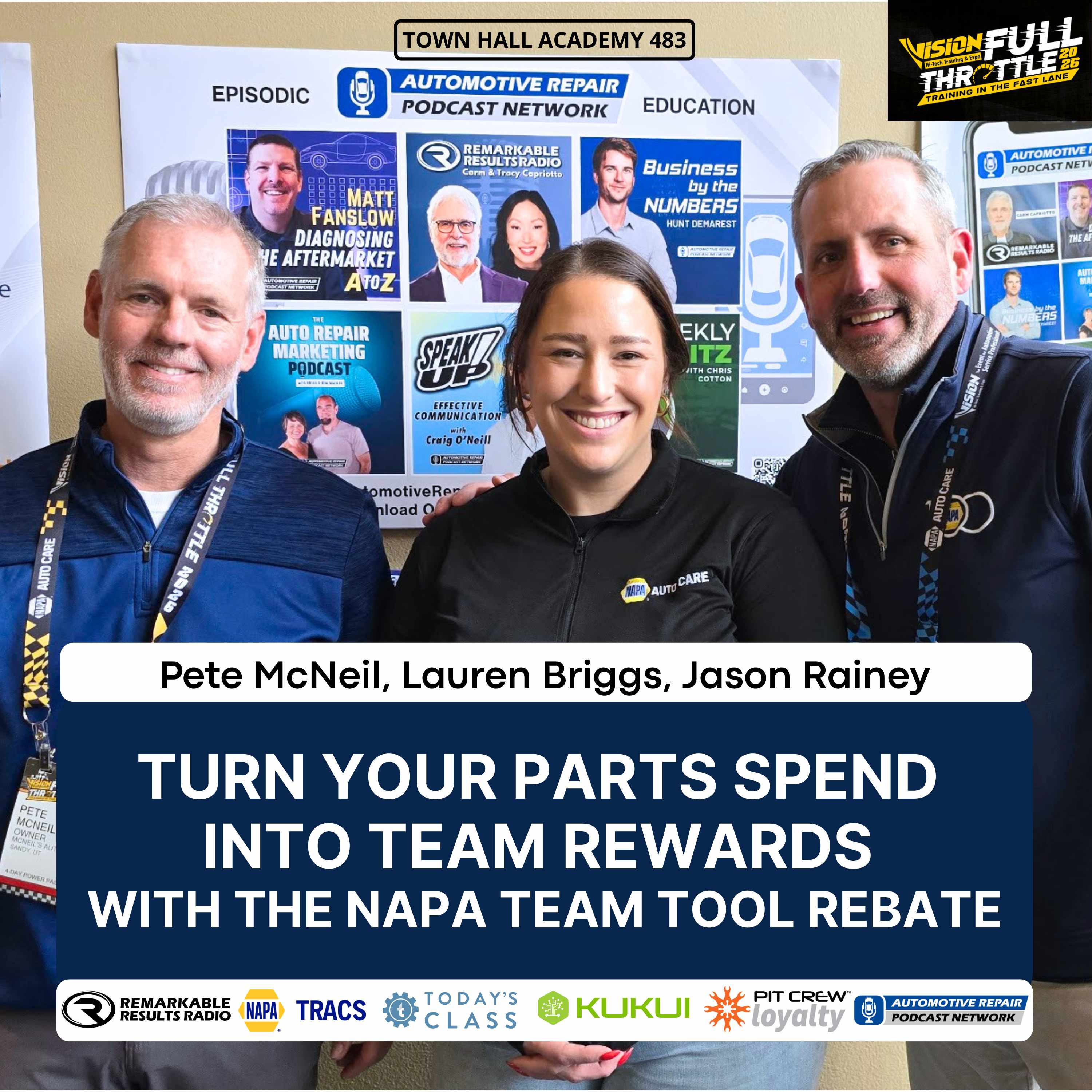
Remarkable Results RadioMay 1 · 30 min
Turn Your Parts Spend Into Team Rewards with the NAPA Team Tool Rebate [THA 483]
Thanks to our Partners, NAPA TRACS, Today's Class, KUKUI, and Pit Crew Loyalty Watch Full Video Episode *]:pointer-events-auto scroll-mt-[calc(var(--header-height)+min(200px,max(70px,20svh)))]" dir="auto" data-turn-id="request-WEB:8e59eec7-a235-4fa3-a072-956fea3fe478-7" data-testid="conversation-turn-4" data-scroll-anchor="false" data-turn="assistant"> *]:pointer-events-auto scroll-mt-[calc(var(--header-height)+min(200px,max(70px,20svh)))]" dir="auto" data-turn-id="request-WEB:49a777bf-d263-4496-bf0b-2eb3a46ac96a-11" data-testid="conversation-turn-24" data-scroll-anchor="false" data-turn="assistant"> Recorded live at the VISION 2026, host Carm Capriotto sits down with shop owner Pete McNeil and NAPA Auto Care leaders Jason Rainey and Lauren Briggs to break down the impact of the NAPA Team Tool Rebate program. Listen to a powerful real-world example of how the program can energize a team, strengthen culture, and reward performance in meaningful ways. What You’ll Learn How the NAPA Team Tool Rebate program helps offset the high cost of technician tools while building a stronger shop cultureHow Pete McNeil turned a $13,000 rebate into a memorable, morale-boosting experienceWhy the shift from “tech tool rebate” to “team tool rebate” gives owners flexibility to reward the entire team, not just techniciansCreative ways shops can use rebate funds, from individual tool purchases to shared equipment, and even community support like vocational schoolsHow the program aligns the front and back of the shop, encouraging team-wide support of purchasing decisionsWhat’s ahead for the program, including improved tracking, communication, and enhanced buying power through supplier partnerships The NAPA Team Tool Rebate program is more than a financial incentive; it’s a strategic tool for building culture, driving alignment, and showing appreciation in a tangible way. When used intentionally, as demonstrated by Pete McNeil, it can transform routine business spending into a powerful investment in people, boosting morale, loyalty, and long-term shop success. VISION Hi-Tech Training and Expo: https://visionkc.com/ Pete McNeil, McNeil’s Auto Care, Sandy and Riverton, UT. Pete’s previous episodes HERE Lauren Briggs, Sales & Marketing Director. NAPA Auto Care. Lauren’s previous episodes HERE Jason Rainey, Vice President NAPA Auto Care. Jason’s previous episodes HERE Thanks to our Partner, NAPA TRACS *]:pointer-events-auto scroll-mt-[calc(var(--header-height)+min(200px,max(70px,20svh)))]" dir="auto" data-turn-id="request-WEB:49a777bf-d263-4496-bf0b-2eb3a46ac96a-15" data-testid="conversation-turn-32" data-scroll-anchor="true" data-turn="assistant"> NAPA TRACS will move your shop into the SMS fast lane with onsite training and six days a week of support and local representation. Find NAPA TRACS on the Web at http://napatracs.com/ Thanks to our Partner, Today's Class Optimize training with Today's Class: In just 5 minutes daily, boost knowledge retention and improve team performance. Find Today's Class on the web at https://www.todaysclass.com/ Thanks to our Partner, KUKUI Stop juggling multiple marketing tools. KUKUI’s integrated platform delivers 4x better website conversions, automated follow-up, and real-time ROI tracking. Get industry-leading customer support with KUKUI at https://www.kukui.com/ Thanks to our Partner, Pit Crew Loyalty You’re probably tired of chasing new customers who never return. We understand. Pit Crew Loyalty ends the one-and-done cycle, turning first visits into lasting, reliable revenue at https://www.pitcrewloyalty.com/ Connect with the...
Listen →
115
The Limitless Leadership PodcastApril 28 · 39 min
Ep 147: Scale Your Business with Culture | Eric Svedberg
Listen →
116
The Jaded MechanicApril 28 · 1h 33m
Dealer Plate Guy Compares Dealer Pricing with the Aftermarket
Like the show? Show your support by using our sponsors.Need to update your shop systems and software? Try Tekmetric HERELaunch your tool game to the next level with Launch Tech USA! HEREIn this episode, Jeff sits down with Dealer Plate Guy (Austin Conroy), who has a HUGE following on social media. Austin shares his unconventional career path from sales to service manager, emphasizing the importance of building customer and employee relationships in the dealership environment. They also talk about the most common misconceptions about dealership pricing compared to independent shops and the crucial role of technician career development and mentorship programs in addressing the ongoing technician shortage.Timestamps:00:00 International Connections: Jeff & Dealer Plate Guy Meet02:05 Growing Up Near Purdue & Serving College Town Clients03:17 From Car Sales to Multi-Store Manager: Austin’s Journey05:00 First Day as Service Manager: No Wrenching Background Needed07:10 COVID Resets the Department – Building New Structures08:53 Why Techs Should Talk To Customers (and Break Out of the Funk)10:10 Handling Difficult Customers & Flipping the Script13:36 The Unseen Cost of Long Test Drives & Flat Rate Frustrations16:28 Why Relationships Matter: Dealer vs. Independent Shop Service18:31 Career-Oriented Advisors & Building Repeat Business20:44 Managing Pay, Hours, & Mentality in Service Departments24:01 Changing Flat Rate Times: Pushback & Tracking Results29:12 Dealer vs. Aftermarket Parts Pricing: The Real Story33:43 Should Dealers Offer Aftermarket Parts? Educating Customers35:16 The Independent Shop Advantage in “Impossible” Diagnostics38:41 The 20-Minute Battery Draw: Stories From the Bay42:58 Why Dealers Still Need Flat Rate—With Real Solutions44:38 Feeding Your Best Techs: Who Should Get The Gravy Work?46:56 The Reality of Used Car Work, PDI, and Technician Dispatch49:28 Overpromising Service Times: Collision vs. Dealer Mentality52:16 Developing the Tech Career Path: Retaining Talent57:06 Mapping Out Progression Steps & Regular 1-on-1s With Techs1:02:45 Multi-Point Inspections: Making Video Pay Off1:09:29 How Social Media Skits Are Changing Dealerships1:13:42 Bridging the Advisor & Tech Divide: Cross-Training Works1:17:04 Beyond Money: Finding the Right Role for Each Employee1:20:17 The Real Fix for the Technician Shortage1:24:05 Apprenticeship, Dealer Responsibility & Recruitment1:28:47 Final Thoughts & Where to Find Dealer Plate Guy Online Follow/Subscribe to the show on social media! TikTok - https://www.tiktok.com/@jeffcompton7YouTube - https://www.youtube.com/@TheJadedMechanicFacebook - https://www.facebook.com/profile.php?id=100091347564232
Listen →
117
Confessions of a Shop OwnerApril 28 · 54 min
Ep 87 - Coaching Call #16 | Maximize Repair Orders with Prebuilt Tickets
Tekmetric transformed my shop. Plain and simple. Want that for yours? Touch HEREASTA is coming up September 24-26 in Raleigh. Be there or be square, dog! Register now and use code confess25 for $25.00 off your registration. Sign up HEREIf you're like me and aren't good at marketing, don't do it on your own. Let the experts handle it. Touch HERE for more on Turnkey Marketing.Tired of your shop’s social media looking like every other repair shop on the internet? Stand out with 47 Consulting. Learn more HERESend your service advisor to hands down the BEST service advisor training in the industry (even other coaching companies agree). It's Elite Worldwide's Masters Program. The next one is happening in Dallas Texas, September 10-12. Learn more HERE When I used the maintenance tool for the fist time with Detect Auto, my mind was blown. My advisors had the same reaction - and then SO MUCH MORE TIME. Learn more about Detect Auto and book a free demo now!In this episode, Matt Lofton and Mike Allen talk through Mike's shop's performance in March. Matt talks about the importance of pre-building estimates and leveraging tools like Detect Auto to maximize tech average quote and streamline workflow. Mat also shares his approach to combating misleading "vanity flush" services in the market, emphasizing transparent communication with customers.Timestamps: 00:00 – The “Vanity Flush” Confession: Why $99 Services Aren’t What You Think02:24 – eBay Hero Cards, Shop Swag, and Why Autographs Still Matter04:14 – Record First Quarter, March Recap, and Looking Ahead05:50 – Fly With the Eagles Recap: What High Performers are Learning08:52 – DIY Shop AI: How to Create Your Own AI Agents and Save Big12:03 – Struggling with Close Rates? Blame (or Bless) Your Advisor14:09 – Prebuilding Estimates for Maximum Tech ARO16:13 – Setting Up Customers: Deferred Work, Maintenance, and Upsells17:33 – BG Programs, Fluid Service Sales, and Overcoming Industry Myths20:01 – How Corporate Store Pricing Drives Shortcuts (and Dirty Tricks)23:05 – Value-Add vs. Price-Only: The Ruth’s Chris Cheeseburger Analogy24:49 – How to Fill Tomorrow’s Bays with Opportunity, Not Just Oil Changes28:16 – The Pit Stop Program: Getting Customers Back 4x Fast30:48 – The Loyalty Cliff: Retaining vs. Losing First-Time Customers33:12 – Risky Repairs and the Real Cost of Saying “Yes”39:45 – Ritz Carlton vs. Motel 6: Finding Your Shop’s Sweet Spot43:04 – Social Media “Rage Bait”: Marketing Tactics and Lessons Learned44:58 – Worry About Your Own Shop! Why Community Trumps Competition48:21 – Peer Groups and Getting Ahead—Why You Shouldn’t Go It Alone
Listen →
118
Master Tech to MillionaireApril 27 · 42 min
How One Weekend Can Rewrite Your Shop's Future - Bonus Zoom Episode 2
Glenn Piccolo with Adams Automotive hosts this bonus Master Tech to Millionaire episode presented by Autoshop Answers, recapping an electrifying weekend in Houston featuring Key to Key, Courtside, and VIP Rack Attack sessions. Industry Leaders from around the country discuss Todd Hayes’ perfected business model, the power of consistent implementation (morning Take Fives), simple high-impact steps — say yes on the phone, professional pictures/videos — and how relentless training drives predictable growth. Practical next steps, real success stories, and program details (Key to Key, Courtside, AI Academy, VIP Rack Attack) are shared to help shop owners start implementing and transform their business.
Listen →
119
Changing the Industry PodcastApril 27 · 1h 12m
Episode 266 - Building Shop Efficiency and Team Culture with Greg Miller of Figs Auto Repair
Don't get to the end of this year wishing you had taken action to change your business and your life.Click here to schedule a free discovery call for your business: https://geni.us/IFORABEDon't miss an upcoming event with The Institute: https://geni.us/InstituteEvents2026Shop-Ware gives you the tools to provide your shop with everything needed to become optimally profitable.Click here to schedule a free demo: https://info.shop-ware.com/profitabilityTransform your shop's marketing with the best in the automotive industry, Shop Marketing Pros!Get a free audit of your shop's current marketing by clicking here: https://geni.us/ShopMarketingProsShop owners, are you ready to simplify your business operations? Meet 360 Payments, your one-stop solution for effortless payment processing.Imagine this—no more juggling receipts, staplers, or endless paperwork. With 360 Payments, you get everything integrated into a single, sleek digital platform.Simplify payments. Streamline operations. Check out 360payments.com today!In this episode, David and Greg dive into the realities of shop ownership, growth, and staffing challenges in the auto repair industry. Greg shares his journey from IT business owner to owner of Figs Auto Repair in Charlotte, highlighting the importance of adapting processes for efficiency and using tools like Shop-Ware. The conversation also covers practical hiring lessons, including the need to hire and fire quickly and the value of connecting technicians with the broader industry through training events to improve retention.00:00 Blood draw complications05:28 Comparing safety of substances13:13 Navigating traffic delays18:35 Challenges with new hires24:24 Handling tough diagnostic jobs29:03 Adjusting pay for evaluation tasks36:10 Discussing car repair estimates40:51 Learning from industry veterans41:52 Community engagement in North Carolina49:25 Improving employee efficiency52:56 Customer communication and follow-ups01:02:58 Cooking steak tableside01:04:43 Discussing conference networking opportunities01:10:37 Networking and local support connections
Listen →
120
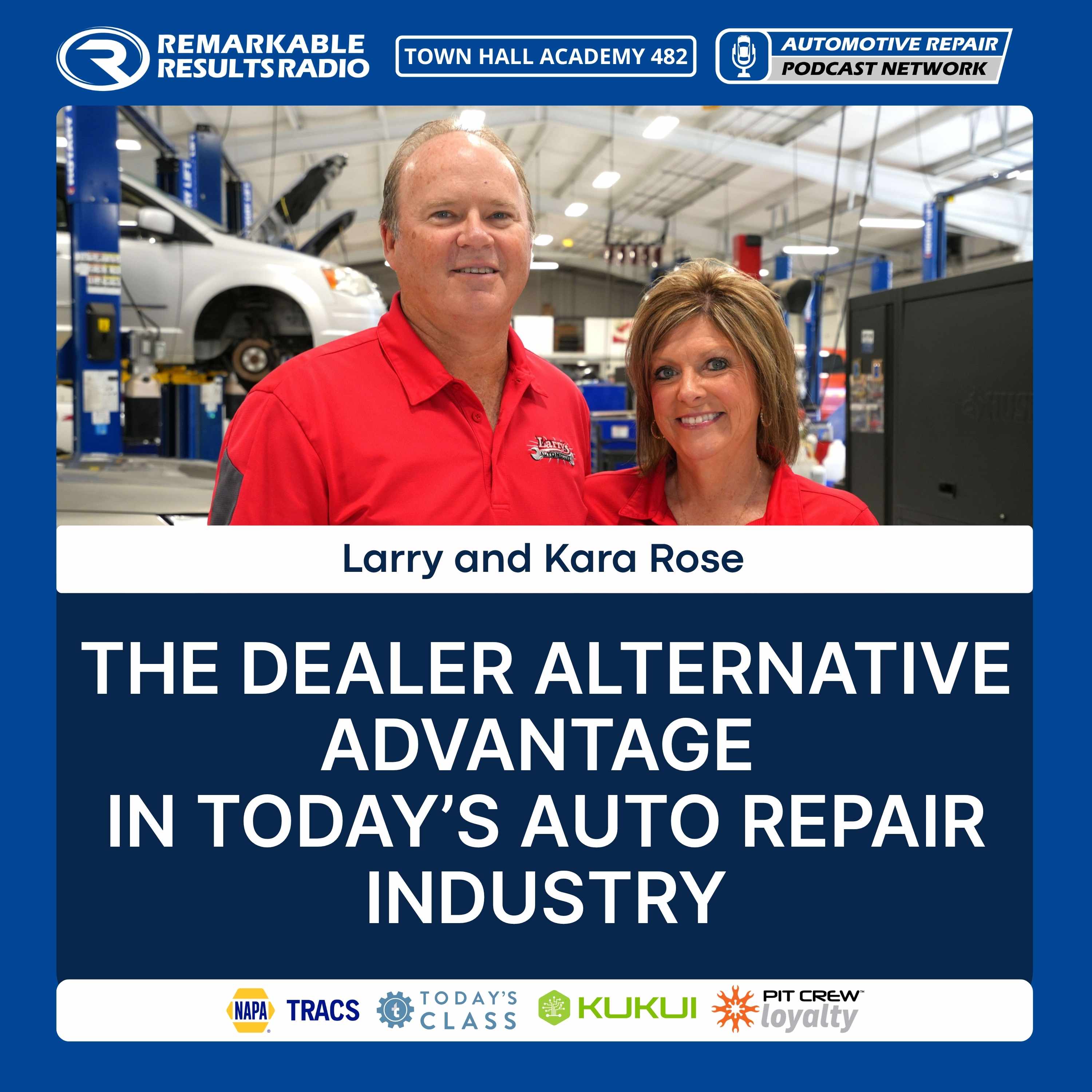
Remarkable Results RadioApril 24 · 42 min
The Dealer Alternative Advantage in Today’s Auto Repair Industry [THA 482]
Thanks to our Partners, NAPA TRACS, Today's Class, KUKUI, and Pit Crew Loyalty Watch Full Video Episode *]:pointer-events-auto scroll-mt-[calc(var(--header-height)+min(200px,max(70px,20svh)))]" dir="auto" data-turn-id="request-WEB:8e59eec7-a235-4fa3-a072-956fea3fe478-7" data-testid="conversation-turn-4" data-scroll-anchor="false" data-turn="assistant"> *]:pointer-events-auto scroll-mt-[calc(var(--header-height)+min(200px,max(70px,20svh)))]" dir="auto" data-turn-id="request-WEB:49a777bf-d263-4496-bf0b-2eb3a46ac96a-11" data-testid="conversation-turn-24" data-scroll-anchor="false" data-turn="assistant"> In this episode, host Carm Capriotto sits down with Larry and Kara Rose of Larry’s Automotive in Newburgh, Indiana, to celebrate their recognition as the NAPA 2025 Auto Care Center of the Year. Their story is more than an award; it’s a roadmap for building a sustainable, family-driven business through discipline, culture, and long-term vision. What You’ll Learn How Larry turned a driveway side hustle into a scalable businessWhy Kara’s systems and structure were key to growthA clear, intentional plan for family successionHow strong culture outweighs individual talentThe impact of daily training and continuous learningWhy service advisors are critical to customer trustGrowth strategies like “dealer alternative” positioning and coaching Building a lasting shop requires more than technical skill; it takes structure, culture, and a long-term vision for people and growth. Larry and Kara Rose, Larry’s Automotive, Newburgh, IN Thanks to our Partner, NAPA TRACS NAPA TRACS will move your shop into the SMS fast lane with onsite training and six days a week of support and local representation. Find NAPA TRACS on the Web at http://napatracs.com/ Thanks to our Partner, Today's Class Optimize training with Today's Class: In just 5 minutes daily, boost knowledge retention and improve team performance. Find Today's Class on the web at https://www.todaysclass.com/ Thanks to our Partner, KUKUI Stop juggling multiple marketing tools. KUKUI’s integrated platform delivers 4x better website conversions, automated follow-up, and real-time ROI tracking. Get industry-leading customer support with KUKUI at https://www.kukui.com/ Thanks to our Partner, Pit Crew Loyalty You’re probably tired of chasing new customers who never return. We understand. Pit Crew Loyalty ends the one-and-done cycle, turning first visits into lasting, reliable revenue at https://www.pitcrewloyalty.com/ Connect with the Podcast: Visit the Website:https://remarkableresults.biz/Subscribe on YouTube:https://www.youtube.com/carmcapriottoFollow on Facebook:https://www.facebook.com/RemarkableResultsRadioPodcast/Follow on LinkedIn:https://www.linkedin.com/in/carmcapriotto/Follow on Instagram:https://www.instagram.com/remarkableresultsradiopodcast/Join Our Virtual Toastmasters Club:https://remarkableresults.biz/toastmastersJoin Our Private Facebook Community:https://www.facebook.com/groups/1734687266778976Join our Insider List:https://remarkableresults.biz/insiderAll books mentioned on our podcasts:https://remarkableresults.biz/booksOur Classroom page for personal or team learning:https://remarkableresults.biz/classroomBuy Me a Coffee:https://www.buymeacoffee.com/carmSpecial episode collections:https://remarkableresults.biz/collections The Automotive Repair Podcast Network: https://automotiverepairpodcastnetwork.com/ Remarkable Results Radio Podcastwith Carm Capriotto: Advancing the Aftermarket by Facilitating Wisdom Through Story Telling and Open Discussion.https://remarkableresults.biz/Diagnosing the Aftermarket A to Zwith Matt Fanslow: From Diagnostics to Metallica and Mental Health, Matt Fanslow is Lifting the Hood on Life.https://mattfanslow.captivate.fm/Business by the Numberswith Hunt Demarest: Understand the Numbers of Your Business with CPA Hunt Demarest.https://huntdemarest.captivate.fm/<a href="https://autorepairmarketing.captivate.fm/"...
Listen →
121
Downshift with TonnikaApril 23 · 1h 23m
Jeff Compton Tells All - A Real Look At His Industry Impact | Jeff Compton - Ep 10
Consistency is key - heard that! But, consistency is HARD. That's why I gave up on trying and let the experts handle it. Detect Auto. Let them clean up your estimating process and raise your ARO - like they did for me! CLICK HERE TO BOOK A DEMOAnybody can run a shop. Building one that lasts? That's a whole different story. If you're ready to build smarter systems and a better experience for your team and customers, check out Tekmetric HEREIn this episode, Jeff Compton, Tonnika and Ash dig into what's been going on lately on social media because of Jeff's podcast the Jaded Mechanic. Jeff opens up on how highlight reels from his podcast can be misunderstood by technicians, stressing the importance of listening to the full message and always communicating openly within the shop. Together, they tackle the problem of toxic employees, with everyone agreeing that sometimes letting go—even when it hurts production—is essential for a healthy team.Timestamps: 00:48 Blind date confessions and why Jeff can’t stop talking02:10 Social media spotlight: When highlight reels create havoc at work03:38 Are podcasts causing techs to “hold the shop hostage”?05:10 What Jeff really tells techs: Not just “quit”—have the conversation07:14 Why bad shop culture crushes accountability (on both sides)10:34 Does Jeff feel responsible for how techs interpret the show?13:09 The truth about good shops: If your team is great, the podcast isn’t your problem14:49 Who Jeff used to be—a “problem tech” story you can’t miss17:45 Holding on to toxic employees: When to cut bait (for real)18:39 Empty bays vs. empty culture: What happens when you finally fire the wrong person21:14 Are you hiring for desperation, or for the long haul?24:25 When lack of information/tools costs EVERY shop time and money26:52 How shop environments drive young techs out—can we fix it?30:12 “Industry uncles and aunties”—our responsibility to the next generation32:08 The real risk: Shop culture, tech mental health, and suicide in the industry33:35 Get real: Who Jeff was, and who he doesn’t want YOU to become36:07 Can “star players” and teamwork mix on the shop floor?43:43 Why guarded leaders struggle—and how to break the cycle48:31 Don’t ask for validation—ask for REAL answers in shop groups52:00 Why we HAVE to keep having these tough conversations1:02:03 Why Jeff is not “causing a technician war”—and how to really connect1:10:52 Ending the division—accountability for both owners and techs1:12:49 Leadership is loving your industry and aiming for 1% better, every day1:20:37 Final thoughts: Building a softer, better industry for the future
Listen →
122
The Limitless Leadership PodcastApril 22 · 40 min
Ep 146: Why You MUST Embrace Change as a Leader | Charlie Burke and Luke Murray
Listen →
123
The Jaded MechanicApril 21 · 1h 59m
You Don’t Know What You’re Worth (Until You’re Wrong) | Jeremiah Hiatt
Like the show? Show your support by using our sponsors. Need to update your shop systems and software? Try Tekmetric HERELaunch your tool game to the next level with Launch Tech USA! HEREIn this episode, Jeff talks with Jeremiah Hiatt, a mobile mechanic from Montana, about his shift from ranch work to running his own ag repair business. They get into imposter syndrome, pricing your work, balancing family life, and the real challenges of modern diagnostics, plus solid advice for techs thinking about going out on their own.Timestamps:05:48 Fixing farm equipment for neighbors12:26 Issues with new technology durability17:09 Importance of equipment maintenance26:33 Discussing work-life balance27:32 Balancing career and family goals34:01 Dealing with software updates41:33 Appreciating Harbor Freight Tools44:40 Diagnosing and fixing the computer52:56 Hydraulic equipment repair experience55:20 Deciding on vehicle investments01:03:24 Challenges in car maintenance01:07:46 Discussing automotive customer communication01:10:18 Deciding between repair options01:17:47 Discussing truck emission problems01:23:06 Limitations on job responsibilities01:27:53 Discussing changes in tech industry01:35:40 The evolution of diagnostic skills01:39:19 Diagnosing a car engine misfire01:47:18 Ideal work-life balance fantasy01:48:20 Finding balance and unplugging Follow/Subscribe to the show on social media! TikTok - https://www.tiktok.com/@jeffcompton7YouTube - https://www.youtube.com/@TheJadedMechanicFacebook - https://www.facebook.com/profile.php?id=100091347564232
Listen →
124
Remarkable Results RadioApril 21 · 30 min
Build Customer Loyalty: Branding, Event Planning, and Community [RR 1088]
Thanks to our Partners, NAPA Auto Care and NAPA TRACS Watch Full Video Episode In this episode, Carm Capriotto talks with Lola Schmidt, co-owner of Schmidt’s Auto Care, about how shops can rise above the “ordinary” perception of auto repair through intentional event planning, meaningful community engagement, and a fully integrated branding strategy. Key Topic Points Make the Shop an Experience: Auto repair isn’t naturally exciting, so shops must create memorable, in-person experiences that bring customers into the bays and build real connections.Community Events That Matter: Hosting hands-on events, like Girl Scout badge workshops and “Tiny Tech” days, creates lasting impressions and builds trust far beyond what social media can achieve.Differentiate with Purpose: Identify what makes your shop unique (4-day workweek, curbside service, in-house specialties, team talents) and turn those into consistent marketing stories.Branding is Everything: From clean visuals and a great-smelling shop to honest, pressure-free service, every touchpoint contributes to a 360 brand experience.Elevate the Customer Experience: Replace cheap swag with thoughtful, useful gifts that customers actually value, creating a lasting emotional connection.Create Memorable First Impressions: A curated “unboxing” experience for new customers sets the tone and reinforces your brand from the very first visit.Respect the Customer’s Time: Efficiency and convenience are key drivers of loyalty; customers will travel further for a shop that consistently delivers both. Standing out in today’s automotive industry requires more than great repairs; it demands intentional experiences, clear differentiation, and a commitment to making every customer interaction memorable. Lauralee/Lola Schmidt, Schmidt Auto Care, Springboro, OH, Listen to previous episodes HERE Thanks to our Partners, NAPA Auto Care and NAPA TRACS Learn more about NAPA Auto Care and the benefits of being part of the NAPA family by visiting https://www.napaonline.com/en/auto-care NAPA TRACS will move your shop into the SMS fast lane with onsite training and six days a week of support and local representation. Find NAPA TRACS on the Web at http://napatracs.com/ Connect with the Podcast: Visit the Website:https://remarkableresults.biz/Subscribe on YouTube:https://www.youtube.com/carmcapriottoFollow on Facebook:https://www.facebook.com/RemarkableResultsRadioPodcast/Follow on LinkedIn:https://www.linkedin.com/in/carmcapriotto/Follow on Instagram:https://www.instagram.com/remarkableresultsradiopodcast/Join Our Virtual Toastmasters Club:https://remarkableresults.biz/toastmastersJoin Our Private Facebook Community:https://www.facebook.com/groups/1734687266778976Join our Insider List:https://remarkableresults.biz/insiderAll books mentioned on our podcasts:https://remarkableresults.biz/booksOur Classroom page for personal or team learning:https://remarkableresults.biz/classroomBuy Me a Coffee:https://www.buymeacoffee.com/carmSpecial episode collections:https://remarkableresults.biz/collections The Automotive Repair Podcast Network: https://automotiverepairpodcastnetwork.com/ Remarkable Results Radio Podcastwith Carm Capriotto: Advancing the Aftermarket by Facilitating Wisdom Through Story Telling and Open Discussion.https://remarkableresults.biz/Diagnosing the Aftermarket A to Zwith Matt Fanslow: From Diagnostics to Metallica and Mental Health, Matt Fanslow is Lifting the Hood on Life.https://mattfanslow.captivate.fm/Business by the Numberswith Hunt Demarest: Understand the Numbers of Your Business with CPA Hunt Demarest.https://huntdemarest.captivate.fm/The Auto Repair Marketing Podcastwith Kim and Brian Walker: Marketing Experts Brian & Kim Walker Work with Shop Owners to Take it to the Next Level.https://autorepairmarketing.captivate.fm/The Weekly Blitzwith Chris Cotton: Weekly Inspiration with Business Coach Chris Cotton from AutoFix - Auto Shop Coaching.https://chriscotton.captivate.fm/Speak Up! Effective Communicationwith Craig O'Neill: Develop Interpersonal and Professional Communication Skills when Speaking to Audiences of Any Size.https://craigoneill.captivate.fm
Listen →
125
Downshift with TonnikaApril 20 · 1h 1m
[Special Audio Only Episode] Leadership vs. Management: The Truth Nobody Told You | Michael Smith - Episode 9
Consistency is key - heard that! But, consistency is HARD. That's why I gave up on trying and let the experts handle it. Detect Auto. Let them clean up your estimating process and raise your ARO - like they did for me! CLICK HERE TO BOOK A DEMOAnybody can run a shop. Building one that lasts? That's a whole different story. If you're ready to build smarter systems and a better experience for your team and customers, check out Tekmetric HEREIn this episode, Tonnika welcomes Michael Smith of The Institute for Automotive Business Excellence to talk about what it really takes to build a high-performing, people-first shop. Michael explains why genuine motivation can't be created by bonuses or external pressure—real motivation has to come from within. Tonnika brings up what she's learned about the differences between micromanagement and true leadership, opening up about the importance of self-awareness and the hard work of personal growth. Timestamps:00:00 – Why Real Motivation Comes from Within02:20 – What’s Your Shop Actually Worth? Legacy, Acquisitions & Selling05:08 – Why Shop Owners HATE Talking About the Big Picture07:37 – Leadership vs. Management: The Truth Nobody Told You10:06 – Facing Your Shadows: How Self-Awareness Changes Everything13:00 – Not Just Cars: Building a People-First Shop16:11 – Reverse Engineering Legacy: Starting with the End in Mind18:55 – Planning Your Future vs. Living Day to Day22:11 – The Secret Sauce of High-Performance Teams23:44 – Motivation, Bonuses & What Really Drives Great Work25:48 – The Power of Recognition vs. More Money29:12 – Breaking Through Old Industry Mindsets34:03 – Developing People First for Real Business Results37:18 – Little Things You Can Do Now (That Change Everything)42:00 – Resilience, Grit & The End of Imposter Syndrome46:43 – The Science of Growth: Transcendence & Asking Bigger Questions49:23 – Growth Means Getting Uncomfortable (And Why You Should Try)55:10 – How to Break Your Own Ceilings & Why It’s So Worth It59:48 – Recap: The Real Meaning of Leadership in Your Shop
Listen →
126
The Limitless Leadership PodcastApril 16 · 36 min
Ep 145: Lead By Letting Go? | Connor Tracy
Listen →
127
Downshift with TonnikaApril 16 · 1h 3m
Women Are Impacting Auto Repair! | Coralee Zueff - Episode 8
Consistency is key - heard that! But, consistency is HARD. That's why I gave up on trying and let the experts handle it. Detect Auto. Let them clean up your estimating process and raise your ARO - like they did for me! CLICK HERE TO BOOK A DEMOAnybody can run a shop. Building one that lasts? That's a whole different story. If you're ready to build smarter systems and a better experience for your team and customers, check out Tekmetric HEREIn this episode, Coralee Zueff joins Tonnika Haynes and Ash Kaplan to share her journey in the automotive industry, reflecting on how her passion for racing and cars led her from technician to acclaimed author and trainer. Their conversation highlights the importance of building genuine customer relationships at the service counter, with Tonnika and Ash emphasizing how personal connection and communication drive trust and success far beyond KPIs. Find more about Coralee's book here00:00 – Why it’s RARE for everything to run perfectly in the shop01:00 – North Carolina cold vs. Canadian “lost snow”03:02 – Meet Coralee: 24 years in the automotive game04:13 – From car enthusiast teen to Red Seal technician07:03 – Writing the next resource for women in the trades08:22 – Why stories matter for the next generation of women10:07 – The power of mentorship and finding your “Automotive Auntie”12:21 – Advice for your younger self: embrace the winding road14:00 – Passion for hands-on work and leadership lessons from water parks16:00 – The reality and value of remote estimating17:36 – Building powerhouse teams: train from scratch or hire experience?19:27 – How service advisors from all backgrounds are raising the bar21:32 – Training tips: one successful thing at a time23:09 – Canadian in Texas: adventures at the Texas Two Step28:36 – Finding community as a woman in a male-dominated industry33:22 – No makeup, no judgment: the power of women’s retreats35:36 – Autocross, drifting, and motorcycles—track life confessions39:41 – Shop race cars and the benefits of getting employees out racing40:13 – All-girls high school racing teams and changing the pipeline41:43 – Will AI take our jobs? Not if people still need people44:11 – How spending just 15 more minutes with each customer pays off46:33 – Frontline service tips: name recognition and building trust49:01 – Why the best advisors might be bartenders51:21 – Setting expectations: the art of handling upset customers54:03 – Downshift: Slow down for more meaningful growth55:10 – Coralee on learning to say NO – and loving it58:03 – Take an extra day, enjoy the journey59:09 – Where to find Coralee’s books and training
Listen →
128
Changing the Industry PodcastApril 15 · 24 min
Bonus Episode - Vehlo CEO Reveals What's Actually Changing the Automotive Industry in 2026
Don't get to the end of this year wishing you had taken action to change your business and your life.Click here to schedule a free discovery call for your business: https://geni.us/IFORABEDon't miss an upcoming event with The Institute: https://geni.us/InstituteEvents2026Shop-Ware gives you the tools to provide your shop with everything needed to become optimally profitable.Click here to schedule a free demo: https://info.shop-ware.com/profitabilityTransform your shop's marketing with the best in the automotive industry, Shop Marketing Pros!Get a free audit of your shop's current marketing by clicking here: https://geni.us/ShopMarketingProsShop owners, are you ready to simplify your business operations? Meet 360 Payments, your one-stop solution for effortless payment processing.Imagine this—no more juggling receipts, staplers, or endless paperwork. With 360 Payments, you get everything integrated into a single, sleek digital platform.Simplify payments. Streamline operations. Check out 360payments.com today!In this episode, the Changing The Industry Podcast team sits down with Josh Weiss, CEO of Vehlo, to discuss company culture, leadership, and the rapidly evolving automotive industry. Josh shares his philosophy on servant leadership and the importance of fostering a high-performance, low-ego environment at Vehlo. The conversation highlights how open communication and feedback fuel trust and engagement within the organization. Finally, the group explores the challenges of constant innovation in automotive service, emphasizing the critical role technology and adaptability play in shop success.00:00 Building a winning team culture04:44 Team communication and weekly updates09:41 Joining the company journey12:34 Rapid innovation in auto industry14:05 Shopware's unique customer experience19:35 Choosing shopware for its ease22:35 Listening to customer feedback23:22 Thanking the guest or speaker
Listen →
129
The Limitless Leadership PodcastApril 14 · 24 min
Ep 144: How to Lead the Younger Generation with Eddie Campbell
Listen →
130
Confessions of a Shop OwnerApril 14 · 41 min
Ep 85 - Jay Huh | Why So Many Shop Owners Are Broke
Tekmetric opened my eyes to just how much a good SMS will do for a shop. Their software is top of the line, and with them, so is my shop. Try them for yourself HEREASTA is coming up September 24-26 in Raleigh. Be there or be square, dog! Register now and use code Confess25 for $25.00 off your registration. Sign up HEREMy marketing before and after signing up with Turnkey Marketing is pretty scary. In a good way. Get your marketing right today HERETired of your shop’s social media looking like every other repair shop on the internet? Stand out with 47 Consulting. Learn more HERE Make your techs happier with Detect Auto. They'll stop getting "check noise" or "check vibration" from advisors with the customer concern tool. It will CHANGE YOUR LIFE. Book a demo HERESend your service advisor to hands down the BEST service advisor training in the industry (even other coaching companies agree). It's Elite Worldwide's Masters Program. The next one is happening in Dallas Texas, September 10-12. Learn more HEREJay Huh is the owner Carmedix in Durham, NC. Today, he tells Mike how he figured out how to run a shop the hard way. After years of struggling, he has built an efficient, highly profitable shop that gives him total freedom. They also talk about ShopFix and what the coaching company is doing after the loss of Aaron Stokes. Timestamps:00:00 – Jay's confession on not making enough money02:17 – Why sharing mistakes online changed everything04:40 – Living on $1,000 net per shop and barely making it06:07 – Consolidating down, shop tours, and landing in the “anchor” spot08:19 – Do we really need so many shop owner groups? Breaking down the division09:35 – Shop culture, coaching, and why too many owners are still broke10:45 – Shop Fix vs. other coaching: It’s about heart, not just numbers13:07 – Haters, jealousy, and why everyone thinks their way is best14:43 – Growing the right way—efficiency before expansion and protecting family time15:16 – Let’s talk cruises! Why Speaker A rides MSC and the yacht club life16:46 – Degenerate gambling confessions: Blackjack, craps, and cruise ship casinos18:01 – Owning a beach house: Boats, depreciation, and gathering your crew20:00 – The exit plan: Cashing out vs. the freedom of autopilot shops21:10 – The guardrails: How Speaker A uses daily numbers, not vibes23:00 – Forget top-line revenue, focus on real margin25:17 – Shop meetings, keeping techs and advisors rowing together26:01 – Why the multi-store “dog” life isn’t for everyone26:30 – The danger of scaling without the cash to back it up27:59 – Shop size vs. profit: Luke Walker’s $1M store reality check29:05 – The secret: Hire high skill, pay well, and net more31:12 – Money loves speed: Adapting shop processes for today’s customers32:13 – Show & sell: Finding the urgent fix, but always telling the whole story35:20 – Ethics, shortcuts, and hiring for integrity36:05 – Losing Aaron: Leadership, legacy, and moving Shop Fix forward39:14 – What’s next? Shop Fix’s plan and why the mission’s stronger than ever
Listen →
131
The Jaded MechanicApril 14 · 1h 39m
Fleet Work vs Auto Repair and Why Mental Health Needs More Attention | Riley Spence
Like the show? Show your support by using our sponsorsNeed to update your shop systems and software? Try Tekmetric HERELaunch your tool game to the next level with Launch Tech USA! HEREIn this episode, Jeff sits down with Riley Spence to talk about his move from the dealership world to working on a fleet for a construction company out in remote Labrador. Riley shares what it’s really like dealing with tough northern conditions, from tracking down parts to handling low-quality fuel. They also speak on mental health, the importance of having a strong community in the industry, and why continuing to learn and connect with others matters so much as a technician.Timestamps:00:00 Getting a second chance09:54 Managing equipment in dusty conditions12:40 Issues with quick lube services20:20 Dealing with self-doubt and burnout23:22 Challenges of being an apprentice27:34 Managing tough diagnostic situations36:13 Reflecting on career burnout37:37 Why I avoid working at dealerships45:19 Learning from skilled coworkers49:50 Reality of heavy equipment trades55:32 Pursuing skills over big money01:03:27 Outdated info in truck systems01:05:47 Fleet maintenance and master switches01:10:14 Frustrations with car parts stores01:15:45 Auto repair process improvements01:20:11 Discussing challenges in key programming01:29:34 Meeting online friends in person01:31:01 Managing questions during courses01:36:20 Advice on understanding older people Follow/Subscribe to the show on social media! TikTok - https://www.tiktok.com/@jeffcompton7YouTube - https://www.youtube.com/@TheJadedMechanicFacebook - https://www.facebook.com/profile.php?id=100091347564232
Listen →
132

Remarkable Results RadioApril 14 · 47 min
Your Shop Might Need Marriage Counseling: Fixing Communication in Auto Repair [RR 1087]
Thanks to our Partners, NAPA Auto Care and NAPA TRACS Watch Full Video Episode Recorded live at VISION 2026, host Carm Capriotto and Matt Fanslow explore how lessons from marriage counseling can improve communication in auto repair shops. The core discussion centers on Matt’s article for NAPA Auto Care's Insight Magazine, “Your Shop Might Need Marriage Counseling,” and the industry’s gap in soft skills. His central argument is simple: most automotive professionals were never taught effective communication or soft skills. In the past, shop culture often relied on public criticism or shame to correct mistakes. Today, that approach backfires, especially for younger technicians, who are more likely to disengage or “quietly quit” in that kind of environment. Matt proposes a different approach: applying communication techniques commonly used in therapy to everyday shop interactions. Drawing from the Gottman Institute, Matt outlines common communication pitfalls: criticism, contempt, defensiveness, and stonewalling, and how they show up daily in shop environments. Key solutions include: Validating feelings, especially with anxious customersCoaching without shame, addressing mistakes privately with supportSeeking outside perspective, using coaches or therapists to uncover blind spots Finally, both Carm and Matt challenge the stigma around seeking outside help. They encourage shop leaders to work with coaches, counselors, or therapists to uncover blind spots and improve their leadership approach. Far from being a weakness, asking for help is framed as a sign of strength and self-awareness. The goal isn’t to turn shops into therapy sessions; it’s to make small, intentional changes in how people communicate every day. The payoff? Fewer emotional blowups, stronger team culture, and customers who feel safe, heard, and respected. Download Matt Fanslow's Full Article: https://remarkableresults.biz/download/45724/?tmstv=1775829579 VISION Hi-Tech Training and Expo: https://visionkc.com/ Matt Fanslow, Riverside Automotive, Red Wing, MN, Diagnosing the Aftermarket A to Z Podcast: https://mattfanslow.captivate.fm/ Photography by Joe Manna Thanks to our Partners, NAPA Auto Care and NAPA TRACS Learn more about NAPA Auto Care and the benefits of being part of the NAPA family by visiting https://www.napaonline.com/en/auto-care NAPA TRACS will move your shop into the SMS fast lane with onsite training and six days a week of support and local representation. Find NAPA TRACS on the Web at http://napatracs.com/ Connect with the Podcast: - Follow on Facebook: https://www.facebook.com/RemarkableResultsRadioPodcast/ Join Our Virtual Toastmasters Club: https://remarkableresults.biz/toastmasters Join Our Private Facebook Community: https://www.facebook.com/groups/1734687266778976 Subscribe on YouTube: https://www.youtube.com/carmcapriotto Follow on LinkedIn: https://www.linkedin.com/in/carmcapriotto/ Follow on Instagram: https://www.instagram.com/remarkableresultsradiopodcast/ Visit the Website: https://remarkableresults.biz/ Join our Insider List: https://remarkableresults.biz/insider All books mentioned on our podcasts: https://remarkableresults.biz/books Our Classroom page for personal or team learning: https://remarkableresults.biz/classroom Buy Me a Coffee: https://www.buymeacoffee.com/carm Special episode collections: https://remarkableresults.biz/collections The Automotive Repair Podcast Network: https://automotiverepairpodcastnetwork.com/ Remarkable Results Radio Podcast with Carm Capriotto: Advancing the Aftermarket by Facilitating Wisdom Through Story Telling and Open Discussion. https://remarkableresults.biz/ Diagnosing the Aftermarket A to Z with Matt Fanslow: From Diagnostics to Metallica and Mental Health, Matt Fanslow is Lifting the Hood on Life. https://mattfanslow.captivate.fm/ Business by the Numbers with Hunt Demarest: Understand the Numbers of Your Business with CPA Hunt Demarest. https://huntdemarest.captivate.fm/ The Auto Repair Marketing Podcast with Kim and Brian Walker: Marketing Experts Brian & Kim Walker Work with Shop Owners to Take it to the Next Level. https://autorepairmarketing.captivate.fm/ The Weekly Blitz with Chris Cotton: Weekly Inspiration with Business Coach Chris Cotton from AutoFix - Auto Shop Coaching. https://chriscotton.captivate.fm/ Speak Up! Effective Communication with Craig O'Neill: Develop Interpersonal and Professional Communication Skills when Speaking to Audiences of Any Size. https://craigoneill.captivate.fm
Listen →
133
Changing the Industry PodcastApril 13 · 55 min
Episode 264 - The Value of Diagnostics, Hands-On Classes, & Finding Happiness With Tim Iezzi & Ira Waldman
Don't get to the end of this year wishing you had taken action to change your business and your life.Click here to schedule a free discovery call for your business: https://geni.us/IFORABEDon't miss an upcoming event with The Institute: https://geni.us/InstituteEvents2026Shop-Ware gives you the tools to provide your shop with everything needed to become optimally profitable.Click here to schedule a free demo: https://info.shop-ware.com/profitabilityTransform your shop's marketing with the best in the automotive industry, Shop Marketing Pros!Get a free audit of your shop's current marketing by clicking here: https://geni.us/ShopMarketingProsShop owners, are you ready to simplify your business operations? Meet 360 Payments, your one-stop solution for effortless payment processing.Imagine this—no more juggling receipts, staplers, or endless paperwork. With 360 Payments, you get everything integrated into a single, sleek digital platform.Simplify payments. Streamline operations. Check out 360payments.com today!In this episode, Lucas Underwood and David Roman are joined by Ira Waldman and Tim Iezzi, who share their experiences with technical training and diagnostics in the automotive industry. Ira Waldman explains the value of comprehensive accident investigations and how data pulled from vehicles is increasingly crucial for liability and repairs. Tim Iezzi and Ira Waldman detail their hands-on training classes, emphasizing the importance of practicing with equipment to build real skills. Throughout the conversation, the group discusses challenges facing trainers—including undervaluation and barriers to fair compensation—while reflecting on what true success looks like in the industry.00:00 Consulting work and accident investigations04:58 Calibration data and liability concerns08:48 Lab scope training launch11:32 Practicing lab scope basics15:25 Common mistakes using scopes19:03 Importance of planning and tools20:10 Teaching procedural oil change steps24:46 Improving technician education27:00 Training value and budget changes32:48 Challenges faced by fitness trainers36:16 Launching the training company39:46 Impact of low-cost car markets41:29 Covid’s impact on auto repairs47:30 Troubleshooting equipment issues50:25 Defining personal success52:21 Interviewing successful people54:28 Thanking the audience
Listen →
134
Remarkable Results RadioApril 10 · 43 min
How to Get Unstuck When Your Auto Repair Business Stops Growing [THA 480]
Thanks to our Partners, NAPA TRACS, Today's Class, KUKUI, and Pit Crew Loyalty Watch Full Video Episode *]:pointer-events-auto scroll-mt-(--header-height)" dir="auto" data-turn-id="0e35c993-ad2d-4e51-96b6-080ca2e8cdd2" data-testid="conversation-turn-3" data-scroll-anchor="false" data-turn="user">*]:pointer-events-auto scroll-mt-[calc(var(--header-height)+min(200px,max(70px,20svh)))]" dir="auto" data-turn-id="request-WEB:8e59eec7-a235-4fa3-a072-956fea3fe478-7" data-testid="conversation-turn-4" data-scroll-anchor="false" data-turn="assistant"> *]:pointer-events-auto scroll-mt-(--header-height)" dir="auto" data-turn-id="2bbbdb6c-d025-4cb7-90c5-c8b790caf679" data-testid="conversation-turn-23" data-scroll-anchor="false" data-turn="user">*]:pointer-events-auto scroll-mt-[calc(var(--header-height)+min(200px,max(70px,20svh)))]" dir="auto" data-turn-id="request-WEB:49a777bf-d263-4496-bf0b-2eb3a46ac96a-11" data-testid="conversation-turn-24" data-scroll-anchor="false" data-turn="assistant"> In this episode of the Town Hall Academy, host Carm Capriotto is joined by Matt Wagg and Shiju Thomas to tackle a common challenge in the automotive repair industry: getting “unstuck.” The conversation focuses on breaking through growth plateaus by sharpening leadership, building a meaningful culture, and committing to continuous employee development. Leadership & Accountability Growth stalls when tenure is valued over performanceNot every team member will grow with the businessLeaders must make tough calls and avoid carrying “dead weight.”Practice radical candor: honest conversations build trustSelf-awareness is critical; seek outside accountability (coaches/peers) Culture & Development Culture must be intentional and tangible, not just social eventsBuilt through aligned hiring and shared valuesReinforced with tools like assessments, training, and team learningContinuous education prepares teams for evolving vehicle technologyA learning culture attracts higher-level talent Embracing Being “Stuck” Feeling stuck often signals ambition and growthIndicates you’re pushing into new challengesClear personal and business goals provide directionWithout clarity, the business risks drifting without purpose Ultimately, getting unstuck isn’t about quick fixes; it’s about honest reflection, intentional leadership, and a commitment to growth. The shops that move forward are led by people willing to have the hard conversations, invest in their teams, and take ownership of what needs to change. If you’re feeling stuck, take it as a signal, not a setback, and use it as the catalyst to refocus, realign, and lead your business to the next level. Matt Wagg, Accelerated Diagnostics and Automotive, Bennington, NE. Matt’s previous episodes HERE Shiju Thomas, Hotchkiss Auto Repair, Denver, CO. Shiju's previous episodes HERE Thanks to our Partner, NAPA TRACS NAPA TRACS will move your shop into the SMS fast lane with onsite training and six days a week of support and local representation. Find NAPA TRACS on the Web at http://napatracs.com/ Thanks to our Partner, Today's Class Optimize training with Today's Class: In just 5 minutes daily, boost knowledge retention and improve team performance. Find Today's Class on the web at https://www.todaysclass.com/ Thanks to our Partner, KUKUI Stop juggling multiple marketing tools. KUKUI’s integrated platform delivers 4x better website conversions, automated follow-up, and real-time ROI tracking. Get industry-leading customer support with KUKUI at https://www.kukui.com/ Thanks to our Partner, Pit Crew Loyalty You’re probably tired of chasing new customers who never return. We understand. Pit Crew Loyalty ends the one-and-done cycle, turning first visits into lasting, reliable revenue at https://www.pitcrewloyalty.com/ Connect with the Podcast: - Follow on Facebook: https://www.facebook.com/RemarkableResultsRadioPodcast/ - Join Our Virtual Toastmasters Club: https://remarkableresults.biz/toastmasters - Join Our Private Facebook Community: https://www.facebook.com/groups/1734687266778976 - Subscribe on YouTube: <a href="https://www.youtube.com/carmcapriotto"...
Listen →
135
Master Tech to MillionaireApril 8 · 1h 6m
Kaleb Nimz on How Auto Hospitality Transformed 98 Shops
Todd Hayes sits down with Kaleb Nimz, president of Grimaud Enterprises, to discuss how Precision Tune transformed its culture and performance across 98 locations using Key2Key and Courtside training. They cover leadership in the trenches, shop cleanliness, automotive hospitality, recruiting, and practical shop stories — including a memorable pit visit and record months for stores that embraced the process. Kaleb also explains how technology and accounting-first discipline support growth, the importance of daily Take Fives and phone skills, and how a faith-driven, people-first approach helped roll out consistent processes that boost sales, close rates, and team morale.
Listen →
136
The Limitless Leadership PodcastApril 8 · 37 min
Ep 143: Proving Yourself vs. Improving Yourself with Levi OBryan
Listen →
137
Changing the Industry PodcastApril 6 · 59 min
Episode 263 - Overcoming Addiction and Trying To Find Purpose in the Automotive Industry With Cole Tanner
Don't get to the end of this year wishing you had taken action to change your business and your life.Click here to schedule a free discovery call for your business: https://geni.us/IFORABEDon't miss an upcoming event with The Institute: https://geni.us/InstituteEvents2026Shop-Ware gives you the tools to provide your shop with everything needed to become optimally profitable.Click here to schedule a free demo: https://info.shop-ware.com/profitabilityTransform your shop's marketing with the best in the automotive industry, Shop Marketing Pros!Get a free audit of your shop's current marketing by clicking here: https://geni.us/ShopMarketingProsShop owners, are you ready to simplify your business operations? Meet 360 Payments, your one-stop solution for effortless payment processing.Imagine this—no more juggling receipts, staplers, or endless paperwork. With 360 Payments, you get everything integrated into a single, sleek digital platform.Simplify payments. Streamline operations. Check out 360payments.com today!In this episode, Lucas and David are joined by Cole Tanner, a veteran technician, who shares his journey through family business transitions, personal struggles, and the realities of working in the automotive industry. Cole opens up about overcoming addiction and trauma, emphasizing the importance of honest conversations about mental health in the trades. The group discusses technician frustrations regarding compensation, shop inefficiencies, and the vital need for support structures within the industry.00:00 Frustrating restaurant wait experience06:25 Growing up with my parents08:11 Discussing childhood challenges12:51 Breaking cycles of family trauma16:25 Losing friends to addiction19:34 Discussing compensation challenges22:25 Consistent vs erratic performance26:35 Running an efficient repair shop27:42 Technicians disconnected from inspection value33:12 End-of-month sales pressure36:27 Improving communication and accountability37:58 Discussing future plans and concerns41:13 Finding balance and past experiences46:02 Struggles with drinking habits47:53 Hitting rock bottom moments50:40 The dangers of addiction53:47 Pushing for constant improvement56:52 Taking responsibility after prison
Listen →
138
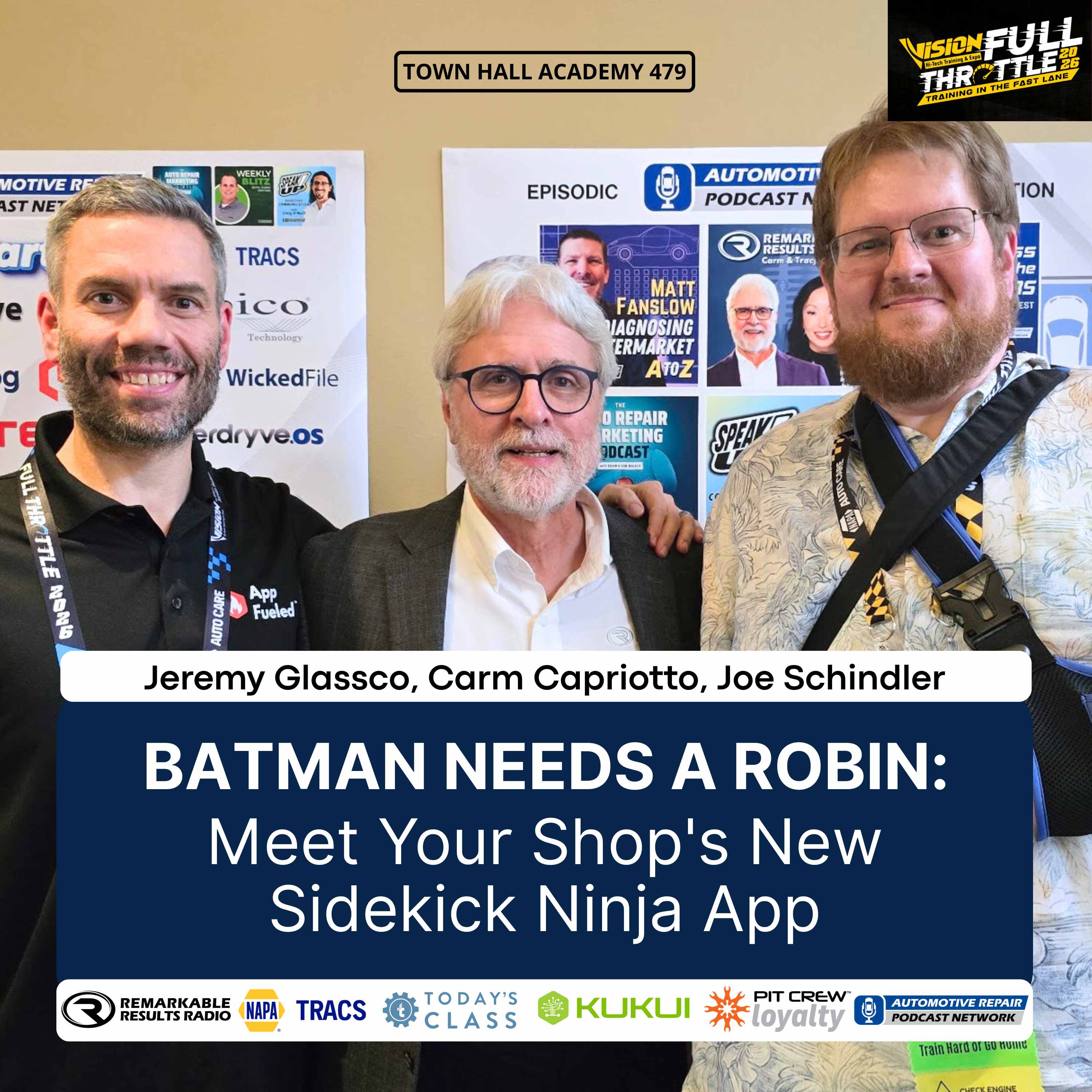
Remarkable Results RadioApril 3 · 47 min
Batman Needs a Robin: Meet Your Shop’s New Sidekick Ninja App [THA 479]
Thanks to our Partners, NAPA TRACS, Today's Class, KUKUI, and Pit Crew Loyalty Watch Full Video Episode *]:pointer-events-auto scroll-mt-(--header-height)" dir="auto" data-turn-id="0e35c993-ad2d-4e51-96b6-080ca2e8cdd2" data-testid="conversation-turn-3" data-scroll-anchor="false" data-turn="user">*]:pointer-events-auto scroll-mt-[calc(var(--header-height)+min(200px,max(70px,20svh)))]" dir="auto" data-turn-id="request-WEB:8e59eec7-a235-4fa3-a072-956fea3fe478-7" data-testid="conversation-turn-4" data-scroll-anchor="false" data-turn="assistant"> *]:pointer-events-auto scroll-mt-(--header-height)" dir="auto" data-turn-id="2bbbdb6c-d025-4cb7-90c5-c8b790caf679" data-testid="conversation-turn-23" data-scroll-anchor="false" data-turn="user">*]:pointer-events-auto scroll-mt-[calc(var(--header-height)+min(200px,max(70px,20svh)))]" dir="auto" data-turn-id="request-WEB:49a777bf-d263-4496-bf0b-2eb3a46ac96a-11" data-testid="conversation-turn-24" data-scroll-anchor="false" data-turn="assistant"> Recorded live at VISION 2026, host Carm Capriotto is joined by Jeremy Glassco of AppFueled and shop owner Joe Schindler to explore how auto repair shops can better connect technology with customer engagement. Glassco introduces the concept of the “App Gap,” explaining that while consumers frequently engage with apps from major brands, auto repair shops struggle with adoption because customers only download apps they trust or see immediate value in. To bridge this gap, he emphasizes delivering clear incentives and meaningful engagement. A key innovation discussed is “Sidekick Ninja,” a Chrome extension tool that complements the shop’s management system by surfacing real-time customer insights, including communication history, profile data, and available offers, directly within the advisor’s workflow. This integration ensures no missed follow-ups, rebates, or opportunities to enhance the customer experience. Schindler also highlights strategies to protect shop profitability, including gamifying customer engagement within a shop app. By rewarding users for actions such as adding vehicle details or personal information, shops can gather valuable data while encouraging deeper engagement. *]:pointer-events-auto scroll-mt-[calc(var(--header-height)+min(200px,max(70px,20svh)))]" dir="auto" data-turn-id="request-WEB:49a777bf-d263-4496-bf0b-2eb3a46ac96a-15" data-testid="conversation-turn-32" data-scroll-anchor="true" data-turn="assistant"> Ultimately, the episode reinforces that when technology is used to enhance, not replace, the human connection, shops can create better experiences, stronger relationships, and more consistent growth. https://www.appfueled.io/sidekick-ninja VISION Hi-Tech Training and Expo: https://visionkc.com/ Jeremy Glassco, Founder, App Fueled Joe Schindler, Schindler's Garage, Floyds Knobs, IN Thanks to our Partner, NAPA TRACS NAPA TRACS will move your shop into the SMS fast lane with onsite training and six days a week of support and local representation. Find NAPA TRACS on the Web at http://napatracs.com/ Thanks to our Partner, Today's Class Optimize training with Today's Class: In just 5 minutes daily, boost knowledge retention and improve team performance. Find Today's Class on the web at https://www.todaysclass.com/ Thanks to our Partner, KUKUI Stop juggling multiple marketing tools. KUKUI’s integrated platform delivers 4x better website conversions, automated follow-up, and real-time ROI tracking. Get industry-leading customer support with KUKUI at https://www.kukui.com/ Thanks to our Partner, Pit Crew Loyalty You’re probably tired of chasing new customers who never return. We understand. Pit Crew Loyalty ends the...
Listen →
139
The Limitless Leadership PodcastApril 2 · 41 min
Ep 142: How People-First Leadership Drives Shop Performance with Chris Cloutier
Listen →
140
Downshift with TonnikaApril 2 · 1h 10m
Screw the Customer - Happy Workers Are More Important | Becky Witt - Episode 6
In this episode, Becky Witt joins Tonnika and Ash to say that having happy workers is the foundation for customer satisfaction. Becky also shares how a shift to annual maintenance and eliminating waiters doubled her average repair order, and drives home the importance of transparent pricing—encouraging shop owners not to discount out of emotion.Timestamps:00:00 Why “The customer is always right” is poppycock01:06 Meet Becky Witt: Childhood car obsession to shop owner05:25 From gas stations to Honda and back again07:32 Climbing the dealership ladder & national recognition09:47 Outgrowing stalls: The low-overhead secret13:19 Specializing in Honda: Lessons from the product cheapening department15:42 Luxury vs. lunch-bucket customers: Discovering your ideal clientele17:21 Changing shop management for good: Consulting stories20:00 What motivates techs (and how to find your own unicorn)22:07 Why most shop owners have it backwards about business25:11 Learning to get out of your own way as a leader27:13 The $47,000 mistake: Wasted time every morning30:06 Why you must always be open to new coaching and training32:00 Becky’s donut stories—Making lessons unforgettable34:16 Why she refuses to charge for her wisdom (and why that matters!)38:31 Teaching the whole shop: How real change sticks41:03 Real talk: Pricing from your own pocket hurts everyone43:02 Clients, customers, and people with broken cars—who you REALLY want46:00 Why shop loyalty starts with saying NO to the wrong jobs48:28 How Becky pioneered wait-oil changes (and why she stopped!)51:00 The annual maintenance model that doubled profits54:01 Ditching rides for loaner cars—cutting costs, leveling up service56:05 The #1 thing every new shop owner must do58:20 Why your team’s happiness is everything01:00:13 Why Becky won’t ever do “waiters” again01:03:02 Life after live training: Becky's biker adventures01:06:01 Advice for living your best (motorcycle-filled) life
Listen →
141
The Limitless Leadership PodcastMarch 31 · 39 min
Ep 141: Why You Should Give a $#!+” with Frank Ziede
Listen →
142
Remarkable Results RadioMarch 31 · 35 min
Stop Leaving Money on the Table: How to Master Your Shop Management System [RR 1085]
Thanks to our Partners, NAPA Auto Care and NAPA TRACS Watch Full Video Episode *]:pointer-events-auto scroll-mt-[calc(var(--header-height)+min(200px,max(70px,20svh)))]" dir="auto" data-turn-id="request-WEB:b7123d23-4a4b-4700-b41f-68ea2bc61414-0" data-testid="conversation-turn-2" data-scroll-anchor="true" data-turn="assistant"> Recorded live at VISION 2026, host Carm Capriotto speaks with Evis Husejnovic of NAPA TRACS about how shops can boost profitability and customer service by better using their shop management systems. Husejnovic highlights that most owners use only 10–15% of their software, often missing key tools for managing operations. NAPA TRACS addresses this with hands-on support, user groups, and daily training. The conversation also emphasizes a “treatment plan” approach to digital vehicle inspections, helping shops increase revenue through thorough, preventative maintenance rather than higher car counts. While technology has rapidly evolved, Husejnovic reinforces that auto repair remains a relationship-driven, “handshake” business, and shares how NAPA TRACS is helping train future technicians through partnerships with technical schools. VISION Hi-Tech Training & Expo: https://visionkc.com/ Evis Husejnovic, Regional Sales Manager, NAPA TRACS will move your shop into the SMS fast lane with onsite training and six days a week of support and local representation. Find NAPA TRACS on the Web at http://napatracs.com/ Thanks to our Partners, NAPA Auto Care and NAPA TRACS Learn more about NAPA Auto Care and the benefits of being part of the NAPA family by visiting https://www.napaonline.com/en/auto-care NAPA TRACS will move your shop into the SMS fast lane with onsite training and six days a week of support and local representation. Find NAPA TRACS on the Web at http://napatracs.com/ Connect with the Podcast: - Follow on Facebook: https://www.facebook.com/RemarkableResultsRadioPodcast/ - Join Our Virtual Toastmasters Club: https://remarkableresults.biz/toastmasters - Join Our Private Facebook Community: https://www.facebook.com/groups/1734687266778976 - Subscribe on YouTube: https://www.youtube.com/carmcapriotto - Follow on LinkedIn: https://www.linkedin.com/in/carmcapriotto/ - Follow on Instagram: https://www.instagram.com/remarkableresultsradiopodcast/ - Visit the Website: https://remarkableresults.biz/ - Join our Insider List: https://remarkableresults.biz/insider - All books mentioned on our podcasts: https://remarkableresults.biz/books - Our Classroom page for personal or team learning: https://remarkableresults.biz/classroom - Buy Me a Coffee: https://www.buymeacoffee.com/carm - Special episode collections: https://remarkableresults.biz/collections - The Automotive Repair Podcast Network: https://automotiverepairpodcastnetwork.com/ - Remarkable Results Radio Podcast with Carm Capriotto: Advancing the Aftermarket by Facilitating Wisdom Through Story Telling and Open Discussion. https://remarkableresults.biz/ - Diagnosing the Aftermarket A to Z with Matt Fanslow: From Diagnostics to Metallica and Mental Health, Matt Fanslow is Lifting the Hood on Life. https://mattfanslow.captivate.fm/ - Business by the Numbers with Hunt Demarest: Understand the Numbers of Your Business with CPA Hunt Demarest. https://huntdemarest.captivate.fm/ - The Auto Repair Marketing Podcast with Kim and Brian Walker: Marketing Experts Brian & Kim Walker Work with Shop Owners to Take it to the Next Level. https://autorepairmarketing.captivate.fm/ - The Weekly Blitz with Chris Cotton: Weekly Inspiration with Business Coach Chris Cotton from AutoFix - Auto Shop Coaching. https://chriscotton.captivate.fm/ - Speak Up! Effective Communication with Craig O'Neill: Develop Interpersonal and Professional Communication Skills when Speaking to Audiences of Any Size. https://craigoneill.captivate.fm
Listen →
143
Changing the Industry PodcastMarch 30 · 1h 0m
Episode 262 - When Generations Collide - Growing an Auto Shop with Family Values With Matt Clarke
Don't get to the end of this year wishing you had taken action to change your business and your life.Click here to schedule a free discovery call for your business: https://geni.us/IFORABEDon't miss an upcoming event with The Institute: https://geni.us/InstituteEvents2026Shop-Ware gives you the tools to provide your shop with everything needed to become optimally profitable.Click here to schedule a free demo: https://info.shop-ware.com/profitabilityTransform your shop's marketing with the best in the automotive industry, Shop Marketing Pros!Get a free audit of your shop's current marketing by clicking here: https://geni.us/ShopMarketingProsShop owners, are you ready to simplify your business operations? Meet 360 Payments, your one-stop solution for effortless payment processing.Imagine this—no more juggling receipts, staplers, or endless paperwork. With 360 Payments, you get everything integrated into a single, sleek digital platform.Simplify payments. Streamline operations. Check out 360payments.com today!In this episode, Lucas and David are joined by Matt Clarke of Clark Automotive. Matt shares his journey back to his family's auto repair business, emphasizing the importance of refining operations and focusing on delivering high-quality service rather than chasing high car counts. The group discusses the evolving role of business coaching and training, including the value of accountability partners and the need to adapt to new technology in the industry.00:00 Trade Show Costs Are Ridiculous03:47 Union Inefficiency and Consequences09:13 "Prioritizing Quality Over Quantity"11:58 "Evolving Business Learning Challenges"14:35 "Epiphany in Management Training"18:14 "Refining Craft, Scaling Doubts"22:03 Choosing the Right Coach24:48 "Struggling with Accountability"28:06 "Unexpected Family Connections"33:15 "AI-Generated Estimate Dispute"37:26 "Balancing AI and Personal Touch"39:32 "Fitness, Gear, AI, and Darkness"44:37 "Unfiltered Critique of a Guru"45:20 "Mastery vs. Fake Expertise"48:44 "Adapting Teaching to Audience"54:39 "EV Market Resistance Analyzed"56:42 "Building Growth and Connections"58:38 "Vespa Culture: New York Only"
Listen →
144
Repair Shop ReckoningMarch 27 · 1h 39m
You Don’t Have a Sales Problem… You Have a Culture Problem
Everybody keeps talking about how this industry is broken. How it sucks. How you can’t make money. How technicians are leaving and shops are struggling. Here’s the truth. Yeah, there are problems. But that’s not the whole story. Because there are...
Listen →
145
Downshift with TonnikaMarch 26 · 1h 1m
How to Build Your Personal Brand | Lola Schmidt and Kim Walker - Episode 5
In this episode, Tonnika Haynes is joined by Lola Schmidt and Kim Walker for a candid conversation about navigating business ownership, brand authenticity, and the importance of community engagement. Kim shares her journey from education to entrepreneurship, underscoring the value of finding your footing and staying true to your strengths. Lola offers practical branding advice, encouraging listeners to keep things simple and consistent while remaining authentic. Both guests agree that for struggling shops, the most effective—and often free—marketing begins with networking and showing up in your local community.Timestamps: 00:00 "Kim's Spider Story"03:44 "Gym Encounter Shocks and Spreads"07:06 "Ready for Montana Cold"13:28 Women's Role in Business Support14:44 "Know Yourself, Your Partner, Boundaries"18:15 "Timing and Communication Challenges"24:03 "Queen of Genuine Kindness"26:44 "Discovering Identity and Natural Gifts"30:50 "Learning Boundaries and Saying No"32:06 "Expo Overwhelm and Recognition"35:05 "Fostering Connection Among Women"39:41 "Downshift to Gain Power"43:57 "Lessons on Million-Dollar Success"44:43 "Tracking Numbers Painfully Essential"49:10 "Brian Always Figures It Out"54:58 "Marketing Tips for Struggling Shops"57:32 "Challenging Assumptions About Representation"59:28 "Kids, Pajamas, and Montana Plans"
Listen →
146
The Limitless Leadership PodcastMarch 25 · 36 min
Ep 140: Why Daily Feedback is Valuable with David Boyd
Listen →
147
The Jaded MechanicMarch 24 · 1h 10m
We Need to Call Training "Continuing Education" | Bret T. Fadley
Like the show? Show your support by using our sponsorsNeed to update your shop systems and software? Try Tekmetric HERELaunch your tool game to the next level with Launch Tech USA! HEREIn this episode, Jeff is joined by Bret T. Fadley to discuss the upcoming TOOLS training event in Hershey, Pennsylvania. Bret talks about why it’s so important to keep learning and stay connected in the automotive world, and how events like this help you build strong relationships that benefit both you and your shop. Jeff also shares some of his past experiences, highlighting the super welcoming vibe at TOOLS and how these events leave you with fresh ideas and a boost of confidence heading back into your business.Timestamps:00:00 "Reflecting on TOOLS Event Vibes"08:32 Albert's Process and Event Bonds13:57 "Diagnosing Cylinder 2 Misfire"20:12 "Connecting Friends and Mentors"26:54 "TOOLS: Intimate, High-Quality Training"29:52 Networking Drives Automotive Inspiration34:11 "Canadian Caravan to Tools Event"38:56 "Casual Meet and Greet"48:46 "Enhancing Team Communication Skills"59:03 "Dealer Techs and Industry Perspectives" Follow/Subscribe to the show on social media! TikTok - https://www.tiktok.com/@jeffcompton7YouTube - https://www.youtube.com/@TheJadedMechanicFacebook - https://www.facebook.com/profile.php?id=100091347564232
Listen →
148
Remarkable Results RadioMarch 24 · 47 min
Is Your Shop the Problem? Hard Truths from the Voice of the Technician Survey Results [RR 1084]
Thanks to our Partners, NAPA Auto Care and NAPA TRACS Watch Full Video Episode *]:pointer-events-auto scroll-mt-[calc(var(--header-height)+min(200px,max(70px,20svh)))]" dir="auto" data-turn-id="request-WEB:b7123d23-4a4b-4700-b41f-68ea2bc61414-0" data-testid="conversation-turn-2" data-scroll-anchor="true" data-turn="assistant"> Host Carm Capriotto speaks with Jay Goninen, co-founder and president of WrenchWay, about insights from the 2026 Voice of the Technician Survey and what it reveals about the state of the automotive workforce. Jay encourages shop owners to download the free report to uncover blind spots and start meaningful conversations with their teams. The data show that technicians strongly prefer a four-day, 10-hour workweek with no weekends, along with proper equipment, paid vacation, retirement benefits, and paid training. While dealership technicians made up a larger share of respondents, independents stood out in workplace culture. 63% of independent technicians would recommend their shop to a friend, compared to 36% at dealerships, though dealerships scored higher in providing paid training. Across both groups, technicians favor an hourly wage plus bonus structure, which many feel better supports diagnosticians than traditional flat-rate systems. The discussion also highlights a troubling trend: the industry’s Net Promoter Score dropped to -60 in 2026, signaling that many technicians would not recommend the profession to others. To strengthen the talent pipeline, Jay discusses ASE Connects, a new initiative aimed at connecting shops with high school and technical school automotive programs to support them through mentorship, advisory roles, and community engagement. Carm also advocates elevating the profession by shifting the language from “mechanic” or “technician” to “specialist,” emphasizing the expertise required to work on today’s vehicles. Overall, the episode serves as a wake-up call for shop owners to use the survey insights to evaluate their culture, communication, and work environments, and to become employers technicians are proud to recommend. https://wrenchway.com/resources/2026-voice-of-technician-survey-report/ Jay Goninen, Co-Founder and President, WrenchWay Thanks to our Partners, NAPA Auto Care and NAPA TRACS Learn more about NAPA Auto Care and the benefits of being part of the NAPA family by visiting https://www.napaonline.com/en/auto-care NAPA TRACS will move your shop into the SMS fast lane with onsite training and six days a week of support and local representation. Find NAPA TRACS on the Web at http://napatracs.com/ Connect with the Podcast: - Follow on Facebook: https://www.facebook.com/RemarkableResultsRadioPodcast/ - Join Our Virtual Toastmasters Club: https://remarkableresults.biz/toastmasters - Join Our Private Facebook Community: https://www.facebook.com/groups/1734687266778976 - Subscribe on YouTube: https://www.youtube.com/carmcapriotto - Follow on LinkedIn: https://www.linkedin.com/in/carmcapriotto/ - Follow on Instagram: https://www.instagram.com/remarkableresultsradiopodcast/ - Visit the Website: https://remarkableresults.biz/ - Join our Insider List: https://remarkableresults.biz/insider - All books mentioned on our podcasts: https://remarkableresults.biz/books - Our Classroom page for personal or team learning: https://remarkableresults.biz/classroom - Buy Me a Coffee: https://www.buymeacoffee.com/carm - Special episode collections: https://remarkableresults.biz/collections - The Automotive Repair Podcast Network: https://automotiverepairpodcastnetwork.com/ - Remarkable Results Radio Podcast with Carm Capriotto: Advancing the Aftermarket by Facilitating Wisdom Through Story Telling and Open Discussion. https://remarkableresults.biz/ - Diagnosing the Aftermarket A to Z with Matt Fanslow: From Diagnostics to Metallica and Mental Health, Matt Fanslow is Lifting the Hood on Life. https://mattfanslow.captivate.fm/ - Business by the Numbers with Hunt Demarest: Understand the Numbers of Your Business with CPA Hunt Demarest. https://huntdemarest.captivate.fm/ - The Auto Repair Marketing Podcast with Kim and Brian Walker: Marketing Experts Brian & Kim Walker Work with Shop Owners to Take it to the Next Level. https://autorepairmarketing.captivate.fm/ - The Weekly Blitz with Chris Cotton: Weekly Inspiration with Business Coach Chris Cotton from AutoFix - Auto Shop Coaching. https://chriscotton.captivate.fm/ - Speak Up! Effective Communication with Craig O'Neill: Develop Interpersonal and Professional Communication Skills when Speaking to Audiences of Any Size. https://craigoneill.captivate.fm ...
Listen →
149
Shop Fix Academy PodcastMarch 23 · 58 min
Remembering Aaron - The Best Moments of Success Leaves Clues
Today’s episode is a Berg and Jay sit down to reflect on some of the most impactful moments from the Success Leaves Clues podcast with Aaron Stokes. Together, we revisit the conversations, the wisdom, and the heart Aaron poured into so many people. His ability to encourage, challenge, and lead—always given freely, as he liked to say, at 0%—left a lasting mark on everyone he encountered.Aaron’s consistent care for shop owners and his passion for helping others succeed is evident throughout these clips. Over the past couple of years, we’ve had the privilege of speaking with incredible people, and this episode highlights some of those unforgettable moments.We invite you to sit back, reflect, and relive some of the very best of Success Leaves Clues.As we share this episode, we also want to let you know that the podcast will be taking a short break as we prepare for a relaunch—bringing you even more guests, deeper conversations, and content designed to challenge and inspire you to make a difference in your life.Stay tuned for what’s next, and thank you for being part of this journey with us.
Listen →
150
The Limitless Leadership PodcastMarch 19 · 28 min
Ep 139: Hard Times are Meant to Grow You with Josiah Martin
Listen →
151
The Limitless Leadership PodcastMarch 17 · 47 min
Ep 138: How Daily Actions Shape Tomorrow’s Results with Al and Alex Oramas
Listen →
152
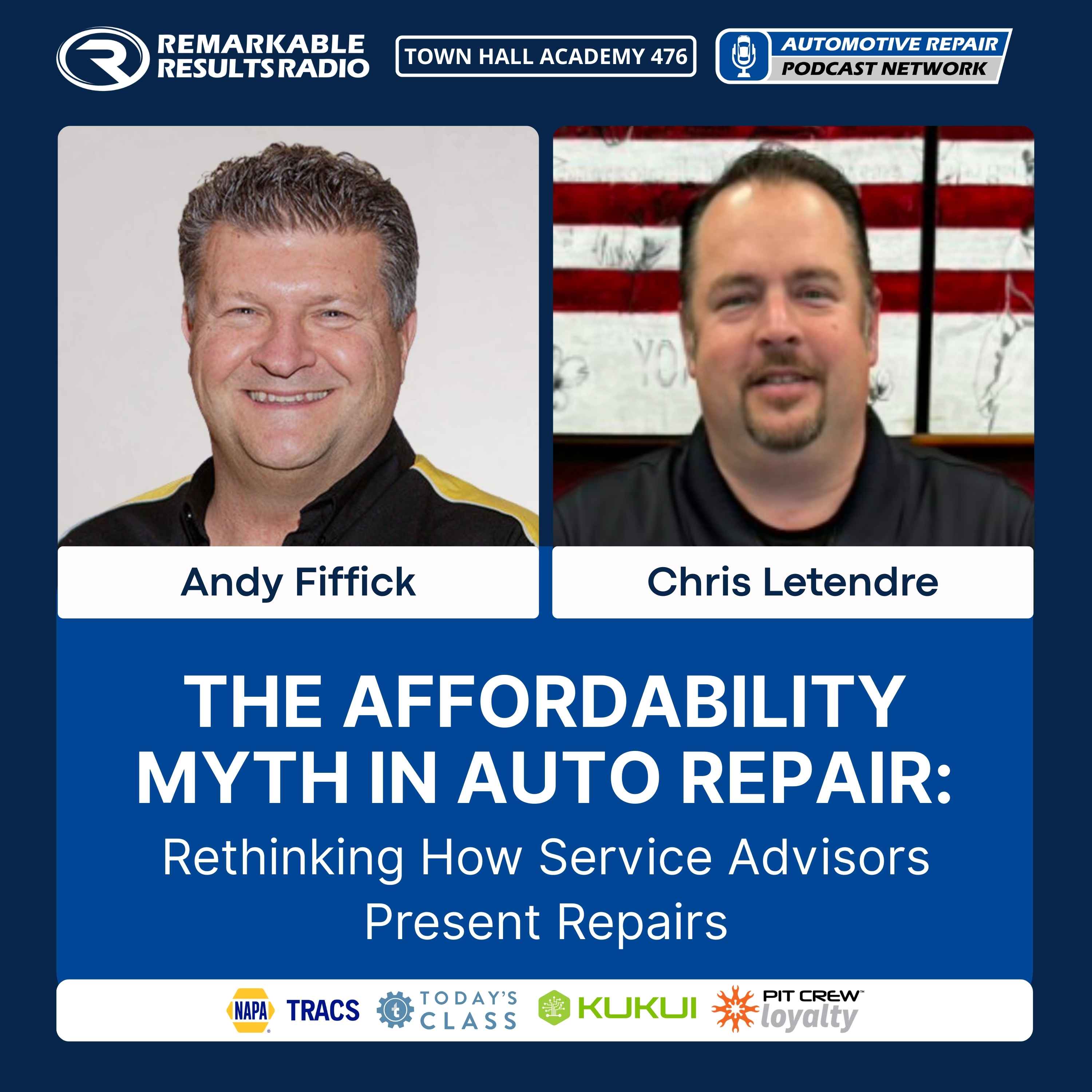
Remarkable Results RadioMarch 13 · 45 min
The Affordability Myth in Auto Repair: Rethinking How Service Advisors Present Repairs [THA 476]
Thanks to our Partners, NAPA TRACS, Today's Class, KUKUI, and Pit Crew Loyalty Watch Full Video Episode "I think the push back is more in our head than it is in the pocketbook." In this episode, host Carm Capriotto talks with Andy Fiffick and Chris Letendre about the perceived affordability crisis in auto repair. Both guests challenge the idea that customers can’t afford repairs, suggesting that price resistance often stems from the service advisor's mindset rather than customer reality. The discussion highlights practical strategies for improving repair approvals, including repackaging repairs with different parts or warranty options, presenting financing as “payment option plans,” and avoiding the “Sophomore Jinx,” where advisors begin to pre-judge what customers can afford. They also address the “maintenance-free” myth promoted by automakers and encourage shops to proactively educate customers with long-term maintenance planning. Ultimately, the episode reinforces a key truth: auto repair is a relationship business. When shops build trust and focus on helping people, price objections become far less common. Andy Fiffick, CEO Rad Air, Listen to Andy’s other episodes HERE Chris Letendre, American Pride Automotive Thanks to our Partner, NAPA TRACS NAPA TRACS will move your shop into the SMS fast lane with onsite training and six days a week of support and local representation. Find NAPA TRACS on the Web at http://napatracs.com/ Thanks to our Partner, Today's Class Optimize training with Today's Class: In just 5 minutes daily, boost knowledge retention and improve team performance. Find Today's Class on the web at https://www.todaysclass.com/ Thanks to our Partner, KUKUI Stop juggling multiple marketing tools. KUKUI’s integrated platform delivers 4x better website conversions, automated follow-up, and real-time ROI tracking. Get industry-leading customer support with KUKUI at https://www.kukui.com/ Thanks to our Partner, Pit Crew Loyalty You’re probably tired of chasing new customers who never return. We understand. Pit Crew Loyalty ends the one-and-done cycle, turning first visits into lasting, reliable revenue at https://www.pitcrewloyalty.com/ Connect with the Podcast: - Follow on Facebook: https://www.facebook.com/RemarkableResultsRadioPodcast/ - Join Our Virtual Toastmasters Club: https://remarkableresults.biz/toastmasters - Join Our Private Facebook Community: https://www.facebook.com/groups/1734687266778976 - Subscribe on YouTube: https://www.youtube.com/carmcapriotto - Follow on LinkedIn: https://www.linkedin.com/in/carmcapriotto/ - Follow on Instagram: https://www.instagram.com/remarkableresultsradiopodcast/ - Follow on Twitter: https://twitter.com/RResultsBiz - Visit the Website: https://remarkableresults.biz/ - Join our Insider List: https://remarkableresults.biz/insider - All books mentioned on our podcasts: https://remarkableresults.biz/books - Our Classroom page for personal or team learning: https://remarkableresults.biz/classroom - Buy Me a Coffee: https://www.buymeacoffee.com/carm - Special episode collections: https://remarkableresults.biz/collections - The Automotive Repair Podcast Network: https://automotiverepairpodcastnetwork.com/ - Remarkable Results Radio Podcast with Carm Capriotto: Advancing the Aftermarket by Facilitating Wisdom Through Story Telling and Open Discussion. https://remarkableresults.biz/ - Diagnosing the Aftermarket A to Z with Matt Fanslow: From Diagnostics to Metallica and Mental Health, Matt Fanslow is Lifting the Hood on Life. https://mattfanslow.captivate.fm/ - Business by the Numbers with Hunt Demarest: Understand the Numbers of Your Business with CPA Hunt Demarest. https://huntdemarest.captivate.fm/ - The Auto Repair Marketing Podcast with Kim and Brian Walker: Marketing Experts Brian & Kim Walker Work with Shop Owners to Take it to the Next Level. https://autorepairmarketing.captivate.fm/ - The Weekly Blitz with Chris Cotton: Weekly Inspiration with Business Coach Chris Cotton from AutoFix - Auto Shop Coaching. https://chriscotton.captivate.fm/ - Speak Up! Effective Communication with Craig O'Neill: Develop Interpersonal and Professional Communication Skills when Speaking to Audiences of Any Size. https://craigoneill.captivate.fm
Listen →
153
Downshift with TonnikaMarch 12 · 1h 29m
Overcome Your Fears and Be YOU!! | Episode 3
In this episode, Tonnika Haynes welcomes Ash Kaplan to talk about the realities of shop ownership and building a business with authenticity. Tonnika Haynes shares her journey taking over her family’s automotive shop, highlighting the challenges of stepping into leadership and learning to trust her team. Ash details her path from tinkering as a kid to founding Golden Hour Garage, emphasizing the importance of meaningful connections, empowering shop owners to reclaim their time, and why authenticity is her #1 core value. Timestamps:00:00 Authority, legacy, and what it really means to be in control00:28 Welcome & the power of “downshifting” in business01:22 Meet Tonnika & Ash: Shop owner & efficiency expert introductions02:19 Family, motherhood, and how your “why” changes with time04:20 “Working on, not in the business”—the struggle to delegate06:01 How an industry call led to a friendship—and better business07:16 Generational divides & why standing out matters in shop life11:14 Why Tonnika thought she needed “the old white guy up front” & learning to lead as herself13:04 The moment walking into an industry event changed everything17:33 The story behind “Downshift”—slowing down to level up18:25 Relationships first: Building trust and brand beyond company names21:06 Investing in people: How remote services help reclaim time & sanity24:33 The health scare that became a wake-up call for better business balance27:33 Letting go, trusting the team, and why delegation pays twice29:13 The magic of remote estimating: More customer time, more profit30:58 Selling with empathy, not assumptions—the secret to loyal customers33:40 How serving people first changes everything44:06 Ash’s journey from duct tape diva to shop problem-solver53:00 The grit it takes: Advice for women entering the industry01:04:42 Tonnika turns a struggling shop into a legacy of growth01:16:34 Why shop culture means everything—and how to actually build it01:22:04 Owning your story, embracing authenticity, and letting your “why” shine
Listen →
154
Shop Soup PodcastMarch 11 · 9 min
EP20: Fear Factors: Franklin D. Roosevelt Had It Right
Welcome to another episode of the ShopSoup Podcast. This week I comment on fear factors and how they hold us back from doing the the things we know are needed but we fear the results. When that happens, we take no action and that can be just as bad.Greg explores the pervasive nature of fear, especially related to health and personal growth, and shares inspiring stories of overcoming fears at the YMCA, emphasizing community support and mental resilience.fear, health, community, overcoming fears, personal growth, YMCA, water therapy, mental resilienceThe role of fear in health and personal growthCommunity support in overcoming fearsStories of older adults overcoming water-related fearsFear often holds us back from enjoying life and achieving health goals.Community and shared experiences are powerful tools in overcoming fears.Age is not a barrier to learning new skills and overcoming fears."Fear stops us from enjoying life""Community helps overcome fears""Nothing to fear but fear itself"Chapters00:00 Introduction and the concept of fear00:24 Greg's connection to health and community01:10 The impact of fear on health and well-being02:02 Community spaces like locker rooms and pools as support hubs02:54 Story of a woman learning to swim at 7204:08 The motivation behind overcoming water fears05:28 The broader implications of fear in life and work06:41 Strategies to move beyond fear and build community07:04 Closing thoughts and encouragement to face fears resourcesRoosevelt's Speech on Fear - https://www.presidency.ucsb.edu/documents/inaugural-addressYMCA Rehoboth - https://www.ymca.netWater Therapy and Swimming Lessons for Seniors - https://www.seniorwatertherapy.com
Listen →
155
Confessions of a Shop OwnerMarch 10 · 57 min
Ep 80 - Ash Kaplan | I Learn About Golden Hour Garage
Tekmetric transformed my shop. Plain and simple. Want that for yours? Touch HEREASTA is coming up September 24-26 in Raleigh. Be there or be square, dog! Register now and use code confess25 for $25.00 off your registration. Sign up HERETurnkey Marketing takes the stress of doing something I'm not good at off my plate. And gives it to someone who is. Click HERE for more.Tired of your shop’s social media looking like every other repair shop on the internet? Stand out with 47 Consulting. Learn more HERESend your service advisor to hands down the BEST service advisor training in the industry (even other coaching companies agree). It's Elite Worldwide's Masters Program. The next one is happening in Dallas Texas, September 10-12. Learn more HEREWhen I used the maintenance tool for the fist time with Detect Auto, my mind was blown. My advisors had the same reaction - and then SO MUCH MORE TIME. Learn more about Detect Auto and book a free demo now!Ash Kaplan is first and formost a friend of the show. Secondly, she's the founder of Golden Hour Garage. Today, Mike learns all about Ash and the new adventure of buisness owernship she's on. Ash Kaplan shares her vision for Golden Hour Garage, focusing on optimizing efficiency for shops through remote estimate building, warranty processing, and innovative advisor training. The conversation also highlights the importance of building meaningful customer relationships, as well as the value of attending industry events like the ASTA Expo for personal and professional growth.Learn more about Golden Hour Garage HERE Timestamps:00:00 "Ignite 2026 Wrap-Up Reflection"05:28 "Golden Hour Garage Vision"09:25 Intentional Onboarding and Quality Control12:14 "Warranty Costs vs Estimate Service"14:21 "Streamlined Warranty Estimate Solutions"17:58 "Empowering Shops Through Connections"21:23 "Optimizing Processes for Transparency"25:46 "Adapting for Growth in Business"27:27 Struggling to Sustain Employee Growth30:18 Do You Use a Bidet?35:51 "Free Beer Disappointment"38:18 Customized Pricing Approach Explained41:48 "Life-Changing ASTA Experience"42:42 "Red String Connections"48:06 Maximize Networking at Trade Shows49:28 "Breaking Isolation in the Industry"54:24 "AI Phone Systems Discussion"
Listen →
156
The Jaded MechanicMarch 10 · 2h 2m
Why Forward-Thinking in Auto Repair is Critical | JeanAnn SaintGrace
Like the show? Show your support by using our sponsors. Need to update your shop systems and software? Try Tekmetric HERELaunch your tool game to the next level with Launch Tech USA! HEREIn this episode, Jeff is joined by JeanAnn SaintGrace, host of the BRAND NEW podcast in the Changing the Industry Network "Shop Talk Her Way". She's also an automotive shop coach and former shop owner. JeanAnn shares her journey from accidental shop ownership to building a business focused on profitability, people, and succession planning. Together, they discuss the importance of protecting technicians' pay and treating them like "racehorses," strategies for consistent profit to secure employee futures, and the emotional realities behind leadership and preparing for unexpected life events.Click here to listen to JeanAnn's podcast "Shop Talk Her Way"Timestamps:00:00 "Envying the Natural Puzzle Guys"19:50 "Managing Reputation in Business"25:14 Husband-Wife Power Dynamics in Business32:37 Technician Dynamics and Customer Communication41:43 "Survival Mode and Unequal Pay"57:25 "Challenges of Running a Shop"01:03:40 "Challenges of Transparency in Sales"01:14:02 "Proof Her Method Works"01:29:25 "Have a Plan for Uncertainty"01:42:32 Work-Life Balance Perspectives01:49:59 "Finding Purpose Through Positivity"01:58:19 "Resilience, Connection, and Legacy" Follow/Subscribe to the show on social media! TikTok - https://www.tiktok.com/@jeffcompton7YouTube - https://www.youtube.com/@TheJadedMechanicFacebook - https://www.facebook.com/profile.php?id=100091347564232
Listen →
157
Changing the Industry PodcastMarch 9 · 57 min
Episode 259 - Building Company Culture and Beating Chargebacks in Automotive Shops With Kevaughn Williams
Don't get to the end of this year wishing you had taken action to change your business and your life.Click here to schedule a free discovery call for your business: https://geni.us/IFORABEDon't miss an upcoming event with The Institute: https://geni.us/InstituteEvents2026Shop-Ware gives you the tools to provide your shop with everything needed to become optimally profitable.Click here to schedule a free demo: https://info.shop-ware.com/profitabilityTransform your shop's marketing with the best in the automotive industry, Shop Marketing Pros!Get a free audit of your shop's current marketing by clicking here: https://geni.us/ShopMarketingProsShop owners, are you ready to simplify your business operations? Meet 360 Payments, your one-stop solution for effortless payment processing.Imagine this—no more juggling receipts, staplers, or endless paperwork. With 360 Payments, you get everything integrated into a single, sleek digital platform.Simplify payments. Streamline operations. Check out 360payments.com today!In this episode, Lucas and David are joined by Kevaughn Williams, Operations Manager at 360 Payments. Kevaughn underscores the importance of company culture in building a motivated, accountable team, highlighting how 360’s values of transparency and peer-to-peer accountability support both employees and customers. The discussion covers practical strategies for automotive shops to protect themselves from payment chargebacks, with Kevaughn outlining red flags to watch for and offering tips to improve payment security. 00:00 "360 Culture and Leadership"04:28 "Honesty and Accountability Matter"08:13 "Impactful Workplace Culture Insights"11:16 "Towing Office Experience Reflection"14:50 Car Rental Customer Support Journey15:54 Rental Car Upgrade Mishap21:08 Mandatory Work Schedule Change24:40 Building Youthful Team for Success27:58 "Disney Trip as Life Milestone"28:40 Prioritizing People Over Business34:51 Preventing Text-to-Pay Fraud38:11 Fraud Awareness and Payment Precautions39:06 DocuSign ID and Card Verification44:24 Chargeback Fraud at Local Shop48:02 "High-Risk Account Threshold Explained"50:23 Transparency and Informed Decisions53:22 "David's CSP Concerns"56:19 "Buttoning Debate Unresolved"
Listen →
158
Shop Soup PodcastMarch 8 · 2h 1m
EP 19: Can The Industry's Past Be It's Future? With Todd Hayes Of AutoShopAnswers
Welcome to SoupRadio Podcast. I'm your host Greg Buckley, a 60 year old, multi-automotive repair shop owner in Delaware. Today's guest is Todd Hayes, a highly successful entrepreneur that is bring back customer service to the automotive aftermarket in a HUGE way. He is the COO of Adams Automotive in Houston along with the CEO of his private equity firm, Houston, Boston Partnership.In this engaging interview, Todd Hayes shares his journey from a young entrepreneur to a successful automotive industry leader. He emphasizes the importance of discipline, exceptional customer service, and innovative business strategies that have transformed his businesses and impacted lives. In this engaging conversation, industry veterans Todd Hayes and Greg Buckley share insights on transforming the auto repair industry through customer service, technology, and efficient business models. They discuss the importance of industry roots, leveraging AI, and building a culture of excellence to achieve sustainable growth and wealth.Keywords For The Showauto industry, customer service, business growth, discipline, automotive success, legacy business, private equity, auto hospitality auto repair, customer service, AI, business efficiency, industry transformation, auto hospitality, private equity, technician recruitmentKey Topics In The ShowDiscipline in business and healthCustomer service as a differentiatorLegacy building and business growth Industry roots and customer service excellenceLeveraging AI for customer relationshipsBuilding a high-performance auto repair businessKey PointsCustomer-Centric ModelEfficiency FrameworkAuto Hospitality ModelPractical Tips To Build The Client RelationshipImplement AI tools for customer profilingTrain staff on customer service excellenceAdopt the Ritz Carlton auto hospitality standards"Customer service is the key to industry success.""Building a team that respects each other is essential.""Focus on the customer, and success will follow."Chapters00:00 Introduction and Personal Connection01:48 Health Journey and Resilience03:42 Discipline in Life and Business07:25 Early Career and Business Foundations11:29 Customer Service and Industry Changes17:10 Legacy and Community Focus24:19 Transforming Auto Shops into Customer-Centric Businesses28:38 The Journey of Entrepreneurship and Family Values32:27 Changing Lives Through Business and Community37:16 Innovative Customer Service Strategies in Auto Repair44:06 De-risking Business Portfolios and Growth Strategies50:11 The Importance of Communication and Customer Relationships01:00:18 Revisiting Business Fundamentals01:01:12 The Evolution of Business Models01:01:49 Harnessing Technology for Customer Engagement01:02:58 Building Relationships Through AI01:04:24 Efficiency in Service Delivery01:06:27 The Importance of Customer Experience01:08:16 The Role of Team Dynamics in Business01:12:24 Customer Service as a Core Value01:14:10 The Need for Respect in the Workplace01:16:13 Choosing the Right Business Model01:18:50 The Importance of Cleanliness and Presentation01:23:28 The Future of Private Equity in Business01:31:42 The Importance of Winning in Sports and Business01:33:11 Running a Business Like a Pro Football Team01:35:56 Discipline and Professionalism in the Workplace01:37:51 Navigating Industry Events and Networking01:39:40 Customer Service as the Core of Business Success01:43:02 Honoring Mentorship and Industry Relationships resourcesAuto Shop Answers - https://autoshopanswers.comTodd Hayes on LinkedIn - https://linkedin.com/in/todd-hayesAI Development by Michael Floyd - https://aidev.comAuto Shop Answers - https://autoshopanswers.comAdam Coffey's Private Equity Books - https://www.amazon.com/s?k=Adam+CoffeyTechMetric - https://techmetric.comBryce's Auto Service Event - https://theaslconference.com guest linksLinkedIn - https://linkedin.com/in/todd-hayesLinkedIn - https://linkedin.com/in/greg-buckley
Listen →
Questions answered on Customer Experience
Practical questions on customer experience, answered across the catalog — each linked to the episode it came from.
- What is the significance of forgiveness in our lives?
- Forgiveness is essential for maintaining a connection with God and allows us to experience true freedom and peace. From: Autoshop Ministries - DeVante Tidwell K2K 8/23/26 Sermon on Freedom Through Forgiveness →
- Does forgiving someone mean I have to trust them again?
- No, forgiveness does not require trust; it is about letting go of resentment while maintaining appropriate boundaries. From: Autoshop Ministries - DeVante Tidwell K2K 8/23/26 Sermon on Freedom Through Forgiveness →
- How can I experience abundant life through forgiveness?
- By embracing radical forgiveness, we open ourselves to a fuller, more meaningful life and a closer relationship with God. From: Autoshop Ministries - DeVante Tidwell K2K 8/23/26 Sermon on Freedom Through Forgiveness →
- What is Brakes for Breasts?
- Brakes for Breasts is a fundraising initiative where automotive shops donate 10% of their labor costs from brake jobs in October to support breast cancer vaccine research at the Cleveland Clinic. From: Brakes for Breasts: How Auto Repair Shops Are Fighting Breast Cancer [THA 500] →
- How can my shop participate in Brakes for Breasts?
- Shop owners can participate by signing up on the Brakes for Breasts website, engaging with suppliers for free brake pads, and promoting the initiative to their customers. From: Brakes for Breasts: How Auto Repair Shops Are Fighting Breast Cancer [THA 500] →
- What happens to the money raised through Brakes for Breasts?
- 100% of the funds raised go directly to the Cleveland Clinic's breast cancer vaccine research, supporting salaries and research costs without any administrative overhead. From: Brakes for Breasts: How Auto Repair Shops Are Fighting Breast Cancer [THA 500] →
- What is the importance of collaboration between service advisors and technicians?
- Collaboration ensures that both parties are aligned in their goals, leading to better communication and a smoother workflow, ultimately resulting in higher customer satisfaction. From: 99.08% Diagnostic Accuracy: Inside a Master Tech’s Playbook →
- How can technicians improve their diagnostic accuracy?
- Technicians can improve their accuracy by gathering comprehensive information, verifying customer concerns, and following a structured diagnostic process. From: 99.08% Diagnostic Accuracy: Inside a Master Tech’s Playbook →
- What role does shop cleanliness play in technician performance?
- A clean and organized workspace not only enhances the technician's pride in their work but also contributes to a more efficient workflow and better customer impressions during shop tours. From: 99.08% Diagnostic Accuracy: Inside a Master Tech’s Playbook →
- What are some effective ways to attract younger technicians?
- Shop owners should adapt their management styles to be more inclusive and communicative, catering to the preferences of younger generations. From: Shop Owners: Maybe YOU'RE the Problem | Tristin Sweeney - 38 →
- How can shop owners create a better work environment?
- By offering flexible work arrangements, recognizing individual contributions, and fostering open communication, shop owners can create a more appealing workplace. From: Shop Owners: Maybe YOU'RE the Problem | Tristin Sweeney - 38 →
- Why is continuous training important for technicians?
- Continuous training ensures that technicians stay updated with the latest automotive technologies and practices, which is essential for maintaining a competitive edge. From: Shop Owners: Maybe YOU'RE the Problem | Tristin Sweeney - 38 →
- How can I improve my team's phone skills?
- Listening to recorded calls and providing constructive feedback can help identify areas for improvement. Regular coaching sessions can also reinforce best practices. From: 216 - Coach the Call: Using AI Insights to Develop Stronger Service Advisors →
- What should I do if my service advisors are defensive about call coaching?
- Normalize the process by participating in call reviews yourself and framing it as a team effort to improve rather than a critique. From: 216 - Coach the Call: Using AI Insights to Develop Stronger Service Advisors →
- How can I measure the effectiveness of my marketing campaigns?
- Use unique phone numbers for different marketing campaigns to track which sources generate calls and appointments, allowing you to assess ROI. From: 216 - Coach the Call: Using AI Insights to Develop Stronger Service Advisors →
- How can I improve my work-life balance as a shop owner?
- It's important to schedule personal downtime and set clear boundaries for work hours. This helps prevent burnout and allows you to enjoy life outside of work. From: Are You Running Your Shop… Or Is It Running You? | Darin Johnson - Ep 37 →
- What should I do if I feel overwhelmed by customer demands?
- Consider learning to say no to certain requests and focus on clients who respect your time. Offering alternatives can also help manage expectations. From: Are You Running Your Shop… Or Is It Running You? | Darin Johnson - Ep 37 →
- How can networking benefit my shop?
- Networking with other shop owners can provide a support system, share best practices, and help you feel less isolated in your challenges. From: Are You Running Your Shop… Or Is It Running You? | Darin Johnson - Ep 37 →
- How can I effectively manage staffing as my shop grows?
- It's important to assess your revenue per employee and ensure that any new hires are justified by an increase in business. Aim for at least $20,000 in revenue per employee to maintain profitability. From: Ep 112 - Coaching Call #20 | Mike is Going to Charge for Diag?? →
- What strategies can I use to improve my shop's closing ratio?
- Focus on qualifying customers and vehicles before offering promotions. Implementing a structured diagnostic fee can help filter out less serious inquiries and improve your closing ratio. From: Ep 112 - Coaching Call #20 | Mike is Going to Charge for Diag?? →
- How can I celebrate my team's successes effectively?
- Regularly acknowledge achievements in team meetings and consider hosting celebratory events, like catered lunches, to boost morale and reinforce a positive work culture. From: Ep 112 - Coaching Call #20 | Mike is Going to Charge for Diag?? →
- What are the top traits of a genuine service advisor?
- The top traits include eye contact, warmth, and humility. These qualities help build trust and rapport with customers. From: Top 5 Qualities of a Genuine Service Advisor [RR 1106] →
- How can service advisors improve their communication skills?
- Service advisors can improve by actively listening to customers, maintaining eye contact, and showing genuine empathy for their concerns. From: Top 5 Qualities of a Genuine Service Advisor [RR 1106] →
- What role does coaching play in the development of service advisors?
- Coaching helps service advisors refine their skills, adapt to new technologies, and improve their overall performance in customer interactions. From: Top 5 Qualities of a Genuine Service Advisor [RR 1106] →
Weekly digest
The week's best automotive podcasts
Into Customer Experience? You'll likely enjoy the digest — one email a week with the latest automotive aftermarket podcasts from across the industry, Customer Experience and beyond. No spam, unsubscribe anytime.