The Automotive Hiring Cycle: When and How to Recruit Top Technicians [THA 502]
Now playing — Remarkable Results Radio
About this episode
Thanks to our Partners: NAPA TRACS, Today's Class, KUKUI, and Pit Crew Loyalty Watch Full Video Episode *]:pointer-events-auto scroll-mt-[calc(var(--header-height)+min(200px,max(70px,20svh)))]" dir="auto" data-turn-id="request-WEB:8e59eec7-a235-4fa3-a072-956fea3fe478-7" data-testid="conversation-turn-4" data-scroll-anchor="false" data-turn="assistant"> *]:pointer-events-auto…
Key takeaways
- —Hiring should be proactive, not reactive; plan for staffing needs during slow periods.
- —Building a talent bench requires ongoing engagement with potential candidates, even when not actively hiring.
- —Understanding the reasons behind candidate ghosting can help shops improve their hiring processes.
- —Utilizing data-driven insights can enhance recruitment strategies and improve candidate matching.
- —Effective communication and relationship-building are key to retaining talent and reducing turnover.
Frequently asked
- What is the best time to post job openings?
- The best time to post job openings is during slow periods when technicians are more likely to be looking for new opportunities, rather than when your shop is busy.
- How can I build a talent bench effectively?
- Building a talent bench involves maintaining relationships with potential candidates, engaging with them regularly, and keeping track of their skills and interests to ensure you're ready when a position opens.
- What should I do if a candidate ghosts me after an interview?
- If a candidate ghosts you, don't take it personally; follow up with a friendly message to check in and express your continued interest, as they may have gotten overwhelmed with other opportunities.
▸Full transcript
This is the Automotive Repair Podcast Network. Hey everybody, Carm Capriato, Remarkable Results. It's another Town Hall Academy. I am so looking forward to today's episode. I've got Lisa Coyle, Sam Friedman from Promotive, and we're gonna talk about the stuff that you hate to talk about or you hate to do, or, oh no, I gotta find somebody. It's all these stressful moments that we create as it comes to finding new talent.
We're going to talk about that, but we want to thank so much to NapaTrax, today's class, Kukui, and Pit Crew Loyalty. Hey, did you know that NapaTrax has on-site training plus 6 days a week support? It all starts when a local representative meets with you to learn about your business and how you run it. After all, it's your shop, so it's your choice.
Let us prove to you that TRACS is the single best shop management system in the business. Find NAPA TRACS on the web at napatracs.com. Hey, how well does your team know their stuff? Test their automotive skills with the Today's Class Basic, Advanced, or Service Advisor quizzes. It's a quick, effective way to spot gaps and grow stronger teams. Take the quizzes now. At todaysclass.com/tcquiz.
Shop owners, stop juggling multiple marketing tools. Kukui's integrated platform, they deliver 4 times better website conversions, automated follow-up, and real-time ROI tracking. Get industry-leading customer support with Kukui. That's kukui.com. You're probably tired of chasing new customers who never return. We understand. Pit Crew Loyalty ends the one-and-done cycle, turning first visits into lasting reliable revenue on the web at pitcrewloyalty.com. Hey, welcome back.
I have to remind you all about our great listening app, arpn.app. Everything there you could possibly imagine on all of our podcasts in the network. Look at all the 6 shows. You can save shows, you can create your own playlists, you can share 'em with people, you can download. You can look at all old episodes, have a blast with it. Look, let me bring out my group.
Lisa, Promotive CEO. Hi. Hi, Carm. I miss you. Can't wait to see you again soon. I miss you too. We were together at Vision when I met Paige. You met Paige. She remembers you. I know she does. And I have to tell you, Annie and I were watching a TV show 2 nights ago and they were talking about bots. And Anne said to me, what are they talking about?
What is this bot thing? And I said, hang on a minute. I opened up episode 481, Town Hall Academy 481. I scanned up to where me and Paige, and I said, listen. And she goes, whoa. I says, that's a bot, Tracy. That's a robot, a computer, an AI voice. And she goes, you're being kind of nasty, aren't you? Because if you recall in the beginning, I was being a little facetious, a little calm crazy.
And then she grabbed me to a point, Lisa, that I had to pay attention. I had to get a job. Yeah. You gave her a run for her money and I was definitely sweating in that cold vision, you know, trade show. It's the hotels, they're pumping the AC and I'm wearing a hoodie. And you're grilling her and I'm sweating through this hoodie.
Like, oh my gosh. But you guys hung, like she hung with you and she did. She's gotten a lot better too. She's improved even more since then. You've also given us some talking points on every one of our calls that we do. I bring that up. I just loved what ended up happening. And I told Anne, I says, do you see how she hung in there with me?
And I says, she realized what I was doing and she tried to draw me back to center. To Centerville. And yeah, and I said, look at Lisa's face. I told Annie to look at you while this is all going on. And I didn't mean to do it on purpose. It was just me. Oh, I know. I feel like we had Tracy being recorded as well because she was, you know, rolled over, like hunched over, cracking up.
And that was making me even try to stay focused. So it was fun. I think we did a whole marketing piece on just the reaction of that call as well. It was actually pretty hilarious. There was one moment in there you can hear Tracy's laugh. And I said that was Tracy's laugh. Anyway, so I bring that up because I think we're, we may talk a little bit about that.
Sam Freeman, partner manager at Promotive. Good to see you, Sam. Good to see you too. This is actually my first official podcast with you. Every time we've had it scheduled, my voice has been gone. Yeah. And why is that? Are you drinking too much bourbon? I think I just talk too much. I mean, she said it, not me, Carm. There we go.
Put that on the list this month to talk to her about. Listen, here's what we're going to talk about. We're going to talk about hiring, always at the wrong time. We're going to talk about building a bank, two-way professionalism, counteroffers. Oh dear. Hiring for the right role and other fun stuff. And we have a special offer. Let's talk about this special offer right up front.
6 months of Promotive Hiring Insights. Tell me, Sam. So the Hiring Insights Report really is built on data. So a lot of what everybody has been doing over the last forever is posting and praying. So we have a need, we want to just write a job ad, post it, and we pray that we get candidates. We pray that we get the right candidates coming through.
I'm not sure if you know, but I did marketing for roughly about 13 years and we do a marketing calendar. We understand what the peaks and the valleys are when it comes to customer car count. And we do things to help remind customers to come back in. We do things to make sure that we are leveling out those valleys and aligning with more of the peaks.
We don't apply that to recruiting and hiring and when we're posting jobs. So we've actually taken the data. And we've taken the data for each county for the most part and identified when is the right time to actually post the job. And also what is the right information to put on those jobs? And so much more information goes to play to support the hiring concept and needs.
The promo to extend it to all of Karm, your Remarkable Results Radio listeners, is that we will give 6 months, the most recent 6 months of data. To anybody who fills in that link. It's truly free. You're not putting in a credit card or anything like that. We don't have it live where you get it instantaneously. It comes within 24 business hours and you would be able to see, to Sam's point, you know, when are the best months to be posting, even if it's not when you need somebody and some little tips and tricks.
And you'll learn on the counties, for example, what's the most popular search backend marketing, which Sam's talking about. Some markets are looking for automotive technician as the search term. Some are looking for mechanics. Some are specifically, you know, automotive mechanic. So we're able to give that data to essentially do what Google's doing with SEO and PPC, but on the job boards. It's even going to show, you know, who the most, um, clickable competitors are out there and gives you some insight as to what they're doing too.
And yes, this is free, but I am working on getting us to charge for it because it's that valuable. And hopefully someday we'll be looking to hire specialists as we continue to go around the country talking about that. Listen, I'm happy you're here. One of the things of late that I've been talking about that I just heard both of you say, these 2 words that I've been playing with, Sophisticated professionalism or sophisticated professional.
It's like we need to be professional, which is what you guys help everyone do when it comes to the recruiting side, the guidance that you provide, but being a little bit more sophisticated about it and more proud and more confident in your hire. To me, that ends up becoming the sophisticated side of it. Let's lift ourselves up a bit. So I like what you're doing.
Thank you. Okay. Hiring at the wrong time. You guys know anything about that? Put Promotive and what we do with Live Shops aside, as a business owner, I can relate to, you know, I call it hurry up offense when you're like, oh my gosh, this person just resigned. This person got sick or injured. This person got pregnant and now they're on maternity leave.
And my first company, 360 Payments, is in California. So I've dealt with it all. And there's like, if you could think of a reason that you're going to have to hire an apprentice, it's in California for sure. So I'll let Sam talk about it from the shop perspective, but you know, we see every day that people are hiring when they needed somebody yesterday and not preparing for that hire.
So yeah, Sam, go ahead and give some feedback there. Yeah, I think a big part of it is we always don't expect it's gonna happen to us, right? We don't expect that our technicians are going to leave us because why would they? It's the best place to live or work. We don't expect for them to get injured. We don't expect for an alien to abduct them.
The reality is, is we need to plan for it because those 2-week notices that is now becoming more common that they're not even giving 2-week notices these days or shops aren't even accepting them. It's not enough time to backfill them. It's not enough time to actually get somebody that's going to meet their needs and even identify what their actual needs are. That is Typically on average, what Lisa, it's what, 60, 70 days on average to find a technician?
Did you say that on purpose for 6, 7 here or what? Maybe. I think so. Maybe. Yeah. I mean, depending on the level of technician, you know, if you're looking for ASE master tech, has to have minimum 10 years experience, be able to stand on one leg and put one hand behind their back while blindfolded doing a kayak. Those ones take a little bit longer.
Longer to find, but every market is also different. The rural areas versus the metro areas. Some could say, oh, I'm in rural and it's harder. I would argue that sometimes the metro areas are harder because there's way more competition. And when there's more competition, the employers are willing to match or beat the offer to keep them if they're really good or that person is in demand and they have 5, 10 different other opportunities that they could go accept right away.
So, um, yes, to Sam's point, it does take, you know, 60 to 70 days for that A-level tech typically across all of, um, Promotive's data. And that's us doing recruiting all day, every day. And we know most shop owners are not doing that all day, every day. But if you're looking for a, you know, entry-level technician, it does not take 60 to 70 days.
Well, it depends on what you're looking for in that entry level, right? If you're more focused on that drive and also on that culture, it could take that long. So I don't wanna discount that. Um, the other piece that I like to always say, and I steal this from Lisa, is we are in a world of Amazon where everybody is expecting to have a delivery at your doorstep tomorrow, no matter what it is.
I mean, even Carvana, you can have a car delivered to you at this point. The reality is that's not where we are today. You can't do that with humans, at least with technicians, and we have to remember that and be prepared. So what the data basically shows giving everybody the punchline here, and it is so logical, Harm, is that, you know, when shops are ready to hire, it's when they're busy.
They're not thinking about during the slow times is when I actually should be posting my ads and doing that work. And at the very least building the bench because when the shops are slow is when the technicians are looking, especially if they're on flat rate. Yeah, which I know we probably won't get into the whole flat rate debate and all of that, but you know, if they're slow, they're looking, they have time, they're not making as much money.
And then when their shops get busy again and they're cranking out the hours and they're busy and they like working with their hands, they don't want to just sit there and twiddle their, their thumbs, then they're not looking as much. So when Sam references the peaks and valleys of hiring seasonality, having that marketing plan. Everybody should have that recruiting plan and that recruiting budget.
So, just using recent example, statistically most shops, Carm, are slow in the summertime and then they ramp up, you know, at the end of August, kids going back to school in September, October, and then it slows down again during the holidays. We found that we were able to get a lot more, not just applicants, but receptive passive candidates. During the summertime and get them on the phone to hear about these job offers and to build their profiles in our database.
So then come September or end of October, you know, we have their information and they're not on the job boards anymore, right? You can't find them because now their shop is busy again. It's a marvelous thing that you guys have seen where these trends can come from and that when we're slow, it's almost like We calm ourselves down. We go from being a 10 in energy level and in the attention we pay to our business to a 7.5 or an 8.
And then all of a sudden we need that person and we can't. I do believe in relaxation and trying to come down and gain a perspective, but there are certain pedals you can't take your foot off of. I love your whole point and it may segue into the next topic. We want to talk about building a bench. And that maybe if I'm recruiting all the time, am I actually really building one?
And there's gotta be some disciplines around building a bench that you say yay or nay to your clients. I mean, the reality is now that everybody is talking about, it's a conversation. It's something that every coaching program is talking about. The reality though is building a bench, it takes time. It takes the amount of time that typically it does if you're actively hiring.
And then when talking to shops, a lot of times the way they're building the bench is I interview somebody and when interviewing that person, I like 'em and then I reach out to them 6 months later and, oh, well, they don't accept the job. The reality is, is that build is building the relationship. It doesn't mean just interview 'em and put 'em on ice.
They go stale. You have to put the investment into it and staying in contact with them and doing All the things, inviting them to lunch, inviting them to rub elbows with your team because the building a bench isn't necessarily just on the skillset and am I gonna wait for when I have a position open? It is building on that culture of do they align with us?
Are they aligning with our goals and will they be an, a value add or a detractor? Makes all kind of sense to me, Sam. When you speak that to your clients, what's the, what's the fight back, the pushback? The reality is everybody wants to do it, but nobody has the time to do it. They don't know how. They also are concerned about, well, if I don't have a job, I'm wasting their time, the candidate's time per se.
But the reality is, is you're giving them an opportunity to actually know who you are, to even consider you as an option for the future. The other piece is, is both of their lives will change or possibly change, the shop and the candidate. In 60 days, there's a high chance that their situation's gonna change and also that candidate situation's gonna change. You get a client and you get this pushback.
I don't have time and I can't constantly do this recruiting. Who's the coach inside of Promotive that needs to sit down with the client and say, I know you've got a coach for finance and all this other stuff, but we wanna coach you in HR and in recruiting and in keeping people. Is that gonna ever happen someday, Lisa? I don't think that we'll ever become a coaching company by any means.
Well, no, as an arm of yours. I mean, one individual. I'd say I love data. A lot of people on our team love data. I'm sure a lot of the shop owners love their data and their KPIs and all of that. It's knowing what to do with that data. So what we will become is more of a, you know, put the data in the forefront of what can be actionable.
On the shop's end and enable that action for them and make it easy for them to stay on top of it. So just like, you know, looking at your partners, the amazing partners, I love a lot of them on there. I know 'em personally. When you think about Kukui, Kukui has a CRM product that enables a shop to stay in touch with their customers.
And, you know, we were talking pre-show about getting those dental and the medical healthcare reminders. Same thing in the, you know, CRM with Kukui on reminding the customers, hey, you're due for an oil change, or hey, last time you declined this job, you should probably come back in and check it out. That's what I envision what we're able to do in our platform.
And we have a platform right now. It has a portal. It's a portal where the customers, the shops can store all of their candidates and You know, today, let's be real, you post an A-tech job, you're going to get GSTs who apply to it. You're going to get nail technicians and Taco Bell workers who apply to it, as we see it all just like the shops do.
But imagine having everything cleaned up where you can give thumbs up, thumbs down to those candidates and take notes that you can see in one place. And, um, you know, a lot of shops today are using just Indeed. Or they're using just ZipRecruiter or something. Our platform pushes out to all the job boards, including Facebook ads, Meta, you know, ads overall. So Instagram and all of that, and it's all funneled into one place.
And I've said probably on your podcast before, today's GST or, you know, C-tech is going to be not literally tomorrow's A-tech, but time goes by faster than we want to admit. And they're going to be in this industry more than likely, and staying in touch with them over time is important. So just because you need an A tech today doesn't mean that you don't need that, you know, GSTC or B tech in 6 months from now.
We built the platform to help support the concept of building a bench. Paige is a big component of being able to help support building a bench. So that, that full-time job for the shop now becomes them being intentional with their time and actually utilizing it for the candidates that they want to engage with, that they want to talk to because they have more information to go off of than just a resume that we all know is not our strong suit in this industry and off of the 5 questions that Indeed allows them to answer.
Let's face it, your shop management system is the single most important tool in your shop. Period. NapaTrax was built from the ground up to make your business more profitable and efficient. We provide an extensive set of tools to increase and track profitability in real time. NapaTrax offers the industry's best post-sale support, hands down, and we train your people on-site. Yep, on-site. And we offer remote refresher training 10 times a week, and customer support is open 6 days a week.
Give us a call, visit the website, or join our Facebook community today to learn more. We'll prove to you that Tracks is the single best shop management system in the business. Napa Tracks is always customized and tailored for you, whether you're a one-man shop or a large multi-bay or multi-location company. After all, it's your shop, so it's your choice. Visit us on the web at napatracks.com.
That's N-A-P-A-T-R-A-C-S dot Hi, this is Tom Palermo from Preferred Automotive Specialists for today's class. One of the powerful features of today's class is the confidence monitoring. And what we've found is there's a lot of technicians that answer a lot of questions right, but have very low confidence. And there's a lot of technicians that answer a lot of questions incorrectly, but have high confidence.
So what we're able to do by looking at that is we're able to see where everybody is and kind of level set and really get their training dialed in and let them understand where their strengths and where their weaknesses are. Shop owners, we know you are overwhelmed with a flood of missed calls, empty bays, and disconnected marketing tools. Kukui has spent over a decade building one integrated platform for auto repair shops.
One login, one dashboard, and mobile-first websites that convert 4 times industry average. Smart, innovative CRM with automated follow-up, 24/7 online booking, and real-time ROI tracking. With 900+ years of combined team experience, we fuel the growth of 2,200+ shops and have influenced $3 billion in revenue. Stop working harder, start working smarter. Get industry-leading customer support and book a demo with Kukui. That's kukui.com.
You know, most shop owners feel trapped spending on ads while half their first-time customers never come back. It's frustrating, it's exhausting. And it's not your fault. The industry average is 54% one-and-dones. We understand how discouraging that can be. Well, Pit Crew Loyalty changes the story. Our clients cut that rate by up to 38%, raising lifetime value by more than 50%. Loyalty members visit nearly 3 times more often, creating predictable revenue without extra ad spend.
Pit Crew Loyalty, where customers stay and shops thrive. On the web at pitcrewloyalty.com. So let me help summarize this. I really was impressed with these last few minutes. You said CRM for recruiting. Do you have that or are you telling me I've gotta have my own discipline to do that? No, we have that now. It's just getting better every week though. So we really rolled it out a few months ago and not from a marketing standpoint.
So you're not going to see ads out there, you know, demos of it on videos. All of our existing customers have this portal right now. Okay. They have that portal. What I heard was engaging the candidates. Sam, I think you said that. And in my mind, if I was attempting to reach out to someone that I really liked, I mean, I'm going to rate them an 8 out of a 10 because I had a chance to do an interview.
They weren't ready. I wasn't ready, but man, we connected on some cerebral level. And I wanna make sure that in every 40-some days I say, hey, it's Carm. I'm over here. Hopefully things are great for you and things are all well at the shop and the family's fine. I just wanted to say hi. And that's it. There's this connection, but not. I love the fact that if I was wanting to find a job, somebody was paying attention to me.
That means so much. That's where it is, right? That's the differentiation of building a bench is actually caring beyond just that hire. And inside of the portal, they have the ability to take those notes like Lisa mentioned. They have the ability to schedule their next engagement so that they're not dropping the ball on that, moving that football forward or whatever Lisa's terminology is on this stuff.
But we're basically plugging in the tools that we know are successful on our side of things. And now we're making them accessible to the clients and the shops out there. And then you add the piece of Paige doing the screenings and giving that information. You add the automation that when somebody applies, they get an immediate text message, even if it's at midnight.
Like all those pieces added together, this is truly supporting building a bench now. And it also has the ability to upload previous applicants or candidates. So I'd say statistically, if somebody listening to this call has a bench that they're building, because many people do, it's in a form of resumes on their desk. It's, or in an Excel sheet, right? And this gives them the ability to upload those candidates as well, so they can truly, again, have everything in one place.
Just really quick while we're talking about the bench thing, a big one that I'm pushing that I speak with a lot of shops about is we get offended when somebody declines our offer. We have to change our mindset and understand that if somebody was good enough for you to extend an offer to and they turned it down, we can't get offended. We have to understand that this is a big move.
Changing a job, changing where you're working at, which supplies your family, your income, all the things, your happiness. It's a big step. I mean, in some cases, it's probably the biggest steps for some people. And we need to look at it differently and understand that we're already to that 1-yard line. Put the extra effort in. Say, all right, I understand, but do you mind if I stay in contact with you?
More than likely they're going to say yes. And if you actually do it, there's a 60% chance they're not going to be happy where they stayed or where they went. So don't give up. I love what you guys are saying is I love not the right time. Think that through. If someone said no to you, that you made an offer, you want them really bad and they say it's Or you say, they say it's not the right time.
Don't be pissed. It's happened to you before trying to get into a doctor's office. I mean, there's a lot of things in our life that we have been shut down for that we tried to get, and we are trying to get this other individual. What I would say, we'll get him someday. He'll be here. I'm going to pay attention to them. I'm going to stay close to this individual because somewhere along the line, I'm going to get better and change.
And where he's working, he's not going to be satisfied with if they don't stay up to date. Yeah. Well, and the reality is, is you get the counteroffers, right? I go and I interview and I put my notice in and the shop's like, oh, well, we want you here. We'll match it. It's not always about the money that people are leaving, but they forget because it's a nice little bandaid for the, the time.
But all the other things that led up to your frustration of wanting to leave, the car count consistently dipping, you know, the toxic technician next to you just constantly throwing stuff. You know, the management yelling at you and trying to get you running, whatever it might be. Those things don't change. They might change for a small period of time, but they don't change the why you looked.
Guys, have you ever been able to do the research with candidates that were perfect for a situation, but they said no, they had a counteroffer and they stayed? Have you ever followed through enough with them, or has a client of yours followed through and started to realize what happened along the way that they got the refusal? I wouldn't say I have like exact statistics for you on it, but yes, we look into every, we call 'em no starts too.
So it's not only the ones that decline an offer, it's the ones that accept an offer, but sometime between that offer and their start date, they don't show up on that start date. And those are the ones that I've really honed in on. So more recently, so July, we had over 50 offers accepted. And a lot of them were for the month of August.
And of, let's just say, you know, 25 or so that were supposed to start in August, 5 didn't, which to me is, that's 20% of our candidates who are supposed to start. And then also I looked at February, same thing, tons of offers accepted. And then we had a bunch, you know, no start in March. And again, that's not even the declined offers.
This is the ones that accepted offers and then they didn't show up. I think one key, using our analytics, key point is they were looking when their shop was slow and then they told the shop, or maybe they didn't, and their shop got busy again and the shop was able to match the offer or the candidate got cold feet because now things are better in the shop.
So what was the reason that they started to look in February and in August? Obviously it was slow, so maybe they're flat rate, maybe they're not going to be earning enough, but can't we accept the cyclicalness of this crazy world we're in and speak to the candidate and say, listen, you had a reason that you were going to leave. So we'd love you to come to work for us and we'd love to show you the consistency that we can offer.
Oh, for sure. Yeah. And I think it does start with not just us, but the shop owner being able to have those conversations. When I was, you know, hiring a ton, especially at 360, and it was somebody who was currently employed, especially for a long time, I would ask them when are they planning on giving a notice? Okay. And the day before, I would text and say, good luck tomorrow.
I know this isn't easy. I got you though. We're fired up to have you on our team. If there's anything I can do to help, if you wanna role play with me, more than likely they're going to offer to keep you if you're as good as I believe you are. I know that's a tough position to be in. So you have a heart, you're recognizing, you offered a role play, but you're sending them that text.
And I tell them like, my heart hurts for you because they're leaving a family. They're leaving their work family. They probably have great friends there and nothing's ever the same when you stop working with your buddies, with your friendships, you know, cuz you're not seeing them every single day. And then after that next day when they're supposed to resign, right? I ask them how it went.
I wanna know right then and there, did they counteroffer? How are they feeling? Are they relieved? Are they now stressed because, you know, they're trying to keep 'em? But I think keeping that communication going is really, really important. And I would say, I would just second that really fast and just say that not letting any dead time happen. So don't let any downtime happen.
Keeping it going, even if it's just say, hey, I'm really excited about you coming on board. Or, hey, did we get that tool move scheduled? Do it quicker. Get all these things set up in the front and help guide through that process so that it's not on them. The more hurdles that they have, the more likely they're gonna be backing out. I'm sorry, girls.
This falls in my category of sophisticated professionalism. It just does. This is an unbelievable responsibility of an owner. To be in touch with that individual to say, I love to role play, help coach you on what you're going to say to your current employer. You know, this is the right move for you. We know this is the right move for you. I just think we probably, as an owner, the night before we get out the rosary beads, we say a few prayers and we hope that tomorrow is going to be a good day because the person's coming on board.
They may even not even get a 2-week notice and come on board. I think we're doing a little too much wishing and praying and not enough being proactive on trying to prevent some of the stuff that can happen. As you say, 20% are not gonna happen. And so how do we prevent that? Well, and even communicating, right? Even communicating with the candidates on what the shop is doing to prepare for them to come on board.
We have a lot of clients that will be like, I beefed up my marketing so you have cars. So just to ensure that they're fully aware and they have a plan. And that they're a part of that. And it's not just, I'm going to a new job. I'm a part of something. I love what you just said, Sam. And if you're doing the interview right, and I know you guys are supporting and helping with that, but if you're trying to find out the real reason they want out and you can solve those things, it's not going to get any better because they're going to have these cyclical ups and downs and, you know, highs and
lows in their relationship there. And that's what you're going to say to the individual. Hey, we have that stuff. It's not as dramatic as you'd think. Yeah. And when they are doing this role play, Carm, I ask every shop to think about when somebody did resign to them and it was someone they loved, they would hire back again in a heartbeat. It's that devastating loss.
What was that experience like for them as a shop owner? And use that in the role play. So I lost You know, one of, I called her the work love of my life, Victoria Fox. We called her Foxy at 360, and I sobbed when she resigned. And that's only happened one time with me. And it was just because I knew I wasn't going to be able to save her the instant she told us this.
And she opened it by saying, this is the hardest thing I've ever had to do. She was with us for 8 or 9 years. She was a waitress at Tony Roma's in San Jose making like $13 an hour and no college degree. We brought her into 360. It was life-changing for her, but she said, I know this is the hardest thing I've ever had to do professionally.
There's nothing you're going to be able to say that changes my mind because I've already thought about this for a month to make sure this was the right move. And then she told me she was going to Apple and it was the best backhanded compliment I ever got that Apple was recruiting, you know, my 360 employees. But when somebody opens up like that and you don't respect what they're saying, it's really tough.
So if I was a, a business owner coaching somebody on how to give their 2-week notice, their resignation, to avoid that countermatch, That's the line I would tell them to use. Okay. So if you're listening and you're an owner, or you're listening and you're a specialist technician, and you're trying to get some insight on looking for a new job and speaking to these great recruiter specialists here, let's talk about the professionalism of ghosting.
I can't believe I put the word professional in front of ghosting. Yeah. Lack of professionalism in ghosting. Sam experiences this, uh, or has as an account manager with us way more. So I'll let Sam talk about ghosting. Ghosting is my favorite thing because everybody does it. And the reality is, is again, we go back and we get offended on it. I mean, we're like, oh, we're never going to interview that person.
We don't understand what their actual day-to-day is. And understanding that when candidates are applying, they're applying to roughly 10 to 15 jobs at once. It's as easy as boom, boom, boom, boom, boom. And they only can actually manage, like, truly taking serious roughly 3 to 5, especially if they're still working. So 3 to 5 shops are responding. They get overinvaded because everybody needs a technician.
So everybody's responding to them. They don't know what way is up and down sometimes. And just staying organized and ensuring that they actually know where they're going. So they typically ghost because they don't like to have conflict. If they get 2 or 3 solid interviews and there's a shot, they don't need to talk to you. And that's the reality is they don't need to talk to you.
So my big thing is if somebody ghosts you, don't be offended because they don't like to deal with the conflict. They don't want to tell you no. And 2, there's a chance that those 3 or 4 of those shops are not going to be a fit for them. And they're going to be back on the market looking. So ensure that you're staying engaged and understand.
Follow up in a week. Like, hey, you applied, you know, a week ago. Probably got busy, probably got overindated with, you know, a lot of shops interested, but just know I'm still interested. Don't be offended. We constantly are cutting our own hands off instead of just understanding what that person's day-to-day is. Yeah, I think she said it perfect on the, like, I understand there's a lot going on in there and, you know, I'm still interested.
Also making sure they're okay. Send them a text message like, hey, I understand things come up. If you're not interested, I also understand that because this is a big life decision. That said, I just want to, want to genuinely make sure you're okay because, you know, maybe something did happen, but don't be upset with them for getting confused that they're supposed to be there at 10 o'clock.
But they also had another interview at 1 o'clock and they mixed you guys up, right? So it happens. And do your part in the professional aspect of it. And if somebody has an interview with you, make sure that you send the information. Make sure that you're sending the reminders to them. If you truly want a shot at them, you need to do your part.
I'm loving what I'm hearing. I think the big takeaway for me is if I'm sitting down with a candidate and if I'm upfront and truthful In saying this, look, I'm interviewing people. It's really important. If you're not going to be a candidate, you know, in a day or two or a week or two, would you please let me know? Because we're leaving this conversation and I think you may fall into my top 3 list and I may not as a future employer, but let me know where you stand because I really maybe would love to have this relationship more long-term, put you in our bank of an individual who could come to work for us
in the future. And that kind of positioning, profile, attitude of an owner can help make this potential new recruit a less ghosting person. Yeah. And for the record, on the flip side, we do not advise ghosting to the candidates, right? And We have the conversation with them that these people, whether it's the owner or the shop manager, foreman, service advisor, whoever is taking time out of their day to meet with you, have the professional courtesy to let them know if you're not showing up.
But I think they genuinely feel like they've lost their shot if they messed up already. They feel, yeah, they feel like they burned their bridge. And again, they are not big on the conflict piece of it. So their biggest thing is I'm just gonna avoid, cuz why do they ever have to talk to you again? Yeah. But if we communicate to them and allow them to know that, hey, we're still interested and we understand what's going on, that's opening that door big time for them.
And the other piece we see an increase of ghosting is we have a lot of shops that, uh, are out there that have, you know, you gotta do a toe touch, a backflip, and also sing the best version of the ABCs to get a job with them. Well, the more hurdles that you're putting in front of that candidate coming to show their ability to you, the more shops that are coming in and giving them offers in between.
So if you have a 15-step process because you need to make sure all your I's are dotted and your T's are crossed before you even see them in person, you're too slow. Too slow. So the word today seems to be efficient. That's a good one. Yeah. Absolutely. You have to be efficient. And just like, you know, one of the guys that worked for me at my job prior to starting 360, Kyle Wade is his name.
He, they're never better than the interview, right? Meaning that the candidate should be on their best behavior, right? And in that, it's okay if there's things that come up, but how they're communicating and then vice versa. The shop is trying to wow these candidates. And whether you believe that the candidate is lucky to work for you or not, because by the way, if you don't believe that right there, you need to change something in your business, right?
So if you don't think that candidates are lucky to work for you, or that they should be, uh, heck yeah, I'm working for XYZ shop, then you have to fix some other things. You have to show them, you know, that you are professional during this process too, and you have to court them. The best candidates, even if they're not the most skilled, but the ones that bring the best culture, like people recognize that right away in them and they're being courted.
So be on your A-game through the interview process and you never know what they're going to say to somebody else who is looking. So if you want to reject somebody because they're not a fit, reject them, you know, professionally. Have a heart. You know, they are somebody's husband, wife, child, sister, brother. Like, have a heart, have human decency and give them that courtesy, especially if you've met with them in person.
Don't ghost them. Don't make them wonder. We talk about no update updates all the time that shops have to give those to customers. Like the candidates deserve to hear something, even if it is a no update update. What a great point. Yeah. I mean, they don't wanna wonder what's going on, you know, but they talk. And that's one of the things that we strive on our side is to ensure that if a candidate is rejected, that we communicate that they're rejected.
And the other piece is ensuring that they know why they're rejected. I mean, if somebody's not meeting your expectation and there's a few things that you could tell 'em, hey, this is why I'm rejecting you because of this, this, and that. They can go and they can work on that. They don't feel like I never have a shot here. This whole episode is kind of, let's not have an empty bay and let's anticipate what's going to happen.
I mean, there's a lot of, we've done episodes on toxic employees and, you know, having to let certain people go as the company evolves into new values, new missions, new everything, and knowing who's going to make it as I go get coaching and we evolve and we're now coaching for valuation and all that really cool stuff. So the company is going to change.
Doesn't mean everyone's gonna be here. So start the work. Something that is very important, and I try to remind everybody about this, is when candidates are interviewing, remember they're nervous. They are not professional interviewers. They should not be. This is not hiring for, you know, interviewing a lawyer or hiring, you know, somebody else of a different industry where their presence and everything is super important.
They are nervous, and when you're nervous, you overthink, and when you overthink, sometimes you might not have the answer because it's in there and you're trying to get it out. So breaking the ice quicker is so important to actually having really good interviews with these candidates and not judging them. Great advice. And breaking the ice gives those notes for you to put into their profile that aren't just what they can do on vehicles.
So one of my favorite interview questions is, what do you like to do for fun? You actually get a lot more sometimes than you want to know out of that. But put down that they're a Buffalo Bills stan, put down that they like Blink-182, put down that they have, you know, 2 kids and a grandson, right? Like put that stuff down. And if you can get even the names, so someone says, I have, you know, 2 kids.
Carmen, what are your 2 kids' names? Okay. Matthew and Tracy, right? Okay. So I would be putting into my notes Matthew and Tracy. And then when I'm courting you and that your wife's name is Anne and I'm courting you, I would say like, I had a fantastic meeting with you. I enjoyed our time. And that could be through text. Text is cool too.
And text is proof they can show these people these things. I understand that, you know, switching roles, switching companies is a big move in your life, not only do I not wanna let you down, I don't wanna let Anne, Tracy, and Matthew down either. Wow. Huge. Right? Those little things. And then if they don't accept your offer, it's okay, but they're going to remember that little touch and probably come back to you at some point.
And then even if they don't, the way you stay in touch You know, hey, last time we talked, you know, you, you mentioned you were a big Bills fan. I was just thinking of you cuz they just had a big victory, right? And you do those little things like, hey, how's everything going? Anne and the kids doing good, right? Like those little things, like it makes you human cuz if they worked for you, those are the things that you'd be saying hopefully to your employees, checking in on them.
It's brilliant stuff, Lisa. I love the fact that the, the whole concept of our podcast has always been listen to learn just one thing. And then implement it. This is huge to be able to record information about this candidate that goes beyond, let me see, what training have you had? How, you know, what tools do you have? And John DeJulius, we've interviewed him twice, has an acronym for salespeople called FORD, F-O-R-D, family, occupation, recreation, and dreams to know about your client.
So you hit it with family, occupation, obviously, is important to know for your client, but the individual that you're interviewing, hmm, what has this individual done? Where'd they come from? And how do they see their career path opening up? And of course, recreation is the fun stuff and the dreams that you may have. Hey, you got a special dream. And going back, I just did a great interview with Sean Gilfillan and 2 and a half years ago, we hired a technician to run his places and now he's this general manager.
But he knew he was going to be his general manager on the interview. He said all the right things, asked all the right questions. This guy was a superstar in the making. He was literally, it was a unicorn episode. We love to see them every once in a while. And to everyone's point, Sean figured it out in the interview where this person could take his own career and his company.
And I'm not sure we're paying attention to that stuff. And the, the Maya Angelou quote, people don't remember what you said or what you did. They remember how you made them feel. How are they going to leave that interview feeling? And that's what they're remembering. And I get it. You as a business owner need to make sure that they're checking the boxes of what you need because it would be very easy for us to just hire a bunch of people we like and our friends and family and everything, but they, have to have those skills as well, right?
So I get that, but you won't actually get to Sam's point, them opening up about what they really can do, which is probably the number one issue we hear after someone gets hired is that they oversold themselves. They're not flagging as many hours as they said they could, et cetera. Like, but were they comfortable enough to tell you their true skillset? And vice versa, right?
Like the shop has to be comfortable enough to tell them their vulnerabilities too. Because again, on the flip side, we're telling candidates to make sure they're asking the shop questions as well. Um, you know, how many of the techs are turning the hours you're expecting of me? You have 5 techs. Well, how many of them are actually turning 50 hours that you're telling me I'm going to be turning?
So, and they should be asking those just like a salesperson. If I ever interviewed a salesperson, they didn't ask me how many of my people were hitting their targets, I think that was a red flag. Well, and I think that another big piece where we come to the table with is I tell every one of our clients they need to take those page screenings and they need to actually say, all right, what questions do I have?
Because you have a head start on an interview process. I jokingly say interviewing is like speed dating, but with Promotive in our screening, you're already on that second date, dinner, and a movie. So it allows you to have more content that you can actually look at and say, all right, so here's where you're saying, this is what you're saying you wanna do and what you're looking for.
Dig into it. You're not just surface now, you're deeper. Let's cover the 6 Months Hiring Insights Report. Let's bring up the link again, info.gopromotive.com/rrr. Sam, give us one more highlight about the value of this report. It's magical. I mean, just to really cut it there, but what it does is it's actually giving, you know, the shops tools that we are utilizing on our side to really make sure that we're not just posting in vain and they're actually utilizing data-driven, you know, thoughts and processes to identify when we need to post the job, how we need to have it posted, and also what type of terminology we need in there.
So we're taking a screenshot of 6 months of You know, recent data and taking that information and saying, okay, based off that information, these are your target months you should have a job posted. These are the months that you need to be checking in with your team to make sure they're happy so they're not getting poached. To her point, if the months that we're recommending you should post the jobs are June and July, those are the months statistically your team is also probably looking too.
So checking in with the team. So. We want to turn it into not just a hiring tool, but the reverse is the retention side of it. Okay. So no matter what you're listening to on, is it, if it's ourarpn.app, or if it's Spotify, or if it's Apple, if you go to the show notes, you're going to find this link there and use your smartphone to go get this thing downloaded.
Give, I'm sure you got to give up an email, which is okay. Get it and read this thing. In fact, I really want to get it too, Sam. So if you see me come by, I'm gonna wanna look at it. Now, Sam, let's finish the episode. Any crazy wild recruiting, favorite recruiting stories that you have to lighten the load here a little bit?
Oh man, I have so many of 'em. Um, my favorite really is, and this is kind of funny, but it's more towards the, um, understanding what you have. So sometimes technicians are not always the best fit. For every shop. Doesn't mean that they're not the best. So we had a candidate that applied at one shop and the feedback was, oh, he's the worst candidate.
Like he doesn't know anything about cars. And another client was like, well, I still want to talk to him. And he interviewed there. He's the best technician out there. He's on the spectrum in some aspect, but he doesn't like to have loud music, but he knows everything about diagnosing vehicles. So give them the shot and understand that not everybody is a square peg in a round hole.
That's one of my favorite stories, and it's also wild. Shops are now being trained to say yes more on the phones when a customer calls in, and it would be the same thing is say yes more to getting that in-person meeting because a lot of times too, you're hearing somebody else's opinion of a person. It could be the technician that You know, you have that you trust implicitly, but maybe they're scared of you hiring another person because it's going to take more work from them.
So give people that benefit of the doubt for whatever the reason is that you're thinking, I don't want to interview this person, bring them in. Like if they sniff automotive, I would be interviewing anybody that was interested in working for my company that has technician experience and start building that relationship. The worst case scenario is you wasted 30 minutes of your time, but you built a connection with somebody.
Emily, so what about that candidate that went to the interview and the door was open? Oh, I have one of that. I mean, we have lots of them, Carm. We've had, you know, people deliver their tools and then not show up and then never collecting their tools. We've had people come in in flip-flops for the interview. I mean, there's 2 wild ones that come to mind.
One is the candidate went to the interview, asked to use the restroom, and it was in the lobby and left the door open and just started taking a pee right in front of everybody. So they were mortified by that, as I would be too. Like, I get it. I mean, I, I guess they're already feeling comfortable there. And then another one would be that the interview went fantastic.
And when the candidate was leaving, got in a little bit of a parking war battle with a woman, and the woman turned out to be the owner's mom and was like, who was that person that just left in whatever vehicle? And it was the interview and it was a deal breaker for the shop. That is a legacy story I've heard a bunch of times.
I know. Yeah. I'd love to know who the owner was someday off the record. Yeah, no, I have to go dig that one up. I mean, our account managers remember this story, so. Thank you so much for this episode. Promotive, great company. gopromotive.com, get on there, scour, find out what's going on. The kind of help that Promotive can give you is right for you.
And thank you so much. They're a partner and they help bring the Hunt Demarest Business by the Numbers show to the industry. And we appreciate your support with that, Lisa. So look, you got a freebie coming at info.gopromotive.com/rrr. Get that report and listen to this a couple of times. I gotta tell you, this was chock full of, ooh, you know, cherries at this time of the year, just hanging off the tree waiting to be ripe.
Now I want cherries. Yeah. No, thanks for having us. Uh, excited to see you soon and yeah, we just, One technician at a time. Our goal is to keep people in the industry here. We're, we did make future technician t-shirts, by the way, which are pretty neat. We need one for your grandkid. Um, but we really believe that people listening to this are investing in their business and you guys are the ones that we want to partner with and make sure techs find their home because we don't want them leaving the industry.
I was just gonna say, and my biggest thing is stop letting, stop letting the building a bench concept being a theory and actually start putting it to work. Wow. I love it. Now, I did reach out to Paige. She couldn't come on and I wish she could, so give her my love. Okay guys, we will tell her that you miss her and you're her number one fan.
Thanks. Thanks for being on board to listen and learn from the premier automotive repair business podcast, Remarkable Results Radio. Get your episodic education on the ARPN Listing App. At automotiverepairpodcastnetwork.com. Also enjoy the podcast on our Carm Capriato YouTube channel. Carm is all for advancing the professional automotive service industry. Until next time.
More from Remarkable Results Radio

Work Together, Thrive Together, Build a Business You Can Sell [THA 504]
Watch Full Video Episode *]:pointer-events-auto scroll-mt-[calc(var(--header-height)+min(200px,max(70px,20svh)))]" dir="auto" data-turn-id="request-WEB:8e59eec7-a235-4fa3-a072-956fea3fe478-7" data-testid="conversation-turn-4" data-scroll-anchor="false" data-turn="assistant"> *]:pointer-events-auto scroll-mt-[calc(var(--header-height)+min(200px,max(70px,20svh)))]" dir="auto" data-turn-id="request-WEB:49a777bf-d263-4496-bf0b-2eb3a46ac96a-11" data-testid="conversation-turn-24" data-scroll-anchor="false" data-turn="assistant"> What does it take to work alongside someone you love, thrive through the pressures of business ownership, and ultimately build a company that can succeed without you? Amy Castro and Kit Lindsay share a story that goes far beyond the challenges of working together as a couple. It’s about communication, boundaries, complementary strengths, succession, and building a business valuable enough to eventually pass into someone else’s hands. What You’ll Learn How couples and family members can successfully work together in businessWhy complementary strengths can become a competitive advantageHow clear boundaries help separate business conversations from personal relationshipsWhy assumptions can become one of the biggest communication problemsHow Kit identified and developed an internal successorThe importance of Kit’s “3 A’s”: Attitude, Aptitude, and AmbitionWhy succession requires owners to mentor future leaders and give them room to leadHow letting go of ego becomes part of a successful transitionWhy building a business that can continue without you creates options for your future Kit operated Lindsay Transmissions for 37 years before selling it to Cody, an employee who originally joined the shop at age 16 sweeping floors. After Cody expressed interest in ownership, they created a plan to develop his business skills and prepare him for the transition. Kit ultimately carried the note, and Cody paid off the business in four years. A successful family business isn't simply about working together. It's about learning how to thrive together while building something that can eventually succeed without you. Amy and Kit show how communication, boundaries, complementary strengths, mentorship, and the willingness to let go can help turn a family business into something worth passing on. Thanks to our Partners: NAPA TRACS, Today's Class, KUKUI, and Pit Crew Loyalty NAPA TRACS will move your shop into the SMS fast lane with onsite training, six days a week of support, and local representation. http://napatracs.com/ Optimize training with Today's Class: In just 5 minutes daily, boost knowledge retention and improve team performance. https://www.todaysclass.com/ Stop juggling multiple marketing tools. KUKUI’s integrated platform delivers 4x better website conversions, automated follow-up, and real-time ROI tracking. https://www.kukui.com/ You’re probably tired of chasing new customers who never return. Pit Crew Loyalty ends the one-and-done cycle, turning first visits into lasting, reliable revenue at https://www.pitcrewloyalty.com/ Connect with the Podcast: Download and Listen on Our Mobile App: https://automotiverepairpodcastnetwork.com/app/Visit the Website:https://remarkableresults.biz/Subscribe on YouTube:https://www.youtube.com/carmcapriottoFollow on Facebook:https://www.facebook.com/RemarkableResultsRadioPodcast/Follow on LinkedIn:https://www.linkedin.com/in/carmcapriotto/Follow on Instagram:https://www.instagram.com/remarkableresultsradiopodcast/Join Our Virtual Toastmasters Club:https://remarkableresults.biz/toastmastersJoin Our Private Facebook Community:https://www.facebook.com/groups/1734687266778976Join our Insider List:https://remarkableresults.biz/insiderAll books mentioned on our podcasts:https://remarkableresults.biz/booksOur Classroom page for personal or team learning:https://remarkableresults.biz/classroomBuy Me a Coffee:https://www.buymeacoffee.com/carmSpecial episode collections:https://remarkableresults.biz/collections The Automotive Repair Podcast Network: https://automotiverepairpodcastnetwork.com/ Remarkable Results Radio Podcastwith Carm Capriotto:https://remarkableresults.biz/Automotive Field Theorywith Matt Fanslow https://mattfanslow.captivate.fm/<a...

Inside the Role of a Performance and Accountability Team Leader [RR 1110]
Watch Full Video Episode What does a Performance and Accountability Team Leader actually do inside a high-performing auto repair shop? Nate McDonald of Empower Automotive gives us an inside look at a unique leadership position that connects inspections, client experience, team development, performance, and accountability. As Sales Manager, Inspection Team Lead, and Performance & Accountability Lead, Nate isn't managing from behind a desk. He's working alongside his team, performing inspections, shooting videos, checking vehicles, answering questions, coaching younger team members, and looking for opportunities to improve the process. Nate believes accountability becomes easier when you're present. Working side by side with the team creates opportunities for quick conversations, immediate coaching, and reinforcing standards before small issues become bigger ones. What You'll Learn What a Performance and Accountability Team Leader does inside an auto repair shop.Why Nate views his sales responsibility more as hospitality than traditional selling.How working "in the trenches" creates natural coaching opportunities.What Nate has learned from mentoring Gen Z team members.Why mistakes and questions are valuable opportunities for development.How Empower Automotive's daily "Take Five" aligns the entire team before the day begins.How inspections connect the back of the shop with service advisors and the client experience.Why performance numbers are openly discussed with the team.How quick one-on-one conversations reinforce standards and accountability.Why team members should have a voice in improving processes and efficiency. A Performance and Accountability Team Leader doesn't just measure performance. They help create it. Nate's role demonstrates the value of having someone close enough to the work to see what's happening, coach in the moment, reinforce expectations, listen to ideas, and keep the team connected to the purpose behind the process. It's not about waiting for the annual performance review or calling someone into the office every time something goes wrong. Sometimes leadership is a quick conversation behind a vehicle. Sometimes it's answering a question during an inspection. And sometimes it's simply being willing to work alongside your people. Performance and accountability become part of the culture when leadership is present every day. Nate McDonald, Inspection Team Lead and Performance & Accountability Lead, Empower Automotive, Traverse City, Michigan Thanks to our Partners, NAPA Auto Care and NAPA TRACS Learn more about the benefits of being part of the NAPA family by visiting https://www.napaonline.com/en/auto-care NAPA TRACS will move your shop into the SMS fast lane with on-site training and six days a week of support: http://napatracs.com/ Connect with the Podcast: Download Our Mobile App:https://automotiverepairpodcastnetwork.com/app/Website:https://remarkableresults.biz/YouTube:https://www.youtube.com/carmcapriottoFacebook:https://www.facebook.com/RemarkableResultsRadioPodcast/LinkedIn:https://www.linkedin.com/in/carmcapriotto/Instagram:https://www.instagram.com/remarkableresultsradiopodcast/Join Our Virtual Toastmasters Club:https://remarkableresults.biz/toastmastersJoin Our Private Facebook Community:https://www.facebook.com/groups/1734687266778976Join our Insider List:https://remarkableresults.biz/insiderBooks Page:https://remarkableresults.biz/booksOur Classroom Page:https://remarkableresults.biz/classroomEpisode Collections:https://remarkableresults.biz/collectionsBuy Me a Coffee:https://www.buymeacoffee.com/carm The Automotive Repair Podcast Network: https://automotiverepairpodcastnetwork.com/ Remarkable Results Radio Podcastwith Carm Capriotto:https://remarkableresults.biz/Automotive Field TheorywithMatt Fanslow:https://mattfanslow.captivate.fm/Business by the NumberswithHunt Demarest: https://huntdemarest.captivate.fm/The Auto Repair Marketing Podcastwith Brian and Kim Walker: https://autorepairmarketing.captivate.fm/The Weekly Blitzwith Chris Cotton: https://chriscotton.captivate.fm/Speak Up! Effective Communicationwith Craig O'Neill: https://craigoneill.captivate.fm

How to Develop a General Manager for Your Auto Repair Shop [THA 503]
Thanks to our Partners: NAPA TRACS, Today's Class, KUKUI, and Pit Crew Loyalty Watch Full Video Episode *]:pointer-events-auto scroll-mt-[calc(var(--header-height)+min(200px,max(70px,20svh)))]" dir="auto" data-turn-id="request-WEB:8e59eec7-a235-4fa3-a072-956fea3fe478-7" data-testid="conversation-turn-4" data-scroll-anchor="false" data-turn="assistant"> *]:pointer-events-auto scroll-mt-[calc(var(--header-height)+min(200px,max(70px,20svh)))]" dir="auto" data-turn-id="request-WEB:49a777bf-d263-4496-bf0b-2eb3a46ac96a-11" data-testid="conversation-turn-24" data-scroll-anchor="false" data-turn="assistant"> How does a shop owner find, develop, and trust the right person to become their number two? Shawn Gilfillan, owner and CEO of Automotive Magic, and Will Barkiewicz, General Manager and Integrator, share the evolution of a leadership partnership that started when Will applied for a technician position. Shawn quickly recognized something beyond Will's technical abilities. Their values around family, trust, service, and taking care of people aligned. Will eventually moved from running the maintenance center to becoming General Manager over both locations and the Integrator Shawn had been looking for. Their story demonstrates that developing a number two isn't about finding another version of the owner. It's about finding someone with complementary strengths, then building the trust that allows both leaders to grow into their roles. What You'll Learn Why core values can matter more than someone's original job title.How the Visionary-Integrator relationship works within EOS.Why owners shouldn't look for "another me."How responsibility and trust are earned over time.Why a strong General Manager needs the freedom to push back on the owner.How DISC profiles can improve communication and self-awareness.Why standardized protocols create consistency as leadership responsibilities expand.How a "Reboot" mindset turns mistakes into opportunities to improve the business. Finding your number two isn't about finding another you. It's about finding the person who complements you. For Shawn, that meant learning to hand over responsibility and allowing Will to "dance his own dance." For Will, it meant earning trust through communication, accountability, and a willingness to take ownership when things didn't go perfectly. The transformation happens on both sides. The General Manager learns to lead, execute, and protect the vision. The owner learns to let go, become the guide, and gradually move responsibilities off their plate. You don't hand someone the keys to the business overnight. You give them responsibility, build trust, and develop the leadership partnership one step at a time. Shawn Gilfillan, and Will Barkiewicz, Automotive Magic, Kenvil and Lake Hopatcong, NJ. Shawn’s previous episodes HERE NAPA TRACS will move your shop into the SMS fast lane with onsite training, six days a week of support, and local representation. http://napatracs.com/ Optimize training with Today's Class: In just 5 minutes daily, boost knowledge retention and improve team performance. https://www.todaysclass.com/ Stop juggling multiple marketing tools. KUKUI’s integrated platform delivers 4x better website conversions, automated follow-up, and real-time ROI tracking. https://www.kukui.com/ You’re probably tired of chasing new customers who never return. Pit Crew Loyalty ends the one-and-done cycle, turning first visits into lasting, reliable revenue at https://www.pitcrewloyalty.com/ Connect with the Podcast: Download and Listen on Our Mobile App: https://automotiverepairpodcastnetwork.com/app/Visit the Website:https://remarkableresults.biz/Subscribe on YouTube:https://www.youtube.com/carmcapriottoFollow on Facebook:https://www.facebook.com/RemarkableResultsRadioPodcast/Follow on LinkedIn:https://www.linkedin.com/in/carmcapriotto/Follow on Instagram:https://www.instagram.com/remarkableresultsradiopodcast/Join Our Virtual Toastmasters Club:https://remarkableresults.biz/toastmastersJoin Our Private Facebook Community:https://www.facebook.com/groups/1734687266778976Join our Insider List:https://remarkableresults.biz/insiderAll books mentioned on our podcasts:https://remarkableresults.biz/booksOur Classroom page for personal or team learning:https://remarkableresults.biz/classroomBuy Me a Coffee:https://www.buymeacoffee.com/carmSpecial episode collections:https://remarkableresults.biz/collections The Automotive Repair Podcast Network: https://automotiverepairpodcastnetwork.com/ Remarkable Results Radio Podcastwith Carm Capriotto:https://remarkableresults.biz/<a...
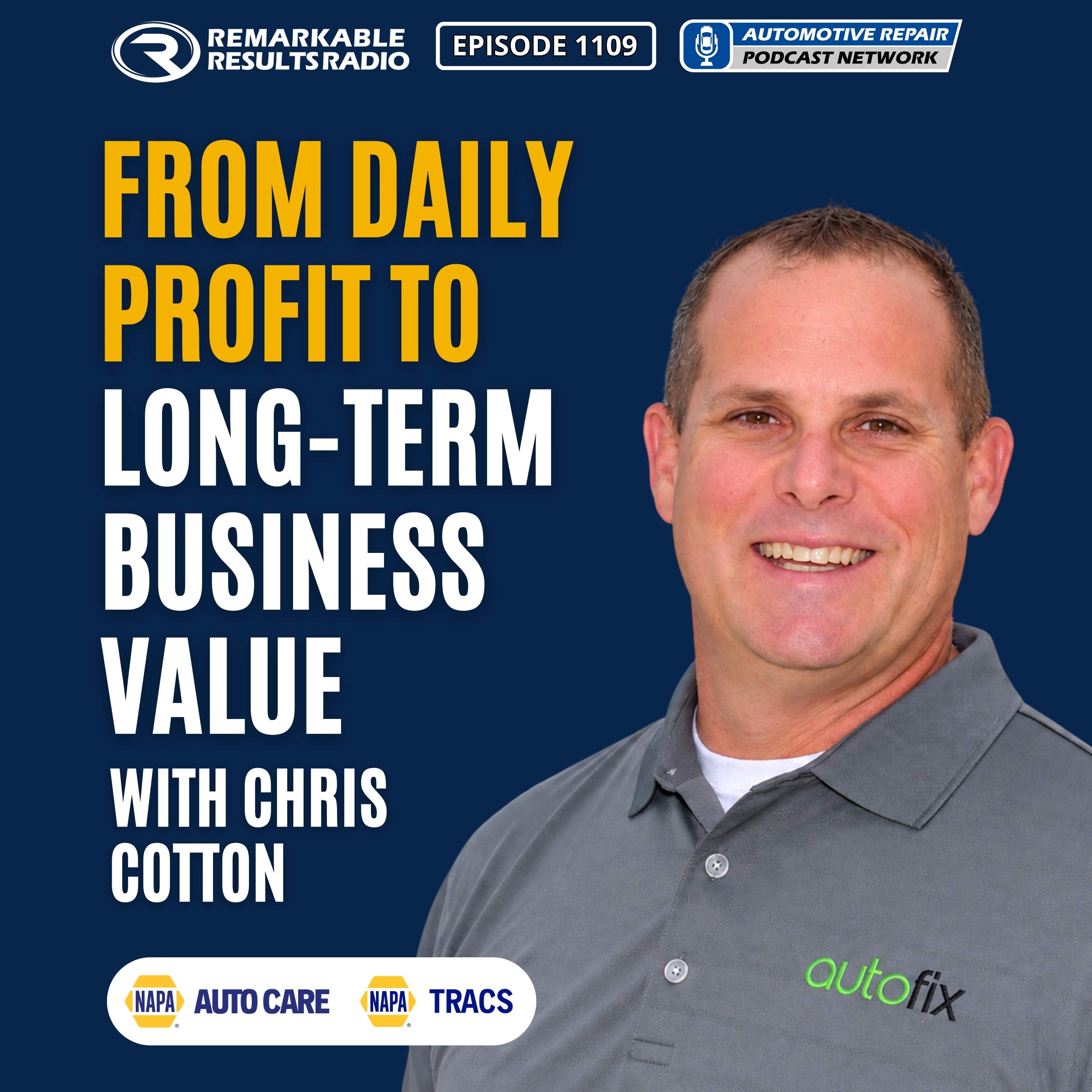
From Daily Profit to Long-Term Business Value [RR 1109]
Thanks to our Partners, NAPA Auto Care and NAPA TRACS Watch Full Video Episode What is your auto repair business really worth, and are you building it to become more valuable every year? Coach Chris Cotton, podcast host on the Automotive Repair Podcast Network, challenges shop owners to look beyond today's sales and profits and start thinking about the long-term value of the business they're building. Many owners spend years on the operational hamster wheel, focused on car count, payroll, production, and this month's bottom line. But when it's time to sell, transition the business to the next generation, or simply step away from daily operations, buyers and banks look much deeper. Chris explains why clean financials, documented systems, owner independence, and intentional succession planning can transform a shop from a business that provides the owner a job into an enterprise with significant transferable value. What You'll Learn Why profitability and business valuation aren't the same thing.What buyers and banks want to see before financing an acquisition.Why removing the owner from daily operations can increase business value.How documented systems and protocols make a shop more transferable.Why clean financial statements and tax records are critical to valuation.Chris Cotton's five stages of shop ownership, from daily survival to eventual exit.How increasing capacity can grow value without necessarily adding locations.Why succession and exit planning should begin years before you're ready to leave. Don't just build a profitable shop. Build a valuable business. Create strong systems. Develop leaders. Clean up the financials. Build capacity. Reduce owner dependence. And understand what your business is worth long before you're ready to sell it. Coaching to Valuation [E269]: https://chriscotton.captivate.fm/episode/cc269 The Weekly Blitz with Chris Cotton: Weekly Inspiration with Business Coach Chris Cotton from AutoFix – Auto Shop Coaching. https://chriscotton.captivate.fm/ Learn more about the benefits of being part of the NAPA family by visiting https://www.napaonline.com/en/auto-care NAPA TRACS will move your shop into the SMS fast lane with on-site training and six days a week of support: http://napatracs.com/ Connect with the Podcast: Download Our Mobile App:https://automotiverepairpodcastnetwork.com/app/Website:https://remarkableresults.biz/YouTube:https://www.youtube.com/carmcapriottoFacebook:https://www.facebook.com/RemarkableResultsRadioPodcast/LinkedIn:https://www.linkedin.com/in/carmcapriotto/Instagram:https://www.instagram.com/remarkableresultsradiopodcast/Join Our Virtual Toastmasters Club:https://remarkableresults.biz/toastmastersJoin Our Private Facebook Community:https://www.facebook.com/groups/1734687266778976Join our Insider List:https://remarkableresults.biz/insiderBooks Page:https://remarkableresults.biz/booksOur Classroom Page:https://remarkableresults.biz/classroomEpisode Collections:https://remarkableresults.biz/collectionsBuy Me a Coffee:https://www.buymeacoffee.com/carm The Automotive Repair Podcast Network: https://automotiverepairpodcastnetwork.com/ Remarkable Results Radio Podcastwith Carm Capriotto:https://remarkableresults.biz/Automotive Field TheorywithMatt Fanslow:https://mattfanslow.captivate.fm/Business by the NumberswithHunt Demarest: https://huntdemarest.captivate.fm/The Auto Repair Marketing Podcastwith Brian and Kim Walker: https://autorepairmarketing.captivate.fm/The Weekly Blitzwith Chris Cotton: https://chriscotton.captivate.fm/Speak Up! Effective Communicationwith Craig O'Neill: https://craigoneill.captivate.fm
Related across the catalog

Hire Hammers, Build Champions: Inside Auto Hospitality’s Recruiting Playbook
Joe Adams and Todd Hayes dive into recruiting as the single biggest bottleneck for automotive businesses, sharing raw stories and practical tactics. They cover hands-on recruiting, building a better workplace (benefits, training, pay), identifying A-players, managing gray-area talent, and how strong onboarding + culture turn hires into high performers and generational opportunities. AutoShopAnswers.com Auto-Shop-Media.com
The Technicians Who Get Ahead Do THIS | Bruce Bolen - Ep 40
Rick White was my VERY FIRST business coach, and trust me when I say he helped me get my shop-owner life together! 😂 Now I’m proud to have 180Biz presenting Downshift, so head to 180Biz.com and book your FREE strategy session with Rick because, honey, you don’t know what you don’t know!Y’all, if you missed the first Tektonic, you missed a GOOD one, but you've got another chance! 😂 Tekmetric is going even BIGGER in Houston, Texas, April 1–3, 2027, so head to Tekmetric.com/Tektonic and get registered because you're NOT missing out twice!Consistency is key - heard that! But, consistency is HARD. That's why I gave up on trying and let the experts handle it. Detect Auto. Let them clean up your estimating process and raise your ARO - like they did for me! CLICK HERE TO BOOK A DEMOYour techs don’t need another YouTube rabbit hole—they need real answers to the problem in front of them. SWAT Training and Diagnostics brings the tech support and hands-on, virtual, and just-in-time training to help them fix today’s car and be ready for the next one - LEARN MORE HEREWhat happens when your employer won't pay for the training you know you need? Tonnika sits down with technician Bruce Bolin to talk about taking ownership of your career, investing in your own education, and refusing to let a lack of opportunity become an excuse for staying stagnant. Bruce shares what pushed him to attend industry training on his own dime, his plans to eventually open a shop, and how he's already passing his knowledge along to younger technicians. They also get into technician pay, certifications versus real-world ability, mentorship, and why getting just 1% better can completely change your value in this industry. If you're waiting on somebody else to make you a better technician, this conversation might sting a little.Timestamps:00:00 – What Are You Actually Worth as a Technician?00:42 – Bruce’s First Automotive Training Event07:06 – 16 Years as an Automotive Technician12:09 – The Five-Year Plan to Open His Own Shop15:00 – Why Automotive Community & Training Matter18:21 – Stop Waiting on Your Employer to Train You25:29 – Want Better Pay? Increase Your Value34:11 – Preparing for Shop Ownership Before Opening the Doors38:01 – Mentoring the Next Generation of Technicians43:21 – Is There Really a Problem With Young Technicians?48:31 – Why the Automotive Community Matters

Ep 176: How a Near-Crash Paved the Way for His Leadership with Brad Coleman
From Garage Beginnings to Master Tech: Ly Khoa’s Hustle and Humility
Glenn Piccolo interviews Ly Khoa (Master Lee), a top-performing technician, about his journey from lowering Hondas in high school to trade school, corporate shops, running his own business, and returning to tech work. They discuss efficiency, organization, parts management, shop culture, benefits of 7-day operations, and the realities of owning a shop versus being a master technician. Ly shares practical advice for technicians who want to increase hours and earnings—focus on skill mastery, maintain a great attitude, stay organized, seek out work proactively, and understand when entrepreneurship is (or isn’t) the right path. AutoShopAnswers.com Auto-Shop-Media.com