Episode 265 - Modern Pay Plans and Efficiency Tips To Fix The Tech Shortage With Eric Svedberg
With Eric Svedberg
Now playing — Changing the Industry Podcast
About this episode
Don't get to the end of this year wishing you had taken action to change your business and your life.Click here to schedule a free…
Key takeaways
- —Effective communication and a strong shop culture are essential for reducing the divide between technicians and owners.
- —Implementing a structured testing and training system can help technicians advance their skills and increase their wages.
- —Shop owners should be transparent about compensation and provide clear pathways for technicians to grow within the company.
- —Understanding market rates and adjusting labor rates accordingly can help attract and retain skilled technicians.
- —Creating a supportive environment where technicians feel valued and accountable can lead to improved performance and job satisfaction.
Frequently asked
- What should a technician do if they feel underpaid?
- Technicians should research market rates for their position and approach their owner with specific examples of their contributions and a request for a salary review.
- How can shop owners improve technician retention?
- Shop owners can improve retention by fostering a positive work culture, offering competitive wages, and providing clear career advancement paths for technicians.
- What are effective strategies for training technicians?
- Implementing a structured training program that includes hands-on experience, mentorship, and clear benchmarks for advancement can help technicians develop their skills effectively.
▸Full transcript
Hey folks, David here, and I'd like to thank you for joining us for the Changing the Industry podcast. Lucas and I started this podcast with the goal of capturing the frank and open conversations you typically have at industry events. Those conversations cover the challenges we face in our business and lives, as well as difficult repairs, new products and services, and everything in between.
We hoped that these recordings would spur our listeners to enact the change they'd like to see in their own lives and businesses. That's also why we've partnered with the Institute for Automotive Business Excellence. My first management class was with Cecil Bullard, and his genuine passion for helping others in an honest and ethical manner permeates his entire organization. And if you need some of the Institute's help, They have a special offer for our listeners.
Click the link in the show notes and get signed up for a free business analysis. They'll go over your current situation and give you advice on your next steps. And they have everything from free resources and online classes to peer groups, one-on-one coaching, and specific help for MSOs. So Don't miss out on this great offer. Click the link in the show notes.
And now on to the podcast. It feels really weird not having to clap. Just going to be honest with you. Feel kind of out of place. I feel like that was my only, like, true meaning to the show was that I clap. Contribution. Yeah, yeah, yeah. You feel that way too? Hello? A little bit. Yeah. Yeah. Okay, cool. Eric, brother, introduce yourself.
Eric Seedberg from European Auto Works in Virginia Beach, Virginia. Very good, very good. Tell us a little bit about the shop, how you got into automotive. Started when I was 16, gas station business. Okay. A friend of mine worked there and I wanted to make some money. High school. All right, so I'm like, hey, can you get me a job there? And got me a job and, um, did that for a little while and then started working full-time while I went to college.
Um, became lead tech early. Uh, the owner, when I was around 22, wanted to sell it. Um, I kind of decided, should I go one of two ways? Do I want to do this this Amoco station, or do I want to do something different? So I had a backup plan in case Amoco didn't approve me. So, well, Amoco approved me. So I was the youngest Amoco dealer in the country, age 22.
Oh wow. How did you fund it when you started? Private equity. I was always a saver. I bought my first house when I was 18, um, in the good old days when you could assume assume mortgages, so you didn't have to qualify, right? You just assumed someone else's mortgage. So that was good. So, you know, I had good credit, I had saved money, um, I had worked hard, and other people believed in me, so they lent me money and I paid it all back with interest.
So, right, very cool. What'd you end up buying it for when you first bought it? This was 1992, so if I remember correctly, this was $104,000. 40-some thousand plus inventory. So all in, you know, you had to buy the gas that was in the ground plus the inventory in the shop. You know, we had tires and oils and the gold days when you only needed stock 20 air filters and, you know, 10 distributor caps and rotors and— right.
Um, so, you know, all in probably $175,000 or something like that. But then you had— you needed working capital, so you need— you know, I think the loan probably was $240,000, you know, like that. Where'd you go you went to college? Psychology. Oh wow. Yeah. So, uh, definitely need some of that in the automotive industry, huh? Well, you know, it, it has a lot to do with sales, you know, sales psychology.
So, you know, when you're teaching service advisors, you know, how to sell, the psychology of the buyer, what they're thinking, what they need, you know, solving their problem, stuff like that. Right. So tell me a little bit about the transition from from working in the shop to owning the shop. Tell us a little bit about how that went. Happened pretty quick. The, you know, we announced it.
Oh my gosh, this is going back a long time, obviously 30+ years. You know, it was a full-service gas station, so we had, you know, cashiers and stuff like that. So really no big deal with the cashiers. As far as the bays, there was really an issue because of my age, me being so young. So therefore being 23, people did not want to work for me or something like that.
It was really hard to hire people and for people to respect me at that age. I'm not just a kid or something like that. But it's a small business, so you know. So how did that progress? What happened with the business? How big did you grow the business? Tell us a little bit about the progress of the business. Gas sales are, you know, pretty steady the whole time.
You know, affects gas sales a lot. Plus the other issue with gas sales is you're at that point on a very busy intersection and you would think that would be something good for gas business, but really not good for gas business because people don't want to get out. Right, right. When they're, you know, in that line, right, to go home, the last thing they want to do is get out of that line.
They want to make it through that line. Yeah, and then you got to fight to get back in. Right, correct. And so they move the whole road, you know, eventually. Um, transition, sales were decent, um, but around 8 years in, that's when BP And long-term BP did not want full service. So they didn't want me and I kind of didn't want them.
So I got ahold of the land lease. We were able to get the— we were able to get the tanks out, all that, you know, kept the canopy, kept the shop, all that. I had land lease, 5-year lease with 3 5-year options. So 20 years total. So I've been rebranded, changed the name to Automotive Specialists. We only did Asian domestic, so we rolled with that out of a 3-bay location, you know, all the way up to about $1.2 million out of 3 bays.
So, um, around '14, so I'd renewed the lease twice. The last renewal was— I really would like to get a hold of the land that, you know, so I can control my own destiny, and they would never And at that point, there's a gentleman who had started a business called European Auto, former Mercedes technician. He had done it like me, you know, 30 years, and he was just ready to retire.
And so he owned the building and the land and the business and everything, and he had kind of checked out the last, say, 3 years, right? So business was not doing great. Okay. They had like had 2 technicians, service advisor, he was barely ever there. You can imagine what the sales do with that scenario. So I was able to really buy it for building and the land plus a little bit, you know, for inventory and equipment.
It wasn't a lot. How big was it? 10,000 square feet. Okay. And so that was back in 2007. 2019, '18, got something like that. And we grew it from what he was doing to about $3.7 million now. Lucas and I have been telling you about PartsTech for a while now and how it gives you access to unlimited parts and tire vendors and direct integration with over 35 shop management systems.
And now they've just launched a new referral program. All you have to do is open your PartsTech account Go to my shop and click on the rewards tab. There you'll find your referral URL, which you can share via email, text message, or on your social media. If your referral signs up for a new account and places 5 orders in the first 30 days, Partztek will send you a $100 gift card.
That's it, nothing else is needed. Your referrals can get you $100 just for using Partztek, which by the way is absolutely free to get started with. So if you're using PartsTech already, start sharing that referral link. And if you haven't signed up for PartsTech yet, what are you waiting for? Click on the link in the description or go to partstech.com/podcast. That's partstech.com/podcast.
Hey, one more thing. If you find out that your shop management system doesn't integrate with PartsTech, it's time to upgrade. David and I use what we believe to be the very best system on the market, Shopware. With unmatched features like Parts GP Optimizer and DVX, which is their digital vehicle experience, Shopware really is way more than just a shop management software. With it, you'll be able to create an immersive and interactive experience for your client, setting you apart from everyone else using run-of-the-mill software.
Are you ready to upgrade? Click the link in the show notes to get started. Okay. Two service advisors, parts advisor, um, four technicians. Uh, we have 2 helpers and a manager. Okay, got it. Very nice. Nice, nice. And I, I run a fairly similar configuration, right? And we're in the process of growing. We, we came in, we moved from 3 bays. We were like you, about, you know, $125,000, $130,000 a month in the 3 bays.
And then now we're making that transition into the bigger shop and kind of bringing those sales up. Right, because we didn't have the bandwidth for it before, right? We were overloaded all the time. And so now we're kind of working into to grow that number up. We'll be over, I'd say we're going to be, I know we'll be over 2 this year, probably 2.1, somewhere in there for the year.
10 bays, 4 technicians, right? We have 6, 7, 8, 9, 10, 10 bays with 2 flat stalls. Yeah, shop's kind of like a bowling alley, so —Okay. Okay. Um, like I said, the water marble challenge, get cars in and out. Yeah. You know, the amount you have to walk to the very back of the shop to bring them something, you know, parts or something like that.
That's why I was looking right over there at the robot. I know, right? I want one of those. They are pretty cool. $1,800 a month, you can have one. $1,800? You've been asking about how much the robots are. $1,800 a month, 36-month lease. Hey, listen, you're gonna have to go in there and sweep all the crap up out of the shop floor and get all the air hoses up because you won't buy your guys' battery tools.
So, uh, I'm just saying, like, I got hills in my shop. I got like slopes. That's not gonna work. I think we'll just fall over. It would make for good content. You got my $1,800 a month robot falls over, breaks, drops that lithium battery off the top of it. They said the biggest issue, the The robot never runs into a car. People drive into the robot.
Really? Yeah. And they said usually it damages the car more than it does the robot, uh, because it's all easily replaceable on the robot. So, I mean, I could see that. I could see that. And if it doesn't work out, you can open a restaurant and use it to deliver the food to the tables. That's your mac and cheese deal, bro. You just stick mac and cheese on it.
Just put tables in the bays and Remember the guy that we interviewed in Arizona? The mobile guy? Mm-hmm. Ka. Ka. Yeah. So apparently he took a bunch of pictures of an actual mac and cheese cart. The guy was heating up bowls of Kraft Easy Mac and Cheese. He had 3 microwaves and people were lined up to get Easy Mac. And then he would hand them the bowl with a spoon and they'd go around and there was a little like a tray with like bacon, breadcrumbs and like mix-ins.
So they would come or go around the corner, throw in their mix-ins and walk away. And he would just, he took bottled water, dump it into the Easy Mac, throw it in the microwave. He wasn't cooking it from scratch. He wasn't doing anything. He was opening up the thing, pouring the water in, sticking it in the microwave and handing somebody Hey, look, his gross profit was through the roof, and here we're struggling to fix European cars.
Yeah, right. Well, like, even better than that, I mean, this dude, think about that, he just avoided all of the help department stuff too, right? Like, he doesn't even need the help department. You're gonna need a real kitchen, right? Because all he has to do, he's like, hands him the cup, like, nah, dude, I saw him a cup of mac and cheese.
He gets some bacon off the side of my cart. It was my bacon. You believe that people are paying for that? Yeah, I can believe that. Really? Yes. You would not believe what people will pay for. True. You would not believe. And like, it's the creature comforts. It's the little things. But now listen, if you want them to fix their car, that's a whole different story.
Okay. Yeah. Something they need. I need my car fixed. I'm upset about it, but go ahead and charge me $10 for Easy Mac. I think they charge more than $10. No, I don't know how much the guy was charging, but that's 49 cents. That's 49 cents a little cup and a bottle of water. Yeah, 30 cents. You got a dollar in there.
So if you're charging 5 or 6 bucks— they— the, uh, the bellman, when he brought all the podcast cases up to my room, he said, I'm gonna tell you something about these rooms. He said, we ran into this. He said some people they say they were jumping. He said, I don't know what they were doing. I'm just going to tell you, don't jump up and down too hard on the floor because that minibar will detect that you pick things up off of it and it'll trigger it and it'll set it off.
He said, we've had people get a $1,500 bill from jumping. He said, I was just telling you. Now there's some GP, right? Like, no kidding, man. That ball was worse than the— especially if you didn't catch it and they just charge you. And so the cost of goods sold was zero because they didn't actually put it on your corporate out, like people like me and you end up with the bill on the credit card.
Yeah, exactly. But, uh, you know, I mean, seriously, the bottle of water in my room's $37. What? $37? Uh-huh. Where are you at? In the, uh, Plaza. I'm going to go and look. I'm at the Aria. Yeah, I'll let you know how much it is there. Don't pick it up to find out. Go to the menu on the TV and it'll tell you how much it is, but don't pick it up.
Because they like— seriously, when you check in over here, they tell you no takesies-backsies. Okay, if you pick that up, there's no takesies-backsies. You're paying for it. It gives you time. It says you got like 30 seconds to put it back at full weight. Yeah. Yeah. You put it, you set it down. There's a crumb of dust underneath one side. That just goes to show you that people aren't gambling as much if they have to make it up with the peanuts and the water.
I don't know. These, uh, if you watch the stocks for these here hotels, they're through the roof, so something must be working. Their P/E's amazing, so they got something going on. Yeah, and the mob's not even involved supposedly anymore. Maybe they kind of ruined things, right? Like, Vegas is not nearly as cool as it was now with the mob's gone. Were you ever in Vegas when they tried to go family friendly?
No, I missed that. Oh yeah, this was back in like 2015, 2012. They're like, oh, the new Vegas, family friendly, bring the Oh, in around '17 they scrapped that whole idea and they said Vegas is back. It was a whole marketing campaign. Oh yeah, yeah, strip clubs and everything else. We went to, we went to Fremont Street last night. I was really— oh, there's some entertainment, bro.
They had all the— these people were bringing their whole families, like pushing kids in strollers down to there. And I'm like, I don't understand that. Yeah, yeah, dude. That's a good, that's a good time there. What do you think the automotive industry needs? Technicians, duh. Well, now maybe you think it's because we don't pay them. Like, seriously, is it because we don't pay them or is there another reason for the shortage?
Well, I mean, I'll just tell you what we experience. So the young people coming in, like 98.5% of our A.D.D., A.D.H.D. kids They cannot concentrate on things. So there's the issue. They're coming in. You resemble that remark. Just a little bit. The other issue is they might be B-tech, let's just say, demanding A-tech wages, but they don't want to do anything to move to A-tech.
So if you're like, hey, you know, here's, you know, a career path or Hey, here's some training. Yeah, they don't want anything to do with that. And you have to twist their arm to do that stuff. You know, it's all supply and demand. We've been working on this issue for 40 years. I hadn't seen much movement. So yeah, that was kind of my thing.
I've not really seen that much change in my 17 years in the industry. I've not seen it like people act like it's getting worse. I mean, maybe a little bit, but like, no, now wages have gone up after COVID. Oh yeah, yeah, wait. Yeah, for sure. Wages have gone up. What do you think an average technician— let's talk about like an ABC, you know, I hate to rate people by scale.
What should a technician earn? I use A, B, and C because what else are we going to say? You know, pretty much it's not derogatory to anybody. It's just what we lingo. Are you asking what we should pay? Yeah. What would a typical wage— what would you— Well, it depends, you know, it's market specific, but you know, I think a highly qualified ATEC, put in the work, put in the reps, done everything they need to do to be where they're at, should definitely be making well north of $100 grand, up to $200 grand, something like that, you know.
San Francisco, Washington, D.C., Okay, maybe you're higher than that. I'm talking, you know, other markets, I think I'm in the range. I also, if you think about it, if you had an A-tech in one bay, right, doing all the hard diag, okay, the customer comes in, check engine light, every line dash on, you know, intermittent issues, they're getting all the hard work because they know how to fix it.
Then you got the B-tech beside them doing the suspension and the brakes, not— who's making more money? Oh yeah, yeah. And so that's why you have to subsidize the ATEC, because you need both jobs, right? So what are you going to do, pay them the same? Yeah, right. Or are you going to tell the ATEC the VTEC makes more money? It's no sense.
So that's an issue long time. That's why you do need subsidize that ATEC with higher wages or, you know, put a factor onto the testing. You know, if they're getting X amount, maybe you need to have a multiplier, you know, to pay that technician more. So what do you think the pathway is? Cause I'm sure there's a lot of owners listening who are saying like, bro, I'm nowhere near that for my guys.
And I don't like, if I paid them that, I'd be out of business. Wouldn't have the money. What do you say to that person? Well, there's a lot to go into that question. So, Marketing, how big is your shop, how many households are you around, you know, what's your top line revenue, you know, can you afford that. I think we all know lots of shops don't charge enough, lots of shops are scared to charge enough for what they're worth or whatever that may look like.
They give away too much, they give away their testing, which is totally ridiculous to do that. I actually I actually teach a system on how to sell testing. I was on Carm's podcast a couple weeks ago giving that system away to people. You know, it's— give us the rundown. The testing? Okay, so I break into— I take— keep it easy in the beginning.
It's, you know, 3 levels: level 1, 2, and 3. People are so used to this for a long time. Wendy's invented this stuff with the You know, supersize mirror or small, medium, large, whatever you want to call it. But everyone is used to going somewhere and having 3 or 4 choices of buying whatever they're buying, right? So when you explain this to a customer, they're used to hearing it 1,000 times over.
So we have 3 systems: Level 1, Level 2, Level 3. Level 1, one issue that's repeatable. Level 2, more than one issue or internet is a screw story. We have level 4. I teach that after you command level 3, right? And all your people know levels 1 through 3 backwards and forwards— tech, service advisor, owner, and all that. Then we'll break into a level 4.
But, um, the structure, the, uh, what you cost that to the customer is you take your base labor rate times 1.5, and that would be the level 1, the technician, 1 hour of it. Okay, we expect the technician to take approximately half an hour, keeping in mind this is an average. Okay, some will be longer, some will be shorter. It looks like that.
So the half hour we're not paying the tech is going to the shop so they can fund their items, it's on their scan tools. So Level 2, we're usually taking our base labor rate times 2.5. Try to get that tech 2, we expect they're going to take an hour, hour and a half. Yeah. Level 3, we're usually around base labor rate times 4, 4 and a half.
Okay. Say the tech 3 and a half, 4, somewhere in that range. Okay. Expect they're going to spend 3. Okay. Figuring out whatever. Um, that gets in. We're finally getting into a good roll and here comes Lucas interrupting the episode. Folks, now you know exactly why I hire Shop Marketing Pros to do my shop marketing. It's that I am spastic and all over the place and I lack consistency.
But here's the thing, that doesn't work in marketing. You see, marketing takes 30, 60, sometimes 90 days to be effective, and I was all over the place with my marketing. There was no consistency at all. Caused these waves in my business because I was so inconsistent. And that's why I am so happy to refer Shop Marketing Pros They bring consistency. They are true professionals.
I'm going to encourage you, go down to the link below and get your free digital marketing inspection. Just like we do digital vehicle evaluations for automobiles, they're doing the same thing about your marketing, and they will help you get your business turned around. The ballpark. So, uh, one of the easy ways to sell it is, um, let's just say over customer calls in or customer comes in, says, hey, I have a check engine light, you know, I got 2012 Honda Accord, something like that.
And a lot of times you can throw the level 3 out the window in the very beginning. Okay, so if it's a check engine light, what are the chances you're gonna deal at all? Yeah, 1% on a Honda Accord. So you can say to the customer, hey, we have 3 levels of testing. What you've described, we're not going to need a Level 3.
We're going to— the psychology side of this, immediately the customer is like, oh wow, like they're not even trying to charge me the expensive stuff. So they're already in a better mood. So then you can say, do you want to go ahead and authorize the Level 2? We're going to share all the information with you. We might not even need it and we'll drop it to a Level 1 and I can explain that.
So we get a lot of Level 2s sold at the counter, and that creates efficiency. Okay, so you don't have to call back, you don't have to— if they give any pushback whatsoever, we drop it to a level 1 and get that sold at the counter. If we need a level 2 once it's in there, we call them, right? Sometimes we just roll with the level 1, you know, it's a numbers game.
So the alternative is you didn't sell anything at the counter, or you did the typical, oh, we charge 1 hour worth diagnostic and it costs this amount of money, the tech, this and this, and if it goes over an hour, we're going to pick up the phone, we're going to call you and tell you where we're at. And okay, that whole spiel.
And then the customer turns around walking out the door thinking, I sure hope this person doesn't call me, right? Because it's going to cost me more money. So it kind of solves that issue. The other thing is with any testing, because there are shops that say, hey, we'll pull codes and we'll call you. Yeah. So then the technician goes out, gets keys, brings it in, gets scan tool, pulls codes, whatever happens looks like, hey, I need this.
Hey, service advisor, call the customer. Calls customer, don't answer the phone. Now what? Now, yeah, if you don't have two bays for the tech or something like that, technician has to unplug stuff, go park the car, didn't, you know, bring another car in. So, you know, for us it's all about efficiency, but we also make a lot of money, you know, with testing.
So. Okay, got it. Now let me ask you this. It sounds like from my perspective as a shop owner who does the payroll, I'm thinking, gosh, that testing plan would be kind of overwhelming to track for me. In other words, like, how am I going to make sure they get the right hours on their ticket where there's a variance between what we build and what we gave them?
How do you track that? How do you keep up? So we use TechMetric. It's a canned job, right? So level 1, you know, 1 hour to the tech. We're— one of the KPIs we're not looking at is tech efficiency of them clocking in, clocking out. Okay. Because that slows us down because they forget. Yeah, for sure. So to me, even though I've tried, it never seems to work.
Right. So why am I going to pull my hair out trying to track something where I can just do other KPIs and still make great money. Yeah, right. That's how I view it. So if I have a canned job for level 1 that pays the tech 1 hour, level 2 that pays the tech 2 hours, right? 1 hour. Then if I pull a report at the end of the week with the amount of hours, you know, on a flat rate basis, what, what are you asking would be difficult?
Well, so I guess here's where I'm coming from is like I've got one build hour and I've— my pay hour is different than my build hour. Does that make sense? Yeah. Or are you raising your labor rate? Yeah, you know what I'm saying? Because like that's one of the things that technicians push back on is like, well, they're billing 1.2, but I'm getting 1.
Or it's not— it's not their business. It's not a technician's business how a shop owner runs a business, right? That's like the, the prisoners running the— or the, you know, run the jail, right? Um, and a fair wage. And this is how our level testing system works compared to so much— yeah, compared to so many shops. Remember, we also pay them and stuff like that, so we're very fair.
We want happy technicians. Um, as far than what we're paying a technician. Yeah. It's your effective labor rate, right? So if my, my base labor rate's around $186 and some change, but I have, you know, 8 labor rates, which, you know, but my effective labor rate is usually— Okay, so you're actually adjusting the rate, not necessarily the billed hour. Okay, that makes sense because I was over here thinking you're saying no, I'm billing one time and paying another time.
I'm like, holy crap, that's a nightmare to track. Yeah. So in TechMetric, you know, if you are charging, say, $259 for a Level 1, right, and your base labor rate's $186, and you say, I want to pay the Tech 1, it calculates what the labor rate is because I'm holding the level at a certain number. Got it. Yeah. That makes sense. It's not, it's not variable.
Sure. Talking about technicians a little bit, one of the things that we're hearing a lot right now is, is we talk to a lot of folks who say technicians need to be paid more, and I completely agree with that, right? As a shop owner, and I was just over here talking to Jeff a few minutes ago, had a situation where a technician had been listening to him and said, I should easily be earning over six figures because of what Jeff says and because of what other people in the industry say, but the area this guy's at, the economy's a little depressed, right?
It's not quite the same market. It's not exactly comparing apples to apples because you got to take into account benefit load and all this other stuff, right? Like you have to think about the whole picture and what the owner is actually contributing to your revenue or your wage. What would you say to a technician who says, hey, I'm, I feel like I'm underpaid.
How do I approach the owner? What do I talk about? What would be— right, because that was one of the things Jeff and I were just talking about is like, how do I know how to tell them? So if I want, I'd see what my market would bear, right? So if I'm in a depressed market, am I already getting paid more than anyone else in my market?
Well, you don't have much of a leg to stand on going asking for more. Yeah. And how would you, how would you determine that? Tell me how you would determine what that Um, I guess I would, you know, there's also, um, averages that you can go to the, or the Labor Statistics website, I believe. You can go there and find it. You can ask probably ChatGPT, they'll find it for you.
Um, okay, so let's talk about not in a depressed market. So how would a technician approach an owner and want to make more money, the number one thing I tell that technician is you should be humble because technicians come in with a chip on their shoulder many times like we talked about. Hey, I want A-tech wages, but I know I'm barely a B and I don't want to put in any extra effort.
What's up? You should be humble. You should be able to listen. So therefore, there's people that know, you know, a certain job or, or how to repair something. Right. You know, a lot of times technicians are like, they're not willing to listen. They just want to do it through hard knocks and do it themselves and mess it up and have comebacks, stuff like that.
Um, they need to put in the reps, they need to do training, they need to bring something to the table other than, hey, I just want a raise, right? Um, hey, I want— I would like to make more money. Um, what this looks like is X, Y, and Z. Um, What we do is we go to our employees and try and find out what their long-term goals are.
What's your 1-year, 3-year, 5-year goals? And that's going to be personal, professional, and financial. Okay. With specifics for that. We're not going to do it for them, but we're going to totally support them. Okay. Try and help them in any way possible achieve those goals. Okay. And so Let me ask you this. So let's say a technician's approaching this and saying, hey, I want more.
How would I determine if my wage— right, because I know you're saying like do a market check, get a feel for it, but there's so many numbers being thrown out here right now, right? And, and in this exact example, there was a situation where he was going and asking other people, and I'm saying, bro, some people might not be telling you the truth here.
Based on what they're saying, there's a good possibility. And you could go to the dealer and compare what the dealer— dealers are paying insane wages right now. Insane wages. Just now they treat you like shit. And it's a terrible experience. Especially when they change shop managers every 3 years. Yeah. If not sooner. Yeah. If not sooner. And I'm going to tell you, I got a first-rate education in the way that those organizations operate in the culture and what they believe.
Believe in, right? I've learned the hard way what they believe in. So how do you come back to that and say to them, like, is there a financial formula that they could potentially use? Is there something that they could analyze the numbers and kind of try and get an idea like, hey, am I close? Am I not close? Well, you know as well as I do, there's a lot more than just the numbers.
It's shop culture. It's benefit package, like you said. Do you enjoy working for this owner? Is the owner honest? Is the owner, you know, really care about you, your family, your future? Um, that goes into it. So that's, that's worth something. So if the— but if the money's not there, I mean, the technician might need to look at other options, right? There are plenty of shops out there that are not great shops and not great shops to work for.
Um, you know, they're dirty, they're not up to date. They, um, right? Yeah, yeah, yeah, yeah. You're sweating in the summer, freezing in the winter. Yeah, working Saturdays, you know. We're 5 days a week, we're air conditioned, you know. So, you know, there's some benefits to working for us, um, but we a lot. Yeah. Here's the one thing I will tell, you know, business owners will not like this, but employees sweat.
I don't think there is one time I have ever interviewed an employee anymore, my son does, and I've trained him so he knows as well what I'm about to say. There's not one time in 30-some years of being in business that I was not willing to pay more than the person asked for. So I had a number I was willing to pay for that position to be filled.
And then I'd ask, hey, where are you looking to be paid? They always come in with a number lower than I could pay. So let me ask you this. When we talk about that number, right, how do you, how do you deduce what that number is for you? And a particular example would be how you're talking about diagnosticians, right? Sure. It's like, hey, we have to subsidize that.
Do you have a numerical system? Do you have a mathematical system that you can say, hey, here's how you determine what that number needs to be? Yeah. So we're usually 45-55, 45% parts, 55% labor. So if you take your labor rate, right, divide by 0.55, right, that will give you a number of what you normally sell per hour. Yeah, right. And on that number, I want a loaded cost for technicians to be 20%.
So therefore, once I take that number I have times 20%, boom, You know, I take 0.8 of that, and that's what I'm willing to pay. Okay, flat rate. Okay, and then that would be my top guy, and then I go down from that. Okay, based on A, B, and C type technicians. And then got it, each, each— if you're a C with me, you can get C1 all the way through a C10.
That's a whole nother strategy I have. Giveaway to me. Okay, whoever wants to ask for it, I'll explain to them. Hey, explain it. Uh, they'll take me a while. I'm not sure the podcast would— Hey, it's an hour long, so like we're gonna sit here and listen. So give us a brief rundown. All right, here's a brief rundown. So, um, what I did was when I created this system, we'll just take B for example.
What things do I want a B technician to be able to do? And I was able to list 50 things. Say I want them to be able to replace power window motors. Say I want them to be able to do brakes and calipers and bleed brakes and all the whatever, right? Ignition coils, whatever. So that list, and then I use ChatGPT a lot, right?
And I asked ChatGPT I use ChatGPT. Times no more than 10, no less than 2, would I want each of these to be done by a technician to prove to me they can do this job, right, with oversight. So, you know, you're not going to let somebody loose doing a power window motor and putting a door panel with no guidance whatsoever, you're going to be buying a door panel, right?
So, you know, right? But an ATEC, or somebody might have to show him. And so therefore, we now have a list. Okay, I need them to be able to do these things, and I need this many reps of each one. Okay, so say that whole list with all the reps equals 500 items. When they do 10% of it, right? So they do 50 of whatever, right?
Door panel, coils here, whatever. As soon as they do 50, they move to a C1, then they move 50 more to a C2. I'm sorry, B1, B2, B3. And with each one, when I take my wage, so a B can earn this and an A can earn this, I divide that number by 10. So each time they do the 50, they get 10% of that range.
Super easy. I know it sounds difficult, but if I showed you on paper, it's super easy. So does that, does that make sense? Yeah. So we move people from B1, B2, B3, B4. Now keep in mind, this is a career path. This isn't, this isn't you, you did it in a month, right? This is a career path. Didn't have the system, one was going from a B to an A, could they do that in 6 months?
No, it would take them a few years. Yeah, so this would be very similar. It'll take them a few years, but they're getting increases in pay as they go, and they know what they have to do. It kind of sets a standard. It gives them something to see and something to connect to. So what I ask shop owners if I'm coaching them, I say, hey, if I went to your technician right now, could they explain to me how they could move from where they're at to the next level?
And it's always a no. I mean, I, I couldn't, right? And I, I think that's a challenge. What do you think? I mean, yeah, I mean, it all, it all makes sense. It's very, um, the, the issue I always have with, with anything like this is that the everything is predicated on more, just the overall concept of more. It's, well, okay, can you flag me more hours?
Can you do more jobs? Um, and I understand it from a business standpoint, like, yeah, you want to grow more revenue, we need to do more hours, we need to be more efficient. I don't know, I just viscerally, me personally, I could not work in a system like that. I would blow my brains out. That's what I would do. What would be a better way?
I don't know that there is a better way. That's, that's sort of the, the problem is, um, and, and here's the thing, I mean, obviously what you have is, is working and it works extremely well. The, the issue is that everything we've done up to this point in the industry has gotten us the results that we have now. So we have a massive technician shortage.
I think you're wrong, I think it's 10 times worse than where it's been. The demand for skilled technicians is higher now than it's ever been. The amount of skills they have to have to be proficient in these vehicles is much higher than it needs to be, than it has ever been, ever. 20 years ago, you didn't need to know 90% of what you need to know now.
True. And you could still be a good technician and you can make a good wage and you can make a good living. And so the demand is higher now. The skill requirement is higher now. And yet we still keep doing the same things we've always done with a slightly different flavor, right? And it has gotten us where we are now. It's always the dealership model with a spin.
Oh, we're not open on Saturdays. It's like, okay, well great. We have air conditioning. It's like, oh, okay, well great. But everything is still, the underlying system is still the exact same it's always been. And it's gotten us a huge technician shortage and completely incompetent technicians that are demanding— you're absolutely right on that, by the way. We have completely inefficient, incompetent technicians demanding ridiculous wages.
What, what percentage of the technician shortage would you say comes from that? All of it. As opposed to— which, which portion would be— if I was going to put a percentage on, hey, this part is coming from the inabilities of the technicians and the challenges of the technicians, while as this is, we just don't have enough people. Well, one leads to the other.
I understand, but I'm saying like, do you think it's that we outgrew the technicians we had too quickly? Well, yeah, we were not getting more in than was leaving. And the skill gap became wider. So the people that stayed didn't keep up with the technology. That, that's true. So a lot of the older technicians, as new technology came, they wanted to drop out or just keep doing what they're doing and be like, don't, don't get me involved in any of this.
Yeah. And the shop owner would be frustrated because, hey, I need you to learn this. And, you know, whether it be GDI or whatever that looks like. Um, in-cylinder pressure testing. Yeah, yeah, good luck teaching that, you know, to someone that's been turning wrenches for 40 years. They don't want to learn that. What's nuts is that's been around for forever. Like, they used to have the old Sun machines that you could go in-cylinder with and you could get wave patterns with.
The machines were $40,000 and now they're $400, so they're more accessible now. But the technology's been around for forever. It's not new. It's still 4-stroke engine. Like, the pattern still looks the same. There's no reason why they didn't learn it back then. They just didn't need to. Where now the, yeah, the, the problems are more complicated. And as the technology has changed, you have to go to something like that in order to, for you to figure out what's wrong.
Because I mean, how else, you're not always going to catch a slightly leaking valve that's gummed up due to GDI. Yeah. That only slightly leaks under certain driving conditions. You're not going to pick that up with a static, you know, leak down test. It's not going to happen. You need to have it in cylinder. So the technology has created the necessity for more advanced testing that was always around but wasn't always necessary.
And so again, I don't have a solution because I've, I've tried within my own shop. I moved away from flat rate. I hate flat rate. I want to burn it to the ground, buried in my backyard, and every morning I want to piss on the burial spot every single morning just as a reminder, like, don't get back up, right? I'm just gonna pee on it in the, in the backyard.
Just whip it out and pee all over that. Anyway, I hate flat rate so much, and it's because not only does it require a certain amount of efficiency up front, it does. Like, the process of checking the car in, dispatching, parts dispatching, all has to be in line. You have to have good salespeople. They have to be able to sell the work efficiently.
And then the parts ordering has to be done properly. The dispatching all has to be done properly. The, the parts distribution all has to be all in line for the technician to then, if everything is all good there, the technician now can nail those numbers, assuming everything goes right. And if it doesn't, then we stop and we gotta call for more time and hey, we didn't see this bolt, and, and then there's a whole discussion of why didn't you identify that this thing was a rusty bucket to begin with.
There's too many moving parts. In other words, somebody drops the ball in this entire process, it all falls apart. And what happens now in an organization like yours, obviously you put a lot of thought into this and you're very meticulous, and this is the way we set this. So I can imagine, or you think like an Adam Rath who's got everything just like nailed down to this Like, right?
Perfection. And so, yeah, so it's a well-oiled machine. You know how many shops are run like that? Not enough. It's two standard deviations. You're talking 2%. Okay, so what— it'd be 4%, but so what about the other 96? Well, who's taking the brunt of the shortcomings in the other 96%? It's the technicians. I would say everybody in the shop. Everybody, even the owner, because the ones that aren't run well, you know, they're making 8 to 12, right?
Think great. So service advisors, I think they know they're not doing well. I've talked to a few. They think they're doing well at that rate. They don't know what they don't know. But the service advisors aren't making enough, technicians aren't making enough, the owner's not making enough. So yeah, that's a good point. Everybody's sort of taking the hit, but I think the narrative is different.
You're right, you're 100% right. Everybody gets screwed because at the end of the day, if a technician doesn't finish the car, ain't nobody get paid. Yeah, but the narrative is the technician gets the brunt of it. The technician's the one that gets screwed. That's it. That ends up in it just, just within social media. You know, we were having— we went, um, we were having this discussion.
Lucas and I were having this discussion, and like, the point of this podcast was to have these conversations, like just what we're having here, and, and to try to, try to steer in a slightly different direction. Just, just the, the narrative, the understanding, the let's come together and let's figure something out that works for right? That was the point of this podcast.
The rage bait is what gets the views. Yeah, the rage bait. The, hey, I'm getting screwed by the owner. Everybody clicks on that. Everybody like share, post, comment, like, yada yada. That, that's what gets the views. That's what gets the attention, is the rage bait. It's not 100% true, just like you just pointed out. But I don't know that we can shift away from that without taking drastic changes.
And I don't know that there's a good solution that doesn't involve flat rate and, you know, just that kind of thing. I've tried it, I know he's tried it, and you end up hitting a brick wall because You want to, you want to do right by the technicians. I'm going to give you blocks of time. I'm going to pay you hourly with bonuses.
I'm gonna, we're gonna, I have air conditioning, I have heat, um, you know, we, we, we give away plumbing, indoor plumbing. We give away, we give away lots of free time. We, we buy all our technicians. Yeah, we buy our lunches. We, uh, we give— we buy the tools in the shop, we give them away, uh, they have to earn it or whatever just so I can write it off.
But like, we don't want— we, we want to make this as easy and convenient for the technician to be able to just come in and use their skills to knock it out of the park, right? But there's a level of apathy that sets in. Because there's no pressure because it's not flat rate. And without that pressure, they could become complacent. They do.
It's a double-edged sword. It's ugly. Yeah. They won't admit it either. Correct. I mean, from a business owner point of view and manager, we have these discussions every week when we have our meetings. And we want every single one of our technicians to make more money. But what we don't want to do is just give it to them. We want them to do something to act like they even deserve it.
So, hey, could you at least learn something? Could you at least put some effort in? Could you at least learn how to use a Power Probe? Could you write something? Yeah, yeah. To justify me giving you more money. Versus just long hours, get this much more money. That's where the rubber meets the road for us. The young guys, sometimes you get the right one, they're hungry, they will do it.
Sometimes they've been in it a little while, don't want to do anything else. And then the older ones, they are pretty good at what they do and they earn the most. So it depends who we're dealing with. We deal with it on an individual basis. You know, it's not one size fits all. We try and cater to that individual, you know, because everybody learns differently.
Yeah. You know, I know how I learn, but, you know, a technician might need hands-on. Some technicians could just read and understand it. Some need to watch a video or see someone else do it, something like a combination thereof. So. So let me ask you this. You are you strictly flat rate right now or do you do hourly? How do you— How are you run?
I've done every type of pay plan there is over 30-some years. We're flat rate and year. So for instance, if no, a part fails and they have to do the job over again, I pay them, right? There's plenty of shops out there that don't, right? There would be a great example of when flat rate does not work. Work because it's unfair to the technician.
Um, if she made a mistake, right, honest mistake, I'm going to pay him again to do the job. If the technician is just being silly or not caring— or I try not to hire people that, you know, have that type of attitude— but if they're just, you know, half-assing their job, then okay, you know, after one conversation about that and, you know, go from there.
Usually I can have them see my point of view, still pay them, right? And then we don't have the issue. If we have that issue too many times, they really shouldn't be working for me. They should go work for someone else. Yeah. Yeah. And that you found that that's the best way You find anything that like, well, this was close, but I, I mean, oh, if, if there's a reason for me not to pay them, there's something else going on.
Yeah, that's sure. I need for sure. We, we talked to a lot of shop owners, and, and some of the comments that get asked in some of the groups is like, hey, uh, this guy messed this up, how should I take it out of his check? No, right. Like it's against the law. Exactly. Exactly. But like they have— depends on the state.
Yeah. Yeah. But my state is totally against the law. Same too. But if you go like a couple of miles over across the border in Missouri, they dock your pay. Yeah. There's no problem with that. But I mean, I guess my point in saying that is, is like the, the, the attitude from the owners and the attitude from the technicians, it feels like we're going further and further and further apart, right?
It does not feel like we're on the same page trying to go in the same direction. It feels like the technicians are frustrated at the owners and the owners are frustrated at the technicians. How do we close that gap? Communication is done a lot. Having a good culture really helps. We have morning meetings. We have a morning paddle We have values that we go down, so we have 10 values that we go by, right?
You know, honesty, and then, you know, you can— each owner can come up with their own. Um, and then we tell stories. So, you know, if, if a certain job went a certain way and a customer was happy about whatever, then we talk about, hey, this is This is what happened. The service advisor tells the story and we did this value, this value, this value, and this value.
And this was why this was such a success. If something goes sideways and we have a warranty issue and we need to make it right and make the customer whole, whatever happened, technician made a mistake, a part issue, something like that. Same thing. We did this and this, gave it to the customer. Customer was happy. These are the values we went down, right?
And the decision we made was based on this to make sure it got done correctly or made the customer happy or whatever. So that's one of the ways that a technician can be proud of where they work. You know, is that all? No, I'm sure there's more. That big divide. At my shop. Yeah, I don't really either, right? I don't have that big divide, but you look at the industry, right?
Like, we're in the same Facebook groups, and you look at the way that the— and, and, you know, one of the things that I've learned is you, you kind of hit the nail on the head there. I don't have that at my shop, right? Yeah, well, I don't have my shop, and I don't have that perspective, right? But I can't discount their perspective because their perspective is very different than mine.
Because they go through different things than me and you do. Right. And in that sense, like I've talked to guys who they say, brother, I am not getting ready to go talk to my shop owner about anything. Like that's just going to get me fired. I can't go in there and say there's a problem with this. I'm going to be terminated. And so do you know that's the majority of the industry?
Let's just say that was my nephew, a relative of mine. And we're, you know, talking over Thanksgiving or Christmas. And he told me that story, I would tell him, you should go work somewhere else. If you can't have an honest conversation with your direct manager, then is that a place you even want to work at? It is, it is rampant in this industry.
Well, that's terrible. Oh my gosh. And so if I'm coaching a business owner and I got that vibe, I mean, I call him out in a heartbeat. Listen, there's another coaching company. I'm not throwing shade at them, I'm not saying anything bad, but there is another coaching company which is absolutely 100% known for extreme turnover. Like, all we care about is that you hit your 10 hours today.
And if you don't hit your 10 hours, you do that twice and you're fired, right? Like, we don't care. That breeds so much dissatisfaction. Dishonesty. Okay, because what is— I mean, you're, you're turning maybe an honest technician that needs to put food on the table for his family, and now he has a choice to make. Like, you know, I want to do the right thing because I'm an honest individual, but don't do this, then I don't have a job.
But they don't want that. They don't want the honest technician. They, they want to build a, a giant group of shops that they can sell to private equity. If you're with that coaching company, my advice is to switch coaching companies. And that coaching company is— Are we going to get canceled for this conversation? Oh, it's at the end. It's okay. Doesn't matter.
Nobody listens. But I mean, like, seriously, I think that's one of the things that bothers me is because I have really judged myself and said, okay, am I hitting the mark? Am I doing this right? And then I look at the world through my lens, right? My perspective. And I know that I wouldn't do those things. But then you hear some of the stories from some of these guys and they're like, you just don't understand.
There is no loyalty. Let's, let's take the last two technicians that I let go. Yeah. One was backing a Sprinter out of our shop. Couldn't be a drive-through. We had to back it back out. But we had a spotter, another technician back there, and that technician was screaming, and we have it on video, for the guy to stop. And the window was down, and the technician yelling this was on his side of the vehicle, and the guy— no, you know what's given, right?
6 grand later, okay, I fixed it. And, and that technician who did that, the attitude he had after that happened was so bad that was everyone else's fault. There's no accountability whatsoever. If he just said, hey, I'm, um, my bad, or I'm sorry, or that won't happen again, or can we do something, anything right now. There were other issues, so it wasn't just that, but that was the final one.
Once we let that person go, the next huddle we had in the morning, I explain, this is why this person doesn't work here. If you make a mistake, I'm okay with that. We're all human, you know. But hey, can we learn from it? Is there any accountability? What? Yeah, right. Or is it, ah, Eric will pay for it? Yeah, no big deal.
Something like that. Um, the other person, um, that we let go, he, he just had this attitude where he did not care work he produced. It didn't matter if he great job, a terrible job, he didn't care. And that I just can't take. You, you have to have some ownership. You have some pride in the work you do. Yeah. Or it's not a good fit for me.
Amen. So I'm the same way, brother. I'm the same way. Well, thank you for being here. Really enjoyed it. Uh, if folks want to get in contact with you, how do they get a hold of you? They can go to gofuelcoaching.com. They can find me on Eric Dott Speedberg. I know my last name's a little more difficult to spell. You'll find me.
I'm in the forums, our shop owners group, Tech Venture. Cool. On Facebook. Awesome, brother. Thank you so much for being here, dude. All right, thank you. Thank you for listening to the Changing the Industry podcast. If you enjoy the show, do us a favor and leave us a review on your favorite podcast player. And don't forget to set it to automatically download the latest episode.
Our efforts with this podcast, the YouTube channel, and the Facebook group wouldn't be possible without the support of our awesome sponsors. So please take a moment, check them out by clicking on the links in the show notes.
More from Changing the Industry Podcast
Episode 285 - Bad Reviews Can Lead To Better Practices With Brett Hunziker
Don't get to the end of this year wishing you had taken action to change your business and your life.Click here to schedule a free discovery call for your business: https://geni.us/IFORABEDon't miss an upcoming event with The Institute: https://geni.us/InstituteEvents2026Shop-Ware gives you the tools to provide your shop with everything needed to become optimally profitable.Click here to schedule a free demo: https://info.shop-ware.com/profitabilityTransform your shop's marketing with the best in the automotive industry, Shop Marketing Pros!Get a free audit of your shop's current marketing by clicking here: https://geni.us/ShopMarketingProsShop owners, are you ready to simplify your business operations? Meet 360 Payments, your one-stop solution for effortless payment processing.Imagine this—no more juggling receipts, staplers, or endless paperwork. With 360 Payments, you get everything integrated into a single, sleek digital platform.Simplify payments. Streamline operations. Check out 360payments.com today!In this episode, the conversation focused on real-world challenges faced by shop owners and technicians, including the complexities of managing customer expectations and navigating negative reviews. One concept discussed was the need for transparent diagnostic processes and detailed communication, especially when customers question pricing or feel they already know the issue with their vehicles. A key theme that emerged was the importance of accurate shop management—covering everything from parts inventory to internal controls in software like Shop-Ware—to ensure profitability and reduce clerical errors.00:00 Out-of-province vehicle inspections06:53 Florida driver's license language law15:54 Construction mistake with leaning structure16:42 Visiting the 9/11 Memorial Museum23:08 Challenges of Replacing Headlights27:58 Car repair frustration and miscommunication32:35 Discussing diagnostic trouble codes37:32 Introducing Whisperflow for Note-Taking47:24 Customer dissatisfaction with tire pricing50:29 Dealer pricing and customer experiences56:11 Adjusting labor rates and pay structure01:01:02 Evaluating Business Efficiency and Labor01:09:15 Old machinist's inventory strategy01:09:52 Buying and selling steel
Episode 284 - Managing Stress and Leading a Young Team in the Automotive Industry With Trey Holley
Don't get to the end of this year wishing you had taken action to change your business and your life.Click here to schedule a free discovery call for your business: https://geni.us/IFORABEDon't miss an upcoming event with The Institute: https://geni.us/InstituteEvents2026Shop-Ware gives you the tools to provide your shop with everything needed to become optimally profitable.Click here to schedule a free demo: https://info.shop-ware.com/profitabilityTransform your shop's marketing with the best in the automotive industry, Shop Marketing Pros!Get a free audit of your shop's current marketing by clicking here: https://geni.us/ShopMarketingProsShop owners, are you ready to simplify your business operations? Meet 360 Payments, your one-stop solution for effortless payment processing.Imagine this—no more juggling receipts, staplers, or endless paperwork. With 360 Payments, you get everything integrated into a single, sleek digital platform.Simplify payments. Streamline operations. Check out 360payments.com today!In this episode, Lucas and David are joined by Trey Holley, a shop owner from Thomaston, Georgia. Trey shares his journey from being a lifelong mechanic to learning the ropes of business ownership, highlighting the unique challenges faced in small Southern towns. The conversation touches on the importance of supporting fellow shop owners rather than viewing them purely as competitors, and Trey offers insight into the work-life balance struggles that led him to prioritize both his health and the building of a strong, supportive team.00:00 Atlanta airport's massive scale03:41 Long walks at airports06:27 Thunder Valley racetrack experience10:30 Southern business challenges with generosity13:29 Overwhelmed by business demands19:09 New guy in town setting up20:59 University town business challenges22:34 Building Industry Relationships26:46 Discussing business challenges with spouse31:14 Discussing labor cost strategy35:32 Quality control and final checks38:55 Balancing work and family time40:33 Dealing with family anxiety44:57 Balancing multiple responsibilities47:21 Discovering the Enneagram for Communication49:12 On choosing the right people
Episode 283 - Revamping Trade Shows While Building Industry Community with Tonnika Haynes
Don't get to the end of this year wishing you had taken action to change your business and your life.Click here to schedule a free discovery call for your business: https://geni.us/IFORABEDon't miss an upcoming event with The Institute: https://geni.us/InstituteEvents2026Shop-Ware gives you the tools to provide your shop with everything needed to become optimally profitable.Click here to schedule a free demo: https://info.shop-ware.com/profitabilityTransform your shop's marketing with the best in the automotive industry, Shop Marketing Pros!Get a free audit of your shop's current marketing by clicking here: https://geni.us/ShopMarketingProsShop owners, are you ready to simplify your business operations? Meet 360 Payments, your one-stop solution for effortless payment processing.Imagine this—no more juggling receipts, staplers, or endless paperwork. With 360 Payments, you get everything integrated into a single, sleek digital platform.Simplify payments. Streamline operations. Check out 360payments.com today!In this episode, Lucas and David are joined by Tonnika Haynes. Tonnika shares her experiences navigating trade shows like Vision and ASTA, highlighting the challenges of scaling events while maintaining their community feel. The conversation touches on the struggle to balance profitable training with meaningful content for shop owners. They also discuss the importance of grassroots networking and accountability within industry associations, emphasizing the need to evolve while remembering what made previous events special.00:00 Trade show insights and takeaways04:45 Struggling to secure instructors09:25 Improving trade show quality11:08 Evaluating training investment costs15:18 Investing in employee training18:21 Challenges in Automotive Training22:41 Getting great deals at the show23:30 Boosting vendor sales at trade shows27:40 Considering a move to a convention center30:58 Regional networking events in Asheville35:07 Adjusting content for wider appeal37:22 Demand for hands-on Tesla class41:53 Early board experiences discussed42:36 Addressing organizational dysfunction46:57 Launching the new podcast52:03 Discussing video production deadlines53:03 Braxton starting a media company56:04 Introducing the next topic
Bonus Episode - Emily Oliver On Keeping It in the Family While Facing Challenges and Growth at a Small Auto Shop
Don't get to the end of this year wishing you had taken action to change your business and your life.Click here to schedule a free discovery call for your business: https://geni.us/IFORABEDon't miss an upcoming event with The Institute: https://geni.us/InstituteEvents2026Shop-Ware gives you the tools to provide your shop with everything needed to become optimally profitable.Click here to schedule a free demo: https://info.shop-ware.com/profitabilityTransform your shop's marketing with the best in the automotive industry, Shop Marketing Pros!Get a free audit of your shop's current marketing by clicking here: https://geni.us/ShopMarketingProsShop owners, are you ready to simplify your business operations? Meet 360 Payments, your one-stop solution for effortless payment processing.Imagine this—no more juggling receipts, staplers, or endless paperwork. With 360 Payments, you get everything integrated into a single, sleek digital platform.Simplify payments. Streamline operations. Check out 360payments.com today!In this episode, Emily Oliver joins the podcast to share her journey of taking over a small family auto repair shop in Gloucester, Massachusetts. Emily talks about the challenges of modernizing operations, from adopting new software like Shop-Ware to implementing more thorough documentation and communication processes with customers. The conversation also highlights the complexities of hourly billing in auto repair, the challenges of managing family roles in business, and the importance of continuous learning and adaptation as the shop grows.00:00 Family auto shop's history08:56 Simple billing system explained10:55 Tracking time in auto repair bays19:04 Standardizing Inspection Processes23:10 Issues with technician pricing30:07 Convincing family about car maintenance36:33 Communicating with customers39:47 Dealing with other mechanics' issues46:27 Early challenges and learning curve54:21 Managing finances and staying focused56:10 Discussing parts pricing strategy01:01:21 Gaining insights from peer feedback
Related across the catalog
Ep 147: Scale Your Business with Culture | Eric Svedberg
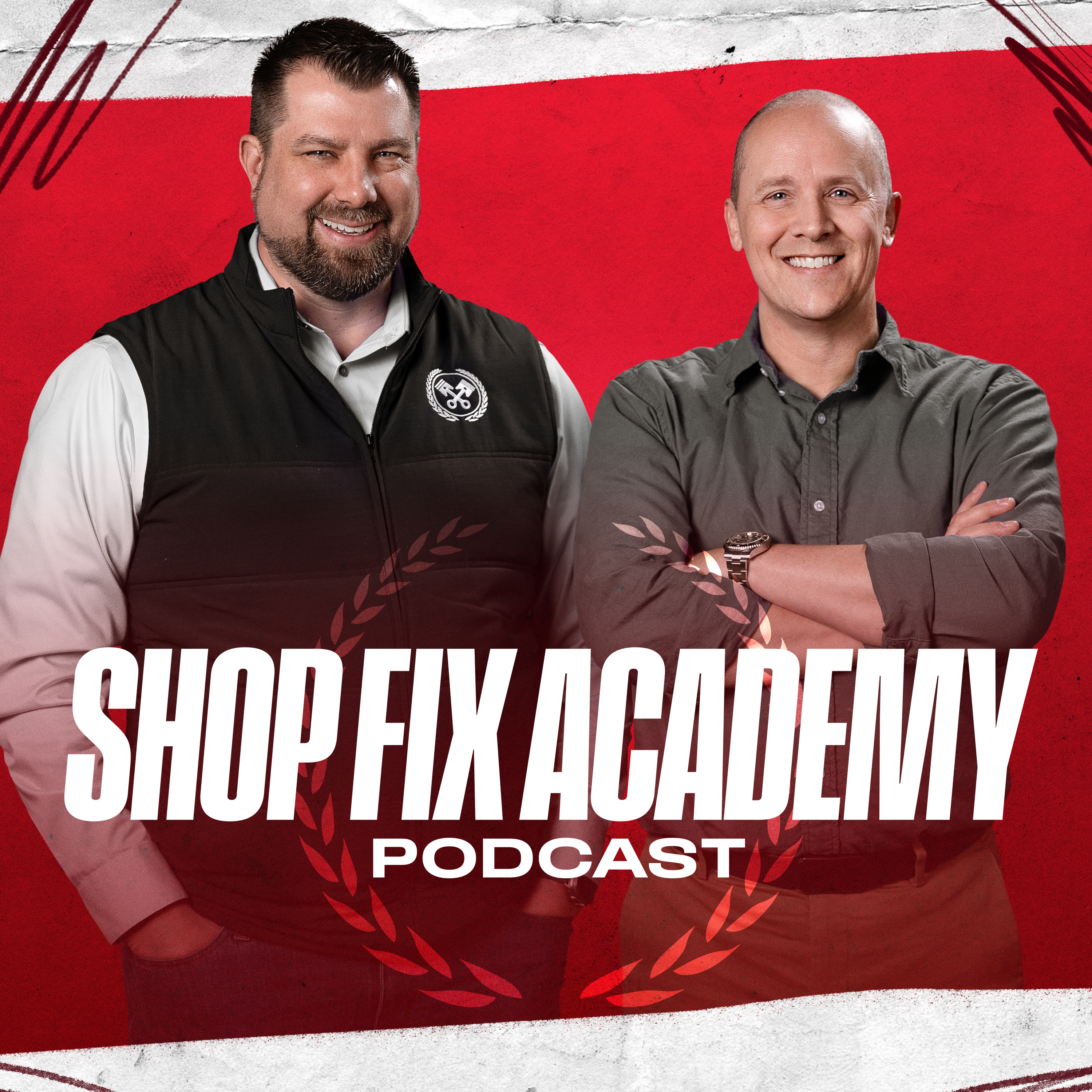
Your Shop Isn't Scaling Past $1M For These 5 Reasons...
The average U.S. auto repair shop profits under $600K, however the average Shop Fix Academy grown shop profits $2.4M. Guy Roberts and Michael “The Berg” Rosenberger cover 5 proven strategies that explain why so many owners still can’t break the $1M ceiling. This is not a car count problem. It is a leadership, people, systems, and capacity problem. Learn whether or not a $1M manager can actually lead a $2M store, why the employees who helped you reach your first million may not be the ones who can help you double profits, and how hiring more bodies can double overhead without moving production. They unpack the “Front of The Step, Back of The Step” model every growing shop owner needs to understand. Stay tuned to get the right people producing at the right level, and scale a $1M shop into a $2M operation without crushing cash flow along the way.Ready to break through your next growth ceiling? Shop Fix PRO gives you 1:1 coaching, proven systems, and a community of experienced shop owners to help you build a stronger, more profitable business.https://shopfixacademy.com/shop-fix-pro?utm_source=sfa-podcast&utm_medium=podcast&utm_campaign=join-pro&utm_content=ctaExplore free replays, practical guides, and proven resources designed to help you improve profitability, strengthen your team, and grow your shop with confidence.https://shopfixacademy.com/replays-and-guides?utm_source=sfa-podcast&utm_medium=podcast&utm_campaign=shopfix-resources&utm_content=ctaThe best shop owners never stop learning. Explore upcoming Shop Fix Academy events and find the training that's right for you and your team.https://shopfixacademy.com/upcoming-events?utm_source=sfa-podcast&utm_medium=podcast&utm_campaign=sfa-events-2026&utm_content=cta
I Traded A Truck To Build A $5M Shop | EP2 | Shop Fix Academy Podcast
Down to $1,100 in savings Coach Stan Andrewski and his wife made an all or nothing decision to buy a plane ticket and save his business. In this episode Stan explains how he went from bartering his tool truck for a failing auto shop, spending seven years working weekends and draining his 401(k), to hitting $5 Million with his business. Learn from his mistakes as he opens up on his first call with Shop Fix founder Aaron Stokes that gutted his ego, the 100-hour-a-week demand he was making of his techs that was quietly killing his shop and the core principles that brought him from being a great technician to a great business owner. Get the structure and clarity your shop has been missing with Shop Fix LITE. https://shopfixacademy.com/shop-fix-lite?utm_source=sfapodcast&utm_medium=podcast&utm_campaign=join-lite&utm_content=cta-textlinkLearn the systems top shop owners use to consistently increase profit and build stronger teams at Shop Hackers Conference. https://shophackersconference.com/?utm_source=sfapodcast&utm_medium=podcast&utm_campaign=shophackers2026&utm_content=cta-textlink Explore Shop Fix Academy Events led by operators who have solved the same profit, leadership, and operational challenges you’re facing now. https://shopfixacademy.com/upcoming-events?utm_source=sfapodcast&utm_medium=podcast&utm_campaign=sfa-events-2026&utm_content=cta-textlink
I Netted $100K In A Month AFTER I Got Stolen From | EP1 | Shop Fix Academy Podcast
His manager stole from him, his entire staff left and he STILL made $100k profit in one month. In this first episode of the Shop Fix Academy podcast, Coach Jay Huh breaks down the one phone call that pushed him to shut down a shop, and how that execution mindset became the engine that grew his $1k a month operation into a six figure machine. Hear the hard conversations, the make or break moments, and the DECISIONS that built him into the auto repair leader he is today.Get the structure and clarity your shop has been missing with Shop Fix LITE. https://shopfixacademy.com/shop-fix-lite?utm_source=sfapodcast&utm_medium=podcast&utm_campaign=join-lite&utm_content=cta-textlinkLearn the systems top shop owners use to consistently increase profit and build stronger teams at Shop Hackers Conference. https://shophackersconference.com/?utm_source=sfapodcast&utm_medium=podcast&utm_campaign=shophackers2026&utm_content=cta-textlinkExplore Shop Fix Academy Events led by operators who have solved the same profit, leadership, and operational challenges you’re facing now. https://shopfixacademy.com/upcoming-events?utm_source=sfapodcast&utm_medium=podcast&utm_campaign=sfa-events-2026&utm_content=cta-textlink