Anyone Can Teach, But Not Everyone Can Educate: Lessons from 30 Years in Automotive Training [RR 1095]
With Todd Fortier
Now playing — Remarkable Results Radio
About this episode
Thanks to our Partners, NAPA Auto Care and NAPA TRACS Watch Full Video Episode Carm Capriotto sits down with Todd Fortier, retiring automotive professor and…
Key takeaways
- —Teaching is different from educating; effective educators must continuously improve their skills.
- —Understanding students' concerns and adapting teaching methods is crucial for effective learning.
- —Engagement and connection with students can significantly enhance their educational experience.
- —Feedback from students, both in-the-moment and through surveys, is vital for improving teaching methods.
- —The automotive industry faces a technician shortage, and educators play a key role in developing future skilled technicians.
Frequently asked
- What does it take to be an effective educator in the automotive industry?
- Being an effective educator requires dedication, continuous improvement, and a commitment to understanding and engaging with students.
- How can educators ensure that their students are learning effectively?
- Educators should pay attention to student engagement, seek feedback, and adapt their teaching methods to meet students' needs.
- What role do educators play in addressing the technician shortage?
- Educators are essential in developing the next generation of skilled technicians by providing quality training and fostering a passion for the automotive field.
▸Full transcript
This is the Automotive Repair Podcast Network. Hey everybody, Carm Capriato, Remarkable Results Radio. Good to have you here. Hey, look, I have a topic here today that I am so excited about. What we're gonna discuss needs to be discussed, and I actually have the right person for you all to meet and hear from. And what we're gonna talk about is Anyone can teach, but being an educator takes work.
I promise you, this is gonna be a great episode. Hey, thank you so much for all your loyal support and for listening. You do know we have this great new app out, the Automotive Repair Podcast Network, the arpn.app. Just put in that URL in your phone, figure out if you're Apple or Android, and I know you know that, and download it. So many great things happen there.
It's for your smartphone, the ultimate listening app. And before we meet Mr. Todd Fortier, here's some messages from our great partners. Hey, you know the technician shortage is real, but NAPA Autocare has a solution at no cost to members. The NAPA Autocare Apprentice Program builds tomorrow's technicians through a 2-year, 9-stage curriculum. Learn more at member.napaautocare.com or talk to your NAPA representative today.
Hey, did you know that NapaTracs has on-site training plus 6 days a week support? It all starts when a local representative meets with you to learn about your business and how you run it. After all, it's your shop, so it's your choice. Let us prove to you that Tracs is the single best shop management system in the business. Find NapaTracs on the web at napatracs.com.
Let me introduce you to Todd Fortier. Hello, Todd. How you doing, Carm? Your resume is incredible. Professor, program coordinator, Illinois Central College. I think you may have said to me, how many years? 30-ish? About 30 years in education. Yeah. I think you know a little bit about it. Learning every day. So, yeah, I love it. So automotive technology, East Peoria, Illinois. The Faculty Forum president, ASE Master L1, L3, MLRC 1, T2, XEV 1 and 2s.
I mean, you're just a brainiac. I don't know about that. It's all about necessity, right? If you're gonna educate, you gotta be educated. I hear you. In October 2025, I was at his school and I gave my Rise of the Specialist keynote to a whole incredible group. Of Illinois educators in the automotive field. And it was great. Thank you for inviting me out there and hanging out with your school.
I love your school. It's great. Just a beautiful campus. Well, look, we're here to talk about anyone can teach, but being an educator takes work. And Todd is more passionate about this than anyone I've talked to in a long time. And everyone knows I'm on an advisory panel and I so firmly believe that the word training needs to leave our language and the term educator needs to come in there.
But Todd, let me be facetious for a moment. Anyone can teach, am I right? Yes, anyone can teach, but to be an excellent educator, it's going to take some work. It's going to take some time and some commitment. I was asked recently, you know, how do I get to be you? Which, first of all, I don't consider myself anything special. I have just tried to get better at what I do every single time I step in front of an audience.
Now, how do you get to where I'm at is you train yourself to teach just as much as you trained yourself to work technically. You have to listen to the people around you and observe. You have to be a perpetual student of education. And as I've always said, and it's one of my favorite words, and it was taught to me by a mentor, pay attention to everything that's going on around you.
Because in the things that you just said to this wonderful young class of future specialists, did they really get what the hell I said? And wait a minute. Oh, oh, look at all those crystal eyes. Hmm. Maybe what I did didn't work. I lived in that fear forever. I mean, I still do. I want to make sure when I get done, did the message get there?
Did the learning happen? It's one thing to present, but it's another thing to make sure that the learner Got it. I call that knowledge transfer. It's been something that I've been writing about and saying, and you know, I, again, I have, I probably have a dozen specialty words that I love and people, I think my listeners are getting a little sick and tired of me always interjecting them.
But if they could buy in and I can change the world, then good for me. Okay. I want to be an educator. I love to teach, but I also, ooh, teaching and educating, two different things. What's it gonna take for me, for all the chairmans of all the community colleges that are around the country, of all the great trainers that are involved in our big companies that are out there?
There's probably 1,000 training classes going on today in our industry throughout our country, maybe even North America. And I know one of the things that Todd is working on is how to solve this problem, which is why we've connected. We've been chatting a while, and this man wants to retire and go out and become an educator. Yeah, 54 days, and that's it for being called Professor Fortier after all these years.
People ask me, you know, what are you going to do in retirement? And honestly, I didn't have a good answer. I knew I was going to help the industry, and it was through the association that you came and talked to. A good friend of mine, Chris Reynolds, pushed me to get in front of educators and challenge them to be better. You learn from your students.
After-class surveys are great. They give you some feedback. But in-the-moment survey of the room is extremely valuable feedback. If you look and everybody's glossed over, everyone's on their phone, they're doing their things. I mean, I get it. I'm a busy person too. I've got classes going on when I'm at Vision. I've got classes going on and I got pulled out of Tracy's seminar this last last year because of a union issue.
And you are so distracted, it's difficult to get that information. And so the easier we can make it for them to get the information— I always say I didn't know anything about education until my students taught. I love that. It's the thing that you can get from every student that you ever taught. Listen to the conversations before and after class or before and after your seminar or When I say educator, lead person in the shop, the person you're standing next to, you're always teaching.
My experience in industry was wonderful because I had a lot of part-time employees were full-time instructors for the Air Force because we were right outside the main gate. And so when I asked questions, I didn't get, "Leave me alone, I'm busy." I got a physics lesson on a napkin about air conditioning because I asked the gentleman what he was doing on a car.
You know, that was invaluable. And so that type of education in our industry goes leaps and bounds because it sparks that interest. You spark a learner and you light a fire in them. I didn't come to education because that's where I went to school. I mean, I was a technician, moved to Northern Wisconsin and got the opportunity to teach in Champaign. So I turned around 2 weeks later and moved back.
And that first class I was teaching, And I saw a face light up and the light bulb moment happened. And I've been chasing that feeling for the last 30 years. That was the day. That was the day. It was the thing that sparked my addiction to teaching people. And that's what it is because I had a dear friend that sat in on my lecture.
He's got about 15 years between high school and college. And he's like, you know, you did some great things. You hit every person in the room. You got everybody engaged in at least some part of what you were talking about. How do you do that? I said, well, I taught at the school that he does in my early part of my career.
So I called out the class number of my first class I taught. I said, there's a VHS tape where I recorded myself in the first few months of my career. I said, I've watched it one time. It's never come out of the sleeve since then because I don't want to be that person ever again. That person was horrible. It sparked in me like, I'm getting paid to do a job.
Why am I doing it so horribly? Right? And so I had the technical background like many of us do in the industry. You know, great presenters at VISION and ASTA and all these other places, but they have the technical skills, but the presentation, the educator mindset's just not there yet. It can be there. Even people who say, "I hate to be in front of the room," if they're passionate about something, being in front of the room is the least of their worries.
They've got it down. You've got the 3 C's of teaching students. Talk to me about that. Well, this was born out of conversations that I'd heard through Illinois College Automotive Instructors Association, right? We have high school and college instructors, and every once in a while you have somebody in the room says, I can't do that with my students. You know, my students aren't smart enough, or they just use me as a dumping ground.
This is the worst, you know, class I've ever seen. And I understand a little bit the frustration because there is a lot of politics in education. But the 3 C's is— we diagnose cars using the 3 C's, you know, concern, cause, correction. What's the concern with that student? Do we ever take the customer's word for what's wrong with the car, or do we actually verify the concern?
So if you're telling me that this person can't learn and they're dumped in my class because they're not a learner, verify that. Don't give up on that student from day one. So let's find out. And then once we find out What the problem is, let's diagnose the root cause. There's some real simple things. Sometimes they're bored. Most of the time you'll find people that go into skilled trades or technical education, they're bored in a traditional classroom.
And so they're going to be a problem. But when do people become problems? When they have free time or boredom. Well, guess what? In the auto shop, in the high school, you know, industrial arts or anywhere, There's no free time. Your hands are busy. You're busy. I've had some of my best students, best graduates, were some of the worst students coming out of high school because they weren't challenged.
Ah, you've thrown so many great things at me, Todd. And what I could start to think about as I roll this through— know your student. If you stood in front of a class of 20 young people You could probably say to me, you know, they don't talk a lot. You know, they can wander. I gotta pull that cell phone away. And you can go around and what you're doing in your mind and/or physically by where you place these people and how you speak to them, lifting up their ability to receive the education that you're giving them, because you've gotta speak their language to them.
You meet them where they are. You solve their issues. So there's your— you find the cause and you correct it. You connect with every one of those students. And it's that sense of caring or, you know, simply just saying hello in the morning. You walk in 10 minutes before class starts, as they walk in or as they're sitting there, you have those small conversations.
It's the connection. And you said it earlier, the buy-in. If you get the students to buy into what you're selling, which is their education, their future, then it's easy after that. Can you imagine? My God, you hit me really hard with this. And in fact, I, there's a lot of great teachers, educators, trainers in our industry that greet people at the doors.
They're coming into their classroom and that basically says, I know you, I got you. I got eye contact. You're gonna pay attention to my class. And it's not— they're up in front of the stage fooling with the projector. Everybody comes in, there's 100 people in the room. You've visioned, you've seen that many people, right? There's no connection. It's just, as Anthony Williams used to say, the sage on the stage.
Yeah, if you can hit every person in that room with a glance, a nod, eye contact, and it doesn't matter if there's 100 or 1,000. Now, if you— I mean, obviously I've never lectured to a stadium, But large rooms like Vision, I've seen people make it through that room. They've started in the front and ended to the back, and they've made it through every person because it's really tough not to pay attention when something's zooming around, bouncing around like a ping pong ball.
They, uh, they don't have a choice. Todd, does the student— do they walk in and say, engage me or not? I mean, you know what I'm saying? You're laughing. Did I hit a nerve? No, it is funny because you would think, right, there's money paid out, there's registration, there's a lot of hoops you got to go through to sit in college class.
And a lot of times they go in there and it's like, you're bothering me, this is my time. The old Fast Times at Ridgemont High, right? You know, don't bother me, this is my time, Mr. Hand. You've got to get them to understand the value of what happens. First thing I always try to do is show that I'm not perfect. I mean, the first thing I admit to every single class, because I think it's important, is I am horrible with names.
I am the worst person. Even if I know your name and I've called you by name 1,000 times, there's going to be that moment in time where it's gone. I'm staring you in the face and I have no idea what your name is. I could tell you everything about your life, where you've been, who you like to hang around with, what's your favorite subject, but I just cannot remember your name.
So I tell them, don't get offended. You guys have one name to learn. I have 50. And so if I know it already, it may be not a good thing. So we'll see over time. I'll learn your name and we'll get that down and we'll go past that shortcoming. And it shows that you're human and you're not just a person out there, you know, that's much wiser and much smarter.
And I also admit to them that I'll never know everything there is to know about automotive. That is not even possible. Hey, you know, it's no secret the automotive industry is facing a technician shortage, but NAPA Autocare has stepped up with a powerful solution, the NAPA Autocare Apprentice program, and the best part, it's completely free for members. This program was pioneered by shop owners Pete McNeil and Master Technician Jake Sorenson at McNeil's Auto Care in Sandy, Utah.
They recognized that waiting for skilled technicians to appear wasn't an option, so they built a program to grow their own by recruiting motivated individuals with the right passion and attitude and providing them with structured training. They proved that apprentices could become the next generation of skilled certified technicians. The program features a comprehensive 9-stage curriculum with in-depth classroom videos, instructor-led NAPA Autotech classes, web-based courses, and hands-on training with a mentor.
Apprentices move at their own pace, typically completing the program within 2 years. Graduates earn 4 ASE certifications: the G1, A4, A5, and air conditioning, and are officially registered with the Department of Labor as journeyworkers automotive technicians. And here's the business benefit: as apprentices gain skills, they generate billable hours, often boosting shop profits as early as Stage 5. Plus, NAPA now offers a new apprentice toolkit developed with Carlyle Tools at an exclusive price, helping break down one of the biggest barriers for new technicians: the cost of tools.
Together, NAPA Autocare and your shop can tackle the technician shortage head-on. Start now, grow your own talent, and build your bench for the future. Visit member.nappaautocare.com or contact your NAPA representative today and get started with your apprentice program. Let's face it, your shop management system is the single most important tool in your shop, period. NAPA Tracks was built from the ground up to make your business more profitable and efficient.
We provide an extensive set of tools to increase and track profitability in real time. NapaTrax offers the industry's best post-sale support, hands down, and we train your people on-site. Yep, on-site. And we offer remote refresher training 10 times a week, and customer support is open 6 days a week. Give us a call, visit the website, or join our Facebook community today to learn more.
We'll prove to you that Trax is the single best shop management system in the business. NapaTracs is always customized and tailored for you, whether you're a one-man shop or a large multi-bay or multi-location company. After all, it's your shop, so it's your choice. Visit us on the web at napatracs.com. You wrote to me, Todd, and you said we have to have someone to upskill our people.
Explain to me in your heart what upskill means. Here's what I've said for a long time. It doesn't matter what you score on a test. It doesn't matter how many days of perfect attendance you had. What matters is when you hit the shop floor, can you perform? Can you do the job? And we get this mutual respect going with our students. And I explained to them, I said, I don't care if you got a C, an A, or you failed my class.
Don't make me look bad when you get in the shop. They're not calling the college and saying, hey, you know, president of the college, this student doesn't know how to change a tire. They're gonna call me and say, hey Todd, what are you doing over there? Wait a minute. You wouldn't let a young person leave if they didn't know that stuff. You're saying this tongue in cheek, Todd, because you're not gonna let anybody go out there unless they've got a C in your class, right?
Yeah. They don't get our stamp of approval on 'em, right? But here's what happens in our industry, Carm, and you've seen this. We don't have technicians. I mean, in our area, we're interviewing people we wouldn't have talked to 5 years ago, hiring people that we probably would've never hired to fill spots. And, and it's unfortunate, but that's just the reality of it.
So we have had over a 30-year career, people leave after 1 or 2 classes because the grass is always greener on the other side. They got enough skill to get a job, but that's what they got is a job. If they stuck it out through the whole thing, they would get a career. And so I do get some issues back, you know, hey, this person says they went through their program and they're not very good.
So I had to originally go out to industry and meet those people and make sure that my name was out there. So then when somebody applied with our credential, they called for a reference. And we built those relationships. It's surprising what people will put down on paper that is not actually true. Oh, really? Yeah. I mean, the resumes aren't quite 100%. I can remember I started an internship program back in 2001, and there was necessity for it.
And I kept getting a lot of shops saying, "I'd never hire a student from your college. We had such a horrible experience." And I finally found out the person that everybody was talking about, I could walk into a shop and I give the name. And he went to one class for half the semester, but put down on every job application and resume that he had graduated from our college.
And so I had to build that relationship or network so that people knew, hey, call me, get the reference. I tell all my students, put me down as a reference. That way I can give it to you, good and bad, because we want to make sure that we're bettering the industry and not just putting people into it. I think it's a great thing to have an individual leave, the good and the bad, meaning if you didn't do good, please don't put me down.
If somebody's got enough common sense. Did you ever try to convince a student to stay who wanted to leave because you really saw potential? Always. Attrition is something that we've been working on for my entire career. I've got a student now, is a working technician, tons of potential, got natural ability, really critical thinker. Amazing student, but only hitting about 25 or 30% attendance.
And because there's a few dollars coming his way at the job he's at now, but there's an amazing career in his future. And we've, we've had these talks and we've turned him around quite a bit from that 20 to 30%. And I think he's in one of his EV classes now. He's about 80% attendance, which is— we require attendance. That's part of their work ethic.
And It's trying to turn that around. Even the ones that have stopped out come back. As an institution and as a program, reach out to those people all the time. Come on back, get back into the sequence, and we'll get you through to the end. Do you find that the shops that hired these individuals who aren't attending school, even though they've paid for it and they've done so many days and hours, do you have them to support you?
Do you sit down with an owner and says, look, This individual is going to be so much better. If you don't have a personal apprentice program here in your shop, he's got to stay with us, right? What we've done because of the need in the industry is we've revamped our program, as you know, and we put in the maintenance specialist certificate, which is one semester.
And so now they don't have to steal the student to have them work on the Lubrac. They're doing an internship part-time as they go through our program. We work together with our advisory committee and our local shops to see what is your need. Just like any place in the world, the good ones are going to get it and the ones that aren't doing it correctly are just not going to get it, but they won't be around very long.
Our industry is not one where you can burn through employees. I mean, it just doesn't work. So I think I heard you say earlier, and this is going on at our local college that I'm on the advisory board, we've got a lot more people interested in coming into if you will, skilled careers, and automotive being one of them. Doesn't mean that they're naturally gifted to want to do this, but there's a lot more that we can pick from.
And, and is that because there's so much discussion on the value and the power of skilled careers? You can make a lot of money if you put your heart in it. Yeah. Salaries have come way up and some of the skilled trades, they've always been there. Respect, I think, is a big thing. With young people today, and I don't ever like to qualify by age, I hate when people say this generation or that generation, you know, it's individuals, it's a bunch of people.
But what we're finding by and large, it's quality of life over dollars. It's the environment they're working in and the respect that they're given by their employer and by the industry that is starting to drive people into it. And we're changing some mindsets. My own son didn't go to college. He decided to be an operating engineer. And I'm 100% fine with that.
Now, my daughter, she went to college, and our youngest son's at the University of Illinois. They chose a traditional path. But a high school counselor called me one day and said he wants to drop his transfer-level math class. And I said, "Okay, well, what's he need for graduation?" And they said, "Well, he's already met graduation requirements, but he'll need it for college next year."
I said, "Well, good thing he's not going, so maybe he should just drop that class." And the issue was, and this is what happens in a lot of areas, and this is not picking on this institution, but their high school was set up to where the career and technical ed was at one end of the high school and all the AP and higher-level academic courses were at the other.
And the reason my son didn't want to take that class is because he was running a quarter mile during passing periods to and from that class. And he said, "I don't need this. Why am I running so far?" You know, and so things are starting to change. We're seeing more people in CTE, career and technical education. But the one thing that's not changing is a shortage of qualified instructors to teach in the areas of career and technical education.
Yes. And you just— again, a perfect time for me to challenge this thing when we said in the beginning anyone can teach, but being an educator takes work. I know what you'd love to do post-retirement is to figure out how you can support all of our technical colleges out there. Listen, I know a lot of people that are teaching in college today that have come from the ranks.
They've either retired or they says, you know what, I just want to give, even if it's for 3, even if it's part-time, we call that in school adjunct educator. And even if it's 4, 10 hours a week, because in my heart I want to do this, even though you've got all the skills and the knowledge, all the basic electric and everything that's necessary and all the neat new cool stuff today, doesn't mean you can transfer knowledge.
It doesn't mean. And so what's your vision of how this could possibly work someday? Is it a boot camp? Is it online education to help these chairmen get their people up to speed? Yeah, I think it's going to take all of it. It's going to take a network of people that are willing to communicate with each other. Best practices is always a good start, right?
We could do the seminars, we can do the vision, we can do the individual trainings, we can do the online. It's getting over the stigma as well of saying, "Hey, we need to teach you how to teach," or, "We need to teach you, you know, how to recognize your student, how to see where they're at and how to give them a sense of belonging," or, "What are Maslow's, you know, hierarchy of needs?"
Because a floor technician that makes a transition into education like I did, those are all foreign concepts. And then, you know, a dean of a department somewhere says, "Hey, you need to come to this training on how to hold hands and make people feel better." We as an industry, we just don't embrace that like we should. And so, we need to deliver that to those educators in a respectful and meaningful way and not insult them by treating them any different.
Know your student, understand their classroom and what they need, and deliver it to them. Is it the people skills, empathy, self-awareness that's really critical to feel that transfer, to know that student? You don't have to have empathy. Empathy helps, certainly, but every facet can be useful. Even analytical thinkers can look at it from a data standpoint. I mean, there's millions of hours of research that's went into psychology on nonverbal communication.
And so even a critical thinker can look and say, "Hey, that person's got their arms crossed. It's either cold in here." or they're not open to listening to me. Body language. Yes. Right. And an empathetic person can say, maybe there's something going on in that person's life that has them angry, and it's not what I'm doing up here. I admitted to a room full of educators, in 30 years, there's only been 2 students I have not been able to reach and teach.
Everybody else I have, and that's a lot of people. And so it's certainly possible. Some are more challenging than others. And Honestly, coming from the diagnostic side of automotive, that's more exciting than fixing any DTC that I ever did because now I have a bigger challenge and it's got more variables. There's no physics behind it that are going to tell me an absolute of how I'm going to reach this person.
You know, with enough money and time, you can fix a car. You really got to work to get to a person. To get through to them. Yeah. One of the things that we just recently did an episode with Rena Rennerbaum and Rachel Spencer on bringing personal life into work. And years and years ago, Todd, people would say, you leave that at the door.
We got a business to run. But today there's so much going on in our worlds. There's so many things going on with family and sickness and illness and chores and, you know, all the activities. I can't even imagine when we raised our kids, it's 10 times worse. But to your point, as that student comes in, I have a choice. I'm either gonna go here and make money or come here to be a— no, I'm gonna go there and make money.
And, or we didn't have, we got some problems at home. I'm thinking of getting married, or I am married and there's a problem, or I have a parent who just was diagnosed with something really bad. There's so much baggage in our worlds today that really challenges an educator. It truly does. And everything's magnified. You know, your life's not just your own. It's social media, it's the internet, it's— things happen milliseconds today.
But you have to recognize those, acknowledge them, and see what you can do to make the few hours you have with that person matter in the moment. And sometimes the best thing you can do is say, "Hey, today's not the day. You've got a lot going on. I think you need to take some time for yourself. And if you need something from me, get ahold of me.
But sitting in this room for the next 5 hours is not going to help you. I can see that the steam's coming out of your ears. You're not going to listen. You're not going to get what we're saying. We'll make it up later. You go take care of whatever you need to take care of, if you can, or we'll get you the services that you need."
That 5-minute conversation, and that's communication. I teach that to my students. It's not a soft skill, it's a necessary skill. If I'm not going to make it to work, I need to communicate that, right? If I'm having a bad day, I need to let people know. You know, what's wrong with telling people, hey, you know what, I didn't sleep well last night, so I'm a little grumpy.
So I'm going to apologize right now. I'm going to do my best to not let it come out, but here's where I'm at. I love it. That provides grace. I can see you get in front of the room and say, listen, I didn't sleep good last night. I'm a little grumpy. And if I'm not looking you in the eye, there's a reason for it.
I've finished a lecture and apologized. When my kids were little, I always joked, my oldest son, I think he slept an hour for the first 10 years of his life. And so there was a day that I truly remember I was exhausted and I delivered a lecture and I barely moved. The material was coming out in monotone. It was horrible. And we got to the end, the clock struck the end of class.
And I said, I apologize. I said, I'm gonna go home and make sure that this doesn't happen next time. We're going to have a better class. I said, I hope you guys got what you needed, but I was just not on my game today. Wow. So you were vulnerable and they probably respected you way big time for that. Yeah, it was kind of an interesting upbringing.
I, in high school, I worked in a restaurant and the owner of the restaurant was friends with a lot of the high school teachers. And so I saw them out socially, not just in the classroom. As a young person, you have this idea that every educator goes home and reads books and and studies in the evening, right? They don't have any kind of life outside of the classroom, and that's not true.
And so you give them a glimpse of that, especially now when I want my students to be future educators. I mean, they, they need to know what it's all about. Great aspiration for you looking at all of them. They're out there. I've got a graduate teaching at a local high school. I've got actually one of our GM program students is going to take my position when I retire.
We truly are growing our own. That's industry-wide because that's where they got to come from. You can't get into education at this time for the profit. It's not a money game. The quality of life is certainly there because of the hours that you work and other things that go with it. But in career and technical education, we are educating people that will walk out the door and double our salary day one.
I've sat in my cubicle in the early part of my career, had a graduate come back all excited and said, "Hey, I got this job. I'm going to be doing this and I'm going to someplace exotic and I'm going to make $150,000 my first year." And I'm going, "That is awesome. I really think that's great. We've done awesome things for you and you keep it up."
And then you look at your paycheck and go, "Well, maybe I should find out where he got the job at." That's a hill that we're really struggling to overcome in, at least in the community college market. You're just so right. This was an eye-opening episode to my listener. I hope this affected you in a, in a bunch of different ways. And that is to get involved with continuing education, but stop and realize that we need to learn as an industry that it takes more to being an educator.
And yeah, you could have a great class, all kind of great slides. Wonderful case studies, but it doesn't mean that you got through. And, uh, you know, I took a whole bunch of great notes. You know, you've gotta care, you gotta confirm and clarify, and don't look at the VHS tape from 25 years ago and say, look at how far I've come.
You don't even wanna look at it. I mentioned to you not too long ago, I said, you know, I'm the imposter educator because I, imposter syndrome drove me my entire career and drives me today. You know, if you always have that thought in the back of your mind, I could have done better. I am not doing it as good as I could.
I'm not making the wonderful presentation, or I didn't have— today wasn't as good as yesterday, and tomorrow has got to be better. Or, you know, early on in my career, I was waiting for the day when they walked in and said, hey, you know, this just isn't for you. Your people aren't getting it. And it's like, and so you start to take it personal when students aren't learning, and you try to find new and creative ways to get them to learn.
Well, look, I'm putting people in touch with Todd that I know in the industry from schooling and, uh, in other areas. I'm connecting them. I want to keep involved into what you're doing. So stay in touch. Let's have you back when you've got something churning and rolling, because I want to be able to share this with our industry because there's an awful lot of people that I know that have been on this show that are involved in education.
And I think, you know, once you listen to this, realizing that The Todd and Carm Show is going to keep you involved into what the hell's going on here as we work, as you work your butt off teaching people that are educators and that are trainers in our industry to be great educators. Todd Fortier, professor, program coordinator, Illinois Central College, who's retiring soon, and he's got all kinds of great stuff planned.
Glad to know you. Thanks for coming on the show, man. Thanks for being on board to listen and learn from the premier automotive repair business podcast, Remarkable Results Radio. Get your episodic education on the ARPN listing app at automotiverepairpodcastnetwork.com. Also enjoy the podcast on our Carm Capriato YouTube channel. Carm is all for advancing the professional automotive service industry. Until next time.
More from Remarkable Results Radio
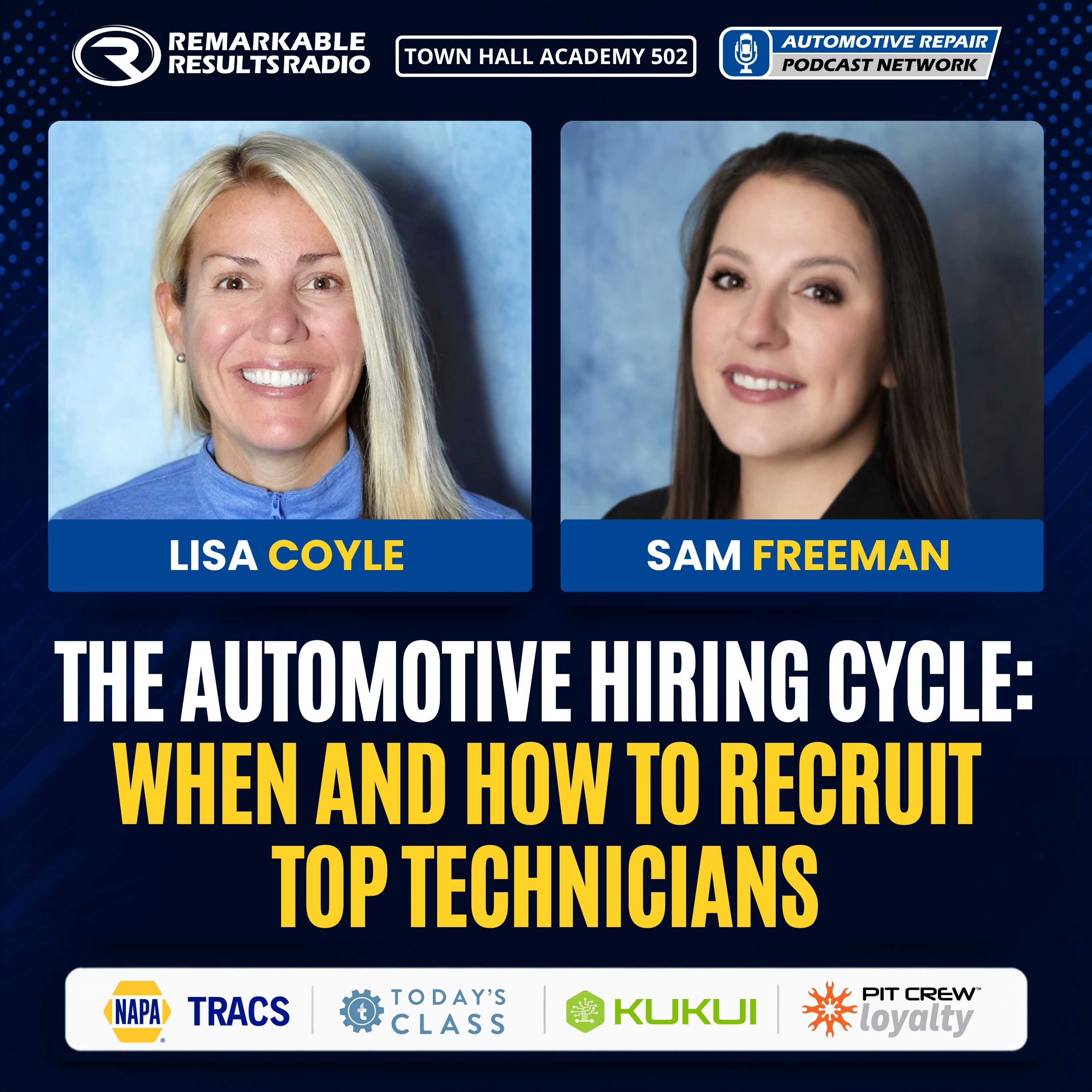
The Automotive Hiring Cycle: When and How to Recruit Top Technicians [THA 502]
Thanks to our Partners: NAPA TRACS, Today's Class, KUKUI, and Pit Crew Loyalty Watch Full Video Episode *]:pointer-events-auto scroll-mt-[calc(var(--header-height)+min(200px,max(70px,20svh)))]" dir="auto" data-turn-id="request-WEB:8e59eec7-a235-4fa3-a072-956fea3fe478-7" data-testid="conversation-turn-4" data-scroll-anchor="false" data-turn="assistant"> *]:pointer-events-auto scroll-mt-[calc(var(--header-height)+min(200px,max(70px,20svh)))]" dir="auto" data-turn-id="request-WEB:49a777bf-d263-4496-bf0b-2eb3a46ac96a-11" data-testid="conversation-turn-24" data-scroll-anchor="false" data-turn="assistant"> What if the best time to recruit your next technician is when your shop isn't looking to hire? Lisa Coyle, CEO of Promotive, and Sam Freeman, Partner Manager at Promotive, reveal why automotive recruiting has a cycle, and why understanding when technicians are looking can give shop owners a significant advantage. Lisa and Sam explain how recruiting data, market timing, candidate behavior, and consistent relationship-building can create a much more proactive hiring strategy. Download the 6 Month Promotive Hiring Insights Report for FREE: https://info.gopromotive.com/RRR What You'll Learn Why technician recruiting has a cycle and why timing matters.Why “post and pray” recruiting puts your shop at a disadvantage.Why finding a top technician can take 60 to 70 days.How local market data can improve your job postings.Why you should recruit even when you don't have an opening.What may really be behind candidate ghosting.Why a counter-offer doesn't have to end the relationship.How consistent communication can prevent first-day no-shows.Why complicated hiring processes can cost you great candidates.How the F.O.R.D. method can make interviews more personal and effective. Great recruiting is about timing, data, and relationships. Don't wait for an empty bay to discover you need a recruiting strategy. Understand when technicians are most likely to consider a move, know what candidates in your market are searching for, simplify your hiring process, and stay connected with good people even when the timing isn't right. Your next great technician may not be looking when you're ready to hire. The opportunity is to build the relationship when they're ready to listen. Promotive has over 40 years of recruiting and automotive experience. If you need qualified technicians and service advisors and want to offload the heavy lifting, visit https://gopromotive.com/ Meet Paige: The Auto Repair Industry’s First 24/7 AI Recruiter [THA 481]: https://remarkableresults.biz/remarkable-results-radio-podcast/a481/ Lisa Coyle, CEO of Promotive Sam Freeman, Partner Manager at Promotive NAPA TRACS will move your shop into the SMS fast lane with onsite training, six days a week of support, and local representation. http://napatracs.com/ Optimize training with Today's Class: In just 5 minutes daily, boost knowledge retention and improve team performance. https://www.todaysclass.com/ Stop juggling multiple marketing tools. KUKUI’s integrated platform delivers 4x better website conversions, automated follow-up, and real-time ROI tracking. https://www.kukui.com/ You’re probably tired of chasing new customers who never return. Pit Crew Loyalty ends the one-and-done cycle, turning first visits into lasting, reliable revenue at https://www.pitcrewloyalty.com/ Connect with the Podcast: Download and Listen on Our Mobile App: https://automotiverepairpodcastnetwork.com/app/Visit the Website:https://remarkableresults.biz/Subscribe on YouTube:https://www.youtube.com/carmcapriottoFollow on Facebook:https://www.facebook.com/RemarkableResultsRadioPodcast/Follow on LinkedIn:https://www.linkedin.com/in/carmcapriotto/Follow on Instagram:https://www.instagram.com/remarkableresultsradiopodcast/Join Our Virtual Toastmasters Club:https://remarkableresults.biz/toastmastersJoin Our Private Facebook Community:https://www.facebook.com/groups/1734687266778976Join our Insider List:https://remarkableresults.biz/insiderAll books mentioned on our podcasts:https://remarkableresults.biz/booksOur Classroom page for personal or team learning:https://remarkableresults.biz/classroomBuy Me a Coffee:https://www.buymeacoffee.com/carmSpecial episode collections:https://remarkableresults.biz/collections The Automotive Repair Podcast Network: https://automotiverepairpodcastnetwork.com/ Remarkable Results Radio Podcastwith Carm Capriotto:https://remarkableresults.biz/<a href="https://mattfanslow.captivate.fm/" target="_blank"...
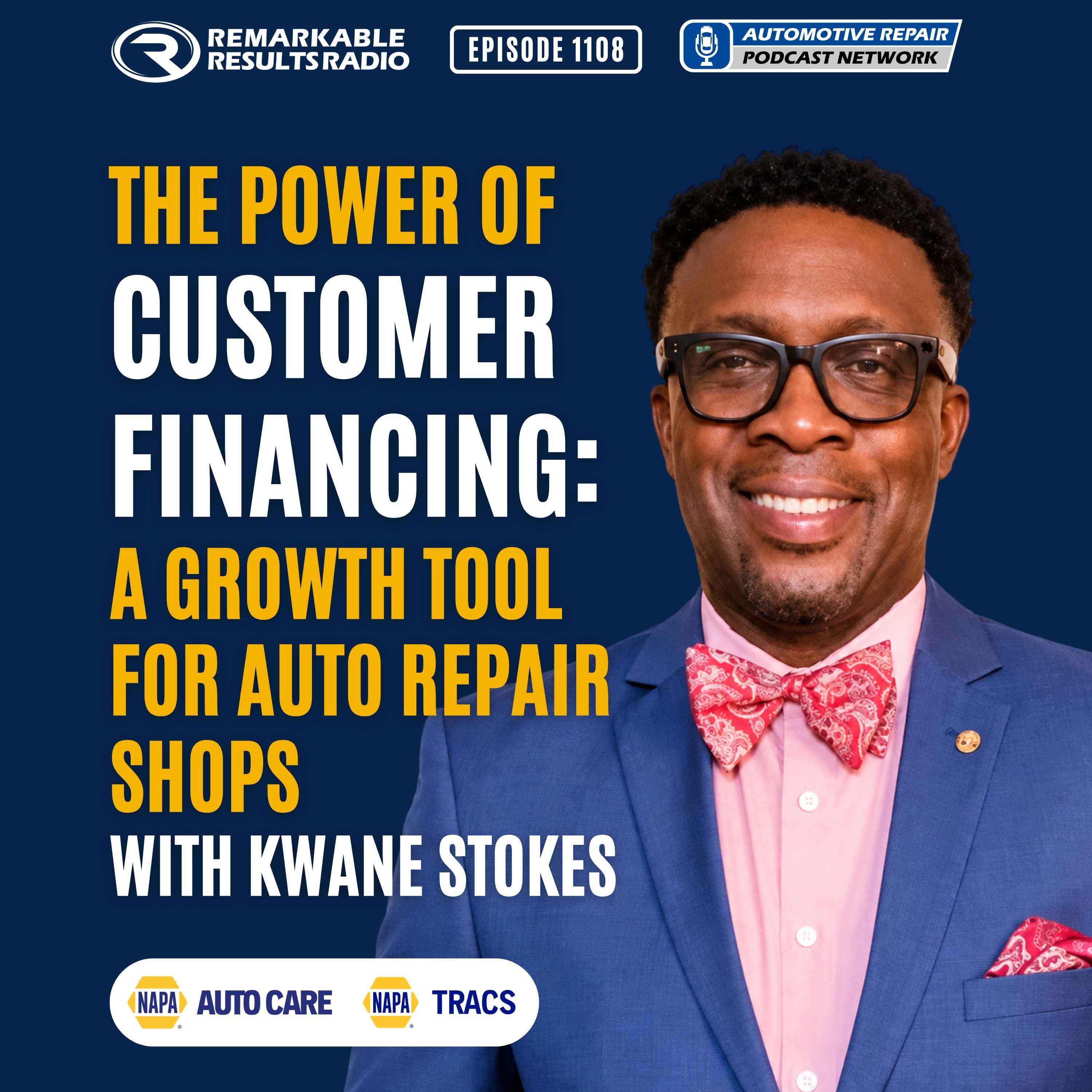
The Power of Financing: A Growth Tool for Auto Repair Shops [RR 1108]
Thanks to our Partners, NAPA Auto Care and NAPA TRACS Watch Full Video Episode What happens when a customer needs a $2,000 repair but doesn’t have the cash available today? That moment can determine whether the vehicle gets repaired, the customer delays a critical service, or they take their business somewhere else. For automotive shops, offering flexible payment options can be more than a convenience. It can be a powerful tool for helping customers say yes to the work their vehicles need. Kwane Stokes, Assistant Vice President and Relationship Manager in the automotive division at Synchrony, explains how the program can help shops remove financial barriers, increase repair opportunities, and create another reason for customers to return. Kwane also addresses why many shops still aren't offering financing and how the biggest obstacle may simply be the assumptions advisors make about a customer's ability or willingness to pay. What You'll Learn Why financing should be presented as a payment option, not something an advisor decides a customer needs.How the program's average first and repeat purchase amounts demonstrate the potential impact on average repair order (ARO).Why assuming a customer can't qualify for credit can cause shops to lose needed repair work.How monthly promotional offers can give shops another reason to communicate with their customers.How advisor incentives and simple training can encourage more consistent presentation of financing.What the upcoming "waterfall" financing model could mean for customers who aren't approved through the primary credit program. The biggest opportunity may not be finding more customers. It may be giving the customers already sitting at your counter more ways to say yes. The key is removing the assumption that you know what a customer can or cannot afford. Present the options, explain them clearly, and let the customer decide what works for their financial situation. For a shop, financing isn't simply about collecting payment. It's another tool for helping customers get the repairs they need while protecting the relationship and keeping the work in your shop. Kwane Stokes, AVP, Relationship Manager, Auto Network, Synchrony Learn more about the benefits of being part of the NAPA family by visiting https://www.napaonline.com/en/auto-care NAPA TRACS will move your shop into the SMS fast lane with on-site training and six days a week of support: http://napatracs.com/ Connect with the Podcast: Download Our Mobile App:https://automotiverepairpodcastnetwork.com/app/Website:https://remarkableresults.biz/YouTube:https://www.youtube.com/carmcapriottoFacebook:https://www.facebook.com/RemarkableResultsRadioPodcast/LinkedIn:https://www.linkedin.com/in/carmcapriotto/Instagram:https://www.instagram.com/remarkableresultsradiopodcast/Join Our Virtual Toastmasters Club:https://remarkableresults.biz/toastmastersJoin Our Private Facebook Community:https://www.facebook.com/groups/1734687266778976Join our Insider List:https://remarkableresults.biz/insiderBooks Page:https://remarkableresults.biz/booksOur Classroom Page:https://remarkableresults.biz/classroomEpisode Collections:https://remarkableresults.biz/collectionsBuy Me a Coffee:https://www.buymeacoffee.com/carm The Automotive Repair Podcast Network: https://automotiverepairpodcastnetwork.com/ Remarkable Results Radio Podcastwith Carm Capriotto:https://remarkableresults.biz/Automotive Field TheorywithMatt Fanslow:https://mattfanslow.captivate.fm/Business by the NumberswithHunt Demarest: https://huntdemarest.captivate.fm/The Auto Repair Marketing Podcastwith Brian and Kim Walker: https://autorepairmarketing.captivate.fm/The Weekly Blitzwith Chris Cotton: https://chriscotton.captivate.fm/Speak Up! Effective Communicationwith Craig O'Neill: https://craigoneill.captivate.fm

Daily Habits That Build a Stronger Auto Repair Shop Culture [THA 501]
Thanks to our Partners: NAPA TRACS, Today's Class, KUKUI, and Pit Crew Loyalty Watch Full Video Episode *]:pointer-events-auto scroll-mt-[calc(var(--header-height)+min(200px,max(70px,20svh)))]" dir="auto" data-turn-id="request-WEB:8e59eec7-a235-4fa3-a072-956fea3fe478-7" data-testid="conversation-turn-4" data-scroll-anchor="false" data-turn="assistant"> *]:pointer-events-auto scroll-mt-[calc(var(--header-height)+min(200px,max(70px,20svh)))]" dir="auto" data-turn-id="request-WEB:49a777bf-d263-4496-bf0b-2eb3a46ac96a-11" data-testid="conversation-turn-24" data-scroll-anchor="false" data-turn="assistant"> What does a strong shop culture look like when you’re the people living it every day? Bree Wismer, Service Advisor and Frontline Culture Leader, and Trevor Hinds, Operations Manager and Dispatcher at Empower Automotive in Traverse City, Michigan, take us inside the daily habits and communication practices that keep their team aligned, productive, and focused on the customer. Rather than approaching culture from the owner's perspective, Bri and Trevor share what happens on the front lines. They explain how Empower Automotive breaks down the traditional divide between the front counter and the bays, keeps everyone on the "same bus," and creates a workplace where every person understands their role, respects the team around them, and contributes to the same goal. What You'll Learn Why the front counter and specialists must operate as one team.How daily huddles and short training sessions keep the team aligned.Why the 1:00 PM check-in can prevent late-day customer surprises.Why a "no-update" update can be one of the most valuable customer communications.How to respond when customers arrive with AI-generated or parts-store diagnoses.How respect, communication, and accountability create confident professionalism. Building a world-class shop culture doesn’t require a massive budget or a complicated organizational overhaul. By committing to these small, consistent actions, you can transform your shop from a high-stress environment into a thriving, unified business that both your team and your customers enjoy. Bree Wismer, Service Advisor, Frontline Culture Leader, Empower Automotive, Traverse City, MI Trevor Hinds, Operations Manager, Dispatcher, Workflow and Culture, Empower Automotive, Traverse City, MI NAPA TRACS will move your shop into the SMS fast lane with onsite training, six days a week of support, and local representation. http://napatracs.com/ Optimize training with Today's Class: In just 5 minutes daily, boost knowledge retention and improve team performance. https://www.todaysclass.com/ Stop juggling multiple marketing tools. KUKUI’s integrated platform delivers 4x better website conversions, automated follow-up, and real-time ROI tracking. https://www.kukui.com/ You’re probably tired of chasing new customers who never return. Pit Crew Loyalty ends the one-and-done cycle, turning first visits into lasting, reliable revenue at https://www.pitcrewloyalty.com/ Connect with the Podcast: Download and Listen on Our Mobile App: https://automotiverepairpodcastnetwork.com/app/Visit the Website:https://remarkableresults.biz/Subscribe on YouTube:https://www.youtube.com/carmcapriottoFollow on Facebook:https://www.facebook.com/RemarkableResultsRadioPodcast/Follow on LinkedIn:https://www.linkedin.com/in/carmcapriotto/Follow on Instagram:https://www.instagram.com/remarkableresultsradiopodcast/Join Our Virtual Toastmasters Club:https://remarkableresults.biz/toastmastersJoin Our Private Facebook Community:https://www.facebook.com/groups/1734687266778976Join our Insider List:https://remarkableresults.biz/insiderAll books mentioned on our podcasts:https://remarkableresults.biz/booksOur Classroom page for personal or team learning:https://remarkableresults.biz/classroomBuy Me a Coffee:https://www.buymeacoffee.com/carmSpecial episode collections:https://remarkableresults.biz/collections The Automotive Repair Podcast Network: https://automotiverepairpodcastnetwork.com/ Remarkable Results Radio Podcastwith Carm Capriotto:https://remarkableresults.biz/Automotive Field Theorywith Matt Fanslow https://mattfanslow.captivate.fm/Business by the Numberswith CPA Hunt Demarest: https://huntdemarest.captivate.fm/The Auto Repair Marketing Podcastwith Brian and Kim Walker:<a...

Rapid-Fire Automotive News: AI, EVs, Autonomous Vehicles, and the $19B Trade School Boom [RR 1107]
Thanks to our Partners, NAPA Auto Care and NAPA TRACS Watch Full Video Episode How quickly is the automotive repair industry changing, and are you ready for what's next? Tom Ham, shop owner and founder of the Automotive Management Network, joins Carm Capriotto for a fast-paced conversation covering 12 major trends shaping the future of auto repair. From autonomous vehicles and solid-state batteries to the changing value of trade careers, AI, government regulation, 3D printing, and vehicle reliability, Tom and Carm explore the technologies and economic shifts shop owners need to understand. What You'll Learn How autonomous vehicles could reshape vehicle safety and the repair industry.What advances in solid-state batteries could mean for EVs and vehicle range.Why trade careers are gaining momentum as technology changes traditional employment.How the technician shortage is creating new opportunities for shops to develop talent.How government regulation and emissions enforcement could affect vehicle owners and repair shops.What current vehicle reliability trends reveal about today's automotive brands.How 3D printing could help shops solve parts availability challenges.Why AI is becoming a powerful tool for reducing friction and improving efficiency.Why shop owners need to stay curious and adapt as automotive technology continues to accelerate. The automotive repair industry is changing faster than ever. The shops that thrive will be the ones willing to understand emerging technology, embrace new tools, develop their people, and continually rethink how they operate. The future isn't coming someday. It's already showing up in the service bay. Tom Ham, Automotive Management Network. Tom’s previous episodes HERE. Learn more about the benefits of being part of the NAPA family by visiting https://www.napaonline.com/en/auto-care NAPA TRACS will move your shop into the SMS fast lane with on-site training and six days a week of support: http://napatracs.com/ Connect with the Podcast: Download Our Mobile App:https://automotiverepairpodcastnetwork.com/app/Website:https://remarkableresults.biz/YouTube:https://www.youtube.com/carmcapriottoFacebook:https://www.facebook.com/RemarkableResultsRadioPodcast/LinkedIn:https://www.linkedin.com/in/carmcapriotto/Instagram:https://www.instagram.com/remarkableresultsradiopodcast/Join Our Virtual Toastmasters Club:https://remarkableresults.biz/toastmastersJoin Our Private Facebook Community:https://www.facebook.com/groups/1734687266778976Join our Insider List:https://remarkableresults.biz/insiderBooks Page:https://remarkableresults.biz/booksOur Classroom Page:https://remarkableresults.biz/classroomEpisode Collections:https://remarkableresults.biz/collectionsBuy Me a Coffee:https://www.buymeacoffee.com/carm The Automotive Repair Podcast Network: https://automotiverepairpodcastnetwork.com/ Remarkable Results Radio Podcastwith Carm Capriotto:https://remarkableresults.biz/Automotive Field TheorywithMatt Fanslow:https://mattfanslow.captivate.fm/Business by the NumberswithHunt Demarest: https://huntdemarest.captivate.fm/The Auto Repair Marketing Podcastwith Brian and Kim Walker: https://autorepairmarketing.captivate.fm/The Weekly Blitzwith Chris Cotton: https://chriscotton.captivate.fm/Speak Up! Effective Communicationwith Craig O'Neill: https://craigoneill.captivate.fm
Related across the catalog
Shop Owners: Maybe YOU'RE the Problem | Tristin Sweeney - 38
Running a shop is hard enough—you don't need your software making it harder. 😂 If you're ready for more clarity, better organization, and a smoother experience for both your team and your customers, check out Tekmetric HEREConsistency is key - heard that! But, consistency is HARD. That's why I gave up on trying and let the experts handle it. Detect Auto. Let them clean up your estimating process and raise your ARO - like they did for me! CLICK HERE TO BOOK A DEMOAt 29 years old, Tristin Sweeney is running an auto repair shop, building automotive technology, and questioning some of the industry's favorite excuses. In this episode, Tonnika Haynes talks with Tristin about his unconventional path from the startup world into automotive, acquiring Honest Automotive, building Shift, and why owning a shop became the ultimate testing ground for solving real industry problems. But things get spicy when they tackle the supposed technician shortage, outdated hiring practices, shop owners blaming younger generations, and why good employees may be leaving shops that refuse to change. They also dig into AI, technician training, communication, leadership, burnout, and why new technology should solve problems instead of creating more work. If you're a shop owner who keeps saying, “Nobody wants to work anymore,” this conversation might make you look in the mirror.Timestamps:00:00 Why automotive has become unattractive to work in00:23 Downshift intro00:42 Meet Tristin Sweeney: 29, busy, and obsessed with automotive01:23 Audi, Volkswagens, and where the car obsession started03:15 Can you be a great service advisor without knowing cars?04:40 There are more automotive careers than turning wrenches06:26 From tech startups to the automotive industry07:17 Getting laid off, joining ShopGenie, and finding his industry09:17 Running TWO automotive businesses at 2910:11 How Tristin bought Honest Automotive after finding it on Facebook14:01 Has shop ownership given him gray hair yet?14:32 Building a shop around passion and customer experience16:21 Honest Automotive is also Tristin’s “laboratory”16:48 How Shift Automotive was born18:19 Building software from the problems that drive shop owners crazy19:10 Technology problem or people problem?20:17 How does someone working 60–70 hours a week avoid burnout?22:55 Success isn’t worth burning yourself out by 3023:19 Tonnika gets VERY personal about Tristin having kids 😂25:32 Why Tristin is committed to automotive for the long haul28:53 Shift grows to more than 150 shops30:02 Why simply SHOWING UP can change your career31:21 The “Gen Z stare” and learning how to communicate33:34 Get in rooms where you’re uncomfortable37:04 What will automotive look like 10 years from now?41:11 Shop owners who ignore AI WILL get left behind42:43 How should shops prepare technicians for new technology?43:27 Does every tech need to understand the newest cars right now?45:48 Why the next generation matters more than ever47:58 What does a technician actually need to “look like”?48:48 Is the technician shortage actually a hiring problem?49:48 How many great technicians are shops overlooking?50:48 “I hire people. I don’t hire jobs.”52:00 Why automotive can be an unattractive place to work54:18 Great shops generally aren’t struggling to find applicants54:51 The talent is out there—and some of them want to leave their current shop55:55 If recruiters can steal your technicians, that’s a YOU problem56:04 Most shop problems start with the owner57:30 Accepting criticism from your employees—even your own son58:03 Old-school leadership vs. the way Tonnika leads today59:33 The macaroni-and-cheese recipe for evolving a family business1:01:47 Is treating every employee differently “coddling”?1:03:50 Why one universal pay plan doesn’t work for everyone1:04:39 Flexible schedules, flat rate, salary, and what actually motivates people1:07:08 Shop owners who refuse to compromise may lose great technicians1:07:56 Bad bosses create the next generation of bad bosses1:08:21 Why leadership and communication have to be learned1:13:00 Stop micromanaging every detail of your shop1:14:22 “Granddad did it that way” isn’t a good enough reason anymore1:15:28 The Carfax data debate gets spicy 😂1:16:24 What Carfax actually gets from your shop1:17:47 Tonnika’s grandfather discovers OnStar and thinks “they’re coming for him”1:19:03 Technology fear usually comes from misunderstanding1:19:45 Tristin’s legacy: Leave automotive better than he found it1:20:00 Where to find Honest Automotive and Shift Automotive1:21:22 Closing, AI hot takes, and what’s next
Why Young Technicians Keep Failing | Riley Spence - Ep 36
Consistency is key - heard that! But, consistency is HARD. That's why I gave up on trying and let the experts handle it. Detect Auto. Let them clean up your estimating process and raise your ARO - like they did for me! CLICK HERE TO BOOK A DEMOAnybody can run a shop. Building one that lasts? That's a whole different story. If you're ready to build smarter systems and a better experience for your team and customers, check out Tekmetric HERE00:00 Meet Riley Spence and the dangers of reading internet comments03:12 Starting in the automotive industry at 14 years old04:54 Learning from mistakes, trouble, and a different career path06:06 Moving from turning wrenches into service and parts management07:36 Being promoted without training, procedures, or support08:21 Are service advisors really doing the easier job?09:52 How technician roles differ between dealerships, independents, and fleets12:31 Front and back must work together—not against each other14:35 Ego, arguments, and the shop cultures nobody wants17:23 Why Riley loves his current shop and the people around him18:34 Not every mentor is right for every apprentice19:02 Riley admits how ego hurt him as a young technician20:11 What Tonnika tells young employees who ask for help but won’t listen22:20 Making mistakes, slowing down, and learning without giving up24:20 What happens when a technician oversells their abilities25:51 Tonnika’s “green banana” scale for inexperienced technicians26:54 Do experienced technicians actually want to teach the next generation?28:30 The most important lesson for apprentices: shut up and listen30:00 Could an experienced technician learn from a 20-year-old apprentice?33:00 How younger employees can make an entire shop better35:18 Accountability, respect, and preparing young people for the workforce37:42 Mental health is real—but it cannot erase accountability41:04 Work-life balance and creating a safe place for technicians to talk44:10 Riley shares a costly mistake involving a car with no brake pedal47:52 The high-school dropout who became a talented technician50:35 Finding potential in unexpected employees51:24 How shops can make automotive careers more attractive53:01 Tool allowances and helping young technicians build a toolbox54:45 Why shops need to invest in training55:20 Technicians don’t have to wait for their employer to educate them58:40 Don’t let a bad shop stop your career growth01:03:00 Why support at home matters in a demanding automotive career01:05:11 Parenting your own children is not “babysitting”01:07:33 From “Brown’s daughter” to “Tonnika’s dad”01:08:09 Making a difference in employees’ lives01:10:36 What legacy really means inside and outside the shop01:12:52 Why shop owners need honest feedback from their employees01:21:11 Jordan’s roadside repair and a helpful stranger01:22:11 Banana pudding, Southern culture, and automotive friendships01:23:47 The automotive leaders Riley admires01:26:32 Why conversations and community are changing the industry01:27:00 Why Tonnika finally started a podcast01:27:29 Showing young people that automotive can be a great career01:29:24 Riley’s responsibility to the next generation01:29:42 Dirty hands, clean money
Ep 171: How Emotional Intelligence Makes Better Leaders with Dan Taylor
Episode 282 - AI, Recruiting, Shop Culture, and the Drive for Better Hires with Promotive
Don't get to the end of this year wishing you had taken action to change your business and your life.Click here to schedule a free discovery call for your business: https://geni.us/IFORABEDon't miss an upcoming event with The Institute: https://geni.us/InstituteEvents2026Shop-Ware gives you the tools to provide your shop with everything needed to become optimally profitable.Click here to schedule a free demo: https://info.shop-ware.com/profitabilityTransform your shop's marketing with the best in the automotive industry, Shop Marketing Pros!Get a free audit of your shop's current marketing by clicking here: https://geni.us/ShopMarketingProsShop owners, are you ready to simplify your business operations? Meet 360 Payments, your one-stop solution for effortless payment processing.Imagine this—no more juggling receipts, staplers, or endless paperwork. With 360 Payments, you get everything integrated into a single, sleek digital platform.Simplify payments. Streamline operations. Check out 360payments.com today!In this episode, Lucas Underwood and David Roman are joined by Sam Freeman, Alexandra Pare, and Daniel Ekstrand from Promotive. The group demos “Paige,” Promotive’s AI-powered virtual recruiter, showcasing how AI is transforming the hiring and prescreening process in the automotive industry. The conversation dives into current industry trends, including why technicians are leaving dealerships for independent shops and the top reasons candidates are looking for new positions. They also get candid about the frustrations of online reviews, sharing stories and strategies shop owners use to respond to feedback—both good and bad.00:00 Overview of Promotive's Services11:55 Managing morning priority calls15:43 Handling Language and Mumbling Issues18:44 Automated messaging for applicants27:21 Icy disaster during bachelor party32:58 Early adoption of Facebook and DVI37:41 Missed email confusion42:59 Hotel room negotiation challenge44:38 A quick conference trip52:30 Challenges of running a car shop59:36 Trying the Worst BBQ in KC01:03:25 Handling negative feedback01:07:19 Feedback on Uber improvements