Build Customer Loyalty: Branding, Event Planning, and Community [RR 1088]
Now playing — Remarkable Results Radio
About this episode
Thanks to our Partners, NAPA Auto Care and NAPA TRACS Watch Full Video Episode In this episode, Carm Capriotto talks with Lola Schmidt, co-owner of…
Key takeaways
- —Community involvement is crucial for attracting customers and building brand awareness.
- —Authenticity in engagement is key; shop owners should participate in events that align with their passions.
- —Showcasing your shop's unique features and services can help differentiate you from competitors.
- —Utilizing social media and local events can effectively communicate your shop's story and values.
- —Offering unique customer experiences, like gifts and classes, can enhance customer loyalty and satisfaction.
Frequently asked
- How can I effectively engage with my community?
- Shop owners should identify local events that resonate with their interests and participate authentically, whether through sponsorships or hosting events at their shop.
- What are some ways to differentiate my shop from others?
- Highlight unique services, such as curbside service or advanced technology, and share these stories through various marketing channels to attract customers.
- Why is branding important for automotive shops?
- Branding helps establish a shop's identity and builds trust with customers, making them more likely to choose your services over competitors.
▸Full transcript
This is the Automotive Repair Podcast Network. Hi, everybody. Carm Capriato, Remarkable Results Radio. Good to see you and have you hanging out. Don't forget, our YouTube channel is out there. We sure would love to have you subscribe and hang with us. If you don't want to listen to the audio, you can always watch us on video, and you can actually see the video on our own podcast listening app, the Automotive Repair Podcast Network.
.com/app. Please get that app. It's the ultimate playlist. And listen, we've got a great episode on event planning and branding with one of, uh, our industry's, uh, actually smartest person when it comes to doing all this stuff, Lola Schmidt. She's here, and we'll have Lola up here in a second after we thank our partners. Hey, you know, the technician shortage is real, but NAPA Autocare has a solution at no cost to members.
The NAPA Autocare Apprentice Program builds tomorrow's technicians through a 2-year, 9-stage curriculum. Learn more at member.napaautocare.com or talk to your NAPA representative today. Hey, for over 30 years, NAPA TRAX has made selecting the right shop management system easy by offering the best, most comprehensive SMS in the industry. We'll prove to you that TRAX is the single best shop management system in the business.
Find Napa Tracks on the web at napatracks.com. Hello, Lola, how are you? I'm great. How are you? I'm super duper. Event planning and branding. I have to tell you, I'm not sure in our industry that we're doing enough events. I know some great companies that are, and I actually go, I'm with a group and I raise your hand if you've done any events this year, be it community, you've gone, places, you've done things, you've brought a booth.
There's not a lot of that going on. And in my mind, don't ask me why I think it's so important, more than you can possibly imagine, not only being involved in community but getting yourself up and out there telling the stories. That's it, telling the stories. Talk to us, man. Motivate us as to why we got to do this. I would agree that there is not enough going on.
Now, I feel like there's probably numerous amounts of reasons why shop owners and staff aren't doing this, but if you want to be involved in your community, or if you feel like you don't have enough footsteps in your door, getting involved in your community is such a good way to do this. You do need to do it authentically, not just begrudgingly. So find what your passions are inside of the business and what the, you know, things are that you guys care about as a team.
And start joining those. Like, in our shop, we knew that educating the youth was a huge focus for us. So anytime there is a STEM situation that we can get involved in, or a career day that we can get involved in, or anything mechanical or technical going on in town that we can get involved in, we interject, whether that's donation, sponsorship, but physically showing up, like you said, getting the booth, getting the table, Being there to talk to the people.
You are your best asset. So, you know, telling the stories, why should they come to you? What can you offer them? Getting their children excited about things for the future. So that's really how we kind of pick and choose what we're going to be involved in. We're involved in a lot now. We're very embedded in our town, but even if you don't want to go out and you don't want to go and like rent the booth, maybe you're more shy about that kind of stuff, bring them into your shop.
You can bring people in, host some classes, host an event, host an after-hours for your chamber. There's all kinds of really cool things that you can do to get bodies in your shop, to see your shop and show off your shop that doesn't have to do with them bringing a car in. And for us, those little moments that only take a couple hours and very little money are such big wins.
People need to know who you are. And sometimes social media, like, it connects us like a little bit, right? Like we all feel like we know each other, but you don't really know. You're a 3-second scroll. Yeah, you are. So getting them in your bays and shops and to touch and play things is so welcoming and interesting. We have a very interesting industry.
People don't even realize how interesting. But my shop's cool, man. If you go into it, it's clean, it's bright, it's open, it's accessible. We want you to ask questions, we want you to see things, and that's what we try to do. And you can show off your ADAS equipment. We could. I'll have to roll it out of the corner. That was an inside joke, everyone.
But what I'm hearing you saying is showcase you. Yeah, I have a poster on my website on my downloads page, and I really want people to download it and print it in color and put it up on their counters. And it says that we are a high-tech industry, that we're looking for young people to join it. And I want that poster to be out there to incite discussion.
And who says you can't showcase your shop by saying to your chamber, to your BNI group, to your local community— I don't care, even if it's the Girl Scout troop or the soccer mom that you go to says, we're having a high-tech showcase and it's all about your vehicle. And they may just go on and say, yeah, I know this thing is pretty fancy and I got all these screens and all this stuff, but we're gonna take a deeper dive for you so you can appreciate what's going on.
How many times people, what's underneath that laptop? Well, you'll never find out. Whoa, we can talk to you about your vehicle. What a great idea. And people like to talk about their stuff. Yeah, I know. Yeah, I'm proud of my beautiful new BMW here, but it makes noises when I go left. Listen, I've had my car for 5 years now and it's old.
We got it used and Eric showed me something on it the other day that I literally had no idea that I did. And I was like, well, that's awesome. I was like, thanks for showing me. But yeah. Oh my God, showcase you find out something about your vehicle that you did not know. That's the title of this thing. Find out something about your high-tech vehicle that you did not know.
And what do you get? 20, 25 people to come in. The beauty of that is if it's word of mouth or, you know, it's the second generation, that's what a blast that could be. And how much prep do you have to do? Clean the place. Yeah, maybe get some snacks. I don't know, maybe you get some snacks, maybe you have a little mini presentation, or maybe you take an old part.
We have seen people do this and start small, and 5 or 6 years later they've got one hell of a gorgeous event going on because they continue to improve it. In 2018, we did our very first community class, and we only had 2 employees at the time, right? So we were a little baby shop still. We were in our old shop, which was way small and kind of grimy.
We did a little class called Smoke Signals for new drivers. Like if they're— whatever you smell or see, like this is if you should pull over, if you should call mom and dad, if you should call the tow truck. And that class, I think we had 12 kids in it and their parents stayed. And so that was our first entry into like tiptoeing into classes.
And now we, in like 2 weeks, are going to be giving 30 girls their car care badge for Girl Scouts. And our Tiny Tech event, we had 300 kids come through our shop in a 2-hour or a 3-hour increment every fall. There's so much power in growing this community involvement if you just put a little effort in. What is it like reaching out to other small business owners in your town?
Do you involve them at all in what you do? Do they know who you are? How do you involve them? Okay, so I'm really loud and involved in town. Everyone knows me. Um, during COVID I was like so pent up with like everybody saying, "You have to be home, you have to be home," and I just didn't want to be home. And we had all of The majority of small businesses in my town are owned by women.
So I knew this right off the bat. So I just like got in all their DMs and I was like, we're going to low-key meet for like marketing meetings and like business meetings. Can you meet us here? And we have this like secret location. We all met at like every 2 weeks, all through COVID. And that's how we kept our businesses alive.
And that we knew right then we had to pair with each other to stay alive. Like we weren't going to get around this like individually as businesses. It had to be. My business is going to serve coffee at your business. Can your business send people over here? Can you put our candles in your shop? Like, we had to support each other. So I have a community that will rally very nicely around us if we just ask, but we also give back.
We answer the call when they need us to. You know, I sit on the Chamber of Commerce board for 3 years. Eric sits on it now. We're very heavily involved in our community, so it's very easy to do business to business, but we had to cultivate those relationships just like every other relationship, right? Mine just happened to kind of like happen during COVID Talk to me about fundraising.
Some people think it's a, they, oh God, here's somebody else. They want me to put up a sign in the, in the backfield of, of the baseball diamond. Is all of this worth it? I mean, let's go back to maybe part of that fundraising thing is about brand building and getting your name out, your logo out? I think it does depend on where you want to play and how you want your business to be presented.
When we moved into our bigger shop, we were looking for many more footsteps in a different place. So we did put our name in areas that like we normally wouldn't, like I normally wouldn't spend $4,000 to put my name on your wall at the gym, but there was like some schools that we really wanted the attention of. So that's what we did.
I never have found that has been our best bang for our buck as far as attention and actually getting footsteps to come back. It looks good. It feels good. Sometimes I think you have to do that in business. There's a PR game to play as well, right? So— Branding. You're passionate about that, and I've heard you get up and speak about finding your difference.
Talk to us about that. You have to have something different in your shop to be interesting. Car care is not interesting. Auto shops aren't interesting. Nobody gets up in the morning and is like, "I can't wait to go to Schmidt Auto Care today. I'm so excited about that." You know, like they know that they're probably gonna have to pay us some money.
They don't wanna come out of pocket on, and as nice as we are and as nice as our facility is, it's not fun. Also, if you're anything like me, and I imagine most shops are, they kind of stuff you in an area where there's other auto shops around you. So, you know, rarely is an auto shop sitting by itself. So what makes people drive past those shops to come to you?
I'm the farthest one away. They've done shoved me all the way in the back end of town. So you gotta drive past like 9 shops to get to me. You have to showcase what makes you different, why people should spend money with you, why they should listen to you at all. Dig deep into what those differences are, because you are doing more than just fixing a car?
Are you providing some form of care that's interesting? We do curbside service, and that's a huge difference maker for us. We have an app. That's a huge difference maker. We're the 4-day work week. We stay open later than other shops. We have quite a few differences. I have all of the top technology in town. Your car's coming to me whether you want to or not for some things.
Do you promote that? I mean, you're talking to me about your differentiators. I just love that word. How do you get that out, Lola? Oh yeah. All of those things are different stories we tell. See, that's the key. I gotta stop you right there. And I'm so glad you said stories because that's how you get that out. If it's not in social media, it could be through an interview for a small town paper.
Who knows if it's on the radio, but just telling your story amongst your peers in the business community, and then getting up that these young people that come in to your place and all of a sudden you're starting to tell a story about your differentiation. You may not know it, but I've got every tool over here that can do every Japanese car and fix every computer, blah, blah, blah.
No matter how someone repeats it, no, they can't repeat it identical, but they're gonna say, wow, Schmitz does everything Japanese. You gotta go there. Yeah, I mean, and we try to keep it easy. So, we are blessed. We have a bigger shop. We've been able to tool up a lot of really great equipment. I don't have to outsource anything. That is also a difference maker because there are some shops locally, they don't have alignment racks or they don't have tire balancers and stuff like that, you know?
So, you have to send your shop from— or car from shop to shop. We have it all in-house and you do need to tell that story. We tell it in a variety of different ways, whether it's that we're doing it on a podcast or we're doing it on just a quick video. Or maybe we're doing a cute TikTok, or maybe we're having a long-term campaign.
This year, the entire area of the world is going to hear about alignments from us because I have a new alignment rack to pay for. So the story is all about alignments, why you need them, how to do them, when to do them, the cars that we're going to be doing them. We're going to have unboxing videos. Like, it is planned. There is campaigns planned.
And it can't be fly by the seat of your pants. This is planning. Branding is planning. Hey, you know, it's no secret the automotive industry is facing a technician shortage, but NAPA Autocare has stepped up with a powerful solution: the NAPA Autocare Apprentice Program. And the best part? It's completely free for members. This program was pioneered by shop owners Pete McNeil and Master Technician Jake Sorenson at McNeil's Autocare in Sandy, Utah.
They recognized that waiting for skilled technicians to appear wasn't an option. So they built a program to grow their own. By recruiting motivated individuals with the right passion and attitude and providing them with structured training, they proved that apprentices could become the next generation of skilled certified technicians. The program features a comprehensive 9-stage curriculum with in-depth classroom videos, instructor-led NAPA Auto Tech classes, web-based courses, and hands-on training with a mentor.
Apprentices move at their own pace, typically completing the program within 2 years. Graduates earn 4 ASE certifications: the G1, A4, A5, and Air Conditioning, and are officially registered with the Department of Labor as journeyworkers automotive technicians. And here's the business benefit: as apprentices gain skills, they generate billable hours, often boosting shop profits as early as Stage 5. Plus, NAPA now offers a new apprentice toolkit developed with Carlyle Tools at an exclusive price, helping break down one of the biggest barriers for new technicians: the cost of tools.
Together, NAPA Autocare and your shop can tackle the technician shortage head on. Start now, grow your own talent, and build your bench for the future. Visit member.napaautocare.com or contact your NAPA representative today and get started with your apprentice program. Let's face it, your shop management system is the single most important tool in your shop, period. NapaTrax was built from the ground up to make your business more profitable and efficient.
We provide an extensive set of tools to increase and track profitability in real time. NapaTrax offers the industry's best post-sale support, hands down, and we train your people on-site Yep, on-site, and we offer remote refresher training 10 times a week, and customer support is open 6 days a week. Give us a call, visit the website, or join our Facebook community today to learn more.
We'll prove to you that TRAX is the single best shop management system in the business. NAPA TRAX is always customized and tailored for you, whether you're a one-man shop or a large multi-bay or multi-location company. After all, it's your shop, so it's your choice. Visit us on the web at napatracs— that's N-A-P-A-T-R-A-C-S—.com. If you're finding it difficult to find your own differentiation, then pull the team together and say, what do we do that no one else does?
Without saying the word we're different, what do we do that no one else does?, and you may just discover things you never knew about how your people feel about your business. It's true. Or just what they like to do. Like, we ask them every year, you know, like, what do you think we do well? That's one of the closing things at the end of our year meeting that we talk about.
I've never had a technician before speak up and be like, my welding skills are underused. We can tell people how I weld. This can be a thing that can be beneficial. Well, I didn't realize that he could even weld. So, you know, now we're able to lean into like a different sector of work in a different way and tell a different story because we asked our people, we involve them in the— what they wanted to be, how the brand should look and what it should feel like.
And they can, they can tell you things that you don't think about. I didn't think about that. You gotta be a positive public partner, but you also have to be sure logo's nice. The images that you're putting out are nice and clean.— and not thought as a secondary thing. Ah, yeah, okay, it's a little blurry, but post it. No, no, no. It's your image.
If you're posting messy images, your clients are probably gonna think you're gonna do messy car care, messy service. Also, some of us have nice cars and we don't want our car in your messy shop with messy pictures. The whole entire image matters from front to back. It's a 360 approach, right? Like, What you say, how you look, how you present it from the time they walk in the door.
People know if they're gonna spend money with you very quickly, and it doesn't have anything to do on what you say. You ever stop and ask your clients, why do you come here? All the time. Okay, perfect. And so that helps gain you confidence in the direction that you want to continue to build your brand because people are out there talking about this stuff.
What are some other great reasons they come there? So it's going to depend on who you talk to. If you're talking to a woman, they're going to tell you that they like that there are women in the shop at all times. They are going to tell you that the curbside service is very valuable to them. They're going to tell you that they appreciate the fact that my guys pick up their bags and carry them to their cars when their hands are full of children.
So they're going to tell you that. But my men who come in, they're all very happy with the fact that they will always say it's honest and direct. There's not a lot of— there's no like games being played. If your car sucks, it sucks. Jake's gonna tell you it sucks. He's gonna do it in the best way he can and just lay it out.
But there's no pressure. If you don't want to fix your car, then don't fix your car. But don't be mad if it falls apart further at us. So We just try to do what's right by people, and it's authentic, and you can feel that. That's what they're looking for. But we just had a journalist in our shop the other day who's writing an article on us, and my customer was at the front desk, and he asked my customer, he said, you know, like, why did you come here, and how far did you come?
And that person had drove an hour to come to our shop. They passed a lot of shops to come to me. And he was like, they don't waste my time. And that was his answer. That's pretty powerful. And I thought that was great because there was no answer I could give a journalist that was going to be better than my own customer who drove an hour and then still thought we didn't waste their time after being there and like driving the hour.
What's the trend on making sure— and I'm going to say this gently and nice— that we have women on our counters? Okay, not that our guys, that, that our legacy people aren't doing their job, and they've got the feel, they've got the knowledge of the self-awareness to make this thing work. But I'm hearing more and more that women are joining our ranks, and the training for service advisors, or client advocates that I like to call them, are really kicking it up a notch.
Maybe we're a safer space. I don't know. I hate to say that. More relatable. The majority of the people that come through my shop are women. I feel like they want to relate to a woman. Or at least feel like a girl's around. Like, our shop smells good, you know, like Savannah's around coming and seeing if you want some coffee or if you need a snack or whatever it might be.
And she's the one that's going to drive you around, like, if you have to go back home. So it's a nice connection piece, I think, um, and it's just a little comfort. I don't know, I think it feels comfortable. Is Savannah your CSR? Yeah, she's my in-house content creator slash marketing girl. Cool. Okay. All right. She's not the first one they greet.
No, at the front desk, you would meet Jake and Rick. They sat at the front desk. That's my two front of the house, but they're both like extremely personable and you're, they're going to greet you with a big smile. But when it comes to anything guest relations, like if a guest has to move around or be hosted in any way, Savannah steps in and she takes ultimate care of, excellent care of our people.
You do any kind of handouts? What do you do to the client when they get back into their vehicle? Any waters, anything like that? Every month we have a car care gift and that rotates. And we've done that for years and years and years. At this point, I have a storage unit because of them. It is a whole beast on its own.
And Savannah manages that whole thing. Like it's literally, it's like a job in itself now. So we have something that rotates every single month and We have little gifts that go in car seats for little kids. Got coloring books at the front of the house in case kids are there a long time. We got balloons to blow up, Hot Wheels cars. I don't know, at this point, if you name it, we've got it there, I think, at this, at this point.
Yeah, we've done shows on that, uh, little stuffed animal in the back car seat. It was Matt Lockowitz who brought that to me back in the day and We were on the Karm Cruise with him and he actually started a company to make these. Oh, I wanted to get with his company then. Yeah, you should get with Matt and he's a great guy.
Multi-shop owner out in Minnesota, 10 operation. He's got a lot going on. He's a very impressive young man who's got a great business. But yeah, he started the— every year there's a new stuffed bear. Oh, why would Ray Weather get my bear from him? Yeah, Matt, the cool thing about developing this over all these years is people come in and says, what's the bear like this year?
So they anticipate coming in and wanting to get the latest, or if you will, you, you have a monthly thing, but his bear changes on a yearly basis. Well, people start to know, cuz there's some things that we do, like the Valentine's cookie. We have this branded cookie sent in and it's so, so good. I swear people will like wait till February to get their car done.
And like not do it in January if they need to do it just so they get the cookie. Same thing for the candle in November. Everybody will wait to get the candle. It's interesting sometimes. Well, I love this whole thing about event planning, branding ideas, and all, of course, the things that you provide for your clients that probably they've come to expect them, I guess.
That's my point. They have their little spoils. Yeah. But when you get a brand new client and they say, this is for me. I mean, you talk about a, yeah, here's my card, swipe it for that $1,800, but ooh, I have a cookie. Well, my new guest gets a gift. So I have this like new car care gift. So if you've never come to us before, you get something special and Savannah leaves it in the box.
So you get like a whole unboxing moment. Alright, I love it. Okay, so it comes like this and she puts it all together for you. And this one doesn't have the batteries in it. She literally opens every one of these and puts the batteries in. Yeah. So it's done. She does it for the client. So you can't walk out with it. You have to unbox it in front of me.
Yeah. So like, and then you open it up and it's like a light that they can travel with. We live in an area where you can do a lot of camping or it like blinks and stuff for safety. So if they're on the side of the road, has our name on it, our QR code's on there to scan. And then inside of the box, she also has like our magnet, our Google review card.
And then the only people that really get the $50 off labor for next time is the new customer. That's our new care, our new customer gift that we give this year. My God, that has got to be so expensive. What does that thing— I don't want to know. The point of it is is you're doing it, you have a great and successful business.
You found that it builds relationships, that it brings repeat business. Because again, I don't know what you're spending on marketing to make the phone ring and keep dialed in, but what you're doing after that, that spend is you're attempting to connect and hook, grapple, if you will, that client in with these surprises and these, these, and to me, I guess you could spend a little less over here and a little over here, and you could kind of blend what you're spending on marketing.
I would call what you just showed us is a marketing spend, right? Oh yeah. We have a whole line item in our marketing calendar called guest gifts. You know, we buy so many things off-season because at this point we know it's, it's a machine. Like I said, right? Like we use a lot of the same vendors. I know when those vendors are having sales at this point, we buy in bulk.
So I buy a lot of things off-season. November, December is a good time for us to buy. February is a good time usually for us to buy. So we just started packing it up and bringing it in. That's why I have a storage unit now. All right. Well, this was enlightening. And the more we hear about— and it's not self-promotion, it's really not.
It's— I always like to call it brand building. It's connective, not pieces you're going to throw away. I think so many people will just put their name on anything. You know, like an ink pen's cool, but how many times do you lose your ink pen? You know, like, are you gonna lose this light? No. But you know how many people have already come to us to say, that's what my kid uses to walk to the end of the driveway with to get their mail.
That's what my kid has got in their car and feel better at night when they have to like look under their car or something. Like, these are like moments that spark conversation. I just had this crazy thought, Lola. Here's my crazy thought. Anybody seen the Schmidt lantern? Right? The kid needs to walk to the driveways. Don't forget the Schmidt lantern. Where's the Schmidt lantern?
Oh my God. It's perfect. It's a perpetual brand builder. You've seen the Schmidt bear. You've seen the Schmidt there. Oh my God. I never really thought that through that item that you, Did you have the Schmidt cookie for Valentine's Day? Did you go to Schmidt's and get the cookie, or did you have the Schmidt cookie? Wow. Little things, you know, they're gonna get flower packets for, you know, Earth Day in April, this little car seed packet.
And so like all summer long when they're looking at their wildflowers, it'll be us. Those are the Schmidt flowers. I love it. It was enjoying. I took away as much as you gave. So thank you so much. This is way too much fun. Lola Schmidt at Schmidt's Auto Care in Springboro, Ohio, along with her husband Eric. How many years you guys been there?
This is year 16. Good for you. The next time you see Lola going out and speaking at a conference or reading one of her great articles that she writes for our industry, you'll have a little more greater appreciation as to where Lola is coming from on all these great, great ideas. And also go to my website, type in Schmidt, listen to a couple of the previous episodes we've done with Lola.
So thank you so, so much. Appreciate this discussion on branding. Thank you. Bye, Lola. Thanks. Thanks for being on board to listen and learn from the premier automotive repair business podcast, Remarkable Results Radio. Get your episodic education on the ARPN listing app at automotiverepairpodcastnetwork.com. Also enjoy the podcast on our Carm Capriato YouTube channel. Karm is all for advancing the professional automotive service industry.
Until next time!
More from Remarkable Results Radio
The Automotive Hiring Cycle: When and How to Recruit Top Technicians [THA 502]
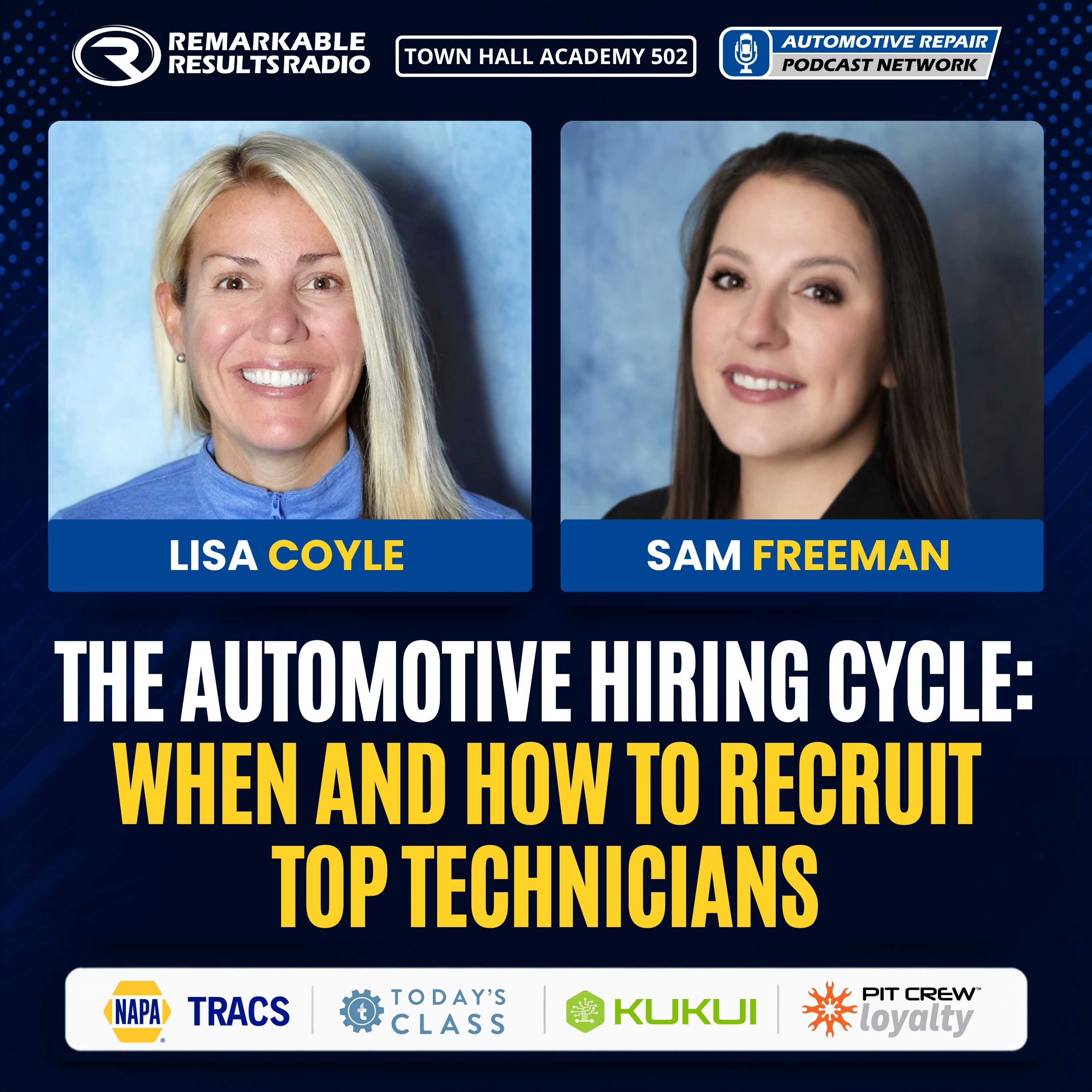
Thanks to our Partners: NAPA TRACS, Today's Class, KUKUI, and Pit Crew Loyalty Watch Full Video Episode *]:pointer-events-auto scroll-mt-[calc(var(--header-height)+min(200px,max(70px,20svh)))]" dir="auto" data-turn-id="request-WEB:8e59eec7-a235-4fa3-a072-956fea3fe478-7" data-testid="conversation-turn-4" data-scroll-anchor="false" data-turn="assistant"> *]:pointer-events-auto scroll-mt-[calc(var(--header-height)+min(200px,max(70px,20svh)))]" dir="auto" data-turn-id="request-WEB:49a777bf-d263-4496-bf0b-2eb3a46ac96a-11" data-testid="conversation-turn-24" data-scroll-anchor="false" data-turn="assistant"> What if the best time to recruit your next technician is when your shop isn't looking to hire? Lisa Coyle, CEO of Promotive, and Sam Freeman, Partner Manager at Promotive, reveal why automotive recruiting has a cycle, and why understanding when technicians are looking can give shop owners a significant advantage. Lisa and Sam explain how recruiting data, market timing, candidate behavior, and consistent relationship-building can create a much more proactive hiring strategy. Download the 6 Month Promotive Hiring Insights Report for FREE: https://info.gopromotive.com/RRR What You'll Learn Why technician recruiting has a cycle and why timing matters.Why “post and pray” recruiting puts your shop at a disadvantage.Why finding a top technician can take 60 to 70 days.How local market data can improve your job postings.Why you should recruit even when you don't have an opening.What may really be behind candidate ghosting.Why a counter-offer doesn't have to end the relationship.How consistent communication can prevent first-day no-shows.Why complicated hiring processes can cost you great candidates.How the F.O.R.D. method can make interviews more personal and effective. Great recruiting is about timing, data, and relationships. Don't wait for an empty bay to discover you need a recruiting strategy. Understand when technicians are most likely to consider a move, know what candidates in your market are searching for, simplify your hiring process, and stay connected with good people even when the timing isn't right. Your next great technician may not be looking when you're ready to hire. The opportunity is to build the relationship when they're ready to listen. Promotive has over 40 years of recruiting and automotive experience. If you need qualified technicians and service advisors and want to offload the heavy lifting, visit https://gopromotive.com/ Meet Paige: The Auto Repair Industry’s First 24/7 AI Recruiter [THA 481]: https://remarkableresults.biz/remarkable-results-radio-podcast/a481/ Lisa Coyle, CEO of Promotive Sam Freeman, Partner Manager at Promotive NAPA TRACS will move your shop into the SMS fast lane with onsite training, six days a week of support, and local representation. http://napatracs.com/ Optimize training with Today's Class: In just 5 minutes daily, boost knowledge retention and improve team performance. https://www.todaysclass.com/ Stop juggling multiple marketing tools. KUKUI’s integrated platform delivers 4x better website conversions, automated follow-up, and real-time ROI tracking. https://www.kukui.com/ You’re probably tired of chasing new customers who never return. Pit Crew Loyalty ends the one-and-done cycle, turning first visits into lasting, reliable revenue at https://www.pitcrewloyalty.com/ Connect with the Podcast: Download and Listen on Our Mobile App: https://automotiverepairpodcastnetwork.com/app/Visit the Website:https://remarkableresults.biz/Subscribe on YouTube:https://www.youtube.com/carmcapriottoFollow on Facebook:https://www.facebook.com/RemarkableResultsRadioPodcast/Follow on LinkedIn:https://www.linkedin.com/in/carmcapriotto/Follow on Instagram:https://www.instagram.com/remarkableresultsradiopodcast/Join Our Virtual Toastmasters Club:https://remarkableresults.biz/toastmastersJoin Our Private Facebook Community:https://www.facebook.com/groups/1734687266778976Join our Insider List:https://remarkableresults.biz/insiderAll books mentioned on our podcasts:https://remarkableresults.biz/booksOur Classroom page for personal or team learning:https://remarkableresults.biz/classroomBuy Me a Coffee:https://www.buymeacoffee.com/carmSpecial episode collections:https://remarkableresults.biz/collections The Automotive Repair Podcast Network: https://automotiverepairpodcastnetwork.com/ Remarkable Results Radio Podcastwith Carm Capriotto:https://remarkableresults.biz/<a href="https://mattfanslow.captivate.fm/" target="_blank"...
The Power of Financing: A Growth Tool for Auto Repair Shops [RR 1108]
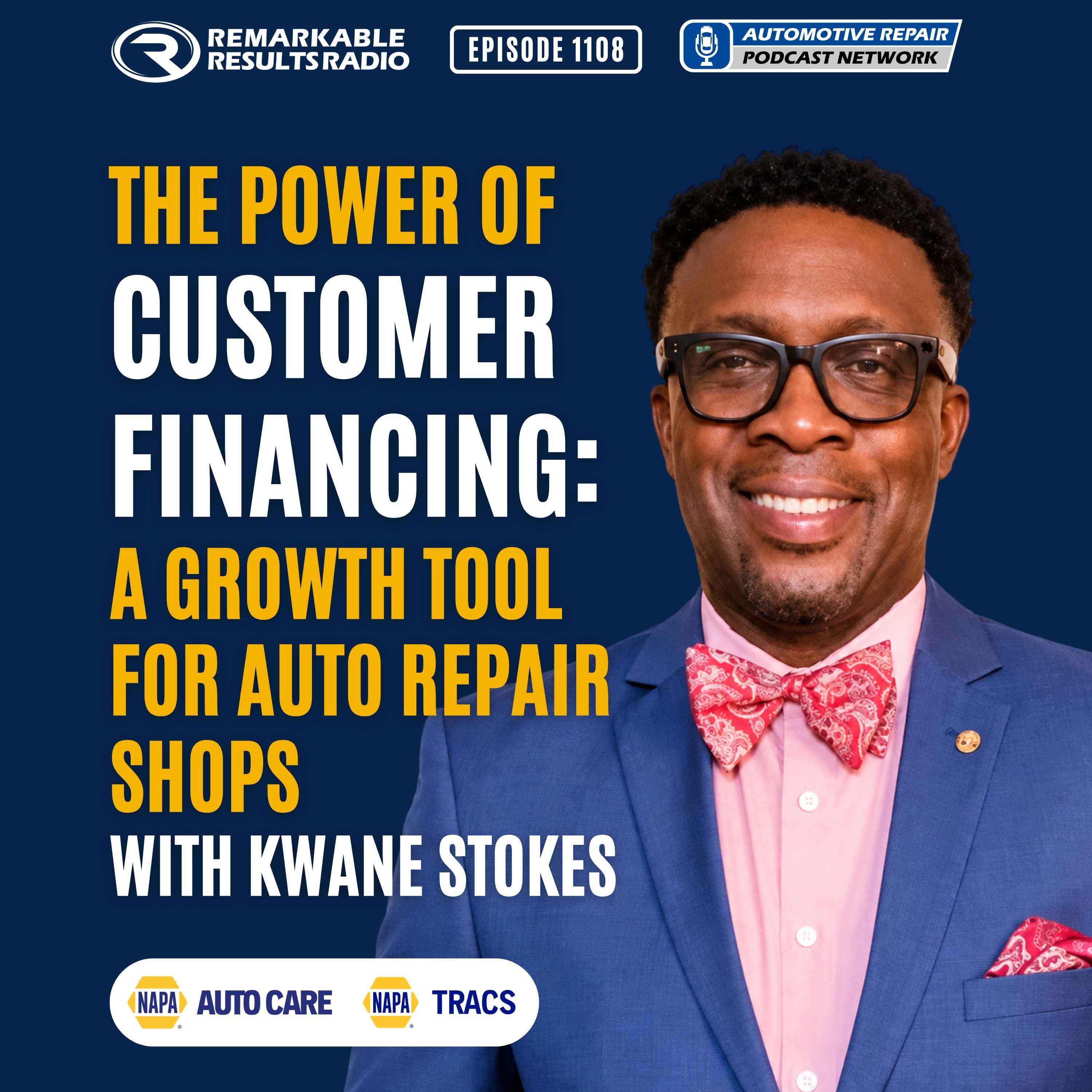
Thanks to our Partners, NAPA Auto Care and NAPA TRACS Watch Full Video Episode What happens when a customer needs a $2,000 repair but doesn’t have the cash available today? That moment can determine whether the vehicle gets repaired, the customer delays a critical service, or they take their business somewhere else. For automotive shops, offering flexible payment options can be more than a convenience. It can be a powerful tool for helping customers say yes to the work their vehicles need. Kwane Stokes, Assistant Vice President and Relationship Manager in the automotive division at Synchrony, explains how the program can help shops remove financial barriers, increase repair opportunities, and create another reason for customers to return. Kwane also addresses why many shops still aren't offering financing and how the biggest obstacle may simply be the assumptions advisors make about a customer's ability or willingness to pay. What You'll Learn Why financing should be presented as a payment option, not something an advisor decides a customer needs.How the program's average first and repeat purchase amounts demonstrate the potential impact on average repair order (ARO).Why assuming a customer can't qualify for credit can cause shops to lose needed repair work.How monthly promotional offers can give shops another reason to communicate with their customers.How advisor incentives and simple training can encourage more consistent presentation of financing.What the upcoming "waterfall" financing model could mean for customers who aren't approved through the primary credit program. The biggest opportunity may not be finding more customers. It may be giving the customers already sitting at your counter more ways to say yes. The key is removing the assumption that you know what a customer can or cannot afford. Present the options, explain them clearly, and let the customer decide what works for their financial situation. For a shop, financing isn't simply about collecting payment. It's another tool for helping customers get the repairs they need while protecting the relationship and keeping the work in your shop. Kwane Stokes, AVP, Relationship Manager, Auto Network, Synchrony Learn more about the benefits of being part of the NAPA family by visiting https://www.napaonline.com/en/auto-care NAPA TRACS will move your shop into the SMS fast lane with on-site training and six days a week of support: http://napatracs.com/ Connect with the Podcast: Download Our Mobile App:https://automotiverepairpodcastnetwork.com/app/Website:https://remarkableresults.biz/YouTube:https://www.youtube.com/carmcapriottoFacebook:https://www.facebook.com/RemarkableResultsRadioPodcast/LinkedIn:https://www.linkedin.com/in/carmcapriotto/Instagram:https://www.instagram.com/remarkableresultsradiopodcast/Join Our Virtual Toastmasters Club:https://remarkableresults.biz/toastmastersJoin Our Private Facebook Community:https://www.facebook.com/groups/1734687266778976Join our Insider List:https://remarkableresults.biz/insiderBooks Page:https://remarkableresults.biz/booksOur Classroom Page:https://remarkableresults.biz/classroomEpisode Collections:https://remarkableresults.biz/collectionsBuy Me a Coffee:https://www.buymeacoffee.com/carm The Automotive Repair Podcast Network: https://automotiverepairpodcastnetwork.com/ Remarkable Results Radio Podcastwith Carm Capriotto:https://remarkableresults.biz/Automotive Field TheorywithMatt Fanslow:https://mattfanslow.captivate.fm/Business by the NumberswithHunt Demarest: https://huntdemarest.captivate.fm/The Auto Repair Marketing Podcastwith Brian and Kim Walker: https://autorepairmarketing.captivate.fm/The Weekly Blitzwith Chris Cotton: https://chriscotton.captivate.fm/Speak Up! Effective Communicationwith Craig O'Neill: https://craigoneill.captivate.fm

Daily Habits That Build a Stronger Auto Repair Shop Culture [THA 501]
Thanks to our Partners: NAPA TRACS, Today's Class, KUKUI, and Pit Crew Loyalty Watch Full Video Episode *]:pointer-events-auto scroll-mt-[calc(var(--header-height)+min(200px,max(70px,20svh)))]" dir="auto" data-turn-id="request-WEB:8e59eec7-a235-4fa3-a072-956fea3fe478-7" data-testid="conversation-turn-4" data-scroll-anchor="false" data-turn="assistant"> *]:pointer-events-auto scroll-mt-[calc(var(--header-height)+min(200px,max(70px,20svh)))]" dir="auto" data-turn-id="request-WEB:49a777bf-d263-4496-bf0b-2eb3a46ac96a-11" data-testid="conversation-turn-24" data-scroll-anchor="false" data-turn="assistant"> What does a strong shop culture look like when you’re the people living it every day? Bree Wismer, Service Advisor and Frontline Culture Leader, and Trevor Hinds, Operations Manager and Dispatcher at Empower Automotive in Traverse City, Michigan, take us inside the daily habits and communication practices that keep their team aligned, productive, and focused on the customer. Rather than approaching culture from the owner's perspective, Bri and Trevor share what happens on the front lines. They explain how Empower Automotive breaks down the traditional divide between the front counter and the bays, keeps everyone on the "same bus," and creates a workplace where every person understands their role, respects the team around them, and contributes to the same goal. What You'll Learn Why the front counter and specialists must operate as one team.How daily huddles and short training sessions keep the team aligned.Why the 1:00 PM check-in can prevent late-day customer surprises.Why a "no-update" update can be one of the most valuable customer communications.How to respond when customers arrive with AI-generated or parts-store diagnoses.How respect, communication, and accountability create confident professionalism. Building a world-class shop culture doesn’t require a massive budget or a complicated organizational overhaul. By committing to these small, consistent actions, you can transform your shop from a high-stress environment into a thriving, unified business that both your team and your customers enjoy. Bree Wismer, Service Advisor, Frontline Culture Leader, Empower Automotive, Traverse City, MI Trevor Hinds, Operations Manager, Dispatcher, Workflow and Culture, Empower Automotive, Traverse City, MI NAPA TRACS will move your shop into the SMS fast lane with onsite training, six days a week of support, and local representation. http://napatracs.com/ Optimize training with Today's Class: In just 5 minutes daily, boost knowledge retention and improve team performance. https://www.todaysclass.com/ Stop juggling multiple marketing tools. KUKUI’s integrated platform delivers 4x better website conversions, automated follow-up, and real-time ROI tracking. https://www.kukui.com/ You’re probably tired of chasing new customers who never return. Pit Crew Loyalty ends the one-and-done cycle, turning first visits into lasting, reliable revenue at https://www.pitcrewloyalty.com/ Connect with the Podcast: Download and Listen on Our Mobile App: https://automotiverepairpodcastnetwork.com/app/Visit the Website:https://remarkableresults.biz/Subscribe on YouTube:https://www.youtube.com/carmcapriottoFollow on Facebook:https://www.facebook.com/RemarkableResultsRadioPodcast/Follow on LinkedIn:https://www.linkedin.com/in/carmcapriotto/Follow on Instagram:https://www.instagram.com/remarkableresultsradiopodcast/Join Our Virtual Toastmasters Club:https://remarkableresults.biz/toastmastersJoin Our Private Facebook Community:https://www.facebook.com/groups/1734687266778976Join our Insider List:https://remarkableresults.biz/insiderAll books mentioned on our podcasts:https://remarkableresults.biz/booksOur Classroom page for personal or team learning:https://remarkableresults.biz/classroomBuy Me a Coffee:https://www.buymeacoffee.com/carmSpecial episode collections:https://remarkableresults.biz/collections The Automotive Repair Podcast Network: https://automotiverepairpodcastnetwork.com/ Remarkable Results Radio Podcastwith Carm Capriotto:https://remarkableresults.biz/Automotive Field Theorywith Matt Fanslow https://mattfanslow.captivate.fm/Business by the Numberswith CPA Hunt Demarest: https://huntdemarest.captivate.fm/The Auto Repair Marketing Podcastwith Brian and Kim Walker:<a...

Rapid-Fire Automotive News: AI, EVs, Autonomous Vehicles, and the $19B Trade School Boom [RR 1107]
Thanks to our Partners, NAPA Auto Care and NAPA TRACS Watch Full Video Episode How quickly is the automotive repair industry changing, and are you ready for what's next? Tom Ham, shop owner and founder of the Automotive Management Network, joins Carm Capriotto for a fast-paced conversation covering 12 major trends shaping the future of auto repair. From autonomous vehicles and solid-state batteries to the changing value of trade careers, AI, government regulation, 3D printing, and vehicle reliability, Tom and Carm explore the technologies and economic shifts shop owners need to understand. What You'll Learn How autonomous vehicles could reshape vehicle safety and the repair industry.What advances in solid-state batteries could mean for EVs and vehicle range.Why trade careers are gaining momentum as technology changes traditional employment.How the technician shortage is creating new opportunities for shops to develop talent.How government regulation and emissions enforcement could affect vehicle owners and repair shops.What current vehicle reliability trends reveal about today's automotive brands.How 3D printing could help shops solve parts availability challenges.Why AI is becoming a powerful tool for reducing friction and improving efficiency.Why shop owners need to stay curious and adapt as automotive technology continues to accelerate. The automotive repair industry is changing faster than ever. The shops that thrive will be the ones willing to understand emerging technology, embrace new tools, develop their people, and continually rethink how they operate. The future isn't coming someday. It's already showing up in the service bay. Tom Ham, Automotive Management Network. Tom’s previous episodes HERE. Learn more about the benefits of being part of the NAPA family by visiting https://www.napaonline.com/en/auto-care NAPA TRACS will move your shop into the SMS fast lane with on-site training and six days a week of support: http://napatracs.com/ Connect with the Podcast: Download Our Mobile App:https://automotiverepairpodcastnetwork.com/app/Website:https://remarkableresults.biz/YouTube:https://www.youtube.com/carmcapriottoFacebook:https://www.facebook.com/RemarkableResultsRadioPodcast/LinkedIn:https://www.linkedin.com/in/carmcapriotto/Instagram:https://www.instagram.com/remarkableresultsradiopodcast/Join Our Virtual Toastmasters Club:https://remarkableresults.biz/toastmastersJoin Our Private Facebook Community:https://www.facebook.com/groups/1734687266778976Join our Insider List:https://remarkableresults.biz/insiderBooks Page:https://remarkableresults.biz/booksOur Classroom Page:https://remarkableresults.biz/classroomEpisode Collections:https://remarkableresults.biz/collectionsBuy Me a Coffee:https://www.buymeacoffee.com/carm The Automotive Repair Podcast Network: https://automotiverepairpodcastnetwork.com/ Remarkable Results Radio Podcastwith Carm Capriotto:https://remarkableresults.biz/Automotive Field TheorywithMatt Fanslow:https://mattfanslow.captivate.fm/Business by the NumberswithHunt Demarest: https://huntdemarest.captivate.fm/The Auto Repair Marketing Podcastwith Brian and Kim Walker: https://autorepairmarketing.captivate.fm/The Weekly Blitzwith Chris Cotton: https://chriscotton.captivate.fm/Speak Up! Effective Communicationwith Craig O'Neill: https://craigoneill.captivate.fm
Related across the catalog

216 - Coach the Call: Using AI Insights to Develop Stronger Service Advisors
216 - Coach the Call: Using AI Insights to Develop Stronger Service Advisors August 26th, 2026 - 00:54:51 Show Summary: Strong phone skills can turn more incoming calls into appointments while building trust from the first interaction. Consistent call reviews give service advisors a clear path to improve without making coaching feel like punishment. AI call analysis reduces the time required to find useful coaching opportunities and helps owners identify patterns across their team. Positive reinforcement also matters because great calls give advisors examples they can repeat. Simple habits like smiling asking for the appointment and using the customer’s name can dramatically improve the experience. Better phone performance ultimately supports stronger customer relationships higher appointment conversion and long term shop growth. Host(s): Jimmy Lea, VP of Business Development Guest(s): David Boyd, Founder & CEO of Callinbound Tonnika Haynes, Owner of Browns Automotive, Downshift with Tonnika Haynes Show Highlights: [00:04:00] – Listening to real calls reveals missed opportunities that owners rarely see. [00:10:00] – AI identifies coachable calls without hours of manual review. [00:14:00] – Consistent coaching creates awareness before advisors answer each call. [00:17:00] – Replace a hard no with a plan focused on customer needs. [00:24:00] – Help advisors self coach instead of simply pointing out mistakes. [00:28:00] – Every missed appointment can represent significant lost customer value. [00:34:00] – Asking for the customer’s name immediately creates a stronger connection. [00:39:00] – Scheduled call reviews make coaching normal instead of threatening. [00:43:00] – Asking for appointments helped turn successful marketing into a fuller calendar. [00:49:00] – Call tracking connects marketing performance with actual appointment conversion. In every business journey, there are defining moments or challenges that build resilience and milestones that fuel growth. We’d love to hear about yours! What lessons, breakthroughs, or pivotal experiences have shaped your path in the automotive industry? Share your story with us at info@wearetheinstitute.com, and you might be featured in an upcoming episode. 👉 Unlock the full experience - watch the full webinar on YouTube: https://youtu.be/fv9ewVBoSks Don’t miss exclusive insights, expert takeaways, and real talk you won’t hear anywhere else. Hit Subscribe, drop a comment, and share it with someone who needs to hear this! Links & Resources: Want to learn more? Click Here Want a complimentary business health report? Click Here See The Institute's events list: Click Here Want access to our online classes? Click Here ________________________________________ Episode Transcript Disclaimer This transcript was generated using artificial intelligence and may contain errors. If you notice any inaccuracies, please contact us at marketing@wearetheinstitute.com. Episode Transcript: Jimmy Lea: Good morning, good afternoon, good evening, or good night. Thank you for joining. So excited for us to have this conversation today with some really good friends. Everyone, this is to be an interactive webinar. So you're sitting there, you've got questions, you've got concerns, type them into the chat. We wanna be able to ask those questions of our panel today as we are talking about a very interesting topic. And with us today, first, is our good friend, Mr. David Boyd of Inbound Communication. David, how the heck are you, brother? David Boyes: I'm great. I, I, uh, I fully intended to have my jacket on, Jimmy. Jimmy Lea: Man. David Boyes: So excited to be here. We Jimmy Lea: coordinated on this and everything. David Boyes: I know. I, uh- Next time ... I, I was, I was lucky as, as busy as we've been at Call Inbound to, uh, uh, get up and, and organize and dress today. So I really, uh, it's always great to see you and of course, um, uh, we got to visit a little bit out at, uh, Worldpac STX and, uh, man, I tell you what, your wardrobe is always top notch. Jimmy Lea: Hey, thank you. Thank you. We're glad you are dressed today, just don't stand up. Thank you very much. David Boyes: Great. Jimmy Lea: And joining for us in our conversation today, David, is Tanika, Tanika Hayes with, uh, Haynes with Browns Automotive. Tanika, how the heck are you, sister? Tonnika Haynes: I'm doing good, guys. What's going on? Jimmy Lea: Staying alive. Good to see you. Great to see you. Also at STX, what did you think of the, the conference there with Worldpac? Tonnika Haynes: It, it was really, really good. I was not prepared for the size of it. There was a lot of people. People were peopling. So, um, once I got adjusted to all of the crowds and everything, I enjoyed it. I hadn't sat in a class in a really long time, like at an expo. Ooh. I'm usually just walking around and being nosy, but I picked up some good nuggets, so it was great. Jimmy Lea: Beautiful. That's awesome. Well, if, if the STX was a large conference to you, I would suggest that you really prepare yourself months in advance if ever you come out to SEMA and Apex in Las Vegas. Tonnika Haynes: I will be there this year. Oh, good. I keep hear- hearing that, so I don't know what meds I need to be on to take, To take it all in. But Jimmy Lea: we'll- You- Tonnika Haynes: I'm excited about it ... Jimmy Lea: we, we will talk about that because there is more than you can see within a week, and you really only have three days at Apex, four days at SEMA. You want to map out where you're gonna go, who you're gonna talk to, who you're gonna see- And for you, Taneka, schedule some time to sit down and chill Tonnika Haynes: Yeah. I'm gonna have to definitely do that. You're talking about, um, scheduling times. I'm gonna schedule time to go sit in the corner and recoup. Uh-huh. So where's Taneka? She's in the corner. Jimmy Lea: Yep, and, and I- It's David Boyes: scheduled time ... Jimmy Lea: I, I'm gonna work with you on that because I know the corners, I know the places where you can go and, and find some solitude. Tonnika Haynes: All right. Jimmy Lea: I am. Well, our conversation today is in preparation for making your shop better David, I'm gonna kick it over to you, brother. Let's start this conversation with Taneka. David Boyes: Yeah. Let's, uh, let- let's kinda move into this. You know, we're, uh, talking about communication, and there are so many facets that impact the customer experience. I think that it's important to know that, you know, there are tools and there are, uh, from an owner or, and manager's perspective and from a service provider's perspective, there are ways that we rally around making communication better. Um, you know, one of the things that is common at all shops is, uh, the customer phone call. Tonnika Haynes: Oh, yeah. David Boyes: So you winced a little bit. Tonnika Haynes: Yeah. David Boyes: Uh, how many times do we, you know, talk about our phone skills, uh, getting better on the phone, understanding the customer, understanding their needs, addressing their needs? And there's so much, you know, revolves around, uh, the phone calls and, and the way that our advisors and our front office team handles these. Maybe you have a CSR, maybe you have, you know, a service manager. Um, but people are, are answering calls all day long, and this becomes important that we understand who's answering the phone- Mm-hmm ... how they're communicating, what, what's the message that's being shared. Every time that phone rings, uh, that, you know, we like to say that's money calling. So Taneka, let me just ask you, you know, what, what are some of the challenges that you see or the, uh, the successes that you have with your team when it comes to managing and, and, uh, getting better on our phones? Tonnika Haynes: I wanna start by saying, um, I think I listened to my first phone call at my meeting with Jen- Jennifer, with the Institute. I'm currently coaching with the Institute, and that is life-changing- Yeah ... to listen to your team answer the phone. So if anybody's out there and they have not done that, they have not listened in on a phone call, figure out a way to do it. I don't know if it's gonna be a little paper cup and a string, but figure out how to do it. Um, and then I, listening to my own phone calls, and I- I'm the boss, right? I still cringe. And so you never know what's missing from those phone calls, what, what, what is standing out. You know, my team, we would not even ask for the appointment. Like, "Would you like to bring this in today?" You know- Oh ... you ask all the questions, they go through the scripts, but then we found that they were not saying, "Hey, would you like to get that done? Would you like to bring that in today or tomorrow? What works for you?" They were leaving it all to the client to say- Jimmy Lea: Mm-hmm ... " Tonnika Haynes: What's next? What's next?" Hmm. So they were answering the phone, and they were s- being very polite, but they were not closing. They didn't have a lot of words with closing. And so with inbound, I've been able to coach- You know, when you listen to yourself and you're like, "Ooh, ooh." And you can say, "Do you see what you did there?" Or even, 'cause you know, the team can listen to their own phone calls. "Oh, I see what I did there. I see where I dropped the ball." So that was, opened up a whole bunch of eyeballs around here. Well- It's like, "Oh, it's Monday, it's time to listen to phone calls." Like, "Ah." But you just increasingly get better over time. Jimmy Lea: Oh, it's so true. And, and the ability, Taneka, the ability to have calls from today- Tonnika Haynes: Mm-hmm ... Jimmy Lea: or from yesterday or, or even the day before. Uh, there was a time a decade ago when we would have to listen, as coaches, we would listen to calls. Listen, listen, listen, listen, listen, listen, listen. We're trying to find a coaching call, a call that is coachable, and this might be a call from two weeks ago, three weeks ago. Mm. The advisors are going, "Dude, oh man, that's forever ago. No, man, I, I don't do that anymore. I'm not like that." But David, I, I think you kind of solved a bit of that problem with your phone services. David Boyes: Yeah, thanks. It, you know, it's, it's important to, to recognize. I think every owner I've ever talked with has a similar issue. It's... And a lot of it rev- revolves around time, right? Are, are we aware of what's actually happening- Jimmy Lea: Yeah ... David Boyes: on the front line? Mm-hmm. And, uh, some of it is, uh, I wanna keep this a little bit at arm's length because I, I can tell you as an owner, I will have an emotional response when I listen to that phone call. And Taniki, you brought up a great point. For owners and managers here that are on the phone, please listen to your own calls. Yeah. Do it at least one time. Tonnika Haynes: Yeah. David Boyes: Well, twice. Have to Tonnika Haynes: bite the bullet. Just do it. David Boyes: Yeah. Just do it. And, Tonnika Haynes: and, and be ready. Just like- ... just like, "Oh, that is me." Yeah, that is you. David Boyes: Do it- Yeah do it twice because the first time that you listen to a call, uh, it's gonna just be weird, right? So listening to myself on recordings is always weird, but there's this heavy lift of time, right? Am, am I aware of what's actually happening on the front line, and how are we interacting with customers? And then do I have, do I have a mechanism to understand what's my expectation? As an owner, um, you know, it, it's important to establish that expectation. Maybe you're working with a call coach, maybe you've been in trainings yourself. It's, it's ideal to have a method by which you're going to measure your call handlers. And, um, you know, we wanna be professional. We want to build confidence and, and build rapport with these customers. It doesn't have to be fast, but typically- Mm-hmm ... you know, an incoming call from a customer is likely an appointment setting call or a status call. We're gonna set that status call, uh, bucket aside for a second 'cause we wanna be in front of, uh, status calls instead of having customers call us. But if you're listening to these and you have that rhythm around it, uh, we understand how these small habits can build on one another. Am I, am I smiling when I answer the phone? There's something physically that hap- When I, when I physically smile, there's something that is noticeable in the way that I'm communicating. And, uh, am I, am I clear? So what are the expectations? You know, uh, if you watch your advisors, I have, uh, my little cordless handset here. If they tuck their phone in like this, and, and you know, they're, they're trying to multitask Listen to those calls because likely it's very, very difficult to hear on the other side of this. So listening to calls, uh, helps us understand how, you know, how we conduct ourselves, how we conduct business, how am I representing the business that I, you know, that I'm working at as a professional. But also, what is the customer hearing and what is the customer's experience? So, um, these are, uh, important points, and it starts by listening. Jimmy, you brought up a, um, an important aspect here. Historically, we would listen to call after call after call after call to try to find something I can use to coach. So Taneka, you might do this. You've got a call recording system. It doesn't do much but just record those calls, and now I have to go through this, this process to identify a coachable opportunity. And this is now I think where we can move effectively into technology, right? We all hear so much about AI today, and what's really nice about, uh, having, you know, a, a phone system that records is now you have an asset, and you can use that asset to do something more with it. And we can use AI to help that heavy lift of time and, you know, take 90% of the time requirement off. So instead of having to spend 30 minutes, I might have to spend two or three minutes to take that call, sit down with my service advisor, go through this, and have a meaningful, constructive conversation about the things that work well. Jimmy Lea: Yeah. I, I love, David, that your software makes it so easy to find these coachable calls so much faster. A- and Taneka, that's just gotta be a lifesaver for you as well, coaching your service advisors. Tonnika Haynes: It is. I remember, um, speaking with a friend, fellow shop owner, and he's like, "I need you to set aside a time." And so what I did is on my calendar, on Wednesday, that's the day that I sit down and we go over phone calls. And so, you know, you got the dashboard, and that dashboard will say, "This is a coachable call. This is a coachable call." And it is a habit for me as the owner/manager, um, to make sure that I'm staying on top of it all the time because we'll slip into old habits, right? So me listening to the calls and bringing the service advisor or, um, or bring Jay in and say, "Hey, let's listen to this. Let's see how we can get better." You know, you continuously improve on it, and you don't slide back into old habits. Because I'm not on the phone as much anymore. If I have to answer the phone, I know personally, and everything's at stake for me, I slide back into old habits. So we all are capable of it, and so having that dashboard in front of us and said, "Hey, this is a call you need to look at," the service advisor or the person answering the phone does not feel like they're being picked on, but they're being improved upon. So, "Look, I'm just lifting you up. This is what we can do. Do you see how we can make this better?" And it's a we, it's a us, it's coachable, it's there, it's real, and, um, I really enjoy th- that part of the dashboard. Jimmy Lea: Oh, I love that. How often, Taneka, do you send, "This is a really good call"? This is a really good call. I Tonnika Haynes: like a really good call How often do you send that to the team? You know what? Yeah. I probably should do that more. But when I see a good call, I, I, I like to share it. And when I get a good review, like I l- literally just got a good review based off of a bad situation that we were able to turn around with proper communication, and the customer l- literally said, he's like, "The communication... The problem was still there," he said, "but the way they handled it and the communication was key." So he was not satisfied when he left, but the way that we dealt with it afterwards, and that recording of how we guided him through the process, and how we, you know, we apologized, we came up with a plan, apologized again, and kept it moving, and that was a great coachable call. It's like, this is how you handle a bad situation. Look how we won here. So yeah, those are just as important as the, as the losses, as the bad calls. "Hey, this is a good call. G- this is a good call." That balance is super important. Yeah, it balances it. Yeah. And then, you know, it's like, okay, I did that right. Even when that client is a client that does not belong to you, and you can hear them tell the customer, it's like, "Hey, you know what? Appreciate your call, but this isn't the place for you." And that's not the word for word, but, "Hey, you handled that good. Thank you for saving us from a nightmare." Jimmy Lea: Yeah. Tonnika Haynes: Amen. Share it with your team. So you gotta share the wins and the, the misses. Jimmy Lea: Yeah. And, and, uh, for a lot of people, I think they struggle in the creative. So if they can hear it, that it's already been done, they can duplicate. Sure. They can mimic. They can do the same thing over and over and over again. So the more we send these beautiful calls, "Oh my gosh, you guys did so well on this phone call. I, I love this part, this part, and this part," they're able to duplicate that, and they'll do it over and over and over again. And then, then you're- The mistakes that are being made become much less because you're showing, you're, uh, mirroring to them these are the really good calls that we wanna hear. Tonnika Haynes: And, and sharing that when you're going over a call, you got the good call here, we can work on this call, but this is another good call. You know, we talk about giving that sandwich. Yeah. And so that's another opportunity you can give that good sandwich. So when it's time to come in on Wednesdays and listen to your phone calls, you're like, "Ooh, I know I got one coming and I think I know which one it is." And then you're like, "Yeah, but you got this one too, so you won here, and, uh, we missed on this one, but next time it's not happening." Right? Right. So it's, you know, it's all in coaching. Jimmy Lea: Oh, David Boyes: it's so true. You just said something that's super important, and, uh, ooh, I think I know which one this is. Tonnika Haynes: Yeah. David Boyes: Um, there, there's a lot to unpack there. I, I, I love the, the good with the bad. We'll talk about that more too, but, um, creating the awareness. So consistency wins, and, um, I'll say it again, be consistent with the process because consistency wins. And when you have that rhythm where it's familiar and it's expected, we're gonna sit down and we're gonna listen to calls, we're gonna go through this, identify the opportunities, um, it's not good and bad calls, it's, you know, it, it, uh, we call them top calls or champion calls and coachable calls. So a coachable call isn't inherently bad. Maybe we even got an appointment. Tonnika Haynes: Mm. David Boyes: Right? But there's, there's opportunities. So, uh, when we have that rhythm and it's expected, what's really important about what you just said is the awareness. So when I go to pick up that phone, is this the call that Tanika's gonna be talking with me about tomorrow or, you know, Wednesday, whatever our rhythm is? It, it will begin to create that moment of pause that as an a- an advisor when I'm picking up that phone, I can take that breath. Yeah. I can, I can, uh, let that, uh, you know, that technician that just blew me up Tonnika Haynes: Let 'em David Boyes: go. I can let that slide off. I can shake that off. Yeah. And I can focus for a moment to make sure that that customer knows right at this moment they are absolutely the most important person to me right now. Tonnika Haynes: Mm-hmm. David Boyes: So that's an important message to convey over the phone, our, uh, the, you know, the way that we speak, the words that we use, my en- excitement and enthusiasm about being on that call all comes through. So as we get through this rhythm and we develop the consistency and it becomes normal, now I've got that awareness on my team that, hey, this next call I'm taking, I'm gonna have the moment of pause to focus because this might be the next one that, that we're reviewing. I want this to be a positive call that, that Tanika's coming to me and saying, "You did really well on this one. Let's continue to develop this," and, you know, replicate the things that are working well. Instead of, "Hey, there's some opportunity here. You know, you didn't ask for the appointment. You were, you know, pricing over the phone. You said 'no'." No comes out in a lot of ways, doesn't it, Tanika? Where- Tonnika Haynes: Oh, yeah ... we, David Boyes: we might be telling somebody, uh, "You know, I'm really busy right", or, or, or "W- we, we're really busy right now, I can't get you in until Friday." Tonnika Haynes: Yeah. David Boyes: That's, that's, we might as well just say, "No, I can't help you." Yeah. Tonnika Haynes: Yeah. You, that's, that's all they heard was the no. Um, even if you give... And, uh, everybody knows that I'm, I'm big on nos. Like, I can give you a no where there's some healthy nos, but then there's some nos and you have the customer saying, "Hey, um, m- my brakes are making the noise and it just started." And he's like, "Oh, no, I can't see you till Friday." He's like, "Yeah, but I'm gonna die before Friday. I wanna see somebody now." Um, so you don't, you have to learn how to coach them and say, "Yes, so bring that in. Let's take a look at what you've got, and then we'll come up with a plan." You didn't promise that it was gonna be today or tomorrow, but you said, "Bring it in. I'm worried about your safety. Let's see what you've got." Yeah. "Let's see if you should really be concerned about that check engine light. It might be a EVAP code." They don't know that, "But go ahead and bring them in." So and then you, like you said, the cadence in it. This, I'm not gonna make you any promises over the phone, and I would literally say that. "Hey, I don't wanna disappoint you by making a promise that I can't keep. So don't- Yeah ... don't make me, don't put me in that hole. But I need you to go ahead and bring that in to me as soon as you can. Um, and let's scan it. Let's see what you've got, and let's see if you should really be worried, if you can make that trip or we need to bring you in right away. We will help you come up with a plan." So just that solid no. "No, I'll see you Friday." Jimmy Lea: He, " Tonnika Haynes: Meh. No you won't." Yeah. Like, so that's support. That's Jimmy Lea: my- David Boyes: It, it becomes very collaborative in what you just said. Hey, let, let's make this about you, let's make this about your safety and your confidence to drive that vehicle. Maybe you gotta get across town and your commute is 30 minutes. Let's make sure that your vehicle is safe, and then once you're here and we make sure you're safe, let's talk about, uh, when we're gonna have that on the schedule. We'll get that vehicle in Tonnika Haynes: and prepared. Yeah. What are the next steps? Yeah. So let's go ahead and get- let's get your nerves calm- Mm-hmm ... and then let's come up with the next step. Let's come up with a plan. Us, us, us, we, we, we. So Jimmy Lea: yeah. Yeah. Oh, I love it. I love it. And, uh, you talk about s- building a solid foundation for this, the solid foundation for their skills so that the, the ongoing training you're doing really builds on that foundation. Uh, we've got a three-day service advisor with the institute. We're gonna give a shout-out to the institute here right now. So everybody grab out your smartphones, scan the QR code if your service advisor needs a solid foundation. Thank you, David. If you need a solid foundation- Registered now ... and you need to start with... Yeah, get registered. I know you've been to a couple of these, David, 'cause- I have you've talked about all the skills here just really, really well. If your service advisor needs that and you need to go from zero to hero very quickly, this is an intensive that you wanna send your service advisor to, and it will be at headquarters in Ogden, Utah. Fly right into Salt Lake, and, uh, and we got you set up there in Ogden. So, yes, David Boyes: scan that. It's a beautiful drive up from the airport. This class is, uh, it, it, it will help establish the, the fundamentals to build on. Yeah. So you come here, it's, you know, it's boot camp, right? We're, we're going to make sure that we're establishing the expectation and give you something to build on as the owner. Send your service advisors in here. Uh, they'll get those fundamentals, and then you'll have, you know, these, these mechanisms, uh, to improve them over time. I promise you it'll be a, a real game changer for your frontline. Tonnika Haynes: Well, you know what? Beautiful. I wanna piggyback on that. Um, and I wasn't coached to saying this. If they've already been, send them again. Jimmy Lea: There you go. Mm. Tonnika Haynes: Send them again, because here's the thing that I know, and I'm just gonna make it simple. I want you to think about your favorite movie. Like when, when I was in the 20s, for me it was Friday, the movie Friday. And then we watched that movie every Friday after work with the crew that I worked with, and it was just the most ignorant movie and the best movie for my generation. Each time I watched that movie, I would see a different thing. So I want you to think about your favorite movie and, or v- your favorite comedy. Each time you'd watch it, you would pick up something else. So it was like, "Oh, I didn't see that that last time." So even when it comes to training, "Hey, I did this three-day class and I did it a year ago. I grew." Jimmy Lea: Do it again. Yeah. Tonnika Haynes: Do it again. Do it again. You, you're never too mu- uh, there's never too much coaching. So just do it again and you'll see it from a different angle. I just wanted to say that. Yeah, 'cause, um, there's been some classes that I, I take, and not just this one, but other classes, like, let me take that class again. Yeah. And you're like, "Aha. I didn't remember that from last time." Yeah. I didn't implement that from last time, 'cause we, you guys tell us, and coaches will tell you, "Just go and implement one thing. One thing." I mean, watch those changes, and then the next time you take the class, let's do one more thing, maybe two, and get, get a little bit better. Right. Jimmy Lea: Yeah. So speaking of training, ASTA, A-S-T-A, is coming up here real soon, Taneka. Real Tonnika Haynes: soon. We're less than 30 Jimmy Lea: days out. Let's give them a shout-out. Tonnika Haynes: Shout out to ASTA. Those are the people, not the people that made me, but it's my just one, my just one thing that I took away from there each time has helped build me to where I am. And I am, I cannot say I would not be where I was without them. But I would not be where I was, where I am without them. From those, those people that I met, the village that I met, meeting you, meeting my first coach, just meeting my, my industry brothers and sisters that I can call on at any time when I'm about to flip out, or when I have a win. 'Cause you know as owners and when, when you're a little higher, you can't share your wins with everybody without some jealousy. True. Yeah. So when you have a win and you have that community to call on. Mm-hmm. So yeah, ASTA is the place to be, September 24th to 26th, right here in Raleigh, North Carolina. So I hope somebody shows up. And, uh, I wanna meet some... Well, I know Jim. I'll be there. Jimmy will be there. You will not miss him. David Boyes: He'll have the jacket. Tonnika Haynes: He will have plenty of jackets on. It is a fun atmosphere, lots of community, lots of learning and growing. Jimmy Lea: Yeah. Yeah. We're gonna have a jacket war, so anybody who wants to play. David, you're bringing your jacket, so David Boyes: who wore Jimmy Lea: it best? Yes. Yeah. David Boyes: Yeah. I, I wanted to make sure that we were gonna f- uh, be able to carve out some time to do the who wore it best. Tonnika Haynes: Oh, David Boyes: always. I think, so B- Benji will be involved. Brett will probably be involved, right? Mm-hmm. And, uh, you, you two- Mike Allen ... Mike, okay, Mike, yep. Tonnika Haynes: I, I, I feel like we should have a girls version of this, 'cause you know, if the women got involved- Jimmy Lea: We always lose Tonnika Haynes: I mean, we would just throw you guys under the bus. Jimmy Lea: It's true. We tried that, Tanika, and you swept it. Yeah. You swept it. There, there was no- Tonnika Haynes: I don't wanna do that to you guys ... competing with Jimmy Lea: Tanika. Tonnika Haynes: I don't wanna do... Yeah, I don't wanna do that to you, so we'll, we'll figure it out. Maybe I'll make a f- couple phone calls and text messages and see what's up. David Boyes: Yeah. Speaking of phone calls. Speaking of phone calls. Tonnika Haynes: Throw that back in. David Boyes: I have a question for you. Yeah. Yeah. That's, hey, I couldn't have asked for a better softball there, but that's great. Um- ... thinking, thinking about the coaching process, you know, I, I, I had mentioned before it can seem a little uncomfortable, even as an owner. You know, listen to two calls, because that first one, you're gonna be so- Mm-hmm ... consumed by how weird I sound on the phone, right? So, but when you, when you started this with your team, what, how was it received? What were some of the, the challenges, uh, do, you know, h- what feedback did you get about listening to calls and going through the analysis? Tonnika Haynes: So I wanna say that when I first did it in, in coaching, so in a group setting, and you're listening to your team, so they call in, they have to do a call and they'll record a call. And so it's like, "Oh, well this time she did this, and this is the excuse." You wanna come up with excuses. You wanna defend- Right yourself. I wanna defend my shop. And so that service advisor's gonna wanna defend him or herself. Like, "Oh, well, you know, that customer and this was that." I was like, "No." So you get past that, and it's like, okay, like I said, you give the sandwich. Okay, so this is a great call. You tell me what you could have done, could have done better in this call. Right. 'Cause I don't wanna be in... 'Cause if you go into attack mode and say, "Oh, you should do this better, and you didn't follow the script, and you, you, you, you, you," you're gonna get somebody that's gonna put up a guard and be like, "Whoa, whoa, whoa. I did my best." So I'll say, "I know you did your best on this, this one call, and you did a great job on this call. What happened, brother?" Balls in your court. Tell me how you can improve on this. Mm. What do you need from me to help you improve here? Was there a distraction? What was, what was the problem? So I kinda feel like I can teach them to self-coach. Jimmy Lea: Yep. Tonnika Haynes: I'm, I'ma give you a whole toolbox. You've got this toolbox. You know what a good call to- sounds like. Like, you also have a mirror. There's a mirror right there. Look at yourself. You've got reminders. I've got sticky note reminders on each, each person saying, "Don't forget to ask for the sale." What happened? "Oh, man, I was distracted, I sh- I should've..." Yep, you should've put the mouse down. You should've put the mouse down. So usually people will first get defensive, same. Mm-hmm. Um, then the defense mechanism starts to come down. Say, "All right, okay, so how do we fix this so next time I cannot find a bad phone call?" Jimmy Lea: Bingo. David Boyes: Yeah. Jimmy Lea: I love it. It, yeah. I love that you have a mirror there and you have sticky notes there helping as well, Taneka. Tonnika Haynes: Yeah. Jimmy Lea: Yeah. That's, that's so good. ' Tonnika Haynes: Cause we forget. And- And it's okay- Oh, we do ... 'cause we get busy. But the Jimmy Lea: more Tonnika Haynes: we work on it- And I, Jimmy Lea: I, you... I'm certain that you guys have heard this before, that a fake smile is better than a real frown. Tonnika Haynes: Yes. David Boyes: Yep. Tonnika Haynes: Yes. And I'm really good at that. And so I've learned that because I've been doing it a very long time, so people know that I can really make you... I could, like, really fuss you out, and I would sound so sweet 'cause I'm smiling at you the whole time. "Well, you know what, Jamie? I think that was the stupidest thing you've ever said." Jimmy Lea: And if you do it with a smile, you can Tonnika Haynes: get away with it. And you're doing it with a smile and, and when you're shaking your head. So that smile makes a difference. And when I'm- It does ... picking up the phone out of an emergency, if they are busy up front and I'll see that phone ringing, and I pick it up and I'm not ready personally, I'm not ready to answer that phone, and it's a client that knows me, and I'm not smiling, I will get a, "Hey, Taneka, what's wrong?" You Jimmy Lea: okay? 'Cause Tonnika Haynes: they, "You okay?" And I'll say, "Oh, I'm sorry. I was distracted." 'Cause that's usually what happens, you're distracted, or that service, that, um, technician just rubbed you the wrong way or something's happened at home. So but once you put that smile on- You just fake it till you make it. And now you, I usually don't like to say that, but sometimes you do have to fake it till you make it. Like, yeah, absolutely. And use those words of, those positive words. Absolutely. Let's look into that for you. Yeah. Yeah. Jimmy Lea: Sure. I love it. Love it. We talk about the phone call and how much it's worth. Uh, Bimmer PhD Motorsports is saying, "Can we dig into that a little bit?" How much does it cost to get that phone to ring? How much does it cost to acquire a new customer? You talk about the mindset and you talk about the service advisor- Mm-hmm ... and the smile that's needed to be there, fake or real. How much is that phone call worth, Tanika? Have you analyzed any of that in your shop? Tonnika Haynes: So that was actually a, um, something we did in the 20 group with my coach Jen. We went through that and we calculated how much it costs to sh- get that phone to ring. And I really wish I was prepared and I had that number for you. But once you realize that number, share it with your team. Jimmy Lea: Yeah. Tonnika Haynes: And then, uh, the institute probably has, um, a blueprint on how to figure that out. So you're looking at how much your website is, your Go- Google ads, any form of marketing that you have out there, down to the phone bill. Jimmy Lea: Yeah. Tonnika Haynes: How much does it cost to make that phone ring? And once you see it as the owner, you're gonna be like, "Whoa." And you share that with the team. Like, every time that phone rings, it costs me this. And then also think about your ARO. Jimmy Lea: Mm-hmm. Bingo. Tonnika Haynes: And every time- Yep, yep ... we do not get a y- yes, and we don't get that client through the door, we lost $850. Potential $850, potential $1,100. Jimmy Lea: Yep. Tonnika Haynes: So once we start thinking about, you know, everything, everything's not about money. It is That Jimmy Lea: we keep score. Tonnika Haynes: It is how we keep score. Yeah. Like, you know, we, we talk about we've got the metrics on the dashboard. Numbers don't lie. People do. Your emotions will. David Boyes: Yeah. Tonnika Haynes: It costs me $75 every time that phone rings. Mm-hmm. And when you ring it, and when you land that deal, that's a potential 850, or whatever your ARO is, or whatever- Yeah ... that's what it is. And that's, and how long does it take to get that one client to get through the door? Yeah. And also think about how long you can hold onto them as a client. How many years Jimmy Lea: are you gonna- Tonnika Haynes: What's the lifetime value of the client? What's the lifetime of that client? Jimmy Lea: Yeah. Tonnika Haynes: So that smile when you answer the phone, yeah, that's worth a lot of money. Jimmy Lea: Tens of thousands of dollars. Tonnika Haynes: Tens of thousands. So go ahead and put your Vaseline on your teeth- Jimmy Lea: Mm-hmm ... Tonnika Haynes: and, and start a- smiling. Jimmy Lea: Yeah. That's an old theater trick. Yes. Are you a, are you a musical theater person? Tonnika Haynes: No, but I just know about- Where are you pulling that from? ... Vaseline on your teeth and, 'cause you get tired of smiling. You, you know, at the conference, you have this whole muscle thing. You're like... Jimmy Lea: Uh, yeah. Tonnika Haynes: Keep s- keep, just keep smiling, smiling, smiling. Jimmy Lea: That's right, David Boyes: Dorothy. Those are important numbers, uh, to know how much does it cost to get that phone to ring. Tonnika Haynes: Mm-hmm. David Boyes: Uh, in some cases it can be, uh, you know, several hundred dollars depending on really all of those factors around generating those phone calls, and then what that ties into when the phone does ring, um, and we don't ask for the appointment. Has that $850 or $1,100 just walked over to my competitor across town? Yeah. But it also sets the stage when we're talking about coaching and development to bring it back to what's in it for me. As a service advisor, you know, most high performing shops are incentivizing their advisors on these, you know, these GP numbers and, you know, there might be other metrics on Google reviews, maybe have spiffs for these different things. It all requires us to generate the appointments and get those vehicles in so that we can have an inspection and we can, you know, generate the, the estimate and ultimately have a sale, and then make this an amazing experience for the customer so they're gonna come back next time. Tonnika Haynes: Mm-hmm. David Boyes: Uh, at the very front end of the phone call, you know, it, it takes X number of dollars to make the phone ring. When that phone rings, the customer, if they're a first time caller- Uh, they're likely y- we as, as a business are likely setting the stage within that first 15 to 20 seconds for the length of our relationship. So based on those initial interactions, we're going to begin setting the stage of how well this customer visit is going to go, uh, how much that we're developing trust with this customer. Do they trust me as an advisor? Do they trust this business, that we're experts and we're gonna help them, and we're gonna do so in a, in a fair and meaningful way? And then also, uh, we're going to set that basis for a repeat customer. Jimmy Lea: Mm-hmm. David Boyes: So that, that's where we get into the, the longevity of our relationship. Interestingly enough, so much of this happens at the very first moments of that very first phone call. And when we acknowledge that as a service advisor, I'm like, "Oh, that does tie back to the paycheck I get." As a business owner, "Wow, that ties back into the stickiness of my customers." I love, you know, repeat customers. I love repeat business. So we wanna drive these skills up front. Uh, Taneka, you talked about, you know, sitting down and going through, um, some of these calls and the, the service advisor reaction. Have you really developed and, you know, share your expectations on how you'd like the, the phone answered? I'm not asking about a script. Tonnika Haynes: Mm-hmm. David Boyes: But like that flow, right? We don't wanna create robots. Right. What have you done at, when you, you know, train and develop your team on here's what I would like to hear from you? Tonnika Haynes: So I haven't honed that in 100%, but I, I do know that we wanna thank them for calling. David Boyes: Mm-hmm. Tonnika Haynes: We wanna know how did you find out about us? Great. Is this your first time calling? How'd you hear about us? So, so we can track that, right? Yeah. Was it a repeat? Was it a neighbor? Was it a Google? How did you... Was it a postcard? How did you hear about me? Um, what can I help you with, and how soon can I get to it? Can you bring that in today or tomorrow? And, um, and smile. So I have these little things that I want them to say that's on the side- Yeah ... of their computer, and I don't want you to sit there and read and just say, "Oh, well, yes, sir, how can I help you today?" I want it to flow naturally because that's who we are as a shop. We- we're not a scripted shop. We're, we're a bunch of goofy people, actually. People. We just happen to fix cars. Um, and that's who we are. Yeah. And I want that to come through. I want you to be friendly. I want you to re- when they come in with the cat or the dog or whatever, please not a cat, but the dog. I want you to put in the notes, this is, this is that customer's name and this is what their dog's name. If they refer to their, their car, "My car's name is Pearline." If you called my car by his name, I'm not taking it nowhere else So I want you to build that relationship. And so I don't have a script and I don't have a formula yet, and maybe I should work on that. And, um, we do have like a SOP. Yeah. Probably should do a better job at that. But then what you just said made me raise my eyebrow, like, I should do better with that. But we do have some things that I'm, that are non-negotiables. David Boyes: You've got your flow there, which is great. Mm-hmm. And I think you're, you're doing better in that than, than- Yeah ... uh, some owners that, that we talk with. I encourage, I encourage everybody to have a flow, right? Yeah. We, we wanna kind of go through the conversation. I'll tell you the number one, um, deficit that I hear within the first probably 10 seconds of a phone call is asking for the customer name, right? So- Right ... "Thank you for calling ABC Automotive. How may I help you? Um, yeah, I can help you with that. My name's David. What's your name?" Jimmy Lea: Mm. David Boyes: It's so simple. Yeah. And, uh, I listen to call after call after call. I mean, these, they, they pop out because of our AI call analysis, but where we go through this whole process and we've had a 90-second call or a two-minute-long phone call, and at no point ask the customer name. Tonnika Haynes: Right. And then you assume that the name on a caller ID is their name. David Boyes: Mm-hmm. Right. Tonnika Haynes: That, that's a problem, too. I know that we were doing... I was doing it as well. Yeah. I would do it as well. David Boyes: Yeah. Tonnika Haynes: But, um, and, and with that, I had a little challenge saying, "Hey, I want to see you guys' name on the, the review." Yeah. And it really bothers me when a client calls to check on their car, and I have to, have to answer the phone, "Hey, who was your service advisor?" "Uh, I don't know." What? David Boyes: Mm. Tonnika Haynes: They need to know your name. David Boyes: Mm. Tonnika Haynes: So I had to make sure that everybody had their own business cards when the car was dropped off. "Hey, my name is Stuart. This is who you should call to check on your car. Everybody here can help you, but I'm the main person." So I think a lot of people just don't do that, and say, "Hey, well, my name's Tanika. Who am I speaking with?" Great. "Have you been here with us before?" David Boyes: Mm-hmm. Tonnika Haynes: You know, if it doesn't pop up on the caller ID, "Have you been here with us before?" Yeah. But the caller ID pop up, that's a game changer. Am I skipping ahead? Should we not go that far yet? David Boyes: No, you're fine. Yeah. Tonnika Haynes: Thank you, David. Yeah, just be ready. Yeah, be ready when, when David Voigts calls Brown's Automotive, and you call and say, "Brown's Automotive. This is Tanika. Hey, David, how can I help you today?" What is that? What are you doing? You knew I was calling. You know, like- Yeah ... yeah, caller ID exists. People forget about that. David Boyes: Yeah. Tonnika Haynes: But- They do. They do. But it, it's just extra special. Yeah. And that's what the caller ID... I know one thing I do when the customer's walking in, and if I know I have a blue Toyota Coro- Corolla coming in at 9:00. "Who is this coming in?" Yeah. "Hey, Mrs. Such-and-such. Good morning. Oh, hey." Instead of saying, "Can I help you?" Yes, you can help me. That's why I walked through the door. David Boyes: Mm-hmm. " Tonnika Haynes: Hey, M- hey, Mary David Boyes: Jane." Or, "Hang on a second. I'll be with you in a second." Tonnika Haynes: Yeah. No. David Boyes: Don't do that. Tonnika Haynes: Don't do that. David Boyes: Yeah. Tonnika Haynes: So, um, there's a lot to be said about customer service, and there's a lot to be said about s- calling people by their name. Jimmy Lea: Amen. Tonnika Haynes: Yeah. David Boyes: It creates familiarity. Yes. And, uh, when, when we have familiarity, we have a relationship. Mm-hmm. It's in- it's potentially implied. But people love to do business with, with the, the folks that they have a relationship with. Mm-hmm. And they're inclined... You know, this is the fun thing about consumer behavior and human behavior, is when I have a great experience, I wanna rally my friends around that too. I want to include them in the joy that I get to experience when I come see Tanika and her team. Yeah. So I'm gonna- I, I'm gonna be much more likely to tell folks about it. If I have a meh- Meh ... average experience, it's probably not gonna come up in conversation. I'm not gonna stick my neck out there. But, um, how do we do that? Well, we address people by their name. We know when they're calling, right? I might even be pulling that up in my shop management system or my CRM. Just the s- the second the phone rings, it's gonna pop and present that information. "Yeah, I saw you were in three, three months ago, and we had looked at, you know, X, Y, Z on your vehicle. Should we add, add some additional time to take care of that this time?" Right? It, we have an awareness. They have confidence in us. We know them as a person. We know their vehicles. And now we're, we're joining together with our customers. Mm-hmm. Yeah. Uh, at, at a common goal, right? And it comes back to their safety. Well, Tonnika Haynes: so what'll happen is you'll get a client, and, um... Sorry about the background noise. That's all right. You'll get a client, and they're not thinking about their car. They, they, they've grown to love you. They've grown to know you. They know you by your name. And then you made the recommendations last time. They trust you enough that they are just gonna be like, "Okay, whatever. I'll talk to you about it next time. Tanika's gonna remember that for me." Say, "Hey, Miss Mary Jane, you remember we talked about..." "I don't remember we talking about." "Well, here's a copy. I'm gonna send that over to you. We're gonna look at it, these things again." Yeah. It's just like having a whole system, and then you become that person. It's like I don't have to remember what my car needs 'cause Tanika and her team have the history, and they know me by my name. David Boyes: Mm-hmm. Tonnika Haynes: Right. And they're gonna take care of me. David Boyes: The paradigm shift there is I, you know, as a service advisor, I'm the expert. Tonnika Haynes: Mm-hmm. David Boyes: As the service manager, I'm the expert, right? You've come to me because of our and my expertise, and I'm sharing the belief that you wanna be safe and you wanna care for your vehicle. So allow me to make these recommendations. Allow me to, to keep that, those notes about our previous interactions so that when we meet to, when we meet again, we can make sure that w- you know, we're, we're not starting from zero- Tonnika Haynes: Mm-hmm David Boyes: that we already have this information available, and we're going to improve that experience. Tonnika Haynes: Yeah. David Boyes: Um, on the, on the call coaching side of it, um, you know, I, I think at some level you've kinda normalized it in your shop, and I'd love to learn more about how, you know, how did you do that? It's, it's not typical, I would say, that people are just, like, rallying around, "Let's listen to calls," right? 'Cause part of it is, you know, the exposure or this kind of fear of judgment. But once you normalize that and make it consistent, um, I'd love to know how you've done that and, and keep the, uh, the Big Brother mentality out the door. Tonnika Haynes: Well, I don't, well, we've got cameras, and we've got these things recording the calls. And, and first of all, these calls are not being recorded to get you. These calls are recor- Yeah ... recorded to cover your butts from that crazy person that swear they didn't say it. Mm-hmm. These calls are recorded to make you better. Um, I remember Chad say, "Hey, just put it on the calendar. Just put it on the calendar." It's like ha- having that one-on-one for the first time. Nobody knows what to say or to do. I'm not trying to attack you. I'm just trying to make you better. So let's just... I listened to my call. Be vulnerable. Me. Hey, Jimmy Lea: Yeah ... Tonnika Haynes: you don't wanna listen to your call. I didn't wanna listen to my own call. But let's, let's do this. It's just on the calendar. And like I said, the defense will just break down a little bit at a time, and I found that with my one-on-ones again. Like, we do a first Monday one-on-one. If I was late or if I skipped the one-on-one, they're like, "Well, why did, I didn't get my one-on-one. Am I in trouble?" They look forward to it. Everybody wants positive reinforcement. Amen. So if you keep it positive, and then some- like, "Hey, I looked at 10 of your calls, and out of the 10, only 3 of them were coachable." Or, "Hey, you remember when we started out, how you would have, like, a 11 bad calls out of 20? Dude, you only got two this time." So make sure we measure it, okay? Schedule it, measure it, keep it going. Know you're uncomfortable, they're uncomfortable, and just say- I don't wanna do this. Nobody wants to do it. Nobody wants to lift that... Well, a lot of people don't wanna lift the heaviest weight for the muscle gain. Mm-hmm. It's gonna be painful, but it's gonna get easier. It's gonna be easier for me and you as the coach and the coachee, or is it a coachee? Whatever. So, I mean, it, it's... I don't know if there's an easy way to put it, but I just know that you just keep doing it, you be consistent, and you let them know if you're uncomfortable. Like I hear shop owners say, "How do you start this one-on-one stuff? How do you start this coaching stuff?" You just start it. And you're just like, "Ooh, hey, I don't know what I'm doing either. Let's do this together." Yeah. "Let's, let's get better together." Like, I'm listening to my calls too. We're all getting better together. So I would just say start it, put it on a schedule, make it, make it pop up, show up. Yeah. Wednesday, coaching calls. Jimmy, one of the- Schedule it. It's ready to go. David Boyes: Yeah. That, that's perfect. I, I, I love the perspective too. And Jimmy, one of the, you know, the things that I share with owners consistently is be consistent. Mm-hmm. So I think the, the technology drives that, right? We're delivering an email with, you know, here, here's a, a top call, here's a coachable call. Here's some additional information. So delivering that is important, and the technology really helps us drive that consistency in this case. So, um, when that, that email comes out, here's a call example, you don't have to do anything with that today, or you can. If you don't, there's another one tomorrow, right? Mm-hmm. And we wanna create that normalcy. And th- this is the part that drives change, is one, you know, we're, we're making this normal. Yep. And Tanika, you were just talking about that, right? We're gonna put this on the calendar. People begin to expect it, right? It becomes normal for them, and that's a super important milestone in the coaching, training, and development process, is that sense of normalcy in the shop. And then, um, u- understanding the expectations and, you know, where do we have the opportunities. Um, Tanika, you know, one, one thought that comes to mind here is, you know, you'd mentioned at the beginning, like ask for the appointment. As you began doing this, you know, what, what did you begin to understand and, and see happening across, you know, the phone calls and across your organization? What patterns began to emerge? And really, what's that aha moment you had where you're like, "This is bringing value to me while I'm bringing value to my team"? Tonnika Haynes: Ooh, that's a good question. So when we start asking for the appointment, you know what? The calendar filled up. David Boyes: Yeah. Tonnika Haynes: Yeah. So the marketing was working. And, um, but the big aha moment... Ooh, that's a good question, Dave. You got me on that one. Should have text me that before you asked me that one. I'd been ready. David Boyes: My Tonnika Haynes: apologies. Phone with you. Aha moments with phone calls. I don't know. I, I really, I can't answer that one for you, but what I do wanna say before I forget the chance, don't get the chance to say it, when they're sitting beside each other up front and they're lis- 'cause they're, everybody can hear everybody's phone calls. Mm-hmm. I can hear them say, "That was a good one. What was that one about?" Or like Stuart would tell Hailey, he's like, "She's, she's had a lot of good phone calls here lately. I can hear the change in the way she's handling the phone calls." So again, um, may have got a little bit off subject, but them helping each other and encouraging each other. Maybe they can only hear one end of the phone call, but there's some key words like, "Oh, you killed that one." Jimmy Lea: Yeah. " Tonnika Haynes: You killed that one." Or making that sale on the phone call. Yeah. "I heard how you delivered that BVI. I heard that delivery. You gave them the good sandwich," and they said yes. Like this morning, she was like, "She said yes to everything." It's like, "God, it's working." Imagine that. Love it. Imagine doing a training, following the instructions, and it actually working. Jimmy Lea: Yeah. Gotta David Boyes: love that. It really is the aha moment too, right? Tonnika Haynes: Yeah. David Boyes: You're, you're going through, you're driving consistency. You have, you know, some form of flow and expectations, and you're learning from one another. I love the fact that- Mm-hmm ... they're listening at least to one side of each other's conversations- Right ... in real time. Tonnika Haynes: I David Boyes: think I'm lucky Tonnika Haynes: with that- And then getting to populate from that ... with my team. David Boyes: Yeah. Tonnika Haynes: I think I'm lucky with my, 'cause they're, they're not in competition, and, um, it's like how do you keep them... I don't know. God blessed me with that, but I'm just lucky that way. But encouraging each other- So. Jimmy Lea: It's good. That's good, Tanika. You, you've set up a solid culture there, solid people. They've got great results. You're listening to the phone calls. Consistency, like David's talking about. You know, um, hearing one side of the conversation helps a little bit, but if you, if you, as an owner, if you're only listening to half the conversation and you are not booked up three, four, five, six, seven, eight days in advance, chances are you're missing the other half of the conversation, and you need to listen to it. So you do need a device, a program, a, a hardware. You need a, a phone system that allows you to listen to all sides- Mm-hmm ... of the conversation. You've g- just gotta be able to do that. You gotta be able to do that. Now I'm gonna give another shout-out here as we work in our marketing. So a lot of times I hear shops talking about their marketing. "Well, my marketing's not working. I'm not... It's not working. It's not working." A lot of times it comes back to the phone call. Mm-hmm. How well is the phone call being handled or treated from an advisor? But speaking to the marketing part, we've got a shout-out here for the institute is holding a marketing intensive this October 26, 27, 28. Tanika, I just got off the phone with Brett Faidley. He is signed up. He is coming out for Mars Conference, so if you wanna get signed up as well, sister, we'd love to have you out here. Tonnika Haynes: I gotta get a real flashy jacket for that one. Jimmy Lea: Uh-huh. Tonnika Haynes: Pull out my Jimmy Lea: rhinestones. Right behind that Mars Conference. So if you got your smartphone there in front of you, grab out your smartphone, turn on your camera. There's the QR code right there. Oh, man. Flash the QR code and get registered. The, the, uh, the Mars Conference is going to be awesome. It is a conference where when you are done with the workshops, it's a three-day conference. When you're done with that three-day conference, you have 2027 mapped out, ready to go, and you know what you're gonna be doing month to month throughout that whole next year. It's super awesome. I, I love the Mars Conference. David Boyes: I do too. So Jimmy Lea: come- David Boyes: I was at the last one. Excited to be there. I'm, let me just say I was there as a participant at the last Mars Conference. Tonnika Haynes: Mm-hmm. David Boyes: And, uh, one, getting to, you know, to interact with so many, uh, friends across the industry was great, but also, uh, you know, I, I, I don't own a shop. I own a, uh, communication business. I took so much away from that that I immediately applied. I can speak from my own experience. Uh, and I know, uh, you know, many of the participants there that took those components right back to their shop and made immediate changes. So it is, uh, it's not just a, um, it's not just a workshop where you're gonna come away with a flashy workbook and put that in a dusty cabinet somewhere and never do anything with it. I promise you, you attend the Mars Conference, and, uh, you will come away energized and ready to make a real difference in your shop Jimmy Lea: Yep, for sure. For sure. Tonnika Haynes: All right. Like I s- I'm never gonna be at work if I keep coming, following you around, Jimmy. David Boyes: Just imagine your wardrobe, though. Tonnika Haynes: Oh, I know. It'd be so good. Jimmy Lea: It'd be so good. Tonnika Haynes: But no, we'll see. I, I'm thinking about that. I thought about what we talked about the other day, but we're not gonna get off subject 'cause I do that a lot. David Boyes: It can happen. Jimmy Lea: Yeah. David, what else? What else can we talk about with phones, phone systems, programs? Um, can we track our marketing using your phone system? David Boyes: Yeah. Uh, just on that very note, you know, the, uh, uh, we'll talk about this a little bit this year at Mars as well, but, you know, market tracking is important, right? We, we spend a lot of money, and understanding the performance, uh, is important. So with our phone system, you know, we can provide, uh, market tracking numbers if you have different campaigns, mailers, text messaging, website, uh, related, uh, leads that you're generating. Um, we can certainly provide unique numbers. The customer experience is the same, and the, um, you know, the shop experience is the same, except you have all of this additional data about, you know, how many calls were generated. So that's important to know, and, uh, it's also important to, uh, use that as a, you know, a good baseline of information about your capacity to manage phone calls in your shop. So when we look at some of the, uh, the other performance metrics, how long does it take us to answer the phone? Are we answering the phone, right? Jimmy Lea: Mm. David Boyes: In order to ask somebody for the appointment, we have to first answer the phone. Uh, and if you're spending this money on marketing campaigns, there are a variety of reasons, and I'll just tell you one example that I hear often from owners is, you know, they put out a marketing number and they, you know, advisors, uh, might believe that it's, you know, it's generating bad leads, something like that, so they won't answer that phone. Um, but we wanna, we wanna understand, uh, the behavior of what's going on. Is it something that we can control? Um, are, are we effective in the marketing campaign? What information do I have around that? And then additionally, uh, running that into the call analysis, uh, so that we understand are we, are we converting these, right? If we're generating the leads, are we actually generating appointments? And then, uh, from that point, if you know you have the appointment, you can measure your performance, uh, go forward. So there's a lot of data that we can capture, um, other than just sending in all of these phone calls to the main number. Jimmy Lea: I love it. David Boyes: Mm-hmm. Jimmy Lea: I love it. I love the, the phone is such a powerful tool. I love when we can multitask that tool and do multiple things with the, the same tool. Very cool. Very cool. But i- if there a- any questions, comments, concerns from our audience, we would love for you to type those in. If there's questions for David or questions for Tamika, go ahead and type those into the comments section. While they're doing that, I will say if you are trying to keep up with me, good luck. But you can find it on our website. The website page is, uh, wearetheinstitute.com/events. That's all of the events that are coming up here in the very near future where you will see the institute participating and locking arms with the industry to help elevate the industry. Our motto, our mantra is, better business, better life, better industry. We're gonna lock arms with you as a shop owner so that you have a better business. The net result of you having a better business is that you have a better life. Tonnika Haynes: Mm-hmm. Jimmy Lea: And not just you have a better life, your advisors have a better life, your technicians have a better life. Your, uh, your partners have a better life. Your spouse Your advisors' significant others, their spouses, uh, their, their technicians and their spouses, the, and their children. Everyone elevates, everyone breathes better, everyone sees a bluer sky and greener grass when we have a better business, a better life, and our commitment is that we will help this become a better industry. Looks like there's a couple of comments that did come through. Oh, no, that's Raleigh posting out the webpage for the events. Yeah. Uh, super awesome. Super awesome. Uh, last final thoughts, final ideas. David, we'll start with you. Tanika, then to you. Yeah. That we can help this industry grow. David Boyes: Tanika, thank you for joining today and, and sharing your experience. It's super valuable for, for me as a provider to our industry that, uh, we understand how we're driving impact. So thank you again for that. Thank you for your trust and support. For the, uh, the audience, uh, Call Inbound is our company, callinbound.com. Uh, we provide communication services, uh, call tracking information, uh, advisor call handling performance metrics, and AI call analysis. But above all, we're part of the industry, right? So, uh, I got my start with, uh, with the institute in a 20 group. Got, you know, very ingrained in the industry, uh, while I was building my company. And, um, you know, I'm proud to say that I'm part of the, uh, not just the automotive aftermarket, but the, the service repair industry. Thank you, Tonnika Haynes: gentlemen. I wanna make, make sure you know that I appreciate your company. Um, I don't know how many employees you have, but it seems like they're all just sitting in the same room waiting to help. I can send an email and I get a response so quickly, and it's always been consistent great service, so I do appreciate that. And, uh, anybody that's on the fence, whether you, you know, I'm like, "I don't wanna listen to phone calls, that's just another thing for me to need to..." Do it. Listen to the phone calls. Start with yourself. Start with yourself as the owner. I always say start, start with yourself. I always assume that I'm the problem, then I can work from there. Listen to your phone calls, and if you think you're good and then you listen to them, you realize how bad you are, think about how bad your team is if you're not coaching them. So get them in coaching call services or what- whatever. Listen to the phone calls. Get everything in order. And not only will you make better sales and better connections, more appointments, but I really truly believe that it could save you a lot of heartache. Yeah, they record bad calls, too. Bad calls from the other end that you're, you know, that you need, I hate to say for court, but anything. It's like, "Hey, sir, we've got that call recorded and that didn't go quite the way you're saying it's gonna go." So that's another part to it that could, that could be very important in your shop. We call that David Boyes: the replay booth. Tonnika Haynes: Yeah. Jimmy Lea: Yeah. Yeah. David Boyes: We'll take that to the replay booth. Tonnika Haynes: Yeah. Jimmy Lea: It, it, it's an important to CYA. Exactly. You gotta cover your own behind. Tonnika Haynes: There's a great... That's a great tool for that. Jimmy Lea: Yep. Yep. Yep, for sure. Well, with that, thank you very much. David, thank you for being here. Taneka, thank you very much for being here. Tonnika Haynes: Any Jimmy Lea: time. Look forward to seeing both of you very soon at our next conference, and to give you a big hug and say hello. Uh, bring your best jackets, David. Say Tonnika Haynes: less. Gotcha. Say less. Back in the David Boyes: studio. Jimmy Lea: Yes, yes. Very much looking forward to working with all of you in the very near future. And for everyone that is listening, thank you so much for joining us today as we talk about building a better business, a better life, and a better industry. My name is Jimmie Lee. I'm with the Institute for Automotive Business Excellence, and we're here to lock arms with you and make a difference. Click on it. Come find us. We're here to help. How can we help you? Let's make a difference. Talk to you soon.

Using the Shop Tour to Identify Pain & Close the Deal
Joe Adams hosts a legendary wealth management advisor, exploring and breaking down the Sandler sales approach—professionals solve by identifying pain, quantifying it, and personalizing solutions—so shops can build trust and close more business. The episode also covers wealth-building basics: start early, buy assets not liabilities, use compounding, diversify outside the business, and plan estate and insurance strategies to protect family wealth and prepare for an exit. AutoshopAnswers.com Auto-Shop-Media.com
Ep 156: Patrick Egan’s Secrets to Leading and Marketing in Auto Repair