Why Auto Repair Specialists Leave Our Industry (And How Shop Owners Can Keep Them) [THA 490]
Now playing — Remarkable Results Radio
About this episode
Thanks to our Partners, NAPA TRACS, Today's Class, KUKUI, and Pit Crew Loyalty Watch Full Video Episode *]:pointer-events-auto scroll-mt-[calc(var(--header-height)+min(200px,max(70px,20svh)))]" dir="auto" data-turn-id="request-WEB:8e59eec7-a235-4fa3-a072-956fea3fe478-7" data-testid="conversation-turn-4" data-scroll-anchor="false" data-turn="assistant"> *]:pointer-events-auto…
Key takeaways
- —Hiring for culture fit is essential to retain talent in the automotive industry.
- —Transparency in compensation and business operations fosters trust and engagement among employees.
- —Creating a positive work environment can significantly reduce employee turnover.
- —Engaging employees in decision-making and recognizing their contributions enhances job satisfaction.
- —Understanding the needs and motivations of employees is crucial for effective management.
Frequently asked
- What are some effective strategies for retaining employees in the automotive repair industry?
- Creating a positive work culture, offering growth opportunities, and ensuring fair compensation are key strategies for retention.
- How can shop owners improve their hiring process?
- Shop owners should focus on hiring for cultural fit and engage in meaningful conversations during interviews to understand candidates better.
- Why is transparency important in a shop's operations?
- Transparency helps build trust between management and employees, making them feel valued and engaged in the business.
▸Full transcript
This is the Automotive Repair Podcast Network. Hey, it's an afternoon. It's a morning. It's an evening. Good to have you here. Carm Capriato, Remarkable Results Radio. In our— we're starting our 12th year of doing this, having too much fun, actually more fun than an individual is allowed to have fun. We bring on, you name the kind of guests and the topics that we have actually sitting behind stage right now is Matt Fonzlow, Chris Lawson.
You both know them. And we're going to talk about not leaving our industry or how to keep people in our industry and what makes our industry desirable to people. And maybe it's something to do with hiring and interviewing and, or the individual finding the place they want to have a long-term career at. So they're both qualified to talk about this. And we thank so much our great, great sponsors we've had for a long time now.
Hey, did you know that NAPA TRACS has on-site training plus 6 days a week support? It all starts when a local representative meets with you to learn about your business and how you run it. After all, it's your shop, so it's your choice. Let us prove to you that TRACS is the single best shop management system in the business. Find NAPA TRACS on the web at napatracs.com.
Hey, how well does your team know their stuff? Test their automotive skills with the Today's Class basic, advanced, or service advisor quizzes. It's a quick, effective way to spot gaps and grow stronger teams. Take the quizzes now at todaysclass.com/tcquiz. Shop owners, stop juggling multiple marketing tools. Kukui's integrated platform, they deliver 4 times better website conversions, automated follow-up, and real-time ROI tracking. Get industry-leading customer support with Kukui.
That's K-U-K-U-I dot com. You're probably tired of chasing new customers who never return. We understand. Pit Crew Loyalty ends the one-and-done cycle, turning first visits into lasting, reliable revenue. On the web at pitcrewloyalty.com. Look, we want to, uh, get going here, but first, don't forget about our app. I know if you listen on Spotify or Apple, you can download at this website, arpn.app, the Automotive Repair Podcast Network app.
It's for your smartphone, the ultimate professional automotive repair playlist. Read show notes, save apps, share these podcasts with your friends. It's really a cool thing. So Matt and Chris, you guys are extremely qualified to discuss this. And I wanna say this, that as a listener, you need to hang in here for every waking breath that Chris and Matt are gonna take. Matt Fonzlow, of course, technical specialist and shop manager, Riverside Automotive in Red Wing, Minnesota.
Hello, Matt. ASE, uh, subject matter expert, industry educator. Created Tech Talks at VISION, and I hear you're doing them at ASTA this year. Yeah, I got a green letter or whatever they called that saying that they're gonna let me try it again, and then STX 2026 as well. And that would be new for you? I did STX a couple years ago. Did you do Tech Talks though?
Yeah, this year I think— I don't know if Tech Talks is in, uh, Worldpack, but PicoScope hands-on classes there twice. Oh, is that what you're going to do there? Okay. All right. Yeah. With Scott Shotton. And then I think we're doing a key class with Andrew Sexton. Nice. Good for you. The podcast Diagnosing the Aftermarket A to Z on the Automotive Repair Podcast Network.
Matthew and Chris Lawson is here, the CEO of Technician Find. He's been on a whole bunch of times with us. Nice to see you, Chris. Great to be back. Always a blast. What's going on with you? You got the pulse of hiring and firing. Oh boy, I just finished those reports that you sent over and they're amazing. And hey, before I start anything, I just want to congratulate you on the 27th version of The Rise.
I just finished it and every time I read it, I get more fired up. There you go. It's outstanding. I also watched your podcast with Brett Bechler, Craig Noel, and Tom Palermo. I love to hear how it's being applied. And that I think is really important in terms of raising the the perspective and the idea of what it is to fix vehicles that are so complicated.
And I think that's a big part of what we want to get into today is how do we improve the perception of the industry? Well, thanks, Chris, for the shout out for that episode. And one of my biggest takeaways from that episode is from Tom Palermo. And Tom saw me give the speech to ASE Board of Governors when I had my chef's jacket on, and then I took it off and I had this really cool ASE all the badges on it.
He gave the RISE to his people a while back now. I want you to read this. I want to get together. And the first thing he did to open up his meeting with his team is they are going to move this language shift is he said to them, wanna be a cook or chef? And that nailed it for them. And what I've done in my keynote, I've added a lot more about the chefing business and you have to do to qualify and what a, you know, a Michelin 3 and a James Beard chef thing is all about.
And in that industry, it's exalted if you're a chef of any level of quality and where you're working, what your title is. And that should be no different than in our industry. Either the level of professionalism in our industry needs to rise. It's big for me. And the word specialist, I think, is the anchor that will help us get there. Well, thank you guys.
And Matt, thank you for always saying the word, you know, specialist in your show when you say it. And I listen to every one of his shows. Okay, so we have a lot of issues here on the table and they are of, we don't want people to leave our industry, but what are we doing about it? And Matt, I know you interview people and you've seen people come and go in the industry.
What can an owner do in an interviewing environment to find the kinds of candidates that want to come to work in the positive culture, looking for long-term career? The most obvious thing is to either hire, collaborate with an entity such as Chris's Technician Find. I think there's other ones out there. In fact, I know what they are. There are, I'm just not positive what the names are off the cuff.
I think typically it's word of mouth, tool trucks, and Indeed, those type of entities online. Job finding type apps or websites, companies, stuff like that. I would say most shops rely very heavily on word of mouth and the tool trucks. And the tool truck guys, the salesmen are, I think, hesitant nowadays, especially with giving names of people because now their reputation's a little bit at stake where it's like, "Oh, hey, Bob over at so-and-so's repairs, sick of it and he's looking."
"Oh, you know, I'll send them right over." But it'll get out if they're a loose cannon out there. Yeah. Yeah. And I think the assumption has to be that they are loose cannons because everybody— and most everybody is probably a stretch, but most people do use them like— and you're the most common question they get isn't, hey, what's on sale or what's new for a product?
It's, you know, any good techs looking for a job or, you know, technical mechanical specialists looking for a job. That is the number one question they get, and it isn't even close. Or do you know who's hiring? There's the others. You run into people, of course, ask them how things are going and try to angle conversations a certain way. And then if we're going like really young and kind of a grow-your-own mentality, then you're doing things with the local high school or advisory boards or just the college itself or technical college or trade school to try to get the young people.
And I shouldn't even say young anymore. That's a gross misnomer. It's not. It's people looking for different careers. And I got to level with you, I think the quote-unquote blue-collar jobs, especially ones like ours, is moving up the ladder of attraction because we do have a certain level of insulation from primarily automation, but a little bit of artificial intelligence. And we're a high-tech industry, no bones about it.
Well, I think high tech, it's important, but also it's such a wide variety. If we step back and just look at automotive or automotive light truck, then you go from designing, building them to selling them, to maintaining them, to crushing them. The other thing is just in our world of auto repair, so much from maintenance or whatever we would consider gravy work or low-level work all the way up to the highest levels of diagnostics and, you know, programming or whatever you would like to call that, circuit board level repair.
I mean, it just doesn't stop where you could go. More people find out about that and more attraction there is to people that would never have considered working on cars in their life. Is the individual who's not doing that level of high-tech, but they're just master Mechanical specialists close their eyes, do a brake job in 20 minutes. They just know it. They got it.
They're kinesthetic learners. That's what they do. They work with their hands. Are they happy doing that stuff? And are we paying attention to their needs? I stop and think about, don't leave our industry, but the people they work for care. One of the things is, are we paying attention to our people and the world around them and this harmony that needs to exist?
Because it's a tough world out there, Matt. I think yes and no. I think people think they are. I think we think a lot of things. I think we do genuinely care, but the amount of investigation we do and do to it— and I'm not implying we have to become like private investigators, but it's usually, how are things going? How are you doing?
And then, yeah, doing fine. It's high level, quick. Yeah. And then Nobody's complaining about anything, or they're just complaining about the same things, and then, you know, it largely gets ignored. I don't know that a ton of effort is going into what you're talking about, where you do have a mechanical specialist who is completely happy taking things apart, putting them back together, specializing in certain systems on vehicles.
But the somewhat of an abused term, just like communication, is culture. But it's the word that describes it, is something is not quite right with the culture of the shop or the culture that they're experiencing. Therefore, they're looking for a way out. And unfortunately, it's rarely going to another repair shop because their idea is, and it's not necessarily wrong, it will be a lot of the same but different.
How do I get out? And oh, by the way, I have the skill set that translates to other skilled professions really, really well. And, you know, not too long ago, I think there was a lot of those professions that paid you better to use a fraction of your skill set. I don't know if that's quite the same, at least across the board.
There's certainly people that are wildly undercompensated, and that would be a tangent for a whole different— I got to ask Chris a question based on what Matt just ranted about. Do opportunities for you to find a job for a specialist, Chris, come to you? And does that individual say, Chris, I don't want this, but I want that. Can you help refine the place that I'd like to work?
'Cause I'm not happy here. This is what's going on here. And I have some friends that are working at some really cool places around the country, and this is what I want. Do you hear a lot of that? Absolutely. Typically when somebody has a mechanical affinity or they're just good at it, they know, you know, they've been doing it forever. And ultimately, at least the specialists I speak with, they would really love to stay in the industry, but it's just that it just seems onerous to create a living doing it.
The big things that I see over and over again usually fall into 3 different categories. One is respect. They just don't feel like they're getting respect where they are currently. And respect has a lot of different faces. Respect can mean, hey, do you listen to ideas? And that's actually a great question if you're a technician or, you know, mechanical specialist, if you are a technical specialist, If you go into an environment and you're in an interview, that's a great question to ask is, hey, how many one-on-ones do you do?
If I have an idea, does it get implemented? You know, when a lift breaks, how long does it stay broken? You know, it's these types of questions that really will point out what type of environment it is. And the second thing is, are there growth opportunities? Is there a pathway to growth? Is it well thought out? Can you show me if I'm a strong B technician or, you know, strong B, Can you show me how to get to, you know, a master?
Is that— do you help? Do you pay for training? Am I going to be on the clock when I train, or do I have to do it at night, you know, and take time away from my family, or on the weekends, or do I have to travel, you know? All of these things are questions that are really important. And then the third one is, what does the compensation look like?
And I always put the compensation third because I've seen folks take cuts in pay to go to an environment that was better. And when I say better, I mean, it just fit better. They offered 4 10-hour shifts. Wow, this is great. 3-day weekends every weekend. I get to spend time with my family. They would actually listen to ideas. They have a situation where if they need to take off early, they can go to their son's ball game or their daughter's soccer game.
These are the type of things. And the cool thing about this is these are environments where an independent shop can really shine. They may not be able to come out with these huge sign-on bonuses. They may not be able to come up with these huge salaries, but they can shine in these other areas and they can be highly, highly competitive. Is it all about the money, Matt?
It's never about all about anything. I mean, you got to make enough money to exist, right? There is a cost of living for where your people are going to live. They have to make at least that. You know, and we can split it up between, you know, or, you know, they're married and dual income, stuff like that. But the reality is, is there is a number that they have to be able to make to be able to live within a certain radius of the shop.
Game, set, match. If they can't make that, they're going elsewhere and it doesn't matter what job. After that, yeah, now it becomes, you know, am I working to live or do I live to work? I think we kind of want to help everyone be able to work to live and enjoy life outside of the shop. Now, granted, anybody can spend more money than they make.
That's just the way it is. And maybe that's part of the perks too, is some financial counseling. But we have to get them into a position to make enough money to live. And then I think maybe on top of all of it, it has to be deemed fair. I think we put a lot— as human beings, we put a lot of weight into what we deem fair.
I think there's even studies about this, kind of like a, almost like a variation of the marshmallow experiment, kind of a variation where they'll give, there'll be two actors, two people, and one gets some money. They both know about this. And it's a, we'll just say $100. That first person can decide to give the other person however much money. And it turns out if it's not pretty close to like 40%, the other person will not take any money.
They'll basically tell them to cram it, even though if that other— the person that got the money offers them like a dollar, which is a dollar more than they had when they got there, because it is so wildly unfair, keep it. You have to keep that in mind, not just with your compensation plans, but the way things operate. Do people deem it to be fair?
Are there completely fair systems that people deem to be unfair? Absolutely. But it's not as often as the other way around. That's a brilliant point. And I think the key to that is transparency, because if something is opaque, then it's just by definition, it's unfair because I don't know if you're screwing me or not. Yeah, right. So I think that at least in the shops that I've seen that really want to bring everybody in and show them, hey, look, this is what we did.
This is how the P&L works. This is your part of it. And this is why you get this part of it. And the other part about this is I tell shop owners and GMs this all the time is, you know what, you have to really understand your compensation structure and you have to explain it in 2 minutes so that someone leaving your office can explain it to their spouse.
If you don't do that, you're gonna get ghosted. You know, I don't care how elaborate the pay plan is, you have to be able to explain it very concisely and you have to be able to show them how to get to that number. Again, that's transparency, and that's when people think that it's fair. I'd like to build on that. I don't know, I'm sure everybody will love this, but if you look, there's a video going around, and it's legit, of Dwayne "The Rock" Johnson, Dwayne "The Rock" Johnson, the professional wrestler talking about a contract coming up with the WWE back in the peak of the Attitudes Era with Stone Cold Steve Austin and him and
The Undertaker. His contract was coming up. And so the owner of the company, Vince McMahon, asks, you know, what are you looking at? And well, how much does Stone Cold make? Oh, he's guaranteed $1 million a year. And then, you know, they have different things for merch and stuff, bonuses. He's like, I need— I think I need $3 million. And Vince, instead of going, giving him just this hard no, goes, tell you what, I want you to spend a month in the front office with my people.
I want you to learn how everything works. I want you to see what makes this company go and how we make money and all the things, what it costs to run this company and stuff like that. So The Rock's like, yeah, I want my $3 million. I'm going to do it. Two weeks later, he holds a meeting with Vince and says, I'll take $1 million.
Because he got to figure out how things really were. That transparency, just like Chris brought up, changed his attitude about everything. So I think there is a lot to transparency. I think there is a lot to everyone learning a little bit about what makes a business run, what it costs to do it, what it takes to do it financially, managerial, economically, all the things.
Let's face it, your shop management system is the single most important tool in your shop, period. NapaTrax was built from the ground up to make your business more profitable and efficient. We provide an extensive set of tools to increase and track profitability in real time. NapaTrax offers the industry's best post-sale support, hands down, and we train your people on-site. Yep, on-site. And we offer remote refresher training 10 times a week, and customer support is open 6 days a week.
Give us a call, visit the website, or join our Facebook community today to learn more. We'll prove to you that Trax is the single best shop management system in the business. NapaTracs is always customized and tailored for you, whether you're a one-man shop or a large multi-bay or multi-location company. After all, it's your shop, so it's your choice. Visit us on the web at napatracs.com.
That's N-A-P-A-T-R-A-C-S dot com. Hey, Carm here suggesting you discover a smarter way to train your entire automotive team. Experience powerful bite-sized training sessions accessible from any device in just 5 minutes daily. It's perfect for technicians, advisors, and managers alike. Today's Class prepares your shop for sustained success by reinforcing crucial knowledge. Plus, add a competitive edge with our leaderboard to make learning fun and rewarding for everyone.
For effective training that delivers, turn to todaysclass.com. Shop owners, we know you are overwhelmed with a flood of missed calls, empty bays, and disconnected marketing tools. Kukui has spent over a decade building one integrated platform for auto repair shops. One login, one dashboard, and mobile-first websites that convert 4 times industry average. Smart, innovative CRM with automated follow-up, 24/7 online booking, and real-time ROI tracking.
With 900+ years of combined team experience, we fuel the growth of 2,200+ shops and have influenced $3 billion in revenue. Stop working harder, start working smarter. Get industry-leading customer support and book a demo with Kukui. That's K-U-K-U-I.com. You know, most shop owners feel trapped spending on ads while half their first-time customers never come back. It's frustrating. It's exhausting. And it's not your fault.
The industry average is 54%. One and done. We understand how discouraging that can be. Well, Pit Crew Loyalty changes the story. Our clients cut that rate by up to 38%, raising lifetime value by more than 50%. Loyalty members visit nearly 3 times more often, creating predictable revenue without extra ad spend. Pit Crew Loyalty, where customers stay and shops thrive. On the web at pitcrewloyalty.com.
When people get a chance to look at a profit and loss statement that they've never seen in their entire life, and you spend a little time actually taking the P&L and putting your highest expense in the expense area down to the lowest, and they start seeing what it costs to really run a business. Okay. Hey, let's just say there's 20% on the bottom line, which is what the coaches are really striving for, for all the top shops.
20%, you do $1 million, there's $200,000 on the bottom line. If they're not being paid anything but a really low-level wage, it's a very difficult thing to do. But if you're paying your people really well, market value, even maybe above, the respect of saving money, not overspending things, you know, waste, it all comes out, especially if your people are engaged in some form of bonus.
Now it could be on profit, it could be on gross margin, it could be on effective labor rate. There's a lot of things that we can build into the engagement, and maybe that's the word we're looking for. Why do people want to leave? Because they're not engaged. Yeah, they may be engaged in the bay, in their job, but they're not engaged in the business.
They are a spoke of that wheel, and yet we don't care to tighten them and put them in play. Absolutely. You know, one of the big things that a lot of folks in the industry talk about now is the younger generation. I love to pick on the younger generation, but being a Gen Xer, I have my opinions. But it's really interesting because what everybody, regardless of what generation you're a member of, is you want to be part of something bigger.
Being part of something bigger is really what a leader's job is, is to set that vision and to keep reminding people what the vision is and to bring everybody on board and just to keep pointing that direction. Every good leader, throughout time has said basically the same thing that Steve Jobs is, is my job is to come in and point to the horizon and make sure everybody is headed in the same direction.
And he says, I will do that 1,000 times because people forget every day, people forget. So that's a big part of what's going on in terms of being a leader. And when you can create that, then you get people contributing ideas, you get people taking ownership, Couple years back, I was talking to a shop owner that was talking about the difference that it made once they finally started sharing the numbers with everybody and then doing a gross profit bonus.
And now all of a sudden, the shop supplies stopped being, you know, lost or misplaced or given away. You know, all of a sudden everybody's, you know, watching every clip and everything that goes on. And that's what happens when people understand what's going on. They take ownership and it just changes the game. Yeah, understanding the system. You know, it's economics, it's ecological, it's— you have an ecosystem.
That's what a business is. It's an organism. It's a bunch of separate or seemingly separate symbiotic systems working together. Human body is to stay alive in general, and for a business, it should be to profit ethically. And, you know, in our case, generally fix cars or repair, maintain vehicles. And I think when people understand how that system works and they trust— and that's the other thing, I think that if I had a big rant, and I know I've said it multiple times, so I fear of being a broken record— that if there could be just this understanding between ownership management and employees, we'll just say, or producers, however you want to label them generically and
across the board, is that As management, as an owner, I am going to try to take care of you. I'm going to try to pay you as much as I possibly can or compensate you as best I can or as best the business can. I'm going to equip you to do the things we need to do, the stuff we say and advertise we're going to do.
I am going to give you— put you in the best position possible to do that as well as you can, as productively and as efficiently and as safely as possible. On the flip side, as the other end of that, as being a producer, if you will, I'm going to do everything I can within the aim of this organization's— whatever we're saying we're doing, in this case probably maintaining and servicing vehicles— to generate you as much ethical profit as I can.
Making stuff up, I'm not lying, I'm not saying this is leaking when it's not, or I'm not making a leak for it so that we can When work, I'm going to ethically generate you as much profit as possible. And if we could trust each other to do that, to do that and do that, a lot of these problems start subsiding. I agree 100%.
And, you know, the other thing that this brings up in my memory is how frequently it is that I'll be talking with, you know, a mechanical specialist or a technical specialist and they'll say something or they'll post on Facebook It's just funny watching them just tear apart my posts on Facebook. And there's a couple of things I can say about that, but one of them is just the misconceptions about what it's like to be an owner.
And there are a lot of them that just think, well, you know, you're charging this, this is your door rate, so why don't I get half of it? You know, it's that kind of thinking and they don't understand what goes into it. So having transparency eliminates all that. It's like, Yeah, here's what I have to pay. You know, here's everything that it costs to keep the doors open and insurance and this and that and everything else.
And the other really interesting thing is when I see posts, a lot of people will post and they'll say— they go on a rant. Mechanical specialist, technical specialist will come in and they'll go on a rant. And then somebody else will say, yeah, that's why I'm a plumber now. Or yeah, that's why I'm, you know, this now. And to Carm's point about, hey, are people talking each other out of the industry.
That's a big part of what I see as well, is because they've had an experience that was a bad experience and then they left. And then now they're talking to, you know, they're basically— one of the things is I don't know why they're looking at these posts if they're in another industry and they're doing something else. There's something about that, you know, that kind of, you know, they're gluttons for punishment because they're just looking for all these posts so they can go in there and needle these guys that are still in the industry.
And, you know, I don't know why that, you know, why they would want to do that, but it still happens. And, you know, these are things that they can be overcome if you're just running the right industry. And I want to say, or running the right shop. And I want to say one more thing about that. And that is, I started a school community called Independent Wrench Jobs after having a conversation with a shop owner that I worked with down here in Southern California.
And he really inspired me. He said, you know what? "We don't do flat rate." He says, "What we do is, I came up as a mechanic, I came up as a technician. What I wanted to do is create a shop where we could really make sure that we took care of everybody equitably. And my goal is to provide a view of what it's like to work in an independent shop."
And he said, "Most people coming up," and I was the same way because he was a dealer tech for like 20 years. And he said, "You know what? My view of an independent shop owner was a fat guy with a pot belly and a stogie sticking out of his mouth and an oily rag in his back pocket. And he said, that's not at all what a lot of these independent shops are all about.
So it's perception and it's changing that perception. And Carm, I love what you're doing about changing that perception. And there's also, what does it look like when you have this interview? What kind of questions are you asking? Are you hiring for culture fit? Are you just checking boxes on skills and experience? These are all things that are, they're clues. They're little clues of, hey, how am I gonna be treated over here?
What's it gonna be like on a day-to-day basis? And quite frankly, they're watching you. Do we have enough questions? There's a sheet. We have all these questions and I'm an owner and I'm asking generic old level, old class questions about this. So how long you been there? And you know, how many tools do you have? And where'd you go to school? And blah, blah, blah.
Instead of getting into the culture side, hey, tell me about a great experience you had just 3 or 4 weeks ago at work. What's going on, uh, at home? Positive things, you know, what kids play sports. That opens up a conversation to find out if an individual can be a fit because I believe we can teach them the competency if we find the right individual.
And if you are building a stronger level of culture and a team that wants to come to work every day, and you don't ask those types and kinds of questions, what's going on with time off for life? How do you treat that? How much do you need? And then you start hearing this stuff coming in, Matt. I can't imagine you trying to zero in on the people that come to work for Riverside, but you're such a great judge of character that you would probably within 10 minutes figure if you got the right person just by how they sit and how they talk and maybe their first question.
Yes and no. I wish I was really, really good at it. I think the younger they are, the less questions they know to even ask. And the older they are, the more galvanized they are anyways. So it's really, really difficult to put people at ease. The young person because they don't know what to ask and the older one who's got every guard up.
And even if they like what they hear, they're going to be hesitant to move just because of the change. The fear of change is real. I guess I feel like the best recruiters we have, the best interviewers, if you will, we have are the people that work here. That I guess, you know, when you're pitching this to us, you want something called like talking points, and I don't know what those are, but when we're talking about this subject, something came to mind.
And if we take a little bit of a tangent down the road, you know, Matt's tangents. You're known for that. Go. I think I have a reputation building. And if you didn't bring a tangent to me, I would be really pissed. We'd have to start over and So if we talk a little bit about game theory and very specifically something called behavioral game theory, which is kind of the current evolution of it, and game theory just quickly is the study of interactions more than anything.
It got started in actual games, namely poker and chess and stuff like that, but it's translated quite well to economics and behavior, stuff like that. They use game theory to track how or predict how birds fly. Together as a flock. Okay? That's where it goes to. And for the sake of this conversation, there's two things in game theory. One is known as the official game.
That's kind of the game, that's kind of the culture, if you will, that as an owner or manager, you think you're running. You think, I'm taking really good care of my people. I empower them to do what they need to do. I create a comfortable working environment and I want stuff fixed the right way. And I have all these systems in place and all of these plans in place to perpetuate that, to cultivate that culture.
That's the official game. That's what you think it is. That's what you tell everyone it is. That's what's in the employee handbook. It's all over the place. It's on posters on the wall. But then there's something called the shadow game. And that's the things that you don't know you're incentivizing. Those are the things you don't know are going on as a repercussion of these ideas, these— really not ideas, of these plans, of these procedures, of these rules, of these incentives.
You don't know that they're having this other effect. You probably can't even see it. The ones that can are the ones working in it. So that's why I think it's really, really important that if you're an interviewee, that you're going in to be interviewed, that you get to talk to people that work there and get them off to the side a little bit and say, "Give it to me straight.
How is it working here? How long have you been here? What do you really like about it? What would you change?" Or stuff like that. "What don't you like? What's the owner really like? What are the managers really like? How do things really go? They're telling me I can make all this money if I do this. Is that even realistic?" On the flip side, As an owner-manager, the— or the one doing the interviews, if you believe that your official game and shadow game are very close to one another, you try to get that person you're interviewing to talk to the people that work for you and ask them questions just like that.
You hope they do it. As a quick side note, Chris, how many do that? How many owners do that? Not many that I know of, but I wanted to unpack a little bit because Matt said just, uh, just a wealth of— just unleashed a wealth of wisdom, I should say. There's a lot of things here. One is the unintended consequences. No matter what you do, there's always going to be other things that kind of squirt out the side that you didn't expect.
So you have to be aware of those. And then there's a term in Neuro Linguistic Programming that's called sensory acuity. So you have to be aware of what's going on. And how do you become aware of what's going on? Well, you know, some owners just have a sixth sense. They can kind of feel it. But I like to take a more systematic approach to that.
And this again goes back to one-on-ones. It goes back to asking them. I worked with one shop owner and what she did was she asked everybody, if you were in my shoes, what would you change first? Think about how that question is structured. If you were in my shoes, so it changes the perspective. And then what would you change first? Because if you just ask, if you stop, what would you change?
And they go, oh, nothing, you know, everything's fine, you know, because they're trying to please. People pleasers. But if you say, what will you please first, you're expecting an answer. What would you change first? Now all of a sudden, and that's kind of another little NLP thing, that the way that that question is phrased, and now all of a sudden you get the inside scoop on what's going on.
And it's so important to have that inside track because I've also worked with shops that have a horrible reputation in the area among technicians, among tool truck drivers, and the owner doesn't know it. And when we go out and we do an exhaustive search, an exhaustive reputation search, and we turn up all this stuff and you show it to the owner, they're going like, oh my God, I didn't realize it.
And that's a tremendous headwind for trying to hire, trying to bring on talent. And it's also a tremendous headwind from trying to get everybody to march forward in the same, you know, be part of the same page. In building your business. Are owners in denial, or they just don't know? They don't know. Most of the time I find that they don't know.
They're so busy, they've got so many things going on. It's like, you know, the old saying, the squeaky wheel gets the grease. Well, if none of your wheels are squeaking because they don't want to offend the boss, then no grease is applied. So I think it— you have to really be proactive. And again, I don't see a lot of shops that are that proactive in sitting down, doing one-on-ones, asking questions.
I mean, I work with another shop. Every Thursday they have a lunch, they buy a lunch, and it's not just a, you know, a BS session. What they do is they go around the table and they say, hey, what would make your life easier here? Everybody has to say something. You can't pass. You can't say, oh no, I'm good. You can't do that.
Everybody has to say something. And the best ideas come out of that. And then here's the most important part. The most important part is the— everybody votes, the very best idea gets implemented next week. You don't say, "Oh yeah, that's nice," and pat them on the back and then go away and just go back to business as normal. Because what you're training is you're training people that their ideas are respected.
And when you train people that their ideas are respected and they're going to be implemented, then they respond over and over again. And it's just like training. It's just like, you know, Pavlov's dogs. And of course, your employees are not like dogs, but everybody gets trained the same way. You're getting positive reinforcement, then that behavior, that behavior that's being reinforced positively will occur in the future.
I just see it as positivity, improvements, caring. I just don't know how an individual who has a career, and that's what a— it's not a job, it's really a career in this industry. Why would you want to leave such a high-tech industry? Why would you want to leave it? Well, you're not happy with something, and that's what I think we need to find out.
And again, some owners may be pretty hit upside the head when they find out that it's how the business runs. It's their particular attitude, it's their non-caring. Forget about the money. Let's just put the money somewhere else, Matt, right? And let's just talk about everything else that takes the burdens that we live in life from home that we have to bring to work because it's very difficult to escape it and how that integrates into— it's not great right now.
It's not great here. We're missing stuff. We got comebacks. We're not happy. It goes back to your great article that you wrote for NAP Insights. Q2 in 2026. If you're in Napa, open your Napa Insights magazine, look for Carm's Corner, and find Matt's article, Your Shop Might Need Marriage Counseling. It's a slap upside the head about the crazy parts of life and how we do and don't do right, the right things to make this environment congeal.
Yeah, I mean, definitely want to have a safe environment for people to be able to come to you with problems. Particularly feelings, but let's be honest, most of us in this profession, we're not good at that. We'll come to you with problems and we won't probably assign a feeling to it, but it's the same general idea is you want people to feel safe doing so.
And the other thing I was thinking is that it's not a Western thought. Like in the Western world, we don't think this way, but it was very important to somebody by the name of Dr. W. Edwards Deming In his 14 points of management, one of them was that you want to give people the ability to take joy in work. That's a really powerful mindset because it isn't motivating them.
You're not out there motivating them. You're not out there just dangling the carrot to produce more, to make more money. It's, what can I allow you to do what you already— you took this job presumably because you love to do whatever it is. Whether it is work on vehicles or solve puzzles, whatever that motivating factor is internally, what is it that I can do to remove the obstacles from you growing that, cultivating that, maintaining that over decades?
Instead of what we kind of do, kind of like our education system does to kids wanting to learn, we kind of do that to our people wanting to work. What am I doing by taking away that internal drive, that, you know, whatever that is, internal motivation? And that's a hard question to ask yourself. And it's a hard question to try to find the answer to, because it's probably going to involve eating a healthy dose of crow or whatnot, ego.
But it's a big deal. It's a really, really important thing to do, not only for hiring, but I mean, keeping good people, right? That's what we want. We want to hire a staff that eventually ends up all good people and good for our business and good in and out of the business, and we want to keep them as long as we reasonably can.
Absolutely. You said so much there. I want to unpack a little bit of that too because you're just spot on. And Deming, I mean, the architect of the Japanese miracle. I mean, they sent him over there and he just like completely transformed everything, just a tremendous genius. And removing obstacles, I think, is a big part of this. When I was talking about leadership before, a big part of being a leader is removing obstacles for your team.
You can't have these obstacles in the way. And I think when I see shops that really work well, it's because they're thinking about removing obstacles, not only in the shop, but outside the shop. What I see a trend happening now is hiring life coaches. And getting those things so they don't bring those things in. Because I mean, again, I mentioned I'm a Gen Xer, and when I started working, it's like you leave your stuff at home.
You know, once you go through that door, you're here to work and you leave your stuff at home. But that's just not the way things are these days. People bring their stuff to work. And I wanted to say one other thing about that tool truck relationship that we were talking about in the beginning of the conversation. The tool guys are getting beat up by everybody.
And the strategy of saying, hey, if you ever hear of a technician that's, you know, looking, tell me, that doesn't work so much. It gets them in hot water, you know. But what does work is if you have a great relationship with them. And I worked with a shop and she told me, she said, you know what, Chris, I was talking with the tool guy and he told me that one of my ATECs was leaving.
He said he was applying at other places. And she said, that notification, that heads up gave me enough time to go back in, have the conversations I should have been having, like we're talking about right now about, hey, how can I remove obstacles for you? Hey, why are you looking? What's going on here? And it gave her the opportunity to save that relationship.
So again, it's that sensory acuity and knowing what's going on and having your ear to the ground so that these things don't blindside you. And don't wait until it's too late. Put that up above the board, the door in your office. Don't wait until it's too late. Go out, be engaged, ask some questions, reevaluate, pay attention. I, I've been writing tons of blogs about all this stuff lately that we need to reboot or reinvent ourselves.
And let's not wait till the first Q of 2027. You start doing it now. And some of the best to, I think both of your points is the stuff we're going to find out, it's going to come from our ranks. Very much so, if you listen and ask the right questions. Yep. Well, we can go on for another 2 or 3 hours.
My God, you both could do Deming for me. Should do a Deming— I didn't realize I was going to run into a kindred spirit. Yes, I know. Great stuff. Before we turn the mics on, Chris is reading this incredible— I think it's a book almost, Matt, that you've written. It's close. What is it, 90 pages now? Yeah, 87 pages. Yeah. I've had this bright idea of taking some ideas that I've mentioned here and there in different episodes on my podcast and on Karm's podcast, and I think others, and I don't know, I see this convergence of different ideas like game theory and economics, and it's particularly behavioral game theory, which gets into some psychology, and
then just Deming, like Deming kind of had the answer a long time ago. We've had these answers for a long time and just how, I don't know, I just see this big convergence. And so I just thought I'd write an article maybe for a trade magazine and then maybe it could be a series. And now I don't know what it is. It's a book, a book.
It's turning into a book. It's turning into a book. It's heavy. It's great. It's strong. I've not read the entire— Chris, you haven't read the entire one either, but every time I think I'm getting done. Matt says, there's another 20 pages. I don't know where you find the energy to sit down and do that, but the man's so smart. What does it just pour out of you, Matt?
I think about it a while and then I like have separate documents going with these ideas. And then when they kind of get together, I'll try to find a place to put them. And a couple of times I like Chris Claudier had to call me up or message me like, oh, This doesn't make any sense. It's like, oh, gotta move this. I remember, I think I may have seen that conversation somewhere along the line.
You have to stop, be careful where you insert anything. Yeah. Craig O'Neill, he did a really nice job of commenting. He had not editing, but he had comments about, and that helped immensely. Well, Chris, I know you're doing a great thing by helping owners and specialists get together and try to find them some gainful employment or people that come to work there.
But I just worry that the industry says, I need to find somebody, Chris, find me somebody. That's the conversation. And that somebody is more of a, a butt in a seat than it is a part and partial, I need someone to come inside and work in our business. Yeah, absolutely. I use the story of what I don't like and the hardest shops we work with are the ones that say, "Chris, go find me talent," and then they sit back in their chair and they fold their arms and they wait for that unicorn to come in with, you know, 25 years of experience and $60,000 worth of tools and all the ASE certifications and all this
stuff. And it's like, "Go find them for me." And they don't realize that this is a partnership, and the partnership is you've got to do your part. Yes, we can find you folks, and yes, we can find you that person. If you're gonna wait for the long enough, we can find you that exact person. But on your end, there are things that have to happen.
And here's a great story. I was talking with a good friend of mine. He actually owns a diesel shop in Iowa. And we were talking and I said, what was the strangest story that ever happened when you're trying to hire a mechanic for your shop? And he said, you know, I had this guy pull in And he said, I was standing in the front office and I was looking out the window and I saw him pull in with his truck and he pulled into the lot and then he parked and he sat there for about 2 minutes and then he backed up and he drove out.
And he said, I couldn't figure it out. So I gave the guy a call and I said, hey, we're supposed to have an interview. What's going on? The guy goes, you know, I drove into your lot and I looked around and it was just a bunch of junker cars. And I said, you know, this isn't a place for an ATEC. And he said, that was a gut check.
He said, wow, I've never had anybody tell me that before. And he said, that day I realized that I don't own a business that will attract top talent. Wow. What can I do to fix it? And he did, you know, he said, took me about 12 years, but I fixed it. Now I can attract top talent because I did the work. And that's what I would say to you, Carm.
I would say, you know, You know, there's work on both ends. Me and my team and my staff, we're gonna work hard for you, but there's work on your end too. When we get somebody in front of you, you have to be able to talk about your opportunity. You have to talk about your value proposition, and you have to talk about why that tech should go with you instead of the other 2 shops that he's talking to or she's talking to down the street.
And a lot of owners and GMs, they can't answer that question. Wow. You know, Chris, and again, I, I'm going long here, but what about a grading system for the owner? He says, listen, this is not for me. This is for you. Just listen, sit down with yourself. You know, spend an hour. I got a grading thing. Uh, I grade 1 through 5, A, B, C of all these really key components, including what's the place look like from the outside?
You know, where's the appeal of not only the client, but the employee? Maybe it gets a person a chance to do soul searching. I'm ready to fix and change my business and I wanna hire all these great people, but I'm not attractive to them. Maybe at the end of this survey, there's a why statement there, why you're not. Maybe. Anyway, just, just my crazy think because I love to speak to people in the industry to get my juices flowing.
Matt, thank you so much. Appreciate time out of your busy day. Anytime. Matt Fonzlow, Diagnosing the Aftermarket A to Z on the Automotive Repair Podcast Network, and Chris Lawson from technicianfind.com. Always a pleasure, guys. I hope the industry can have fun, learn something from this. And don't forget, listen and learn just one thing, but the key is to implement it. Thanks. Thanks for being on board to listen and learn from the premier automotive repair business podcast, Remarkable Results Radio.
Get your episodic education on the ARPN listening app at automotiverepairpodcastnetwork.com. Also enjoy the podcast on our Carm Capriato YouTube channel. Carm is all for advancing the professional automotive service industry. Until next time.
More from Remarkable Results Radio

Why Employees Disengage and How Leaders Reconnect Them [RR 1103]
Thanks to our Partners, NAPA Auto Care and NAPA TRACS Watch Full Video Episode Why are so many employees disengaged at work, and what can leaders do about it? Dr. JJ Peterson explores how business leaders can cure employee disengagement by applying the StoryBrand framework to their management style. The episode addresses a massive workplace crisis: roughly 80% to 90% of the American workforce identifies as disengaged, meaning they are stressed, disconnected, and not giving their best. Because a boss can impact an employee's mental health even more than a therapist, Dr. Peterson argues that leaders have a profound responsibility to show up in a way that positively impacts their team. What You'll Learn Why most employees disengage and what leaders can do to change it.The four workplace character roles: Victim, Villain, Hero, and Guide.Why great leaders stop trying to be the hero and instead help their employees succeed.How empathy and authority work together to build trust and accountability.Why people want to feel they matter more than they want to feel motivated.How defining purpose and creating a shared story strengthens company culture.Why repairing relationships after mistakes builds lasting trust and psychological safety. Dr. Peterson notes that people don't wake up wanting to be motivated; they wake up wanting to matter. Leaders must clearly communicate two things to make employees feel they matter: why the company's work is important (e.g., alleviating severe stress for customers with broken down cars) and why the individual's specific role in that mission is valuable. Similarly, true company culture is not about having snacks in a breakroom; it is about intentionally building a shared story where everyone knows their roles, values, and what success looks like. Dr J.J. Peterson, https://www.drjjpeterson.com/. Listen to JJ's other episodes HERE Learn more about NAPA Auto Care and the benefits of being part of the NAPA family by visiting https://remarkableresultsradiopodcast.captivate.fm/napaautocare NAPA TRACS will move your shop into the SMS fast lane with onsite training and six days a week of support and local representation. Find NAPA TRACS on the Web at http://napatracs.com/ Connect with the Podcast: Download and Listen on Our Mobile App:https://automotiverepairpodcastnetwork.com/app/Visit the Website:https://remarkableresults.biz/Subscribe on YouTube:https://www.youtube.com/carmcapriottoFollow on Facebook:https://www.facebook.com/RemarkableResultsRadioPodcast/Follow on LinkedIn:https://www.linkedin.com/in/carmcapriotto/Follow on Instagram:https://www.instagram.com/remarkableresultsradiopodcast/Join Our Virtual Toastmasters Club:https://remarkableresults.biz/toastmastersJoin Our Private Facebook Community:https://www.facebook.com/groups/1734687266778976Join our Insider List:https://remarkableresults.biz/insiderAll books mentioned on our podcasts:https://remarkableresults.biz/booksOur Classroom page for personal or team learning:https://remarkableresults.biz/classroomSpecial episode collections:https://remarkableresults.biz/collectionsBuy Me a Coffee:https://www.buymeacoffee.com/carm The Automotive Repair Podcast Network: https://automotiverepairpodcastnetwork.com/ Remarkable Results Radio Podcastwith Carm Capriotto:Facilitating Wisdom Through Storytelling and Open Discussion.https://remarkableresults.biz/Automotive Field Theory:From Diagnostics to Metallica and Mental Health, Matt Fanslow is Lifting the Hood on Life.https://mattfanslow.captivate.fm/Business by the Numbers: Understand the Numbers of Your Business with CPA Hunt Demarest.https://huntdemarest.captivate.fm/The Auto Repair Marketing Podcast: Marketing Experts Brian & Kim Walker Work with Shop Owners to Take it to the Next Level.https://autorepairmarketing.captivate.fm/The Weekly Blitz: Weekly Inspiration with Business Coach Chris Cotton from AutoFix - Auto Shop Coaching.https://chriscotton.captivate.fm/Speak Up! Effective Communication: Develop Interpersonal and Professional Communication Skills with Craig O'Neill.https://craigoneill.captivate.fm
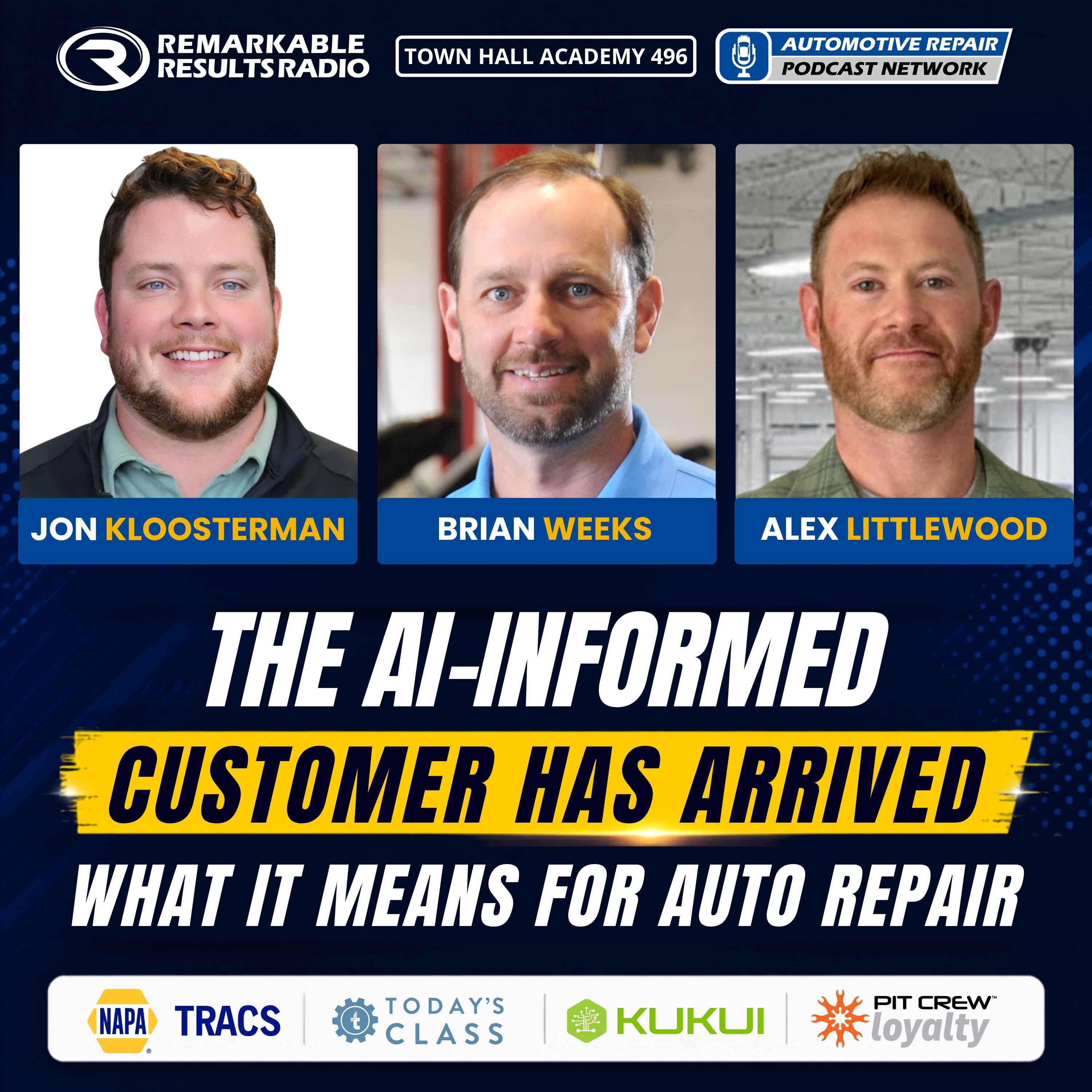
The AI-Informed Customer Has Arrived: What It Means For Auto Repair [THA 496]
Thanks to our Partners, NAPA TRACS, Today's Class, KUKUI, and Pit Crew Loyalty Watch Full Video Episode *]:pointer-events-auto scroll-mt-[calc(var(--header-height)+min(200px,max(70px,20svh)))]" dir="auto" data-turn-id="request-WEB:8e59eec7-a235-4fa3-a072-956fea3fe478-7" data-testid="conversation-turn-4" data-scroll-anchor="false" data-turn="assistant"> *]:pointer-events-auto scroll-mt-[calc(var(--header-height)+min(200px,max(70px,20svh)))]" dir="auto" data-turn-id="request-WEB:49a777bf-d263-4496-bf0b-2eb3a46ac96a-11" data-testid="conversation-turn-24" data-scroll-anchor="false" data-turn="assistant"> Are your customers rolling up to the counter with their vehicles already "diagnosed" by ChatGPT or Gemini? More customers are turning to AI before they ever call your shop, using tools like ChatGPT and Gemini as the "WebMD" for their vehicles. They often arrive convinced they've identified the problem, making today's service advisor responsible for validating the customer's concerns while guiding the conversation back to proper testing and professional diagnostics. Brian Weeks, Jon Kloosterman, and Alex Littlewood join Carm Capriotto to explore how AI is reshaping customer expectations and why the shops that thrive will be the ones that combine technology with authentic human connection. What You'll Learn Why the "human premium" is becoming more valuable as AI-generated content grows.How to respond when customers arrive with AI-generated vehicle diagnoses.Why AI should automate administrative tasks, not customer relationships.How AI helps service advisors and technicians become more efficient.Strategies for adopting AI without overwhelming your team.Why AI can reinforce the value of professional diagnostics and repair expertise. As AI-generated content floods the internet, customers are finding it harder to separate facts from fiction. That uncertainty creates an opportunity for repair shops. AI can improve efficiency, but trust is still earned through knowledgeable people, thoughtful communication, and genuine relationships. The future belongs to shops that use AI to support the customer experience, not replace the human connection that builds lasting confidence. Jon Kloosterman, Director of Operations, WestSide Service, Zeeland, MI. Jon’s previous episodes HERE Brian Weeks, ATC Auto Center, Augusta, GA. Listen to Brian’s previous episodes HERE Alex Littlewood, Founder, ONRAMP Thanks to our Partner, NAPA TRACS NAPA TRACS will move your shop into the SMS fast lane with onsite training and six days a week of support and local representation. Find NAPA TRACS on the Web at http://napatracs.com/ Thanks to our Partner, Today's Class Optimize training with Today's Class: In just 5 minutes daily, boost knowledge retention and improve team performance. Find Today's Class on the web at https://www.todaysclass.com/ Thanks to our Partner, KUKUI Stop juggling multiple marketing tools. KUKUI’s integrated platform delivers 4x better website conversions, automated follow-up, and real-time ROI tracking. Get industry-leading customer support with KUKUI at https://www.kukui.com/ Thanks to our Partner, Pit Crew Loyalty You’re probably tired of chasing new customers who never return. We understand. Pit Crew Loyalty ends the one-and-done cycle, turning first visits into lasting, reliable revenue at https://www.pitcrewloyalty.com/ Connect with the Podcast: Download and Listen on Our Mobile App: https://automotiverepairpodcastnetwork.com/app/Visit the Website:https://remarkableresults.biz/Subscribe on YouTube:https://www.youtube.com/carmcapriottoFollow on Facebook:https://www.facebook.com/RemarkableResultsRadioPodcast/Follow on LinkedIn:https://www.linkedin.com/in/carmcapriotto/Follow on Instagram:https://www.instagram.com/remarkableresultsradiopodcast/Join Our Virtual Toastmasters Club:https://remarkableresults.biz/toastmastersJoin Our Private Facebook Community:https://www.facebook.com/groups/1734687266778976Join our Insider List:https://remarkableresults.biz/insiderAll books mentioned on our podcasts:https://remarkableresults.biz/booksOur Classroom page for personal or team learning:https://remarkableresults.biz/classroomBuy Me a Coffee:https://www.buymeacoffee.com/carmSpecial episode collections:https://remarkableresults.biz/collections The Automotive Repair Podcast Network: https://automotiverepairpodcastnetwork.com/ Remarkable Results Radio Podcast...
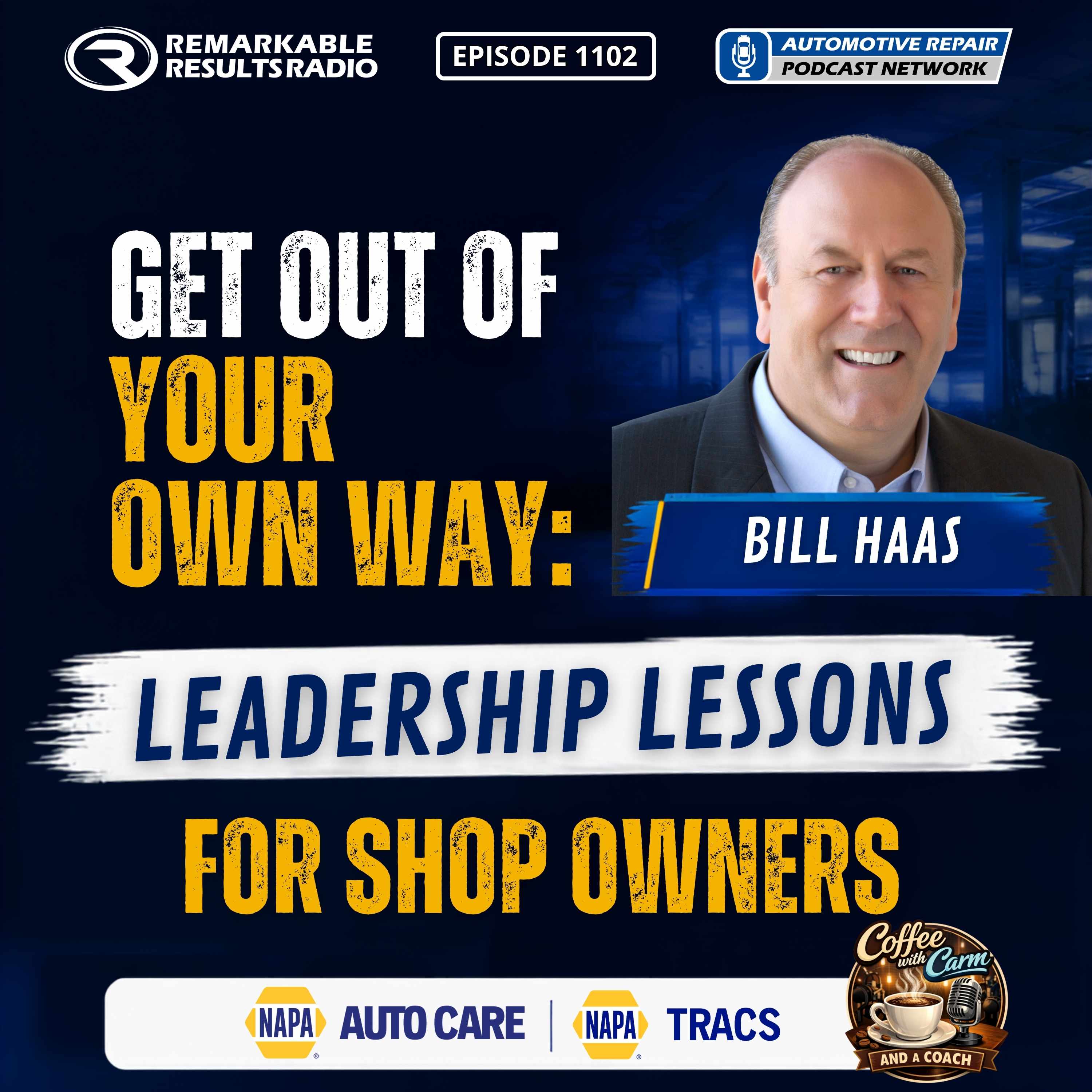
Get Out of Your Own Way: Leadership Lessons for Shop Owners [RR 1102]
Thanks to our Partners, NAPA Auto Care and NAPA TRACS Watch Full Video Episode What's holding your shop back: your competition or your leadership? Bill Haas of Auto Ignite Management joins Carm Capriotto to challenge shop owners to rethink leadership, accountability, and the value of their expertise. Anchored by his mantra, "If you're not on your way, you're in the way," Bill discusses how complacency, avoiding difficult decisions, and failing to lead with intention can limit a shop's success. He also shares why building a profitable, employee-focused business is essential for attracting top talent today and creating a business worth selling tomorrow. What You'll Learn Why "specialist" better reflects today's automotive professionals.How shop owners can become the biggest obstacle to business growth.Why accountability is the foundation of strong leadership.How data leads to better financial and operational decisions.What creates a healthy, profitable shop culture.Why investing in employees increases your shop's long-term value. The most successful shops are led by owners who embrace accountability, value their team's expertise, and continually invest in their people and culture. Build a business employees want to join, customers trust, and future buyers will want to own. Bill Haas, Auto Ignite Management, Bill’s previous episodes HERE Learn more about NAPA Auto Care and the benefits of being part of the NAPA family by visiting https://remarkableresultsradiopodcast.captivate.fm/napaautocare NAPA TRACS will move your shop into the SMS fast lane with onsite training and six days a week of support and local representation. Find NAPA TRACS on the Web at http://napatracs.com/ Connect with the Podcast: Download and Listen on Our Mobile App:https://automotiverepairpodcastnetwork.com/app/Visit the Website:https://remarkableresults.biz/Subscribe on YouTube:https://www.youtube.com/carmcapriottoFollow on Facebook:https://www.facebook.com/RemarkableResultsRadioPodcast/Follow on LinkedIn:https://www.linkedin.com/in/carmcapriotto/Follow on Instagram:https://www.instagram.com/remarkableresultsradiopodcast/Join Our Virtual Toastmasters Club:https://remarkableresults.biz/toastmastersJoin Our Private Facebook Community:https://www.facebook.com/groups/1734687266778976Join our Insider List:https://remarkableresults.biz/insiderAll books mentioned on our podcasts:https://remarkableresults.biz/booksOur Classroom page for personal or team learning:https://remarkableresults.biz/classroomSpecial episode collections:https://remarkableresults.biz/collectionsBuy Me a Coffee:https://www.buymeacoffee.com/carm The Automotive Repair Podcast Network: https://automotiverepairpodcastnetwork.com/ Remarkable Results Radio Podcastwith Carm Capriotto:Facilitating Wisdom Through Storytelling and Open Discussion.https://remarkableresults.biz/Diagnosing the Aftermarket A to Z:From Diagnostics to Metallica and Mental Health, Matt Fanslow is Lifting the Hood on Life.https://mattfanslow.captivate.fm/Business by the Numbers: Understand the Numbers of Your Business with CPA Hunt Demarest.https://huntdemarest.captivate.fm/The Auto Repair Marketing Podcast: Marketing Experts Brian & Kim Walker Work with Shop Owners to Take it to the Next Level.https://autorepairmarketing.captivate.fm/The Weekly Blitz: Weekly Inspiration with Business Coach Chris Cotton from AutoFix - Auto Shop Coaching.https://chriscotton.captivate.fm/Speak Up! Effective Communication: Develop Interpersonal and Professional Communication Skills with Craig O'Neill.https://craigoneill.captivate.fm

The “Kohl’s Cash” of Auto Repair: Turning Customer Rewards Into Repeat Business [THA 495]
Thanks to our Partners, NAPA TRACS, Today's Class, KUKUI, and Pit Crew Loyalty Watch Full Video Episode *]:pointer-events-auto scroll-mt-[calc(var(--header-height)+min(200px,max(70px,20svh)))]" dir="auto" data-turn-id="request-WEB:8e59eec7-a235-4fa3-a072-956fea3fe478-7" data-testid="conversation-turn-4" data-scroll-anchor="false" data-turn="assistant"> *]:pointer-events-auto scroll-mt-[calc(var(--header-height)+min(200px,max(70px,20svh)))]" dir="auto" data-turn-id="request-WEB:49a777bf-d263-4496-bf0b-2eb3a46ac96a-11" data-testid="conversation-turn-24" data-scroll-anchor="false" data-turn="assistant"> What keeps customers coming back when the shop down the street is advertising lower prices? Tom Sciortino of Total Automotive and Jeff Rudnick of Pit Crew Loyalty reveal how a well-designed loyalty program can become your shop's competitive advantage. Drawing from Tom celebrating 40 years in business, they share how rewarding customers, celebrating milestones, and investing in the community create stronger relationships, more referrals, and sustainable growth. What You'll Learn How customer loyalty programs increase repeat visits and average repair orders.Why rewards help differentiate your shop from price-driven competitors.Creative referral strategies that attract high-quality new customers.How time-sensitive rewards can recover deferred work and win back inactive customers.Ways to celebrate business milestones that engage employees and customers.Why community involvement builds trust, loyalty, and lasting relationships. Loyalty is more than a rewards program. When combined with meaningful community engagement and exceptional customer experiences, it becomes a powerful strategy for increasing retention, referrals, and sustainable business growth. Tom Sciortino, Total Automotive, Buffalo, NY. Tom’s previous episodes HERE. Jeff Rudnick, CEO, Pit Crew Loyalty You’re probably tired of chasing new customers who never return. We understand. Pit Crew Loyalty ends the one-and-done cycle, turning first visits into lasting, reliable revenue at https://www.pitcrewloyalty.com/ Beyond the Repair Order: The Strategy of Customer Loyalty [RR 1077]: https://remarkableresults.biz/remarkable-results-radio-podcast/e1077/ Thanks to our Partner, NAPA TRACS NAPA TRACS will move your shop into the SMS fast lane with onsite training and six days a week of support and local representation. Find NAPA TRACS on the Web at http://napatracs.com/ Thanks to our Partner, Today's Class Optimize training with Today's Class: In just 5 minutes daily, boost knowledge retention and improve team performance. Find Today's Class on the web at https://www.todaysclass.com/ Thanks to our Partner, KUKUI Stop juggling multiple marketing tools. KUKUI’s integrated platform delivers 4x better website conversions, automated follow-up, and real-time ROI tracking. Get industry-leading customer support with KUKUI at https://www.kukui.com/ Thanks to our Partner, Pit Crew Loyalty You’re probably tired of chasing new customers who never return. We understand. Pit Crew Loyalty ends the one-and-done cycle, turning first visits into lasting, reliable revenue at https://www.pitcrewloyalty.com/ Connect with the Podcast: Download and Listen on Our Mobile App: https://automotiverepairpodcastnetwork.com/app/Visit the Website:https://remarkableresults.biz/Subscribe on YouTube:https://www.youtube.com/carmcapriottoFollow on Facebook:https://www.facebook.com/RemarkableResultsRadioPodcast/Follow on LinkedIn:https://www.linkedin.com/in/carmcapriotto/Follow on Instagram:https://www.instagram.com/remarkableresultsradiopodcast/Join Our Virtual Toastmasters Club:https://remarkableresults.biz/toastmastersJoin Our Private Facebook Community:https://www.facebook.com/groups/1734687266778976Join our Insider List:https://remarkableresults.biz/insiderAll books mentioned on our podcasts:https://remarkableresults.biz/booksOur Classroom page for personal or team learning:https://remarkableresults.biz/classroomBuy Me a Coffee:https://www.buymeacoffee.com/carmSpecial episode collections:https://remarkableresults.biz/collections The Automotive Repair Podcast...
Related across the catalog

July Courtside & Key2Key Debrief: The No‑Risk, Perfected Business Model - Bonus Zoom Episode 12
Glenn Piccolo hosts the Profit Panel with special guest Todd Hayes to debrief Key2Key to Callbacks and the Courtside program in Houston. They highlight our high-energy training, VIP Rack Attack day, and real stories from team members like Mike Quinn who transformed from knowing nothing about cars to running the entire Houston market in three years. Guests emphasize implementation over theory: surrendering to the concept, doing the work (start with the take‑five), teamwork between front and back of house, and the idea that this perfected business model removes risk when executed. To come and be a part, contact Todd Westerlund at 925-980-8012 or visit AutoshopAnswers.com. Auto-Shop-Media.com
Ep 165: Leadership Isn't Talent, It's Daily Practice with Lynne Ghelfi
The Biggest Mistake Shop Owners Make with Josh Coomes and Brian Ramsburg
Like the show? Show your support by using our sponsors.Need to update your shop systems and software? Try Tekmetric HERELaunch your tool game to the next level with Launch Tech USA! HERERecorded at Tools in Hershey, Pennsylvania, Jeff sits down with Josh Coomes of Auto Shop Therapy and technician Brian Ramsburg to discuss the realities of running a modern repair shop. Brian reflects on more than 18 years in the trade, the challenges of being a solo technician, and why he enjoys variety in his work, while Josh shares his customer-first approach, leadership lessons, and the importance of protecting a shop's reputation. Together, they explore diagnostics, pay plans, hiring, training, and building a culture that values quality over speed.Timestamps:00:00 Listen or Become a Liability 00:35 Tools in Hershey Introduction 02:37 Brian's Career Journey 04:18 Owning a Job vs. Owning a Shop 07:42 Customer Empathy and Service Standards 09:21 Turning Away Older Vehicles 14:48 Favorite Types of Repairs 18:02 Why They Avoid European Vehicles 19:40 Shop Scheduling and Profitability 21:56 Technician vs. Owner Priorities 25:38 Working Relationship Challenges 28:28 Hiring and Leadership Lessons 36:20 Mentoring and a Proof-Based Culture 40:41 Pay Plans and Team Morale 42:03 The Starter Diagnosis Debate 45:41 The Stress of Being the Only Technician 48:50 Quality Control vs. Book Time 52:40 Shop Standards and Fair Productivity 55:27 Workflow and Imperfect Data 58:51 Flat Rate Pressure Stories 01:05:10 Hiring Through Working Interviews 01:10:23 Charging Properly to Grow 01:12:44 Final Advice and Closing Follow/Subscribe to the show on social media! TikTok - https://www.tiktok.com/@jeffcompton7YouTube - https://www.youtube.com/@TheJadedMechanicFacebook - https://www.facebook.com/profile.php?id=100091347564232
Episode 278 - Can You Create A Disney World Experiences in Auto Repair With Bret Beitler
Don't get to the end of this year wishing you had taken action to change your business and your life.Click here to schedule a free discovery call for your business: https://geni.us/IFORABEDon't miss an upcoming event with The Institute: https://geni.us/InstituteEvents2026Shop-Ware gives you the tools to provide your shop with everything needed to become optimally profitable.Click here to schedule a free demo: https://geni.us/Shop-Ware-Free-MonthTransform your shop's marketing with the best in the automotive industry, Shop Marketing Pros!Get a free audit of your shop's current marketing by clicking here: https://geni.us/ShopMarketingProsShop owners, are you ready to simplify your business operations? Meet 360 Payments, your one-stop solution for effortless payment processing.Imagine this—no more juggling receipts, staplers, or endless paperwork. With 360 Payments, you get everything integrated into a single, sleek digital platform.Simplify payments. Streamline operations. Check out 360payments.com today!In this episode, David & Lucas are joined by Brett Beitler to discuss the challenges and rewards of leadership in both family entertainment centers and the auto repair industry. Brett shares his experience in turning around struggling businesses, highlighting the importance of strong leadership, employee empowerment, and cultivating a culture of unreasonable hospitality. The conversation also explores the differences in leadership needs between industries, emphasizing the value of coaching, communication, and continuous personal growth for business success.00:00 Setting up automatic audio switching09:40 Inspiration to join preschool industry10:28 Expanding business in Houston16:37 Forming a Leadership Partnership23:16 Improving airport bathroom satisfaction27:04 Issues with Accountant and Bookkeeping35:00 Dealing with customer feedback40:18 Finding the Right Coaching Clients43:05 Practicing effective leadership skills53:33 Teaching Leadership to the Next Generation58:29 Empowerment in the Workplace01:01:37 Keeping up with rapid tech changes