Now playing — Repair Shop Reckoning
Summary
Your service advisor may be the gatekeeper of your entire business, but have you actually trained them to protect it? In Part One of this two-part Repair Shop Reckoning conversation, Kevin Brown and Jason Tracey break down one of the most expensive...
About this episode
Your service advisor may be the gatekeeper of your entire business, but have you actually trained them to protect it?In Part One of this two-part…
Key takeaways
- —Service advisors are the gatekeepers of the shop and must be trained to sell effectively.
- —Understanding and knowing the shop's pricing structure is essential for service advisors.
- —Training should be ongoing, addressing real issues that arise in the shop.
- —Confidence and self-esteem are crucial for successful selling; advisors must believe in their ability to close deals.
- —Listening to customers and understanding their needs is key to building trust and closing sales.
Frequently asked
- Why is training service advisors important?
- Training service advisors is crucial because they directly impact sales and customer satisfaction. Without proper training, they may not know how to effectively communicate or sell services.
- What should a shop owner provide to their service advisors?
- Shop owners should provide clear pricing structures and training on how to handle customer interactions. This includes understanding overhead costs and how to communicate effectively with customers.
- How can a shop improve its sales performance?
- Improving sales performance can be achieved by investing in training for service advisors, ensuring they are equipped with the skills to engage customers and close sales effectively.
▸Full transcript
Welcome to Repair Shop Reckoning: From Chaos to Control. Because too many shops today are running on chaos. Phones ringing, technicians frustrated, front counters overwhelmed, owners buried in problems with nobody to call. Kevin Brown has spent over 30 years in the trenches learning how to take that chaos and turn it into control. Shop owner, operator, consultant, leader. Through industry shifts, insurance games, bad hires, great hires, and lessons learned the hard way.
This isn't theory. This isn't corporate training fluff. This is real shop experience, unfiltered. On this show, Kevin breaks down what actually works: running profitable shops, front counter control, training technicians, negotiating with insurance companies, building systems that make your shop run instead of burn, and the mistakes that quietly bankrupt shop owners every single day. No corporate scripts, no sugarcoating. And yeah, somebody might get offended.
That's okay. Disney's 2 doors down. But if you want the truth about this industry, buckle up. This is Repair Shop Reckoning: From Chaos to Control. Let's get started. Welcome back to Repair Shop Reckoning: From Chaos to Control. Today we're gonna talk about selling and what it takes to actually be a good salesman. I mean, you can say the psychology of selling. Whatever you want to put it.
But the bottom line is what we're starting to realize when we're doing all this training now, we're doing the phone training, we're doing service advisor training and stuff like that. These people aren't even trained. They're not trained. Yeah. You're putting these people at the front of your business. Their hair's messed up. They're wearing wrinkled shirts. They don't know how to talk to customers.
They don't know how to answer your phone. They don't know how to sell. 9 out of 10, there's only been one shop so far that's actually had a target profit margin on the repair order. These other guys are just winging it. They don't even know what they should be charging. Okay, so if you have a service advisor who's not trained, he doesn't know what to charge due to your overhead and everything else, right?
As a business owner, you should be giving these guys that number, right? Here's your target number. Here's the range you can go. Here's a whole graph of where jobs should fall in depending on dollar amounts, like a matrix of Overall price jobs, not a parts matrix, a labor matrix, an overall dollar amount per jobs, right? Yep. That's what my guys have. None of these guys are having it.
So I've said it before and I'll say it again, every seminar you go to, and we learned it, the service advisor is the gatekeeper of the business. They walk in the door, who's sitting at the front desk? The service advisor. It's not the owner. Well, sometimes it could be the owner, but he's a service advisor. It's not the mechanics. Okay. The service advisor not selling jobs could cost the mechanic money.
We've talked about that before. So the service advisor plays a very, very big role in a business. Okay. That's the gatekeeper of the kingdom. Okay. That's the guy who does the drawbridge, right? Yep. Okay. Because think about it. If he's not doing a good job, you're spending money right now. It's costing me $26 a phone call on my keywords for Garrett Auto Trucks phone to ring.
Okay. Think about that. Yep. It could cost me what, $104 on 4 phone calls if we blow it. Okay. Money down quick. Yeah. So we have to be careful. We have to train these guys. So you guys, when you're sitting here going, man, I'm paying all this money in marketing, it's not working. Well, wait a second here. Let's back up. Marketing not working means what?
If marketing wasn't working, your phone wouldn't ring. How do you guys ever look and say, okay, is my phone ringing? Do you have a phone log? Do you go and say, okay, I got 13 calls today, 30, whatever the number is. Okay. And then just say, okay, what happened to these phone calls? Out of all these phone calls, we'll just say we had 13 phone calls.
How many people are on the schedule for tomorrow? Right. Yeah. 10. I've got 10. We got 10 out of 13. Yeah. Yeah. Okay. It's shocking how bad they're blowing it. I will tell you, I didn't think it was going to be this bad when we started calling shops. I knew it was because I've been spending my, like, the last 8 and a half years with all kinds of small businesses, working with their sales and service teams and even the business owners.
The business owners, if the business owners, if a business owner can't sell, then your people are almost guaranteed that they're not gonna sell because they're most likely learning from the business owner. And so, and we said this before, if the business owner comes in and he's a jerk, most likely your people are gonna be jerks. And it's the same thing if your owner doesn't know how to sell, most likely your people aren't.
Your people aren't gonna sell either. And so when I'm thinking about this industry, who's, who's, who's above the average? Who's actually putting training into their, into their service advisors? You? Yeah. Everybody talks about training their people. Yeah. How many people get on a podcast and actually say, this is what we did this week for training? And I said this at my truck shop.
I said, when we have a problem that arises that I think is something worthy of training that week, we stay an hour after work and we train 'em on it. Whether it's, you know, uh, how to adjust the wheel bearing on a freaking trailer. I'm using this as an example, guys. Yeah. Uh, you know what I mean? Any type of problem that we've seen arise, I'm like, okay, we need to deal with this.
Okay. And then we do training on it and then we do a policy on it. Then we do SOP, standard operating procedure. We have everybody sign it and we get on with our life. But if we don't fix these problems, they never get fixed. Yeah. And that's the big problem with these shop owners. Like they did, they just don't want to deal with it.
And most of the service advisors, most of the people don't know that they're bad because they sound friendly. And the ones that I'm working with, they wanna help the customer. The guy that, uh, we posted the video where he transferred, transferred me to the owner right away, and I got to work with him yesterday. And it's not that he doesn't care about the customer or the business, he didn't wanna give the wrong answer.
And so he just wasn't equipped with the, the tools in, in to control that conversation and realize you don't even wanna tell somebody how long it's gonna take to fix their job. You don't wanna quote them, you don't know. And, and so many things can come in the way. So I asked him, what are you setting yourself up for if you actually answer that question?
And he's like, failure. I'm like, yeah, what goes wrong? And he was like, it takes longer than what I promised and then they're mad at me. I'm like, exactly. He's just not equipped. He's not trained. And I think he'll be great because he was taking notes and he's ready to be coached. Anybody who has never done sales doesn't understand sales. Nope. These mechanics that are on our TikToks and on our Facebooks running their fucking mouths saying, Oh, I could do a service advisor job all day long in Toy Center.
There goes a lot more into just writing estimates. Okay. There's a humanity part of it. You're dealing with people that wanna tell you their whole life story. You're dealing with different personalities. You're dealing with pushy personalities. You're dealing with all pushy personalities. You're dealing with all kinds of different personalities that can become taxing. Okay. Going out and turning wrenches and stuff like that is a bitch.
As you get older, it's harder. Your shoulders, everything like that. I don't care a shit what anybody says. It just gets harder. Yes, you gain wisdom. No doubt about it. You become more efficient. So you're not working as hard, but you're still working, right? Yep. The mental aspect of this is still another whole deal because a lot of these guys don't have the mindset because they have not been trained that they give the wrong answer.
It's going to, what did that guy say? They're going to be mad at me. Okay. So you're worried about a customer being mad at you to the point where it's hindering your answer. Do you know what I'm saying? Like at the end of the day, that customer will throw you over for $5. Absolutely. Right. So you're going to do the best you can, but here's the problem.
If you're not trained, you're not trained. You don't know what you don't know. That's what these people don't understand. Okay. And that's why we started— we've morphed. We started as a podcast. Then I started consulting shops and fixing shops. Then I started realizing, oh my God, now that we got these shops fixed, and they're making money. Some of the marketing money is getting wasted.
So let's do a phone. Let's do module number 1 of the phone, you know, how to actually have service advisors talk on the phone. Now we're building another module, how to actually sell the job after the service advisor walking or phone. We gotta do the reception of the customer module. Okay. And then we have to do the sales. Like, this is gonna go on for the rest of our life.
Do you know what I'm saying? Like the phone, The phone system is a minimum of 7 weeks, how to answer your phone. Yeah. That's a minimum of 7 weeks. If you're doing great, if you do everything perfect, you're the best guy at ever answering the phone that ever came along, that's 7 weeks, right? Yep. That's a long time. But here's the thing, guys.
My people are going through the program. We're having our people go through the same program at my shops, my 2 service advisors and the service advisors out here just to see, and it's working. Okay. I ha— I've been doing this since 1990. Okay. I've sold thousands and thousands of jobs, talked to thousands and thousands of people. I've gone through trainings of sales.
I read books, you know, just you name it, the Al Dietz, the Brian Tracy, you know, the Grant Cardones. Like I've read all them books and you know, the number one thing that these guys all— there's a couple of things that you need when you're selling something and I'm not even reading my notes yet. Number one, you have to have confidence. Self-esteem is the number one thing in selling and your self-esteem comes from closing your first deal, then your second deal, then your third deal.
Then all of a sudden you have self-esteem, right? I can sell, right? Confidence and self-esteem go up. Kind of the same thing, but not really, right? Then the number 3 thing, you know your product. Okay. And now I disagree with a lot of these other guys going, yeah, you got to be a mechanic. You got to have mechanical background. You have to do this.
No, you don't. My best service advisor ever was a girl that was smart and knew how to talk to people. She knew nothing about cars. She sold the shit out of everything. She had like a 92% close rate. Her name was Sarah. She was fucking great. That's awesome. Okay. She knew nothing about cars. Okay. My service advisors right now know about this much about cars.
They sell just fine. Okay. Because we have the mechanics write this stuff up. They have the information, they trust their mechanic, what the mechanics are saying. So they believe in the product they're selling. What did we say the other day when we were talking to somebody, one of the people, we had a conversation after you got done, uh, talking to them about being the service advisor that we were doing the phone training.
He said, Uh, I got in trouble for lowering the prices. Yeah. Okay. There's a guy that doesn't know what's expected of him because if his boss would have trained him and said, do not lower the prices no matter what, these are the set prices for us to afford to pay your wage, vacation, all the— right? Instead, he was looking at that brakes going, oh man, $400.
$400 is a lot of money to me because I'm broke. So let me think about this. Maybe if I make it— I think it should be about $300. 'Cause that's where I would be comfortable with. So that way that comfortable will be that customer. Number one, your self-esteem, your confidence is everything out the window. Number one. And number two, you've taken it personally and looked at that job and say, ah, that's what I could afford.
You cannot sell outta your pocket as a service advisor. That's where the training comes in. Garbage in, garbage out. If you don't have the information of where you're supposed to be, the number you're supposed to be from your boss, 'cause you're not trained, how do you know where to be? Absolutely. Well, and if I can paint the picture and go just a little bit deeper and describe what these people, what these owner shop owners are sending their people out to without being trained, you're sending them out to war without a gun.
You're sending them out to war without how to even use the gun, how to use their equipment. And what I mean by that is there's one of my favorite, one of my favorite movies ever that has to do with sales. There's a movie called Boiler Room, and there's a lot of great quotes out of there. But there's one quote, and Ben Affleck is the character.
He's the sales manager. And he said, Either you're being sold either way on this call, a sale is being done. Either you're selling them on why they need to get the job done, or they're selling you on why you need to drop the price, or, you know, or why you need to, you know, um, why you're not gonna do the sale. And that's what's happening is you, you described it yourself.
These people come in or they, they call up and they have all this sob story. Do you think they're telling the sob story for a purpose? Yeah, they're selling you. They fucking role-played it. They role-played it with his wife. He, he was ready. He was more prepared and role-played than what your service advisor was. He called up and he's telling this sob story and, oh my God, we don't have any money.
And then this happened because he's playing at the heartstrings of that service advisor. And I'm not telling you not to have a heart, but there's a skill to this. And if you're not prepared, you're gonna drop your pants and you're gonna lose every single time. The customer's gonna beat you every single time. I agree. And you know, the funny thing is going a little bit further with that, even deeper than that, think about The person on the personal level, if these guys aren't trained, you got the— okay, let me back up.
You have these shop owners going, Jason, we need to feed Bob, Mark, Fred, and Tom. You have to hit these numbers. You have to do this. You have to do this. Okay, uh, give me your gun. You're a soldier. Give me your gun. Give me your knife. Give me your shield. Go up there and deal with it and make this all happen, right?
Because that— they don't have no— like you said, they have no gun or anything. They're going to war without a gun. Yep. Training is key here. How can you push sales if you don't have your salespeople trained? And I like that book, uh, when he talks about a, um, 90% of the sales— what is it, how did it go? Basically, 90% of the sales in these companies are done by one salesman.
The other 10% get the leftovers. Yeah, yeah, yeah. And he uses the analogy, uh, Brian Tracy uses the analogy of a racehorse. Yeah. They said you have horses in a race, right? That would be all your salesmen. You have the number one salesman, the number one horse wins by a nose. He wins by a nose, but he gets 10 times the pay than the number 2 horse, even than the 3 horses, right?
And they talk— he goes into talking about, uh, safety glass for Dow Corning and how the salesmen, they said, okay, we came out with safety glass, go out and sell it. So this guy goes, gets 6 by 8 pieces of glass cut, and he gets a ball-peen hammer. And he goes into these sales presentations in these offices and says, have you ever seen glass that won't break with a hammer?
They're like, no. Whack! Doesn't break. He sells it. He sells the shit out of it. He wins all the awards, right? They take him to the big award thing and they say, how did you do it? He said, well, I bought the glass, I did the hammer. So they went and bought everybody hammers and glass. He still sold more than everybody else.
They brought him back and said, what happened? He said, well, I had to up my game because you took my idea. He said, so what I started doing now, I bought safety glasses and I gave the hammer and the safety glasses to the guys who tried to break that. And I would watch them beat on their own desk with a hammer smiling.
They would buy the shit. And I still sold more. So my point was he just evolved. And the thing is you can give people baseline training and they could put their spin on it as long as they hit their numbers, right? We don't want to ever be dishonest. But we want to actually train these people to sell. And this is the thing I'm going to tell you.
Um, every, almost every business owner I've ever worked with thinks they're going to hire that guy. And that guy is like less, he's you, he's me. He's less than, he's less than 0.5% of the market out there. That person that just thinks differently, that can just go out there and conversate and sell. And they're operating off a framework. They don't even know what they're doing.
They're just, and you know, he might be aware with what he's doing, The rest of everybody else, you need to put some work in. Yeah. And they were just basically saying that, you know, the best ideas that come where people make millions of dollars are just reinventions or making another idea better. Yes. And I kind of thought to myself, that becomes what I just said about the sales.
Yeah. They say, hey, here's the framework, but let's put the Kevin Brown spin on it or the Jason Tracy spin or the Lincoln Brown. Yeah. My 19-year-old son sells better than pretty much 90% of the freaking adults. He's got confidence cuz he's sold, he's sold lots of jobs. But this is the thing is out of all the people I've worked with so far, I know that even though he's young, he has the most experience because he's the only service advisor I'm working with that owns their own business, that's successful in business, that's still operating their own business, plus is doing the service advising role.
And so he's got all this experience from a sales standpoint, but he's taking notes, he's asking questions, he's engaged. And so my point, some people jump on and say, hey, I've been doing this for 20 years, or, hey, I'm so I've got all this experience and that's great, but what are you doing to, to improve your experience? Practice isn't perfect. You could be practicing the wrong way.
I agree. Perfect practice is perfect. It's kind of like learning how to shoot a bow and start out with a bad habit. Nobody— or golf swing a golf club and nobody fricking ever checks that bad habit. That bad habit just stays there. Then that bad habit is also muscle memory. And then you practice 4 hours a day doing it wrong, the wrong way.
Yeah. And you know, the funny thing is you have, and I know you'll resonate with this, I have a salesman personality. I'm always selling something or another. You know, my wife's like, Jesus Christ, you're always selling me on this or selling me on that. She's like, and I'm like, I guess it's kind of true to a certain extent. I want people to see my way.
And if I didn't have a track record, it'd be a whole different story. It's like Dave Ramsey says, you don't take, uh, advice from your broke brother-in-law. You don't take criticism from somebody you wouldn't take advice from, right? I'm here to tell you guys, you shop owners, you need to get on the phone and call us for this freaking training. Okay, it's not that bad.
It's a 7-week course. And then usually it leads into us fixing everything else in your shop too, because we start to feel— but here's the thing, guys, you expect somebody to go up and do a job that's not trained in any— name one industry that you could put somebody in there and not train them some way or another. That's why they come up with onboarding.
They came with, you know, what do they call internships? And they have the other thing, probations. They have all different kinds of weird names for it. Basically it all amounts down to training, right? I'll never forget when I took my game to the next level because I always had the personality for sales and stuff like that, but I always did well or okay.
And I remember I had a mentor that was like, how serious are you taking this? How good do you want to be? And I'm like, I want to be the best. And he was like, well, if you want to be the best, you got to read the books. You got to go to the seminars. You got to practice. You got to put more work into your game.
He's like, does that athlete or does that doctor just show up? No, they've gotta practice. They gotta put a lot of work in to get good at what they're doing. And I'll say that for everybody. It doesn't matter how long you've been doing this. If you're not practicing the right way, chances are you're losing more than not. Right. And you know, you get, you get into situations where customers— here's another finger of this whole thing.
You get into, and you get customers of all different types of personalities. You get the customer who wants to badmouth the shop next door to you that you might possibly know the people. Don't fucking jump on that boat. Just say, you know what? Yes, I understand. You know, Bob's whatever, Bob's Auto Repair does it. Okay, you don't like it. This is why his customers usually end up coming to us.
We do this, this, and this. You don't badmouth them. This is why we're better than them. That's about it. You don't have to trash anybody. Okay, there's enough cars on the road for everybody. And you know, everyone's, oh yeah, we're way better than them, blah, blah, blah, blah, blah. No, you keep it on the upper, up, up and up. You know, first off, when you start trashing them, now it's like, now you're rallying them to talk more about what you're not.
Like, you're, you're getting them to talk more about them. You want to bring the focus back to you. And I think that comes down to confidence too, because when you're confident that you're, you are the best, you don't have to say you're the best. You just operate. You just do. The competition and whoever they're talking about doesn't matter because you know that you're going to take care of them.
Right. And you know, the number one thing before we get into my notes and start this podcast, because we've been talking about for what, 25 minutes? But the number one thing that I kind of, I see is the number one thing, phone call I get is from body shops. They don't have training to sell the jobs, to deal with the insurance companies.
Their service advisor, estimators, whatever, just kind of lay down for this, for the insurance companies. They don't make enough money, so therefore they're broke. So therefore they have to do what the insurance company says just to survive. So it's a circle. Progressive brings a car in, Progressive tells you how much to fix it. You know, Progressive freaking writes you a check, you fix the car, it starts over again.
But the problem they're missing is customer or the employees pay the benefits, everything that's going up. Progressive prices aren't growing up, going up with that. So what ends up happening with the Geico, the Progressives, the Allstates, the State Farms, they have shaved it all the way down to the point where it's better for them. Not you as a shop. So therefore you're just sitting there and it all comes down to one thing, not running your business effectively because you don't know your numbers.
And I always come back to the numbers in this podcast because if you guys think about it, money equals freedom. I don't give a shit what anybody tells you. If you have a pile in the bank of— in the money in the bank at your collision shop, say right now your collision shop had $150,000 in the bank. And your bills were all paid, your employees are paid, and everything was good, and Progressive came and said, I'll give you $64 for that, for that repair, and your labor rate's $128, you'd be like, no, I'm not doing it.
Okay, but instead they have to do it because they're broke. I'm talking to these body shop owners that are doing $1.5 million a year, they're making $40,000 a year in their body shop. Oh, fuck. And I'm like, yeah, you don't have a— you don't have a business, you have a hobby. Okay, you have a job. Okay. And you're underpaid. Underpaid at that job.
Right. But, you know, here's the thing with these guys. You can't fix them. And this goes into the sales thing. You can't fix them just like you can't fix some customers, because I've had these guys where I do the consultation call to see if we're going to take them on as a client. And the whole time they talk about how fucking great they are.
At the end, I said, well, we talked for 40 minutes and you told me how great you are and what you make in your shop and how everything's so wonderful, but you're fucking broke. And I'm not being arrogant here, guys. This is the truth. This happens weekly, okay? If you're gonna call somebody— and I've said this before— if I was in a room with Elon Musk, I wouldn't tell him how great I am.
I would sit there and let Elon Musk fucking talk, and I would close my mouth and open my ears. Yep. And I would just sit there and listen to him because I'm going to learn something from him, okay? Instead, these guys want to call a guy like me who has— let me tell you guys, I have 2 successful shops and a consulting business and several other businesses.
Okay. I know how to make money. There's no doubt about it. You can say I'm arrogant, whatever. The proof is in the pudding. I make money. Yeah. Okay. So why wouldn't you call me and tell me how broke you are for an hour and then tell me, yeah, okay, what do you, what do you got to say about that? You know how great you are.
It's just, it's like, shut your fucking mouth. God gave you one mouth and 2 ears. Close your mouth and listen. Okay. So now we're gonna swing this back to sale. The number one mistake people make is they don't listen. Now I'm going to give you a story, guys, because we all love stories. This happened to me yesterday. Then we're going to get into the podcast.
My iPhone, the charging port is messed up. It'll charge for 3 or 4 minutes, then it'll be like, boop, come back. You know how when you plug it, it makes a charging noise? Yep. All night long, if I plug it into the C port, it charges, not charges. Me being who I am, go grab another charger. It still does it. Okay, well, maybe it's the plug.
Well, the lamp's still working, so highly doubt whatever. Switch plugs, still does it. Put my Cybertruck, it still does it. Put it my freaking brand new truck, it still does it. Different cords in all the trucks, still does it. Make an appointment at the Apple Store, go to the guy, tell him, listen, this is what's going on. Let me tell you what I did.
Yeah. I tell him exactly all the things I did. I tested this, tested that. I'm a freaking mechanic by trade. I do all the diagnostic work myself. I came to him and said, these are all the things. He takes a little clay, plugs it in there, pulls a little bit. Now that's not dirty. Runs a test, everything's good. He's like, did you try a different charger?
I wanted to scream, what in the hell? I told you all that stuff. You did not even listen. Now you know how your customers feel. Yep. When you're a service advisor, they tell you all this stuff, you're not even paying attention, and they have to repeat yourself. You're like, this fucker's not even listening to me. Second session, step O in the control process.
This is, and I, I tell people, this is the secret sauce. This is the reason why the whole entire thing works because like nobody's listening to people. I, I had, I had a meeting a couple weeks, a couple of years ago with this financial advisor that like I just met in the community and she wanted to meet me and connect with me or whatever.
And she, for, for 30 minutes, our meeting was only scheduled for 30 minutes. For 30 minutes, she sat and told me how she was different than everybody else, how she stops and she listens and she doesn't just sell people and blah, blah, blah, blah, blah. And then she hijacked my next 30 minutes and tried to sell me. And I'm like, it doesn't matter what you're saying.
You're not listening. You're not listening to me. You're just talking, talking, talking, talking. And I'm never— not only am I never going to talk to you again, but I'm going to tell a story about you every chance I get. And oh, by the way, she's out of business. She's out of business. Less than 2 years and she's out of business. So here's here's one.
You you witnessed this. That insurance adjuster that came in here. Yeah. And I stopped and I said, "You don't listen to me. You have not been listening the whole time I told you this." Here's a perfect example. He was selling me something, and I was selling him something. Yep. My selling him something was, "I'm not taking your prices. I'm not doing this.
Take it or leave it," was my sales pitch on him. Yep. He was like, "But that that that." I said, "You don't seem to be listening because that guy is not used to an." adversarial customer like me. He used to come in his shop going, we're going to pay you $30 an hour instead of $60. And the guy's like, okay. And then I came in and boom.
And guess what happened today? His brother called. We have another job, Jim. We're going ahead and we're writing this, blah, blah, blah, blah, blah. I understand you're really strict on your pricing. And Jim's like, we're not really strict. Our pricing is our pricing. You don't adjust it. The customer pays the difference. But we laid the groundwork, so they all know now. Yeah, I did in that office that day.
It's like, these people— well, that's a whole nother podcast, but let's get started breaking this whole thing down, right? But I always like, you know, that Apple yesterday, I was just like, are you kidding me? I sat there and told them all this stuff, which you really stop and think about, makes sense. Well, dude, because like— and I said this, I've said this to everybody we worked with this week— you got to think, most of these people calling you, they're like walking around life, their wife doesn't listen to them, their kids aren't listening to them, their employees aren't listening to them.
They feel like nobody's listening to them. If you can just stop and you're listening to what's going on and you're like, oh, so what I hear you saying is this and this and this. Oh, you're valid. That guy doesn't even know why he loves you so much. He just instantly likes you. Yeah. And part— that's part of sales. It's part of sales.
When you leave, the people you're trying to sell stuff to, they just said, wow, what a nice guy. When you leave. Yep. They don't wanna say what an arrogant dick. Yep. What a nice guy. What a nice guy. Okay. So let's do a little bit deeper dive on what I talked about, the appearance. Okay. So when somebody comes walking in, they're already evaluating you when they're walking in your front door.
And this is going to go— we're going to hear this 150 times over the next 10 podcasts, right? Yep. Is the place clean? Women especially, if they're bringing their car and they don't want to go ahead to sit down on a toilet seat that's all greasy with fingerprints all over it, uh, dust bunnies in the corner, a dead plant, you know what I'm saying?
And yeah, uh, they don't like that. So you have to have it clean, put air fresheners in, nice smell and all that stuff. So when they walk in there, automatically they think this is a professional establishment. They care enough to clean, right? Yep. And then the guy behind the counter, he's got his hair combed, he's got a company shirt on, right? He's professional.
His lunch isn't on the counter from yesterday. There's not stacks of repair orders. He's not dirty. Now, obviously mechanics are gonna get dirty, right? There's dirty and then there's dirty. We've all known that one guy in the shop we've called Pink Pen. Pigpen. Yep. You look at him at lunch and you look at him and he's had the same grease smudge in his ear for 3 days.
Okay. Yeah, you can get dirty in our business, but you go home and take a shower before you go to bed. Yeah. Yep, we all do. Yeah, right. Some of my guys take showers at the shop before they even go home. They change their clothes and they go home clean, whatever, right? But what you're conveying without saying is, hello, we're a professional shop.
We take the time to clean. It smells nice in here. Would you like some coffee? Let's go ahead and get started here. Da da da da da, right? You're starting the sales when you walk in the door, even though you don't think you're selling walking in the door. You're selling a brand, right? That'd be brand recognition. Yep. Right. So a very well-spoken service advisor is going to lay everything out loud.
And I've said this 100 times over and over again, but I'm leading into the sales, right? So people are coming in and they already have something on their mind, right? You have to understand how important people's cars are to them. Cars equal what, people? Freedom. Yep. Without a car, think about it. Like right now, like when your whole motorcycle is broke down, you didn't really have to freaking get around.
You're like, it gets a little taxing on your mind. Oh yeah, for sure. I can't just jump in a car and do this. I can't get on the bike, go, right? Yeah. People get irritated. All right. Not everybody has 6 cars like myself, so I just get in a different one. Right. But that's just for the haters. Yeah. You know, but cars equal freedom, right?
So, and I talked about this a couple of weeks ago, that might equate, you know, it could blow dance lessons, could blow taekwondo, baseball games, grocery shopping. Okay. So it's a big deal when somebody's brakes or whatever start grinding or whatever, and they got to bring it to the shop. Your job as a service advisor, close your mouth, open your ears. 9 times out of 10, you could get the Freudian slip to happen where they tell you exactly what's on their mind.
Yep. Okay. And it's not, oh, I woke up this morning, opened my eyes and said, damn, I want to buy brakes for my car. Maybe it made a noise 2 weeks ago. And most people, I'm busy. I ignored it. Did I really hear the noise? They start playing the game. So they might've been thinking about this problem for 2 weeks. Right. So then it starts to get really bad.
They hit us like, they're like, oh shit, I'm using brakes as an example. So you walk in, they walk in and they're upset in their mind, but you really don't know. They look irritated. Agitated, whatever, pissed off. You're like, "How can I help you?" Well, my brakes are making noise. Okay, you ask the question. How long has this been going on? Well, it happened two weeks ago.
Okay, then you start asking questions, and then you listen. Questions, you listen. And then chances are you're gonna get to the point where she's like, "My God, I'm so upset! My daughter's got dance." Da da da da. Now you're on a personal level with them. Yep. No problem, man, ma'am. We do these all the time. We'll get you taken care of. Let's get you written up.
Da da da da. Go on with the whole process, right? The psychological part of everybody's human. This goes back to everybody needs that personal touch, which you said and I said last week. Like it's not hard to be a rock star in today's world. Nobody cares. Nobody wants to talk. Some of these young kids cannot even communicate without sending you a text.
Yep. Is that not crazy? It's crazy. How many people? And I sound like a broken fucking record, but how many times have you? Call these younger kids and they don't answer the phone, you get a text back, hey, what's up? You called? They don't even know how to communicate, and communication is a big problem. And they don't even realize 90% of communication starts with body language.
People don't even take that into consideration. Yep. Facial expressions. We talked about the, the call we posted where the guy was sighing the whole time. Didn't even know he was sighing. Didn't even know he was doing it. And I don't even know what his— we were obviously have a crystal ball. We couldn't see what was going on, but he was just— to me, he sounded exasperated.
Yeah. Like I was bothering him. Like you were bothering him making the phone call. Yeah. Don't you think? Yeah. So him doing that and that shop we're working with, they say their sales are down. They're the ones that just booked today, actually. Yeah. Yeah. Yeah. But their sales are down. Go figure. And they don't know why. Do you ever stop as an owner and sit there and listen?
That's part of our program. Sit there and listen what's going on in your front office. You'll be horrified. And don't interrupt them right in the middle of it. That— you'll be horrified. Trust me when I tell you this, 99.9% of the people need our phone training. Now, we had one guy that was a B+. He did pretty good. Yeah. And he's getting better, obviously, as we train him, right?
Yep. Or actually, you haven't even trained him yet, have you? I have no— start with him, right? Yep. You know, 9 times out of 10, when you talk to these people like human beings and listen to what they have to say, they'll tell you exactly what's on their mind. And it makes it so much easier to make that personal connection. And then the next time they're like, wow, I really liked that place.
That guy took the time to listen to me. I got a 1-star review. You guys can go look on Garrett Auto and Truck last week from a guy who did not listen. We tried to explain it to him. He would not listen. He gave us a 1-star review. He brings his truck in. We send him a courtesy inspection and we send him an hour labor to check it out.
It's a refrigerated truck, box truck. They haul food products and the rear door had a problem. And in our courtesy inspection, the windshield wiper blades are messed up. They're streaking. So that's a DOT infraction. So we just mark it down. We don't try to sell them. Wiper blades. A reefer box, because all the cycles and stuff like that, Morgan recommends— it was a Morgan box, all stainless steel stuff for the heat cycle so it doesn't start to rust and da da da da.
We called the manufacturer. The truck was brought in Monday. We called the manufacturer. We finally got everything all estimated Thursday. Anybody who knows anything about roll-up doors on back of box trucks, the operator, which is the 2 big springs just like your garage door, has cables that go down. It ripped out of the wall, so it was hanging and bent. There's rusted door hardware that somebody replaced with the wrong hardware.
The door seals were hanging out of the back of it, so it was leaking, uh, cold air out. So we wrote him an estimate for like $4,700. He says no, picks the truck up, gives us a 1-star review. Once again, you can go read it on Google. And he basically says that we tried to sell him wiper blades, which we didn't. It was a, it was just courtesy inspection, does not even know how to read the paperwork.
We tried to explain to him why it was very important in today's world to have all the correct parts in this truck with all the different parasites going on and stuff like that. The explosive diarrhea freaking parasite and all that, right? We take food standard trucks very seriously. So yes, it's gonna be way more expensive. It's a shame that you don't wanna take care of your truck.
He basically wrote that he took it to a guy and the guy fixed it for $300. Well, I could have fixed it for $300 if I wanted to hack it together, not put seals in it, not put the correct hardware on it. There's different levels of what's going on. But we sat there, to my guy's defense, sat there and explained this all to the man, and he did not want to hear any of it.
He went and just crashed us and got it fixed for $300. That's not a customer you're ever going to fix. Nope. That is a guy you're never going to fix, that customer. Nope. Yeah, as much as you educate him, he was listening, not even— it was going in one ear and out the other. He was hearing $300. He was, he was price motivated, right?
And them are the problem child customers that no matter what you do, you don't say the right thing. They already come and their feathers are all ruffled up. This is where the body language comes in. They start shaking their head. And chances are 9 times out of 10 in the commercial world, they don't run their business very good because they don't know their numbers, their margins.
So they're broke. So you come at them with a $4,700 estimate to fix their truck, right? They freaking go haywire on you and then you end up getting a bad review. That's why I cannot stand freaking reviews. And if you read my reviews, I go right back after these people. You know what I do now? I go and put the review on their page and I review them and I put all my pictures of their trucks being messed up on their page.
I got 2 of them right now. I review them back because you know what? Yeah, how can you say bullshit to me? So I review them back and I tell everybody, guys, if you're gonna get bad reviews and you're a commercial company, give them a bad review of being a shitty customer. Well, because you, you're talking about this truck and like with everything going on with the food, just Period.
At any time, you want to have the correct parts so you're, you're, you're actually properly refrigerating the food that you have inside, as opposed to getting it fixed for $300. You have— and we talked about this, I know this is part of the list— peace of mind. Yeah, yeah, exactly. Like, we do quality work and we're not for everybody, you know. There's, there's a— what do they say?
There's a chair for every ass. Yeah. Okay, if you want to go to the $300 guy, that's fine. I'm not saying that the food is all thawing out and it's green. I'm not saying that at all. But what I'm saying, that just kind of paints a picture of what kind of company that man runs. Yeah. If he can't come up with the money to fix his truck correctly, he wants to hack it back together and it's got rusted, seized up door parts.
Not to mention the safety aspect of the cables breaking and stuff, you know, dropping and the doors. You got people going in and out of that all day. There's a whole, whole array of different things that could happen with roll-up doors. Yeah, roll-up doors are dangerous. They have freaking stainless steel cables that are running up there under a lot of tension. So I write it up 100% to fix it correctly, the right way, like it came out of the factory.
Okay, that's not the same way as a guy who put self-tappers in it for $300. Yeah, the, the repair is not the repair. It's a limp-along repair. We patched her, and there's other words for, for it. Yeah, rigging is the end of the other words. Yeah, yeah, you know what I mean? Yep. All right, that's gonna do it for this episode of Repair Shop Reckoning.
If this helped you, please make sure to subscribe so you don't miss what's coming next. We drop real conversations real systems, and real solutions every week. We'll see you back here next time on Repair Shop Reckoning.
More from Repair Shop Reckoning

Adapt or Die: Using AI To Take Control Of Your Shop
Every major shift in business creates two kinds of shop owners. The ones who wait until everyone else has already figured it out. And the ones who adapt early, learn the system, and create an advantage long before the rest of the industry catches up....
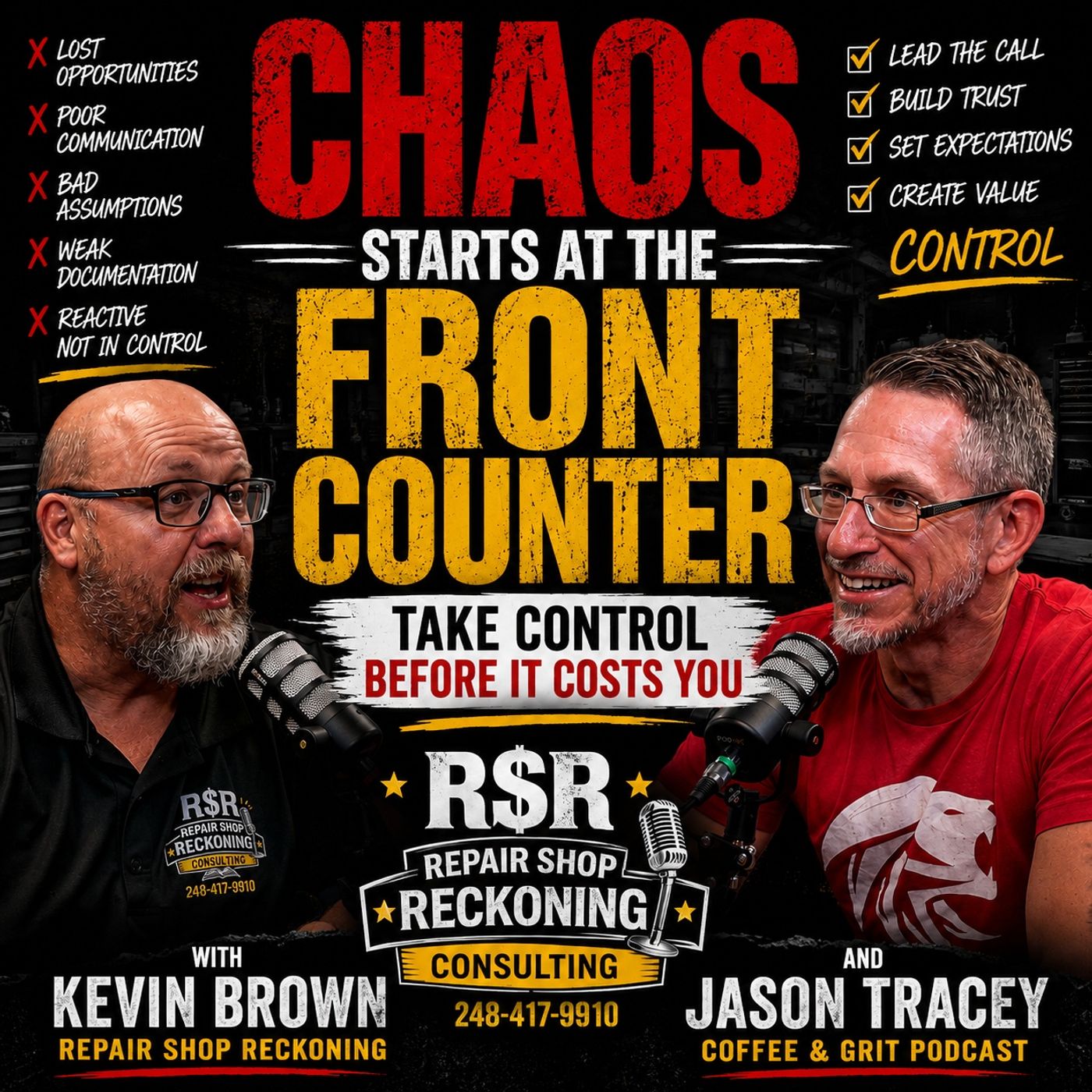
Chaos Starts At The Front Counter...Take Control Before It Costs You
Every shop owner has invested time and money to make the phone ring. But what happens when it finally does? In this episode, Kevin Brown and Jason Tracey tackle one of the biggest profit leaks in the automotive industry: what happens at the front...
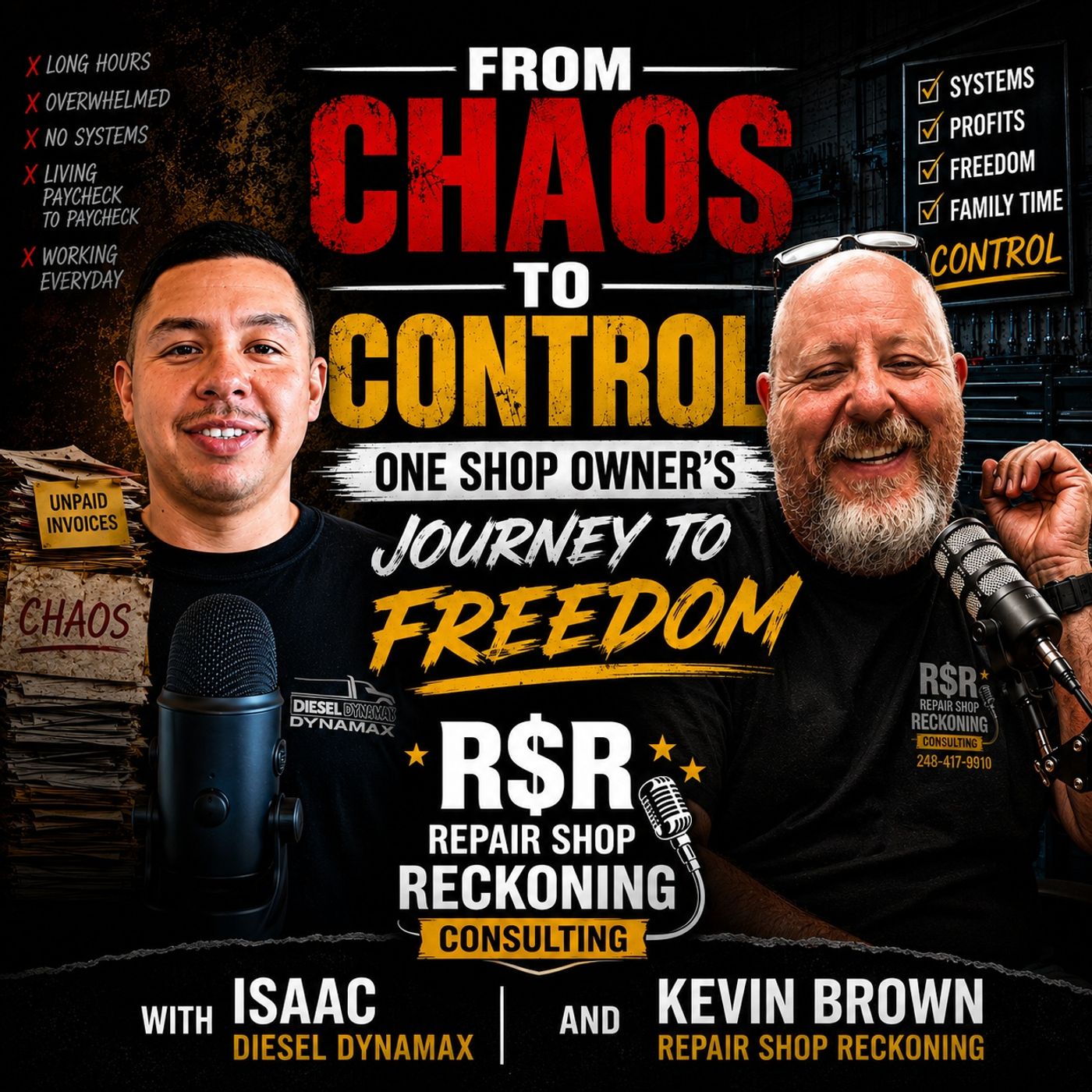
From Chaos To Control: One Shop Owner's Journey To Freedom
In this episode of Repair Shop Reckoning, Kevin sits down with Isaac, owner of Diesel Dynamics in Texas, to talk about what really changed after six months of focusing on the fundamentals of running a better business. Like so many shop owners, Isaac...
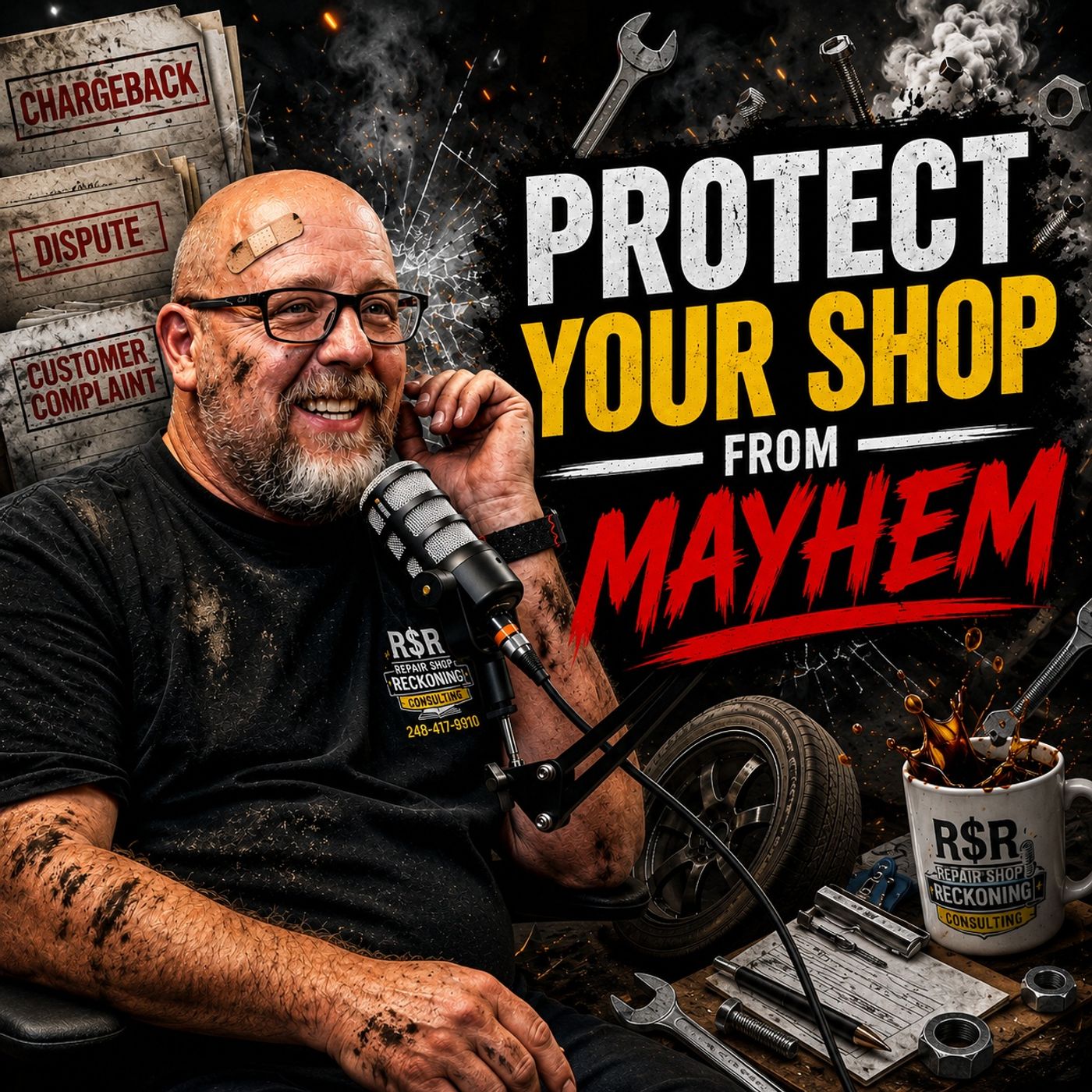
Protect Your Shop From Mayhem
In this episode of Repair Shop Reckoning, Kevin starts with a debate that lit up social media:Should technicians be helping pay for scan tools?But what starts as a conversation about equipment quickly turns into something much bigger.This episode is...
Related across the catalog

Deferred Work: The Most Overlooked Growth Opportunity in Auto Repair [RR 1101]
Thanks to our Partners, NAPA Auto Care and NAPA TRACS Watch Full Video Episode Most auto repair shops are sitting on a goldmine of untapped revenue without realizing it. In this episode, Carm Capriotto welcomes Jimmy Alauria of 3A Automotive & Diesel Repair to discuss how deferred work can become one of your shop's most effective growth strategies. By pulling just two years of data from his shop's database, he discovered $3.3 million in potential revenue from deferred services. From better customer communication to smarter follow-up systems, Jimmy explains how to turn yesterday's declined repairs into tomorrow's repair orders. What You'll Learn Why your customer database is one of your shop's most valuable assets.How deferred work can create significant new revenue without increasing car count.Why shops should schedule the next appointment before the customer leaves.While DVIs provide excellent transparency, their primary goal should be to educate the customer and help them plan, rather than to force an immediate $5,000 repair order. Jimmy notes that customers decline work not necessarily because they lack trust, but because they need time to budgeHow categorizing repairs by safety, reliability, maintenance, and appearance improves customer understanding.Understanding the customer's personal "car goals," whether they love the car and want to avoid a new car payment, or they hate the car and want to trade it in, is also critical to framing recommendations effectively.The shortcomings of traditional CRM follow-up systems and how AI can improve communication.How AI helps prioritize repairs and translates technical repair language into customer-friendly messaging that drives response. Deferred work isn't lost business; it's future opportunity. By building better follow-up processes, educating customers, and using technology to communicate more effectively, shops can strengthen relationships, improve customer retention, and unlock substantial revenue already waiting in their database. Jimmy Alauria, 3A Automotive and Diesel Repair, Phoenix, AZ. Jimmy’s previous episodes HERE Learn more about NAPA Auto Care and the benefits of being part of the NAPA family by visiting https://remarkableresultsradiopodcast.captivate.fm/napaautocare NAPA TRACS will move your shop into the SMS fast lane with onsite training and six days a week of support and local representation. Find NAPA TRACS on the Web at http://napatracs.com/ Connect with the Podcast: Download and Listen on Our Mobile App:https://automotiverepairpodcastnetwork.com/app/Visit the Website:https://remarkableresults.biz/Subscribe on YouTube:https://www.youtube.com/carmcapriottoFollow on Facebook:https://www.facebook.com/RemarkableResultsRadioPodcast/Follow on LinkedIn:https://www.linkedin.com/in/carmcapriotto/Follow on Instagram:https://www.instagram.com/remarkableresultsradiopodcast/Join Our Virtual Toastmasters Club:https://remarkableresults.biz/toastmastersJoin Our Private Facebook Community:https://www.facebook.com/groups/1734687266778976Join our Insider List:https://remarkableresults.biz/insiderAll books mentioned on our podcasts:https://remarkableresults.biz/booksOur Classroom page for personal or team learning:https://remarkableresults.biz/classroomSpecial episode collections:https://remarkableresults.biz/collectionsBuy Me a Coffee:https://www.buymeacoffee.com/carm The Automotive Repair Podcast Network: https://automotiverepairpodcastnetwork.com/ Remarkable Results Radio Podcastwith Carm Capriotto:Facilitating Wisdom Through Story Telling and Open Discussion.https://remarkableresults.biz/Diagnosing the Aftermarket A to Z:From Diagnostics to Metallica and Mental Health, Matt Fanslow is Lifting the Hood on Life.https://mattfanslow.captivate.fm/Business by the Numbers: Understand the Numbers of Your Business with CPA Hunt Demarest.https://huntdemarest.captivate.fm/The Auto Repair Marketing Podcast: Marketing Experts Brian & Kim Walker Work with Shop Owners to Take it to the Next Level.https://autorepairmarketing.captivate.fm/The Weekly Blitz: Weekly Inspiration with Business Coach Chris Cotton from AutoFix - Auto Shop Coaching.https://chriscotton.captivate.fm/Speak Up! Effective Communication: Develop Interpersonal and Professional Communication Skills with Craig O'Neill.https://craigoneill.captivate.fm
Ep 105 - Zeb Beard | Your Shop Doesn't Need More Techs
Tekmetric transformed my shop. Plain and simple. Want that for yours? Touch HERETurnkey Marketing takes the stress of doing something I'm not good at off my plate. And gives it to someone who is. Click HERE for more.Send your service advisor to hands down the BEST service advisor training in the industry (even other coaching companies agree). It's Elite Worldwide's Masters Program. The next one is happening in Dallas Texas, September 10-12. Learn more HEREWhen I used the maintenance tool for the fist time with Detect Auto, my mind was blown. My advisors had the same reaction - and then SO MUCH MORE TIME. Learn more about Detect Auto and book a free demo now!In this episode, Bryan Pollock sits down for a no-holds-barred conversation on shop ownership, team culture, and social media with Zeb Beard. Zeb shares why he's big on visualizing goals—and how that mindset helped him score a brand-new facility. They dive into why having dedicated roles, like a full-time DVI specialist, can massively boost shop efficiency (and profit). Plus, Bryan and Zeb talk about why they're not afraid to stir the pot with the trolls on social media, and how “playing grab ass” at the shop stalls progress.Timestamps:00:00 Why “100% production” is for amateurs01:18 Why techs need to get off Google and show initiative03:40 The hiring hack: leave info out and see who can problem-solve06:00 Raising independent kids—now considered “dangerous”?!08:26 Can’t = Motivation: Zeb's reverse psychology for success10:02 Visualizing ridiculous goals (and how it landed a new shop)12:13 Social media, comedy, and the birth of the viral “road report”14:11 From slow shop to slammed: the power of relatable content16:11 Why automotive posts attract trolls—and why Brian loves ‘em19:03 Haters gonna hate, but the right customers love the realness20:53 Stop showing brake jobs, start showing personality25:35 Growth mode vs “growing into your skin” after scaling up27:47 The struggle to find talent in rural America30:17 Choosing city vs small town for shop location32:41 Surviving a soft market and approval rate dips35:05 Organic marketing: how the “road report” really moved the needle37:00 Tracking the 10-year cycles in auto repair shop business41:58 Boundary setting: solving the “grumpy shop owner” syndrome43:53 Introducing William, the DVI wizard: why every shop needs one48:04 How a DVI specialist and cleanup guy can outpace 3 extra techs54:15 Unlocking ultimate tech efficiency with multiple bays per tech59:18 Real math: How more bays explode your bottom line01:00:47 Firing low producers—why your shop might actually run better
Ep 101 - Matt Curry & Richard Tonetti | The Secret Behind an $40 Million Auto Repair Business
Tekmetric transformed my shop. Plain and simple. Want that for yours? Touch HERETurnkey Marketing takes the stress of doing something I'm not good at off my plate. And gives it to someone who is. Click HERE for more.Send your service advisor to hands down the BEST service advisor training in the industry (even other coaching companies agree). It's Elite Worldwide's Masters Program. The next one is happening in Dallas Texas, September 10-12. Learn more HEREWhen I used the maintenance tool for the fist time with Detect Auto, my mind was blown. My advisors had the same reaction - and then SO MUCH MORE TIME. Learn more about Detect Auto and book a free demo now!What does it take to build a high-performing automotive business that continues to grow while maintaining a strong culture?In this episode, Mike Allen sits down with Matt Curry and Richard Tonetti from Craftsman Auto Care to discuss the systems, leadership philosophies, and growth strategies that helped build one of the industry's most respected shop groups. Matt shares lessons learned from growing to 10 locations and $18 million in revenue, including the importance of culture, leadership, sales training, digital inspections, and customer reviews. Timestamps:00:00 The $1 Raise That Changed Everything01:14 Are 4-Day Workweeks Actually Hurting Your Business?03:41 Why “Money Motivated” Isn’t a Dirty Word06:46 From Tire Changer to VP: Growth Stories from the Shop Floor07:16 Matt’s Path: 10 Stores, $18 Million, and a Comeback09:13 The Secret Sauce: Buying Distressed Shops & Turning Them Around10:36 How to Hit $1,000 Average ROs (and Why Volume Per Bay Matters)11:02 The Turning Point: Digital Inspections & Sales Training13:29 Being the Best Shop Cheerleader—Even on Bad Days14:11 Making the Hard Work Fun (Yes, It’s Possible!)19:00 Sales Scripts, Objection Handling, and The “One More Thing” Rule20:05 How to Hire the Perfect Counter Person (It’s Not About Automotive Experience!)22:49 Culture vs. Corporate: Why Good Techs Never Leave25:15 Google Review Domination: Building Trust and Cutting Marketing Costs28:20 Spiffs, Friendly Competition, and Making Reviews a Shop Habit32:10 Small Gestures, Big Impact: The Stuffed Animal Touch35:13 Why Internal Competition Works—But Only with the Right Culture37:46 When Growth Kills Culture (And How to Avoid It)40:36 Can Independents Still Win? Opportunity in a Corporate, Tech-Heavy Landscape43:27 The Blueprint: Build Slow, Build Right, Stay Nimble45:17 Level Up: Giving Back and Training the Next Generation47:04 Growing Your Own Techs & Locking Down Quarter-Million Dollar Talent

207 - You Can't Wrench and Run the Business Forever: A Shop Owners Turning Point
207 - You Can't Wrench and Run the Business Forever: A Shop Owners Turning Point June 3rd, 2026 - 00:49:01 Show Summary: Nathan Geransky shares his journey from running an automotive shop on his acreage to moving into a commercial location. Years of long hours and limited financial insight pushed him to seek coaching and change how he operated the business. By improving labor rates margins and systems he built financial stability and stepped away from turning wrenches full time. He discusses leadership team development and preparing the business for future growth. His story shows what happens when a technician learns to become a true business owner. Host(s): Jimmy Lea, VP of Business Development Guest(s): Nathan Geransky, Owner, Nathan’s Garage Ltd. Show Highlights: [00:01:00] – Nathan launched his shop from a building on his property. [00:02:00] – Customers arrived at all hours because he worked from home. [00:04:00] – Hiring help revealed lost revenue hidden in daily operations. [00:05:00] – Running a business required skills beyond repairing vehicles. [00:08:00] – A labor rate increase improved profits without customer pushback. [00:11:00] – Coaching helped build a $100,000 operating reserve in months. [00:16:00] – Better margins and scheduling changed his approach to ownership. [00:20:00] – The new location increased visibility and attracted new customers. [00:26:00] – Personal thank you cards strengthened customer relationships. [00:38:00] – Nathan is preparing the next generation to lead the business. In every business journey, there are defining moments or challenges that build resilience and milestones that fuel growth. We’d love to hear about yours! What lessons, breakthroughs, or pivotal experiences have shaped your path in the automotive industry? Share your story with us at info@wearetheinstitute.com, and you might be featured in an upcoming episode. 👉 Unlock the full experience - watch the full webinar on YouTube: https://youtu.be/5G4i75jw-no Don’t miss exclusive insights, expert takeaways, and real talk you won’t hear anywhere else. Hit Subscribe, drop a comment, and share it with someone who needs to hear this! Links & Resources: Want to learn more? Click Here Want a complimentary business health report? Click Here See The Institute's events list: Click Here Want access to our online classes? Click Here ________________________________________ Episode Transcript Disclaimer This transcript was generated using artificial intelligence and may contain errors. If you notice any inaccuracies, please contact us at marketing@wearetheinstitute.com. Episode Transcript: Jimmy Lea: Welcome, Nathan. It is good to have you here with me. Good morning. Nathan Geransky: Thank you. Big introduction. For a little Jimmy Lea: guy. Yeah, man. You've done a lot over the last little bit. You've really spread your wings and gone the distance. It's amazing to hear the growth. Nathan Geransky: Yeah, it's been a journey for sure. Jimmy Lea: Yeah. How long have you been with the institute? How long you been with coaching and training? Nathan Geransky: Just about a year now. Jimmy Lea: Oh, congrats, bro. Nathan Geransky: About a year. Yeah. Jimmy Lea: That is awesome. All right. Let's go back in time, Nathan. Let's talk about the past. How did you get into the automotive industry, the automotive aftermarket? Nathan Geransky: So I was I was working in another shop and they kinda... It got slow there, so I went to- I've always been an automotive guy, so I've worked at Ford for many years and been doing it all my life. Jimmy Lea: Yeah ... Nathan Geransky: so this other shop I was working at, they kinda got slow, kinda lost my job, and I had an acreage and a shop there, so figured start, I'll work at home until I find a job. So I looked around a few times. Jimmy Lea: Nice. Nathan Geransky: No jobs, and started on my own. Jimmy Lea: Oh my gosh. So this is the residential cul-de-sac you were in. You had an acre. You had a- That's right ... shop on the- Nathan Geransky: Yeah ... Jimmy Lea: w- like a two bay or a three bay? What did you have there at- It was a- ... Nathan Geransky: the Jimmy Lea: back of the house? ... Nathan Geransky: a 30 by 60 shop. It's on three acres. Oh. So it was on acreage. Yeah. Jimmy Lea: Yeah. Nathan Geransky: So fairly big shop. Yeah. Jimmy Lea: Yeah, that is a big shop. And so you're working from home. Nathan Geransky: Yeah. Jimmy Lea: Tell me about that challenge. Nathan Geransky: So right at first it was figuring out what parts and everything. So I'd work in the morning, figure the cars out, go get the parts all afternoon, work till 10:00 o'clock at night, puttin' the cars back together. Oh Jimmy Lea: my gosh. And a lot of us work remote, so we're able to work from home. Yeah. Me being one of them. Yeah. Now you're working from home. Were there any challenges you faced by having your garage in the backyard? Nathan Geransky: Customers, they're like, "Oh, you're here," so they come any time of day, like drop off a car at 10:00 o'clock at night, or they'll expect payments. Like they'll come out at 7:00 o'clock and run your payment through, right? Or whatever, but- 24-hour garage. Jimmy Lea: It's true, because you were there. You were available. They're coming directly to you. Yeah. They thought, "Oh, no, he lives here. Yeah, no, I can come any time." Yeah. Oh my gosh. So how long did you operate out of the backyard? Nathan Geransky: Just until a month ago now, when we moved to the new shop. Jimmy Lea: Oh, wow. How many years were you operating from the house? Nathan Geransky: Seven years. Jimmy Lea: Seven years, wow. Nathan Geransky: Yeah. Jimmy Lea: Your neighbors must have loved you. Nathan Geransky: They did, except for one guy. Jimmy Lea: Oh my gosh. So how many bays did you have in your garage, 30 by 60? Nathan Geransky: Two bays. I had a wheel alignment hoist, which I'm still using, and another two post hoist. Jimmy Lea: Nice. Okay. Nathan Geransky: S- other side, Jimmy Lea: nice. Side by side. Oh, wow. Nathan Geransky: Yeah. Jimmy Lea: Wow. And w- you went from... So were you parking car... you say you had three acres. Three acres is huge. Yeah. It's a lot to- That's a lot of- Nathan Geransky: Yeah ... l- Jimmy Lea: lot of property. And- Were you parking cars all over your backyard? Nathan Geransky: Yeah. And then, so I had at one point in time probably 30 cars waiting there. Oh my gosh. And then the county came- ... "Hey, you got too many cars." So I learned how to schedule slowly. 'Cause people drop it off, says, "Get to it when you can," so I did, and then ended up being a pile of cars. Yeah. Before you know it, it goes from one car that's waiting to seven to 19 to- Yeah ... 30. Oh my gosh. Yeah. Nice. Packed double rows. Oh, wow. Wow. Wow. So what were some of those biggest challenges you were facing as a shop owner working out of your house, working out of your backyard? Jimmy Lea: So I- What were some of the biggest challenges? Nathan Geransky: Parts and I guess mechanics. So I hired Noah, my son, for do administration because he was, Actually, I hired my other son first, Justin. He's a journeyman, so I needed more help there, so me and him worked together about a year or so, and then hired Noah because when parts, when customers come back for repairs and they're like, "Oh, we put this part on for warranty, but we didn't ever charge for it." So we're like, "Okay we are charging you this time." So hired Noah to... His wages paid for all his parts we missed putting on vehicles or building out vehicles. Jimmy Lea: Oh, yeah, he caught everything. It's- But just even catching that paid for his wages. That's amazing. Oh, for Nathan Geransky: sure. Yeah. So we're l- in a losing battle, right? Jimmy Lea: Oh, yeah. No, yeah. Yeah. And what about all the core returns? If you're not getting credit for the returns. Nathan Geransky: Yeah, that too. Yeah. We probably lost a lot there too, yeah. But- Jimmy Lea: Yeah, no. But now you're, you've captured it. Nathan Geransky: Swapped around. Yeah, you bet. Jimmy Lea: Oh, man. So what's one of the biggest, And not, maybe not the biggest, but what's one of the hardest parts about going from being a technician in the business to being the owner and working on the business? Nathan Geransky: Ha- I guess challenging because I can fix vehicles Jimmy Lea: Yeah ... Nathan Geransky: but to run it, like I've never ran a a business, I guess business-minded, but not, never went to school for anything, so you always struggle and worry what, Yeah, it's a challenge for sure. Jimmy Lea: Oh, yeah. It's easy working on cars. It's harder- Yeah ... it's a different skill set to work on your business, right? Nathan Geransky: Yeah, definitely. Jimmy Lea: Yeah. Oh, man. So what was w- what was one of those challenges that you faced in making the transition? What was one of those skills you had to learn from being a technician and turning a wrench to being an owner and sit in front of a keyboard? Nathan Geransky: I'm still learning. So biggest thing is working for my business or working on my business, not in my business. Jimmy Lea: Yeah. Nathan Geransky: Mentally challenging, still work in progress, but we've come quite a ways. Jimmy Lea: Oh, wow. Yeah. That is true. That is true. Nathan Geransky: Maybe not Jimmy Lea: answering the question fully, but- And there are different seasons. No, you totally did. Okay. Yeah. There's different seasons that we operate in. So y- there was a season where you had to be the technician, there was a season where you had to be the technician and the owner, and as you- Yeah built up your business, you were able to take those steps to become the true full-time business owner. How often are you turning a wrench these days? Nathan Geransky: So now s- since we moved to the new shop I haven't done anything in the wrench. Oh. So I left my toolbox at the other shop. Did you leave your toolbox at Jimmy Lea: home? Nathan Geransky: Yeah. So Jess was like, "You're not bringing your toolbox to the new shop." So it's there. Out of the Jimmy Lea: way. Nathan Geransky: So it's mentally, The other day I was trying to find, get something and I told the o- all the guys to lock their boxes up. So on a Saturday I came in here, I had no tools. Yeah. What- Jimmy Lea: So I was like, "I can't do anything." No. Yeah. Of course you couldn't. No, you, you c- if you wanna work on your own cars, go back to your, Yeah, go back to my old job. Yeah ... go back to the house. Nathan Geransky: That's what happened. Yeah. Jimmy Lea: Oh, that's funny. That's funny. All right. Y- switching f- from technician to an owner, a different skill set. Y- you've a very technically trained, cars spoke to you. You're making that transition to business owner. What was one of the hardest things for you to adjust at first? Was it you raising prices, managing people, or trusting your financials? Nathan Geransky: Probably a combination of all of those. You're you're managing people, not too much that. I guess you're Yeah, just a little bit of everything Just a bit Jimmy Lea: of Nathan Geransky: financials? Jimmy Lea: Yeah. No, it's a bit of everything. Nathan Geransky: Yeah, for sure. Jimmy Lea: Yeah. And all right- How you're figuring it all out ... so digging into each one of these I have a question for you about raising your prices, because you were at a certain rate and you raised it by $30 an hour. Talk, talk to me about that. Yeah. Riff on that for a minute. Nathan Geransky: Through my coaching through Chad we're, He was saying, "You need to raise your labor rate or you need to give Justin a lot lower wage, otherwise..." And he's "I don't think he'll stick around for that because even though he's your son." So yeah, I raised my rate like 30 bucks. I was worried about customers because you think maybe they can't afford it." And, but then you realize they're coming back from holidays, and I'm not going on holidays. So you raise it up, and surprisingly nobody batted an eye. They didn't even question the labor rate, nothing. Over a couple more times they came over "Oh, your rate went up." I said, "Yeah, it went up to the amount." And yeah, it was crazy. I was... That was the biggest surprise, Jimmy Lea: yeah. Isn't that amazing? Nathan Geransky: People didn't care. Jimmy Lea: Yeah. They didn't care. So all the fear was where? It was inside your own head. Nathan Geransky: It was in me, yeah. Jimmy Lea: Yeah. But and the beauty of that is you analyzed the business. You looked at your business, you looked at your expenses, you looked at your overhead, you looked at all of what it cost you to run your business, raised it by $30 an hour to cover the business so that you- Yeah could have the life that you needed, and Noah and Justin, and is there anybody else on the team? Don't you have a few more people? There's Nathan Geransky: two others. Yeah, Dawson and Arthur. Jimmy Lea: Dawson and Arthur. Yeah. So you raised your labor rate so that as a business you could survive, as a business you could provide- for not just yourself, but for the- No ... entire team. And that's essential. Nathan Geransky: Yeah. Jimmy Lea: That's so important. So what made you decide to reach out to the institute? Nathan Geransky: So we're, They had phoned before, Michael had phoned before, and I was like I think we're doing pretty good in the business, and we're all... We've been doing it for seven years, and how hard can it be, right?" Jimmy Lea: Yeah. Nathan Geransky: Yeah. And then last year we're, About about this time last year we're like, "This is getting... We're making money, but we don't have any money." So we're like, "Okay, we need to figure this out." So that's when I reached out to the institute and got a plan and went from there, and it's been amazing. Jimmy Lea: Oh, that's good. That's good. And we'll give a shout-out to Michael Wiltrout. In the past, he has been a partner and owner of four different shops in the Arizona- Okay ... area. And so w- y- you connected with the right guy at the right time, and I'm sure that you guys had some phenomenal conversations talking about your shop, your business, what you were doing. A- and he's got the chops. He's been there. He's done that. Yeah. He can talk to what you're going through and what you're doing. So I'm sure a lot of that- Great guy ... resonated real strong with you. So when you connected with Chad, what were you hoping that coaching with Chad would help fix? Nathan Geransky: Just how to run my business correctly and be more financially s- secure, and- That's Jimmy Lea: important. Nathan Geransky: Yeah. That's, yeah, that's very important. Jimmy Lea: Yeah. So h- how long did it take you? What was that realization of, "Oh my gosh, I, I think this is actually working. I think I can see that we're, we have money. We have money- Nathan Geransky: yeah ... Jimmy Lea: not just on the books, but we have money." What was that point for you? What did that look like? Nathan Geransky: So when we started with it, it was I think I've said this before even, but so our books were, they were okay, whatever, but we had we had no money in the bank and like we were struggling along. And then within about four or five months we had, with adjusting our margins and everything and increasing the labor rate, we put $100,000 in the bank for operating. Jimmy Lea: Holy cow. Nathan Geransky: Yeah. So it went up quickly and it was, yeah, amazing Jimmy Lea: That is Nathan Geransky: awesome Before I was happy, I'd... Before I'd had 20,000 in the bank, I was like, "Oh, we're doing good." Jimmy Lea: Yeah. Oh, yeah. That first month when you have 20,000, it's like an eye-opening, "Oh my gosh this is working." Yeah. And then you look up- Yeah ... two months later and you're like, "Oh my gosh, we have 100,000." Nathan Geransky: Yeah. That was crazy. Jimmy Lea: That is cool. Congratulations- Yeah ... bro. That is very cool. Talking about the moving of your business, John Beasley is totally commiserating with you or loving on you in that residential area. He started in residential as well many moons ago. Had people showing up eh, on days when he was closed and walking around his house. Nathan Geransky: Oh, yeah. Jimmy Lea: And John, y- clearly they had to be on the outside of the house, right? There's nobody coming inside your house. No, nobody. Even though they think that's your office. Nathan Geransky: Yeah. No, my office was always in the shop, so nobody ever came in the house, but. Jimmy Lea: Yeah. Oh, that's wild. Wife Nathan Geransky: was like, "Who's here now?" I was like, "Oh, just another customer dropping off in the evenings or Sunday afternoons." And we have company over "Oh, that's a customer coming again." Jimmy Lea: Yeah. We should be happy Nathan Geransky: now. Which Jimmy Lea: we love. Yeah, no, Nathan Geransky: it's good. Jimmy Lea: I love being able to drop off late at night. Yeah, Nathan Geransky: for sure ... Jimmy Lea: John says, "Yeah, it was just a duplex, much smaller scale." John, I feel you on that. I- Yeah ... I love dropping mine off late at night. And the key box, oh my gosh, I love the key box. I love filling out that- little envelope putting it in the box because I... There was a period of about four or five years, Nathan, that I don't even think I saw my, the shop owner or even any of the staff, 'cause I would drop it off late at night. Yeah. And they would do the work and, Yeah ... I would pay over the phone and- Yeah pick it up two, three days later, late at night- Yeah ... or something like that. And, Yeah ... in a residential- I've had that Nathan Geransky: before too, yeah ... oh my gosh. Couple customers didn't even know who they dropped off, Jimmy Lea: like- But in residential, that could be a nightmare. Nathan Geransky: Yeah. Yeah. Jimmy Lea: That could be a nightmare. Here you are, 10 o'clock at night you're laying down in bed. You- it's bedtime and you got people dropping off their car. Nathan Geransky: They just put the keys on the floor mat and go. Like- ... we were on acreage, so it was pretty safe. That's what they did Jimmy Lea: yeah. So what was one of those first things that, Working with Chad, what was one of those first things that he challenged you to change in your business? Nathan Geransky: I think the first thing was labor rate. Really? Yeah. Okay. And he did that because he could see that the business just needed a bump in the labor rate- Yeah, for sure. Yeah ... and he knew that Justin needed to make some more money. Yeah, for sure, yeah. Jimmy Lea: Oh, wow. When you raised your labor rate, what were you expecting to happen? Nathan Geransky: I thought we'd be slower. Maybe our customers would complain about it or they'd ask questions on the bill, right? "How come there's so much more money?" or whatever. But when Chad explained it to me, you raise your labor rate up, and you have... say you have a two-hour job You're only going up a few dollars or an hour job, right? Yeah. Top 50 bucks. So people sorry, people probably don't even hardly notice a little bit, like $30 is quite a bit, but they're not gonna question too much. And when you get the big jobs, like eight, 10 hour jobs, they're like, "Okay." And then they kinda realize it's a bit higher. But the just day-to-day jobs, people didn't seem to care too much. Jimmy Lea: No. And add to the bo- it added to the bottom line in a hurry, right? Oh, yeah. Which is- Big time ... Nathan Geransky: great. Yeah. S- Jimmy Lea: so le- let's use some fake numbers, but, Sure ... somewhat real. If we're talking about a two-hour repair order, let's say that's around $600. Does that sound about right? Nathan Geransky: Yeah. Jimmy Lea: So at a $600, your increase made it $660. Nathan Geransky: Yeah. So $60, right? Yeah Jimmy Lea: That's a nuisance increase in my book. Yeah ... it's just a, "Oh, okay. Yeah, everything's going up." Nathan Geransky: Yeah. Jimmy Lea: Shoot. Have you seen hotel rooms now? Nathan Geransky: No, I know. Jimmy Lea: I agree with you. Even Motel 6 is 150 bucks a night. Nathan Geransky: Yeah. Jimmy Lea: All your Hiltons and Marriotts are over 300 a night. It's... Ah, man. I know it's ridiculous. So how has the institute and how has Chad helped you move from reacting to problems to managing the business more intentionally? Nathan Geransky: Through, your parts and margins, we've learned about, more about that, and scheduling. It's helped a lot with sched- scheduling. And just revamped everything from being a mechanic point of view to a owner point of view. Jimmy Lea: Yeah. Isn't that wild? Y- and all those days you worked at the other shop, and you're working on Fords, and you're thinking, "Oh, this owner, he's putting all this money in his pocket. Oh, he needs to get more cars in here." "I could work on more cars." Now you're on- Yeah ... this side. Nathan Geransky: Yeah. Jimmy Lea: Now you're the owner. Now you're the one that has to put more cars in the bays and- Nathan Geransky: yeah. Jimmy Lea: Yeah. So how important is that for your team to understand the financials of the business as well? Do you have a different perspective on that now that you've been Nathan Geransky: on- ... the Jimmy Lea: other side, and now Nathan Geransky: you're the owner now? So I think the team has some- somewhat... i've shared my financials with them, and they're like, "Oh, we're doing good." I said this is why we're doing good, because we're... We have our labor rate's better, our mar- margins are better, and this is why as you go through your jobs, you need to make sure you're writing everything down and your stories are correct so we can bill correctly. And it all results to you getting more money at the end of the day." So a teamwork, and that's how I've always addressed it. So everybody works together, and everybody makes money. Jimmy Lea: Nice. Nathan Geransky: It's not all about me making money. It's about everybody making money, Jimmy Lea: yes. It's important we all Nathan Geransky: make money. No, and everybody to be successful. Yeah. Jimmy Lea: Oh, 100%. 100%. Yeah. So do you feel like you look at your team differently now than you did a year ago? Nathan Geransky: Yeah, probably. Yeah. And do you feel like your team is looking at you differently than they did a year ago? Definitely. Yeah, definitely. Yeah. But... and d- what do you, what would you attribute that shift and change to i- in yourself? Just learning more about business and through coaching and- yeah, it's- Jimmy Lea: and Nathan Geransky: leadership all, all together. Leadership, Jimmy Lea: yes. Nathan Geransky: Yeah. Yeah. Jimmy Lea: It just sounds like you have grown so much tremendously in your role as a leader here at the shop. I would say that your team is looking at you more as a leader than they ever have before. Nathan Geransky: Yeah, they have. Yeah, they are. Jimmy Lea: Oh, that's awesome. Yeah. Congratulations on that. And that's a big transformation for you to make and to grow. How have you changed? How ha- how do you view yourself today versus what you, who you were a year ago? Nathan Geransky: It's a hard challenge or hard vision, I see myself more as a manager now or owner-operator, right? And like I'm in charge of a big, like a big business now, right? So it feels like a big business. Yeah, so it's been mentally challenging, and you're figuring out where I st- I- where my role is, right? Or how I manage people and everything else. Jimmy Lea: Yeah. Yeah. It is. It's a big change that you go through, and Chad's giving you a shout-out here. That Nathan is humble. He's becoming involved with BNI and NAPA AutoPro, becoming a spokesperson for the industry. Thank you for doing that, Nathan. That's from Chad, your coach, so he- Yeah ... he knows who you are as well. Oh, thank you. Yeah, Nathan Geransky: for sure. Jimmy Lea: So you've now- And- ... moved into a n- oh, sorry, go ahead. Nathan Geransky: I said he's been an amazing coach. Yeah, I've always, every time I talk about business or whatever, I said, "Yeah, I got this great coach, Chad." He's I bring him up all the time. Jimmy Lea: Nice. Nice. Spread the word. We need more shops- Oh, yeah, Nathan Geransky: I do. Yeah. For sure. Jimmy Lea: Chad needs more shops to coach. Nathan Geransky: Yeah. Jimmy Lea: He'd love it. Bring it on. Nathan Geransky: Yeah. Jimmy Lea: Bring it on. Nathan Geransky: Tell everybody, you, everybody needs a coach. Jimmy Lea: Everybody needs a... that's so true. Yeah. That is so true. Everybody needs a coach. Everybody needs someone to hold them accountable and inspire them towards r- achieving their goals. Nathan Geransky: Yeah. Jimmy Lea: Yeah. That's good. So you've just recently moved into the new location. Did you say a month and a half now? Nathan Geransky: It'd be a month. This week is a month. Jimmy Lea: This week is a month. Oh, congratulations. Nathan Geransky: Yeah. Oh, thank you. Jimmy Lea: What has surprised you most about moving into this new location? Nathan Geransky: The amount of, So my customers that have been with me for years they're happier now because I'm on the main road. They don't have to drive three kilometers off the highway to go to my acreage. Oh, that's right. They said- ... "You're actually closer," so I didn't realize that. I'm probably five minutes closer to Sherwood Park, which is the next big town or city here. So- Nice ... overall it's been really surprisingly, everyone's happier Jimmy Lea: Nice. Nathan Geransky: A- and so- A lot more drop-ins off the highway too, 'cause it's more visible. Jimmy Lea: That's what I was just gonna ask. Yeah. What about your walk-ins? What, how, what are you seeing there? Walk-ins, probably about Nathan Geransky: 10 new customers from last month. People walk in- Jimmy Lea: 10 in one month? Nathan Geransky: Yeah. Jimmy Lea: How does that change the energy or the culture of the company? How does that change the energy inside your business? Nathan Geransky: It didn't change too much, just that we're now, we're... I guess we're more surprised that, or happily surprised, that people are coming in and noticing us. "Oh, where do you guys come from?" "We've been looking for a mechanic for a long time," some of them said, right? Or whatever. I was just... I've been in business eight, over eight years, and now I moved here, and they're like, "Okay, good." So couple of new guys have come in and got their stuff checked out, and yeah, so it's been good. Jimmy Lea: That is good. That's awesome. Nathan Geransky: Yeah. Jimmy Lea: And they would've never found you back in that residential cul-de-sac, so thank Nathan Geransky: heavens you- No, unless you... Yeah. So a lot of it was word of mouth before, so I've never really advertised or never cared to advertise 'cause I was so busy. Just word of mouth, and everybody's coming that way, right? Tell their friends. Jimmy Lea: Oh, yeah. And word of mouth is powerful. That is very good. Yeah. That's great. And that's how it's been Nathan Geransky: great till now, Jimmy Lea: and now it's gonna become exponentially even more great. And speaking of marketing you... We have a marketing for automotive repair shops, we call it MARS, here at headquarters in October. Nathan Geransky: Okay. Jimmy Lea: You should really look at coming down to our marketing intensive. It's three-day intensive, talking all about marketing. So it's gonna be amazing. What is this? What was the finance like switching to the shop? Was it a fairly clean transition or was it bad requiring loans and such? Oh, this is from Nathan Garcia. Oh my gosh, Nathan Garcia. I thought Nathan, you, I thought you typed that in there. I was Nathan Geransky: like, " Jimmy Lea: What the heck is he saying?" What's going on here? So Nathan Garcia's, he's asking what was the financial... What was the finance like switching to the shop? Oh, from switching from the home business to the- Yeah ... the shop business, the brick and mortar. Nathan Geransky: Yeah. It was relatively painless because I had money in the bank. Jimmy Lea: So all my- Wait, so you... This is when you had 100,000 in the bank or what? Yeah. I mean- Nathan Geransky: Yeah. That's Jimmy Lea: right ... so you had to fund the whole mer- move? Nathan Geransky: Yeah. So I renovated this place. I probably put probably 40,000 or 30,000 into renovations, rewiring everything, and because it was just a lawnmower repair shop before. So I moved walls, built mezzanines, put voids in rewired everything. Yeah, so now we're down to minimal funds again, but I didn't have to borrow anything. We're all- Oh, yeah ... all our books are paid up. Everything's good just because I had money in the bank. Otherwise- Jimmy Lea: Dude ... Nathan Geransky: I couldn't have done this move. Jimmy Lea: That's Nathan Geransky: awesome. I'd have been out of- Congratulations I'd have been, I'd have been looking for a job. Jimmy Lea: And so would've Justin, and Devon, and- Nathan Geransky: Yeah ... Jimmy Lea: noah and- The Nathan Geransky: other Jimmy Lea: five Nathan Geransky: other guys. Yeah. Yeah. For sure. Jimmy Lea: Oh, yeah. Oh, you guys all would've been looking. Yeah, 'cause the county shut you down in being in that residential area, right? They're like- Yeah. They- We're not gonna renew your license anymore." That's right. So they said, "Look for a new shop, and when you do, then we'll worry about your license then." So they kinda held it in limbo. Wow. I'm glad you got in there. I'm glad that you've- Yeah ... seen success there. And you've made 100,000 before, so you'll do it again. Nathan Geransky: Do it again. Yeah. Yeah. Jimmy Lea: Yeah. And congrats- Nathan Geransky: easier now because we have systems in place. Well- We can- Jimmy Lea: Yeah. And what does the shop look like today? How many bays are you at? How many lifts? What does that look like for you today? Nathan Geransky: So we have three bays, three lifts in our new shop here, and we could use the old shop for, like I have a wheel align machine. I do ADAS calibrations and everything. So do all that over at the old shop, so we're kinda running both shops. So I guess moving from a two-bay shop to a five-bay shop now combined. So it's been pretty amazing. Jimmy Lea: That is very Nathan Geransky: cool And yesterday we're like, "We could use four more bays 'cause we have so many customers." Jimmy Lea: Oh my gosh, yeah. Now, so now you need to be a seven-bay shop. Nathan Geransky: Now we need to be a seven-bay shop, yeah. Jimmy Lea: Under brick and mortar, and then still have the- Yeah ... two at the house if you need them. That's the overflow. Nathan Geransky: Yeah. Jimmy Lea: Oh, that's cool. Congrats. So w- are you expanding? Are you gonna grow? Are you gonna take the businesses next door? What what does that Nathan Geransky: look like? So the next door, there's a body shop next door which owns this whole building. So my building's a 50 by 50 shop. So 30 by 50 is the shop side, then we have a mezzanine and office space on the other side of it, Jimmy Lea: okay. So you can't take any more space. You're pretty well Nathan Geransky: landlocked. No, I cannot here, yeah, landlocked, unless I buy land beside me, which, another guy has it, I could buy from him, but it's got lots of environmental problems, Jimmy Lea: oh. Nathan Geransky: Maybe in the future, see how it goes. Jimmy Lea: Okay. Keep your eyes open. You m- might find another shop- Nathan Geransky: Yeah ... Jimmy Lea: somewhere in the area. Nathan Geransky: Yeah. Jimmy Lea: That would be good. Nathan Geransky: Yeah, my next shop would be at least five, 10-bay shop if I'm going again, Jimmy Lea: oh yeah, for sure. For sure. Nathan Geransky: Yeah. See how this works Jimmy Lea: out- so I- ... and go from there ... I read in your notes something interesting that you're doing in sending out handwritten thank you cards. Yes ... what inspired that? Nathan Geransky: So we're trying to be different in our shop, like community-based, right? And we're like... So we have, So all of our work orders are in a folder. They have Nathan's Garage folder all done up in our deckling and everything. And so every work order, people are surpri- like when your work order is done, we're not just giving you paper, we're giving you a folder and being professional. Jimmy Lea: Oh, wow. Nathan Geransky: And so these, Like a postcard, we got a... There was a sale on postcards. We were like, "Hey, we should put this in there." And Napa, we had Napa brand it at all, so for our... If you like, for our warranty or "Did you know that your vehicle has three years, 60,000 kilometer warranty since it got repaired here?" And on the back of the cards, we write a note of thank you for whatever they came in for, your oil change or your diagnostics or tire changeover. So my wife writes them all out for me, and I sign them and we mail them out. Oh, wow. A few customers that come in, it's like, "We got mail." Where like they're all excited to get mail, and they're like, "Oh, it's from Nathan's Garage." They're like, "You guys are pretty awesome." Jimmy Lea: But That Nathan Geransky: is Jimmy Lea: awesome. That's good ... Nathan Geransky: I knew it'd be a good result, but I wasn't expecting maybe that good. But our people- Nice ... were excited about that, Jimmy Lea: oh, that's very cool. Nathan Geransky: Yeah. Jimmy Lea: That's very cool. I'm glad that they're responding well and Nathan Geransky: enjoying it. They put it on their fridge and everybody sees it when they come in the house. Jimmy Lea: Hey, there you go. Nathan Geransky: Yeah. Jimmy Lea: Oh, I love it. I love it. I... You talk about it, it was better than you expected. What's something that you have implemented, besides the postcards that you didn't think would make a big difference and it turns out that it did? Nathan Geransky: The postcards and I guess the envelopes or they are folders. Jimmy Lea: Yeah. Nathan Geransky: People like, they're always happy to get... one guy was so ecstatic about g- getting a folder. That's what started this, 'cause we gave him a black folder at first and put his stuff in there, and he's "Oh, a folder." He's "We don't get these." So ha. So I'm, I made a whole bunch, like 500 folders and with our branded on there handed to all the customers, and people are always surprised and happy. You f- hand them a folder and your keys, and they're like, "Oh, this is professional." And they're always good results in that. And they're like, "Okay, this is not just a backyard garage or an ordinary garage," right? 'Cause we started at the other place already. Yeah. So now the new place, everybody's "Okay, this is..." I think that's a- It's Jimmy Lea: legit. Nathan Geransky: Yeah, it's legit. Yeah, for sure. Jimmy Lea: Oh, good for you. In Canada they have a little bit different program with NAPA. I- in the United States you're NAPA AutoCare, and in Canada you can be an AutoCare, but then there's the next level, which is AutoPro. NAPA Nathan Geransky: AutoPro, yeah. Are Jimmy Lea: you guys an AutoPro? Nathan Geransky: We are AutoPro now, yeah. So as of January we're at AutoPro. Jimmy Lea: Congrats. Nathan Geransky: So that's been great. Yeah, so they... All their war- labor w- and parts and everything parts and labor, three years, 60,000 nationwide And they'll... If you're waiting for your part, they'll put you in a hotel, they'll pay for your towing- Jimmy Lea: Oh my Nathan Geransky: gosh ... everything else, wow. Yeah. Yeah, Jimmy Lea: that's that worry-free guarantee. Nathan Geransky: Worry-free guarantee, yeah. And for the new vehicles, there's 10 year, 100,000... 10 year, 400,000 catastrophic failure, up to $5,000. Wow. Which is a pretty phenomenal new car warranty. Jimmy Lea: Oh, yeah. Nathan Geransky: Yeah. Jimmy Lea: A- and when you say new car warranty, like new to your shop or brand new 2026? What are you talking about? Nathan Geransky: New under 40,000 kilometers. Like brand new. Jimmy Lea: Yeah. Nathan Geransky: Under 40,000. They have to register through you. We're supposed to do most of their oil changes, all their maintenance. Jimmy Lea: Yeah. Nathan Geransky: And then if they do that, then they they get the warranty. Jimmy Lea: And did you say up to 400,000 kilometers? Nathan Geransky: Yeah, 10 year, 400,000, which is phenomenal. Holy Jimmy Lea: mackerel. Nathan Geransky: Yeah. If your transmission blows up or your motor blows up at 300,000 they'll reimburse you up to 500... Five, $5,000. $5,000? Yeah. Jimmy Lea: Oh my Nathan Geransky: gosh. Which is better than nothing. Jimmy Lea: Bro that's amazing. Yeah. That's awesome. Congratulations. I'm glad you're- Yeah ... with NAPA and NAPA Auto Pro program. They- Yeah ... they have a great program. They're gonna do you very well. Very cool. Yeah, Nathan Geransky: no, I'm pretty excited about it. Yeah. Jimmy Lea: Nice. Let's talk about, It feels like I've been Nathan Geransky: starting my business all over again. Jimmy Lea: Yeah, right? Yeah. All the excitement and the energy- yeah ... that, that instills. Yeah. Nathan Geransky: Yeah. Jimmy Lea: Nice. Talking about you and Noah Noah's your son. He's working the front counter. Nathan Geransky: Yeah. Jimmy Lea: D- how closely do you and Noah work together on your financials? Nathan Geransky: Very close, like daily So we're working it out Did you guys work with Dani on Jimmy Lea: your- Nathan Geransky: Yeah. Yeah. Jimmy Lea: Wow. Nathan Geransky: So we went from QuickBooks Desktop to QuickBooks Online with our bookkeeper, and then so Noah kinda took over that, and we're kinda working back and forth trying to figure it all out 'cause I used to like for financials was like, "I don't wanna deal with this. Give it to the bookkeeper. Deal with it. She can deal with the accountant. I'm gonna fix cars." But realizing it's, how important it actually is, and that's what it's all about. So we need to dig into it and figure it out. I need to figure it out, which I have. Yeah. It's come a long ways, for sure. Jimmy Lea: Yeah. No, I, and I'll bet there's a lot of technicians out there right now that are like, "Oh my gosh, I don't wanna do the books. This is something they hate to do." That's exactly what Nathan Geransky: I didn't wanna do. Yeah. Sure. Jimmy Lea: Yeah. They, maybe they come in on a Saturday morning for a couple of hours trying to get it done. They're trying to do- Yeah ... the full week's worth of stuff. Nathan Geransky: Yeah. Jimmy Lea: Yeah. It sounds like what you're saying is it's better to have a person who's able to do it for you if you're not the one to do it. Absolutely. Yeah. But even then, you need to have your fingers in that cookie jar. You still have to Nathan Geransky: get involved. Yeah. Jimmy Lea: You still gotta Nathan Geransky: be involved. Which that's my where I'm going now is where we always need to be involved with that. That's what I'm learning. So that's part of the- Yeah ... manager role that I'm learning to do. Jimmy Lea: Yeah. It's the big nemesis that you're facing. It's the big- Yeah elephant in the room. Yeah. And how do you eat an elephant? It's one bite at a time. So now you're doing it. You're in there. Yeah. You're doing- Yeah ... the steps you need to take to get to that point where you can be the manager you need to be and the owner you need to be, the owner that your business demands. And that's so important. Yeah. And you recently joined BNI. I was a member of BNI for oh, two and a half, three years when I had a landscaping, house cleaning- Okay ... handyman business. Nathan Geransky: Yeah. Jimmy Lea: What have you discovered so far with BNI? Nathan Geransky: I think it's the next step. I just recently joined got inaugurated or whatever the other day, like joined their group, right? Yeah. Passed all their, You bas- have to apply for it and make sure the right fit for your chapter. So I passed all that. So yeah, I just started. I think it's a good next step for my business to become more manager mentality, and looking working for my business or on my business, I should say. So yeah, I think it's a... That's why I joined it 'cause I feel it's the next best step, and referrals, and they give you more business, at the end of it. And more- Yeah ... helping make a community out of it, so which is great. Jimmy Lea: Yeah. Yeah, you will. You'll discover quite a bit of community out of it. Yeah. What I discovered is the more I was able to come in and give, to give knowledge- Definitely, yeah ... to give information, to give understanding, to give tips and tricks and reasons why, and this is for automotive you would say, "Th- this is what a timing belt is. This is what it does, and this is why it's important for you to go to a certified, a trained, certified automotive repair shop. And by the way, that's who we are. We, this is what we do." Yeah. So for those of you who don't understand BNI, they only allow one company, one business from one vertical into the chapter. Yeah. So Nathan will be the only automotive repair guy, person in the, in that chapter. They could have a collision person. They could have a quick lube person maybe. That might be a little bit Nathan Geransky: too close. No, I think it's all automotive is different. Collision would be, yeah, they would have a collision person. They have all your lawyers and financial people and bankers and- Jimmy Lea: Yep. Yeah ... Nathan Geransky: everything is... There's 34 people in that group, so it's a pretty big- Oh, it's a big group Chapter. Yeah, a very big chapter. They've already done over a million in referred business already this year. Jimmy Lea: Oh, wow. Nathan Geransky: So it's a- That's phenomenal ... quite a a healthy group to be into. Jimmy Lea: Yeah. Nathan Geransky: And yeah, their motto is "Givers gain," so you wanna give as much as your information, like you were saying, help them understand what their car needs, right? Jimmy Lea: Yep. Nathan Geransky: Or what's their tips of- And maintenance, big maintenance stuff, Jimmy Lea: oh, yeah. Nathan Geransky: Yeah. So I think it's gonna be good. Jimmy Lea: It's gonna be really good. Nicole's giving a shout-out here as well for BNI. It's a wonderful for their shop. And Nicole, glad you're in BNI. Congratulations, that's awesome. Yeah. One of the things that I would love to see auto repair help educate the industry is a lot of people think, "Oh, my manual says I can go 17,000 miles before I change the oil. My manual tells me I can go 10,000 miles. My manual tells me I can go 9,500 miles before I need to service the oil." That's not true. Nathan Geransky: Because so if you look in your manual too, it'll say extreme circumstances or extreme duty, which is most of our cars, especially in Canada, you have such extreme hot, cold, and everything else. You... So basically our cars are running extreme duty all the time. Jimmy Lea: All the time. Nathan Geransky: So your maintenance is a quar- like probably half of what it should be per- Jimmy Lea: Yes ... Nathan Geransky: less time- Yes ... to say, less kilometers. Jimmy Lea: Yes. Oh, for sure. My- Yeah ... my father taught me to treat my F-150, my truck, and this is the way he treated his Ford F-150. He says, "I treat it like a Honda. Every 5,000 miles I go and get it an oil change, and it's always synthetic." Nathan Geransky: Yeah. Jimmy Lea: Never conventional. He was always synthetic. I did that, and I drove that truck 225,000 miles. I sold it, and to this day I really wish I still had that truck. Nathan Geransky: Yeah. Jimmy Lea: It was a great truck. And man, it just kept running and running. Yeah. So yeah, the more you can help educate the industry- ... not even just the industry, but the public. The more you can help- Yeah ... educate the public as to what they need to do with their vehicles, the better it's gonna be for- Oh, absolutely. Yeah ... Nathan Geransky: for you and for repairs Jimmy Lea: too. Nathan Geransky: And that's what joining BNI, that's my goal is to help people. People are like, "I just turn the key and drive." It's you need to do more than that. Yes. Go to Quick Lube, but that doesn't do you good. What about your transmission oil or brake fluid or all this other stuff people don't think about? Jimmy Lea: Yeah. No, it's- They Nathan Geransky: forgot about all those, right? Jimmy Lea: It's not the... Yes, absolutely. Yeah. So you talk about the extremes where you are in the hot and cold. Yeah. I grew up in Las Vegas. I... That was extreme hot. Nathan Geransky: Yeah. Jimmy Lea: We had extreme hots. A- in fact, I would change my radiator fluid at the beginning of summer and at the end of summer because there were- Okay ... many days that we would be up there in the 110, 115 degrees, which is in the 40, 42 Celsius. Nathan Geransky: Oh. Jimmy Lea: Maybe 46 degrees Celsius. It's very hot, and I knew that radiator fluid, it probably didn't need to be done twice a year, but I did it twice a year. Nathan Geransky: Yeah. Jimmy Lea: Are you calculating Fahrenheit or Celsius? Sorry. Nathan Geransky: No, I'm my battery's running out. Jimmy Lea: Oh, no. Get it plugged in quick. Nathan Geransky: I'm trying. Jimmy Lea: So- ... let's talk about the future of where you're going here, Nathan, as we come in to land this plane. What does the future look like for you? Here you are a month and a half in your new location. You already need another four bays. What does the future look like for Nathan and Nathan's Garage? Nathan Geransky: Future would be, like I guess my sons would take over, Justin and Noah. And I would be more off-site, is my next plan, to be train them, which is Noah's. I'm training Noah already, or we're working together. And then Justin would be more of a leadership role. So yeah, just more, just progress along, see how it goes Jimmy Lea: I love it. I love it Yeah The future is bright. It is definitely- Yeah ... bright. A lot of things happening there. So what would you say to a shop owner a- as we talk about things and go into landing this plane? What would you say to other shop owners that are on the fence about them getting coaching and training? Nathan Geransky: Coaching and training, it would be, It's changed my life, changed my business life for sure. More realizing that you need coaching is, unless you went to business school and you learned all that stuff already and then you became a mechanic. But I think from mechanic to being owner, I think now that I've done it, it's it's a no-brainer. You need to do it. And the correct coaching- Yeah ... like the guy that fits with you, right? Your, like with Chad with, he owns a shop too where you can relate. Not like some people are very schooled knowledge, right? Or like educated, which is good, but you need to be also down to earth terms, I guess you call it. Jimmy Lea: Yeah. Yeah. You gotta have boots on the ground But yeah, so it's a- you've gotta be- That's right experienced it. Nathan Geransky: Yeah. Jimmy Lea: Yeah. So l- everyone needs coaching, and you've gotta find- I would say- ... the right coach. Nathan Geransky: That's correct. Jimmy Lea: So how do you judge that right coach, Nathan? What would you give advice to let's say Nicole or Nathan or John? What would, w- advice would you give them as they're looking for a coach? Nathan Geransky: I don't know. I guess I don't know any other coaching, but sorry. This is, It's been a good fit with Chad, and yeah, it's worked out well. So I'm not sure. I've never experienced any other coaching companies or anything, but from what I've gathered and all the reviews or suggestions from the institute has been great. I think- That's awesome ... that'd be the way to go for sure. Yeah. Thank you. I'm glad you hit a grand slam here at your first go. You didn't know any other coaching companies. Yeah. I'm glad that you teamed up with us. I'm glad we were able to lock arms with you and help you navigate this industry as a business owner. Jimmy Lea: Yeah. 'Cause there are a lot of other coaching and training companies, and you gotta evaluate. Would that be a match? Would that be a fit? If everything is a party we don't need to pay for our friends. No. Yeah. If everything is a joke then no, that's not what we're here for. Yeah. If everything I'm doing is not increasing my business, then you need to look at a different coaching and training company. Nathan Geransky: Yeah. Jimmy Lea: And yeah I'm so glad that you found the institute when you did so that we could do the things that we've done together. Yeah ... and Chad has been a major force in driving that forward. But he's clearly and still a backup singer to you, Nathan. You are the star here. You are the star, and you have done a tremendous job. Congratulations. In fact, Yeah ... chad gave you a shout-out here a minute ago. Nathan is humble. He's becoming involved with BNI and NAPA and becoming a spokesperson for the industry, so congratulations to you, Nathan. Nathan Geransky: Oh, thank you. Jimmy Lea: A lot of people are seeing what you're doing, and- ... and it shows. It's awesome. All right, last and final question here, Nathan. What are you most excited about right now? Nathan Geransky: Just moving forward and getting fit into our new location. Just progressing, it's keep on going. Keep growing- Jimmy Lea: Progressing, building, growing Nathan Geransky: yeah, building. You learn every day, and I'm, I keep learning. It's if I'm not learning, you're not living. Jimmy Lea: Yeah. Amen. Amen, brother. Yeah. Oh, for sure. For sure. Congratulations to you, Nathan. Thank you so much. Pleasure. Thank you for spending the time with me to talk about your journey and that you're experiencing. And for those of you who are listening, if your story sounds familiar to Nathan's and this is something you wanna look at, the institute, when we sign off here, there's gonna be a QR code. So get your smartphone out, get the, get ready to scan this code. We can sit down and have a conversation and see if the institute is a fit for you. There are many who- Yeah ... come to the institute and wanna make the changes, but at the end of the day, if you don't make the changes, if you don't do the work, there is no magic bullet. There is no silver bullet that's gonna make things happen. You've gotta do what Nathan did. You've gotta sit down and stick to it and go forward and make stuff happen. So Nathan- Even at first too- ... thank you Nathan Geransky: so much for joining. So- Jimmy Lea: Go ahead. Nathan Geransky: Even at first too it was like I couldn't afford the coaching. It was like, or I thought, right? But now it's like I can't afford not to, so that's where we've come to. Jimmy Lea: Yeah. Yeah. And you know what? And Nathan, to your point, I'll bet there's many out there that feel the exact same way. "Oh my gosh- Yeah ... I just really can't afford to do it. I can't afford to do it." And then when they do it, they're like, "Oh my gosh, why didn't I do this sooner?" Nathan Geransky: Should've done it years Jimmy Lea: ago. "I should've done this- Yeah ... years ago." Yeah. "A year ago, two years ago-" Yeah. "... three years ago." Nathan Geransky: Yeah. Jimmy Lea: Yeah. Congratulations. And I hear that your future is bright. In fact, it's so bright I brought my shades for you. There you Nathan Geransky: go. Jimmy Lea: Nathan, your future is bright. This is gonna be awesome. I'm so excited for you. And for everybody who's listening I love this industry. I love what we're doing. As we lock arms together, we're gonna make a big difference in the world and in the industry. So Nathan, to you, thank you very much. You're welcome. And to you listening, my friend, thank you very much. Any final words, Nathan? Nathan Geransky: Just keep on going. Jimmy Lea: Keep on going. Hey, there's a little fish that kept saying that as well. "Just keep swimming. Just keep swimming." You're awesome. Thank you very much, brother. Nathan Geransky: Yeah. Jimmy Lea: Take care. Look forward to talking to you soon. Everybody listening, grab out your smartphones, scan this QR code. Let's get together. Let's take those next steps in your business journey to become the shop and the business and the owner that your business demands. And with that, my name is Jimmy Lea. I'm with the Institute for Automotive Business Excellence, and I'll talk to you soon. Thank you.