Why Busy Shops Stay Broke | Josh Oberlander | Ep 25
Now playing — Downshift with Tonnika
About this episode
Rick White was my VERY FIRST business coach, and trust me when I say he helped me get my shop-owner life together! 😂 Now I’m…
Key takeaways
- —Effective leadership starts from the top and requires buy-in from the entire team.
- —Training and continuous learning are essential for shop owners and technicians to improve their business operations.
- —Focusing on fewer cars with more thorough inspections can lead to higher profitability.
- —Using tools like Digital Vehicle Inspections and taking photos can build customer trust and increase sales.
- —Creating a culture of accountability and transparency within the team enhances overall shop performance.
Frequently asked
- How can shop owners encourage technicians to adopt Digital Vehicle Inspections?
- Shop owners can gamify the process by tracking metrics like average pictures per RO and making it a friendly competition to increase buy-in from technicians.
- What are the benefits of slowing down the car count in a shop?
- Slowing down allows technicians to focus on quality work, leading to higher average repair orders and better customer trust, ultimately improving profitability.
- How can shop owners improve team buy-in for new processes?
- Involving the team in discussions about new processes and setting clear goals can foster a sense of ownership and commitment to the changes.
▸Full transcript
I think shop owners just have to learn how to lead better, get the technicians and the service advisors to buy in. But that all starts from the top. It should not take an act of Congress for your employees to do what you ask them to do. And that's my soapbox. I'll stand on that. Welcome to Downshift with my sis Taneka Haynes. We all know as shop owners, sometimes you got to slow down in order to speed up.
And that's what this podcast is all about. It's time to downshift. Why training is so important, like, there's so many shop owners that just don't get that they need it. Like, they already think they know everything and they don't understand that just a free education could change it for you. Like, you don't know everything. You might be the best technician in the universe, but running a business is way different.
Doing a DVI is not attacking a customer. For the technicians that think doing a DVI is a waste of their time, I'd rather have 5 good cars in my shop if I was a tech that I got some good hours on, some good work, instead of racking 10 to 15 cars a day. Imagine racking only 3 to 5 cars a day and getting all the work out of those 3 to 5 cars instead of having to do a quick oil change on 10 to 15 cars.
Knees and backs hurt. Racking a car is annoying. That is less work on the technician if the technician just buys into, I need to do this DVI, I need to check this car for maintenance, and the service advisor has already started, you know, with Detect Auto, of course. And let me go through this car, let me present everything, and maybe I can get my whole day's worth out of one car.
But no, they don't see it as an investment. Now I'm not even thinking about the, the shop owner. No, no, no, I'm thinking about the technician. I don't think it's an investment. Yeah, yeah. And even like we said earlier, it's maybe it's a no for now, but when that car comes back, that's your car. Well, if you know, if that's how your shop runs, that's your car.
And you've got an estimate, you've got 10 hours on this one car., and you got to rack one car, you get your podcast going and your music going, and you're good on one day on one car. It's doing less for more, slowing down, downshifting, slowing it down, slowing the car count down, focusing on the DVI, focus on increasing your ARO, getting that service advisor to do their job and present what the technician is finding.
Increasing the hours per RO. That's how the things happen. And that was one of the hardest lessons I learned. Because I used to think I was the quick loop place and I would just say yes to everybody because they wanted something real quick and I did not want to disappoint. But I didn't take the time. And the more I learned to take the time and get my team to buy in, let's do the DVI, let's get the pictures, let's make this happen.
The car count is down. It's scary to look at my stats and my car count is down. ARO is killing it. Net profit is killing it. Everything is killing. The only thing that's red is car count. And that's basically by design. The interesting thing for me, spending a little bit more time taking those photos, how does that not automatically get seen as a better sales tactic for the customer?
A more trusting information for them? No, it does. I did it with my shop. I, um, our average photo per DBI was 17 photos. And I challenged them to get it over 30. When we got it over 30, our close ratio grew by 10%. Our gross profit grew. Everything grew because more photos was more trust. Yeah. I tracked that on the whiteboard for the technicians.
This is your average picture through, through RO, through DDF. It's just dumb. It's transparency. And it like, are they clicking every picture? No. No. But they also want to see the good stuff. Take a picture of the good shocks. It's also going back to liability. Take a picture of the good stuff too. That way you can CYA later if, you know, in 10,000 miles the shock's leaking.
Hey, why didn't you tell me? You can show them, hey, so last time actually they were in great shape. So, this just started. And it helps build more trust as well. And the shops that are not going to coaching, the shops that are not showing up at training, like you said earlier, we were just talking off camera, Josh, you're saying that you're going to these conferences and now you're going to all of the conferences because it's your job.
But you're seeing the same people. But those are the, like, top 10%, the people that want to keep growing, the people that want to make sure that I didn't miss something in that last presentation. What else is new? What else does Josh have? What else did— what's new? What else can I do to grow my business? We are the people that are there and trying to continuously learn.
But then you've got the other shops that are so busy in the shop but they're so broke at the same time that don't understand if they took those 2 days off and slowed everything down and actually took an inventory of what they've got going on, they realize they have organized chaos, a hot ghetto mess. It's the picking your head up out of the weeds.
Like, I got to do it as well, but like, it is— you're so locked in on the day-to-day, everything's frantic, everything's reactionary. Auto repair shop owners often reach a point where they cannot answer basic questions about their business. How many cars are in the bay? What's today's revenue? What advisor closed the most jobs this week? Not because they're not paying attention, because the information is scattered among different tools and no one has the time to connect the dots.
That's exactly what TechMetric solves. Shop management, payments, and marketing. One platform, One place to look for your shop's insights, always knowing where things stand. That's the kind of clarity that changes how you lead and win. Learn more at techmetric.com or use the link in the show notes. We already know what to do. We've been to the trainings, paid for the coaching, learned the right way to inspect cars, build estimates, and talk to our customers.
That's not the problem. The problem is consistency, because some days it only works when the right person is working. And when they're not, it's a whole different shop. So now you're stuck in that cycle. You need a strong team to run a great shop, but you need a great shop to attract a strong team. Make it make sense. That's why I rock with Detect Auto.
Detect Auto streamlines your service processes with automations that save time, increase maintenance sales, and improve productivity without changing your whole system. It plugs in, guides your team through inspections, recommendations, and even customer communication. Now, that's not just based on memory or mood. That's how a shop runs. And let me tell you, I've been using it for over a year now. My ARO is up 63%.
That's not new knowledge. That's just consistency. If you're tired of your shop depending on who showed up today, go check out Detect Auto. Book a demo. And picking your, picking your head up and looking above the chaos is, is great. And I think a conference and meeting people and networking and Letting people pick apart your business is exactly how you do that.
Yeah, I remember when I first started, because Benji's laugh said it still, my average repair order— my allergies are killing me— I think my average repair order was less than $200. Oh, my car count was crazy. Yes, brother. Ouch. Sister was broke. I didn't even know I was broke. I just had— I was just recycling money and I was wearing myself out.
And we were saying yes to everything. We were saying yes to lawnmower tires. Can you fix my— yeah. I'll do that, I'll do that, I'll do that, I'll do that. And we were killing it, but we were not. And it was the hardest thing for my coach to get me to understand, that if you don't slow your silly butt down and learn to say no for now— say, hey, um, yes, we are very busy, we've been very blessed, but I cannot get to your quick oil change right now.
Because you know what, that oil change— and he's not going to do anything, and you know that because their close ratio is 10%. Mm-hmm. Okay. And then you see somebody else's oil change sticker in the car. It's not a loyal customer. An oil change is almost never an emergency. Imagine how many people— They're already pissed at you. Yeah. You're— that's not your problem.
So I, I got a question for you. Yeah. How, how to coach your team. So like, let's say, you know, we just said taking photos is gonna increase your, you know, conversion rates. It's gonna build more trust. It takes more time for the technician and they will complain about even though they're going to get more work from it, they might get the work they want from it.
They're going to complain. I've seen it all the time. How would you confront your team and get them past that and bought in on this new process? I have a friend who's in my 20 group. He has a shop down the street and he's going to have to go through that., and he did present me with that question. And what I said was, I would do it as a challenge.
I am really blessed that my team buys in easily. Like I've got, sometimes there's a little pushback, but they'll get it. They'll see where I'm trying to go. 'Cause I'm saying, look, this is what we're trying to do. This is not more work for you. Yes, I'm paying you for this DVI. I know it's aggravating. I know it is. But what I need you to do is work smarter.
Not harder. So what I told him to do, because I believe that he's going to get a lot of pushback because he has a lot of old heads and this, that, whatever, and he just bought the shop about a year ago. And I said, gamify it. Put the numbers on the board. Put the average pictures per RO up there. Make it a contest for a little bit.
See if they'll buy in once they can see the numbers. Because what, what did I say, Ash? What about numbers? People lie, numbers don't. Once they can see that the average repair order hours are increasing and they are spending more time on less cars, meaning yes, you're still at work for 10 to 12 hours, but you're not racking 15 cars a day, your stress level goes down, you feel in control, and then they'll start to see the win, and then they'll buy in.
You're going to have to get them to buy in, but first they've got to trust you as a leader, as the owner, and that what you're doing is just not about your pocketbook, it's about the whole process. Yeah, like, even like, they have to see the numbers. They have— they're gonna have to see the numbers. So I would literally put the numbers on the whiteboard, the ARO, the average, um, hours per repair order, the pictures, and watch it grow.
Watch the change and show them that change, if not weekly monthly. I would show them that and get them to buy in. But I don't think you can just say, well, just cause we're going to do it cause I said so. That's not going to work. But also try it for more than a week. Please try it for more than a week.
Yeah, I would say this is our 60-day challenge. Or this is a 90-day challenge. 90 days. And this is the, this is the, this is the gift at the end. Let's see how it works. Yeah, cause that average RO hours going from 2 to 2.1 to 2.2 doesn't immediately impact their paycheck, but if they see it growing, They go, okay, so when I do more pictures, we do make more money.
Okay, all right. Yeah, but I don't even think it's about the paycheck because my guys are hourly plus bonus. It's about the amount of work. It's about the amount of work. I mean, when's the last time you racked a car? I watched them rack cars and I'm like, where's your pad for your knee? Getting down on the floor, pulling the car out.
I love working on cars. I hate— I used to have people rack cars for me. Yeah. So pulling the car in, all of that stuff, all of those little things will make a big difference. And I think that's the easiest way for a shop to get them to buy in. Now, you know, taking photos, I think lots of shops can improve there.
Some, a lot of them have started doing that from what I've seen, especially these ones I'm meeting at conferences. But a lot of them haven't transitioned to video yet. So I wanted to hear you guys' opinion on video, not videos on maybe everything, But I see dealerships all the time do videos. And again, it's just a next level, maybe again, building trust and visibility.
And I know that's my car and I can see that, you know, the wheel is definitely shaking and my ball joint is loose or whatever it is. Like, what is your guys' opinion? Videos for things like that are definitely important. I think diagnostic, showing how something failed, if you can take a 30-second clip of, okay, so when I test it, notice this, this is confirming it's failed.
Ball joints have play, let me show you. Yes, not everything needs a video, but especially the big trust factor issues that customers can't see. They can't, they can't see that their ball joint has play. They can see the oil leak. They can't see that that sensor has failed. So those things, videos do help. The videos definitely help. But what my guys tend to do is, well, the younger one, AJ, he'll do his own video.
But the older techs, they'll say, hey, I need to come get a video of this. And I have no problem with it. They'll grab the service advisor or someone, say, hey, come get a video of this while they're shaking it. And we'll take the video and attach it. So yeah, but I like a lot of shops are getting the glasses. That is cool.
Getting the AI glasses for techs is cool. I'm getting some for me just because I want them. Now I have had the DVI from the dealership with the whole video and listening to the technician blabber through that video got on my nerves. No, I agree with you. The I am so-and-so, I'm your technician. I don't know. I don't know. Yeah. Yeah. I think it was just him because he couldn't pronounce like certain parts of the car and I thought it was very funny.
Well, technicians are not actors and I think that's also a key part. Like kind of putting them on the spot. They don't like to talk to customers. That's why they work on cars. Yeah. That's why they're in the back. So, but there's a lot of growth associated with a DVI. Mm-hmm. Like, if you can just increase each ticket by 1 hour, just 1 more— Then they get excited to do them.
Like, if they don't see the DVI on their hours, they're like, hey, where's the DVI? Mm-hmm. So I think shop owners just have to learn how to lead better, get the technicians and the service advisors to buy in. But that all starts from the top. It all starts from the top because they should— it should not take an act of Congress for your employees to do what you ask them to do.
So that starts from the top, and that's my soapbox. I'll stand on that. Imagine you telling your staff, Josh, that, hey, this is what we're going to try to work on now. This is the new software that we've come up with. Now we've got to push it out. I don't know how you work it. And they're like, oh, I don't like that.
It's a, it's a cultural thing for us we call disagree and commit. So I want my team to be open, and when I come to them with a solution that we will be implementing, we talk about it first. And if you disagree with it, I want to hear your opinion, right? And we will discuss what, you know, path potentially that we will move forward at.
But once we agree on the path that we are moving forward on, You must commit. Let's get it. If you don't commit, now it's, you know, you being a diva and— I love that. Uh, creating problems with the team. Right. So we call it disagree and commit. I like that. I really like that. Yeah. Disagree and commit. Implement that, y'all. Yeah. That just influenced me.
Well, because for example, if you got this product or I've got this idea and it's all the happiest thing, I just came from a conference and like, oh, this is gonna work. And I walk in the shop and like, this is gonna work. They're like, and everybody says, Miss Tanika, that is not gonna work. If I say, yes, it will, because I said so, then am I leading them?
No. Now, if I say, well, why don't you think it's going to work? Well, A, B, C, and D. I'm like, hmm, I can see it from a different perspective, and we can pivot and reinvent that will and say, okay, what about this? How do you feel about this? Okay, let's do that one, Miss Tanika. All right, let's go get it. 110%.
And I see this with maintenance all the time. I see, like, when I'm building a maintenance program with a team, the owner gets way more buy-in if they discuss it with the team. Hey, here's, here's our plan. Here's what we're doing. Do we want to adjust anything? What do you think of these numbers? Do we want to do it this way instead of just implementing a whole system?
Now, I know if you have like multiple shops and you're scaling and stuff, like there's situations where that's maybe not applicable, but if you can get your team to buy in as well and they have a say, they're going to feel more part of it and they're going to want to complete it. Here's the crazy thing about buy-in. When you get your team to buy in, they'll buy in with or without you being there.
Hmm. One, the Monday morning meetings. I think I've said this before. I was so excited. We had snow. I came in late, but my team got there on time. And we start our Mondays at 6:45. It starts with a meeting. It was Tuesday when, when we went back to work. So this is not even Monday. I'm running late. I walk in the office.
And they are sitting there waiting for the Monday morning meeting. Okay, that was a win for me, and I was so tickled on the inside. But this is another one. When I came to my service advisors with the goal for this year, and I said, this goal for this year is going to be up by 20, I want 1.1875. And Stuart looks at me, he said, oh, so we need to do $2 million.
Yes, yes, we don't need $2 million. I love that. Damn. And it just— those are the little things that you know that your team buys in, that you're leading appropriately. And that's something that I have to consistently work on, is the leadership. I tell you, I didn't buy into that mess before. You do it because I said so? No. At the end of the day, I do have the last say, but all of their input matters to me.
Santana came home the other day, he's like, hey Mom, we moved some stuff in the office and we moved this picture and we did that. And I attacked, I was like Who told you to move? Who? Who? Don't you move nothing in my office. He said, well, mom, the racks were here and it's easier for them to get to the racks as I'm sitting there.
And I was like, I don't like it, but I had to catch myself because everybody came together and I don't work in the front office, but I was going to tell you where to put the racks for all the ROs because I said so. What kind of leadership is that? So I was like, don't you move anything else. And then I got, I said, okay, it looks nice.
You were right. Yeah, you got to get your team involved. You got to stimulate them. You got to like, even with me, you know, being open with all of our numbers. My team knows our revenue numbers. They know our churn. Yeah, they know the ins and outs and they know their impact on it. Yeah. And what, you know, we're a team here trying to achieve something.
So. Yeah. Yeah. All right, guys, I love it. That last 15 minutes, we're going to use that some kind of way. Ain't that right, Braxton? Yes, Miss Tanika, we are. Alrighty, I'm gonna go because it's 1:23. I have not had anything but tea, and I'm gonna go and enjoy some Mexican food and my mortgage. And I want you guys to have a really, really good day, and we will talk to you again, Josh.
Okay, awesome. Pleasure, really. All right, take care. Downshift with Tanika is where we slow down long enough to have real conversations, hosted by myself, second generation shop owner Tanika Haynes. This goes beyond your car count, your KPIs. We want to talk about leadership, legacy, mindset, and the messy, beautiful journey of building something that lasts. You will hear stories from shop owners, technicians, and other industry leaders who are figuring it all out by themselves in real time.
This is a space for growth, tough love, laughter, and leveling up.
More from Downshift with Tonnika
My Dad Taught Me the Hardest Lesson in Shop Ownership | William Brown & Mike Allen - Ep 51
Rick White was my VERY FIRST business coach, and trust me when I say he helped me get my shop-owner life together! 😂 Now I’m proud to have 180Biz presenting Downshift, so head to 180Biz.com and book your FREE strategy session with Rick because, honey, you don’t know what you don’t know!Y’all, if you missed the first Tektonic, you missed a GOOD one, but you've got another chance! 😂 Tekmetric is going even BIGGER in Houston, Texas, April 1–3, 2027, so head to Tekmetric.com/Tektonic and get registered because you're NOT missing out twice!Anybody can run a shop. Building one that lasts? That's a whole different story. If you're ready to build smarter systems and a better experience for your team and customers, check out Tekmetric HEREIn this special episode of Downshift with Tonnika, Mike Allen takes over hosting duties to sit down with Tonnika Haynes and her dad, William Brown, for an unforgettable conversation about family, business, and legacy. William shares how he built his automotive business, the challenges of dealing with insurance companies, and why he eventually stepped away to let his daughter take the business in a new direction. Tonnika opens up about growing up in the shop, feeling the pressure to make her dad proud, and learning some difficult lessons about leadership, employees, and standing on her own two feet. From dramatically improving her average repair order to handling an employee's betrayal and discovering the importance of business education, the conversation is packed with laughter, tough love, and practical advice for shop owners. It's a reminder that building a successful business isn't just about fixing cars; it's about creating opportunities for the next generation and knowing when to let them lead.Timestamps: 00:00 – Insurance Companies Don't Own Your Shop00:48 – Mike Allen Takes Over as Host02:09 – Growing Up in Dad's Body Shop03:00 – How the Family Business Changed06:08 – The Pressure of Making Dad Proud08:03 – Raising Kids With Work Ethic11:09 – What It Means to Hear "I'm Proud of You"15:08 – Why William Walked Away From Collision Repair20:02 – Building Connections in the Automotive Industry22:10 – The Business Education William Wishes He Had23:43 – Finding Your Place in the Industry27:34 – Turning an Inexperienced Employee Into a Shop Owner30:17 – Why Great Technicians Still Need Business Training33:20 – How Tonnika Grew Her ARO From Under $200 to $850+35:48 – Why Dad Refused to Micromanage36:54 – The Employee Betrayal That Changed Everything40:33 – William's Rules for Firing Employees43:27 – Retirement, Kangaroos, and Life After the Shop45:32 – Retiring at 57 and Building a Lasting Business
Stop Chasing KPIs and Start Investing in People | Darrin Barney & Stuart Baker - Ep 50
Rick White was my VERY FIRST business coach, and trust me when I say he helped me get my shop-owner life together! 😂 Now I’m proud to have 180Biz presenting Downshift, so head to 180Biz.com and book your FREE strategy session with Rick because, honey, you don’t know what you don’t know!Y’all, if you missed the first Tektonic, you missed a GOOD one, but you've got another chance! 😂 Tekmetric is going even BIGGER in Houston, Texas, April 1–3, 2027, so head to Tekmetric.com/Tektonic and get registered because you're NOT missing out twice!Consistency is key - heard that! But, consistency is HARD. That's why I gave up on trying and let the experts handle it. Detect Auto. Let them clean up your estimating process and raise your ARO - like they did for me! CLICK HERE TO BOOK A DEMOTonnika Haynes sits down with Darrin Barney of Elite Worldwide and her service advisor, Stuart Baker, at ASTA 2026 for a conversation about what really makes an automotive repair shop successful. Stuart shares how professional training transformed his confidence, customer relationships, and ability to take ownership of the shop's daily operations. Darrin challenges shop owners to stop treating customers like transactions, invest in their employees, and recognize that there's more to running a successful business than hitting KPIs. Tonnika opens up about learning to let go of control, building a team she trusts, and realizing that the true impact of her shop extends far beyond the employees on her payroll. From service advisor training to emotional customer stories, this episode explores why taking care of people might be the most important investment a shop owner ever makes.Timestamps:00:00 – Nobody Has It All Figured Out00:48 – Should Technicians Write Their Own Estimates?03:52 – Meet Darrin Barney and Stuart Baker06:20 – Watching a Service Advisor Grow08:34 – Why Relationships Matter More Than Sales Tactics12:19 – The Problem With One-Size-Fits-All Coaching15:28 – Understanding Your Employees' Personalities19:06 – Inside Elite's Service Advisor Training24:11 – Stuart's Growth and Improved ARO26:16 – There's More to Success Than KPIs29:04 – Taking Care of Employees and Their Families35:13 – The Customer Relationships That Change Lives39:10 – Stop Treating Customers Like Transactions42:02 – The #1 Job of a Service Advisor46:17 – Explaining Value Instead of Just Price50:14 – Building a Team You Can Finally Trust
Chris Enright and the "It Must Be Nice" Crowd" - Ep 49
Rick White was my VERY FIRST business coach, and trust me when I say he helped me get my shop-owner life together! 😂 Now I’m proud to have 180Biz presenting Downshift, so head to 180Biz.com and book your FREE strategy session with Rick because, honey, you don’t know what you don’t know!Y’all, if you missed the first Tektonic, you missed a GOOD one, but you've got another chance! 😂 Tekmetric is going even BIGGER in Houston, Texas, April 1–3, 2027, so head to Tekmetric.com/Tektonic and get registered because you're NOT missing out twice!Anybody can run a shop. Building one that lasts? That's a whole different story. If you're ready to build smarter systems and a better experience for your team and customers, check out Tekmetric HEREShop owner and automotive content creator Chris Enright joins Tonnika Haynes for a candid conversation about business, social media, money, boundaries, and the work people never see. Chris explains how a two-reels-a-day challenge reignited his content, helped grow his Facebook audience beyond 280,000 followers, and contributed to a tool video reaching 127 million Instagram views. He and Tonnika discuss leaving toxic workplaces, opening a shop just before COVID, learning to charge profitably, communicating honestly with customers, and building a business that fits your actual life. They also tackle online critics, shop-owner excuses, the myth of being available to customers 24/7, and why “what works for me” cannot become permission to avoid necessary changes. Most importantly, they remind listeners that the success people call luck was built through sacrifice, consistency, faith, and years of unseen work.Timestamps:00:00 – “It must be nice”: the work nobody saw01:03 – Catching up with Chris Enright at ASTA 202604:29 – Burnout, content blocks, and posting two reels a day06:37 – The tool video that reached 127 million views10:58 – Does social media help or hurt the repair shop?13:53 – Staying grounded through generosity15:13 – Chris’s search for a bigger shop20:14 – Testing a faceless RC-car content strategy23:03 – How podcasts and ASTA changed Chris’s business28:22 – Rising property prices and the risk of expansion32:47 – Leaving toxic shops and choosing a better career37:33 – Opening before COVID and learning to charge properly45:45 – Why customer education and communication matter58:56 – Boundaries, loaner cars, and the four-day workweek1:03:54 – Coaching and building the shop you actually want1:13:05 – The sacrifice behind “It must be nice”1:16:00 – There is no balance: work, faith, and consistency1:20:05 – Why even perfect content attracts haters
Are Shop Owners Failing the Next Generation of Technicians? | Gerrot Jacobson & Chad Whitley - Ep 48
Rick White was my VERY FIRST business coach, and trust me when I say he helped me get my shop-owner life together! 😂 Now I’m proud to have 180Biz presenting Downshift, so head to 180Biz.com and book your FREE strategy session with Rick because, honey, you don’t know what you don’t know!Y’all, if you missed the first Tektonic, you missed a GOOD one, but you've got another chance! 😂 Tekmetric is going even BIGGER in Houston, Texas, April 1–3, 2027, so head to Tekmetric.com/Tektonic and get registered because you're NOT missing out twice!Consistency is key - heard that! But, consistency is HARD. That's why I gave up on trying and let the experts handle it. Detect Auto. Let them clean up your estimating process and raise your ARO - like they did for me! CLICK HERE TO BOOK A DEMOAre automotive schools preparing students for the real world, or are repair shops expecting too much from new technicians? Live from ASTA Expo 2026, Tonnika Haynes sits down with Hawkeye Community College automotive instructor Gerrot Jacobson and shop owner Chad Whitley to discuss the disconnect between education and employment in the automotive industry. They tackle starting wages, the cost of tools, unrealistic expectations, technician training, apprenticeships, and why young people are choosing other skilled trades over automotive careers. Chad explains why he's willing to lose money on an apprentice in the first year, while Gerrot shares what instructors are experiencing as they prepare students to enter the workforce. Together, they challenge shop owners, educators, and industry leaders to stop pointing fingers and start building a better future for the next generation of automotive technicians.Timestamps:00:00 – What should a new automotive technician earn?00:47 – Meet Gerrot Jacobson and Chad Whitley at ASTA Expo03:26 – The disconnect between automotive schools and repair shops05:52 – Starting wages and the cost of becoming a technician09:29 – Why other skilled trades are attracting young people13:44 – Shop owners must invest in training and development17:07 – Why young technicians get stuck in the lube bay18:48 – Are dealerships supporting automotive education?20:49 – What automotive schools are actually teaching25:18 – Teaching professionalism, communication, and life skills29:51 – Chad's approach to internships and apprenticeships33:48 – The KPIs that matter beyond profitability37:22 – Why Chad expects to lose money on new apprentices40:37 – The conflict between technician development and shop productivity42:47 – Why there's still hope for the next generation
Related across the catalog

Daily Habits That Build a Stronger Auto Repair Shop Culture [THA 501]
Thanks to our Partners: NAPA TRACS, Today's Class, KUKUI, and Pit Crew Loyalty Watch Full Video Episode *]:pointer-events-auto scroll-mt-[calc(var(--header-height)+min(200px,max(70px,20svh)))]" dir="auto" data-turn-id="request-WEB:8e59eec7-a235-4fa3-a072-956fea3fe478-7" data-testid="conversation-turn-4" data-scroll-anchor="false" data-turn="assistant"> *]:pointer-events-auto scroll-mt-[calc(var(--header-height)+min(200px,max(70px,20svh)))]" dir="auto" data-turn-id="request-WEB:49a777bf-d263-4496-bf0b-2eb3a46ac96a-11" data-testid="conversation-turn-24" data-scroll-anchor="false" data-turn="assistant"> What does a strong shop culture look like when you’re the people living it every day? Bree Wismer, Service Advisor and Frontline Culture Leader, and Trevor Hinds, Operations Manager and Dispatcher at Empower Automotive in Traverse City, Michigan, take us inside the daily habits and communication practices that keep their team aligned, productive, and focused on the customer. Rather than approaching culture from the owner's perspective, Bri and Trevor share what happens on the front lines. They explain how Empower Automotive breaks down the traditional divide between the front counter and the bays, keeps everyone on the "same bus," and creates a workplace where every person understands their role, respects the team around them, and contributes to the same goal. What You'll Learn Why the front counter and specialists must operate as one team.How daily huddles and short training sessions keep the team aligned.Why the 1:00 PM check-in can prevent late-day customer surprises.Why a "no-update" update can be one of the most valuable customer communications.How to respond when customers arrive with AI-generated or parts-store diagnoses.How respect, communication, and accountability create confident professionalism. Building a world-class shop culture doesn’t require a massive budget or a complicated organizational overhaul. By committing to these small, consistent actions, you can transform your shop from a high-stress environment into a thriving, unified business that both your team and your customers enjoy. Bree Wismer, Service Advisor, Frontline Culture Leader, Empower Automotive, Traverse City, MI Trevor Hinds, Operations Manager, Dispatcher, Workflow and Culture, Empower Automotive, Traverse City, MI NAPA TRACS will move your shop into the SMS fast lane with onsite training, six days a week of support, and local representation. http://napatracs.com/ Optimize training with Today's Class: In just 5 minutes daily, boost knowledge retention and improve team performance. https://www.todaysclass.com/ Stop juggling multiple marketing tools. KUKUI’s integrated platform delivers 4x better website conversions, automated follow-up, and real-time ROI tracking. https://www.kukui.com/ You’re probably tired of chasing new customers who never return. Pit Crew Loyalty ends the one-and-done cycle, turning first visits into lasting, reliable revenue at https://www.pitcrewloyalty.com/ Connect with the Podcast: Download and Listen on Our Mobile App: https://automotiverepairpodcastnetwork.com/app/Visit the Website:https://remarkableresults.biz/Subscribe on YouTube:https://www.youtube.com/carmcapriottoFollow on Facebook:https://www.facebook.com/RemarkableResultsRadioPodcast/Follow on LinkedIn:https://www.linkedin.com/in/carmcapriotto/Follow on Instagram:https://www.instagram.com/remarkableresultsradiopodcast/Join Our Virtual Toastmasters Club:https://remarkableresults.biz/toastmastersJoin Our Private Facebook Community:https://www.facebook.com/groups/1734687266778976Join our Insider List:https://remarkableresults.biz/insiderAll books mentioned on our podcasts:https://remarkableresults.biz/booksOur Classroom page for personal or team learning:https://remarkableresults.biz/classroomBuy Me a Coffee:https://www.buymeacoffee.com/carmSpecial episode collections:https://remarkableresults.biz/collections The Automotive Repair Podcast Network: https://automotiverepairpodcastnetwork.com/ Remarkable Results Radio Podcastwith Carm Capriotto:https://remarkableresults.biz/Automotive Field Theorywith Matt Fanslow https://mattfanslow.captivate.fm/Business by the Numberswith CPA Hunt Demarest: https://huntdemarest.captivate.fm/The Auto Repair Marketing Podcastwith Brian and Kim Walker:<a...
Episode 284 - Managing Stress and Leading a Young Team in the Automotive Industry With Trey Holley
Don't get to the end of this year wishing you had taken action to change your business and your life.Click here to schedule a free discovery call for your business: https://geni.us/IFORABEDon't miss an upcoming event with The Institute: https://geni.us/InstituteEvents2026Shop-Ware gives you the tools to provide your shop with everything needed to become optimally profitable.Click here to schedule a free demo: https://info.shop-ware.com/profitabilityTransform your shop's marketing with the best in the automotive industry, Shop Marketing Pros!Get a free audit of your shop's current marketing by clicking here: https://geni.us/ShopMarketingProsShop owners, are you ready to simplify your business operations? Meet 360 Payments, your one-stop solution for effortless payment processing.Imagine this—no more juggling receipts, staplers, or endless paperwork. With 360 Payments, you get everything integrated into a single, sleek digital platform.Simplify payments. Streamline operations. Check out 360payments.com today!In this episode, Lucas and David are joined by Trey Holley, a shop owner from Thomaston, Georgia. Trey shares his journey from being a lifelong mechanic to learning the ropes of business ownership, highlighting the unique challenges faced in small Southern towns. The conversation touches on the importance of supporting fellow shop owners rather than viewing them purely as competitors, and Trey offers insight into the work-life balance struggles that led him to prioritize both his health and the building of a strong, supportive team.00:00 Atlanta airport's massive scale03:41 Long walks at airports06:27 Thunder Valley racetrack experience10:30 Southern business challenges with generosity13:29 Overwhelmed by business demands19:09 New guy in town setting up20:59 University town business challenges22:34 Building Industry Relationships26:46 Discussing business challenges with spouse31:14 Discussing labor cost strategy35:32 Quality control and final checks38:55 Balancing work and family time40:33 Dealing with family anxiety44:57 Balancing multiple responsibilities47:21 Discovering the Enneagram for Communication49:12 On choosing the right people
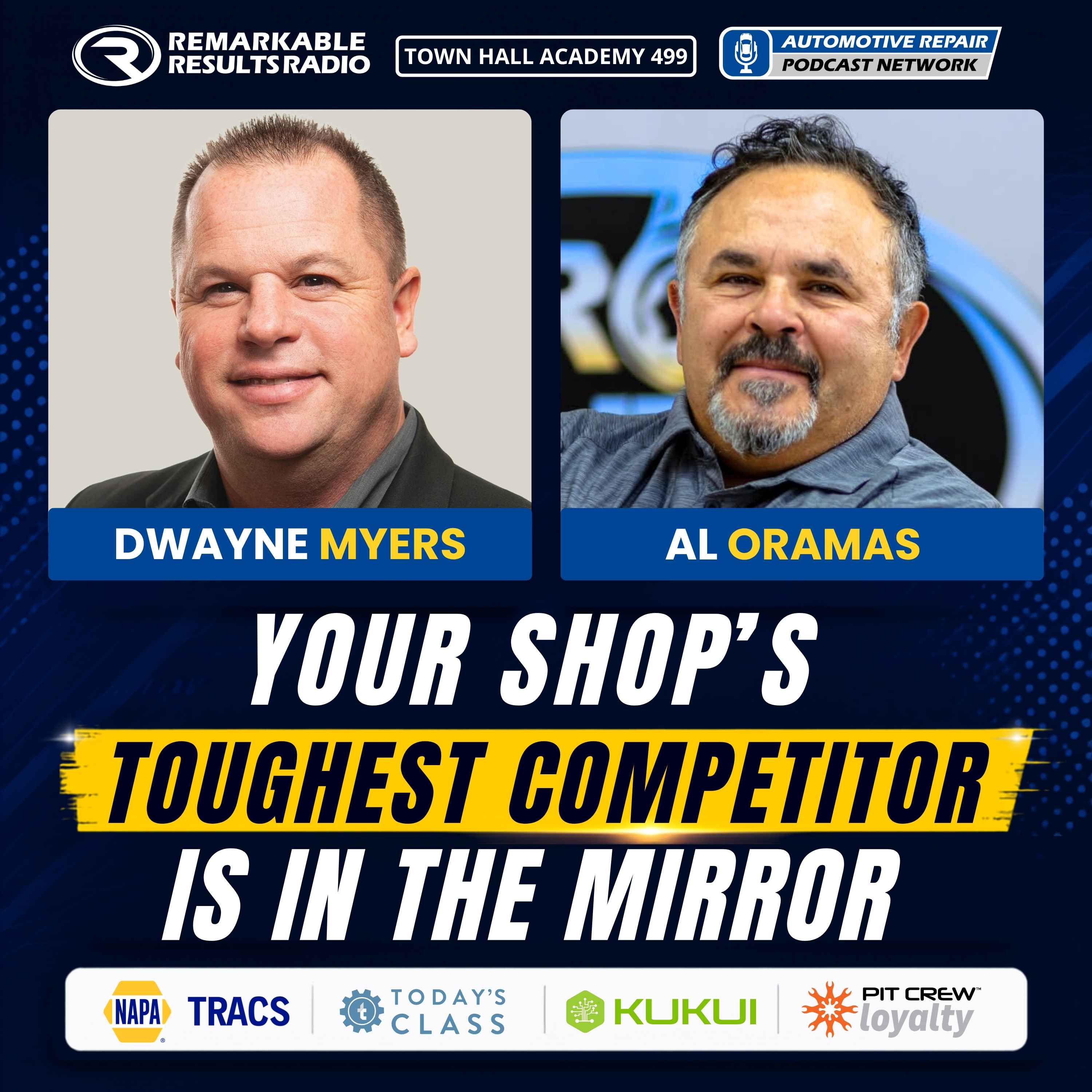
Your Shop’s Toughest Competitor Is in the Mirror [THA 499]
Thanks to our Partners, NAPA TRACS, Today's Class, KUKUI, and Pit Crew Loyalty Watch Full Video Episode *]:pointer-events-auto scroll-mt-[calc(var(--header-height)+min(200px,max(70px,20svh)))]" dir="auto" data-turn-id="request-WEB:8e59eec7-a235-4fa3-a072-956fea3fe478-7" data-testid="conversation-turn-4" data-scroll-anchor="false" data-turn="assistant"> *]:pointer-events-auto scroll-mt-[calc(var(--header-height)+min(200px,max(70px,20svh)))]" dir="auto" data-turn-id="request-WEB:49a777bf-d263-4496-bf0b-2eb3a46ac96a-11" data-testid="conversation-turn-24" data-scroll-anchor="false" data-turn="assistant"> Who is your shop's toughest competitor: the business down the street, or the people inside your own four walls? Carm Capriotto sits down with shop owners Dwayne Myers and Al Oramas to explore internal competition and why the biggest threats to a shop's success often come from within. The conversation challenges owners to stop obsessing over competitors and start examining their own leadership, consistency, processes, and customer experience. What You'll Learn Why operational consistency matters and how small deviations can create chaos.Why owners can't effectively lead from the "engine room."How true delegation requires owners to let go of control and trust their teams.Why "everything speaks" when it comes to the customer experience.How standing at the curb can reveal things owners no longer notice inside their own shops.How simple physical and operational improvements can create meaningful change.Why asking employees what they love and what they would change can reveal the true health of a business. Your greatest competitor may be staring back at you in the mirror. The shops that grow stronger are willing to look inward, challenge their own habits, listen to their teams, and consistently raise the standard. Leadership isn't about controlling every detail; it's about creating the environment, expectations, and trust that allow the entire team to perform at its best. Dwayne Myers, Dynamic Automotive, 8 locations, Maryland. Dwayne’s previous episodes HERE. Al Oramas, Pro Auto Care, 2 locations, Denver and Littleton, CO Optimize training with Today's Class: In just 5 minutes daily, boost knowledge retention and improve team performance. Find Today's Class on the web at https://www.todaysclass.com/ David Boyes, President of ‘Today’s Class” David’s previous episodes HERE Brad Updegraff, Dave’s Ultimate Automotive, 7 locations, Austin, TX. Brad’s previous episodes HERE. Thanks to our Partner, NAPA TRACS NAPA TRACS will move your shop into the SMS fast lane with onsite training and six days a week of support and local representation. Find NAPA TRACS on the Web at http://napatracs.com/ Thanks to our Partner, Today's Class Optimize training with Today's Class: In just 5 minutes daily, boost knowledge retention and improve team performance. Find Today's Class on the web at https://www.todaysclass.com/ Thanks to our Partner, KUKUI Stop juggling multiple marketing tools. KUKUI’s integrated platform delivers 4x better website conversions, automated follow-up, and real-time ROI tracking. Get industry-leading customer support with KUKUI at https://www.kukui.com/ Thanks to our Partner, Pit Crew Loyalty You’re probably tired of chasing new customers who never return. We understand. Pit Crew Loyalty ends the one-and-done cycle, turning first visits into lasting, reliable revenue at https://www.pitcrewloyalty.com/ Connect with the Podcast: Download and Listen on Our Mobile App: https://automotiverepairpodcastnetwork.com/app/Visit the Website:https://remarkableresults.biz/Subscribe on YouTube:https://www.youtube.com/carmcapriottoFollow on Facebook:https://www.facebook.com/RemarkableResultsRadioPodcast/Follow on LinkedIn:https://www.linkedin.com/in/carmcapriotto/Follow on Instagram:https://www.instagram.com/remarkableresultsradiopodcast/Join Our Virtual Toastmasters Club:https://remarkableresults.biz/toastmastersJoin Our Private Facebook Community:https://www.facebook.com/groups/1734687266778976Join our Insider List:https://remarkableresults.biz/insiderAll books mentioned on our podcasts:https://remarkableresults.biz/booksOur Classroom page for personal or team learning:https://remarkableresults.biz/classroomBuy Me a Coffee:https://www.buymeacoffee.com/carmSpecial episode collections:https://remarkableresults.biz/collections...
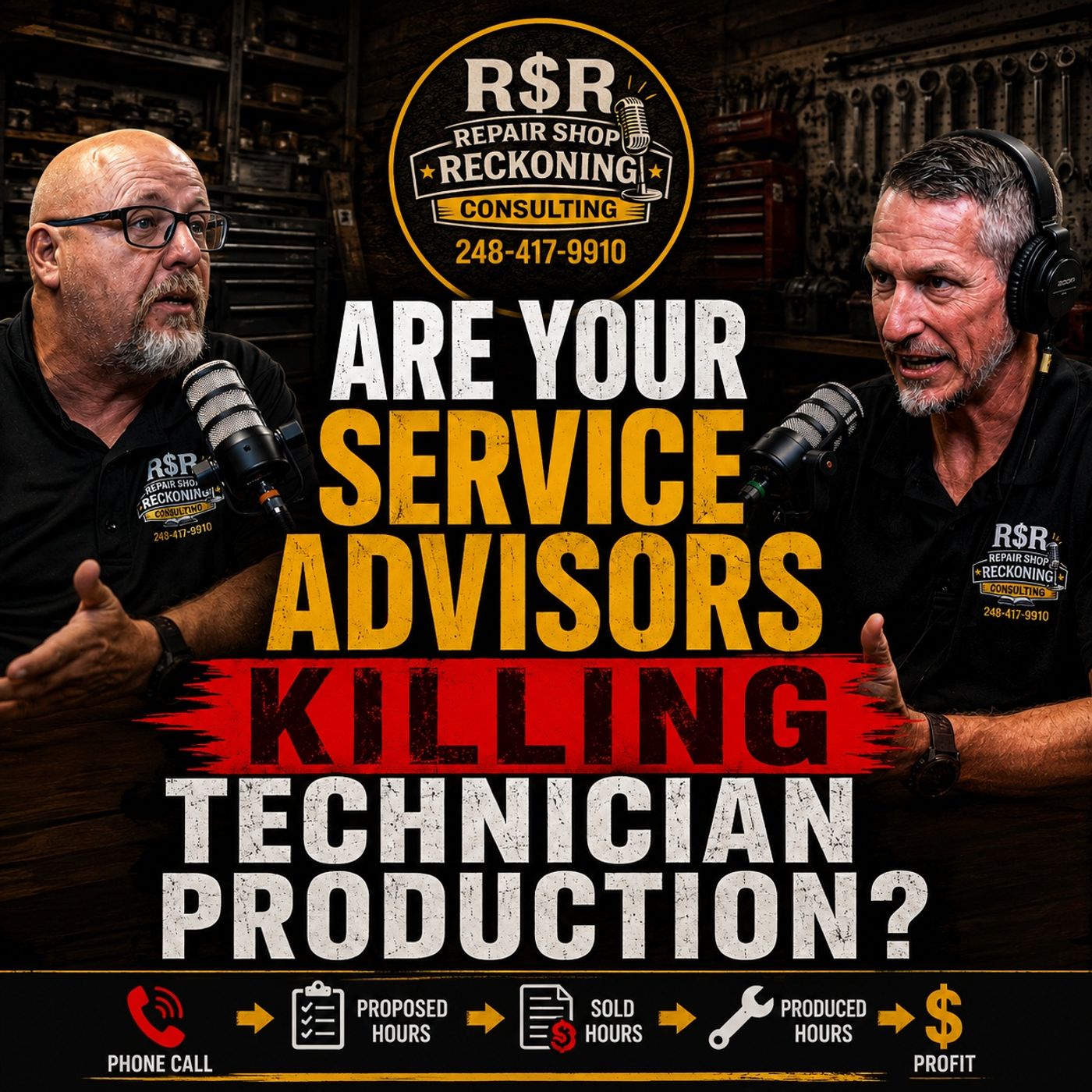
Are Your Service Advisors Killing Technician Production?
This week on Repair Shop Reckoning, Kevin and Jason dig into a problem happening in shops everywhere: technicians are being blamed for not producing enough hours, but nobody is stopping to ask whether those hours were ever sold in the first place. If...