Daily Habits That Build a Stronger Auto Repair Shop Culture [THA 501]
Now playing — Remarkable Results Radio
About this episode
Thanks to our Partners: NAPA TRACS, Today's Class, KUKUI, and Pit Crew Loyalty Watch Full Video Episode *]:pointer-events-auto scroll-mt-[calc(var(--header-height)+min(200px,max(70px,20svh)))]" dir="auto" data-turn-id="request-WEB:8e59eec7-a235-4fa3-a072-956fea3fe478-7" data-testid="conversation-turn-4" data-scroll-anchor="false" data-turn="assistant"> *]:pointer-events-auto…
Key takeaways
- —Building a strong culture is essential for team cohesion and productivity.
- —Regular communication and updates with clients foster trust and satisfaction.
- —Morning huddles are crucial for aligning team goals and improving morale.
- —Respect and accountability among team members enhance workflow and efficiency.
- —Understanding clients on a personal level strengthens relationships and loyalty.
Frequently asked
- How can we improve communication between the front and back of the shop?
- Implementing regular huddles and structured communication channels can help ensure everyone is on the same page and aware of daily goals.
- What role does culture play in customer satisfaction?
- A positive culture leads to happier employees, which translates to better service and stronger relationships with clients, ultimately enhancing customer satisfaction.
- How often should we update clients about their vehicle's status?
- It's recommended to communicate with clients regularly, even if there are no updates, to maintain trust and keep them informed throughout the repair process.
▸Full transcript
This is the Automotive Repair Podcast Network. Hey, good afternoon. Good morning. Good evening. Whenever it is that you're listening, it's Carm Capriato, Remarkable Results Radio, and another Town Hall Academy. I've got a topic for you that is probably long overdue that we probably haven't done in a long time. We're going to call it Culture on the Front Lines. Wow. That sounds pretty heavy topic, but it's going to be.
Guess what? We're not having a shop owner on to talk about this. We're going to talk with the people that are on the front line. Hey, don't forget, we've got this fabulous app for you to download on your smartphone. arpn.app. It's Apple, Android, the Ultimate Professional Automotive Repair Playlist. Read our show notes, link with our sponsors, get all the shows in our network, share them with your friends.
Nothing like it. The ARPN.app app. Get it now. And thank you so much to Napa Trax, today's class kakui, and to Pit Crew Loyalty. Hey, for over 30 years, Napa Trax has made selecting the right shop management system easy by offering the best, most comprehensive SMS in the industry. We'll prove to you that Trax is the single best shop management system in the business.
Find NAPA Trax on the web at napatrax.com. Hey, how well does your team know their stuff? Test their automotive skills with the Today's Class Basic, Advanced, or Service Advisor quizzes. It's a quick, effective way to spot gaps and grow stronger teams. Take the quizzes now at todaysclass.com/tcquiz. Shop owners, stop juggling multiple marketing tools. Kukui's integrated platform? They deliver 4 times better website conversions, automated follow-up, and real-time ROI tracking.
Get industry-leading customer support with Kukui. That's kukui.com. You're probably tired of chasing new customers who never return. We understand. Pit Crew Loyalty ends the one-and-done cycle, turning first visits into lasting, reliable revenue. On the web at pitcrewloyalty.com. Hey, welcome back everyone. Yeah, we're gonna talk about the culture on the front lines and these— listen, Nicole Benicoff from Empower Automotive, Traverse City, Michigan.
Bree and Trevor work for Nicole. Tell me how it is to work for Nicole. We absolutely love it here. Love Nicole. Yeah, she's doing an amazing job with this place. Good for you. So culture on the front lines. I love it because we talk about culture a lot on this network of ours at the Automotive Repair Podcast Network. Culture's one of those things you can't touch.
And a lot of people are afraid to try to engage themselves with trying to develop a good culture. And I've never found that culture was hard to initialize. I never found it hard to perpetuate. And what I had to do as a me was get down into the, if you will, nitty-gritty pieces of what's culture. I saw some incredibly simple definitions, guys.
And it was what we do, what we believe in, who we are, shared values and beliefs, and how things get done. And if you think about it in those simple terms, it's not hard to build and create a culture. So I am with Brianna, or we call Bri Wisemer. Hello, Bri. Hello, how are you? I'm great, Bri. She has a strong voice on the counter, Nicole says.
Wow, how cool is that? She believes there's a direct correlation between client relationships and our top spending clients, and she's got proof to show it. We can't wait to hear about that. And Trevor's with us, Trevor Hines. He's the operations manager, dispatcher, workflow culture guy, and Trevor brings an operational perspective on leadership with hands-on experience managing workflow and dispatch. Workflow is so big.
Oh my God. He understands how structured communication and daily decision-making shape both productivity and team morale. And I didn't mention that Bree is service advisor and the frontline culture leader. I love that title. Wow. Nice job, Bree. So let's jump into this. I think the audience is gonna absolutely love it. You believe, Bri, creating a one-team culture between the shop and the counter, they can't be separate units.
I do believe that we're one team. Otherwise, things don't flow the way that they need to, both for us and our clients, even though we're all on different jobs. Right. But we can't do our job without them and vice versa. I'm certainly not going back there to fix cars. That's right. And they depend on you and you depend on them. I mean, the ultimate work toward is the satisfaction of the client.
Absolutely. Trevor, does your team in the bays get that, understand that, or are you the conduit to make that happen? Yeah, we're on the same page here. Everyone that we have here for the most part has been here long enough that they, they know how things flow, how we operate, you know, the ideas. So Trevor, you really can't be any kind of separate business units, can you?
No, absolutely not. We are, we're all on the same page here. Everyone, I mean, the way we look at it is we have a bus, everyone's on the bus, everyone has their own seat on the bus, and that means each person within the company has a different job, a different task they're doing, a different way to influence what we're trying to accomplish here.
But the idea is the bus is always going the same direction. So everyone on that bus is going that direction with us. We're all working towards the same goal together. The big question for both of you, how do you make that happen? I mean, I think it's just obviously years of experience. Between Bree and I, we probably have, I don't know, 30 combined years of experience and we have been in different places where we know what does work, what doesn't work.
And then with Nicole kind of being the catalyst behind the whole thing, it's pretty easy to see how to get everyone on the same page and working towards the same thing with, you know, all the like-minded people we have here. Bree, how do you make that happen? I think it comes down to a lot of just respect for everybody. There's a lot of behind the scenes things.
One of the big things that comes to mind to me is the culture and how things work around here doesn't necessarily come from things that are in our handbook. You know, you have to do this, you can't do that, et cetera, et cetera. It truly comes down to how we treat each other, always having our eye on the same goal, which is to take care of our clients first and foremost.
There's just a lot of like small things that I see around me happening, you know, Hey, if you can make this happen for me, you know, I'll grab you lunch or something. You know, just building something that you can't necessarily teach to people is truly who you have a part of your team. I think you said the word respect. It seems to be a heavy connotation as how things work.
I've gotta do this. You don't understand, you know, crazy moments that really help crumble the culture, crumble the promised times. Crumble the quality of work. And I guess when you see that stuff like that happens and life goes on, how do you tone it back? The respect thing is obviously very important. We're all respectful of each other and we know that we each have our individual jobs to kind of keep this machine moving.
But it becomes most important when we're extremely busy and, you know, it's easy for tempers to flare. And for things to go wrong, and it seems like the busier you are, the more things that can go wrong will go wrong in an automotive shop. That's just the world we live in. But it's like how we handle those situations person to person. And it's not just, you know, between myself and the technicians or myself and the service advisors.
It's literally every single person here knows what we're trying to do and what we're trying to accomplish and the right way to get there. And we know that being respectful and, you know, having accountability for what you can be accountable for, and then just trusting the others to do their job. I mean, that's how everything flows. And, you know, like I said, when it gets really busy, that becomes a little bit more difficult, but it's much more important at that point.
You said tempers, and I think of temperature also, the temperature of the moment. And I don't mean heat, and I don't mean cold. I just mean the pressure cooker of the day? It's now 2 o'clock. You've got promised times coming up. You've had issues during the day. Do you both get your heads together and try to both stay on the same page with your teams and your clients?
Obviously, Bri, you're the connection to the client. You either have to tell them some good news or some bad news. You count on Trevor to help you get that, those promised times in the can? Absolutely. We have something here at the shop at 1 o'clock. We all get alerts on our internal communications, and that's kind of where all of our heads come together.
You know, we're halfway through the day, you know, what's looking like it may not get done. Is there room to move things around? So, it's kind of like this 1 o'clock huddle where we just start to stay ahead of those things the best we can. You know, Trevor would, at that end, talk to the technician side of everything, and then I would handle, you know, the client side of it.
So just lots of overcommunicating with the clients. And most of the time, long as you've been communicating with them the whole time, there's an understanding for, you know, different issues that may come up. I love the overcommunicating thing. We need to talk about that now. You get a client in an overcommunicating zone. I guess you got to teach them that we're going to do that and you should expect this.
And you want to know, you want to know. On the same hand, Trevor, you're dealing with the fact that you've set promise times. She's overcommunicating it, right? Your people have to know what is going on. The client seems to be the spoke of the wheel for you. Some shops just never get that part. Yeah, absolutely. I mean, I've preached it since the beginning and it's been happening since before I started here.
It's like, The more we can update a client, the more that we can tell them, the more often that we can touch those people while their vehicles are here, the better. If Bree's telling a client like, hey, we pulled your vehicle in, we're getting started on it, everything's on track, and then even a half an hour later something goes wrong, but they've been in contact since the vehicle was dropped off, I mean, it just builds trust from the very beginning.
That client knows that the moment something changes with their vehicle or with their promised time, or with the repair, or we need an additional part, they just know that we're gonna reach out to them. We're gonna be in contact with them every step of the way. The technicians know that everyone is on the same page as far as that goes. They know we're gonna be in contact with you, and if something changes, you're gonna know right away, and then we can plan from there.
Lots of no update updates. Yep. Lots of no update updates. I've heard that so much. I've seen it, witnessed it. It's amazing to be able to make that part of your culture. If this is what we're talking about, we're talking about culture on the front lines and how it works within the shop. And if the goal of the company is being demonstrated by the goals at your counter and in the shop, you've got the happiest clients in the entire world.
Before we got on, I said, you guys busy? I think Trevor said, we're always busy. I love that. This place, the Empower Automotive, has no downtime, and it's on purpose because it's your purpose in the company. Amazing how you come up with that. So tell me about the 1 PM huddle. Is it just you two? No, I think it comes through to All the service advisors, probably management.
I know you get it, Trevor. It's set for every day at 1 o'clock and it alerts us that we have a notification. We use like an internal software or whatever. I don't know what it's— Slack is what it's called. And it just comes through 1 o'clock RA updates and it's on my cell phone too. So my alarm goes off every day at 1 o'clock too.
We look at what still needs to be inspected. We start talking about jobs that are supposed to be completed that day, and then just kind of put our heads together at that point and figure out, are, are we going to achieve it? Do we need to move some things around? Is there flexibility with so-and-so or no? Just to make sure that we're not waiting till 4:45 to tell a client, sorry, you know, we ran into whatever and now it's not going to be done.
9 outta 10 times, they're gonna be much more okay with the idea of it taking longer at 1 o'clock so they can plan the rest of their afternoon than calling them at 5 o'clock and being like, oh, sorry, it's not gonna happen. Boy, Trevor, you wrote to me last week and you said, calm process creates trust and trust sells work. I love that.
You can't do this without a really good process protocol systems. Yeah, 100%. I mean, going back to what Bri was talking about with, you know, updating clients midway through the day and even well before that, I mean, we have situations where a client's vehicle might be here for a week, 2 weeks, cuz we're doing a large repair and, you know, we're waiting on parts and it's like we give them a promise time.
Of course, when they come in and we're doing the work, we're gonna tell 'em, okay, it's gonna be 2 weeks from today, 4:00 PM, we'll have it ready for you. And think about how, like, that day comes around and it's 3:30 and this is the first time they've heard from us. Like, hey, everything's gone wrong, this, that, and this and that. And I mean, that doesn't make the client feel comfortable.
And like, while the vehicle's here, even when we're those days where we're waiting on parts and parts are slowly trickling in and we haven't even touched their vehicle since we diagnosed it, at least we're still making the no update update. I mean, because That keeps trust throughout the whole process. They know that, you know, hey, at least they're in touch with me.
It's not like they're dropping their vehicle off and the next time they hear from us is when something goes wrong or when it's done. Like, you can't have that. So you have, Bree, a multiple-day repair. As Trevor mentioned, the 2 weeks, the no-update update, is that every 2 days? What's the rule? I don't necessarily have a rule for myself. If a car's gonna be here for an extended period of time, normally I tell the clients, okay, parts are ordered.
I expect to see them, you know, all to be here in 3 days. And then I tell them from that point on, you're going to hear from me every day or 2. I may not have anything to report to you, but I just wanna keep our line of communication open for anything that may pop up from your end or my end. I wait till parts are here, whatever that date is that I tell them, and then I send little texts.
It doesn't have to be anything crazy. You know, if it's a Monday morning, I'll just say, hey, you know, Trevor, it's Bri at Empower. Just wanted to touch base. Hope you had a great weekend. We're still on track for, you know, whatever the date is. And then, like I said, a couple days later, probably not the next day, but the following day, very similar.
Hey, everything's here. We're still on track. Let me know if you have any questions or concerns. And most of the time I simply just get a, thank you so much, Bri, or thanks for the update. But again, it's keeping that line of communication open. I mean, I try to put myself on the other side of that counter, and if I don't even know what I would do without my vehicle for 2 weeks, I wouldn't even be able to make that happen.
So I just think about what I would feel if the table was turned and if nobody talked to me, I would be losing my mind. My anxiety would be through the roof. Question, people are listening and they're saying, yeah, I gotta do more of that. What is Bri using to keep her on track? Is it a special piece of software? Are you using calendar?
What are you using to make sure that you're— I'm snapping my fingers. I gotta do this. I gotta do this. I gotta remember. I mean, or is it just your gut telling you to do this? Probably a little bit of both. I think it comes from being a new advisor and being put into those situations where I didn't update somebody. And then, you know, like Trevor had mentioned, the first time I contact them, it's not good.
And just knowing that I never wanted to feel that way. Also, Trevor says it probably 5 times a week minimum to update clients. I do use my cell phone a lot and just tell, you know, Siri to you know, set a reminder for, you know, 2 o'clock tomorrow and call so-and-so. Like if it's something like out of the ordinary. Um, but really I just look at what's in my queue.
I try to do my updates first thing in the morning. You know, my first hour is crazy getting people checked in. And then I try to spend, you know, from 9 to 10:30-ish making sure that everybody's updated. I put an RO note on TechMetric. There's a place to put notes and I just put the date and I say updated via text. Or phone call, and I try to have that done before inspections and diag and stuff start to get done throughout the day.
Hey, let's face it, your shop management system is the single most important tool in your shop, period. NapaTrax has made selecting the right shop management system easy by offering the industry's best, most comprehensive SMS. Now, it all starts when a local representative meets with you to learn about your business, and how you need to run it. After all, it's your shop, so it's your choice, and having local representation is a huge plus.
Customizing Trax to your business, whether you're a one-person shop or a large multi-bay or multi-location company, our representative consults with you to help optimize your shop's workflow, efficiency, and profitability. Trax always has the flexibility to do business how you need to do it, which means it can also grow as your business grows. And unlike the other guys, we'll be there for you after installation with the best training and support in the business.
Yes, a learning management system tailored to each role in your company. Simply put, Traxx was designed and built for shop owners just like you. Visit us on the web at napatraxx.com. That's napatraxx.com. Hi, this is Tom Palermo from Preferred Automotive Specialists for today's class. And I really think the biggest part of the training that's great is it inspires them to do team building.
If one technician's having trouble and they know there's another technician that excelled at a particular area they're currently training in, they have no problem going to them and saying, hey, can you help me with this? I don't understand that yet. It's a great product. And I think besides the training component, uh, there's also a team building component to it that's pretty powerful.
Shop owners, we know you are overwhelmed with a flood of missed calls, empty bays, and disconnected marketing tools. Kukui has spent over a decade building one integrated platform for auto repair shops. One login, one dashboard, and mobile-first websites that convert 4 times industry average. Smart, innovative CRM with automated follow-up, 24/7 online booking, and real-time ROI tracking. With 900+ years of combined team experience, we fuel the growth of 2,200+ shops and have influenced $3 billion in revenue.
Stop working harder, start working smarter. Get industry-leading customer support and book a demo with Kukui. That's kukui.com. You know, most shop owners feel trapped spending on ads while half their first-time customers never come back. It's frustrating, it's exhausting, and it's not your fault. The industry average is 54% one-and-dones. We understand how discouraging that can be. Well, Pit Crew Loyalty changes the story.
Our clients cut that rate by up to 38%, raising lifetime value by more than 50%. Loyalty members visit nearly 3 times more often, creating predictable revenue without extra ad spend. Pit Crew Loyalty— where customers stay and shops thrive. On the web at pitcrewloyalty.com. Trevor, you're the person who either puts the heat or the ice on the temperature of the day and the challenges that you get being the operations manager dispatcher.
You got any tips or tricks you could offer to anyone about how to keep the front and the back in total sync? A lot of it goes back to like what we talked about earlier with the respect thing. You know, I, every single person in this place has a purpose and we're all working towards the same goal. And I think it's important to treat everybody the same, you know, just with the same level of respect, the same level of you having confidence in that person to perform their job well.
I mean, we don't have anybody here that is an underperformer. I mean, we're all on the same page. We all work very, very hard. I just think it's important to, you know, I speak to the technicians the same way I would speak to the service advisors. I speak to our support staff the same way I would speak to anybody else. I mean, we have a couple people that their job is to just, you know, make sure that the shop's clean and the trash is taken out.
And it's, those people are just as important as the people selling the work, the people performing the work. They're all on the same level as far as I'm concerned. And as far as us as a company are concerned, I mean, it's just, that's all there is to it. Something that just came to my mind that we do too, that I think is super crucial for the one-team atmosphere.
Every morning, we all have to be here 10 minutes early before the shop opens, and we do a morning meeting. It's literally everybody on our staff is in the same room. We go over the schedule for the day, what's coming in, what techs are assigned to work that we've already recommended and they're coming back for. We go over numbers, we talk about the day before's overall numbers, technician numbers.
And then after that's completed, uh, sometimes everybody will stay for a short training. Some days it's just service advisors, some days it's just technicians. And we all do like a short little take 5 type training of some sort. Once a week, Nicole will talk about one of our core values and we'll focus like the whole team on one of our core values.
And we'll talk about that for that week. Advisors do trainings. So all of us advisors will rotate Tuesday trainings and we just pick a topic and it could be something that, you know, you may have noticed that's happening somewhere where the ball might be dropped a little bit. And then management might take a Trevor Strunham in the morning about updating clients and like how important that is and why it's important and how it's not a negotiable thing.
And I think that's a really big thing. I've heard from a lot of my team members who have come in, you know, more recently, and they're like, it's really incredible that the whole team comes together and just starts the morning off right. And you'll walk in, everybody's laughing before the meeting starts. Somebody's joking, somebody's showing someone a funny video on their phone.
You know, it really is, I think, a strong point of starting our day and our team all as one, you know? I gotta tell you, I've done enough shows on huddles. I've written articles on the value of huddles. And again, confirming all the stories about the value of the morning huddle. One of the greatest stories that I remember is, if you're late, too bad, we're starting without you.
And don't interrupt us to ask us what we've been talking about. Did you wanna know? Be here on time. For sure. Trevor, your take on the value of these morning huddles, and in fact, I have to tell you, we're talking about culture on the front lines and here we are into the weeds, how we do it, why we do it, how we all have a special specific role.
And of course, bumping into, you know, the value of morning huddles and why it just solidifies us. It's like putting a big rope and tightening up around everybody. Yeah. I mean, it's so valuable. If you're not doing it, start doing it today, start doing it tomorrow. I mean, it's Like Bree said, you walk in in the morning and you start, you know, getting your tasks lined up for the day, kind of going through the schedule.
And I'm in the meeting room with my laptop out, just looking through the schedule and looking at things. And the whole time before the meeting has even started, everyone's already there. They're all laughing. We're all joking around. And I even like hesitate sometimes some mornings to start the meeting on time because the conversation that's going on between the employees is just amazing.
And it's like, Like, this is why we're doing this. It's like, whatever we're gonna go over can wait another 3 minutes. Like, let's build some camaraderie, have some laughs, enjoy our time together before we get into the heat of the day. And like Bree said, you know, we just go through everything as a team after that. And then we have every day as a chance to improve, right?
So we're constantly training. There's training every single day right after the morning meeting. And, you know, it's sometimes it's this part of the business or that part of the business. Sometimes it's all of us, but every day is an opportunity to get better. And I think getting better together is the best part of that. Wow. So well said. You know, the thing that I heard you say and that I've seen happen in my lifetime is people are, like you say, they're shooting the breeze about something.
It could be the holiday. It could be a son's great goal he scored while in soccer. And you start learning about each other. You start learning about our lives. You start learning about our likes and our dislikes. It's almost like you could get done with a morning meeting and you start seeing smiles, or you can even see satisfaction in the start of the day because We spoke, we heard, we saw, we felt.
Exactly. Absolutely. Well said. Okay. Trevor believes that the sales counter sets that temperature for the entire shop. So the chaos that sometimes happens, Bri, at the counter, Trevor's not expecting it. Yeah, that is totally true. I mean, a client comes in, And we've done trainings on it before. Every advisor, every customer-facing person has had training on it. And it's like the client that's coming through the door, you don't know what kind of day they had, you know, what kind of night they had.
We're in the automotive repair business. Let's face it, not a lot of people are excited to come in and get their car fixed. They know this is, oh man, what is this gonna cost me? This is gonna be a bad day. This isn't fun. But if we can present ourselves as You know, a smiling face looking back at you, asking questions about— Bree does this better than anybody, you know, asking questions about their kids.
Hey, how you been? How did that trip go that you went on last month that you talked about that you were all excited for? They really just set us up for success from the very first client interaction. And that starts when the client walks in or on the phone. I mean, when they come to pick up their car, the relationship doesn't stop just because the car's repaired, right?
I mean, It starts from the first phone call and we continue that for, in, in our case, with many of our clients, many, many years and, you know, graduations and marriages and we're just building relationships that last. And, you know, the, the car repair side of it just kind of takes care of itself after that. Bree, in your previous jobs, and Trevor explained exactly what I know you believe in, getting to know the customer, you know, even more than you know the car.
In previous jobs, was the culture like that or was it established when you went to, came to Empower? Definitely, I think established probably coming here over, I think I'm going on 6 years. That is probably one of the biggest things that I am most passionate about as a service advisor is, you know, customers aren't just here to fix their cars. I actually had pulled some numbers into one of my trainings.
I think I pulled our top 100 clients in the last 6 years and I went through and highlighted every single one of them that I could tell you more about them than their car. Every single one but one of them I did not know anything about. Our clients here, a lot of times you'll see they'll walk in and I won't even talk to them about why they're there, about anything with their car for like the first like 5 minutes.
And sometimes I, think that that can kick me in the butt sometimes cuz I get behind. I'm, you know, talking to them about not their vehicle, just simply their dog or their kids. I mean, I have a 2-year-old and a 13-year-old, so I can relate with, you know, other parents with children that are going in multiple different directions. That is one thing that I stand so, so firm on is, you know, those top 100 clients of ours.
When they come in, they'll listen to whatever I recommend. I mean, but because they're, they're with somebody who they have a relationship with and they trust me and they trust us in our shop, you know, we've had clients, this is probably one of our top 5, who her stuff was covered under warranty, but she didn't want to go to the dealership. You know, like she wanted to be somewhere where she was taken care of and trusted.
And before her husband passed away, he had built such a strong relationship with You know, us before we were even in power. And that's where he said for her to take her car no matter what is to us. I mean, she did an engine reseal knowing that it was under warranty, but because she didn't want to go anywhere where she didn't have some sort of relationship.
Faith. Faith. Yeah. I'm hearing you say the word loved. Think about that. Good old emotional Carm is thinking here. I'm loved when I go to Empower Automotive. I'm loved when it has to do with my vehicle. And I wanna confirm, Bri, for your hard work about knowing the client. We've interviewed author John de Julius a bunch of times. And in one of the episodes, he talked about in this trusting relationship with a client to use the FORD acronym.
And you've basically talked about that. F-O-R-D, family, occupation, recreation, and dreams, and to get them written down inside of a system somewhere so that if you can't remember the last time we talked about, yeah, I saw the little stuffed animal in the car seat in the back. And you know, what's Johnny doing now and how soccer, cuz there was a soccer ball back there.
There's so many things for you to know and see and learn and understand. But if you also are paying attention to that stuff and then writing it down, because it may not necessarily be you that the person interacts with, the client interacts with the next time. But at least it can come up in a CRM program or right on your SMS. So you get an idea and says, hey, what's going on with grandson, granddaughter?
You know, how's the husband's new job? Those are warm feelings that you get. They love me there. We do do that. We have, uh, like an internal note system on our TechMetric and Nicole is actually the best about putting those notes in there. But you'll see she's so good at it, but it'll be like their dog's name is Sparky. They call their car Black Beauty.
You know, she's super good about that. I am not as good about that, but I laugh all the time when I look at internal notes cuz I'm like, Nicole was here. You can see where she put in some random note, but it's so helpful cuz they, 9 outta 10 times they're gonna bring Sparky, their dog. I'm not gonna remember Sparky's name, but I will once I see it on there.
We started to talk about culture on the front lines. Where we're ending up, Trevor, Bri, is this tactical side of the why. Yeah, absolutely. I mean, Bri, she doesn't, you know, necessarily have to do the notes as much as Nicole does. Bri just has like this natural ability to connect with people, and I think she just leans very heavily into that. Like I said, we have these trainings all the time.
And one of the things that keeps coming up when I present a topic is like, you know, I challenge the front office staff, find a bumper sticker, find a set of golf clubs or a hockey stick in the back of the car, you know, find something that you can use to relate to these clients and share something that maybe you're passionate about or an experience you've had before and tie that into building a relationship, build some trust, build some rapport.
You know, we're not just the people fixing your cars. Like, we're your friends, we're your neighbors. We're here to help you. I heard an awful lot, Bree, Trevor, about these very loyal clients. And in a slang kind of a way, I call them key droppers, but they may wanna drop their key, but they also may wanna tell you what's new. Yep. Absolutely.
Exactly. Do you see that? You know what I gotta do? I called, I gotta go, but let me tell you, does that happen a lot? Absolutely. It was just the other day somebody walked in and it was the same thing. Hey, I need this estimate, but I have to tell you what happened. And I was like, okay, I'll get that over to you.
And they told me a whole story, you know? So I think it's a powerful thing. It really truly makes a difference when you have those connections with people. People just want to feel like people. They wanna feel connected. They want to feel appreciated and loved, especially in this, you know, fast-moving life that we're in right now with, you know, AI and everything on a computer and on a phone.
And we lean on that stuff as this next generation. And I mean, I use all of that stuff, but I want to feel important too. And I want to feel that human connection. And I think it's hard to find that sometimes nowadays because everything's just so so fast. I spend a good chunk of my day just trying to slow down and connect with my clients.
Like, even if I have nothing in common, they're wearing a Lions hat and you're like, hey, the Lions, you know, go Lions. And it's just amazing how you can see that client standing there and they're tense and they're nervous to bring their car. And then you start talking about the Detroit Lions and then they just kind of like simmer right down. The body language changes.
They wanna talk about if this is the year for them or not. And I don't know anything about football. I mean, a little bit, but they'll tell me everything I need to know as soon as you bring 'em up, you know, like, and that's really all you need is just to make people feel like people. They're not a transaction. And I think that's what we differ from so much here.
Bingo. Not a transaction. I love it. I gotta have a question for you. You just brought up, you know, my mind goes a mile a minute and I hear things. And if they're relying on you to be sure that their vehicle is safe, reliable, did you ever reach out to someone and said, let me be your Google, let me be your AI?
Because, well, I went on it and I had this clicking and this noise and everything, and Google told me this. And so I'm telling you what Google told me. And I'm getting to the point up to here in my world to say, wait a minute, you know me, you come here all the time. Let me be your Google. Pick up the phone, text me.
Is that a strategy to calm people down, to get them to trust you better? Yeah, absolutely. I mean, I haven't had a whole lot of the AI stuff yet. Here and there, people have brought it up. I actually did, I think, a training on this a while back. You know, just being prepared for the AI stuff and being like, you know, just getting the team ahead of that because that is coming and I see it every now and again where somebody will be like, I don't need to do that diag.
ChatGPT already told me that it's this. It is an interesting thing and I don't have a lot of experience. Maybe you do, Trevor. I just haven't been faced with that a whole lot yet. Love to hear your side of this, Trevor. Yeah, I mean, 100%. There's so many tools available to all of us and, you know, our clients included. You have a check engine light, you can go down to most local auto parts stores, they're gonna scan it for you, they're gonna give you some random number, you punch that number into ChatGPT and it says, here's the top 5 things it could be.
So, you know, it's easy for them to pick one of those and try it or say, you know, this is the number one thing it can be. So I think that's what you guys should replace. And, you know, that's where We sell the value of, you know, these technicians back here have over 100 years combined experience. They've seen it all. They've done it all.
There's certain tests that we have to run in order to find this particular issue. And, you know, what if it isn't the number one thing on the list? What if it's something else? And what if it's the number one thing on the list is $5,000 and it actually is the number 3 thing on the list and this is only $300? You know, it's coming, it happens, but You know, that's where we just sell the value of our experience and of our, you know, very strong intellectual technicians.
I am loving this entire discussion with you, and I keep hearing you both say, when we do training, when we do training, and I'm thrilled about that, but I need to understand it more. During your huddles, are you each picking a topic or do you get together, Trevor and Bree, and say, listen, on Monday, I'm going to do this and Tuesday, and we're going to have one of our own people do that.
And are these little 5, 6 minute vignettes? How does it work? Yeah, we have like in our office communication channel that we, it's like a, you know, messaging back and forth. Breeze mentioned it a couple of times. We have like a specific channel for the Take 5. It's a rotation, you know, Mondays we have Nicole, Tuesdays we have one of the advisors, and then Wednesday is always our service manager, Nate.
Thursday is myself. And then we leave Friday open for like a general discussion, what's going well or what's not going well, how can we correct this? And we all just take our turns, you know, and we'll, a couple days ahead of time, we'll post the topic in that channel. And so everyone kind of is on the same page about what we're going to talk about.
And then whoever's turn it is brings the topic for discussion and we open it up, talk about it, you know, everyone kind of joins in and has something to say about it and we put it all together and wrap it up at the end and it just gets us all on the same page. And like I said, every day is an opportunity for us to get better individually and as a business.
And we use that time to do that. So, Bri, you would pick your topic based on what's going on, the feel, the challenges that you've had, the good things that are happening. It, it's all timely. Yeah, I think it, it just varies. I've done things that I'm passionate about that I want to show to the other advisors. We have some new advisors.
There's been weeks when I've done it where, you know, I, I see a continuous issue with something in the shop or, you know, front end, back end. And sometimes we all need reminders. We're human. So sometimes, you know, something we've set up a policy or procedure for something and we just tend to kind of, eh, into a different direction. So it's a time to be able to kind of pull everybody back in and be like, we're over here, not over there, without calling somebody out or making somebody feel, you know, I mean, obviously there's a time and place for that too, but it just brings everybody together.
You know, we've like to today, I think it was, we did some invoice presentation. We're very particular about how we check out the client when they come to pick up their vehicle. There's 10 things that we need to do every time they come in. So the service manager, you know, pulled up some random ROs on the screen and he picked a couple of us and he said, all right, go through this.
You're the customer, you're the advisor. Let's see how you do it. And then some input is put in there, you know, things like that. So a role play. I love that. Yep. Some role playing. Well, so it's a chance to redirect. It's a chance to share knowledge. It's a chance to litmus test. It's also a chance to see and watch your people's reaction to what you're talking about.
Oof. Yeah. It's reactions all in the face. Yeah. It's surprising how often we do stuff like that. A little bit of role play and someone who's not necessarily involved in the role play to just all of a sudden their face lights up and they're like, whoa, I like the way you did that. I liked how you said this about that repair. I hadn't thought about it that way.
And we just use that as an opportunity to kind of all, you know, build off of that together. And we each, I mean, every single time we have one of these trainings, everyone walks away with something new and something that's valuable that we can present to our clients from that. All that I've heard here during this episode can be summed up in 2 words.
Tell me if I'm right or wrong. Confident professionalism. Absolutely. And I don't think we have enough. The top shops in North America, I think they get this. I think they're listening to this and saying, uh, we're already doing that. I'm glad to hear that they are too. We've gotta, we've gotta remember to do more of this and blah, blah, blah. And I learned something, but there's other ones out there that are listening and says, that's just BS.
I don't have to do that stuff. And again, I think part of the secret when we bring on these top shop operators and the people that work with them, all these great leaders in the industry. Is we never really, at the end of the day, say, let me share what the net operating income of this place is. Let me share, because it all shows up in the success of the numbers because you're doing everything right on, on the top side.
And ultimately Nicole Benicoff wouldn't be doing this if she, number one, didn't believe it. And she didn't think it was part of the success strategy of her company to hire great people, to treat 'em really well, hopefully to pay 'em well with all the right benefits. And none of that happens unless There's money to be made at the end of the day so that you can keep it reinvesting in your business and your people.
I've preached it my entire career. I mean, if you just, we're not fixing cars, we're helping people, you know? And it's like, if you take care of the people and you build relationships and you build trust, the car repair stuff just takes care of itself. I mean, the most important thing is making sure you take care of the client, make them feel good about their decisions.
Help them make those decisions based on their goals for the vehicle. The rest of it just takes care of itself if you do the front office part right, or the customer-facing part right. All right, look, I'm gonna give each of you a last word if there's anything else you'd love to say to the audience, but I'm gonna have a last word. I rarely ever have a last word because I usually have words during the episode, but my takeaway from this discussion is about the people of our business.
If they weren't all on the same page and if we weren't deliberately keeping them on the same page, if we didn't have great processes, protocols, and systems, and we weren't hiring for compatibility. So I think about dependable people, collaborative people, resourceful people, and positive-up people. You can have all of that together, then culture almost like takes care of itself. I know you gotta manage it.
I know you gotta talk about it. I know you gotta talk about the why, but if the people get it and you've hired all those right people in the, and have 'em in the right roles, you're on fire. You guys are on fire as a company. Oof. 100%. Yep. I always say from the very beginning, I've told Nicole, when we hire people or when we interview people, I, it's attitude over aptitude every single time.
If you have a good attitude, we can teach you anything. You know, it doesn't really matter what you did before, how well you did it. If you have the right attitude, you can be part of this. And we know when we interview people, when we talk to others, within a couple minutes, you, you know if they're gonna fit the culture or not.
And just having a really good attitude, like I said, great attitudes, they'll take you a long way in life. That's what's most important. Wow. All right. I'm gonna let that be your last word. It was beautiful. Trevor Hines, Empire Automotive, the operations manager and dispatcher. And Bree Weismar, service advisor, frontline culture leader at Empower Automotive, your last few words, ma'am. I would say, I mean, just overall, again, going back, just take care of your clients, take care of your team, you know, respect one another.
And I mean, it's easy after that, in all honesty. I mean, you're gonna have bumps in the road, you're gonna have things to deal with, but I'm telling you, once you have a place, I mean, a culture like we do, nobody wants to leave here. Building that culture is so important to give your team a place that they thrive at when they're trained and they're invested into.
It really does make a big difference. Good stuff. Thank you so much, Nicole Benicoff, for saying you gotta interview Trevor and Bri. She was 100% right. Thank you both for being here. Thank you. Yeah, thank you so much. Thanks for being on board to listen and learn from the premier automotive repair business podcast, Remarkable Results Radio. Get your episodic education on the ARPN listening app at automotiverepairpodcastnetwork.com.
Also enjoy the podcast on our Carm Capriato YouTube channel. Carm is all for advancing the professional automotive service industry. Until next time.
More from Remarkable Results Radio

Work Together, Thrive Together, Build a Business You Can Sell [THA 504]
Watch Full Video Episode *]:pointer-events-auto scroll-mt-[calc(var(--header-height)+min(200px,max(70px,20svh)))]" dir="auto" data-turn-id="request-WEB:8e59eec7-a235-4fa3-a072-956fea3fe478-7" data-testid="conversation-turn-4" data-scroll-anchor="false" data-turn="assistant"> *]:pointer-events-auto scroll-mt-[calc(var(--header-height)+min(200px,max(70px,20svh)))]" dir="auto" data-turn-id="request-WEB:49a777bf-d263-4496-bf0b-2eb3a46ac96a-11" data-testid="conversation-turn-24" data-scroll-anchor="false" data-turn="assistant"> What does it take to work alongside someone you love, thrive through the pressures of business ownership, and ultimately build a company that can succeed without you? Amy Castro and Kit Lindsay share a story that goes far beyond the challenges of working together as a couple. It’s about communication, boundaries, complementary strengths, succession, and building a business valuable enough to eventually pass into someone else’s hands. What You’ll Learn How couples and family members can successfully work together in businessWhy complementary strengths can become a competitive advantageHow clear boundaries help separate business conversations from personal relationshipsWhy assumptions can become one of the biggest communication problemsHow Kit identified and developed an internal successorThe importance of Kit’s “3 A’s”: Attitude, Aptitude, and AmbitionWhy succession requires owners to mentor future leaders and give them room to leadHow letting go of ego becomes part of a successful transitionWhy building a business that can continue without you creates options for your future Kit operated Lindsay Transmissions for 37 years before selling it to Cody, an employee who originally joined the shop at age 16 sweeping floors. After Cody expressed interest in ownership, they created a plan to develop his business skills and prepare him for the transition. Kit ultimately carried the note, and Cody paid off the business in four years. A successful family business isn't simply about working together. It's about learning how to thrive together while building something that can eventually succeed without you. Amy and Kit show how communication, boundaries, complementary strengths, mentorship, and the willingness to let go can help turn a family business into something worth passing on. Thanks to our Partners: NAPA TRACS, Today's Class, KUKUI, and Pit Crew Loyalty NAPA TRACS will move your shop into the SMS fast lane with onsite training, six days a week of support, and local representation. http://napatracs.com/ Optimize training with Today's Class: In just 5 minutes daily, boost knowledge retention and improve team performance. https://www.todaysclass.com/ Stop juggling multiple marketing tools. KUKUI’s integrated platform delivers 4x better website conversions, automated follow-up, and real-time ROI tracking. https://www.kukui.com/ You’re probably tired of chasing new customers who never return. Pit Crew Loyalty ends the one-and-done cycle, turning first visits into lasting, reliable revenue at https://www.pitcrewloyalty.com/ Connect with the Podcast: Download and Listen on Our Mobile App: https://automotiverepairpodcastnetwork.com/app/Visit the Website:https://remarkableresults.biz/Subscribe on YouTube:https://www.youtube.com/carmcapriottoFollow on Facebook:https://www.facebook.com/RemarkableResultsRadioPodcast/Follow on LinkedIn:https://www.linkedin.com/in/carmcapriotto/Follow on Instagram:https://www.instagram.com/remarkableresultsradiopodcast/Join Our Virtual Toastmasters Club:https://remarkableresults.biz/toastmastersJoin Our Private Facebook Community:https://www.facebook.com/groups/1734687266778976Join our Insider List:https://remarkableresults.biz/insiderAll books mentioned on our podcasts:https://remarkableresults.biz/booksOur Classroom page for personal or team learning:https://remarkableresults.biz/classroomBuy Me a Coffee:https://www.buymeacoffee.com/carmSpecial episode collections:https://remarkableresults.biz/collections The Automotive Repair Podcast Network: https://automotiverepairpodcastnetwork.com/ Remarkable Results Radio Podcastwith Carm Capriotto:https://remarkableresults.biz/Automotive Field Theorywith Matt Fanslow https://mattfanslow.captivate.fm/<a...

Inside the Role of a Performance and Accountability Team Leader [RR 1110]
Watch Full Video Episode What does a Performance and Accountability Team Leader actually do inside a high-performing auto repair shop? Nate McDonald of Empower Automotive gives us an inside look at a unique leadership position that connects inspections, client experience, team development, performance, and accountability. As Sales Manager, Inspection Team Lead, and Performance & Accountability Lead, Nate isn't managing from behind a desk. He's working alongside his team, performing inspections, shooting videos, checking vehicles, answering questions, coaching younger team members, and looking for opportunities to improve the process. Nate believes accountability becomes easier when you're present. Working side by side with the team creates opportunities for quick conversations, immediate coaching, and reinforcing standards before small issues become bigger ones. What You'll Learn What a Performance and Accountability Team Leader does inside an auto repair shop.Why Nate views his sales responsibility more as hospitality than traditional selling.How working "in the trenches" creates natural coaching opportunities.What Nate has learned from mentoring Gen Z team members.Why mistakes and questions are valuable opportunities for development.How Empower Automotive's daily "Take Five" aligns the entire team before the day begins.How inspections connect the back of the shop with service advisors and the client experience.Why performance numbers are openly discussed with the team.How quick one-on-one conversations reinforce standards and accountability.Why team members should have a voice in improving processes and efficiency. A Performance and Accountability Team Leader doesn't just measure performance. They help create it. Nate's role demonstrates the value of having someone close enough to the work to see what's happening, coach in the moment, reinforce expectations, listen to ideas, and keep the team connected to the purpose behind the process. It's not about waiting for the annual performance review or calling someone into the office every time something goes wrong. Sometimes leadership is a quick conversation behind a vehicle. Sometimes it's answering a question during an inspection. And sometimes it's simply being willing to work alongside your people. Performance and accountability become part of the culture when leadership is present every day. Nate McDonald, Inspection Team Lead and Performance & Accountability Lead, Empower Automotive, Traverse City, Michigan Thanks to our Partners, NAPA Auto Care and NAPA TRACS Learn more about the benefits of being part of the NAPA family by visiting https://www.napaonline.com/en/auto-care NAPA TRACS will move your shop into the SMS fast lane with on-site training and six days a week of support: http://napatracs.com/ Connect with the Podcast: Download Our Mobile App:https://automotiverepairpodcastnetwork.com/app/Website:https://remarkableresults.biz/YouTube:https://www.youtube.com/carmcapriottoFacebook:https://www.facebook.com/RemarkableResultsRadioPodcast/LinkedIn:https://www.linkedin.com/in/carmcapriotto/Instagram:https://www.instagram.com/remarkableresultsradiopodcast/Join Our Virtual Toastmasters Club:https://remarkableresults.biz/toastmastersJoin Our Private Facebook Community:https://www.facebook.com/groups/1734687266778976Join our Insider List:https://remarkableresults.biz/insiderBooks Page:https://remarkableresults.biz/booksOur Classroom Page:https://remarkableresults.biz/classroomEpisode Collections:https://remarkableresults.biz/collectionsBuy Me a Coffee:https://www.buymeacoffee.com/carm The Automotive Repair Podcast Network: https://automotiverepairpodcastnetwork.com/ Remarkable Results Radio Podcastwith Carm Capriotto:https://remarkableresults.biz/Automotive Field TheorywithMatt Fanslow:https://mattfanslow.captivate.fm/Business by the NumberswithHunt Demarest: https://huntdemarest.captivate.fm/The Auto Repair Marketing Podcastwith Brian and Kim Walker: https://autorepairmarketing.captivate.fm/The Weekly Blitzwith Chris Cotton: https://chriscotton.captivate.fm/Speak Up! Effective Communicationwith Craig O'Neill: https://craigoneill.captivate.fm

How to Develop a General Manager for Your Auto Repair Shop [THA 503]
Thanks to our Partners: NAPA TRACS, Today's Class, KUKUI, and Pit Crew Loyalty Watch Full Video Episode *]:pointer-events-auto scroll-mt-[calc(var(--header-height)+min(200px,max(70px,20svh)))]" dir="auto" data-turn-id="request-WEB:8e59eec7-a235-4fa3-a072-956fea3fe478-7" data-testid="conversation-turn-4" data-scroll-anchor="false" data-turn="assistant"> *]:pointer-events-auto scroll-mt-[calc(var(--header-height)+min(200px,max(70px,20svh)))]" dir="auto" data-turn-id="request-WEB:49a777bf-d263-4496-bf0b-2eb3a46ac96a-11" data-testid="conversation-turn-24" data-scroll-anchor="false" data-turn="assistant"> How does a shop owner find, develop, and trust the right person to become their number two? Shawn Gilfillan, owner and CEO of Automotive Magic, and Will Barkiewicz, General Manager and Integrator, share the evolution of a leadership partnership that started when Will applied for a technician position. Shawn quickly recognized something beyond Will's technical abilities. Their values around family, trust, service, and taking care of people aligned. Will eventually moved from running the maintenance center to becoming General Manager over both locations and the Integrator Shawn had been looking for. Their story demonstrates that developing a number two isn't about finding another version of the owner. It's about finding someone with complementary strengths, then building the trust that allows both leaders to grow into their roles. What You'll Learn Why core values can matter more than someone's original job title.How the Visionary-Integrator relationship works within EOS.Why owners shouldn't look for "another me."How responsibility and trust are earned over time.Why a strong General Manager needs the freedom to push back on the owner.How DISC profiles can improve communication and self-awareness.Why standardized protocols create consistency as leadership responsibilities expand.How a "Reboot" mindset turns mistakes into opportunities to improve the business. Finding your number two isn't about finding another you. It's about finding the person who complements you. For Shawn, that meant learning to hand over responsibility and allowing Will to "dance his own dance." For Will, it meant earning trust through communication, accountability, and a willingness to take ownership when things didn't go perfectly. The transformation happens on both sides. The General Manager learns to lead, execute, and protect the vision. The owner learns to let go, become the guide, and gradually move responsibilities off their plate. You don't hand someone the keys to the business overnight. You give them responsibility, build trust, and develop the leadership partnership one step at a time. Shawn Gilfillan, and Will Barkiewicz, Automotive Magic, Kenvil and Lake Hopatcong, NJ. Shawn’s previous episodes HERE NAPA TRACS will move your shop into the SMS fast lane with onsite training, six days a week of support, and local representation. http://napatracs.com/ Optimize training with Today's Class: In just 5 minutes daily, boost knowledge retention and improve team performance. https://www.todaysclass.com/ Stop juggling multiple marketing tools. KUKUI’s integrated platform delivers 4x better website conversions, automated follow-up, and real-time ROI tracking. https://www.kukui.com/ You’re probably tired of chasing new customers who never return. Pit Crew Loyalty ends the one-and-done cycle, turning first visits into lasting, reliable revenue at https://www.pitcrewloyalty.com/ Connect with the Podcast: Download and Listen on Our Mobile App: https://automotiverepairpodcastnetwork.com/app/Visit the Website:https://remarkableresults.biz/Subscribe on YouTube:https://www.youtube.com/carmcapriottoFollow on Facebook:https://www.facebook.com/RemarkableResultsRadioPodcast/Follow on LinkedIn:https://www.linkedin.com/in/carmcapriotto/Follow on Instagram:https://www.instagram.com/remarkableresultsradiopodcast/Join Our Virtual Toastmasters Club:https://remarkableresults.biz/toastmastersJoin Our Private Facebook Community:https://www.facebook.com/groups/1734687266778976Join our Insider List:https://remarkableresults.biz/insiderAll books mentioned on our podcasts:https://remarkableresults.biz/booksOur Classroom page for personal or team learning:https://remarkableresults.biz/classroomBuy Me a Coffee:https://www.buymeacoffee.com/carmSpecial episode collections:https://remarkableresults.biz/collections The Automotive Repair Podcast Network: https://automotiverepairpodcastnetwork.com/ Remarkable Results Radio Podcastwith Carm Capriotto:https://remarkableresults.biz/<a...
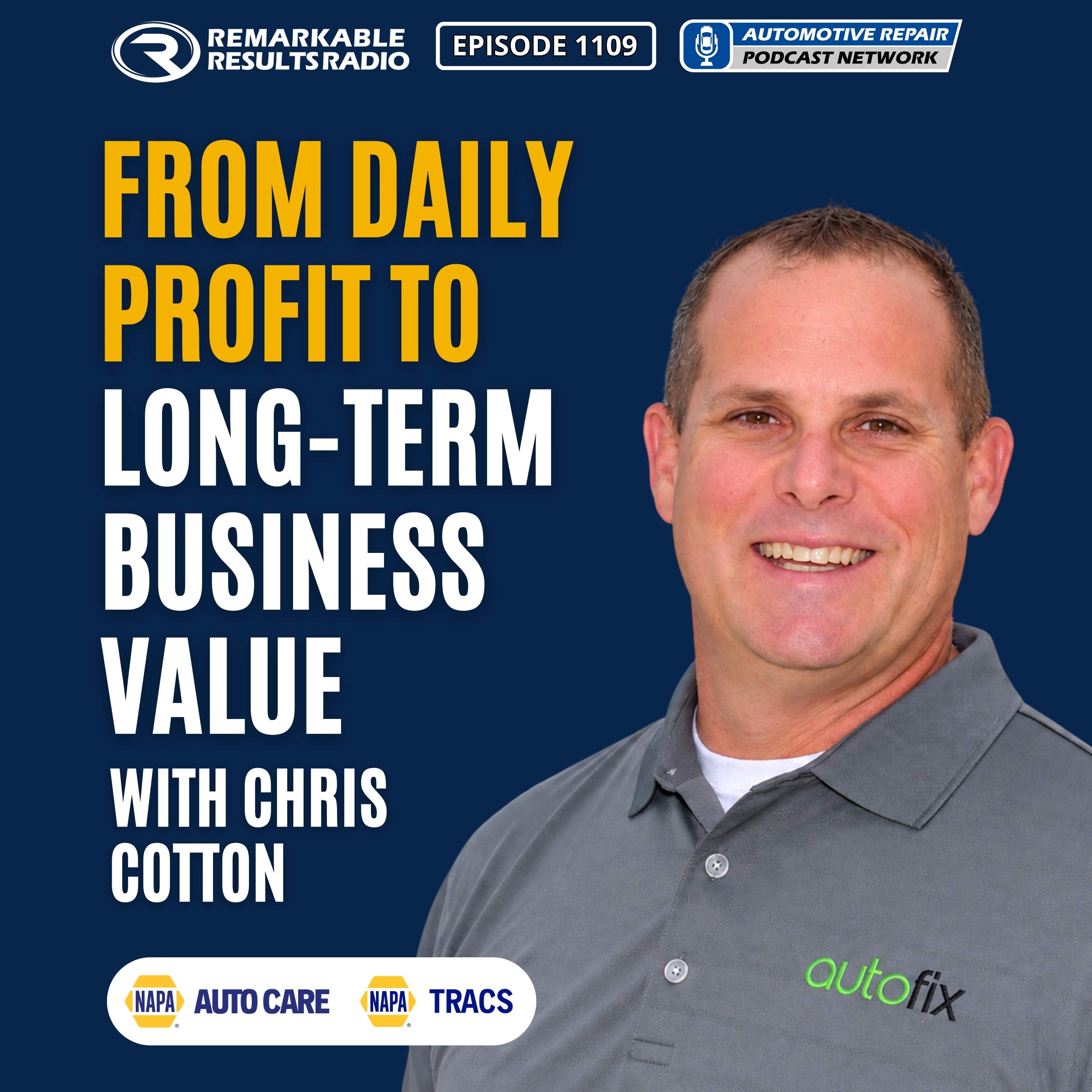
From Daily Profit to Long-Term Business Value [RR 1109]
Thanks to our Partners, NAPA Auto Care and NAPA TRACS Watch Full Video Episode What is your auto repair business really worth, and are you building it to become more valuable every year? Coach Chris Cotton, podcast host on the Automotive Repair Podcast Network, challenges shop owners to look beyond today's sales and profits and start thinking about the long-term value of the business they're building. Many owners spend years on the operational hamster wheel, focused on car count, payroll, production, and this month's bottom line. But when it's time to sell, transition the business to the next generation, or simply step away from daily operations, buyers and banks look much deeper. Chris explains why clean financials, documented systems, owner independence, and intentional succession planning can transform a shop from a business that provides the owner a job into an enterprise with significant transferable value. What You'll Learn Why profitability and business valuation aren't the same thing.What buyers and banks want to see before financing an acquisition.Why removing the owner from daily operations can increase business value.How documented systems and protocols make a shop more transferable.Why clean financial statements and tax records are critical to valuation.Chris Cotton's five stages of shop ownership, from daily survival to eventual exit.How increasing capacity can grow value without necessarily adding locations.Why succession and exit planning should begin years before you're ready to leave. Don't just build a profitable shop. Build a valuable business. Create strong systems. Develop leaders. Clean up the financials. Build capacity. Reduce owner dependence. And understand what your business is worth long before you're ready to sell it. Coaching to Valuation [E269]: https://chriscotton.captivate.fm/episode/cc269 The Weekly Blitz with Chris Cotton: Weekly Inspiration with Business Coach Chris Cotton from AutoFix – Auto Shop Coaching. https://chriscotton.captivate.fm/ Learn more about the benefits of being part of the NAPA family by visiting https://www.napaonline.com/en/auto-care NAPA TRACS will move your shop into the SMS fast lane with on-site training and six days a week of support: http://napatracs.com/ Connect with the Podcast: Download Our Mobile App:https://automotiverepairpodcastnetwork.com/app/Website:https://remarkableresults.biz/YouTube:https://www.youtube.com/carmcapriottoFacebook:https://www.facebook.com/RemarkableResultsRadioPodcast/LinkedIn:https://www.linkedin.com/in/carmcapriotto/Instagram:https://www.instagram.com/remarkableresultsradiopodcast/Join Our Virtual Toastmasters Club:https://remarkableresults.biz/toastmastersJoin Our Private Facebook Community:https://www.facebook.com/groups/1734687266778976Join our Insider List:https://remarkableresults.biz/insiderBooks Page:https://remarkableresults.biz/booksOur Classroom Page:https://remarkableresults.biz/classroomEpisode Collections:https://remarkableresults.biz/collectionsBuy Me a Coffee:https://www.buymeacoffee.com/carm The Automotive Repair Podcast Network: https://automotiverepairpodcastnetwork.com/ Remarkable Results Radio Podcastwith Carm Capriotto:https://remarkableresults.biz/Automotive Field TheorywithMatt Fanslow:https://mattfanslow.captivate.fm/Business by the NumberswithHunt Demarest: https://huntdemarest.captivate.fm/The Auto Repair Marketing Podcastwith Brian and Kim Walker: https://autorepairmarketing.captivate.fm/The Weekly Blitzwith Chris Cotton: https://chriscotton.captivate.fm/Speak Up! Effective Communicationwith Craig O'Neill: https://craigoneill.captivate.fm
Related across the catalog
Episode 284 - Managing Stress and Leading a Young Team in the Automotive Industry With Trey Holley
Don't get to the end of this year wishing you had taken action to change your business and your life.Click here to schedule a free discovery call for your business: https://geni.us/IFORABEDon't miss an upcoming event with The Institute: https://geni.us/InstituteEvents2026Shop-Ware gives you the tools to provide your shop with everything needed to become optimally profitable.Click here to schedule a free demo: https://info.shop-ware.com/profitabilityTransform your shop's marketing with the best in the automotive industry, Shop Marketing Pros!Get a free audit of your shop's current marketing by clicking here: https://geni.us/ShopMarketingProsShop owners, are you ready to simplify your business operations? Meet 360 Payments, your one-stop solution for effortless payment processing.Imagine this—no more juggling receipts, staplers, or endless paperwork. With 360 Payments, you get everything integrated into a single, sleek digital platform.Simplify payments. Streamline operations. Check out 360payments.com today!In this episode, Lucas and David are joined by Trey Holley, a shop owner from Thomaston, Georgia. Trey shares his journey from being a lifelong mechanic to learning the ropes of business ownership, highlighting the unique challenges faced in small Southern towns. The conversation touches on the importance of supporting fellow shop owners rather than viewing them purely as competitors, and Trey offers insight into the work-life balance struggles that led him to prioritize both his health and the building of a strong, supportive team.00:00 Atlanta airport's massive scale03:41 Long walks at airports06:27 Thunder Valley racetrack experience10:30 Southern business challenges with generosity13:29 Overwhelmed by business demands19:09 New guy in town setting up20:59 University town business challenges22:34 Building Industry Relationships26:46 Discussing business challenges with spouse31:14 Discussing labor cost strategy35:32 Quality control and final checks38:55 Balancing work and family time40:33 Dealing with family anxiety44:57 Balancing multiple responsibilities47:21 Discovering the Enneagram for Communication49:12 On choosing the right people
Are You Running Your Shop… Or Is It Running You? | Darin Johnson - Ep 37
Rick White was my VERY FIRST business coach, and trust me when I say he helped me get my shop-owner life together! 😂 Now I’m proud to have 180Biz presenting Downshift, so head to 180Biz.com and book your FREE strategy session with Rick because, honey, you don’t know what you don’t know!Y’all, if you missed the first Tektonic, you missed a GOOD one, but you've got another chance! 😂 Tekmetric is going even BIGGER in Houston, Texas, April 1–3, 2027, so head to Tekmetric.com/Tektonic and get registered because you're NOT missing out twice!Consistency is key - heard that! But, consistency is HARD. That's why I gave up on trying and let the experts handle it. Detect Auto. Let them clean up your estimating process and raise your ARO - like they did for me! CLICK HERE TO BOOK A DEMOYour techs don’t need another YouTube rabbit hole—they need real answers to the problem in front of them. SWAT Training and Diagnostics brings the tech support and hands-on, virtual, and just-in-time training to help them fix today’s car and be ready for the next one - LEARN MORE HERERunning an auto repair shop is one thing—but what happens when the shop starts running you? In this episode, Tonnika Haynes sits down with Darin Johnson, a one-man shop owner from Great Bend, Kansas, who admits he's working seven days a week, struggles to tell customers no, and hasn't taken a real vacation since 2018. They get into the difficult transition from technician to business owner, why coaching and industry connections have changed Darin's approach, and how raising his labor rate didn't create the customer revolt he feared. Tonnika also gets fired up about boundaries, last-minute customers, “free” tire pressure checks, and why serving your community doesn't mean allowing customers to control your schedule. Darin is heading to ASTA with a mission: build his network, learn how to step away from the shop, find help, and finally create a business that gives him a life outside the bays.Timestamps:00:00 Cold open: “It’s gonna be on one more day”00:19 Downshift intro00:38 Darin still has a FLIP PHONE?!02:10 Meet Darin: Running a one-man repair shop in Kansas02:44 How he accidentally became a shop owner04:27 From hot rods to 25 years in automotive05:39 Does Darin really want to stay a one-man operation?07:06 Heading to ASTA for the first time07:40 Why Darin LEFT his first training event early08:39 Coaching struggles: Knowing what to do vs. actually doing it09:55 The real reason Darin is coming to ASTA10:16 Shop ownership can feel like you’re on an island13:08 Working seven days a week & being married to the shop14:20 The people-pleasing problem15:03 Customers asking about cars at dinner and the grocery store16:27 What happens when the shop becomes your only hobby?20:26 Feeling guilty for taking time away20:57 “Schedule your hats”—including downtime22:59 Darin’s five-year plan: Train someone to replace him23:38 His last REAL vacation was in 201824:34 Open-heart surgery changed how Darin viewed the business25:21 Becoming an owner instead of just a technician28:06 Why 15–20 cars are constantly sitting at the shop28:34 The work Darin has finally started saying NO to30:49 Bringing an accountability partner to training32:42 Why a few unhappy customers can ruin your mindset33:58 Should you just FIRE the worst 5% of your customers?38:02 Tonnika gives Darin his official ASTA assignment40:40 Finding your automotive family42:39 Why Tonnika recommends coaching43:57 Coaching’s impact on Darin’s mindset and mental health45:01 “I wish I would’ve done this 10 years ago”46:04 Why shops that don’t train get left behind46:58 Darin now has the highest labor rate in town47:34 Tonnika’s $12 lawnmower tire era 😂49:00 Learning how to say NO without losing customers49:12 Scheduling your different “hats” as an owner51:10 Customers don’t control your schedule51:44 “It’s been on for two weeks? It can wait another day.”53:05 Your six-month-old check engine light isn’t suddenly my emergency53:50 How “real quick” jobs steal HOURS from your day54:52 Why Tonnika refuses to just throw air in a tire55:32 “My air isn’t free!”56:23 The right way to say no: Give customers another option57:45 Darin’s ASTA challenge & what’s coming in Part 2
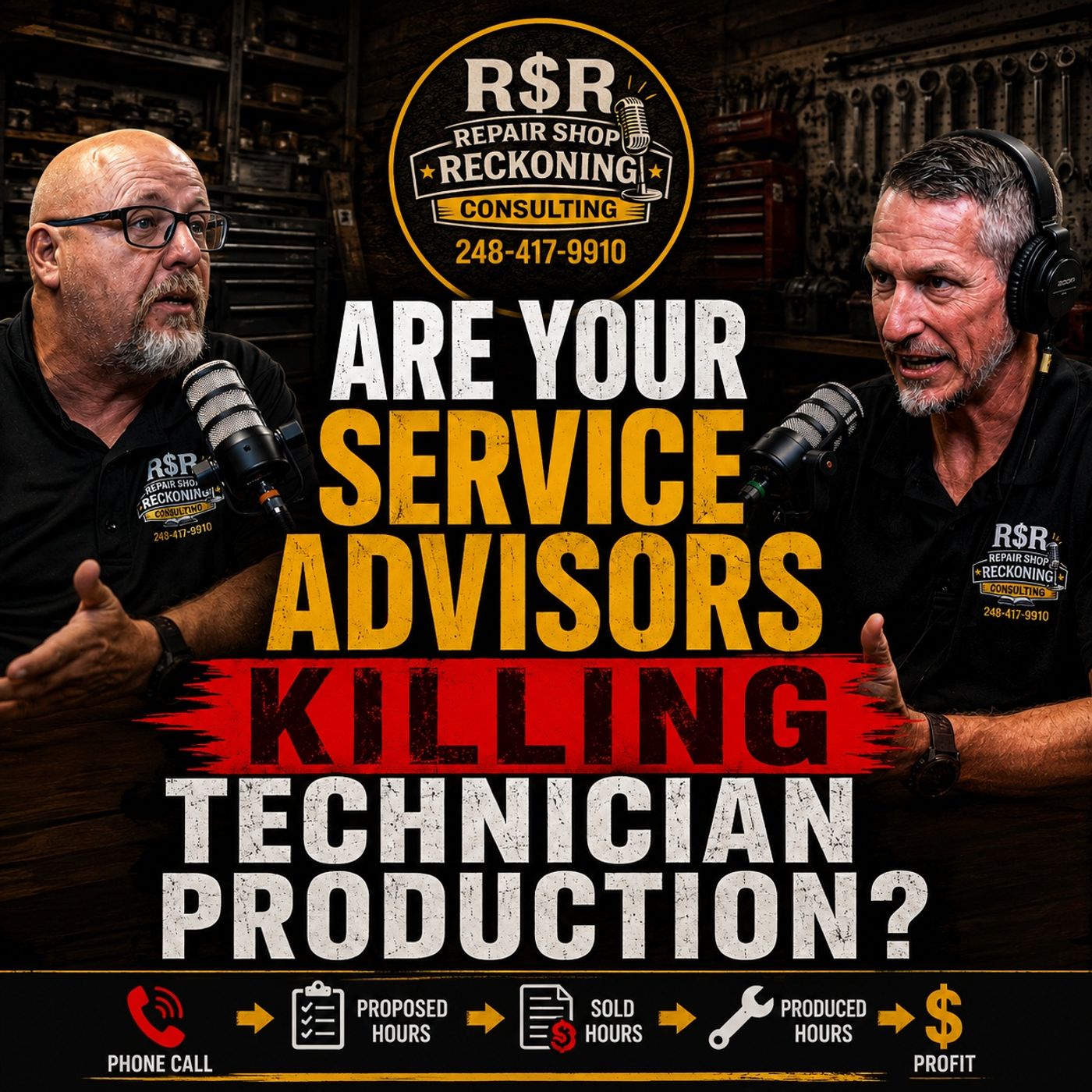
Are Your Service Advisors Killing Technician Production?
This week on Repair Shop Reckoning, Kevin and Jason dig into a problem happening in shops everywhere: technicians are being blamed for not producing enough hours, but nobody is stopping to ask whether those hours were ever sold in the first place. If...

$910K in 1 Month From a 9-Bay Goodyear?! | The Woodlands Hammer Panel
The Adams Automotive - Woodlands team debriefs a record-breaking $910,000 month. They unpack the numbers — high service revenue, strong gross profit, and an unprecedented $300K net operating income — and credit the result to A-player staffing, shop tours, speed-of-service PMIs, and disciplined sales processes like second-voice tag teams. The roundtable covers leadership, technician workflow, training programs (Courtside, Key2Key), culture, and practical tactics owners can apply to scale revenue, increase ticket averages, and build a winning team. AutoShopAnswers.com Auto-Shop-Media.com