Your Shop’s Toughest Competitor Is in the Mirror [THA 499]
Now playing — Remarkable Results Radio
About this episode
Thanks to our Partners, NAPA TRACS, Today's Class, KUKUI, and Pit Crew Loyalty Watch Full Video Episode *]:pointer-events-auto scroll-mt-[calc(var(--header-height)+min(200px,max(70px,20svh)))]" dir="auto" data-turn-id="request-WEB:8e59eec7-a235-4fa3-a072-956fea3fe478-7" data-testid="conversation-turn-4" data-scroll-anchor="false" data-turn="assistant"> *]:pointer-events-auto…
Key takeaways
- —Self-reflection is crucial for shop owners to identify areas for improvement.
- —Customer experience and perceived value are more important than price competition.
- —Empowering and coaching team members can enhance service quality and customer satisfaction.
- —Open communication with employees can lead to valuable insights and improvements.
- —Continuous evolution and adaptation are necessary for long-term success in the automotive repair industry.
Frequently asked
- How can shop owners identify if they are competing against themselves?
- Shop owners can reflect on their practices and assess whether they are prioritizing internal processes over customer needs, which may lead to inefficiencies.
- What role does customer experience play in competition?
- Customer experience is a key differentiator; shops that focus on providing exceptional service can stand out even in a crowded market.
- How can leaders foster a culture of improvement within their teams?
- Leaders can encourage open dialogue, ask for feedback, and involve team members in decision-making processes to create a culture of continuous improvement.
▸Full transcript
This is the Automotive Repair Podcast Network. Hey everybody, Carm Capriato, Remarkable Results Radio, and another Town Hall Academy. I just have been dying to do this episode, Who Is Your Competition? Because it may be you. This is some deep introspective or reflection that we're going to have. Don't go anywhere. We want you to be here. And thank you so much to our great partners, and we'll be right back to tell you who's on with me.
Hey, did you know that Napa Trax has on-site training plus 6 days a week support? It all starts when a local representative meets with you to learn about your business and how you run it. After all, it's your shop, so it's your choice. Let us prove to you that Trax is the single best shop management system in the business. Find Napa Trax on the web at at napatracs.com.
Hey, how well does your team know their stuff? Test their automotive skills with the Today's Class basic, advanced, or service advisor quizzes. It's a quick, effective way to spot gaps and grow stronger teams. Take the quizzes now at todaysclass.com/tcquiz. Shop owners, stop juggling multiple marketing tools. Kukui's integrated platform, they deliver 4 times better website conversions, automated follow-up, and real-time ROI tracking. Get industry-leading customer support with Kukui.
That's K-U-K-U-I.com. You're probably tired of chasing new customers who never return. We understand. Pit Crew Loyalty ends the one-and-done cycle, turning first visits into lasting, reliable revenue. On the web at pitcrewloyalty.com. Look guys, the app is out there for your smartphone. Let's be sure you get it loaded up. Go to arpn.app. We've got so many really cool things for you. Save favorites, share episodes, download them for later listening.
And we have version 2 coming out really soon. You are going to be blown away on the improvements that we've made to this. You're going to have fun with it. Anyway, who is your competition? Because it may be you. 2 really great people here. Friend Dwayne Myers and my new friend Al Ramos. Dwayne, Dynamic Automotive, 8 locations. Maybe there's 9 as of yesterday.
Wait, Dwayne, I don't know. I knew you in your humble beginnings and you have done such an incredible job with Dynamic. Frederick, Urbana, Libertytown, the whole area of Maryland. Wow. Been to— which one was I at that you had your big anniversary at? That was our new market store. And Carl, yeah, I remember your humble beginnings as well. Look how far we all have come.
And I've been watching Al for years, so it's, uh, what a journey. Damn, what a crew we have here. Since 1995, when you were— I'm trying to remember— Where Customers Become Friends. And that was a video on your website, so well done. And I love your humble beginnings that you had to find the banker that was willing to believe in you guys.
Oh, that was one. Yep. It has a lot of lessons along the way, and a lot of them are stacked in podcasts over the years. Yes. And here's my best retrospective with my friend Dwayne. He was on episode 2, and we're around the 1,100 mark right now. Episode 2, you and your partners. Oh, Al Ramos, Pro Auto Care, Denver and Littleton, Colorado.
Hello, Al. Hey, how are you, Carm? I'm great. This is a family business over 30 years. La familia. Exactly right. Oh my God. You just reminded me, I'm just gonna go watch reruns of The Sopranos. And you're a head coach. That's my title at my business. That's my job. That's what I'm supposed to do. I stopped being a business owner. So you did a succession plan in early 2025.
4 in the family. We'll talk about that in a little bit. Look, the most dangerous competitor may be the one you can't see in the parking lot because it's the one in the mirror. We always talk about this. It's the man in the mirror who could be the cause of greatness or the cause of problems and issues. Dwayne, I wanna start with you.
Are you competing with price? Are you competing with customer experience? And how often do you stop for a moment, use your intuition and say, are we doing this right and that right? There's only 150 things to look at in depth to see if you are at the top of your game. And the thing that worries me so much, well, Charlie down the road is doing this and Charlie down the road is doing that.
And I saw Midas is doing this and Mavis is doing that. And if, what you're doing that you want to do, that your people believe in, but you're doing it the best, then you have no competition. All right, episode over. I was getting ready to say, was there a question in all that, Carm? It was a statement that I want you to build on.
It's a great statement. You know, competition. I've always said, you know, that, you know, we are our own competition. And really what What's our value? To us, it's our value point, you know, customer experience, value. Price is important and it's been a little more important here in the last year, but still it's not the main driver. I say you stay in the ballpark, but really it's the value and perceived value that customers get.
You know, you're going through this and you're like, you know, you have to change. You keep getting better at what you do. But a lot of it too is as you scale and you grow is I know what feels right. Does your team know what feels right? You know, or are they just following a policy procedure, which you have to have all those in place to scale, but they still got to understand the heartbeat of value for a customer.
Literally just today, we had a young man that works in our Quick Loop. He's been with us only about 6, 8 months, doing very well, but he came and asked Jennifer, who runs the location, you know, had a customer bought 2 tires. And then a few months later came in and bought 2 more. So do we give them the free rotation? Because they bought 4, but it went all at the same time.
And, you know, because we give free rotations when we sell 4 tires. Of course you do it for free. It's value for the customers, but he at least was smart enough and had a feeling. And that's what I appreciate. He had a feeling of it felt right to do that. So he just came and asked. I mean, it seems simple to us, but really as you scale, And you add more team members and all, do they know those kinds of things so you can still keep bringing that value?
So that's the difference now between now and 5 years ago. 5 years ago, I made those decisions. Now I'm not making those decisions. And I know Al's going to say the same thing. At least he's not making those decisions too. So how do we get it to where our people that are running those stores, and then even the ones that are just communicating with the customers every day, the ones that are seeing them understand what that value is.
Duane, I love this. And Al, if that was you in this particular position, I think you would make a note of who this employee is, that in 6 months they've ingrained the culture and the need and the why. I mean, to me, that's a superstar in the making. Absolutely. You'd start thinking about people. They gotta start thinking about the customer. They gotta think about the very fact that The end result isn't just fixing the car, it's taking care of a person to the point that they'll return back to you.
They're gonna talk about you, that there's enough of a relationship. And by adding the extra value to say, this is what we do, we offer the rotation, but we have that happen all the time. People are just like, should we do that? Well, we say yes, go that little extra bit. Just make a difference, make it better. Yeah. The, Best thing about this is he just graduated from high school.
That's the most impressive part to me. Just graduated. So life experience is shorter than most. Those are almost inherently built-in life skills of a caring nature, Duane. And that individual who said that must have a connection to the client and he doesn't even realize it. Connection to the client, plus also I would say an extension of your culture. And it also goes back to good hiring practices.
There's a lot of ingredients into what produced that. So, Al, when you hear the word competition, what immediately comes to mind for you? If you start looking at that, somebody competing essentially, right? Against what you do. Maybe that's the old term, if you would. But for me, We've realized that if we focus on us and the person in front of us, that truly it's, that's the most important thing because there's repair shops within blocks of our shop.
We have a ton of 'em in the Denver area where I'm at. Littleton's a little less. That's a suburb outside of Denver to the west, southwest. And we realized that If a person's calling around, they're gonna call you, say for instance, on a price. They call it on a price cuz that's what you start, but they want to hear, are you any different than what I call?
And it also starts with a quick question. Sometimes it's just as simple as repeating a name, and that's what makes you different, if you would, from competition. It's sounding a little bit different. When I start thinking of competition, I tell my folks, Don't focus on competition. Be the best you are because people are gonna remember that. I totally agree. I got this really cool list I wanna read.
Your competition isn't always trying to beat you, but sometimes they're simply answering the phone better, communicating better, explaining better, presenting themselves better, investing in their people, maintaining their facility, using technology better, creating more consistent experiences. Making it easier to do business with them. Duh. Internal reflection. Carm, they're saying yes. That's by far the biggest thing. They're saying yes. And that's why this episode is here.
This is really all about introspective and, and internal reflection on ourselves. No one has any competition if they come to work every day saying, we're going to do the best that we possibly can. This is our religion. This is how we do things. This is why we care. This is who we are. And I wanted to make sure in this episode that we're always looking for the better version, version of ourself all the time and find the disciplines inside to look at systems, to look at communication skills, to look at the education gap, to look at tooling.
And I'd love to hear what you guys are doing so that you can always be out there, up there, and outpacing. What are you doing about it, Duane? That's a great question, Carm. What are we doing about it? And a lot of it, I think it goes back to my previous story about the quick lube technician is one is, you know, of course you're training your team members, you're empowering them, but really it's, are you coaching them?
You know, as I see head coach under Al's name is, are you coaching them? And that's a, you know, it goes back to the one-on-ones and all. And, and, you know, my direct reports and the ones I coach, you know, there's half a dozen that I'm doing, but then there's a lot of the one-offs, but I have to make sure I'm teaching our leaders how to help other people be leaders and coach them.
And that's the biggest part is how can someone achieve and perform the way you want and deliver the value and service that you want if you haven't coached them up there? And it has to be continual and purposeful and thought out. It can't just be, you know, We just pass 2 shifts in the night and we talk for a minute and that was your one-on-one.
It's a lot more in-depth and a lot more thought out than that. Those, I think right now that's probably one of the strongest things we're doing. And now I want to say we've been always doing it, but we haven't, but we're just getting better at it each time we do it, you know, in each version, because, you know, each time you restart things, even though you're doing them, you can do them better as you go.
Because what we did 5 years ago, we're doing much better today. But then I look at it like, there's some things we're still missing the mark and things change. What we did well, not doing as well now. Isn't that amazing, Al? Nothing will be different tomorrow. Surprise, it will be. 110%. I think Dwayne just hit it so well. It's like you have a recipe, right?
Let's just call it a recipe. You bake a certain cake, that's your special cake, and it's the process. You just get that thing going. And then all of a sudden the cake changes. You go taste it like, wait a minute, how did we change this? Well, somebody removed the cinnamon and added vanilla. It changes. Okay. It's not the same thing. And in our business, we've realized that.
And I'll give you an example of that. We have a general service tech starting tomorrow. Okay. You think we wouldn't move heaven and earth, would we? Yeah, we do. We had a meeting, the top tier leaders, and said, we got a young man starting. Jorge is his name. Experienced young man. How do we make his experience starting to work for us be better than what it's been for the previous people?
Why don't we use him as the person right now? Full attention on him. And so my 2 top guys, I got Chris on one hand and I got Alex on the other. COO, general manager, runs the operation, runs. They have now focused. They've got him pulled all the stuff of what it's going to take. What's the next 3 days? Starts tomorrow, drops the box off today.
What are the next 3 days? They have penned out 3 days because to the point Shane was saying, it's like you sometimes are just on a go and you don't slow down enough to look to say, Is our attention to detail right? Vanilla tastes good, but that cake's supposed to have cinnamon. You know, I love that story. And we stop, we laugh at ourselves.
Okay? We really do. We laugh at ourselves because we say, wow, just looking into it just a little bit revealed what we needed to do to make it better. It's amazing, you know, when you expect something and then you get something else, how even if it's good, You get an adverse or a negative reaction to it. So yeah, you expected cinnamon and you didn't get it, but I loved that.
How can we make the experience for this, the newest person better than anyone else? It reminds me going back to, it used to be, you know, when I started out is I had to earn your trust. You know, the team members had to earn our trust. Now I always tell them, You know, I trust you. It's now up to you to keep it, you know, but basically it's just a shift and change, you know, as generations change, as we change, as we improve, get better, mature, you know, you have my trust right from the start.
I hopefully I wouldn't have hired you if you didn't have it to start with. So why am I making you work for it more? You have my trust that you just got to keep it now. I love that, guys. I want to talk about cinnamon and vanilla right now. Okay. All of a sudden we find out that someone changed the rule? Because we all know that it was cinnamon, not vanilla.
And so we're all noticing that the cake tastes different. Someone in authority has got to push the cake back to cinnamon versus vanilla. But correct me if I'm wrong, let's discuss it. What was the reason that we used vanilla? And what is the consensus of this? How does it affect us the customer? And should we, if we go to vanilla versus cinnamon, a rule, 110% rule in the company?
And that's what happens in so many companies is we have these fragment— what's going on in bay 2 and 3 and the front counter, they're all evolving and they're changing because this felt good on this day and the sun was shining and blah, blah, blah. And this person wasn't here, so we decided to do it that way today. And that's the chaos that we end up getting without having the standard set of rules.
Al, that, it's just perfect analogy. Sure. And think of this, vanilla doesn't taste bad. You're right. That's why I use that example because it happens to us in our businesses and you hit on it because it's like, is it better? Maybe the cinnamon was good, but, but, and that's what we have learned, that business and workplaces have evolved and changed. Completely. They're different than what they were.
I am a tail-end baby boomer. My generation did things totally different. I was a technician through those periods of times. I worked the '80s, I worked into the '90s, and it was different. And now it's a different place, and people can bring ideas and add things to it that can really be really a benefit to your company, but you have to be willing to hear and listen.
Let's face it, your shop management system is the single most important tool in your shop, period. NapaTrax was built from the ground up to make your business more profitable and efficient. We provide an extensive set of tools to increase and track profitability in real time. NapaTrax offers the industry's best post-sale support Hands down, and we train your people on-site. Yep, on-site. And we offer remote refresher training 10 times a week, and customer support is open 6 days a week.
Give us a call, visit the website, or join our Facebook community today to learn more. We'll prove to you that Traxx is the single best shop management system in the business. NAPA Traxx is always customized and tailored for you, whether you're a one-man shop or a large multi-bay or multi-location company. After all, it's your shop, so it's your choice. Visit us on the web at napatracs.com.
Hey, want to test your team's knowledge? Well, today's class quizzes show how much your techs and advisors really know, so you can train smarter and build a stronger, more efficient team. Whether it's the basic quiz, perfect for all techs to test their foundational knowledge, the advanced quiz, built for experienced technicians ready to dive into complex topics, or the Service Advisor Quiz focused on communication and customer service.
Now, each one gives your team a clearer view of what they know and where they can grow. Take the quizzes now at todaysclass.com/tcquiz. Shop owners, we know you are overwhelmed with a flood of missed calls, empty bays, and disconnected marketing tools. Kukui has spent over a decade building one integrated platform for auto repair shops. One login, one dashboard, and mobile-first websites that convert 4 times industry average.
Smart, innovative CRM with automated follow-up, 24/7 online booking, and real-time ROI tracking. With 900+ years of combined team experience, we fuel the growth of 2,200+ shops and have influenced $3 billion in revenue. Stop working harder, start working smarter. Get industry-leading customer support and book a demo with Kukui. That's K-U-K-U-I.com. You know, most shop owners feel trapped spending on ads while half their first-time customers never come back.
It's frustrating. It's exhausting. And it's not your fault. The industry average is 54% one-and-dones. We understand how discouraging that can be. Well, Pit Crew Loyalty changes the story. Our clients cut that rate by up to 38%, raising lifetime value by more than 50%. Loyalty members visit nearly 3 times more often, creating predictable revenue without extra ad spend. Pit Crew Loyalty, where customers stay and shops thrive.
On the web at pitcrewloyalty.com. Question, uh, could a shop be competing against itself without knowing it? And I think it goes back to the vanilla and the cinnamon thing. Wow, we could do a lot with that analogy, Al, for every shop in America. That the ingredients and the flavors change without structure. And that's how we fragment ourselves and we are competing against the rules that we set up.
So talk about rules. Let's go into this. I own the shop, I've got 5 people, and without wanting to say it, I'm in struggle mode. Carm interviews all these guys with these big shops, legacy guys, and, you know, I've got a COO and I got a general manager and I got this and that. How do I, as a person who leads 5 or 6 people, become the kind of leader and coach that you want your COOs, general managers to do?
Do I have the time to really stop, to find the opportunities to sit down and have one-on-ones? As this industry matures, everyone realizes that they would love one day to sell their business, but they're not sure how. And they know they want to get bigger and they know there's opportunity out there. How do we coach our internal people into better systems and not having to compete with ourselves because we're fragmented?
Duane, you can go back to day one, all those years ago. And Al, you remember when you first started, how did you get to be where you are as the strong leaders, good people? Let's talk to the people that have, you know, single lead, 4 or 5 guys. What's interesting is that, that in fact was something that I had considered. I was a technician for a long, long time.
The highest level I could be at a dealership as a master Honda technician. I was a master Acura technician and I started a business. I didn't know nothing about running a business, nothing. And so that we can fix cars, we get paid for it. Okay, let's try it. And I had to evolve. I had to remove myself out of being that role of being the technician, being the stuff.
And, and to that single, that guy who has 3, 4, 5, 6 people, he's probably immersed in the business. He needs to be able to take what he has and pass it to people and have them grow and manage people to become better. And that's how you are going to get the best possible product you can put out there. And as the person that's the leader that people are following, because whether you like it or not, if you own a business, you're the leader.
You can default and put a GM in charge or a head service advisor, whatever you want to call it. Don't do that. You're the voice in the room that needs to talk and you need to challenge yourself. And Brian Tracy said it. I've been listening to Brian Tracy, read his books many times. Brian says, others can polish the showcase. Others can polish the front end.
Let them do it. Maybe it doesn't look as good as you do it, but let them do it. And that's how I did that. Building on what Al just shared, because it's right, you know, Jose always used to get after me, my business partner. He's like, you know, I would end up back in the shop and he would tell me, you know, you can't steer this ship from the engine room.
Get out of the shop. And it was my safe haven. I went back to it. Yes, it takes time. You got to grow out of it, but really You gotta find the time and use, and the effort really to care. If you want to be successful growing your team so they're able to deliver the service you want to deliver to your customers, care about them.
Let them know that you care. Ask the questions, find out how they're doing, what's going on in their life, help develop them, help grow them, be the mentor that they need. Yes, it takes bandwidth and all, but really it's, it can become your greatest superpower and the biggest difference maker. If you want to deliver top-notch service and not be your own competition, grow your team.
But that takes effort from yourself. I'm just blown away by what you both just said. And according to what I said a few minutes ago, but I'm the lead and I've got 4 or 5 guys and I want to learn to lead. And you say, well, you've got to, but you have to have other people polish the case. Got it. But you may not have the right person or people willing to take your guidance, willing to take your leadership.
They may not be able to be coached. So face that reality. They may be really good at certain things that they do, but they may not be on the team. And that's a tough struggle. I got a small shop, tight labor environment. How do I become the leader respected by my peoples and grow this business with this really cool, neat new strategy?
I just hired myself a coach to get me where I need to be. And I'm struggling cuz I have no one who wants to get on the train. I'm the engine and I've got no cars attached. The immediate thought in my mind when you gave that scenario was a scenario where I've seen it, cuz I talk to a lot of shop owners.
I've got lots of friends throughout the industry across the country, and I've heard this on so many occasions and they talk for me just a little bit and I already know what it is. And I go, are you willing to let go? Are you willing to actually hand off? I use the analogy, what I teach a lot of time, joystick. Okay? Think about a fighter jet.
Think about a game console. 3 of us can't be on that joystick at one time. Only one. Okay? That's how it works. And if we're in a fighter jet, it's really advisable that only one person control that aircraft. And that in the business piece, I think really If anybody's listening to this, if there's one thing they're gonna walk away with, is to think about that.
Do you honestly take your hand completely off that joystick? Because the people that you may say, I don't think that person's coming, Dwayne's not coming around. I mean, I've been working with him and he just won't come around. Dwayne never has had his hand on that joystick. You haven't given, you haven't trusted and you haven't given him that opportunity. And so many guys.
I've seen across every age group. Okay? So it's doing that and it's also stopping to say, hey, do me a favor tonight when we close at 5 o'clock, at 5:30, let's go have some dinner. I wanna go talk to you. I wanna talk about your family. You wanna talk about your kids playing football this year? That's really exciting. Let's go talk. Those are the things you have to do to build A relationship, which then leads to even greater trust, which then will carry out what you have.
And then you'll find out, oh yeah, I did have the right person. It was me all along thinking, oh, they're not catching on. It's 'cause you didn't let them. Al beat me to it, but my response to you, Karma, is gonna be, is did you teach them anything else but what they're doing? That's the thing is you're gonna gravitate to what you know and what is comfortable.
Back in the day, I went back in the engine room because I wanted to go work on the cars because that was easy. That's where we got to step in and help them. Yes, sometimes we got to look at the team members on our bus, but most of the time we can develop people into where they want to go. That's part of it is you got to find out what motivates them, where do they want to go, and then use that to get them there.
You got to ask the questions, you got to dig into it, and you got to find out, you got to be their coach and we're going to Keep going back to that. By doing so, you won't be having that question. You'll have different questions of how you can help them get there. Of all the shop owners that I know in the US, in North America, in all the years I've been doing this, so many off the record, recorders are turned off.
We're just, or see 'em at a show, we're on the phone together, we're texting. Carmine, I have a completely new and different company from 10 years ago when I decided to take my personal move as a bigger, better leader and to take our business to the heights that I know it can be. And a lot of 'em is because they found themselves the Coach the 20 group, the, the networking group that motivated them to say, I can do this.
And they say, uh, I don't have anybody the same that I had 10 years ago. I had a group that was perfect for me when we were, you know, 1 in 4, 1 in 5. But when, now that I've got another store, we find the weaknesses in the leading the people and then systems, facility, client experience, communications, and the people side and the pricing and the value and the technology.
And all these things that roll together, you're gonna find you're gonna have a completely different business if you pay attention to you, your people inside the house, not outside the house. That's the premise of this episode. You gotta look in the house. And you know, a lot of our team members you've met, if you come here, you'll still see a lot of them.
They've been with us a while. They're the same team members, but they're different people. They're doing different jobs and they've grown. So you're right in your statement, but you can definitely still have the same people in your team. But that to me is success. I would love to see the evolution of you and your partners and getting up in front of your people, Duane, and slowly over time saying, this is what we're gonna do.
This is how we are. Here's our mission. Here's our vision. Here's our values. And then taking them to dinner and earning the trust and respect of these people and let them see, feel, and love what you're doing, they will become the different kind of person that you are becoming because they're looking up, they're watching you change, they're watching you grow, they're watching you evolve.
And if they're going to stay on the team and they love what they're doing, so will they. I love it. If you're listening through audio, Both Dwayne and Al are shaking their heads. If you were watching the video, you could see that. Oh my God. So facility, when was the last time, you know, you're coaching people who says, listen, go outside, stand at the curb and take a look at it.
What do you see? You don't have to go out and look at the competitor. You need to look from your curb looking in, right, Al? 110%. What's so funny, I just got a message While we're on this, from my manager GM that, hey, the ducts are dirty. You can see the dirt on the ducts. I got, we have a company called Monster Vac is going to be here Thursday to clean all the ducts in the building.
That speaks to what I have been, if you would, preaching for quite some time. And you talk about standing out front or across the street. 110. I say to everyone here, and I teach this, everything speaks. Your lobby, your people, the way they sound. People are recording when they walk in your door. The brand new customer's recording. We make sure we try to tell everyone, say hello to somebody.
You don't have to strike up a conversation because you might be busy, but say hello. See somebody. That to me has to be who we as an automotive industry need to become. And we then break down these perceptions that have been out there for so long about repair shops, the ethical or unethical they are, who they are, what they're about. It's that simple caring for people and a simple smile and a hello breaks down walls, if you would.
What we teach and we try to live it out. I would wanna believe we do that most of the time. Do we do it all the time? Probably not. The people going 100 miles an hour, but you have to start. And anyone who is listening saying, well, we don't have time. You don't have time not to. You have to do that. It makes a difference.
I think the customer experience is a package deal. Our team, of course, is one of the biggest parts of that package. But really, yeah, you say curb appeal, you know, Is the trash can full? You know, is there toilet paper in the bathroom? Simplest things in the world that make all the difference. It's important, but you know, Al spoke on, you know, conversations, saying hello.
You know, I have a general rule. If you're within 10 feet of somebody, you better be saying hi to them. I know, because myself, 20 years ago, 30 years ago, I would have turned my head and ran from you just because that's who I was back then. We encourage, and we have so many young team members that are so outgoing now, but we encourage Take 5 minutes.
I've told you before, you see a bumper sticker and you relate to it, talk about it to them. Make that connection with that customer because then it's past trust. It's past the price. It's like, do I need it or not? Is what is best for me? That is bringing value and it's worth it. I have peers that say, well, yeah, you're not the most efficient.
I said, well, maybe not, but I feel we're making the biggest impact. Dwayne, what was it that turned you from looking the other way to saying hello to somebody within 10 feet. Can you take me back to the day or to the experience that you became Super Duane? Carm, you knew me, a previous version of me at one point when I wasn't as outgoing as I am now before you started this podcasting stuff.
Yeah, you're exactly right. But what was it? What happened? What changed? Did you see a better future if Duane was a different person? Actually, I did. As I progressed in my own career and I was moving up, you know, Lee and Jose were letting me run the company and do more with it. I felt to be the effective leader I needed to be and to get the company where it could go, I had to change.
And that's where, you know, I went to Dale Carnegie and really worked on myself. And not too many people know that Duane. There's a few, but most don't know that Duane. They know the Duane that talks to everybody now, but I had to work on myself really hard, but it's been a great example for our team. So they know that, you know, just because this is who you are today, it doesn't stop you from being who you want to be or can be.
And you just gotta put yourself in an uncomfortable position. And I did, still do. I want to stop for a moment and tell a very quick story. You know, our whole episode is about you may be your own worst competitor. And for a bunch of years, and I actually did this a couple of times with friends that owned shops, I'd go out and I bought a gallon of white paint.
And the white paint was an icon and it signified improvement. And it didn't matter if the white paint was going on the wall or the white paint really signified a clean restroom and toilet paper. And you take the owner of the shop with this white gallon of paint that's in your hand and you say, Hey, this is getting pretty heavy. Would you carry this around for me?
And now they've got this weight on them, this gallon of white paint, which signifies improvement slash change. And you're walking up and saying, you know those E's, they could really use a coat of paint. You see those curbs out front? The grass needs to come out. Maybe we'll paint it too. The facetiousness of the sound of the coat of paint, and then inside, and then the ducks, Al, and all the things that you see as you walk through the entire building, including the office and the restrooms of the client, the rest.
And you go through there with this and that person's carrying this, what is it, a 10-pound paint and you're writing things down and you say, uh, wow, pick one start. And that's an elixir in my mind, not only for the owner or the manager of that facility, cuz you could do it with multiple. You're the owner of a place, you take the manager, the general manager around.
And that to me is, wow. So what are we doing, boss? We're trying not to compete with ourselves. We're trying to be the best at everything that we do. And it signifies the white coat of paint. It's freshness. Wow. That's a great example because if you think about that, how easy would it be to somebody to take that gallon? If you would, if you handed that off to the person who really could be, I'm gonna set this down for a little bit cuz we're busy.
We got a lot going on. We're busy. And that piece that you just talked about is so important because like I said, I know many, many shop owners and there's the ones that are like, we're focused on getting all the work. We got too much to do. We don't have time for these things. And it's like, you can't do that. You have to put the effort with the people, with your facility, and then look at yourself and say, How do I do better?
To that effect, for me, I've had many moments in this career. Our company's been open 34 years. And so it's gone through a lot of cycles. I will tell you this, there's a lot of variations of Al in that process too. Okay. It's the craziness thereof. And it's like me and my wife, I say this jokingly because this could add some humor to it.
We're about to celebrate 30 years of marriage. And I tell everybody I could be an expert in marriage because I've been married 5 times. And people would stop and go, what do you mean you're married 5 times? Yeah, 5 times to the same woman through all the different stages of our relationship, from the courting to the kids, to the kids in school, to the post-kids, to now in our ages.
And likewise, she was married to a guy, 5 different guys, if you would, me and I say that jokingly because you have to be able to joke and look at your own self and the way you're running your business, the way you're running your shop, and look at it and say, you better be able to look back and know, just like Dwayne said a little bit ago, all the differences in me, how much I have changed.
You can't be, I'm the same way I was 20 years ago. Wow, that ain't gonna work, you know that. You know, I want to see the Crazy Al. That had to be, uh, interesting there. Uh, You know, something we do, and maybe this could help others, is, you know, every January we have our strategic planning meeting with our leaders. And leading up to that, our leaders ask each of the location leads, and then they go down through the team, is, you know, needs and wants.
What do you need? What do you want? And dream big. You know, it might amaze you the creativity people have on what you could do with your stores. What you should do or not do. But it's interesting. Some of it's equipment, it's no-brainers. You know, those are the needs, but the wants, like, you know, we closed a car wash in our one store and created an ADAS bay.
You know, productivity went up. We, uh, took the flat stalls, added more lifts, and it caused us to be a more efficient, better company. I didn't think about that. I was very hesitant. And actually the person, and it was Paul that brought it up, he was not scared, but hesitant to say something because Mealy and Jose were overly invested in that thing.
You know, we couldn't get past that. So it took somebody that wasn't emotionally invested and said, this is not the best use of the space that we have. And ask them what you want to do with it. And, you know, you say curb appeal and all, you know, yes, it might be your building, but you know what? They're living in it too.
What would they do with it? They have ownership in there too. Let them show a little bit of it to you. I love the open-mindedness that's basically you just described. You had to get up and over. Your people had to realize that, oh, can't talk to Duane because it's black or it's white. It'll never be colored in his world. And you showed them by making certain moves that you're flexible enough to listen to your people and do some of the things that they suggest.
It's important to, I mean, you want true buy-in and you want them to You say no one shows ownership. Well, it's because you didn't give them a chance. You got to throw that out there. You know, we talked about trust earlier. Well, you know, trust them. More than one time we have done things that I didn't think. I wanted them to succeed.
I was hopeful. I trusted them, but it isn't something I would have selected, but they were right and we are better for it. Al, I got to go back to the 5 marriages that you had. Har har har. The best thing that I could think about was Al V1, V2, V3, V4, and V5. Wow. See, I was thinking cinnamon, vanilla, you know, chocolate.
You know, what else we had there? Yeah. What version do we have? Are we in version 5 now, Al? Are you gonna stay there? Actually, there should be an evolve from that because we likely should because there's gonna be the post-Al because of all that. Where I'm at now. Great meeting. We met with a couple leaders, a total prospect person we met at 6:30 this morning and realizing what he's gonna bring to the growth as we expand here in the next year, the opportunities that are coming our way.
And so for me, I'm literally going, okay, I'm gonna be packing up my office. I'm not gonna come to the job. I'm gonna be working from a different place. Because I have to change it to that next piece. 'Cause I've got such high-level operators that my job should be focused on what I did Monday, what I brought to them. I said, we got a new person starting.
What are we gonna do different? And it just created this just, yeah, that's what he gotta do though. I just love what he just said, Dwayne. I mean, just throw the weight down on our think. Right or wrong. Let's do some deep introspective. Is that the right word I'm looking for? I think so. Yeah, sure. It's break it. Talk about reflecting on what you've done to then try new things, you know, and then you, yeah, you break it and it might work, it might not, but you gave it an opportunity.
Yeah. I've always said in the past, fix it before it breaks. You guys are, are always forward thinkers. You, you never stop. You're always looking deep under the covers to say, you know, what could it possibly be that screws us up somewhere along the line? Okay. I have totally loved this episode. And like all my episodes of late, they're going in a million different directions, but it's so good to hang with you two.
And I have one final thought for all of us. You are looking to expand and you found yourself a shop, you close the deal. This was your shop that you're buying. Okay. You're coming into your shop as a competitor. What's the first one thing you would change? Carmine, that's an amazing question and one I'm going to carry forward with our team. Be faster.
I think as we've progressed and added all of these great amenities and things, I think it slows us down. It's the word efficient, not faster. Maybe, but see, efficiency also, there's negatives of that too. It goes back to not having the time to talk to the customer and all. It's what does the customer need? You know what I think customer wants? The pretty bathroom, the nice waiting room, all the amenities, the snacks and chips, but really they just want to get in and get out today because they got to get to a soccer game for their kid.
Maybe I'll add to that. Maybe it's understanding what our customer wants and try to meet them there instead of what I think it should be. And Duane, to ask every individual in the company that same question because they give you a perspective from the role that they have. Absolutely. Yeah. 100%. Okay, Al, you've got the final word, Al. Oh, I got this one, man.
So my first thing is literally It's the most important asset in the building, and that's the personnel. So I just walked in, I just bought Al's place. I need to talk to the dudes and the gals that are in the building, and I need to ask them, if I gave you the purse, I gave you the authority and ability, what would you change?
And that actually happened this morning in that prospect interview. I said to him, I said, at the current company that you're considering leaving, If you were given full authority, purse, and power to do whatever you wanted, what would you do? And he answered it really, really well. And he said it was all about the people. It was at the level of the people.
And I was like, you nailed it. You nailed it. And that's, I think, where you start, because that answer to that question is you could perceive it to be something, but the people that are the boots on the ground that are mushing the 8+ hours a day are going to know that answer better than anything. And you may walk in and say, this building needs to be black or gray or silver, and they may turn around and give you something completely different.
And I think that's where high-level people have to be able to hear. And that's what this drill does for you if you do that. And if you took the time and you were the buyer and you went and talked to them, Boy, they'd be like, wow, you came and talked to me and you want to know what I think? It's pretty cool.
I love it. And I'm going to give that a name because every time I'm inspired by my guests, I write down these key takeaways. The keys to the castle. If you were given the keys to the castle, the purse. Yeah. You know, you're talking about if you purchased it and walked in, One of the questions that we ask each of the team members that we talk to when we're in that process that are working there is, what do you love about this place?
And that's the first question, not what would you fix? What do you love? And then it's, what would you improve? And Al hit it when he said it. He did. But yeah, that's a question we ask because why change something they love? You know, you don't wanna take away 'cause you don't know. And the beauty of that question and the end of this episode, is you don't have to be in acquisition mode.
You don't have to have made a purchase to sit down and do that with your own people from the roles and their perspective. You don't. And that is why you may be your worst competitor, because you haven't dug deep down in the foxhole to find out if there's a grenade in there or a gallon of white paint. Uh, Dwayne Myers, Al Aramis, thank you guys so much.
I had a blast. I enjoyed this. Thanks for being here, man. Appreciate it. Yeah, appreciate it. Thank you both. Thanks for being on board to listen and learn from the premier automotive repair business podcast, Remarkable Results Radio. Get your episodic education on the ARPN listening app at automotiverepairpodcastnetwork.com. Also enjoy the podcast on our Carm Capriato YouTube channel. Carm is all for advancing the professional automotive service industry.
Until next time.
More from Remarkable Results Radio
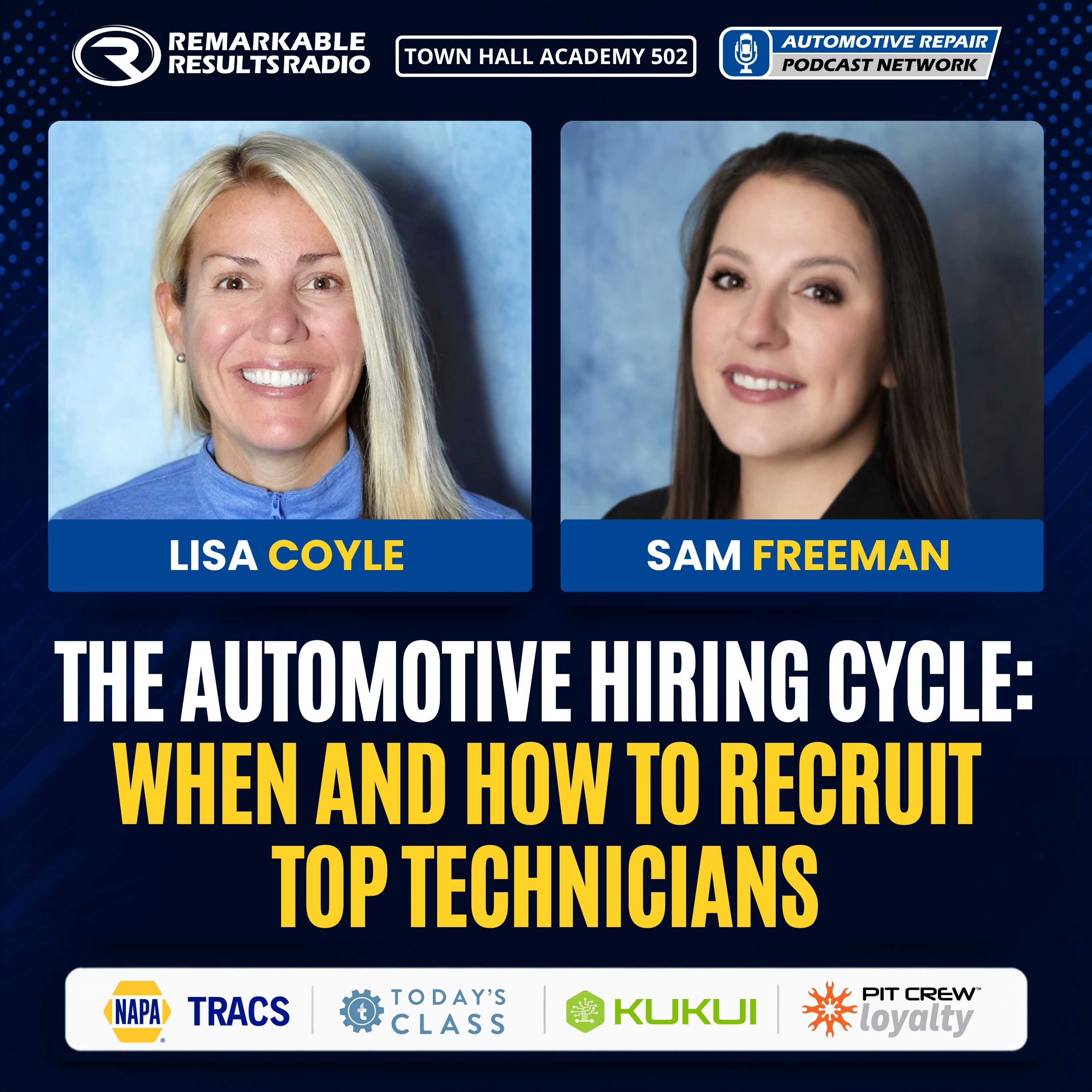
The Automotive Hiring Cycle: When and How to Recruit Top Technicians [THA 502]
Thanks to our Partners: NAPA TRACS, Today's Class, KUKUI, and Pit Crew Loyalty Watch Full Video Episode *]:pointer-events-auto scroll-mt-[calc(var(--header-height)+min(200px,max(70px,20svh)))]" dir="auto" data-turn-id="request-WEB:8e59eec7-a235-4fa3-a072-956fea3fe478-7" data-testid="conversation-turn-4" data-scroll-anchor="false" data-turn="assistant"> *]:pointer-events-auto scroll-mt-[calc(var(--header-height)+min(200px,max(70px,20svh)))]" dir="auto" data-turn-id="request-WEB:49a777bf-d263-4496-bf0b-2eb3a46ac96a-11" data-testid="conversation-turn-24" data-scroll-anchor="false" data-turn="assistant"> What if the best time to recruit your next technician is when your shop isn't looking to hire? Lisa Coyle, CEO of Promotive, and Sam Freeman, Partner Manager at Promotive, reveal why automotive recruiting has a cycle, and why understanding when technicians are looking can give shop owners a significant advantage. Lisa and Sam explain how recruiting data, market timing, candidate behavior, and consistent relationship-building can create a much more proactive hiring strategy. Download the 6 Month Promotive Hiring Insights Report for FREE: https://info.gopromotive.com/RRR What You'll Learn Why technician recruiting has a cycle and why timing matters.Why “post and pray” recruiting puts your shop at a disadvantage.Why finding a top technician can take 60 to 70 days.How local market data can improve your job postings.Why you should recruit even when you don't have an opening.What may really be behind candidate ghosting.Why a counter-offer doesn't have to end the relationship.How consistent communication can prevent first-day no-shows.Why complicated hiring processes can cost you great candidates.How the F.O.R.D. method can make interviews more personal and effective. Great recruiting is about timing, data, and relationships. Don't wait for an empty bay to discover you need a recruiting strategy. Understand when technicians are most likely to consider a move, know what candidates in your market are searching for, simplify your hiring process, and stay connected with good people even when the timing isn't right. Your next great technician may not be looking when you're ready to hire. The opportunity is to build the relationship when they're ready to listen. Promotive has over 40 years of recruiting and automotive experience. If you need qualified technicians and service advisors and want to offload the heavy lifting, visit https://gopromotive.com/ Meet Paige: The Auto Repair Industry’s First 24/7 AI Recruiter [THA 481]: https://remarkableresults.biz/remarkable-results-radio-podcast/a481/ Lisa Coyle, CEO of Promotive Sam Freeman, Partner Manager at Promotive NAPA TRACS will move your shop into the SMS fast lane with onsite training, six days a week of support, and local representation. http://napatracs.com/ Optimize training with Today's Class: In just 5 minutes daily, boost knowledge retention and improve team performance. https://www.todaysclass.com/ Stop juggling multiple marketing tools. KUKUI’s integrated platform delivers 4x better website conversions, automated follow-up, and real-time ROI tracking. https://www.kukui.com/ You’re probably tired of chasing new customers who never return. Pit Crew Loyalty ends the one-and-done cycle, turning first visits into lasting, reliable revenue at https://www.pitcrewloyalty.com/ Connect with the Podcast: Download and Listen on Our Mobile App: https://automotiverepairpodcastnetwork.com/app/Visit the Website:https://remarkableresults.biz/Subscribe on YouTube:https://www.youtube.com/carmcapriottoFollow on Facebook:https://www.facebook.com/RemarkableResultsRadioPodcast/Follow on LinkedIn:https://www.linkedin.com/in/carmcapriotto/Follow on Instagram:https://www.instagram.com/remarkableresultsradiopodcast/Join Our Virtual Toastmasters Club:https://remarkableresults.biz/toastmastersJoin Our Private Facebook Community:https://www.facebook.com/groups/1734687266778976Join our Insider List:https://remarkableresults.biz/insiderAll books mentioned on our podcasts:https://remarkableresults.biz/booksOur Classroom page for personal or team learning:https://remarkableresults.biz/classroomBuy Me a Coffee:https://www.buymeacoffee.com/carmSpecial episode collections:https://remarkableresults.biz/collections The Automotive Repair Podcast Network: https://automotiverepairpodcastnetwork.com/ Remarkable Results Radio Podcastwith Carm Capriotto:https://remarkableresults.biz/<a href="https://mattfanslow.captivate.fm/" target="_blank"...
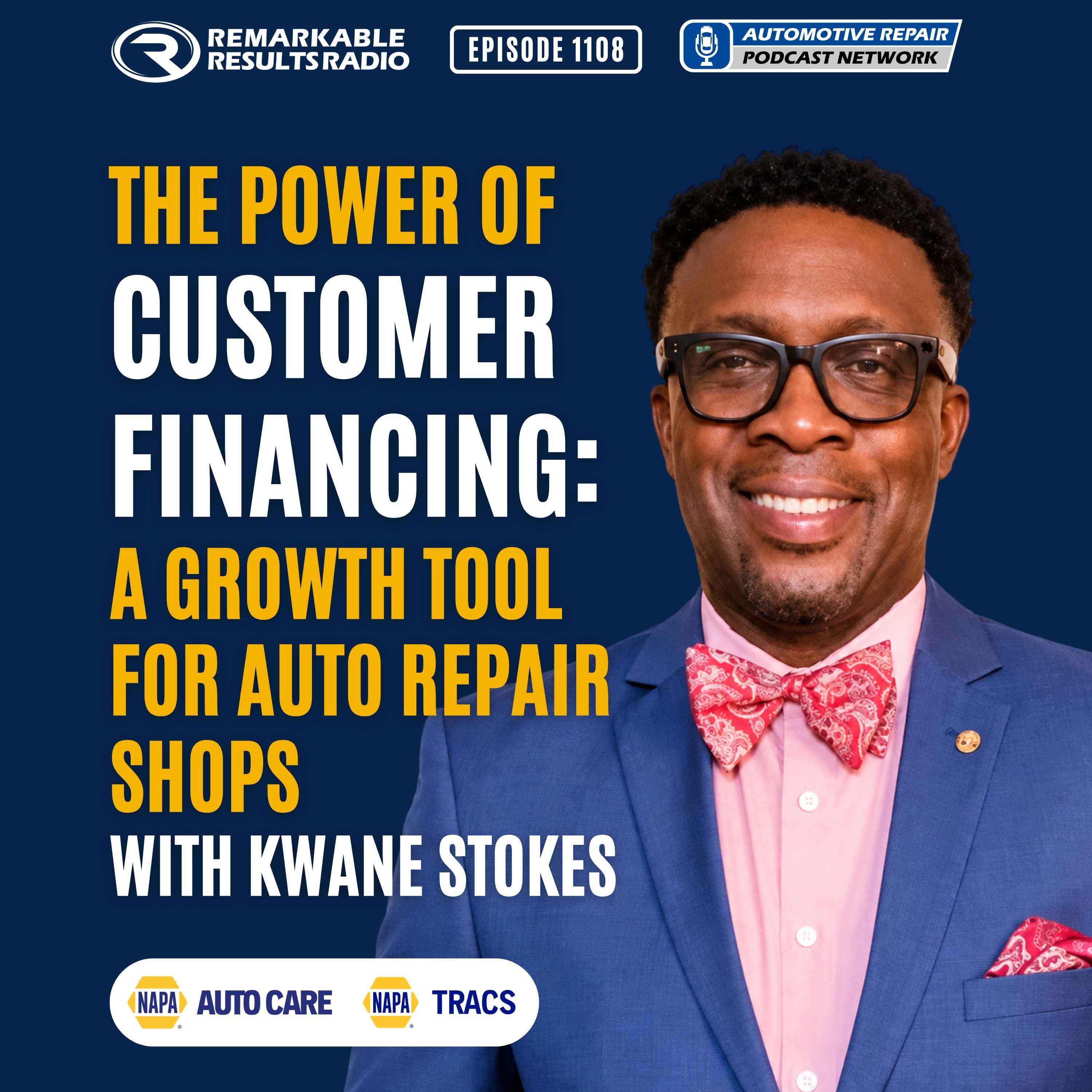
The Power of Financing: A Growth Tool for Auto Repair Shops [RR 1108]
Thanks to our Partners, NAPA Auto Care and NAPA TRACS Watch Full Video Episode What happens when a customer needs a $2,000 repair but doesn’t have the cash available today? That moment can determine whether the vehicle gets repaired, the customer delays a critical service, or they take their business somewhere else. For automotive shops, offering flexible payment options can be more than a convenience. It can be a powerful tool for helping customers say yes to the work their vehicles need. Kwane Stokes, Assistant Vice President and Relationship Manager in the automotive division at Synchrony, explains how the program can help shops remove financial barriers, increase repair opportunities, and create another reason for customers to return. Kwane also addresses why many shops still aren't offering financing and how the biggest obstacle may simply be the assumptions advisors make about a customer's ability or willingness to pay. What You'll Learn Why financing should be presented as a payment option, not something an advisor decides a customer needs.How the program's average first and repeat purchase amounts demonstrate the potential impact on average repair order (ARO).Why assuming a customer can't qualify for credit can cause shops to lose needed repair work.How monthly promotional offers can give shops another reason to communicate with their customers.How advisor incentives and simple training can encourage more consistent presentation of financing.What the upcoming "waterfall" financing model could mean for customers who aren't approved through the primary credit program. The biggest opportunity may not be finding more customers. It may be giving the customers already sitting at your counter more ways to say yes. The key is removing the assumption that you know what a customer can or cannot afford. Present the options, explain them clearly, and let the customer decide what works for their financial situation. For a shop, financing isn't simply about collecting payment. It's another tool for helping customers get the repairs they need while protecting the relationship and keeping the work in your shop. Kwane Stokes, AVP, Relationship Manager, Auto Network, Synchrony Learn more about the benefits of being part of the NAPA family by visiting https://www.napaonline.com/en/auto-care NAPA TRACS will move your shop into the SMS fast lane with on-site training and six days a week of support: http://napatracs.com/ Connect with the Podcast: Download Our Mobile App:https://automotiverepairpodcastnetwork.com/app/Website:https://remarkableresults.biz/YouTube:https://www.youtube.com/carmcapriottoFacebook:https://www.facebook.com/RemarkableResultsRadioPodcast/LinkedIn:https://www.linkedin.com/in/carmcapriotto/Instagram:https://www.instagram.com/remarkableresultsradiopodcast/Join Our Virtual Toastmasters Club:https://remarkableresults.biz/toastmastersJoin Our Private Facebook Community:https://www.facebook.com/groups/1734687266778976Join our Insider List:https://remarkableresults.biz/insiderBooks Page:https://remarkableresults.biz/booksOur Classroom Page:https://remarkableresults.biz/classroomEpisode Collections:https://remarkableresults.biz/collectionsBuy Me a Coffee:https://www.buymeacoffee.com/carm The Automotive Repair Podcast Network: https://automotiverepairpodcastnetwork.com/ Remarkable Results Radio Podcastwith Carm Capriotto:https://remarkableresults.biz/Automotive Field TheorywithMatt Fanslow:https://mattfanslow.captivate.fm/Business by the NumberswithHunt Demarest: https://huntdemarest.captivate.fm/The Auto Repair Marketing Podcastwith Brian and Kim Walker: https://autorepairmarketing.captivate.fm/The Weekly Blitzwith Chris Cotton: https://chriscotton.captivate.fm/Speak Up! Effective Communicationwith Craig O'Neill: https://craigoneill.captivate.fm

Daily Habits That Build a Stronger Auto Repair Shop Culture [THA 501]
Thanks to our Partners: NAPA TRACS, Today's Class, KUKUI, and Pit Crew Loyalty Watch Full Video Episode *]:pointer-events-auto scroll-mt-[calc(var(--header-height)+min(200px,max(70px,20svh)))]" dir="auto" data-turn-id="request-WEB:8e59eec7-a235-4fa3-a072-956fea3fe478-7" data-testid="conversation-turn-4" data-scroll-anchor="false" data-turn="assistant"> *]:pointer-events-auto scroll-mt-[calc(var(--header-height)+min(200px,max(70px,20svh)))]" dir="auto" data-turn-id="request-WEB:49a777bf-d263-4496-bf0b-2eb3a46ac96a-11" data-testid="conversation-turn-24" data-scroll-anchor="false" data-turn="assistant"> What does a strong shop culture look like when you’re the people living it every day? Bree Wismer, Service Advisor and Frontline Culture Leader, and Trevor Hinds, Operations Manager and Dispatcher at Empower Automotive in Traverse City, Michigan, take us inside the daily habits and communication practices that keep their team aligned, productive, and focused on the customer. Rather than approaching culture from the owner's perspective, Bri and Trevor share what happens on the front lines. They explain how Empower Automotive breaks down the traditional divide between the front counter and the bays, keeps everyone on the "same bus," and creates a workplace where every person understands their role, respects the team around them, and contributes to the same goal. What You'll Learn Why the front counter and specialists must operate as one team.How daily huddles and short training sessions keep the team aligned.Why the 1:00 PM check-in can prevent late-day customer surprises.Why a "no-update" update can be one of the most valuable customer communications.How to respond when customers arrive with AI-generated or parts-store diagnoses.How respect, communication, and accountability create confident professionalism. Building a world-class shop culture doesn’t require a massive budget or a complicated organizational overhaul. By committing to these small, consistent actions, you can transform your shop from a high-stress environment into a thriving, unified business that both your team and your customers enjoy. Bree Wismer, Service Advisor, Frontline Culture Leader, Empower Automotive, Traverse City, MI Trevor Hinds, Operations Manager, Dispatcher, Workflow and Culture, Empower Automotive, Traverse City, MI NAPA TRACS will move your shop into the SMS fast lane with onsite training, six days a week of support, and local representation. http://napatracs.com/ Optimize training with Today's Class: In just 5 minutes daily, boost knowledge retention and improve team performance. https://www.todaysclass.com/ Stop juggling multiple marketing tools. KUKUI’s integrated platform delivers 4x better website conversions, automated follow-up, and real-time ROI tracking. https://www.kukui.com/ You’re probably tired of chasing new customers who never return. Pit Crew Loyalty ends the one-and-done cycle, turning first visits into lasting, reliable revenue at https://www.pitcrewloyalty.com/ Connect with the Podcast: Download and Listen on Our Mobile App: https://automotiverepairpodcastnetwork.com/app/Visit the Website:https://remarkableresults.biz/Subscribe on YouTube:https://www.youtube.com/carmcapriottoFollow on Facebook:https://www.facebook.com/RemarkableResultsRadioPodcast/Follow on LinkedIn:https://www.linkedin.com/in/carmcapriotto/Follow on Instagram:https://www.instagram.com/remarkableresultsradiopodcast/Join Our Virtual Toastmasters Club:https://remarkableresults.biz/toastmastersJoin Our Private Facebook Community:https://www.facebook.com/groups/1734687266778976Join our Insider List:https://remarkableresults.biz/insiderAll books mentioned on our podcasts:https://remarkableresults.biz/booksOur Classroom page for personal or team learning:https://remarkableresults.biz/classroomBuy Me a Coffee:https://www.buymeacoffee.com/carmSpecial episode collections:https://remarkableresults.biz/collections The Automotive Repair Podcast Network: https://automotiverepairpodcastnetwork.com/ Remarkable Results Radio Podcastwith Carm Capriotto:https://remarkableresults.biz/Automotive Field Theorywith Matt Fanslow https://mattfanslow.captivate.fm/Business by the Numberswith CPA Hunt Demarest: https://huntdemarest.captivate.fm/The Auto Repair Marketing Podcastwith Brian and Kim Walker:<a...

Rapid-Fire Automotive News: AI, EVs, Autonomous Vehicles, and the $19B Trade School Boom [RR 1107]
Thanks to our Partners, NAPA Auto Care and NAPA TRACS Watch Full Video Episode How quickly is the automotive repair industry changing, and are you ready for what's next? Tom Ham, shop owner and founder of the Automotive Management Network, joins Carm Capriotto for a fast-paced conversation covering 12 major trends shaping the future of auto repair. From autonomous vehicles and solid-state batteries to the changing value of trade careers, AI, government regulation, 3D printing, and vehicle reliability, Tom and Carm explore the technologies and economic shifts shop owners need to understand. What You'll Learn How autonomous vehicles could reshape vehicle safety and the repair industry.What advances in solid-state batteries could mean for EVs and vehicle range.Why trade careers are gaining momentum as technology changes traditional employment.How the technician shortage is creating new opportunities for shops to develop talent.How government regulation and emissions enforcement could affect vehicle owners and repair shops.What current vehicle reliability trends reveal about today's automotive brands.How 3D printing could help shops solve parts availability challenges.Why AI is becoming a powerful tool for reducing friction and improving efficiency.Why shop owners need to stay curious and adapt as automotive technology continues to accelerate. The automotive repair industry is changing faster than ever. The shops that thrive will be the ones willing to understand emerging technology, embrace new tools, develop their people, and continually rethink how they operate. The future isn't coming someday. It's already showing up in the service bay. Tom Ham, Automotive Management Network. Tom’s previous episodes HERE. Learn more about the benefits of being part of the NAPA family by visiting https://www.napaonline.com/en/auto-care NAPA TRACS will move your shop into the SMS fast lane with on-site training and six days a week of support: http://napatracs.com/ Connect with the Podcast: Download Our Mobile App:https://automotiverepairpodcastnetwork.com/app/Website:https://remarkableresults.biz/YouTube:https://www.youtube.com/carmcapriottoFacebook:https://www.facebook.com/RemarkableResultsRadioPodcast/LinkedIn:https://www.linkedin.com/in/carmcapriotto/Instagram:https://www.instagram.com/remarkableresultsradiopodcast/Join Our Virtual Toastmasters Club:https://remarkableresults.biz/toastmastersJoin Our Private Facebook Community:https://www.facebook.com/groups/1734687266778976Join our Insider List:https://remarkableresults.biz/insiderBooks Page:https://remarkableresults.biz/booksOur Classroom Page:https://remarkableresults.biz/classroomEpisode Collections:https://remarkableresults.biz/collectionsBuy Me a Coffee:https://www.buymeacoffee.com/carm The Automotive Repair Podcast Network: https://automotiverepairpodcastnetwork.com/ Remarkable Results Radio Podcastwith Carm Capriotto:https://remarkableresults.biz/Automotive Field TheorywithMatt Fanslow:https://mattfanslow.captivate.fm/Business by the NumberswithHunt Demarest: https://huntdemarest.captivate.fm/The Auto Repair Marketing Podcastwith Brian and Kim Walker: https://autorepairmarketing.captivate.fm/The Weekly Blitzwith Chris Cotton: https://chriscotton.captivate.fm/Speak Up! Effective Communicationwith Craig O'Neill: https://craigoneill.captivate.fm
Related across the catalog
Are You Running Your Shop… Or Is It Running You? | Darin Johnson - Ep 37
You shouldn't have to play detective just to figure out what's happening in your own shop. 😂 If you're ready for all your shop's information in one place, check out Tekmetric HEREConsistency is key - heard that! But, consistency is HARD. That's why I gave up on trying and let the experts handle it. Detect Auto. Let them clean up your estimating process and raise your ARO - like they did for me! CLICK HERE TO BOOK A DEMORunning an auto repair shop is one thing—but what happens when the shop starts running you? In this episode, Tonnika Haynes sits down with Darin Johnson, a one-man shop owner from Great Bend, Kansas, who admits he's working seven days a week, struggles to tell customers no, and hasn't taken a real vacation since 2018. They get into the difficult transition from technician to business owner, why coaching and industry connections have changed Darin's approach, and how raising his labor rate didn't create the customer revolt he feared. Tonnika also gets fired up about boundaries, last-minute customers, “free” tire pressure checks, and why serving your community doesn't mean allowing customers to control your schedule. Darin is heading to ASTA with a mission: build his network, learn how to step away from the shop, find help, and finally create a business that gives him a life outside the bays.Timestamps:00:00 Cold open: “It’s gonna be on one more day”00:19 Downshift intro00:38 Darin still has a FLIP PHONE?!02:10 Meet Darin: Running a one-man repair shop in Kansas02:44 How he accidentally became a shop owner04:27 From hot rods to 25 years in automotive05:39 Does Darin really want to stay a one-man operation?07:06 Heading to ASTA for the first time07:40 Why Darin LEFT his first training event early08:39 Coaching struggles: Knowing what to do vs. actually doing it09:55 The real reason Darin is coming to ASTA10:16 Shop ownership can feel like you’re on an island13:08 Working seven days a week & being married to the shop14:20 The people-pleasing problem15:03 Customers asking about cars at dinner and the grocery store16:27 What happens when the shop becomes your only hobby?20:26 Feeling guilty for taking time away20:57 “Schedule your hats”—including downtime22:59 Darin’s five-year plan: Train someone to replace him23:38 His last REAL vacation was in 201824:34 Open-heart surgery changed how Darin viewed the business25:21 Becoming an owner instead of just a technician28:06 Why 15–20 cars are constantly sitting at the shop28:34 The work Darin has finally started saying NO to30:49 Bringing an accountability partner to training32:42 Why a few unhappy customers can ruin your mindset33:58 Should you just FIRE the worst 5% of your customers?38:02 Tonnika gives Darin his official ASTA assignment40:40 Finding your automotive family42:39 Why Tonnika recommends coaching43:57 Coaching’s impact on Darin’s mindset and mental health45:01 “I wish I would’ve done this 10 years ago”46:04 Why shops that don’t train get left behind46:58 Darin now has the highest labor rate in town47:34 Tonnika’s $12 lawnmower tire era 😂49:00 Learning how to say NO without losing customers49:12 Scheduling your different “hats” as an owner51:10 Customers don’t control your schedule51:44 “It’s been on for two weeks? It can wait another day.”53:05 Your six-month-old check engine light isn’t suddenly my emergency53:50 How “real quick” jobs steal HOURS from your day54:52 Why Tonnika refuses to just throw air in a tire55:32 “My air isn’t free!”56:23 The right way to say no: Give customers another option57:45 Darin’s ASTA challenge & what’s coming in Part 2
The Mistake That's Costing Your Shop Money | Nick Yannessa & Chi Wong - Ep 30
Consistency is key - heard that! But, consistency is HARD. That's why I gave up on trying and let the experts handle it. Detect Auto. Let them clean up your estimating process and raise your ARO - like they did for me! CLICK HERE TO BOOK A DEMOAnybody can run a shop. Building one that lasts? That's a whole different story. If you're ready to build smarter systems and a better experience for your team and customers, check out Tekmetric HEREIn this episode, Tonnika welcomes Nick Yannessa & Chi Wong to talk about how they started a auto repair shop. Nick brought up how he thinks it's dangerous to judge customers based on their car or background—presenting recommendations equally is key for success. They all discuss the importance of efficiency and processes, especially for one-person operations, with strategies ranging from shop layout to streamlined part sourcing. The discussion explored how relationships—whether through peer support, coaching, or personal connection with customers—can make or break both morale and business success.Timestamps:00:00 Growing up in the business, judging customers & learning not to assume03:00 The wild origin story of a Philly-area repair friendship07:00 Shop ownership journeys: from dealer frustration to Craigslist finds13:15 Shop expansions, partnerships, and the big pains of growing fast16:30 Management mistakes: Getting hurt by the wrong coaching advice22:30 Why shop friendships (and roasting each other) drive real growth26:00 Breaking out of the tech mindset — why process & sales skills matter35:00 Single bay or big staff? How to thrive as a one-man show41:30 Efficiency hacks: leg surgery for your shop layout47:00 The power of batching tasks, double-dipping on equipment, and finding your warehouse51:00 Bootstrapping a new shop, from free desks to Techmetric (or not)59:00 Real-life sales training: How to pitch brakes and win trust1:12:00 Dealership vs. Indie: Why premium service isn’t just about the brand1:20:00 Body shop margins, insurance games, and why service rocks1:33:00 The secret sauce: Making your shop unforgettable1:39:00 Building trust over time (without a single DVI)1:44:00 Health, happiness, and generational wealth—success beyond KPIs1:46:00 Why driving a free CR-V might beat flexing a Cadillac1:52:00 Building benefits for your people, and leveling up your future1:58:00 Final rants and why you need to be the “dive bar” your customers love
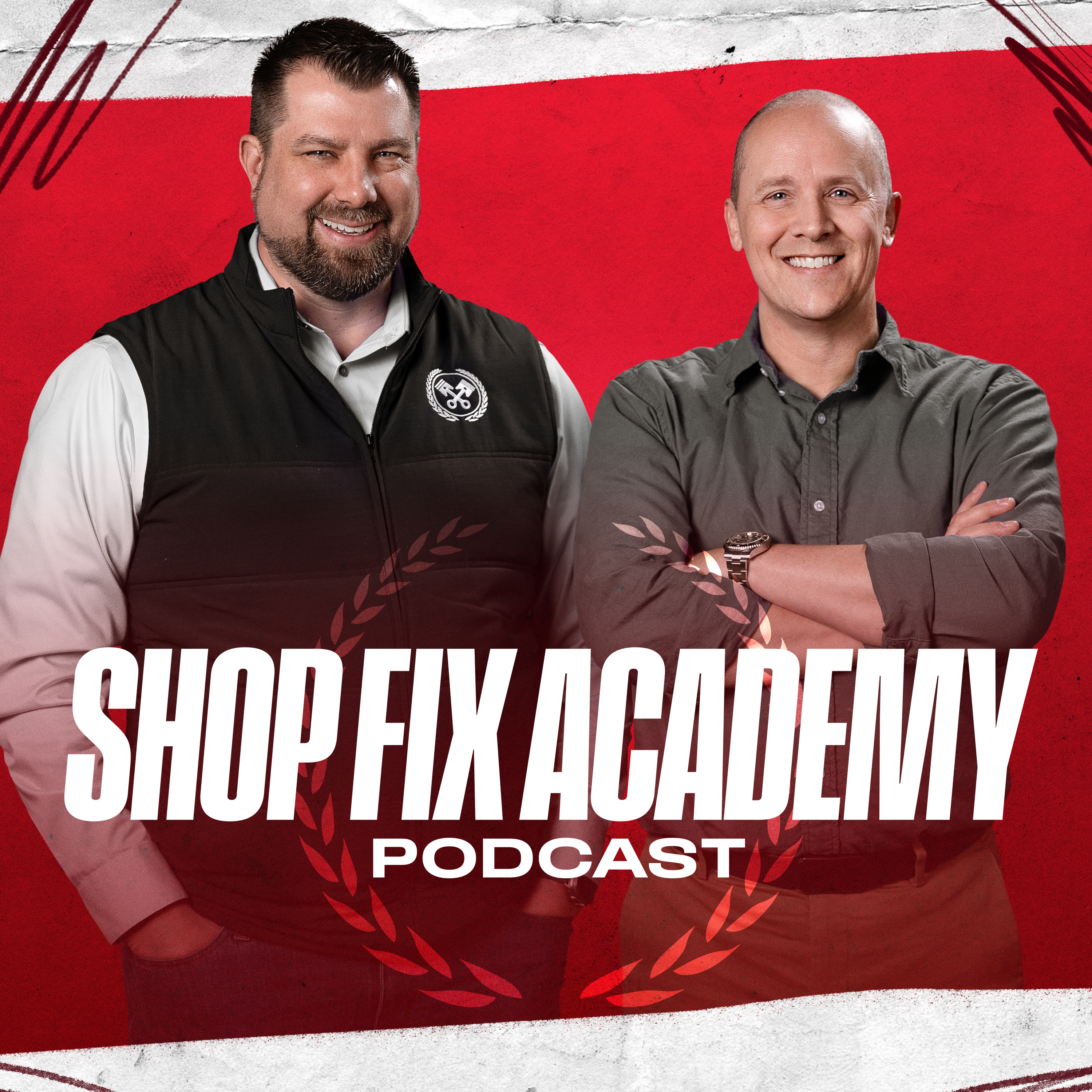
I FIRED My Top Performers and Reached $5.6M | EP6 | The Shop Fix Academy Podcast
With a growing shop, a great local reputation and a team that ran the business without him, Allen Baughman thought he'd finally built the dream operation every shop owner chases, but instead his top performers were quietly telling his techs the shop was a sinking ship and plotting to start their own. In this episode, Allen breaks down the mistakes that led to 10 empty bays and him being forced to turn wrenches again, the pay plan switch that erased his profit for six straight months and the vital leadership and culture lessons that he learned to turn everything around and build a $5.6M repair shop. Join The Fastest Growing Network Of Auto Repair Professionals! Get the structure and clarity your shop has been missing with Shop Fix LITE. https://shopfixacademy.com/shop-fix-lite?utm_source=sfapodcast&utm_medium=podcast&utm_campaign=join-lite&utm_content=cta-textlinkGet Tickets Now!Learn the systems top shop owners use to consistently increase profit and build stronger teams at Shop Hackers Conference. https://shophackersconference.com/?utm_source=sfapodcast&utm_medium=podcast&utm_campaign=shophackers2026&utm_content=cta-textlinkJoin Us at Our Events! Explore Shop Fix Academy Events led by operators who have solved the same profit, leadership, and operational challenges you’re facing now. https://shopfixacademy.com/upcoming-events?utm_source=sfapodcast&utm_medium=podcast&utm_campaign=sfa-events-2026&utm_content=cta-textlink
What Nobody Warns You About Shop Ownership | Andrew Klement & Caleb McElmurry - Ep 28
You shouldn't have to play detective just to figure out what's happening in your own shop. 😂 If you're ready for all your shop's information in one place, check out Tekmetric HEREConsistency is key - heard that! But, consistency is HARD. That's why I gave up on trying and let the experts handle it. Detect Auto. Let them clean up your estimating process and raise your ARO - like they did for me! CLICK HERE TO BOOK A DEMOIn this episode, Tonnika Haynes sits down with Andrew Klement and Caleb McElmurry to dive into the realities of young shop ownership in the automotive industry. Andrew and Caleb talk candidly about their rough starts, the importance of being profitable (and actually charging the right prices), and how building a supportive community has made all the difference.Timestamps:00:00 Young shop owners introduce themselves, plant mom stories, and moving from mobile to brick-and-mortar04:36 Caleb describes his dealership beginnings, lessons from a used car lot, and why integrity matters06:35 Andrew shares his “started from the lawnmower” story, learning on the job, and meeting the right mentors12:27 Why both left bad bosses and how they leveled up their skills13:55 Building a customer base: overcoming $20 repair mindsets and finding the right clients17:15 The hardest part of moving from technician to owner—payroll, pricing, and pressure21:21 Learning to price (and value!) your work: Big mistakes shop owners make25:28 What it actually means to take care of your community—and yourself34:12 Balancing family and business: honest talk about shop life with kids39:16 The shop mistake neither will EVER repeat again43:03 Coaching, community, and why there’s no single right way to win in this business57:00 Are you building a legacy? Talking new generations and what it means for your shop1:01:50 What to know before you open your own shop (spoiler: it’s harder than you think!)1:16:10 Why undercharging and sacrificing profit is hurting everyone in the industry1:21:55 Being proud of what you’ve built—yes, you deserve that truck!1:29:12 Marketing in small towns & finding the customers who value your shop1:33:09 There’s more than one way to run a shop—and that’s okay1:39:09 Real talk: mental health, community, and lifting each other up in the industry1:44:01 Wrapping up: finding your people, making it your own, and why the journey is worth it