Maximizing Profit Through Effective Labor Rate Strategy [THA 493]
Now playing — Remarkable Results Radio
About this episode
Thanks to our Partners, NAPA TRACS, Today's Class, KUKUI, and Pit Crew Loyalty Watch Full Video Episode *]:pointer-events-auto scroll-mt-[calc(var(--header-height)+min(200px,max(70px,20svh)))]" dir="auto" data-turn-id="request-WEB:8e59eec7-a235-4fa3-a072-956fea3fe478-7" data-testid="conversation-turn-4" data-scroll-anchor="false" data-turn="assistant"> *]:pointer-events-auto…
Key takeaways
- —Effective Labor Rate (ELR) is calculated by dividing the total labor charged by the total hours billed.
- —Aiming for an ELR within 10% of the posted labor rate is ideal for maximizing profitability.
- —Monitoring ELR can reveal issues like excessive discounting and poor estimating habits.
- —Engaging technicians and service advisors in understanding ELR can lead to better performance and accountability.
- —Improving ELR can significantly increase profits without necessarily raising the posted labor rate.
Frequently asked
- What is Effective Labor Rate (ELR)?
- ELR is the actual amount charged to customers for labor divided by the total hours billed. It reflects how effectively a shop is charging for labor.
- How can I improve my shop's ELR?
- Start by tracking billable hours accurately and ensuring that all technician time is charged appropriately. Regular audits of repair orders can help identify gaps.
- Why is ELR important for shop profitability?
- A higher ELR means more revenue generated from labor, which can significantly impact overall profitability and help cover rising technician wages.
▸Full transcript
This is the Automotive Repair Podcast Network. Hey, what's up, peoples? Carm Capriato, another Town Hall Academy from Remarkable Results Radio and the Automotive Repair Podcast Network. Always remember this episodic education, and we've been doing this for 11 years, bringing you some of the best content that you could find anywhere in the podcast realm for the professional automotive service Owner Center. And it's Carm Capriato here, deep into the deep end of the pool with all the great topics.
Today we're gonna talk about effective labor rate. You're gonna hear us mention the acronym ELR a lot. ELR, that's what we're talking about. I have to say this right now. I just attended a seminar from Repair Shop of Tomorrow Peoples to the local Buffalo NAPA BDG group, and I saw a lot of starry-eyed people's in the room saying we're not doing this enough, we're not measuring it yet.
Wow, is this big and important and valuable. We'll be back with my team here after a great high five for our sponsors. Hey, did you know that NapaTrax has on-site training plus 6 days a week support? It all starts when a local representative meets with you to learn about your business and how you run it. After all, it's your shop, so it's your choice.
Let us prove to you that Traxx is the single best shop management system in the business. Find NAPA Traxx on the web at napatraxx.com. Ready to optimize with today's class? Boy, listen to an episode we did with David Boyes. Great program. Roll out a training plan for your automotive shop in just 5 minutes daily. Boost knowledge retention and improve team performance. Start seeing results today.
Join your peers at todaysclass.com. Shop owners, stop juggling multiple marketing tools. Kukui's integrated platform, they deliver 4 times better website conversions, automated follow-up, and real-time ROI tracking. Get industry-leading customer support with Kukui. That's kukui.com. You're probably tired of chasing new customers who never return. We understand. Pit Crew Loyalty ends the one-and-done cycle, turning first visits into lasting, reliable revenue. On the web at pitcrewloyalty.com.
Hey, don't forget everyone, we have got a podcast app out there that will rock your socks. It's for your smartphone. You can build a category library. If you love some shows on finance and leadership, you can save them, you can share them, you can download them for listening on an airplane. So much stuff. Get it at arpn.app. Subscribe. And have fun. Let me introduce you to my panel.
Here's who we have today. Andy Adams from Adam's Garage, Terre Haute, Indiana. Hello, Andy. Hello. You're a busy man. You own 5 businesses and still you're a full-time coach for Repair Shop of Tomorrow. So let me ask your wife, is she around? I need to ask her how you do all this. She's out back enjoying the swimming pool. Oh. That's great. Olympic size, I'm sure.
Believe it or not, when they installed it, it accidentally was oversized. So it is one of the largest. All right, guys, I'll keep it. I'll pay the extra. That was the deal. Very good. Adam's Garage, Garvin and Linster in Terre Haute, Dirk's Auto, Adam's Auto Car Lot, Vermilion County Car Exchange. He was a busy man. ASE Master Certified and, and coach. Well-rounded.
I know you're going to bring a lot of great stuff to this episode, sir. Thank you. Rob Sparing is here. Wow. Service director at Grand Rapids Motor Car, a NAPA Autocare Center. Joined the company in 2007 as a specialist technician, and now he's looking to acquire. Good stuff, bud. Yes, thanks for having me. Tough. And part of the RSOT Platinum Group and is a NAPA Gold certified shop.
Guys, look, effective labor rate. How do you explain effective labor rate to a shop owner who's never ever tracked it, Andy? You gotta get 'em to understand it's literally the amount of hours that they charged divided into the labor cells that they charged. And everyone thinks it's 100%, right? A lot of times shop owners will tell us, well, you know, my labor rate's 180.
When we actively look and see what they're effectively charging the customers, we might find But that's $110 or sometimes $120, and there's a lot of gap. So at the end of the day, it's what did we actually charge the customer for an hour of labor? For one hour of labor. And it, and again, let's jump forward to what the KPI you're looking for.
What's the percentage that you're looking for an ELR to be? You usually want that to be within 10% of your door rate. 10% of your door rate, or 90%, if you will. As the formula works its way out. And so again, we have a posted labor rate, an effective labor rate, and why does that distinction of ELR really matter to a shop?
I would have to say that the game has really changed. If you go back, you know, as I was growing up in the '80s, maybe early '90s, almost every repair that we had required parts. Now more than ever, you see more time testing or more time diagnosing a vehicle, and those charges don't include parts. So we've gotta be very conscious of what we're charging, not only for that hour of labor, but what we're missing in those parts opportunities as well.
What are the biggest reasons, Rob, that a shop's effective labor rate falls below the door rate? Let's dig into the weeds here. Oh, there's a number of things. Are they using a labor matrix? Are they matrixing their labor? Warranty can take you down for sure. Is your menu pricing correct? Those are just a few things. QC also, I mean, quality control comebacks.
If we're investing time and not getting paid for it, that drops the ELR, right guys? Correct. So wouldn't it be nice that every job we brought in for 2 hours We spent an hour and a half, hour and 3 quarters, or even 2 hours on that job, and we have an effective labor rate of either 90 or 100%. But that's not the case in most shops that are failing and struggling trying to balance the number of, the number of tech specialists that are in the bays and what their labor rate.
Some of the biggest gaps that we end up finding is through canned jobs. Or if we're— we have flat rate technicians and we're actually flagging their time but not charging the customer. As you can see, that adds up billed hours, but we're not charging for it. And we've got to take into account on top of all of this, that's just what we're putting into our point of sale.
So effective labor rate, while it itself is important, we've got to make sure that we're tracking our technicians' time and actually billing for it. If I've got a technician that spends 5 hours on a job testing and I don't have the confidence in my technician to only bill the customer 1 hour, our effective labor rate still might look good, we're missing out on a lot of labor charges.
Also the DVIs that we do, I think most shops, at least we do, we don't charge for the multipoint inspection. You know, we wanna look at every car. We give the technicians 4/10. It's trying to capture every minute that that technician is on that vehicle when they get the keys and when they turn 'em in. Really, I don't think we think about that stuff enough.
It's just part of what we are, who we are, what we offer. And I think when ELR starts becoming an important KPI to look at, is it the service advisor? Is it the shops, the specialists back in the shop, the specialist technicians? Is it the owner? Who's got all this responsibility here, Andy? So I like to give both shop owners and specifically service advisors laser focus.
I don't want them focused on too many different KPIs. Usually 5 to 7 is what I find a sweet spot. If we can get those 5 to 7 to land correctly, the rest of 'em intentionally fall like dominoes. Laser focused. Let's talk about operational issues. Can you name some, or is operational issues a big part of a low, uh, ELR? You know, for us, ELR wasn't something that I was really— I knew about it, I know what it is, but I wasn't really focused on it like I am now.
When I went into the meeting with repair shops, you know, they asked me to present. I was going in there, my presentation was going to be building a culture of production, and it got flipped on me. I mean, as soon as I started talking, they quickly figured out that my ELR was way off, and I have our service advisors, you know, really focused on total GP.
That was really kind of where it starts. But it's amazing how when you get the effective labor rate right or close, that GP falls right in, that total GP just falls right in. It's pretty amazing. I mean, we have made quite a difference just in the short time we've been really focused on it. We have made it mission critical. ELR. And everything, like Andy says, it just kind of falls into place if you really focus on that.
I got to ask a question about mission critical, Rob. So it is that service counter and our technicians, specialists in the back that are together on this? Starts with the advisor. They're the ones really controlling that. I guess it depends on how you pay your technician too. For us, it's salary with incentive based on production. I think if you had a flat rate tech, that certainly would play into that.
On our end, for the technicians, it's more production is what we need. Got it. So if you incentivize the technician with ERLR, that wouldn't be a healthy thing to look at, would it, for them? Even the advisor, we incentivize our advisors with total GP, but Having them really focus on ELR now, they see that that GP is going up. So they're gonna not only hit our goal, but they're gonna also hit their goals as well by making sure that that effective labor rate is in line.
Okay, Andy, you're my coach and, uh, I'm a shop owner who is just looking for help. And you start doing some analysis on my ELR and I'm saying, what the hell is that, Andy? Okay. And you explain it to me and I get it. Where do we start trying to fix it? One of the reasons that I like effective labor rate, it's one of the easiest KPIs to show a shop owner where they could have immediate results.
If you have 200 billable hours in your shop and I could get your effective labor rate up $10 an hour, that's $2,000 more profit each week. So if we're looking to improve profits, it's a very easy starting point. It's also very easy to look at labor hours per ticket and say you've got average repair order of $500. If you've got 2 labor hours per ticket, your average repair order is literally changing from $500 to $520.
So those conversations with customers are very easy. We're still spending the time to build the value, explain our warranties, and they are not gonna pull that car out of our bays over $20. But that $20 at the end of the year is a magnificent difference to you, the owner. So that's where you would start. Again, you're talking about warranty issues and compromising.
What else? With customers, I mean, almost always if we're gonna get complaints, it's on the part side. And that's another big belief that over time with the Rock Autos of the world and other places online that our customers, clients can buy parts, we believe that the future there won't be as much profit on the parts side of the business. So it's important that we start transitioning now and make certain that we're profitable on labor.
If that transition happens, there's the possibility in 20 years we could be selling parts at cost, but we're making all of our money on the labor side of the business. I gotta tell you, Andy, I went on a rant a bunch of years ago, never on the podcast, but to the supplier industry. And I went to people in the supplier industry and I said, I have this crazy idea.
I think the challenge for our shop owners today is going to be getting the margins that they need to put on, on their parts. And when they go into their labor matrix, and I threw some really wild badass ideas out at them. And they looked at me 5 years ago, they looked at me like I was absolutely from another planet. I may have been a little too early in time to present this.
I kind of am a visionary and I was really looking down the road saying exactly what you said is going to start happening. And so I do believe the labor rate needs to go up to compensate. We can't make any less money. We have to compensate, but maybe, just maybe the supplier can help. I don't really want to discuss right now what my thoughts are, but maybe after we turn off the recorder.
I'll share with you my thoughts. I will say there are talks in the industry, which is interesting to me. We think of car sales. We see new dealers advertise, you know, they'll sell at invoice. How are they able to sell at invoice? It's because of backend SPFs, backend rebates. So there's talks in the industry of maybe the future holds that we're actually selling our parts at cost to customers.
But we get backend rebates to make that up. So I think the whole industry is moving in the same direction. The other big thought with effective labor rate is the other side of what we're seeing in industry. Technicians are being paid more than they've ever been paid. You know, we had the Ford CEO make postings. They've got, you know, tons of 6-figure jobs they can't fill.
So that's backflowing into the aftermarket where we're having to pay more today than we ever have for technicians. I've seen some information within the last 6 months that they're projecting wages in our industry will be up significantly over the next 3 years. How do we fix this? It's through the effective labor rate. We get our effective labor rate where it should be, now we can afford to compensate and keep technicians.
One of the conversations that I really like as a coach, many of my conversations every week is I need help finding technicians. I like to flip-flop that because the better conversation is what are we going to do to keep them when we get a good one? Absolutely. Retention, I think, is one of the keys today. We're going to do an episode coming up soon here on the whole retention angle of what's the benefit programs that you're providing for your people?
What are you doing? What do you see? Where are you headed? To your point, yeah, it's about the money, but it's also about some of the other stuff that matters too. You're right. Let's face it, your shop management system is the single most important tool in your shop, period. NapaTrax was built from the ground up to make your business more profitable and efficient.
We provide an extensive set of tools to increase and track profitability in real time. NapaTrax offers the industry's best post-sale support, hands down, and we train your people on-site. Yep, on-site. And we offer remote refresher training 10 times a week, and customer support is open 6 days a week. Give us a call, visit the website, or join our Facebook community today to learn more.
We'll prove to you that Tracks is the single best shop management system in the business. NAPA Tracks is always customized and tailored for you, whether you're a one-man shop or a large multi-bay or multi-location company. After all, It's your shop, so it's your choice. Visit us on the web at napatracs.com. Hey, want to test your team's knowledge? Well, today's class quizzes show how much your techs and advisors really know, so you can train smarter and build a stronger, more efficient team.
Whether it's the basic quiz, perfect for all techs to test their foundational knowledge, the advanced quiz, built for experienced technicians ready to dive into complex topics, or the Service Advisor Quiz focused on communication and customer service. Now, each one gives your team a clearer view of what they know and where they can grow. Take the quizzes now at todaysclass.com/tcquiz. Shop owners, we know you are overwhelmed with a flood of missed calls, empty bays, and disconnected marketing tools.
Kukui has spent over a decade building one integrated platform for auto repair shops. One login, one dashboard, and mobile-first websites that convert 4 times industry average. Smart, innovative CRM with automated follow-up, 24/7 online booking, and real-time ROI tracking. With 900+ years of combined team experience, we fuel the growth of 2,200+ shops and have influenced $3 billion in revenue. Stop working harder, start working smarter.
Get industry-leading customer support and book a demo with Kukui. That's K-U-K-U-I.com. You know, most shop owners feel trapped spending on ads while half their first-time customers never come back. It's frustrating. It's exhausting. And it's not your fault. The industry average is 54% one-and-dones. We understand how discouraging that can be. Well, Pit Crew Loyalty changes the story. Our clients cut that rate by up to 38%, raising lifetime value by more than 50%.
Loyalty members visit nearly 3 times more often, creating predictable revenue without extra ad spend. Pit Crew Loyalty, where customers stay and shops thrive. On the web at pitcrewloyalty.com. So, your labor rate is what you say you're worth. Your effective labor rate is what your customers actually pay for your expertise. And sometimes we just don't want to charge. For that expertise because they don't think we're worth it.
And I think monitoring effective labor rate, when we see a decline, it can point towards excessive discounting. It can point towards poor estimating habits. It can point towards an advisor that's not following the matrix. I think bigger than that, if we pull back the curtain, it could expose an advisor that doesn't trust the technicians. So like any KPI, that's just the indicator.
We've got to dig in deeper and see why the number's not where it should be. Those are excellent discovery points, Andy. And I would like to encourage my listener, do a rewind, go back 20-some seconds, 30 seconds, and/or if not, look in the show notes and hopefully we can include those, Andy. That's the discovery that we need to have when we do the math and find out our ELR.
Is, you know, 75% of what our posted labor rate is. And to your point, just moving it up maybe 10 or 15% can throw thousands into the profit structure of the company. An interesting one that I had this week, you know, Shaw, we're only as good as the numbers we receive, right? Your point of sale is only as good as the numbers you put into it.
Your cost could be wrong. And what's nice about this is when you pull back that curtain and really dig in, So we were showing 5 technicians. When we actually got into the point of sale and started digging, we noticed we were paying 10 technicians. So tech productivity, the KPI, was way off. But what's nice is we started having that conversation and we're looking at multiple technicians.
We were talking about the level of these technicians. We got to the 3rd or the 4th one on the list, and that shop owner was explaining why he only billed 19 hours last week. He's saying he was stuck on a diag job, but this guy is the best technician I've ever seen. You can throw any electrical issue at him and he will figure it out.
What I like about that curtain coming back is because then comes the question, if this is the best technician you've ever seen, why are we letting him work on customers' vehicles for 40 hours and only billing 19? So the further we dig in, the more we can measure, manage, and fix. You know, Rob, it's such an important point. I mean, if anyone wants to walk away from this effective labor rate, ELR episode, if you can bill for every hour your technician worked, you got it knocked.
If you can bill for more, now your effective labor rate is 110, whatever the number is, right? If you do the math, and what we need to do is we need to put the formula in our show notes because, you know, we're talking But you can get an effective labor rate from any coach you want or any Topshop operator. They'll give you the formula.
And if it's low, then this is where you have to start asking some really heavy questions. Now, as an owner, I would reach out to the team and saying, listen, we have this new KPI for us upfront in the office, and we're gonna be looking at this heavily, everyone. Let's look for some areas we can improve in. Yeah, like Andy said, measure and manage.
That's really what it comes down to. And when we first started doing this, I mean, it was conversations on every repair order that we were working on. They were coming to me just to make sure that they were doing it correctly. For us, we're improving in small increments, and I think that's important too. You don't want to jump too hard or too high and scare your advisors either.
It's a big change. You're asking for more. They got to feel confident in that. So for us, we're not even at 90% effective labor rate right now. We're at 84%, actually. But in the last 3 months, we've moved that up 10%. So we're taking strides, we're understanding it, but it does take measuring and managing. I audit every repair order every morning. I'm involved every day, and I'm there for them with the questions they have for me.
I think that he just said a key, Andy, audit the ROs. Absolutely. Thinking back, another big one that we run into that causes effective labor rate to be down is a shop owner that pays their technicians for inspections and doesn't charge the customer. So any labor, whether it's testing, diagnostics, inspections that you're tracking billable time and not charging dollars will drive down effective labor rate.
So Rob, in your shops, what are you doing? Or Andy, in your shops, are DVIs or inspections no charge? For us it is, yes. We don't charge the customer for that. It's just part of our process. So that's going to be a gap in ELR that you obviously will say, hey, listen, we can never get to 100 because of our quarter hour to the tech, but we know that we'll live with 90 if we get there.
Is that what you're saying? With any KPI, you can put in adjustments, but I think the bigger thought for me behind that is it exposes maybe some of the conversation we had offline. Maybe being the owner, we run our hearts with a big heart and give more to our staff than we should have to. Is there anything wrong with that? If the numbers are there, the culture is there, the excitement is there, the values are there, and you got a big heart, God bless you.
Right, right. At the end of the day, that's all we're done. We're digging into the shop numbers and listening to the shop owner. If he's as profitable as he wants to be and help his staff in that manner, it's golden. So you're a big heart and you get in front of your people and you're ready to do this meeting and say, listen, we're doing so many things right.
We've got this new KPI that we're working on. Okay? I care for you. I value you, but I need your help. And I want everyone in the back of shop to know that we're— we've got this new effective labor rate KPI that we're working on. Yes, you guys have some skin in the game. You do, but not as much as me and our service team on what we're billing per hour.
They need to know that level of concentration and If you are doing the RO audits like you discussed and we find something that happened in the last day or two, it's easier to fix going forward than looking at something from a month ago and saying, well, you coulda, woulda, shoulda back then. And now going forward, I think it's quicker to fix. Agree or disagree with my think here?
Agree. Yeah, I agree with that. So, man with the big heart, Andy. So around that, For years, I'd walk into my team and we would talk about something like DVI, digital vehicle inspections. And of course, the technicians are, you know, they're saying, I'm gonna bill less hours, I'm gonna make less money. It finally hit me that all of our pay plans are set up, that the perfect conversation was, guys, I need you to understand, the only way that I, the owner, can make more money is for you to make more money.
I'm sorry that I'm the only one that gets to go out to these industry events and talk to shop owner after shop owner and sit through seminar after seminar and see the results that come from digital vehicle inspections. But keep in mind, because the only way I can make more money as an owner is if you make more money, I'm never going to try something that I believe would make you make less money.
So you have to trust me with this. That's a big heart. And it's the truth. That's why they work for you, Andy, because you always speak the truth to them. Well, there's more to share. I mean, that's what it comes down to. The more there is to share, that's how we explain it to them. And Andy has showed me that on paper as well.
It's when you can lay out the why and show them, this is the change we make, this is the end result, and tie that to their pay and just show them how much more money they're gonna make. It's a really good exercise. We did that with GP. We've done that with production. I have not done that with effective labor rate, but explaining the why to them and then showing them.
So let's just set this whole thing up. A shop is struggling. They're busy, but they're not making enough money. An owner accepts busy, we throw 8% of our sales in, into profit. And he's hearing all his other buddies in the top shops are doing 20s, but we're busy. We're okay. And we love to work. Stop the nonsense, everyone. The 20 is the perfect goal and the ELR is a great way to get there.
As a coach, that's the hardest one for me to watch. When I watch a client that just producing a lot of revenue, working their absolute tail off. Their staff as well, turn over $2 million in revenue for 1 or 2% net. I'm looking at their effective labor rate. I know it's very, very low in this industry. When you have call after call after call and they've got a big heart, they're scared to charge their customers more.
They always believe they can outwork or work themselves into that 20% net you're referring to. With one of those clients, when I pulled up the calculator and showed him how many more billable hours we would have to produce to hit 20% net, he's like, wait a minute, we're already busting at the seams. There's no way we can do that. And I start grinning.
I said, I know, that's why I'm showing you this. And all of a sudden in that moment, he realized his only path to 20% was through pricing. He was doing everything else correct. It was his heart that was keeping his profitability down. Okay, Coach Andy, I have this wild question or comment. Everyone complains who doesn't have a coach. Well, I know the first thing the coach is gonna tell me to do is I have to raise my labor rate and I can't, and he doesn't understand, or she doesn't understand why they don't get where I live in, in, in my community, blah, blah, blah.
He says, okay, forget your labor rate. Don't change it. Let's look at your effective labor rate. My point in the strategy, Rob, from coming from a coach to an owner that says, okay, you don't wanna raise it, fine. Well, let's fix the effective labor rate. And once you start seeing that happening and we look at a 4 or 5-pronged approach to greater profitability, maybe you'll finally start thinking that the labor rate can be a factor in this level of success.
And my favorite conversation is always after Whether it be a peer group member or a client, when you've worked with them for a long time and finally got them to go up and just, I see it, I'm bumping it $10 and I'm bumping my labor rate $10 an hour. When you talk to them a month later and ask them, how many complaints have you had?
Not one customer said a word. It's a redundant theme on our podcast for the last 11 years, Andy. And yet people hear it and they're still yet afraid to do it. Now, oh, the people in the shop. Well, the owner, look at, he's putting $10 more an hour into his pocket. Part of the problem that I think they're a little afraid to do it is they think that the people think that it's all going into his cottage at the lake, right?
Instead of, you cannot pay these kind of wages, buy this kind of equipment, grow and scale the company without profits. You just can't. Obviously they haven't shared financials, numbers, KPIs. They haven't involved the people in the business. And if they did, boss, go up 20. That was something Rob and I discussed. He knows I'm fully transparent with all of my staff. I break out the P&Ls and all of it.
And some conversations that's come up throughout the years. Is your technicians, they look up parts and have no problem with what you charge for them? And I really was set back. I'm like, no, but it's because I have taught all of my staff to think like a shop owner. They know even at the prices we charge, how little slips to net profit.
They understand it. I don't know about you, Rob, but that just hit me upside of the head. Think like a shop owner. In both of your regards, Rob, I'd love to hear your take on this, of how you've engaged your people into your level of mentality and, and what you look for and why you manage these things. For me, it's, I think like a service manager when I'm talking to my advisors, I'm trying to get them to understand why these KPIs are so important and why these goals are so important.
And not only that, but keeping them accountable and accountable to one another. Instead of me spending more time going to them and asking them for reports, I now have them coming to me with work-in-progress reports, effective labor rate, where are we at, how's our GP doing, where are we at, now it's noon, how are things going? They're coming to me and it's just about building Really, that's what I need.
I mean, I'm trying to build managers. I want guys thinking the same way I'm thinking, so we're all kind of rowing the same way. I think tying into that, my goal is to create the opportunities to where staff not only think like owners, I want to train them to the point they could open their own shop, but treat them well enough that they never would.
I want to make opportunities where they can make as much money without the risk. And I think that's also why I have so many businesses. As an owner, if I become complacent and like, no, I don't want to grow, I'm making all the money I want to make, I'm halting that growth behind me. By me going and starting a second business, there's room for one more person to move up.
When we go to 3 shops, now there's a position for that person to become a district manager. As we keep growing, if I've got a technician that his dream is to own his own shop one day, I would create a shop with that plan in place just so I didn't lose that great technician. You want them to be a partner. I mean, I think for a long time, especially when I, you know, I was younger, it was more command and control and everything was, I know how to do it, it's my way.
But to try to teach them to do it, your way and to take that on and get that buy-in is so important. It's really a partnership rather than trying to control it all. Because, you know, like Andy says, I mean, if for a long time, if I was out of here on vacation or whatever, things would slow down. Things weren't operating correctly with me gone.
So, the more and more we can pull in and teach these KPIs and these SOPs, have them really thinking as managers, as owners, I think is vital. I mean, for the first time this year, we're actually going, we're bringing a shop foreman and a service advisor to the conference that Repair Shops of Tomorrow is putting on in September because there's so much value there.
There's so much learning and that needs to be spread. Let's try to wrap this thing up. I think it was a very, very effective episode. And I think we can hammer this great thought home is that effective labor rate needs to be critical in, in a high and an important KPI in the business. Not the only one, but it needs to be probably what, in the top 5 or 6 at least, right?
Okay. Let's end with your thought on how canned jobs can really have an impact on that. So depending on the canned job, a lot of 'em that we see would be mount and balance tires. A lot of independents, And let's face it, we pay our technicians an hour's labor or more to mount and balance 4 tires, but we don't charge our door rate.
So if we're paying our technicians 1 hour and we're charging, call it $75, you've got a $75 effective labor rate on that job. If you've got an oil change, maybe some of us are bumping up the labor time to a technician. So if we're charging 4/10 and call it $20 labor, That's a very low effective labor rate. So that could be across any of our canned jobs.
We just gotta be conscious of that. And many point of sales, when we go in and change our labor rate, a lot of the canned jobs doesn't change. So we've gotta be certain to edit those canned jobs and get 'em set up while still being conscious of our price-sensitive items. That's a great point. You gotta pay attention. Just 'cause you moved it here doesn't mean it's gonna move over there.
You're right. And that's what a canned job really is. That's the price we want to charge. So you've gotta go in and make that adjustment. Exactly. And that's where, you know, when I referred to the math, if I'm going to talk a shop owner into raising his labor rate $10 an hour, his effective labor rate is not going to move $10. His canned jobs are going to affect that.
I would say on average we see it move 50 to 60% of what we remove the labor rate because we've still got the mount and balance, the oil change, etc. Still have that going. It's a great final point. So Rob, in your final thoughts, labor matrix, you sent that as a talking point. We may have talked about it in a high level, but you gotta jump into that thing and look to see if you've got the right level set.
Yeah. And it's easier today because, you know, we use NAPA Tracks. There's labor matrixes built already. There's already templates there. So, and Repair Shops of Tomorrow has their own built into Tracks as well. So, You can do the basic one, or you can jump up a level and you can start to see those changes. I mean, honestly, it's fun. It's, you don't have to raise your door rate.
I mean, even if you just get that matrix right, that's a good enough start. And it's really easy to do. Well, I appreciate that. And yeah, that's another one of those look at, study it. Find out if all the choices in your case in TRACS can be implemented and pushed into yours. That doesn't necessarily mean you're going to have a better ELR.
It's one of the components, right guys? It's a component. So Rob, take us home. We're talking good stuff here, right? You know, for me, really starting to focus on effective labor rate, I've learned that, you know, I know we talk, you know, call it maybe top 5, it could almost be number 1, really, if getting that effective labor rate right, close enough anyway to your door rate.
There are shops, Andy and I talk to them all the time, there's guys who effective labor rate is $20, $25 higher than their door rate. I mean, because they've just got it figured out. I mean, I think Ron Tanner, he's one of those guys who effective labor rate is Amazing what he does. He does. He's got a great shop. His daughter Jessica.
Anyway, guys, it was great having you. I appreciate it. It's, uh, always a pleasure to have you on the show. Effective labor rate. Hopefully we have done some mental and heartwarming changes for our audience, for them to sit back here and says, I gotta get off my butt and, uh, and get some effective labor rate KPIs. And then pull the team together and let's figure out how to improve that.
We're looking to make a higher net operating income as a percent of sales. We're looking to have a higher gross margin, technician productivity, but ELR right there, guys. And to your point, Rob, it's your number one KPI to look at and good for you. Obviously the bank is going to give you all the money in the world because you are so smart.
Yeah, we'll see. All right, guys. Thanks. Thanks a ton. Thanks for being on board to listen and learn from the premier automotive repair business podcast, Remarkable Results Radio. Get your episodic education on the ARPN listening app at automotiverepairpodcastnetwork.com. Also enjoy the podcast on our Carm Capriato YouTube channel. Carm is all for advancing the professional automotive service industry. Until next time.
More from Remarkable Results Radio
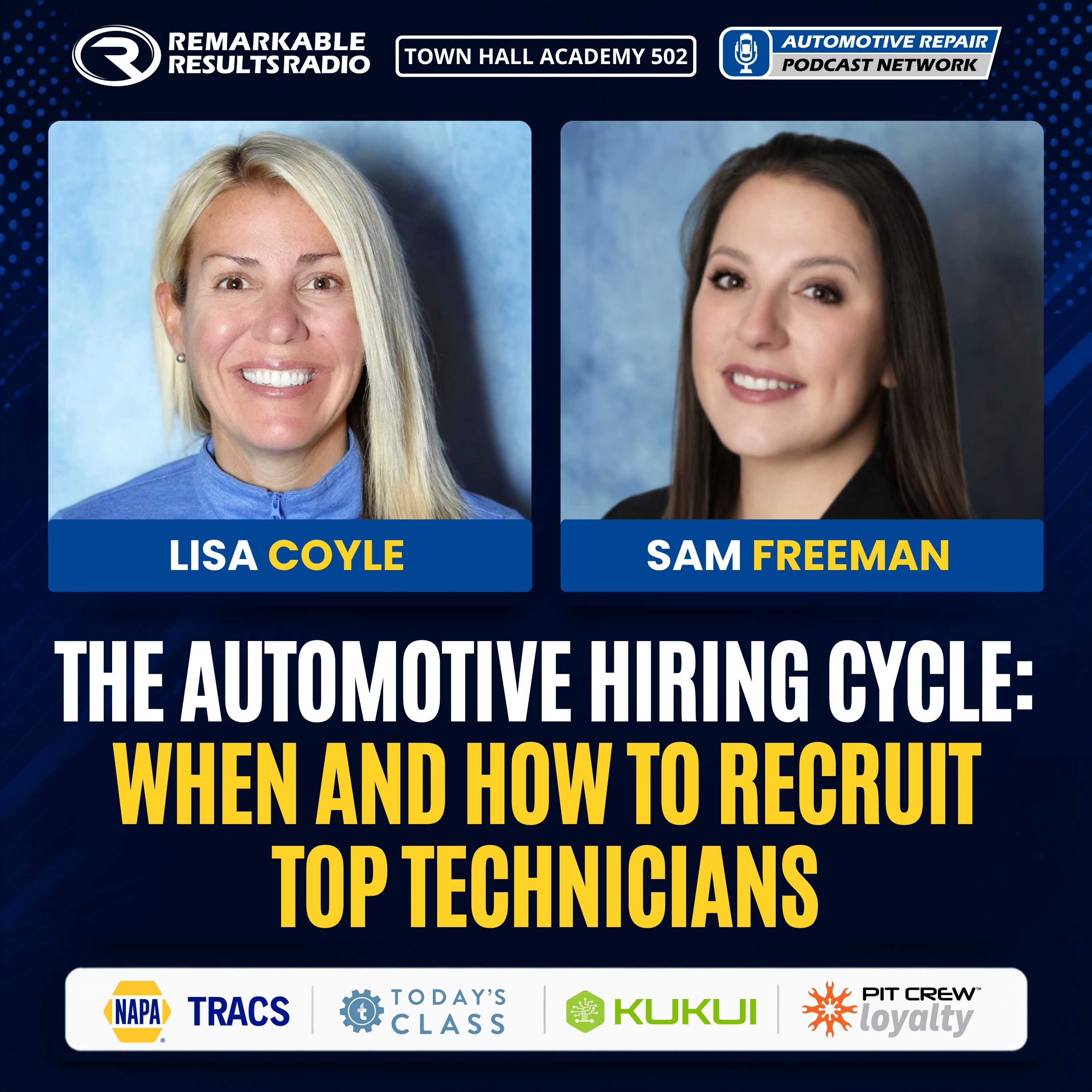
The Automotive Hiring Cycle: When and How to Recruit Top Technicians [THA 502]
Thanks to our Partners: NAPA TRACS, Today's Class, KUKUI, and Pit Crew Loyalty Watch Full Video Episode *]:pointer-events-auto scroll-mt-[calc(var(--header-height)+min(200px,max(70px,20svh)))]" dir="auto" data-turn-id="request-WEB:8e59eec7-a235-4fa3-a072-956fea3fe478-7" data-testid="conversation-turn-4" data-scroll-anchor="false" data-turn="assistant"> *]:pointer-events-auto scroll-mt-[calc(var(--header-height)+min(200px,max(70px,20svh)))]" dir="auto" data-turn-id="request-WEB:49a777bf-d263-4496-bf0b-2eb3a46ac96a-11" data-testid="conversation-turn-24" data-scroll-anchor="false" data-turn="assistant"> What if the best time to recruit your next technician is when your shop isn't looking to hire? Lisa Coyle, CEO of Promotive, and Sam Freeman, Partner Manager at Promotive, reveal why automotive recruiting has a cycle, and why understanding when technicians are looking can give shop owners a significant advantage. Lisa and Sam explain how recruiting data, market timing, candidate behavior, and consistent relationship-building can create a much more proactive hiring strategy. Download the 6 Month Promotive Hiring Insights Report for FREE: https://info.gopromotive.com/RRR What You'll Learn Why technician recruiting has a cycle and why timing matters.Why “post and pray” recruiting puts your shop at a disadvantage.Why finding a top technician can take 60 to 70 days.How local market data can improve your job postings.Why you should recruit even when you don't have an opening.What may really be behind candidate ghosting.Why a counter-offer doesn't have to end the relationship.How consistent communication can prevent first-day no-shows.Why complicated hiring processes can cost you great candidates.How the F.O.R.D. method can make interviews more personal and effective. Great recruiting is about timing, data, and relationships. Don't wait for an empty bay to discover you need a recruiting strategy. Understand when technicians are most likely to consider a move, know what candidates in your market are searching for, simplify your hiring process, and stay connected with good people even when the timing isn't right. Your next great technician may not be looking when you're ready to hire. The opportunity is to build the relationship when they're ready to listen. Promotive has over 40 years of recruiting and automotive experience. If you need qualified technicians and service advisors and want to offload the heavy lifting, visit https://gopromotive.com/ Meet Paige: The Auto Repair Industry’s First 24/7 AI Recruiter [THA 481]: https://remarkableresults.biz/remarkable-results-radio-podcast/a481/ Lisa Coyle, CEO of Promotive Sam Freeman, Partner Manager at Promotive NAPA TRACS will move your shop into the SMS fast lane with onsite training, six days a week of support, and local representation. http://napatracs.com/ Optimize training with Today's Class: In just 5 minutes daily, boost knowledge retention and improve team performance. https://www.todaysclass.com/ Stop juggling multiple marketing tools. KUKUI’s integrated platform delivers 4x better website conversions, automated follow-up, and real-time ROI tracking. https://www.kukui.com/ You’re probably tired of chasing new customers who never return. Pit Crew Loyalty ends the one-and-done cycle, turning first visits into lasting, reliable revenue at https://www.pitcrewloyalty.com/ Connect with the Podcast: Download and Listen on Our Mobile App: https://automotiverepairpodcastnetwork.com/app/Visit the Website:https://remarkableresults.biz/Subscribe on YouTube:https://www.youtube.com/carmcapriottoFollow on Facebook:https://www.facebook.com/RemarkableResultsRadioPodcast/Follow on LinkedIn:https://www.linkedin.com/in/carmcapriotto/Follow on Instagram:https://www.instagram.com/remarkableresultsradiopodcast/Join Our Virtual Toastmasters Club:https://remarkableresults.biz/toastmastersJoin Our Private Facebook Community:https://www.facebook.com/groups/1734687266778976Join our Insider List:https://remarkableresults.biz/insiderAll books mentioned on our podcasts:https://remarkableresults.biz/booksOur Classroom page for personal or team learning:https://remarkableresults.biz/classroomBuy Me a Coffee:https://www.buymeacoffee.com/carmSpecial episode collections:https://remarkableresults.biz/collections The Automotive Repair Podcast Network: https://automotiverepairpodcastnetwork.com/ Remarkable Results Radio Podcastwith Carm Capriotto:https://remarkableresults.biz/<a href="https://mattfanslow.captivate.fm/" target="_blank"...
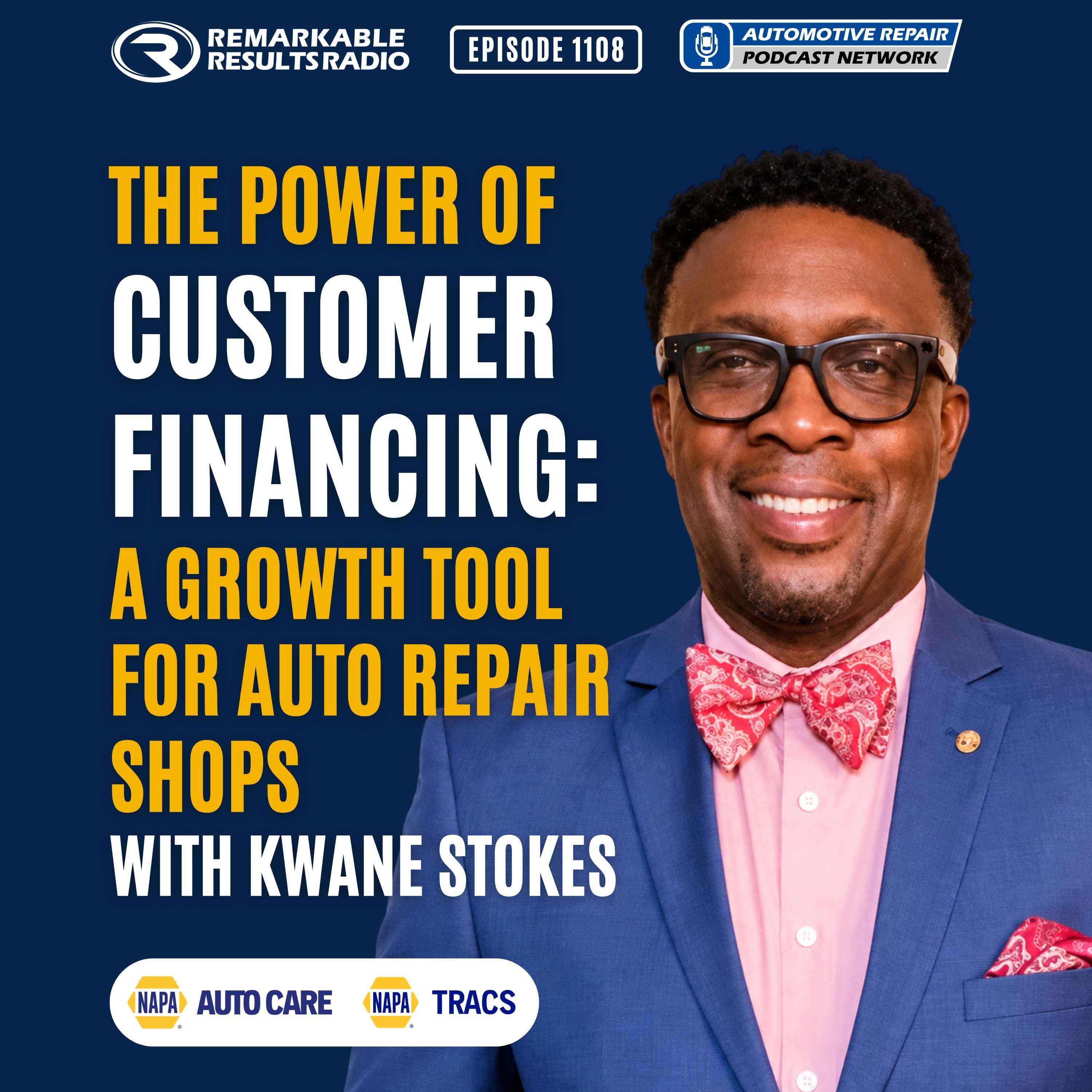
The Power of Financing: A Growth Tool for Auto Repair Shops [RR 1108]
Thanks to our Partners, NAPA Auto Care and NAPA TRACS Watch Full Video Episode What happens when a customer needs a $2,000 repair but doesn’t have the cash available today? That moment can determine whether the vehicle gets repaired, the customer delays a critical service, or they take their business somewhere else. For automotive shops, offering flexible payment options can be more than a convenience. It can be a powerful tool for helping customers say yes to the work their vehicles need. Kwane Stokes, Assistant Vice President and Relationship Manager in the automotive division at Synchrony, explains how the program can help shops remove financial barriers, increase repair opportunities, and create another reason for customers to return. Kwane also addresses why many shops still aren't offering financing and how the biggest obstacle may simply be the assumptions advisors make about a customer's ability or willingness to pay. What You'll Learn Why financing should be presented as a payment option, not something an advisor decides a customer needs.How the program's average first and repeat purchase amounts demonstrate the potential impact on average repair order (ARO).Why assuming a customer can't qualify for credit can cause shops to lose needed repair work.How monthly promotional offers can give shops another reason to communicate with their customers.How advisor incentives and simple training can encourage more consistent presentation of financing.What the upcoming "waterfall" financing model could mean for customers who aren't approved through the primary credit program. The biggest opportunity may not be finding more customers. It may be giving the customers already sitting at your counter more ways to say yes. The key is removing the assumption that you know what a customer can or cannot afford. Present the options, explain them clearly, and let the customer decide what works for their financial situation. For a shop, financing isn't simply about collecting payment. It's another tool for helping customers get the repairs they need while protecting the relationship and keeping the work in your shop. Kwane Stokes, AVP, Relationship Manager, Auto Network, Synchrony Learn more about the benefits of being part of the NAPA family by visiting https://www.napaonline.com/en/auto-care NAPA TRACS will move your shop into the SMS fast lane with on-site training and six days a week of support: http://napatracs.com/ Connect with the Podcast: Download Our Mobile App:https://automotiverepairpodcastnetwork.com/app/Website:https://remarkableresults.biz/YouTube:https://www.youtube.com/carmcapriottoFacebook:https://www.facebook.com/RemarkableResultsRadioPodcast/LinkedIn:https://www.linkedin.com/in/carmcapriotto/Instagram:https://www.instagram.com/remarkableresultsradiopodcast/Join Our Virtual Toastmasters Club:https://remarkableresults.biz/toastmastersJoin Our Private Facebook Community:https://www.facebook.com/groups/1734687266778976Join our Insider List:https://remarkableresults.biz/insiderBooks Page:https://remarkableresults.biz/booksOur Classroom Page:https://remarkableresults.biz/classroomEpisode Collections:https://remarkableresults.biz/collectionsBuy Me a Coffee:https://www.buymeacoffee.com/carm The Automotive Repair Podcast Network: https://automotiverepairpodcastnetwork.com/ Remarkable Results Radio Podcastwith Carm Capriotto:https://remarkableresults.biz/Automotive Field TheorywithMatt Fanslow:https://mattfanslow.captivate.fm/Business by the NumberswithHunt Demarest: https://huntdemarest.captivate.fm/The Auto Repair Marketing Podcastwith Brian and Kim Walker: https://autorepairmarketing.captivate.fm/The Weekly Blitzwith Chris Cotton: https://chriscotton.captivate.fm/Speak Up! Effective Communicationwith Craig O'Neill: https://craigoneill.captivate.fm

Daily Habits That Build a Stronger Auto Repair Shop Culture [THA 501]
Thanks to our Partners: NAPA TRACS, Today's Class, KUKUI, and Pit Crew Loyalty Watch Full Video Episode *]:pointer-events-auto scroll-mt-[calc(var(--header-height)+min(200px,max(70px,20svh)))]" dir="auto" data-turn-id="request-WEB:8e59eec7-a235-4fa3-a072-956fea3fe478-7" data-testid="conversation-turn-4" data-scroll-anchor="false" data-turn="assistant"> *]:pointer-events-auto scroll-mt-[calc(var(--header-height)+min(200px,max(70px,20svh)))]" dir="auto" data-turn-id="request-WEB:49a777bf-d263-4496-bf0b-2eb3a46ac96a-11" data-testid="conversation-turn-24" data-scroll-anchor="false" data-turn="assistant"> What does a strong shop culture look like when you’re the people living it every day? Bree Wismer, Service Advisor and Frontline Culture Leader, and Trevor Hinds, Operations Manager and Dispatcher at Empower Automotive in Traverse City, Michigan, take us inside the daily habits and communication practices that keep their team aligned, productive, and focused on the customer. Rather than approaching culture from the owner's perspective, Bri and Trevor share what happens on the front lines. They explain how Empower Automotive breaks down the traditional divide between the front counter and the bays, keeps everyone on the "same bus," and creates a workplace where every person understands their role, respects the team around them, and contributes to the same goal. What You'll Learn Why the front counter and specialists must operate as one team.How daily huddles and short training sessions keep the team aligned.Why the 1:00 PM check-in can prevent late-day customer surprises.Why a "no-update" update can be one of the most valuable customer communications.How to respond when customers arrive with AI-generated or parts-store diagnoses.How respect, communication, and accountability create confident professionalism. Building a world-class shop culture doesn’t require a massive budget or a complicated organizational overhaul. By committing to these small, consistent actions, you can transform your shop from a high-stress environment into a thriving, unified business that both your team and your customers enjoy. Bree Wismer, Service Advisor, Frontline Culture Leader, Empower Automotive, Traverse City, MI Trevor Hinds, Operations Manager, Dispatcher, Workflow and Culture, Empower Automotive, Traverse City, MI NAPA TRACS will move your shop into the SMS fast lane with onsite training, six days a week of support, and local representation. http://napatracs.com/ Optimize training with Today's Class: In just 5 minutes daily, boost knowledge retention and improve team performance. https://www.todaysclass.com/ Stop juggling multiple marketing tools. KUKUI’s integrated platform delivers 4x better website conversions, automated follow-up, and real-time ROI tracking. https://www.kukui.com/ You’re probably tired of chasing new customers who never return. Pit Crew Loyalty ends the one-and-done cycle, turning first visits into lasting, reliable revenue at https://www.pitcrewloyalty.com/ Connect with the Podcast: Download and Listen on Our Mobile App: https://automotiverepairpodcastnetwork.com/app/Visit the Website:https://remarkableresults.biz/Subscribe on YouTube:https://www.youtube.com/carmcapriottoFollow on Facebook:https://www.facebook.com/RemarkableResultsRadioPodcast/Follow on LinkedIn:https://www.linkedin.com/in/carmcapriotto/Follow on Instagram:https://www.instagram.com/remarkableresultsradiopodcast/Join Our Virtual Toastmasters Club:https://remarkableresults.biz/toastmastersJoin Our Private Facebook Community:https://www.facebook.com/groups/1734687266778976Join our Insider List:https://remarkableresults.biz/insiderAll books mentioned on our podcasts:https://remarkableresults.biz/booksOur Classroom page for personal or team learning:https://remarkableresults.biz/classroomBuy Me a Coffee:https://www.buymeacoffee.com/carmSpecial episode collections:https://remarkableresults.biz/collections The Automotive Repair Podcast Network: https://automotiverepairpodcastnetwork.com/ Remarkable Results Radio Podcastwith Carm Capriotto:https://remarkableresults.biz/Automotive Field Theorywith Matt Fanslow https://mattfanslow.captivate.fm/Business by the Numberswith CPA Hunt Demarest: https://huntdemarest.captivate.fm/The Auto Repair Marketing Podcastwith Brian and Kim Walker:<a...

Rapid-Fire Automotive News: AI, EVs, Autonomous Vehicles, and the $19B Trade School Boom [RR 1107]
Thanks to our Partners, NAPA Auto Care and NAPA TRACS Watch Full Video Episode How quickly is the automotive repair industry changing, and are you ready for what's next? Tom Ham, shop owner and founder of the Automotive Management Network, joins Carm Capriotto for a fast-paced conversation covering 12 major trends shaping the future of auto repair. From autonomous vehicles and solid-state batteries to the changing value of trade careers, AI, government regulation, 3D printing, and vehicle reliability, Tom and Carm explore the technologies and economic shifts shop owners need to understand. What You'll Learn How autonomous vehicles could reshape vehicle safety and the repair industry.What advances in solid-state batteries could mean for EVs and vehicle range.Why trade careers are gaining momentum as technology changes traditional employment.How the technician shortage is creating new opportunities for shops to develop talent.How government regulation and emissions enforcement could affect vehicle owners and repair shops.What current vehicle reliability trends reveal about today's automotive brands.How 3D printing could help shops solve parts availability challenges.Why AI is becoming a powerful tool for reducing friction and improving efficiency.Why shop owners need to stay curious and adapt as automotive technology continues to accelerate. The automotive repair industry is changing faster than ever. The shops that thrive will be the ones willing to understand emerging technology, embrace new tools, develop their people, and continually rethink how they operate. The future isn't coming someday. It's already showing up in the service bay. Tom Ham, Automotive Management Network. Tom’s previous episodes HERE. Learn more about the benefits of being part of the NAPA family by visiting https://www.napaonline.com/en/auto-care NAPA TRACS will move your shop into the SMS fast lane with on-site training and six days a week of support: http://napatracs.com/ Connect with the Podcast: Download Our Mobile App:https://automotiverepairpodcastnetwork.com/app/Website:https://remarkableresults.biz/YouTube:https://www.youtube.com/carmcapriottoFacebook:https://www.facebook.com/RemarkableResultsRadioPodcast/LinkedIn:https://www.linkedin.com/in/carmcapriotto/Instagram:https://www.instagram.com/remarkableresultsradiopodcast/Join Our Virtual Toastmasters Club:https://remarkableresults.biz/toastmastersJoin Our Private Facebook Community:https://www.facebook.com/groups/1734687266778976Join our Insider List:https://remarkableresults.biz/insiderBooks Page:https://remarkableresults.biz/booksOur Classroom Page:https://remarkableresults.biz/classroomEpisode Collections:https://remarkableresults.biz/collectionsBuy Me a Coffee:https://www.buymeacoffee.com/carm The Automotive Repair Podcast Network: https://automotiverepairpodcastnetwork.com/ Remarkable Results Radio Podcastwith Carm Capriotto:https://remarkableresults.biz/Automotive Field TheorywithMatt Fanslow:https://mattfanslow.captivate.fm/Business by the NumberswithHunt Demarest: https://huntdemarest.captivate.fm/The Auto Repair Marketing Podcastwith Brian and Kim Walker: https://autorepairmarketing.captivate.fm/The Weekly Blitzwith Chris Cotton: https://chriscotton.captivate.fm/Speak Up! Effective Communicationwith Craig O'Neill: https://craigoneill.captivate.fm
Related across the catalog
Flat Rate Doesn't Match the Real Repair with Josh Forbes
Like the show? Show your support by using our sponsors. Need to update your shop systems and software? Try Tekmetric HERELaunch your tool game to the next level with Launch Tech USA! HEREIn this episode, Jeff is with Josh Forbes of Maxim Muffler in Winnipeg talks about his unconventional path into the automotive industry. What started with constant breakdowns on his first car—a 1993 Ford Tempo—turned into a career built through hands-on learning, apprenticeship experience, and years of navigating different shop environments. Josh shares lessons from dealership life, the importance of shop culture, why employee appreciation matters, and his concerns about the future of right-to-repair legislation.Timestamps:00:00 Tools and Debt Lessons 00:45 Podcast Introduction 02:44 Shop Schedule and Weather 03:27 First Cars and Fuel Costs 08:22 Tempo Breakdowns That Started It All 12:24 College Training at Fanshawe 14:17 Choosing the Trade Path 17:54 Ford Dealer Quick Lane Reality 24:19 Book Time vs. Real Repairs 36:41 Why He Left the Dealer 39:06 Finding the Right Shop 41:29 The Culture That Changed Everything 45:21 Appreciation Over Pay 52:17 How Bad Culture Breaks Technicians 55:04 Forever Apprentice Mindset 58:44 Trade Pay Gap Debate 01:02:19 DIY Repair Horror Stories 01:07:54 Training Service Writers 01:16:24 The Right to Repair Fight 01:21:22 Quality Control Basics 01:23:46 Training Instead of Punishment 01:27:35 Oil Leak Case Study 01:31:46 Recognition and Longevity 01:37:35 Smart Tool Buying 01:40:05 Diagnostics, Process, and School 01:47:00 Wrap Up and Final Thoughts Follow/Subscribe to the show on social media! TikTok - https://www.tiktok.com/@jeffcompton7YouTube - https://www.youtube.com/@TheJadedMechanicFacebook - https://www.facebook.com/profile.php?id=100091347564232
Episode 276 - Navigating Apprenticeships With Angela Mitchell & Shop-Ware Scholarship Winner Kaitlyn Schave
Don't get to the end of this year wishing you had taken action to change your business and your life.Click here to schedule a free discovery call for your business: https://geni.us/IFORABEDon't miss an upcoming event with The Institute: https://geni.us/InstituteEvents2026Shop-Ware gives you the tools to provide your shop with everything needed to become optimally profitable.Click here to schedule a free demo: https://info.shop-ware.com/profitabilityTransform your shop's marketing with the best in the automotive industry, Shop Marketing Pros!Get a free audit of your shop's current marketing by clicking here: https://geni.us/ShopMarketingProsShop owners, are you ready to simplify your business operations? Meet 360 Payments, your one-stop solution for effortless payment processing.Imagine this—no more juggling receipts, staplers, or endless paperwork. With 360 Payments, you get everything integrated into a single, sleek digital platform.Simplify payments. Streamline operations. Check out 360payments.com today!In this episode, the conversation focused on the experiences of an apprentice technician who won the Shop-Ware scholarship. One concept discussed was the importance of standardized processes in the shop to ensure consistent work quality and reduce customer complaints. A key theme that emerged was the value of mentorship and hands-on learning, with support from experienced technicians helping apprentices gain skills and confidence. The discussion explored how exploring diverse training resources, including online courses and technical classes, can accelerate professional growth for new technicians.00:00 Brake pad inconsistencies and complaints05:44 Cleaning caliper brackets16:24 Bringing Kaitlyn on board17:54 Training and skill progression27:40 Learning electrical diagnostics skills31:43 Talking about tough car repairs33:59 Discussing employee pay incentives42:57 Choosing the right conference sessions48:07 Learning diagnostics through videos52:21 Testing car battery voltage58:50 Dealing with difficult customers
Ep 90 - Aniz Lavji | This Shop Owner Saw 50% Growth!?
Keep shop management, payments, marketing (all the things) all in one place with Tekmetric. It will CHANGE YOUR LIFE. Click HEREASTA is coming up September 24-26 in Raleigh. Be there or be square, dog! Register now and use code confess25 for $25.00 off your registration. Sign up HERETurnkey Marketing has made my life SOOO much simpler, AND they've helped keep the phone ringing. Do you need these two things too? Learn more HERETired of your shop’s social media looking like every other repair shop on the internet? Stand out with 47 Consulting. Learn more HEREWhen I used the maintenance tool for the fist time with Detect Auto, my mind was blown. My advisors had the same reaction - and then SO MUCH MORE TIME. Learn more about Detect Auto and book a free demo now!Elite Worldwide's Ignite 2027 is coming up in February and NOW is the time to sign up. It's happening in Vegas February 4-6 and it will be the best 3 days of your shops year when you attend. Learn now HEREAniz Lavji is a Canadian shop owner and new podcaster! Today, he and Mike reflect on Aniz's growth over the last year and how attending his first trade show (ASTA Expo) sparked a major shift in both mindset and operations, especially after adopting Tekmetric (the best software ever, obviously). They also talk about the explosive role AI is already playing in shop management, the importance of shop culture and community, and how Aniz plans to continue growing this year. Timestamps: 00:00 There MUST Be a Day Limit onLoaner cars01:14 First trade show jitters, family stress, & Niagara Falls survival09:25 Building heart-centered shop culture & supporting your community13:04 Miata confessions, advisors, and the subculture of small cars14:03 QuickBooks to Tekmetric: The leap that sparked 50% growth22:07 Shop struggles: 454 cars in one month & tech shortages23:12 Planning for the future, hiring advisors, and stepping back24:47 Will AI take over? Balancing efficiency and human connection25:24 Loaner car policies: Leadership, responsibility, and big lessons30:15 North Carolina vs. Ontario: Shop culture & competitive spirit33:04 Trade association impact, collaboration, and ethical business38:45 Go-kart racing, trophies, and shop owner bragging rights40:44 Rage bait, social media, and “winning” on YouTube

99.08% Diagnostic Accuracy: Inside a Master Tech’s Playbook
Joe Adams interviews Adams Automotive Master Technician Josh Gerbrecht about his journey from technician to top diagnostician, sharing the systems that drove his 99.08% diagnostic accuracy and the big takeaways from a Key-to-Key-to-Callbacks weekend. They discuss the front-office/back-office symbiosis, the Rack Attack inspection process, recruiting and paying technicians their worth, shop tours and hospitality, and how AI could streamline diagnostics and incentivize accuracy over just speed. AutoshopAnswers.com Auto-Shop-Media.com