Why Employees Disengage and How Leaders Reconnect Them [RR 1103]
Now playing — Remarkable Results Radio
About this episode
Thanks to our Partners, NAPA Auto Care and NAPA TRACS Watch Full Video Episode Why are so many employees disengaged at work, and what can…
Key takeaways
- —Leaders should view their employees as heroes and themselves as guides to foster motivation.
- —Clear, values-aligned communication can transform both businesses and individuals.
- —Understanding employees' personal stories is crucial for effective leadership and motivation.
- —A strong company culture is built on shared stories and clear communication of values.
- —Repairing relationships after miscommunication is vital for maintaining trust and motivation.
Frequently asked
- How can leaders motivate disengaged employees?
- Leaders can motivate disengaged employees by understanding their personal stories and showing empathy, while positioning themselves as guides who help employees achieve their goals.
- What role does communication play in employee engagement?
- Effective communication is essential for employee engagement, as it helps clarify roles, expectations, and the overall company story, making employees feel valued and understood.
- How can leaders create a positive work culture?
- Leaders can create a positive work culture by consistently communicating the company's values, recognizing individual contributions, and fostering an environment where employees feel safe and supported.
▸Full transcript
This is the Automotive Repair Podcast Network. Hey everybody, Carm Capriato, Remarkable Results Radio. So happy that you are here. You know, is what we do is we continue to raise the profession one shop, one leader, one conversation at a time here on the podcast, 11 years strong. Boy, today I happen to have a two-timer. You know what that means? He's been on once.
Now he's coming back for 2 times. Second time, Dr. JJ Peterson. We did an incredible episode the last time. It was episode 1073, Defining Roles, the 4 Defining Roles of Your Business from Business Story Brand, Victim, Villain, Hero, and Guide. And the question is, is what do you think you are? What do you think your people on the counter are? What do you think your customers are?
And Dr. JJ did an incredible job setting that up. So if you're into StoryBrand at all, you'll appreciate how he attacks this. And I think it just may change your life. Hey, don't forget our smartphone app at arpn.app. It's the Ultimate Professional Automotive Repair playlist. You can read show notes, link with our sponsor partners, get all shows in our entire network. And get on that, type in 1073, 1073, and listen to Dr.
JJ's episode. Hey, look, we are gonna give a high five to NAPA Autocare and NAPA Trax. Hey, take your NAPA Autocare center to the next level with the NAPA Autocare Gold Certified Program. Increase car count, build trust with customers, and stand out as one of the best. Talk to your local NAPA representative today. Hey, for over 30 years, NapaTracs has made selecting the right shop management system easy by offering the best, most comprehensive SMS in the industry.
We'll prove to you that Tracs is the single best shop management system in the business. Find NapaTracs on the web at napatracs.com. Hey, welcome back, Dr. JJ. Welcome, sir. Thanks for having me. Excited to see you again. All right, well, here's what we're gonna talk about. The premise of this episode is how to motivate your team using StoryBrand approach, where you view your team as the heroes and you are the guide.
JJ Peterson, StoryBrand framework helped thousands of organizations in their— clarify their messaging in order to grow their business. He holds a PhD in communication and has spent the last 20 years practicing teaching communication theory. And I got one more thing. At the core of everything JJ does is the belief that clear values-aligned communication has the power to transform not just businesses, but people.
All right. Question number 1, sir. People don't wake up waiting to be motivated. They wake up wanting to matter. How does StoryBrand help leaders make people feel that they matter? This is actually something that I'm very passionate about because I just read a statistic recently that said that about 80% of the workforce in America identifies as disengaged. And what we mean by that disengaged is like not caring about their job, not enjoying their job, not giving their best at their job, and not enjoying life, like they're stressed out.
So there's different levels, but really when you put all the different pieces together, it really comes about somewhere between 80% and 90% of people identify right now as disengaged from their job. When people identify as disengaged, not only does it hurt the company, right? Like we're seeing a lot of turnover, we're not getting the best out of our people, But on top of that, then they're taking that all home with them.
I mean, there's another thing that I was talking to somebody that they were doing some research around the idea that the way your boss shows up for you has a stronger impact on your mental health than even a therapist. And so my thinking behind that, and often that is negative, and my thinking behind that is, well, what if the boss has the ability to show up and negatively impact the way that I think about my life when it comes to even depression and engagement and all those things, then what if the converse can be true?
What if actually when our boss shows up in a way that motivates us, that lets us be seen and understood and values us and creates a safe environment, and I'm gonna talk about what that means in a second, what if actually we could have a more positive impact on people? What if we actually could, we spend more time at work than we spend with our families.
But what if we could show up as leaders in a way that motivated and empowered people to not only do better at work, but become more engaged and then live their lives that impacts everything else in their life? So I'm very, very passionate about this. I could kind of go on and on about this, but I really believe that when we talk specifically about story and how to understand how to use a story mentality to impact and motivate people, Go back in, you know, a little bit of what we talked about in the last episode, just for anybody who hasn't listened, but there really are 4 characters in every story: the hero, the villain, the
victim, and the guide. And everybody typically starts out as a victim. Something happens to them. And if you stay a victim, then basically a good story will never be written about you. I mean, there are real victims in the world, but if you don't overcome and move forward, The only reason a victim exists in a story is to draw energy from the hero and villain.
They make the hero look good and the villain look bad. Then you come to a point where you decide something bad has happened to me, and I get to decide how I move forward. A hero chooses to redeem the pain and overcome it and move forward. A villain chooses to revenge the pain, cause other pain for others. The way I think about it is a villain is a victim who just gave up on healing.
That's kind of where those 2 things go. Often hero and villain have a backstory of pain. One chooses to redeem, one chooses to revenge. And then there's the guide. The guide shows up to help the hero win. Now, understanding that a lot of people are feeling disengaged, unmotivated, and unwilling to move. When you live in that space, oftentimes people are living in the victim mindset.
So things have been hard, things have been overwhelming. They don't know if they can move forward and they're stuck. They're feeling stuck and overwhelmed. As a leader, we need to understand that when people are in that space, it is often coming from a backstory of pain. Some kind of frustration has caused a problem in them. And we have to approach that, I think, with a generous spirit instead of going, well, they're just lazy, or they're mean, right?
Oftentimes they turn into villains, and so they're just mean, and we start having limiting beliefs about our employees. But what if, first off, we could show up and say, as leaders, what if I viewed this person that is on a hero's journey? They have experienced probably some hardship or pain or struggle back in their life, They either have chosen then to stay in that mentality or they've chosen to revenge the pain.
And so they become an asshole. Sorry for the language. And we have to just understand if we show up first off in a more gracious approach of saying, okay, let's pause it for a minute instead of just saying this guy's a jerk or this person is lazy. What is actually some backstory to them and show up with a little bit of understanding, and grace.
And then we say, how can we actually move them forward and recognize that in our organization, they are actually the hero of the story? If we show up and try to be the hero of the story, we are not going to motivate our people to move forward. Okay. We as leaders. Leaders, yes. Because if I show up as a leader, and what I mean, well, one, if I show up as a victim myself, nobody's following me.
If I show up as a villain myself, everybody's gonna hope that I die. That's what happens to villains in movies. We all want 'em to die. But how do I show up as a leader? I actually wanna show up as a guide because the guide is the strongest character in the story. And I know a bit of this is repeat from last time, but a guide is really the person who shows up to help the hero win.
So if we view our employees as actually the heroes of the story, What we are doing is we are showing up and saying, this person outside of me is living a story. They actually are trying to pay for their family's mortgage. They're trying to get ahead in their career. They're trying to find meaning and connection in this space. They are living that story.
They don't care about the profits. They don't care about you meeting your goals. That's your story. Their story is they're trying to survive. They're trying to thrive. They're trying to get ahead. And if we can show up first off with a mentality of we're not the hero of the story and they don't think of us as the hero, they think of themselves as the hero.
So we have to identify what is it that they're wanting out of life, and we have to lean into that to help them overcome the obstacles that are getting in the way of them moving ahead in their life. Are you an EPC Autocare Center ready to elevate your shop? Then it's time to step into the premier tier NAPA Autocare Gold Certified program.
Gold Certified centers are recognized as the best of the best, delivering a consistent, trusted customer experience nationwide. Now, that consistency means more repeat business, more referrals, and more opportunities to grow your car count. Now, when you're Gold Certified, you unlock advanced resources maximizing technology, boosting your local marketing presence, and keeping your team fully trained on the latest trends and tools. In short, Gold Certified status separates you from the rest.
So what does it take to be Gold? To qualify, your shop must be a NAPA Autocare Center for at least 1 year, have been open for 2 years or more, employ an ASE Master Technician or hold ASE Blue Seal status, co-brand with the Pro Image Program, Maintain a 4-star rating or higher on Google, Yelp, or NAPA CSI. Use digital vehicle inspections. Offer NAPA consumer financing.
Purchase $7,500 or more in NAPA parts monthly. And participate in a NAPA Business Development Group. It's a true partnership, and in return, NAPA rewards Gold Certified Shops with premium benefits like free priority placement on the NAPAonline.com locator, annual marketing funds, enhanced warranties, rebates, training opportunities, and a whole lot more. Are you ready to take your shop to the Gold level? Well, contact your local NAPA sales representative today to see if you qualify and start your journey to Gold Certified.
Increase car count, build trust with customers, and stand out as one of the best. Talk to your local NAPA representative today. Let's face it, your shop management system is the single most important tool in your shop, period. NAPAtrax was built from the ground up to make your business more profitable and efficient. We provide an extensive set of tools to increase and track profitability in real time.
NAPAtrax offers the industry's best post-sale support, hands down, and we train your people on-site Yep, on-site, and we offer remote refresher training 10 times a week, and customer support is open 6 days a week. Give us a call, visit the website, or join our Facebook community today to learn more. We'll prove to you that Tracks is the single best shop management system in the business.
NAPA Tracks is always customized and tailored for you, whether you're a one-man shop or a large multi-bay or multi-location company. After all, it's your shop, so it's your choice. Visit us on the web at napatracs.com. That's N-A-P-A-T-R-A-C-S dot com. You know what I have to say? If I'm a specialist, a technician in the bays that can cop an attitude, no doubt I'm probably thinking that I'm the one who makes you successful.
I'm the one who does all the work. And that can create an attitude, a non-motivational attitude if ownership, if leadership isn't the guide to get them in perspective. And maybe that's the wrong word here. No, it isn't. So let's kind of role-play this for a second because this kind of can feel a little bit like, oh, pie in the sky kind of thinking.
And well, if we just did this, so let's just play this out for a second. If I am your boss or the owner, and you are in the pit and you are working your butt off. If I begin and I start thinking, and I'm just going to ask you, Carm, so what is it that that person in the pit, what do they want?
Like just in terms of the job and the career and all of those things, what is it that they want out of this job? Like if you're in the pit, what do you want out of this job? JJ, I want to feel good about all the things that I do to continue to learn, to do the job in the timeframe allowed. Make minimal mistakes, work with my team members, but all of this doesn't necessarily happen to me or for me.
Yeah. Why don't you want to make mistakes? Why do you want to work with your team? What is that the end goal for you? I just want to be proud that the profession that I've chosen and the work that I give to you, it's recognized to the point where I could take it internally and bring it home. Yeah. So here's how then maybe I can show up to speak to you.
But let's say you want that, but also you've kind of been a little mouthy lately and you've been like, you've copped an attitude. Well, I can be that. Yes, I can cop an attitude, JJ. Yes, I can. And I, as the leader, want to address that attitude. There are 2 ways to do this. Okay? I can come at you and say, hey, Carm, I want you to know everybody's noticed that you are copping an attitude and you're creating a lot of problems in here and I need you to knock it off, right?
If I approach you in that way, A, you're gonna get defensive. You're gonna back away from me. You're going to put up a wall. You're gonna, all of a sudden the story is about I am being attacked and I need to defend. So now either you position yourself, I just put you in a position, Carm, most likely to become a villain or a victim because you're either going to go, that wasn't me, that was them.
They're doing all this stuff. Or you start being mean back and going, you know what? You're the jerk, da da da. So I have just set you up. When I come at you with my story and I come at you with my story, I've set you up from the beginning right there to be either a villain or a victim. Now, because I need to be the hero of this story, I'm going, hey, you're causing me a problem.
I need this to be fixed. However, if I actually start with who you are and your story, and I come to you and I go, hey, Carm, I know you want to do a good job in this place, and I know you wanna be proud of the work that's happened, and I know that you actually care about the people on this team.
So I'm grounding the narrative, everything I'm about to say, I'm grounding in it your story. So I know this about you. And then I say, but here's something that's getting in the way of that. Here's the problem. Because this is story framework, is a good story starts with a character who wants something and then encounters a problem. That's how story narrative works.
So if I say, here's, I know what you want. You're real proud of your job. You like your team members and wanna do well for them, and you wanna be able to carry this all home for your family. You could say literally, here's the problem. Or here's what's getting in the way. When you are confronted with something, it feels like you are just defending yourself and copying an attitude.
And when that happens, it actually gets in the way of you being proud of the work you're doing, 'cause you're actually, you spend way more energy fighting than you do doing the work. You're actually creating problems for the team and creating conflict, which I know you don't wanna do. And It also then gives you more stress to carry home. All I've done with that conversation, instead of coming in and going, Carm, quit being a jerk and let's actually get your stuff together, I ground it in your narrative.
Your narrative is you want peace, you want move ahead, you want pride. Here's what's getting in the way of what you want. And when that happens, you don't get what you want. It's not, here's what I want, here's what the company wants. What that does is when you show up as a guide to help them achieve what they're doing, it grounds everything in their story and it becomes much more motivational because you are positioning them as the hero of the story.
I, as your boss, am literally just showing up to help you win. Here's what you wanna win in, which here's the problem that's getting in the way of you winning, and here's what happens when that changes and you get to win. Versus do what I want you to do. When we show up as guides, which always guides in a story always start with empathy.
They start with empathy. I get it. It's hard. This is overwhelming. But then you lean into your authority. When I said earlier, people need to feel safe, what I don't mean by that is we need to give everybody hugs and we need to capitulate and all of that. A good guide, when they show up, they show up with empathy first and authority second.
In a movie, you will never see a guide like a Yoda or a Gandalf or somebody like that go, I know you're frustrated. Let's just hug it out. They don't do that. They don't jump— Mr. Miyagi with Karate Kid did not go, hey, you're right, buddy. Gimme a hug. No. It was like, I get it, but suck it up. Like, guides are not weak.
Guides are not even just like incredibly sensitive souls. But what they do is they show up with an understanding of where their heroes are, and then they give them a clear path forward to win with authority. And you don't back down from your authority because when you are a guide, you don't actually show up with anything to prove. That's a big piece about being a guide.
When you're playing a guide in a movie, Yoda doesn't have anything to prove. Gandalf doesn't have anything to prove. So when they show up in the story, they're not trying to puff up their chest. They're not trying to prove anything. They're just showing up with their authority and saying, you know, if we go to a movie context, you wanna be a Jedi?
This is what it takes to be a Jedi. They're not saying, I want you to be a Jedi. They're saying, if you wanna be a Jedi, this is what's gotta happen. And that's where all of this story framework for me matters. Because if you see yourself as a leader, as a guide, that you're there to show up with empathy and authority to help them win, what we always have to start with in communication is not what we want.
We have to start with what they want and ground everything we're about to say in them. So take a just completely different example that's even outside of this context. I was working with a company the other day. They were trying to communicate internally about, well, they were frustrated because all they needed was for everybody to fill out a form that said what equipment they have.
And they needed to know the, like, serial numbers. They needed to know the software, how old it was, what additional, like, if they had earphones or anything or microphone that were part of the company. And they couldn't get the people to fill this out, fill out the form. Now, the emails they were sending out were, hey, we need you to fill out the form by Friday because we need to know what everybody has.
Well, why do I care about that? That I have to take a half hour out of my time to inventory everything I have so you can get this? What we did is we just changed that email to say, hey, I know that you guys need equipment to get your job done in the right way. And we also know a lot of it is out of touch, out of date, and not working.
We don't have the latest things that you need to actually complete your job. What we're looking for is a completed inventory list of everything so we can know what we need to replace so you can do your job better. The truth is, for the company, that is true, but also they're working through their taxes of what they need to write off, right?
So, but I don't care what the company needs to write off and the taxes you owe. What I care about, do I have the latest equipment and are you going to get me better equipment because I don't have good stuff? Yeah. So ground that story. So when they change the email to, we need you to fill this out by Friday for tax purposes, instead they said, hey, we know you need equipment to get your job done.
You don't have everything that's up to date. We need a list of everything so we can know what to replace so you can get your job, keep going with your job. Now we've grounded, but it's what they wanted. It's what the employee wanted, not the company. The company could not be the hero in that situation. Wow. Okay. I love this. I lean into empathy and I use authority and I don't back down on it.
But in order to have empathy as a leader, I've got to know their story. So my job is to know that. Now, if I've got a really big company, then my general managers need to know their story. But if I'm a gregarious owner with 60 employees and I'm always out in the field with them, then it's also my job to know that.
Yes, absolutely. And if you don't know what's going on, like, in their lives and what their goals are and what they're hoping to, like, are they doing this because they're just trying to fulfill a paycheck or are they looking for advancement? Like, let's say you hire somebody who's like, you're really excited about this hire. You fought for them because they are quality, they fit your culture, All of those kind of things.
Well, you just won that story. If you got that person to work for you, in your story, essentially in many ways, that story's done. But if you don't realize this person who is ambitious and wants to move ahead and has ways to, like, has other, like they could leave and go somewhere else for more money or more opportunity, you have to realize as part of their story, They want to see that there's advancement.
They want to see, so it, with them, you might not have these like problem conversations, but you might say, hey, I know that you are somebody who wants to just kind of keep growing in your career. So in order to grow in your career, here's actually the things you need to do in order to grow in your career. And when you grow in your career, let me show you the pathway that's there.
There is a pathway for you to move forward. We cannot assume that people know that. We cannot assume that they can read our minds or the story we have in our own heads. We have to lean into the story they're living. So an incredible employee who's maybe even just an 18-year-old kid who you're like, I wanna keep him the rest of his life, if that kid's that incredible, he's not gonna stick around 5 years if you don't invite him into a story where he can see himself continuing to grow.
And you have to be really clear, here's how you're gonna grow. Here's how you move up. This is where the company's going. So they see that there's safety in the future. Wow. My mind is already Swiss cheesed, Dr. JJ. Um, by the way, let's stop for one moment. If you're watching the video, you see the graphic and the, the logo behind him, badasssofty.com, badasssofty.com.
That's how you can go and follow this guy, Dr. JJ Peterson. You mentioned the word culture a while back. Can culture exist without a story? I think story is a part of building a good culture. I used to study theology and there was this guy named Dietrich Bonhoeffer. He said a lot of people look for community as a value, and he would say community is a wish dream because nobody actually knows what community means and everybody has different ideas.
I would say a lot of people, culture is what I would call a wish dream. They go, we wanna create a good culture. We wanna build a good culture, or they even say, we have a great culture. Culture doesn't mean just like everybody likes each other. It doesn't mean we have good perks like snacks in the break room. That's pieces of culture, but culture is really where you build with intention the kind of story you wanna live together, to be honest.
And so it includes communicating your values. Making sure everybody knows the role that they play in the story. It's showing up as a guide, not another hero, or not a victim, or not a villain, but helping other people win. When you create a good story with your culture, I think that's when people stick around. It's when they find meaning. It's when they connect, when they work harder, when more things are achieved.
And so, to me, the question, can you have a good culture without story? I think story is a piece of creating good culture. And so when you understand, I need to invite everybody here into a story, and part of that story is explaining our values, explaining very clearly what your role is in the company, explaining what success looks like for you and for the company, being a good guide who shows up with honesty and empathy, and the showing up and going, like, somebody not being able to make decisions, That is not being a guide, right?
If somebody comes to you and is like, hey, I need help with this, and you go, well, I don't know what to do. Okay, how is that creating a sense of safety for the people who work for you? Now, you don't need to lie about it or anything, but you need to be able to have a point of view and move things forward.
So, when you create a strong culture, what you're doing is you're actually creating a strong story for everybody to live in. Got it. Okay. So, advice for us as a leader, when the employee, the team member stops believing in our story, how do we know? How do we fix that? Oh, wow. That's such a really good question. Now, I will be honest, there may be times that you need to exit people who are getting in the way of the story.
So, let's just say, you know, like, I think if somebody is actually creating more problems and not willing to grow with the story and all that, I do believe there is a time to say, okay, it's time for you to go. But I think more often than not, it really is on the leader to continue reminding people of why we're doing what we're doing, bringing it back to the values of— they have to believe in what— the story we're living, right?
So when I say values, what I mean is like, you know, what makes us show up? So like, why do we exist? We exist, you know, not just to like fix cars, but do we exist to actually make people's life easier? Do we exist to make people feel seen and understood when they come in? You know, there's things like that that we actually wanna attach to the overall brand.
And we have to remind people that they're living for something bigger than us, bigger than this moment, because when those hard times come, If they're just living for a paycheck and they run into struggle, which they will, then they'll go, well, this is not worth the paycheck. But if you've not continually reminded them of the greater purpose and the higher calling, not exaggerated, not like, you know, fake, but really we exist to do this, we're living this story.
When those hard times come, then we can go, well, this was hard, but it's worth it because we're a part of something bigger. So you have to, as a leader, continue to remind people why they're there, why they're showing up, that what it takes to win and create that clear pathway for them to understand what story they're living in. So another question, and I think you may have answered it about 10 minutes ago, people don't wake up wanting to be motivated.
They wake up wanting to matter. So how does StoryBrand help leaders make people feel that they matter. And you had said earlier that you would sit down with me and do lean into empathy and little authority. But on top of all of that, shouldn't I be paying attention to the attitudes and the performance and the smiles and the person walking around with a good posture and smiles and eye contact?
Aren't I? Isn't that all part of the culture, the motivation, and the story? You mean as the leader, do you need to be paying attention to that or the worker? What do you, which, which, what were you asking there? No, the leader. Literally, I'm the conductor making sure that all the positive attitudes are right and the motivation that we're living our story.
And I gotta be watching for this stuff. Yeah. You know, when it comes to that idea of when you said you matter, I think there's actually 2 pieces to this in the story. Why does the company matter and why does your role in the company matter? And being able to be really clear about that. I think a lot of times when it comes to, say, for-profit organizations, we say things like, well, we're not feeding starving children.
And so we diminish the power of the impact we have in the world. And the reality is, very honestly, with car stuff, Recently, I had 3 cars. So we have 3 cars, 3 drivers. All 3 cars had something go wrong within a week. My entire life was actually turned upside down because of that. Also in that, I am not educated when it comes to cars.
And so I don't know if I'm getting ripped off. I don't know. So it's added like multiple levels of stress. Like for me, it's money I wasn't expecting to spend. We actually had to rent a car because we couldn't get everybody where they need to be. We had to invite other people in and ask for help. And I have no idea if what they're telling me is true or false.
Do I actually really need an air filter to be replaced today, or are you actually charging me more because you can? I don't know. So that's me as the customer, right? When I can find a place, which over my life I have found a few places, mechanics and shops that I trust, The impact that has on my life as a car owner is not inconsequential.
It's actually a huge deal, and I will tell everybody about that, and it takes so much stress. In fact, the minute something goes wrong, I go, well, I can just call Carm. You know, I can, I know who I can call. That is impactful, and we have to remind ourselves and the people who we work with why this business matters and why professionalism matters.
And why customer service matters and why speed matters. It's not just the bottom line here. It's because we're making a difference in people's lives. So we have to connect why the company matters to a higher calling without being like, we know we're not feeding starving children. We get that. But are we making a difference in the lives of every single person who walks through these doors?
Absolutely. So we have to connect to that higher calling. But then even within that, if I don't know what success looks like for me as an individual within that story, I'm not gonna feel like I matter. I'm inconsequential. If I'm not being, quite honestly, rewarded for the work, the hard work I'm putting in, I don't feel like I matter. If people don't see me as a human being, I don't feel like I matter.
So as a leader, those 2 things you have to continue to remember, and whether you own the shop or you're a line leader or whatever, you have to remember, why do we exist as a company? What story are we living as a group? Also, what story is this person living as an individual? And if I, as an employee, can't latch onto those 2 things, I'll stick around for a while, but I won't stay.
I'm not gonna be there long 'cause I'll find a place where I can find meaning and I will find a place where I can personally find purpose 'cause that's ultimately what people are looking for. Wow. Is it an art to hold people accountable but, and still manage and keep motivation high? It's an art. Yes. Yes. 'Cause we're human. Like I get up every day and I am tired sometimes and angry and cranky, and then now I'm supposed to be like, carry this other person with me.
Like 100%. Here's the thing though about it is I was listening to a psychologist who was working with parents, actually. It's a parent psychologist. And they were saying that basically trust, safety, and connection with your kids actually cannot be built, even your spouse, cannot be built without moments of repair. The mistakes you make with people are much less important than the repair that follows.
And so in these moments where you're like, man, I did show up and I didn't feel like I had the time to really sit down and understand where they're coming from or explain everything, I just said, shut up and get back to work. Because in the moment we were on emergency and I was like, and that's how I showed up as a leader is I go, you know what?
Don't talk to me. Shut up and do what I told you. Have I ever said it that to somebody before? I don't know if I said it that way, but I've definitely made them feel that way. What's more important than what happens in that moment is the moment that happens later as a leader, is that you come back and repair that because it is, it's a nuance.
There are times where if somebody is putting me or somebody else in danger in the moment, we're not gonna sit down and talk about feelings. I'm gonna yell at them and be like, get away from the fire. You know, like, so there is a nuance to where There's moments that it calls for very direct communication that sometimes can be abrupt, and there are moments that cause— that call for more nuance and more empathy and more discussion.
And we're not always gonna get it right, but when we show up as leaders and say, okay, hey, I feel like I missed the mark on this point. Can we just pause for a second and go, hey, that was not my best moment. I am so sorry. And that actually is more meaningful than the moment that created that repair. And so, and will have a longer impact.
So I think, yes, it's very nuanced. And even in the nuance, we're gonna get it wrong. And when we do, when we show up with a mindset of repair versus like trying to prove why I was right in what I did, it's gonna go much further. Be humble before you are proud. Which is what you basically did in the repair moment. And I love this as an incredible takeaway here at the end of this episode, the repair piece.
You're not there to fix anything. You're there to repair the damage you've done, but you have to realize you did it. And there's a lot of people that say, this is how I am. Get out of my way. Boom, boom, boom, freight train. And this is the toxicity that ends up becoming not a good thing inside of a business and how people are just showing up for work to, for a paycheck.
They're not showing up for work to have a purpose and live in a culture and enjoy what they do. And so much of it, and I don't think we stop to realize how much we as the leaders have so much to do with this. Yes, it really is. And I think if we can kind of step into that, again, not being perfect, not understand, but taking those small steps forward to try Because we do have a bigger impact than we think.
I think it goes beyond the workplace. But the other thing too is when you show up this way, you will get more out of your people. Your customers will be served better. You will have less turnover. This isn't just about being good humans, which it could be, and that would be wonderful. Let's— what if we just were better humans and treated each other better?
Fantastic. But bottom line here, You want more out of your employees, you wanna grow, you want customers to talk about how great you are, you have to show up in a way that communicates that you as a leader are a guide and you're there to help your team win. They're the heroes of the story. You don't need to call 'em heroes. They don't need to know that, but you as a leader need to think that way.
This is great. Thank you so much. We were discussing motivation. We went to 110 different places 'cause you can do that. You do that very well. I can sit and listen to you all day long. Unbelievable. Well, you pull it outta me. Oh my God. Yes. I am a magnet. Absolutely. So if our listener is appreciating this and you've been motivated, your brain's firing on all synapses, boop, boop.
It's all white glowing inside your gray matter. Then as you know, when you come on and listen to our podcast, you listen to learn just one thing. But please implement that one thing that you're going to take away. And I would believe that in today's episode, you may have to rewind this and listen a couple of more times because there was so much here that can make you a much better guide and lift the spirits and the attitude of the heroes that work for you.
Did I say that pretty good? You did great. You did great. Oh, that's great. Dr. JJ Peterson from badasssoftie.com, all about StoryBrand. Thank you for being here, man. Thanks for having me. Thanks for being on board to listen and learn from the premier automotive repair business podcast, Remarkable Results Radio. Get your episodic education on the ARPN listening app at automotiverepairpodcastnetwork.com. Also enjoy the podcast on our Carm Capriato YouTube channel.
CARM is all for advancing the professional automotive service industry. Until next time!
More from Remarkable Results Radio

Work Together, Thrive Together, Build a Business You Can Sell [THA 504]
Watch Full Video Episode *]:pointer-events-auto scroll-mt-[calc(var(--header-height)+min(200px,max(70px,20svh)))]" dir="auto" data-turn-id="request-WEB:8e59eec7-a235-4fa3-a072-956fea3fe478-7" data-testid="conversation-turn-4" data-scroll-anchor="false" data-turn="assistant"> *]:pointer-events-auto scroll-mt-[calc(var(--header-height)+min(200px,max(70px,20svh)))]" dir="auto" data-turn-id="request-WEB:49a777bf-d263-4496-bf0b-2eb3a46ac96a-11" data-testid="conversation-turn-24" data-scroll-anchor="false" data-turn="assistant"> What does it take to work alongside someone you love, thrive through the pressures of business ownership, and ultimately build a company that can succeed without you? Amy Castro and Kit Lindsay share a story that goes far beyond the challenges of working together as a couple. It’s about communication, boundaries, complementary strengths, succession, and building a business valuable enough to eventually pass into someone else’s hands. What You’ll Learn How couples and family members can successfully work together in businessWhy complementary strengths can become a competitive advantageHow clear boundaries help separate business conversations from personal relationshipsWhy assumptions can become one of the biggest communication problemsHow Kit identified and developed an internal successorThe importance of Kit’s “3 A’s”: Attitude, Aptitude, and AmbitionWhy succession requires owners to mentor future leaders and give them room to leadHow letting go of ego becomes part of a successful transitionWhy building a business that can continue without you creates options for your future Kit operated Lindsay Transmissions for 37 years before selling it to Cody, an employee who originally joined the shop at age 16 sweeping floors. After Cody expressed interest in ownership, they created a plan to develop his business skills and prepare him for the transition. Kit ultimately carried the note, and Cody paid off the business in four years. A successful family business isn't simply about working together. It's about learning how to thrive together while building something that can eventually succeed without you. Amy and Kit show how communication, boundaries, complementary strengths, mentorship, and the willingness to let go can help turn a family business into something worth passing on. Thanks to our Partners: NAPA TRACS, Today's Class, KUKUI, and Pit Crew Loyalty NAPA TRACS will move your shop into the SMS fast lane with onsite training, six days a week of support, and local representation. http://napatracs.com/ Optimize training with Today's Class: In just 5 minutes daily, boost knowledge retention and improve team performance. https://www.todaysclass.com/ Stop juggling multiple marketing tools. KUKUI’s integrated platform delivers 4x better website conversions, automated follow-up, and real-time ROI tracking. https://www.kukui.com/ You’re probably tired of chasing new customers who never return. Pit Crew Loyalty ends the one-and-done cycle, turning first visits into lasting, reliable revenue at https://www.pitcrewloyalty.com/ Connect with the Podcast: Download and Listen on Our Mobile App: https://automotiverepairpodcastnetwork.com/app/Visit the Website:https://remarkableresults.biz/Subscribe on YouTube:https://www.youtube.com/carmcapriottoFollow on Facebook:https://www.facebook.com/RemarkableResultsRadioPodcast/Follow on LinkedIn:https://www.linkedin.com/in/carmcapriotto/Follow on Instagram:https://www.instagram.com/remarkableresultsradiopodcast/Join Our Virtual Toastmasters Club:https://remarkableresults.biz/toastmastersJoin Our Private Facebook Community:https://www.facebook.com/groups/1734687266778976Join our Insider List:https://remarkableresults.biz/insiderAll books mentioned on our podcasts:https://remarkableresults.biz/booksOur Classroom page for personal or team learning:https://remarkableresults.biz/classroomBuy Me a Coffee:https://www.buymeacoffee.com/carmSpecial episode collections:https://remarkableresults.biz/collections The Automotive Repair Podcast Network: https://automotiverepairpodcastnetwork.com/ Remarkable Results Radio Podcastwith Carm Capriotto:https://remarkableresults.biz/Automotive Field Theorywith Matt Fanslow https://mattfanslow.captivate.fm/<a...

Inside the Role of a Performance and Accountability Team Leader [RR 1110]
Watch Full Video Episode What does a Performance and Accountability Team Leader actually do inside a high-performing auto repair shop? Nate McDonald of Empower Automotive gives us an inside look at a unique leadership position that connects inspections, client experience, team development, performance, and accountability. As Sales Manager, Inspection Team Lead, and Performance & Accountability Lead, Nate isn't managing from behind a desk. He's working alongside his team, performing inspections, shooting videos, checking vehicles, answering questions, coaching younger team members, and looking for opportunities to improve the process. Nate believes accountability becomes easier when you're present. Working side by side with the team creates opportunities for quick conversations, immediate coaching, and reinforcing standards before small issues become bigger ones. What You'll Learn What a Performance and Accountability Team Leader does inside an auto repair shop.Why Nate views his sales responsibility more as hospitality than traditional selling.How working "in the trenches" creates natural coaching opportunities.What Nate has learned from mentoring Gen Z team members.Why mistakes and questions are valuable opportunities for development.How Empower Automotive's daily "Take Five" aligns the entire team before the day begins.How inspections connect the back of the shop with service advisors and the client experience.Why performance numbers are openly discussed with the team.How quick one-on-one conversations reinforce standards and accountability.Why team members should have a voice in improving processes and efficiency. A Performance and Accountability Team Leader doesn't just measure performance. They help create it. Nate's role demonstrates the value of having someone close enough to the work to see what's happening, coach in the moment, reinforce expectations, listen to ideas, and keep the team connected to the purpose behind the process. It's not about waiting for the annual performance review or calling someone into the office every time something goes wrong. Sometimes leadership is a quick conversation behind a vehicle. Sometimes it's answering a question during an inspection. And sometimes it's simply being willing to work alongside your people. Performance and accountability become part of the culture when leadership is present every day. Nate McDonald, Inspection Team Lead and Performance & Accountability Lead, Empower Automotive, Traverse City, Michigan Thanks to our Partners, NAPA Auto Care and NAPA TRACS Learn more about the benefits of being part of the NAPA family by visiting https://www.napaonline.com/en/auto-care NAPA TRACS will move your shop into the SMS fast lane with on-site training and six days a week of support: http://napatracs.com/ Connect with the Podcast: Download Our Mobile App:https://automotiverepairpodcastnetwork.com/app/Website:https://remarkableresults.biz/YouTube:https://www.youtube.com/carmcapriottoFacebook:https://www.facebook.com/RemarkableResultsRadioPodcast/LinkedIn:https://www.linkedin.com/in/carmcapriotto/Instagram:https://www.instagram.com/remarkableresultsradiopodcast/Join Our Virtual Toastmasters Club:https://remarkableresults.biz/toastmastersJoin Our Private Facebook Community:https://www.facebook.com/groups/1734687266778976Join our Insider List:https://remarkableresults.biz/insiderBooks Page:https://remarkableresults.biz/booksOur Classroom Page:https://remarkableresults.biz/classroomEpisode Collections:https://remarkableresults.biz/collectionsBuy Me a Coffee:https://www.buymeacoffee.com/carm The Automotive Repair Podcast Network: https://automotiverepairpodcastnetwork.com/ Remarkable Results Radio Podcastwith Carm Capriotto:https://remarkableresults.biz/Automotive Field TheorywithMatt Fanslow:https://mattfanslow.captivate.fm/Business by the NumberswithHunt Demarest: https://huntdemarest.captivate.fm/The Auto Repair Marketing Podcastwith Brian and Kim Walker: https://autorepairmarketing.captivate.fm/The Weekly Blitzwith Chris Cotton: https://chriscotton.captivate.fm/Speak Up! Effective Communicationwith Craig O'Neill: https://craigoneill.captivate.fm

How to Develop a General Manager for Your Auto Repair Shop [THA 503]
Thanks to our Partners: NAPA TRACS, Today's Class, KUKUI, and Pit Crew Loyalty Watch Full Video Episode *]:pointer-events-auto scroll-mt-[calc(var(--header-height)+min(200px,max(70px,20svh)))]" dir="auto" data-turn-id="request-WEB:8e59eec7-a235-4fa3-a072-956fea3fe478-7" data-testid="conversation-turn-4" data-scroll-anchor="false" data-turn="assistant"> *]:pointer-events-auto scroll-mt-[calc(var(--header-height)+min(200px,max(70px,20svh)))]" dir="auto" data-turn-id="request-WEB:49a777bf-d263-4496-bf0b-2eb3a46ac96a-11" data-testid="conversation-turn-24" data-scroll-anchor="false" data-turn="assistant"> How does a shop owner find, develop, and trust the right person to become their number two? Shawn Gilfillan, owner and CEO of Automotive Magic, and Will Barkiewicz, General Manager and Integrator, share the evolution of a leadership partnership that started when Will applied for a technician position. Shawn quickly recognized something beyond Will's technical abilities. Their values around family, trust, service, and taking care of people aligned. Will eventually moved from running the maintenance center to becoming General Manager over both locations and the Integrator Shawn had been looking for. Their story demonstrates that developing a number two isn't about finding another version of the owner. It's about finding someone with complementary strengths, then building the trust that allows both leaders to grow into their roles. What You'll Learn Why core values can matter more than someone's original job title.How the Visionary-Integrator relationship works within EOS.Why owners shouldn't look for "another me."How responsibility and trust are earned over time.Why a strong General Manager needs the freedom to push back on the owner.How DISC profiles can improve communication and self-awareness.Why standardized protocols create consistency as leadership responsibilities expand.How a "Reboot" mindset turns mistakes into opportunities to improve the business. Finding your number two isn't about finding another you. It's about finding the person who complements you. For Shawn, that meant learning to hand over responsibility and allowing Will to "dance his own dance." For Will, it meant earning trust through communication, accountability, and a willingness to take ownership when things didn't go perfectly. The transformation happens on both sides. The General Manager learns to lead, execute, and protect the vision. The owner learns to let go, become the guide, and gradually move responsibilities off their plate. You don't hand someone the keys to the business overnight. You give them responsibility, build trust, and develop the leadership partnership one step at a time. Shawn Gilfillan, and Will Barkiewicz, Automotive Magic, Kenvil and Lake Hopatcong, NJ. Shawn’s previous episodes HERE NAPA TRACS will move your shop into the SMS fast lane with onsite training, six days a week of support, and local representation. http://napatracs.com/ Optimize training with Today's Class: In just 5 minutes daily, boost knowledge retention and improve team performance. https://www.todaysclass.com/ Stop juggling multiple marketing tools. KUKUI’s integrated platform delivers 4x better website conversions, automated follow-up, and real-time ROI tracking. https://www.kukui.com/ You’re probably tired of chasing new customers who never return. Pit Crew Loyalty ends the one-and-done cycle, turning first visits into lasting, reliable revenue at https://www.pitcrewloyalty.com/ Connect with the Podcast: Download and Listen on Our Mobile App: https://automotiverepairpodcastnetwork.com/app/Visit the Website:https://remarkableresults.biz/Subscribe on YouTube:https://www.youtube.com/carmcapriottoFollow on Facebook:https://www.facebook.com/RemarkableResultsRadioPodcast/Follow on LinkedIn:https://www.linkedin.com/in/carmcapriotto/Follow on Instagram:https://www.instagram.com/remarkableresultsradiopodcast/Join Our Virtual Toastmasters Club:https://remarkableresults.biz/toastmastersJoin Our Private Facebook Community:https://www.facebook.com/groups/1734687266778976Join our Insider List:https://remarkableresults.biz/insiderAll books mentioned on our podcasts:https://remarkableresults.biz/booksOur Classroom page for personal or team learning:https://remarkableresults.biz/classroomBuy Me a Coffee:https://www.buymeacoffee.com/carmSpecial episode collections:https://remarkableresults.biz/collections The Automotive Repair Podcast Network: https://automotiverepairpodcastnetwork.com/ Remarkable Results Radio Podcastwith Carm Capriotto:https://remarkableresults.biz/<a...
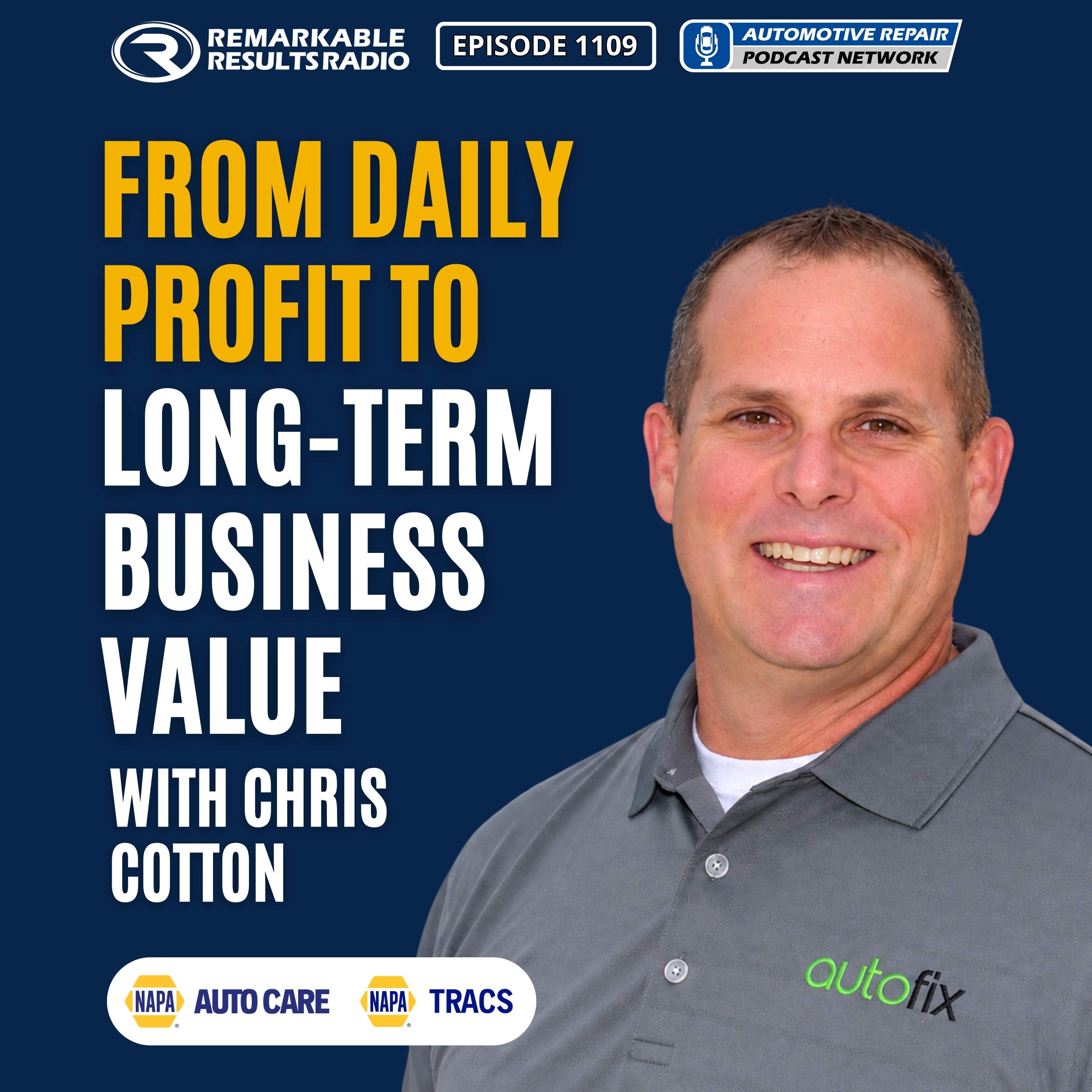
From Daily Profit to Long-Term Business Value [RR 1109]
Thanks to our Partners, NAPA Auto Care and NAPA TRACS Watch Full Video Episode What is your auto repair business really worth, and are you building it to become more valuable every year? Coach Chris Cotton, podcast host on the Automotive Repair Podcast Network, challenges shop owners to look beyond today's sales and profits and start thinking about the long-term value of the business they're building. Many owners spend years on the operational hamster wheel, focused on car count, payroll, production, and this month's bottom line. But when it's time to sell, transition the business to the next generation, or simply step away from daily operations, buyers and banks look much deeper. Chris explains why clean financials, documented systems, owner independence, and intentional succession planning can transform a shop from a business that provides the owner a job into an enterprise with significant transferable value. What You'll Learn Why profitability and business valuation aren't the same thing.What buyers and banks want to see before financing an acquisition.Why removing the owner from daily operations can increase business value.How documented systems and protocols make a shop more transferable.Why clean financial statements and tax records are critical to valuation.Chris Cotton's five stages of shop ownership, from daily survival to eventual exit.How increasing capacity can grow value without necessarily adding locations.Why succession and exit planning should begin years before you're ready to leave. Don't just build a profitable shop. Build a valuable business. Create strong systems. Develop leaders. Clean up the financials. Build capacity. Reduce owner dependence. And understand what your business is worth long before you're ready to sell it. Coaching to Valuation [E269]: https://chriscotton.captivate.fm/episode/cc269 The Weekly Blitz with Chris Cotton: Weekly Inspiration with Business Coach Chris Cotton from AutoFix – Auto Shop Coaching. https://chriscotton.captivate.fm/ Learn more about the benefits of being part of the NAPA family by visiting https://www.napaonline.com/en/auto-care NAPA TRACS will move your shop into the SMS fast lane with on-site training and six days a week of support: http://napatracs.com/ Connect with the Podcast: Download Our Mobile App:https://automotiverepairpodcastnetwork.com/app/Website:https://remarkableresults.biz/YouTube:https://www.youtube.com/carmcapriottoFacebook:https://www.facebook.com/RemarkableResultsRadioPodcast/LinkedIn:https://www.linkedin.com/in/carmcapriotto/Instagram:https://www.instagram.com/remarkableresultsradiopodcast/Join Our Virtual Toastmasters Club:https://remarkableresults.biz/toastmastersJoin Our Private Facebook Community:https://www.facebook.com/groups/1734687266778976Join our Insider List:https://remarkableresults.biz/insiderBooks Page:https://remarkableresults.biz/booksOur Classroom Page:https://remarkableresults.biz/classroomEpisode Collections:https://remarkableresults.biz/collectionsBuy Me a Coffee:https://www.buymeacoffee.com/carm The Automotive Repair Podcast Network: https://automotiverepairpodcastnetwork.com/ Remarkable Results Radio Podcastwith Carm Capriotto:https://remarkableresults.biz/Automotive Field TheorywithMatt Fanslow:https://mattfanslow.captivate.fm/Business by the NumberswithHunt Demarest: https://huntdemarest.captivate.fm/The Auto Repair Marketing Podcastwith Brian and Kim Walker: https://autorepairmarketing.captivate.fm/The Weekly Blitzwith Chris Cotton: https://chriscotton.captivate.fm/Speak Up! Effective Communicationwith Craig O'Neill: https://craigoneill.captivate.fm
Related across the catalog

Ep 176: How a Near-Crash Paved the Way for His Leadership with Brad Coleman
Episode 284 - Managing Stress and Leading a Young Team in the Automotive Industry With Trey Holley
Don't get to the end of this year wishing you had taken action to change your business and your life.Click here to schedule a free discovery call for your business: https://geni.us/IFORABEDon't miss an upcoming event with The Institute: https://geni.us/InstituteEvents2026Shop-Ware gives you the tools to provide your shop with everything needed to become optimally profitable.Click here to schedule a free demo: https://info.shop-ware.com/profitabilityTransform your shop's marketing with the best in the automotive industry, Shop Marketing Pros!Get a free audit of your shop's current marketing by clicking here: https://geni.us/ShopMarketingProsShop owners, are you ready to simplify your business operations? Meet 360 Payments, your one-stop solution for effortless payment processing.Imagine this—no more juggling receipts, staplers, or endless paperwork. With 360 Payments, you get everything integrated into a single, sleek digital platform.Simplify payments. Streamline operations. Check out 360payments.com today!In this episode, Lucas and David are joined by Trey Holley, a shop owner from Thomaston, Georgia. Trey shares his journey from being a lifelong mechanic to learning the ropes of business ownership, highlighting the unique challenges faced in small Southern towns. The conversation touches on the importance of supporting fellow shop owners rather than viewing them purely as competitors, and Trey offers insight into the work-life balance struggles that led him to prioritize both his health and the building of a strong, supportive team.00:00 Atlanta airport's massive scale03:41 Long walks at airports06:27 Thunder Valley racetrack experience10:30 Southern business challenges with generosity13:29 Overwhelmed by business demands19:09 New guy in town setting up20:59 University town business challenges22:34 Building Industry Relationships26:46 Discussing business challenges with spouse31:14 Discussing labor cost strategy35:32 Quality control and final checks38:55 Balancing work and family time40:33 Dealing with family anxiety44:57 Balancing multiple responsibilities47:21 Discovering the Enneagram for Communication49:12 On choosing the right people

99.08% Diagnostic Accuracy: Inside a Master Tech’s Playbook
Joe Adams interviews Adams Automotive Master Technician Josh Gerbrecht about his journey from technician to top diagnostician, sharing the systems that drove his 99.08% diagnostic accuracy and the big takeaways from a Key-to-Key-to-Callbacks weekend. They discuss the front-office/back-office symbiosis, the Rack Attack inspection process, recruiting and paying technicians their worth, shop tours and hospitality, and how AI could streamline diagnostics and incentivize accuracy over just speed. AutoshopAnswers.com Auto-Shop-Media.com
Shop Owners: Maybe YOU'RE the Problem | Tristin Sweeney - 38
Rick White was my VERY FIRST business coach, and trust me when I say he helped me get my shop-owner life together! 😂 Now I’m proud to have 180Biz presenting Downshift, so head to 180Biz.com and book your FREE strategy session with Rick because, honey, you don’t know what you don’t know!Y’all, if you missed the first Tektonic, you missed a GOOD one, but you've got another chance! 😂 Tekmetric is going even BIGGER in Houston, Texas, April 1–3, 2027, so head to Tekmetric.com/Tektonic and get registered because you're NOT missing out twice!Consistency is key - heard that! But, consistency is HARD. That's why I gave up on trying and let the experts handle it. Detect Auto. Let them clean up your estimating process and raise your ARO - like they did for me! CLICK HERE TO BOOK A DEMOAt 29 years old, Tristin Sweeney is running an auto repair shop, building automotive technology, and questioning some of the industry's favorite excuses. In this episode, Tonnika Haynes talks with Tristin about his unconventional path from the startup world into automotive, acquiring Honest Automotive, building Shift, and why owning a shop became the ultimate testing ground for solving real industry problems. But things get spicy when they tackle the supposed technician shortage, outdated hiring practices, shop owners blaming younger generations, and why good employees may be leaving shops that refuse to change. They also dig into AI, technician training, communication, leadership, burnout, and why new technology should solve problems instead of creating more work. If you're a shop owner who keeps saying, “Nobody wants to work anymore,” this conversation might make you look in the mirror.Timestamps:00:00 Why automotive has become unattractive to work in00:23 Downshift intro00:42 Meet Tristin Sweeney: 29, busy, and obsessed with automotive01:23 Audi, Volkswagens, and where the car obsession started03:15 Can you be a great service advisor without knowing cars?04:40 There are more automotive careers than turning wrenches06:26 From tech startups to the automotive industry07:17 Getting laid off, joining ShopGenie, and finding his industry09:17 Running TWO automotive businesses at 2910:11 How Tristin bought Honest Automotive after finding it on Facebook14:01 Has shop ownership given him gray hair yet?14:32 Building a shop around passion and customer experience16:21 Honest Automotive is also Tristin’s “laboratory”16:48 How Shift Automotive was born18:19 Building software from the problems that drive shop owners crazy19:10 Technology problem or people problem?20:17 How does someone working 60–70 hours a week avoid burnout?22:55 Success isn’t worth burning yourself out by 3023:19 Tonnika gets VERY personal about Tristin having kids 😂25:32 Why Tristin is committed to automotive for the long haul28:53 Shift grows to more than 150 shops30:02 Why simply SHOWING UP can change your career31:21 The “Gen Z stare” and learning how to communicate33:34 Get in rooms where you’re uncomfortable37:04 What will automotive look like 10 years from now?41:11 Shop owners who ignore AI WILL get left behind42:43 How should shops prepare technicians for new technology?43:27 Does every tech need to understand the newest cars right now?45:48 Why the next generation matters more than ever47:58 What does a technician actually need to “look like”?48:48 Is the technician shortage actually a hiring problem?49:48 How many great technicians are shops overlooking?50:48 “I hire people. I don’t hire jobs.”52:00 Why automotive can be an unattractive place to work54:18 Great shops generally aren’t struggling to find applicants54:51 The talent is out there—and some of them want to leave their current shop55:55 If recruiters can steal your technicians, that’s a YOU problem56:04 Most shop problems start with the owner57:30 Accepting criticism from your employees—even your own son58:03 Old-school leadership vs. the way Tonnika leads today59:33 The macaroni-and-cheese recipe for evolving a family business1:01:47 Is treating every employee differently “coddling”?1:03:50 Why one universal pay plan doesn’t work for everyone1:04:39 Flexible schedules, flat rate, salary, and what actually motivates people1:07:08 Shop owners who refuse to compromise may lose great technicians1:07:56 Bad bosses create the next generation of bad bosses1:08:21 Why leadership and communication have to be learned1:13:00 Stop micromanaging every detail of your shop1:14:22 “Granddad did it that way” isn’t a good enough reason anymore1:15:28 The Carfax data debate gets spicy 😂1:16:24 What Carfax actually gets from your shop1:17:47 Tonnika’s grandfather discovers OnStar and thinks “they’re coming for him”1:19:03 Technology fear usually comes from misunderstanding1:19:45 Tristin’s legacy: Leave automotive better than he found it1:20:00 Where to find Honest Automotive and Shift Automotive1:21:22 Closing, AI hot takes, and what’s next