← Marketing & Growth
Customer Retention Marketing
Bringing customers back — service reminders, email marketing, referral and loyalty programs, and reactivation that grow repeat business.
24 episodes
01

Remarkable Results RadioJuly 24 · 48 min
The “Kohl’s Cash” of Auto Repair: Turning Customer Rewards Into Repeat Business [THA 495]
Thanks to our Partners, NAPA TRACS, Today's Class, KUKUI, and Pit Crew Loyalty Watch Full Video Episode *]:pointer-events-auto scroll-mt-[calc(var(--header-height)+min(200px,max(70px,20svh)))]" dir="auto" data-turn-id="request-WEB:8e59eec7-a235-4fa3-a072-956fea3fe478-7" data-testid="conversation-turn-4" data-scroll-anchor="false" data-turn="assistant"> *]:pointer-events-auto scroll-mt-[calc(var(--header-height)+min(200px,max(70px,20svh)))]" dir="auto" data-turn-id="request-WEB:49a777bf-d263-4496-bf0b-2eb3a46ac96a-11" data-testid="conversation-turn-24" data-scroll-anchor="false" data-turn="assistant"> What keeps customers coming back when the shop down the street is advertising lower prices? Tom Sciortino of Total Automotive and Jeff Rudnick of Pit Crew Loyalty reveal how a well-designed loyalty program can become your shop's competitive advantage. Drawing from Tom celebrating 40 years in business, they share how rewarding customers, celebrating milestones, and investing in the community create stronger relationships, more referrals, and sustainable growth. What You'll Learn How customer loyalty programs increase repeat visits and average repair orders.Why rewards help differentiate your shop from price-driven competitors.Creative referral strategies that attract high-quality new customers.How time-sensitive rewards can recover deferred work and win back inactive customers.Ways to celebrate business milestones that engage employees and customers.Why community involvement builds trust, loyalty, and lasting relationships. Loyalty is more than a rewards program. When combined with meaningful community engagement and exceptional customer experiences, it becomes a powerful strategy for increasing retention, referrals, and sustainable business growth. Tom Sciortino, Total Automotive, Buffalo, NY. Tom’s previous episodes HERE. Jeff Rudnick, CEO, Pit Crew Loyalty You’re probably tired of chasing new customers who never return. We understand. Pit Crew Loyalty ends the one-and-done cycle, turning first visits into lasting, reliable revenue at https://www.pitcrewloyalty.com/ Beyond the Repair Order: The Strategy of Customer Loyalty [RR 1077]: https://remarkableresults.biz/remarkable-results-radio-podcast/e1077/ Thanks to our Partner, NAPA TRACS NAPA TRACS will move your shop into the SMS fast lane with onsite training and six days a week of support and local representation. Find NAPA TRACS on the Web at http://napatracs.com/ Thanks to our Partner, Today's Class Optimize training with Today's Class: In just 5 minutes daily, boost knowledge retention and improve team performance. Find Today's Class on the web at https://www.todaysclass.com/ Thanks to our Partner, KUKUI Stop juggling multiple marketing tools. KUKUI’s integrated platform delivers 4x better website conversions, automated follow-up, and real-time ROI tracking. Get industry-leading customer support with KUKUI at https://www.kukui.com/ Thanks to our Partner, Pit Crew Loyalty You’re probably tired of chasing new customers who never return. We understand. Pit Crew Loyalty ends the one-and-done cycle, turning first visits into lasting, reliable revenue at https://www.pitcrewloyalty.com/ Connect with the Podcast: Download and Listen on Our Mobile App: https://automotiverepairpodcastnetwork.com/app/Visit the Website:https://remarkableresults.biz/Subscribe on YouTube:https://www.youtube.com/carmcapriottoFollow on Facebook:https://www.facebook.com/RemarkableResultsRadioPodcast/Follow on LinkedIn:https://www.linkedin.com/in/carmcapriotto/Follow on Instagram:https://www.instagram.com/remarkableresultsradiopodcast/Join Our Virtual Toastmasters Club:https://remarkableresults.biz/toastmastersJoin Our Private Facebook Community:https://www.facebook.com/groups/1734687266778976Join our Insider List:https://remarkableresults.biz/insiderAll books mentioned on our podcasts:https://remarkableresults.biz/booksOur Classroom page for personal or team learning:https://remarkableresults.biz/classroomBuy Me a Coffee:https://www.buymeacoffee.com/carmSpecial episode collections:https://remarkableresults.biz/collections The Automotive Repair Podcast...
Listen →
02
Remarkable Results RadioJune 5 · 57 min
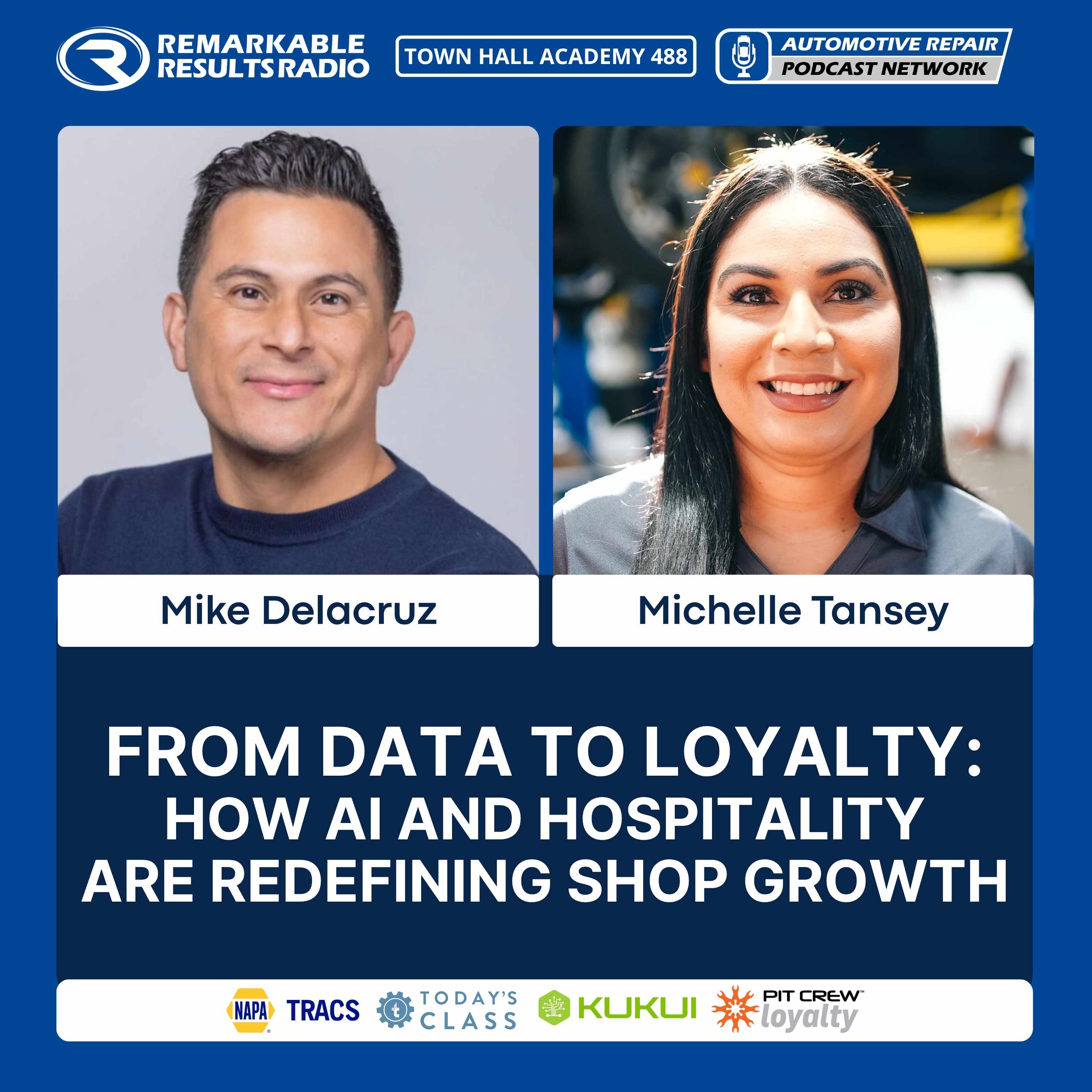
From Data to Loyalty: How AI and Hospitality Are Redefining Shop Growth [THA 488]
Thanks to our Partners, NAPA TRACS, Today's Class, KUKUI, and Pit Crew Loyalty Watch Full Video Episode What happens when artificial intelligence meets world-class customer hospitality? In this episode of Remarkable Results Radio, host Carm Capriotto welcomes Mike DelaCruz, CEO of Overdryve Marketing, and Michelle Tansey, co-founder of Euro Clinic, for a forward-thinking discussion on how auto repair shops can use AI, data, and intentional customer experiences to build stronger businesses. From using AI as a strategic business assistant to creating a luxury-level customer journey that rivals brands like Ritz-Carlton and Nordstrom, Mike and Michelle share practical insights on what separates average shops from elite operations. They explain how predictive marketing, operational excellence, and deeply embedded core values can transform customer retention and long-term profitability. What You'll Learn How AI can serve as your shop's "big brain" to improve decision-making and uncover blind spots.How predictive marketing can forecast car count, identify customer churn, and improve campaign performance.The concept of the "NASA Shop" and what elite automotive operations do differently.How Euro Clinic creates unforgettable customer experiences through personalized hospitality.The importance of building systems and processes around your shop's core values.Why strong operations must come before marketing success.How small communication changes can dramatically improve customer trust and confidence.The role data plays in making better business decisions and reducing emotional guesswork. The future belongs to shops that combine technology with humanity. AI can provide unprecedented insight into customer behavior and business performance, but lasting success still comes from exceptional service, consistent operations, and a culture built around caring for people. The shops that embrace both innovation and hospitality will be the ones that stand out, retain customers, and thrive in the years ahead. Mike DelaCruz, CEO Overdryve Marketing *]:pointer-events-auto scroll-mt-[calc(var(--header-height)+min(200px,max(70px,20svh)))]" dir="auto" data-turn-id="request-WEB:8e59eec7-a235-4fa3-a072-956fea3fe478-7" data-testid="conversation-turn-4" data-scroll-anchor="false" data-turn="assistant"> *]:pointer-events-auto scroll-mt-[calc(var(--header-height)+min(200px,max(70px,20svh)))]" dir="auto" data-turn-id="request-WEB:49a777bf-d263-4496-bf0b-2eb3a46ac96a-11" data-testid="conversation-turn-24" data-scroll-anchor="false" data-turn="assistant"> Michelle Tansey, Euro Clinic, Santa Clara, CA. Thanks to our Partner, NAPA TRACS NAPA TRACS will move your shop into the SMS fast lane with onsite training and six days a week of support and local representation. Find NAPA TRACS on the Web at http://napatracs.com/ Thanks to our Partner, Today's Class Optimize training with Today's Class: In just 5 minutes daily, boost knowledge retention and improve team performance. Find Today's Class on the web at https://www.todaysclass.com/ Thanks to our Partner, KUKUI Stop juggling multiple marketing tools. KUKUI’s integrated platform delivers 4x better website conversions, automated follow-up, and real-time ROI tracking. Get industry-leading customer support with KUKUI at https://www.kukui.com/ Thanks to our Partner, Pit Crew Loyalty You’re probably tired of chasing new customers who never return. We understand. Pit Crew Loyalty ends the one-and-done cycle, turning first visits into lasting, reliable revenue at https://www.pitcrewloyalty.com/ Connect with the Podcast: Visit the Website:https://remarkableresults.biz/Subscribe on YouTube:https://www.youtube.com/carmcapriottoFollow on Facebook:https://www.facebook.com/RemarkableResultsRadioPodcast/Follow on LinkedIn:https://www.linkedin.com/in/carmcapriotto/Follow on Instagram:https://www.instagram.com/remarkableresultsradiopodcast/Join Our Virtual Toastmasters Club:https://remarkableresults.biz/toastmastersJoin Our Private Facebook Community:https://www.facebook.com/groups/1734687266778976Join our Insider List:https://remarkableresults.biz/insiderAll books mentioned on our podcasts:https://remarkableresults.biz/booksOur Classroom page for personal or team learning:https://remarkableresults.biz/classroomBuy Me a Coffee:https://www.buymeacoffee.com/carmSpecial episode collections:https://remarkableresults.biz/collections The Automotive Repair Podcast Network: https://automotiverepairpodcastnetwork.com/ Remarkable Results Radio Podcastwith Carm Capriotto: Advancing the Aftermarket by Facilitating Wisdom Through Story...
Listen →
03

Remarkable Results RadioJuly 21 · 49 min
Deferred Work: The Most Overlooked Growth Opportunity in Auto Repair [RR 1101]
Thanks to our Partners, NAPA Auto Care and NAPA TRACS Watch Full Video Episode Most auto repair shops are sitting on a goldmine of untapped revenue without realizing it. In this episode, Carm Capriotto welcomes Jimmy Alauria of 3A Automotive & Diesel Repair to discuss how deferred work can become one of your shop's most effective growth strategies. By pulling just two years of data from his shop's database, he discovered $3.3 million in potential revenue from deferred services. From better customer communication to smarter follow-up systems, Jimmy explains how to turn yesterday's declined repairs into tomorrow's repair orders. What You'll Learn Why your customer database is one of your shop's most valuable assets.How deferred work can create significant new revenue without increasing car count.Why shops should schedule the next appointment before the customer leaves.While DVIs provide excellent transparency, their primary goal should be to educate the customer and help them plan, rather than to force an immediate $5,000 repair order. Jimmy notes that customers decline work not necessarily because they lack trust, but because they need time to budgeHow categorizing repairs by safety, reliability, maintenance, and appearance improves customer understanding.Understanding the customer's personal "car goals," whether they love the car and want to avoid a new car payment, or they hate the car and want to trade it in, is also critical to framing recommendations effectively.The shortcomings of traditional CRM follow-up systems and how AI can improve communication.How AI helps prioritize repairs and translates technical repair language into customer-friendly messaging that drives response. Deferred work isn't lost business; it's future opportunity. By building better follow-up processes, educating customers, and using technology to communicate more effectively, shops can strengthen relationships, improve customer retention, and unlock substantial revenue already waiting in their database. Jimmy Alauria, 3A Automotive and Diesel Repair, Phoenix, AZ. Jimmy’s previous episodes HERE Learn more about NAPA Auto Care and the benefits of being part of the NAPA family by visiting https://remarkableresultsradiopodcast.captivate.fm/napaautocare NAPA TRACS will move your shop into the SMS fast lane with onsite training and six days a week of support and local representation. Find NAPA TRACS on the Web at http://napatracs.com/ Connect with the Podcast: Download and Listen on Our Mobile App:https://automotiverepairpodcastnetwork.com/app/Visit the Website:https://remarkableresults.biz/Subscribe on YouTube:https://www.youtube.com/carmcapriottoFollow on Facebook:https://www.facebook.com/RemarkableResultsRadioPodcast/Follow on LinkedIn:https://www.linkedin.com/in/carmcapriotto/Follow on Instagram:https://www.instagram.com/remarkableresultsradiopodcast/Join Our Virtual Toastmasters Club:https://remarkableresults.biz/toastmastersJoin Our Private Facebook Community:https://www.facebook.com/groups/1734687266778976Join our Insider List:https://remarkableresults.biz/insiderAll books mentioned on our podcasts:https://remarkableresults.biz/booksOur Classroom page for personal or team learning:https://remarkableresults.biz/classroomSpecial episode collections:https://remarkableresults.biz/collectionsBuy Me a Coffee:https://www.buymeacoffee.com/carm The Automotive Repair Podcast Network: https://automotiverepairpodcastnetwork.com/ Remarkable Results Radio Podcastwith Carm Capriotto:Facilitating Wisdom Through Story Telling and Open Discussion.https://remarkableresults.biz/Diagnosing the Aftermarket A to Z:From Diagnostics to Metallica and Mental Health, Matt Fanslow is Lifting the Hood on Life.https://mattfanslow.captivate.fm/Business by the Numbers: Understand the Numbers of Your Business with CPA Hunt Demarest.https://huntdemarest.captivate.fm/The Auto Repair Marketing Podcast: Marketing Experts Brian & Kim Walker Work with Shop Owners to Take it to the Next Level.https://autorepairmarketing.captivate.fm/The Weekly Blitz: Weekly Inspiration with Business Coach Chris Cotton from AutoFix - Auto Shop Coaching.https://chriscotton.captivate.fm/Speak Up! Effective Communication: Develop Interpersonal and Professional Communication Skills with Craig O'Neill.https://craigoneill.captivate.fm
Listen →
04
Remarkable Results RadioMarch 13 · 45 min
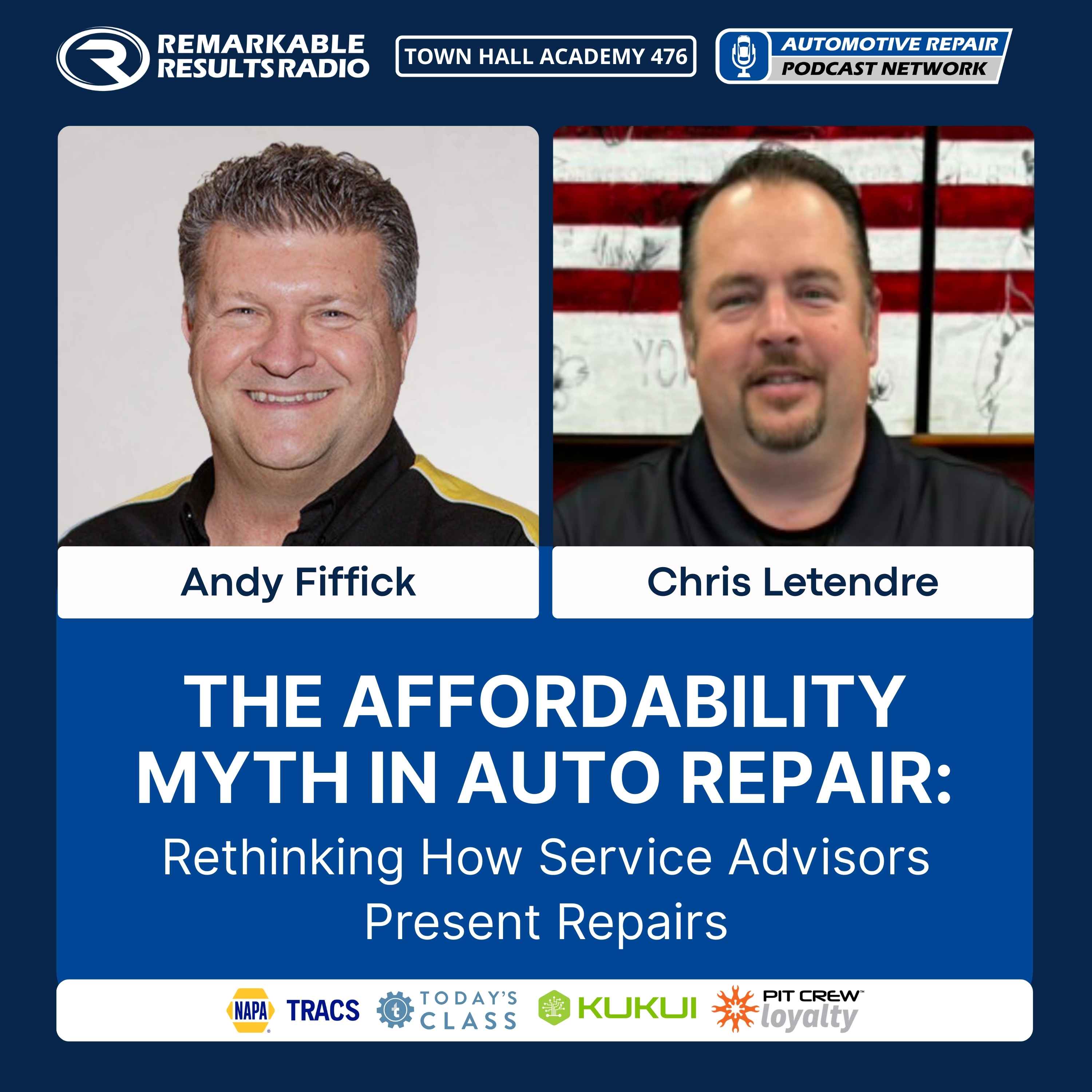
The Affordability Myth in Auto Repair: Rethinking How Service Advisors Present Repairs [THA 476]
Thanks to our Partners, NAPA TRACS, Today's Class, KUKUI, and Pit Crew Loyalty Watch Full Video Episode "I think the push back is more in our head than it is in the pocketbook." In this episode, host Carm Capriotto talks with Andy Fiffick and Chris Letendre about the perceived affordability crisis in auto repair. Both guests challenge the idea that customers can’t afford repairs, suggesting that price resistance often stems from the service advisor's mindset rather than customer reality. The discussion highlights practical strategies for improving repair approvals, including repackaging repairs with different parts or warranty options, presenting financing as “payment option plans,” and avoiding the “Sophomore Jinx,” where advisors begin to pre-judge what customers can afford. They also address the “maintenance-free” myth promoted by automakers and encourage shops to proactively educate customers with long-term maintenance planning. Ultimately, the episode reinforces a key truth: auto repair is a relationship business. When shops build trust and focus on helping people, price objections become far less common. Andy Fiffick, CEO Rad Air, Listen to Andy’s other episodes HERE Chris Letendre, American Pride Automotive Thanks to our Partner, NAPA TRACS NAPA TRACS will move your shop into the SMS fast lane with onsite training and six days a week of support and local representation. Find NAPA TRACS on the Web at http://napatracs.com/ Thanks to our Partner, Today's Class Optimize training with Today's Class: In just 5 minutes daily, boost knowledge retention and improve team performance. Find Today's Class on the web at https://www.todaysclass.com/ Thanks to our Partner, KUKUI Stop juggling multiple marketing tools. KUKUI’s integrated platform delivers 4x better website conversions, automated follow-up, and real-time ROI tracking. Get industry-leading customer support with KUKUI at https://www.kukui.com/ Thanks to our Partner, Pit Crew Loyalty You’re probably tired of chasing new customers who never return. We understand. Pit Crew Loyalty ends the one-and-done cycle, turning first visits into lasting, reliable revenue at https://www.pitcrewloyalty.com/ Connect with the Podcast: - Follow on Facebook: https://www.facebook.com/RemarkableResultsRadioPodcast/ - Join Our Virtual Toastmasters Club: https://remarkableresults.biz/toastmasters - Join Our Private Facebook Community: https://www.facebook.com/groups/1734687266778976 - Subscribe on YouTube: https://www.youtube.com/carmcapriotto - Follow on LinkedIn: https://www.linkedin.com/in/carmcapriotto/ - Follow on Instagram: https://www.instagram.com/remarkableresultsradiopodcast/ - Follow on Twitter: https://twitter.com/RResultsBiz - Visit the Website: https://remarkableresults.biz/ - Join our Insider List: https://remarkableresults.biz/insider - All books mentioned on our podcasts: https://remarkableresults.biz/books - Our Classroom page for personal or team learning: https://remarkableresults.biz/classroom - Buy Me a Coffee: https://www.buymeacoffee.com/carm - Special episode collections: https://remarkableresults.biz/collections - The Automotive Repair Podcast Network: https://automotiverepairpodcastnetwork.com/ - Remarkable Results Radio Podcast with Carm Capriotto: Advancing the Aftermarket by Facilitating Wisdom Through Story Telling and Open Discussion. https://remarkableresults.biz/ - Diagnosing the Aftermarket A to Z with Matt Fanslow: From Diagnostics to Metallica and Mental Health, Matt Fanslow is Lifting the Hood on Life. https://mattfanslow.captivate.fm/ - Business by the Numbers with Hunt Demarest: Understand the Numbers of Your Business with CPA Hunt Demarest. https://huntdemarest.captivate.fm/ - The Auto Repair Marketing Podcast with Kim and Brian Walker: Marketing Experts Brian & Kim Walker Work with Shop Owners to Take it to the Next Level. https://autorepairmarketing.captivate.fm/ - The Weekly Blitz with Chris Cotton: Weekly Inspiration with Business Coach Chris Cotton from AutoFix - Auto Shop Coaching. https://chriscotton.captivate.fm/ - Speak Up! Effective Communication with Craig O'Neill: Develop Interpersonal and Professional Communication Skills when Speaking to Audiences of Any Size. https://craigoneill.captivate.fm
Listen →
05

Remarkable Results RadioAugust 28 · 47 min
Brakes for Breasts: How Auto Repair Shops Are Fighting Breast Cancer [THA 500]
Thanks to our Partners: NAPA TRACS, Today's Class, KUKUI, and Pit Crew Loyalty Watch Full Video Episode *]:pointer-events-auto scroll-mt-[calc(var(--header-height)+min(200px,max(70px,20svh)))]" dir="auto" data-turn-id="request-WEB:8e59eec7-a235-4fa3-a072-956fea3fe478-7" data-testid="conversation-turn-4" data-scroll-anchor="false" data-turn="assistant"> *]:pointer-events-auto scroll-mt-[calc(var(--header-height)+min(200px,max(70px,20svh)))]" dir="auto" data-turn-id="request-WEB:49a777bf-d263-4496-bf0b-2eb3a46ac96a-11" data-testid="conversation-turn-24" data-scroll-anchor="false" data-turn="assistant"> What if your auto repair shop could help advance breast cancer research while growing your business? Co-founders Leigh Anne Best and Laura Frank, alongside Dr. Justin Johnson from the Cleveland Clinic, share the story behind one of the automotive industry's most impactful grassroots fundraisers. Since 2011, participating shops have partnered with parts vendors to provide free brake pads during October, helping customers save on repairs while shops donate 10% of the total service cost to breast cancer vaccine research at Cleveland Clinic. With $2.4 million raised and a $3 million milestone in sight, the campaign is helping fund continued research into the alpha-lactalbumin breast cancer vaccine for triple-negative breast cancer while giving independent repair shops an opportunity to strengthen their communities and grow their business. What You'll Learn How the Brakes for Breasts win-win fundraising model works.How participating shops can partner with parts vendors and customers.Why 100% of donations go directly to the research laboratory.How grassroots funding helped keep the Cleveland Clinic research lab open after Dr. Vincent Tuohy's passing.What Phase 1 vaccine research revealed and what Phase 2 will require.How participating shops can generate community awareness and increased car count.How your shop can participate and access promotional resources. Brakes for Breasts demonstrates what can happen when the automotive industry comes together around a cause. Shops can serve their customers, strengthen their communities, grow their businesses, and help fund research that could change lives. Every shop, every customer, and every dollar can make a difference. https://www.brakesforbreasts.com/ The First Breast Cancer Vaccine Trial Recipient Jennifer Davis: https://remarkableresults.biz/remarkable-results-radio-podcast/cc111/ NAPA TRACS will move your shop into the SMS fast lane with onsite training, six days a week of support, and local representation. http://napatracs.com/ Optimize training with Today's Class: In just 5 minutes daily, boost knowledge retention and improve team performance. https://www.todaysclass.com/ Stop juggling multiple marketing tools. KUKUI’s integrated platform delivers 4x better website conversions, automated follow-up, and real-time ROI tracking. https://www.kukui.com/ You’re probably tired of chasing new customers who never return. Pit Crew Loyalty ends the one-and-done cycle, turning first visits into lasting, reliable revenue at https://www.pitcrewloyalty.com/ Connect with the Podcast: Download and Listen on Our Mobile App: https://automotiverepairpodcastnetwork.com/app/Visit the Website:https://remarkableresults.biz/Subscribe on YouTube:https://www.youtube.com/carmcapriottoFollow on Facebook:https://www.facebook.com/RemarkableResultsRadioPodcast/Follow on LinkedIn:https://www.linkedin.com/in/carmcapriotto/Follow on Instagram:https://www.instagram.com/remarkableresultsradiopodcast/Join Our Virtual Toastmasters Club:https://remarkableresults.biz/toastmastersJoin Our Private Facebook Community:https://www.facebook.com/groups/1734687266778976Join our Insider List:https://remarkableresults.biz/insiderAll books mentioned on our podcasts:https://remarkableresults.biz/booksOur Classroom page for personal or team learning:https://remarkableresults.biz/classroomBuy Me a Coffee:https://www.buymeacoffee.com/carmSpecial episode collections:https://remarkableresults.biz/collections The Automotive Repair Podcast Network: <a href="https://automotiverepairpodcastnetwork.com/" target="_blank" rel="noopener...
Listen →
06

The Institute's Leading Edge PodcastAugust 26 · 55 min
216 - Coach the Call: Using AI Insights to Develop Stronger Service Advisors
216 - Coach the Call: Using AI Insights to Develop Stronger Service Advisors August 26th, 2026 - 00:54:51 Show Summary: Strong phone skills can turn more incoming calls into appointments while building trust from the first interaction. Consistent call reviews give service advisors a clear path to improve without making coaching feel like punishment. AI call analysis reduces the time required to find useful coaching opportunities and helps owners identify patterns across their team. Positive reinforcement also matters because great calls give advisors examples they can repeat. Simple habits like smiling asking for the appointment and using the customer’s name can dramatically improve the experience. Better phone performance ultimately supports stronger customer relationships higher appointment conversion and long term shop growth. Host(s): Jimmy Lea, VP of Business Development Guest(s): David Boyd, Founder & CEO of Callinbound Tonnika Haynes, Owner of Browns Automotive, Downshift with Tonnika Haynes Show Highlights: [00:04:00] – Listening to real calls reveals missed opportunities that owners rarely see. [00:10:00] – AI identifies coachable calls without hours of manual review. [00:14:00] – Consistent coaching creates awareness before advisors answer each call. [00:17:00] – Replace a hard no with a plan focused on customer needs. [00:24:00] – Help advisors self coach instead of simply pointing out mistakes. [00:28:00] – Every missed appointment can represent significant lost customer value. [00:34:00] – Asking for the customer’s name immediately creates a stronger connection. [00:39:00] – Scheduled call reviews make coaching normal instead of threatening. [00:43:00] – Asking for appointments helped turn successful marketing into a fuller calendar. [00:49:00] – Call tracking connects marketing performance with actual appointment conversion. In every business journey, there are defining moments or challenges that build resilience and milestones that fuel growth. We’d love to hear about yours! What lessons, breakthroughs, or pivotal experiences have shaped your path in the automotive industry? Share your story with us at info@wearetheinstitute.com, and you might be featured in an upcoming episode. 👉 Unlock the full experience - watch the full webinar on YouTube: https://youtu.be/fv9ewVBoSks Don’t miss exclusive insights, expert takeaways, and real talk you won’t hear anywhere else. Hit Subscribe, drop a comment, and share it with someone who needs to hear this! Links & Resources: Want to learn more? Click Here Want a complimentary business health report? Click Here See The Institute's events list: Click Here Want access to our online classes? Click Here ________________________________________ Episode Transcript Disclaimer This transcript was generated using artificial intelligence and may contain errors. If you notice any inaccuracies, please contact us at marketing@wearetheinstitute.com. Episode Transcript: Jimmy Lea: Good morning, good afternoon, good evening, or good night. Thank you for joining. So excited for us to have this conversation today with some really good friends. Everyone, this is to be an interactive webinar. So you're sitting there, you've got questions, you've got concerns, type them into the chat. We wanna be able to ask those questions of our panel today as we are talking about a very interesting topic. And with us today, first, is our good friend, Mr. David Boyd of Inbound Communication. David, how the heck are you, brother? David Boyes: I'm great. I, I, uh, I fully intended to have my jacket on, Jimmy. Jimmy Lea: Man. David Boyes: So excited to be here. We Jimmy Lea: coordinated on this and everything. David Boyes: I know. I, uh- Next time ... I, I was, I was lucky as, as busy as we've been at Call Inbound to, uh, uh, get up and, and organize and dress today. So I really, uh, it's always great to see you and of course, um, uh, we got to visit a little bit out at, uh, Worldpac STX and, uh, man, I tell you what, your wardrobe is always top notch. Jimmy Lea: Hey, thank you. Thank you. We're glad you are dressed today, just don't stand up. Thank you very much. David Boyes: Great. Jimmy Lea: And joining for us in our conversation today, David, is Tanika, Tanika Hayes with, uh, Haynes with Browns Automotive. Tanika, how the heck are you, sister? Tonnika Haynes: I'm doing good, guys. What's going on? Jimmy Lea: Staying alive. Good to see you. Great to see you. Also at STX, what did you think of the, the conference there with Worldpac? Tonnika Haynes: It, it was really, really good. I was not prepared for the size of it. There was a lot of people. People were peopling. So, um, once I got adjusted to all of the crowds and everything, I enjoyed it. I hadn't sat in a class in a really long time, like at an expo. Ooh. I'm usually just walking around and being nosy, but I picked up some good nuggets, so it was great. Jimmy Lea: Beautiful. That's awesome. Well, if, if the STX was a large conference to you, I would suggest that you really prepare yourself months in advance if ever you come out to SEMA and Apex in Las Vegas. Tonnika Haynes: I will be there this year. Oh, good. I keep hear- hearing that, so I don't know what meds I need to be on to take, To take it all in. But Jimmy Lea: we'll- You- Tonnika Haynes: I'm excited about it ... Jimmy Lea: we, we will talk about that because there is more than you can see within a week, and you really only have three days at Apex, four days at SEMA. You want to map out where you're gonna go, who you're gonna talk to, who you're gonna see- And for you, Taneka, schedule some time to sit down and chill Tonnika Haynes: Yeah. I'm gonna have to definitely do that. You're talking about, um, scheduling times. I'm gonna schedule time to go sit in the corner and recoup. Uh-huh. So where's Taneka? She's in the corner. Jimmy Lea: Yep, and, and I- It's David Boyes: scheduled time ... Jimmy Lea: I, I'm gonna work with you on that because I know the corners, I know the places where you can go and, and find some solitude. Tonnika Haynes: All right. Jimmy Lea: I am. Well, our conversation today is in preparation for making your shop better David, I'm gonna kick it over to you, brother. Let's start this conversation with Taneka. David Boyes: Yeah. Let's, uh, let- let's kinda move into this. You know, we're, uh, talking about communication, and there are so many facets that impact the customer experience. I think that it's important to know that, you know, there are tools and there are, uh, from an owner or, and manager's perspective and from a service provider's perspective, there are ways that we rally around making communication better. Um, you know, one of the things that is common at all shops is, uh, the customer phone call. Tonnika Haynes: Oh, yeah. David Boyes: So you winced a little bit. Tonnika Haynes: Yeah. David Boyes: Uh, how many times do we, you know, talk about our phone skills, uh, getting better on the phone, understanding the customer, understanding their needs, addressing their needs? And there's so much, you know, revolves around, uh, the phone calls and, and the way that our advisors and our front office team handles these. Maybe you have a CSR, maybe you have, you know, a service manager. Um, but people are, are answering calls all day long, and this becomes important that we understand who's answering the phone- Mm-hmm ... how they're communicating, what, what's the message that's being shared. Every time that phone rings, uh, that, you know, we like to say that's money calling. So Taneka, let me just ask you, you know, what, what are some of the challenges that you see or the, uh, the successes that you have with your team when it comes to managing and, and, uh, getting better on our phones? Tonnika Haynes: I wanna start by saying, um, I think I listened to my first phone call at my meeting with Jen- Jennifer, with the Institute. I'm currently coaching with the Institute, and that is life-changing- Yeah ... to listen to your team answer the phone. So if anybody's out there and they have not done that, they have not listened in on a phone call, figure out a way to do it. I don't know if it's gonna be a little paper cup and a string, but figure out how to do it. Um, and then I, listening to my own phone calls, and I- I'm the boss, right? I still cringe. And so you never know what's missing from those phone calls, what, what, what is standing out. You know, my team, we would not even ask for the appointment. Like, "Would you like to bring this in today?" You know- Oh ... you ask all the questions, they go through the scripts, but then we found that they were not saying, "Hey, would you like to get that done? Would you like to bring that in today or tomorrow? What works for you?" They were leaving it all to the client to say- Jimmy Lea: Mm-hmm ... " Tonnika Haynes: What's next? What's next?" Hmm. So they were answering the phone, and they were s- being very polite, but they were not closing. They didn't have a lot of words with closing. And so with inbound, I've been able to coach- You know, when you listen to yourself and you're like, "Ooh, ooh." And you can say, "Do you see what you did there?" Or even, 'cause you know, the team can listen to their own phone calls. "Oh, I see what I did there. I see where I dropped the ball." So that was, opened up a whole bunch of eyeballs around here. Well- It's like, "Oh, it's Monday, it's time to listen to phone calls." Like, "Ah." But you just increasingly get better over time. Jimmy Lea: Oh, it's so true. And, and the ability, Taneka, the ability to have calls from today- Tonnika Haynes: Mm-hmm ... Jimmy Lea: or from yesterday or, or even the day before. Uh, there was a time a decade ago when we would have to listen, as coaches, we would listen to calls. Listen, listen, listen, listen, listen, listen, listen. We're trying to find a coaching call, a call that is coachable, and this might be a call from two weeks ago, three weeks ago. Mm. The advisors are going, "Dude, oh man, that's forever ago. No, man, I, I don't do that anymore. I'm not like that." But David, I, I think you kind of solved a bit of that problem with your phone services. David Boyes: Yeah, thanks. It, you know, it's, it's important to, to recognize. I think every owner I've ever talked with has a similar issue. It's... And a lot of it rev- revolves around time, right? Are, are we aware of what's actually happening- Jimmy Lea: Yeah ... David Boyes: on the front line? Mm-hmm. And, uh, some of it is, uh, I wanna keep this a little bit at arm's length because I, I can tell you as an owner, I will have an emotional response when I listen to that phone call. And Taniki, you brought up a great point. For owners and managers here that are on the phone, please listen to your own calls. Yeah. Do it at least one time. Tonnika Haynes: Yeah. David Boyes: Well, twice. Have to Tonnika Haynes: bite the bullet. Just do it. David Boyes: Yeah. Just do it. And, Tonnika Haynes: and, and be ready. Just like- ... just like, "Oh, that is me." Yeah, that is you. David Boyes: Do it- Yeah do it twice because the first time that you listen to a call, uh, it's gonna just be weird, right? So listening to myself on recordings is always weird, but there's this heavy lift of time, right? Am, am I aware of what's actually happening on the front line, and how are we interacting with customers? And then do I have, do I have a mechanism to understand what's my expectation? As an owner, um, you know, it, it's important to establish that expectation. Maybe you're working with a call coach, maybe you've been in trainings yourself. It's, it's ideal to have a method by which you're going to measure your call handlers. And, um, you know, we wanna be professional. We want to build confidence and, and build rapport with these customers. It doesn't have to be fast, but typically- Mm-hmm ... you know, an incoming call from a customer is likely an appointment setting call or a status call. We're gonna set that status call, uh, bucket aside for a second 'cause we wanna be in front of, uh, status calls instead of having customers call us. But if you're listening to these and you have that rhythm around it, uh, we understand how these small habits can build on one another. Am I, am I smiling when I answer the phone? There's something physically that hap- When I, when I physically smile, there's something that is noticeable in the way that I'm communicating. And, uh, am I, am I clear? So what are the expectations? You know, uh, if you watch your advisors, I have, uh, my little cordless handset here. If they tuck their phone in like this, and, and you know, they're, they're trying to multitask Listen to those calls because likely it's very, very difficult to hear on the other side of this. So listening to calls, uh, helps us understand how, you know, how we conduct ourselves, how we conduct business, how am I representing the business that I, you know, that I'm working at as a professional. But also, what is the customer hearing and what is the customer's experience? So, um, these are, uh, important points, and it starts by listening. Jimmy, you brought up a, um, an important aspect here. Historically, we would listen to call after call after call after call to try to find something I can use to coach. So Taneka, you might do this. You've got a call recording system. It doesn't do much but just record those calls, and now I have to go through this, this process to identify a coachable opportunity. And this is now I think where we can move effectively into technology, right? We all hear so much about AI today, and what's really nice about, uh, having, you know, a, a phone system that records is now you have an asset, and you can use that asset to do something more with it. And we can use AI to help that heavy lift of time and, you know, take 90% of the time requirement off. So instead of having to spend 30 minutes, I might have to spend two or three minutes to take that call, sit down with my service advisor, go through this, and have a meaningful, constructive conversation about the things that work well. Jimmy Lea: Yeah. I, I love, David, that your software makes it so easy to find these coachable calls so much faster. A- and Taneka, that's just gotta be a lifesaver for you as well, coaching your service advisors. Tonnika Haynes: It is. I remember, um, speaking with a friend, fellow shop owner, and he's like, "I need you to set aside a time." And so what I did is on my calendar, on Wednesday, that's the day that I sit down and we go over phone calls. And so, you know, you got the dashboard, and that dashboard will say, "This is a coachable call. This is a coachable call." And it is a habit for me as the owner/manager, um, to make sure that I'm staying on top of it all the time because we'll slip into old habits, right? So me listening to the calls and bringing the service advisor or, um, or bring Jay in and say, "Hey, let's listen to this. Let's see how we can get better." You know, you continuously improve on it, and you don't slide back into old habits. Because I'm not on the phone as much anymore. If I have to answer the phone, I know personally, and everything's at stake for me, I slide back into old habits. So we all are capable of it, and so having that dashboard in front of us and said, "Hey, this is a call you need to look at," the service advisor or the person answering the phone does not feel like they're being picked on, but they're being improved upon. So, "Look, I'm just lifting you up. This is what we can do. Do you see how we can make this better?" And it's a we, it's a us, it's coachable, it's there, it's real, and, um, I really enjoy th- that part of the dashboard. Jimmy Lea: Oh, I love that. How often, Taneka, do you send, "This is a really good call"? This is a really good call. I Tonnika Haynes: like a really good call How often do you send that to the team? You know what? Yeah. I probably should do that more. But when I see a good call, I, I, I like to share it. And when I get a good review, like I l- literally just got a good review based off of a bad situation that we were able to turn around with proper communication, and the customer l- literally said, he's like, "The communication... The problem was still there," he said, "but the way they handled it and the communication was key." So he was not satisfied when he left, but the way that we dealt with it afterwards, and that recording of how we guided him through the process, and how we, you know, we apologized, we came up with a plan, apologized again, and kept it moving, and that was a great coachable call. It's like, this is how you handle a bad situation. Look how we won here. So yeah, those are just as important as the, as the losses, as the bad calls. "Hey, this is a good call. G- this is a good call." That balance is super important. Yeah, it balances it. Yeah. And then, you know, it's like, okay, I did that right. Even when that client is a client that does not belong to you, and you can hear them tell the customer, it's like, "Hey, you know what? Appreciate your call, but this isn't the place for you." And that's not the word for word, but, "Hey, you handled that good. Thank you for saving us from a nightmare." Jimmy Lea: Yeah. Tonnika Haynes: Amen. Share it with your team. So you gotta share the wins and the, the misses. Jimmy Lea: Yeah. And, and, uh, for a lot of people, I think they struggle in the creative. So if they can hear it, that it's already been done, they can duplicate. Sure. They can mimic. They can do the same thing over and over and over again. So the more we send these beautiful calls, "Oh my gosh, you guys did so well on this phone call. I, I love this part, this part, and this part," they're able to duplicate that, and they'll do it over and over and over again. And then, then you're- The mistakes that are being made become much less because you're showing, you're, uh, mirroring to them these are the really good calls that we wanna hear. Tonnika Haynes: And, and sharing that when you're going over a call, you got the good call here, we can work on this call, but this is another good call. You know, we talk about giving that sandwich. Yeah. And so that's another opportunity you can give that good sandwich. So when it's time to come in on Wednesdays and listen to your phone calls, you're like, "Ooh, I know I got one coming and I think I know which one it is." And then you're like, "Yeah, but you got this one too, so you won here, and, uh, we missed on this one, but next time it's not happening." Right? Right. So it's, you know, it's all in coaching. Jimmy Lea: Oh, David Boyes: it's so true. You just said something that's super important, and, uh, ooh, I think I know which one this is. Tonnika Haynes: Yeah. David Boyes: Um, there, there's a lot to unpack there. I, I, I love the, the good with the bad. We'll talk about that more too, but, um, creating the awareness. So consistency wins, and, um, I'll say it again, be consistent with the process because consistency wins. And when you have that rhythm where it's familiar and it's expected, we're gonna sit down and we're gonna listen to calls, we're gonna go through this, identify the opportunities, um, it's not good and bad calls, it's, you know, it, it, uh, we call them top calls or champion calls and coachable calls. So a coachable call isn't inherently bad. Maybe we even got an appointment. Tonnika Haynes: Mm. David Boyes: Right? But there's, there's opportunities. So, uh, when we have that rhythm and it's expected, what's really important about what you just said is the awareness. So when I go to pick up that phone, is this the call that Tanika's gonna be talking with me about tomorrow or, you know, Wednesday, whatever our rhythm is? It, it will begin to create that moment of pause that as an a- an advisor when I'm picking up that phone, I can take that breath. Yeah. I can, I can, uh, let that, uh, you know, that technician that just blew me up Tonnika Haynes: Let 'em David Boyes: go. I can let that slide off. I can shake that off. Yeah. And I can focus for a moment to make sure that that customer knows right at this moment they are absolutely the most important person to me right now. Tonnika Haynes: Mm-hmm. David Boyes: So that's an important message to convey over the phone, our, uh, the, you know, the way that we speak, the words that we use, my en- excitement and enthusiasm about being on that call all comes through. So as we get through this rhythm and we develop the consistency and it becomes normal, now I've got that awareness on my team that, hey, this next call I'm taking, I'm gonna have the moment of pause to focus because this might be the next one that, that we're reviewing. I want this to be a positive call that, that Tanika's coming to me and saying, "You did really well on this one. Let's continue to develop this," and, you know, replicate the things that are working well. Instead of, "Hey, there's some opportunity here. You know, you didn't ask for the appointment. You were, you know, pricing over the phone. You said 'no'." No comes out in a lot of ways, doesn't it, Tanika? Where- Tonnika Haynes: Oh, yeah ... we, David Boyes: we might be telling somebody, uh, "You know, I'm really busy right", or, or, or "W- we, we're really busy right now, I can't get you in until Friday." Tonnika Haynes: Yeah. David Boyes: That's, that's, we might as well just say, "No, I can't help you." Yeah. Tonnika Haynes: Yeah. You, that's, that's all they heard was the no. Um, even if you give... And, uh, everybody knows that I'm, I'm big on nos. Like, I can give you a no where there's some healthy nos, but then there's some nos and you have the customer saying, "Hey, um, m- my brakes are making the noise and it just started." And he's like, "Oh, no, I can't see you till Friday." He's like, "Yeah, but I'm gonna die before Friday. I wanna see somebody now." Um, so you don't, you have to learn how to coach them and say, "Yes, so bring that in. Let's take a look at what you've got, and then we'll come up with a plan." You didn't promise that it was gonna be today or tomorrow, but you said, "Bring it in. I'm worried about your safety. Let's see what you've got." Yeah. "Let's see if you should really be concerned about that check engine light. It might be a EVAP code." They don't know that, "But go ahead and bring them in." So and then you, like you said, the cadence in it. This, I'm not gonna make you any promises over the phone, and I would literally say that. "Hey, I don't wanna disappoint you by making a promise that I can't keep. So don't- Yeah ... don't make me, don't put me in that hole. But I need you to go ahead and bring that in to me as soon as you can. Um, and let's scan it. Let's see what you've got, and let's see if you should really be worried, if you can make that trip or we need to bring you in right away. We will help you come up with a plan." So just that solid no. "No, I'll see you Friday." Jimmy Lea: He, " Tonnika Haynes: Meh. No you won't." Yeah. Like, so that's support. That's Jimmy Lea: my- David Boyes: It, it becomes very collaborative in what you just said. Hey, let, let's make this about you, let's make this about your safety and your confidence to drive that vehicle. Maybe you gotta get across town and your commute is 30 minutes. Let's make sure that your vehicle is safe, and then once you're here and we make sure you're safe, let's talk about, uh, when we're gonna have that on the schedule. We'll get that vehicle in Tonnika Haynes: and prepared. Yeah. What are the next steps? Yeah. So let's go ahead and get- let's get your nerves calm- Mm-hmm ... and then let's come up with the next step. Let's come up with a plan. Us, us, us, we, we, we. So Jimmy Lea: yeah. Yeah. Oh, I love it. I love it. And, uh, you talk about s- building a solid foundation for this, the solid foundation for their skills so that the, the ongoing training you're doing really builds on that foundation. Uh, we've got a three-day service advisor with the institute. We're gonna give a shout-out to the institute here right now. So everybody grab out your smartphones, scan the QR code if your service advisor needs a solid foundation. Thank you, David. If you need a solid foundation- Registered now ... and you need to start with... Yeah, get registered. I know you've been to a couple of these, David, 'cause- I have you've talked about all the skills here just really, really well. If your service advisor needs that and you need to go from zero to hero very quickly, this is an intensive that you wanna send your service advisor to, and it will be at headquarters in Ogden, Utah. Fly right into Salt Lake, and, uh, and we got you set up there in Ogden. So, yes, David Boyes: scan that. It's a beautiful drive up from the airport. This class is, uh, it, it, it will help establish the, the fundamentals to build on. Yeah. So you come here, it's, you know, it's boot camp, right? We're, we're going to make sure that we're establishing the expectation and give you something to build on as the owner. Send your service advisors in here. Uh, they'll get those fundamentals, and then you'll have, you know, these, these mechanisms, uh, to improve them over time. I promise you it'll be a, a real game changer for your frontline. Tonnika Haynes: Well, you know what? Beautiful. I wanna piggyback on that. Um, and I wasn't coached to saying this. If they've already been, send them again. Jimmy Lea: There you go. Mm. Tonnika Haynes: Send them again, because here's the thing that I know, and I'm just gonna make it simple. I want you to think about your favorite movie. Like when, when I was in the 20s, for me it was Friday, the movie Friday. And then we watched that movie every Friday after work with the crew that I worked with, and it was just the most ignorant movie and the best movie for my generation. Each time I watched that movie, I would see a different thing. So I want you to think about your favorite movie and, or v- your favorite comedy. Each time you'd watch it, you would pick up something else. So it was like, "Oh, I didn't see that that last time." So even when it comes to training, "Hey, I did this three-day class and I did it a year ago. I grew." Jimmy Lea: Do it again. Yeah. Tonnika Haynes: Do it again. Do it again. You, you're never too mu- uh, there's never too much coaching. So just do it again and you'll see it from a different angle. I just wanted to say that. Yeah, 'cause, um, there's been some classes that I, I take, and not just this one, but other classes, like, let me take that class again. Yeah. And you're like, "Aha. I didn't remember that from last time." Yeah. I didn't implement that from last time, 'cause we, you guys tell us, and coaches will tell you, "Just go and implement one thing. One thing." I mean, watch those changes, and then the next time you take the class, let's do one more thing, maybe two, and get, get a little bit better. Right. Jimmy Lea: Yeah. So speaking of training, ASTA, A-S-T-A, is coming up here real soon, Taneka. Real Tonnika Haynes: soon. We're less than 30 Jimmy Lea: days out. Let's give them a shout-out. Tonnika Haynes: Shout out to ASTA. Those are the people, not the people that made me, but it's my just one, my just one thing that I took away from there each time has helped build me to where I am. And I am, I cannot say I would not be where I was without them. But I would not be where I was, where I am without them. From those, those people that I met, the village that I met, meeting you, meeting my first coach, just meeting my, my industry brothers and sisters that I can call on at any time when I'm about to flip out, or when I have a win. 'Cause you know as owners and when, when you're a little higher, you can't share your wins with everybody without some jealousy. True. Yeah. So when you have a win and you have that community to call on. Mm-hmm. So yeah, ASTA is the place to be, September 24th to 26th, right here in Raleigh, North Carolina. So I hope somebody shows up. And, uh, I wanna meet some... Well, I know Jim. I'll be there. Jimmy will be there. You will not miss him. David Boyes: He'll have the jacket. Tonnika Haynes: He will have plenty of jackets on. It is a fun atmosphere, lots of community, lots of learning and growing. Jimmy Lea: Yeah. Yeah. We're gonna have a jacket war, so anybody who wants to play. David, you're bringing your jacket, so David Boyes: who wore Jimmy Lea: it best? Yes. Yeah. David Boyes: Yeah. I, I wanted to make sure that we were gonna f- uh, be able to carve out some time to do the who wore it best. Tonnika Haynes: Oh, David Boyes: always. I think, so B- Benji will be involved. Brett will probably be involved, right? Mm-hmm. And, uh, you, you two- Mike Allen ... Mike, okay, Mike, yep. Tonnika Haynes: I, I, I feel like we should have a girls version of this, 'cause you know, if the women got involved- Jimmy Lea: We always lose Tonnika Haynes: I mean, we would just throw you guys under the bus. Jimmy Lea: It's true. We tried that, Tanika, and you swept it. Yeah. You swept it. There, there was no- Tonnika Haynes: I don't wanna do that to you guys ... competing with Jimmy Lea: Tanika. Tonnika Haynes: I don't wanna do... Yeah, I don't wanna do that to you, so we'll, we'll figure it out. Maybe I'll make a f- couple phone calls and text messages and see what's up. David Boyes: Yeah. Speaking of phone calls. Speaking of phone calls. Tonnika Haynes: Throw that back in. David Boyes: I have a question for you. Yeah. Yeah. That's, hey, I couldn't have asked for a better softball there, but that's great. Um- ... thinking, thinking about the coaching process, you know, I, I, I had mentioned before it can seem a little uncomfortable, even as an owner. You know, listen to two calls, because that first one, you're gonna be so- Mm-hmm ... consumed by how weird I sound on the phone, right? So, but when you, when you started this with your team, what, how was it received? What were some of the, the challenges, uh, do, you know, h- what feedback did you get about listening to calls and going through the analysis? Tonnika Haynes: So I wanna say that when I first did it in, in coaching, so in a group setting, and you're listening to your team, so they call in, they have to do a call and they'll record a call. And so it's like, "Oh, well this time she did this, and this is the excuse." You wanna come up with excuses. You wanna defend- Right yourself. I wanna defend my shop. And so that service advisor's gonna wanna defend him or herself. Like, "Oh, well, you know, that customer and this was that." I was like, "No." So you get past that, and it's like, okay, like I said, you give the sandwich. Okay, so this is a great call. You tell me what you could have done, could have done better in this call. Right. 'Cause I don't wanna be in... 'Cause if you go into attack mode and say, "Oh, you should do this better, and you didn't follow the script, and you, you, you, you, you," you're gonna get somebody that's gonna put up a guard and be like, "Whoa, whoa, whoa. I did my best." So I'll say, "I know you did your best on this, this one call, and you did a great job on this call. What happened, brother?" Balls in your court. Tell me how you can improve on this. Mm. What do you need from me to help you improve here? Was there a distraction? What was, what was the problem? So I kinda feel like I can teach them to self-coach. Jimmy Lea: Yep. Tonnika Haynes: I'm, I'ma give you a whole toolbox. You've got this toolbox. You know what a good call to- sounds like. Like, you also have a mirror. There's a mirror right there. Look at yourself. You've got reminders. I've got sticky note reminders on each, each person saying, "Don't forget to ask for the sale." What happened? "Oh, man, I was distracted, I sh- I should've..." Yep, you should've put the mouse down. You should've put the mouse down. So usually people will first get defensive, same. Mm-hmm. Um, then the defense mechanism starts to come down. Say, "All right, okay, so how do we fix this so next time I cannot find a bad phone call?" Jimmy Lea: Bingo. David Boyes: Yeah. Jimmy Lea: I love it. It, yeah. I love that you have a mirror there and you have sticky notes there helping as well, Taneka. Tonnika Haynes: Yeah. Jimmy Lea: Yeah. That's, that's so good. ' Tonnika Haynes: Cause we forget. And- And it's okay- Oh, we do ... 'cause we get busy. But the Jimmy Lea: more Tonnika Haynes: we work on it- And I, Jimmy Lea: I, you... I'm certain that you guys have heard this before, that a fake smile is better than a real frown. Tonnika Haynes: Yes. David Boyes: Yep. Tonnika Haynes: Yes. And I'm really good at that. And so I've learned that because I've been doing it a very long time, so people know that I can really make you... I could, like, really fuss you out, and I would sound so sweet 'cause I'm smiling at you the whole time. "Well, you know what, Jamie? I think that was the stupidest thing you've ever said." Jimmy Lea: And if you do it with a smile, you can Tonnika Haynes: get away with it. And you're doing it with a smile and, and when you're shaking your head. So that smile makes a difference. And when I'm- It does ... picking up the phone out of an emergency, if they are busy up front and I'll see that phone ringing, and I pick it up and I'm not ready personally, I'm not ready to answer that phone, and it's a client that knows me, and I'm not smiling, I will get a, "Hey, Taneka, what's wrong?" You Jimmy Lea: okay? 'Cause Tonnika Haynes: they, "You okay?" And I'll say, "Oh, I'm sorry. I was distracted." 'Cause that's usually what happens, you're distracted, or that service, that, um, technician just rubbed you the wrong way or something's happened at home. So but once you put that smile on- You just fake it till you make it. And now you, I usually don't like to say that, but sometimes you do have to fake it till you make it. Like, yeah, absolutely. And use those words of, those positive words. Absolutely. Let's look into that for you. Yeah. Yeah. Jimmy Lea: Sure. I love it. Love it. We talk about the phone call and how much it's worth. Uh, Bimmer PhD Motorsports is saying, "Can we dig into that a little bit?" How much does it cost to get that phone to ring? How much does it cost to acquire a new customer? You talk about the mindset and you talk about the service advisor- Mm-hmm ... and the smile that's needed to be there, fake or real. How much is that phone call worth, Tanika? Have you analyzed any of that in your shop? Tonnika Haynes: So that was actually a, um, something we did in the 20 group with my coach Jen. We went through that and we calculated how much it costs to sh- get that phone to ring. And I really wish I was prepared and I had that number for you. But once you realize that number, share it with your team. Jimmy Lea: Yeah. Tonnika Haynes: And then, uh, the institute probably has, um, a blueprint on how to figure that out. So you're looking at how much your website is, your Go- Google ads, any form of marketing that you have out there, down to the phone bill. Jimmy Lea: Yeah. Tonnika Haynes: How much does it cost to make that phone ring? And once you see it as the owner, you're gonna be like, "Whoa." And you share that with the team. Like, every time that phone rings, it costs me this. And then also think about your ARO. Jimmy Lea: Mm-hmm. Bingo. Tonnika Haynes: And every time- Yep, yep ... we do not get a y- yes, and we don't get that client through the door, we lost $850. Potential $850, potential $1,100. Jimmy Lea: Yep. Tonnika Haynes: So once we start thinking about, you know, everything, everything's not about money. It is That Jimmy Lea: we keep score. Tonnika Haynes: It is how we keep score. Yeah. Like, you know, we, we talk about we've got the metrics on the dashboard. Numbers don't lie. People do. Your emotions will. David Boyes: Yeah. Tonnika Haynes: It costs me $75 every time that phone rings. Mm-hmm. And when you ring it, and when you land that deal, that's a potential 850, or whatever your ARO is, or whatever- Yeah ... that's what it is. And that's, and how long does it take to get that one client to get through the door? Yeah. And also think about how long you can hold onto them as a client. How many years Jimmy Lea: are you gonna- Tonnika Haynes: What's the lifetime value of the client? What's the lifetime of that client? Jimmy Lea: Yeah. Tonnika Haynes: So that smile when you answer the phone, yeah, that's worth a lot of money. Jimmy Lea: Tens of thousands of dollars. Tonnika Haynes: Tens of thousands. So go ahead and put your Vaseline on your teeth- Jimmy Lea: Mm-hmm ... Tonnika Haynes: and, and start a- smiling. Jimmy Lea: Yeah. That's an old theater trick. Yes. Are you a, are you a musical theater person? Tonnika Haynes: No, but I just know about- Where are you pulling that from? ... Vaseline on your teeth and, 'cause you get tired of smiling. You, you know, at the conference, you have this whole muscle thing. You're like... Jimmy Lea: Uh, yeah. Tonnika Haynes: Keep s- keep, just keep smiling, smiling, smiling. Jimmy Lea: That's right, David Boyes: Dorothy. Those are important numbers, uh, to know how much does it cost to get that phone to ring. Tonnika Haynes: Mm-hmm. David Boyes: Uh, in some cases it can be, uh, you know, several hundred dollars depending on really all of those factors around generating those phone calls, and then what that ties into when the phone does ring, um, and we don't ask for the appointment. Has that $850 or $1,100 just walked over to my competitor across town? Yeah. But it also sets the stage when we're talking about coaching and development to bring it back to what's in it for me. As a service advisor, you know, most high performing shops are incentivizing their advisors on these, you know, these GP numbers and, you know, there might be other metrics on Google reviews, maybe have spiffs for these different things. It all requires us to generate the appointments and get those vehicles in so that we can have an inspection and we can, you know, generate the, the estimate and ultimately have a sale, and then make this an amazing experience for the customer so they're gonna come back next time. Tonnika Haynes: Mm-hmm. David Boyes: Uh, at the very front end of the phone call, you know, it, it takes X number of dollars to make the phone ring. When that phone rings, the customer, if they're a first time caller- Uh, they're likely y- we as, as a business are likely setting the stage within that first 15 to 20 seconds for the length of our relationship. So based on those initial interactions, we're going to begin setting the stage of how well this customer visit is going to go, uh, how much that we're developing trust with this customer. Do they trust me as an advisor? Do they trust this business, that we're experts and we're gonna help them, and we're gonna do so in a, in a fair and meaningful way? And then also, uh, we're going to set that basis for a repeat customer. Jimmy Lea: Mm-hmm. David Boyes: So that, that's where we get into the, the longevity of our relationship. Interestingly enough, so much of this happens at the very first moments of that very first phone call. And when we acknowledge that as a service advisor, I'm like, "Oh, that does tie back to the paycheck I get." As a business owner, "Wow, that ties back into the stickiness of my customers." I love, you know, repeat customers. I love repeat business. So we wanna drive these skills up front. Uh, Taneka, you talked about, you know, sitting down and going through, um, some of these calls and the, the service advisor reaction. Have you really developed and, you know, share your expectations on how you'd like the, the phone answered? I'm not asking about a script. Tonnika Haynes: Mm-hmm. David Boyes: But like that flow, right? We don't wanna create robots. Right. What have you done at, when you, you know, train and develop your team on here's what I would like to hear from you? Tonnika Haynes: So I haven't honed that in 100%, but I, I do know that we wanna thank them for calling. David Boyes: Mm-hmm. Tonnika Haynes: We wanna know how did you find out about us? Great. Is this your first time calling? How'd you hear about us? So, so we can track that, right? Yeah. Was it a repeat? Was it a neighbor? Was it a Google? How did you... Was it a postcard? How did you hear about me? Um, what can I help you with, and how soon can I get to it? Can you bring that in today or tomorrow? And, um, and smile. So I have these little things that I want them to say that's on the side- Yeah ... of their computer, and I don't want you to sit there and read and just say, "Oh, well, yes, sir, how can I help you today?" I want it to flow naturally because that's who we are as a shop. We- we're not a scripted shop. We're, we're a bunch of goofy people, actually. People. We just happen to fix cars. Um, and that's who we are. Yeah. And I want that to come through. I want you to be friendly. I want you to re- when they come in with the cat or the dog or whatever, please not a cat, but the dog. I want you to put in the notes, this is, this is that customer's name and this is what their dog's name. If they refer to their, their car, "My car's name is Pearline." If you called my car by his name, I'm not taking it nowhere else So I want you to build that relationship. And so I don't have a script and I don't have a formula yet, and maybe I should work on that. And, um, we do have like a SOP. Yeah. Probably should do a better job at that. But then what you just said made me raise my eyebrow, like, I should do better with that. But we do have some things that I'm, that are non-negotiables. David Boyes: You've got your flow there, which is great. Mm-hmm. And I think you're, you're doing better in that than, than- Yeah ... uh, some owners that, that we talk with. I encourage, I encourage everybody to have a flow, right? Yeah. We, we wanna kind of go through the conversation. I'll tell you the number one, um, deficit that I hear within the first probably 10 seconds of a phone call is asking for the customer name, right? So- Right ... "Thank you for calling ABC Automotive. How may I help you? Um, yeah, I can help you with that. My name's David. What's your name?" Jimmy Lea: Mm. David Boyes: It's so simple. Yeah. And, uh, I listen to call after call after call. I mean, these, they, they pop out because of our AI call analysis, but where we go through this whole process and we've had a 90-second call or a two-minute-long phone call, and at no point ask the customer name. Tonnika Haynes: Right. And then you assume that the name on a caller ID is their name. David Boyes: Mm-hmm. Right. Tonnika Haynes: That, that's a problem, too. I know that we were doing... I was doing it as well. Yeah. I would do it as well. David Boyes: Yeah. Tonnika Haynes: But, um, and, and with that, I had a little challenge saying, "Hey, I want to see you guys' name on the, the review." Yeah. And it really bothers me when a client calls to check on their car, and I have to, have to answer the phone, "Hey, who was your service advisor?" "Uh, I don't know." What? David Boyes: Mm. Tonnika Haynes: They need to know your name. David Boyes: Mm. Tonnika Haynes: So I had to make sure that everybody had their own business cards when the car was dropped off. "Hey, my name is Stuart. This is who you should call to check on your car. Everybody here can help you, but I'm the main person." So I think a lot of people just don't do that, and say, "Hey, well, my name's Tanika. Who am I speaking with?" Great. "Have you been here with us before?" David Boyes: Mm-hmm. Tonnika Haynes: You know, if it doesn't pop up on the caller ID, "Have you been here with us before?" Yeah. But the caller ID pop up, that's a game changer. Am I skipping ahead? Should we not go that far yet? David Boyes: No, you're fine. Yeah. Tonnika Haynes: Thank you, David. Yeah, just be ready. Yeah, be ready when, when David Voigts calls Brown's Automotive, and you call and say, "Brown's Automotive. This is Tanika. Hey, David, how can I help you today?" What is that? What are you doing? You knew I was calling. You know, like- Yeah ... yeah, caller ID exists. People forget about that. David Boyes: Yeah. Tonnika Haynes: But- They do. They do. But it, it's just extra special. Yeah. And that's what the caller ID... I know one thing I do when the customer's walking in, and if I know I have a blue Toyota Coro- Corolla coming in at 9:00. "Who is this coming in?" Yeah. "Hey, Mrs. Such-and-such. Good morning. Oh, hey." Instead of saying, "Can I help you?" Yes, you can help me. That's why I walked through the door. David Boyes: Mm-hmm. " Tonnika Haynes: Hey, M- hey, Mary David Boyes: Jane." Or, "Hang on a second. I'll be with you in a second." Tonnika Haynes: Yeah. No. David Boyes: Don't do that. Tonnika Haynes: Don't do that. David Boyes: Yeah. Tonnika Haynes: So, um, there's a lot to be said about customer service, and there's a lot to be said about s- calling people by their name. Jimmy Lea: Amen. Tonnika Haynes: Yeah. David Boyes: It creates familiarity. Yes. And, uh, when, when we have familiarity, we have a relationship. Mm-hmm. It's in- it's potentially implied. But people love to do business with, with the, the folks that they have a relationship with. Mm-hmm. And they're inclined... You know, this is the fun thing about consumer behavior and human behavior, is when I have a great experience, I wanna rally my friends around that too. I want to include them in the joy that I get to experience when I come see Tanika and her team. Yeah. So I'm gonna- I, I'm gonna be much more likely to tell folks about it. If I have a meh- Meh ... average experience, it's probably not gonna come up in conversation. I'm not gonna stick my neck out there. But, um, how do we do that? Well, we address people by their name. We know when they're calling, right? I might even be pulling that up in my shop management system or my CRM. Just the s- the second the phone rings, it's gonna pop and present that information. "Yeah, I saw you were in three, three months ago, and we had looked at, you know, X, Y, Z on your vehicle. Should we add, add some additional time to take care of that this time?" Right? It, we have an awareness. They have confidence in us. We know them as a person. We know their vehicles. And now we're, we're joining together with our customers. Mm-hmm. Yeah. Uh, at, at a common goal, right? And it comes back to their safety. Well, Tonnika Haynes: so what'll happen is you'll get a client, and, um... Sorry about the background noise. That's all right. You'll get a client, and they're not thinking about their car. They, they, they've grown to love you. They've grown to know you. They know you by your name. And then you made the recommendations last time. They trust you enough that they are just gonna be like, "Okay, whatever. I'll talk to you about it next time. Tanika's gonna remember that for me." Say, "Hey, Miss Mary Jane, you remember we talked about..." "I don't remember we talking about." "Well, here's a copy. I'm gonna send that over to you. We're gonna look at it, these things again." Yeah. It's just like having a whole system, and then you become that person. It's like I don't have to remember what my car needs 'cause Tanika and her team have the history, and they know me by my name. David Boyes: Mm-hmm. Tonnika Haynes: Right. And they're gonna take care of me. David Boyes: The paradigm shift there is I, you know, as a service advisor, I'm the expert. Tonnika Haynes: Mm-hmm. David Boyes: As the service manager, I'm the expert, right? You've come to me because of our and my expertise, and I'm sharing the belief that you wanna be safe and you wanna care for your vehicle. So allow me to make these recommendations. Allow me to, to keep that, those notes about our previous interactions so that when we meet to, when we meet again, we can make sure that w- you know, we're, we're not starting from zero- Tonnika Haynes: Mm-hmm David Boyes: that we already have this information available, and we're going to improve that experience. Tonnika Haynes: Yeah. David Boyes: Um, on the, on the call coaching side of it, um, you know, I, I think at some level you've kinda normalized it in your shop, and I'd love to learn more about how, you know, how did you do that? It's, it's not typical, I would say, that people are just, like, rallying around, "Let's listen to calls," right? 'Cause part of it is, you know, the exposure or this kind of fear of judgment. But once you normalize that and make it consistent, um, I'd love to know how you've done that and, and keep the, uh, the Big Brother mentality out the door. Tonnika Haynes: Well, I don't, well, we've got cameras, and we've got these things recording the calls. And, and first of all, these calls are not being recorded to get you. These calls are recor- Yeah ... recorded to cover your butts from that crazy person that swear they didn't say it. Mm-hmm. These calls are recorded to make you better. Um, I remember Chad say, "Hey, just put it on the calendar. Just put it on the calendar." It's like ha- having that one-on-one for the first time. Nobody knows what to say or to do. I'm not trying to attack you. I'm just trying to make you better. So let's just... I listened to my call. Be vulnerable. Me. Hey, Jimmy Lea: Yeah ... Tonnika Haynes: you don't wanna listen to your call. I didn't wanna listen to my own call. But let's, let's do this. It's just on the calendar. And like I said, the defense will just break down a little bit at a time, and I found that with my one-on-ones again. Like, we do a first Monday one-on-one. If I was late or if I skipped the one-on-one, they're like, "Well, why did, I didn't get my one-on-one. Am I in trouble?" They look forward to it. Everybody wants positive reinforcement. Amen. So if you keep it positive, and then some- like, "Hey, I looked at 10 of your calls, and out of the 10, only 3 of them were coachable." Or, "Hey, you remember when we started out, how you would have, like, a 11 bad calls out of 20? Dude, you only got two this time." So make sure we measure it, okay? Schedule it, measure it, keep it going. Know you're uncomfortable, they're uncomfortable, and just say- I don't wanna do this. Nobody wants to do it. Nobody wants to lift that... Well, a lot of people don't wanna lift the heaviest weight for the muscle gain. Mm-hmm. It's gonna be painful, but it's gonna get easier. It's gonna be easier for me and you as the coach and the coachee, or is it a coachee? Whatever. So, I mean, it, it's... I don't know if there's an easy way to put it, but I just know that you just keep doing it, you be consistent, and you let them know if you're uncomfortable. Like I hear shop owners say, "How do you start this one-on-one stuff? How do you start this coaching stuff?" You just start it. And you're just like, "Ooh, hey, I don't know what I'm doing either. Let's do this together." Yeah. "Let's, let's get better together." Like, I'm listening to my calls too. We're all getting better together. So I would just say start it, put it on a schedule, make it, make it pop up, show up. Yeah. Wednesday, coaching calls. Jimmy, one of the- Schedule it. It's ready to go. David Boyes: Yeah. That, that's perfect. I, I, I love the perspective too. And Jimmy, one of the, you know, the things that I share with owners consistently is be consistent. Mm-hmm. So I think the, the technology drives that, right? We're delivering an email with, you know, here, here's a, a top call, here's a coachable call. Here's some additional information. So delivering that is important, and the technology really helps us drive that consistency in this case. So, um, when that, that email comes out, here's a call example, you don't have to do anything with that today, or you can. If you don't, there's another one tomorrow, right? Mm-hmm. And we wanna create that normalcy. And th- this is the part that drives change, is one, you know, we're, we're making this normal. Yep. And Tanika, you were just talking about that, right? We're gonna put this on the calendar. People begin to expect it, right? It becomes normal for them, and that's a super important milestone in the coaching, training, and development process, is that sense of normalcy in the shop. And then, um, u- understanding the expectations and, you know, where do we have the opportunities. Um, Tanika, you know, one, one thought that comes to mind here is, you know, you'd mentioned at the beginning, like ask for the appointment. As you began doing this, you know, what, what did you begin to understand and, and see happening across, you know, the phone calls and across your organization? What patterns began to emerge? And really, what's that aha moment you had where you're like, "This is bringing value to me while I'm bringing value to my team"? Tonnika Haynes: Ooh, that's a good question. So when we start asking for the appointment, you know what? The calendar filled up. David Boyes: Yeah. Tonnika Haynes: Yeah. So the marketing was working. And, um, but the big aha moment... Ooh, that's a good question, Dave. You got me on that one. Should have text me that before you asked me that one. I'd been ready. David Boyes: My Tonnika Haynes: apologies. Phone with you. Aha moments with phone calls. I don't know. I, I really, I can't answer that one for you, but what I do wanna say before I forget the chance, don't get the chance to say it, when they're sitting beside each other up front and they're lis- 'cause they're, everybody can hear everybody's phone calls. Mm-hmm. I can hear them say, "That was a good one. What was that one about?" Or like Stuart would tell Hailey, he's like, "She's, she's had a lot of good phone calls here lately. I can hear the change in the way she's handling the phone calls." So again, um, may have got a little bit off subject, but them helping each other and encouraging each other. Maybe they can only hear one end of the phone call, but there's some key words like, "Oh, you killed that one." Jimmy Lea: Yeah. " Tonnika Haynes: You killed that one." Or making that sale on the phone call. Yeah. "I heard how you delivered that BVI. I heard that delivery. You gave them the good sandwich," and they said yes. Like this morning, she was like, "She said yes to everything." It's like, "God, it's working." Imagine that. Love it. Imagine doing a training, following the instructions, and it actually working. Jimmy Lea: Yeah. Gotta David Boyes: love that. It really is the aha moment too, right? Tonnika Haynes: Yeah. David Boyes: You're, you're going through, you're driving consistency. You have, you know, some form of flow and expectations, and you're learning from one another. I love the fact that- Mm-hmm ... they're listening at least to one side of each other's conversations- Right ... in real time. Tonnika Haynes: I David Boyes: think I'm lucky Tonnika Haynes: with that- And then getting to populate from that ... with my team. David Boyes: Yeah. Tonnika Haynes: I think I'm lucky with my, 'cause they're, they're not in competition, and, um, it's like how do you keep them... I don't know. God blessed me with that, but I'm just lucky that way. But encouraging each other- So. Jimmy Lea: It's good. That's good, Tanika. You, you've set up a solid culture there, solid people. They've got great results. You're listening to the phone calls. Consistency, like David's talking about. You know, um, hearing one side of the conversation helps a little bit, but if you, if you, as an owner, if you're only listening to half the conversation and you are not booked up three, four, five, six, seven, eight days in advance, chances are you're missing the other half of the conversation, and you need to listen to it. So you do need a device, a program, a, a hardware. You need a, a phone system that allows you to listen to all sides- Mm-hmm ... of the conversation. You've g- just gotta be able to do that. You gotta be able to do that. Now I'm gonna give another shout-out here as we work in our marketing. So a lot of times I hear shops talking about their marketing. "Well, my marketing's not working. I'm not... It's not working. It's not working." A lot of times it comes back to the phone call. Mm-hmm. How well is the phone call being handled or treated from an advisor? But speaking to the marketing part, we've got a shout-out here for the institute is holding a marketing intensive this October 26, 27, 28. Tanika, I just got off the phone with Brett Faidley. He is signed up. He is coming out for Mars Conference, so if you wanna get signed up as well, sister, we'd love to have you out here. Tonnika Haynes: I gotta get a real flashy jacket for that one. Jimmy Lea: Uh-huh. Tonnika Haynes: Pull out my Jimmy Lea: rhinestones. Right behind that Mars Conference. So if you got your smartphone there in front of you, grab out your smartphone, turn on your camera. There's the QR code right there. Oh, man. Flash the QR code and get registered. The, the, uh, the Mars Conference is going to be awesome. It is a conference where when you are done with the workshops, it's a three-day conference. When you're done with that three-day conference, you have 2027 mapped out, ready to go, and you know what you're gonna be doing month to month throughout that whole next year. It's super awesome. I, I love the Mars Conference. David Boyes: I do too. So Jimmy Lea: come- David Boyes: I was at the last one. Excited to be there. I'm, let me just say I was there as a participant at the last Mars Conference. Tonnika Haynes: Mm-hmm. David Boyes: And, uh, one, getting to, you know, to interact with so many, uh, friends across the industry was great, but also, uh, you know, I, I, I don't own a shop. I own a, uh, communication business. I took so much away from that that I immediately applied. I can speak from my own experience. Uh, and I know, uh, you know, many of the participants there that took those components right back to their shop and made immediate changes. So it is, uh, it's not just a, um, it's not just a workshop where you're gonna come away with a flashy workbook and put that in a dusty cabinet somewhere and never do anything with it. I promise you, you attend the Mars Conference, and, uh, you will come away energized and ready to make a real difference in your shop Jimmy Lea: Yep, for sure. For sure. Tonnika Haynes: All right. Like I s- I'm never gonna be at work if I keep coming, following you around, Jimmy. David Boyes: Just imagine your wardrobe, though. Tonnika Haynes: Oh, I know. It'd be so good. Jimmy Lea: It'd be so good. Tonnika Haynes: But no, we'll see. I, I'm thinking about that. I thought about what we talked about the other day, but we're not gonna get off subject 'cause I do that a lot. David Boyes: It can happen. Jimmy Lea: Yeah. David, what else? What else can we talk about with phones, phone systems, programs? Um, can we track our marketing using your phone system? David Boyes: Yeah. Uh, just on that very note, you know, the, uh, uh, we'll talk about this a little bit this year at Mars as well, but, you know, market tracking is important, right? We, we spend a lot of money, and understanding the performance, uh, is important. So with our phone system, you know, we can provide, uh, market tracking numbers if you have different campaigns, mailers, text messaging, website, uh, related, uh, leads that you're generating. Um, we can certainly provide unique numbers. The customer experience is the same, and the, um, you know, the shop experience is the same, except you have all of this additional data about, you know, how many calls were generated. So that's important to know, and, uh, it's also important to, uh, use that as a, you know, a good baseline of information about your capacity to manage phone calls in your shop. So when we look at some of the, uh, the other performance metrics, how long does it take us to answer the phone? Are we answering the phone, right? Jimmy Lea: Mm. David Boyes: In order to ask somebody for the appointment, we have to first answer the phone. Uh, and if you're spending this money on marketing campaigns, there are a variety of reasons, and I'll just tell you one example that I hear often from owners is, you know, they put out a marketing number and they, you know, advisors, uh, might believe that it's, you know, it's generating bad leads, something like that, so they won't answer that phone. Um, but we wanna, we wanna understand, uh, the behavior of what's going on. Is it something that we can control? Um, are, are we effective in the marketing campaign? What information do I have around that? And then additionally, uh, running that into the call analysis, uh, so that we understand are we, are we converting these, right? If we're generating the leads, are we actually generating appointments? And then, uh, from that point, if you know you have the appointment, you can measure your performance, uh, go forward. So there's a lot of data that we can capture, um, other than just sending in all of these phone calls to the main number. Jimmy Lea: I love it. David Boyes: Mm-hmm. Jimmy Lea: I love it. I love the, the phone is such a powerful tool. I love when we can multitask that tool and do multiple things with the, the same tool. Very cool. Very cool. But i- if there a- any questions, comments, concerns from our audience, we would love for you to type those in. If there's questions for David or questions for Tamika, go ahead and type those into the comments section. While they're doing that, I will say if you are trying to keep up with me, good luck. But you can find it on our website. The website page is, uh, wearetheinstitute.com/events. That's all of the events that are coming up here in the very near future where you will see the institute participating and locking arms with the industry to help elevate the industry. Our motto, our mantra is, better business, better life, better industry. We're gonna lock arms with you as a shop owner so that you have a better business. The net result of you having a better business is that you have a better life. Tonnika Haynes: Mm-hmm. Jimmy Lea: And not just you have a better life, your advisors have a better life, your technicians have a better life. Your, uh, your partners have a better life. Your spouse Your advisors' significant others, their spouses, uh, their, their technicians and their spouses, the, and their children. Everyone elevates, everyone breathes better, everyone sees a bluer sky and greener grass when we have a better business, a better life, and our commitment is that we will help this become a better industry. Looks like there's a couple of comments that did come through. Oh, no, that's Raleigh posting out the webpage for the events. Yeah. Uh, super awesome. Super awesome. Uh, last final thoughts, final ideas. David, we'll start with you. Tanika, then to you. Yeah. That we can help this industry grow. David Boyes: Tanika, thank you for joining today and, and sharing your experience. It's super valuable for, for me as a provider to our industry that, uh, we understand how we're driving impact. So thank you again for that. Thank you for your trust and support. For the, uh, the audience, uh, Call Inbound is our company, callinbound.com. Uh, we provide communication services, uh, call tracking information, uh, advisor call handling performance metrics, and AI call analysis. But above all, we're part of the industry, right? So, uh, I got my start with, uh, with the institute in a 20 group. Got, you know, very ingrained in the industry, uh, while I was building my company. And, um, you know, I'm proud to say that I'm part of the, uh, not just the automotive aftermarket, but the, the service repair industry. Thank you, Tonnika Haynes: gentlemen. I wanna make, make sure you know that I appreciate your company. Um, I don't know how many employees you have, but it seems like they're all just sitting in the same room waiting to help. I can send an email and I get a response so quickly, and it's always been consistent great service, so I do appreciate that. And, uh, anybody that's on the fence, whether you, you know, I'm like, "I don't wanna listen to phone calls, that's just another thing for me to need to..." Do it. Listen to the phone calls. Start with yourself. Start with yourself as the owner. I always say start, start with yourself. I always assume that I'm the problem, then I can work from there. Listen to your phone calls, and if you think you're good and then you listen to them, you realize how bad you are, think about how bad your team is if you're not coaching them. So get them in coaching call services or what- whatever. Listen to the phone calls. Get everything in order. And not only will you make better sales and better connections, more appointments, but I really truly believe that it could save you a lot of heartache. Yeah, they record bad calls, too. Bad calls from the other end that you're, you know, that you need, I hate to say for court, but anything. It's like, "Hey, sir, we've got that call recorded and that didn't go quite the way you're saying it's gonna go." So that's another part to it that could, that could be very important in your shop. We call that David Boyes: the replay booth. Tonnika Haynes: Yeah. Jimmy Lea: Yeah. Yeah. David Boyes: We'll take that to the replay booth. Tonnika Haynes: Yeah. Jimmy Lea: It, it, it's an important to CYA. Exactly. You gotta cover your own behind. Tonnika Haynes: There's a great... That's a great tool for that. Jimmy Lea: Yep. Yep. Yep, for sure. Well, with that, thank you very much. David, thank you for being here. Taneka, thank you very much for being here. Tonnika Haynes: Any Jimmy Lea: time. Look forward to seeing both of you very soon at our next conference, and to give you a big hug and say hello. Uh, bring your best jackets, David. Say Tonnika Haynes: less. Gotcha. Say less. Back in the David Boyes: studio. Jimmy Lea: Yes, yes. Very much looking forward to working with all of you in the very near future. And for everyone that is listening, thank you so much for joining us today as we talk about building a better business, a better life, and a better industry. My name is Jimmie Lee. I'm with the Institute for Automotive Business Excellence, and we're here to lock arms with you and make a difference. Click on it. Come find us. We're here to help. How can we help you? Let's make a difference. Talk to you soon.
Listen →
07

Remarkable Results RadioJuly 3 · 42 min
AI Search Visibility: How Customers Find Your Auto Repair Shop [THA 492]
Thanks to our Partners, NAPA TRACS, Today's Class, KUKUI, and Pit Crew Loyalty Watch Full Video Episode *]:pointer-events-auto scroll-mt-[calc(var(--header-height)+min(200px,max(70px,20svh)))]" dir="auto" data-turn-id="request-WEB:8e59eec7-a235-4fa3-a072-956fea3fe478-7" data-testid="conversation-turn-4" data-scroll-anchor="false" data-turn="assistant"> *]:pointer-events-auto scroll-mt-[calc(var(--header-height)+min(200px,max(70px,20svh)))]" dir="auto" data-turn-id="request-WEB:49a777bf-d263-4496-bf0b-2eb3a46ac96a-11" data-testid="conversation-turn-24" data-scroll-anchor="false" data-turn="assistant"> Artificial intelligence is rapidly changing how consumers search for auto repair services, and shop owners who don't adapt risk becoming invisible online. Carm Capriotto welcomes Heather Myers, Chief Technology Officer at KUKUI, and Connor Tracy, Director of Partner Development at KUKUI, to explain how AI-powered search is transforming local marketing. They separate fact from fiction, share practical strategies for improving AI visibility, and explain why strong marketing fundamentals remain the key to long-term success. What You'll Learn Why optimizing your Google Business Profile remains the most important step for local AI search visibility.How AI platforms like ChatGPT and Google's Gemini use consistent business listings to recommend local repair shops.Why maintaining accurate Name, Address, and Phone (NAP) information across online directories is more critical than ever.How AI now crawls social media platforms for business information and why authentic, human-created content improves discoverability.What "Google jail" is, how AI is filtering reviews, and why violating Google's review policies can seriously damage your online presence.Why review gating and incentivized reviews can put your business at risk.How to use AI effectively by following the principle of "trust but verify."Why better prompting leads to better AI-generated results and how to avoid incomplete or misleading responses. AI is changing the way customers find and evaluate repair shops, but success still depends on the fundamentals. Accurate business listings, a well-maintained Google Business Profile, authentic content, ethical review practices, and thoughtful use of AI tools will position your shop to earn trust, improve visibility, and convert online searches into paying customers. Heather Myers, Chief Technology Officer at KUKUI Connor Tracy, Director of Partner Development at KUKUI, Listen to Connor's other episodes HERE Thanks to our Partner, NAPA TRACS NAPA TRACS will move your shop into the SMS fast lane with onsite training and six days a week of support and local representation. Find NAPA TRACS on the Web at http://napatracs.com/ Thanks to our Partner, Today's Class Optimize training with Today's Class: In just 5 minutes daily, boost knowledge retention and improve team performance. Find Today's Class on the web at https://www.todaysclass.com/ Thanks to our Partner, KUKUI Stop juggling multiple marketing tools. KUKUI’s integrated platform delivers 4x better website conversions, automated follow-up, and real-time ROI tracking. Get industry-leading customer support with KUKUI at https://www.kukui.com/ Thanks to our Partner, Pit Crew Loyalty You’re probably tired of chasing new customers who never return. We understand. Pit Crew Loyalty ends the one-and-done cycle, turning first visits into lasting, reliable revenue at https://www.pitcrewloyalty.com/ Connect with the Podcast: Visit the Website:https://remarkableresults.biz/Subscribe on YouTube:https://www.youtube.com/carmcapriottoFollow on Facebook:https://www.facebook.com/RemarkableResultsRadioPodcast/Follow on LinkedIn:https://www.linkedin.com/in/carmcapriotto/Follow on Instagram:https://www.instagram.com/remarkableresultsradiopodcast/Join Our Virtual Toastmasters Club:https://remarkableresults.biz/toastmastersJoin Our Private Facebook Community:https://www.facebook.com/groups/1734687266778976Join our Insider List:https://remarkableresults.biz/insiderAll books mentioned on our podcasts:https://remarkableresults.biz/booksOur Classroom page for personal or team learning:https://remarkableresults.biz/classroomBuy Me a Coffee:https://www.buymeacoffee.com/carmSpecial episode collections:https://remarkableresults.biz/collections The Automotive Repair Podcast Network: https://automotiverepairpodcastnetwork.com/ Remarkable Results Radio Podcast with Carm Capriotto: Facilitating Wisdom Through Story Telling and Open Discussion. https://remarkableresults.biz/Diagnosing the Aftermarket A to
Listen →
08
The Jaded MechanicJune 30 · 1h 4m
The Fine Line Between Viral Content and Rage Bait | Bryan Pollock, Tonnika Haynes and Braxton Critcher
Like the show? Show your support by using our sponsors.Need to update your shop systems and software? Try Tekmetric HERELaunch your tool game to the next level with Launch Tech USA! HERERecorded at Tools Pennsylvania 2026, this discussion brings together Jeff with Bryan Pollock, Tonnika Haynes and Braxton Critcher to talk about the realities of growing a podcast and business through social media. They explore why short-form content and reels are essential for reaching new audiences, the downside of viral clips attracting negative comments, and the challenge of balancing attention-grabbing content with long-term brand integrity. The conversation also covers dealing with online criticism, protecting your mental health, and staying focused on helping people make meaningful changes instead of chasing internet arguments.Timestamps: 00:00 Do You Focus? 01:34 Disc Golf Banter 01:52 Emotional Support Wiener 02:10 Tools PA Roundtable Introduction 02:30 Group Chat Chaos 03:32 Reels Are the Devil 05:05 Why Social Media Matters 06:51 Viral Reels and Online Hate 09:29 Deleting Ignorant Comments 11:01 Rage Bait vs. Clickbait 15:00 Shop Rates and Industry Reality 16:24 Producer Clip Strategy 20:58 Can You Change the Industry? 23:53 Choosing Positivity 29:34 Why Good Content Still Gets Hate 32:42 The "Must Be Nice" Mindset 34:40 Handling Large Audiences 35:53 Protecting Your Peace 36:16 Keyboard Warrior Stories 38:34 Why Viewers Get Angry 41:01 You Can't Save Everyone 42:30 The Highlight Reel Trap 48:24 Stop Complaining—Start Changing Follow/Subscribe to the show on social media! TikTok - https://www.tiktok.com/@jeffcompton7YouTube - https://www.youtube.com/@TheJadedMechanicFacebook - https://www.facebook.com/profile.php?id=100091347564232
Listen →
09
Remarkable Results RadioJune 26 · 42 min
How to Sell Your Auto Repair Shop for Maximum Value [THA 491]
Thanks to our Partners, NAPA TRACS, Today's Class, KUKUI, and Pit Crew Loyalty Watch Full Video Episode *]:pointer-events-auto scroll-mt-[calc(var(--header-height)+min(200px,max(70px,20svh)))]" dir="auto" data-turn-id="request-WEB:8e59eec7-a235-4fa3-a072-956fea3fe478-7" data-testid="conversation-turn-4" data-scroll-anchor="false" data-turn="assistant"> *]:pointer-events-auto scroll-mt-[calc(var(--header-height)+min(200px,max(70px,20svh)))]" dir="auto" data-turn-id="request-WEB:49a777bf-d263-4496-bf0b-2eb3a46ac96a-11" data-testid="conversation-turn-24" data-scroll-anchor="false" data-turn="assistant"> The auto repair industry is facing a "Silver Tsunami" as thousands of shop owners approach retirement age. The challenge isn't simply selling a business; it's maximizing its value and creating a successful transition that benefits employees, customers, and future owners. In this episode, host Carm Capriotto welcomes shop owner and business coach Aaron Woods and Ryan Bushman, a recent shop owner seller, for a candid discussion on exit planning, business valuation, financial preparation, and the leadership mindset required to build a shop that can thrive without its founder. What You'll Learn Why every shop owner needs an exit strategy, even if retirement feels years away.How to transition from being the daily "hero" of the business to becoming a strategic guide.The key factors that influence shop valuation and why buyer risk impacts sale price.How creating a turnkey operation can significantly increase a business's market value.The importance of clean financial statements and separating personal expenses from business expenses.What "add-backs" are and how they can reveal the true profitability of your shop.Why investments in team development and training may strengthen valuation discussions.How defining your retirement goals helps determine the financial target your business must achieve.The value of coaches, peer groups, and industry-specific advisors during exit planning.Why finding an automotive-savvy accountant should be a priority for owners considering a future sale. The best business exits don't happen by accident. Owners who begin preparing years in advance can reduce buyer risk, increase profitability, strengthen leadership teams, and ultimately maximize their company's value. Whether retirement is five years away or fifteen, the time to start building a business that operates independently of you is now. A successful exit begins with intentional planning, disciplined financial management, and a clear vision for life after ownership. Ryan Bushman, Business Coach, Institute for Automotive Business Excellence Aaron Woods, CEO X-tra Mile Auto Care, Stillwater, OK, Business Coach, Institute for Automotive Business Excellence. Listen to Aaron’s previous episodes HERE Thanks to our Partner, NAPA TRACS NAPA TRACS will move your shop into the SMS fast lane with onsite training and six days a week of support and local representation. Find NAPA TRACS on the Web at http://napatracs.com/ Thanks to our Partner, Today's Class Optimize training with Today's Class: In just 5 minutes daily, boost knowledge retention and improve team performance. Find Today's Class on the web at https://www.todaysclass.com/ Thanks to our Partner, KUKUI Stop juggling multiple marketing tools. KUKUI’s integrated platform delivers 4x better website conversions, automated follow-up, and real-time ROI tracking. Get industry-leading customer support with KUKUI at https://www.kukui.com/ Thanks to our Partner, Pit Crew Loyalty You’re probably tired of chasing new customers who never return. We understand. Pit Crew Loyalty ends the one-and-done cycle, turning first visits into lasting, reliable revenue at https://www.pitcrewloyalty.com/ Connect with the Podcast: Visit the Website:https://remarkableresults.biz/Subscribe on YouTube:https://www.youtube.com/carmcapriottoFollow on Facebook:https://www.facebook.com/RemarkableResultsRadioPodcast/Follow on LinkedIn:https://www.linkedin.com/in/carmcapriotto/Follow on Instagram:https://www.instagram.com/remarkableresultsradiopodcast/Join Our Virtual Toastmasters Club:https://remarkableresults.biz/toastmastersJoin Our Private Facebook Community:https://www.facebook.com/groups/1734687266778976Join our Insider List:<a...
Listen →
10
Confessions of a Shop OwnerJune 19 · 54 min
Ep 101 - Matt Curry & Richard Tonetti | The Secret Behind an $40 Million Auto Repair Business
Tekmetric transformed my shop. Plain and simple. Want that for yours? Touch HEREASTA is coming up September 24-26 in Raleigh. Be there or be square, dog! Register now and use code confess25 for $25.00 off your registration. Sign up HERETurnkey Marketing takes the stress of doing something I'm not good at off my plate. And gives it to someone who is. Click HERE for more.Tired of your shop’s social media looking like every other repair shop on the internet? Stand out with 47 Consulting. Learn more HERESend your service advisor to hands down the BEST service advisor training in the industry (even other coaching companies agree). It's Elite Worldwide's Masters Program. The next one is happening in Dallas Texas, September 10-12. Learn more HEREWhen I used the maintenance tool for the fist time with Detect Auto, my mind was blown. My advisors had the same reaction - and then SO MUCH MORE TIME. Learn more about Detect Auto and book a free demo now!What does it take to build a high-performing automotive business that continues to grow while maintaining a strong culture?In this episode, Mike Allen sits down with Matt Curry and Richard Tonetti from Craftsman Auto Care to discuss the systems, leadership philosophies, and growth strategies that helped build one of the industry's most respected shop groups. Matt shares lessons learned from growing to 10 locations and $18 million in revenue, including the importance of culture, leadership, sales training, digital inspections, and customer reviews. Timestamps:00:00 The $1 Raise That Changed Everything01:14 Are 4-Day Workweeks Actually Hurting Your Business?03:41 Why “Money Motivated” Isn’t a Dirty Word06:46 From Tire Changer to VP: Growth Stories from the Shop Floor07:16 Matt’s Path: 10 Stores, $18 Million, and a Comeback09:13 The Secret Sauce: Buying Distressed Shops & Turning Them Around10:36 How to Hit $1,000 Average ROs (and Why Volume Per Bay Matters)11:02 The Turning Point: Digital Inspections & Sales Training13:29 Being the Best Shop Cheerleader—Even on Bad Days14:11 Making the Hard Work Fun (Yes, It’s Possible!)19:00 Sales Scripts, Objection Handling, and The “One More Thing” Rule20:05 How to Hire the Perfect Counter Person (It’s Not About Automotive Experience!)22:49 Culture vs. Corporate: Why Good Techs Never Leave25:15 Google Review Domination: Building Trust and Cutting Marketing Costs28:20 Spiffs, Friendly Competition, and Making Reviews a Shop Habit32:10 Small Gestures, Big Impact: The Stuffed Animal Touch35:13 Why Internal Competition Works—But Only with the Right Culture37:46 When Growth Kills Culture (And How to Avoid It)40:36 Can Independents Still Win? Opportunity in a Corporate, Tech-Heavy Landscape43:27 The Blueprint: Build Slow, Build Right, Stay Nimble45:17 Level Up: Giving Back and Training the Next Generation47:04 Growing Your Own Techs & Locking Down Quarter-Million Dollar Talent
Listen →
11

Master Tech to MillionaireJune 15 · 46 min
Key-to-Key-to-Callbacks: How Gary Walker Turned Callbacks into $1.7M - Bonus Zoom Episode 9
Glenn Piccolo sits down with Gary Walker, the "BDC man," to reveal how a perfected callback system and invoice reviews drive consistent appointments, higher tickets, and customer retention for service shops. They discuss building a dedicated call center, using AI to improve accuracy and pre-booking, and real results—over 325,000 calls and $1.7M influenced revenue—showing how shops can control their business and scale profitably. AutoshopAnswers.com Auto-Shop-Media.com
Listen →
12
Confessions of a Shop OwnerJune 12 · 1h 9m
Ep 99 - Adam Rath | What Works in One Shop Could Kill Another
Keep shop management, payments, marketing (all the things) all in one place with Tekmetric. It will CHANGE YOUR LIFE. Click HEREASTA is coming up September 24-26 in Raleigh. Be there or be square, dog! Register now and use code confess25 for $25.00 off your registration. Sign up HERETurnkey Marketing has made my life SOOO much simpler, AND they've helped keep the phone ringing. Do you need these two things too? Learn more HERETired of your shop’s social media looking like every other repair shop on the internet? Stand out with 47 Consulting. Learn more HEREWhen I used the maintenance tool for the fist time with Detect Auto, my mind was blown. My advisors had the same reaction - and then SO MUCH MORE TIME. Learn more about Detect Auto and book a free demo now!Elite Worldwide's Ignite 2027 is coming up in February and NOW is the time to sign up. It's happening in Vegas February 4-6 and it will be the best 3 days of your shops year when you attend. Learn now HEREIn this episode, Mike Allen sits down with Adam Rath, owner of a repair shop in Allentown, Pennsylvania. Adam tackles the challenge of adapting business models to different communities, emphasizing that what works in one area may not work in another. They also explore the importance of process efficiency, particularly in estimate building and digital vehicle inspections. Adam also talks about his role with the ASOG mastermind group, highlighting how peer support and structured programs can help struggling shop owners build a solid foundation.Timestamps:00:00 Efficient Estimates vs. Wasting Time01:31 Podcast Tech Upgrades and Recording on the Road03:03 Behind-the-Scenes: Touring Craftsman Auto Care04:01 Coaching Models: Origins and Overlaps06:00 Meet Adam Rath & the Reality of Shop Locations08:08 Coaching Myths: "That Won’t Work in My Town"09:00 Different Markets, Different Rules11:16 The 300% Rule: Double-Edged Sword12:33 Are You Sticker-Shocking Your Clients?13:33 Presenting Estimates the Smart Way14:09 DVI Tools and Estimating Efficiency15:24 What Do You Show the Customer?17:10 Single-Issue Selling: Helpful or "Slimy"?20:01 Show & Sell: The Theater of Auto Sales22:52 Roleplaying, Sales Practice, and the J Curve24:55 Tech Tools: Detect Auto, DVI Speed, and Pain Points28:40 Remote Estimators: Overseas Teams & Lessons Learned30:41 The Rise and Fall of Remote Estimate Companies33:05 EOS Explained: Visionaries vs. Integrators36:36 Taking the Crystallizer Assessment38:19 Monthly State of the Company at Adam's Shop41:20 When the Team Wins—Even Without the Manager43:13 Building Leadership Skills with the Right Tools44:57 Adam’s Role in the ASOG Mastermind46:33 The Mastermind Format & Growth48:36 Curriculum Overhaul: Tightening the Learning Path50:36 Live Invoice & Call Audits: Growing through Discomfort53:43 Why We Break Process (and How to Fix It)55:15 The Future of the Mastermind: Structure & Guest Coaches57:10 Shop Fix vs. ASOG: The Coaching Disconnect59:48 Buffet Approach to Coaching: Take What Works1:01:47 Guest Coaches, Good Info, and Avoiding Sound Bites1:04:00 Confession Time: When Employees Just Aren’t a Fit1:06:23 Shop Culture: The Right People Stay, Others Go1:07:13 EOS Implementers & Next Steps
Listen →
13
The Limitless Leadership PodcastJune 9 · 43 min
Ep 156: Patrick Egan’s Secrets to Leading and Marketing in Auto Repair
Listen →
14
Confessions of a Shop OwnerJune 5 · 1h 0m
Ep 97 - Tektonic 2026 Coaches Panel | Flat Rate, Technician Shortage, Performance Based Pay
Tekmetric opened my eyes to just how much a good SMS will do for a shop. Their software is top of the line, and with them, so is my shop. Try them for yourself HEREASTA is coming up September 24-26 in Raleigh. Be there or be square, dog! Register now and use code Confess25 for $25.00 off your registration. Sign up HEREMy marketing before and after signing up with Turnkey Marketing is pretty scary. In a good way. Get your marketing right today HERETired of your shop’s social media looking like every other repair shop on the internet? Stand out with 47 Consulting. Learn more HERE Make your techs happier with Detect Auto. They'll stop getting "check noise" or "check vibration" from advisors with the customer concern tool. It will CHANGE YOUR LIFE. Book a demo HERESend your service advisor to hands down the BEST service advisor training in the industry (even other coaching companies agree). It's Elite Worldwide's Masters Program. The next one is happening in Dallas Texas, September 10-12. Learn more HEREThis episode was recorded at Tektonic 2026. Thank you to Tekmetric for allowing us to use this recording for an episode. Want to go to Tektonic 2027? Register HEREToday, Mike Allen leads a lively panel of coaches as they tackle some of the auto repair industry's most daunting topics. Things like flat rate and how compensation models impact recruitment, motivation, and shop culture. They also confront the persistent undervaluing of the industry, pointing out the urgent need for better marketing and self-regulation if auto repair is to attract the next generation. Plus, the coaches don’t hold back as they discuss private equity’s growing influence—offering straight talk on exit strategies, business legacy, and the real impact on teams left behind. Tekmetric opened my eyes to just how much a good SMS will do for a shop. Their software is top of the line, and with them, so is my shop. Try them for yourself HEREMy marketing before and after signing up with Turnkey Marketing is pretty scary. In a good way. Get your marketing right today HEREMake your techs happier with Detect Auto. They'll stop getting "check noise" or "check vibration" from advisors with the customer concern tool. It will CHANGE YOUR LIFE. Book a demo HEREFor years I thought I could handle the hiring process on my own. But, after far too many bad hires, it was clear I needed help. Promotive came through for me with a rock star hire in just a few days and I couldn't be happier. Swallow your pride and bring in Promotive for that open position you have at your shop today. You can thank me later. Learn more HEREAI for Shop Owners: Open the Hood of the Future is happening June 12-13 at Carfix in Raleigh, NC. Use AI to your advantage! Register HERETimestamps:00:00 Why is the auto industry undervalued? The real story behind pay and standards01:06 Flat rate pay: Is it tradition, incentive, or what’s driving the “tech shortage”?02:44 Hourly vs. flat rate vs. blended: Can we finally pay techs what they’re worth?04:06 What performance-based pay REALLY looks like in the real world07:03 Is there even a tech shortage, or just a leadership and culture failure?09:09 Recruiting top techs: Why should someone work for YOUR shop?11:05 Employees want more than money—how culture and environment win12:33 Why we can’t afford to be “broke” shop owners (& why most of us are)13:28 Are we destroying our own value? Party clowns vs. techs and the marketing gap15:56 Leadership confession: We got into cars, NOT for people, and it’s catching up16:26 How to reach the next generation of automotive stars17:17 One shop’s youth welding program that sparks real careers18:06 Why trades like welding are beating automotive for young talent20:03 How do we market the industry and reach parents, not just students?23:39 Got Milk? Why we need a national campaign to sell the value of this business24:53 Raising your labor rate: Genius or a recipe for backlash if you don’t raise value28:28 What customers are REALLY paying for—and how service changes the game30:13 Making your shop irresistible: Clean, beautiful, equipped, and worth the price31:42 You don’t need to wait to raise value—start by fixing your shop now34:36 Relationships and trust: The foundation for customer and team loyalty36:24 The biggest profit leak no one talks about: productivity loss39:35 Private equity: Golden parachute or community killer for auto shops?41:54 What’s your exit plan? How to think years ahead (and why it matters)45:45 Should coaches own shops? The truth about what makes a great coach51:39 Leadership, engagement, and communication: The four pillars of high-performing teams55:54 AI, DVI, and service advisors: The NEXT revolution in customer experience58:04 Why hospitality always wins—technology tools are only part of the story
Listen →
15

The Institute's Leading Edge PodcastJune 4 · 49 min
207 - You Can't Wrench and Run the Business Forever: A Shop Owners Turning Point
207 - You Can't Wrench and Run the Business Forever: A Shop Owners Turning Point June 3rd, 2026 - 00:49:01 Show Summary: Nathan Geransky shares his journey from running an automotive shop on his acreage to moving into a commercial location. Years of long hours and limited financial insight pushed him to seek coaching and change how he operated the business. By improving labor rates margins and systems he built financial stability and stepped away from turning wrenches full time. He discusses leadership team development and preparing the business for future growth. His story shows what happens when a technician learns to become a true business owner. Host(s): Jimmy Lea, VP of Business Development Guest(s): Nathan Geransky, Owner, Nathan’s Garage Ltd. Show Highlights: [00:01:00] – Nathan launched his shop from a building on his property. [00:02:00] – Customers arrived at all hours because he worked from home. [00:04:00] – Hiring help revealed lost revenue hidden in daily operations. [00:05:00] – Running a business required skills beyond repairing vehicles. [00:08:00] – A labor rate increase improved profits without customer pushback. [00:11:00] – Coaching helped build a $100,000 operating reserve in months. [00:16:00] – Better margins and scheduling changed his approach to ownership. [00:20:00] – The new location increased visibility and attracted new customers. [00:26:00] – Personal thank you cards strengthened customer relationships. [00:38:00] – Nathan is preparing the next generation to lead the business. In every business journey, there are defining moments or challenges that build resilience and milestones that fuel growth. We’d love to hear about yours! What lessons, breakthroughs, or pivotal experiences have shaped your path in the automotive industry? Share your story with us at info@wearetheinstitute.com, and you might be featured in an upcoming episode. 👉 Unlock the full experience - watch the full webinar on YouTube: https://youtu.be/5G4i75jw-no Don’t miss exclusive insights, expert takeaways, and real talk you won’t hear anywhere else. Hit Subscribe, drop a comment, and share it with someone who needs to hear this! Links & Resources: Want to learn more? Click Here Want a complimentary business health report? Click Here See The Institute's events list: Click Here Want access to our online classes? Click Here ________________________________________ Episode Transcript Disclaimer This transcript was generated using artificial intelligence and may contain errors. If you notice any inaccuracies, please contact us at marketing@wearetheinstitute.com. Episode Transcript: Jimmy Lea: Welcome, Nathan. It is good to have you here with me. Good morning. Nathan Geransky: Thank you. Big introduction. For a little Jimmy Lea: guy. Yeah, man. You've done a lot over the last little bit. You've really spread your wings and gone the distance. It's amazing to hear the growth. Nathan Geransky: Yeah, it's been a journey for sure. Jimmy Lea: Yeah. How long have you been with the institute? How long you been with coaching and training? Nathan Geransky: Just about a year now. Jimmy Lea: Oh, congrats, bro. Nathan Geransky: About a year. Yeah. Jimmy Lea: That is awesome. All right. Let's go back in time, Nathan. Let's talk about the past. How did you get into the automotive industry, the automotive aftermarket? Nathan Geransky: So I was I was working in another shop and they kinda... It got slow there, so I went to- I've always been an automotive guy, so I've worked at Ford for many years and been doing it all my life. Jimmy Lea: Yeah ... Nathan Geransky: so this other shop I was working at, they kinda got slow, kinda lost my job, and I had an acreage and a shop there, so figured start, I'll work at home until I find a job. So I looked around a few times. Jimmy Lea: Nice. Nathan Geransky: No jobs, and started on my own. Jimmy Lea: Oh my gosh. So this is the residential cul-de-sac you were in. You had an acre. You had a- That's right ... shop on the- Nathan Geransky: Yeah ... Jimmy Lea: w- like a two bay or a three bay? What did you have there at- It was a- ... Nathan Geransky: the Jimmy Lea: back of the house? ... Nathan Geransky: a 30 by 60 shop. It's on three acres. Oh. So it was on acreage. Yeah. Jimmy Lea: Yeah. Nathan Geransky: So fairly big shop. Yeah. Jimmy Lea: Yeah, that is a big shop. And so you're working from home. Nathan Geransky: Yeah. Jimmy Lea: Tell me about that challenge. Nathan Geransky: So right at first it was figuring out what parts and everything. So I'd work in the morning, figure the cars out, go get the parts all afternoon, work till 10:00 o'clock at night, puttin' the cars back together. Oh Jimmy Lea: my gosh. And a lot of us work remote, so we're able to work from home. Yeah. Me being one of them. Yeah. Now you're working from home. Were there any challenges you faced by having your garage in the backyard? Nathan Geransky: Customers, they're like, "Oh, you're here," so they come any time of day, like drop off a car at 10:00 o'clock at night, or they'll expect payments. Like they'll come out at 7:00 o'clock and run your payment through, right? Or whatever, but- 24-hour garage. Jimmy Lea: It's true, because you were there. You were available. They're coming directly to you. Yeah. They thought, "Oh, no, he lives here. Yeah, no, I can come any time." Yeah. Oh my gosh. So how long did you operate out of the backyard? Nathan Geransky: Just until a month ago now, when we moved to the new shop. Jimmy Lea: Oh, wow. How many years were you operating from the house? Nathan Geransky: Seven years. Jimmy Lea: Seven years, wow. Nathan Geransky: Yeah. Jimmy Lea: Your neighbors must have loved you. Nathan Geransky: They did, except for one guy. Jimmy Lea: Oh my gosh. So how many bays did you have in your garage, 30 by 60? Nathan Geransky: Two bays. I had a wheel alignment hoist, which I'm still using, and another two post hoist. Jimmy Lea: Nice. Okay. Nathan Geransky: S- other side, Jimmy Lea: nice. Side by side. Oh, wow. Nathan Geransky: Yeah. Jimmy Lea: Wow. And w- you went from... So were you parking car... you say you had three acres. Three acres is huge. Yeah. It's a lot to- That's a lot of- Nathan Geransky: Yeah ... l- Jimmy Lea: lot of property. And- Were you parking cars all over your backyard? Nathan Geransky: Yeah. And then, so I had at one point in time probably 30 cars waiting there. Oh my gosh. And then the county came- ... "Hey, you got too many cars." So I learned how to schedule slowly. 'Cause people drop it off, says, "Get to it when you can," so I did, and then ended up being a pile of cars. Yeah. Before you know it, it goes from one car that's waiting to seven to 19 to- Yeah ... 30. Oh my gosh. Yeah. Nice. Packed double rows. Oh, wow. Wow. Wow. So what were some of those biggest challenges you were facing as a shop owner working out of your house, working out of your backyard? Jimmy Lea: So I- What were some of the biggest challenges? Nathan Geransky: Parts and I guess mechanics. So I hired Noah, my son, for do administration because he was, Actually, I hired my other son first, Justin. He's a journeyman, so I needed more help there, so me and him worked together about a year or so, and then hired Noah because when parts, when customers come back for repairs and they're like, "Oh, we put this part on for warranty, but we didn't ever charge for it." So we're like, "Okay we are charging you this time." So hired Noah to... His wages paid for all his parts we missed putting on vehicles or building out vehicles. Jimmy Lea: Oh, yeah, he caught everything. It's- But just even catching that paid for his wages. That's amazing. Oh, for Nathan Geransky: sure. Yeah. So we're l- in a losing battle, right? Jimmy Lea: Oh, yeah. No, yeah. Yeah. And what about all the core returns? If you're not getting credit for the returns. Nathan Geransky: Yeah, that too. Yeah. We probably lost a lot there too, yeah. But- Jimmy Lea: Yeah, no. But now you're, you've captured it. Nathan Geransky: Swapped around. Yeah, you bet. Jimmy Lea: Oh, man. So what's one of the biggest, And not, maybe not the biggest, but what's one of the hardest parts about going from being a technician in the business to being the owner and working on the business? Nathan Geransky: Ha- I guess challenging because I can fix vehicles Jimmy Lea: Yeah ... Nathan Geransky: but to run it, like I've never ran a a business, I guess business-minded, but not, never went to school for anything, so you always struggle and worry what, Yeah, it's a challenge for sure. Jimmy Lea: Oh, yeah. It's easy working on cars. It's harder- Yeah ... it's a different skill set to work on your business, right? Nathan Geransky: Yeah, definitely. Jimmy Lea: Yeah. Oh, man. So what was w- what was one of those challenges that you faced in making the transition? What was one of those skills you had to learn from being a technician and turning a wrench to being an owner and sit in front of a keyboard? Nathan Geransky: I'm still learning. So biggest thing is working for my business or working on my business, not in my business. Jimmy Lea: Yeah. Nathan Geransky: Mentally challenging, still work in progress, but we've come quite a ways. Jimmy Lea: Oh, wow. Yeah. That is true. That is true. Nathan Geransky: Maybe not Jimmy Lea: answering the question fully, but- And there are different seasons. No, you totally did. Okay. Yeah. There's different seasons that we operate in. So y- there was a season where you had to be the technician, there was a season where you had to be the technician and the owner, and as you- Yeah built up your business, you were able to take those steps to become the true full-time business owner. How often are you turning a wrench these days? Nathan Geransky: So now s- since we moved to the new shop I haven't done anything in the wrench. Oh. So I left my toolbox at the other shop. Did you leave your toolbox at Jimmy Lea: home? Nathan Geransky: Yeah. So Jess was like, "You're not bringing your toolbox to the new shop." So it's there. Out of the Jimmy Lea: way. Nathan Geransky: So it's mentally, The other day I was trying to find, get something and I told the o- all the guys to lock their boxes up. So on a Saturday I came in here, I had no tools. Yeah. What- Jimmy Lea: So I was like, "I can't do anything." No. Yeah. Of course you couldn't. No, you, you c- if you wanna work on your own cars, go back to your, Yeah, go back to my old job. Yeah ... go back to the house. Nathan Geransky: That's what happened. Yeah. Jimmy Lea: Oh, that's funny. That's funny. All right. Y- switching f- from technician to an owner, a different skill set. Y- you've a very technically trained, cars spoke to you. You're making that transition to business owner. What was one of the hardest things for you to adjust at first? Was it you raising prices, managing people, or trusting your financials? Nathan Geransky: Probably a combination of all of those. You're you're managing people, not too much that. I guess you're Yeah, just a little bit of everything Just a bit Jimmy Lea: of Nathan Geransky: financials? Jimmy Lea: Yeah. No, it's a bit of everything. Nathan Geransky: Yeah, for sure. Jimmy Lea: Yeah. And all right- How you're figuring it all out ... so digging into each one of these I have a question for you about raising your prices, because you were at a certain rate and you raised it by $30 an hour. Talk, talk to me about that. Yeah. Riff on that for a minute. Nathan Geransky: Through my coaching through Chad we're, He was saying, "You need to raise your labor rate or you need to give Justin a lot lower wage, otherwise..." And he's "I don't think he'll stick around for that because even though he's your son." So yeah, I raised my rate like 30 bucks. I was worried about customers because you think maybe they can't afford it." And, but then you realize they're coming back from holidays, and I'm not going on holidays. So you raise it up, and surprisingly nobody batted an eye. They didn't even question the labor rate, nothing. Over a couple more times they came over "Oh, your rate went up." I said, "Yeah, it went up to the amount." And yeah, it was crazy. I was... That was the biggest surprise, Jimmy Lea: yeah. Isn't that amazing? Nathan Geransky: People didn't care. Jimmy Lea: Yeah. They didn't care. So all the fear was where? It was inside your own head. Nathan Geransky: It was in me, yeah. Jimmy Lea: Yeah. But and the beauty of that is you analyzed the business. You looked at your business, you looked at your expenses, you looked at your overhead, you looked at all of what it cost you to run your business, raised it by $30 an hour to cover the business so that you- Yeah could have the life that you needed, and Noah and Justin, and is there anybody else on the team? Don't you have a few more people? There's Nathan Geransky: two others. Yeah, Dawson and Arthur. Jimmy Lea: Dawson and Arthur. Yeah. So you raised your labor rate so that as a business you could survive, as a business you could provide- for not just yourself, but for the- No ... entire team. And that's essential. Nathan Geransky: Yeah. Jimmy Lea: That's so important. So what made you decide to reach out to the institute? Nathan Geransky: So we're, They had phoned before, Michael had phoned before, and I was like I think we're doing pretty good in the business, and we're all... We've been doing it for seven years, and how hard can it be, right?" Jimmy Lea: Yeah. Nathan Geransky: Yeah. And then last year we're, About about this time last year we're like, "This is getting... We're making money, but we don't have any money." So we're like, "Okay, we need to figure this out." So that's when I reached out to the institute and got a plan and went from there, and it's been amazing. Jimmy Lea: Oh, that's good. That's good. And we'll give a shout-out to Michael Wiltrout. In the past, he has been a partner and owner of four different shops in the Arizona- Okay ... area. And so w- y- you connected with the right guy at the right time, and I'm sure that you guys had some phenomenal conversations talking about your shop, your business, what you were doing. A- and he's got the chops. He's been there. He's done that. Yeah. He can talk to what you're going through and what you're doing. So I'm sure a lot of that- Great guy ... resonated real strong with you. So when you connected with Chad, what were you hoping that coaching with Chad would help fix? Nathan Geransky: Just how to run my business correctly and be more financially s- secure, and- That's Jimmy Lea: important. Nathan Geransky: Yeah. That's, yeah, that's very important. Jimmy Lea: Yeah. So h- how long did it take you? What was that realization of, "Oh my gosh, I, I think this is actually working. I think I can see that we're, we have money. We have money- Nathan Geransky: yeah ... Jimmy Lea: not just on the books, but we have money." What was that point for you? What did that look like? Nathan Geransky: So when we started with it, it was I think I've said this before even, but so our books were, they were okay, whatever, but we had we had no money in the bank and like we were struggling along. And then within about four or five months we had, with adjusting our margins and everything and increasing the labor rate, we put $100,000 in the bank for operating. Jimmy Lea: Holy cow. Nathan Geransky: Yeah. So it went up quickly and it was, yeah, amazing Jimmy Lea: That is Nathan Geransky: awesome Before I was happy, I'd... Before I'd had 20,000 in the bank, I was like, "Oh, we're doing good." Jimmy Lea: Yeah. Oh, yeah. That first month when you have 20,000, it's like an eye-opening, "Oh my gosh this is working." Yeah. And then you look up- Yeah ... two months later and you're like, "Oh my gosh, we have 100,000." Nathan Geransky: Yeah. That was crazy. Jimmy Lea: That is cool. Congratulations- Yeah ... bro. That is very cool. Talking about the moving of your business, John Beasley is totally commiserating with you or loving on you in that residential area. He started in residential as well many moons ago. Had people showing up eh, on days when he was closed and walking around his house. Nathan Geransky: Oh, yeah. Jimmy Lea: And John, y- clearly they had to be on the outside of the house, right? There's nobody coming inside your house. No, nobody. Even though they think that's your office. Nathan Geransky: Yeah. No, my office was always in the shop, so nobody ever came in the house, but. Jimmy Lea: Yeah. Oh, that's wild. Wife Nathan Geransky: was like, "Who's here now?" I was like, "Oh, just another customer dropping off in the evenings or Sunday afternoons." And we have company over "Oh, that's a customer coming again." Jimmy Lea: Yeah. We should be happy Nathan Geransky: now. Which Jimmy Lea: we love. Yeah, no, Nathan Geransky: it's good. Jimmy Lea: I love being able to drop off late at night. Yeah, Nathan Geransky: for sure ... Jimmy Lea: John says, "Yeah, it was just a duplex, much smaller scale." John, I feel you on that. I- Yeah ... I love dropping mine off late at night. And the key box, oh my gosh, I love the key box. I love filling out that- little envelope putting it in the box because I... There was a period of about four or five years, Nathan, that I don't even think I saw my, the shop owner or even any of the staff, 'cause I would drop it off late at night. Yeah. And they would do the work and, Yeah ... I would pay over the phone and- Yeah pick it up two, three days later, late at night- Yeah ... or something like that. And, Yeah ... in a residential- I've had that Nathan Geransky: before too, yeah ... oh my gosh. Couple customers didn't even know who they dropped off, Jimmy Lea: like- But in residential, that could be a nightmare. Nathan Geransky: Yeah. Yeah. Jimmy Lea: That could be a nightmare. Here you are, 10 o'clock at night you're laying down in bed. You- it's bedtime and you got people dropping off their car. Nathan Geransky: They just put the keys on the floor mat and go. Like- ... we were on acreage, so it was pretty safe. That's what they did Jimmy Lea: yeah. So what was one of those first things that, Working with Chad, what was one of those first things that he challenged you to change in your business? Nathan Geransky: I think the first thing was labor rate. Really? Yeah. Okay. And he did that because he could see that the business just needed a bump in the labor rate- Yeah, for sure. Yeah ... and he knew that Justin needed to make some more money. Yeah, for sure, yeah. Jimmy Lea: Oh, wow. When you raised your labor rate, what were you expecting to happen? Nathan Geransky: I thought we'd be slower. Maybe our customers would complain about it or they'd ask questions on the bill, right? "How come there's so much more money?" or whatever. But when Chad explained it to me, you raise your labor rate up, and you have... say you have a two-hour job You're only going up a few dollars or an hour job, right? Yeah. Top 50 bucks. So people sorry, people probably don't even hardly notice a little bit, like $30 is quite a bit, but they're not gonna question too much. And when you get the big jobs, like eight, 10 hour jobs, they're like, "Okay." And then they kinda realize it's a bit higher. But the just day-to-day jobs, people didn't seem to care too much. Jimmy Lea: No. And add to the bo- it added to the bottom line in a hurry, right? Oh, yeah. Which is- Big time ... Nathan Geransky: great. Yeah. S- Jimmy Lea: so le- let's use some fake numbers, but, Sure ... somewhat real. If we're talking about a two-hour repair order, let's say that's around $600. Does that sound about right? Nathan Geransky: Yeah. Jimmy Lea: So at a $600, your increase made it $660. Nathan Geransky: Yeah. So $60, right? Yeah Jimmy Lea: That's a nuisance increase in my book. Yeah ... it's just a, "Oh, okay. Yeah, everything's going up." Nathan Geransky: Yeah. Jimmy Lea: Shoot. Have you seen hotel rooms now? Nathan Geransky: No, I know. Jimmy Lea: I agree with you. Even Motel 6 is 150 bucks a night. Nathan Geransky: Yeah. Jimmy Lea: All your Hiltons and Marriotts are over 300 a night. It's... Ah, man. I know it's ridiculous. So how has the institute and how has Chad helped you move from reacting to problems to managing the business more intentionally? Nathan Geransky: Through, your parts and margins, we've learned about, more about that, and scheduling. It's helped a lot with sched- scheduling. And just revamped everything from being a mechanic point of view to a owner point of view. Jimmy Lea: Yeah. Isn't that wild? Y- and all those days you worked at the other shop, and you're working on Fords, and you're thinking, "Oh, this owner, he's putting all this money in his pocket. Oh, he needs to get more cars in here." "I could work on more cars." Now you're on- Yeah ... this side. Nathan Geransky: Yeah. Jimmy Lea: Now you're the owner. Now you're the one that has to put more cars in the bays and- Nathan Geransky: yeah. Jimmy Lea: Yeah. So how important is that for your team to understand the financials of the business as well? Do you have a different perspective on that now that you've been Nathan Geransky: on- ... the Jimmy Lea: other side, and now Nathan Geransky: you're the owner now? So I think the team has some- somewhat... i've shared my financials with them, and they're like, "Oh, we're doing good." I said this is why we're doing good, because we're... We have our labor rate's better, our mar- margins are better, and this is why as you go through your jobs, you need to make sure you're writing everything down and your stories are correct so we can bill correctly. And it all results to you getting more money at the end of the day." So a teamwork, and that's how I've always addressed it. So everybody works together, and everybody makes money. Jimmy Lea: Nice. Nathan Geransky: It's not all about me making money. It's about everybody making money, Jimmy Lea: yes. It's important we all Nathan Geransky: make money. No, and everybody to be successful. Yeah. Jimmy Lea: Oh, 100%. 100%. Yeah. So do you feel like you look at your team differently now than you did a year ago? Nathan Geransky: Yeah, probably. Yeah. And do you feel like your team is looking at you differently than they did a year ago? Definitely. Yeah, definitely. Yeah. But... and d- what do you, what would you attribute that shift and change to i- in yourself? Just learning more about business and through coaching and- yeah, it's- Jimmy Lea: and Nathan Geransky: leadership all, all together. Leadership, Jimmy Lea: yes. Nathan Geransky: Yeah. Yeah. Jimmy Lea: It just sounds like you have grown so much tremendously in your role as a leader here at the shop. I would say that your team is looking at you more as a leader than they ever have before. Nathan Geransky: Yeah, they have. Yeah, they are. Jimmy Lea: Oh, that's awesome. Yeah. Congratulations on that. And that's a big transformation for you to make and to grow. How have you changed? How ha- how do you view yourself today versus what you, who you were a year ago? Nathan Geransky: It's a hard challenge or hard vision, I see myself more as a manager now or owner-operator, right? And like I'm in charge of a big, like a big business now, right? So it feels like a big business. Yeah, so it's been mentally challenging, and you're figuring out where I st- I- where my role is, right? Or how I manage people and everything else. Jimmy Lea: Yeah. Yeah. It is. It's a big change that you go through, and Chad's giving you a shout-out here. That Nathan is humble. He's becoming involved with BNI and NAPA AutoPro, becoming a spokesperson for the industry. Thank you for doing that, Nathan. That's from Chad, your coach, so he- Yeah ... he knows who you are as well. Oh, thank you. Yeah, Nathan Geransky: for sure. Jimmy Lea: So you've now- And- ... moved into a n- oh, sorry, go ahead. Nathan Geransky: I said he's been an amazing coach. Yeah, I've always, every time I talk about business or whatever, I said, "Yeah, I got this great coach, Chad." He's I bring him up all the time. Jimmy Lea: Nice. Nice. Spread the word. We need more shops- Oh, yeah, Nathan Geransky: I do. Yeah. For sure. Jimmy Lea: Chad needs more shops to coach. Nathan Geransky: Yeah. Jimmy Lea: He'd love it. Bring it on. Nathan Geransky: Yeah. Jimmy Lea: Bring it on. Nathan Geransky: Tell everybody, you, everybody needs a coach. Jimmy Lea: Everybody needs a... that's so true. Yeah. That is so true. Everybody needs a coach. Everybody needs someone to hold them accountable and inspire them towards r- achieving their goals. Nathan Geransky: Yeah. Jimmy Lea: Yeah. That's good. So you've just recently moved into the new location. Did you say a month and a half now? Nathan Geransky: It'd be a month. This week is a month. Jimmy Lea: This week is a month. Oh, congratulations. Nathan Geransky: Yeah. Oh, thank you. Jimmy Lea: What has surprised you most about moving into this new location? Nathan Geransky: The amount of, So my customers that have been with me for years they're happier now because I'm on the main road. They don't have to drive three kilometers off the highway to go to my acreage. Oh, that's right. They said- ... "You're actually closer," so I didn't realize that. I'm probably five minutes closer to Sherwood Park, which is the next big town or city here. So- Nice ... overall it's been really surprisingly, everyone's happier Jimmy Lea: Nice. Nathan Geransky: A- and so- A lot more drop-ins off the highway too, 'cause it's more visible. Jimmy Lea: That's what I was just gonna ask. Yeah. What about your walk-ins? What, how, what are you seeing there? Walk-ins, probably about Nathan Geransky: 10 new customers from last month. People walk in- Jimmy Lea: 10 in one month? Nathan Geransky: Yeah. Jimmy Lea: How does that change the energy or the culture of the company? How does that change the energy inside your business? Nathan Geransky: It didn't change too much, just that we're now, we're... I guess we're more surprised that, or happily surprised, that people are coming in and noticing us. "Oh, where do you guys come from?" "We've been looking for a mechanic for a long time," some of them said, right? Or whatever. I was just... I've been in business eight, over eight years, and now I moved here, and they're like, "Okay, good." So couple of new guys have come in and got their stuff checked out, and yeah, so it's been good. Jimmy Lea: That is good. That's awesome. Nathan Geransky: Yeah. Jimmy Lea: And they would've never found you back in that residential cul-de-sac, so thank Nathan Geransky: heavens you- No, unless you... Yeah. So a lot of it was word of mouth before, so I've never really advertised or never cared to advertise 'cause I was so busy. Just word of mouth, and everybody's coming that way, right? Tell their friends. Jimmy Lea: Oh, yeah. And word of mouth is powerful. That is very good. Yeah. That's great. And that's how it's been Nathan Geransky: great till now, Jimmy Lea: and now it's gonna become exponentially even more great. And speaking of marketing you... We have a marketing for automotive repair shops, we call it MARS, here at headquarters in October. Nathan Geransky: Okay. Jimmy Lea: You should really look at coming down to our marketing intensive. It's three-day intensive, talking all about marketing. So it's gonna be amazing. What is this? What was the finance like switching to the shop? Was it a fairly clean transition or was it bad requiring loans and such? Oh, this is from Nathan Garcia. Oh my gosh, Nathan Garcia. I thought Nathan, you, I thought you typed that in there. I was Nathan Geransky: like, " Jimmy Lea: What the heck is he saying?" What's going on here? So Nathan Garcia's, he's asking what was the financial... What was the finance like switching to the shop? Oh, from switching from the home business to the- Yeah ... the shop business, the brick and mortar. Nathan Geransky: Yeah. It was relatively painless because I had money in the bank. Jimmy Lea: So all my- Wait, so you... This is when you had 100,000 in the bank or what? Yeah. I mean- Nathan Geransky: Yeah. That's Jimmy Lea: right ... so you had to fund the whole mer- move? Nathan Geransky: Yeah. So I renovated this place. I probably put probably 40,000 or 30,000 into renovations, rewiring everything, and because it was just a lawnmower repair shop before. So I moved walls, built mezzanines, put voids in rewired everything. Yeah, so now we're down to minimal funds again, but I didn't have to borrow anything. We're all- Oh, yeah ... all our books are paid up. Everything's good just because I had money in the bank. Otherwise- Jimmy Lea: Dude ... Nathan Geransky: I couldn't have done this move. Jimmy Lea: That's Nathan Geransky: awesome. I'd have been out of- Congratulations I'd have been, I'd have been looking for a job. Jimmy Lea: And so would've Justin, and Devon, and- Nathan Geransky: Yeah ... Jimmy Lea: noah and- The Nathan Geransky: other Jimmy Lea: five Nathan Geransky: other guys. Yeah. Yeah. For sure. Jimmy Lea: Oh, yeah. Oh, you guys all would've been looking. Yeah, 'cause the county shut you down in being in that residential area, right? They're like- Yeah. They- We're not gonna renew your license anymore." That's right. So they said, "Look for a new shop, and when you do, then we'll worry about your license then." So they kinda held it in limbo. Wow. I'm glad you got in there. I'm glad that you've- Yeah ... seen success there. And you've made 100,000 before, so you'll do it again. Nathan Geransky: Do it again. Yeah. Yeah. Jimmy Lea: Yeah. And congrats- Nathan Geransky: easier now because we have systems in place. Well- We can- Jimmy Lea: Yeah. And what does the shop look like today? How many bays are you at? How many lifts? What does that look like for you today? Nathan Geransky: So we have three bays, three lifts in our new shop here, and we could use the old shop for, like I have a wheel align machine. I do ADAS calibrations and everything. So do all that over at the old shop, so we're kinda running both shops. So I guess moving from a two-bay shop to a five-bay shop now combined. So it's been pretty amazing. Jimmy Lea: That is very Nathan Geransky: cool And yesterday we're like, "We could use four more bays 'cause we have so many customers." Jimmy Lea: Oh my gosh, yeah. Now, so now you need to be a seven-bay shop. Nathan Geransky: Now we need to be a seven-bay shop, yeah. Jimmy Lea: Under brick and mortar, and then still have the- Yeah ... two at the house if you need them. That's the overflow. Nathan Geransky: Yeah. Jimmy Lea: Oh, that's cool. Congrats. So w- are you expanding? Are you gonna grow? Are you gonna take the businesses next door? What what does that Nathan Geransky: look like? So the next door, there's a body shop next door which owns this whole building. So my building's a 50 by 50 shop. So 30 by 50 is the shop side, then we have a mezzanine and office space on the other side of it, Jimmy Lea: okay. So you can't take any more space. You're pretty well Nathan Geransky: landlocked. No, I cannot here, yeah, landlocked, unless I buy land beside me, which, another guy has it, I could buy from him, but it's got lots of environmental problems, Jimmy Lea: oh. Nathan Geransky: Maybe in the future, see how it goes. Jimmy Lea: Okay. Keep your eyes open. You m- might find another shop- Nathan Geransky: Yeah ... Jimmy Lea: somewhere in the area. Nathan Geransky: Yeah. Jimmy Lea: That would be good. Nathan Geransky: Yeah, my next shop would be at least five, 10-bay shop if I'm going again, Jimmy Lea: oh yeah, for sure. For sure. Nathan Geransky: Yeah. See how this works Jimmy Lea: out- so I- ... and go from there ... I read in your notes something interesting that you're doing in sending out handwritten thank you cards. Yes ... what inspired that? Nathan Geransky: So we're trying to be different in our shop, like community-based, right? And we're like... So we have, So all of our work orders are in a folder. They have Nathan's Garage folder all done up in our deckling and everything. And so every work order, people are surpri- like when your work order is done, we're not just giving you paper, we're giving you a folder and being professional. Jimmy Lea: Oh, wow. Nathan Geransky: And so these, Like a postcard, we got a... There was a sale on postcards. We were like, "Hey, we should put this in there." And Napa, we had Napa brand it at all, so for our... If you like, for our warranty or "Did you know that your vehicle has three years, 60,000 kilometer warranty since it got repaired here?" And on the back of the cards, we write a note of thank you for whatever they came in for, your oil change or your diagnostics or tire changeover. So my wife writes them all out for me, and I sign them and we mail them out. Oh, wow. A few customers that come in, it's like, "We got mail." Where like they're all excited to get mail, and they're like, "Oh, it's from Nathan's Garage." They're like, "You guys are pretty awesome." Jimmy Lea: But That Nathan Geransky: is Jimmy Lea: awesome. That's good ... Nathan Geransky: I knew it'd be a good result, but I wasn't expecting maybe that good. But our people- Nice ... were excited about that, Jimmy Lea: oh, that's very cool. Nathan Geransky: Yeah. Jimmy Lea: That's very cool. I'm glad that they're responding well and Nathan Geransky: enjoying it. They put it on their fridge and everybody sees it when they come in the house. Jimmy Lea: Hey, there you go. Nathan Geransky: Yeah. Jimmy Lea: Oh, I love it. I love it. I... You talk about it, it was better than you expected. What's something that you have implemented, besides the postcards that you didn't think would make a big difference and it turns out that it did? Nathan Geransky: The postcards and I guess the envelopes or they are folders. Jimmy Lea: Yeah. Nathan Geransky: People like, they're always happy to get... one guy was so ecstatic about g- getting a folder. That's what started this, 'cause we gave him a black folder at first and put his stuff in there, and he's "Oh, a folder." He's "We don't get these." So ha. So I'm, I made a whole bunch, like 500 folders and with our branded on there handed to all the customers, and people are always surprised and happy. You f- hand them a folder and your keys, and they're like, "Oh, this is professional." And they're always good results in that. And they're like, "Okay, this is not just a backyard garage or an ordinary garage," right? 'Cause we started at the other place already. Yeah. So now the new place, everybody's "Okay, this is..." I think that's a- It's Jimmy Lea: legit. Nathan Geransky: Yeah, it's legit. Yeah, for sure. Jimmy Lea: Oh, good for you. In Canada they have a little bit different program with NAPA. I- in the United States you're NAPA AutoCare, and in Canada you can be an AutoCare, but then there's the next level, which is AutoPro. NAPA Nathan Geransky: AutoPro, yeah. Are Jimmy Lea: you guys an AutoPro? Nathan Geransky: We are AutoPro now, yeah. So as of January we're at AutoPro. Jimmy Lea: Congrats. Nathan Geransky: So that's been great. Yeah, so they... All their war- labor w- and parts and everything parts and labor, three years, 60,000 nationwide And they'll... If you're waiting for your part, they'll put you in a hotel, they'll pay for your towing- Jimmy Lea: Oh my Nathan Geransky: gosh ... everything else, wow. Yeah. Yeah, Jimmy Lea: that's that worry-free guarantee. Nathan Geransky: Worry-free guarantee, yeah. And for the new vehicles, there's 10 year, 100,000... 10 year, 400,000 catastrophic failure, up to $5,000. Wow. Which is a pretty phenomenal new car warranty. Jimmy Lea: Oh, yeah. Nathan Geransky: Yeah. Jimmy Lea: A- and when you say new car warranty, like new to your shop or brand new 2026? What are you talking about? Nathan Geransky: New under 40,000 kilometers. Like brand new. Jimmy Lea: Yeah. Nathan Geransky: Under 40,000. They have to register through you. We're supposed to do most of their oil changes, all their maintenance. Jimmy Lea: Yeah. Nathan Geransky: And then if they do that, then they they get the warranty. Jimmy Lea: And did you say up to 400,000 kilometers? Nathan Geransky: Yeah, 10 year, 400,000, which is phenomenal. Holy Jimmy Lea: mackerel. Nathan Geransky: Yeah. If your transmission blows up or your motor blows up at 300,000 they'll reimburse you up to 500... Five, $5,000. $5,000? Yeah. Jimmy Lea: Oh my Nathan Geransky: gosh. Which is better than nothing. Jimmy Lea: Bro that's amazing. Yeah. That's awesome. Congratulations. I'm glad you're- Yeah ... with NAPA and NAPA Auto Pro program. They- Yeah ... they have a great program. They're gonna do you very well. Very cool. Yeah, Nathan Geransky: no, I'm pretty excited about it. Yeah. Jimmy Lea: Nice. Let's talk about, It feels like I've been Nathan Geransky: starting my business all over again. Jimmy Lea: Yeah, right? Yeah. All the excitement and the energy- yeah ... that, that instills. Yeah. Nathan Geransky: Yeah. Jimmy Lea: Nice. Talking about you and Noah Noah's your son. He's working the front counter. Nathan Geransky: Yeah. Jimmy Lea: D- how closely do you and Noah work together on your financials? Nathan Geransky: Very close, like daily So we're working it out Did you guys work with Dani on Jimmy Lea: your- Nathan Geransky: Yeah. Yeah. Jimmy Lea: Wow. Nathan Geransky: So we went from QuickBooks Desktop to QuickBooks Online with our bookkeeper, and then so Noah kinda took over that, and we're kinda working back and forth trying to figure it all out 'cause I used to like for financials was like, "I don't wanna deal with this. Give it to the bookkeeper. Deal with it. She can deal with the accountant. I'm gonna fix cars." But realizing it's, how important it actually is, and that's what it's all about. So we need to dig into it and figure it out. I need to figure it out, which I have. Yeah. It's come a long ways, for sure. Jimmy Lea: Yeah. No, I, and I'll bet there's a lot of technicians out there right now that are like, "Oh my gosh, I don't wanna do the books. This is something they hate to do." That's exactly what Nathan Geransky: I didn't wanna do. Yeah. Sure. Jimmy Lea: Yeah. They, maybe they come in on a Saturday morning for a couple of hours trying to get it done. They're trying to do- Yeah ... the full week's worth of stuff. Nathan Geransky: Yeah. Jimmy Lea: Yeah. It sounds like what you're saying is it's better to have a person who's able to do it for you if you're not the one to do it. Absolutely. Yeah. But even then, you need to have your fingers in that cookie jar. You still have to Nathan Geransky: get involved. Yeah. Jimmy Lea: You still gotta Nathan Geransky: be involved. Which that's my where I'm going now is where we always need to be involved with that. That's what I'm learning. So that's part of the- Yeah ... manager role that I'm learning to do. Jimmy Lea: Yeah. It's the big nemesis that you're facing. It's the big- Yeah elephant in the room. Yeah. And how do you eat an elephant? It's one bite at a time. So now you're doing it. You're in there. Yeah. You're doing- Yeah ... the steps you need to take to get to that point where you can be the manager you need to be and the owner you need to be, the owner that your business demands. And that's so important. Yeah. And you recently joined BNI. I was a member of BNI for oh, two and a half, three years when I had a landscaping, house cleaning- Okay ... handyman business. Nathan Geransky: Yeah. Jimmy Lea: What have you discovered so far with BNI? Nathan Geransky: I think it's the next step. I just recently joined got inaugurated or whatever the other day, like joined their group, right? Yeah. Passed all their, You bas- have to apply for it and make sure the right fit for your chapter. So I passed all that. So yeah, I just started. I think it's a good next step for my business to become more manager mentality, and looking working for my business or on my business, I should say. So yeah, I think it's a... That's why I joined it 'cause I feel it's the next best step, and referrals, and they give you more business, at the end of it. And more- Yeah ... helping make a community out of it, so which is great. Jimmy Lea: Yeah. Yeah, you will. You'll discover quite a bit of community out of it. Yeah. What I discovered is the more I was able to come in and give, to give knowledge- Definitely, yeah ... to give information, to give understanding, to give tips and tricks and reasons why, and this is for automotive you would say, "Th- this is what a timing belt is. This is what it does, and this is why it's important for you to go to a certified, a trained, certified automotive repair shop. And by the way, that's who we are. We, this is what we do." Yeah. So for those of you who don't understand BNI, they only allow one company, one business from one vertical into the chapter. Yeah. So Nathan will be the only automotive repair guy, person in the, in that chapter. They could have a collision person. They could have a quick lube person maybe. That might be a little bit Nathan Geransky: too close. No, I think it's all automotive is different. Collision would be, yeah, they would have a collision person. They have all your lawyers and financial people and bankers and- Jimmy Lea: Yep. Yeah ... Nathan Geransky: everything is... There's 34 people in that group, so it's a pretty big- Oh, it's a big group Chapter. Yeah, a very big chapter. They've already done over a million in referred business already this year. Jimmy Lea: Oh, wow. Nathan Geransky: So it's a- That's phenomenal ... quite a a healthy group to be into. Jimmy Lea: Yeah. Nathan Geransky: And yeah, their motto is "Givers gain," so you wanna give as much as your information, like you were saying, help them understand what their car needs, right? Jimmy Lea: Yep. Nathan Geransky: Or what's their tips of- And maintenance, big maintenance stuff, Jimmy Lea: oh, yeah. Nathan Geransky: Yeah. So I think it's gonna be good. Jimmy Lea: It's gonna be really good. Nicole's giving a shout-out here as well for BNI. It's a wonderful for their shop. And Nicole, glad you're in BNI. Congratulations, that's awesome. Yeah. One of the things that I would love to see auto repair help educate the industry is a lot of people think, "Oh, my manual says I can go 17,000 miles before I change the oil. My manual tells me I can go 10,000 miles. My manual tells me I can go 9,500 miles before I need to service the oil." That's not true. Nathan Geransky: Because so if you look in your manual too, it'll say extreme circumstances or extreme duty, which is most of our cars, especially in Canada, you have such extreme hot, cold, and everything else. You... So basically our cars are running extreme duty all the time. Jimmy Lea: All the time. Nathan Geransky: So your maintenance is a quar- like probably half of what it should be per- Jimmy Lea: Yes ... Nathan Geransky: less time- Yes ... to say, less kilometers. Jimmy Lea: Yes. Oh, for sure. My- Yeah ... my father taught me to treat my F-150, my truck, and this is the way he treated his Ford F-150. He says, "I treat it like a Honda. Every 5,000 miles I go and get it an oil change, and it's always synthetic." Nathan Geransky: Yeah. Jimmy Lea: Never conventional. He was always synthetic. I did that, and I drove that truck 225,000 miles. I sold it, and to this day I really wish I still had that truck. Nathan Geransky: Yeah. Jimmy Lea: It was a great truck. And man, it just kept running and running. Yeah. So yeah, the more you can help educate the industry- ... not even just the industry, but the public. The more you can help- Yeah ... educate the public as to what they need to do with their vehicles, the better it's gonna be for- Oh, absolutely. Yeah ... Nathan Geransky: for you and for repairs Jimmy Lea: too. Nathan Geransky: And that's what joining BNI, that's my goal is to help people. People are like, "I just turn the key and drive." It's you need to do more than that. Yes. Go to Quick Lube, but that doesn't do you good. What about your transmission oil or brake fluid or all this other stuff people don't think about? Jimmy Lea: Yeah. No, it's- They Nathan Geransky: forgot about all those, right? Jimmy Lea: It's not the... Yes, absolutely. Yeah. So you talk about the extremes where you are in the hot and cold. Yeah. I grew up in Las Vegas. I... That was extreme hot. Nathan Geransky: Yeah. Jimmy Lea: We had extreme hots. A- in fact, I would change my radiator fluid at the beginning of summer and at the end of summer because there were- Okay ... many days that we would be up there in the 110, 115 degrees, which is in the 40, 42 Celsius. Nathan Geransky: Oh. Jimmy Lea: Maybe 46 degrees Celsius. It's very hot, and I knew that radiator fluid, it probably didn't need to be done twice a year, but I did it twice a year. Nathan Geransky: Yeah. Jimmy Lea: Are you calculating Fahrenheit or Celsius? Sorry. Nathan Geransky: No, I'm my battery's running out. Jimmy Lea: Oh, no. Get it plugged in quick. Nathan Geransky: I'm trying. Jimmy Lea: So- ... let's talk about the future of where you're going here, Nathan, as we come in to land this plane. What does the future look like for you? Here you are a month and a half in your new location. You already need another four bays. What does the future look like for Nathan and Nathan's Garage? Nathan Geransky: Future would be, like I guess my sons would take over, Justin and Noah. And I would be more off-site, is my next plan, to be train them, which is Noah's. I'm training Noah already, or we're working together. And then Justin would be more of a leadership role. So yeah, just more, just progress along, see how it goes Jimmy Lea: I love it. I love it Yeah The future is bright. It is definitely- Yeah ... bright. A lot of things happening there. So what would you say to a shop owner a- as we talk about things and go into landing this plane? What would you say to other shop owners that are on the fence about them getting coaching and training? Nathan Geransky: Coaching and training, it would be, It's changed my life, changed my business life for sure. More realizing that you need coaching is, unless you went to business school and you learned all that stuff already and then you became a mechanic. But I think from mechanic to being owner, I think now that I've done it, it's it's a no-brainer. You need to do it. And the correct coaching- Yeah ... like the guy that fits with you, right? Your, like with Chad with, he owns a shop too where you can relate. Not like some people are very schooled knowledge, right? Or like educated, which is good, but you need to be also down to earth terms, I guess you call it. Jimmy Lea: Yeah. Yeah. You gotta have boots on the ground But yeah, so it's a- you've gotta be- That's right experienced it. Nathan Geransky: Yeah. Jimmy Lea: Yeah. So l- everyone needs coaching, and you've gotta find- I would say- ... the right coach. Nathan Geransky: That's correct. Jimmy Lea: So how do you judge that right coach, Nathan? What would you give advice to let's say Nicole or Nathan or John? What would, w- advice would you give them as they're looking for a coach? Nathan Geransky: I don't know. I guess I don't know any other coaching, but sorry. This is, It's been a good fit with Chad, and yeah, it's worked out well. So I'm not sure. I've never experienced any other coaching companies or anything, but from what I've gathered and all the reviews or suggestions from the institute has been great. I think- That's awesome ... that'd be the way to go for sure. Yeah. Thank you. I'm glad you hit a grand slam here at your first go. You didn't know any other coaching companies. Yeah. I'm glad that you teamed up with us. I'm glad we were able to lock arms with you and help you navigate this industry as a business owner. Jimmy Lea: Yeah. 'Cause there are a lot of other coaching and training companies, and you gotta evaluate. Would that be a match? Would that be a fit? If everything is a party we don't need to pay for our friends. No. Yeah. If everything is a joke then no, that's not what we're here for. Yeah. If everything I'm doing is not increasing my business, then you need to look at a different coaching and training company. Nathan Geransky: Yeah. Jimmy Lea: And yeah I'm so glad that you found the institute when you did so that we could do the things that we've done together. Yeah ... and Chad has been a major force in driving that forward. But he's clearly and still a backup singer to you, Nathan. You are the star here. You are the star, and you have done a tremendous job. Congratulations. In fact, Yeah ... chad gave you a shout-out here a minute ago. Nathan is humble. He's becoming involved with BNI and NAPA and becoming a spokesperson for the industry, so congratulations to you, Nathan. Nathan Geransky: Oh, thank you. Jimmy Lea: A lot of people are seeing what you're doing, and- ... and it shows. It's awesome. All right, last and final question here, Nathan. What are you most excited about right now? Nathan Geransky: Just moving forward and getting fit into our new location. Just progressing, it's keep on going. Keep growing- Jimmy Lea: Progressing, building, growing Nathan Geransky: yeah, building. You learn every day, and I'm, I keep learning. It's if I'm not learning, you're not living. Jimmy Lea: Yeah. Amen. Amen, brother. Yeah. Oh, for sure. For sure. Congratulations to you, Nathan. Thank you so much. Pleasure. Thank you for spending the time with me to talk about your journey and that you're experiencing. And for those of you who are listening, if your story sounds familiar to Nathan's and this is something you wanna look at, the institute, when we sign off here, there's gonna be a QR code. So get your smartphone out, get the, get ready to scan this code. We can sit down and have a conversation and see if the institute is a fit for you. There are many who- Yeah ... come to the institute and wanna make the changes, but at the end of the day, if you don't make the changes, if you don't do the work, there is no magic bullet. There is no silver bullet that's gonna make things happen. You've gotta do what Nathan did. You've gotta sit down and stick to it and go forward and make stuff happen. So Nathan- Even at first too- ... thank you Nathan Geransky: so much for joining. So- Jimmy Lea: Go ahead. Nathan Geransky: Even at first too it was like I couldn't afford the coaching. It was like, or I thought, right? But now it's like I can't afford not to, so that's where we've come to. Jimmy Lea: Yeah. Yeah. And you know what? And Nathan, to your point, I'll bet there's many out there that feel the exact same way. "Oh my gosh- Yeah ... I just really can't afford to do it. I can't afford to do it." And then when they do it, they're like, "Oh my gosh, why didn't I do this sooner?" Nathan Geransky: Should've done it years Jimmy Lea: ago. "I should've done this- Yeah ... years ago." Yeah. "A year ago, two years ago-" Yeah. "... three years ago." Nathan Geransky: Yeah. Jimmy Lea: Yeah. Congratulations. And I hear that your future is bright. In fact, it's so bright I brought my shades for you. There you Nathan Geransky: go. Jimmy Lea: Nathan, your future is bright. This is gonna be awesome. I'm so excited for you. And for everybody who's listening I love this industry. I love what we're doing. As we lock arms together, we're gonna make a big difference in the world and in the industry. So Nathan, to you, thank you very much. You're welcome. And to you listening, my friend, thank you very much. Any final words, Nathan? Nathan Geransky: Just keep on going. Jimmy Lea: Keep on going. Hey, there's a little fish that kept saying that as well. "Just keep swimming. Just keep swimming." You're awesome. Thank you very much, brother. Nathan Geransky: Yeah. Jimmy Lea: Take care. Look forward to talking to you soon. Everybody listening, grab out your smartphones, scan this QR code. Let's get together. Let's take those next steps in your business journey to become the shop and the business and the owner that your business demands. And with that, my name is Jimmy Lea. I'm with the Institute for Automotive Business Excellence, and I'll talk to you soon. Thank you.
Listen →
16
Confessions of a Shop OwnerMay 28 · 42 min
Ep 95 - Benjie Burris & Callie Johnson | Boobs, Business & Building Culture That Lasts
Tekmetric transformed my shop. Plain and simple. Want that for yours? Touch HEREASTA is coming up September 24-26 in Raleigh. Be there or be square, dog! Register now and use code confess25 for $25.00 off your registration. Sign up HEREIf you're like me and aren't good at marketing, don't do it on your own. Let the experts handle it. Touch HERE for more on Turnkey Marketing.Tired of your shop’s social media looking like every other repair shop on the internet? Stand out with 47 Consulting. Learn more HERESend your service advisor to hands down the BEST service advisor training in the industry (even other coaching companies agree). It's Elite Worldwide's Masters Program. The next one is happening in Dallas Texas, September 10-12. Learn more HERE When I used the maintenance tool for the fist time with Detect Auto, my mind was blown. My advisors had the same reaction - and then SO MUCH MORE TIME. Learn more about Detect Auto and book a free demo now!In this crossover episode, Mike Allen teams up with Tonnika Haynes from Downshift with Tonnika to give you a preview of the upcoming ASTA Expo in Raleigh, NC this September. ASTA Board Member and shop owner Benjie Burris joins alongside his daughter, Callie Johnson, ASTA’s new Membership & Events Manager, to talk about what makes the Expo special and how building a strong shop culture can create lasting success both inside and outside the business.The conversation dives into the power of showing up for your local community, building authentic relationships, and why giving back has played a major role in long-term growth. They also share first-hand ASTA Expo experiences, what makes the event different, and why the connections made there can impact both your business and your life.Oh, and you'll also hear the story of how Benjie met his wife. Let’s just say it’s one of those stories you definitely won’t see coming.Learn more about the ASTA Expo and how you can be there HERE Timestamps:00:00 The funniest icebreaker ever (yes, fake boobs are involved)00:53 Live from Fueling Connections 2026 – ASTA at UTI Mooresville02:22 Audio chaos: Why your own tools matter (and how NOT to record a podcast)04:10 The rise of Downshift and the weirdness of being told “I listen to your podcast!”05:03 Social media hacks: Engagement, trolls, and managing the comment chaos09:19 A blueprint for a family-run business culture that actually works10:29 Turning community support into real shop growth (and why service matters)13:42 Small steps, big progress: Building a shop “patch by patch”14:42 The real reason community work succeeds (hint: It can’t be faked)18:25 Real talk on supporting schools, teachers, and being boots-on-the-ground22:22 Dealing with “big city” demands and setting shop boundaries23:46 ASTA’s new Membership & Events Manager shares social media tips26:53 The ASTA Expo: Networking, parties, and the least clicky vibe in the industry28:29 Conversations that change careers—and lives30:46 Competitors or community? Why ASTA shops help each other32:07 Going from local to international—how ASTA keeps its family feel36:04 Must-attend classes, what’s next for ASTA, and seriously, don’t miss the hospitality suite39:29 Why Downshift is different: Focusing on legacy, mindset, and leveling up
Listen →
17
Confessions of a Shop OwnerMay 22 · 51 min
Ep 93 - Brad McAllister & Jay Power | $24K/Month More at the Shop with Analytics?
Tekmetric opened my eyes to just how much a good SMS will do for a shop. Their software is top of the line, and with them, so is my shop. Try them for yourself HEREASTA is coming up September 24-26 in Raleigh. Be there or be square, dog! Register now and use code Confess25 for $25.00 off your registration. Sign up HEREMy marketing before and after signing up with Turnkey Marketing is pretty scary. In a good way. Get your marketing right today HERETired of your shop’s social media looking like every other repair shop on the internet? Stand out with 47 Consulting. Learn more HERE Make your techs happier with Detect Auto. They'll stop getting "check noise" or "check vibration" from advisors with the customer concern tool. It will CHANGE YOUR LIFE. Book a demo HERESend your service advisor to hands down the BEST service advisor training in the industry (even other coaching companies agree). It's Elite Worldwide's Masters Program. The next one is happening in Dallas Texas, September 10-12. Learn more HEREBrad McAllister & Jay Power from OktoRocket join Mike to dig into the power of analytics for shop owners. They break down how tracking call conversions can translate into serious revenue, revealing that just a 6% bump in close ratio could mean an extra $24,475 per month. The guys also share their take on leaderboard motivation—why it can drive some team members and demotivate others—and discuss the relentless advance of AI-powered features like agent assist and Rocket Shield to keep shops ahead of the curve.Get the OktoRocket 2025 Industry Report HERE Timestamps:00:00 Game-changing stats to motivate your business growth01:17 Tektonic 2026: Rooftop parties, Texas-shaped pools, and industry networking03:00 Turtle races and finding your pace in a crowded event05:05 Meet the OktoRocket team and their journey from shop floor to SaaS leaders05:37 How OktoRocket connects, analyzes, and grows shops of every size08:25 Tools for shops, marketing companies, and analyzing your campaigns10:17 Decoding call conversion, inbound sales, and the analytics that matter most12:11 Should you use leaderboards? Shop culture, competition, and motivation dilemmas16:41 What makes great management & using data to coach your people17:14 Drill down into conversions: marketing calls, repair orders, and tracking ROI22:44 Tagging high-value customers—Are your ads bringing the right cars to your bay?24:29 The real numbers: Industry report highlight reel and surprises28:28 Close rates are dropping—what does it mean for your shop in 2025?31:38 Just a 6-point close rate boost could net $24k/month—here’s how32:49 Real talk on gross profit, compensation, and fixing margins34:46 OktoRocket’s founders share their shop careers and why they built it40:45 Staying ahead with rapid dev, AI, and never getting outcompeted44:27 New tech rolling out: AI phone agents, Rocket Shield, and beyond47:37 Your wish list: Real-time scripts and objection handling coming soon?
Listen →
18
Shop Soup PodcastMay 5 · 1h 4m
EP26: ShopSoup Goes Into Overdryve With Mike DelaCruz
Welcome to ShopSoup! In Episode 26, I get to talk with Mike DelaCruz, CEO of Overdryve, a marekting agency that helps shops understand their marketing reach and performance with insight and precision. Mike and I go back a ways and we talk about how we've both grown from the DemandForce days when we first met. We share some laughs, great stories and more on this episode of ShopSoup.In this engaging conversation, Greg Buckley and Mike DelaCruz explore the evolution of the automotive industry, the impact of AI, community involvement, and personal growth. Discover practical insights on marketing, leadership, and balancing life and work from two industry veterans.KEYWORDSauto industry, AI in marketing, community engagement, leadership, personal growth, marketing strategies, automotive repair, industry innovationKEY TOPICSAI integration in marketing and operationsCommunity involvement and brand buildingLeadership and personal growth in the auto industryKEY FRAMEWORKSCustomer Connection ModelAI-Driven Marketing Operating SystemACTION ITEMSImplement community engagement strategies based on local demographicsUse AI tools to forecast and monitor marketing performanceTrain staff with scripts and coaching for customer interactionsSOUND BITES"Learn three things about every new customer.""Love what I do and it gives me peace.""Industry has given us so many good things."Chapters00:00 Introduction and Personal Reflections03:38 The Birth of Overdrive and Its Mission09:10 AI in Marketing: Transforming Strategies14:52 Overcoming Fear of AI in the Industry18:33 The Importance of Customer Relationships27:52 Balancing Acquisition and Retention Strategies34:20 Personal Life and Finding Balance37:10 The Balance of Martial Arts and Life37:36 Building Confidence Through Self-Defense39:13 The Therapeutic Benefits of Physical Activity39:53 Inspiration from Community and Personal Growth42:19 Navigating Business Relationships and Ethics43:12 Strategic Marketing in Competitive Areas46:09 Understanding Community Needs for Effective Marketing47:53 The Importance of Community Engagement50:21 Giving Back: The Emotional Rewards of Community Involvement54:07 Personal Reflections and Family Achievements57:43 The Value of Human Connection in Business59:53 Mentorship and Industry ContributionsRESEOURCESSteve Jobs Stanford Speech - https://www.youtube.com/watch?v=UF8uR6Z6KLcAuto Care Association - https://www.autocare.orgGrog (AI platform) - https://grog.aiChatGPT (OpenAI) - https://openai.com/blog/chatgptPlug and Play Silicon Valley - https://www.plugandplaytechcenter.comGUEST LINKSLinkedIn - https://linkedin.com/in/mikedelacruzTwitter - https://twitter.com/mikedelacruzWebsite - https://overdryve.com
Listen →
19
Remarkable Results RadioMay 5 · 31 min
Auto Repair Marketing Isn’t What You Think (AI Is Changing Everything) [RR 1090]
Thanks to our Partners, NAPA Auto Care and NAPA TRACS Watch Full Video Episode Dan Vance, CEO of Shop Dog Marketing, challenges how auto repair shops think about marketing in today’s AI-driven world. The conversation goes beyond websites and SEO, exploring how real marketing lives in every customer interaction and how tools like ChatGPT and Google AI Overview can become powerful strategic partners. What You’ll Learn Marketing Is Bigger Than Digital Tactics: Most shops mistake marketing for SEO, ads, or websites. Dan reframes marketing as theentire customer experience,from the way a repair is explained to how a customer feels in your waiting room. The shops that win combine smart digital strategy with authentic human connection.Why “Precious Moments” Builds Powerful Brands: Small, meaningful experiences, like a child choosing a toy or a team member giving back to the community, create emotional anchors. Capturing and sharing these moments builds trust and a brand that customers remember and talk about.How E-E-A-T Drives Visibility and Growth: Search engines prioritize Experience, Expertise, Authority, and Trust. Shops that intentionally showcase these qualities can outperform larger competitors. Long-term credibility matters more than short-term ad spend.Using AI as Your Strategic Thinking Partner: AI isn’t just a tool; it’s a collaborator. Dan shares practical ways shops can use it: Identify dealership weaknesses through review analysis and position your shop as the better alternative. Understand your shop’s real online reputation, both strengths and blind spots. Improve hiring by comparing candidates to your top performers and analyzing interview traits. Stop thinking of marketing as something you do and start seeing it as something you are. When you combine authentic customer experiences with the strategic power of AI, you don’t just compete, you create momentum that builds trust, visibility, and long-term growth. When Customers Ask AI First: What Shop Owners Need to Know [RR 1071]: https://remarkableresults.biz/remarkable-results-radio-podcast/e1071/ Dan Vance, Shop Dog Marketing.com Thanks to our Partners, NAPA Auto Care and NAPA TRACS Learn more about NAPA Auto Care and the benefits of being part of the NAPA family by visiting https://www.napaonline.com/en/auto-care NAPA TRACS will move your shop into the SMS fast lane with onsite training and six days a week of support and local representation. Find NAPA TRACS on the Web at http://napatracs.com/ Connect with the Podcast: Visit the Website:https://remarkableresults.biz/Subscribe on YouTube:https://www.youtube.com/carmcapriottoFollow on Facebook:https://www.facebook.com/RemarkableResultsRadioPodcast/Follow on LinkedIn:https://www.linkedin.com/in/carmcapriotto/Follow on Instagram:https://www.instagram.com/remarkableresultsradiopodcast/Join Our Virtual Toastmasters Club:https://remarkableresults.biz/toastmastersJoin Our Private Facebook Community:https://www.facebook.com/groups/1734687266778976Join our Insider List:https://remarkableresults.biz/insiderAll books mentioned on our podcasts:https://remarkableresults.biz/booksOur Classroom page for personal or team learning:https://remarkableresults.biz/classroomBuy Me a Coffee:https://www.buymeacoffee.com/carmSpecial episode collections:https://remarkableresults.biz/collections The Automotive Repair Podcast Network: https://automotiverepairpodcastnetwork.com/ Remarkable Results Radio Podcastwith Carm Capriotto: Advancing the Aftermarket by Facilitating Wisdom Through Story Telling and Open Discussion.https://remarkableresults.biz/Diagnosing the Aftermarket A to Zwith Matt Fanslow: From Diagnostics to Metallica and Mental Health, Matt Fanslow is Lifting the Hood on Life.https://mattfanslow.captivate.fm/Business by the Numberswith Hunt Demarest: Understand the Numbers of Your Business with CPA Hunt Demarest.https://huntdemarest.captivate.fm/The Auto Repair Marketing Podcastwith Kim and Brian Walker: Marketing Experts Brian & Kim Walker Work with Shop Owners to Take it to the Next Level.https://autorepairmarketing.captivate.fm/The Weekly Blitzwith Chris Cotton: Weekly Inspiration with Business Coach Chris Cotton from AutoFix - Auto Shop Coaching.https://chriscotton.captivate.fm/Speak Up! Effective Communicationwith Craig O'Neill: Develop Interpersonal and Professional Communication Skills when Speaking to Audiences of Any Size.https://craigoneill.captivate.fm
Listen →
20
Remarkable Results RadioApril 24 · 42 min
The Dealer Alternative Advantage in Today’s Auto Repair Industry [THA 482]
Thanks to our Partners, NAPA TRACS, Today's Class, KUKUI, and Pit Crew Loyalty Watch Full Video Episode *]:pointer-events-auto scroll-mt-[calc(var(--header-height)+min(200px,max(70px,20svh)))]" dir="auto" data-turn-id="request-WEB:8e59eec7-a235-4fa3-a072-956fea3fe478-7" data-testid="conversation-turn-4" data-scroll-anchor="false" data-turn="assistant"> *]:pointer-events-auto scroll-mt-[calc(var(--header-height)+min(200px,max(70px,20svh)))]" dir="auto" data-turn-id="request-WEB:49a777bf-d263-4496-bf0b-2eb3a46ac96a-11" data-testid="conversation-turn-24" data-scroll-anchor="false" data-turn="assistant"> In this episode, host Carm Capriotto sits down with Larry and Kara Rose of Larry’s Automotive in Newburgh, Indiana, to celebrate their recognition as the NAPA 2025 Auto Care Center of the Year. Their story is more than an award; it’s a roadmap for building a sustainable, family-driven business through discipline, culture, and long-term vision. What You’ll Learn How Larry turned a driveway side hustle into a scalable businessWhy Kara’s systems and structure were key to growthA clear, intentional plan for family successionHow strong culture outweighs individual talentThe impact of daily training and continuous learningWhy service advisors are critical to customer trustGrowth strategies like “dealer alternative” positioning and coaching Building a lasting shop requires more than technical skill; it takes structure, culture, and a long-term vision for people and growth. Larry and Kara Rose, Larry’s Automotive, Newburgh, IN Thanks to our Partner, NAPA TRACS NAPA TRACS will move your shop into the SMS fast lane with onsite training and six days a week of support and local representation. Find NAPA TRACS on the Web at http://napatracs.com/ Thanks to our Partner, Today's Class Optimize training with Today's Class: In just 5 minutes daily, boost knowledge retention and improve team performance. Find Today's Class on the web at https://www.todaysclass.com/ Thanks to our Partner, KUKUI Stop juggling multiple marketing tools. KUKUI’s integrated platform delivers 4x better website conversions, automated follow-up, and real-time ROI tracking. Get industry-leading customer support with KUKUI at https://www.kukui.com/ Thanks to our Partner, Pit Crew Loyalty You’re probably tired of chasing new customers who never return. We understand. Pit Crew Loyalty ends the one-and-done cycle, turning first visits into lasting, reliable revenue at https://www.pitcrewloyalty.com/ Connect with the Podcast: Visit the Website:https://remarkableresults.biz/Subscribe on YouTube:https://www.youtube.com/carmcapriottoFollow on Facebook:https://www.facebook.com/RemarkableResultsRadioPodcast/Follow on LinkedIn:https://www.linkedin.com/in/carmcapriotto/Follow on Instagram:https://www.instagram.com/remarkableresultsradiopodcast/Join Our Virtual Toastmasters Club:https://remarkableresults.biz/toastmastersJoin Our Private Facebook Community:https://www.facebook.com/groups/1734687266778976Join our Insider List:https://remarkableresults.biz/insiderAll books mentioned on our podcasts:https://remarkableresults.biz/booksOur Classroom page for personal or team learning:https://remarkableresults.biz/classroomBuy Me a Coffee:https://www.buymeacoffee.com/carmSpecial episode collections:https://remarkableresults.biz/collections The Automotive Repair Podcast Network: https://automotiverepairpodcastnetwork.com/ Remarkable Results Radio Podcastwith Carm Capriotto: Advancing the Aftermarket by Facilitating Wisdom Through Story Telling and Open Discussion.https://remarkableresults.biz/Diagnosing the Aftermarket A to Zwith Matt Fanslow: From Diagnostics to Metallica and Mental Health, Matt Fanslow is Lifting the Hood on Life.https://mattfanslow.captivate.fm/Business by the Numberswith Hunt Demarest: Understand the Numbers of Your Business with CPA Hunt Demarest.https://huntdemarest.captivate.fm/<a href="https://autorepairmarketing.captivate.fm/"...
Listen →
21
Remarkable Results RadioApril 21 · 30 min
Build Customer Loyalty: Branding, Event Planning, and Community [RR 1088]
Thanks to our Partners, NAPA Auto Care and NAPA TRACS Watch Full Video Episode In this episode, Carm Capriotto talks with Lola Schmidt, co-owner of Schmidt’s Auto Care, about how shops can rise above the “ordinary” perception of auto repair through intentional event planning, meaningful community engagement, and a fully integrated branding strategy. Key Topic Points Make the Shop an Experience: Auto repair isn’t naturally exciting, so shops must create memorable, in-person experiences that bring customers into the bays and build real connections.Community Events That Matter: Hosting hands-on events, like Girl Scout badge workshops and “Tiny Tech” days, creates lasting impressions and builds trust far beyond what social media can achieve.Differentiate with Purpose: Identify what makes your shop unique (4-day workweek, curbside service, in-house specialties, team talents) and turn those into consistent marketing stories.Branding is Everything: From clean visuals and a great-smelling shop to honest, pressure-free service, every touchpoint contributes to a 360 brand experience.Elevate the Customer Experience: Replace cheap swag with thoughtful, useful gifts that customers actually value, creating a lasting emotional connection.Create Memorable First Impressions: A curated “unboxing” experience for new customers sets the tone and reinforces your brand from the very first visit.Respect the Customer’s Time: Efficiency and convenience are key drivers of loyalty; customers will travel further for a shop that consistently delivers both. Standing out in today’s automotive industry requires more than great repairs; it demands intentional experiences, clear differentiation, and a commitment to making every customer interaction memorable. Lauralee/Lola Schmidt, Schmidt Auto Care, Springboro, OH, Listen to previous episodes HERE Thanks to our Partners, NAPA Auto Care and NAPA TRACS Learn more about NAPA Auto Care and the benefits of being part of the NAPA family by visiting https://www.napaonline.com/en/auto-care NAPA TRACS will move your shop into the SMS fast lane with onsite training and six days a week of support and local representation. Find NAPA TRACS on the Web at http://napatracs.com/ Connect with the Podcast: Visit the Website:https://remarkableresults.biz/Subscribe on YouTube:https://www.youtube.com/carmcapriottoFollow on Facebook:https://www.facebook.com/RemarkableResultsRadioPodcast/Follow on LinkedIn:https://www.linkedin.com/in/carmcapriotto/Follow on Instagram:https://www.instagram.com/remarkableresultsradiopodcast/Join Our Virtual Toastmasters Club:https://remarkableresults.biz/toastmastersJoin Our Private Facebook Community:https://www.facebook.com/groups/1734687266778976Join our Insider List:https://remarkableresults.biz/insiderAll books mentioned on our podcasts:https://remarkableresults.biz/booksOur Classroom page for personal or team learning:https://remarkableresults.biz/classroomBuy Me a Coffee:https://www.buymeacoffee.com/carmSpecial episode collections:https://remarkableresults.biz/collections The Automotive Repair Podcast Network: https://automotiverepairpodcastnetwork.com/ Remarkable Results Radio Podcastwith Carm Capriotto: Advancing the Aftermarket by Facilitating Wisdom Through Story Telling and Open Discussion.https://remarkableresults.biz/Diagnosing the Aftermarket A to Zwith Matt Fanslow: From Diagnostics to Metallica and Mental Health, Matt Fanslow is Lifting the Hood on Life.https://mattfanslow.captivate.fm/Business by the Numberswith Hunt Demarest: Understand the Numbers of Your Business with CPA Hunt Demarest.https://huntdemarest.captivate.fm/The Auto Repair Marketing Podcastwith Kim and Brian Walker: Marketing Experts Brian & Kim Walker Work with Shop Owners to Take it to the Next Level.https://autorepairmarketing.captivate.fm/The Weekly Blitzwith Chris Cotton: Weekly Inspiration with Business Coach Chris Cotton from AutoFix - Auto Shop Coaching.https://chriscotton.captivate.fm/Speak Up! Effective Communicationwith Craig O'Neill: Develop Interpersonal and Professional Communication Skills when Speaking to Audiences of Any Size.https://craigoneill.captivate.fm
Listen →
22
The Limitless Leadership PodcastApril 8 · 37 min
Ep 143: Proving Yourself vs. Improving Yourself with Levi OBryan
Listen →
23
Remarkable Results RadioApril 3 · 47 min
Batman Needs a Robin: Meet Your Shop’s New Sidekick Ninja App [THA 479]
Thanks to our Partners, NAPA TRACS, Today's Class, KUKUI, and Pit Crew Loyalty Watch Full Video Episode *]:pointer-events-auto scroll-mt-(--header-height)" dir="auto" data-turn-id="0e35c993-ad2d-4e51-96b6-080ca2e8cdd2" data-testid="conversation-turn-3" data-scroll-anchor="false" data-turn="user">*]:pointer-events-auto scroll-mt-[calc(var(--header-height)+min(200px,max(70px,20svh)))]" dir="auto" data-turn-id="request-WEB:8e59eec7-a235-4fa3-a072-956fea3fe478-7" data-testid="conversation-turn-4" data-scroll-anchor="false" data-turn="assistant"> *]:pointer-events-auto scroll-mt-(--header-height)" dir="auto" data-turn-id="2bbbdb6c-d025-4cb7-90c5-c8b790caf679" data-testid="conversation-turn-23" data-scroll-anchor="false" data-turn="user">*]:pointer-events-auto scroll-mt-[calc(var(--header-height)+min(200px,max(70px,20svh)))]" dir="auto" data-turn-id="request-WEB:49a777bf-d263-4496-bf0b-2eb3a46ac96a-11" data-testid="conversation-turn-24" data-scroll-anchor="false" data-turn="assistant"> Recorded live at VISION 2026, host Carm Capriotto is joined by Jeremy Glassco of AppFueled and shop owner Joe Schindler to explore how auto repair shops can better connect technology with customer engagement. Glassco introduces the concept of the “App Gap,” explaining that while consumers frequently engage with apps from major brands, auto repair shops struggle with adoption because customers only download apps they trust or see immediate value in. To bridge this gap, he emphasizes delivering clear incentives and meaningful engagement. A key innovation discussed is “Sidekick Ninja,” a Chrome extension tool that complements the shop’s management system by surfacing real-time customer insights, including communication history, profile data, and available offers, directly within the advisor’s workflow. This integration ensures no missed follow-ups, rebates, or opportunities to enhance the customer experience. Schindler also highlights strategies to protect shop profitability, including gamifying customer engagement within a shop app. By rewarding users for actions such as adding vehicle details or personal information, shops can gather valuable data while encouraging deeper engagement. *]:pointer-events-auto scroll-mt-[calc(var(--header-height)+min(200px,max(70px,20svh)))]" dir="auto" data-turn-id="request-WEB:49a777bf-d263-4496-bf0b-2eb3a46ac96a-15" data-testid="conversation-turn-32" data-scroll-anchor="true" data-turn="assistant"> Ultimately, the episode reinforces that when technology is used to enhance, not replace, the human connection, shops can create better experiences, stronger relationships, and more consistent growth. https://www.appfueled.io/sidekick-ninja VISION Hi-Tech Training and Expo: https://visionkc.com/ Jeremy Glassco, Founder, App Fueled Joe Schindler, Schindler's Garage, Floyds Knobs, IN Thanks to our Partner, NAPA TRACS NAPA TRACS will move your shop into the SMS fast lane with onsite training and six days a week of support and local representation. Find NAPA TRACS on the Web at http://napatracs.com/ Thanks to our Partner, Today's Class Optimize training with Today's Class: In just 5 minutes daily, boost knowledge retention and improve team performance. Find Today's Class on the web at https://www.todaysclass.com/ Thanks to our Partner, KUKUI Stop juggling multiple marketing tools. KUKUI’s integrated platform delivers 4x better website conversions, automated follow-up, and real-time ROI tracking. Get industry-leading customer support with KUKUI at https://www.kukui.com/ Thanks to our Partner, Pit Crew Loyalty You’re probably tired of chasing new customers who never return. We understand. Pit Crew Loyalty ends the...
Listen →
24
Downshift with TonnikaMarch 26 · 1h 1m
How to Build Your Personal Brand | Lola Schmidt and Kim Walker - Episode 5
In this episode, Tonnika Haynes is joined by Lola Schmidt and Kim Walker for a candid conversation about navigating business ownership, brand authenticity, and the importance of community engagement. Kim shares her journey from education to entrepreneurship, underscoring the value of finding your footing and staying true to your strengths. Lola offers practical branding advice, encouraging listeners to keep things simple and consistent while remaining authentic. Both guests agree that for struggling shops, the most effective—and often free—marketing begins with networking and showing up in your local community.Timestamps: 00:00 "Kim's Spider Story"03:44 "Gym Encounter Shocks and Spreads"07:06 "Ready for Montana Cold"13:28 Women's Role in Business Support14:44 "Know Yourself, Your Partner, Boundaries"18:15 "Timing and Communication Challenges"24:03 "Queen of Genuine Kindness"26:44 "Discovering Identity and Natural Gifts"30:50 "Learning Boundaries and Saying No"32:06 "Expo Overwhelm and Recognition"35:05 "Fostering Connection Among Women"39:41 "Downshift to Gain Power"43:57 "Lessons on Million-Dollar Success"44:43 "Tracking Numbers Painfully Essential"49:10 "Brian Always Figures It Out"54:58 "Marketing Tips for Struggling Shops"57:32 "Challenging Assumptions About Representation"59:28 "Kids, Pajamas, and Montana Plans"
Listen →
Questions answered on customer retention marketing
Practical questions on customer retention marketing, answered across the catalog — each linked to the episode it came from.
- Why is it important to celebrate milestones in a business?
- Celebrating milestones helps to strengthen team morale, recognize achievements, and build community relationships, making the business more memorable. From: The “Kohl’s Cash” of Auto Repair: Turning Customer Rewards Into Repeat Business [THA 495] →
- How can a loyalty program improve customer retention?
- A loyalty program encourages repeat visits by rewarding customers, which can lead to increased spending and a stronger connection to the business. From: The “Kohl’s Cash” of Auto Repair: Turning Customer Rewards Into Repeat Business [THA 495] →
- What role does community engagement play in a shop's success?
- Community engagement builds trust and loyalty among customers, making them more likely to return and recommend the shop to others. From: The “Kohl’s Cash” of Auto Repair: Turning Customer Rewards Into Repeat Business [THA 495] →
- How can AI improve marketing for automotive repair shops?
- AI can analyze customer data to predict behaviors and preferences, allowing shops to tailor their marketing efforts more effectively. From: From Data to Loyalty: How AI and Hospitality Are Redefining Shop Growth [THA 488] →
- What role does customer experience play in retaining clients?
- A positive customer experience fosters loyalty, encouraging clients to return for future services and recommend the shop to others. From: From Data to Loyalty: How AI and Hospitality Are Redefining Shop Growth [THA 488] →
- Why is it important for shop owners to have a mission statement?
- A mission statement provides clarity and direction for the team, ensuring everyone is aligned with the shop's goals and values. From: From Data to Loyalty: How AI and Hospitality Are Redefining Shop Growth [THA 488] →
- What is deferred work in the automotive industry?
- Deferred work refers to services or repairs that customers choose to postpone or decline at the time of service but may need to address later. From: Deferred Work: The Most Overlooked Growth Opportunity in Auto Repair [RR 1101] →
- How can shops effectively manage deferred work?
- Shops can manage deferred work by implementing structured follow-up systems, utilizing CRM tools, and training service advisors to communicate effectively with customers about their vehicle's needs. From: Deferred Work: The Most Overlooked Growth Opportunity in Auto Repair [RR 1101] →
- Why is customer education important in automotive repair?
- Customer education helps build trust and understanding, allowing customers to make informed decisions about their vehicle's maintenance and repairs, which can lead to increased acceptance of necessary services. From: Deferred Work: The Most Overlooked Growth Opportunity in Auto Repair [RR 1101] →
- How can shops address customer concerns about affordability?
- Shops can address affordability by clearly communicating the value of services and offering flexible payment options to make repairs more manageable for customers. From: The Affordability Myth in Auto Repair: Rethinking How Service Advisors Present Repairs [THA 476] →
- What role does relationship-building play in customer retention?
- Building relationships fosters trust, which can lead to higher customer loyalty and less resistance to pricing, as clients feel valued and understood. From: The Affordability Myth in Auto Repair: Rethinking How Service Advisors Present Repairs [THA 476] →
- Why is continuous education important for shop staff?
- Continuous education helps staff stay updated on best practices and improves their ability to communicate effectively with customers, enhancing overall service quality. From: The Affordability Myth in Auto Repair: Rethinking How Service Advisors Present Repairs [THA 476] →
- What is Brakes for Breasts?
- Brakes for Breasts is a fundraising initiative where automotive shops donate 10% of their labor costs from brake jobs in October to support breast cancer vaccine research at the Cleveland Clinic. From: Brakes for Breasts: How Auto Repair Shops Are Fighting Breast Cancer [THA 500] →
- How can my shop participate in Brakes for Breasts?
- Shop owners can participate by signing up on the Brakes for Breasts website, engaging with suppliers for free brake pads, and promoting the initiative to their customers. From: Brakes for Breasts: How Auto Repair Shops Are Fighting Breast Cancer [THA 500] →
- What happens to the money raised through Brakes for Breasts?
- 100% of the funds raised go directly to the Cleveland Clinic's breast cancer vaccine research, supporting salaries and research costs without any administrative overhead. From: Brakes for Breasts: How Auto Repair Shops Are Fighting Breast Cancer [THA 500] →
- How can I improve my team's phone skills?
- Listening to recorded calls and providing constructive feedback can help identify areas for improvement. Regular coaching sessions can also reinforce best practices. From: 216 - Coach the Call: Using AI Insights to Develop Stronger Service Advisors →
- What should I do if my service advisors are defensive about call coaching?
- Normalize the process by participating in call reviews yourself and framing it as a team effort to improve rather than a critique. From: 216 - Coach the Call: Using AI Insights to Develop Stronger Service Advisors →
- How can I measure the effectiveness of my marketing campaigns?
- Use unique phone numbers for different marketing campaigns to track which sources generate calls and appointments, allowing you to assess ROI. From: 216 - Coach the Call: Using AI Insights to Develop Stronger Service Advisors →
- How can I improve my shop's visibility with AI?
- Focus on maintaining an updated Google Business Profile and ensure your business listings are consistent across platforms. From: AI Search Visibility: How Customers Find Your Auto Repair Shop [THA 492] →
- What role do customer reviews play in AI search results?
- Customer reviews are critical as AI systems increasingly use them to assess business credibility and visibility. From: AI Search Visibility: How Customers Find Your Auto Repair Shop [THA 492] →
- Is it necessary to have a social media presence for my shop?
- Yes, social media is now important for AI visibility, as platforms use data from social media to understand your business better. From: AI Search Visibility: How Customers Find Your Auto Repair Shop [THA 492] →
- How important is social media for automotive shops?
- Social media is crucial for automotive shops as it helps them reach a wider audience and attract new customers. Engaging content can drive traffic to their services. From: The Fine Line Between Viral Content and Rage Bait | Bryan Pollock, Tonnika Haynes and Braxton Critcher →
- What should I do about negative comments on social media?
- It's often best to ignore negative comments, as engaging with them can be draining. Focus on the positive interactions and the audience that appreciates your work. From: The Fine Line Between Viral Content and Rage Bait | Bryan Pollock, Tonnika Haynes and Braxton Critcher →
- How can technicians improve their career prospects?
- Technicians can improve their career prospects by focusing on their skills, seeking training opportunities, and being open to new job environments that may offer better growth. From: The Fine Line Between Viral Content and Rage Bait | Bryan Pollock, Tonnika Haynes and Braxton Critcher →
Weekly digest
The week's best automotive podcasts
Into Customer Retention Marketing? You'll likely enjoy the digest — one email a week with the latest automotive aftermarket podcasts from across the industry, Customer Retention Marketing and beyond. No spam, unsubscribe anytime.